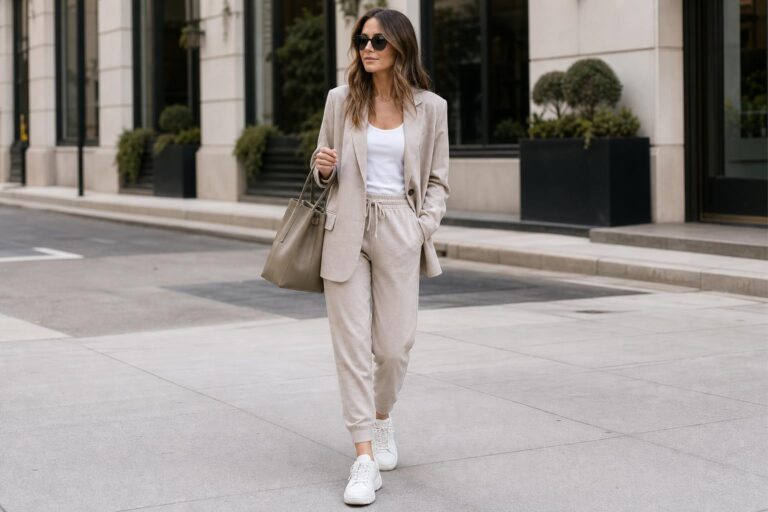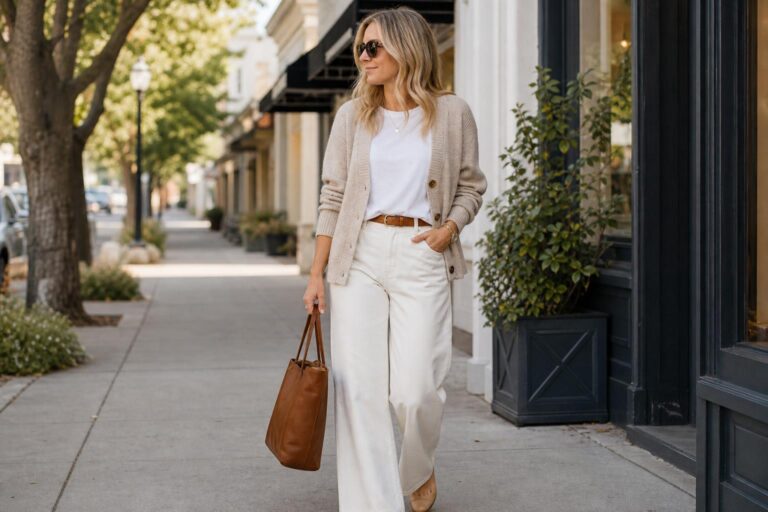
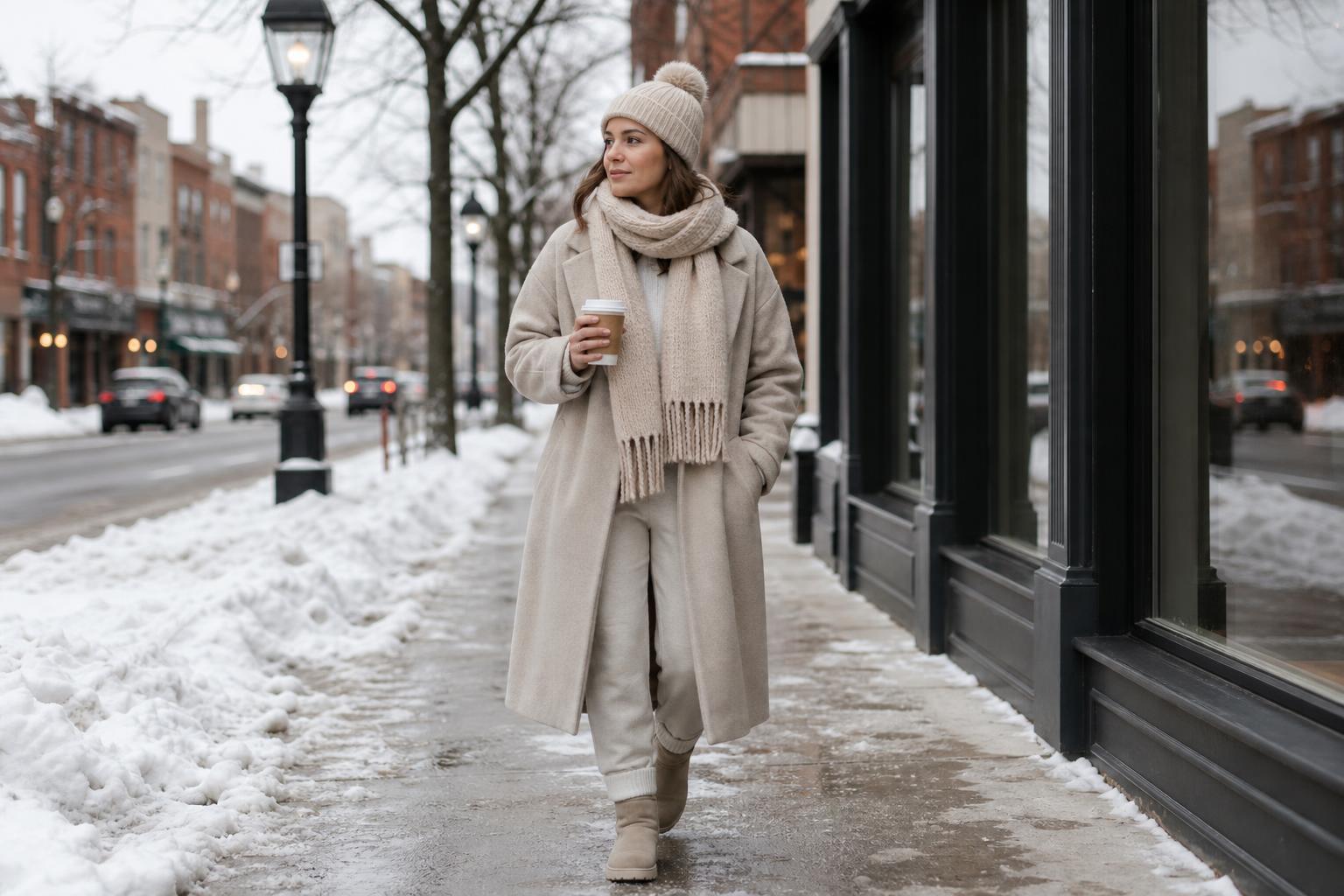
Winter Comfy Outfits for Real Life
A good winter wardrobe is rarely about owning more. It is about composing winter comfy outfits that handle real conditions: overheated interiors, icy sidewalks, travel days, work-from-home mornings, and quick errands that still require you to look pulled together. The strongest winter outfits balance warmth, movement, and visual structure. They rely on a small set of dependable pieces like coats, knitwear, leggings, boots, scarves, and base layers, then use texture contrast, tonal layering, and proportion control to make comfort look intentional rather than accidental.
The most useful approach is not to chase isolated outfit photos. It is to understand why certain formulas keep appearing: fleece-lined leggings under a longline sweatshirt tunic, a sweater dress anchored by ankle boots, a puffer coat over joggers and sneakers, or a wool coat layered over knitwear and denim. These combinations work because each one solves a practical winter problem while preserving a clean silhouette. Once you understand that logic, recreating winter outfits becomes faster, more affordable, and far more versatile.
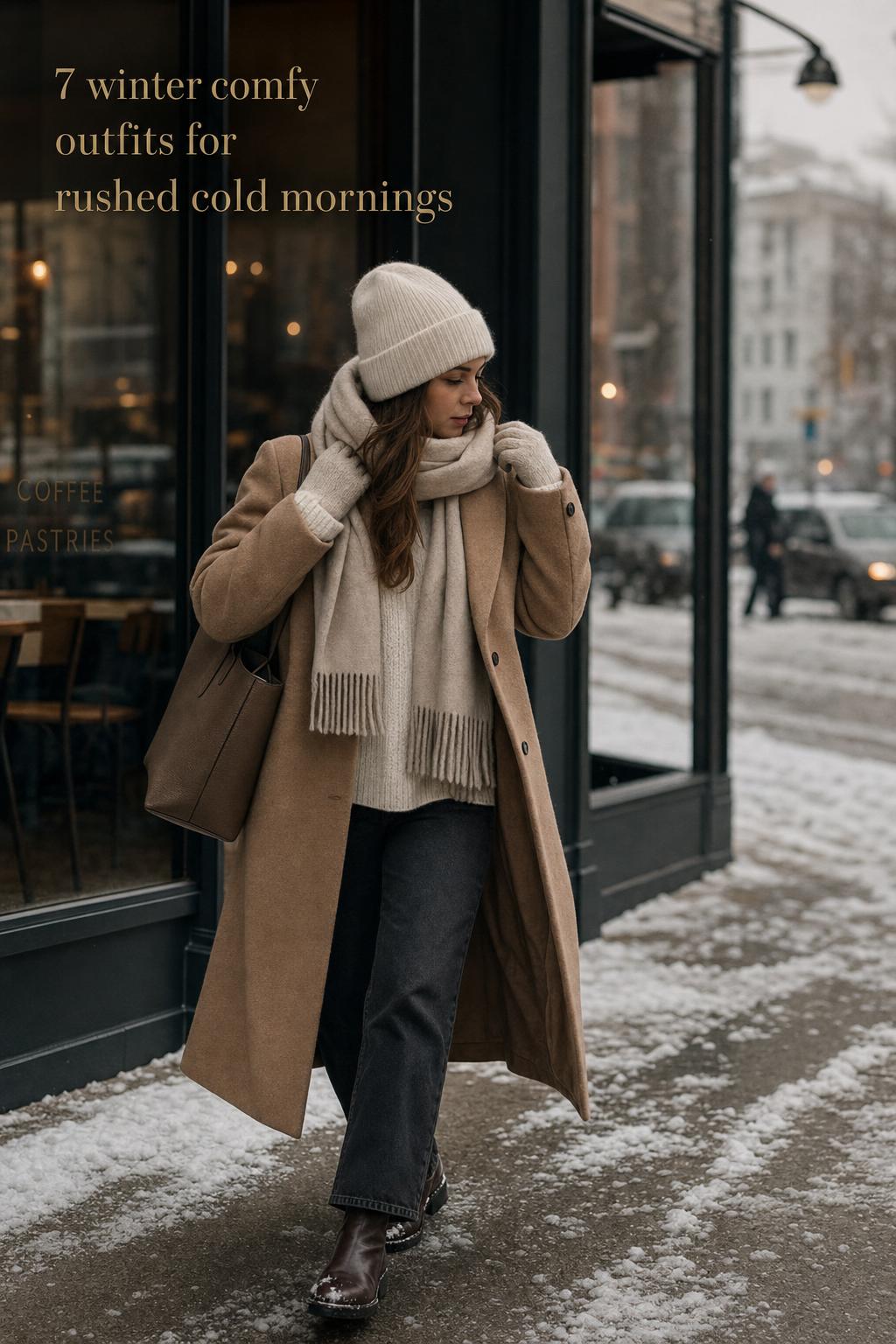
The comfort equation: what makes a winter outfit actually work
Comfort in winter fashion depends on three factors: thermal efficiency, mobility, and outfit composition. Thermal efficiency comes from fabrics and layers that hold warmth without turning the outfit stiff or bulky. Mobility comes from cuts that allow walking, sitting, driving, or traveling comfortably. Outfit composition is the visual part: how outerwear, knitwear, bottoms, footwear, and accessories interact to create a balanced shape.
This is why fleece, wool, cashmere, cotton blends, and thermal fabrics matter so much in winter dressing. They support warmth in different ways and influence how the outfit hangs on the body. A thick knit can add softness but also volume, so it usually pairs best with a slimmer bottom like leggings or straight denim. A sweater dress creates one vertical line, which is why it often looks strongest with boots and a coat that does not interrupt the silhouette too aggressively.
Found the dress? Keep the rest in one place.
Zarellea brings guest details, vendors, timelines, and every next step together — so your wedding plan feels as good as your look.
Quiet luxury and elevated athleisure both show up naturally in winter comfy outfits because they prioritize tactile quality, neutral palettes, and easy layering. In practice, that means a puffer coat can look far more polished when the palette stays tonal, and a pair of sweatpants can feel intentional when styled with structured outerwear and clean sneakers instead of random extras.
What to prioritize first
- A coat or jacket that suits your actual climate
- Knitwear that layers easily under outerwear
- One comfortable bottom category you will wear constantly, such as leggings, joggers, jeans, or wool trousers
- Boots or sneakers with winter practicality
- Accessories that finish the outfit and improve warmth, especially scarves and beanies
If your wardrobe feels scattered, start with those categories before adding trend pieces. They create the framework that makes nearly every other winter outfit easier to build.
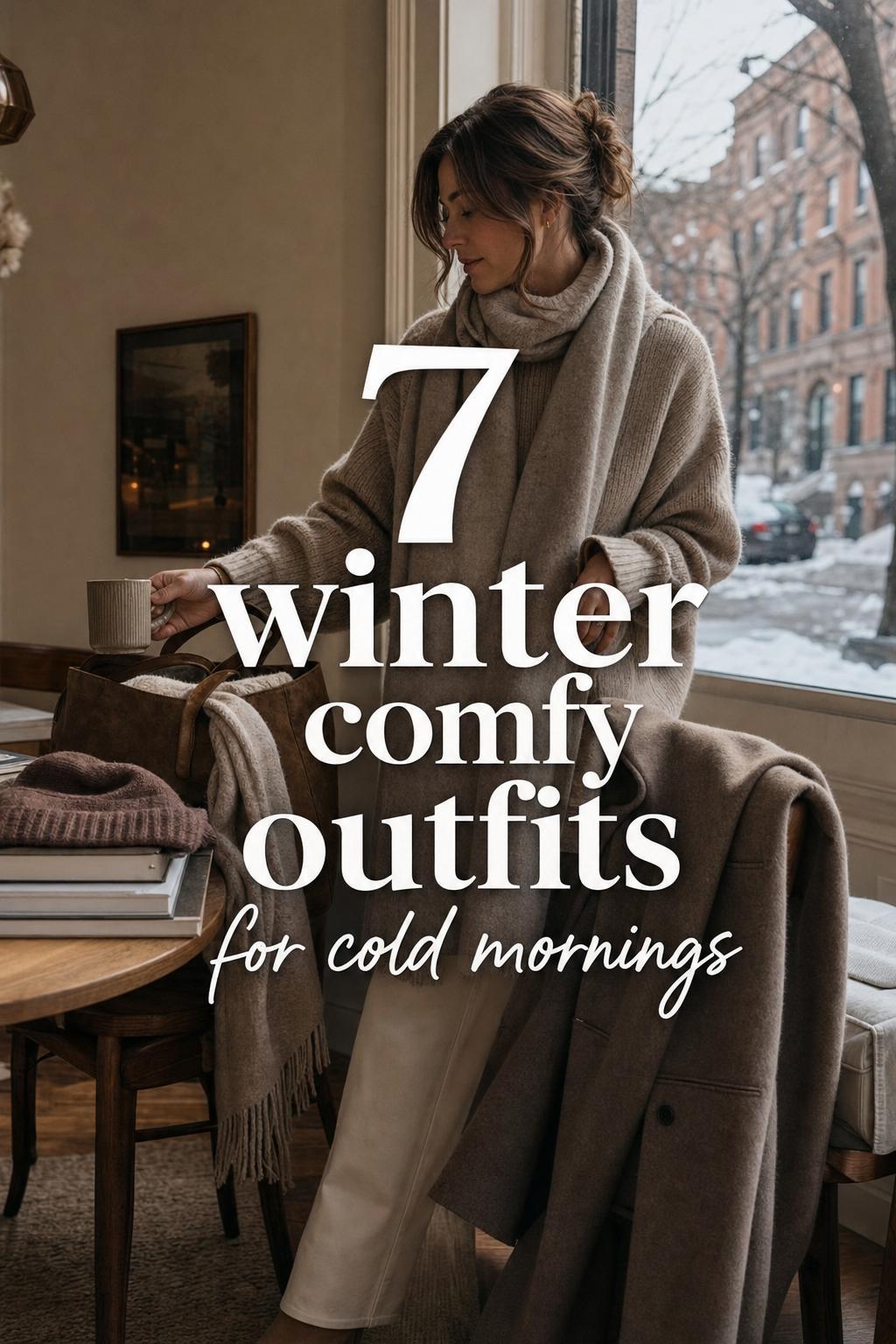
The 8-piece foundation behind the best winter comfy outfits
A practical winter capsule does not need to be complicated. The most versatile versions revolve around eight categories that repeatedly solve everyday dressing needs. Think of these as interchangeable anchors rather than a strict packing list.
Outerwear: the visual anchor
Your coat controls both warmth and first impression. A puffer coat is strongest when you need softness, insulation, and weekend ease. A wool coat creates a cleaner line and works better for business-casual comfort or city dressing. A lighter jacket or trench-style option is useful in milder regions where heavy insulation would feel excessive.
If you are buying one piece first, make it the coat that matches your daily reality. Someone in Chicago needs a very different outerwear strategy than someone in San Francisco or Seattle. A beautiful coat that does not suit your weather becomes dead weight in a wardrobe.
Knitwear: the layer that decides the mood
Sweaters, cardigans, turtlenecks, and cardigan-blazer hybrids create the soft structure that winter outfits depend on. A chunky sweater gives volume and works best with narrower bottoms. A smoother knit or fitted turtleneck is better under coats and can pair with jeans, wool trousers, or a knit skirt without adding too much bulk.
A cardigan-blazer hybrid is especially useful for readers who want comfort without losing polish. It offers the ease of knitwear but reads more structured than a casual cardigan, which makes it a strong choice for home-office dressing, informal meetings, or daytime plans that move between indoors and outdoors.
Bottoms: choose your comfort lane
Leggings, sweatpants, joggers, jeans, and wool trousers all belong in the winter comfort conversation, but they serve different functions. Fleece-lined leggings are the most efficient option when you want warmth, flexibility, and a slim base for tunics, sweaters, or dresses. Joggers and sweatpants create a more relaxed silhouette and work best when balanced with a puffer, clean coat, or tidy knit. Jeans and wool trousers bring more visual structure and are often easier to dress up.
If you are petite, keep an eye on volume stacking. Wide or slouchy bottoms plus an oversized sweater plus a long puffer can collapse proportion. If you are tall, longer lines usually work in your favor, especially with wool coats, sweater dresses, and knee-high or ankle boots. If you are curvy, stretch fabrics with clear waist definition or a strong vertical line tend to feel most balanced and easiest to wear all day.
Footwear: warmth must meet traction and proportion
Boots remain one of the most repeated winter footwear choices because they solve both styling and weather concerns. Ankle boots work especially well with leggings, sweater dresses, and straight jeans. Heavier classic boots support casual winter wear and help ground oversized knitwear. Sneakers fit elevated athleisure, airport outfits, and weekend combinations, especially with joggers and knit sets.
One common mistake is choosing footwear that visually fights the rest of the outfit. Light sneakers with a very heavy coat can feel disconnected unless the rest of the outfit echoes that casual ease. Likewise, slim ankle boots can get visually lost under very bulky outerwear unless the outfit includes a cleaner lower half.
Accessories: the easiest upgrade
Scarves, beanies, gloves, and hats do more than add warmth. They create finish. In winter, the outfit often depends on texture more than prints, so accessories become useful tools for adding fleece, wool, or knit detail without overcomplicating the look. A lightweight scarf also helps with travel because it adjusts the outfit between airport, car, street, and overheated indoor settings.
Base layers and thermal support
Thermal tops, socks, and underlayers are the hidden pieces that make stylish winter outfits livable. They matter most in the Midwest and Northeast, where extreme cold or wet snow changes what feels practical. Uniqlo is a logical example in this category because technical underlayers and thermal basics align directly with the need for low-bulk warmth.
One dressy-casual formula piece
A knit dress or sweater dress is worth including because it bridges casual and polished dressing. It can move from home to lunch, from errands to an informal office, and from daytime to evening with only small adjustments in boots, outerwear, and accessories. That level of versatility makes it one of the strongest wardrobe investments in the category.
Optional tech additions
Heated accessories and extra thermal support belong in the optional category, not because they are unhelpful, but because they depend heavily on region and lifestyle. If your winter includes long outdoor commutes, they can be more useful than buying another decorative layer.
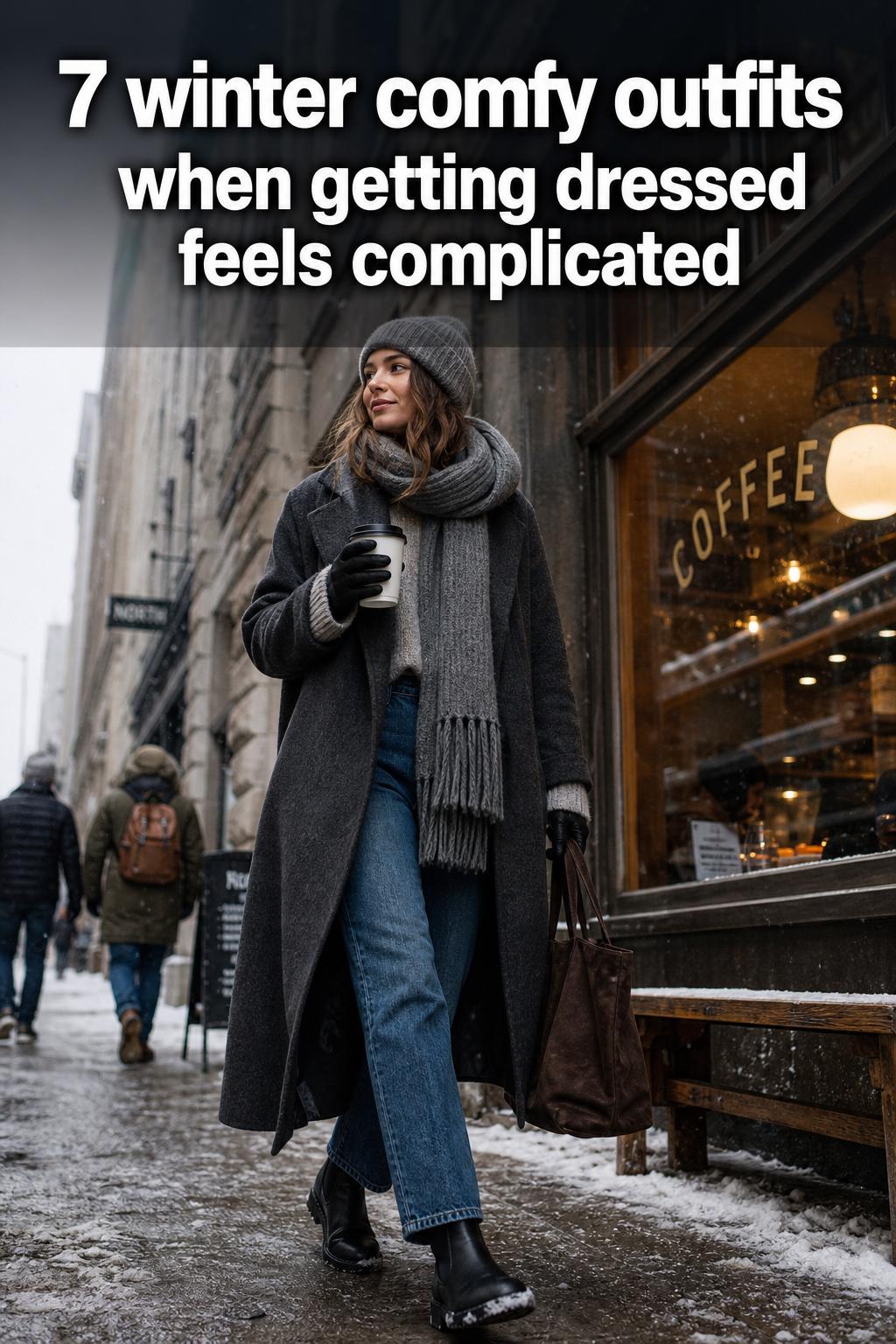
Outfit formulas that solve real winter dressing problems
The best outfit formulas are repeatable. They save time, reduce random purchases, and make it easier to adapt your wardrobe for casual plans, work, or travel. Instead of thinking in terms of isolated looks, use these as functional templates.
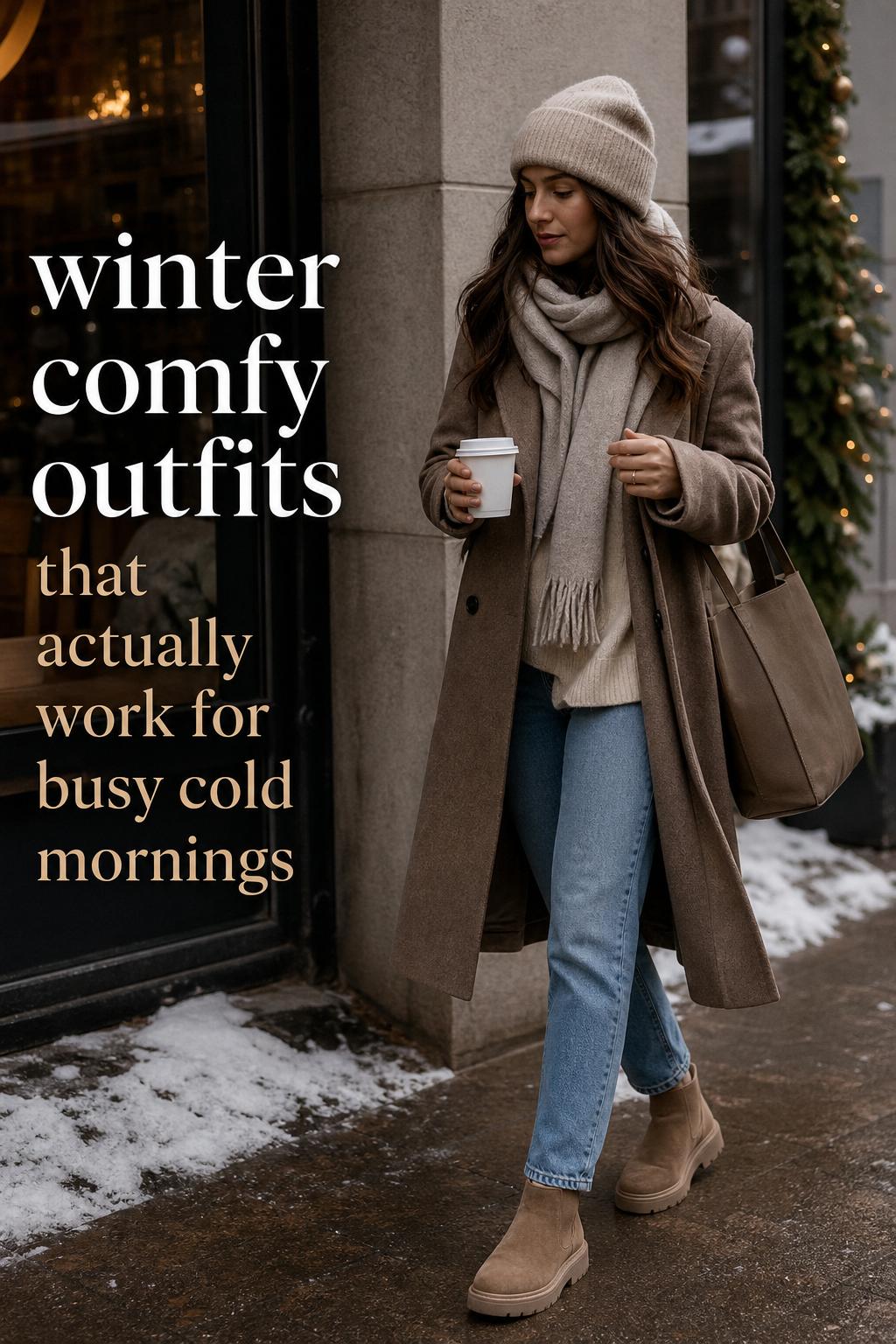
Knit plus denim plus boots for daily life
This formula remains reliable because it balances softness and structure. Knitwear supplies warmth and texture, denim prevents the outfit from feeling too lounge-oriented, and boots finish the lower half with enough weight for winter conditions. If your sweater is chunky, choose straighter or slimmer denim. If your knit is fitted, you can use more relaxed jeans without losing shape.
This is often the easiest formula to recreate on a budget because most wardrobes already contain these categories. The upgrade is not necessarily buying new pieces. It is refining fit, choosing a stronger coat, and keeping the palette tonal or neutral enough to feel coherent.
Longline sweatshirt tunic with fleece-lined leggings
Few combinations are as practical as a longline sweatshirt tunic with fleece-lined leggings. The reason it works is proportion play: the longer top provides coverage and visual length, while the fitted leggings keep the silhouette streamlined. Add classic boots for daily errands or sneakers for a more athleisure-leaning finish.
This formula is especially useful for readers who prioritize movement, school runs, quick shopping trips, or casual work-from-home days. It is also one of the easiest combinations to winterize without bulk because the warmth comes from the leggings and base layer rather than from piling on too many visible pieces.
Sweater dress, leggings, and ankle boots
This outfit handles the common winter challenge of wanting to feel dressed without giving up comfort. The sweater dress creates one soft column, leggings add warmth and practicality, and ankle boots sharpen the finish. A wool coat makes it office-appropriate in many casual-professional environments, while a puffer shifts it into weekend territory.
For petite frames, a shorter sweater dress or one with less bulk usually works better than an oversized version that hides the entire shape. For curvier silhouettes, knit dresses that skim rather than cling tend to offer the most flattering and wearable result. If you want the outfit to look more expensive, keep the dress, coat, and boots within a related neutral palette.
Puffer coat with joggers and sneakers for relaxed weekends
This is elevated athleisure at its most functional. The puffer adds insulation and visual volume, joggers maintain mobility, and sneakers keep the outfit light enough for walking and travel. The key is restraint. Clean lines, coordinated colors, and one clear outerwear statement prevent the outfit from reading as sleepwear-adjacent.
For better proportion, keep joggers tapered rather than overly baggy. That small adjustment preserves shape and makes the coat feel intentional. A scarf can add texture, especially if the outfit uses mostly matte fabrics.
Cardigan-blazer hybrid with trousers or leggings
This formula is ideal for readers who need business-casual comfort. The cardigan-blazer hybrid softens the structure of tailoring while still giving the torso a defined frame. With wool trousers, it reads more polished. With leggings and a longer underlayer, it becomes an efficient home-to-errands combination.
It works particularly well for mixed indoor-outdoor days because the outfit feels complete even after the coat comes off. That matters more in winter than many people expect; once you enter an office, café, or airport, the inner layers do most of the style work.
Knit skirt with boots for softer structure
A knit skirt introduces movement and texture while still keeping the outfit comfortable. Pair it with a sweater or fitted turtleneck, then anchor the look with boots. This composition works because the tactile softness of the knit contrasts with the firmness of the footwear, creating a balanced winter silhouette.
If you want this outfit to function in everyday life, pay attention to fabric density and hem length. A flimsy knit can lose shape quickly, while a denser knit skirt tends to wear better and layer more successfully under coats.
Travel-ready neutrals for airports and long transit days
Airport winter outfits need to handle sitting for long stretches, changing temperatures, and easy movement. A knit set, puffer coat, sneakers, and lightweight scarf form one of the most practical combinations. The knit set creates tonal continuity, the puffer handles cold terminals or outdoor transfers, and the scarf can double as a soft extra layer.
This is where performance fabrics and movement-friendly cuts matter more than decorative styling. Keep accessories simple, choose layers that can be removed without disrupting the outfit, and avoid footwear that slows you down. For travel, comfort is not a bonus. It is part of the outfit’s success.
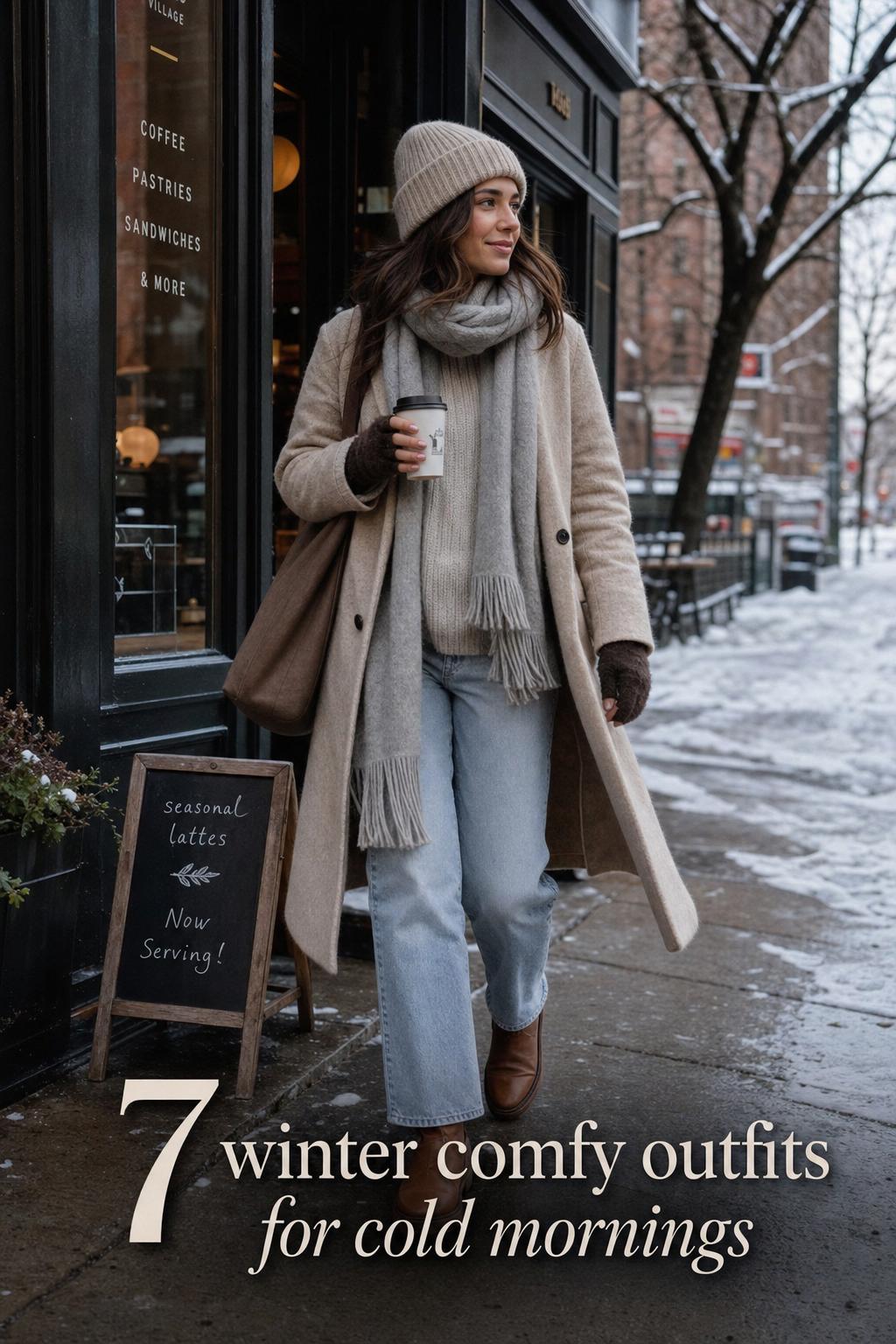
Regional winter dressing in the U.S. changes everything
A winter outfit that feels perfect in New York can be wrong for San Francisco. Climate changes fabric needs, outerwear weight, footwear choice, and even how many layers are reasonable. Building winter outfits without considering location often leads to wardrobes that look good in theory but underperform in real life.
Northeast: wet snow, slush, and changing indoor temperatures
In the Northeast, outfits need insulation but also resilience. Waterproof boots become more important, and wool coats often need support from warm base layers, scarves, and gloves. Fleece-lined leggings under tunics or sweater dresses make sense here because they protect warmth without creating too much upper-body bulk under outerwear.
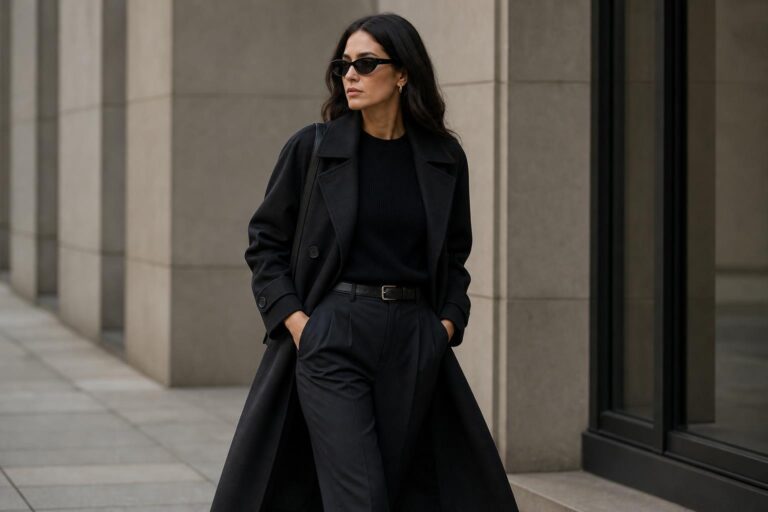
New York style often benefits from long coats, tonal neutrals, and practical boots because city movement demands efficiency. If your coat hem is long, keep the lower half clean and slim enough to avoid visual heaviness.
Midwest: extreme cold and true layering logic
Chicago-level winter requires a serious relationship with thermal fabrics, puffer coats, knitwear, and insulated accessories. This is the region where base layers are not optional style extras. They are foundational. A lightweight top may look refined indoors, but without thermal support underneath, the outfit often fails the second you step outside.
For the Midwest, prioritize warmth at the core and keep visible layers manageable. That means fewer bulky pieces on top of each other and more strategic use of thermal underlayers, fleece-lined leggings, wool-blend coats, and substantial boots.
South and Mid-Atlantic: lighter layers, easier transitions
In milder winter regions, heavy insulation can make an outfit less useful rather than more comfortable. Lightweight knitwear, softer jackets, and cushioned outerwear usually work better than extreme cold formulas. A scarf, cardigan-blazer hybrid, or lighter coat can carry much of the seasonal effect without making indoor wear uncomfortable.
This is also where transitional pieces earn their place. Fall-to-winter dressing matters more in these climates, so sweaters, leggings, and boots can often stay in rotation longer than heavily insulated puffers.
West Coast: breathable fabrics and polished ease
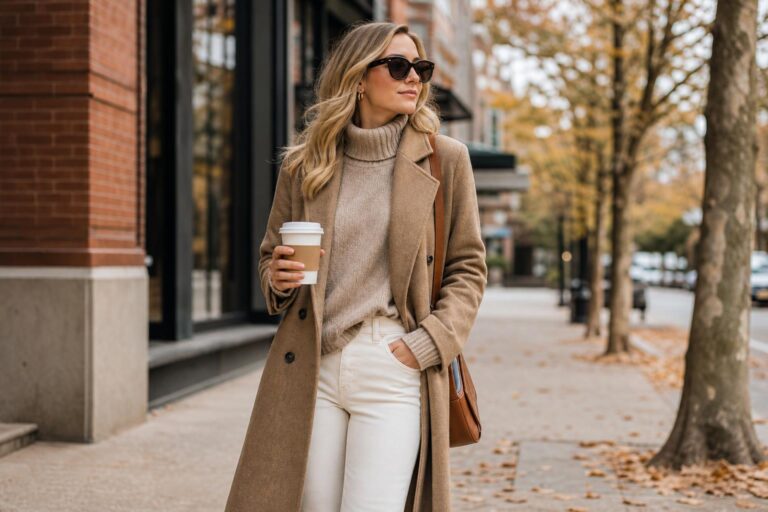
Seattle and San Francisco require a different kind of winter intelligence. Breathable fabrics, flexible layers, and moderate outerwear matter because the weather may be cool, damp, or variable rather than brutally cold. A wool coat, knitwear, straight jeans, and boots often outperform heavier formulas in these settings.
The main styling risk in mild winters is overdressing for the image of winter rather than the actual season. If you feel overheated all day, the outfit is not comfortable no matter how good it looks in photos.
How to make winter outfits flatter different body proportions
Comfort and flattery do not compete. In winter, they usually depend on the same principle: proportion management. Bulky fabrics, layered hemlines, and heavy footwear can shift body balance quickly, so small adjustments matter.
- For petite frames, keep at least one area streamlined. If the coat is oversized, choose slimmer leggings or straight jeans and a cleaner boot shape.
- For tall frames, longer coats, sweater dresses, and extended knit lines often look especially natural and balanced.
- For curvy shapes, fabrics with stretch and drape usually outperform stiff layering. A sweater dress with leggings or a defined knit-and-trouser combination can feel both comfortable and polished.
- For anyone sensitive to bulk, use thermal layers under lighter visible pieces instead of stacking multiple thick knits.
The most common mistake is treating oversized as automatically comfortable. Oversized can be comfortable, but only when the outfit still has a visual anchor. That anchor might be fitted leggings, a defined boot, a cleaner neckline, or a longer vertical line created by a coat or dress.
Texture, color, and the reason some cozy outfits look more expensive
Winter outfits rely heavily on texture because much of the season is built around neutral palettes. Fleece, wool, knit, cashmere, faux-fur accents, and flannel all create dimension even when the color story stays simple. This is why tonal layering works so well in winter: the variation comes from material, not from loud contrast.
Neutrals are especially effective for comfy dressing because they make practical pieces feel intentional. Leggings, sweatpants, or a puffer coat can look more refined when the outfit stays within a controlled palette rather than mixing too many unrelated shades. One accent hue is usually enough if you want more personality.
Easy color strategies that reduce styling mistakes
- Keep coat, boots, and bottoms in related tones for a longer visual line
- Use scarves and beanies to add texture before adding more colors
- Let one piece be the visual anchor, such as a wool coat, a chunky knit, or a sweater dress
- Pair soft fabrics with one structured element so the outfit does not feel shapeless
This is the quiet luxury lesson many winter dressers intuitively respond to: simplicity reads stronger when fabrics and fit do the work.
What is worth investing in and what can be budget-friendly
Not every winter item deserves the same spending priority. Some pieces affect daily comfort, outfit versatility, and longevity much more than others. That is where your budget should work hardest.
Pieces worth stronger investment
A dependable coat, durable boots, and knitwear you wear repeatedly are the strongest candidates for a higher spend. These items shape most winter outfits and absorb the most wear. If your coat looks good, fits your climate, and layers easily, it improves nearly everything else in the wardrobe. Premium outerwear names like Canada Goose and Patagonia make sense as reference points in this category because outerwear performance is central to the winter comfort conversation.
Pieces that can be more affordable
Base layers, simple leggings, scarves, and some trend-sensitive accessories can often be bought more affordably. The goal is functionality first. If you are rebuilding your wardrobe, buying a practical thermal top and one strong scarf usually serves you better than buying several decorative accessories that do not improve warmth or versatility.
Budget bands that simplify decisions
- Under $50: accessories, thermal basics, simple leggings, entry-level layering pieces
- $50 to $150: better knitwear, everyday boots, stronger sweaters, versatile jackets
- $150 and up: investment coats, premium boots, higher-quality wool or cashmere pieces
This kind of budget structure helps prevent a common mistake: overspending on minor pieces while postponing the purchase that would make the biggest difference.
Sustainable and practical fabric choices
Winter comfort improves when fabrics are chosen for performance rather than impulse. Wool, cashmere, fleece, cotton blends, and thermal fabrics all appear repeatedly because they each solve a real problem: warmth, softness, layering efficiency, or movement. Sustainable and eco-friendly winter fabrics matter most when they also support durability. A wardrobe is more useful when pieces can be reworn across multiple seasons and combinations.
The smartest fabric choice depends on use case. For outdoor exposure and serious cold, thermal support and insulated textures matter most. For indoor-heavy days, breathable knitwear and lighter layering are often more comfortable. For travel, flexible fabrics that resist discomfort while sitting and moving are more practical than stiff or overly delicate pieces.
Stylist logic for work, home, and travel
One reason winter dressing feels difficult is that the day rarely stays in one context. You may begin at home, commute in cold air, spend hours indoors, then stop for errands. The most useful winter outfits are the ones that survive those transitions without needing a complete reset.
For work-from-home to errands
Use one soft base and one presentable layer. A sweater dress with leggings, or a fine knit with structured joggers and ankle boots, gives you enough polish to leave the house quickly without feeling overdressed at home. This is where a cardigan-blazer hybrid earns its place.
For casual-professional settings
Lean on wool trousers, a turtleneck or smoother sweater, and a wool coat. The outfit composition stays comfortable, but the lines remain clean enough for meetings, lunch plans, or office environments that do not require formal tailoring. The visual structure comes from the coat and trouser line rather than from rigid suiting.
For airport winter outfits
Build around a knit set, puffer coat, sneakers, and scarf. Keep the palette neutral to make the outfit look composed even when comfort is the main priority. Avoid too many layers that need to be removed separately. Fewer, smarter layers are easier to manage at the airport.
Common winter styling mistakes that reduce comfort
Many winter outfit issues come from good intentions applied in the wrong order. People often focus on appearance first, then try to force practicality into the look afterward. That is how outfits become bulky, restrictive, or underprepared for weather.
- Choosing a coat for appearance but not for local climate
- Layering several thick tops instead of using a thermal base layer
- Ignoring footwear weight and traction
- Mixing too many unrelated textures and colors in one outfit
- Using oversized pieces in every category at once
- Buying trend pieces before securing core staples
The solution is usually simple: let one piece lead, support it with functional layers, and make sure the outfit can handle movement. Winter clothes are worn for long stretches. If you cannot sit, walk, carry a bag, or transition indoors comfortably, the outfit needs reworking.
Tips for building an always-on winter uniform
The easiest way to simplify winter dressing is to create a personal uniform made from repeatable combinations. This does not mean wearing the exact same outfit every day. It means using a controlled set of shapes and formulas that you already know work for your body, climate, and schedule.
- Pick one outerwear hero: puffer, wool coat, or lighter jacket for mild climates
- Choose two knit silhouettes you trust, such as a chunky sweater and a fitted turtleneck
- Keep two bottom routes ready: one soft option like leggings or joggers, one structured option like jeans or wool trousers
- Use one dependable boot and one sneaker to cover most occasions
- Repeat a small neutral palette so everything layers together easily
This approach also makes shopping smarter. Once you know your uniform, you stop buying pieces that look good in isolation but do not connect to your coat, footwear, or daily routine.
Practical care notes that protect winter fabrics
Winter clothes work harder than warm-weather clothes, so maintenance matters. Knitwear, wool, cashmere, fleece, and thermal layers all benefit from thoughtful care because wear, friction, and repeated layering can affect shape and feel over time. Good care protects not just the item, but the comfort level that made you buy it in the first place.
Separate heavy outerwear from lighter knits when storing, avoid crushing delicate sweaters under bulky coats, and pay attention to laundering guidance for thermal pieces and knit fabrics. A comfortable wardrobe is easier to sustain when the fabrics still perform the way they should.
Where brand examples fit into a winter wardrobe strategy
Brand names are most helpful when they clarify category decisions rather than distract from them. Uniqlo is a strong reference for thermal basics and low-bulk layering. Canada Goose and Patagonia make sense as outerwear benchmarks when warmth and performance are top priorities. COS connects logically to cleaner, more minimal styling around leggings, outerwear, and polished winter basics.
The practical lesson is not that everyone needs premium labels. It is that each brand example represents a wardrobe function: technical warmth, outerwear performance, or minimalist structure. Once you understand the function, you can shop at your own budget level without losing the styling logic.
FAQ
What are the most versatile pieces for winter comfy outfits?
The most versatile pieces are a climate-appropriate coat, reliable knitwear, comfortable bottoms such as leggings or jeans, practical boots, and a scarf. These categories repeat across casual, work, and travel outfits, which makes them more useful than one-off statement pieces.
How do I layer for winter without looking bulky?
Use thermal or lightweight base layers first, then add one substantial visible knit or outer layer instead of stacking several thick pieces. Keep at least one part of the silhouette streamlined, such as fitted leggings under an oversized sweater or a fitted turtleneck under a wool coat.
Are fleece-lined leggings worth buying?
Yes, especially if you want warmth, mobility, and low-bulk layering. They are one of the most practical winter basics because they work under longline tunics, sweater dresses, and coats while staying comfortable for errands, home wear, and casual daytime outfits.
What winter outfit works best for travel days?
A knit set or soft knitwear with comfortable bottoms, a puffer coat, sneakers, and a lightweight scarf is usually the most functional travel formula. It handles changing temperatures, supports movement, and still looks composed if the colors stay neutral or tonal.
How can I make comfy winter outfits look more polished?
Focus on tonal layering, controlled proportions, and one clear visual anchor such as a wool coat, structured cardigan-blazer hybrid, or strong pair of boots. Coordinated neutrals and texture contrast often make comfortable outfits look more refined without reducing practicality.
What should I buy first if I am rebuilding my winter wardrobe on a budget?
Start with the pieces that affect daily wear most: a dependable coat, one or two knits, one practical bottom category, and boots or sneakers that suit your weather. After that, add thermal layers and accessories. This order improves more outfits than buying several trend items first.
Can winter comfy outfits work for casual offices?
Yes. A smoother sweater or turtleneck with wool trousers and a wool coat is one of the easiest office-friendly combinations. A sweater dress with leggings and ankle boots can also work well in relaxed professional settings, especially when the palette is neutral and the fit is clean.
How should winter outfits change by U.S. region?
In the Northeast and Midwest, insulation, thermal layers, and weather-ready boots matter much more because of snow, slush, or extreme cold. In the South, Mid-Atlantic, and much of the West Coast, lighter layers, breathable fabrics, and moderate outerwear are often more practical than heavy cold-weather formulas.
What are the most common winter outfit mistakes?
The most common mistakes are buying a coat that does not match your climate, layering too many bulky pieces, ignoring footwear practicality, and using oversized shapes in every part of the outfit at once. Strong winter dressing depends on function first and proportion second.