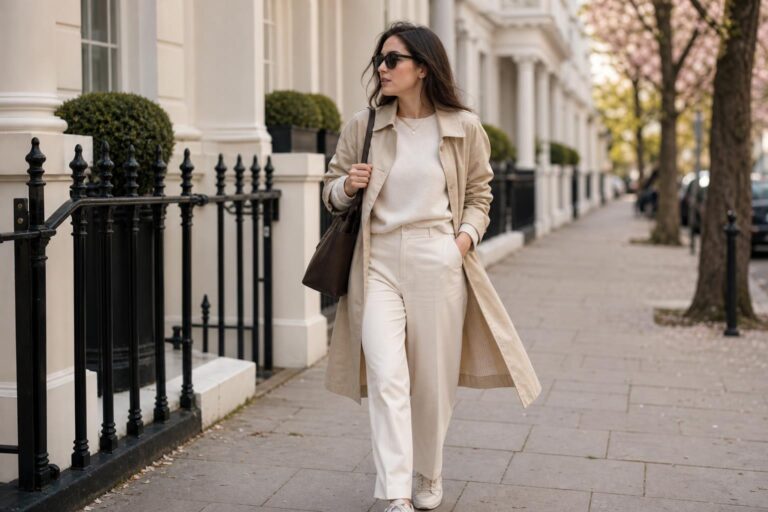
Comfy School Outfits That Feel Polished
By the time first period starts, an outfit has already done a surprising amount of work. It has handled the walk from the car or bus, the over-air-conditioned classroom, the scramble between lockers, the long stretch of sitting, and the quiet pressure to look presentable without feeling overdone. That is why comfy school outfits hold such lasting appeal in the United States: they answer a real need, not just a style trend.
The best versions live in a very specific space between loungewear and polish. They borrow the ease of athleisure, the reliability of school-friendly basics, and the visual structure of thoughtful layering. A hoodie with joggers can feel intentional when the proportions are right. A cardigan over a tee and denim can read more refined than a complicated outfit that never sits comfortably through the day. Even a skirt with tights and a knit layer can become part of the comfort conversation when warmth, modesty, and movement are considered together.
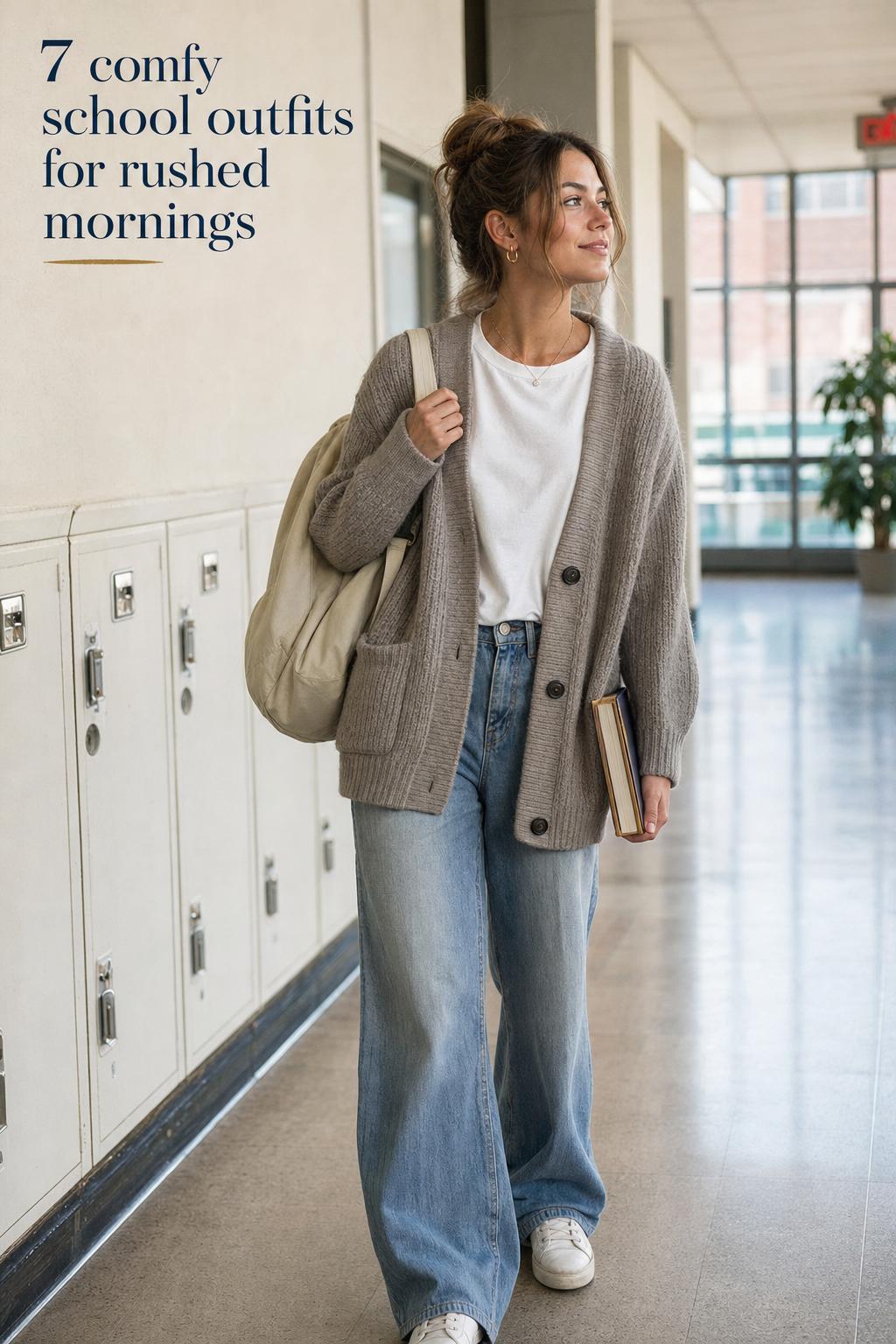
What makes comfy school outfits so wearable is their adaptability. They work for back-to-school season, midterms, after-school activities, and the ordinary weekdays that require stamina more than spectacle. The formula is simple, but the styling is not accidental. Fabric, silhouette, layering, footwear, and dress-code awareness all shape whether an outfit feels effortless or just unfinished.
This guide breaks the aesthetic down with a fashion-editorial lens and practical logic: the pieces that matter most, the combinations that keep working, and the small adjustments that make comfort look more put-together.
Found the dress? Keep the rest in one place.
Zarellea brings guest details, vendors, timelines, and every next step together — so your wedding plan feels as good as your look.
Why comfort changes the way an outfit performs
Comfort is not separate from style in a school setting; it is part of the outfit composition. Long days make fabric and fit impossible to ignore. A stiff waistband, a scratchy knit, or shoes that look good for ten minutes but fail by lunchtime can disrupt the entire experience of getting dressed. In contrast, breathable cotton, flexible polyester blends, soft knits, and movement-friendly silhouettes allow an outfit to maintain its shape and energy throughout the day.
There is also a psychological reason comfy school outfits resonate so strongly. Clothing that supports movement, warmth regulation, and ease of sitting tends to reduce visual and physical friction. That is especially relevant during exam weeks, study hall, and transit-heavy days when the goal is to stay focused rather than keep readjusting hemlines, straps, or sleeves. Comfort-first dressing does not mean giving up aesthetic intention. It means choosing pieces that can sustain real life.
This is where academicwear becomes a useful idea. Think of it as a practical style category built around classroom reality: reliable layers, unfussy proportions, sneakers that can handle walking, and a backpack that supports function without pulling the outfit off balance. It overlaps with athleisure and casual school wear, but it feels more considered because every piece has a role.
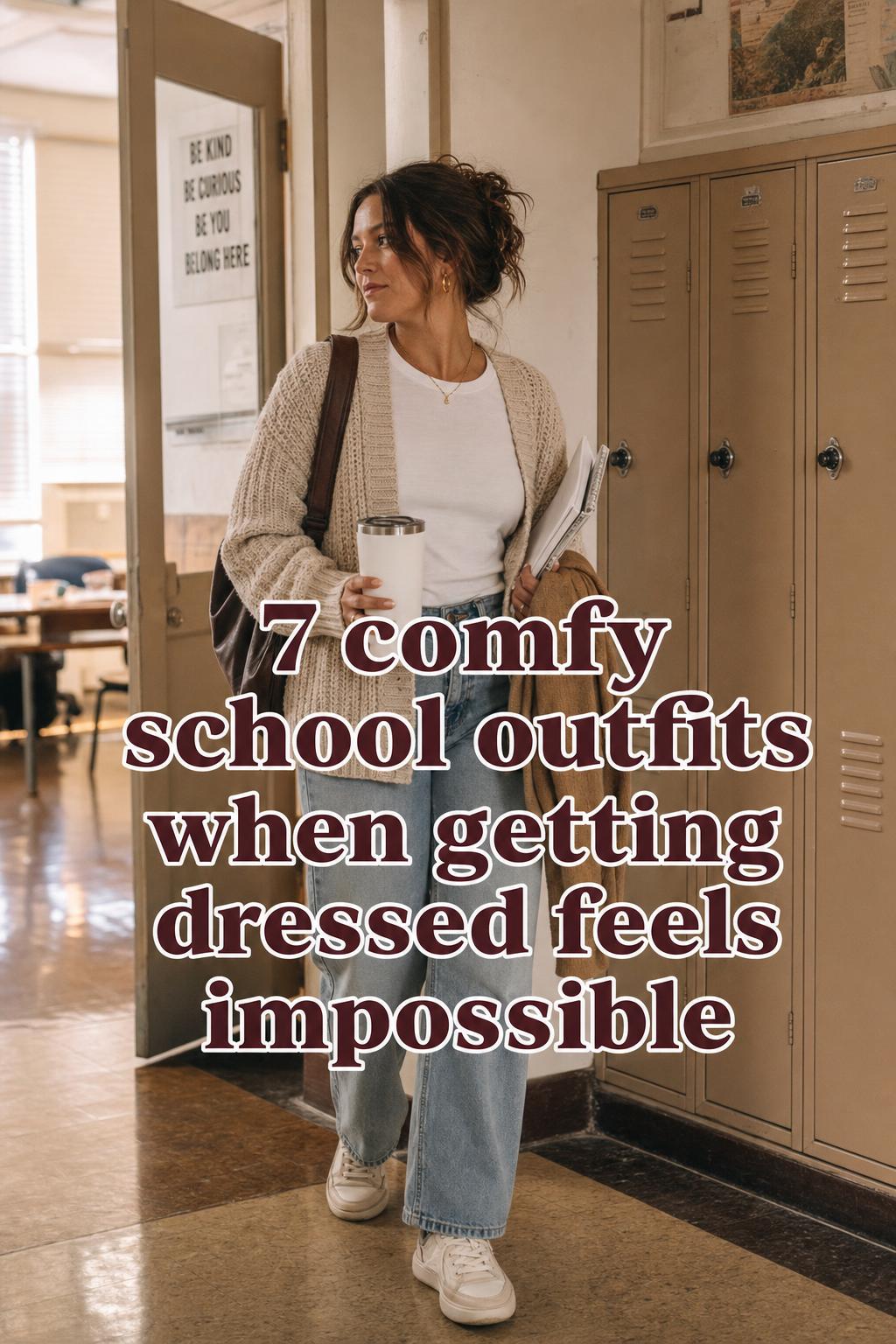
Relaxed layers with a soft minimal edge
The most dependable school formula is still hoodie, joggers, and sneakers. It remains popular because it solves multiple problems at once: warmth, movement, and low-effort coordination. But its success depends on proportion. A hoodie that is too oversized with very loose joggers can read shapeless, while a slightly relaxed hoodie with tapered or straight joggers feels balanced and intentional.
Style breakdown
Start with a hoodie in a neutral or grounded shade, then pair it with joggers that either match tonally or create a subtle contrast. Clean sneakers act as the visual anchor. Under the hoodie, a simple tee or light knit gives the outfit flexibility if the classroom runs warm. This layering move matters because it keeps the look adaptable rather than trapped in one temperature setting.
- Hoodie + tapered joggers + classic sneakers
- Zip hoodie + tee + straight joggers + low-profile sneakers
- Sweatshirt + joggers + sneakers + backpack
- Lightweight hoodie + knit underlayer + joggers + comfortable flats or sneakers
Why this combination works: the softness of the fleece or cotton blend creates ease, while sneakers bring structure at the base of the silhouette. The outfit feels grounded instead of sleepy when the shoes are clean and the joggers skim the leg rather than collapse around it.
Representative mainstream brands often appear in this space because they make the category accessible and repeatable. Carter’s is more school-basics adjacent than trend-driven, but the broader point stands: familiar apparel brands and mainstream athleisure lines tend to offer the hoodies, sweatshirts, joggers, and sneakers that define this look. Brand matters less than fabrication, fit consistency, and whether returns are easy enough for students and families shopping during back-to-school season.
Easy ways to make it feel more polished
- Choose joggers with a cleaner leg line instead of exaggerated bulk.
- Keep the hoodie substantial but not overly thick, especially for indoor wear.
- Use a backpack in a simple shape so the outfit stays cohesive.
- Let one element carry contrast, such as bright sneakers against tonal clothing.
A common mistake is assuming comfort means maximum volume everywhere. In practice, proportion play matters more. If the hoodie is oversized, the joggers should have some visual control. If the pants are wider, the top should have enough structure to frame the shoulders and neckline.
Elevated knitwear and wide-leg ease
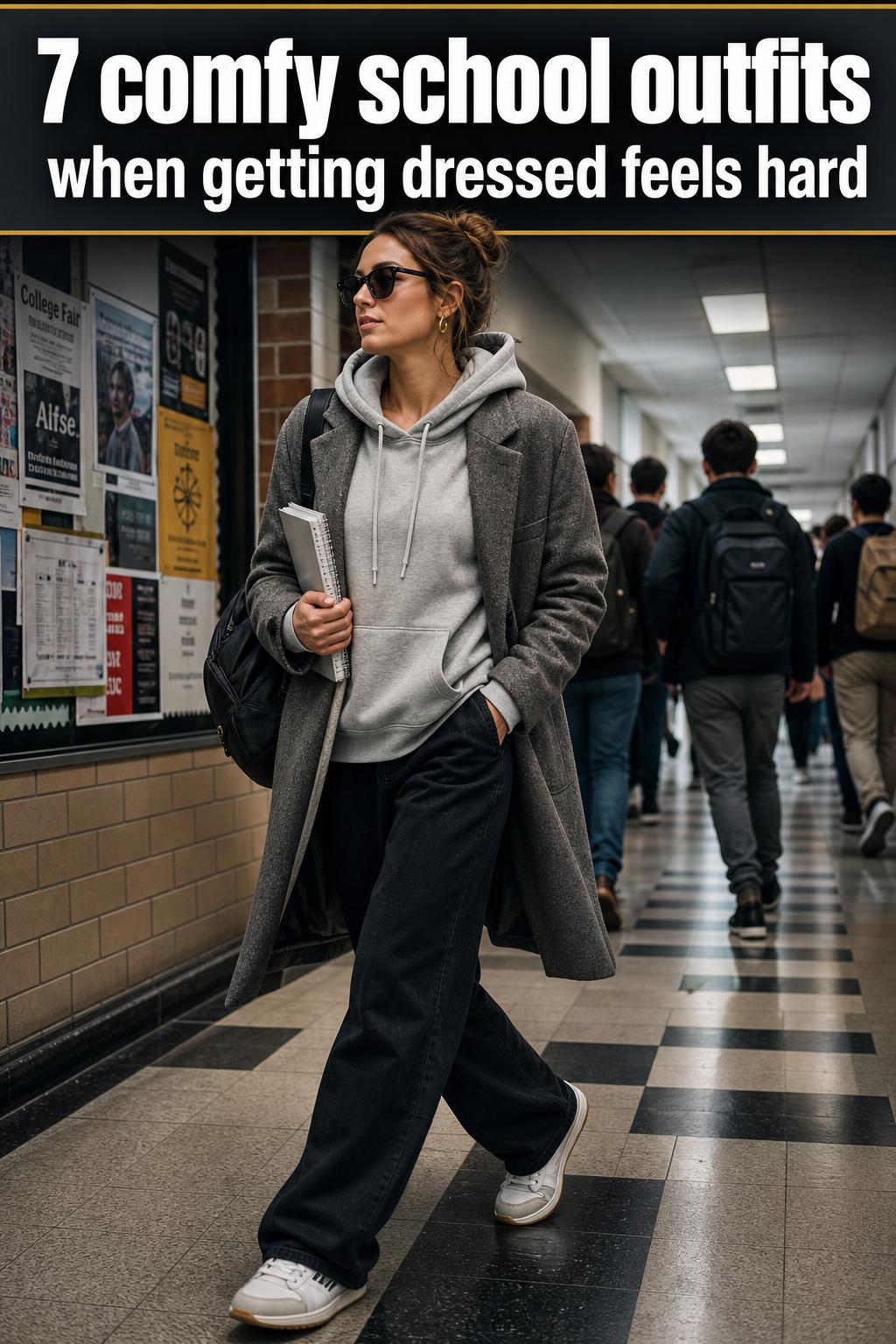
Not every comfortable outfit has to read sporty. A knit sweater or long-sleeve top with wide-leg pants offers a softer, more polished interpretation of comfy school outfits. It is especially useful for students who want comfort without leaning too heavily on classic athleisure. The mood is quieter, slightly more refined, and ideal for classrooms, presentations, or days when a dress code asks for a little more structure.
Why this outfit works
The knit texture introduces visual depth, while wide-leg pants create movement and comfort through the lower half of the silhouette. When the top has some definition at the shoulder or hem, the overall line stays balanced. Comfortable shoes complete the look without undercutting it. Flats can soften the outfit, while sneakers keep it youthful and practical.
Fabric choice carries more weight here than in a basic sweatshirt outfit. Breathable cotton and soft wool-blend sweaters give warmth without the heavy drag that can make indoor dressing feel claustrophobic. Stretch through the waistband or a forgiving cut through the hip becomes important during long seated periods. This is one of the clearest examples of how fabric science and real-world wear intersect in school fashion.
- Knit sweater + wide-leg pants + sneakers
- Long-sleeve tee + soft trousers or joggers + flats
- Comfortable wool-blend sweater + relaxed pants + low-profile shoes
- Fitted knit + wide-leg pants + cardigan carried for layering
Color harmony helps this outfit feel deliberate. Tonal combinations such as cream with heather gray, navy with charcoal, or soft earth tones keep the silhouette calm and wearable. If the pants are voluminous, avoid adding too many competing details on top. Let texture do the work.
Budget-friendly alternative
If buying new pieces is not the goal, start with one upgraded knit and pair it with existing joggers or wide-leg pants. The sweater is often the item that changes the visual tone of the outfit fastest. A familiar bottom with a more elevated top can create the impression of a whole new wardrobe without overcomplicating shopping.
Layering that survives real classroom temperatures
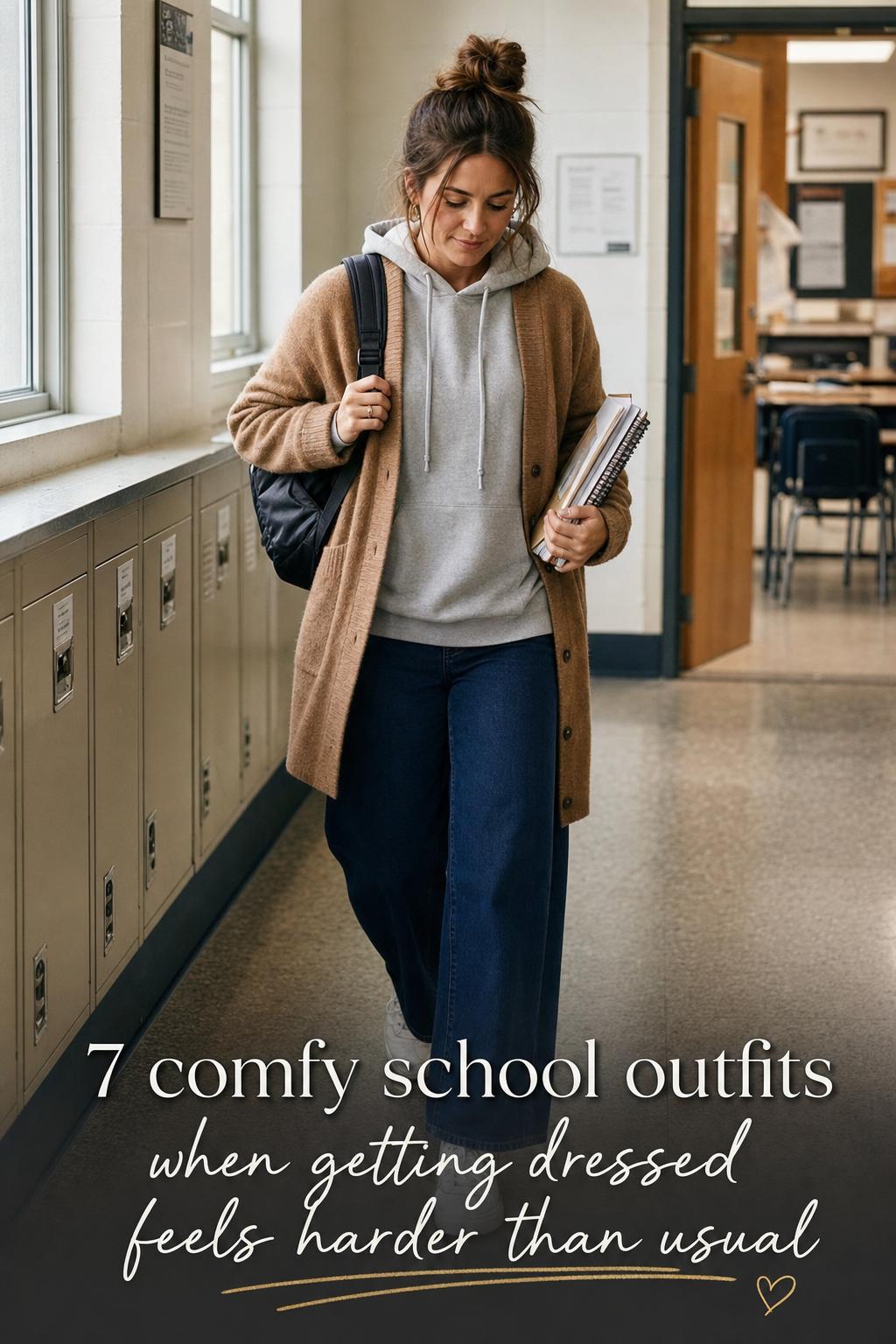
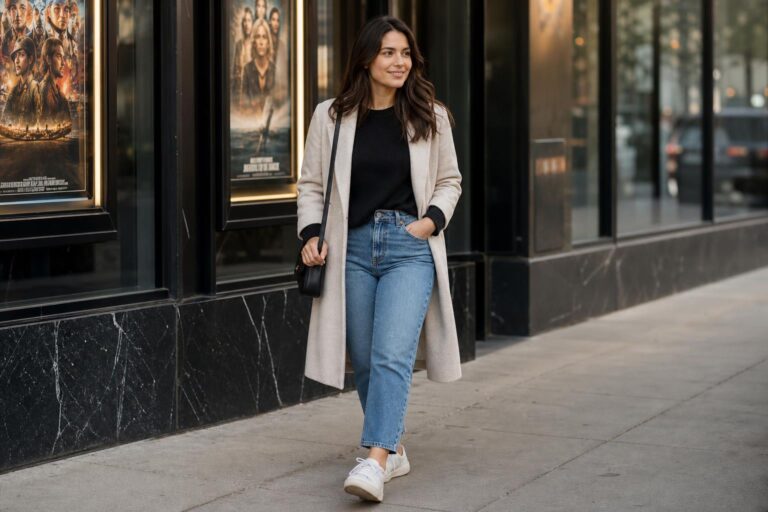
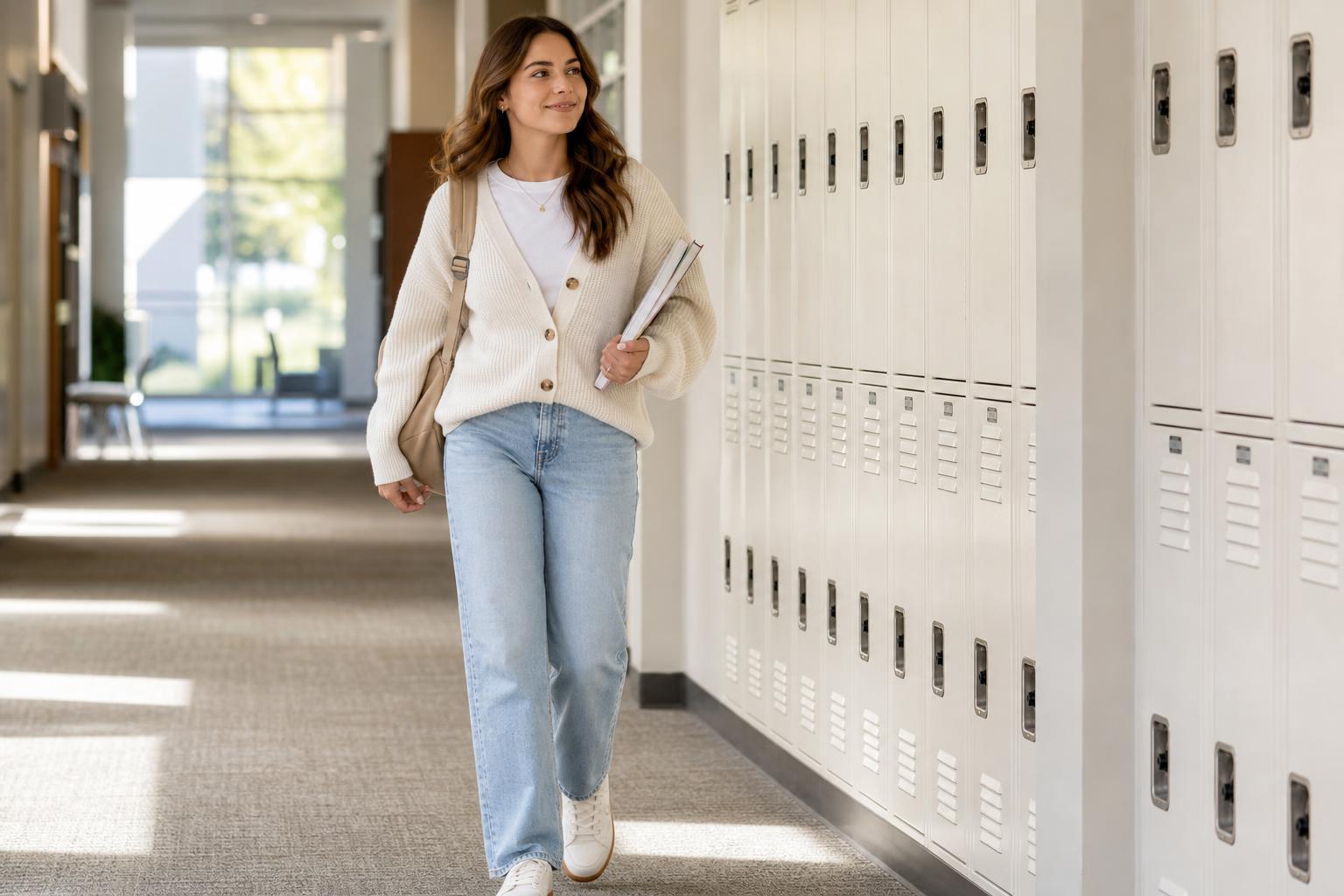
One of the most practical school outfit skills is temperature management. Hallways can feel warm, classrooms can feel cold, and transit adds another climate layer entirely. That is why a tee with a cardigan or lightweight jacket and denim or chinos remains one of the smartest formulas. It is less about trend and more about modular styling.
Key piece breakdown
A t-shirt acts as the breathable base. A cardigan softens the look and adds warmth with minimal bulk, while a lightweight jacket brings more structure. Denim or chinos ground the outfit and usually align more easily with school dress codes than highly distressed or overly tight alternatives. The result is a layered composition that can shift through the day without looking pieced together at random.
This combination also works well for students moving between classroom time and after-school activities. Removing the outer layer changes the mood immediately, which is useful for sports practice, clubs, study sessions, or just the trip home. From a style analysis perspective, the success comes from contrast: soft over structured, casual over slightly tailored, relaxed under practical.
- Tee + cardigan + denim + sneakers
- Tee + lightweight jacket + chinos + sneakers
- Long-sleeve base layer + cardigan + straight-leg denim + backpack
- Tee + light jacket + joggers + sneakers for a more athleisure-leaning version
Tips for cleaner layering
Keep the base layer close enough to the body that the outer piece can sit properly. Too much fabric underneath a cardigan or jacket causes bunching and ruins the line. Also watch sleeve length. When sleeves collect at the wrist, the outfit starts to feel fussy rather than effortless.
For private-school or more rule-conscious environments, chinos and a cardigan often feel safer than joggers and a hoodie while still delivering comfort. For public-school settings with more flexibility, the same layering logic can be translated into softer denim and a more casual outer layer. This is where region and school culture matter. Urban and suburban dress-code expectations are not always identical, and comfort has to work within that reality.
Feminine contrast with structured basics
Comfy school outfits are often discussed through hoodies and sneakers, but skirts and dresses deserve equal attention. When styled with leggings or tights and a cardigan or blazer, they become one of the most versatile dress-code-friendly options. The effect is softer, but not less practical. In fact, this formula often handles modesty and indoor temperature shifts especially well.
Silhouette logic
A dress or skirt introduces movement and shape. Leggings or tights restore comfort, coverage, and warmth. A cardigan keeps the outfit relaxed, while a blazer moves it toward a more structured interpretation. This balance between fluid and fitted elements is what prevents the look from becoming overly formal or overly casual.
For students navigating strict dress codes, modest-length skirts and dresses are especially useful because they can be adapted with layers rather than abandoned. The addition of tights extends seasonal range into fall and winter. The cardigan softens the visual line and makes the outfit easier to wear across a full school day.
- Modest-length skirt + tights + cardigan + flats
- Simple dress + leggings + cardigan + sneakers
- Skirt + tights + blazer + comfortable shoes
- Dress + lightweight knit layer + backpack for a softer academicwear feel
Why this combination works: it brings feminine contrast into a wardrobe that might otherwise lean heavily on athleisure. It also broadens the idea of comfort. Stretch layers, soft knits, and practical shoes can make a skirt-based outfit feel every bit as wearable as joggers, especially for students who prefer more visual variety.
Warm-weather versions that still feel school-appropriate
Warmer days require a different kind of restraint. The challenge is not only staying cool but maintaining the ease and coverage expected in many schools. The strongest approach is to lighten fabric and reduce layering density without abandoning outfit structure. That means breathable cotton tees, lighter knits, easy skirts, and simple sneakers or flats that can handle a full day.
Dress-down outfits for warmer weather work best when they remain anchored by one dependable element. A neat sneaker, a cardigan tied over the shoulders for cold classrooms, or a modest-length skirt can all serve that purpose. Without an anchor, summer-leaning school outfits can start to feel underbuilt.
Most wearable formulas for warmer days
- T-shirt + chinos + sneakers
- Lightweight top + modest skirt + flats
- Simple dress + cardigan for indoor layering + sneakers
- Long-sleeve lightweight knit + easy pants + backpack for strong air-conditioning days
Moisture-wicking and breathable blends become more valuable in this category. Even when a school environment limits how minimal an outfit can be, fabric behavior can still make the difference between feeling overheated and feeling composed. This is also one area where anti-chafe seams and soft finishes matter in a very practical way, especially for students moving between classes, activities, and outdoor transit.
Dress-code mapping without sacrificing personality
A dress code does not eliminate style; it narrows the frame. The easiest way to build comfy school outfits under common U.S. dress-code expectations is to start with categories instead of single items: covered shoulders when needed, modest hemlines, bottoms with ease but not excess, and layers that can adapt to classroom temperatures. Once those boundaries are understood, the styling decisions become much easier.
How to translate common rules into real outfits
- If the school is cautious about athletic wear, choose knit sweaters, chinos, or wide-leg pants instead of full sweats.
- If skirt length is monitored, use modest-length silhouettes with tights or leggings for extra coverage.
- If outerwear cannot replace a proper top, make sure the tee, long-sleeve, or knit under a hoodie or jacket stands on its own.
- If footwear must remain practical, keep sneakers or flats comfortable and clean rather than overly fashion-forward.
Public and private schools often interpret these standards differently, and regional expectations can shift too. Some suburban settings lean classic and uniform-adjacent, making polo shirts, cardigans, and chinos especially useful. More casual environments may allow joggers or broader athleisure styling. The key is not to fight the framework but to build within it using comfort-focused pieces that still feel like you.
Accessories can help restore individuality without creating dress-code issues. A backpack, headband, hair clips, or a simple belt adds detail and character. These pieces should support the outfit rather than distract from it. In strong everyday dressing, accessories are usually finishers, not rescue tools.
Seasonal shifts: what changes from back-to-school to exam season
Seasonality changes both the materials and the emotional tone of school dressing. Back-to-school often encourages fresh staples and easy outfit formulas. Fall invites denser layering. Winter increases the need for thermal strategy. Spring pulls the wardrobe back toward lighter fabrics and cleaner silhouettes. The pieces may stay familiar, but the way they are combined should change.
Fall and wall-season layering
Early fall is where cardigans, lightweight jackets, hoodies, denim, and chinos all perform best. Layering works because the weather is inconsistent, and school buildings rarely match the outdoor temperature. Tonal outfits feel especially effective here because they allow multiple layers without visual clutter.
Winter comfort with less bulk
The mistake many students make in winter is stacking heavy pieces instead of strategic ones. Thermal underlayers, breathable knits, and manageable outer layers usually outperform one oversized sweater that becomes unwearable indoors. Ergonomics matter too: if a coat or backpack combination feels too heavy through the shoulders, the outfit becomes tiring by mid-day.
Spring clarity and lighter texture
Spring outfits benefit from visual simplification. Swap dense fleece for lighter cotton, keep one outer layer available, and let footwear stay practical. This is a strong season for tee-plus-cardigan combinations, easy dresses with sneakers, and wide-leg pants with softer knit tops.
Exam days and long-focus dressing
Midterms and exam periods call for especially distraction-free clothing. This is when soft joggers, stable sneakers, a reliable hoodie or sweatshirt, and a breathable base layer become more than casual defaults. They reduce friction. The outfit should support long seated periods, quick movement between rooms, and shifting temperatures without requiring attention. On high-focus days, simplicity is a styling advantage.
The 10-piece capsule that covers most school days
A good school capsule does not need to be large. It needs to be interoperable. Each piece should pair with several others, work across more than one season, and adapt to different dress-code levels. This is the most efficient route to comfy school outfits that still feel varied.
- One reliable hoodie
- One sweatshirt or second knit layer
- Two t-shirts or long-sleeve basics
- One cardigan
- One pair of joggers
- One pair of wide-leg pants or chinos
- One pair of denim
- One modest-length skirt or simple dress
- One pair of sneakers
- One practical backpack
This capsule works because it blends athleisure, layering, and dress-code flexibility. The hoodie and joggers handle the most casual days. The cardigan and wide-leg pants or chinos create a more polished option. Denim bridges the two. The skirt or dress introduces another silhouette entirely, which prevents the wardrobe from feeling visually repetitive.
How to build from this capsule without overspending
Invest first in the pieces that get worn most often and affect comfort directly: sneakers, one dependable hoodie, and a pair of bottoms that fit well through a full day. After that, add a cardigan or knit sweater for versatility. When shopping, return policies and size consistency matter because school wardrobes are used hard and often. A lower price does not help if the piece twists, pills quickly, or fails after a few washes.
Shopping with a fabric-and-fit mindset
Comfort is often decided in the construction details. A piece may look right online yet fail in the classroom because the fabric traps heat, the seams rub, or the waistband lacks flexibility. That is why shopping for comfy school outfits should focus less on trend labeling and more on material behavior, stretch, shape retention, and care.
What to look for
- Breathable cotton for base layers and easy everyday tops
- Polyester blends when moisture-wicking and durability are priorities
- Soft knits that feel warm without becoming too heavy indoors
- Elasticity in waistbands and cuffs where movement matters most
- Stitch quality that holds shape through frequent wear and washing
Inclusive sizing also belongs in this conversation. The right comfy outfit depends on how the silhouette interacts with the body, not on one narrow fit model. A hoodie should allow movement without swallowing the frame. Wide-leg pants should skim cleanly rather than drag. A cardigan should layer easily without pulling at the shoulders. Comfort is never one-size-fits-all, and the best styling decisions take that into account.
There is also room for eco-conscious choices here. Eco-friendly fabrics and ethical production are not the main story of school dressing, but they are relevant when two pieces perform similarly and one offers better long-term value or material quality. Practical wardrobes benefit from thoughtful buying.
Real-life wear: after-school movement, transit, and the long day factor
Many school outfit guides stop at the first bell, but actual wear continues long after that. Students move into clubs, sports, part-time responsibilities, tutoring, and public transit. Teachers and educators often need the same adaptability for classroom hours followed by meetings or commuting. This is where the difference between a nice outfit and a functional one becomes obvious.
A student heading from class to after-school activities benefits from a layered look that can shed one piece quickly. A teacher in a cardigan, tee, and chinos may prefer sneakers or comfortable flats that remain stable through standing, walking, and transitions. In both cases, the outfit succeeds because it respects movement patterns. Fashion editors and creators often frame comfort as aesthetic, but in school contexts it is also logistical.
Style insight
Ergonomic backpacks and shoes with solid support can change how an outfit feels more than a trend piece ever will. They also affect the line of the outfit. If a backpack sits badly or weighs too much, it distorts the shoulders and changes posture. If shoes lack support, even the best-styled look loses confidence by the end of the day. Function is part of visual presence.
Creator-inspired dressing without the costume effect
Influencers and student creators have helped define the current language of comfy school outfits: neutral hoodies, clean sneakers, easy layering, soft hair accessories, and outfits that feel camera-ready without being formal. Fashion editors tend to sharpen that language by emphasizing proportion and restraint. The strongest takeaway from both approaches is not to copy every item exactly, but to understand the formula underneath.
A creator might style a hoodie with matching joggers and make it feel elevated through tonal dressing and clean sneakers. An educator or teacher might translate the same comfort principle into a cardigan, knit top, and chinos. The connection is clear: both prioritize all-day wear, movement, and presentability. What changes is the degree of polish and the school environment.
This is also why personal adaptation matters. A wardrobe built around academicwear should feel expressive but realistic. Headbands, hair clips, sneakers, skirts, hoodies, and cardigans all carry different styling energy. The goal is not to build a social-media uniform. It is to create a version of comfort that still feels visually coherent in your life.
Common styling mistakes that make comfortable outfits fall flat
Even strong basics can look unfinished when the supporting choices are off. Most school outfit problems come down to one of three issues: too much volume, too little structure, or the wrong fabric for the day’s conditions.
- Wearing oversized pieces from head to toe, which removes silhouette definition.
- Ignoring layering needs and ending up uncomfortable in cold classrooms.
- Choosing shoes for appearance only, then losing comfort before lunch.
- Using fabrics that trap heat or cling awkwardly through long seated periods.
- Forgetting that a backpack, cardigan, or sneaker can act as the outfit’s visual anchor.
The fix is rarely dramatic. Usually it means refining one element: cleaner sneakers, a better cardigan length, joggers with a more flattering leg line, or a knit that drapes instead of bunches. Comfortable dressing improves when it becomes more specific.
Three dependable outfit planners for different school moods
The high-focus day
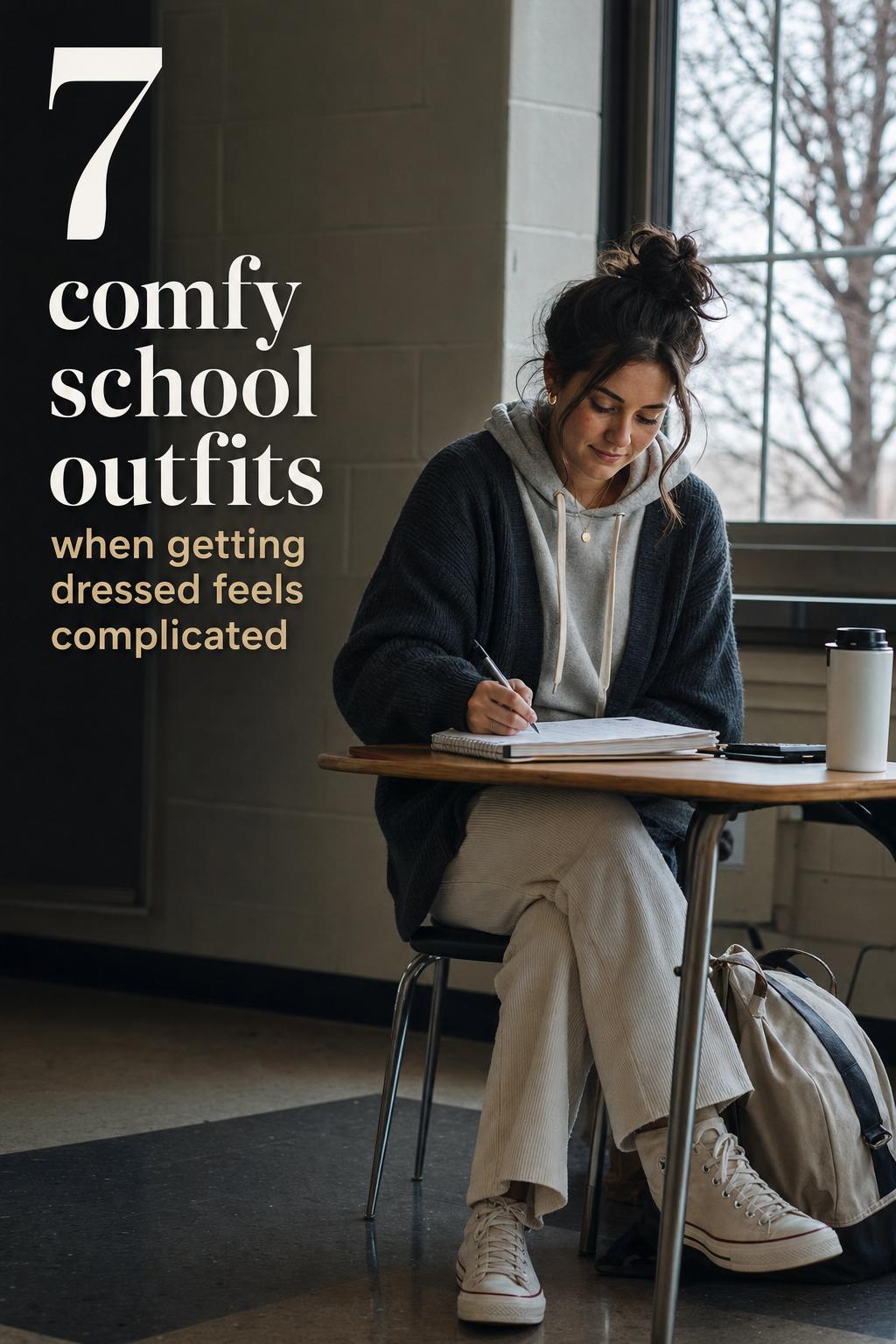
Choose a sweatshirt or hoodie, joggers with a controlled shape, sneakers, and a breathable tee underneath. This combination reduces distraction and handles long periods of sitting, making it ideal for midterms, presentations, or dense academic schedules.
The polished casual day
Use a knit sweater or cardigan over a tee, then add wide-leg pants or chinos with comfortable flats or sneakers. The effect is more refined than classic athleisure, but still easy enough for a long day. This is one of the strongest formulas for dress-code-friendly comfort.
The soft feminine day
Build around a modest dress or skirt, then add tights or leggings, a cardigan, and practical shoes. This outfit works especially well in cooler weather or in schools where more covered silhouettes feel appropriate. The layering keeps it grounded in reality rather than purely aesthetic.
Final thoughts on making comfy school outfits feel personal
The appeal of comfy school outfits is not just that they are easy. It is that they respect the pace of everyday life while still leaving room for mood, taste, and self-presentation. A hoodie, cardigan, joggers, denim, skirt, sneakers, or backpack may seem basic on its own, but together these pieces create a wardrobe language that is flexible, dress-code aware, and genuinely wearable.
The most successful school style is rarely the most complicated. It is the one that understands texture, proportion, and movement well enough to feel effortless. Start with the pieces that support your day, then refine the silhouette until it feels like your version of comfort. That is where the look becomes memorable.
FAQ
Are joggers school-appropriate?
Joggers are often school-appropriate, but it depends on the dress code and the overall styling. In more casual school settings, joggers with a clean fit, a hoodie or sweatshirt, and neat sneakers usually work well. In stricter environments, chinos or wide-leg pants may be a safer comfort-first alternative.
What fabrics are best for comfy school outfits?
Breathable cotton, soft knits, and practical polyester blends tend to work best because they support movement, temperature shifts, and long wear. Moisture-wicking blends can be especially useful on warmer days, while lightweight wool-blend sweaters add warmth without excessive bulk in colder classrooms.
How can I make a hoodie outfit look more put-together for school?
The easiest way is to control the proportions and keep the finish clean. Pair a slightly relaxed hoodie with joggers that have a neater leg line, add clean sneakers, and use a tee underneath for layering flexibility. A simple backpack and tonal color palette also make the outfit feel more intentional.
How do I style denim for a dress-code-friendly school outfit?
Choose denim with a clean silhouette and pair it with a tee, cardigan, lightweight jacket, or knit sweater. This keeps the outfit balanced and practical. If your school has more conservative rules, avoid overly distressed denim and use layers that provide enough coverage on their own.
What should I wear on exam days when I want to feel comfortable but not sloppy?
A sweatshirt or hoodie, soft joggers or easy pants, supportive sneakers, and a breathable base layer usually work best. The goal is to eliminate distraction, regulate temperature, and stay comfortable through long seated periods. Clean shapes and simple colors help the outfit feel composed rather than careless.
Can skirts and dresses still count as comfy school outfits?
Yes, especially when they are styled with leggings or tights and a cardigan or blazer. That combination improves warmth, modesty, and movement while keeping the outfit soft and wearable. Modest-length silhouettes tend to be the most versatile for school settings.
What are the most important pieces to buy first for a school capsule wardrobe?
Start with supportive sneakers, one reliable hoodie, one versatile pair of bottoms, and a cardigan or knit layer. These pieces cover the most common school situations and can be mixed with basics you likely already own, such as tees, denim, or a simple dress or skirt.
How do I dress comfortably for school in warm weather without ignoring dress code?
Use lighter fabrics instead of removing structure completely. Breathable tees, easy chinos, modest skirts, simple dresses, and sneakers or flats usually work well. Keeping a cardigan nearby for cold classrooms helps the outfit stay functional throughout the day.
Do accessories matter in comfy school outfits?
They do, but in a supporting role. A practical backpack, simple headband, hair clips, or a belt can add personality and polish without making the outfit feel overstyled. The best accessories reinforce comfort and cohesion rather than competing with the main clothing pieces.