Curvy Hourglass Body Shape Outfits for Every Occasion
Curvy hourglass body shape outfits do not need to follow a strict list of rules. They work best when they help you choose proportions, fabrics and details that feel comfortable on your body and make sense for the day ahead. A defined waist, fuller bust or hips, and balanced curves can guide your styling, but they do not dictate what you are allowed to wear. You can dress close to the body, choose soft volume, or build a relaxed outfit that barely references shape at all.
This guide compares the most useful approaches so you can decide instead of guessing. You will find outfit formulas for casual days, work, dates, events, travel and changing weather, along with practical checks for waist gaping, tight sleeves, rising hems and fabrics that lose their shape. Use the suggestions as a menu. Keep the ideas that feel like you, adapt the rest, and remember that the best outfit is the one you can move through the day wearing with ease.
The three outfit approaches that work for curvy hourglass proportions
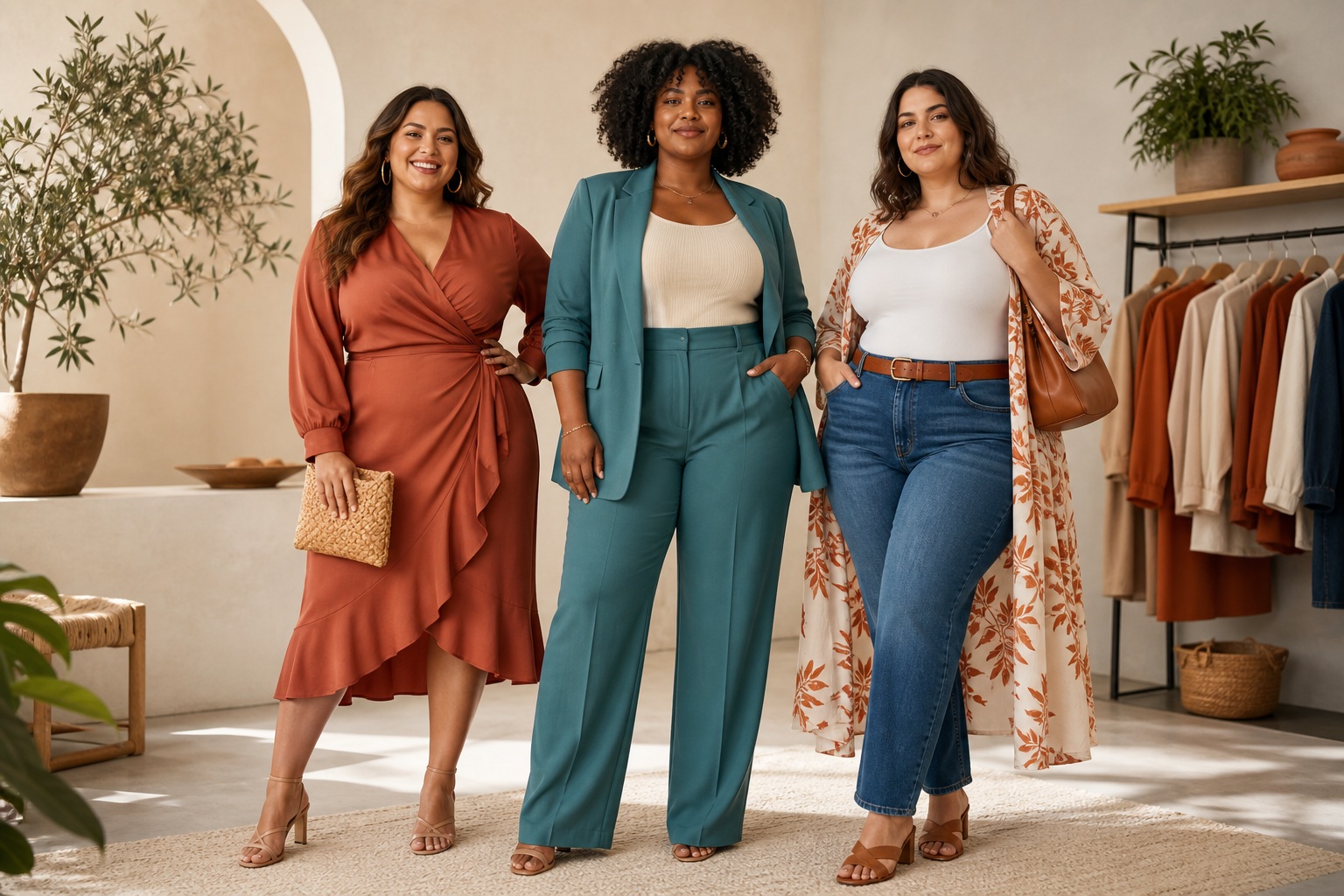
Most successful curvy hourglass body shape outfits fall into three broad approaches: close and defined, softly structured, or relaxed with a visible anchor. None is more correct than the others. The right choice depends on your mood, the activity, the fabric and how much attention you want to give your clothes that morning.
Close and defined
The close and defined approach follows the body without squeezing it. Think of a ribbed knit top with straight jeans, a wrap dress, a fitted tee tucked into a midi skirt, or a bodysuit with wide-leg trousers. The key is ease. A garment should skim rather than pull across the bust, waist or hips, and you should be able to sit, reach and breathe normally. Stretch with recovery is useful here because it moves with you and returns to its original shape.
Found the dress? Keep the rest in one place.
Zarellea brings guest details, vendors, timelines, and every next step together — so your wedding plan feels as good as your look.
- Choose one close-fitting piece and balance it with a straighter or softer companion.
- Use a true waist seam, wrap tie, tuck, belt or shaped waistband when you want definition.
- Check the garment from the side as well as the front. Pulling at the bust or hips usually means you need a different size or cut.
- Let the outfit show your proportions without treating them as a problem to correct.
Softly structured
Soft structure gives an outfit a clear shape without making it feel formal or restrictive. A shaped blazer over a knit tank, a denim jacket with a gentle waist seam, a belted shirt dress, or a cardigan worn open over a fitted base all fit this category. Look for shoulder seams that sit correctly, enough room through the upper arm, and fabrics that hold a line without becoming stiff. A jacket does not need to be tight at the waist to look intentional. It can create a vertical frame while your base layer supplies the definition.
Relaxed with an anchor
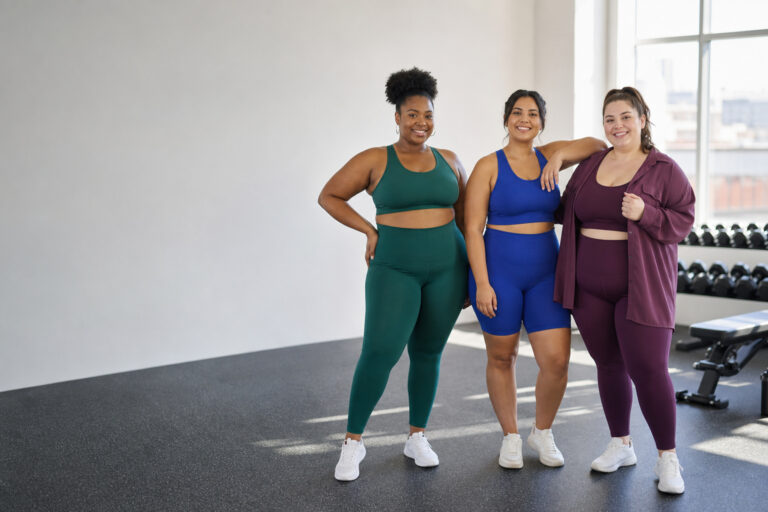
Relaxed clothing can look excellent on curves when it has one visual anchor. That anchor might be a front tuck, a cropped layer, a rolled sleeve, a belt, a column of color, or a shoe that gives the outfit weight. Try an oversized button-down with a fitted tank and straight jeans, a roomy sweater over a slip skirt, or wide-leg pants with a shorter jacket. The goal is not to make every part of the body visible. It is to keep volume from becoming accidental.
When an oversized top feels shapeless, change only one variable first. Tuck the front, open the neckline, push up the sleeves, or add a narrow belt. If the outfit still feels wrong, the problem may be the fabric or length rather than your body. A very stiff shirt and a very long top can overwhelm almost anyone, while a fluid shirt at the right length may feel easy and polished.
Build the wardrobe: tops, bottoms, dresses, layers and shoes
A useful wardrobe is not a collection of supposedly perfect pieces. It is a group of items that work together across proportions and situations. Before buying another trend item, identify which part of your outfit is causing friction. If tops fit the bust but gape at the waist, look for darts, wrap construction, back ties or tailoring. If jeans fit the hips but leave a gap at the back, try a curvy cut, a contoured waistband or a size that can be altered at the waist.
Tops that give you options
Start with tops you can wear tucked, untucked and layered. A smooth crew neck, a V-neck, a square neck, a fine-gauge mock neck and a draped blouse cover different moods without requiring a new wardrobe. Wrap tops are useful because the tie lets you control the waist, but check that the crossover stays secure when you move. A button-down can work beautifully when it has bust-friendly spacing, a curved hem or enough fabric to move across the chest without pulling.
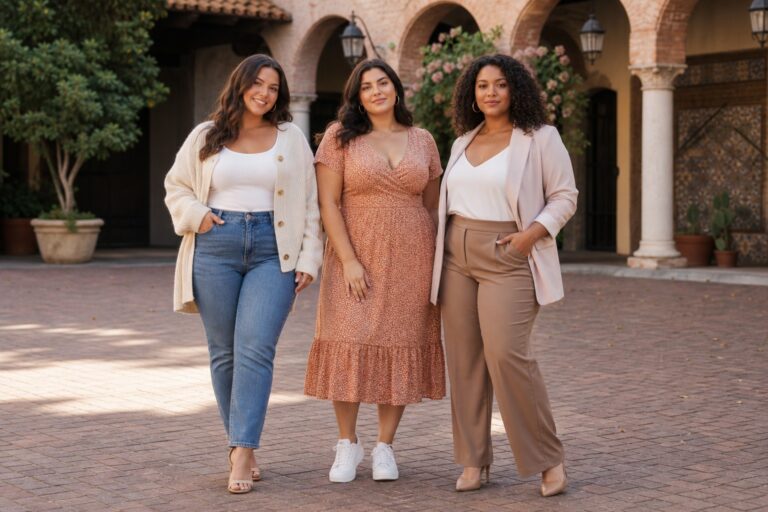
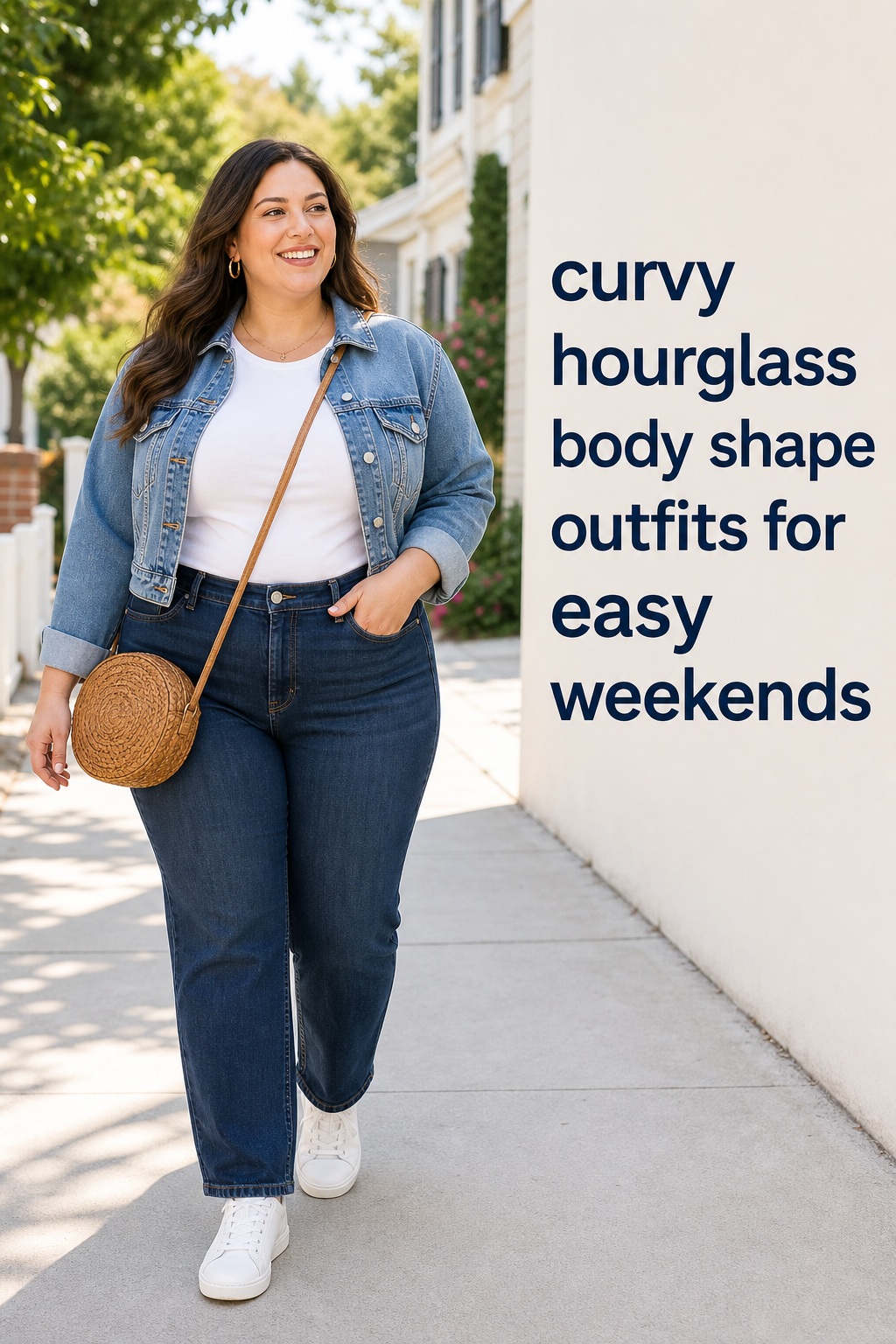
For a casual curvy hourglass outfit, try a fitted cotton tee with high-rise straight jeans and a lightweight overshirt. For work, tuck a fluid blouse into trousers and add a single-breasted blazer. For a relaxed weekend, use a longer tee with a front tuck and a cropped denim jacket. If a top is cropped, test it while sitting. The right length should stay where you want it without constant pulling.
Denim and trousers
High-rise is not automatically the best rise. The best waistband is the one that sits comfortably at your natural waist or preferred position without digging in, rolling or sliding down. Curvy-fit denim can provide extra room through the hips and thighs with a smaller waist ratio, but every brand defines curvy differently. Read the measurement chart and compare it with a pair you already like.
- Straight-leg jeans: a dependable base for fitted tees, blazers, sweaters and ankle boots.
- Wide-leg trousers: balance a close top or shorter jacket and create an easy vertical line.
- Flare or bootcut jeans: add visual weight below the knee and work well with a tucked knit or fitted jacket.
- Pull-on trousers: useful for travel and long days when the fabric and waistband have enough support.
- Midi skirts: pair with a tucked top, a cropped cardigan or a long open layer depending on the shape you want.
Pay attention to the rise and inseam together. A rise that is too short can create pulling at the front and back, while a rise that is too long can bunch under a top. The hem should suit the shoe you plan to wear. If you love a pair everywhere except the length, alterations may be more useful than continuing to search for a mythical perfect pair.
Dresses and one-piece outfits
Wrap dresses, fit-and-flare dresses, column dresses with a tie, and softly gathered styles all offer different ways to dress curves. A wrap dress is adjustable, but it should not pull open at the bust or require you to retie it every few minutes. A column dress can be relaxed and elegant when it has enough room through the hips and a side slit or shaped seam for movement. A fit-and-flare dress creates contrast between the upper body and skirt, but you can also choose a straighter silhouette if that feels more like your style.
Jumpsuits can be especially versatile when the torso length is right. Check the rise, shoulder comfort and ease of using the bathroom before keeping one. A belt can alter the look, but it should not be doing the work of holding a garment together. If the waist is comfortable without the belt, the piece is more likely to become a repeat favorite.
Layers and shoes
Layers create outfit variety and help you manage temperature. A cropped jacket highlights a high-rise base, a blazer adds polish, and a long open cardigan creates movement without adding a second waistline. If a long layer makes you feel hidden, wear it open and keep the base outfit in one color. If a shorter jacket feels too sharp, choose a soft fabric or leave it unbuttoned.
Shoes finish the proportion, but comfort comes first. Sneakers, loafers, ankle boots, low block heels, ballet flats and sandals can all work with curvy outfits. A wide-leg trouser often needs a shoe with enough visual weight, while a slim ankle pant may work with a lighter shoe. Match the shoe to the amount of walking and standing you will do rather than choosing it only for the photo.
Curvy hourglass body shape outfits for real situations
Outfit advice becomes useful when it answers a real question: what will work for this day, this weather and this level of comfort? Use the formulas below as starting points, then adjust color, print, neckline and shoe to your personal style.
Easy casual days
For errands, coffee or a casual lunch, combine a fitted or softly draped tee with straight jeans, a front-tucked overshirt and comfortable sneakers. A belt can connect the colors without making the waist the only focus. Another easy option is a knit midi dress with a denim jacket and flat boots. If you prefer more coverage, try relaxed cargo pants with a close tank and an open shirt. The outfit will feel balanced because the top layer is open and the tank provides a simple base.
For hot weather, use a sleeveless column dress, linen-blend trousers with a tucked tank, or pull-on shorts with a lightweight button-down. Look for breathable fabrics and avoid relying on shapewear to make a summer outfit wearable. Anti-chafing shorts, a smooth slip or a fabric with enough opacity can solve practical problems without changing the silhouette.
Work and business casual
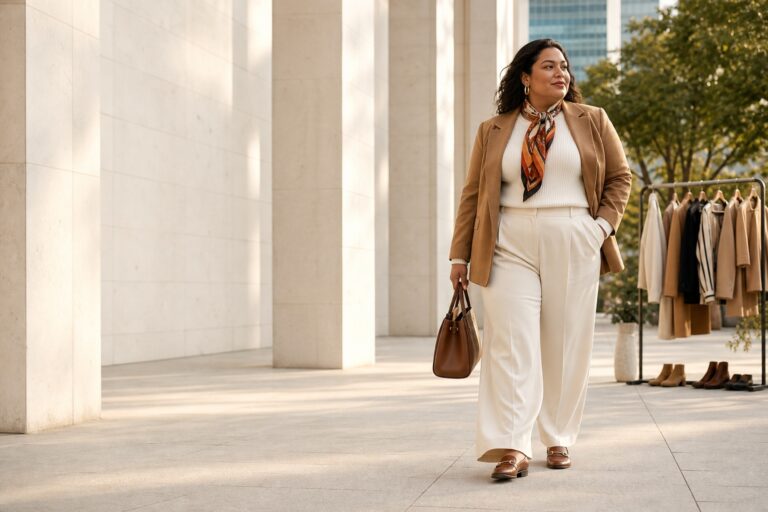
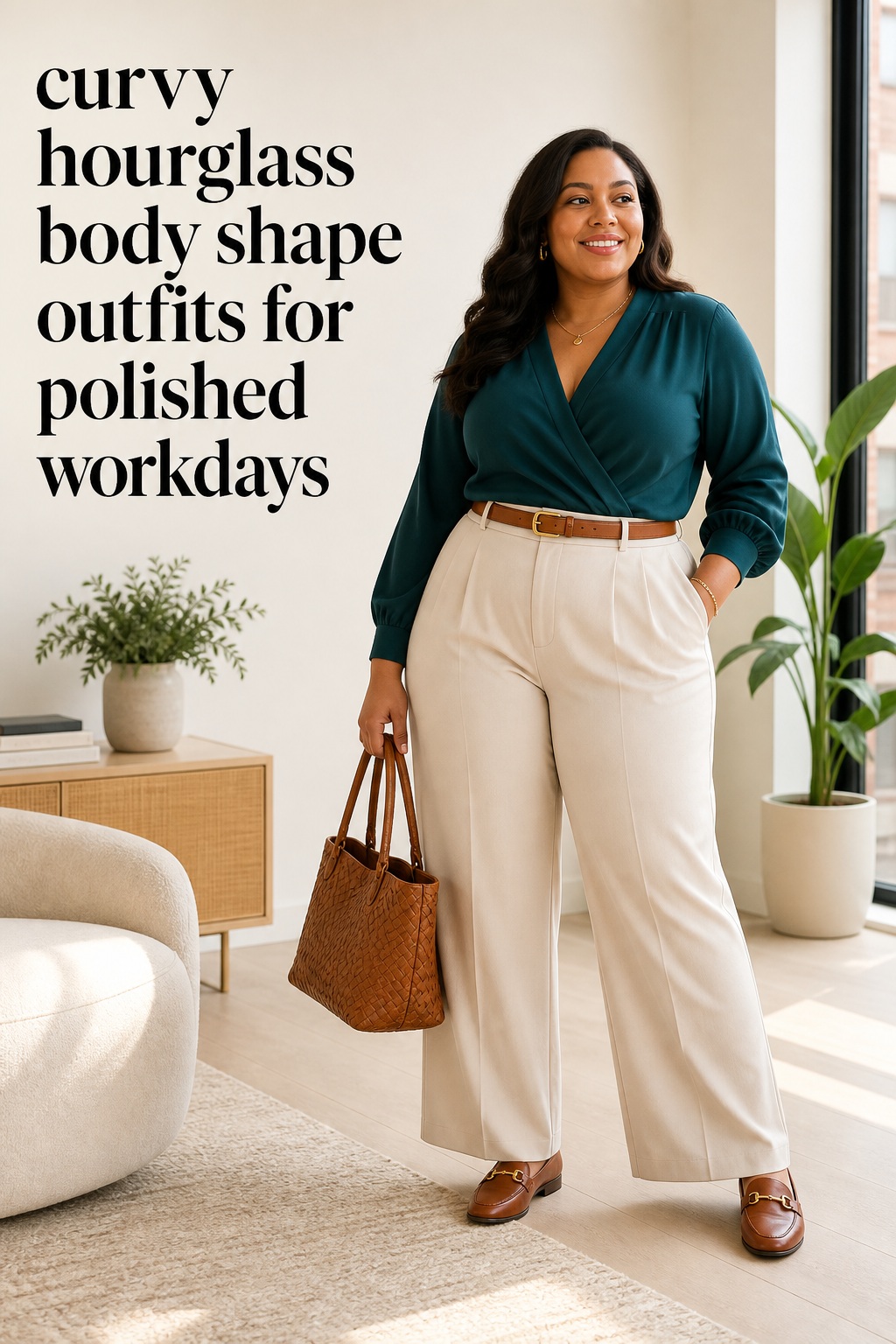
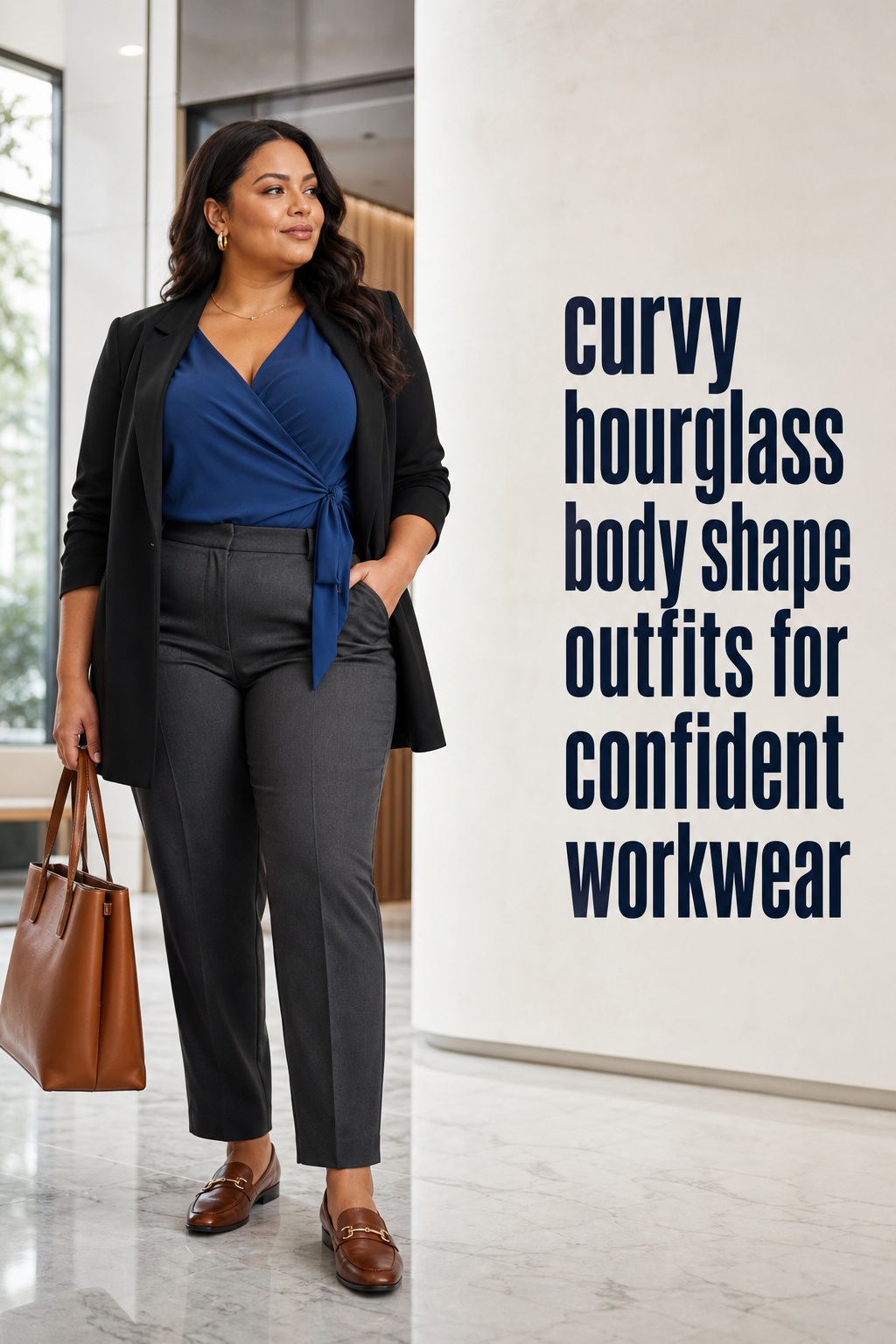
A polished work formula is a fluid blouse, straight or wide-leg trousers, a shaped blazer and loafers. Keep the blouse loose enough through the bust and use a partial tuck if a full tuck creates too much fabric. A knit dress with a longline blazer is another reliable option, especially when you need to move between meetings. Choose fabrics that resist wrinkling and check that the blazer sleeves allow you to reach forward comfortably.
For a less formal office, wear a fine-gauge sweater with a midi skirt and a denim or utility jacket. A monochromatic base can make the outfit feel cohesive even when the outer layer is relaxed. If your workplace requires more coverage, a higher neckline does not need to mean a boxy shape. Try a fitted mock neck under a jacket or a softly draped blouse with a clean collar.
Date night and dinner
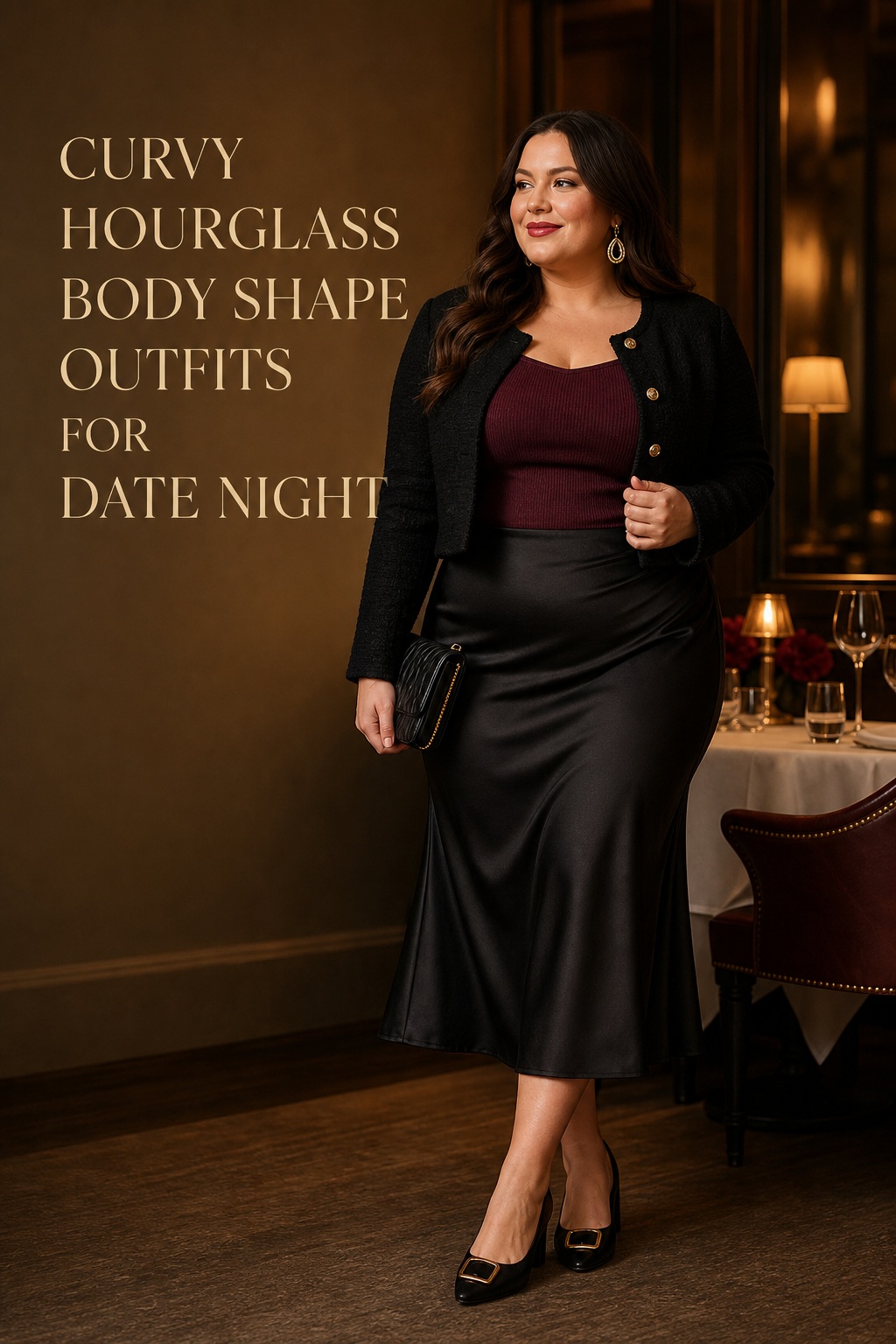
For date night, choose the level of drama you genuinely enjoy. A black wrap dress with low block heels is simple and adjustable. A satin skirt with a fitted knit and cropped jacket feels romantic without being delicate. A tailored trouser with a square-neck top and statement earrings creates a sharper look. If you prefer a looser silhouette, use a column of color and one noticeable accessory so the outfit still feels considered.
Test the outfit before leaving. Sit at the table, walk up stairs, lift your arms and check the neckline from different angles. A beautiful outfit that needs constant adjusting can make you feel self-conscious. Choose secure straps, a supportive bra or camisole, and shoes you can wear for the whole evening.
Events and dressier occasions
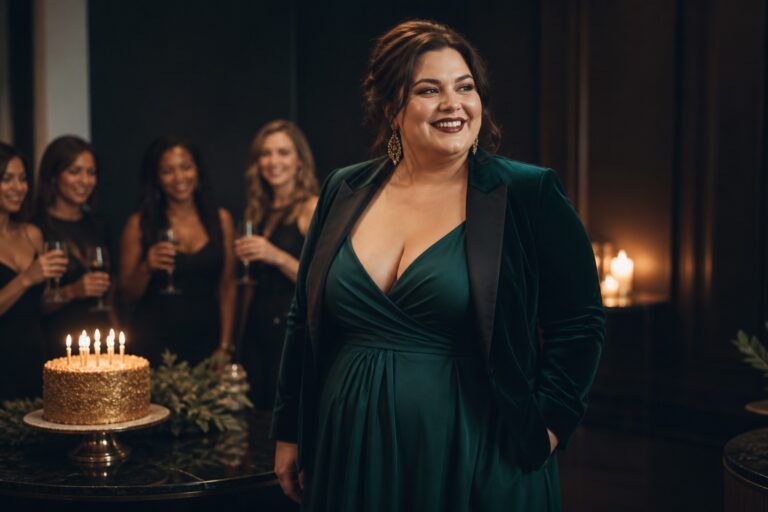
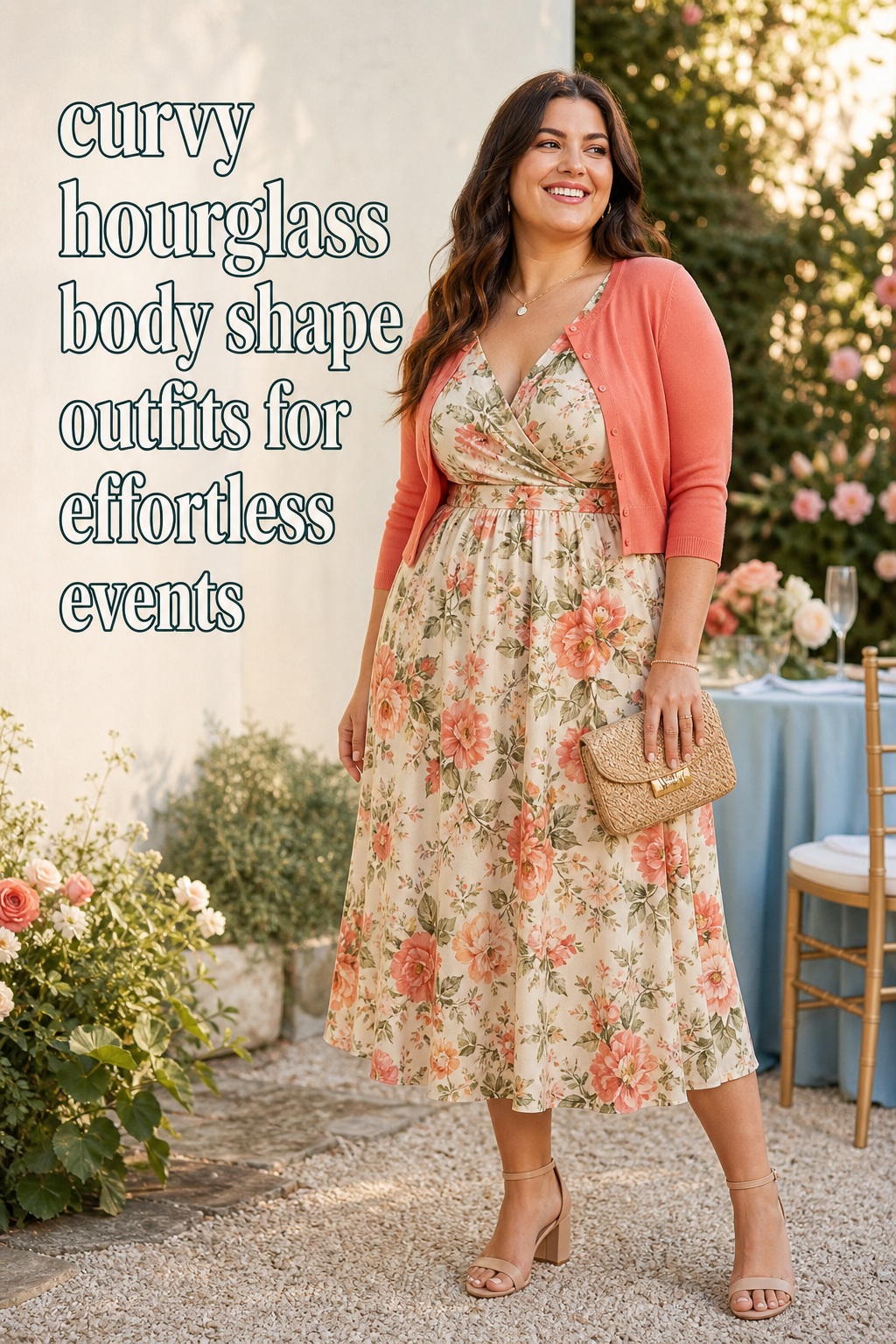
For weddings, parties and celebrations, a wrap midi dress, a one-shoulder column dress, a jumpsuit with a defined seam, or a tailored suit can all work. Focus on the event’s formality first, then decide whether you want shape, drape or volume. If a dress is fitted, look for lining and enough stretch to sit comfortably. If it is voluminous, balance it with a clear neckline, a shorter jacket or an intentional shoe.
Accessories can alter the message without requiring a new outfit. Metallic shoes and earrings make a simple dress feel festive. A satin clutch adds softness to tailoring. A bold lip or colorful shoe can supply contrast when the outfit is monochrome. Do not add several focal points just because the occasion is special. One strong detail often looks more modern.
Travel and long days
Travel outfits need comfort, layers and pockets or a secure bag. Try pull-on wide-leg trousers with a smooth tee, an open cardigan and supportive sneakers. A knit dress with leggings or bike shorts underneath can be easy on a long journey, while a denim jacket adds structure at your destination. Choose fabrics that are soft but not so thin that they become transparent or lose shape after sitting.
Use a three-color limit if packing feels difficult. A neutral base, one accent color and one metal tone can create many combinations. Pack a belt only if you will wear it in more than one outfit. Roll or fold pieces according to their fabric, and keep a small layer accessible rather than buried in a suitcase. The most practical travel wardrobe is the one you can remix without special styling tools.
Fit and shopping checklist for better results
Shopping for curves is often a measurement problem, a pattern problem or a fabric problem, not a personal failure. Use a short checklist before you decide that an item does not work.
- Bust: check pulling, button gaps and whether the armhole cuts in when you reach forward.
- Waist: sit down and breathe. A waistband should stay secure without digging or rolling.
- Hips and thighs: look for drag lines, pocket flare and hems that twist when you walk.
- Rise: check comfort while sitting, bending and climbing stairs.
- Inseam and length: test the garment with the shoe you actually plan to wear.
- Fabric recovery: stretch a knit or waistband gently. It should return rather than remain baggy.
- Transparency: inspect the piece in daylight and in the kind of lighting you expect at the venue.
- Care: confirm washing and drying requirements before buying a piece you want to wear often.
Read reviews for repeated fit information, not only star ratings. Look for comments about bust room, sleeve width, waist gaping, fabric weight, shrinkage and whether the item runs long or short. Compare the brand’s garment measurements when available. If returns are limited or expensive, avoid ordering several uncertain sizes unless the policy makes that practical.
Alterations can make a good garment excellent. A tailor may adjust a waistband, shorten a hem, move a button or refine a sleeve. Start with pieces that already fit well in the largest area you need to accommodate. It is usually easier to take in a waist or shorten a hem than to add significant room through the bust or hips.
Mistakes, trade-offs and easy adjustments
The most common mistake is treating a body-shape category as a command. Another is buying clothes that look flattering in theory but are uncomfortable in practice. Style advice should expand your choices, not make you reject colors, silhouettes or trends before trying them.
- Too much tightness: replace one restrictive piece with a skimming knit, a draped layer or a more supportive underlayer.
- Too much volume: open the layer, shorten the top, roll the sleeves or add a partial tuck.
- Back-waist gaping: try curvy-fit denim, a contoured waistband, a smaller waist size with enough hip room or a simple alteration.
- Tight sleeves: size for the upper arm and tailor another area if necessary. A jacket you cannot move in is not practical.
- Rising skirts or dresses: check the hip measurement, lining and walking ease. A slit or different length may solve the issue.
- Outdated proportions: keep the piece you love and update the companion item. A fitted top can feel current with wide-leg trousers, while a relaxed shirt can work with a slim skirt.
- Over-reliance on shapewear: treat it as optional support, never as a requirement for wearing a garment.
Prints, color and oversized shapes are available to you. If you want a print, consider scale, contrast and the rest of the outfit rather than whether the print is supposedly appropriate for your shape. If you love an oversized blazer, use it with a simple fitted base or wear it open. If you prefer a loose maxi dress, add movement through fabric and choose a neckline or accessory that feels intentional. Personal style is the final filter.
Before leaving home, do a two-minute movement test. Walk, sit, bend, raise your arms and check your bag. If something needs repeated adjustment, change it while you still have time. Confidence usually comes from knowing that the outfit will cooperate with your day, not from meeting an abstract standard of proportion.
FAQ
What are the best curvy hourglass body shape outfits?
The best outfits are the ones that fit comfortably through your bust, waist and hips and match your personal style. Useful starting points include wrap dresses, tucked knits with straight or wide-leg pants, shaped blazers over simple bases, and relaxed outfits with one clear anchor such as a belt, front tuck or open layer.
Do curvy hourglass figures have to wear fitted clothes?
No. Fitted clothing is one option, not a requirement. Relaxed pieces can look intentional when you control one detail, such as the length, neckline, tuck, sleeve roll, color column or shoe. Choose the amount of definition that feels comfortable and expressive to you.
What jeans work well for a curvy hourglass shape?
Curvy-fit straight-leg, wide-leg, flare, bootcut and high-rise jeans can all work. Look for enough room through the hips and thighs, a waistband that does not gap, and a rise that stays comfortable while sitting. Compare the brand measurement chart with a pair you already like instead of relying on the label alone.
How can I style oversized clothing on a curvy body?
Use one relaxed piece at a time or add a clear anchor. Try an oversized shirt with a fitted tank and straight jeans, a roomy sweater with a slim skirt, or a large blazer worn open over a simple base. A front tuck, pushed-up sleeves or a shorter companion layer can keep the volume from looking accidental.
Are wrap dresses a good choice for curvy hourglass proportions?
They can be very versatile because the tie allows some waist adjustment, but fit still matters. Check that the crossover does not pull open at the bust, the skirt gives you walking ease, and the tie stays secure. A faux-wrap dress or a dress with a hidden snap can offer similar definition with more stability.
How do I stop pants from gaping at the waist?
Try a curvy cut, a contoured waistband, a different rise or a fabric with moderate stretch and recovery. If the pants fit well everywhere else, a tailor can often take in the back waist. Avoid sizing down if it creates pulling across the hips or thighs.
Can I wear loose dresses if I have an hourglass shape?
Yes. Choose a fabric and length that create movement, then add an anchor only if you want one. An open neckline, a column of color, a statement shoe, a belt or a cropped layer can make a loose dress feel styled. You do not need to define your waist for every outfit to look complete.