Vintage Christmas Outfits That Feel Like You
Vintage Christmas outfits can feel charming in a saved photo and surprisingly tricky once you put the pieces on. A full circle skirt, a novelty sweater, a red lip, a brooch, and a perfectly matched bag may each be appealing on its own. Together, they can make you feel dressed for a themed party you were not invited to. The fix is not to abandon the vintage mood. It is to decide which part of that mood matters most to you, then let the rest of the outfit support it.
This guide is for the person who likes old-fashioned detail but still wants to look like herself at Christmas dinner, an office party, a family photo, or a relaxed day at home. You will learn how to spot the element that is making an outfit feel too literal, how to choose one decade reference, and how to make a small adjustment when the look is uncomfortable or simply not clicking. You do not need an authentic archive piece. A modern garment can borrow a shape or detail and still make the outfit feel personal.
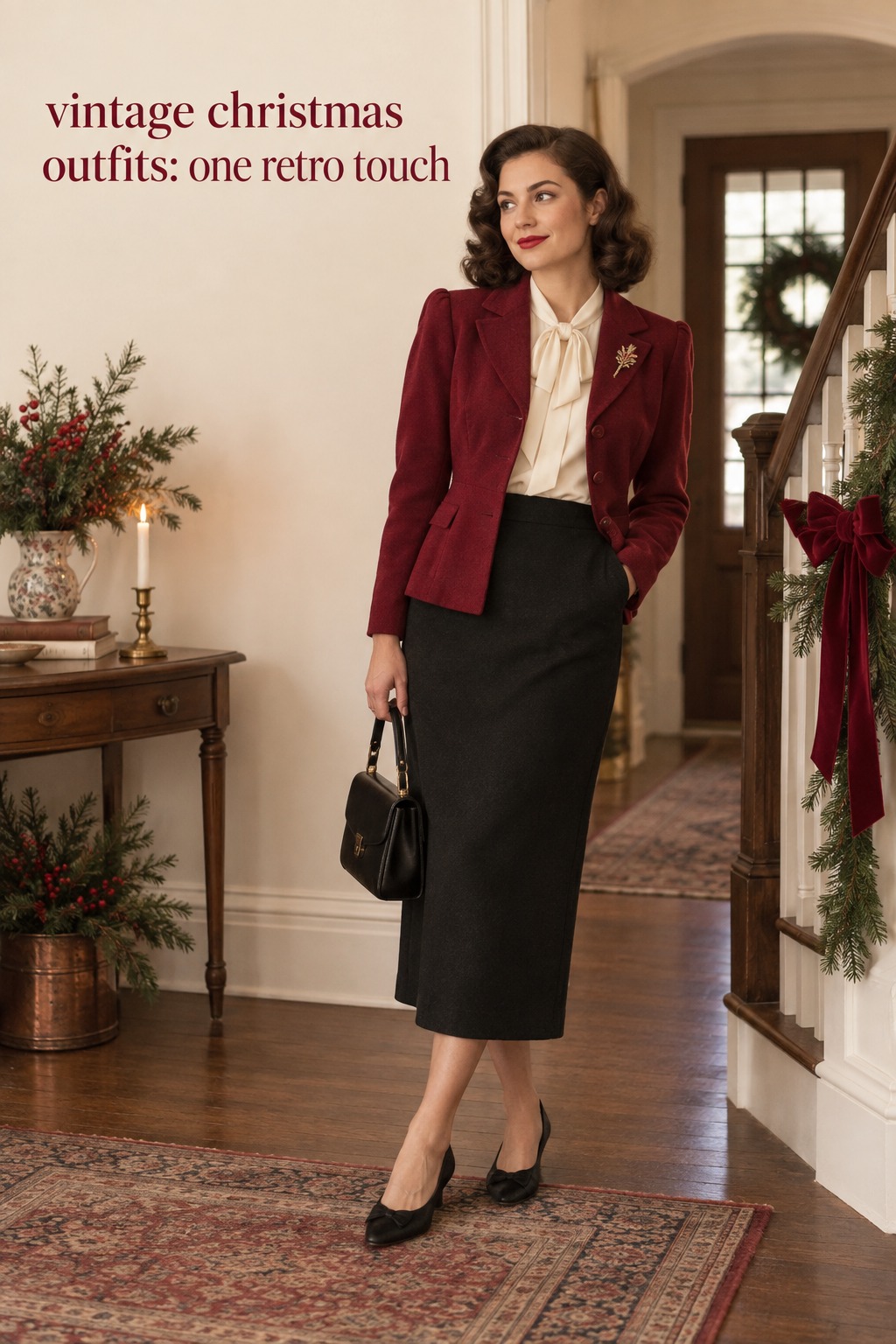
Why a vintage Christmas outfit can feel like a costume
When a vintage-inspired outfit feels like a costume, the problem is usually not one particular skirt or shoe. It is that several signals are all telling the same story at full volume. A strong silhouette, period-style hair, novelty print, themed jewelry, and matching accessories can crowd one another. The eye has nowhere to rest, and you may feel as if you are performing a character instead of wearing clothes. Look at the outfit as a whole before deciding that the dress itself is wrong.
Problem: every detail points to the same decade
A head-to-toe reference can be fun when you are deliberately dressing for a themed event. For an ordinary family gathering, it can feel more formal or theatrical than you intended. Try keeping the most noticeable vintage cue and relaxing the rest. A 1950s-inspired skirt can stay, while a simple fine-gauge sweater replaces the matching blouse and a modern flat replaces a highly decorative heel. A 1960s shift dress can remain the focal point, while a plain coat and familiar bag bring it into your current wardrobe.
Found the dress? Keep the rest in one place.
Zarellea brings guest details, vendors, timelines, and every next step together — so your wedding plan feels as good as your look.
This is an editing exercise, not a test of historical accuracy. Most people are combining contemporary clothes with references they enjoy. If an item is genuinely vintage, you can still style it alongside newer pieces. The age of each garment does not have to match. What matters for an intentional look is that one element leads and the supporting pieces make sense beside it. Try removing one accessory at a time. If the outfit feels more relaxed after one item comes off, you have probably found the extra signal.
Problem: the holiday theme is louder than your personal style
Red and green, tartan, snowflakes, novelty motifs, and sparkle are familiar seasonal signals. They are optional. If a Christmas sweater feels unlike you, do not force it to become the center of the outfit. A dark floral dress, a cream cardigan, a velvet hair ribbon, or a subtle gold button can create a nostalgic feeling without announcing a holiday theme from every angle. You can also choose a color you already wear and add just one seasonal texture or accessory.
Think about the clothes you reach for on a normal week. Are you drawn to clean lines, soft knits, playful prints, tailored pieces, or a little drama? Let that preference set the volume of the vintage reference. A minimalist might borrow a 1960s shift shape in a solid color. Someone who loves romantic details might keep a ruffled collar but pair it with plain trousers. A fan of bold accessories could let a brooch or earrings lead while the clothing stays uncomplicated. The right look should still feel recognizable as yours.
Problem: the outfit looks good standing still but feels hard to wear
Vintage references can make people focus on the mirror image and forget the actual day. A stiff waistband may become distracting through a long meal. A thin party dress may not work with the coat you need outside. A shoe that completes the silhouette may be difficult on stairs or icy sidewalks. Comfort is part of the finished outfit, because tension changes how you move and how present you feel. Sit down, reach forward, lift your arms, and walk in the full combination before deciding it is ready.
If you have to keep adjusting a collar, skirt, strap, or belt, treat that as useful information. A smaller heel, a softer layer, opaque tights, or a different bra can change how the outfit behaves without changing its overall mood. If the garment only works with uncomfortable shaping pieces or constant tugging, use another part of the look as your reference instead. The goal is not to endure a silhouette. It is to borrow an idea in a way that lets you enjoy the day.
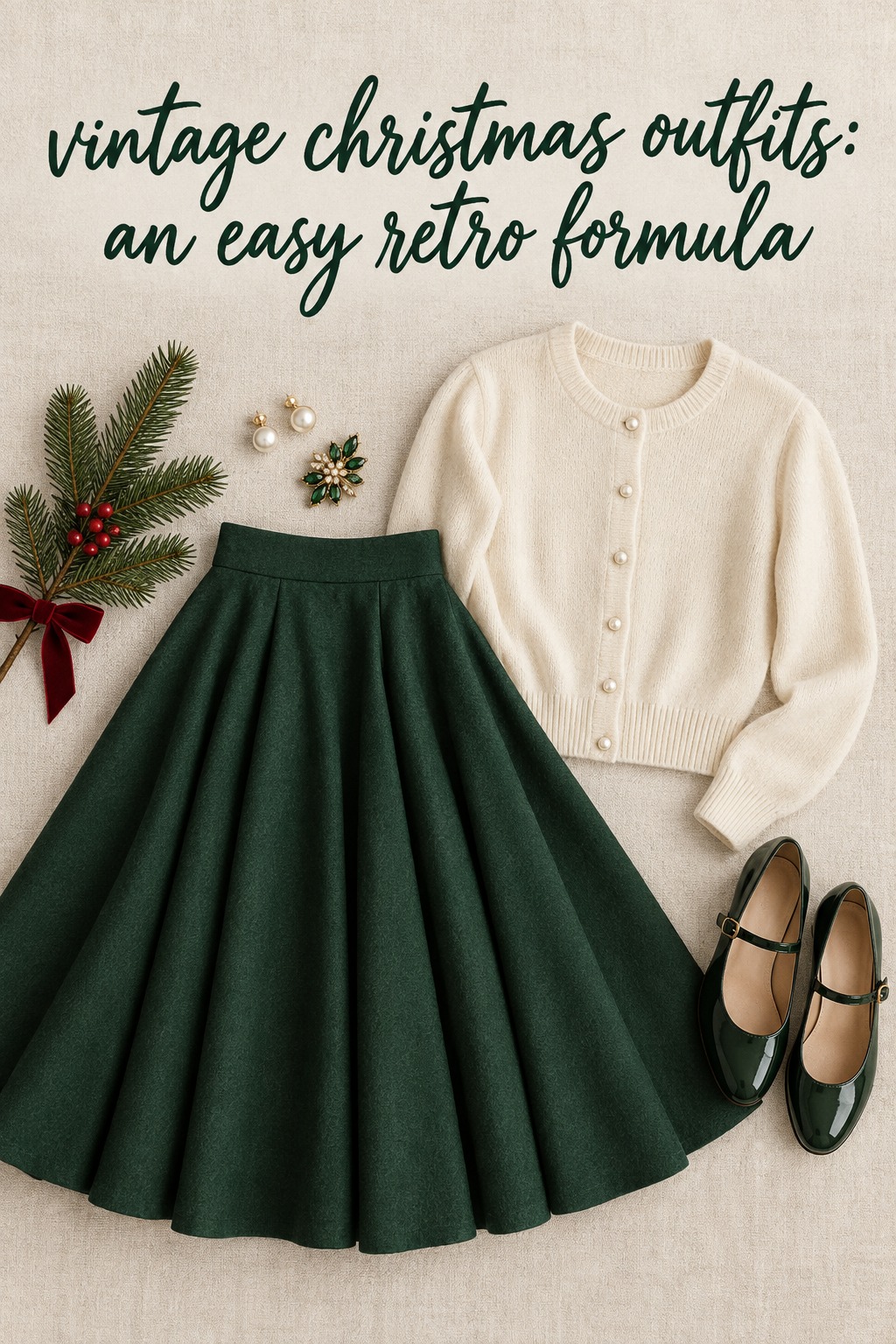
Choose one era cue and build around it
Vintage is not one single look. A structured jacket, a full skirt, and a graphic shift dress create very different impressions. Pick the one feature that attracts you, rather than trying to reproduce a whole decade. That choice makes it easier to select modern supporting clothes and gives the outfit a clear point of view. These are broad visual references, not strict rules. Decades overlap, garments vary, and contemporary versions do not need to be exact replicas.
If you like 1940s polish, start with a defined shoulder or tidy tailoring
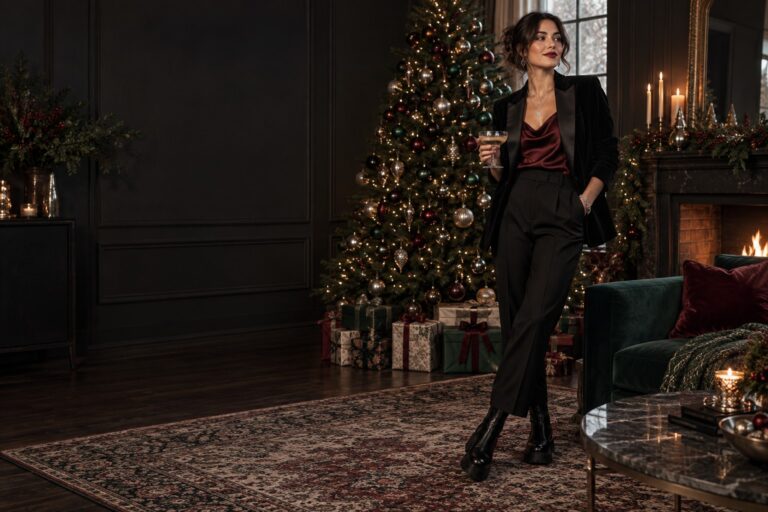
A 1940s-inspired direction can begin with a shaped jacket, a neat blouse, a softly defined waist, or a skirt with a straighter line. A pair of tailored trousers can carry the same composed feeling if you do not want a dress or skirt. Add a small brooch, a narrow belt, or a polished shoe, then keep the other details restrained. For a Christmas meal, a jacket over a simple knit and trousers may be easier to move in than a more elaborate occasion dress.
If you want background on the changing lines of the decade, the Fashion History Timeline at the Fashion Institute of Technology describes the wartime influence on early 1940s clothing and the postwar shift toward Dior’s New Look later in the decade. That context can help you choose a reference, but it does not mean your outfit needs to reproduce a historic silhouette. Take the clean tailoring or considered accessory that you like and pair it with clothes that work for you today. Read the FIT overview of 1940s fashion.
If you like 1950s charm, decide how much skirt volume feels right
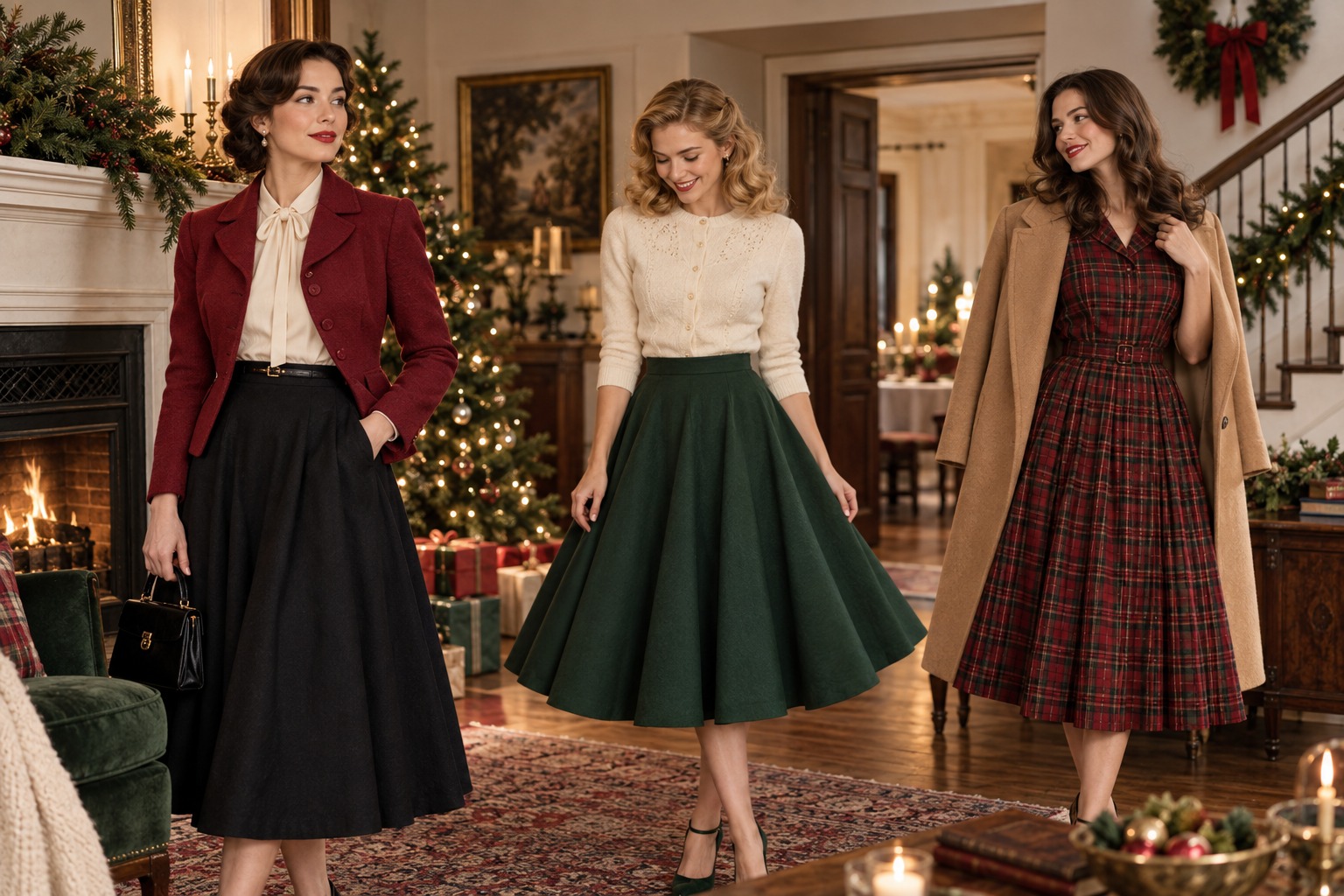
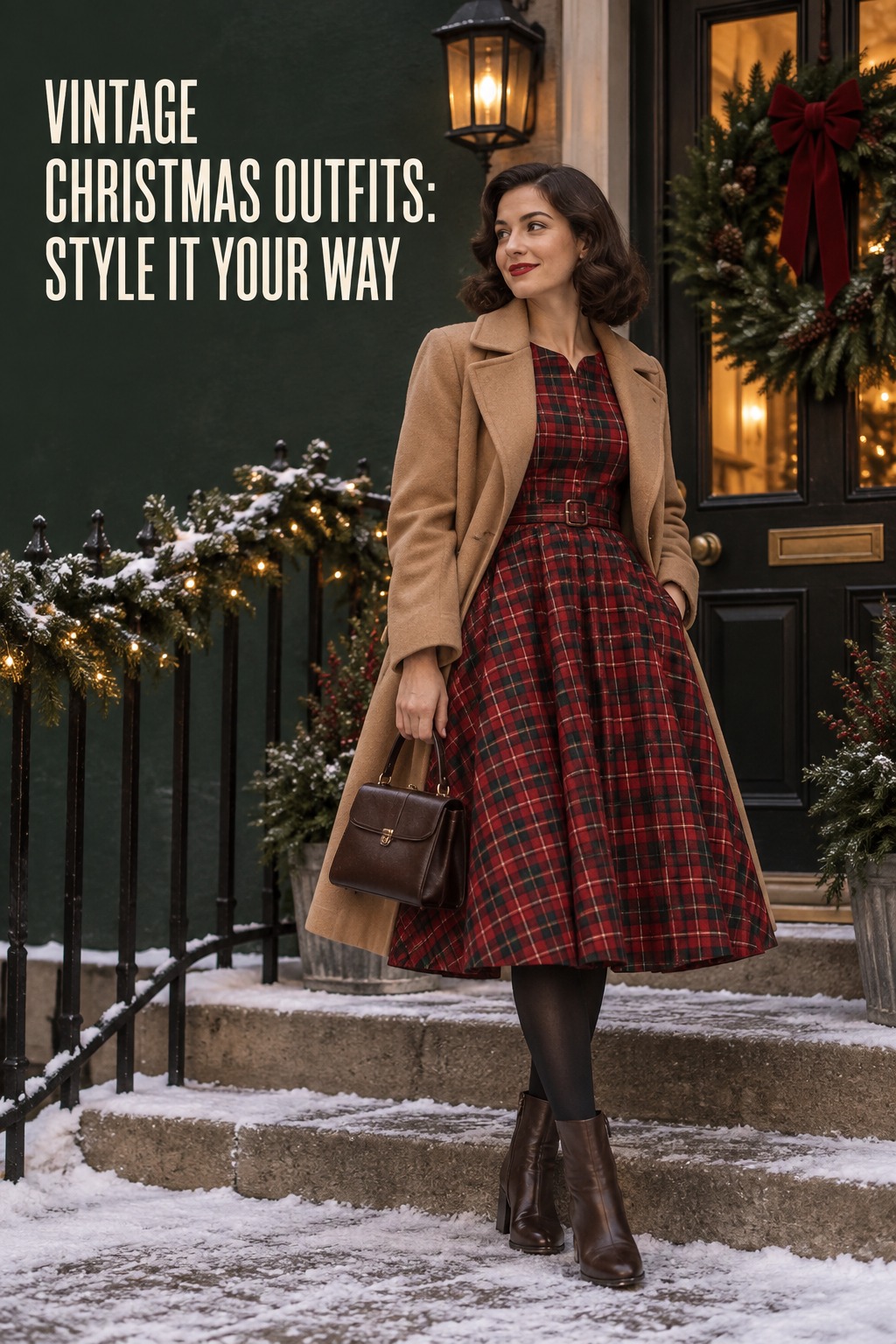
A full skirt or a defined waist is a recognizable mid-century reference, but you can control the effect. A midi skirt with a little swing and a fine knit feels softer than a stiff, very full skirt with a matching themed top. You can also use a more restrained pencil shape, a cardigan with a neat neckline, or a modest bow as the era cue. A modern waistband, flexible fabric, and a length that lets you sit comfortably matter more than copying a particular image.
Early 1950s fashion drew on the New Look silhouette introduced in 1947, with a defined waist and fuller skirt, while styles varied and shifted as the decade progressed. The Fashion History Timeline’s 1950s overview traces that range. Use it as visual context, then decide whether you want a fuller skirt, a straighter dress, or only a small accessory reference. See the FIT overview of 1950s fashion.
If you like 1960s simplicity, let a clean shape do the talking
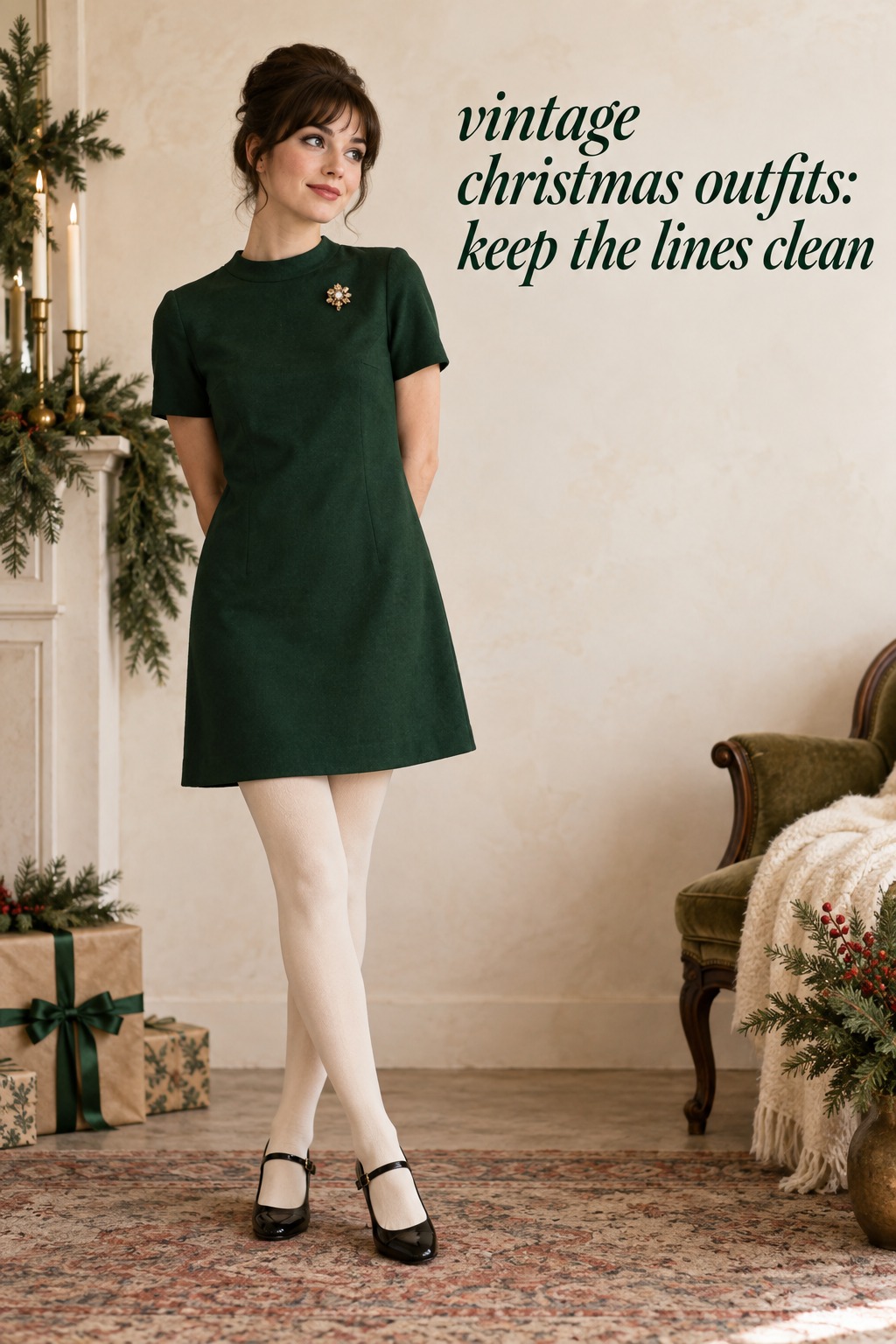
A shift dress, a neat collar, a simple geometric print, or a short tailored jacket can give an outfit a 1960s note. The appeal is often the uncluttered line, so avoid adding lots of competing details. A shift dress over tights with a plain coat can feel polished and easy. If you prefer separates, try a fitted top with a clean A-line skirt, or a crisp blouse under a sleeveless dress. A single bright color or graphic earring can supply enough personality.
There is no need to add a dramatic hairstyle or heavy makeup just to make the era recognizable. A clean shape and one small detail are often enough. If the dress feels too plain, choose one finishing point such as a contrasting collar, a hair clip, or a structured bag. If it feels too stark, soften it with a fine knit layer or a warmer color. The idea is to adapt the silhouette to your own comfort and taste rather than treating a reference photo as a uniform.
If you like several decades, choose a common thread
You may love a 1940s jacket and a 1960s print, or a 1950s skirt with modern boots. Mixing eras can work when there is a connecting idea. A shared color, a similar level of polish, or one repeated shape can make the combination feel deliberate. For example, a berry jacket, a cream knit, and a dark skirt connect through color and texture even if the pieces suggest different periods. Keep the number of strong references low, then repeat one quiet detail such as a metal tone or a clean shoe shape.
When you are unsure, take a quick photo and look at it in grayscale or from farther away. Does one item lead? Can you name the outfit’s central idea in a few words? If the answer is no, remove a patterned accessory or replace one statement piece with a plain basic. You do not need to make the outfit more historically precise. You need to make the visual hierarchy easier to read. A clear outfit can mix old and new without looking accidental.
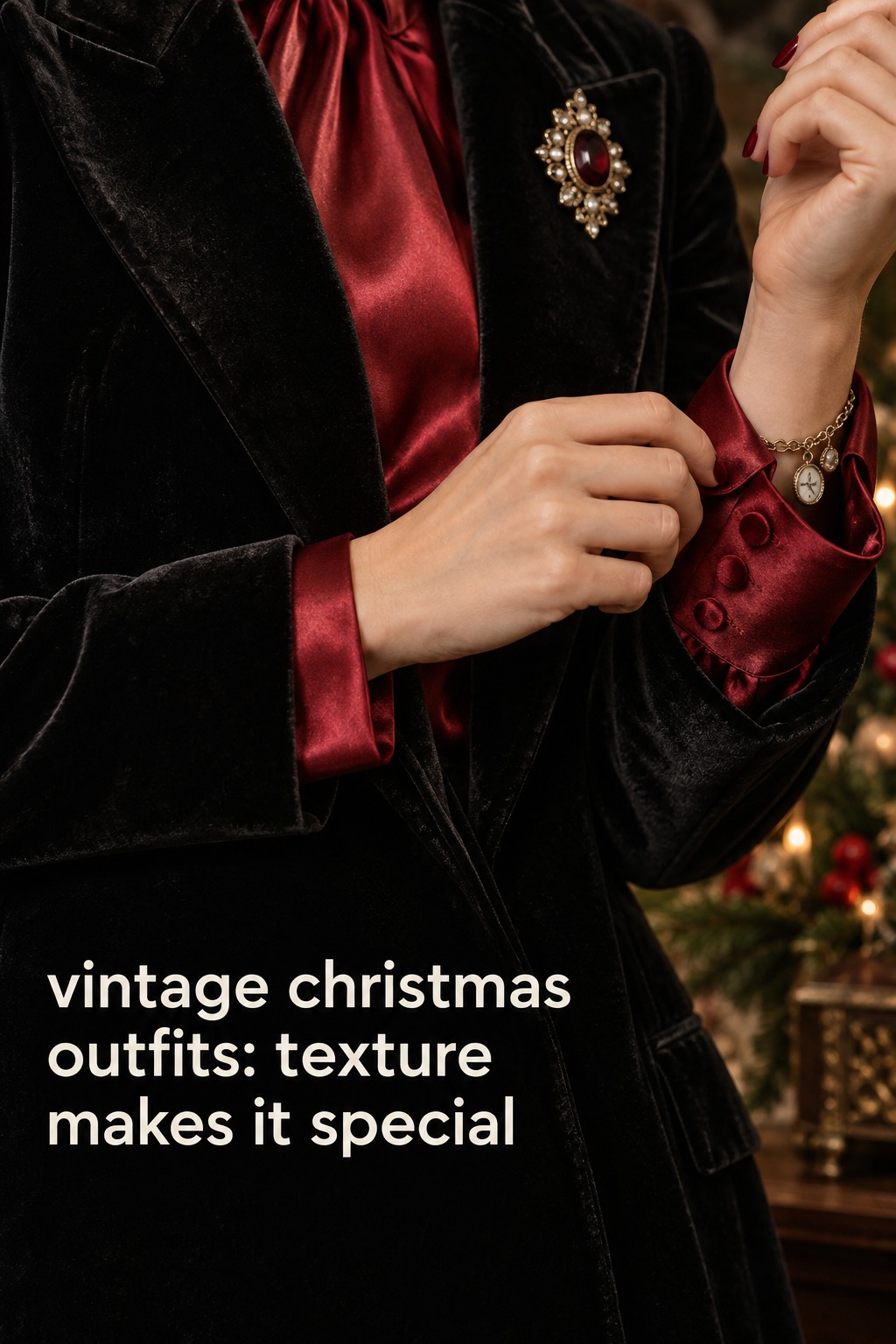
Adapt the look to the actual Christmas plan
The same vintage cue can work differently depending on where you are going. A skirt that feels charming at dinner may be inconvenient when you are kneeling to play with children or helping in the kitchen. A delicate blouse may be perfect indoors and frustrating for a cold walk between venues. Start by naming the movement, temperature, and dressiness of the plan. Then adjust one supporting part of the outfit while keeping the vintage detail you enjoy.
For a relaxed day at home
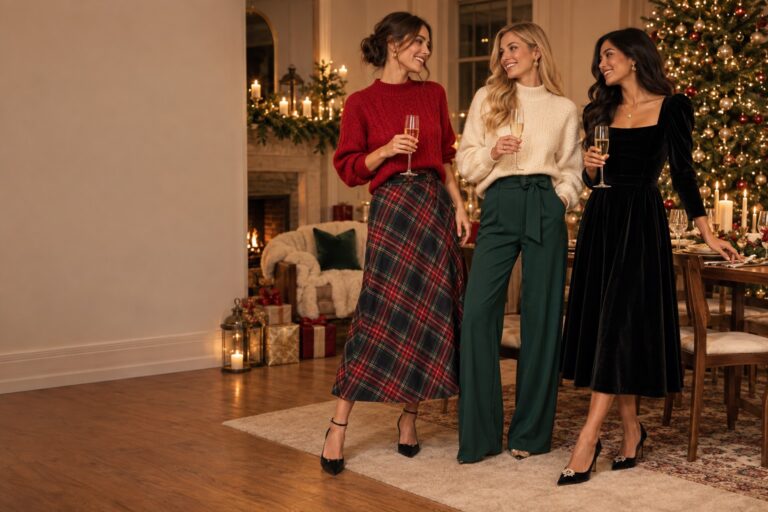
At home, you may want to sit on the floor, open gifts, make food, or move between rooms. A soft knit with a patterned skirt, a vintage-inspired cardigan over a simple dress, or a relaxed trouser with a bow blouse can bring a nostalgic mood without requiring a delicate outfit. Choose a fabric that lets you move and a shoe that makes sense indoors. If shoes are part of the look for a photo, take the picture and then switch into something comfortable.
Keep decorations and novelty elements in proportion to the setting. A small holiday pin can be a sweet detail; several novelty accessories may be too much for an ordinary morning. If you want a matching family photo, choose one shared color rather than dressing everyone in identical themed patterns. A vintage feel can come from the clothes’ shape and texture. It does not depend on a Christmas tree motif being visible in every piece.
For a family meal or a long visit
For a meal, test the waistband while seated and think about sleeves around food, jewelry near children, and layers you may need to remove once the room warms up. A soft blouse tucked into a skirt, a cardigan over a simple dress, or tailored trousers with a vintage-style collar can feel dressed without being precious. If you love a fuller skirt, choose one with enough room to sit and a hem that will not catch under your chair.
Choose accessories that will stay comfortable through several hours. Clip-on earrings that pinch or a necklace that catches on a scarf can become the part you remember. A brooch, a small hair detail, or an uncomplicated shoe may give the same finished effect with less fuss. Bring a layer that works with the outfit rather than one that hides it completely. Try the coat, cardigan, and dress together before the day so you know the proportions still look intentional when you arrive.
For an office party or evening gathering
At an office event, you may want the look to feel festive without becoming a costume or distracting from the setting. A tailored jacket over a simple dress, a vintage-inspired blouse with straight trousers, or a modest bow detail with a clean skirt can do the job. If the event follows a workday, make one swap that changes the mood: add a brooch, change to a more polished shoe, or replace a basic cardigan with a structured jacket.
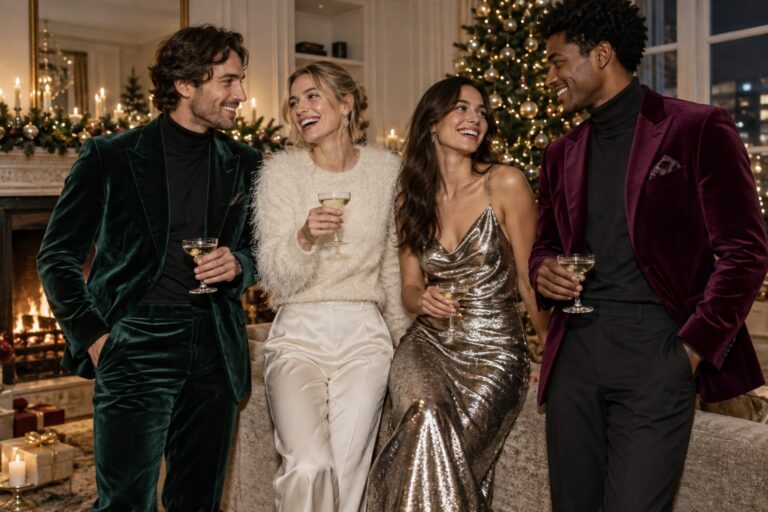
For an evening gathering, texture can create a stronger effect than adding several accessories. Velvet, satin, jacquard, or a subtle metallic thread can nod to older occasion dressing while a plain modern base keeps it grounded. Pick one place for shine. If the fabric catches light, keep the jewelry quieter. If the clothes are matte, a pair of earrings or a small evening bag can add the festive note. Check the venue and invitation for dressiness rather than assuming vintage means formal.
For photos, travel, or time outdoors
Photos reward contrast and clear shapes, but the most photogenic outfit is not useful if you are cold or uncomfortable. Choose a coat that complements the silhouette, and decide whether the scarf belongs in the final look or will be removed for pictures. If you will travel between places, make sure the shoe can handle the route and that the skirt or coat is easy to sit in. Tights, a warm base layer, and a practical bag can support the visual idea without changing it.
Before leaving, take one photo in the full outfit, including the outer layer. Look for a collar hidden by a coat, a hem that catches on boots, or a bag that competes with a strong print. Small adjustments are easier to notice in a picture than in a mirror because you can see the whole outline at once. If you are packing for a visit, wear the most comfortable shoes and bring one more polished accessory in your bag. You can adjust once you know the setting.
Quick fixes when the outfit still feels off
If you have chosen a vintage reference and matched it to the event but still feel uncertain, avoid starting over. Change one thing, then check again. A small, deliberate adjustment usually reveals whether the problem is proportion, color, comfort, or too many details. Changing several items at once makes it harder to tell what improved the outfit.
When the silhouette feels too sweet or too formal
Pair a full skirt with a plainer top, or swap a frilly blouse for a simple knit. A relaxed coat or a clean boot can reduce the dressiness without making the outfit feel unfinished. If the skirt is already dramatic, skip the petticoat-like extra volume and let it fall naturally. If the look feels too formal for the invitation, soften only one element. You can keep the vintage shape and make the styling more casual through a simple shoe or an everyday layer.
When the outfit looks busy
Choose a focal point and remove competition. If the dress has a strong print, use a quiet bag and simple earrings. If the brooch is the detail you love, skip the novelty sweater and let the rest of the clothing stay plain. You can use a mirror test: cover one accessory with your hand and see whether the outfit gets clearer. Repeat until the main idea is obvious. This is not about avoiding fun. It is about giving the fun detail enough space to be noticed.
When the colors feel too themed
Keep one traditional holiday color and change the second to a neutral you already wear. Red and cream can feel softer than red and green; green with navy can feel less literal than green with bright red. You can also use color in a smaller area, such as a bag, scarf, or earring, rather than wearing it from head to toe. If a color makes you feel unlike yourself, the outfit will probably feel forced no matter how well the pieces match.
When a genuine vintage piece needs help
Let an older garment lead, but do not make every other item from the same period. A vintage blouse can sit neatly with current trousers. An older brooch can lift a simple knit dress. A patterned skirt can work with a contemporary sweater and plain boots. Mixing the age of the clothes often makes the piece easier to wear and keeps you from needing a complete period outfit. If the item has a delicate finish or a fit that limits movement, build around it with pieces you already know are comfortable.
Sometimes the best fix is changing the styling, not the garment. Try wearing a blouse untucked, opening a collar, rolling a sleeve, changing the belt, or removing a decorative layer. If a skirt feels too precious with heels, test it with a simpler flat or boot. If a dress feels too plain, add a single vintage accessory. Keep the original feature that made you like the item, and change the part that makes it difficult to wear.
When you cannot find an actual vintage piece
You can create vintage Christmas outfits with contemporary clothes. Look for the visual cue rather than a label: a nipped waist, a neat collar, a swingy skirt, a simple shift shape, a brooch, or a textured jacket. One recognisable feature is enough. Thrifted, borrowed, inherited, and modern pieces can all contribute to the same outfit. You do not have to buy something new for a one-day look, and you do not have to claim that a modern garment is historically authentic.
A useful final check is to describe the outfit in one sentence. For example: “A dark floral skirt with a cream knit and one old brooch.” If the description turns into a long inventory of themed items, simplify. Can you sit, walk, and lift your arms? Does the look still feel like you? Is there one detail that makes it feel vintage? If those answers are yes, the outfit is ready. The best reference is the one that helps you feel at home in your clothes.
FAQ
How do I make a vintage Christmas outfit look modern?
Choose one vintage cue, such as a full skirt, tailored jacket, shift silhouette, or brooch. Pair it with simple contemporary basics and limit other period details so the outfit feels like your own style.
What should I wear with a 1950s-style skirt for Christmas?
Try a fine knit, plain blouse, or simple cardigan, then choose a comfortable shoe and one understated accessory. If the skirt is full or patterned, let it be the focal point.
Can I wear vintage Christmas outfits without red or green?
Yes. Use a vintage-inspired shape, texture, print, or accessory in colors you already enjoy. Navy, cream, berry, brown, or black can feel seasonal when the outfit has one considered detail.
How do I avoid looking like I am wearing a costume?
Reduce the number of matching era signals. Keep the garment or accessory you like most and pair it with modern, uncomplicated pieces. Check the outfit in a photo and remove details that compete with the focal point.
What can I wear for a casual Christmas at home?
A soft cardigan over a simple dress, a knit with a patterned skirt, or a relaxed trouser with a vintage-style blouse can feel nostalgic and comfortable. Choose pieces that let you sit and move easily.
Can modern clothes create a vintage-inspired Christmas look?
Absolutely. Look for a recognizable shape or detail rather than a complete vintage outfit. A modern skirt, neat collar, tailored jacket, or brooch can give the look a retro mood without needing an authentic period garment.