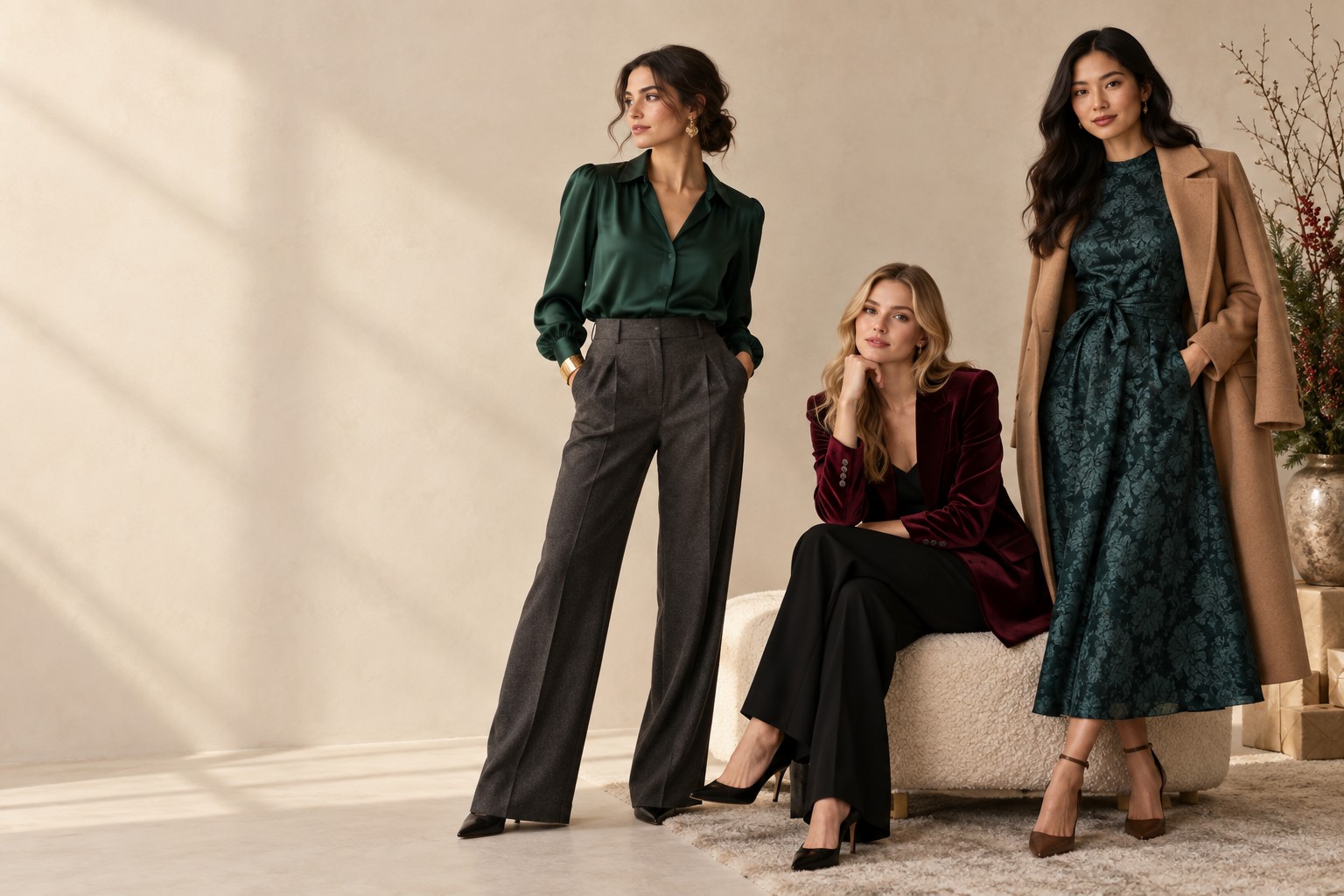
Festive Outfits for Women: A Repeatable Mini Capsule
Festive outfits for women do not have to mean six unrelated looks or a cart full of special-occasion clothes. A small rotation can feel considered when each outfit has one clear festive anchor and the rest of the pieces give it room to work. The anchor might be a strong color, a touchable texture, or a little light-catching detail.
Think of this as a way to use what is already in your wardrobe. Choose three anchors with different jobs, build each around familiar supporting clothes, then change one detail when you want the look to feel more relaxed or more polished. The result is a set of outfits that belong to the season without all looking alike.
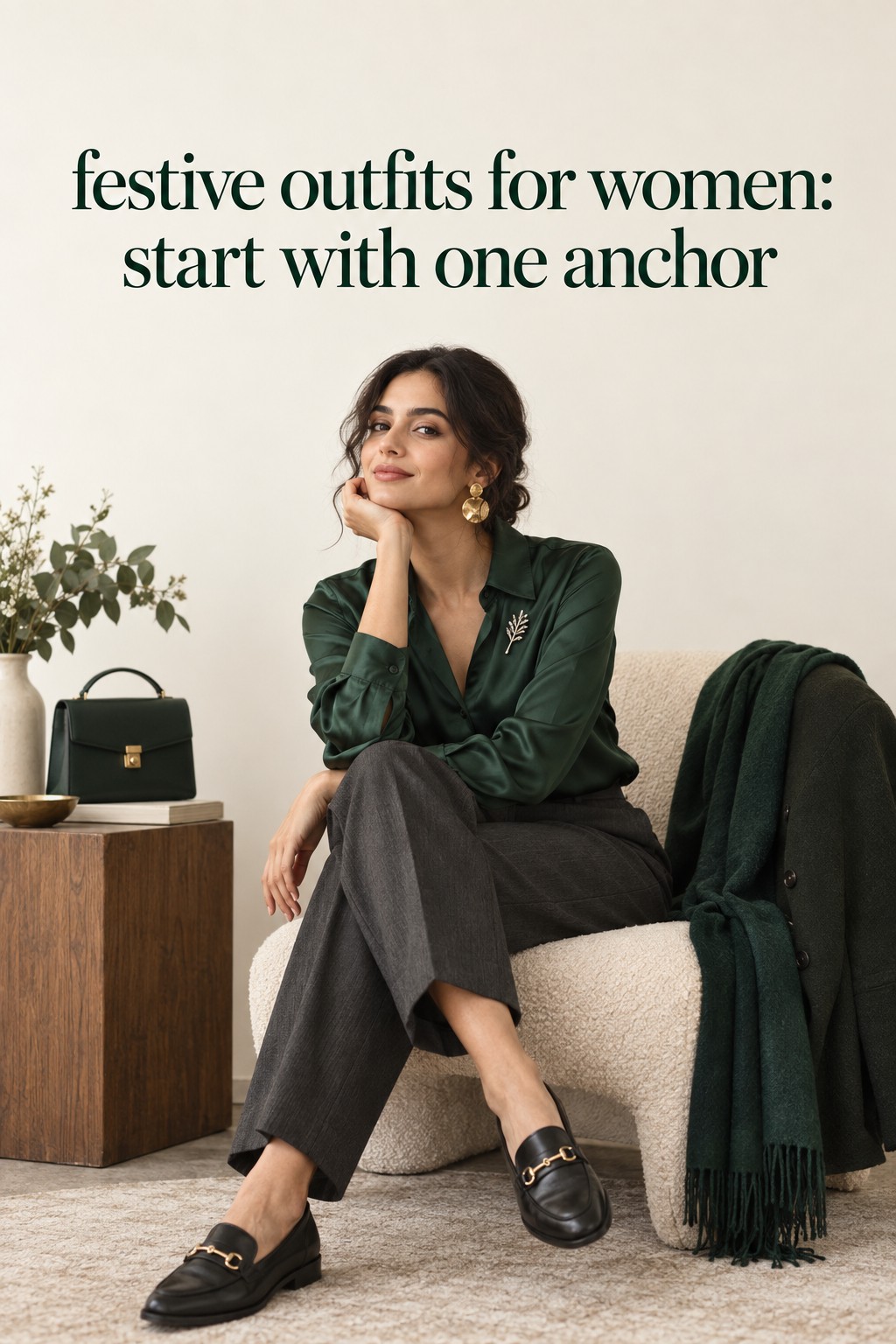
Start with three anchors, not a shopping list
A useful mini capsule starts with a decision, not a purchase. Look through the clothes you already reach for and choose one color-led piece, one texture-led piece, and one detail that catches light. These are three different routes into a festive outfit. They do not need to be expensive, new, or even traditionally holiday themed. A dark berry blouse can be the color anchor, a velvet jacket can be the texture anchor, and a pair of metallic shoes can provide the light-catching detail.
Give each anchor a supporting base. A base is simply the familiar piece that lets the anchor feel wearable: dark trousers, a plain knit, a simple dress, a skirt you already know how to style, or a relaxed jacket. Keep this first pass small. If one anchor only works when you add several other statement pieces, it may be harder to repeat than you want. If it works with two or three quiet items you already own, it can earn a place in the rotation.
Found the dress? Keep the rest in one place.
Zarellea brings guest details, vendors, timelines, and every next step together — so your wedding plan feels as good as your look.
Let color do the seasonal work
Choose a color that feels like you, then let it appear in one substantial part of the outfit. Berry, pine, ink blue, warm bronze, or a clear winter white can all read as celebratory when they are part of a deliberate outfit. There is no rule that says a festive look needs both red and green. A single saturated shade can carry the mood while black, cream, charcoal, or denim keep the rest easy.
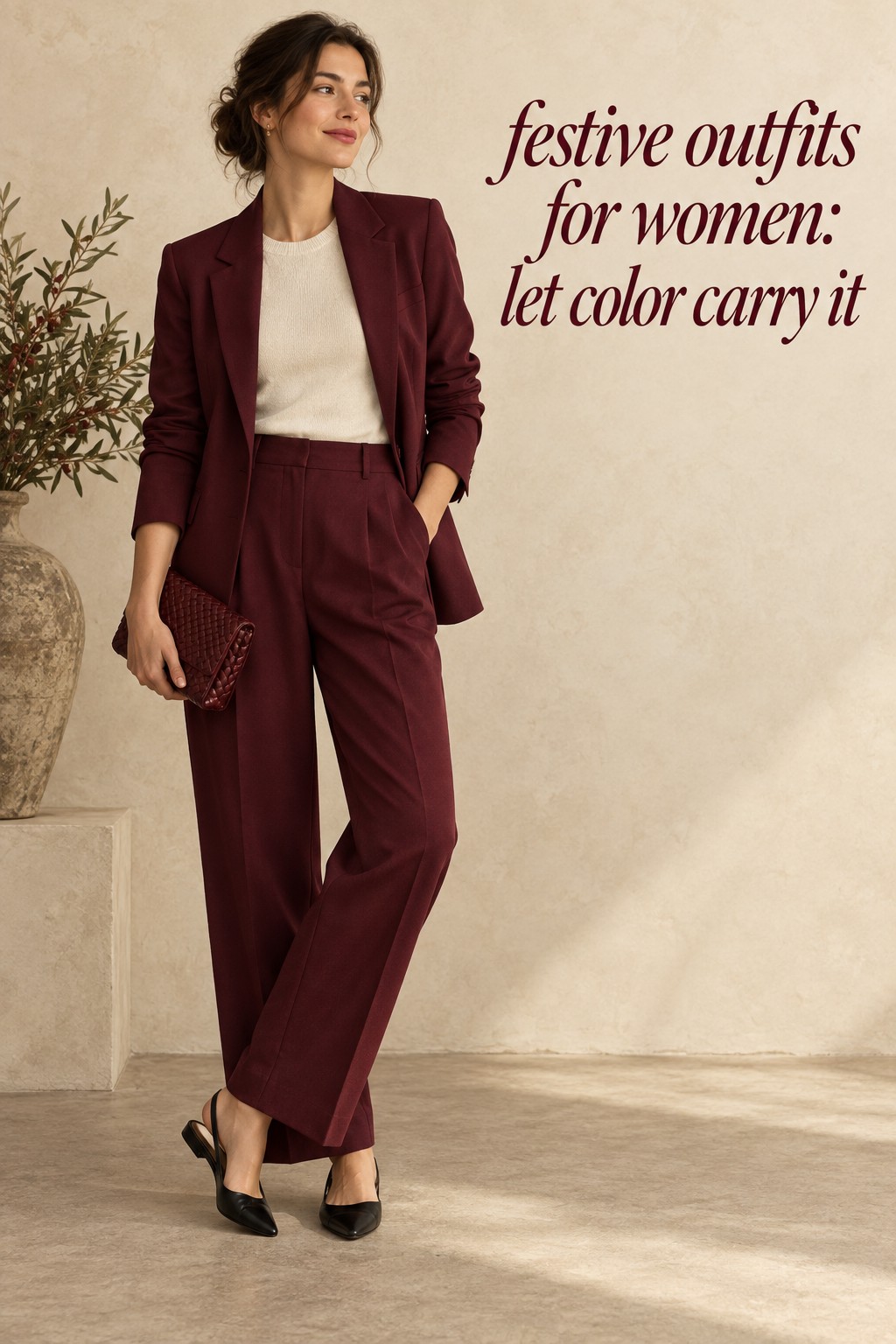
For example, a berry suit can be worn over a simple ivory knit, with small earrings and shoes that do not compete. If a suit is not your style, use a berry skirt with a plain dark top, or a colored blouse with familiar trousers. The point is the same in each case: choose one area for color, then repeat a quieter shade elsewhere only if it helps the outfit feel connected. You can also keep the color close to the face with a top or scarf, or place it lower in the look with a skirt or bag.
Use texture when you want quiet richness
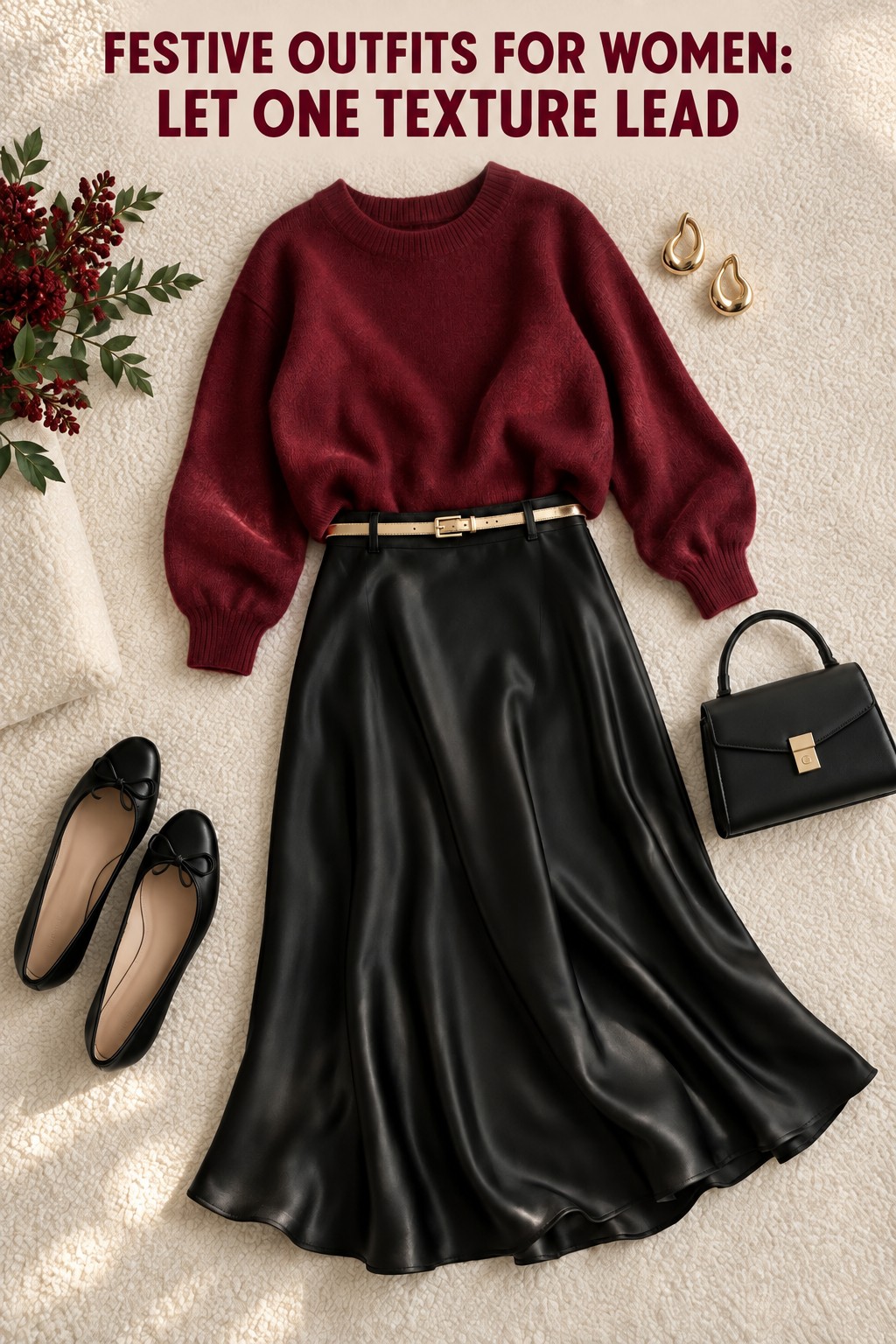
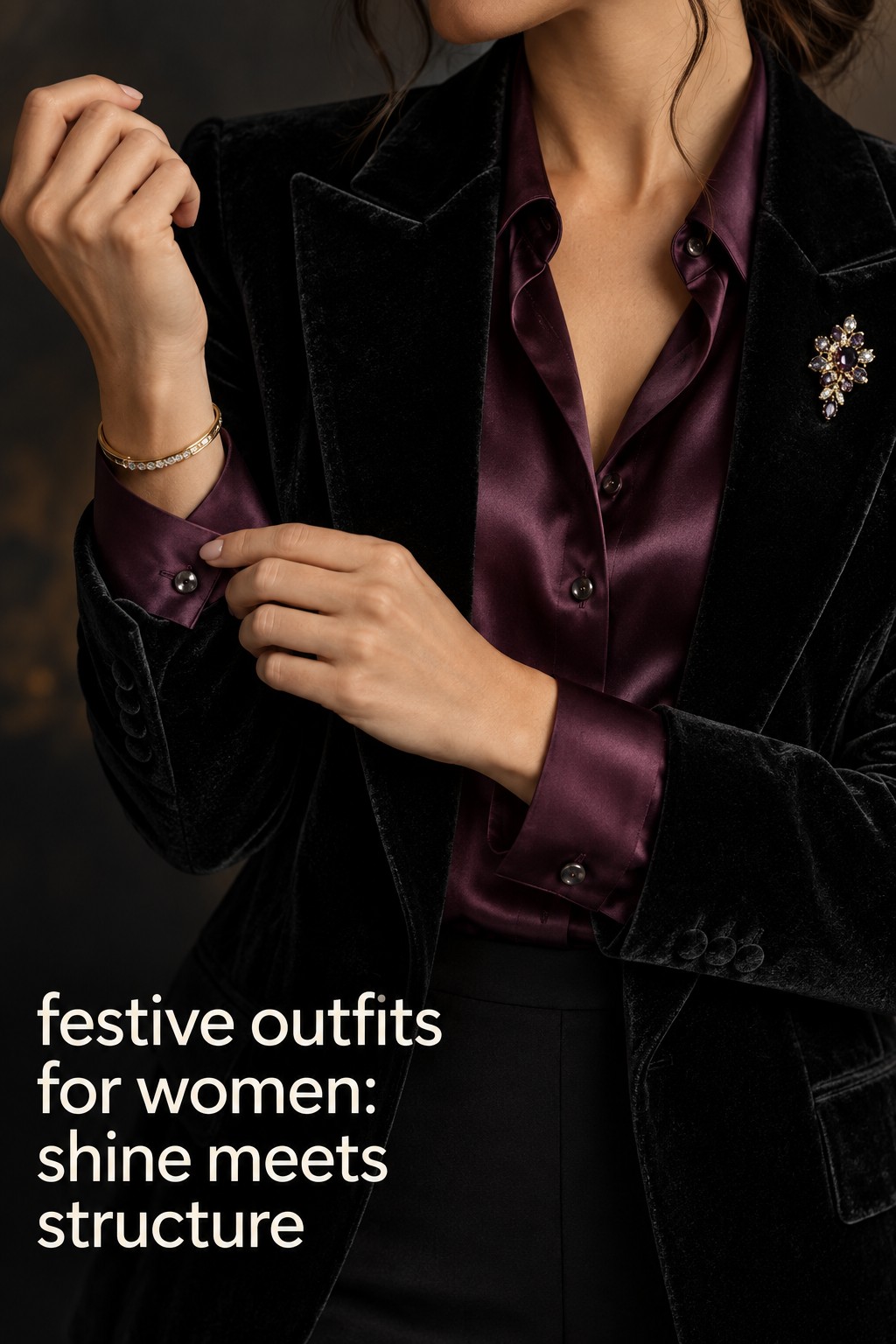
Texture is a good anchor when you want the outfit to feel special without a bright color or obvious sparkle. Velvet, jacquard, satin, brushed knits, and crisp tailoring each create a different visual surface. Pick the one you already own and let its texture be visible. A velvet blazer over a smooth black dress is enough to establish contrast. A satin skirt with a matte sweater creates the same kind of balance from the opposite direction.
Think about how pieces sit next to one another. Two soft, fluid items can make a gentle outfit; a fluid skirt with a more structured top feels sharper. A textured jacket over a plain base can be more straightforward than mixing several patterned surfaces. You do not need to memorize fabric terminology. Hold two garments together and notice whether each one can still be seen. If the details blur together, choose one texture and make the other piece simpler.
Add light in a measured way
A metallic shoe, a reflective clutch, a polished earring, a small brooch, or a sequin accessory can act as the anchor when the clothes are otherwise familiar. Start with the item that feels easiest to wear. If the outfit already has a shiny surface, choose a quieter accessory. If the base is matte and simple, a small reflective detail can be the one element that changes the mood.
Scale matters more than quantity. A small, bright detail can be a focal point because it contrasts with the surrounding clothes. A larger statement item may need less around it. Try the outfit once with the accessory, then remove one other item that also asks for attention. This quick edit keeps a polished look from becoming a collection of unrelated finishing touches.
Build outfits by balancing visual weight
Visual weight is a practical way to describe what your eye notices first. A bright color, reflective surface, strong shoulder, large pattern, or dramatic shape can all draw attention. A festive outfit tends to feel intentional when one element leads and the others support it. That does not mean every other item has to be plain. It means the outfit has a clear order: first the anchor, then the shape, then the small finishing details.
Begin by naming the lead item out loud. “The velvet blazer is the lead” or “the metallic shoes are the lead” is enough. Then look at the rest of the outfit. If another piece has the same level of contrast, choose which one you prefer and quiet the other. This can be as simple as changing a patterned top to a solid one, swapping a statement necklace for small earrings, or leaving a jacket unembellished when the dress already has shine.
Balance shine with a matte surface
Shine is most readable when it has a calmer surface beside it. A satin blouse can sit with tailored wool trousers; a metallic shoe can finish a matte dress; a sequined top can meet plain, dark pants. These pairings let the eye register the festive element without making the whole outfit compete with itself. If your only statement piece is a shiny skirt, a fine knit or crisp shirt can give it a clear frame.
Keep the amount of shine in proportion to how much of the body the item covers. A small accessory needs little adjustment. A full shiny garment often looks more balanced when the neighboring pieces have a simpler finish and shape. This is not a rule against wearing head-to-toe sparkle. It is a way to make a strong look feel deliberate: choose one repeated line or color, keep the accessories edited, and let the large surface remain the main event.
Pair texture with a clear silhouette
When a garment has a rich texture, the outline of the outfit can stay easy to read. A velvet jacket over a narrow dress, a tactile sweater with straight trousers, or a patterned dress with a simple coat each gives the eye a place to pause. The silhouette does not need to be fitted. It only needs to feel like a choice rather than several layers hiding one another.
Use proportion as a small adjustment. If the top has volume, try a cleaner lower half. If the skirt or trousers are wide, choose a top that can be tucked, cropped, or gently shaped at the waist. If you prefer loose-on-loose dressing, repeat one detail such as a visible waistband, a defined shoulder, or an open neckline so the outfit still has a deliberate line. Comfort and personal preference come first; these are ways to make a silhouette easier to see, not instructions about what bodies should wear.
Use accessories to finish, not to rescue
Accessories are most useful after the clothes are working. Choose one or two that relate to the anchor: a gold earring beside a warm-toned top, a dark bag with a colorful suit, or a simple belt that repeats the line of a jacket. The connection can be color, scale, material, or shape. It does not have to match exactly.
If the outfit still feels unfinished, check the base before adding another accessory. Maybe the sleeve needs to be pushed back, the shirt hem needs a tuck, or the outer layer is obscuring the piece you want people to notice. Try one small adjustment and look again. Adding more jewelry to solve a proportion issue usually creates a second problem. Let the outfit settle before you decide that it needs anything else.
A compact rotation with distinct outfit routes
Use the three anchors as starting points, then build outfits from pieces that are already familiar. These examples show different routes, not a checklist to copy exactly. Substitute the shapes and colors that feel right in your wardrobe. The useful part is the sequence: choose the lead, support it with a quieter base, and make one considered finishing choice.
Route one: a color-led tailored look
Start with a berry or deep green tailored set. Wear it with an ivory or charcoal knit, then keep the shoes and bag close in tone. The strong color is already doing the festive work, so a statement necklace is optional. A small earring or polished shoe is enough if you want another finishing detail. If you do not own matching separates, take the color from a single jacket or blouse and pair it with simple trousers.
To soften the same base, change the knit to a relaxed shirt and leave the jacket open. To sharpen it, button the jacket, choose a more structured bag, and keep the jewelry small. This gives you a day-to-evening adjustment without changing the anchor. The outfit still reads as the same color story, but the line and accessories change its level of polish.
Route two: texture against a clean base
Take one tactile piece, such as a jacquard skirt or a velvet jacket, and build a clean base around it. A jacquard skirt can meet a fine black top and simple shoes; a velvet jacket can sit over a column-shaped dress with a clean neckline. The textured garment is the lead, so keep the pattern, accessories, and outer layer from crowding its surface.
For a little more ease, replace the dressy shoe with a flat that shares a color with the base. For a more formal finish, choose a shoe with a sharper shape and a small clutch. Each change has one job. Avoid replacing every accessory at once, because the useful test is whether one swap is enough to move the look in the direction you want.
Route three: one reflective detail on familiar clothes
Use a familiar dark dress, clean shirt and trousers, or a simple knit with a skirt as the background for one reflective item. Metallic flats, a bright clutch, a polished belt, or a brooch can make the outfit feel seasonal without changing its foundation. Choose the item you are happiest to wear, and let it be visible. A coat that covers it all evening may not be the right finishing layer for that particular combination.
If you want the outfit to feel quieter, choose one reflective accessory and skip other shine. If you want a stronger look, repeat the metal once in a smaller detail, such as an earring or buckle. Keeping the repetition small connects the pieces without turning the whole outfit into a matching set. The base remains useful after the celebration because the special element is easy to remove.
Route four: a dress with a relaxed counterpoint
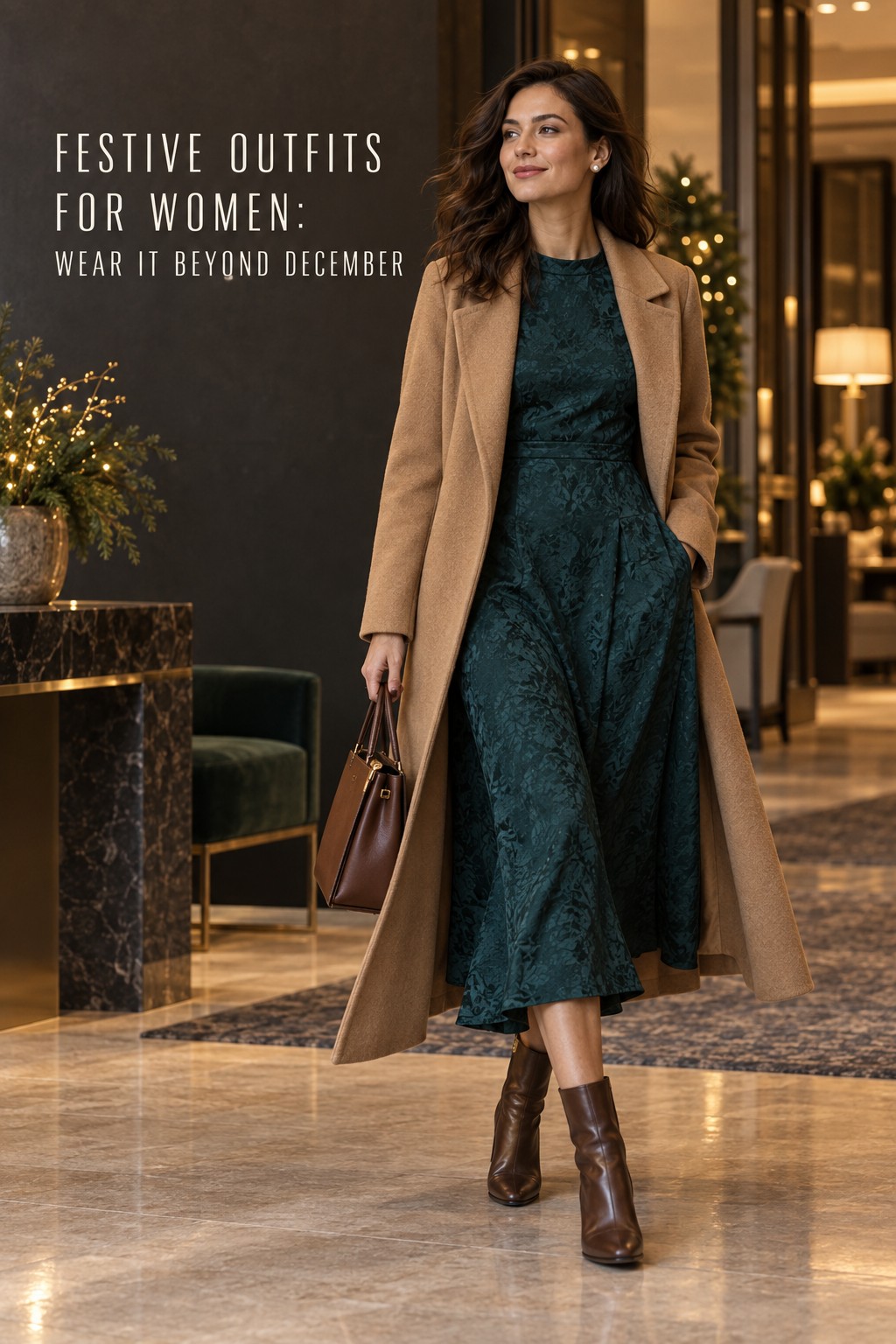
Let a patterned or textured midi dress lead, then add a relaxed counterpoint such as a straight coat, a low-profile shoe, or an uncomplicated bag. This keeps the dress visible while giving the outfit a grounded frame. Choose one color from the print for a bag or shoe if you want the pieces to feel connected. A neutral that already appears in the dress can do the same work.
To make this route feel dressier, change only the shoe and bag. To make it more relaxed, add a straightforward layer and keep the jewelry minimal. Check that the hem and outer layer work together when you walk and sit. If a coat hides the feature you chose the dress for, try a shorter layer or simply wear the coat open when practical. The goal is for the anchor to remain part of the outfit, not disappear under its supporting pieces.
Make the pieces work harder after the celebration
A small rotation is valuable when its pieces can move into other outfits. After choosing a festive anchor, ask what it can do when the season is over. A colored jacket might return over jeans or a plain dress. Metallic shoes may add contrast to familiar weekend clothes. A velvet bag can make an ordinary outfit feel finished without needing another special occasion.
This is not a test of how many times an item can be worn. It is a way to avoid treating festive clothes as a separate wardrobe that only works for one calendar month. If an item is genuinely special to you, it can still be worth keeping for that reason. Rewearability is a helpful option, not a requirement.
Quiet the anchor without hiding it
For an everyday version, keep the anchor and change its company. A bright jacket can go over a plain T-shirt and relaxed trousers. A textured skirt can meet a simple sweater and comfortable shoes. A reflective accessory can be the only polished detail on an otherwise easy outfit. You are not trying to erase the garment’s character; you are giving it a more casual frame.
Think about the surface and shape of the supporting clothes. Casual cotton or denim can make a rich texture feel less formal. A softer shoe can balance a structured jacket. A smaller bag can make a statement piece feel intentional rather than over-coordinated. Try one change at a time, then keep the version that feels most natural when you move around in it.
Repeat the anchor, change the supporting cast
Repeating an anchor does not have to mean repeating the full outfit. Keep the colored blouse and change its base from trousers to a skirt. Wear the same velvet jacket once with a smooth dress and another time with a plain knit and tailored pants. Use the same small metallic accessory with a different neckline or silhouette. A change in proportion, layer, or shoe can be enough to make the whole look feel different.
When you plan the rotation, write down the anchor and two supporting combinations. This is more useful than writing down a long list of hypothetical occasions. It helps you remember what goes together and shows where the wardrobe already has enough options. If one anchor has only one possible partner, see whether a base item can shift the color or shape balance before deciding to add anything new.
Use a short final check before you leave
Stand back and identify the first thing you notice. If it is the anchor you intended, the outfit is likely doing its job. If your eye jumps between several competing details, remove or simplify one. Check that the layer you plan to wear does not cover the focal point, and that your shoes and bag make sense for how you will spend the evening. These are practical checks, not dress-code rules.
Then stop editing. A festive outfit can be complete before every accessory has been tried. The small rotation works because it gives you a few dependable choices and a simple way to adjust them, not because every look has to be optimized. Choose the version that feels like you, save the other combinations for another day, and enjoy the plans you got dressed for.
FAQ
How do I make an outfit feel festive without sequins?
Use one other seasonal anchor, such as a saturated color, velvet, jacquard, a reflective accessory, or a more polished shoe. Keep the rest of the outfit familiar and let that one choice do the work. The outfit can feel celebratory without sparkle being part of it.
How many statement pieces should one festive outfit have?
There is no fixed number, but choosing one clear lead makes an outfit easier to balance. A second detail can support it if it is smaller or repeats a color or material. If several pieces compete for attention, decide which one you want to notice first and simplify around it.
Can I wear festive colors without wearing red or green?
Yes. Berry, plum, teal, ink blue, bronze, silver, cream, and other colors can make a seasonal outfit feel personal. Choose a shade you already enjoy wearing and pair it with a familiar neutral or dark base. Color does not need to be traditional to look deliberate.
How can I reuse one holiday outfit piece in everyday looks?
Keep the standout item and swap the supporting pieces for simpler, more casual clothes. Try a textured skirt with an everyday knit, a colored blazer over a T-shirt, or metallic shoes with a familiar dark outfit. Change one element at a time so you can see which combination feels comfortable and natural.
What should I do if the outfit feels too dressy?
Keep the anchor and relax one supporting element. A flatter shoe, a simpler bag, an open jacket, or a familiar knit can shift the tone without rebuilding the look. Avoid changing every piece at once; a single swap often gives you a clearer result.
How do I choose a layer that does not hide the outfit?
Check the layer with the full outfit on. Wear it open if that keeps the anchor visible, or choose a length and shape that works with the outfit’s main line. If the focal detail is a shoe or bag, make sure the coat does not make it awkward to carry or difficult to see when you arrive.