Velvet Dresses for Women: Which Look Fits the Occasion?
A velvet dress can be the easiest piece in your closet or the one that makes you wonder what went wrong. The difference is rarely the dress alone. It is the relationship between the fabric, the setting, the silhouette, and the finishing pieces. A sleek black midi can feel quietly elegant at dinner, while the same rich texture in a short bright style can become a party look before you add a single accessory.
If you are comparing velvet dresses for women, start with the occasion instead of the trend label. Ask how formal the room will feel, how much you will move, how cold it may be, and whether you want the dress to lead the outfit or support a stronger coat, shoe, or jewelry choice. This guide puts those decisions side by side so you can choose a velvet look with intention.
The real choice: occasion first, velvet second
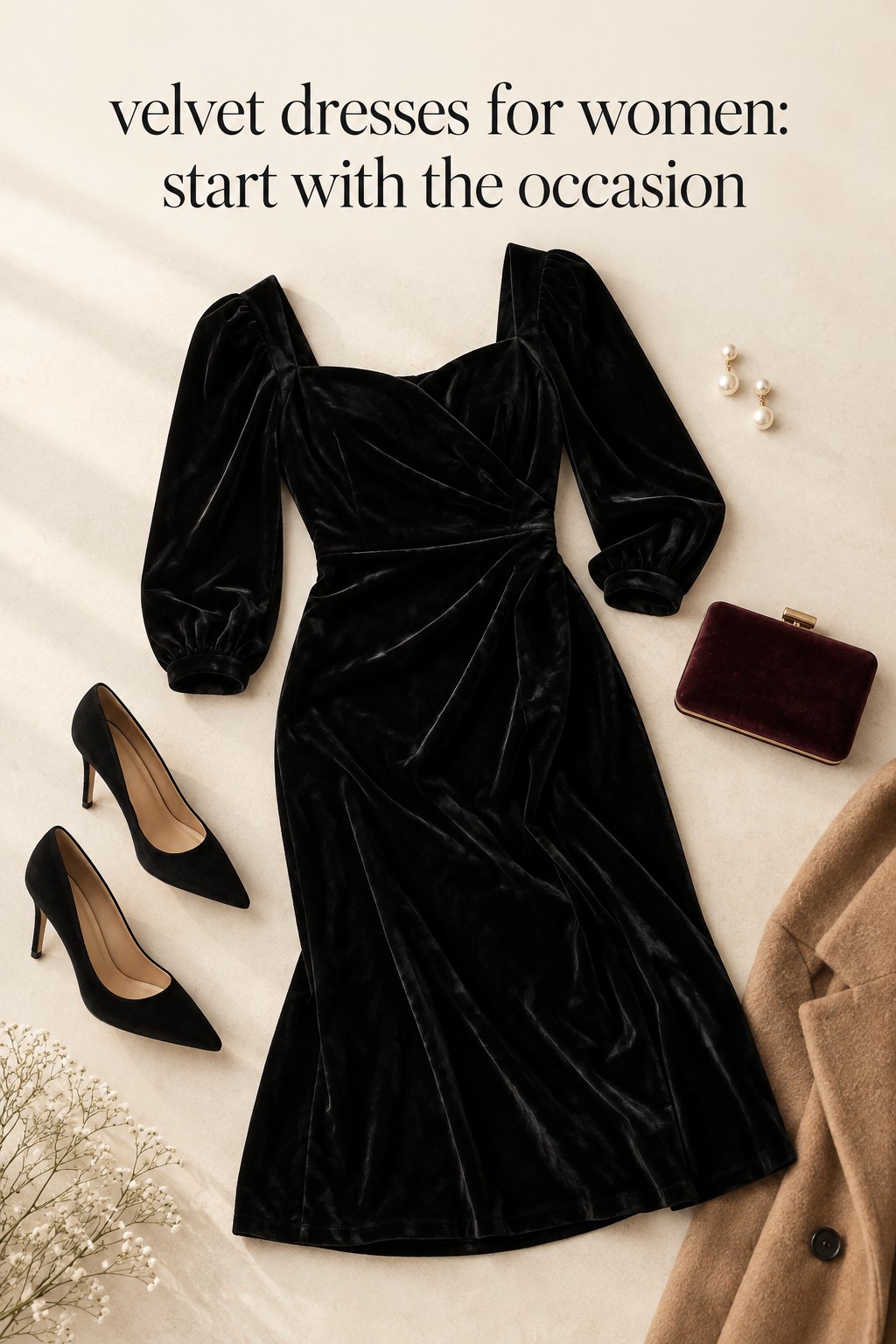
Velvet already communicates texture and occasion. It catches light, creates depth, and usually looks more dressed than an otherwise similar cotton or jersey style. That is why the most useful question is not simply whether velvet is appropriate. It is how much visual weight your plans can handle. A relaxed daytime invitation may call for a matte finish, a simpler cut, or casual shoes. A formal evening can support shine, length, and a more deliberate accessory.
Think of your outfit as having three levels. The first is the dress code: casual, polished daytime, cocktail, wedding guest, or formal. The second is the dress itself: color, hemline, neckline, sleeve, and amount of sheen. The third is the styling volume created by shoes, tights, outerwear, bag, hair, and jewelry. When all three levels are dramatic, velvet can start to feel like costume. When the dress is rich but the rest is edited, it looks confident and current.
Found the dress? Keep the rest in one place.
Zarellea brings guest details, vendors, timelines, and every next step together — so your wedding plan feels as good as your look.
For daytime plans, lower the shine and increase ease
A daytime velvet dress works best when at least one part of the outfit feels ordinary. Choose a relaxed wrap, A-line, shirt-inspired, or fine-wale midi rather than an extremely glossy gown. Add flat boots, loafers, a simple crossbody, or a clean sneaker if the setting allows it. A wool coat or denim jacket can make the fabric feel intentional without making the entire outfit look like eveningwear that arrived early.
Color can help with this adjustment. Navy, charcoal, muted plum, chocolate, and softened green usually feel easier in daylight than brilliant red or high-shine black. You do not need to avoid a strong color, but let the rest of the look stay quiet. A bright velvet dress with simple sneakers can look more modern than the same dress with glittering heels, a jeweled bag, and a statement necklace.
For cocktail plans, let the silhouette do the talking
Cocktail dressing is where velvet becomes especially useful. A knee or midi hem, a defined waist, or an interesting neckline can provide polish without requiring a floor-length dress. Pointed pumps, slim ankle boots, slingbacks, or metallic sandals all work, depending on the season and venue. Keep the bag small and let one feature stand out: the neckline, the earrings, the shoe, or the color.
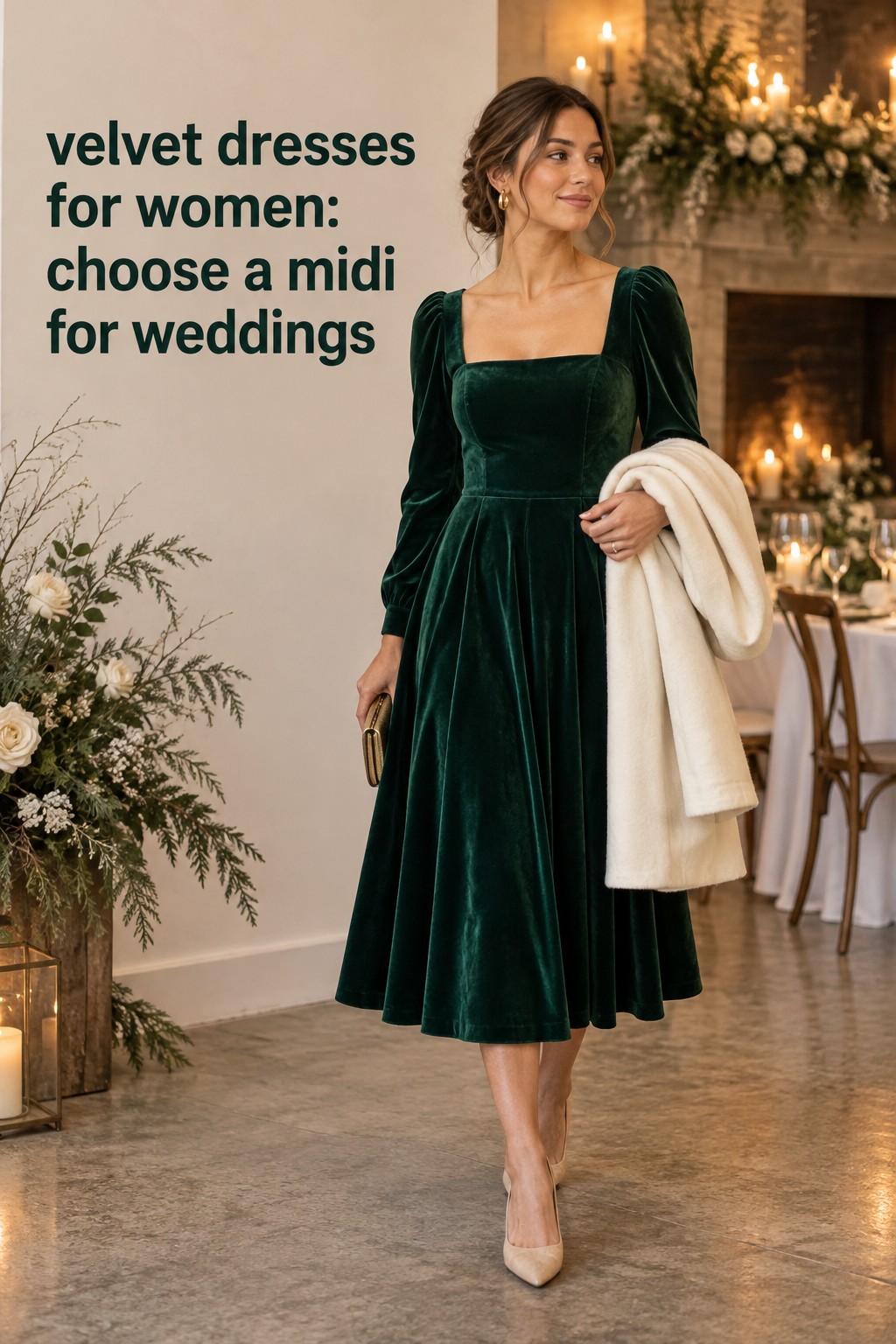
If you are attending a wedding, read the invitation before committing to a highly dramatic shade or a very short hem. Velvet can be beautiful for a cold-weather celebration, but the outfit should still feel like a guest look rather than a stage costume. A jewel-tone midi with simple gold jewelry is an easy direction. A dark velvet maxi can work for evening, especially when the cut is clean and the accessories are not competing for attention.
For formal evenings, add structure rather than more decoration
Formal velvet does not need extra sparkle to look special. A long line, an elegant drape, a defined shoulder, or a controlled slit can provide enough impact. Choose one polished shoe and one intentional jewelry direction. Silver can sharpen black or navy, while gold can warm burgundy, emerald, and deep brown. A structured clutch or a long wool coat can make the whole outfit feel finished on the way to the venue.
- Casual or daytime: matte velvet, relaxed cut, boots, loafers, sneakers, or a simple jacket.
- Cocktail: midi or short hem, refined heel or boot, small bag, and one focal accessory.
- Winter wedding: jewel-tone midi or maxi, opaque tights if needed, elegant coat, and restrained jewelry.
- Formal evening: longer hem, cleaner accessories, a polished shoe, and an outer layer with structure.
Velvet dress silhouettes compared
The fabric sets the mood, but the silhouette decides how the outfit moves and where the eye travels. There is no universally best velvet dress. The best choice is the one that supports your schedule and the amount of styling you actually want to do. Compare the options by what they make easy, what they require, and where they can become too much.
Velvet midi: the most adaptable middle ground
A velvet midi is usually the strongest all-rounder because it can shift between dinner, cocktail events, winter weddings, and polished daytime plans. A fitted midi feels sleek and intentional, while a fit-and-flare or A-line midi creates more movement and can feel less restrictive. The hem works with pumps, ankle boots, knee-high boots, and even a clean sneaker when the rest of the outfit is casual.
Choose a fitted midi when you want the dress to create a long, uninterrupted line. Choose a fit-and-flare shape when you want room through the skirt or a more playful proportion. If the neckline is already detailed, keep jewelry close to the face and simple. If the neckline is plain, drop earrings or a single pendant can add direction without covering the fabric.
Velvet mini: high energy, but dependent on the layers
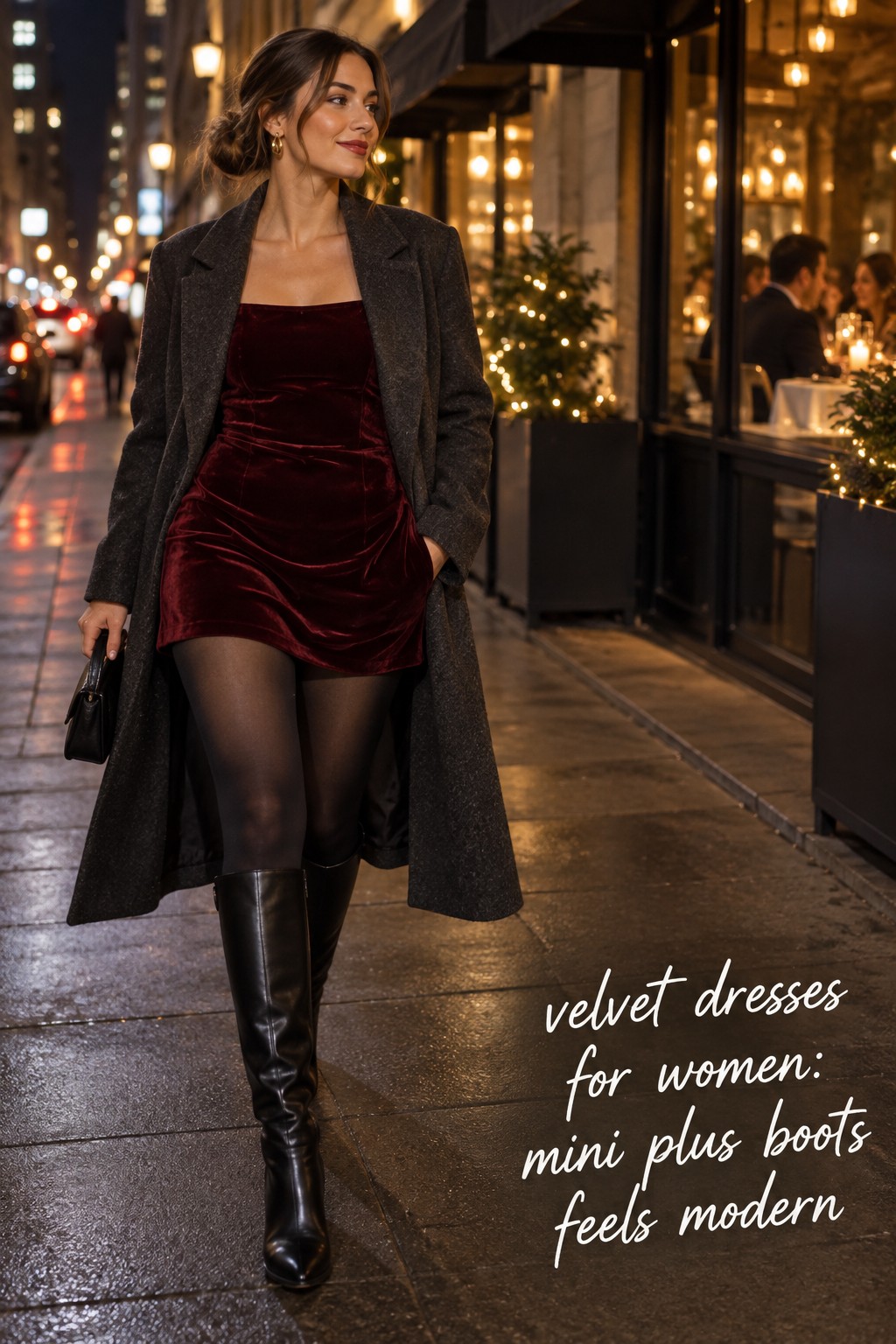
A velvet mini is naturally festive and works well for dancing, a night out, or a party where movement matters. Its main styling question is not whether it is dressy enough. It is how to balance the shorter hem. Opaque tights, knee-high boots, or a long coat can create a grounded winter look. Bare legs and strappy heels make it feel more overtly evening-ready.
Because the hem already creates impact, be careful with piling on other signals. A mini with a high neckline can balance a shorter skirt. A low neckline may call for a simpler shoe. If the dress has crushed or highly reflective velvet, matte tights and a smooth coat can keep the look from becoming visually noisy.
Velvet maxi: elegant, but read the venue and the hem
A velvet maxi has instant evening presence. It is a good choice when the event is clearly formal, when the venue is polished, or when you want one piece to carry the entire look. A column shape feels modern and streamlined. A wrap or softly draped maxi feels more romantic and forgiving through the waist. A sleeve can make the dress feel seasonally complete, while a simple neckline gives you room for earrings or a cuff.
Pay attention to practical movement. A long velvet dress can feel heavy, especially when layered with a coat. Check the hem with the shoes you will actually wear, and make sure you can sit, walk, and navigate stairs comfortably. The most elegant maxi is one you are not constantly adjusting.
Wrap and fit-and-flare: useful when comfort matters
Wrap velvet dresses offer adjustability and a clear waist without demanding a rigid fit. They can be especially useful for dinners, work-adjacent events, and celebrations where you want to sit comfortably. The diagonal line also gives the outfit movement, so simple earrings and a clean shoe are often enough.
Fit-and-flare styles create contrast between a defined bodice and a moving skirt. They can feel playful in a shorter length and classic in a midi. To keep the result contemporary, pair the shape with a modern boot, a sharp coat, or a small structured bag. Avoid matching every detail to the dress. A little contrast keeps the silhouette from feeling overly themed.
Slip and blazer dresses: choose your styling personality
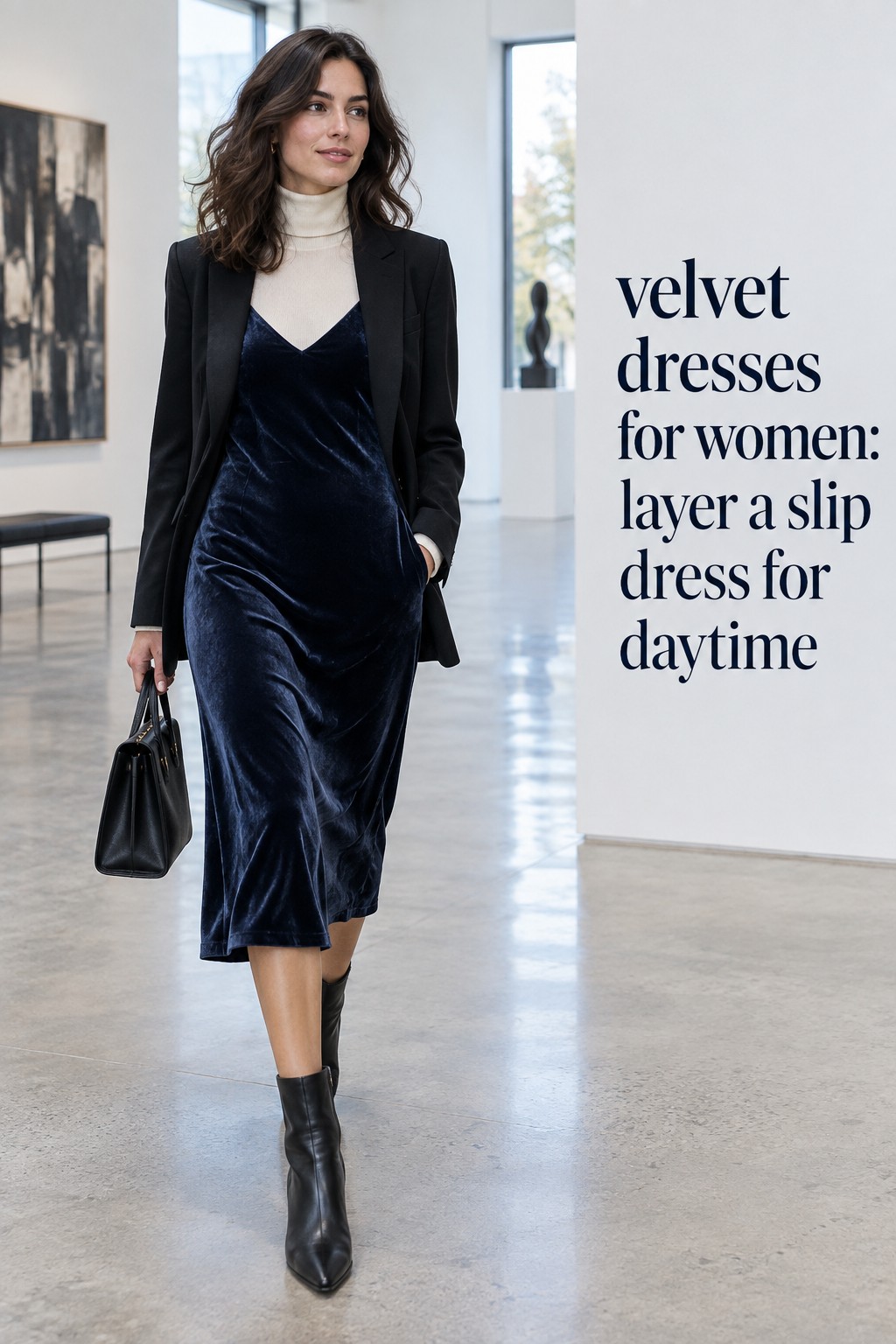
A velvet slip dress has a softer, more fluid mood. It is ideal when you want the texture to feel sensual and understated rather than tailored. Layer it over a fine turtleneck for a cooler day, under a blazer for definition, or with a simple heel for evening. The cleaner the line of the dress, the more carefully you should choose the bra, underlayer, and coat so nothing interrupts the drape.
A velvet blazer dress has the opposite personality. It brings structure, sharper shoulders, and a confident evening feel. Wear it with pointed shoes or tall boots, and keep the bag compact. If you want to soften it, use sheer or opaque tights and a less formal earring. This silhouette is a strong choice when you want the outfit to feel polished without looking traditionally romantic.
Color, shoes, and layers by setting
Velvet color changes noticeably with light and movement, so the shade you see in a fitting room may look deeper, brighter, or more dimensional in photographs. The safest approach is to choose the color according to the mood you want, then use shoes and layers to set the formality. A useful [velvet dress outfit guide](https://www.fashionaxe.com/blogs/news/velvet-dress-outfit-ideas) also groups the fabric by occasion and recommends keeping the supporting pieces controlled.
Black velvet: the easiest base for contrast
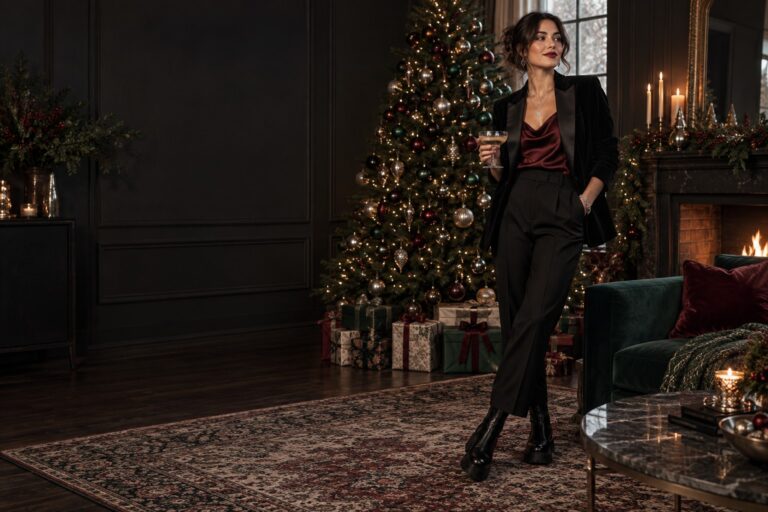
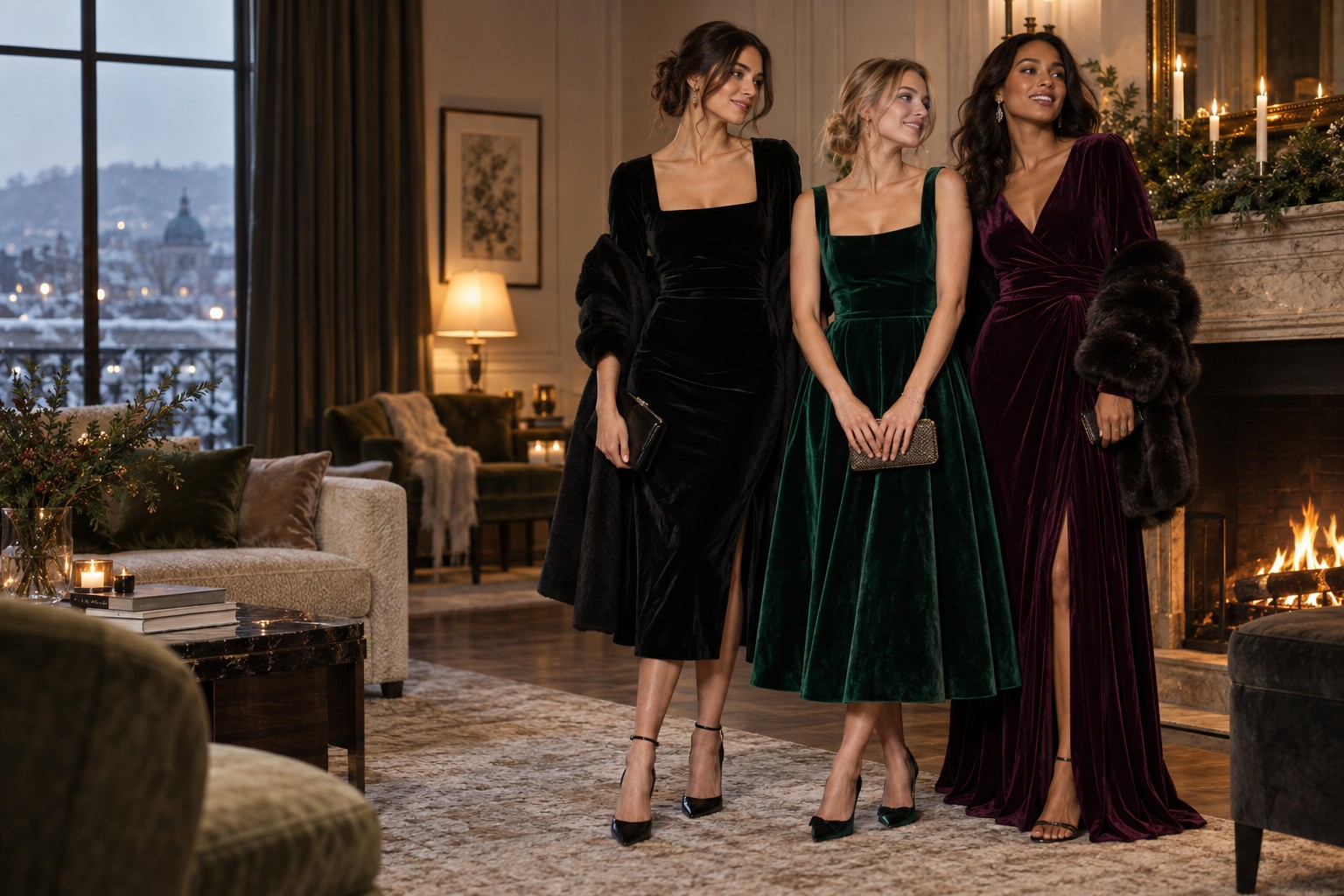
Black velvet is versatile because it can look sleek, dramatic, romantic, or slightly edgy depending on the accessories. Silver, crystal, pewter, and cool gray sharpen it. Gold, burgundy, tan, and warm ivory soften it. Black ankle boots create a cleaner daytime line, while metallic heels shift the same dress toward evening.
For a low-effort black velvet look, try a midi, opaque black tights, a black pointed boot, and a wool coat in camel, charcoal, or deep burgundy. For a formal plan, swap the boot for a slim heel and the coat for a structured evening layer. If the dress has a plunging or open neckline, one pair of earrings may be more effective than a necklace.
Burgundy and red: festive color with different levels of intensity
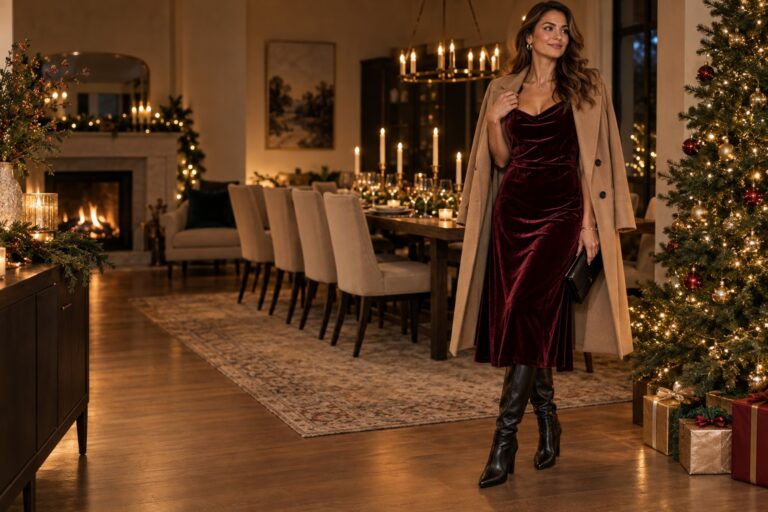
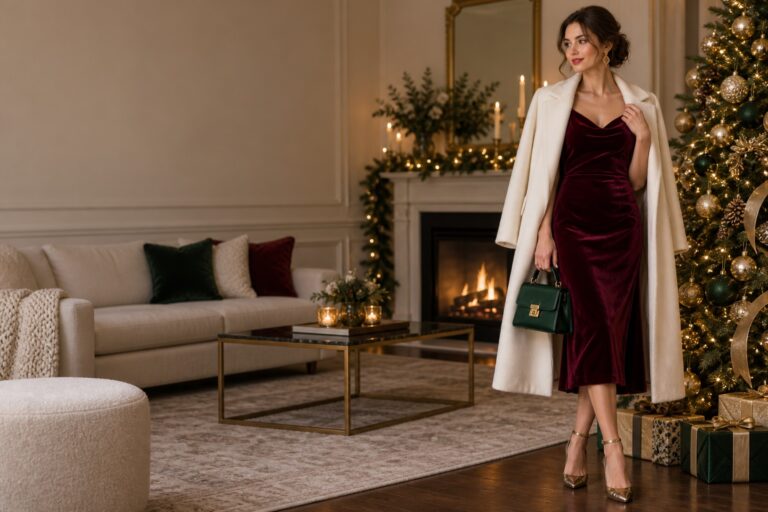
Burgundy is a dependable choice when you want color that still feels refined. It pairs easily with black, espresso, cream, antique gold, and soft beige. Red velvet is more expressive and may become the main event, especially in a fitted or short silhouette. Balance it with neutral shoes and a bag when you want the color to remain sophisticated.
For a wedding guest look, burgundy with gold earrings and beige or black shoes can feel celebratory without competing with the setting. For a party, red with black boots or a tonal red lip can be more deliberate. Keep the other colors quiet, especially if the velvet has a strong sheen.
Emerald and navy: rich alternatives to black
Emerald velvet has a naturally jewel-like effect. It works with black, cream, bronze, warm gold, and dark brown. It can look romantic in a fit-and-flare dress, polished in a column midi, or modern with a brown leather jacket. Navy velvet feels cooler and quieter. Pair it with silver, pewter, gray, black, or a restrained blush accent.
Both colors are useful when black feels too predictable but you still want an outfit that is easy to finish. Start with shoes in a neutral that repeats nowhere else, or choose a metallic that echoes your jewelry. Matching every piece exactly can make the outfit look assembled rather than styled.
What to wear over a velvet dress
Outerwear should respect the dress silhouette. A tailored wool coat is the most reliable partner because it adds structure without competing with the texture. A cropped jacket can work with a defined waist or a shorter dress. A blazer can make a slip dress feel more daytime-ready, while a leather jacket adds contrast to a romantic shape. A faux-fur layer can be beautiful for a formal winter event, but keep the rest of the accessories simple.
For cold weather, opaque tights can act as a visual bridge between the dress and the shoe. A useful winter styling reference recommends treating the tights as part of the leg line rather than as a separate statement. That means choosing a deep tone close to the dress and letting the boot or pump continue the same direction.
How to make velvet feel like you
The best velvet outfit is not the one with the most luxurious ingredients. It is the one that leaves room for your personality. If you prefer minimal dressing, let the texture and silhouette carry the interest. If you like a little edge, add a leather boot, a strong belt, or a sharper jacket. If you love romantic details, choose one soft element such as a bow, pearl, or draped earring and keep the rest clean.
Use the one-rich-texture rule
Velvet is already a rich texture, so it often benefits from simpler companions. Smooth leather, matte wool, crisp cotton, and polished metal provide contrast. Too many plush, shiny, or embellished pieces can blur the outfit’s structure. This does not mean you cannot wear velvet with satin, sequins, or faux fur. It means one of those elements should be the supporting accent, not all of them at once.
Match the shoe to the energy, not only the color
Heels are not the only way to style a velvet dress. Pointed pumps make a midi feel precise, ankle boots make it feel grounded, knee-high boots add warmth and a little attitude, and clean sneakers can make a short or relaxed dress feel intentionally casual. Suede works especially well because its matte surface supports velvet without copying its shine.
Edit accessories around the neckline
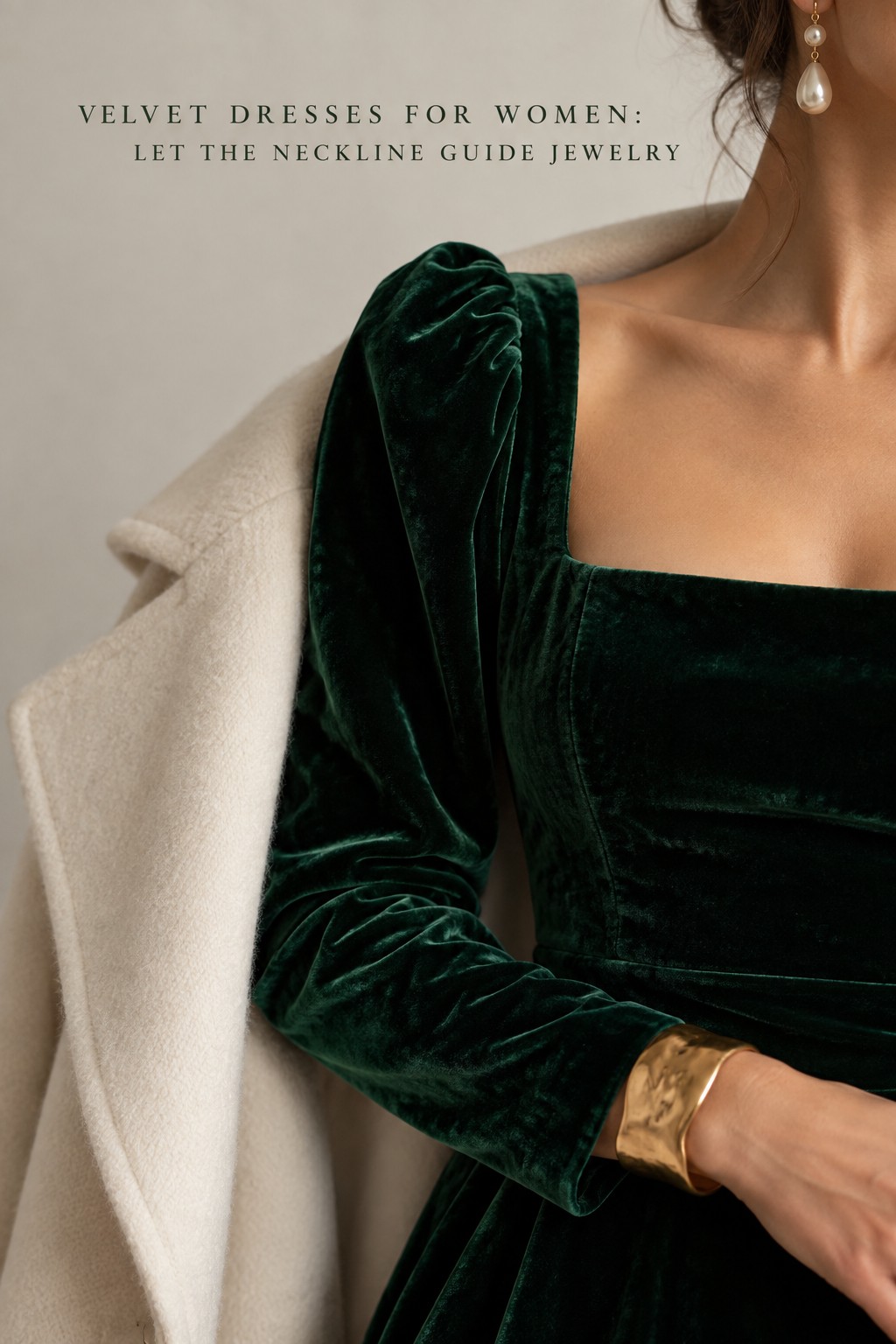
Use the neckline as your accessory map. A high neck can handle earrings or a cuff. A square or scoop neck may welcome a short necklace. An off-shoulder dress often looks strongest with a clean neck and visible earrings. A wrap neckline already creates a diagonal, so a pendant can be unnecessary unless it is very fine. The goal is to guide the eye, not cover the design.
Common mistakes that make velvet harder to wear
- Choosing a dress for its color while ignoring the venue, hem, and comfort.
- Adding sparkle to every accessory because the fabric feels festive.
- Wearing a heavy coat with a heavy dress and losing the shape underneath.
- Ignoring the direction of the pile, which can make the shade look uneven.
- Using a shoe that is too casual or too delicate for the dress length and fabric weight.
- Forgetting that a velvet dress may need careful steaming, hanging, or label-specific cleaning.
Before you leave, sit down, walk a few steps, check the hem, and look at the outfit in both warm and cool light. Velvet changes as you move, and that is part of its appeal. If the outfit still feels too formal, change the shoe or layer before replacing the dress. If it feels unfinished, add one clear focal accessory rather than several small ones.
Sources and methodology
This guide compares recurring styling patterns across ten US search results and related fashion references, then turns them into an occasion-first decision framework. For additional examples of winter layers, silhouettes, and color pairings, see this [winter velvet dress styling guide](https://www.timelesslondon.co.uk/blogs/timeless-stories/how-to-style-a-velvet-dress-in-winter-chic-and-cozy-outfit-ideas). The recommendations here are styling guidance, not a claim that one dress code applies identically to every venue.
FAQ
Are velvet dresses for women only suitable for winter?
No. Velvet naturally feels seasonal, but a lightweight, matte, or crushed version can work for transitional weather and indoor evening plans. Choose a shorter hem, breathable underlayers, and simpler shoes when the temperature is mild. The heavier and shinier the velvet, the more strongly it will read as cold-weather or formal.
What shoes look best with a velvet dress?
Choose shoes by the desired energy. Pumps and strappy heels are polished, ankle boots are grounded, knee-high boots are warm and modern, and clean sneakers can casualize a relaxed dress. Suede and matte leather are especially easy partners. The shoe should also respect the dress length and the formality of the venue.
Can you wear a velvet dress to a wedding?
Yes, especially for a fall or winter wedding, as long as the color, hem, and neckline suit the invitation. A burgundy, emerald, navy, or black midi is usually easy to adapt. Add an elegant coat and controlled jewelry, and avoid a look that feels more theatrical than guest-appropriate.
How do you make a velvet dress look less formal?
Use one casual element at a time. Try ankle boots, loafers, sneakers, a denim or leather jacket, a chunky knit layer, or a crossbody bag. A muted color and a matte finish also help. Keep the rest of the outfit clean so the casual piece feels intentional instead of accidental.
What jewelry goes with black velvet?
Black velvet works with both warm and cool metals. Silver, crystal, and pewter create a sharper evening effect, while gold, bronze, and warm pearls soften the look. Let the neckline decide whether earrings, a cuff, or a necklace is the most useful addition. One strong piece is usually enough.
How should a velvet dress be stored?
Check the care label first, then follow its instructions. In general, avoid pressing velvet directly with a hot iron because the pile can flatten. Hang the dress when possible, give it room in the closet, and use gentle steaming only when the care instructions allow it. If the fabric is crushed, textured, or blended, professional cleaning may be the safer choice.