Winter Church Outfits for Women: Sunday Made Simple
It is still dark when you pull the coat from the hook. Outside, the path to the car is cold; inside the church, the room may feel warmer, or it may stay cool through the whole service. You know there will be a moment to hang the coat, sit down, stand again, and perhaps stay afterward to talk. The outfit has to make sense through all of those small changes.
That is why winter church outfits for women are easier to choose when you picture the morning, not just the mirror. Start with the clothes you will wear once the coat is off. Then consider how you will travel, sit, move, and spend time with others. A dress, skirt, or pair of trousers can all work. The best foundation is the one that feels appropriate to your congregation and comfortable for the actual service.
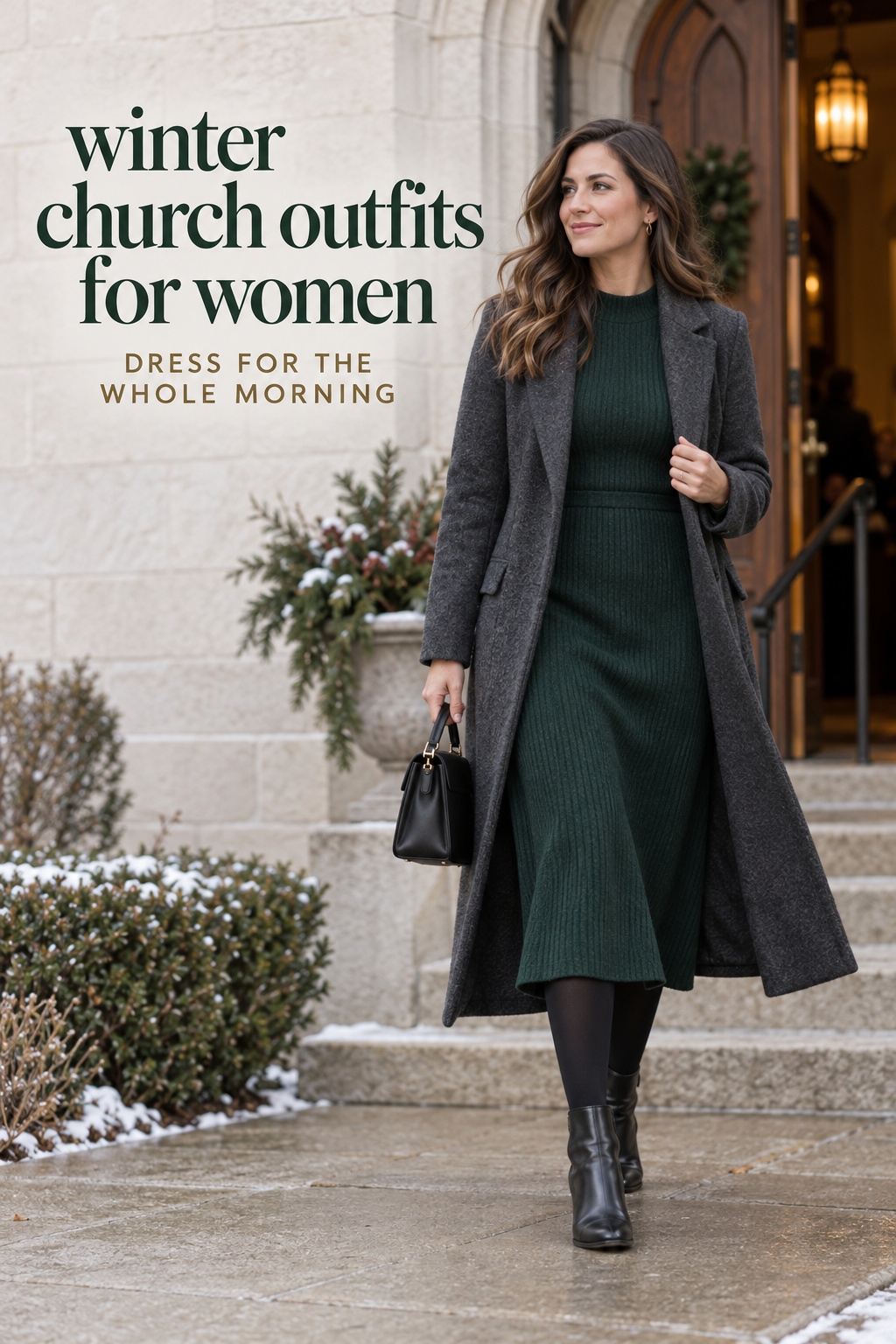
Church clothing expectations are not identical everywhere, and a fashion guide cannot set a rule for every community. If you are visiting, check the congregation website or ask someone you trust when you are unsure. If you already attend, the range of outfits you see around you can offer a helpful reference. Use the ideas here as adaptable styling, not a test of devotion or a universal dress code.
A Sunday morning starts before the service
Picture the complete route: getting dressed at home, walking from a parking spot or transit stop, entering the building, finding a seat, and leaving when the service ends. These moments affect clothing choices in different ways. A coat may matter outside, while its color and cut disappear from view once it is hung up. A skirt may feel graceful standing, then need a quick check while sitting. Shoes may look polished at home but feel tiring on a long walk.

Found the dress? Keep the rest in one place.
Zarellea brings guest details, vendors, timelines, and every next step together — so your wedding plan feels as good as your look.
Before deciding on a silhouette, ask what you know about this particular morning. Is it an ordinary weekly service, a holiday gathering, a wedding, or a day when you will help with a task? Will you be walking on wet pavement or moving directly from a car to the entrance? Will you stay afterward? These answers guide the level of formality and practicality better than an abstract idea of what a woman is supposed to wear to church.
For someone attending a new congregation, a simple, neat outfit is a useful starting point while you learn the local rhythm. Tailored trousers with a knit top, a midi dress with a cardigan, or a skirt with a blouse and warm coat can each be adjusted up or down. None is automatically right in every setting. A quick look at the church website, event details, or a direct question to the host can resolve uncertainty more reliably than guessing from social media.
Published church clothing guidance illustrates why it helps to check the local source. For example, the [CrossPointe Community Church dress guidance](https://storage.cloversites.com/crosspointecommunitychurch2/documents/CrossPointe_DRESSCODE.pdf) explains standards for its own services, while the [Holy Spirit Tempe attire guidance](https://www.holyspirit-tempe-az.org/uploads/liturgy/ushertrainingsuggestiondresscode.pdf) describes a different setting. These are examples of local policies, not a universal rule. Follow the instructions of the congregation you plan to attend.
A comfortable outfit also gives you less to think about once you arrive. When a neckline, hem, waistband, or shoe needs constant adjustment, attention drifts away from the service and the people around you. That does not mean every garment must be plain or conservative. It means that the clothes should stay where you expect them to stay through the movements you will make.
A useful opening question is not “Is this the perfect church outfit?” but “Will I feel settled wearing this for the whole morning?” The second question includes style and comfort without pretending there is one correct answer. If the outfit already feels like you, small choices such as the coat, tights, jewelry, or shoe can create a more finished impression without changing your entire wardrobe.
Dress for the room after your coat comes off
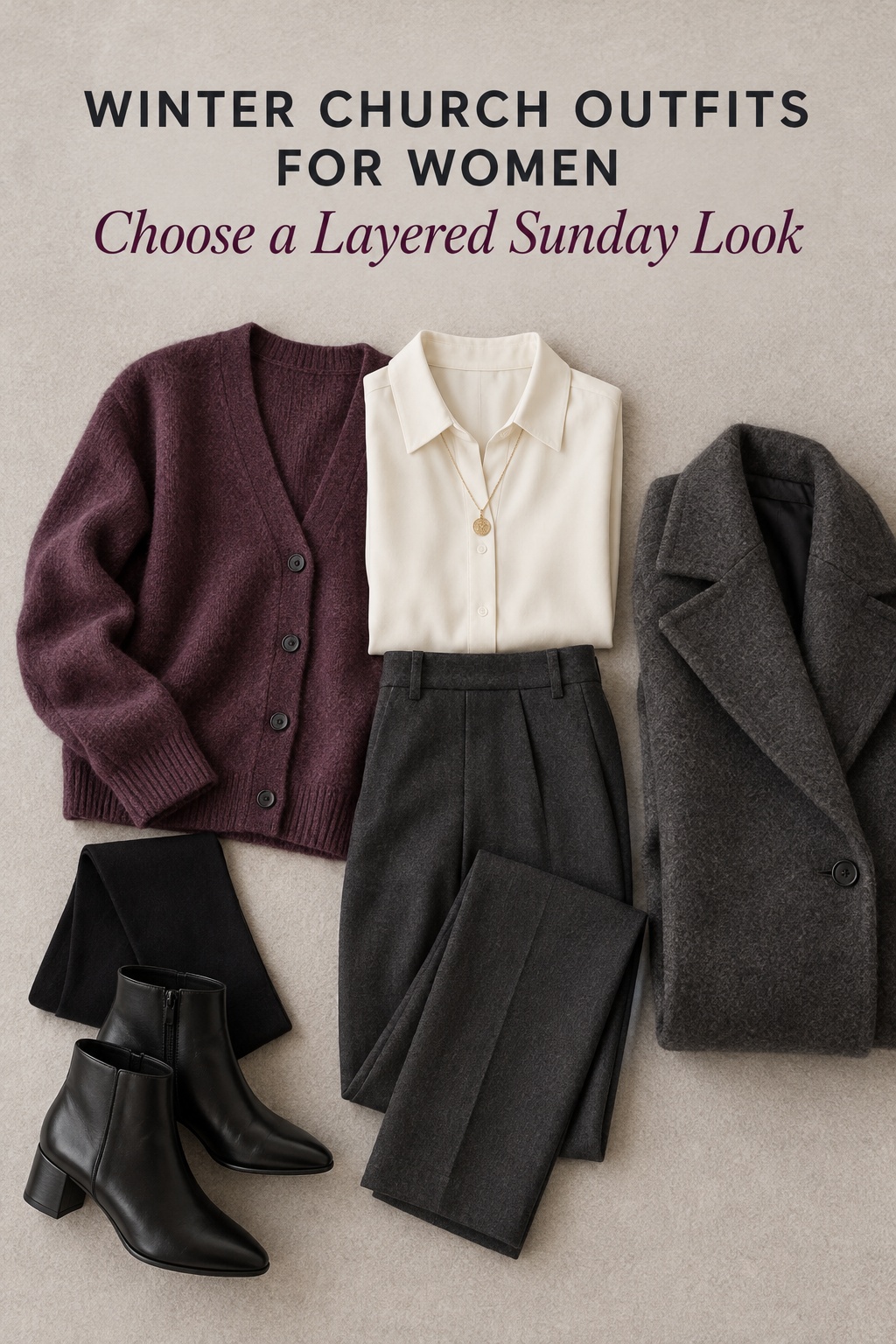
Winter dressing often puts the coat first because it is the piece you notice when leaving home. For a service, reverse that order. Build the indoor outfit first, then choose outerwear that protects it on the way there. Once you hang the coat, the knit, blouse, dress, or coordinated separates become the whole look. A neat neckline and a layer that sits comfortably at the shoulders can make an ordinary outfit feel intentional.
A fine sweater over a collared shirt gives a familiar, composed shape without requiring a special occasion garment. A knit dress can feel complete on its own, with a cardigan or blazer available if you prefer another layer. A blouse with tailored trousers offers a clean line and leaves room for a coat. These are starting points, not shopping instructions. Work with pieces you already wear comfortably.
Indoor temperature is difficult to predict from the weather app alone. Some rooms feel warm once full, while others remain cool. Rather than wearing the heaviest outfit you own, consider a removable layer that still looks finished on its own. A cardigan, soft blazer, or light sweater can be taken off without leaving a base that feels too casual or incomplete for your comfort.
Think about the thickness and shape of each layer together. If the coat is roomy, it can sit over a blazer or cardigan without pulling. If it is tailored closely, a thinner knit may feel better underneath. A bulky scarf can also crowd a high neckline once you come indoors. Try the full combination before Sunday morning and check that you can move your arms, close the coat, and remove it without disturbing the clothes underneath.
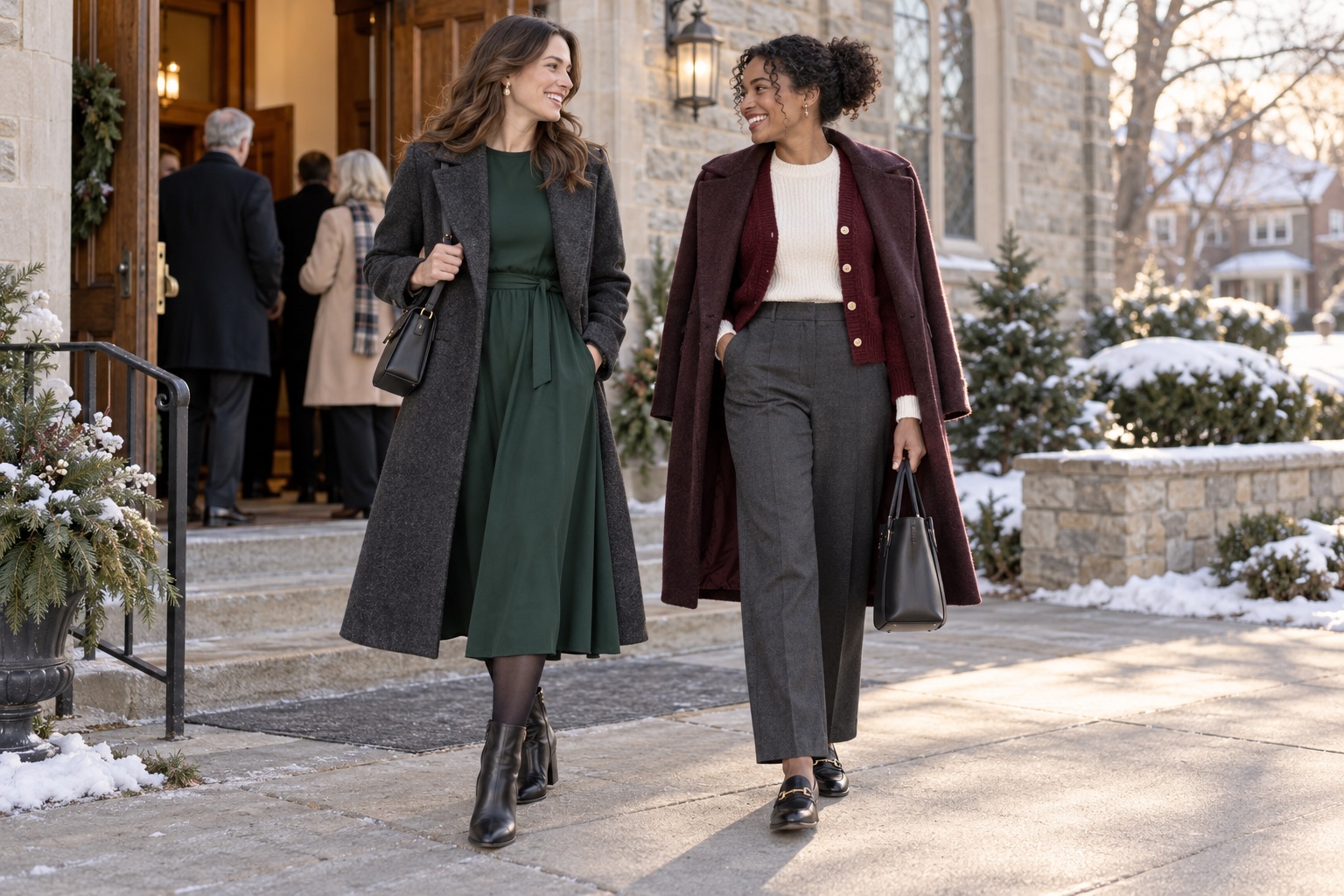
The indoor layer is an opportunity for color and texture, but it does not need to be elaborate. A deep green sweater against a cream blouse, a subtle check skirt with a solid knit, or a burgundy cardigan over a simple dress can provide interest through one clear contrast. If your congregation tends toward understated clothing, keep the palette calm. If people dress more expressively, a print or accent color may feel at home. Let observation inform your comfort.
Avoid relying on a coat to solve every concern about warmth. If the room is cool, a light layer that stays comfortable while seated may be more useful than a heavy coat you do not want to wear indoors. A thin base layer under a dress or blouse is another option when it does not change the fit. Test the layers together so the outfit remains easy to sit in and does not bunch at the elbows or waist.
Choose the silhouette you can sit and move in
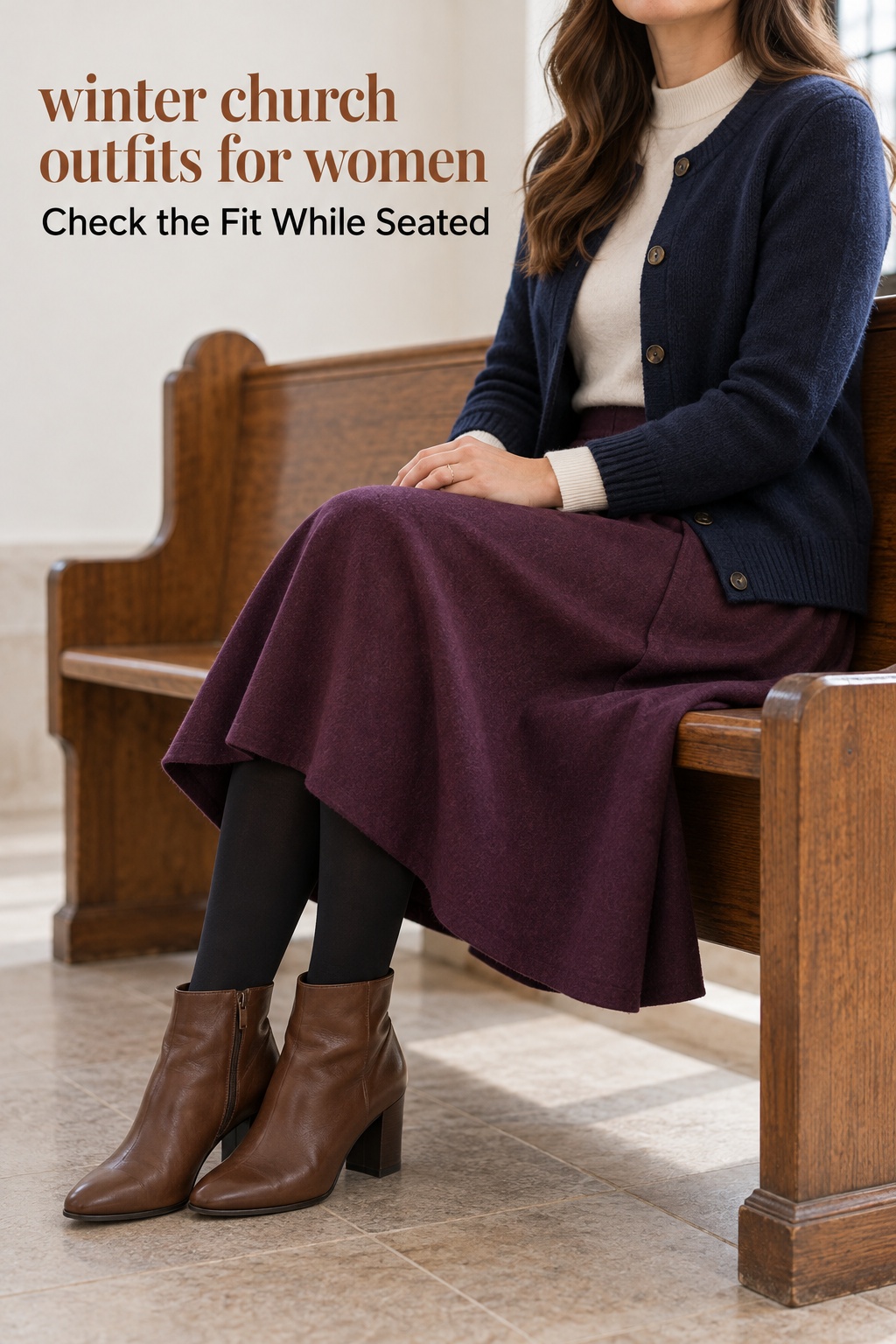
The most polished outfit is one that does not require you to monitor it throughout the service. Before wearing a dress or skirt, sit in it as you would in a pew or chair. Notice whether the hem shifts, the fabric pulls across the hips, or the waistband becomes uncomfortable. Stand up, take a few steps, and reach for a coat sleeve. If any movement feels awkward, a slightly different length, fabric, or cut may solve the problem.
A midi dress can be a simple one-piece foundation because its top and bottom already belong together. A soft knit dress works with a long coat and boots; a shirt dress can take a cardigan or blazer. If the dress is sleeveless, a long-sleeve layer beneath it or a cardigan over it can make the outfit feel more suited to the setting and the temperature. Check the armholes and neckline while moving, not only while standing still.
A skirt and sweater combination leaves more room to adjust the proportions. A pleated or gently A-line skirt can move comfortably when walking and sitting, while a straight skirt may call for a slit or fabric with enough ease for your stride. Tights can make the outfit feel complete in winter and reduce the need to plan around bare legs. Choose a skirt length and fit that let you sit and stand without pulling at the hem.
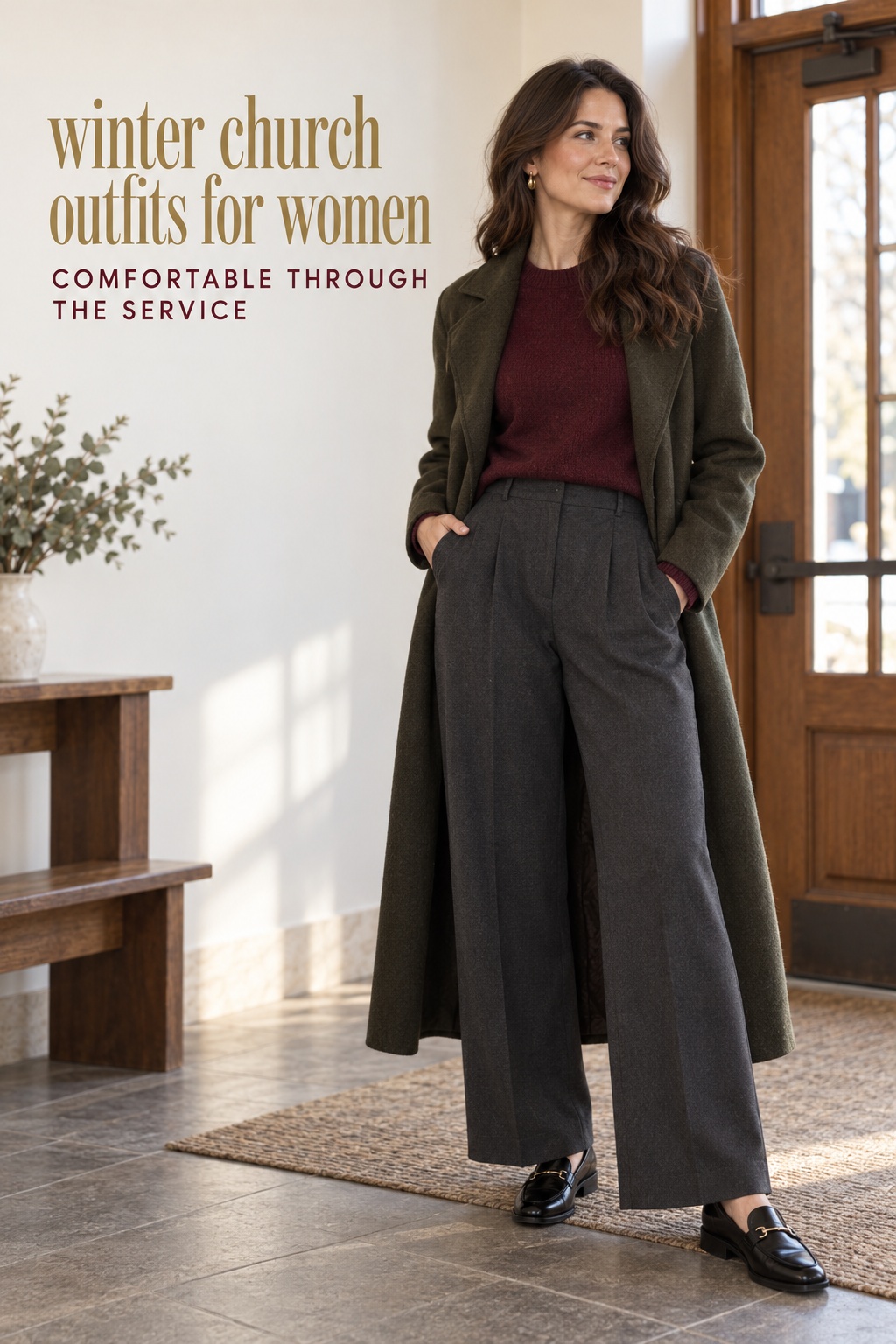
Trousers are another natural option. Straight-leg or wide-leg tailoring with a knit top, blouse, or soft blazer creates a composed outfit without depending on a dress. If the service is relaxed, dark jeans with a polished sweater and clean shoes may fit the environment. If you are unsure about jeans, check local guidance rather than treating a general style blog as authority. Fit and condition can change how casual denim appears.
A layered outfit can be a useful alternative if you do not want a dress or skirt. A longline cardigan over a tunic-length top and trousers gives coverage and movement without feeling formal. A blazer over a fine knit adds structure. Choose a top that stays comfortable when you remove the jacket, especially if you will be warm indoors. The intention is a complete outfit in both its layered and unlayered versions.
If the service includes standing, kneeling, or other movement, consider those actions before choosing a hem or shoe. A tight pencil skirt, a dress that rides upward, or a stiff waistband may be distracting even when the outfit looks excellent in a photo. There is no need to reject a silhouette you enjoy; look for the version with more ease, a different lining, or a length that stays in place as you move.
Texture can add a winter feeling without making the outfit complicated. A ribbed knit, brushed wool-like layer, corduroy skirt, or smooth blouse under a cardigan gives contrast close to the face and hands. Since the clothes will be seen indoors, favor combinations whose colors and textures work without the coat. One tactile element is often enough. Several heavy textures together can make the outfit feel visually dense and physically warm.
Finish at the doorway with shoes and outerwear
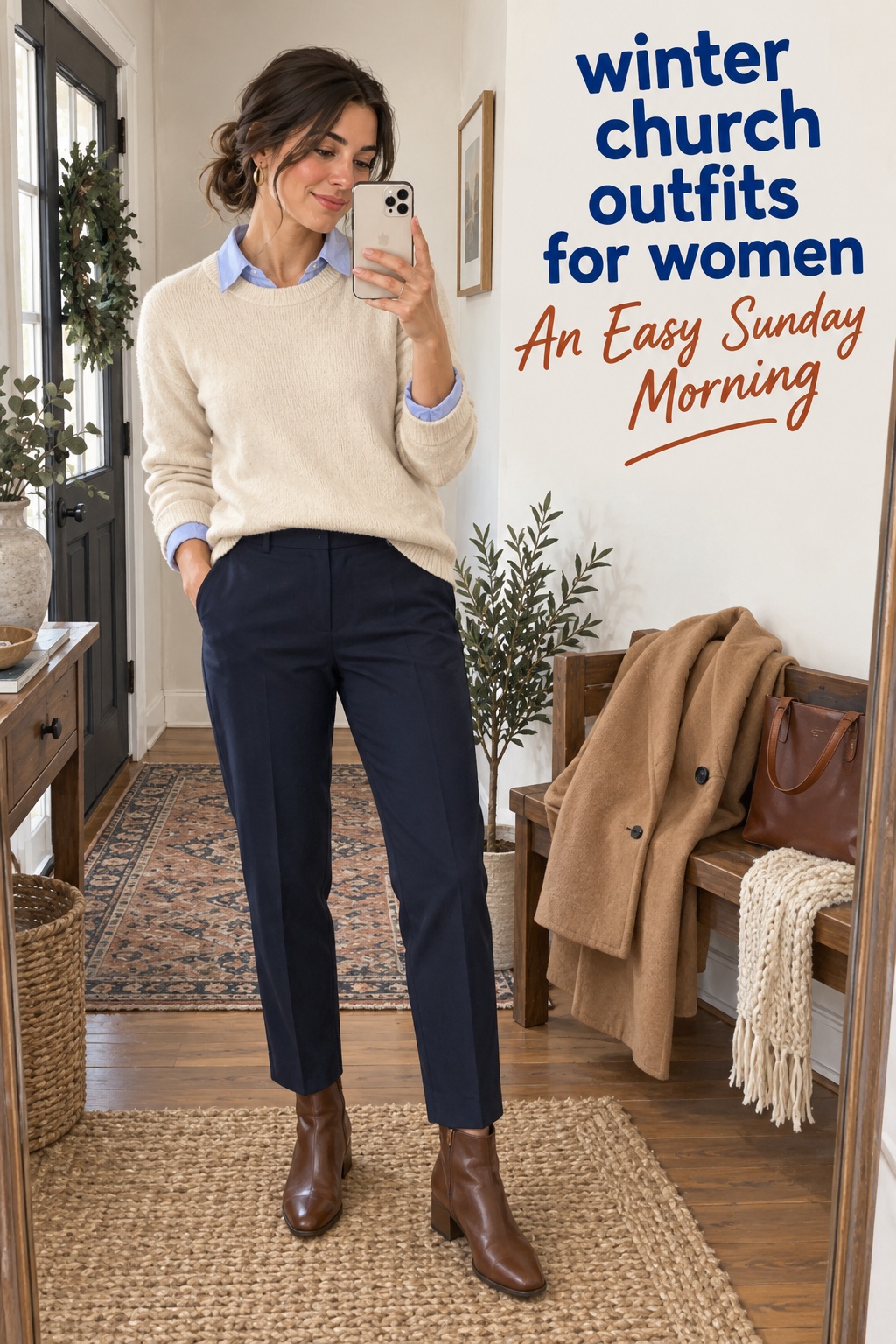
The path to the entrance can be colder, wetter, or more uneven than the room where you will sit. Choose footwear for that route first, then consider how it looks with the rest of the outfit. A simple ankle boot can sit comfortably with trousers, a dress, or a skirt and tights. A loafer may be more suitable when the walk is short and surfaces are dry. Wear shoes you already know you can stand and walk in.
If winter conditions require sturdier boots, it is fine to let practicality lead. A clean boot in a quiet color can work with tailored clothes. If you prefer to change shoes after arriving, keep the indoor pair easy to carry and make sure changing is genuinely convenient. For icy or otherwise hazardous conditions, follow local safety guidance and wear footwear intended for the surface. A dress shoe should never be the only plan if the route is unsafe.
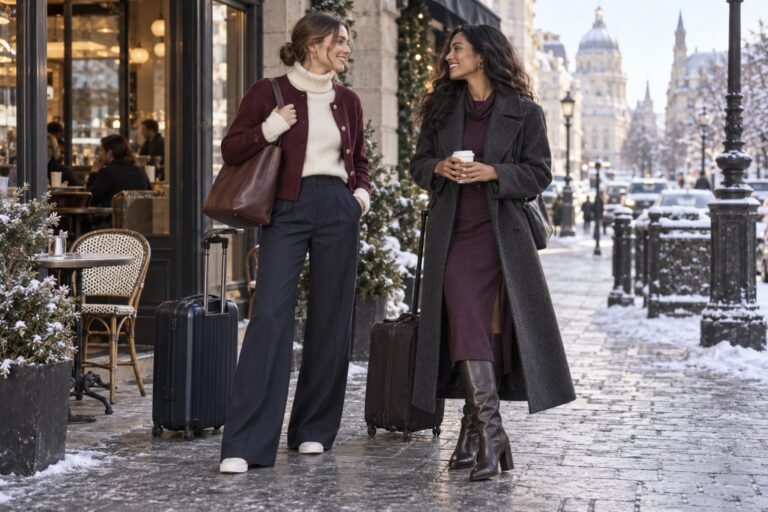
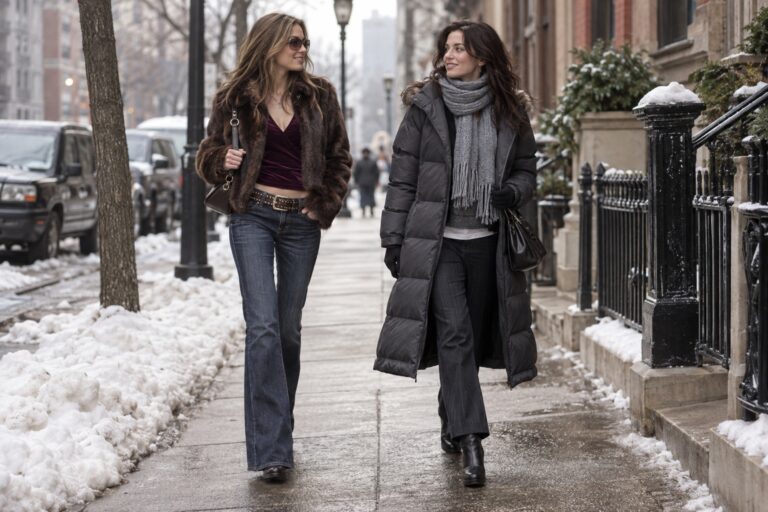
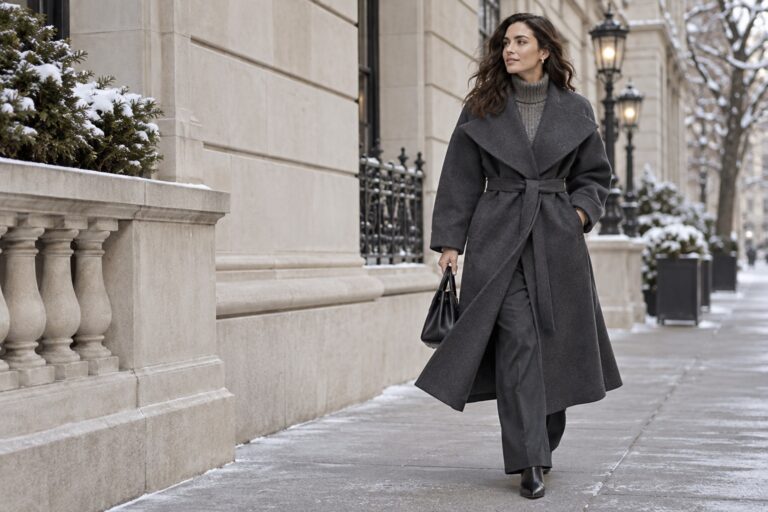
A coat can provide most of the visual structure on the way in. A long wool-style coat over trousers feels classic; a belted coat over a dress or skirt defines the silhouette; a practical puffer can still look intentional when its color and length connect to the outfit. Choose a coat that closes over your layers and allows you to sit in a car or walk without fighting the hem.
Accessories are easiest when they have a clear job. A scarf can add warmth outdoors and be removed at the entrance. Small earrings or a simple necklace can finish the indoor look without getting caught in a collar. A crossbody bag can keep hands free on the way in, while a structured tote may be convenient if you carry additional items. Keep the number of moving pieces low enough that arriving does not become a clothing-management task.
Consider where the coat and accessories will go after you arrive. A bulky coat that must stay on your lap can become uncomfortable. If the building has a coat area, use it. If not, choose a layer that folds over an arm or fits beside you without taking over the seat. This is a small practical detail, but it can determine whether a beautifully warm outfit remains pleasant through the service.
If your morning starts with a long walk, you can dress for the walk without making the indoor outfit feel secondary. Wear warm socks with boots, put gloves in a pocket, and choose an outer layer suited to conditions. At the door, remove only what you need. The base outfit should still feel considered on its own, rather than looking like something selected solely to be hidden beneath the coat.
Adjust the same foundation for a relaxed or formal Sunday
The phrase “Sunday best” means different things to different people and communities. A relaxed weekly service may call for clothing similar to what you wear for a family lunch: neat, comfortable, and not overly fussy. A formal service or special event may invite a dressier fabric, a structured layer, or a more polished shoe. The useful distinction is the occasion you are attending, not a rigid divide between acceptable and unacceptable women’s clothes.
For a relaxed Sunday, a soft sweater with tailored trousers and clean boots can feel welcoming and uncomplicated. A midi skirt with a knit top works in a similar way. Keep the combination comfortable enough for sitting and any walk afterward. If you are attending with children or helping with a community activity, washable and easy-moving pieces may matter more than a delicate fabric that needs constant attention.
For a more formal service, start with a dress, skirt suit, or tailored separates that you already find comfortable. A jacket or refined cardigan can add structure. Keep the rest of the look balanced so one statement piece does not make the outfit feel like a special-occasion costume for an ordinary morning. A polished coat and clean shoes can make familiar clothes feel more dressed without a completely new purchase.
For a holiday service, color can mark the occasion without relying on sequins or novelty details. A deep red knit, a dark green skirt, a patterned blouse, or a velvet-like accessory can add a seasonal note. Choose the amount of celebration that feels right for your community. If there is a procession, performance, or other special activity, use the event information to understand whether movement or a particular role changes what will be comfortable.
If you plan to meet friends or family after the service, choose a foundation that works in both places. Tailored trousers, a knit dress, or a skirt and sweater can move easily from a service to brunch with a small change in accessories. If the second setting is much more casual, a cardigan or shoe change may be enough. Planning for the whole morning avoids an outfit that feels right only for one hour.
Personal style still matters. If you like color, use it in a blouse, scarf, or knit. If you prefer minimal outfits, let fit and texture carry the look. If you wear a head covering as part of your practice, choose an outfit and outer layer that accommodate it comfortably. The aim is not to erase your style in order to look respectful. It is to choose a version of your style that fits the occasion and the community you are joining.
Small fixes for common winter outfit frustrations
If the outfit feels too casual, first adjust one element rather than replacing everything. A softer sweatshirt might become a fine knit; distressed denim might become dark straight-leg jeans; sneakers might become a clean flat or boot if the route allows it. A more structured coat or tidy bag can also shift the impression. These changes work only if they suit the congregation and keep the outfit comfortable.
If the outfit feels too formal, remove one dressy element. A blazer can become a cardigan, a high heel can become a flat, or a satin-like skirt can pair with a relaxed knit. It is often more effective to change one piece than to make every part casual. Keeping a clear line in the outfit prevents it from feeling unfinished.
If a dress looks good but feels cold, add warmth in places that do not distort its shape. Tights, a thin layer beneath the dress, socks and boots, or a cardigan can help. If the building itself is cool, choose a layer you are happy to keep on indoors. Be careful not to rely on thin fashion tights or a light coat for conditions where you need more substantial weather protection.
If a skirt or dress shifts when you sit, try a different length or cut before adding more accessories. A fabric with more weight, a fuller silhouette, or a slightly longer hem may feel more settled. If you keep checking the outfit, it is not the easiest choice for that morning. There are plenty of ways to look polished in trousers, so choose the option that lets you feel present.
If you cannot tell how formal the gathering will be, a simple combination with one adjustable layer is a dependable middle ground. A knit dress with a cardigan, tailored trousers with a blouse and coat, or a skirt with a fine sweater can shift a little either way. If the event has a posted dress note, use that. For a first visit, asking a host is more useful than spending the morning worrying about every detail.
The final check can be brief: sit down, stand up, reach forward, close the coat, and remove the coat. If the outfit stays comfortable through those actions, feels like you, and fits the setting as you understand it, it is ready. You do not need a new winter wardrobe for every service. A few reliable pieces and a little attention to the whole morning can make getting dressed feel calm again.
FAQ
What should a woman wear to church in winter?
Choose an outfit that suits the specific congregation and lets you sit, stand, and move comfortably. A knit dress, skirt with a sweater, or tailored trousers with a blouse are all possible starting points. Add a coat and shoes suited to the trip to the building.
Can women wear pants to church in winter?
Expectations vary by congregation. Tailored trousers are a common outfit option, while some communities publish more specific standards. Check the church’s own guidance if you are visiting or unsure, and choose a top and outer layer that feel appropriate to the setting.
Are jeans appropriate for church in winter?
That depends on the congregation and the occasion. In a relaxed setting, clean dark jeans with a polished sweater may fit in. For a formal service or an unfamiliar church, check local expectations or choose tailored trousers until you know the norm.
How can I stay warm without wearing a bulky outfit?
Build from a comfortable indoor layer and add a removable knit, cardigan, or blazer beneath a coat. Tights, socks, and practical footwear can add warmth without making every layer heavy. Choose clothing for the actual conditions rather than relying on a fashion formula for severe weather.
What shoes work with winter church outfits?
Ankle boots, loafers, flats, and other polished shoes can work, depending on the route and weather. Prioritize stable, comfortable footwear for wet, icy, or uneven paths. You can change shoes indoors if that is easy and appropriate for your plans.
What can I wear to church if I do not like dresses?
Try tailored trousers with a fine knit or blouse, a coordinated sweater set, or a skirt with a layer you enjoy wearing. The important choices are comfort, the specific congregation’s expectations, and an outfit that feels like your own style.
How do I dress for a church service when I am visiting for the first time?
Look for event or attire guidance on the congregation’s website, or ask the person who invited you. If you cannot check, a neat, comfortable outfit with a removable layer gives you flexibility without assuming that every church follows the same dress standard.
What should I wear to a winter church service and brunch afterward?
Start with a comfortable foundation that suits the service, such as tailored trousers, a knit dress, or a skirt and sweater. Choose a coat and shoes that work for both locations, then adjust one accessory or layer for brunch if you want the outfit to feel more relaxed.