Winter Vacation Outfits for Travel, Days Out, and Dinner
The hardest part of dressing for a winter vacation is often not choosing a coat. It is getting dressed for a day that changes shape: a chilly airport, a long walk, a heated restaurant, then a cold ride back to the hotel. Packing a separate outfit for every stop fills a suitcase quickly and still leaves you wondering what works together.
Plan winter vacation outfits as a sequence instead. Start with the conditions you will actually face, choose a comfortable base for the longest part of the day, and keep one small finishing layer available for the next plan. That approach gives you looks that feel considered without turning your trip into a wardrobe change schedule.
The ideas below work for city breaks, mountain towns, and warmer escapes, with adjustments for the forecast and activities. Think of each formula as a starting point: swap the color, silhouette, or shoe for what you already own, and follow destination guidance when weather or an activity calls for specialist clothing.
Plan around the three parts of a vacation day
Before laying out clothes, divide a typical day into three blocks: getting there, doing the main activity, and winding down. They do not need three separate outfits. The travel block needs comfort and easy temperature control. The activity block needs clothing suited to movement and the setting. The evening block usually needs one intentional change, such as a sharper shoe, a different top layer, or a small accessory.
Found the dress? Keep the rest in one place.
Zarellea brings guest details, vendors, timelines, and every next step together — so your wedding plan feels as good as your look.
Write down the longest block first. If you will spend six hours walking through a city, that is the outfit to solve before choosing what you might wear for a short dinner. If the day is mostly a pool or spa, start with the swimwear and cover-up that will genuinely be used. This prevents a dramatic evening look from taking space while the practical daytime outfit remains undecided.
Next, check the expected conditions for each block rather than relying on the word winter. A winter trip can mean wind and slush, a dry cold city, a warm coast, or air-conditioned indoor spaces between outdoor stops. Look at the forecast close to departure and note rain, wind, and the amount of time you will be outside. A beautiful outfit that does not suit those conditions is likely to stay in the room.
Also note the dress expectations of the places you plan to visit. A museum day, a casual café, a formal dinner, and a ski lesson ask different things of clothing. You do not need to research every possible rule in advance, but identify any booking or activity that requires specific attire. Keep those requirements separate from style inspiration so an outfit idea does not accidentally substitute for practical gear.
Use a simple planning grid: one row per day and three columns for travel, activity, and evening. Write clothing pieces rather than complete looks in every box. If the same trousers appear in more than one row, add a different top or shoe beside them. The grid shows whether items really combine, and it exposes duplicate pieces before you pack them.
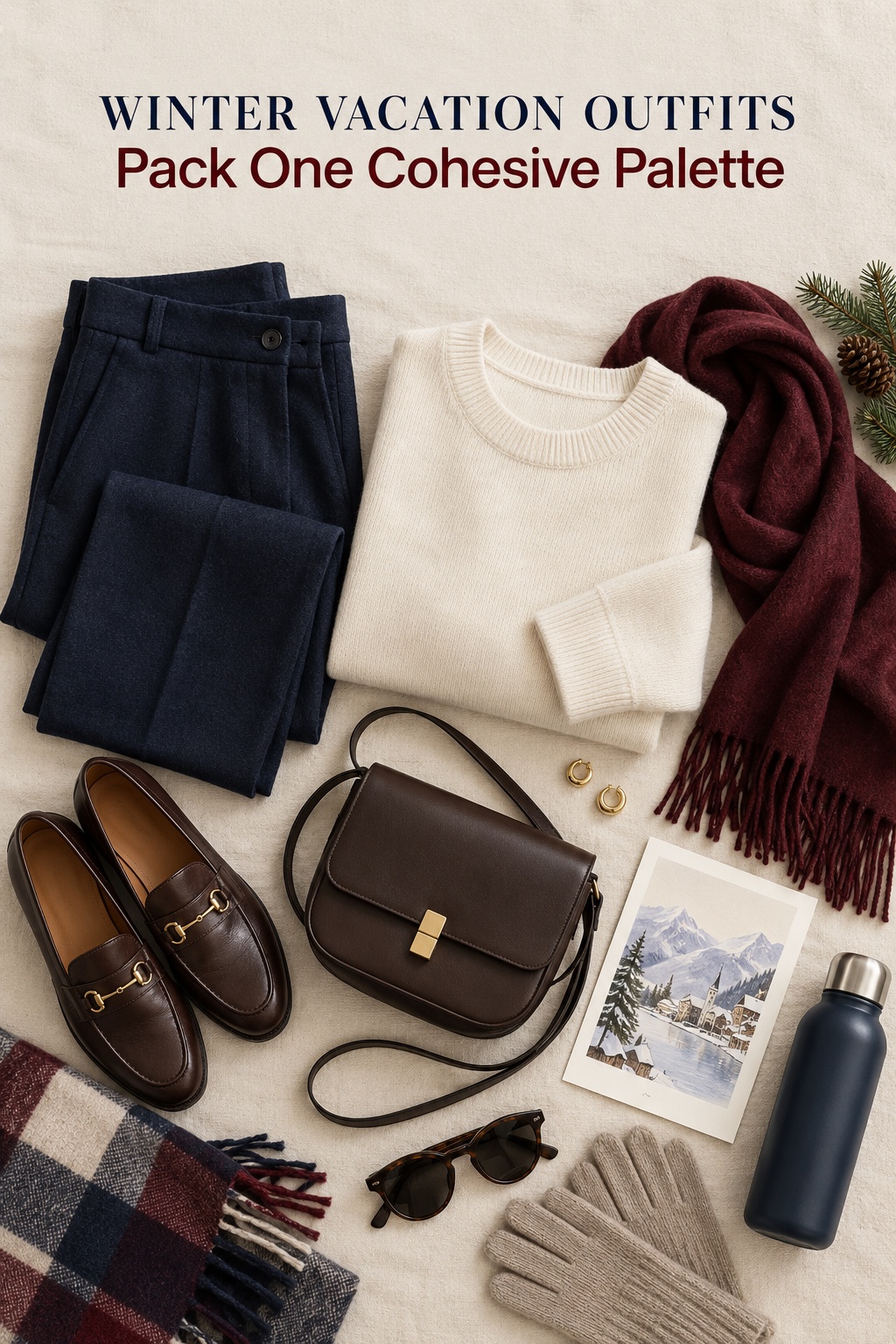
Choose a small color relationship to make mixing easier. Two neutrals and one accent can be enough, but the colors should come from your own closet and work with the outerwear you intend to bring. If the coat is navy, for example, cream, denim, and a burgundy accent may connect several outfits. A palette is a coordination tool, not a rule that requires buying new clothes.
Make the travel outfit your temperature-control layer
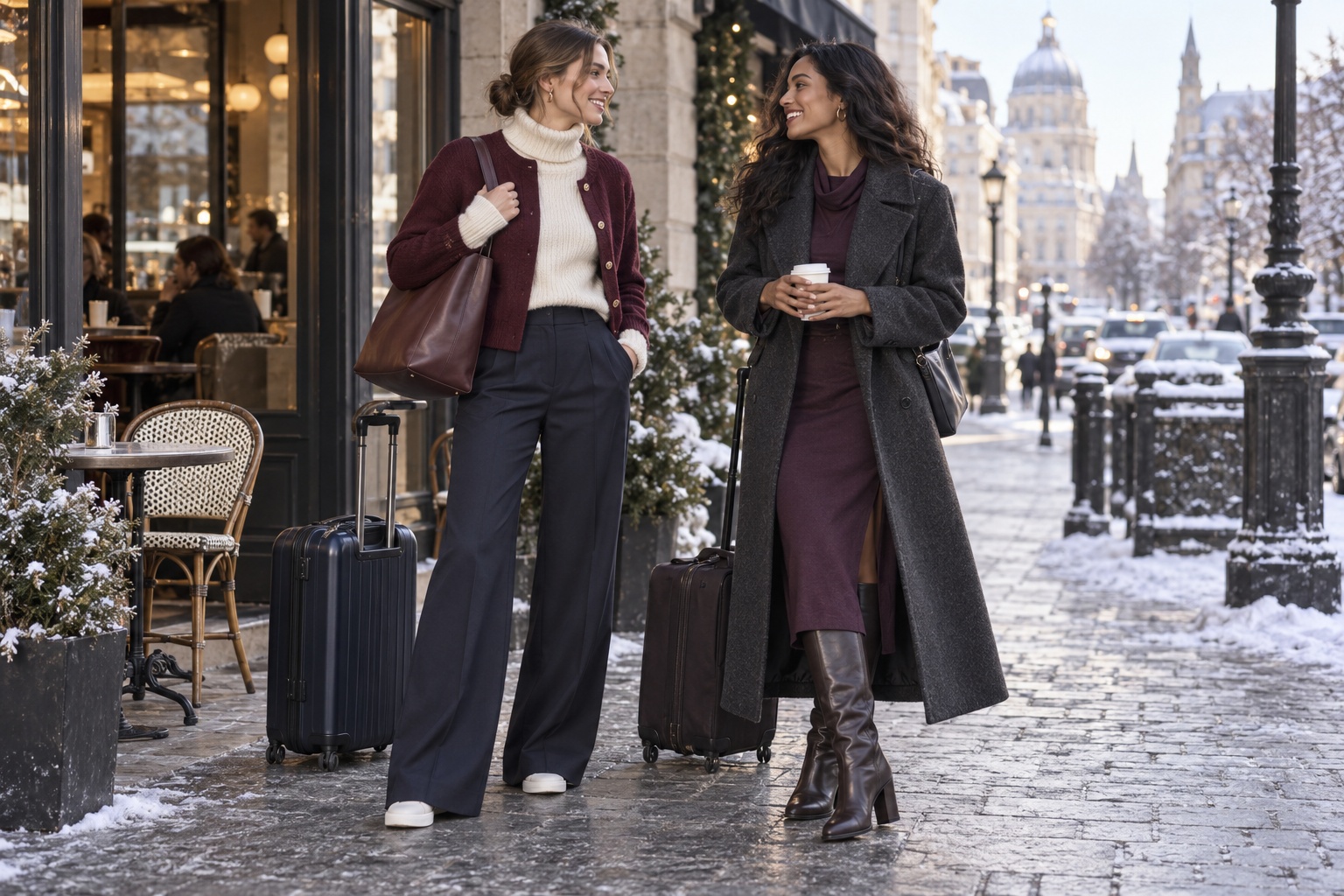
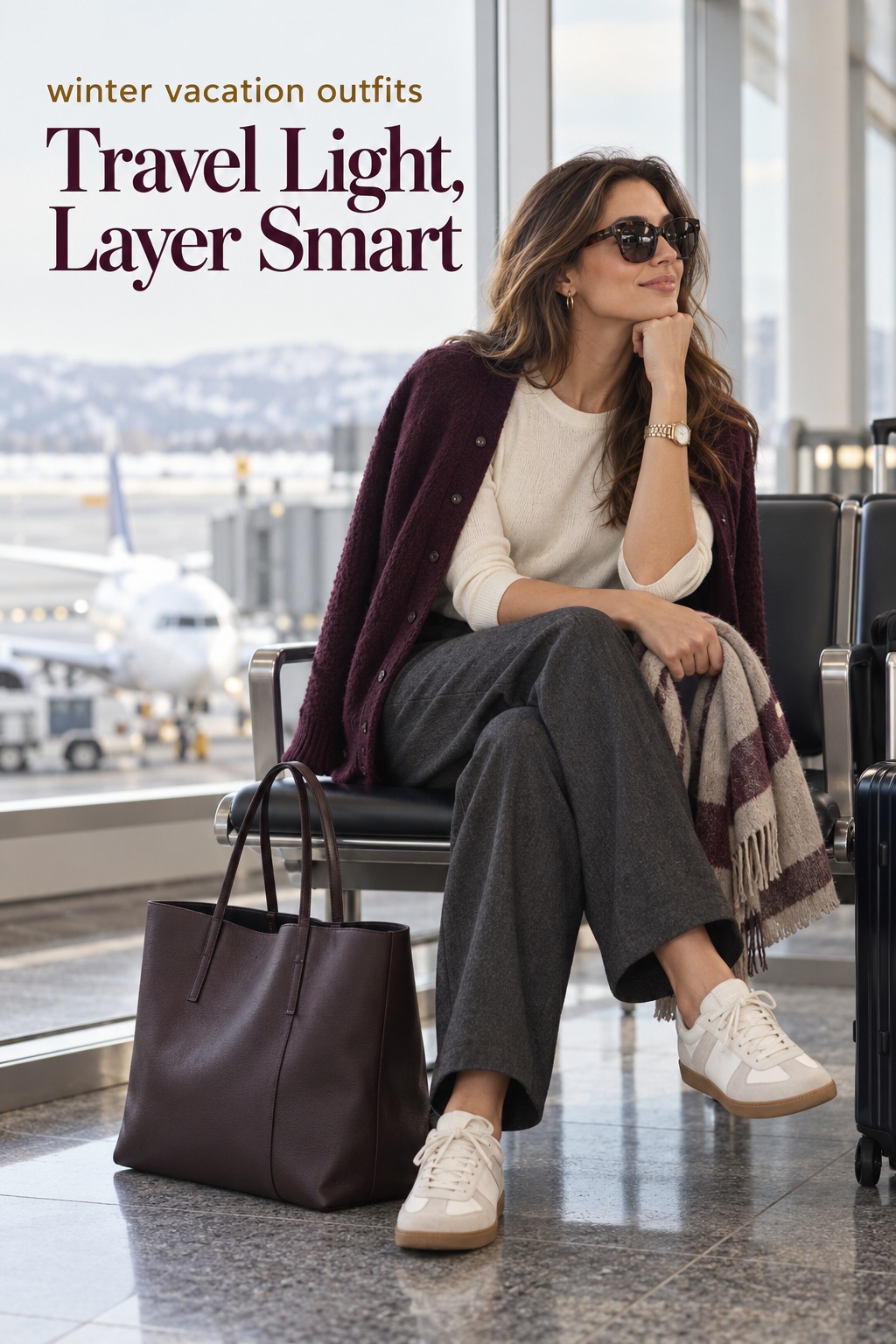
The outfit you wear to the airport or station carries the bulkiest pieces and handles the largest temperature swings. Start with a comfortable base that works indoors, such as a soft long-sleeve top with trousers that sit well for hours. Add a knit or cardigan that can come off easily, then wear the coat you would need at the destination. The aim is adjustable comfort, not maximum layers from the moment you leave home.
A useful travel formula is straight-leg trousers, a breathable top, a thin knit, and a coat with enough room for the layers underneath. Choose shoes that feel secure and comfortable on your route. If your itinerary involves walking between terminals or carrying bags, a shoe you already know is comfortable is usually a more reliable choice than a new pair selected only to finish the look.
Keep small cold-weather accessories accessible rather than buried at the bottom of a bag. A scarf, hat, or gloves can add warmth outside and disappear into a tote once you are indoors. If your destination is warm, the same principle works in reverse: wear a light layer for the plane or overly cool interiors and make it easy to remove after arrival. These are styling suggestions, not a substitute for destination-specific safety clothing.
If you are flying from a cold home to a warm destination, avoid making the airport outfit depend on a heavy coat you will not need for the rest of the trip. You could travel in a cardigan, light jacket, or roomy overshirt that works over a tee and can fold into your personal bag. Keep the top and bottoms appropriate for both the departure terminal and arrival, and let one removable layer bridge the difference.
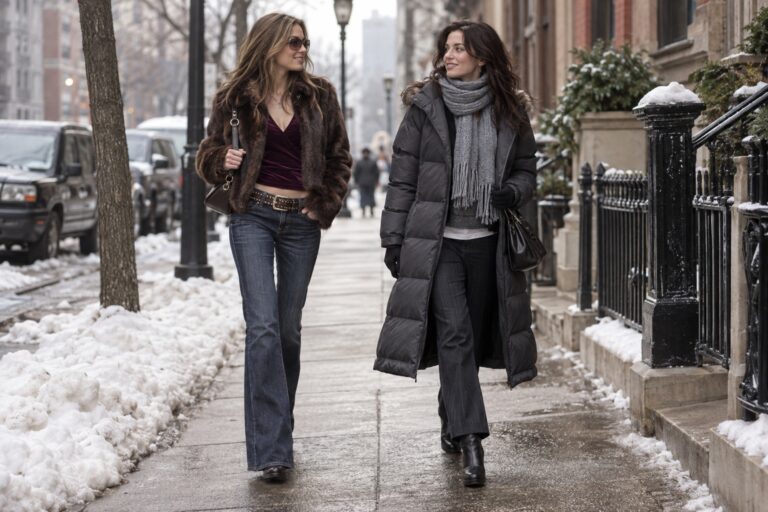
For a cold destination, wearing your bulkiest coat can free bag space, but only if it is comfortable to carry or wear through transit. A compact puffer, wool coat, or weather-resistant layer serves different needs, so choose by forecast and planned time outdoors. Do not assume a fashionable coat is suitable for wet snow, strong wind, or prolonged exposure; check garment care and the manufacturer’s use guidance when those details matter.
The finishing detail that makes a travel outfit look deliberate can be simple: a neat scarf, a structured bag, a matching knit set, or a belt that works with the trousers. Keep accessories that jangle, slip, or need constant adjustment for another day. Long travel already involves small decisions, so the strongest travel look is one you can wear comfortably without monitoring it every few minutes.
Build daytime outfits for the activity, then refine them
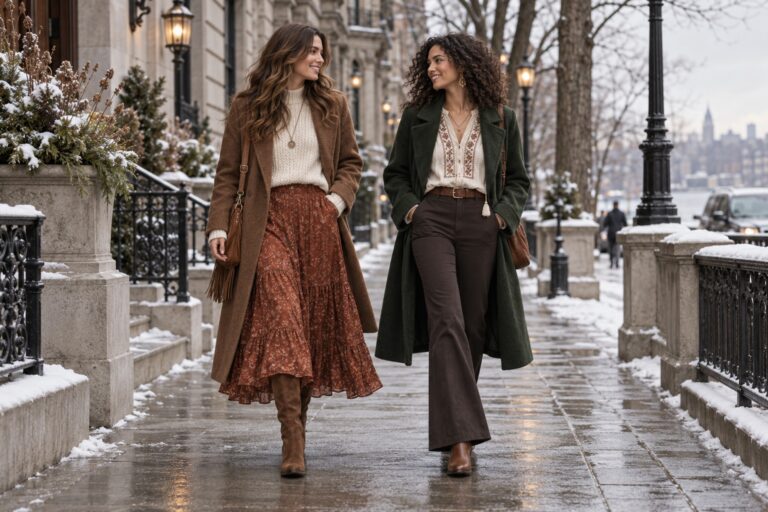
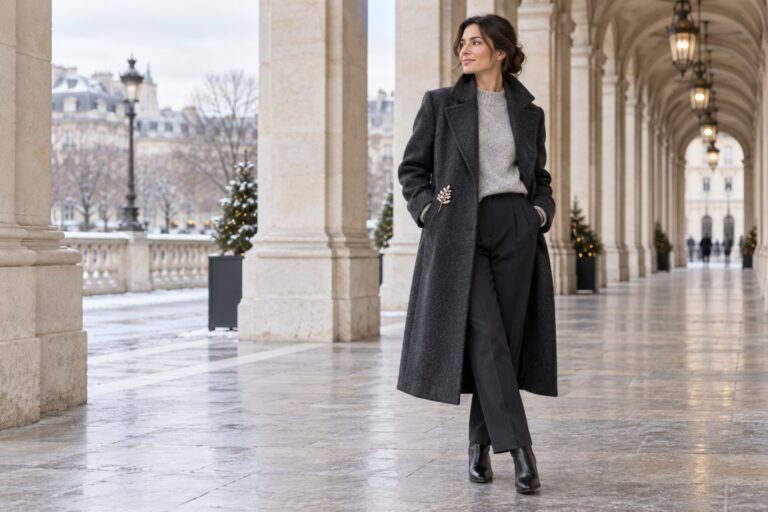
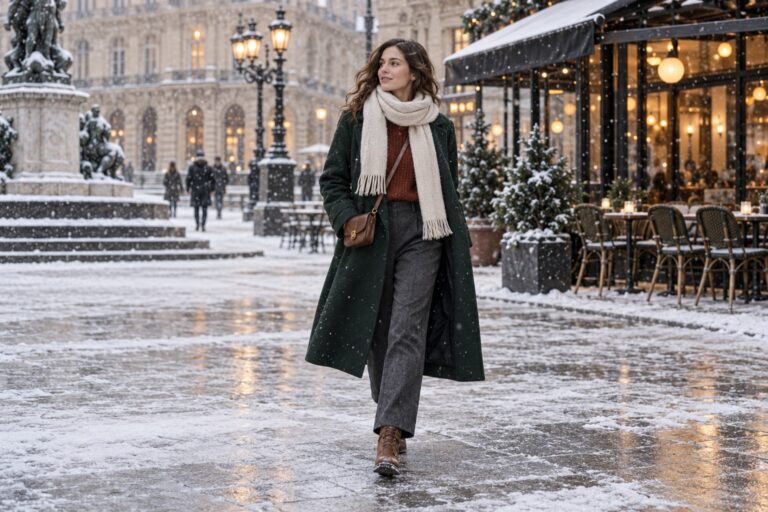
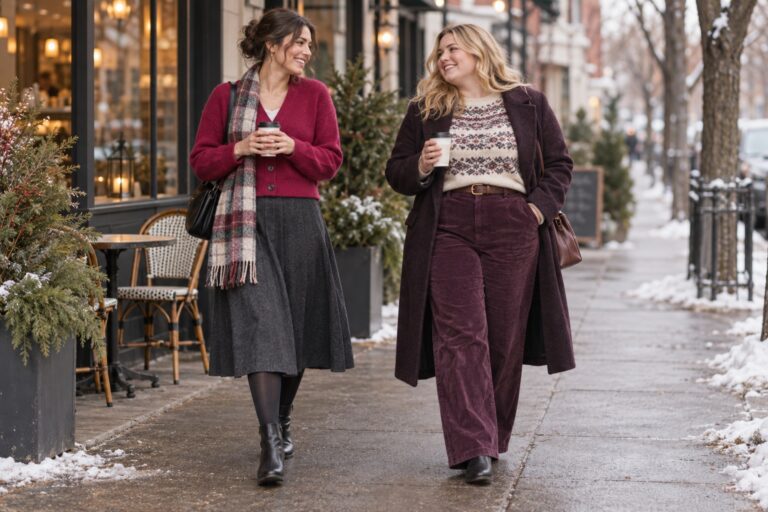
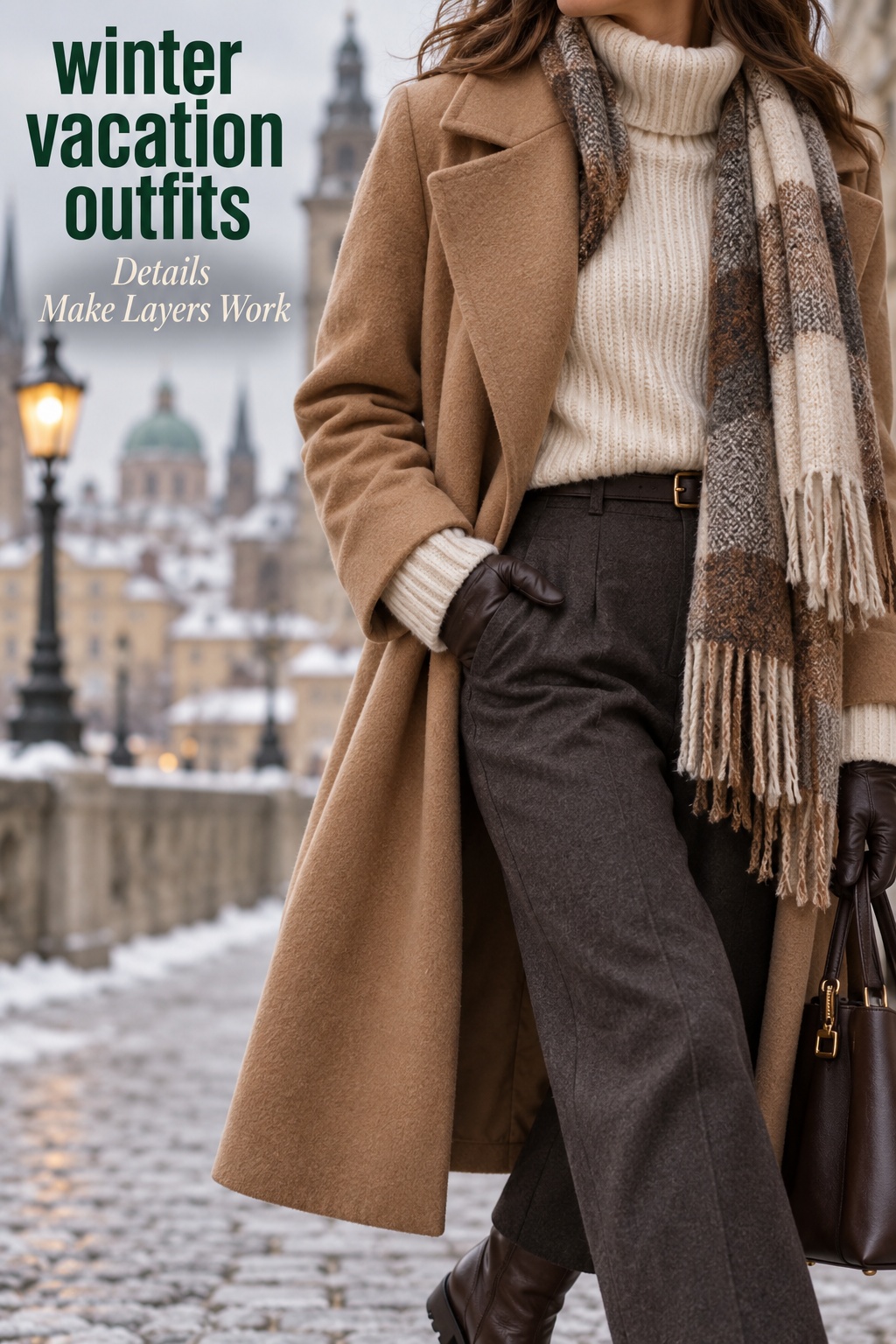
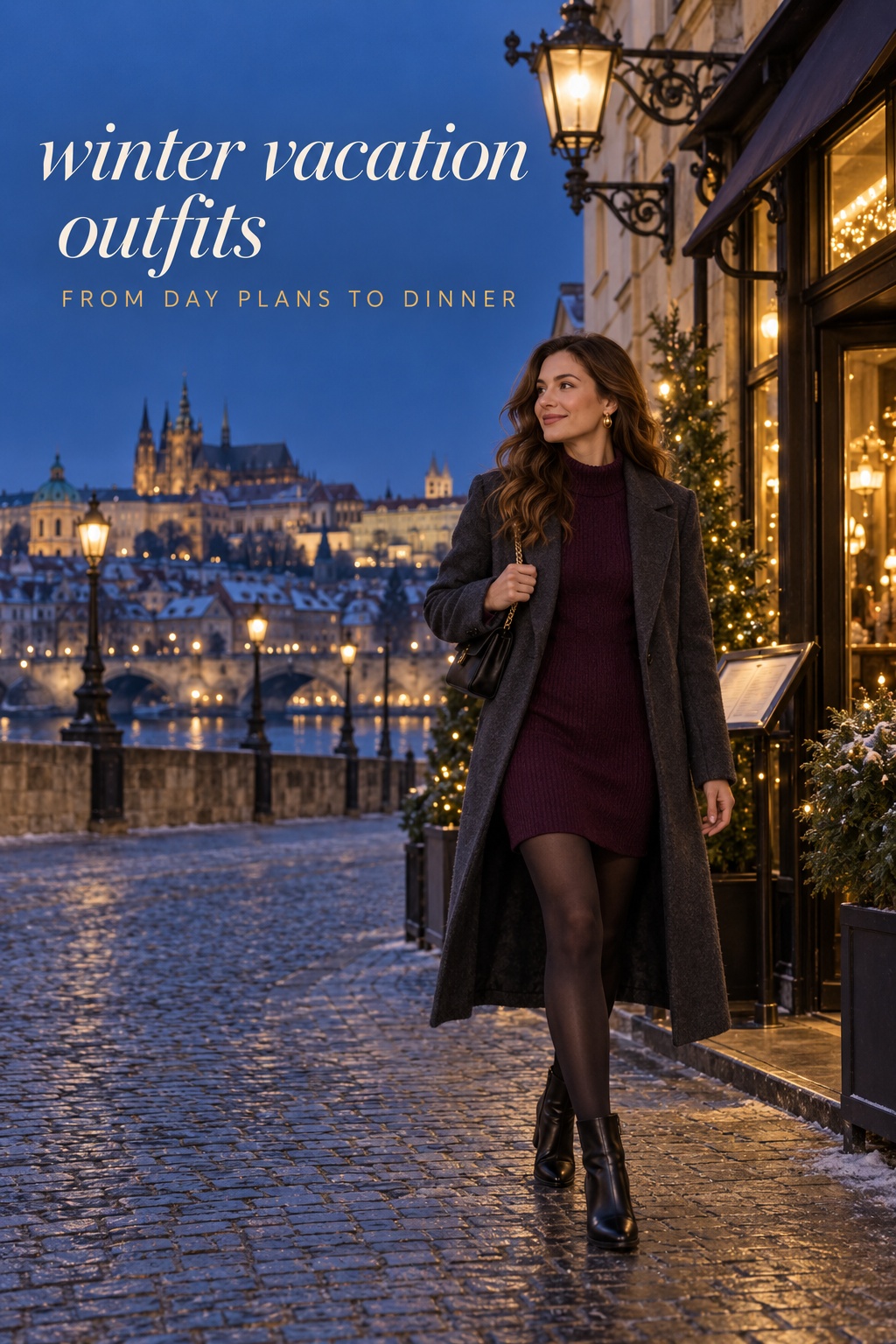
For sightseeing in a cold city, begin with the walking conditions. Trousers or a skirt with warm tights can both work, but the shoes need to suit the distance and surfaces. Add a top layer that looks balanced under your coat, since coats often stay on outdoors in photos and between destinations. A tonal knit and trouser combination can feel polished with a long coat; a skirt and tights can feel equally composed with a warm, walkable boot.
For a mountain town without a planned sport, combine everyday clothes with weather-appropriate outerwear. A knit, practical trousers, and boots with a stable sole can work for cafés and town walks, while a scarf or textured sweater adds visual interest. If you are skiing, snowshoeing, or taking a lesson, use clothing intended for that activity and follow the venue or instructor’s recommendations. Fashion formulas should not be treated as technical equipment advice.
For a warm-weather winter escape, build the daytime look around what you will really do: beach, pool, sightseeing, or lunch outside. A swimsuit can sit under a loose shirt and easy trousers; a lightweight dress can move from a walk to a relaxed meal with a change of sandals. Carry a light cover-up for transitions between sun and indoor spaces. Check the destination’s forecast because “warm” can still mean a breezy evening.
Do not pack a separate top for every daytime activity if the same base can support a different layer. A fine knit can go over a dress for a cool morning, then come off at lunch. An open shirt can cover swimwear and later be worn with trousers. These combinations work best when the fabric is comfortable in the expected temperature and the pieces do not need delicate handling during a busy day.
Think of a day outfit as a base plus one adaptable layer. The base should feel complete when the layer comes off, and the layer should improve the outfit when it is on. That test avoids the common problem of a tank top that only works beneath a sweater or a bulky cardigan that looks awkward when removed. If the indoor portion of your day is long, this small check makes a real difference.
Accessories can change the mood without requiring another full look. A slim belt, earrings, a textured scarf, or a small shoulder bag can make a daytime combination feel more finished. Pick accessories that are easy to store when you are walking or visiting a crowded attraction. You are aiming for one noticeable shift, not a complicated transformation that depends on returning to your room between plans.
If your day includes a change in activity, pack one purposeful backup rather than several speculative options. A dry pair of socks after a wet walk or a clean top before dinner may be more useful than a second statement outfit. A small pouch can keep the extra item separate. The right backup comes from your itinerary and forecast, so a city weekend and a beach stay will not need the same plan.
Turn the same base into an evening look
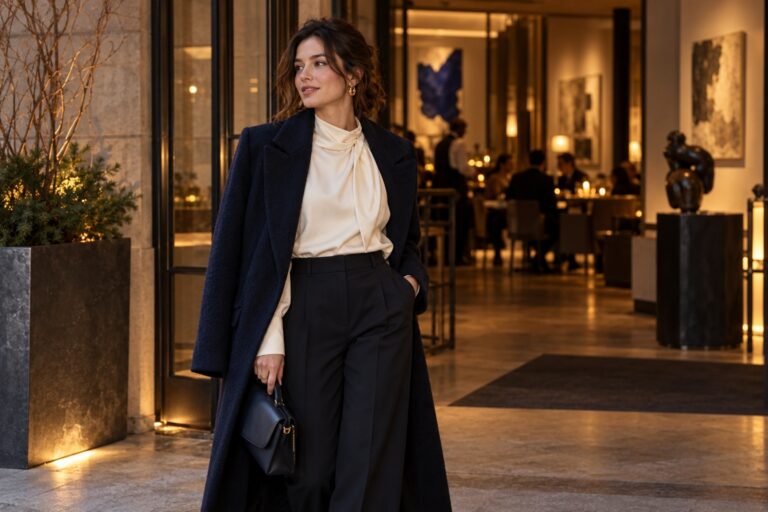
An evening outfit does not always need a dress or a second pair of trousers. First ask what will change between the last daytime activity and dinner: the venue, temperature, or level of formality. If only the venue changes, a cleaner top layer and a more polished accessory may be enough. If the weather changes, warmth takes priority and the coat should still work with the outfit underneath.
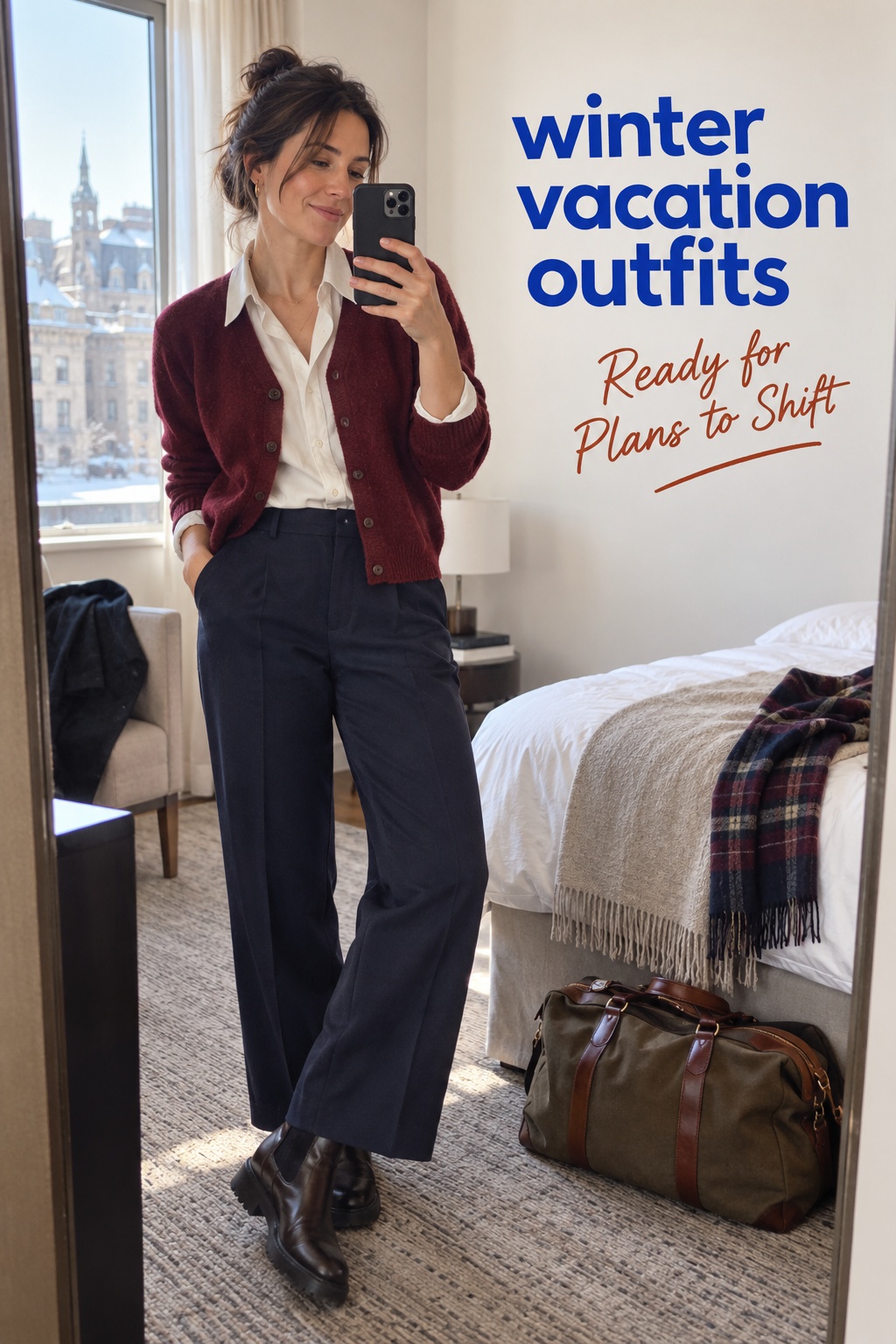
One easy formula is daytime trousers with a fine knit or blouse, then a blazer or more structured cardigan for dinner. A boot can stay on if it is clean and suits the setting; otherwise, one compact evening shoe may be the one deliberate extra. For a warm destination, an airy dress can take a different shape with a wrap or a more refined sandal. Keep the changes proportional to the actual reservation.
If you want to wear a skirt or dress, plan what will make it comfortable after dark. In a cold city, opaque tights, a warm top layer, and shoes made for the route can keep the outfit coherent. In a warm destination, a light wrap can help in cool interiors or a breezy walk back. These combinations are more useful than packing a formal look that only works in a photograph.
Avoid planning every dinner as a special occasion unless your itinerary says otherwise. Most trips mix informal and slightly dressier moments. One versatile piece, such as a dark trouser, a knit dress, or a relaxed blazer, can move across both. A different earring, belt, or lipstick shade can make a repeat feel fresh if you enjoy that detail, but the clothes should still feel like something you want to wear.
Check the entire evening look with the coat you will actually bring. A short jacket may not feel comfortable over a bulky knit, while a long coat can make a lighter outfit look intentional. If the weather is wet, consider whether the outer layer and shoes can handle the route. There is little value in choosing a dinner outfit that only works once the coat comes off if you will be outside for a long walk.
For a relaxed dinner straight after sightseeing, use a two-minute reset: brush off outerwear, smooth the top, switch one accessory, and make sure shoes are comfortable enough for the return. If you have time to change, do so, but do not build the whole trip around the assumption that the hotel is always nearby. A good winter vacation outfit respects the real distance between your plans.
Pack fewer pieces with a repeat test
Before packing, apply the repeat test to each clothing item: can you name at least two outfits or itinerary blocks that use it? A coat may appear every day, while a standout top may work for dinner and a museum. If a piece only fits one imagined scenario, decide whether that scenario is important enough to justify the space. The goal is not a strict minimalist challenge; it is a suitcase where the pieces have a clear purpose.
Lay out full combinations before you fold anything. Include the coat, shoes, and bag, because these are the pieces most likely to reveal a mismatch. Take a quick photo of each combination if that helps you remember it. A written list can do the same job. Either method removes some morning guesswork and makes it easier to notice that three outfits all depend on the same sweater.
Pack around the most demanding day, not the most photogenic one. If a day requires long walks, weather protection, or an early departure, make sure that combination is settled first. Then add the pieces that make evenings or photos feel personal. This order keeps style in the plan while recognizing that comfort and conditions determine whether an outfit will be worn.
Wear the heaviest items during travel only when doing so is comfortable and practical. Bulky boots may save suitcase space, but they can be tiring through a long terminal. A warm coat may be sensible in freezing weather, but cumbersome after you arrive somewhere mild. There is no universal best answer; use the route, bag capacity, and forecast to decide which item belongs on you and which belongs in luggage.
Keep a small care kit relevant to the clothes you selected. A lint roller, stain cloth, or spare tights may help on some trips, while a swimsuit pouch or compact laundry bag matters more on others. Do not bring supplies for every imaginable mishap. Choose one or two items that address a real feature of your itinerary or a garment you are relying on repeatedly.
Finally, make room for personal preference. If you dislike wearing jeans for long journeys, choose trousers or leggings with the same outfit logic. If a bright coat makes you feel more like yourself, let it set the palette. A practical plan should reduce friction, not turn clothing into homework. The best winter vacation outfits are the ones that fit your plans and that you are happy to put on again.
Common winter vacation outfit mistakes to avoid
The first mistake is dressing for an imaginary version of the trip. A week described as a “city break” could involve museums, icy sidewalks, indoor dining, and a long transfer. A beach escape could include breezy evenings and cool transport. Let the booked activities and near-departure forecast guide the clothes rather than a vague theme or a social image of the destination.
The second is packing complete looks that share no pieces. Separate head-to-toe combinations can seem reassuring, but they make it difficult to adjust when plans change. Bring clothes that can combine across days, then reserve one or two special pieces for events that truly call for them. The aim is flexibility, not making every outfit identical.
The third is choosing shoes only by appearance. Winter sidewalks may be wet, uneven, or icy, while a resort can involve sand, pool decks, or long paths. Select shoes for the actual route and activity. If conditions could be hazardous, consult local or venue guidance and use appropriate footwear; a style article cannot assess local conditions or replace specific safety advice.
Another common mistake is assuming layers automatically solve every temperature problem. Too many layers can restrict movement, feel uncomfortable indoors, or create a bulky silhouette. Choose pieces that can be removed and carried easily, and test the full combination before leaving. If the day involves prolonged exposure to severe cold or a technical activity, use reliable specialist guidance for clothing and equipment.
Finally, do not buy a whole new vacation wardrobe to make the plan work. First use the outfit grid with clothes you already own. Identify only a genuine gap, such as a warm layer that fits under the coat or a shoe suitable for the itinerary. This keeps the trip style personal and makes the clothes more likely to earn a place in your everyday wardrobe afterward.
FAQ
What should I wear on a winter vacation travel day?
Choose a comfortable base, an adjustable knit or cardigan, the outerwear needed at your destination, and shoes that work for the route. Keep small accessories easy to reach and avoid relying on a new shoe or a fussy outfit for a long transit day.
How many winter vacation outfits should I pack?
Plan by itinerary rather than by a fixed number. Map the main daytime and evening blocks, then repeat pieces that work in more than one combination. The trip length, laundry access, weather, and activity requirements all change the answer.
How can I make one outfit work from day to dinner?
Start with a base that feels complete on its own. Add a more structured layer or change one accessory and, if useful, one shoe. Check the dinner setting and temperature so the adjustment fits the real plan.
What should I wear on a winter vacation to a warm destination?
Use lightweight clothes suited to the activities, such as a breathable shirt and trousers or a dress, and include a removable layer for transport or cool indoor spaces. Check the local forecast before you travel because evenings may feel different from midday.
How do I dress for a cold city break without overpacking?
Build around one coat and a small set of tops and bottoms that coordinate. Prioritize comfortable shoes and outfits for the longest walking day, then use one adaptable layer or accessory to shift a daytime base for dinner.
Should I bring separate outfits for every dinner?
Only when the plans require it or you want to. A versatile trouser, dress, knit, or blazer can repeat with a different layer or accessory. Prioritize comfort for the route and check whether the venue has a dress expectation.
How can I plan outfits when the weather may change?
Check the forecast near departure, make sure your main outfit can take a removable layer, and leave room for a practical backup that fits the itinerary. For hazardous or rapidly changing conditions, follow local advice and activity-specific guidance.
Are winter vacation outfits different for a ski trip?
They can be. Everyday town outfits are not a substitute for clothing designed for skiing or other snow activities. Follow the resort or instructor’s equipment and clothing recommendations, then plan separate comfortable looks for time off the slopes.