Festive Casual Outfits: A Rewearable Holiday Capsule
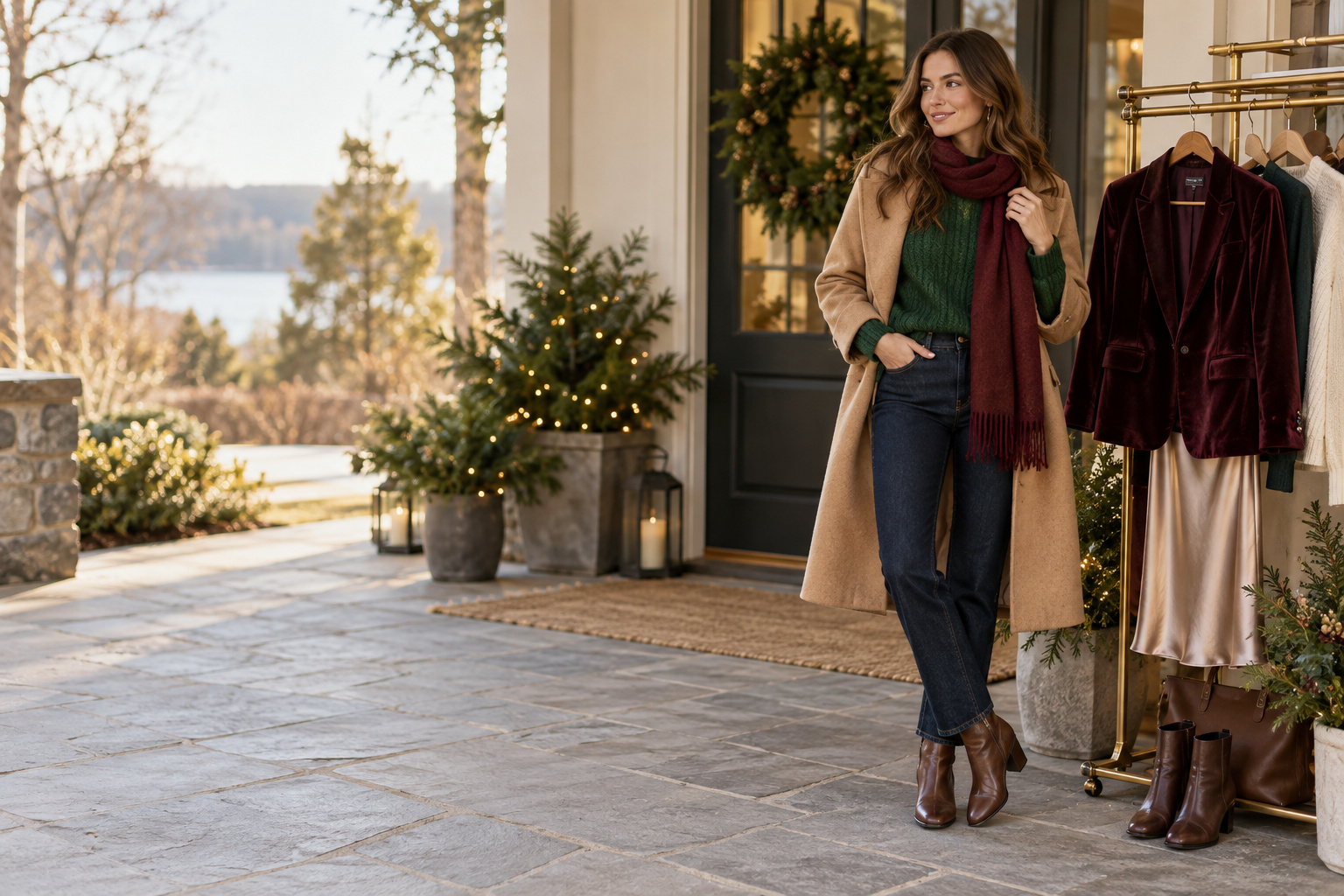
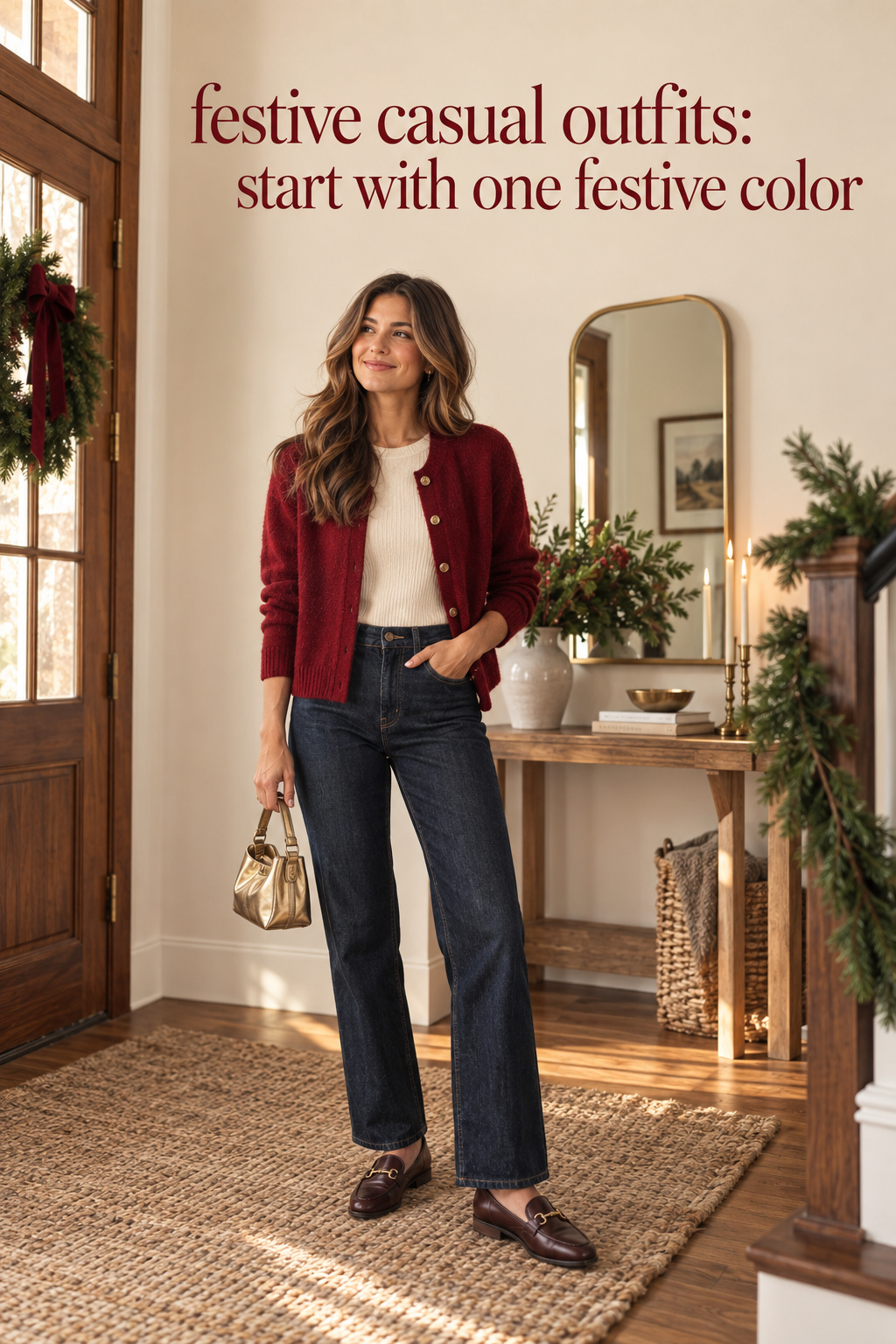
Festive casual outfits have one job: help you look ready for the season without making you feel dressed as a holiday character. The sweet spot is a relaxed base, one clear celebratory signal, and enough structure to make the look feel intentional. That might mean a cranberry cardigan with dark denim, a velvet skirt with a simple sweater, or a soft knit dress finished with practical boots. The outfit does not need sequins from head to toe, a novelty print, or uncomfortable shoes to read as festive.
A useful way to build this kind of wardrobe is to think in capsules rather than isolated outfit ideas. Start with pieces you already wear, add a small group of seasonal textures and colors, then use accessories and layers to adjust the mood. This approach gives you options for family photos, a casual dinner, hosting at home, a winter market, or a relaxed office gathering without buying a separate costume for every invitation.
Build a festive casual outfits capsule before choosing a look
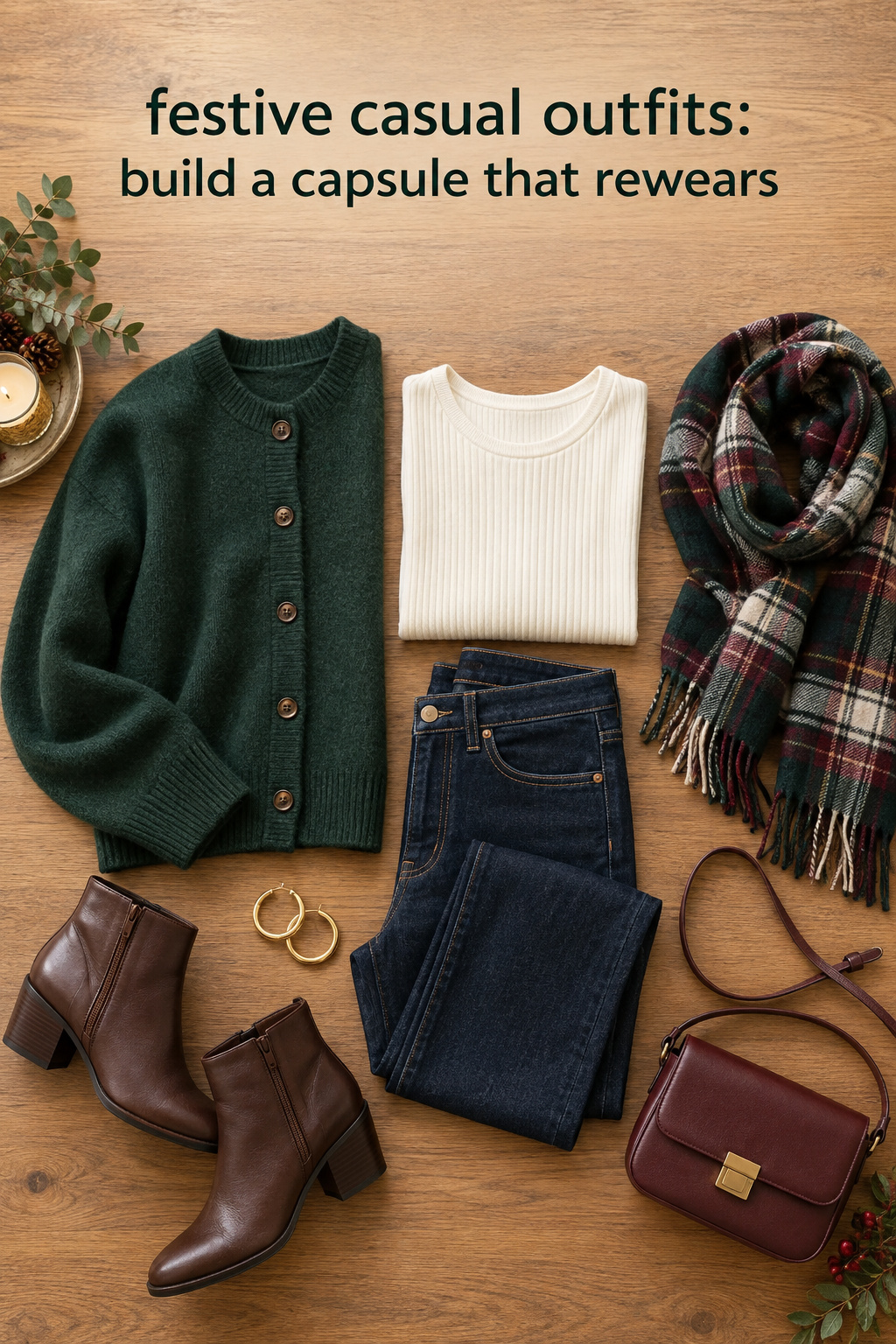
The most reliable holiday wardrobe starts with a few neutral anchors. Choose one comfortable trouser or jean, one softer bottom, two easy tops, one knit layer, one structured layer, and shoes that can handle the setting. The point is not to create a large checklist. It is to make sure every festive item has something ordinary to work with.
The base layer keeps the outfit wearable
Begin with a bottom that already feels like you. Dark straight-leg jeans are useful for family gatherings, casual dinners, and days when you will be moving between rooms. Black trousers make a bright cardigan or textured sweater look more polished. A soft wide-leg trouser can balance a fitted knit, while a simple midi skirt gives a relaxed sweater a more festive outline.
Found the dress? Keep the rest in one place.
Zarellea brings guest details, vendors, timelines, and every next step together — so your wedding plan feels as good as your look.
For tops, keep the first layer quiet. A white or cream tee, a fitted ribbed top, a fine turtleneck, and a relaxed button-down can all support a more expressive layer. This is where the capsule earns its keep. The same ivory top can sit under a red cardigan one day, a plaid blazer another day, and a velvet jacket when you want more evening energy.
Use one festive hero piece at a time
A festive hero piece is the item that tells the eye why this outfit belongs in the holiday season. It may be a deep red knit, a forest-green skirt, a velvet blazer, a metallic shoe, a Fair Isle sweater, or a bag with a subtle shine. Pick one hero first, then let the rest of the outfit support it.
- A bold color works best with quieter neutrals.
- A shiny or plush texture needs a simple silhouette nearby.
- A statement print looks more current when the shoes and bag are calm.
- A novelty piece can stay casual when the rest of the outfit is familiar.
This rule is especially helpful for readers who like festive dressing but do not want to look overdone. It also makes getting dressed faster. Instead of asking whether every piece feels seasonal, ask which single item is carrying the mood.
Keep the finishing layer practical
The final layer should solve a real problem. A long wool coat makes a soft indoor outfit feel more finished on the way to dinner. A quilted vest works for a market walk or outdoor decorating. A cardigan is useful when you are hosting because it can move with you and come off easily when the room warms up. A blazer adds structure when your base is very soft.
Think about the silhouette from the outside in. If the coat is long and generous, keep the visible outfit underneath relatively clean. If the outer layer is cropped, a longer shirt or sweater can add useful vertical length. The goal is not to hide the outfit. It is to make the layers look planned.
Choose your festive signal: color, texture, or shine
Festive casual outfits become easier when you choose the kind of celebration you want to show. Color feels cheerful and approachable. Texture feels cozy and seasonal. Shine feels party-ready. You can combine two signals, but choosing a dominant one keeps the outfit from becoming visually noisy.
Color creates the quickest holiday message
Red, burgundy, pine green, cream, winter white, and deep navy all work with everyday wardrobe pieces. A bright red sweater with blue jeans feels casual because the denim lowers the formality. Burgundy trousers with a cream knit feel quieter and more polished. Green can look traditional with plaid, or modern when it is paired with chocolate brown, black, or soft gray.
If strong color is not your preference, use it in a smaller area. Try a red scarf, green socks, a burgundy bag, or a warm berry lip with neutral clothing. The color still provides a seasonal cue, but it does not dictate the whole outfit. This is a smart route when you want something that can move into January.
Texture makes neutrals feel special
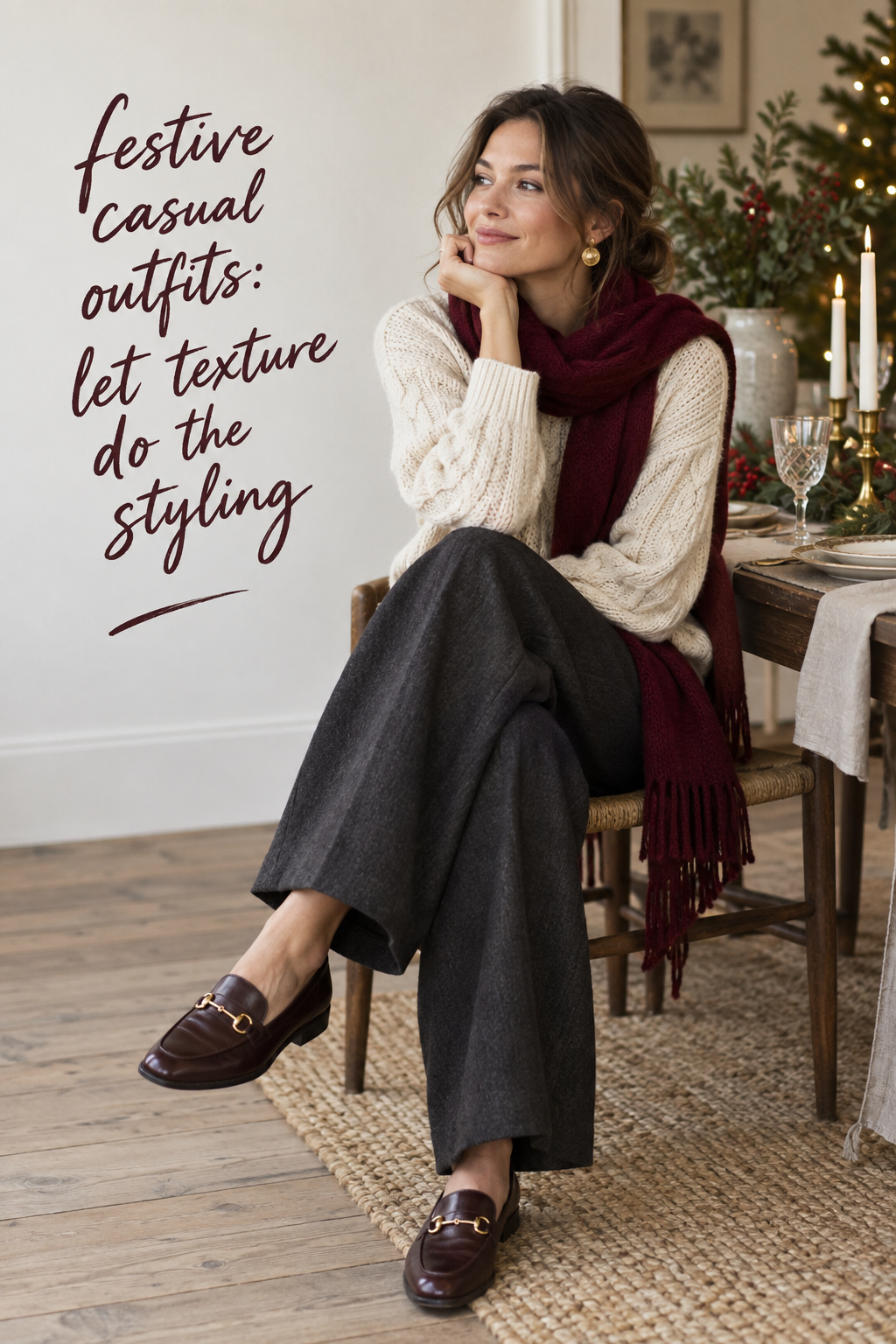
Texture is the quietest way to make a simple outfit feel festive. Combine a ribbed knit with smooth denim, a brushed sweater with leather-look pants, or a soft velvet skirt with a fine cotton tee. Contrast matters more than quantity. Two different textures give the outfit dimension, while four or five heavy textures can make it feel bulky.
For a neutral palette, try cream with camel, charcoal with silver-gray, or chocolate brown with ivory. Add one tactile detail such as a velvet hair bow, suede boot, faux-fur collar, or bouclé jacket. The result feels seasonal without relying on a bright Christmas palette.
Shine works best when the base stays ordinary
A metallic skirt, satin camisole, crystal earring, or glossy shoe can turn a familiar outfit into a celebration look. The easiest formula is to pair the special item with denim, a cotton tee, a simple knit, or a relaxed blazer. This is why a satin skirt with a chunky sweater feels more casual than the same skirt with a matching evening top.
Keep shine in one visual zone. If the skirt catches the light, choose a matte top and simple shoes. If the top is metallic, let the bottom be dark denim or a quiet trouser. You will still look festive, but the outfit will remain comfortable and usable beyond one event.
The capsule formulas that work across holiday plans
Once the base pieces and festive signals are clear, build outfits around the plan rather than the item. A family photo needs visible color and a readable outline. Hosting calls for movement and temperature flexibility. A dinner out benefits from one elevated fabric. A market walk needs reliable shoes and a layer that can handle the weather.
For family photos: use a clear color story
Choose one color anchor that will show in a full-body frame. A cranberry sweater, emerald cardigan, or winter-white knit is easier to read in photographs than a tiny festive detail hidden under a coat. Pair it with dark denim or tailored trousers so the outfit feels grounded.
Small details still matter. Cuff a sleeve to show a watch or bracelet, choose earrings that will not disappear, and make sure the neckline works with your hair. If several people are in the photo, coordinate the palette rather than wearing identical outfits. Cream, burgundy, forest green, camel, and denim can look connected without becoming uniforms.
For hosting: choose soft structure and easy movement
Hosting outfits need to survive bending, carrying, sitting, and moving between a warm kitchen and a cooler entryway. A knit midi dress with flat boots is a useful one-piece option. If you prefer separates, try a fine turtleneck with wide-leg trousers and a cropped cardigan or a red blazer over a simple tee and black pants.
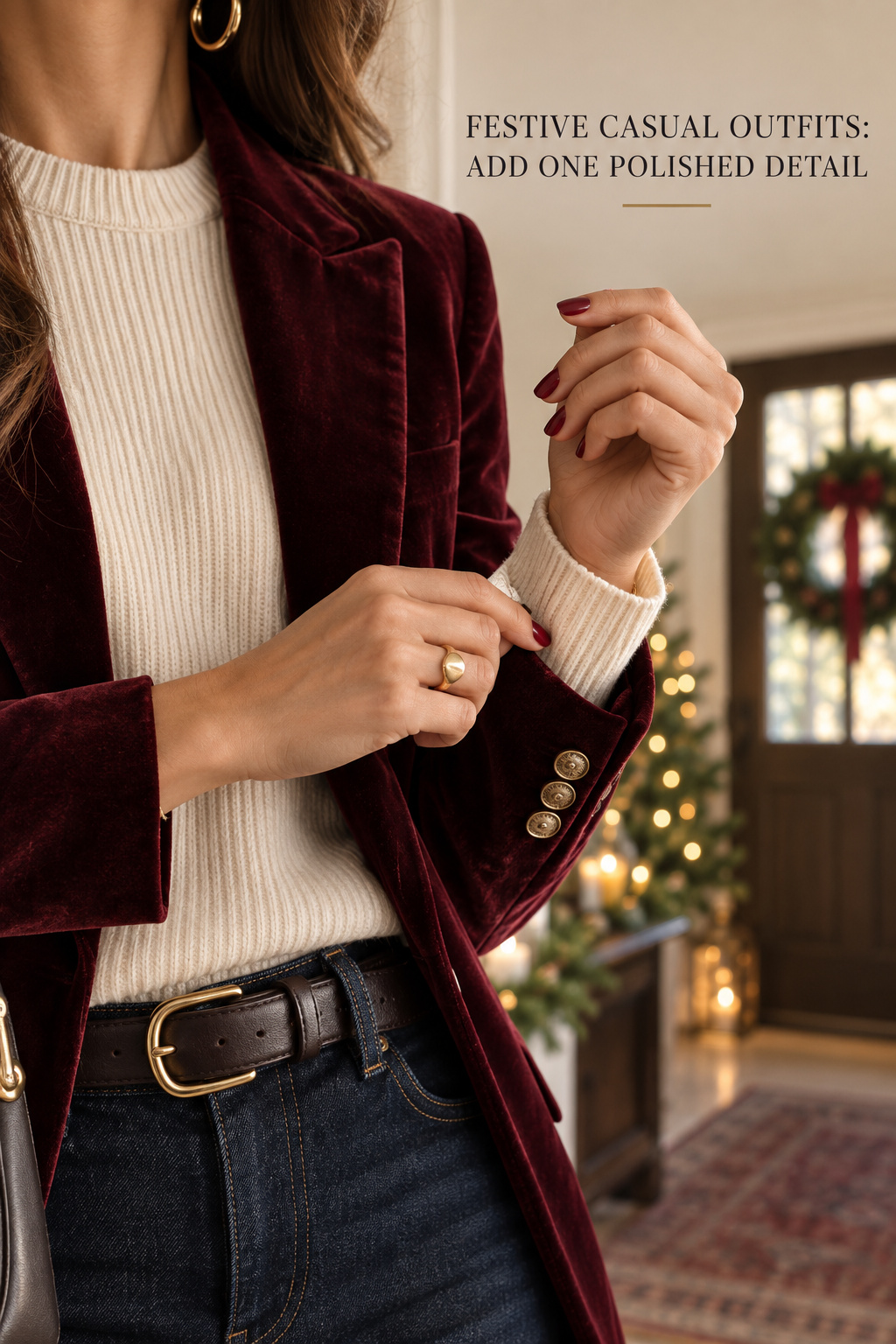
Avoid anything that needs constant adjusting. Long fringe can catch on serving dishes, very delicate shoes can make you cautious, and stiff waistbands become distracting during a long meal. Add polish with a defined shoulder, a belt, gold hoops, or a textured bag rather than sacrificing movement.
For a casual dinner: let one fabric do the work
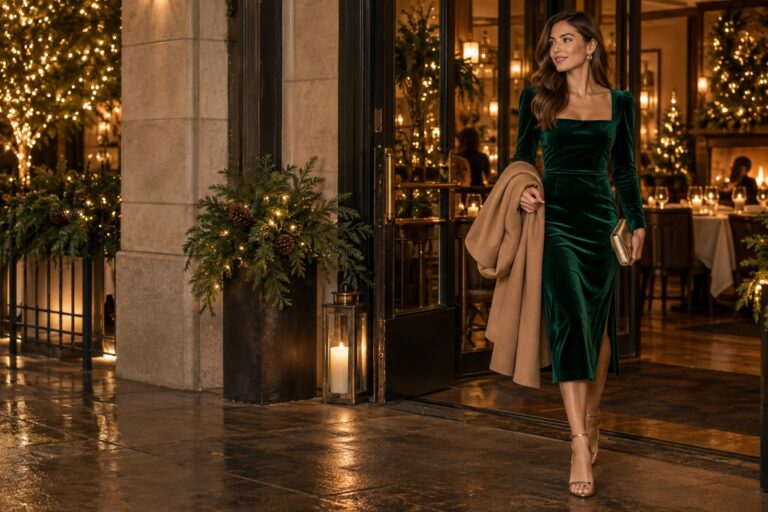
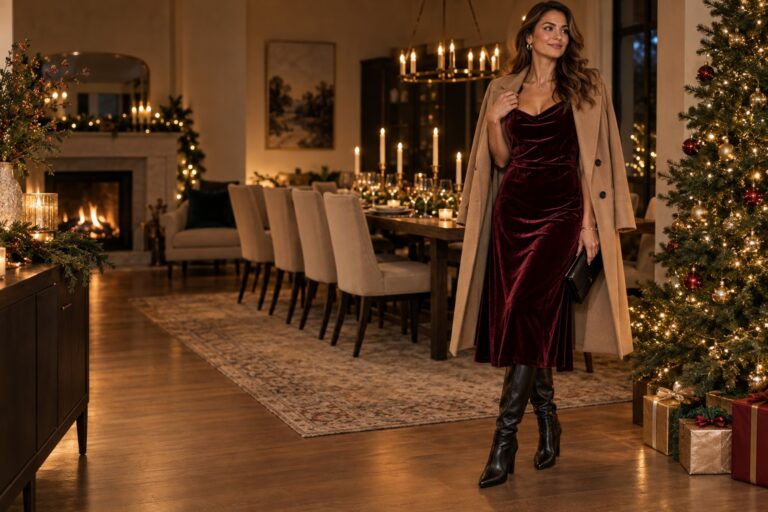
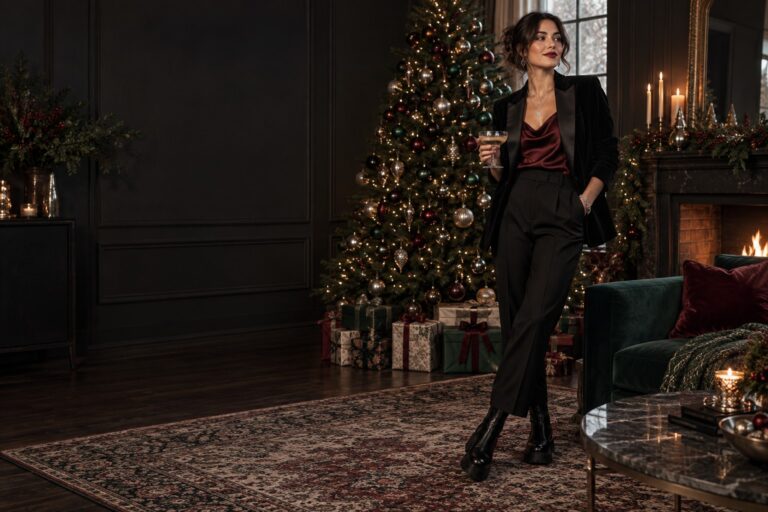
When the invitation says relaxed but special, velvet, satin, or subtle metallic fabric can provide enough occasion without turning the outfit formal. Try a velvet blazer with a tee and jeans, a satin skirt with a crew-neck sweater, or a polished knit dress with a long coat. Keep the shoes walkable if you expect to move between dinner, drinks, and a second location.
Proportion helps the look feel current. Balance a fuller skirt with a closer-fitting top, or wear a roomy sweater over a straighter bottom. If both pieces are loose, add a clear point at the waist with a tuck, belt, or shorter layer. That small decision keeps soft clothing from reading as accidental loungewear.
For a winter market or walk: layer from the inside out
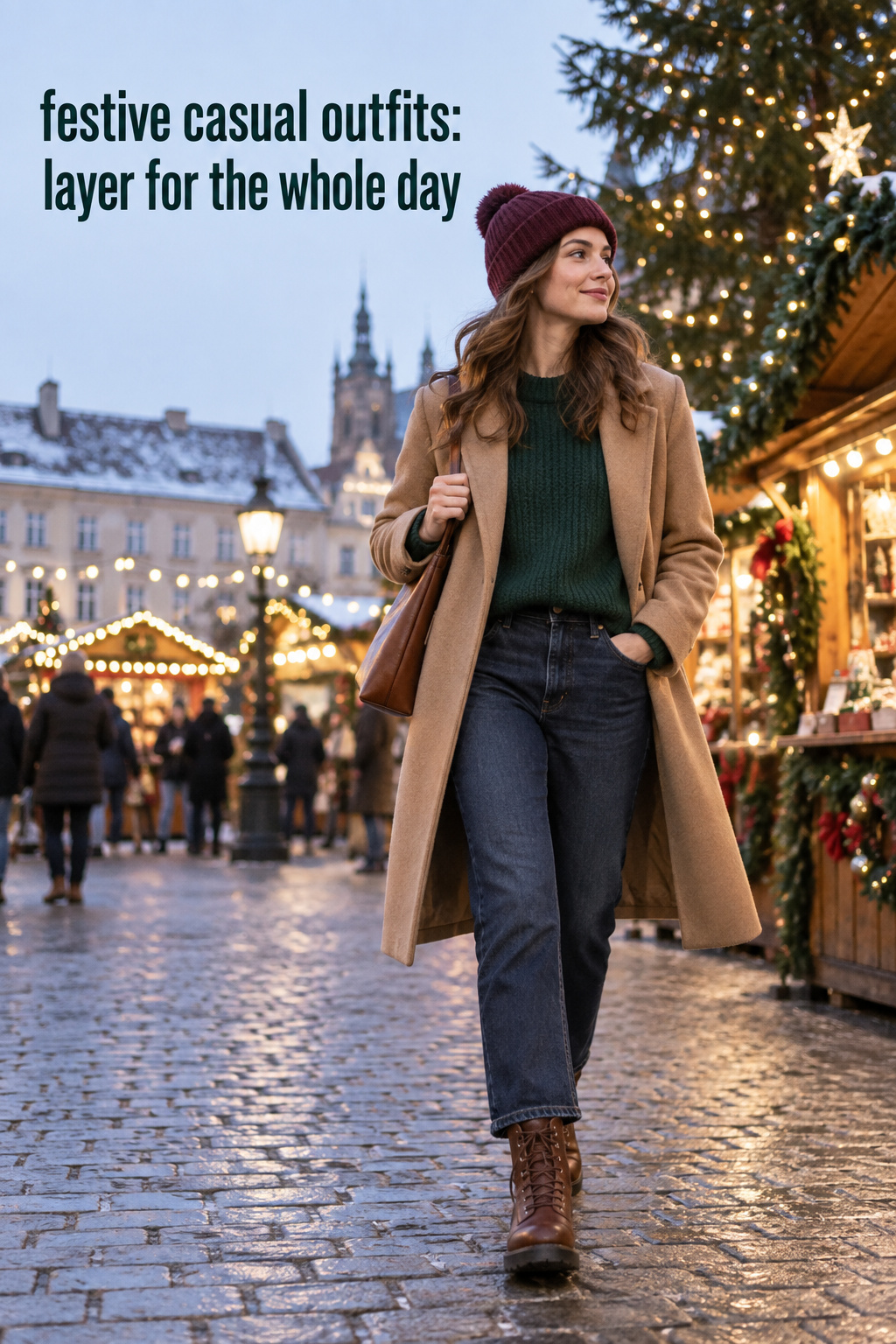
Start with a breathable base, add a warm middle layer, and finish with an outer layer that protects the outfit from the cold. A ribbed top, sweater vest, straight jeans, wool coat, and lace-up boots can look festive when the middle layer is burgundy, green, or patterned. A scarf and gloves can provide the seasonal color if the rest of the outfit is neutral.
Choose footwear before finalizing the rest of the look. A beautiful outfit with slippery or thin shoes will not feel successful outdoors. Boots with a stable sole, thick socks, and enough room for movement make the outfit practical. Tuck or cuff the jeans only if the weather and shoe shape support it.
For a relaxed office gathering: upgrade the familiar base
Start with what you normally wear to work, then add one seasonal signal. A tailored trouser and fine knit can take on a festive mood with a velvet blazer. A work dress can feel less formal with a cardigan, opaque tights, and loafers. A white button-down and dark jeans can look ready for a casual celebration when finished with a statement necklace or a deep red shoe.
Keep the setting in mind. A workplace gathering usually rewards restraint, clear grooming, and shoes that look intentional. If the event moves from desk to dinner, choose a layer that can be removed and an accessory that fits in your bag. This gives you a visible transition without requiring a full outfit change.
Make the same outfit work indoors, outdoors, and in photos
The most useful festive casual outfits are adaptable. They look complete without a coat, remain comfortable when the temperature changes, and contain enough visible detail to read in a photo. You can create that flexibility by planning the outfit in three views: the indoor base, the outside layer, and the close-up finish.
Build an indoor base that can stand alone
Before adding outerwear, check whether the outfit has its own point of interest. It could be a strong neckline, a textured knit, a contrast belt, a rich color, or a clean proportion. If the outfit only works because of the coat, it may feel unfinished once you arrive. A simple indoor base also makes hosting easier because you can remove a layer without losing the festive idea.
Check the back and side view as well as the mirror view. A sweater that looks neat from the front may bunch under a cardigan. A long necklace can disappear into a scarf. A midi skirt may need a different boot height to keep the proportions balanced. These are small adjustments, but they make the outfit feel more deliberate.
Use the outer layer to change the occasion level
A soft cardigan makes an outfit feel approachable. A tailored coat adds polish. A quilted vest makes it practical. A velvet blazer makes the same base feel ready for dinner. Treat outerwear as a control knob rather than a final afterthought. If the outfit feels too plain, add structure. If it feels too formal, add softness or a casual shoe.
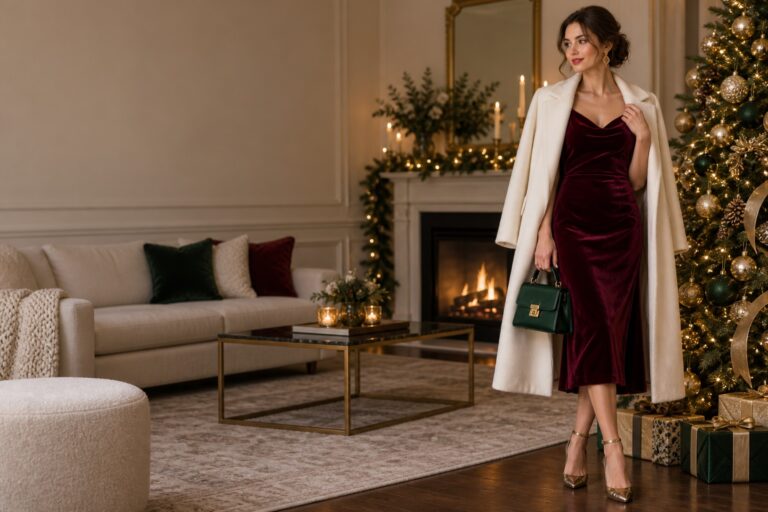
Color can do the same work. A camel coat calms bright red. A black coat sharpens emerald. An ivory coat makes burgundy look softer. When you know which layer will frame your face in photos or at the door, you can choose the rest of the outfit with more confidence.
Make close-up details visible but not busy
Holiday outfits are often remembered in close-up photos, not only full-body images. Choose one detail that will show near the face or hands: gold hoops, a scarf knot, a berry-colored lip, a watch, a brooch, or a textured collar. Keep the detail connected to the main festive signal. A red cardigan and red lip feel intentional; a red cardigan, sparkle earrings, metallic bag, and glitter shoes may compete.
Comfort is part of the visual result. If you are pulling at a sleeve, balancing in a shoe, or overheating in a thick layer, the outfit will not feel relaxed. Test the full combination by sitting, walking, reaching, and wearing the shoes indoors for a few minutes. A festive casual outfit should support the memory you are making, not distract from it.
A final edit for polished comfort
Before leaving the house, edit the outfit as if you were packing a small capsule. Remove one piece that repeats the same message. If the sweater is bright, the earrings can be quiet. If the skirt is shiny, the top can be matte. If the coat is oversized, make sure the shoes and visible bottom half still give the look a clear shape.
- Check that the outfit has one dominant festive signal.
- Make sure at least one layer can be removed without breaking the look.
- Choose shoes for the actual surfaces, distance, and amount of standing.
- Look for one visible detail that will read in photos.
- Confirm that the outfit fits the invitation, venue, and people you will be around.
- Ask whether each seasonal piece can be worn again with a non-holiday base.
The last question is simple: does the outfit still feel like your wardrobe? The best festive casual outfits add a seasonal note to your personal style instead of replacing it. That is why a familiar pair of jeans, a favorite knit, or a dependable boot can be more useful than a statement piece you will only wear once.
For a compact capsule, aim for a small rotation rather than a perfect collection. One color accent, one rich texture, one practical shoe, and one flexible layer can create several distinct looks. Change the proportion, the accessory, or the outer layer before buying something new. You will usually discover that the most festive outfit is already close to what you like wearing every day.
FAQ
What does festive casual mean for a holiday outfit?
Festive casual means relaxed, comfortable clothing with at least one detail that feels celebratory. That detail can be a seasonal color, a rich texture, a subtle shine, a special accessory, or a playful pattern. Jeans, knits, trousers, boots, and sneakers can all work when the outfit is balanced and intentional.
What colors work best for festive casual outfits?
Deep red, burgundy, forest green, cream, winter white, navy, camel, charcoal, and chocolate brown are versatile choices. Use one strong color with neutrals if you want an obvious holiday cue, or choose a quieter palette and let texture or accessories create the seasonal feeling.
Can I wear jeans to a festive casual party?
Yes, if the invitation truly says casual or festive casual and the jeans look intentional. Choose a clean dark or medium wash, then add a polished knit, velvet blazer, satin top, statement cardigan, or festive accessory. Keep the shoes neat and make sure the venue does not require a dressier code.
How can I make a cozy outfit look festive instead of plain?
Add one clear seasonal signal and improve the outline. A rich color, textured layer, visible jewelry, cuffed sleeve, defined waist, or structured coat can make a simple sweater and trouser combination look considered. Avoid adding several decorative details at once, because one strong choice usually looks more modern.
What shoes are best for festive casual outfits?
Choose shoes that match the setting. Clean sneakers work for casual daytime plans, loafers add polish without feeling formal, ankle boots suit dinners and cold weather, and sturdy flat boots are practical for walks or markets. A metallic flat, colored shoe, or velvet finish can provide the festive detail when the rest of the outfit is neutral.
How do I dress festive casually without wearing red or green?
Use texture, shine, or a seasonal accessory instead. Try velvet, satin, suede, faux fur, metallic knit, a brooch, a crystal earring, or a winter-white and camel palette. These details can look festive while staying close to a neutral personal style and remain useful after the holidays.
How can I stay warm without making a festive outfit bulky?
Layer thin pieces under one substantial middle layer rather than stacking several oversized sweaters. Start with a fitted base, add a fine knit or vest, and finish with a coat that gives your silhouette room. Warm socks, a scarf, gloves, and a stable boot can add comfort without changing the main outfit.