Boys Christmas Outfits That Solve Holiday Dressing Problems
Holiday dressing for boys sounds simple until the sweater scratches, the shoes hurt, or the outfit that looked perfect at home falls apart before the family photo. The best boys Christmas outfits are not miniature costumes. They are comfortable combinations that communicate the occasion, survive real movement, and give a child enough freedom to feel like himself.
This guide starts with the problems parents actually face. You will learn how to adjust one outfit for a family dinner, a school celebration, Christmas morning, or a photo session. You will also get repeatable formulas that use familiar pieces, so you are not buying a completely new wardrobe for one day.
The real problem with boys Christmas outfits
The first mistake is treating festive style as a single visual category. A toddler opening presents needs softness and easy bathroom access. A child attending a school concert needs a neat top that stays tucked for a few minutes. A tween at a family dinner may want to look polished without looking like he borrowed an adult’s suit. The setting changes the solution.
The second mistake is starting with a novelty item. A bright holiday graphic sweater can be fun, but it may not work with the family palette, the venue, or the rest of the season. Start with the job the outfit must do. Then add one clear festive cue, such as a tartan overshirt, a deep red knit, a velvet bow tie, or a winter texture.
Found the dress? Keep the rest in one place.
Zarellea brings guest details, vendors, timelines, and every next step together — so your wedding plan feels as good as your look.
Comfort is not a bonus. It is what keeps the outfit looking intentional. A boy who is tugging at a collar or refusing to bend his knees will not look relaxed in photographs. Before the event, ask him to sit, reach, walk, and raise his arms in the full outfit. If one item fails that test, replace it before adding accessories.
Problem: festive clothes feel itchy or stiff
Use a soft cotton base layer under a textured sweater, and choose flat seams where possible. If wool is part of the look, let a collared shirt or long-sleeve tee create a barrier at the neck and cuffs. Corduroy, brushed cotton, ponte, and washed denim can deliver winter texture without the scratch of a rough novelty knit.
Problem: the outfit looks too much like a costume
Limit the theme to one or two details. A forest-green cardigan with navy trousers feels festive without turning into a character outfit. A regular oxford shirt can become holiday-ready with a burgundy sweater vest. If the top already has a busy pattern, keep the trousers and shoes quiet.
Problem: the child grows between sizes
Prioritize forgiving pieces. An elastic-back chino, a cardigan, a knit vest, or a relaxed oxford can last through a growth spurt more gracefully than a sharply fitted blazer. Check sleeve length, shoulder seams, and the rise of the trousers. A little room is useful; excess fabric that catches on chairs is not.
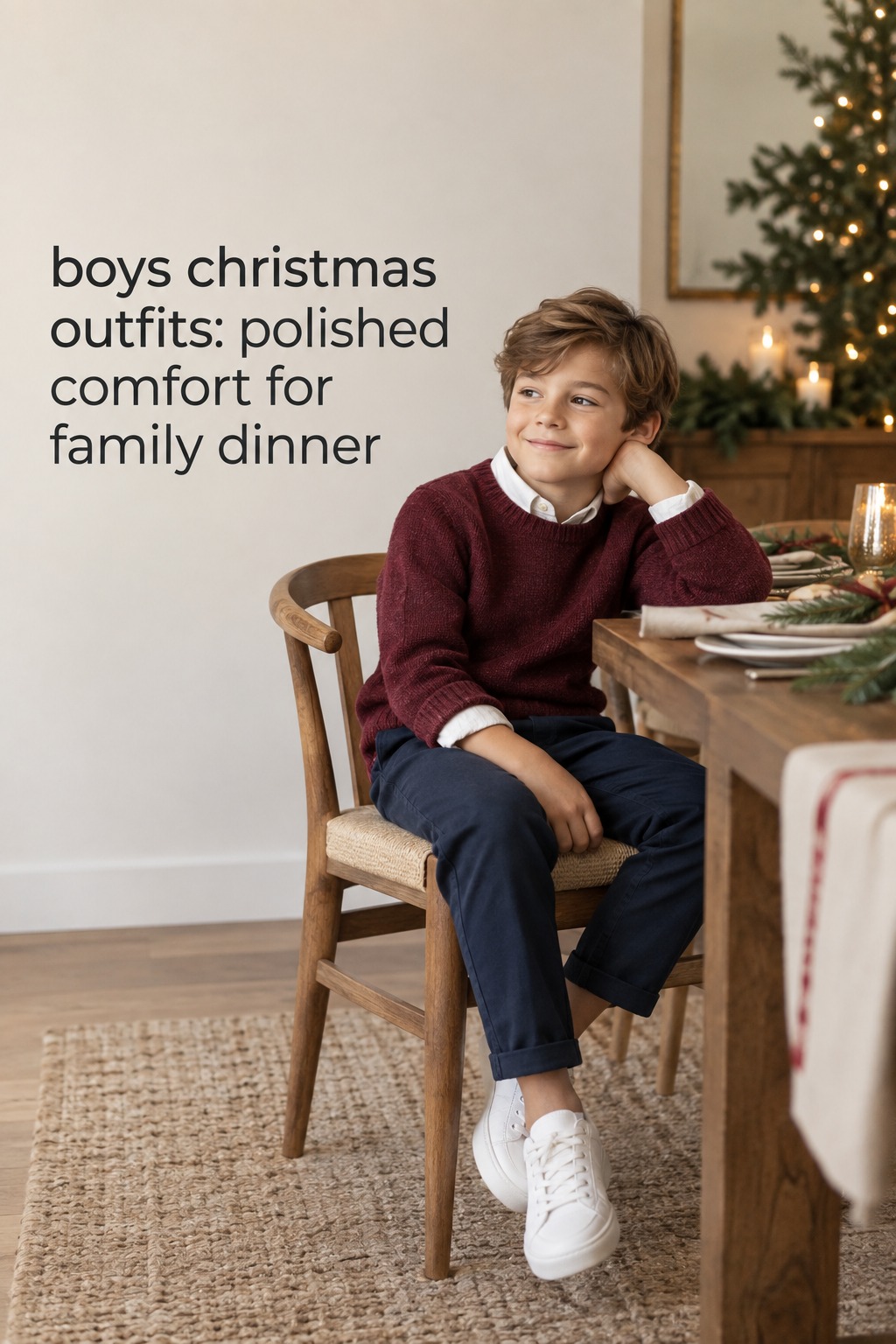
Match the outfit to the holiday setting
Once you know the friction point, identify the level of formality. Think of holiday clothes as a dial rather than a switch. The same base can move from casual to dressy by changing the second layer, shoes, and one accessory. This approach keeps shopping focused and makes outfit changes easier when plans shift.
For Christmas morning, comfort wins. Pair a soft Fair Isle or color-block sweater with pull-on corduroy pants, leggings under overalls, or dark jogger-style trousers with a clean finish. Add grippy socks or flexible sneakers. Avoid hard buttons at the waist if the morning includes floor play, wrapping paper, and a long breakfast.
For a family gathering, use a knit polo, brushed flannel shirt, or oxford under a cardigan or quilted vest. Dark denim, khakis, or corduroy complete the look. This combination is polished enough for relatives but relaxed enough for a child who will move between the table and the living room.
For a school concert, begin with the school’s rules. If a white shirt is expected, make it comfortable with a soft undershirt and a sweater vest instead of a stiff jacket. If the outfit is open-ended, choose a solid knit, pressed chinos, and clean loafers or low-profile sneakers. Pack a spare shirt if the event follows a full school day.
For a dressier dinner, a velvet or corduroy blazer can work when it fits across the shoulders and allows the arms to move. Wear it over a knit polo or a shirt with a soft collar. The blazer should be the statement layer, so keep trousers and footwear simple. A small plaid pocket square can be charming, but it is not necessary.
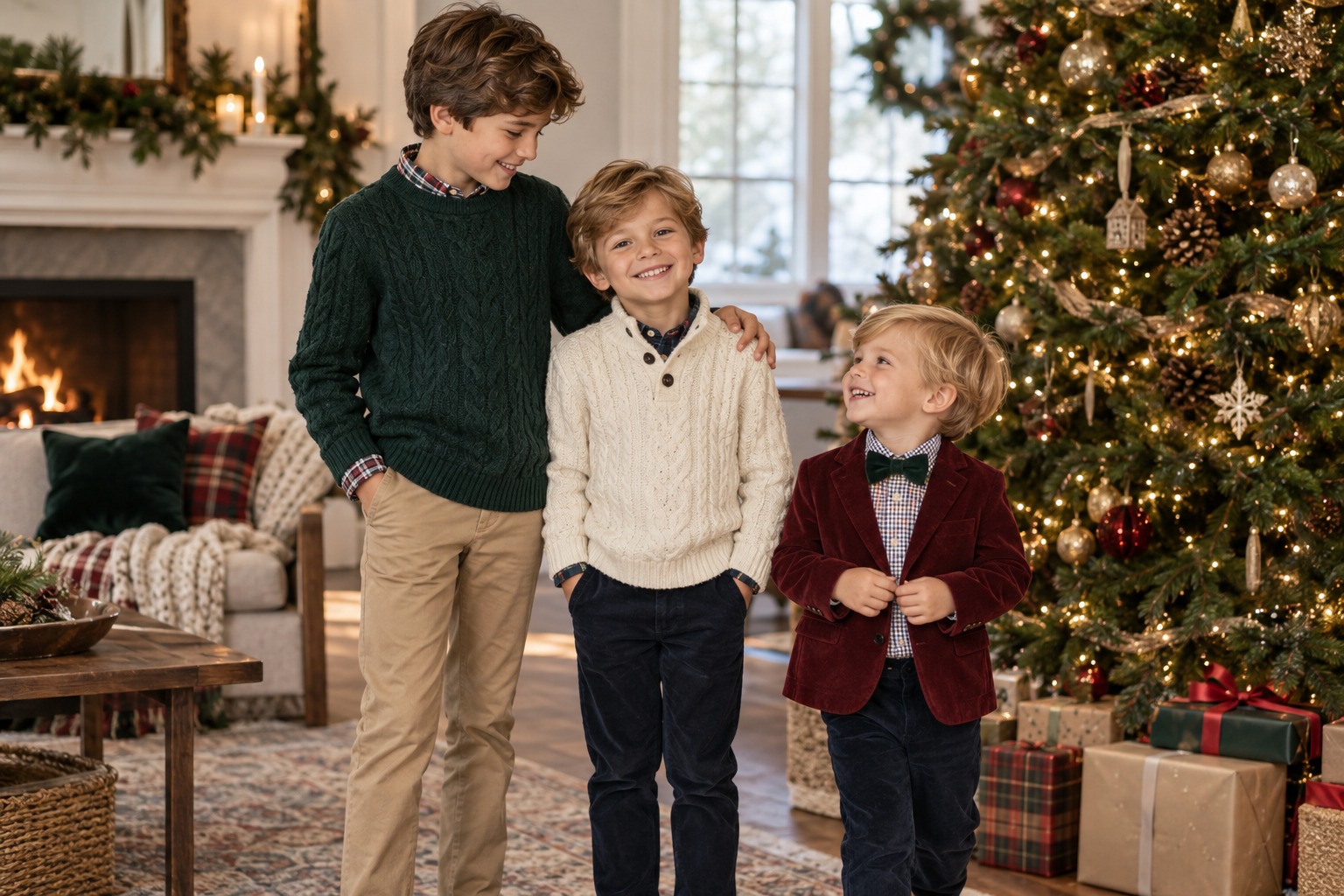
For holiday photos, plan the group before choosing one child’s outfit. Coordinated colors photograph more naturally than identical clothes. Pick two or three shared tones, then give the boy one texture that adds interest: cable knit, corduroy, brushed flannel, or a wool-look overshirt. Avoid putting every family member in the same scale of plaid.
A simple formality check
- Casual: soft knit, dark denim or pull-on trousers, flexible shoes.
- Polished casual: oxford or polo, cardigan or vest, chinos, clean sneakers.
- Dressy: shirt, tailored trousers, optional blazer or sweater vest, loafers.
- Photo-ready: coordinated palette, quiet pattern, comfortable texture, no distracting logos.
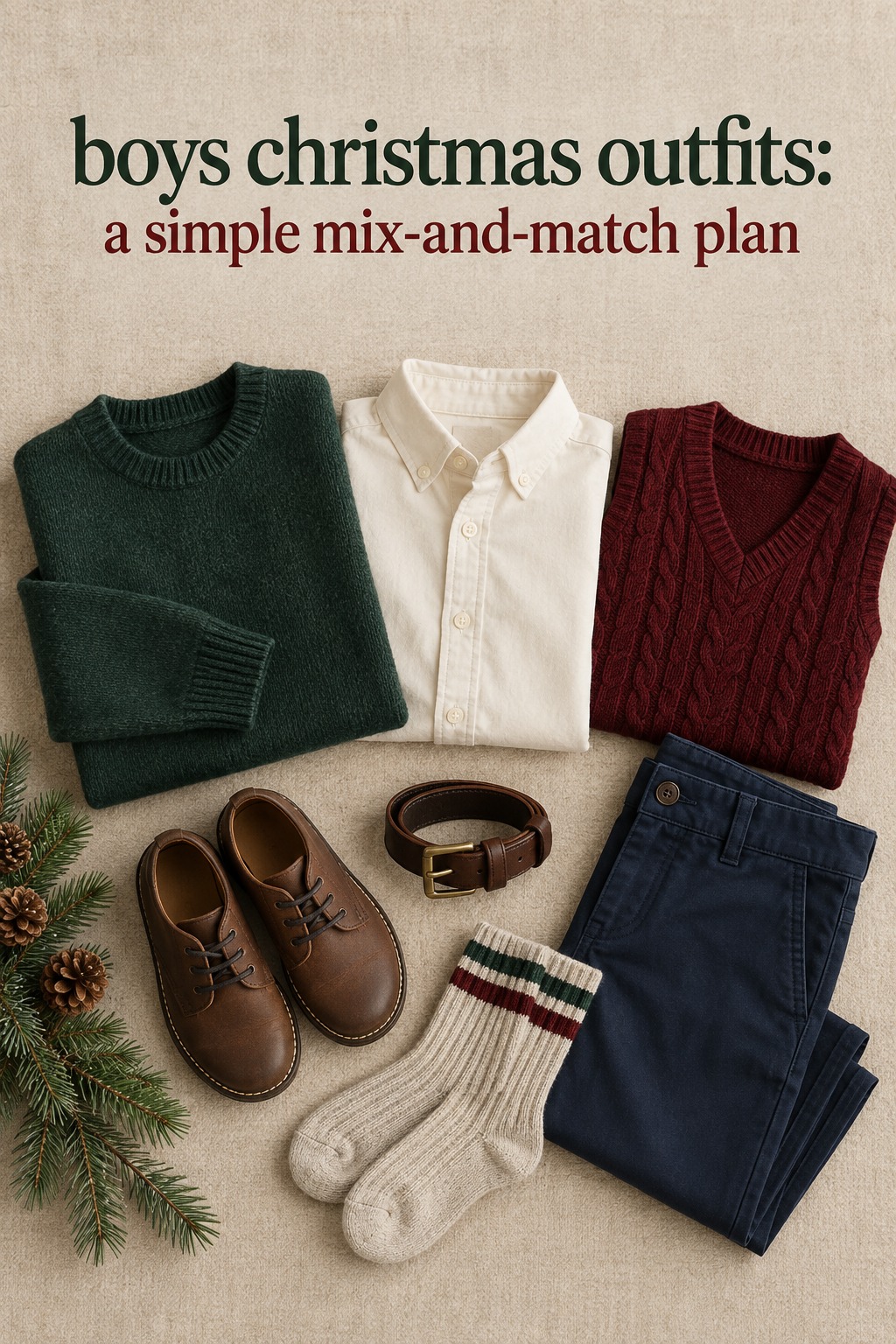
Four outfit formulas that solve common wardrobe problems
Formulas help when you need an answer quickly. They are not rules about what every boy should wear. Treat each one as a starting point, then swap colors, fabrics, or footwear based on the child’s preferences and the weather.
Formula one: soft knit plus dark bottoms
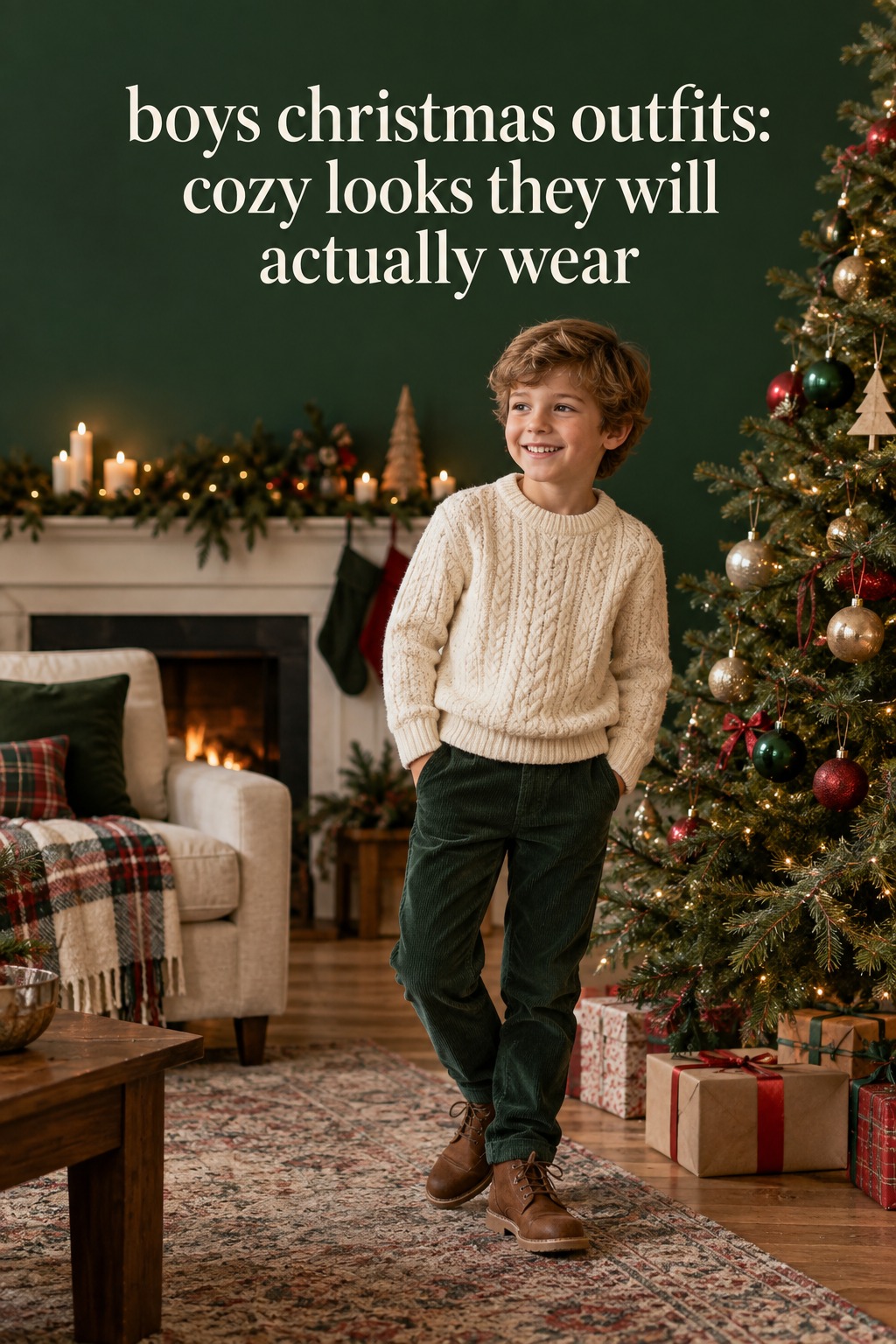
This is the reliable answer for a boy who rejects dress shirts. Choose a crewneck sweater in cream, pine, burgundy, navy, or heather gray. Add a cotton tee underneath, dark denim or corduroy below, and flexible boots or sneakers. The silhouette looks festive because of the color and texture, not because of a loud graphic.
For a younger child, use a roomy knit and an elastic waist. For a tween, add a neat hem and a watch or simple beanie for a personal touch. If the sweater has a pattern, keep the trousers solid. If the trousers are corduroy, choose a plain knit so the outfit does not become visually noisy.
Formula two: shirt, sweater vest, and chinos
This formula solves the problem of wanting a dressy look without a full suit. Start with a soft oxford, add a sweater vest in a seasonal color, and finish with chinos or tailored cords. A red, cream, olive, or navy vest can connect to the family palette while still feeling like a boy’s everyday clothing.
Leave the shirt untucked for a casual dinner or tuck it in for a concert. Roll the sleeves only if the event is relaxed and the shirt fabric is designed for it. A belt should match the shoes when one is needed, but an elastic waist can be more comfortable for younger boys.
Formula three: flannel overshirt over a base layer
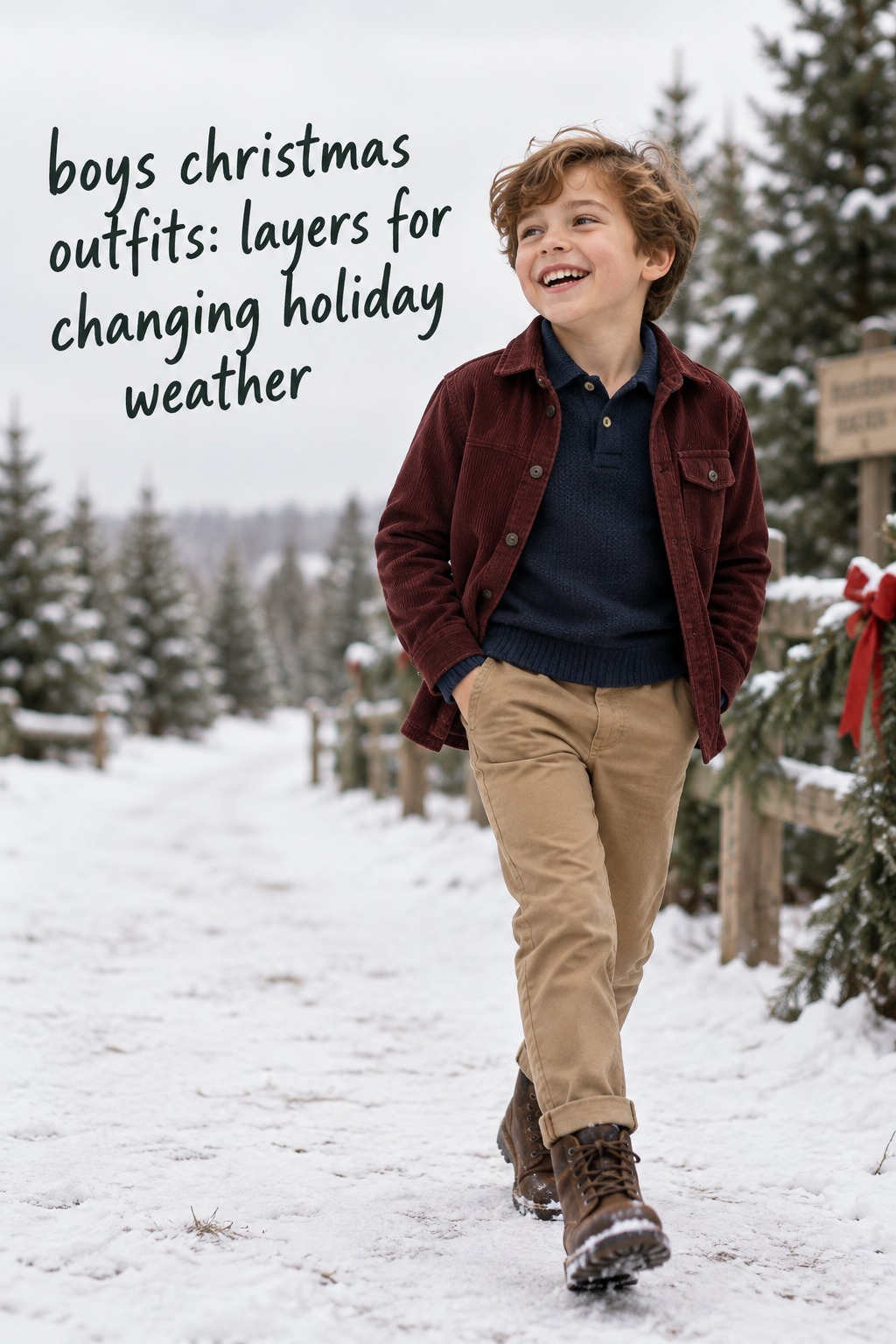
An overshirt is the best bridge for a child who warms up quickly or dislikes layers that pull over his head. Use a solid tee or thermal base, add a red-and-navy, green-and-cream, or muted tartan flannel, and pair it with jeans or canvas pants. Keep the overshirt open indoors and button it outside.
This look is particularly useful when the celebration moves between rooms or includes outdoor photos. Choose a flannel with a soft hand and check that the armholes do not restrict reaching. A henley can replace the tee when you want one more refined detail without a collar.
Formula four: one tailored piece with everyday basics
When a boy wants to stay casual but the event is dressy, add one tailored piece to clothes he already trusts. Try a navy blazer over a knit polo, a velvet bow tie with a chambray shirt, or a corduroy jacket over a plain sweater. Pair it with dark jeans or chinos and comfortable shoes.
The key is contrast. A formal jacket with relaxed trousers feels modern and less restrictive than a complete suit. It also makes the jacket reusable for birthdays, school presentations, and spring events. Let the child choose between two acceptable shirts so he has ownership without turning the morning into an open-ended negotiation.
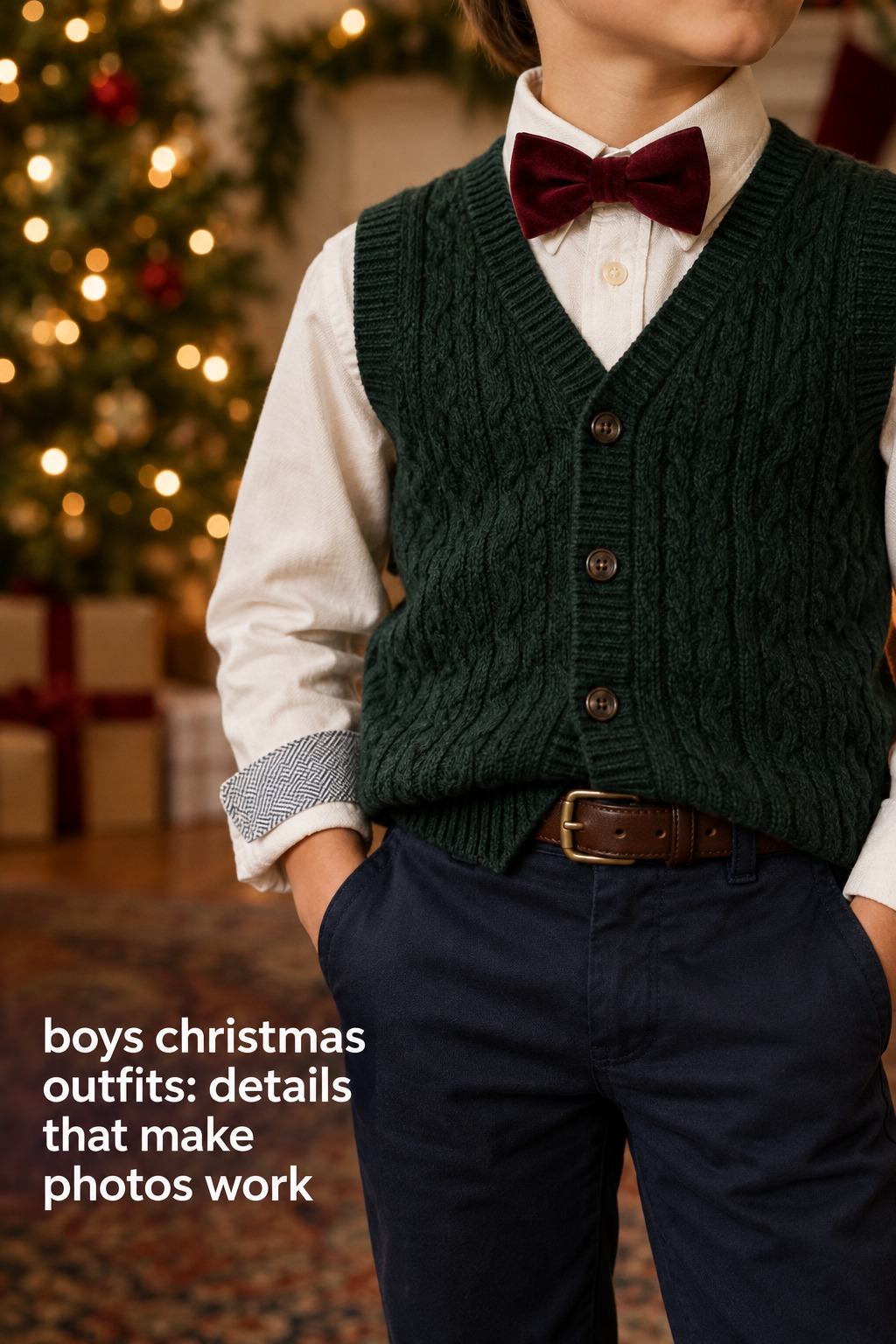
Last-minute fixes for fit, comfort, and photos
Many holiday outfit problems can be solved without buying anything new. Start with the part that causes the most resistance, then simplify. A child who refuses a shirt may accept the same shirt under an open cardigan. A child who hates dress shoes may wear clean leather-look sneakers if the event is not formal. A child who dislikes a hat may carry it for the photo instead of wearing it all evening.
Check the trousers while the boy sits on the floor. The waistband should not dig in, and the hem should not catch under the heel. Check shirts at the neck and underarms. If a collar feels tight, remove a button or switch to a knit polo. If sleeves are too long, fold a clean cuff rather than pushing the fabric into a bulky bunch.
Shoes deserve their own rehearsal. Have the child wear them with the exact socks planned for the event. Walk up stairs, sit in a chair, and test the fastening. New shoes should not debut during a long family gathering. Keep a familiar pair in the car when possible, especially for toddlers.
For photos, remove anything that reflects light sharply or creates a distracting logo. A small pattern is usually easier to coordinate than several large patterns. Place the strongest color near the face, then balance it with neutral trousers. If the background is a decorated tree, a cream, navy, olive, or burgundy layer will stand out without competing with the lights.
Bring a backup plan, not a second complete wardrobe. Pack one clean base shirt, spare socks, stain wipes, and a comfortable layer. If the boy is young, bring the exact snack or comfort item that helps him reset. The goal is to protect the experience as much as the outfit.
- Remove one uncomfortable layer before changing the whole outfit.
- Trade a stiff collar for a knit polo or soft button-up.
- Use a cardigan or overshirt when temperature changes are likely.
- Keep one familiar shoe option ready.
- Photograph the outfit before leaving so you can spot missing details.
A final fit check should happen at least one day before the event. Look for missing buttons, loose hems, visible undershirts, and stains that become obvious under bright indoor lights. Let the boy practice the full outfit for ten minutes. If he cannot comfortably move during that test, the outfit is not finished.
Sources and methodology
This guide synthesizes recurring practical advice from a US search review of boys’ holiday outfit guides and family-photo styling resources. The most consistent useful themes were comfort-first layering, coordinated rather than identical colors, and adapting the same core pieces to the setting. For additional context on holiday outfit formulas, see A Style Set’s boys’ holiday outfit guide and the family photo outfit guidance from Jaclyn Miller Photography.
FAQ
What are the easiest boys Christmas outfits for a family gathering?
Start with a soft sweater or knit polo, dark denim or chinos, and flexible shoes. Add a cardigan, vest, or flannel overshirt in one seasonal color. This combination looks polished but still supports sitting, playing, and eating comfortably.
How can I make a boy’s outfit look festive without a Christmas graphic?
Use winter texture and color instead of a novelty print. Burgundy, forest green, cream, navy, corduroy, cable knit, velvet, or tartan can signal the season while remaining useful after the holidays. Keep the rest of the outfit simple.
What should boys wear for Christmas family photos?
Choose a comfortable outfit that shares one or two colors with the group but does not copy everyone exactly. A textured sweater, quiet plaid overshirt, or knit vest adds visual interest. Test the shoes and layers before the session so the child can move naturally.
How do I dress a boy who refuses dress shirts?
Try a knit polo, a soft henley under a cardigan, or a crewneck sweater over a smooth tee. If a collar is required, use a relaxed oxford and leave the top button open when the dress code allows it. Offer two choices so the child has a say.
Are jeans appropriate for boys Christmas outfits?
Dark, clean jeans can work for Christmas morning, casual gatherings, and many photo sessions. Balance them with a refined top such as a cable sweater, oxford, or cardigan. For a formal dinner or concert, chinos or tailored trousers may be a safer choice.
What shoes work best with boys Christmas outfits?
Choose shoes the boy can wear comfortably for the full event. Clean low-profile sneakers, soft boots, loafers, and flexible lace-ups can all work when they match the outfit’s formality. Rehearse new shoes with the intended socks before the day.
How many festive pieces should a boy wear at once?
One statement piece is usually enough, with a second subtle seasonal detail if desired. For example, pair a tartan overshirt with plain trousers, or a burgundy sweater with neutral bottoms. Too many competing patterns can make the outfit feel like a costume and distract in photos.