Warm Christmas Outfits for Cold-Weather Plans
Warm Christmas outfits have to do more than look festive in a mirror. They need to work when you walk from the car to a restaurant, sit near a drafty window, host in a warm kitchen, or move between an outdoor market and an overheated living room. The most successful holiday looks treat warmth as part of the styling plan instead of an emergency layer added at the last minute.
The easiest way to get there is to choose one visible festive idea, then build a quiet system underneath it. That might mean a fine thermal top under a velvet dress, fleece-lined tights under a wool skirt, or a slim merino layer beneath a sweater. Current winter dressing conversations continue to favor texture, useful layering, and pieces that can move between settings. The result feels intentional, comfortable, and personal rather than like a costume.
The warmth-first approach to festive dressing
Start with the plan, not the garment. A warm Christmas outfit for a long outdoor walk should not be built the same way as an outfit for a heated family dinner. Before choosing color or sparkle, answer three questions: how long will you be outside, how much will you be moving, and can you remove a layer once you are indoors? That short check prevents the common mistake of wearing a beautiful but fragile party look for an event that includes a cold commute.
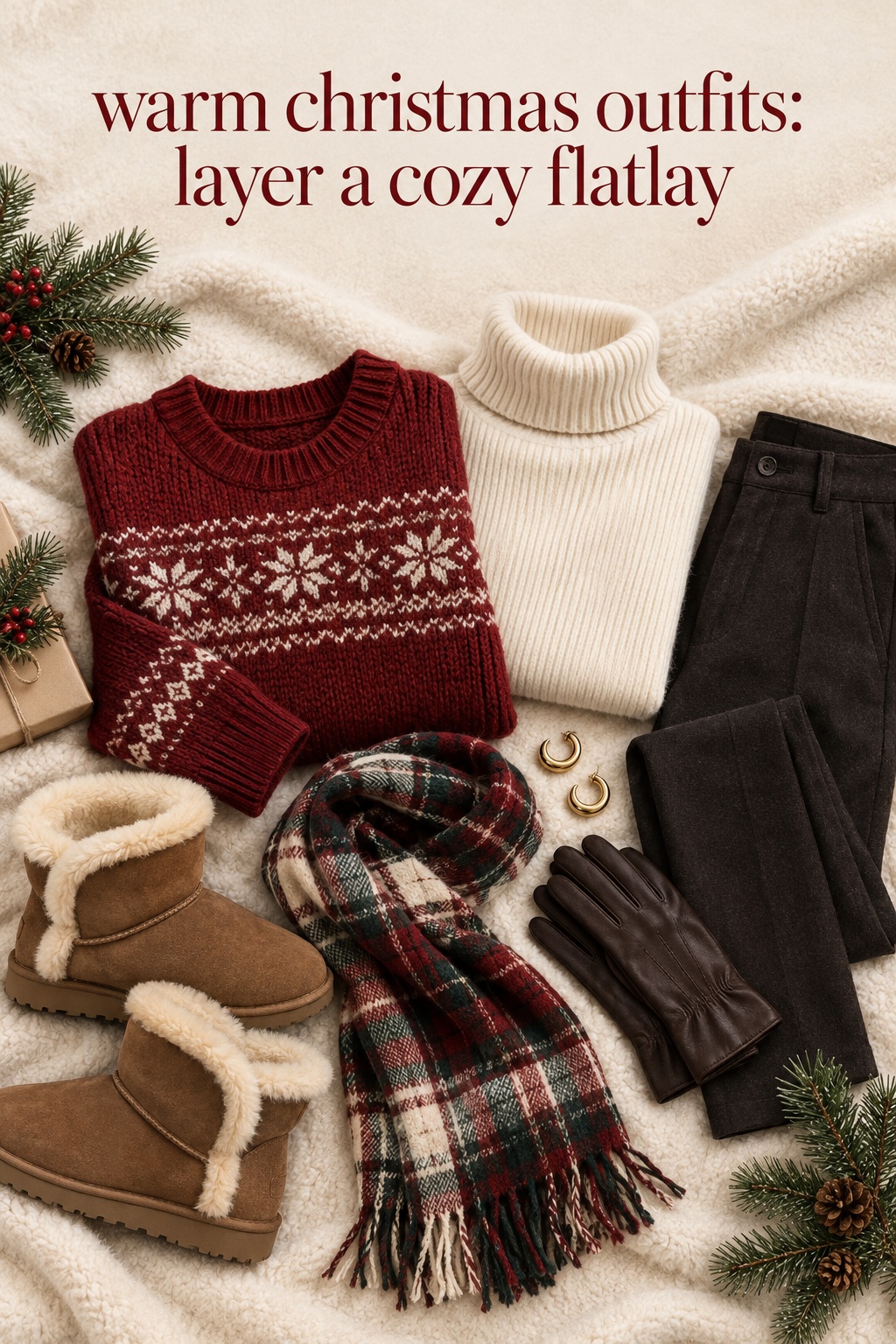
Think in four zones. The base layer manages comfort close to the skin. The middle layer supplies insulation and visual interest. The outer layer protects you from wind, cold, or damp conditions. Accessories close the gaps around the neck, wrists, ankles, and head. This is similar to the invisible and visible layering distinction described by British Vogue’s winter layering guide. You can keep the base layer discreet while allowing one or two upper layers to show.
Found the dress? Keep the rest in one place.
Zarellea brings guest details, vendors, timelines, and every next step together — so your wedding plan feels as good as your look.
Warmth does not require every layer to be oversized. A slim base, a relaxed middle layer, and a shaped coat usually look cleaner than several loose pieces competing for space. Keep the largest volume in one place. If the coat is generous, let the outfit underneath stay relatively streamlined. If the sweater is chunky, choose a straight skirt, slim trousers, or a clean boot to bring the proportions back into focus.
Use fabric contrast to make practical outfits feel festive. Wool, brushed knitwear, velvet, satin, shearling, leather, and polished metal all reflect light differently. You can create a holiday mood with texture even when the color palette stays neutral. A charcoal coat over a cream knit, dark denim, and a burgundy scarf can feel more considered than a novelty sweater worn without a plan.
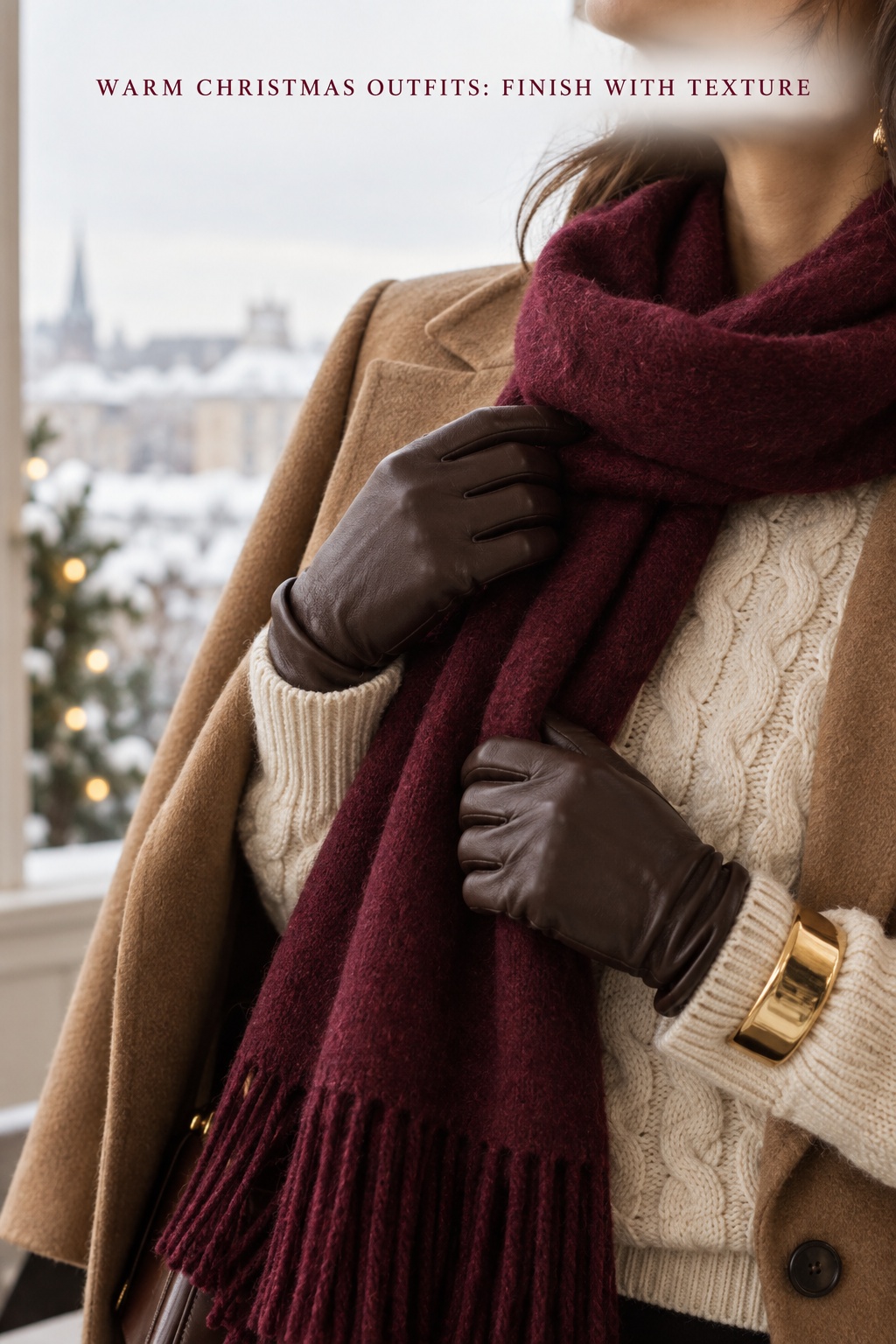
For the coldest days, build the look around the part of you that loses heat fastest. A scarf can make a simple coat feel finished while protecting the neck. Warm socks can make ankle boots more practical. Gloves keep hands comfortable and add a rich leather or knit texture. If you are wearing a dress or skirt, opaque or fleece-lined tights create a warmer foundation without changing the visible shape of the outfit.
Three trend-aware building blocks that make holiday outfits warmer
The first building block is the refined knit. A fine-gauge turtleneck, mock neck, or fitted crewneck can sit under a dress, blazer, cardigan, or sleeveless top. It adds warmth without creating the shoulder and arm bulk that makes a coat difficult to close. Cream, espresso, charcoal, forest green, and deep red all work well with holiday textures. If the top will show at the neckline, treat it as part of the outfit rather than as underwear.
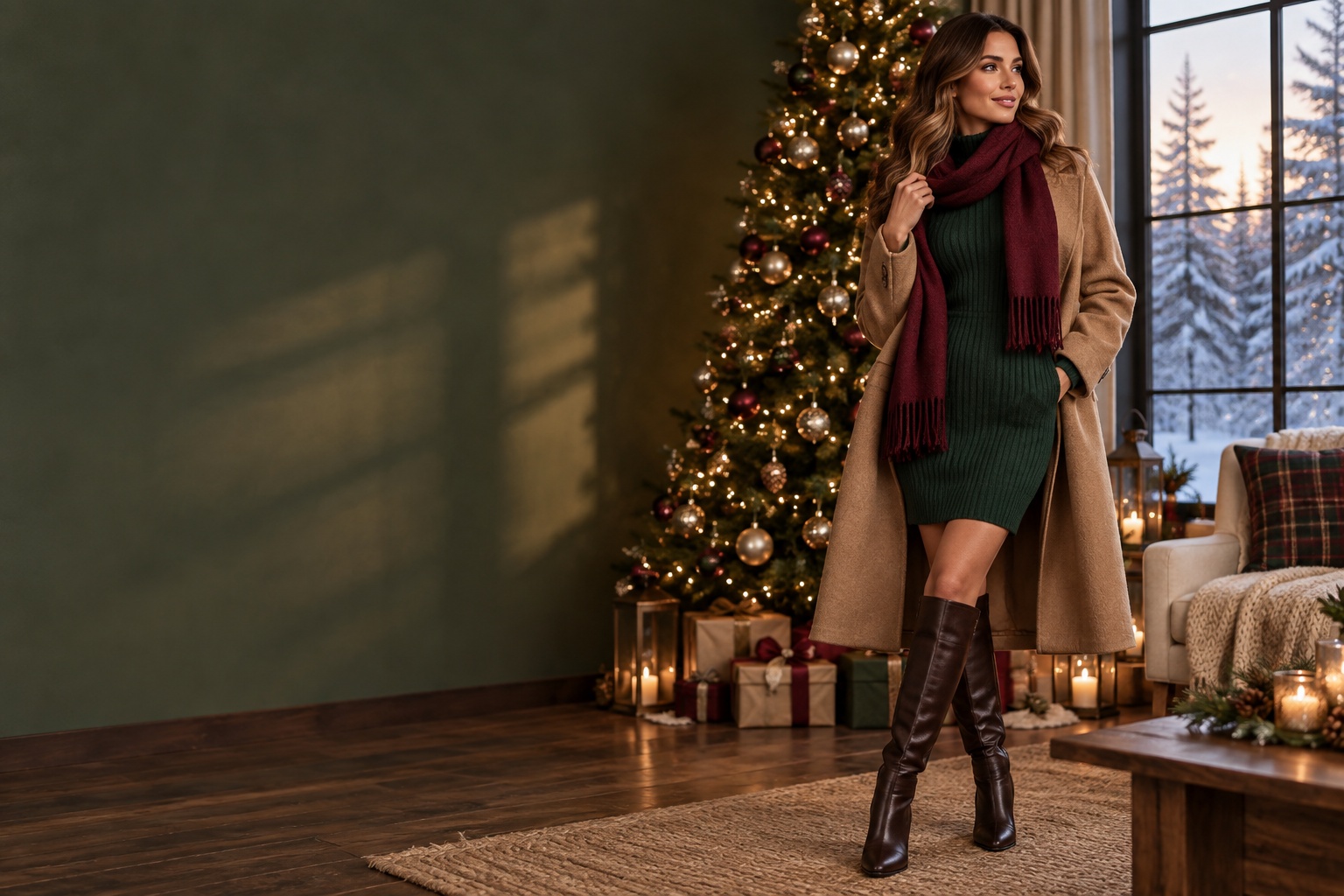
A knit dress is another efficient option. Recent cozy winter outfit coverage often returns to the sweater dress because it creates a complete silhouette with one main garment. Choose a medium-weight ribbed or funnel-neck version when you want warmth and ease. Add a long wool coat, tall boots, and a compact bag for a dinner look. Add a belt only if the fabric can handle it without bunching. A soft silhouette usually looks more current when the accessories supply structure.
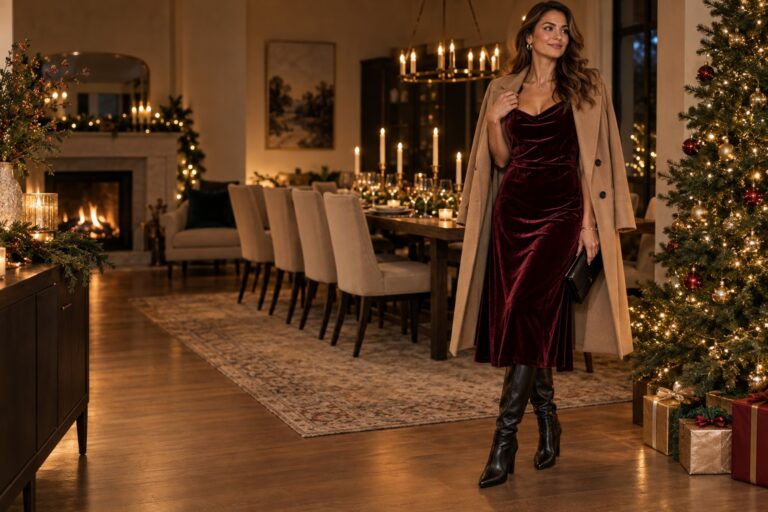
The second building block is the long outer layer. A wool wrap coat, insulated parka, quilted liner, faux shearling jacket, or substantial puffer can become part of the visual story. Instead of hiding it at the coat check, select one that supports the outfit’s color and proportion. A cream shearling coat over a dark green dress creates a clear tonal contrast. A camel coat over burgundy knitwear feels warm and classic. A deep chocolate coat can soften black footwear and accessories.
Use outerwear according to exposure. A short jacket may be enough for a quick ride and indoor gathering, but a longer coat protects more of the body during a walk or outdoor queue. If precipitation is possible, prioritize a hood, water-resistant finish, or reliable umbrella over delicate surface details. The most beautiful outfit still feels wrong if you spend the event worrying about slush at the hem.
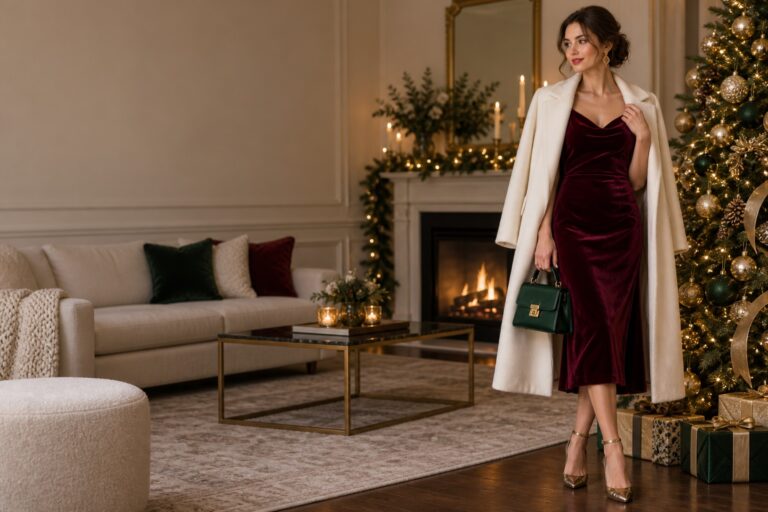
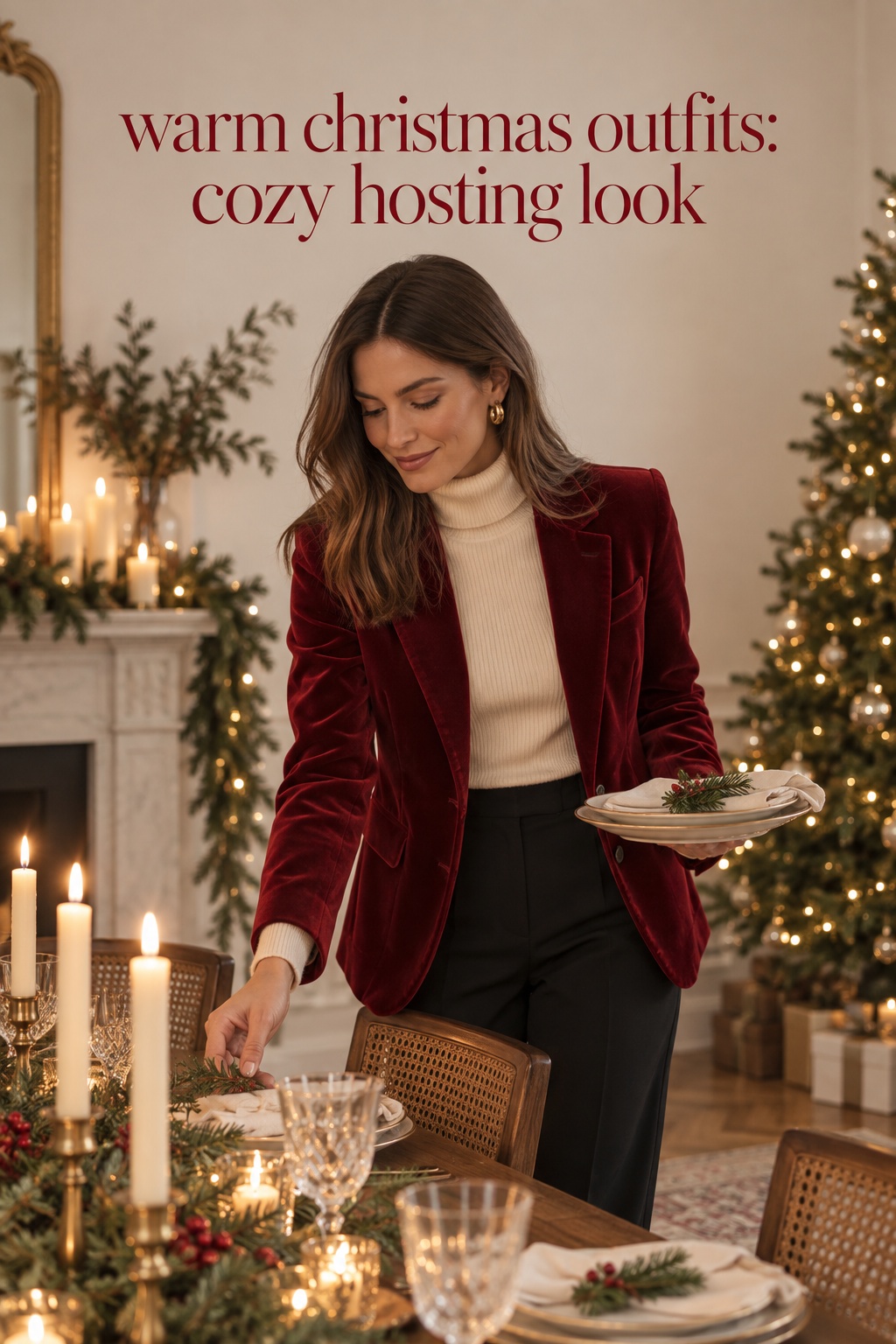
The third building block is a rich holiday texture. Velvet works especially well because it looks dressy while adding visual depth. The layering ideas in Alembika’s winter velvet guide show how velvet can meet knitwear, chiffon, or wool. Try a velvet blazer with a fine turtleneck and straight trousers, a velvet skirt with a chunky cardigan, or a velvet dress over a slim long-sleeve base.
Keep the rest of the texture story calm. If the velvet is highly reflective, choose matte tights and simple boots. If the knit is chunky, let the jewelry be small and deliberate. If the coat has a fuzzy finish, avoid adding too many competing fluffy accessories. Warm Christmas outfits look polished when there is a clear hero texture and enough quiet space around it.
Color can supply the festive signal without turning the look into a themed uniform. Burgundy, pine, cranberry, winter white, icy blue, and metallic gold all feel seasonal, but they do not need to appear together. Pick one accent and repeat it once. A berry lip with a berry scarf, gold earrings with a gold buckle, or a pine cardigan with dark green shoes creates cohesion without overworking the outfit.
Warm Christmas outfits for four real-life settings
For hosting at home
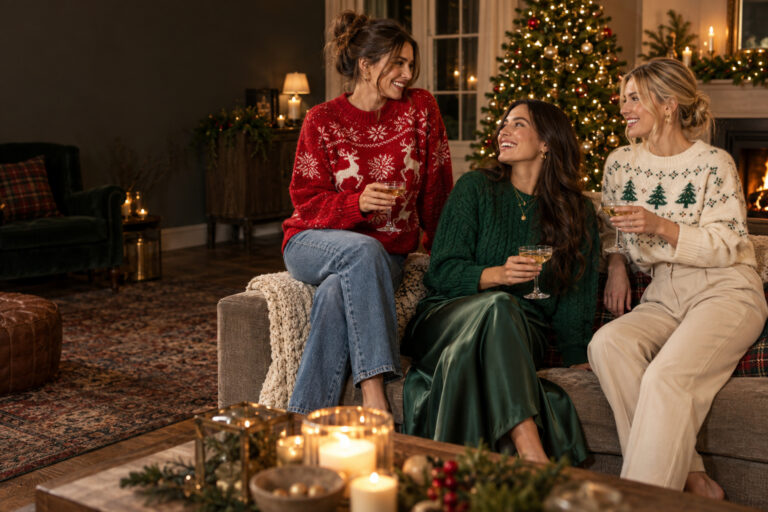
Hosting calls for clothes that are warm, washable, and easy to move in. Start with a soft long-sleeve top or fine turtleneck, then add a cardigan, a velvet blazer, or a relaxed sweater. Straight-leg trousers, dark jeans, or a washable knit skirt keep the lower half practical. Choose flat boots, leather loafers with warm socks, or a clean house shoe if you will be cooking and standing for hours.
Make the look feel festive through one intentional detail. A satin headband, gold hoops, a red cardigan, a velvet shoe, or a scarf tied at the neck can carry the holiday mood. Avoid sleeves that drag through food preparation and avoid oversized cuffs if you will be washing dishes. A slim thermal underlayer lets you open a window or step onto a porch without sacrificing comfort.
For a family dinner or restaurant reservation
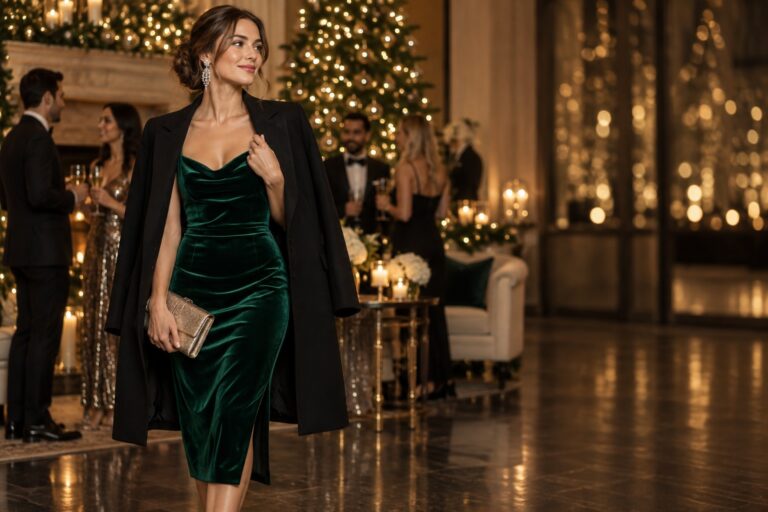
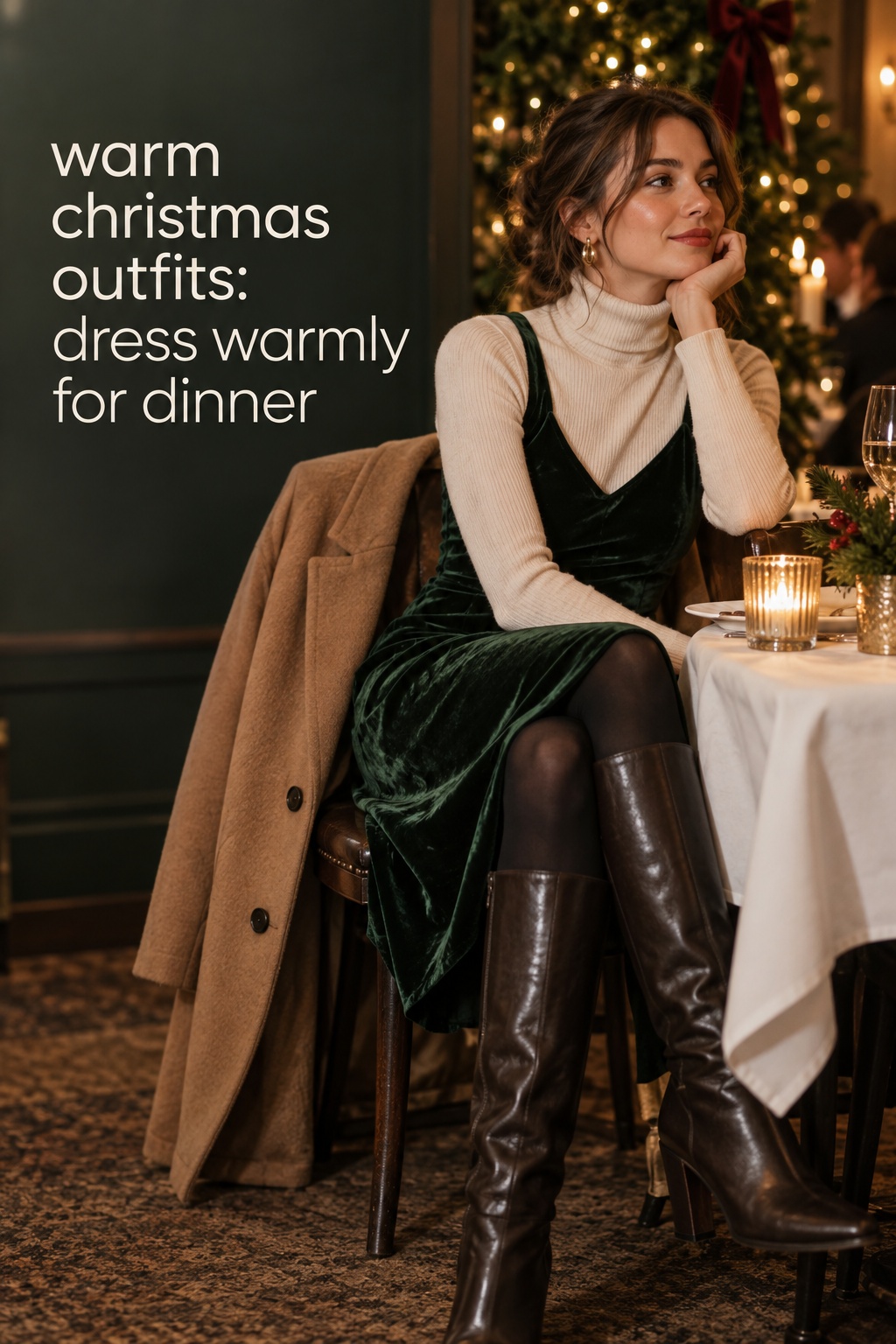
For dinner, combine one dressy surface with warm foundations. A velvet midi skirt works with a fitted knit, opaque tights, and ankle boots. A satin or velvet dress can take a thin turtleneck underneath, depending on the neckline. A tailored trouser with a silk camisole and wool blazer feels celebratory while allowing you to add a coat for the journey.
Boots are especially useful here because they make a skirt or dress feel more realistic in cold weather. A knee-high boot creates a long line under a midi hem and adds coverage. An ankle boot keeps the look lighter and works well with a straight trouser or a dress that ends above the ankle. The guide to Christmas party outfits with boots also shows why a ribbed turtleneck, tall boots, and a teddy coat can balance comfort with polish.
For a Christmas market, walk, or outdoor gathering
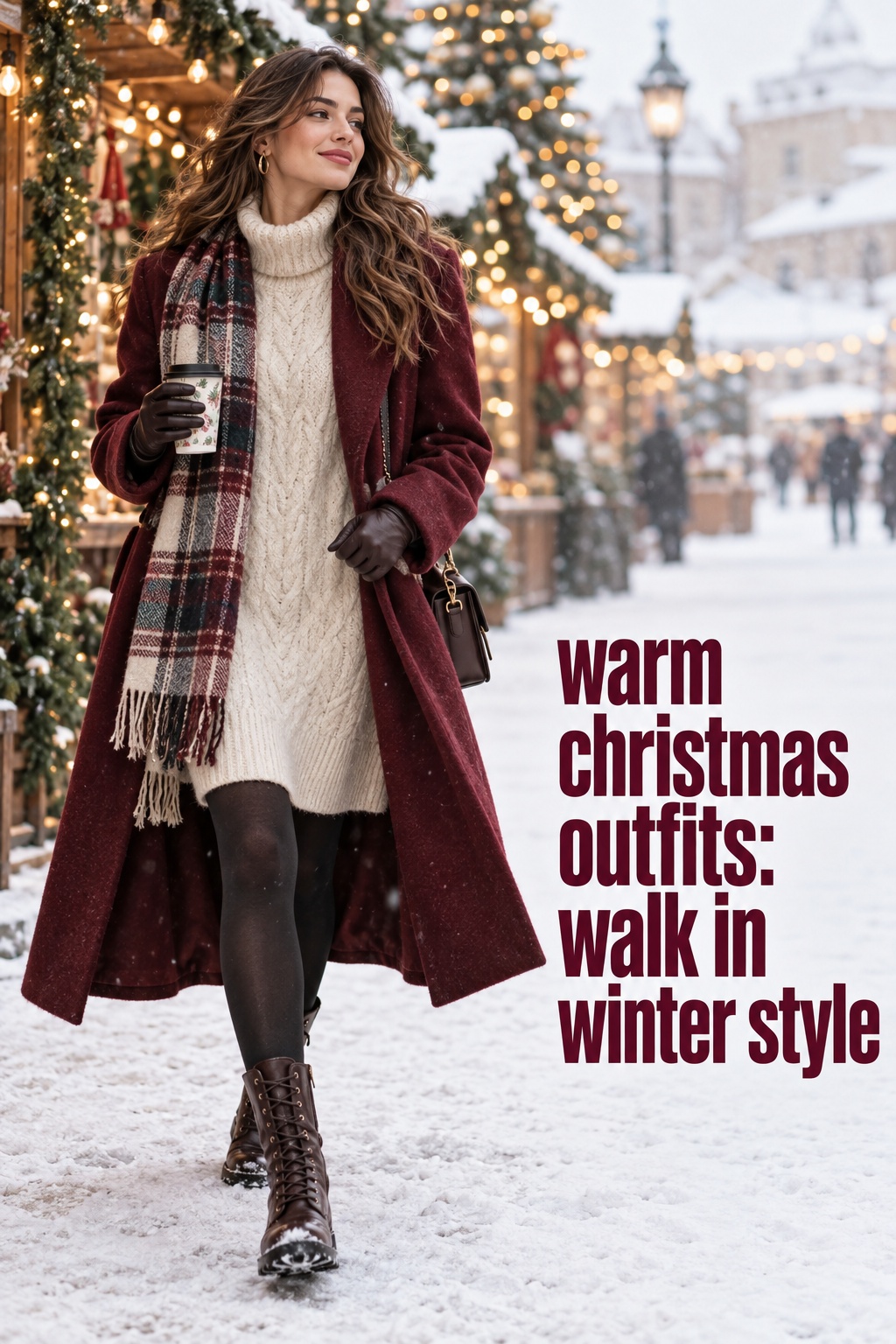
Outdoor plans need a stronger system. Begin with a moisture-managing base, then add a sweater or fleece, a long coat, warm socks, and shoes with traction. A sweater dress can work if it is paired with fleece-lined tights, a substantial coat, and weather-ready boots. Wide-leg trousers can work over a slim base layer, but make sure the hem will not drag through wet pavement.
Keep the festive note visible near the face. A red plaid scarf, winter-white beanie, berry knit, or gold earrings will show in photos even when the coat is closed. Gloves are not an afterthought in this setting. Leather gloves look refined, while insulated gloves are more useful if you will be outside for an extended period. Choose the glove based on the plan rather than the photograph.
For travel, errands, or a full day of visiting
Travel outfits benefit from forgiving layers and shoes you can actually walk in. Try a merino or fine-knit base, a button-up shirt or cardigan, relaxed trousers, and a long coat. Add a scarf that can double as a blanket on a chilly plane or train. A coordinated knit set can look polished with a structured tote and clean sneakers, while dark denim with a bright sweater and a wool coat gives you a little more festive energy.
Pack one small transformation piece. A velvet blazer, metallic shoe, statement earrings, or red lip can turn the daytime base into a dinner look. This approach is more useful than carrying a separate outfit for every stop. It also keeps the warmth system intact because you are changing the visible layer, not removing the pieces that keep you comfortable.
How to finish and troubleshoot cold-weather holiday looks
If the outfit feels bulky, remove volume from the middle instead of removing warmth. Swap a chunky sweater for a fine knit, change a wide cardigan for a fitted thermal, or choose a streamlined coat over several loose jackets. If the outfit feels too plain, add texture before adding more color. Velvet shoes, a brushed scarf, a polished belt, or a metallic hair accessory can change the mood quickly.
If the outfit feels too formal for a family gathering, lower the shine in one place. Wear velvet with denim, satin with a chunky knit, or a dressy skirt with a flat boot. If it feels too casual for dinner, sharpen the structure with a tailored coat, small bag, pointed toe, or deliberate jewelry. Contrast is more effective than replacing the whole outfit.
If you overheat indoors, plan the removal before you leave. A coat that opens easily, a cardigan instead of a pullover, or a scarf instead of a high-neck top can make the difference. Keep the visible base presentable because the room may become the main setting. A good warm Christmas outfit should look complete with the coat on and without it.
Check the practical details in daylight. Sit down in the outfit. Lift your arms. Walk up stairs. Make sure the skirt does not catch on the boot, the trouser hem does not drag, and the coat closes over the middle layer. Try the bag with the coat and gloves. These small checks prevent a festive look from becoming uncomfortable after the first hour.
Finally, repeat the exact warmth logic that works for you. You do not need a brand-new holiday wardrobe. A base layer, one reliable coat, warm footwear, and two or three festive textures can support many combinations. The best warm Christmas outfits are flexible enough to meet the weather and expressive enough to still feel like your style.
Sources and methodology
This guide was developed from a US-focused review of ten organic results covering warm Christmas dressing, winter layering, velvet holiday outfits, boots, knit dresses, merino layers, and practical cold-weather styling. Sources included Who What Wear, British Vogue, Festive Clothing, Schoffel Country US, and the other linked style references above. Subjective styling recommendations are editorial interpretations, not claims of personal testing.
FAQ
What is the warmest way to dress for Christmas?
Use a slim base layer, an insulating middle layer, a protective coat, warm socks, and weather-appropriate shoes. Add a scarf and gloves if you will be outside. The layers should be removable so the outfit still works indoors.
How can I make a Christmas dress warmer?
Wear a fine turtleneck underneath when the neckline allows it, add opaque or fleece-lined tights, and choose boots instead of delicate shoes. A long wool coat and scarf add warmth on the journey without changing the dress itself.
Are sweater dresses good warm Christmas outfits?
Yes. A medium-weight sweater dress can provide a complete base with less styling effort. Finish it with a structured coat, tall boots, and a small bag. Add a belt only when it improves the shape without creating bunching.
What should I wear to a Christmas party if it is freezing?
Try a velvet skirt with a fitted knit, opaque tights, and boots, or wear a velvet dress over a slim thermal layer. Bring a long coat that closes comfortably and keep the festive detail in the texture, jewelry, or color.
How do I stay warm without looking bulky?
Use thin layers close to the body, keep the largest volume in one garment, and choose a clean outer layer. A fine turtleneck under a relaxed blazer or a thermal under a sweater dress usually looks neater than several oversized knits.
Which shoes work best with warm Christmas outfits?
Ankle boots, knee-high boots, weather-ready loafers, and clean sneakers can all work. Choose based on walking, precipitation, and traction first. Then match the boot height and finish to the hemline and texture of the outfit.