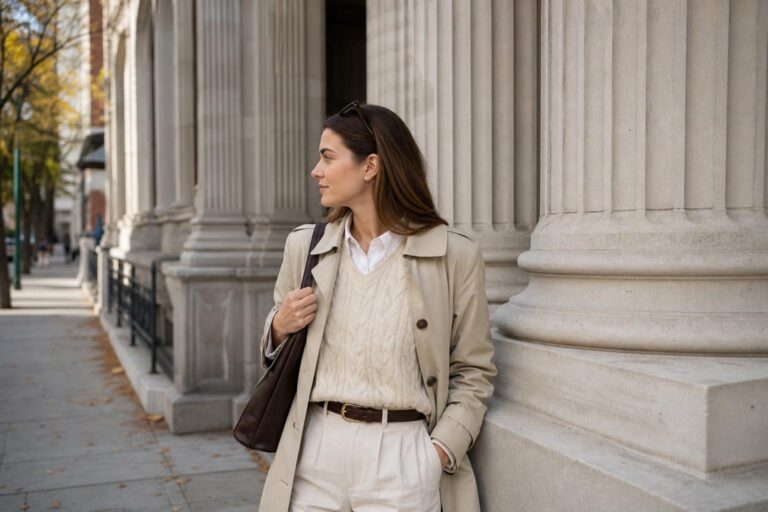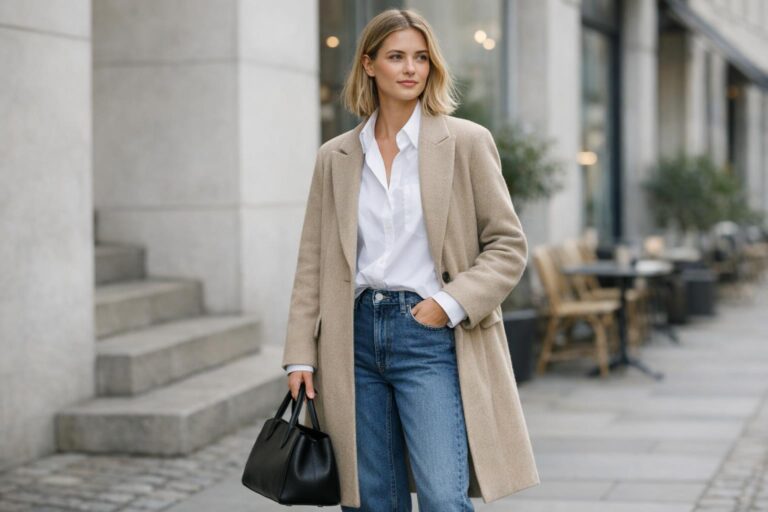
Old Money Summer Outfits: Preppy polish, Refined for 2026
Old money summer outfits vs. preppy chic: why the line gets blurry
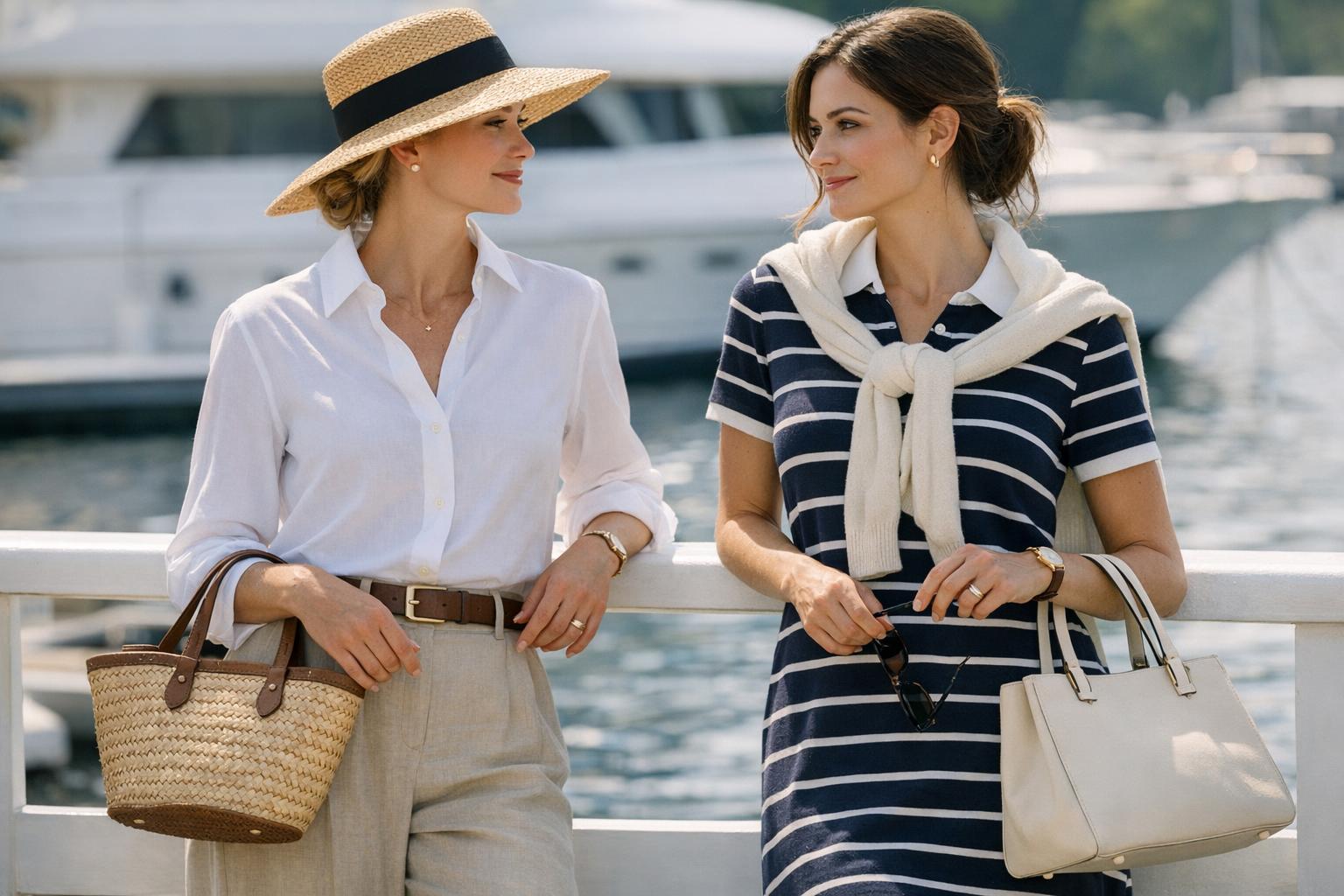
Picture the same outfit landing in two different contexts: a crisp white button-down, tailored shorts, and espadrilles. In one setting, it reads as “old money summer outfits”—quiet, tailored, and almost anonymous in its polish. In another, it becomes preppy chic—brighter, sportier, and a little more overt about its lifestyle cues (think tennis skirt energy and campus-ready ease). The pieces overlap so often that the distinction comes down to styling logic: proportion, fabric behavior in heat, and how accessories are used as visual anchors.
This confusion is amplified by the way summer style boards circulate online. “European summer outfits,” “Europe outfits,” and “Paris outfits” are frequently grouped with old money mood boards because they share a neutral palette, refined silhouettes, and a preference for quality materials. Add in phrases like “looks chic” and “look di moda,” and the aesthetics start to feel interchangeable—even when they aren’t.
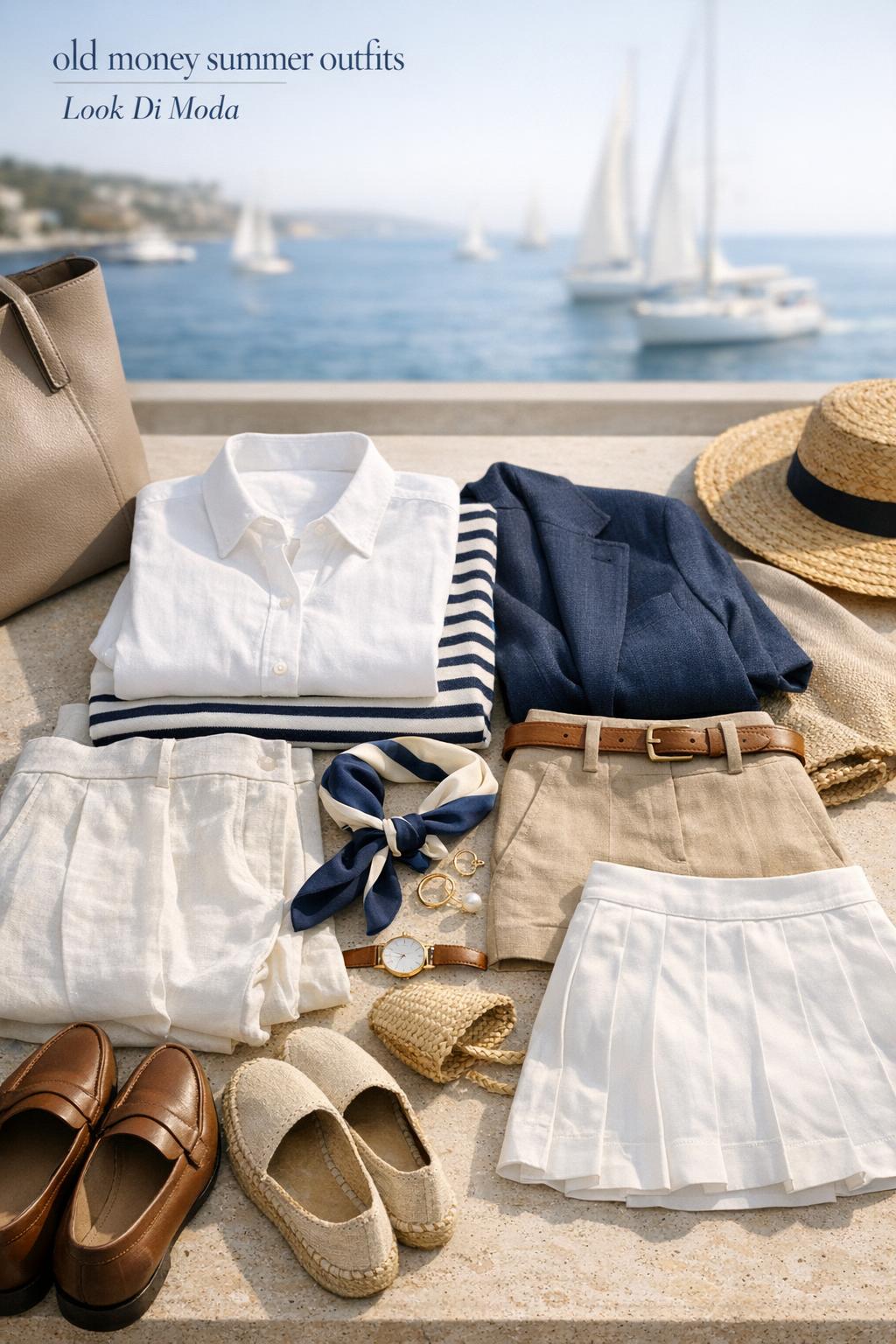
This breakdown compares old money summer outfits with preppy chic (and the adjacent “European summer outfits/Paris outfits” lens) using practical, real-wardrobe criteria: capsule wardrobe thinking, tailoring, color palettes (cream, white, beige, navy, plus powder blue, blush pink, and coral), and the accessory ecosystem (gold jewelry, pearl earrings, structured bags, straw hats, silk scarves, loafers, sandals, espadrilles, and even Chanel slingbacks). You’ll also see how to choose the right approach for specific occasions—from yacht-club-adjacent afternoons to everyday campus life—without turning the look into costume.
Style overview: old money aesthetic in summer
The old money aesthetic in summer is built on restraint: a capsule wardrobe of timeless staples, high-quality fabrics, and tailoring that makes simple pieces look intentional. The visual message is “well-made and well-fitted,” not “trend-driven.” This is why quality over quantity is more than a slogan here—it’s the styling philosophy that keeps the wardrobe coherent across multiple outfits.
Found the dress? Keep the rest in one place.
Zarellea brings guest details, vendors, timelines, and every next step together — so your wedding plan feels as good as your look.
Silhouettes skew classic and structured: crisp white shirts, lightweight blazers, tailored shorts, linen trousers, and modest-length skirts or neutral dresses (often A-line or midi). Patterns appear, but they are controlled—stripes are a common choice, while bold prints are usually avoided because they compete with the quiet-luxury mood.
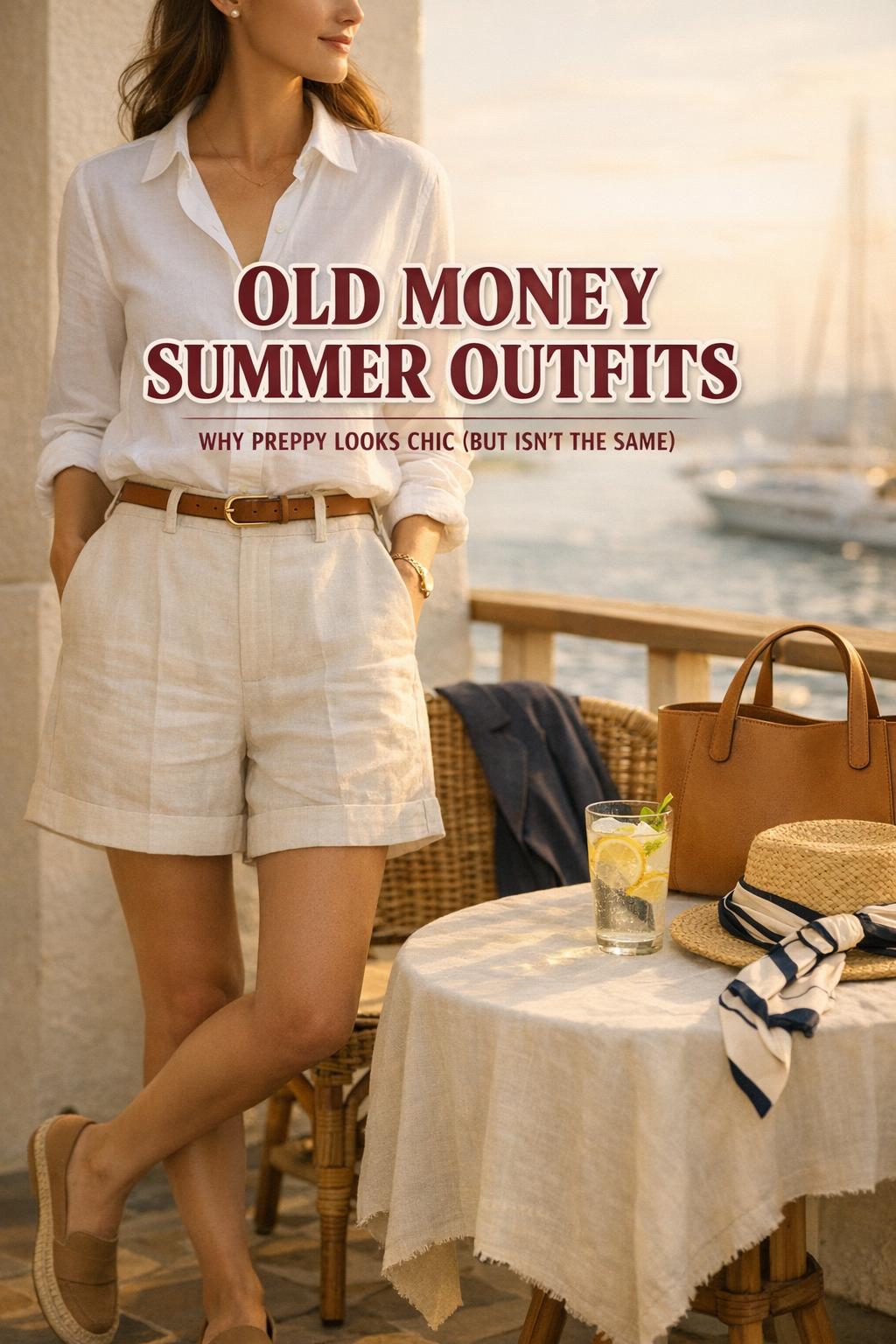
The core palette is neutrals—cream, white, beige, and navy—supported by gentle accents like powder blue, blush pink, and occasional coral in a satin blouse context. Textures matter as much as color: linen, cotton, and silk are favored because they breathe, drape cleanly, and create a refined surface in bright sun. Accessories are understated but precise: gold jewelry, pearl earrings, a leather belt, a structured tote, a straw bag or straw hat, and a silk scarf used as a finishing touch rather than a headline.
Brand references are typically aspirational and classic: Ralph Lauren and Loro Piana are invoked as shorthand for heritage polish and elevated fabric sensibility. On the accessory end, Chanel slingbacks signal a premium finishing note, but the “old money” rule still applies—branding should never overpower the outfit composition.
Style overview: preppy chic (and the sporty-summer branch)
Preppy chic shares many of the same building blocks—button-downs, stripes, polos, white sweaters for layering, structured bags—but the mood is more openly lifestyle-coded. You’ll see tennis-leaning cues (polo shirts, polo dresses, tennis skirts), a slightly more casual approach to proportions, and a willingness to look “put together” in a way that’s meant to be noticed.
Color is still anchored in neutrals, but preppy chic often gives accents more airtime. Powder blue and blush pink can move from “supporting” to “statement,” and stripes may feel more central to the outfit identity. Layering appears even in warm months—like a blue striped button-down shirt dress layered under a white sweater—because the preppy wardrobe is built around classic combinations, not just heat-minimization.
In practical terms, preppy chic is easier to scale down for students and everyday wear. Cream jeans, a classic polo shirt, and minimal gold jewelry can deliver the vibe without the stricter tailoring expectations of old money dressing. It’s still refined, but the polish is more casual-elegant than quietly formal.

Style overview: the “European summer outfits / Paris outfits” lens (looks chic, look di moda)
“European summer outfits,” “Europe outfits,” and “Paris outfits” aren’t a single uniform style in this conversation—they function more like a styling lens applied to either old money or preppy chic. The shared denominator is a clean, editorial approach to outfit composition: tonal palettes, breathable natural fibers like linen and cotton, and accessories chosen for balance rather than volume.
Where this lens becomes useful is in refinement: it pushes outfits toward simpler lines and a more deliberate use of color. A monochromatic look in cream or white reads immediately “looks chic,” while a striped shirt with white shorts and gold accessories reads like a polished summer uniform that fits seamlessly into a “Paris outfits” mood board—even when the pieces are the same ones used in old money summer outfits. The difference is emphasis: the lens prioritizes visual editing.
Key differences that actually matter in real life
Silhouette and structure: tailoring vs. relaxed polish
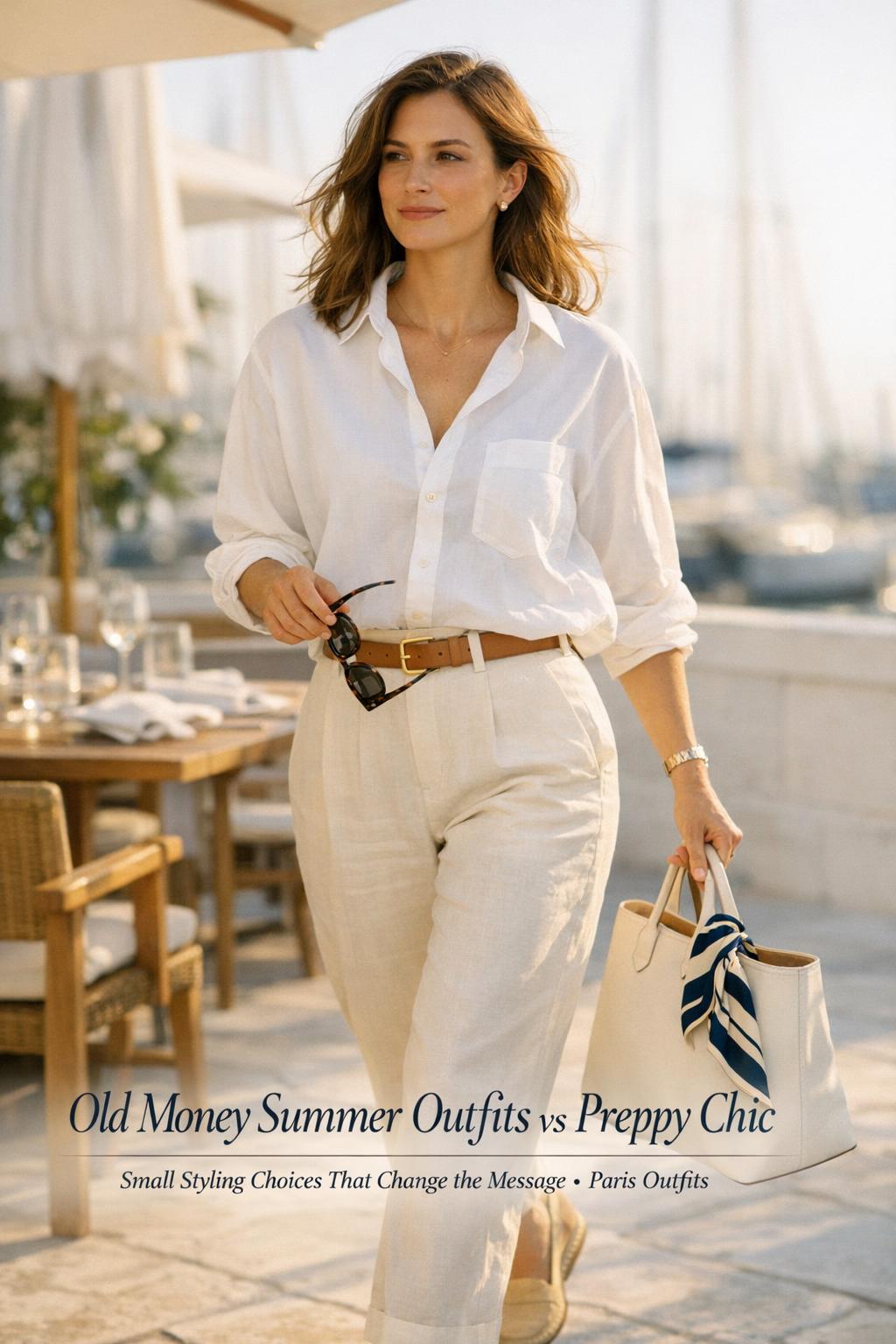
Old money summer outfits rely on tailoring as the engine of “expensive” impact. Tailored shorts sit cleanly at the waist; linen trousers skim rather than cling; blazers are lightweight but still structured enough to shape the shoulder line. The goal is an intentional silhouette even in minimal pieces. Preppy chic can be structured too, but it tolerates more ease—cream jeans, polo dresses, and tennis-skirt silhouettes create a sporty line that reads approachable and everyday-friendly.
Color strategy: neutral dominance vs. accent-friendly classics
Both styles love neutrals, but old money treats them as a discipline. Cream, white, beige, and navy do most of the work, while powder blue and blush pink stay understated. Preppy chic uses the same palette but is more willing to let a color be the point—powder blue sets, blush accents, or a more noticeable stripe story. The “European summer outfits” lens amplifies the editing: it favors tight tonal layering and reduces contrast unless the contrast is intentionally graphic (like navy-and-white stripes).
Formality level: quiet refinement vs. polished casual
Old money summer outfits sit closer to “polished occasionwear” even when they’re casual. A neutral tailored suit, a blazer with shorts, or a linen blazer over a silk dress can move into garden-party territory quickly. Preppy chic is better at daily life: campus schedules, daytime errands, and casual lunches where a polo dress and structured tote look finished without feeling overdressed.
Styling philosophy: capsule wardrobe discipline vs. outfit-coded identity
Old money dressing is a system: capsule wardrobe first, then repeatable outfit formulas. It values quality fabrics, controlled patterns, and tailoring because these decisions multiply outfit options while keeping everything cohesive. Preppy chic is more identity-forward; it still benefits from a capsule, but it leans into recognizable staples—stripes, polos, sweater layering, tennis-inspired pieces—that signal the aesthetic even when the outfit is simple.
Visual style breakdown: how the outfits read at a glance
Layering logic in summer: breathable structure vs. classic prep layering
Old money layering is climate-aware: it uses lightweight blazers and summer-appropriate suits as “soft armor” against overly air-conditioned interiors, without creating bulk. Linen and cotton keep the silhouette crisp while staying breathable. Preppy chic layering is more nostalgic: a white sweater layered over a blue striped button-down shirt dress is less about heat management and more about classic composition—a look that works when your day moves between outdoor sun and indoor chill.
Proportion play: waist definition vs. sporty balance
Old money summer outfits often rely on waist definition and clean lines: a tucked white button-down with tailored shorts, a belt that quietly frames the waist, or a blazer that sharpens the torso line over a simple base. Preppy chic proportion is sportier—polo dresses and tennis skirts create movement and a youthful line. Neither is “better”; they simply communicate different levels of formality and intent.
Accessory ecosystems: minimal jewelry vs. lifestyle cues
In old money styling, accessories are finishing tools. Gold jewelry is typically delicate; pearl earrings add polish without changing the outfit’s category. Straw accessories (straw hat, straw bag) and silk scarves add texture and a summer signal while staying understated. Preppy chic can use the same pieces, but often adds lifestyle cues—structured totes paired with polo looks, or sporty footwear choices that echo tennis/golf energy. The “looks chic” European lens tends to keep accessories edited: one focal accessory at a time, like a silk scarf or a structured bag, rather than stacking multiple statements.
Footwear choices: loafers and espadrilles vs. sandals and slingbacks
Footwear is where the aesthetics separate quickly. Old money summer outfits commonly settle into loafers, espadrilles, or classic sandals—shoes that look refined but don’t dominate. Preppy chic is flexible and often more casual with sandals. A premium accent like Chanel slingbacks instantly pushes the outfit into a more elevated register; used sparingly, they can bridge into “look di moda” territory without breaking the restrained mood.
The shared foundation: a summer capsule wardrobe that supports both styles
Despite the differences, both aesthetics become dramatically easier when you treat them as outcomes of the same capsule wardrobe. The shared base is simple: crisp shirts, breathable trousers, tailored shorts, skirts/dresses in neutral tones, and a small set of accessories that repeat across outfits. This is also where “quality over quantity” becomes practical, not preachy—summer outfits are exposed to heat, sweat, sun, and frequent washing, so fabric choice and construction matter.
- White button-down shirts in breathable linen or cotton for sharpness without heaviness
- Linen trousers and tailored shorts in cream, white, beige, or navy for repeat wear
- Lightweight blazers and a neutral tailored suit for instant elevation
- Neutral dresses and skirts (midi skirt, A-line silhouettes, simple day-to-evening shapes)
- Classic stripes (especially navy-and-white) for controlled pattern
- Polo staples (polo shirt, polo dress) and optional tennis skirt for the preppy branch
- Accessories: silk scarf, straw hat, straw bag, structured tote, leather belt, gold jewelry, pearl earrings
- Shoes: loafers, sandals, espadrilles, and an optional elevated pair like Chanel slingbacks
Practical note: tailoring is the multiplier. Even an affordable white shirt or cream jeans can read significantly more “old money” when sleeves are adjusted, shorts sit correctly at the waist, and hems land cleanly. Without tailoring, the same pieces drift toward generic summer casual.
Signature palettes: how to use neutrals, navy, and soft color accents
Color is one of the fastest ways to steer the same garments into different aesthetics. Old money summer outfits tend to treat cream, white, beige, and navy as the permanent base—these shades create calm outfit architecture and photograph well in bright sun. Preppy chic uses the same base but allows accent colors to feel more “present.” The European summer outfits/Paris outfits lens tightens the palette even further, often pushing toward monochromatic dressing.
Neutral palette (cream, white, beige): the old money default
Neutrals work because they highlight silhouette balance and fabric texture. Linen trousers in beige paired with a crisp white shirt don’t need loud elements; the refinement comes from clean lines and breathable textiles. This is also the safest route if you want the look to feel timeless rather than trend-led.
Navy and stripes: controlled contrast that stays classic
Navy is the structured neutral that prevents summer outfits from feeling washed out. A blue striped shirt with white shorts is a repeatable formula precisely because the contrast is crisp, not chaotic. Add gold accessories and the outfit becomes instantly “polished,” with the jewelry acting as a small warm-toned focal point.
Powder blue, blush pink, and coral: accents with different intensity
Powder blue and blush pink are best treated as whisper accents when you want old money restraint—think a single piece within an otherwise neutral outfit. In preppy chic, these shades can take a larger role, like a coordinated set or a more prominent top. Coral tends to read more statement-ready (especially in satin blouse form), so it’s better used as the hero item with everything else simplified: white skirt, minimal jewelry, and a structured bag to keep the look grounded.
Outfit logic in action: side-by-side comparisons (not just lists)
The most useful way to understand the difference is to style the same scenario twice. The components overlap, but the decisions around structure, accessories, and palette control change the message.
Example comparison: a casual daytime outfit (city walk or café)
Old money summer outfits approach: a crisp white button-down tucked into tailored shorts in beige or navy, finished with a leather belt for waist definition. Footwear stays refined—loafers or espadrilles—while accessories remain minimal: gold jewelry or pearl earrings, plus a structured tote. The outfit works because the tailoring creates architecture and the neutral palette keeps the look quiet.
Preppy chic approach: keep the button-down, but shift the energy with a stripe (blue striped shirt) or swap bottoms for cream jeans. Add sandals for a more relaxed stride and let the accessories signal the vibe: a straw bag or a sporty-leaning structured tote. The result feels more casual-elegant and day-to-day, while still reading “classic.”
Example comparison: a polished lunch (resort hotel or garden setting)
Old money summer outfits approach: a neutral tailored suit or a lightweight blazer over a simple skirt or silk dress. This is where “looking expensive without saying a word” becomes about fabric behavior: linen and silk create a refined surface, and tailoring keeps everything from collapsing in humidity. Finish with delicate gold accessories and a structured bag; add a silk scarf if the outfit needs a controlled accent.
European summer outfits / Paris outfits lens: keep the same base, but tighten the palette into a monochromatic look (cream-on-cream, white-on-white) for a more editorial “looks chic” effect. Footwear can go slightly sharper—Chanel slingbacks if you want a premium punctuation mark—while keeping jewelry restrained so the tonal layering stays the focal point.
Example comparison: a sporty afternoon (tennis-club energy)
Old money summer outfits approach: a polo shirt paired with tailored shorts rather than a full tennis silhouette, keeping the sport reference subtle. Add a straw hat for sun practicality and a structured tote to maintain polish. The outfit reads “summer tradition” more than activewear.
Preppy chic approach: this is home territory for the tennis skirt and polo dress. The styling logic is movement and clean lines—minimal gold jewelry, sandals or simple shoes, and a straw bag for texture. It still feels elevated, but the mood is deliberately casual and youthful.
Example comparison: travel day styling (airport to check-in)
Old money summer outfits approach: linen trousers with a crisp white shirt, plus a lightweight blazer that handles aggressive air-conditioning. The blazer’s structure keeps the outfit composed even after sitting for hours. Accessories stay practical: structured bag, minimal jewelry, and loafers for a clean finish.
Preppy chic approach: a striped button-down shirt dress layered under a white sweater is a classic prep travel formula because it’s modular—remove the sweater when you warm up, add it back in cold terminals. The look remains polished without requiring strict tailoring.
Where each style performs best: occasion and location cues
Context is the silent stylist. Old money summer outfits are often discussed alongside yacht-club and garden-party settings because the clothing is built for “public polish”: clean lines, controlled palettes, and fabrics that look better the more intentional they are. Preppy chic thrives in everyday routines and semi-casual environments where practicality matters as much as aesthetics.
- Yacht club / resort afternoons: old money tailoring shines—blazer + shorts, neutral dresses, structured bags, silk scarf accents
- Garden party or polished lunch: old money or the Paris outfits lens—tonal neutrals, gold accessories, refined footwear
- Campus days and casual schedules: preppy chic—cream jeans, polo shirt, polo dress, stripes, sandals
- Weekend coastal towns (Hamptons/Nantucket/Palm Beach energy): either style works; choose old money for quieter polish, preppy for sporty classics, and European summer outfits for tighter tonal editing
Those geographic anchors—Hamptons, Nantucket, and Palm Beach—function as shorthand for summer polish: sun-ready neutrals, breathable fabrics, and outfits that look composed in daylight. They’re helpful not because you need to be there, but because they clarify the dress code: refined, practical, and never overly loud.
Accessories and finishing: how to elevate without overdoing it
In both aesthetics, accessories are less about quantity and more about precision. The difference is the role they play in the outfit composition. Old money uses accessories to reinforce restraint; preppy chic uses them to underline identity; the European summer outfits lens uses them to keep the look edited and intentional.
Jewelry: gold accessories vs. pearl earrings
Gold jewelry works best when it functions as a subtle light source—especially with navy-and-white combinations like a striped shirt and white shorts. Pearls lean more traditional and can read instantly “old money” when the rest of the outfit is quiet (white shirt, neutral skirt, structured bag). The key is to avoid competing focal points: if pearls are the accent, keep everything else restrained; if gold is layered, keep it delicate rather than heavy.
Bags: structured tote, structured bag, and straw bag
A structured tote or structured bag adds authority to soft summer fabrics. Linen and cotton can look relaxed quickly; structure brings back polish. Straw accessories (straw bag, straw hat) add seasonal texture and signal “summer” instantly, but they work best as one intentional texture note, not an overload. If you’re carrying a straw bag, keep the rest of the accessories classic—leather belt, minimal jewelry, clean shoes.
Scarves and hats: silk scarf as a controlled accent
A silk scarf is one of the most efficient old money tools because it adds color and texture without introducing busy prints. Use it to tie together a neutral palette (cream and navy) or to soften a tailored blazer. A straw hat is more functional than decorative in peak sun; it also keeps the outfit aligned with the summer-resort context without needing extra jewelry.
Tips from a wardrobe-first perspective (what actually makes the look believable)
Tip: Start with tailoring, not trend pieces. A blue shirt and tailored shorts look “intentional” when the shoulder seam sits correctly and the shorts’ hem length flatters your proportions. Without that, the same outfit reads like generic summer basics.
Tip: Treat patterns as supporting characters. Stripes are the safest option because they’re classic and controlled. If you’re aiming for old money summer outfits, keep the rest of the outfit neutral so the stripe doesn’t become loud.
Tip: Let fabric do the talking. Linen trousers and cotton shirts create a refined texture story that reads elevated even with minimal accessories. Silk—whether in a dress or a scarf—adds a soft sheen that can replace the need for bold jewelry.
Tip: Use one “upgrade lever” at a time. If you choose Chanel slingbacks, keep the outfit composition simple (monochrome neutrals or navy-and-white) so the shoes feel like a quiet punctuation mark, not a flex.
Common styling mistakes that break the old money illusion
The fastest way to lose the old money aesthetic is to stack too many attention-grabbing elements. This style is built on editing: neutral palettes, classic silhouettes, and accessories that support rather than dominate. Preppy chic can tolerate a bit more “outfit-coded” visibility, but even then, clarity matters.
Mistake: confusing “expensive” with “busy”
Old money summer outfits are often described as “looking expensive without saying a word.” That effect usually comes from proportion and fabric quality, not from loud prints or excessive accessories. If you’re wearing stripes, avoid adding a second strong statement (like heavy layered jewelry plus a bold scarf) because the outfit loses its quiet authority.
Mistake: skipping structure in key areas
Even a relaxed summer look needs one structured element to keep it polished: a blazer, a belt-defined waist, a structured tote, or tailored shorts. Without that anchor, linen and cotton can drift into a rumpled, purely casual register—comfortable, yes, but not the aesthetic most people mean when they search for old money summer outfits ideas.
Mistake: treating color accents like full outfit themes
Powder blue and blush pink are best used strategically. In old money styling, they read most authentic as supporting tones against cream, white, beige, or navy. If you want them to be central, that leans more preppy chic or more “look di moda” European summer outfits—still elegant, just a different message.
Budget and investment logic: building the look on any spend level
Old money dressing is often perceived as brand-dependent, but the more reliable formula is investment placement. Put your money where it affects silhouette and longevity: tailoring, fabric, and shoes. Save where the item is easily replaceable or less visible in the outfit hierarchy.
Where to invest (highest impact)
- Blazers and lightweight suits: structure is hard to fake; a clean shoulder and good drape elevate everything underneath
- Linen trousers and tailored shorts: fit and fabric quality determine whether the look reads crisp or limp
- Footwear: loafers, espadrilles, and elevated options like Chanel slingbacks shape the “polished” finish
- Structured bags: a structured tote keeps summer fabrics looking intentional
Where to save (with smart constraints)
White shirts, simple polo shirts, and even a tennis skirt can be budget-friendly if you prioritize fit and avoid overly thin fabrics. The savings strategy is to keep the piece minimal so it blends into the capsule wardrobe; then rely on tailoring (even small adjustments) and controlled styling—neutral pairing, minimal gold jewelry, and clean shoes—to do the heavy lifting.
Brand inspiration can still be useful as a north star. Ralph Lauren and Loro Piana represent the end of the spectrum where materials and classic design language are part of the appeal. You don’t need a logo to borrow the principles: classic silhouettes, refined fabric, and disciplined palette control.
Mini style matrix: translating the same key pieces across aesthetics
If you want wardrobe efficiency, the goal is to make the same small set of pieces speak different style languages. This matrix keeps the decisions clear: change one or two variables (structure, palette, accessories), and the aesthetic shifts.
- White button-down shirt: old money = tucked + belt + tailored shorts; preppy chic = relaxed with cream jeans; Paris outfits lens = crisp with monochromatic trousers
- Striped shirt: old money = stripes as controlled pattern with white shorts + gold accessories; preppy chic = stripes as identity piece with casual shoes; European summer outfits = stripes with tonal restraint and minimal accessories
- Polo dress: old money = refined accessories and structured tote; preppy chic = core uniform with sandals; looks chic lens = simplified palette, minimal jewelry, clean proportions
- Linen blazer: old money = layered over silk dress; preppy chic = over casual neutrals; Europe outfits = tonal layering for a clean editorial line
- Straw bag / straw hat: old money = one texture accent; preppy chic = lifestyle cue; Paris outfits = paired with restrained palette to avoid “beach costume” energy
A note on gender-inclusive styling (keeping the rules, not the stereotypes)
While many summer outfit roundups skew women’s styling, the underlying framework is gender-inclusive: tailoring, neutral palettes, quality fabrics, and classic accessories. Linen trousers, crisp shirts, lightweight blazers, loafers, and minimal gold jewelry translate across wardrobes. The most important decision is silhouette preference—more structured (old money) versus more sporty and casual (preppy chic)—not the gender category of the garment.
If you want the look to stay timeless, keep the same principles: avoid bold prints, prioritize fit, and use accessories as controlled accents. A striped shirt with white shorts works because it’s balanced and clean, not because it belongs to a specific wardrobe category.
FAQ
What defines old money summer outfits?
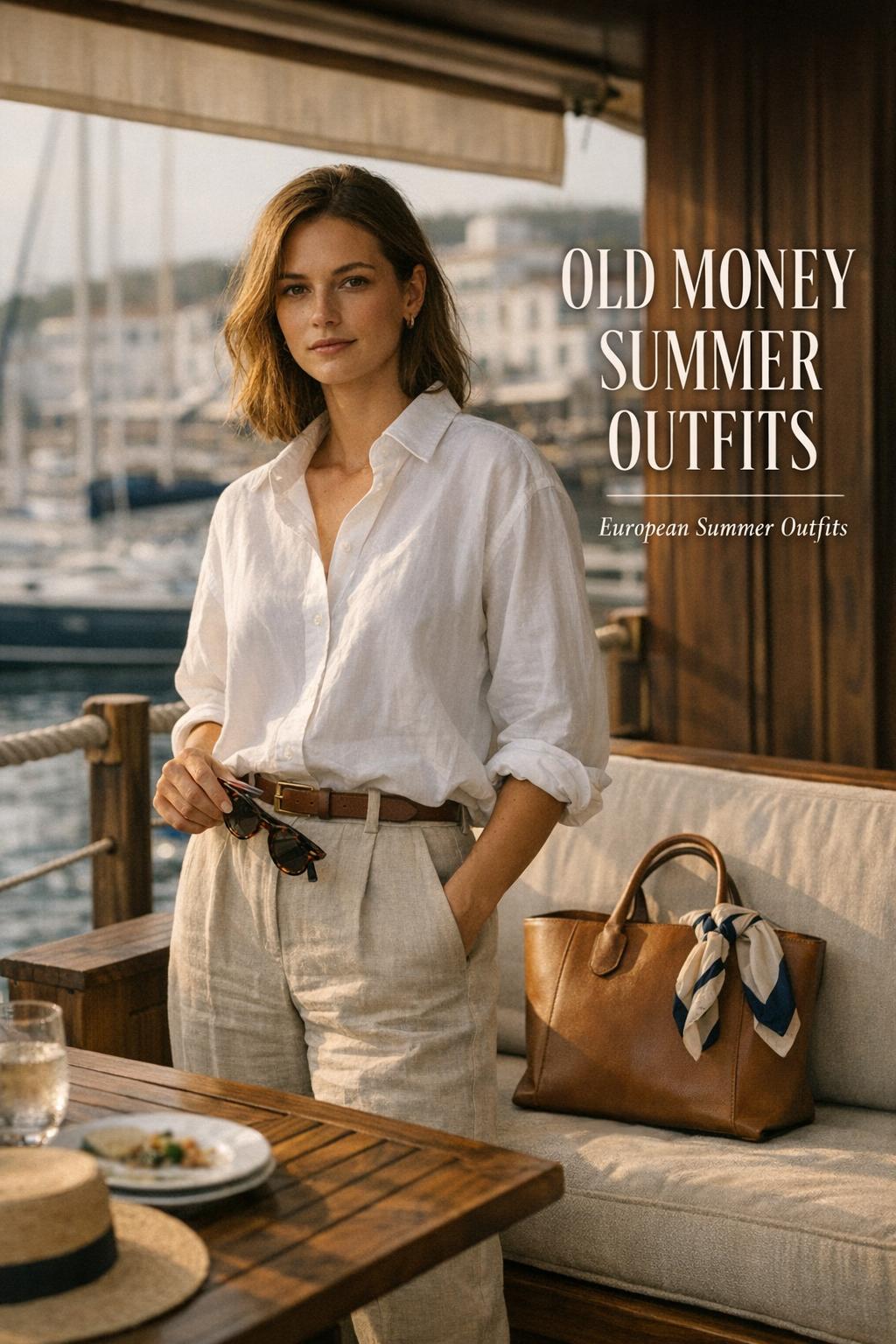
Old money summer outfits are defined by a neutral color palette (cream, white, beige, navy), classic silhouettes, quality fabrics like linen, cotton, and silk, and tailoring that makes simple pieces look intentional; accessories stay understated, often using minimal gold jewelry, pearl earrings, a structured bag, and occasional straw or silk accents.
How is preppy chic different from the old money aesthetic?
Preppy chic overlaps in staples (button-downs, stripes, polos, structured totes) but reads sportier and more casual-elegant, often leaning into polo dresses, tennis skirts, and classic layering like a striped shirt dress under a white sweater, whereas old money styling depends more on tailoring, controlled patterns, and quieter accessory choices.
What are the most reliable outfit formulas for an old money summer look?
Repeatable formulas include a striped shirt with white shorts and gold accessories, a blue shirt with tailored shorts, a lightweight blazer with tailored shorts, a linen blazer layered over a silk dress, and a neutral dress or midi skirt styled with a structured tote and minimal jewelry.
Which accessories elevate the look without making it feel flashy?
Pearl earrings, delicate gold jewelry, a leather belt, a structured tote, a straw bag or straw hat used as a single texture accent, and a silk scarf as a controlled color note elevate the look while keeping the overall outfit composition restrained.
Can I wear old money summer outfits in very hot weather?
Yes—focus on breathable fabrics (linen, cotton, silk), lighter colors that feel airy, and silhouettes that allow movement, such as linen trousers, tailored shorts, and simple skirts; use a lightweight blazer strategically for indoor air-conditioning rather than layering heavily outdoors.
How do I build an old money summer capsule wardrobe without overbuying?
Start with a small set of versatile neutrals—white button-down, linen trousers, tailored shorts, a lightweight blazer, a neutral dress or midi skirt—then add one stripe option and a limited accessory set (structured bag, straw piece, silk scarf, minimal jewelry) so every item pairs cleanly without needing extra statement pieces.
Are Chanel slingbacks necessary for the old money aesthetic?
No—Chanel slingbacks are an optional premium accent that can sharpen a monochrome or navy-and-white outfit, but the aesthetic is primarily created through fit, tailoring, and restrained styling; loafers, sandals, or espadrilles can deliver the same polished finish when the outfit composition is clean.
How do “European summer outfits” or “Paris outfits” connect to old money summer outfits?
They connect through shared principles—neutral palettes, classic silhouettes, and breathable fabrics—while the Europe/Paris lens typically emphasizes tighter tonal layering and more deliberate visual editing, creating a “looks chic” effect that can sit within old money styling or lean slightly more fashion-editorial depending on accessories and contrast.