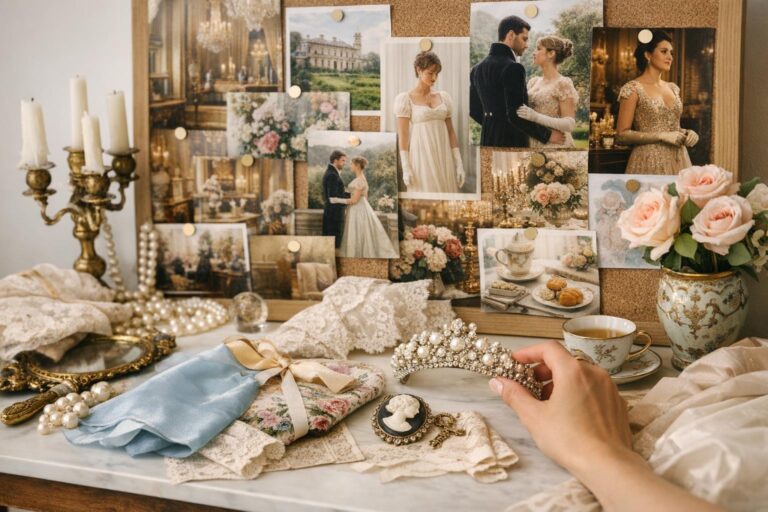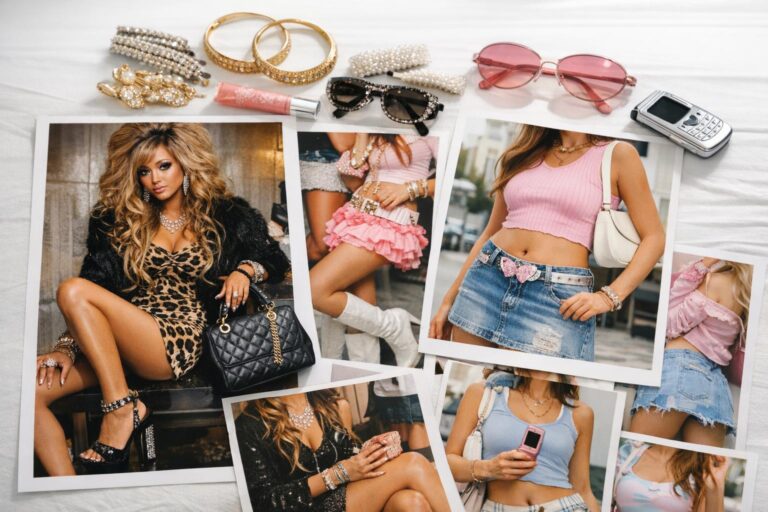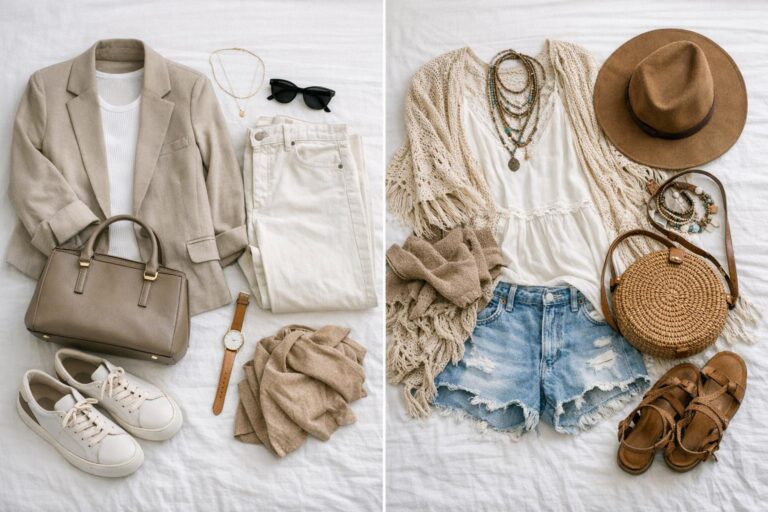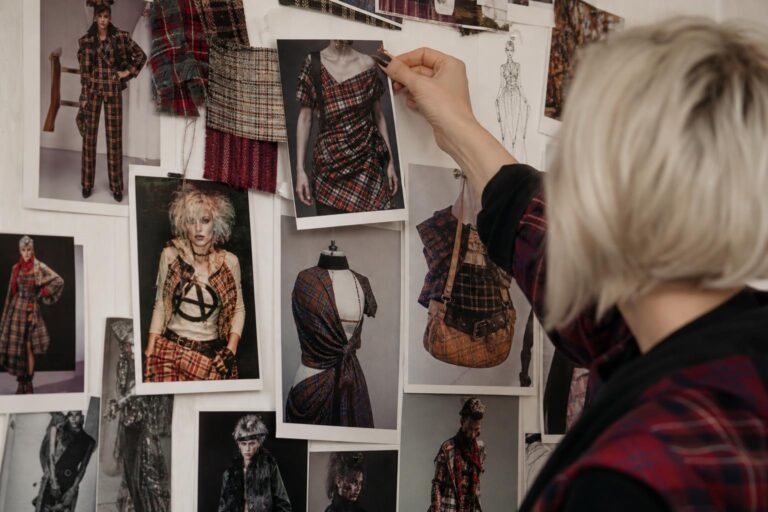

From “Off” to Intentional: Build a Jewelry Moodboard System
Jewelry moodboard, real-life styling problem: when your accessories don’t match your outfits
The most common reason jewelry feels “off” isn’t that your pieces are wrong—it’s that your styling decisions aren’t anchored to a clear visual direction. You buy a pair of earrings you love, then a necklace that looked perfect online, and suddenly your everyday outfits feel noisy, mismatched, or oddly unfinished. A jewelry moodboard fixes that problem by turning your taste into a repeatable system.
This situation is tricky because jewelry lives in the smallest details: undertone, metal finish, scale, negative space, neckline geometry, and how pieces interact with your hair, glasses, handbag hardware, and even your phone case. Without a plan, you end up with “random-good” jewelry that still doesn’t compose into “together” styling.

This guide uses the problem-solving fashion approach: diagnose what’s causing styling friction, set practical dressing principles, then build outfit-ready solutions. You’ll also learn how to create a jewellery moodboard that translates into everyday wear, plus how to use jewelry photography and jewelry pictures (including editorial jewelry photography) to lock in a cohesive aesthetic you can actually repeat.
Understanding the styling challenge: why jewelry is harder than it looks
Jewelry is a high-impact styling layer with a low margin for error. Clothing can be forgiving—swap a top, add a jacket, change shoes. Jewelry sits near your face and hands, so it reads instantly and constantly. That’s why even good pieces can feel wrong if they conflict with your outfit composition or the setting you’re dressing for.
Found the dress? Keep the rest in one place.
Zarellea brings guest details, vendors, timelines, and every next step together — so your wedding plan feels as good as your look.
The problem usually shows up in one of four ways: the jewelry overpowers the outfit, disappears against it, competes with other accessories, or feels too “occasion-specific” to wear often. A jewelry moodboard gives you a decision filter so you can predict how a piece will behave before you put it on—or buy it.
What’s actually creating the mismatch
Most jewelry mismatch comes down to friction between scale, finish, and context. Scale is the size and visual weight of the piece relative to your clothing silhouette. Finish is the metal tone, polish level, and texture. Context is the dress code and the “visual volume” of the outfit (busy prints versus clean lines). When any of these three are out of sync, jewelry looks accidental instead of intentional.
Why Pinterest inspiration doesn’t always translate
A jewellery moodboard built only from aspirational images can become a gallery of looks you love but can’t replicate. Editorial jewelry photography often uses controlled lighting, styling clips, and deliberate wardrobe minimalism to spotlight pieces. In real life, you’re dealing with movement, commuting, weather, and a closet that isn’t curated to one shoot concept. The goal isn’t to copy a photo; it’s to extract the logic from your saved jewelry pictures and apply it to your actual outfits.

Key dressing principles that make a jewelry moodboard usable
A good jewelry moodboard is not a collage of pretty items. It’s a visual operating system. The most functional boards make three things obvious at a glance: your dominant metal direction, your repeatable shapes, and your realistic “daily driver” pieces that suit your lifestyle.
Principle 1: Choose one visual anchor per look
Outfit composition works best when one element leads and the others support. With jewelry, that anchor can be earrings, a necklace, a bracelet stack, or rings—rarely all at once. Your jewelry moodboard should show examples of “single-anchor” styling so you can repeat it quickly on busy mornings without over-accessorizing.
Principle 2: Build a metal strategy, not a metal rule
Many people get stuck on the question “gold or silver?” The more useful question is: “What metal reads most natural with my wardrobe neutrals and my other hardware?” A practical jewellery moodboard often includes both metals, but one is dominant and the other appears in smaller doses or mixed-metal pairings. This prevents your jewelry from fighting your belt buckle, bag chain, watch, or eyewear.
Principle 3: Match jewelry scale to outfit volume
Scale becomes intuitive once you think in silhouettes. A streamlined outfit—clean neckline, minimal seams, simple color—can carry a bolder jewelry piece. A busy outfit—prints, heavy textures, layered knits—needs jewelry that reads as a refined accent. Your jewelry pictures should include both “quiet jewelry on loud outfits” and “statement jewelry on quiet outfits” to make the pattern obvious.
Principle 4: Use neckline geometry as your styling map
Necklines dictate how necklaces sit and whether earrings need to do more work. High necks often benefit from earrings or bracelets rather than competing necklaces. Open necklines can take pendants, chains, or collar-style pieces depending on the shape. When you collect jewelry photography for your board, prioritize images that show the relationship between jewelry and neckline—not cropped product shots that hide the styling context.
Principle 5: Repeat shapes for cohesion
Consistency doesn’t require identical sets. It requires repeated design language. If your earrings are sculptural and rounded, and your necklace is sharp and geometric, the mix can look unplanned. Your jewelry moodboard aesthetic becomes cohesive when you repeat two or three shapes across categories—like circles, elongated drops, or angular lines—so every look feels related.

How to build a jewellery moodboard that solves your daily styling
Think of your jewellery moodboard as a tool with three layers: inspiration, translation, and execution. Inspiration is the visual direction. Translation is identifying what makes those images work. Execution is selecting pieces and pairings you can actually wear with your wardrobe and schedule.
Step 1: Curate jewelry pictures by situation, not by category
Instead of saving “rings” and “necklaces,” organize images by the moments you dress for: workdays, weekends, evening, events, travel, and low-effort errands. This instantly reveals what your real style needs are. A board built around situations prevents the common trap of collecting dramatic editorial jewelry photography that doesn’t match your lifestyle.
- Work polish: pieces that look intentional on video calls and in daylight
- Off-duty: jewelry that survives movement, bags, and frequent handwashing
- Evening: pieces with shine and contrast that read under low light
- Event-ready: earrings/necklaces that photograph well without overwhelming your outfit
Step 2: Extract the styling logic from editorial jewelry photography
Editorial jewelry photography is valuable because it exaggerates styling decisions. Study what’s consistent across your saved images: Is the jewelry paired with monochrome outfits? Is hair pulled back to expose earrings? Are collars crisp to frame necklaces? Use these repeated patterns as your rules. Your goal is to translate editorial clarity into wearable systems.
Step 3: Define your “three-piece formula”
A functional jewelry moodboard should make a go-to formula obvious. For many wardrobes, a three-piece approach works: one anchor piece plus two supporting pieces. This keeps the look composed without feeling overdone.
- Anchor: statement earrings or a distinctive necklace
- Support 1: a simple chain, slim bracelet, or watch
- Support 2: a ring set or understated studs if the anchor is a necklace
Step 4: Create a “no-regret” color and finish palette
Even if your wardrobe spans many colors, your jewelry moodboard aesthetic should stay disciplined. The most wearable boards limit finishes: polished, matte, hammered, or mixed. When finishes are all over the place, your styling reads inconsistent even if the metal color matches.

Outfit solutions: wearable looks built from a jewelry moodboard aesthetic
The outfits below are not “special occasion” concepts. They’re repeatable templates designed to solve the mismatch problem: the jewelry integrates with the outfit’s silhouette balance, texture contrast, and practical movement needs. Use these as modules you can adapt while keeping your board’s styling logic intact.
Outfit solution: clean-neckline uniform for statement earrings
This look is engineered for days when you want earrings to be the visual anchor. The key is a neckline that creates negative space—so the jewelry has room to read—paired with clothing that stays quiet in pattern and texture.
- Key pieces: a solid top with an open neckline, streamlined trousers or a simple skirt, minimal outer layer if needed
- Jewelry strategy: statement earrings as the focal point, no competing necklace, a slim ring or bracelet for balance
- Why it works: the clean neckline frames the earrings, while the outfit’s low visual noise prevents competition
This is the fastest way to make a jewelry moodboard feel “real” in daily life: one strong piece, everything else edited. If your saved jewelry pictures feature hair tucked back or pulled up, replicate that detail—it’s a small adjustment that dramatically increases the earrings’ impact.
Outfit solution: high-neck minimalism with bracelet and ring emphasis
High necklines can make necklaces feel cramped or redundant. Instead of forcing a chain into the equation, shift the jewelry weight to the hands and wrists. This is also a practical solution for colder weather or heavily air-conditioned spaces where layering is necessary.
- Key pieces: a high-neck knit or structured top, straight-leg pants or a long skirt, optional coat or jacket
- Jewelry strategy: a bracelet or watch as the anchor, rings that echo the same shape language
- Why it works: the neckline stays clean, and the jewelry reads in motion—especially when you’re holding a bag, coffee, or phone
If your jewelry moodboard aesthetic leans sculptural, this outfit is the easiest way to wear bolder rings without the rest of the look becoming complicated. Keep finishes consistent—polished with polished, matte with matte—to preserve editorial clarity.
Outfit solution: open-collar layering for necklace focus
When a necklace is your anchor, you need a neckline that intentionally frames it. Open collars and slightly unbuttoned shirts create a built-in “stage” for chains and pendants. This is where jewelry photography is most instructive: the best images show how the collar points direct the eye toward the center line of the jewelry.
- Key pieces: a collared shirt worn open at the neck, tailored pants or denim with clean lines, optional structured outer layer
- Jewelry strategy: one necklace with presence (either thicker chain or distinctive pendant), small earrings that don’t compete
- Why it works: the collar creates geometry and keeps the necklace from floating awkwardly on skin or fabric
This solution is especially effective for people whose jewelry collection feels “special” but rarely worn. The collar gives the necklace context, so it looks intentional even on an otherwise simple outfit.
Outfit solution: tonal dressing to make mixed metals look deliberate
Mixed metals can look elevated or chaotic depending on the outfit palette. Tonal dressing—staying within one color family—creates a controlled background so a gold-and-silver mix reads like a styling choice rather than a mismatch.
- Key pieces: head-to-toe neutrals or close tonal shades, minimal contrast in prints, clean silhouette
- Jewelry strategy: mixed-metal combination with one metal dominant, repeated across at least two pieces
- Why it works: tonal layering reduces visual competition and lets the metal interplay become the texture contrast
If your jewellery moodboard shows mixed-metal stacks, look for the pattern: usually the proportions are controlled (thin layers rather than multiple chunky items). Keep one piece as the anchor and treat the rest as supporting texture.
Outfit solution: low-effort weekend outfit that still reads styled
Weekends are where jewelry often disappears because comfort takes over. The fix is to choose jewelry that’s physically comfortable and visually readable with casual fabrics. This is less about sparkle and more about clean shape and consistent finish.
- Key pieces: relaxed top, comfortable bottoms, practical outerwear as needed
- Jewelry strategy: one “everyday signature” piece (small hoops or a simple chain), plus one supportive detail (ring or slim bracelet)
- Why it works: the outfit stays casual, but the jewelry provides a visual anchor that prevents the look from feeling unfinished
This is the look category your jewelry moodboard should prioritize if you want real cost-per-wear. The best jewelry pictures for this section show movement and real environments, not only studio product shots.
Jewelry photography that improves your styling decisions (not just your feed)
Jewelry photography is often treated as documentation, but it’s also a diagnostic tool. Taking your own jewelry pictures helps you see proportion issues you miss in the mirror: how far a pendant drops, whether earrings compete with glasses, or whether a bracelet catches on sleeves.
What to photograph to make your jewelry moodboard more accurate
Focus on context shots—jewelry on your body with clothing—because that’s where styling success is decided. Editorial jewelry photography is polished, but your board becomes genuinely useful when it includes real-life references: indoor light, daylight, outerwear, and hair variations.
- Necklace shots with three necklines: open, crew/high, and layered (shirt + jacket)
- Earrings with hair down and hair tucked back
- Hand shots holding a bag or phone to test ring/bracelet impact
- Side profile images to see earring scale and how it frames the face
How to read your own images like an editor
Use the same analytical lens you would use on an outfit photo: identify the visual anchor, check silhouette balance, and scan for competing highlights. If your necklace and earrings both catch the strongest light, you don’t have a focal point—you have a collision. Your jewelry moodboard aesthetic should guide you back toward controlled emphasis.
Practical styling tips that make jewelry feel wearable all day
Even the best board fails if the pieces aren’t comfortable or functional. Real-world wear introduces friction: hair snagging, weight fatigue, rings catching on knit cuffs, and bracelets clacking during work. The best styling systems account for those realities instead of pretending every day is a photoshoot.
Tips: comfort-first choices that still look intentional
Comfort is a style strategy, not a compromise. When jewelry feels easy, you wear it consistently, and consistency is what creates a recognizable aesthetic over time.
- If earrings feel heavy by midday, shift the statement to a necklace or bracelet and keep earrings minimal
- If you wear high necklines often, invest in wrist-focused pieces so you don’t default to “no jewelry”
- If your lifestyle involves constant handwashing, choose rings that don’t have high-profile shapes that snag or irritate
- If you wear glasses, compare earring scale in your jewelry pictures to avoid visual crowding near the temples
Tips: make your jewelry moodboard work with outerwear
Outerwear changes everything: collars cover necklaces, scarves introduce texture, and coats add visual volume. A practical jewellery moodboard includes at least a few jewelry photography references that show pieces with coats and jackets. Earrings and rings often become the most visible categories in colder months, while long necklaces can disappear under layers.
Tips: control shine so your look doesn’t feel noisy
Shine is a visual highlighter. If your outfit includes multiple reflective points—glossy bag hardware, shiny buttons, luminous makeup, and high-polish jewelry—the result can look busy. Use your board to choose where shine belongs: either concentrated in one anchor piece or distributed subtly in smaller accents.
Common mistakes that keep a jewelry moodboard from translating into outfits
Most people don’t fail at style because of taste—they fail because of inconsistent execution. These mistakes are common precisely because jewelry looks small, but its impact is structural. Fixing them makes your entire wardrobe feel more cohesive with less effort.
Mistake: saving only product shots instead of styled jewelry pictures
Product shots don’t show scale, neckline interaction, or how a piece reads with hair and makeup. Replace a portion of your saved images with jewelry photography that includes clothing and real styling. Your board should teach you how to wear pieces, not just what to buy.
Mistake: treating “more” as the only way to look styled
Layering everything at once often creates competition rather than sophistication. The more effective approach is editorial restraint: one anchor, two supports. This is the easiest system to repeat and the fastest way to make your jewelry moodboard aesthetic feel consistent.
Mistake: ignoring the outfit’s texture and hardware
Jewelry doesn’t exist in isolation. Zippers, buckles, buttons, bag chains, and watch faces already create a metal story. When your jewelry contradicts that story, the mismatch reads immediately. Use your jewellery moodboard to set a dominant metal direction so your accessories cooperate rather than compete.
Mistake: building a board that represents a fantasy lifestyle
If your saved editorial jewelry photography is all evening looks but your real week is casual and practical, the board won’t solve your problem. Keep inspiration, but add “translation images” that show how the same aesthetic works with everyday outfits, outerwear, and realistic comfort needs.
Conclusion: make your jewelry moodboard a repeatable styling system
A jewelry moodboard works when it reduces decision fatigue and increases outfit cohesion. The most wearable boards clarify three fundamentals: your anchor strategy, your scale-to-silhouette logic, and your consistent metal and finish direction. That’s what turns a collection of pieces into an actual personal styling language.
Use jewelry pictures as evidence, not decoration: collect real outfits, study what repeats, and refine until your board becomes a tool you can use in minutes. With a functional jewellery moodboard and a few outfit templates, jewelry stops being the unpredictable variable—and becomes the detail that makes everything look intentional.

FAQ
What is a jewelry moodboard and how is it different from saving random inspiration?
A jewelry moodboard is a curated set of images that defines your repeatable styling direction—metal preference, shapes, scale, and how pieces are worn with outfits—while random inspiration is usually a mix of unrelated jewelry pictures that don’t translate into consistent, wearable choices.
How do I choose a jewelry moodboard aesthetic if I like multiple styles?
Choose one dominant direction for daily wear and keep the others as smaller capsules; the most practical approach is to identify what repeats across your favorites (metal tone, shape language, or styling restraint) and build your everyday system around those shared elements.
What images should I include so my jewellery moodboard helps with real outfits?
Prioritize jewelry photography that shows pieces on a person with visible necklines, hair positioning, and clothing context, then add a smaller set of editorial jewelry photography for concept clarity and a few of your own photos to confirm scale and comfort in real life.
How do I stop my jewelry from looking like it’s competing with my outfit?
Use a single-anchor approach by letting either earrings or a necklace lead, then keep the remaining pieces minimal and consistent in finish so the outfit has a clear focal point instead of multiple competing highlights.
Can mixed metals look intentional, and how do I plan that on a board?
Yes—mixed metals look intentional when one metal stays dominant and the mix repeats across at least two pieces, and tonal outfits help because they reduce visual noise so the metal interplay reads like deliberate texture contrast.
Why do necklaces look wrong on me even when I like them in photos?
Necklace success depends heavily on neckline geometry and drop length; if your usual tops are high-neck or layered, necklaces can look cramped or disappear, so shift the anchor to earrings or wrists or choose necklace styles that your saved jewelry pictures show working with similar necklines.
How do I make a jewelry moodboard that works across seasons and outerwear?
Include images of jewelry worn with coats and jackets and plan category shifts—earrings and rings often stay visible in colder months while necklaces can be covered—so your board reflects how your jewelry actually reads when you’re layered.
What’s the simplest formula for looking styled without over-accessorizing?
Use a three-piece formula: one anchor piece (earrings or necklace) plus two subtle supports (like a slim bracelet and rings), keeping the finishes consistent so the look reads cohesive rather than crowded.