Poplin or Patchwork? Choosing a Cotton Fabric Dress in XS
Cotton fabric dress style tensions: polished structure vs relaxed ease
A cotton fabric dress can read crisp and architectural or soft and lived-in—and that split is exactly why shoppers often feel torn. Two dresses may both be “cotton,” both breathable, both easy to wear, yet one looks office-ready while the other feels like a weekend uniform. The difference usually isn’t the fiber; it’s the fabric construction, silhouette engineering, and the styling framework you build around it.
This breakdown compares two cotton-dress aesthetics that get grouped together in search results and shopping filters: the structured cotton poplin dress (clean lines, tailored clarity) and the relaxed bohemian/patchwork cotton dress (texture, print-mixing, movement). You’ll learn how to identify each style quickly, why they create different visual messages, and how details like an elastic waist, plaid patterning, or a patchwork dress layout shift the entire outfit composition—especially when you’re shopping for sizes like dresses xs and need proportion to do more of the work.
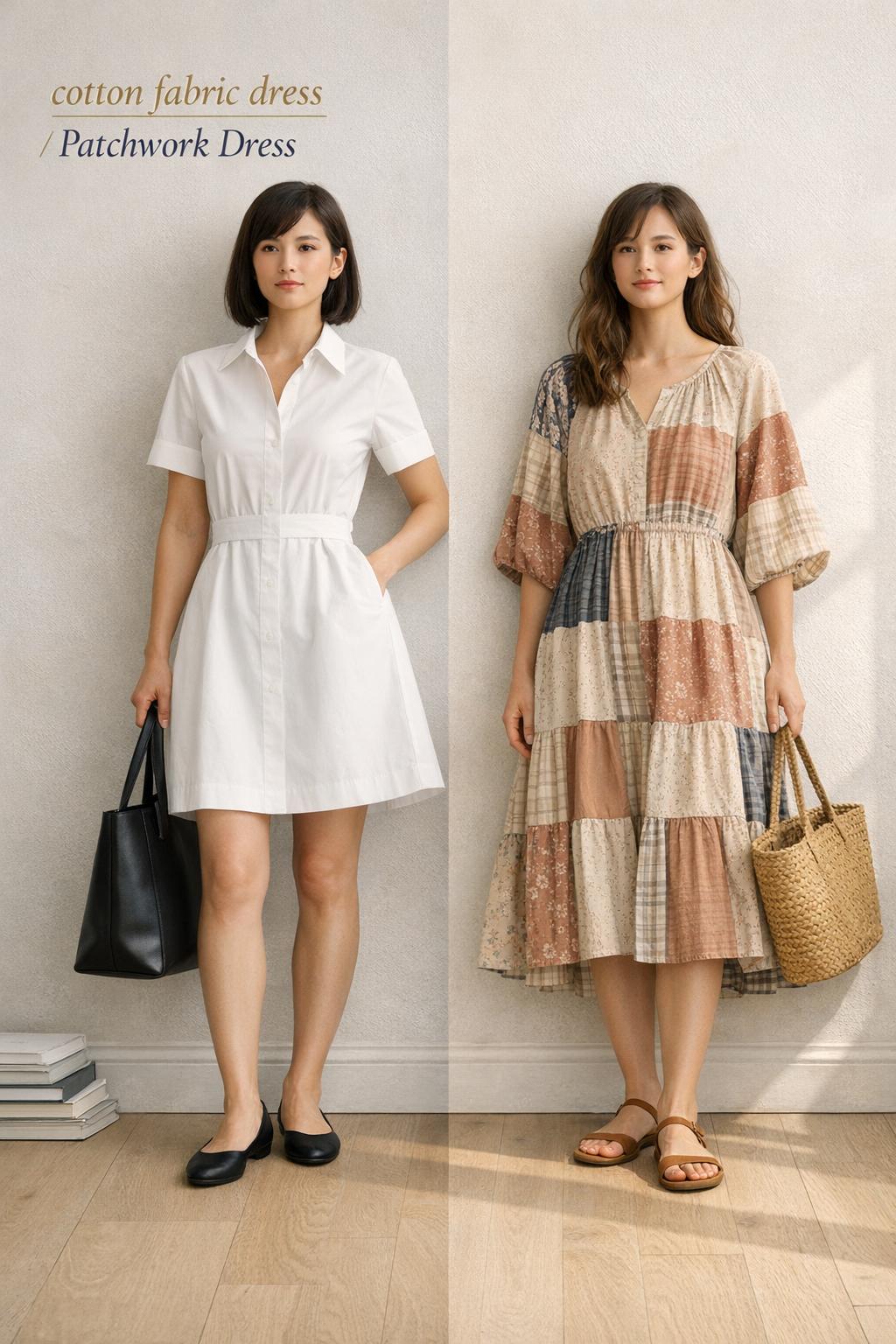
Instead of treating “cotton dress” as one category, consider it a design system. Cotton poplin behaves differently than lighter, drapier cotton weaves; a fitted bodice reads differently than a tiered skirt; a minimal palette communicates differently than plaid or patchwork. Once you see those mechanisms, choosing (and styling) the right cotton fabric dress becomes straightforward.
Style overview: the structured cotton poplin dress
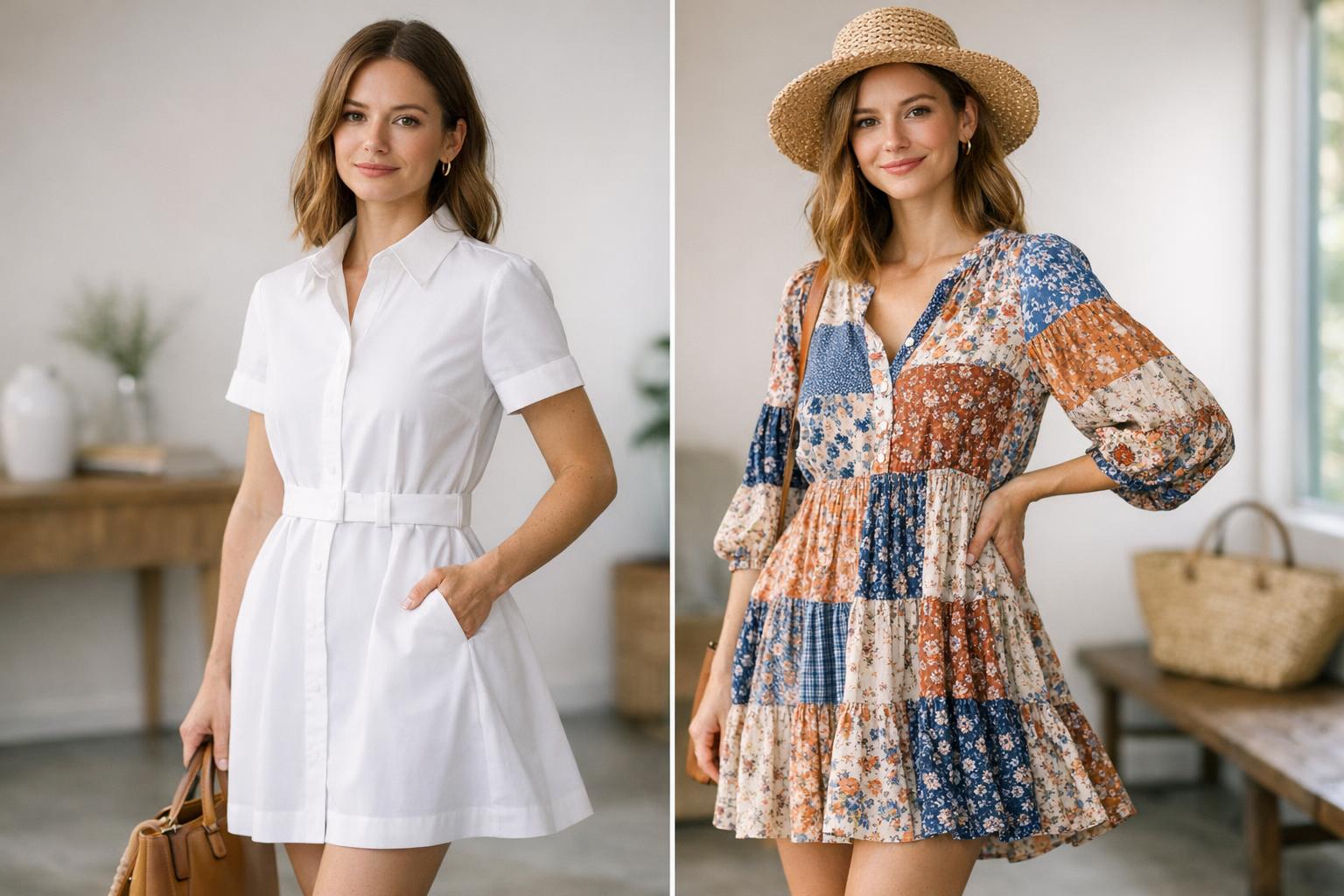
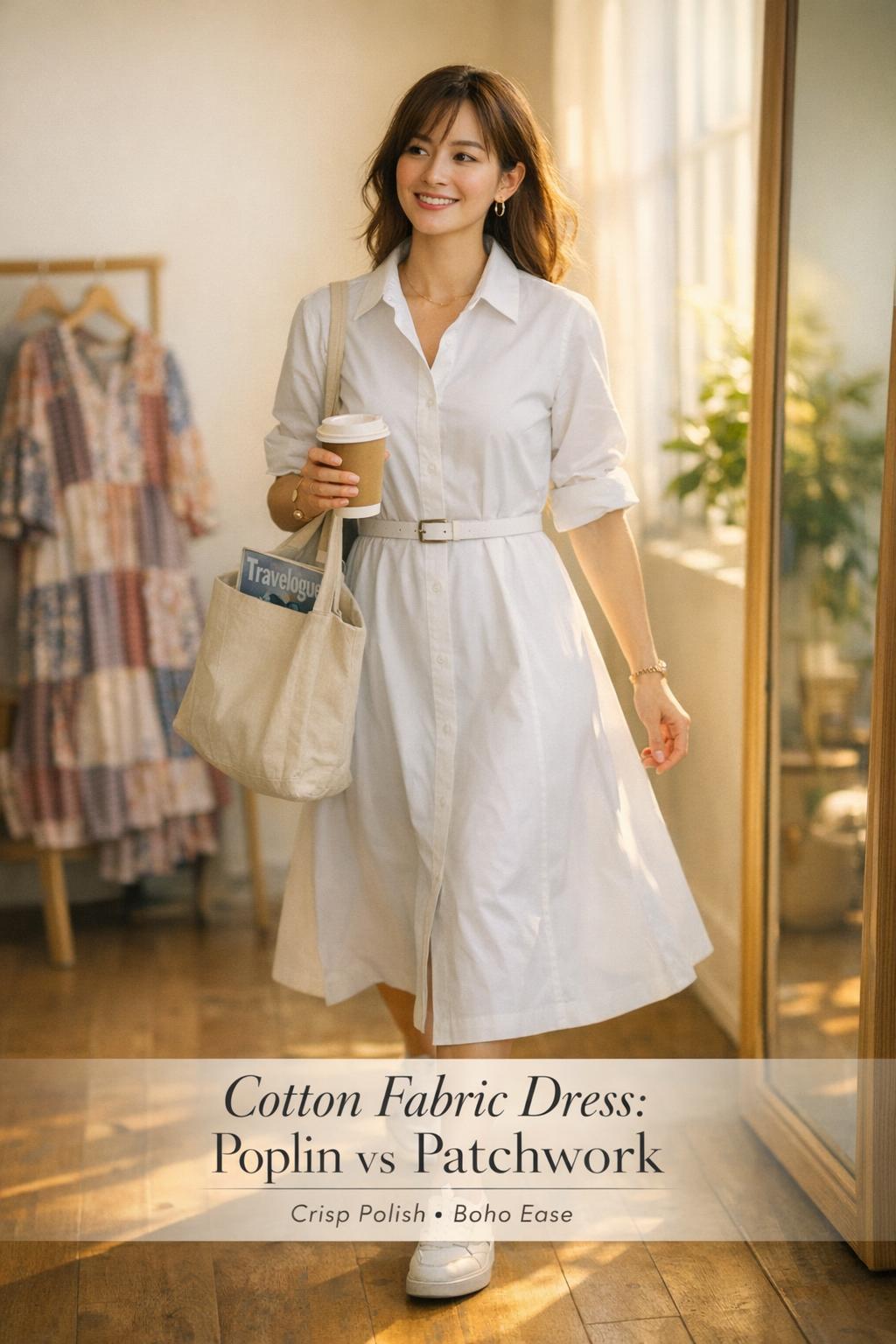
The structured cotton poplin dress is the “clean edit” of the cotton fabric dress universe. Cotton poplin is typically crisp to the eye, holding shape and emphasizing seam lines. The result is an outfit that looks intentional without needing heavy accessories or complicated layering.
Found the dress? Keep the rest in one place.
Zarellea brings guest details, vendors, timelines, and every next step together — so your wedding plan feels as good as your look.
Defining characteristics usually include a sharper collar or neckline, a more defined waist (sometimes via an elastic waist that still looks controlled), and a skirt that keeps a clear outline rather than collapsing into softness. This style favors clarity: the silhouette is designed to be read quickly.
Color palettes lean toward solids, restrained stripes, or small-scale patterning. When plaid appears in this category, it tends to feel preppy and graphic rather than artisanal. Overall mood: polished, functional, and quietly authoritative—ideal for environments where you want ease without looking casual.
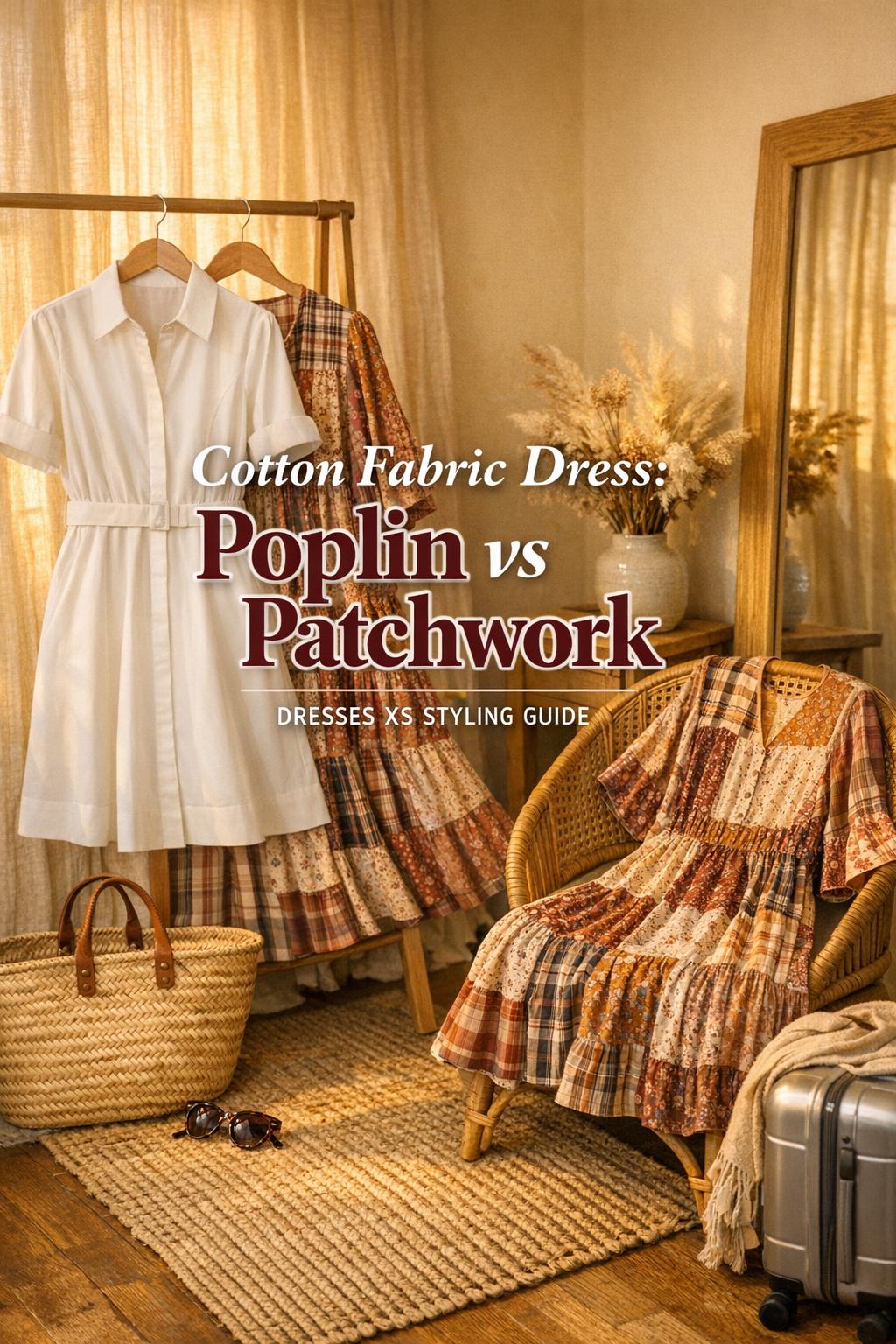
Style overview: the relaxed patchwork / bohemian cotton dress
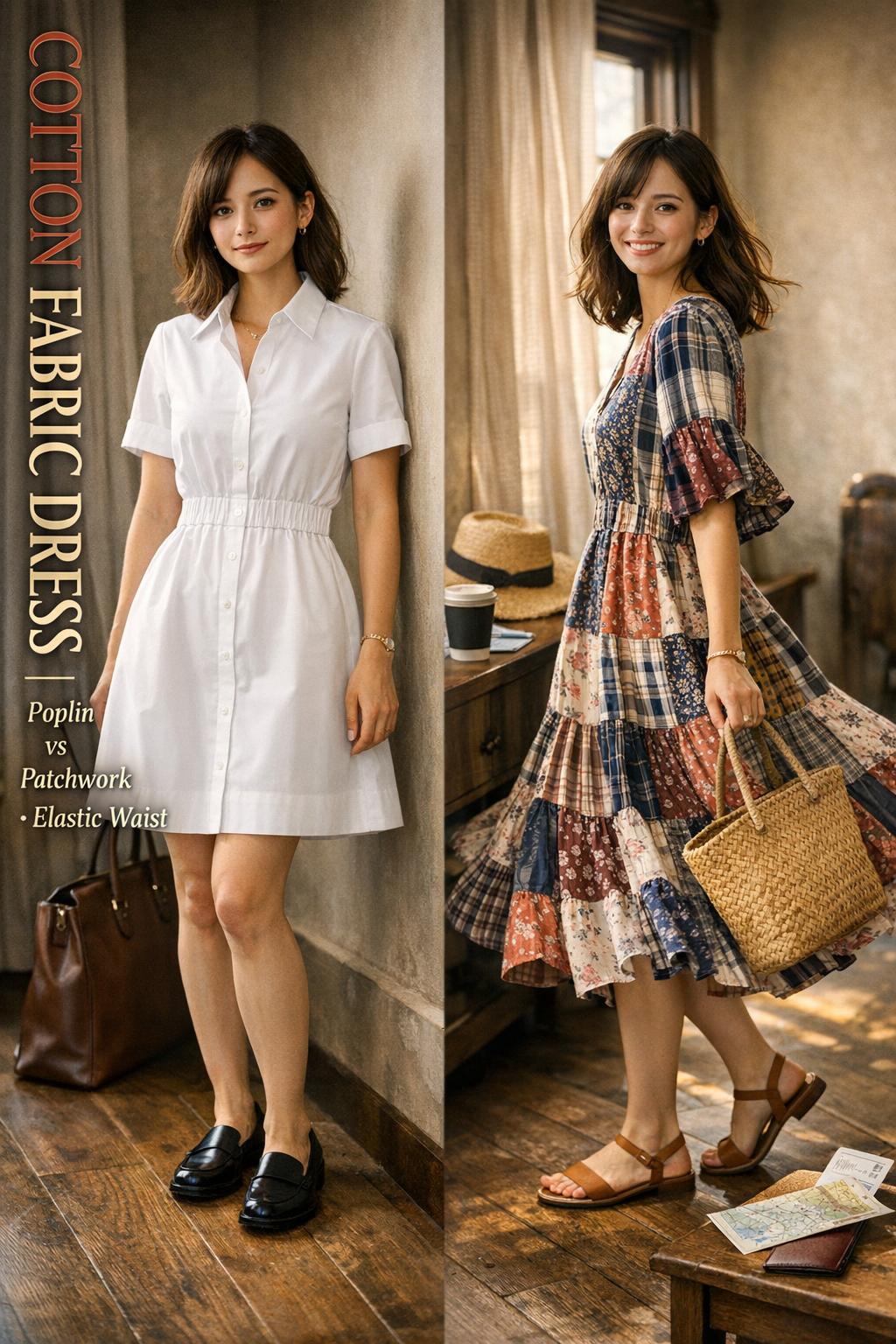
The relaxed patchwork/bohemian cotton dress uses cotton for comfort, then prioritizes visual texture and movement. A patchwork dress, by definition, reads as assembled—panels, mixed prints, or color-blocked sections that create a crafted effect. Even when the construction is simple, the surface design signals artistry.
Silhouettes tend to be more fluid: tiers, gathers, wider sleeves, and skirts designed for swish rather than structure. An elastic waist shows up here too, but it’s often used for comfort-first shaping—less “tailored waistline,” more “easy definition.”
Color and pattern are central. Plaid can appear as one component in a patchwork layout or as a full-dress statement, and it reads cozy, nostalgic, and casual. Overall mood: expressive, relaxed, and travel-friendly, often designed to look better the longer you wear it.
Why these styles get confused (and how to separate them fast)
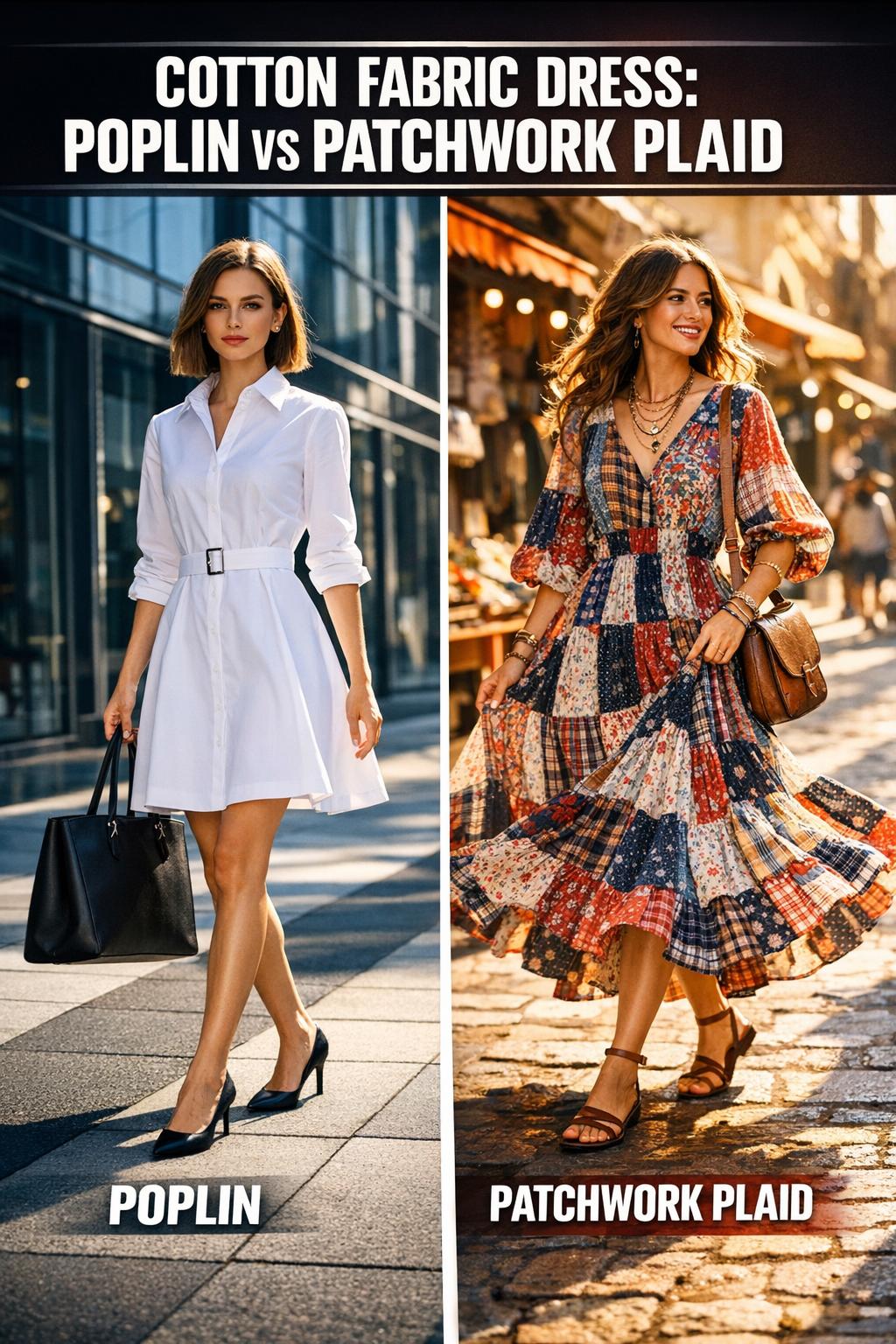
They’re confused because both live under the same retail label: “cotton dress.” Both can be knee-length or midi, both can be sleeved, and both can claim “easy everyday.” But if you look at the garment the way a stylist would—through structure, surface, and proportion—the difference becomes obvious.
- Structure signal: cotton poplin dresses show their seams, darts, plackets, and crisp edges; patchwork/boho dresses show gathers, tiers, and soft volume.
- Surface signal: poplin reads smooth and clean; patchwork reads textured and story-like, often through print mixing (including plaid).
- Proportion signal: poplin dresses often create a column or a defined A-line; patchwork dresses often create a looser shape with volume distributed across the skirt or sleeves.
That quick filter matters when you’re shopping online, especially if you’re choosing dresses xs. Smaller sizes can get overwhelmed by volume, so understanding where the visual weight sits—bodice, waist, sleeve, skirt—is more useful than focusing on “cotton” alone.
Key differences that change the entire outfit
Silhouette and structure: outline vs movement
A structured cotton poplin dress is about outline control. It holds a deliberate shape, which means it can look finished even with minimal styling. The relaxed patchwork/bohemian cotton dress is about movement; it looks best when it has room to breathe and when you let the fabric expand away from the body.
In practical terms: poplin tolerates sharper styling—defined belts, more geometric bags, sleeker shoes. Patchwork tolerates softness—slouchy layers, easy footwear, and accessories that echo the handcrafted vibe.
Color palette and print strategy: minimal clarity vs pattern storytelling
Poplin dresses often use color like a uniform: one strong shade or a restrained print that supports the silhouette. Even when a poplin dress uses plaid, it typically reads crisp and intentional, emphasizing symmetry and a clean graphic grid.
The patchwork approach uses print as narrative. Plaid might be one panel among florals or solids, creating contrast and charm. The dress becomes the statement piece, so the rest of the outfit should act as a visual frame rather than a competing focal point.
Formality level: “ready for meetings” vs “ready for wandering”
The structured cotton poplin dress sits closer to polished casual. It can translate to many work environments with minimal adjustments because the crispness reads as effort. The relaxed patchwork dress skews leisure-coded; it looks perfect for weekends, vacations, markets, and casual social plans, but may feel too informal in stricter settings unless layered strategically.
Waist definition: the elastic waist as two different design tools
Elastic waist detailing can mean two very different things. In a poplin dress, elastic often functions like internal tailoring—creating shape while keeping comfort, and allowing the bodice and skirt to stay aligned. In a bohemian cotton dress, an elastic waist usually supports ease: it gathers fabric quickly, creating volume above and below, and prioritizing comfort during long wear.
For proportion control, especially in dresses xs, the placement of that elastic waist matters as much as its tightness. A waist that sits too low can visually shorten the legs; a waist that sits too high can compress the torso. The most flattering result is usually the one that aligns with your natural waistline and keeps the skirt volume intentional rather than accidental.
Visual style breakdown: how each cotton fabric dress reads in real outfits
Layering logic: sharp layers vs soft layers
Structured poplin dresses play well with structured layers because the edges line up. A jacket, cardigan, or any topper with a clean front creates a coherent vertical line. The goal is silhouette balance: crisp on crisp, with controlled volume.
Patchwork/boho dresses look best with layers that don’t fight the dress’s texture. Instead of adding more structure, you’re typically building a soft frame—an open layer that lets the dress remain the visual anchor. If you over-structure it, the dress can look “costumey” rather than effortless.
Proportion play: where the eye lands
Poplin’s crispness draws attention to seam placement and hem lines. That means the hem length and sleeve length are immediately noticeable; the garment reads more “designed.” Patchwork draws attention to panels and print placement; the eye travels across the dress rather than stopping at the edge.
This is a useful shopping trick: if you’re browsing online and the first thing you notice is the shape, you’re likely looking at a structured poplin cotton fabric dress. If the first thing you notice is the fabric story—plaid sections, patchwork panels, mixed colors—you’re in the bohemian category.
Accessories: supporting cast vs co-star
With poplin, accessories can be more prominent without overwhelming the look because the dress acts like a clean canvas. With patchwork, the dress is already visually rich; accessories should be edited so the outfit doesn’t turn chaotic. Think of it as outfit composition: one statement piece at a time.
Outfit comparisons: same scenario, different cotton dress philosophy
Everyday errands: crisp ease vs relaxed ease
In a structured cotton poplin dress, the errands outfit looks clean by default. The dress creates a defined outline, and a simple styling approach keeps the look sharp. An elastic waist here reads like intentional shaping—comfortable, but still composed.
In a patchwork dress, the errands outfit is about comfort and visual warmth. Plaid or patchwork panels make the dress feel styled even if everything else is minimal. The best move is to keep the rest of the look quiet so the patchwork remains the focal point.
Workday-casual settings: controlled polish vs softened polish
A cotton poplin dress fits naturally into a workday-casual environment because the fabric communicates structure. You can keep the outfit minimal and still look deliberate. If you’re in dresses xs, the crispness is especially useful: it prevents the dress from swallowing your frame, and it keeps the silhouette readable.
A relaxed patchwork cotton dress can work in casual offices when you style it with restraint. The trick is to reduce competing elements: keep the palette tight, let the dress be the statement, and make sure the waist definition (elastic waist or otherwise) lands correctly so the silhouette doesn’t become overly slouchy.
Travel days: wrinkle strategy and comfort strategy
For travel, poplin gives a “put together at arrival” effect, but it asks more of you: crisp fabrics show creases more clearly, and the sharpness makes wrinkles look intentional only if the rest of the outfit is controlled. Poplin works best when you treat the dress like a uniform and keep the styling clean.
Patchwork dresses are naturally travel-coded because the surface complexity camouflages wear and makes the outfit look interesting even after long hours. Comfort features like an elastic waist matter here; they help during sitting, walking, and temperature changes without requiring constant adjustment.
Warm-weather weekends: the role of airflow and movement
Both styles can work for heat, but they behave differently. A poplin cotton fabric dress keeps its outline, which can feel breezy if the cut allows movement. The effect is “fresh and crisp.” A patchwork or bohemian dress leans into airflow through volume; it’s “floaty and relaxed,” especially when the skirt has tiers or gathers.
Fabric behavior as style: what cotton poplin changes in the look
“Cotton” isn’t one texture, and cotton poplin is a major reason structured cotton dresses look the way they do. Because poplin reads crisp, it sharpens the design lines: collars look cleaner, button plackets feel more graphic, and hems appear more intentional. This fabric behavior turns simple dress shapes into a polished statement.
That crispness has a trade-off. Poplin’s clarity can be less forgiving if the fit is slightly off—especially at the bust, waist, and hip—because the fabric won’t blur lines the way softer cotton weaves might. If you’re shopping dresses xs, prioritize shoulder fit and waist placement first; those points decide whether the dress looks tailored or merely small.
Plaid vs patchwork: two pattern languages that change the message
Plaid and patchwork are often treated as interchangeable “casual patterns,” but they function differently. Plaid is a grid; it communicates order, repetition, and structure even when the dress shape is relaxed. Patchwork communicates assembly and variation; it reads more artisanal, more eclectic, and often more playful.
In a structured cotton poplin dress, plaid reinforces the garment’s discipline: the pattern aligns with seams, helping the silhouette look even more precise. In a patchwork dress, plaid becomes one ingredient in a broader mix. That blend is what creates the bohemian mood, but it also means you need to keep the rest of the styling controlled to avoid visual overload.
Tips from real wardrobe problem-solving (the decisions that matter)
Tip: use the waist detail as your silhouette steering wheel
An elastic waist is not automatically “casual” or “flattering.” It’s a tool. If you want a clean silhouette, choose a cotton poplin dress where the elastic waist is subtle and the skirt doesn’t over-gather. If you want comfort and movement, choose a patchwork or boho style where the elastic is designed to gather volume intentionally and the bodice doesn’t pull.
Tip: in dresses xs, watch for volume placement before you fall for print
Smaller sizes can wear bold plaid or patchwork beautifully, but volume has to be placed with intention. If the dress has dramatic sleeves and a gathered skirt plus a busy patchwork layout, the outfit can become top-heavy and visually noisy. The easiest fix is to choose one dominant feature—either volume or print complexity—and keep the other more controlled.
Tip: decide whether you want “canvas” or “statement” before you shop
If you want the dress to support different styling moods, a solid or minimal cotton poplin dress functions like a canvas. If you want the dress to do most of the visual work, a patchwork dress delivers built-in interest. This decision prevents closet redundancy—owning five cotton dresses that all serve the same purpose.
Common styling mistakes that make a cotton fabric dress look “off”
Most cotton dress styling issues are not about taste; they’re about competing design signals. When structure, print, and accessories send mixed messages, the outfit loses clarity.
- Over-accessorizing patchwork: a patchwork dress already carries visual texture; adding multiple bold accessories can make the outfit feel cluttered.
- Under-defining shape in voluminous cuts: relaxed cotton dresses can look shapeless if the waist detail (including an elastic waist) sits incorrectly or gathers too much fabric.
- Expecting poplin to behave like a soft cotton: cotton poplin holds shape; if you size too small or ignore shoulder fit, the dress can pull and lose its crisp elegance.
- Mixing too many patterns with plaid: plaid is a strong grid; pairing it with additional loud patterns can fracture the outfit’s visual rhythm unless one pattern is clearly dominant.
The corrective lens is simple: pick the hero element (silhouette, print, or texture) and make everything else support it. That’s how a cotton fabric dress looks editorial rather than accidental.
When to choose each style (and why it works there)
Choose structured cotton poplin when you need visual authority
Poplin is the choice for days when you want your outfit to look resolved with minimal effort. It suits workday schedules, daytime events, and any setting where “neat and composed” is the unspoken dress code. It’s also strong for capsule wardrobes because one clean cotton poplin dress can be reinterpreted many ways through layering and accessories.
Choose relaxed patchwork/boho cotton when you need comfort with built-in interest
Patchwork and bohemian cotton dresses excel in real-life movement: walking-heavy days, travel itineraries, weekend plans, and long outdoor stretches. The surface design (including plaid panels) keeps the look visually active without requiring much styling. If you value comfort, the elastic waist becomes a practical advantage rather than a compromise.
Choose plaid strategically when you want pattern with structure
Plaid is the bridge pattern between these styles. In a poplin dress, plaid sharpens and elevates. In a patchwork dress, plaid softens into nostalgia. If you’re uncertain which aesthetic you want, a plaid cotton fabric dress often clarifies your preference: do you want the plaid to look crisp and graphic (structured) or cozy and mixed (patchwork)?
How to blend both aesthetics without looking split-brained
Combining structured and bohemian elements can look modern—if you keep the outfit’s message coherent. The key is to blend at the level of one design axis while keeping the others clean. For example, you can keep the silhouette structured and introduce a gentle patchwork element, or keep the surface minimal and add bohemian volume.
- Structured silhouette + artisanal surface: a clean-cut cotton dress with a restrained patchwork panel reads intentional and contemporary.
- Bohemian silhouette + disciplined palette: a tiered shape in one controlled color feels relaxed but not messy.
- Elastic waist + crisp fabric: an elastic waist in cotton poplin delivers comfort without losing polish, especially effective for long days.
This is also where sizing matters. If you’re buying dresses xs and want to borrow from bohemian styling, keep the volume concentrated in one area (a fuller skirt or a sleeve) and keep the bodice more defined so the proportions stay balanced.
A quick decision guide for shopping a cotton fabric dress online
Online listings can blur categories, so use a decision process that prioritizes what you can actually see: fabric behavior, seam structure, and print strategy. This prevents returns driven by “it looked different in my head.”
- If the photos emphasize crisp folds and clean edges: you’re likely looking at cotton poplin and a more structured style.
- If the photos emphasize movement, tiers, and mixed prints: you’re likely in patchwork/bohemian territory.
- If you see an elastic waist: check whether it’s subtle shaping (structured) or heavy gathering (relaxed).
- If you’re browsing dresses xs: look for shoulder fit cues and where the waistline sits on the model—those predict proportion accuracy better than vague “true to size” claims.
The goal is not to label one style “better,” but to choose the one that matches your lifestyle: do you need crispness that reads polished, or comfort that reads expressive?
Conclusion: the core distinction is not cotton—it’s design intent
The structured cotton poplin dress and the relaxed patchwork/bohemian cotton dress share the same starting point—cotton—but they diverge in design intent. Poplin prioritizes outline, clarity, and polish; patchwork prioritizes movement, texture, and visual storytelling. Details like plaid placement and an elastic waist are not minor—they decide whether the dress reads tailored or carefree.
Once you train your eye to separate fabric behavior from silhouette and surface design, you can spot the right cotton fabric dress instantly. And if your style sits in the middle, blending the aesthetics works best when you keep one axis controlled—either the silhouette or the print story—so the outfit composition stays coherent.
FAQ
What makes a cotton poplin dress different from other cotton fabric dress options?
A cotton poplin dress reads crisper and more structured because the fabric tends to hold shape and highlight seam lines, collars, and hems, creating a cleaner outline than softer, more fluid cotton constructions.
Is an elastic waist always flattering in a cotton fabric dress?
An elastic waist can be flattering when it sits at the natural waist and gathers fabric intentionally; it can look off when it sits too low or creates excessive bunching, especially in more voluminous silhouettes.
How do I style a patchwork dress so it doesn’t look too busy?
Keep the patchwork dress as the primary statement and edit everything else—choose restrained accessories and avoid adding multiple competing patterns so the dress remains the visual anchor.
Does plaid work better in structured dresses or relaxed bohemian cotton dresses?
Plaid works in both, but it communicates differently: in structured dresses it reinforces crisp, graphic order, while in relaxed or patchwork styles it reads softer and more casual, especially when mixed with other panels.
What should I watch for when buying dresses xs in cotton styles with volume?
Pay close attention to shoulder fit, waist placement, and where the volume starts; a well-placed waist and a controlled bodice help prevent a small frame from being overwhelmed by tiers, gathers, or bold patchwork layouts.
Can a relaxed cotton dress still look polished for work?
Yes, if the outfit is styled with restraint: keep the palette controlled, maintain clear waist definition (even with an elastic waist), and avoid piling on extra visual elements that compete with the dress’s texture or print.
How can I tell online if a cotton fabric dress will look structured or soft?
Look at how the fabric behaves in photos: crisp folds, sharp edges, and clear seam lines suggest a structured poplin-like effect, while visible drape, tiers, and a swishy skirt suggest a softer, more relaxed construction.
What’s the simplest way to combine structured and bohemian elements in one outfit?
Blend along one axis only—either keep the silhouette structured and add a restrained patchwork or plaid detail, or keep the silhouette relaxed but choose a disciplined palette—so the outfit reads intentional rather than conflicted.