Why The Brasso Fabric Dress Feels Fresh For Events
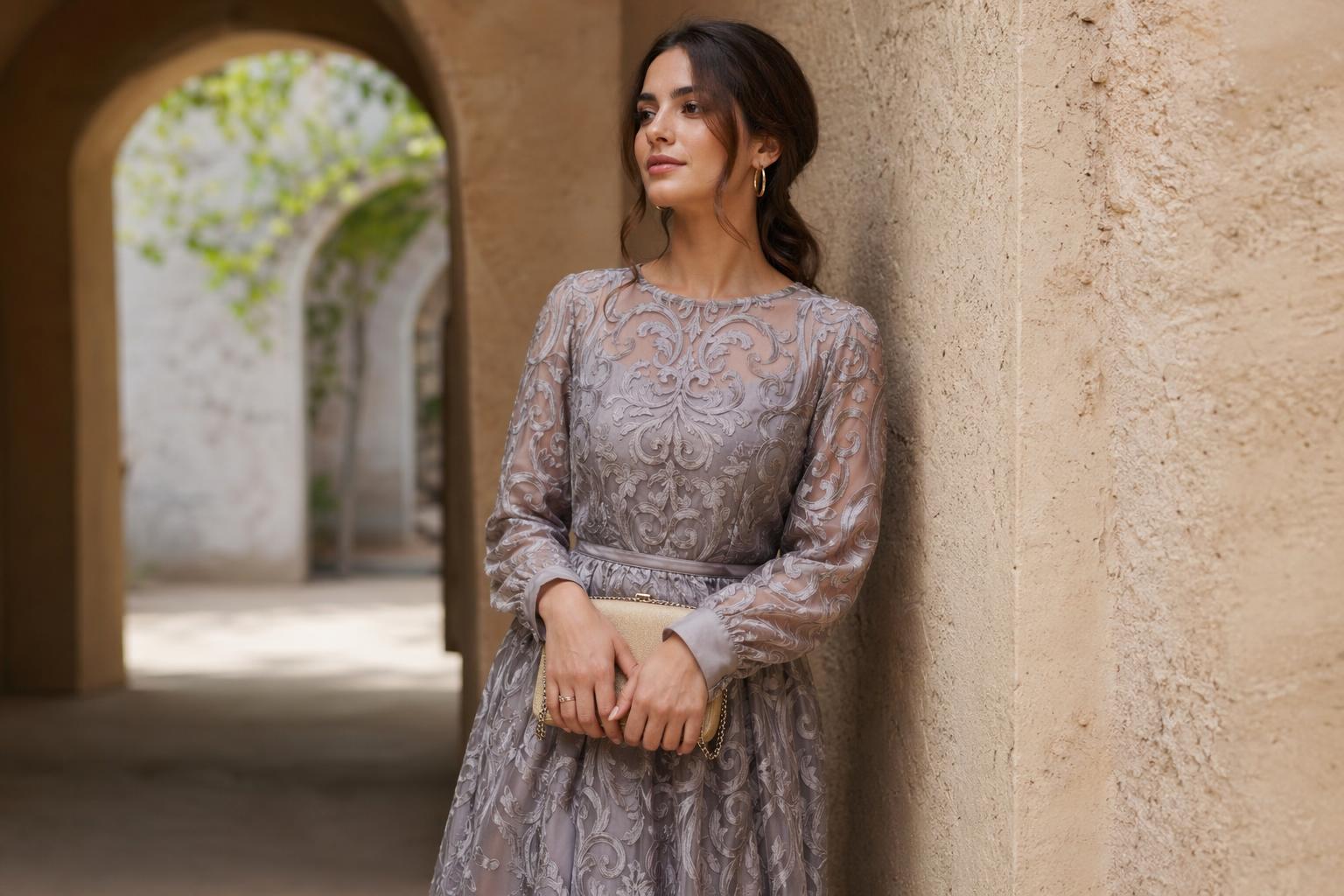
Some dresses create impact through volume, others through color. A brasso fabric dress works differently. Its appeal comes from surface play: sheer areas against denser motifs, light catching raised patterns, and a silhouette that feels decorative without always needing heavy embellishment. The result is an aesthetic that sits between occasionwear and everyday romance, which is exactly why it continues to attract attention across festive dressing, semi-formal events, and fashion-led wardrobes.
The mood is polished but expressive. A brasso fabric dress can read soft and feminine, vintage and ornate, or modern and composed depending on the cut, lining, and styling direction. That flexibility makes it especially appealing for readers searching for visual interest beyond plain fabrics. It also explains why related ideas like a vintage brocade party dress, an elegant semi-stitched brocade dress, or even mode inspiration drawn from texture-rich occasionwear often sit in the same style conversation.
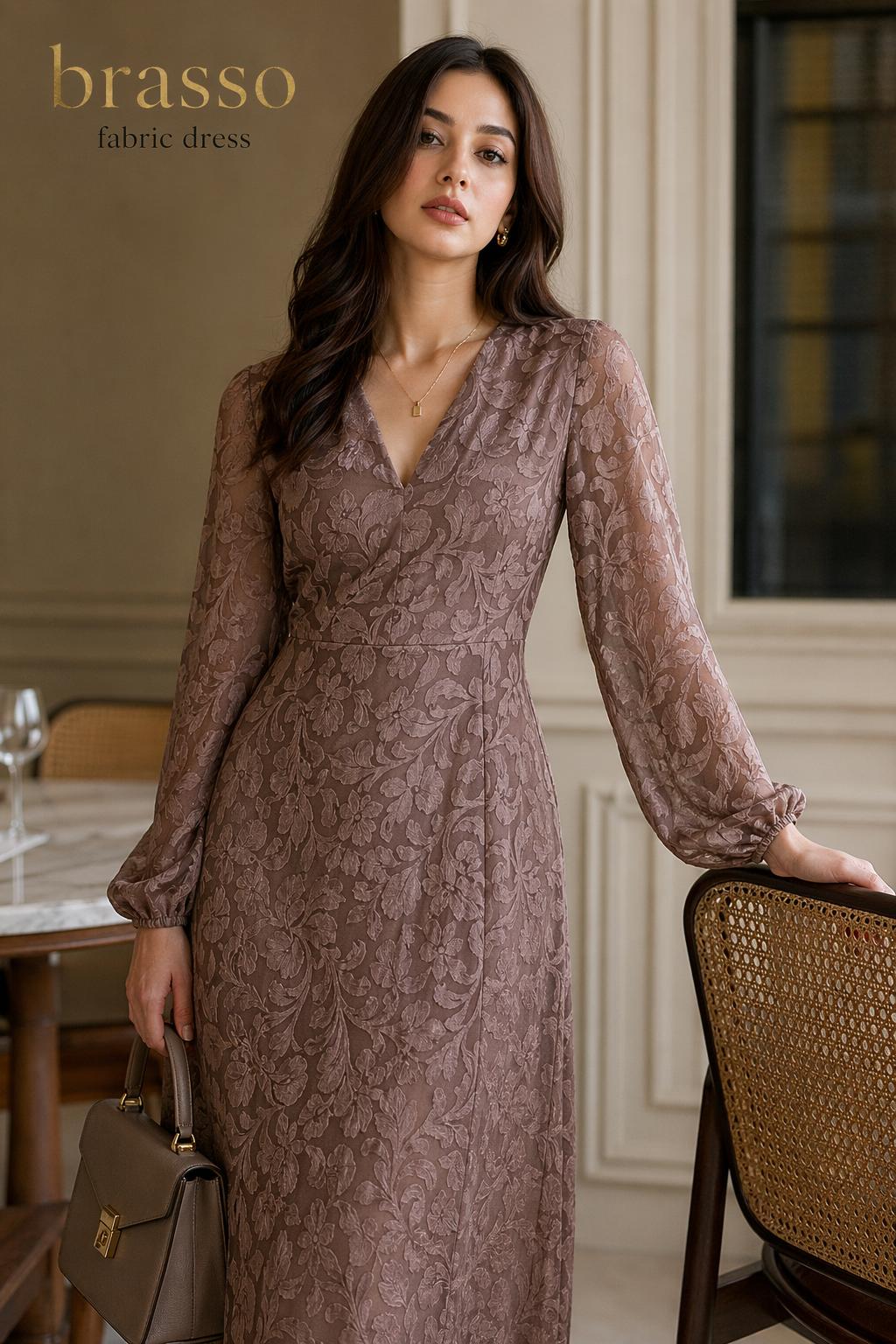
What makes this category compelling is not only the fabric itself, but how it shapes the entire outfit composition. Texture becomes the visual anchor. Sheerness changes proportion. Pattern placement influences how formal or wearable the dress feels. Whether the goal is a statement evening look, a softer daytime interpretation, or a festive silhouette that feels refined rather than overloaded, the brasso fabric dress offers a strong foundation for a cohesive aesthetic wardrobe.
The visual identity of a brasso fabric dress
At its core, brasso fabric is recognized for its burnout effect, where parts of the material appear more transparent while motifs remain more prominent. In dress design, that creates a built-in contrast between opacity and lightness. The eye reads dimension immediately, which is why even a simple silhouette in this fabric tends to look styled. The fabric does a large share of the visual work before accessories are added.
Found the dress? Keep the rest in one place.
Zarellea brings guest details, vendors, timelines, and every next step together — so your wedding plan feels as good as your look.
This identity is especially effective in fashion aesthetics built around texture contrast. A-line cuts feel airy and romantic. Fitted bodices with fuller skirts look event-ready. Straight silhouettes can feel modern when the pattern is graphic rather than floral. In every case, the fabric introduces movement and decorative structure at once, which is useful for wearers who want a dress to feel elevated without relying entirely on sequins, heavy embroidery, or excessive layering.
The appeal also overlaps naturally with brocade-inspired dressing. While brasso and brocade are not interchangeable in construction, readers drawn to surface-rich fashion often explore both. That is why terms such as brocade dress short, vintage brocade party dress, and elegant semi-stitched brocade dress can align with the same visual mood: richness, pattern, and a more composed approach to occasion dressing.
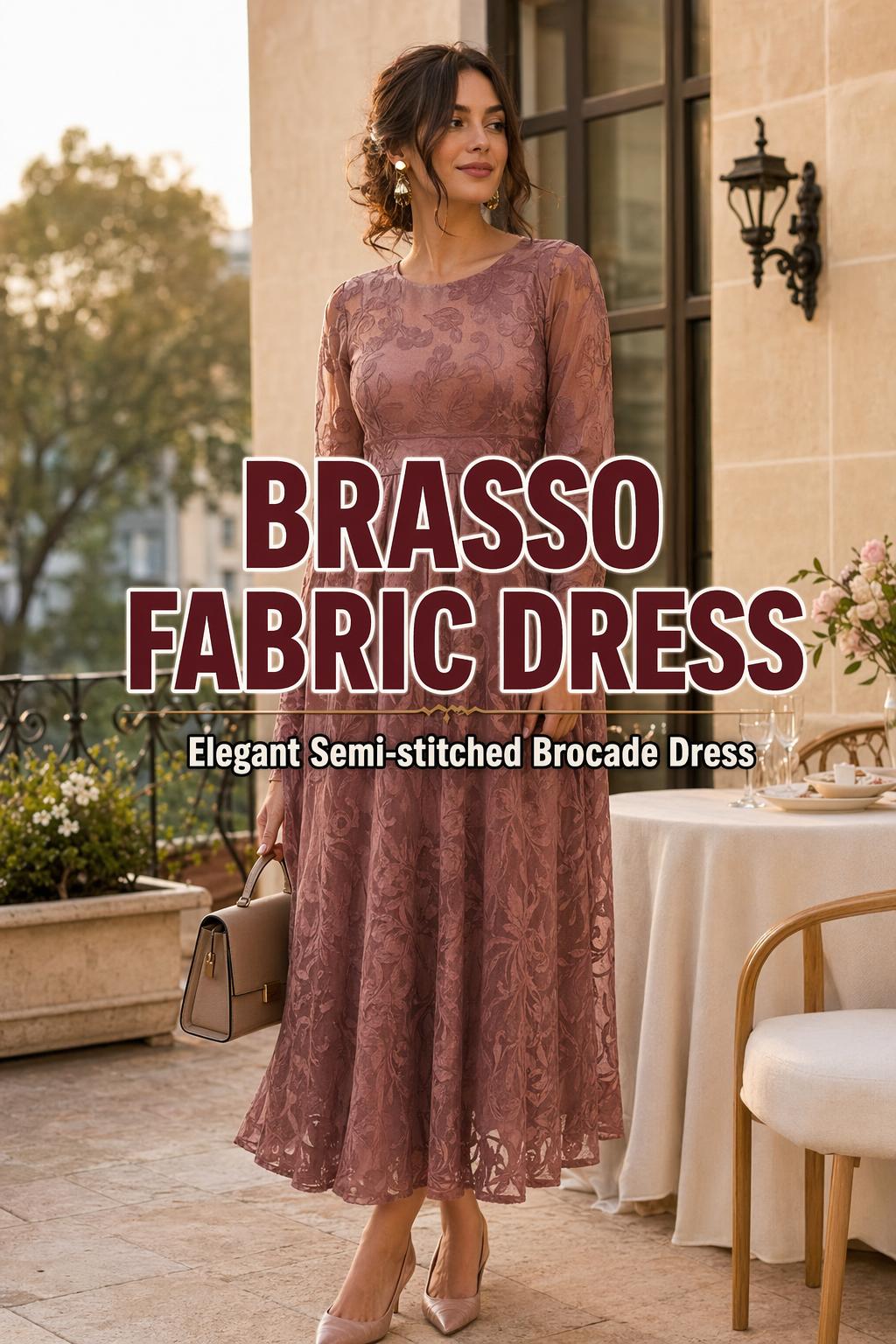
Where the aesthetic works best
This style is commonly worn in settings where a plain dress can feel underdressed, but fully embellished attire may feel excessive. A brasso fabric dress sits comfortably in that middle ground. It makes sense for dinners, festive gatherings, daytime celebrations, semi-formal events, and dressy family occasions. The fabric reads intentional, which helps the wearer look finished without appearing overworked.
It also adapts well to transitional styling. In warmer settings, the light-reflective texture and selective sheerness keep the look visually breathable. In cooler conditions, the same dress can be grounded with a more structured outer layer, deeper accessories, or closed footwear. That range matters because many shoppers are not looking for a one-time statement piece. They want a dress with aesthetic value that can move across multiple settings with small styling changes.
Look: soft occasion romance
This interpretation leans into the most familiar strength of brasso: delicacy. The silhouette is fluid through the skirt, softly defined at the waist, and visually lifted by the textured motif across the surface. The mood is romantic without becoming overly sweet. It works especially well when the dress has enough structure in the bodice to balance the softness of the fabric.
A muted palette keeps the texture in focus. Think tonal neutrals, dusty shades, or a light evening color story rather than anything aggressively bright. If the motif is floral or scroll-based, the dress feels more classic. If the pattern is abstract, the same silhouette becomes more contemporary. A light lining under the burnout design helps preserve elegance and prevents the sheer effect from looking accidental.
- Key garments: midi or ankle-length brasso dress with soft waist definition
- Footwear: minimal heels or refined flats
- Accessories: compact bag, subtle jewelry, light wrap if needed
This look works because the dress remains the statement piece. The silhouette balance is controlled: texture provides visual richness, while the clean accessory story prevents competition. For readers seeking mode inspiration that feels graceful rather than theatrical, this is one of the strongest ways to wear a brasso fabric dress.
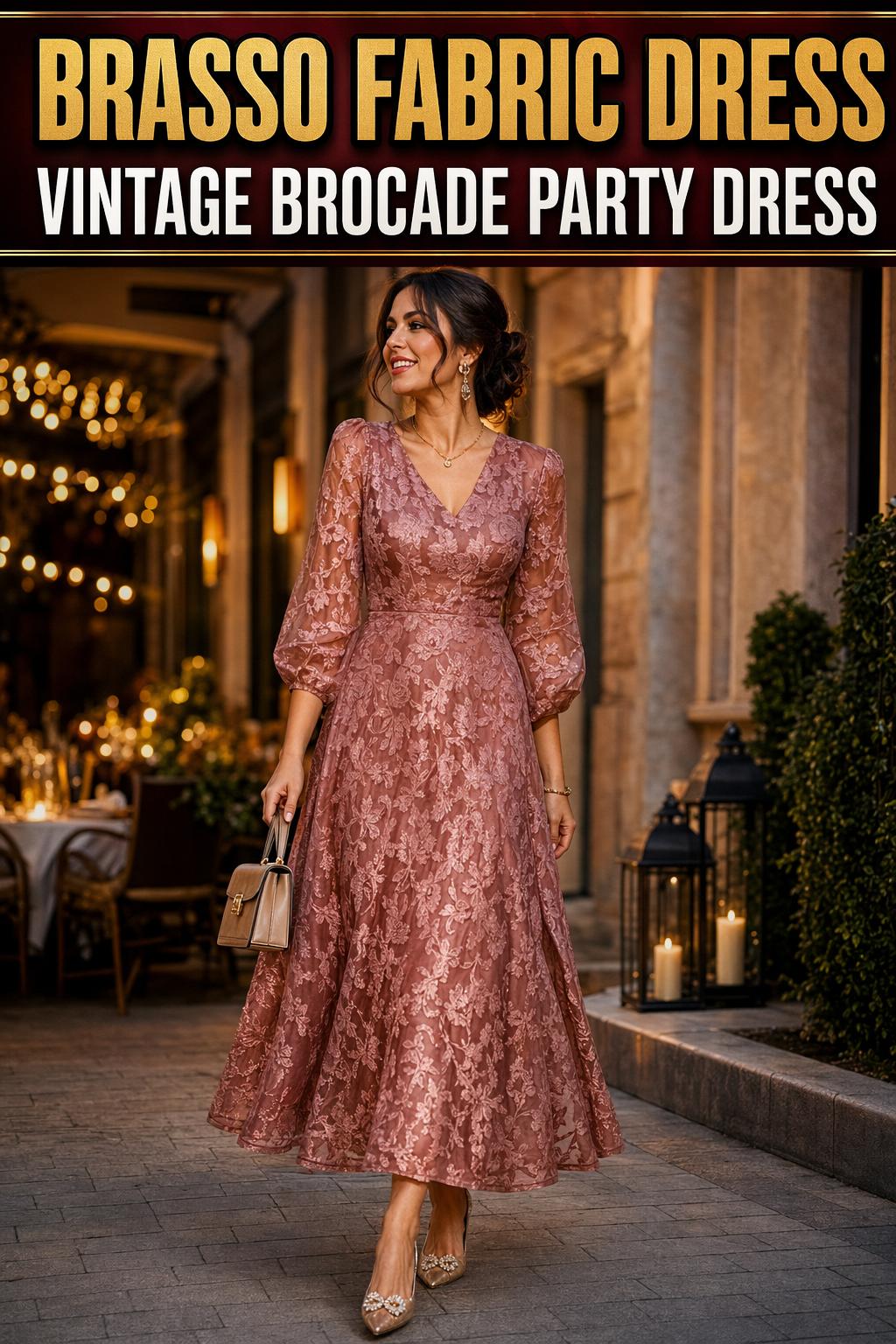
Look: modern texture with clean lines
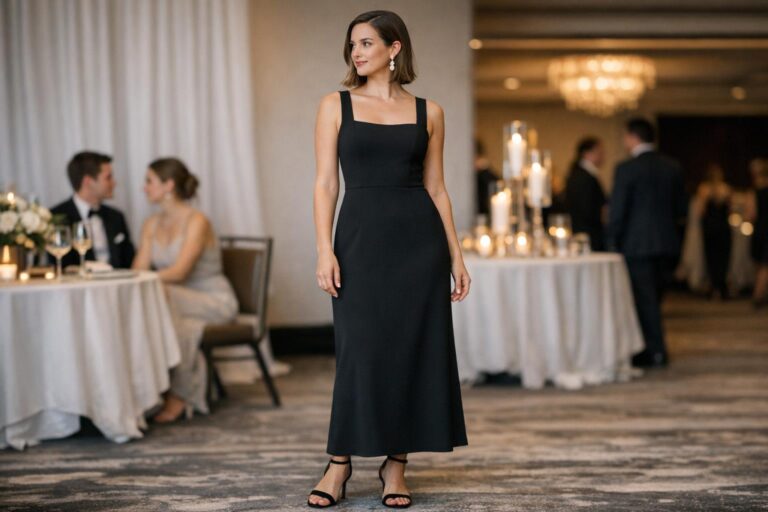
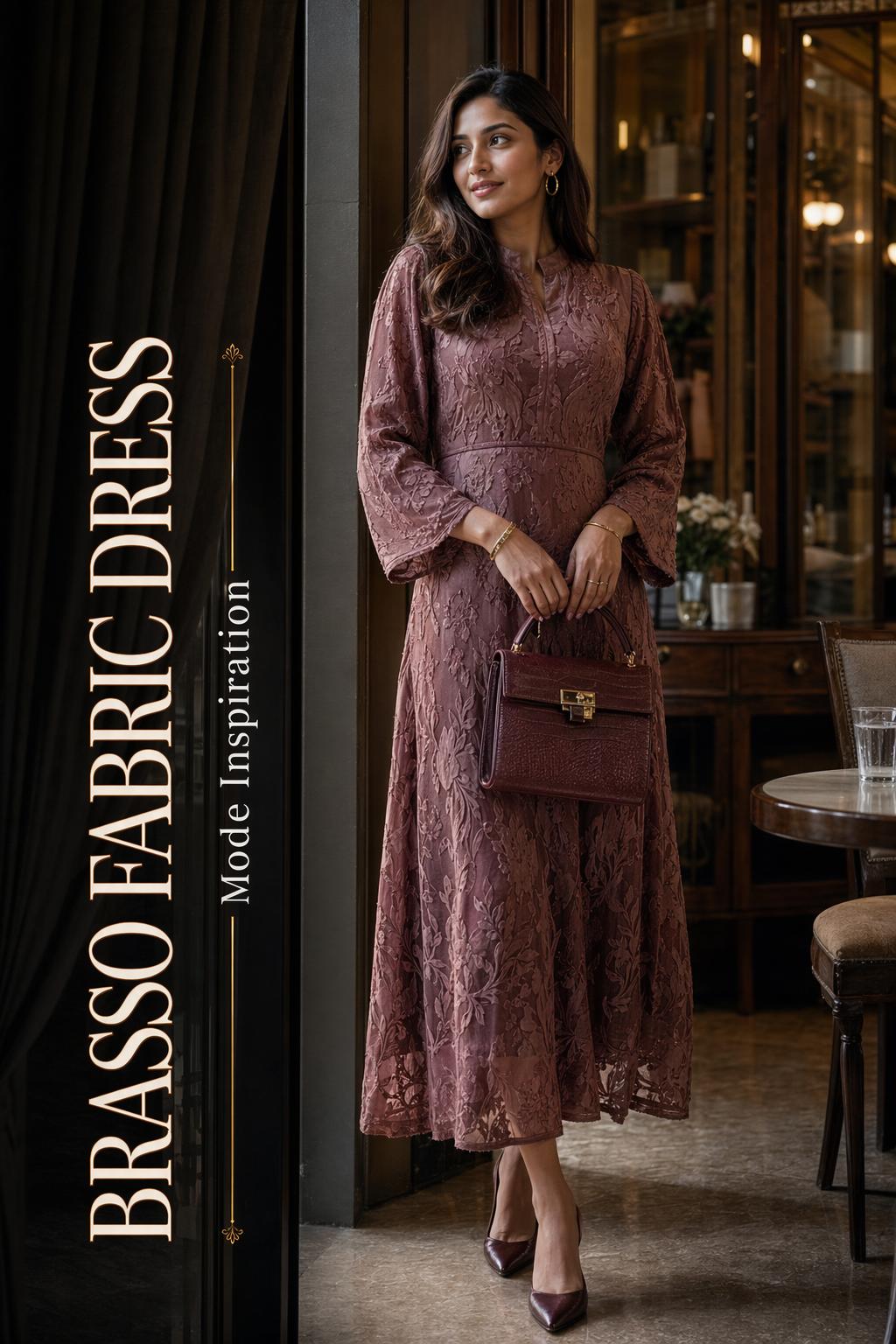
Not every brasso dress needs to read traditionally ornate. A straighter shape with reduced volume and sharper finishing can bring the fabric into a more modern space. Here, the mood is composed and urban. The silhouette is less about softness and more about controlled vertical movement, allowing the fabric pattern to become a design feature rather than a romantic cue.
The best version of this look depends on contrast discipline. If the brasso motif is already busy, choose simpler accessories and a cleaner neckline. If the pattern is subtle, stronger styling can be introduced through footwear or outerwear. Darker tones often make this interpretation feel especially polished because they give the burnout effect more depth and visual definition.
This outfit composition succeeds through restraint. The texture is decorative, but the line of the dress is streamlined. That tension creates sophistication. It also helps the dress feel relevant for readers who admire fabric-rich fashion but prefer minimal styling logic over overtly festive presentation.
Style tip: keep one visual anchor
When the dress already has a visible burnout pattern, avoid adding multiple competing focal points. One anchor is enough. That could be the fabric itself, a strong earring, or a defined shoe shape. If everything tries to lead, the outfit loses clarity. In a brasso fabric dress, the textile usually deserves that role.
Look: festive elegance with brocade-adjacent richness
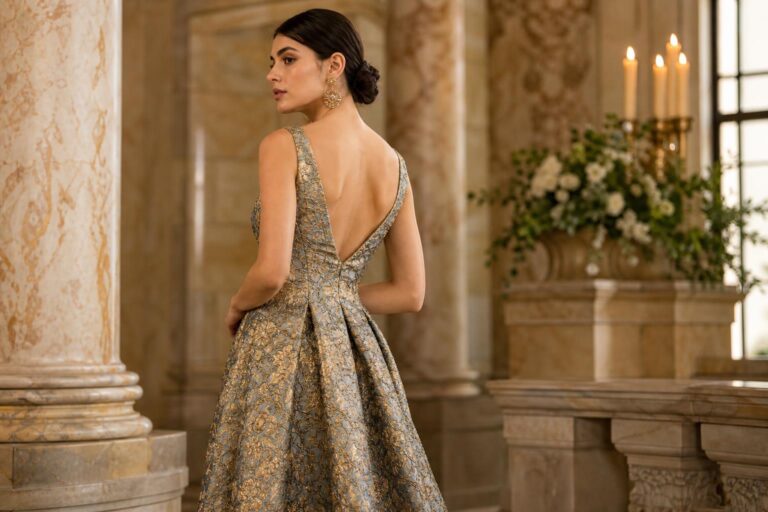
Some wearers are drawn to the same visual density found in occasion fabrics like brocade. In that context, a brasso dress offers a lighter but still decorative alternative. This look embraces richness in a measured way: a fuller skirt, more visible motif placement, and accessories that feel intentional rather than plain. The overall mood is celebratory, but the fabric keeps it from feeling too heavy.
This is where comparisons with a vintage brocade party dress become useful from a styling perspective. Both aesthetics rely on surface detail and a composed silhouette. The difference is in the fabric behavior. Brasso tends to move with more softness and transparency, while brocade usually reads denser and more structured. Choosing between them depends on the event, the desired formality level, and the amount of visual weight the wearer is comfortable carrying.
- Choose more architectural accessories if the dress is fluid
- Choose softer accessories if the dress has a fuller, dressier silhouette
- Let the pattern determine the jewelry scale rather than adding pieces by habit
This look fits the aesthetic because it builds a formal mood through texture instead of embellishment overload. That distinction matters. Rich fabrics often look more enduring than trend-led decoration, especially in photographs and in long-event wear where comfort and visual balance both matter.
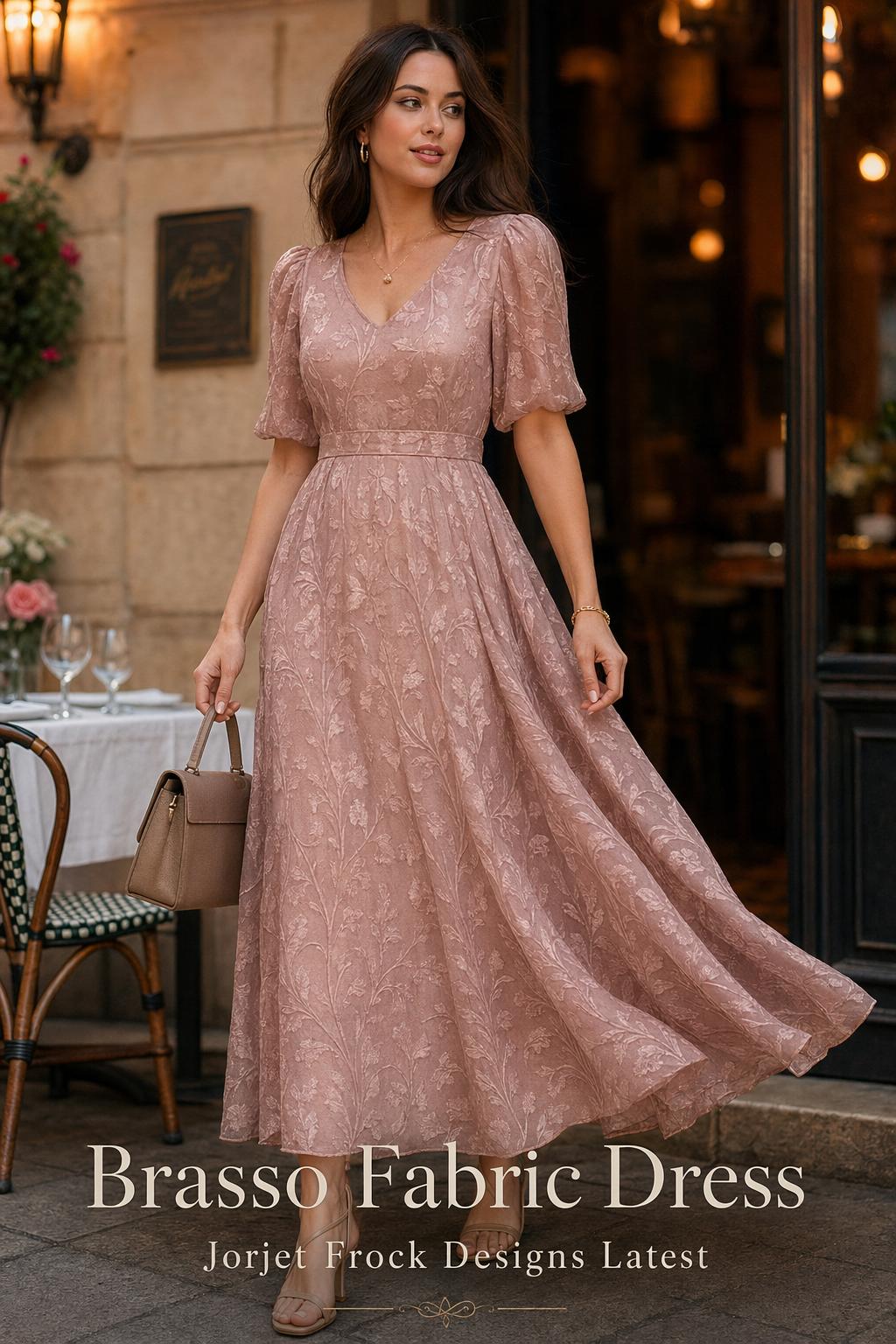
Look: daytime femininity with a lighter hand
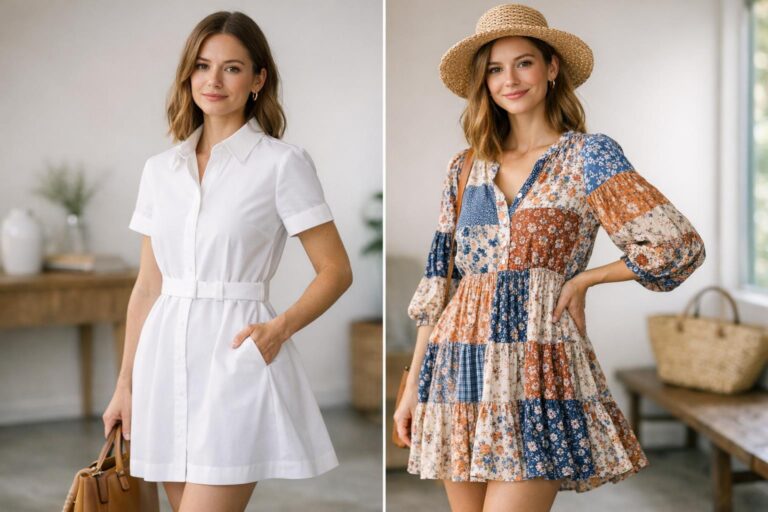
A brasso fabric dress can shift beautifully into daytime if the silhouette feels easy and the styling stays relaxed. The mood here is less ceremonial and more refined everyday dressing. The dress may be shorter, looser, or simpler through the neckline and sleeve, allowing the textured fabric to read as part of an effortless visual story rather than a special-occasion code.
This is also the place where a brocade dress short enters the broader conversation as a mood reference. A shorter dress in a richly textured fabric creates a youthful, compact silhouette with clear personality. In brasso, that effect feels lighter and less formal. The same styling logic applies: simplify the shoe, control the bag size, and avoid over-accessorizing a short statement dress.
The reason this interpretation works is proportion play. A shorter or easier line offsets the decorative nature of the textile. The outfit remains visually interesting, but the overall mood becomes more wearable for brunches, informal celebrations, or polished daytime dressing.
How silhouette changes the mood
The same fabric can tell very different style stories depending on cut. A fit-and-flare brasso dress emphasizes movement and femininity. A column shape feels cleaner and often more evening-ready. Tiered or gathered versions can look romantic, but they require careful styling because too much volume paired with a busy pattern may overwhelm the frame.
Waist definition is another key decision. A defined waist often makes the pattern feel controlled, especially when the motif is large. An undisturbed silhouette can be elegant too, but it usually works best when the fabric pattern is finer or more evenly distributed. This is an important trade-off for real-world styling. What looks striking on a hanger may become visually crowded once worn if the silhouette and motif scale are not in balance.
Key pieces for this aesthetic
- A brasso dress with a clear silhouette direction
- Footwear that supports rather than competes with the fabric texture
- A bag with clean structure
- Underlayers or lining that preserve the intended finish of the burnout effect
- Outerwear with minimal visual noise
Look: semi-stitched elegance and custom finish
An elegant semi-stitched brocade dress is often appealing because it offers room for adjustment in fit and styling. That same logic helps explain why many shoppers gravitate toward brasso dresses with tailoring potential or customizable finishing. Fit matters even more in textured fabrics because pattern placement becomes part of the visual architecture of the garment.
In practical terms, a semi-structured dress with a defined bodice, carefully chosen sleeve treatment, and considered hem length creates a more elevated result than a generic cut. If the fabric already carries decorative detail, the tailoring should solve proportion, not add clutter. A neater shoulder line, cleaner waist placement, or improved lining can transform the dress from merely decorative to genuinely refined.
This approach suits readers who value a more exact finish. It also supports special-event dressing, where poor fit quickly undermines even beautiful fabric. In a textile like brasso, precision is visible. The dress should skim where needed, move where intended, and allow the motif to sit clearly across the body.
Texture logic: why brasso attracts attention
Fashion often relies on contrast to create interest, and brasso naturally provides it. Opaque against sheer, matte against subtle shine, pattern against negative space. That built-in contrast makes the dress photogenic and visually dimensional, which is one reason it remains appealing in occasionwear and curated fashion wardrobes.
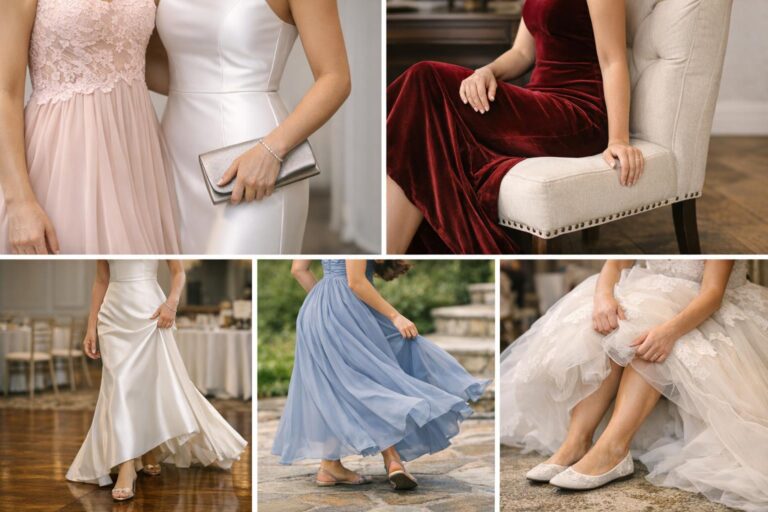
From a styling standpoint, this means the fabric benefits from supportive rather than competitive elements. Smooth footwear, a clean clutch, or a simple earring often do more for the final look than heavily embellished companions. The more texture the dress carries, the more valuable visual calm becomes in the rest of the outfit composition.
Look: vintage mood with controlled drama
For those drawn to old-world formality, a brasso fabric dress can create a vintage-facing aesthetic without feeling costume-like. The key is to focus on shape and finish rather than literal retro styling. A slightly structured waist, a fuller skirt, or a classic neckline can suggest the charm associated with a vintage brocade party dress while keeping the overall presentation current.
Color matters here. Deeper jewel-inspired tones, antique neutrals, or softened evening shades often strengthen the vintage effect because they enhance the depth of the pattern. Footwear should stay elegant and understated. Accessories can nod to classic dressing, but they should not overload the look. The dress needs room to establish its own atmosphere.
The styling logic is simple: controlled drama lasts longer than excessive detail. A brasso dress already communicates craftsmanship and ornament through fabric. By keeping the rest of the look composed, the outfit feels editorial rather than themed.
A note on layering, lining, and wearability
One of the most practical considerations with a brasso fabric dress is what sits underneath it. Because the fabric includes areas of transparency or variation, lining is not a minor detail. It determines modesty, color depth, and how clearly the motif reads. A poor underlayer can flatten the beauty of the fabric or create visual confusion where the pattern should look intentional.
Layering over the dress requires equal care. Heavy outerwear can crush the delicacy of the surface if the silhouette is too bulky. Cleaner layers work better because they preserve the dress as the focal point. For longer events, comfort matters too. Textured fabrics can feel special, but the dress still needs ease of movement through the arm, waist, and skirt area. Aesthetic value is strongest when wearability has been considered from the start.
Tips for making the fabric look intentional
- Check how the lining changes the visibility of the burnout motif
- Use simpler outer layers with clean edges
- Test the dress in movement, not only standing still
- Keep accessories lighter if the textile already feels ornate
Look: festive fusion with jorjet frock designs latest influence
Fashion searches often connect across fabric families and silhouette preferences, and that includes interest in jorjet frock designs latest. The relationship is easy to understand. Georgette-led frock styling and brasso dresses can share the same desire for fluidity, femininity, and occasion-friendly movement. The difference lies in texture emphasis. Georgette usually creates softness through drape alone, while brasso adds visual pattern as part of the fabric identity.
A look inspired by that overlap would use a flowing silhouette, perhaps with gentle flare or layered movement, but allow the brasso motif to replace extra trims or surface embellishment. This creates a dress that still feels festive and current while maintaining clarity. It is particularly effective for wearers who want a lighter event look with visible detail but do not want the density associated with more structured formal fabrics.
This variation fits the broader aesthetic because it prioritizes graceful movement and visual refinement. The dress feels active rather than static, which is valuable in social settings where the outfit is seen from multiple angles over several hours.
Common styling mistakes that weaken the look
The most common issue is treating a brasso fabric dress like a blank canvas. It is not one. The fabric already carries pattern, contrast, and mood. Adding embellished shoes, a heavily decorated bag, and oversized jewelry can make the outfit feel crowded. The result is not richness but visual fatigue.
Another mistake is ignoring proportion. A very full silhouette combined with a large motif may overpower smaller frames, while an overly straight cut in a dense pattern can feel stiff if the dress lacks enough movement. There is also the practical issue of underlayers. If the lining color clashes with the fabric or sits awkwardly beneath the burnout design, the whole effect can look unfinished.
The strongest outfits built around brasso rely on selective emphasis. Let the fabric lead, then shape the rest of the look around clarity, comfort, and proportion. That approach consistently produces a more expensive-looking result.
How to adapt the aesthetic for different occasions
The same dress can shift significantly with styling. For daytime, keep accessories compact and practical, and use understated footwear. For evening, deepen the overall finish with cleaner heels, more defined jewelry, or a stronger bag shape. For festive gatherings, choose richer tones or larger motifs, but still maintain one clear focal point.
If the goal is a softer wardrobe integration rather than event dressing, choose simpler cuts and let the texture supply the statement. If the goal is full occasion impact, use silhouette and finishing details to elevate the dress without overwhelming it. This is where mode inspiration becomes most useful: not as imitation, but as a framework for deciding how much structure, volume, and ornament your version of the aesthetic should carry.
How to recreate the look with more confidence
Start with the fabric mood. Decide whether your brasso dress should feel romantic, modern, festive, or vintage-leaning. Then make every other choice support that direction. If the fabric is delicate, keep the accessories refined. If the motif is bold, simplify the silhouette. If the dress is short, control the rest of the styling so the shape stays polished. Clarity of intention is what turns a textured dress into a cohesive aesthetic statement.
Why this fabric remains appealing
Textured dresses continue to matter because they offer immediate visual identity. A brasso fabric dress does not depend on trend-heavy styling to feel special. Its appeal is built into the textile, which gives it staying power across changing silhouettes and occasion needs. It can borrow the richness associated with brocade-adjacent dressing, the fluid femininity often linked to georgette-inspired frocks, and the clarity of more modern minimalist styling depending on how it is cut and worn.
That range is the real advantage. One wearer may prefer a soft, romantic midi with delicate accessories. Another may choose a sharper, darker version with a cleaner line. A third may lean toward a more decorative event look that echoes the mood of a vintage brocade party dress. All of these interpretations stay within the same aesthetic family because the foundation remains texture, contrast, and a composed silhouette.
The aesthetic works because it balances expression with structure. It allows a wardrobe to feel dressed, feminine, and visually thoughtful without depending on excess. Adapted carefully, a brasso fabric dress can become a versatile statement piece that reflects personal style while maintaining the polished logic that makes textured occasion dressing so enduring.
FAQ
What is a brasso fabric dress?
A brasso fabric dress is made from a material known for its burnout effect, where some areas appear sheer or lighter while motifs remain more visible. This creates texture contrast and gives the dress a decorative, dimensional finish.
Is a brasso fabric dress suitable for parties and festive events?
Yes, it is especially well suited to parties, festive gatherings, and semi-formal occasions because the fabric already looks elevated. The texture gives the dress a dressed-up quality without always needing heavy embellishment.
How should I style accessories with a brasso fabric dress?
Keep accessories more controlled than the dress itself. Since the fabric already adds pattern and visual interest, cleaner shoes, a structured bag, and selective jewelry usually create the most balanced result.
What is the difference between a brasso dress and a brocade dress?
A brasso dress typically feels lighter and more transparent in parts because of its burnout texture, while a brocade dress usually looks denser and more structured. Both can feel rich and decorative, but they create different levels of visual weight and formality.
Can a brasso fabric dress work for daytime wear?
Yes, especially if the silhouette is simple and the styling is relaxed. A shorter hemline, easier shape, and understated accessories can make the dress feel polished for daytime rather than strictly formal.
Why is lining important in a brasso fabric dress?
Lining affects how the burnout pattern appears, how much coverage the dress provides, and how refined the overall finish looks. A thoughtful underlayer helps the texture read clearly and keeps the dress from looking unfinished.
Does a short textured dress work with this aesthetic?
Yes, a shorter silhouette can work very well, much like the appeal behind a brocade dress short. The key is to keep the rest of the styling polished so the dress feels intentional and balanced rather than overly busy.
How do I choose the best silhouette in brasso fabric?
Choose based on motif scale and the mood you want. Softer fit-and-flare styles emphasize romance, straighter cuts feel more modern, and fuller shapes work best when the pattern and accessories are kept under control.