Modern Styles for Brocade Fabric for Weddings and Nights Out
Styles for brocade fabric: the modern way to wear a historic statement textile
Brocade is the fabric that turns “dressed” into “finished.” The surface has built-in dimension—raised motifs, metallic flickers, and jacquard-woven patterning that reads as deliberate from across a room. That impact is also the challenge: brocade can overwhelm a silhouette, fight with accessories, or look costume-like when the outfit composition lacks restraint. The best styles for brocade fabric treat it as a visual anchor—then build proportion, texture contrast, and color harmony around it.
This guide breaks brocade down the way stylists and fabric buyers actually think about it: what brocade is (and what it isn’t), the core types you’ll see in US shopping and sourcing, global style contexts (Banarasi from Varanasi, Chinese Song brocade references, African brocade in contemporary fashion), and outfit frameworks that make brocade feel current—whether you’re styling a brocade jacket over minimalist separates, choosing a Banarasi saree with zari work, or building African inspired clothing looks like boubou styles for women and bubu gown styles using brocade as the hero fabric.
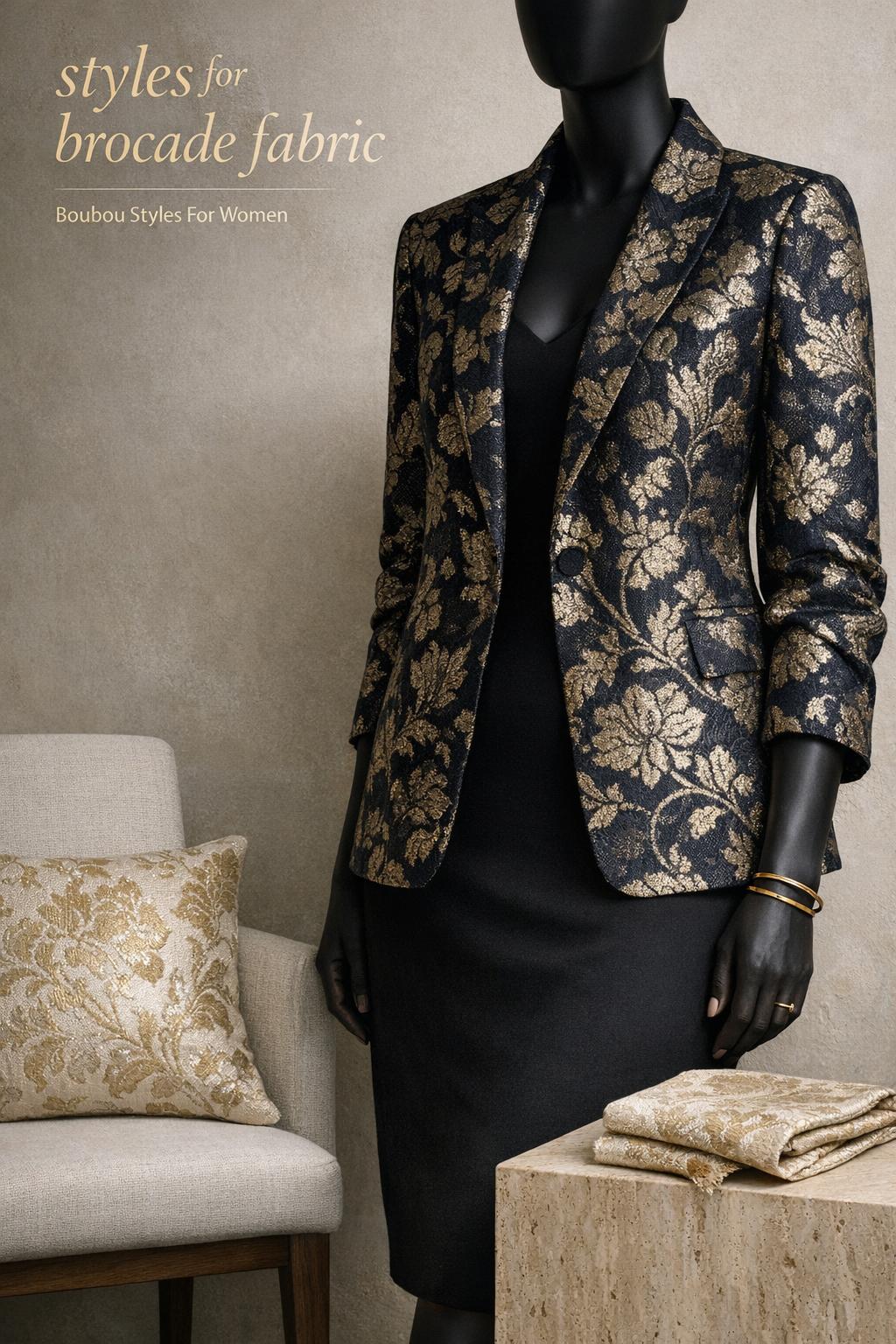
What brocade is—and why it behaves differently than other patterned fabrics
Brocade is a woven textile defined by its pattern structure, not just its print. The motifs are formed on the loom—often described through jacquard weaving or shuttle weaving approaches—so the design has texture and body rather than a flat surface. Many luxury brocades also use metallic threads, commonly discussed as zari in South Asian contexts, which adds shine and increases the fabric’s ceremonial presence.
That weaving reality matters for styling. Brocade typically has more weight and structure than a printed satin or lightweight jacquard-look fabric. It holds shape, reflects light unevenly across the motif, and can feel slightly stiff depending on fiber content (silk, synthetic options, or blends). In outfit terms, brocade is not a background player; it’s the statement piece that dictates everything else.
Found the dress? Keep the rest in one place.
Zarellea brings guest details, vendors, timelines, and every next step together — so your wedding plan feels as good as your look.
Brocade vs. jacquard vs. damask vs. brocatelle: a clarity check
These terms get used interchangeably in shopping, but they signal different expectations. “Jacquard” points to a weaving method that can create complex patterns; “brocade” is a patterned weave with a raised, often ornate look; “damask” is frequently discussed as a flatter, reversible patterned weave; and “brocatelle” is commonly grouped in the same decorative family for heavier, upholstery-leaning applications. For styling, the practical takeaway is simple: the more raised and metallic the motif, the more you should simplify silhouette and accessories to keep the look editorial instead of overloaded.
The brocade style matrix: choose by weave weight, shine level, and occasion
Rather than starting with “what outfit should I wear,” start with the fabric’s behavior. Brocade styling works best when you assess three variables: weight (how structured it is), shine (especially if zari or metallic threads are present), and motif scale (micro patterns read refined; oversized medallions read dramatic). This is the decision logic behind why a brocade blazer can look sharp for evening, while a heavily metallic Banarasi brocade reads as wedding or ceremonial wear.
- Higher shine + larger motifs: strongest statement; best for weddings, formal evenings, and ceremonial wear
- Medium shine + controlled motifs: versatile; ideal for jackets, waistcoats, dresses with clean lines
- Low shine + subtle texture: easiest for daytime; works for simple dress styles and modern separates
- Heavier body: holds structured silhouettes (blazers, fitted bodices) and decor applications (drapes, upholstery)
- Lighter body: better for movement pieces (skirts, dupattas, soft outer layers), depending on weave and fiber blend
Use this matrix to avoid common mismatches—like pairing a high-shine metallic brocade with high-shine jewelry and a heavily embellished bag. When everything competes, nothing looks intentional.
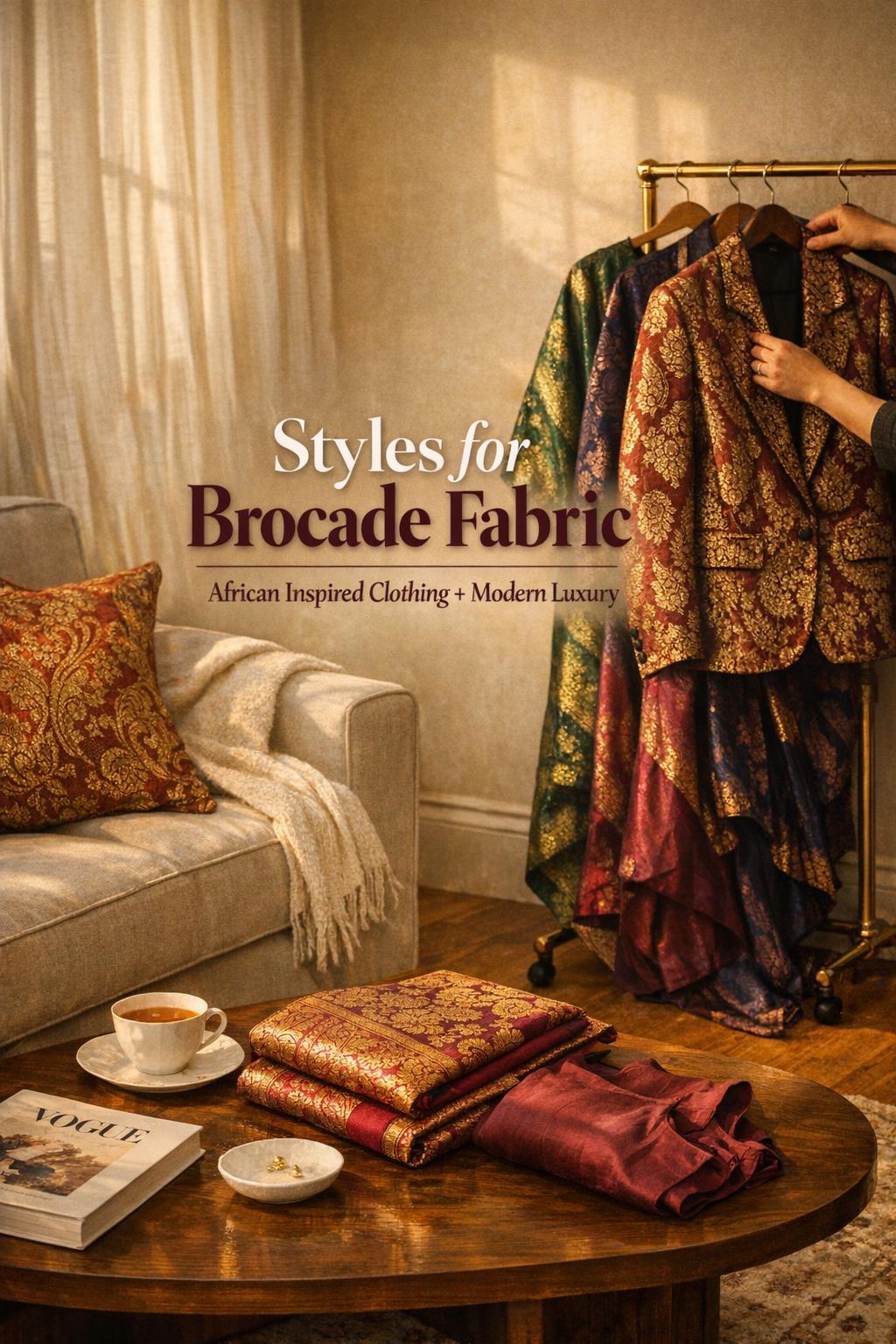
Core types of brocade fabrics (and the styles they naturally support)
In US search and retail discovery, brocade is most often presented through type categories: silk brocade, Banarasi brocade, jacquard and damask variants, metallic brocade, and modern synthetic brocade options. Each type comes with different styling “defaults” because of how it drapes, how it reflects light, and how formal it reads.
Silk brocade (premium, sculptural, event-ready)
Silk brocade is prized for depth and refinement—motifs appear crisp, and the fabric often has a controlled sheen that photographs well. Styling logic: emphasize silhouette balance. A clean shoulder line (structured jacket, tailored bodice) stabilizes the ornate surface. For modern minimalism, let silk brocade be the only high-texture element and keep everything else matte: crepe trousers, a simple skirt, or understated shoes.
Where it excels: cocktail evenings, weddings, and statement outer layers. Where it can fail: casual day settings if paired with distressed denim or overly casual footwear; the texture contrast can read accidental rather than editorial.
Banarasi brocade (Varanasi heritage, zari impact, ceremonial authority)
Banarasi brocade, rooted in Varanasi (Benaras), is a cornerstone of heritage weaving tradition and is frequently associated with zari work and intricate motifs. The fabric’s visual density means it already carries “jewelry energy.” Styling should focus on restraint: one hero piece (a Banarasi saree, a dupatta, or a structured blouse) with streamlined supporting elements so the zari doesn’t compete with extra sparkle.
Practical note for long events: zari-heavy brocade can feel weighty over hours. That’s not a flaw—it’s part of the textile’s presence—but it affects comfort decisions like neckline choice, sleeve length, and whether you want to carry the brocade as a full garment or as a smaller surface area (for example, a jacket over a plain outfit).
Jacquard brocade (pattern complexity with modern wearability)
Jacquard brocade often shows up as a flexible middle ground: richly patterned, but frequently easier to integrate into contemporary wardrobes than heavier ceremonial cloth. It suits modern tailoring—blazers, pencil skirts, sheath dresses—because the pattern sits neatly within structured lines. For simple dress styles, jacquard brocade works best when the silhouette is clean and the pattern scale is not oversized.
Damask-style brocade (ornate patterning with a more controlled surface)
Damask is often discussed alongside brocade as a patterned weave family; stylistically, it tends to read classic and decorative. In fashion terms, damask-style brocade can look especially polished in dark, tonal palettes where the pattern is revealed by light rather than color contrast. It’s a strong option for men’s waistcoats and blazers when you want pattern without loud color.
Metallic brocade (high-shine, high-drama, controlled styling required)
Metallic brocade is the runway-to-evening shortcut: it creates instant occasion energy even in minimal silhouettes. The key is to control shine placement. If the fabric is reflective, keep skin exposure and accessories intentional—one focal point at a time. A metallic brocade mini dress with a clean neckline and matte shoes reads modern; add glitter shoes, a sequin bag, and heavy jewelry and the look becomes visually chaotic.
Synthetic brocade and blends (practical durability, broader accessibility)
Many retailers and fabric guides discuss synthetic brocade options and blends (including silk-cotton ideas and other mixes). The practical advantage is wearability: these can be more durable, sometimes less expensive, and easier to source in a wider range of patterns. The trade-off is tactile: synthetics can look slightly flatter or feel stiffer depending on the weave. Styling fix: lean into structure—use synthetic brocade for pieces that benefit from shape (corseted bodices, structured skirts, blazers) rather than ultra-draped silhouettes.
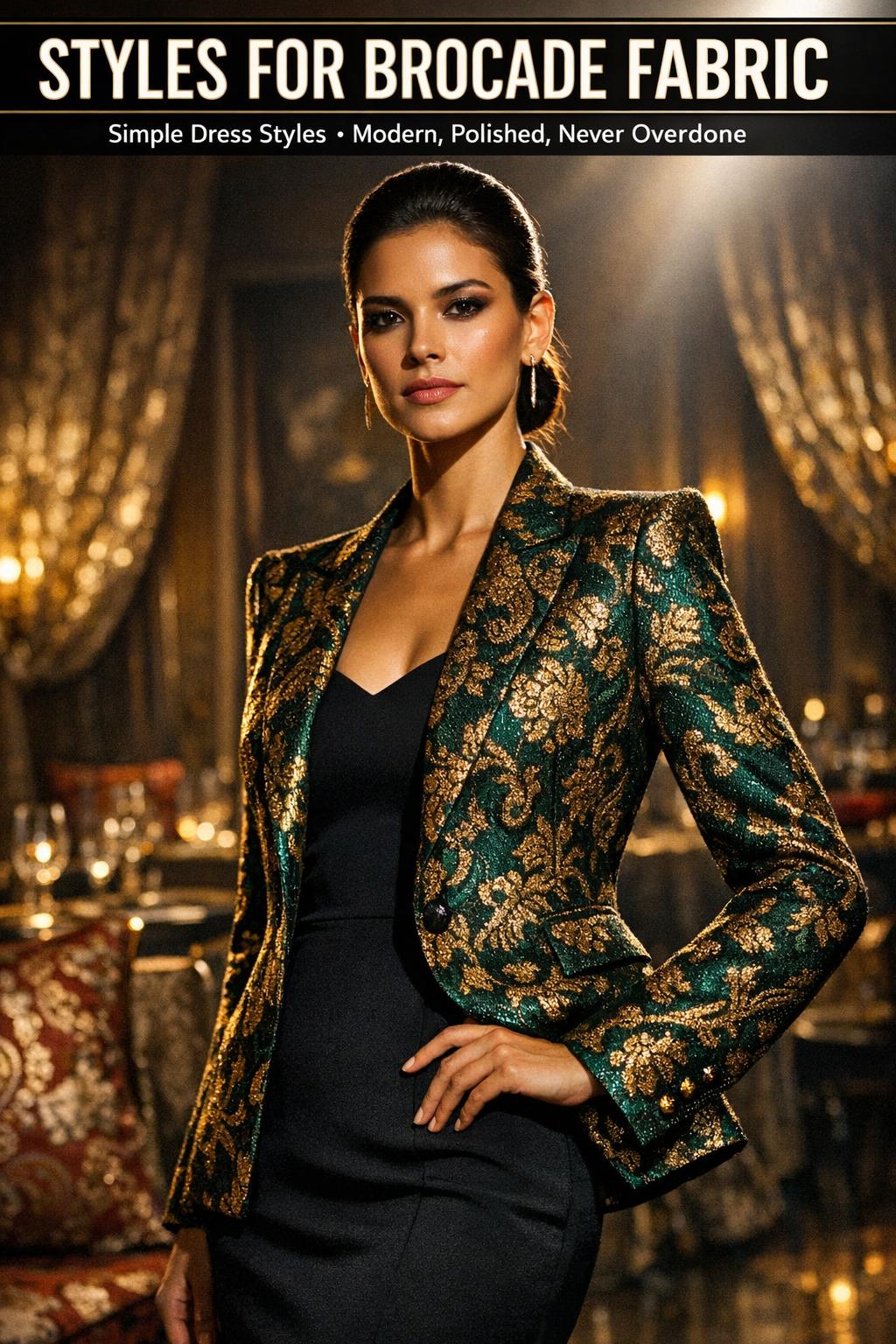
Global brocade style contexts: how culture shapes silhouette choices
Brocade isn’t one aesthetic—it’s a textile language spoken differently across regions. Understanding the cultural styling context helps you choose silhouettes that look authentic to the fabric’s intent, even when you’re building a modern outfit for a US event calendar.
India: Banarasi brocade, Varanasi craft, and zari-focused ceremony dressing
In Indian dressing systems, Banarasi brocade commonly appears in sarees and other ceremonial garments, where the fabric itself is the centerpiece. The motifs and zari work are not “details”—they are the garment’s architecture. Modern styling in the US often translates this by simplifying everything around it: monochrome blouse choices, minimal layering, and controlled jewelry so the textile reads as luxury rather than costume.
China references: Song brocade as a heritage signal and pattern authority
Song brocade is frequently referenced as a heritage point within broader brocade discussions, anchoring brocade’s status as a historically significant luxury textile. For styling, the takeaway is pattern discipline: when the motif is intricate and historically coded, modern silhouettes work best when they are clean and uninterrupted—think structured outerwear or a simple dress shape that frames the textile instead of chopping it up with too many seams and trims.
African fashion: brocade as occasionwear and a bridge to African inspired clothing
In contemporary African fashion contexts, brocade appears as a polished, celebratory fabric with strong presence—often styled in ways that prioritize volume, elegance, and status signaling. This is where brocade can intersect naturally with boubou styles for women and bubu gown styles: the fabric’s structure supports sculptural drape, and the sheen reads festive without needing heavy embellishment.
For readers also exploring african print dress designs, brocade offers a complementary direction: prints create visual rhythm through color and repetition, while brocade creates rhythm through texture and woven motifs. They don’t need to compete. Treat them as separate statements in different outfits, or keep one element small (for example, a brocade accessory with an African print dress design) to maintain clarity.
Europe: historical brocade, Versailles associations, and modern tailoring translation
European historical references—often anchored by luxury settings like Versailles and fashion history figures such as Rose Bertin—frame brocade as a status textile. The modern translation is tailoring. A brocade blazer, structured coat, or formal dress with minimal detailing channels that heritage energy without leaning into period costume cues. The aim is not to recreate the past; it’s to use brocade’s heritage weight as a deliberate style signal.
Motifs and pattern strategy: how to choose brocade that flatters, not fights
Brocade motifs do more than decorate—they shape perception. Florals tend to read romantic and classic, paisleys lean heritage and ornate, and geometric motifs read sharper and more contemporary. Motif scale also alters silhouette perception: large medallions can visually widen areas of the body, while smaller repeating motifs distribute attention more evenly.
Floral motifs: romantic, bridal-friendly, and easy to modernize
Floral brocade works well for wedding guests and formalwear because it aligns with traditional event dressing, yet it can still feel current. The modernization tactic is proportion play: pair a floral brocade top with wide-leg trousers in a matte fabric to create a clean vertical line. The trousers become the stabilizer; the brocade becomes the focal texture.
Paisley motifs: heritage-coded and best with clean supporting pieces
Paisley brocade reads rich and culturally resonant, especially in zari-heavy fabrics like Banarasi. The styling rule is editing. Keep the silhouette simple—think a straight skirt, a clean blouse shape, or a structured jacket. Too many ruffles, tiers, or layered trims can turn the look into visual noise.
Geometric motifs: the easiest entry point for simple dress styles
Geometric brocade is often the most adaptable for everyday or semi-formal wear because it can read architectural rather than ornate. For simple dress styles, choose a sheath or shift silhouette that lets the geometry do the work. Keep accessories minimal and prioritize a matte shoe to avoid competing shine.
Modern outfit frameworks: how to style brocade without looking overdressed
Styling brocade is less about adding more and more about building a controlled composition. The fabric brings complexity; your job is to create a clean structure around it. These frameworks translate across wardrobes—whether you’re shopping from a retailer catalog like Sartor Bohemia, browsing a brand collection page like Chinwe, or sourcing guidance through directories like Sewport.
The brocade jacket over minimal base: the most reliable modern formula
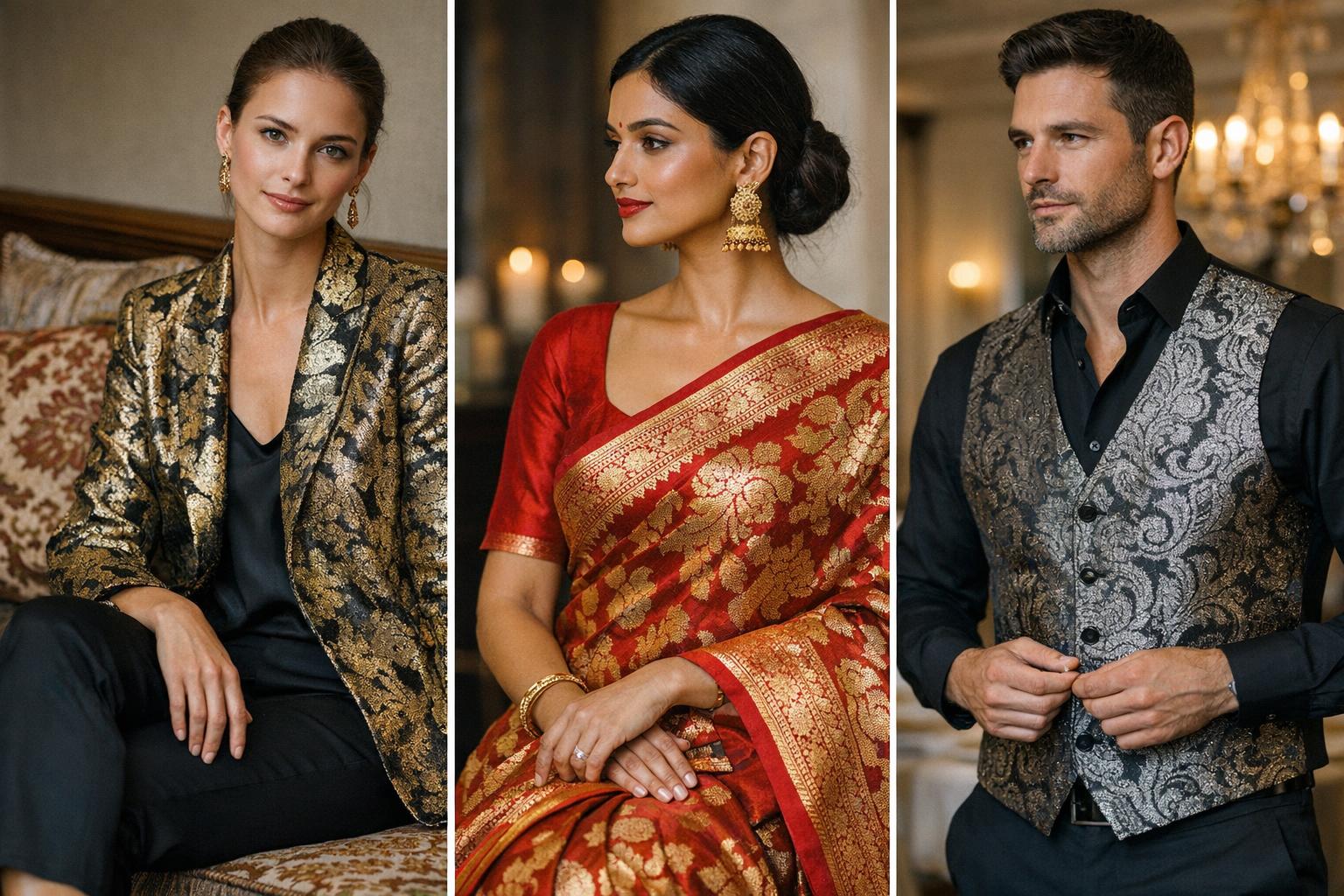
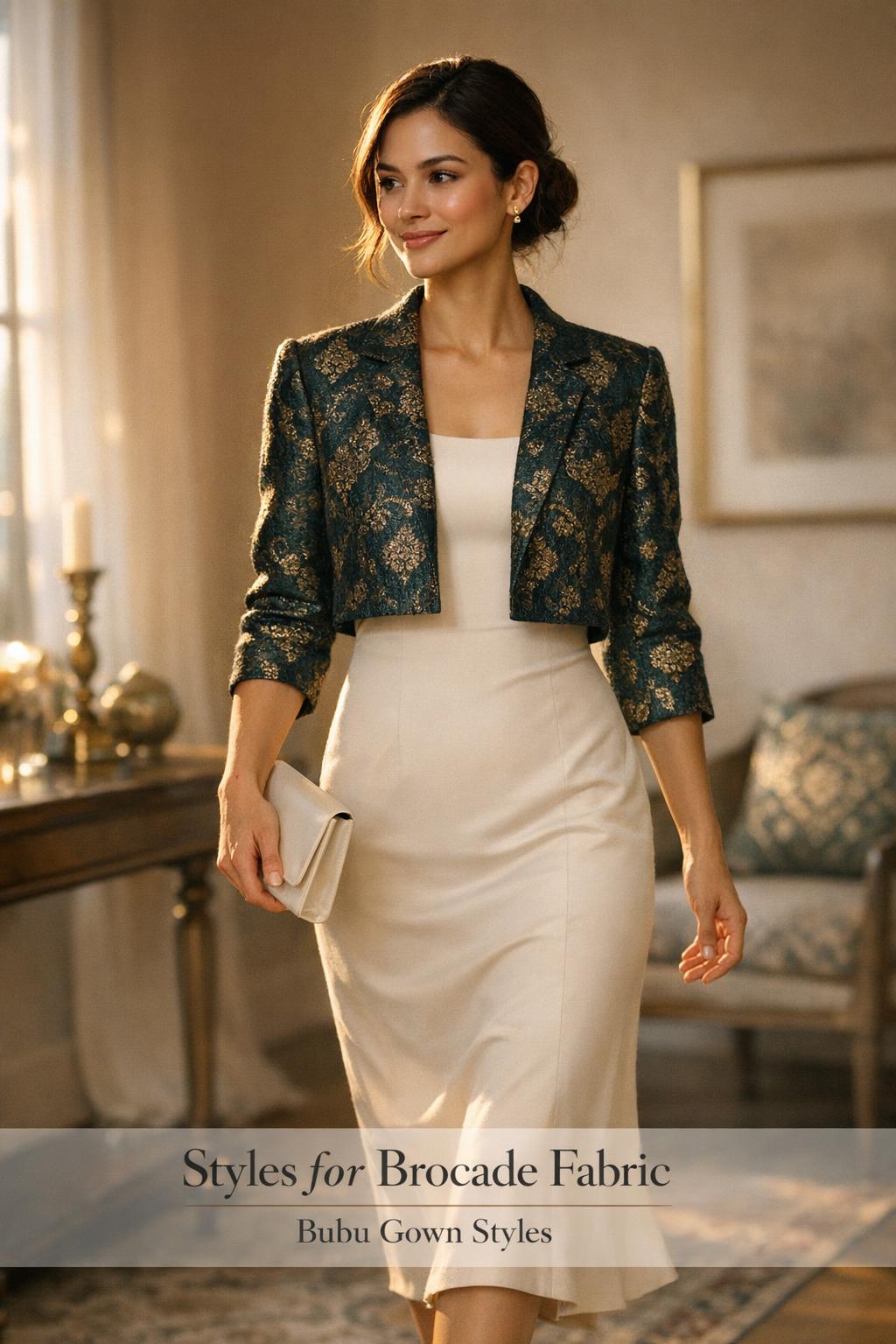
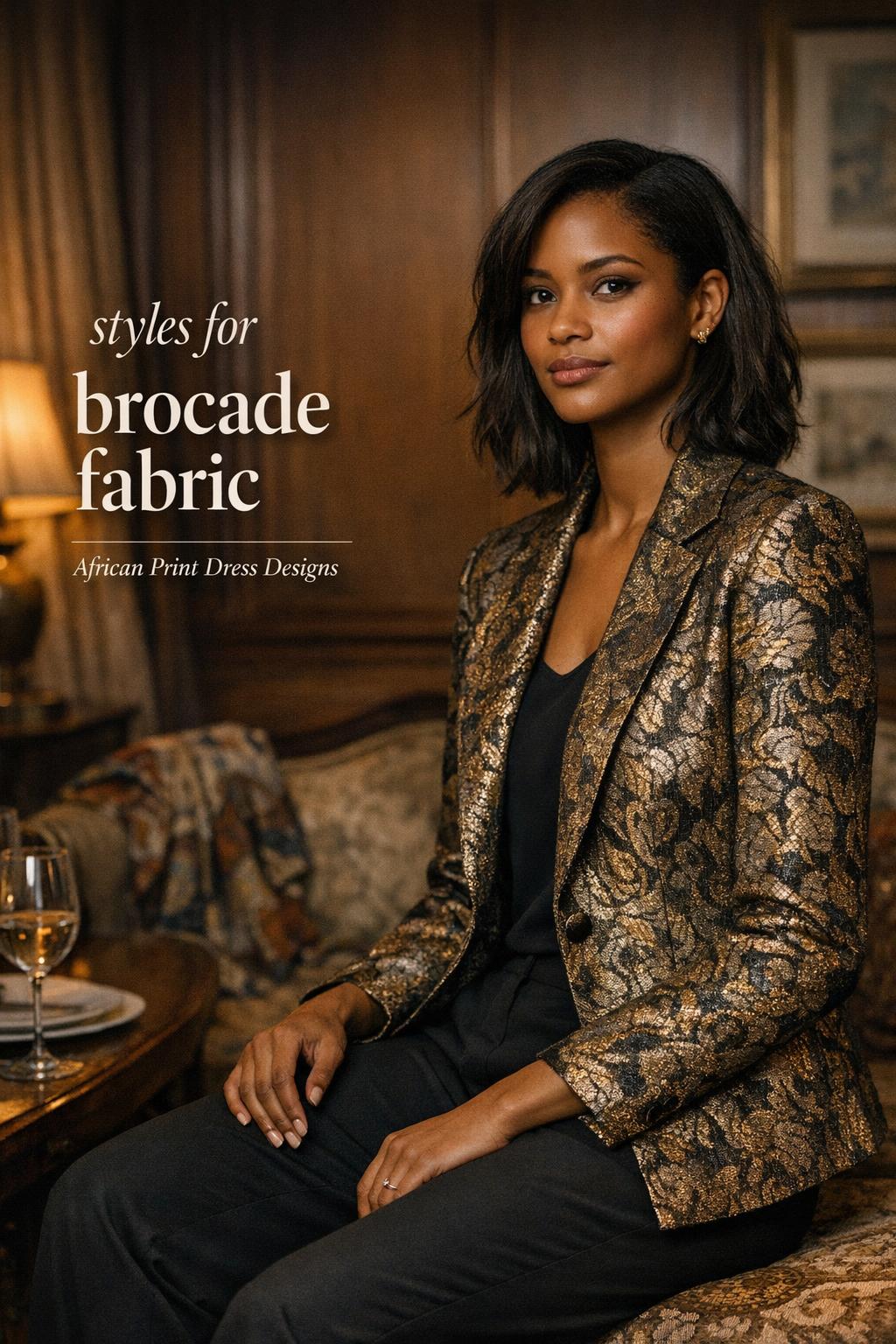
This is the power move mentioned frequently in styling guidance: a brocade jacket layered over a minimalist outfit. It works because the jacket provides a single concentrated area of texture and pattern, while the base acts as negative space. Silhouette balance is built in: structured outerwear over clean lines reads polished immediately.
- Key pieces: brocade jacket, solid top, straight or wide-leg trousers, matte shoes
- Why it works: the jacket becomes the statement piece; the base prevents visual overload
- When to wear it: evening dinners, gallery events, weddings where you want presence without a full brocade dress
Tip: If the brocade includes metallic threads or zari-like shine, keep jewelry simple and avoid additional shimmer in bags or shoes. Let the weave be the sparkle.
Simple dress styles in brocade: clean neckline, controlled hem, minimal seams
Brocade already carries pattern and texture, so complicated construction can feel heavy. The most modern brocade dresses use clean design lines: a structured bodice, a straightforward skirt, and minimal embellishment. This approach also photographs better because the motif remains readable rather than distorted by too many style lines.
Practical wear insight: brocade can be less forgiving when seated for long periods, especially in very fitted cuts. If the event involves dining or ceremonies, prioritize a silhouette that allows movement through the waist and hips while still maintaining structure at the shoulders and neckline.
Men’s brocade styling: blazer and waistcoat strategy
For men, brocade works best when treated as a controlled pattern insert—blazers and waistcoats are the most effective formats. A brocade waistcoat over a matte shirt reads formal and intentional; a brocade blazer works for evening when the rest of the look is simplified. Damask-style brocade and jacquard brocade are especially effective here because they can read classic rather than flashy.
Tip: Keep the shirt and trousers solid and low-sheen. Brocade performs best as the only patterned layer in the outfit, especially under event lighting where metallic threads can amplify the visual effect.
Banarasi brocade for events: saree and heritage silhouettes with modern restraint
Banarasi brocade is one of the clearest examples of fabric-led styling: the textile is the outfit. The modern approach is to reduce competing elements—keep the blouse clean, the jewelry intentional, and hair and makeup refined rather than overly ornate. This creates a high-low tension that feels current: heritage fabric with contemporary editing.
If you’re building a US wedding guest look, consider venue conditions. Outdoor ceremonies and long receptions can make zari-dense brocade feel warmer and heavier. A practical workaround is using Banarasi brocade as a smaller component—like a dupatta or a structured blouse—paired with simpler supporting fabric to maintain comfort without losing impact.
African inspired clothing with brocade: boubou styles for women and bubu gown styles
Brocade’s body and sheen make it a natural match for voluminous silhouettes. In boubou styles for women and bubu gown styles, brocade reads regal because the fabric supports the garment’s scale; it doesn’t collapse or look limp. The styling focus becomes proportion play: keep the neckline clean, use the volume as the statement, and avoid piling on extra ornate accessories.
For those who also love african print dress designs, the most polished wardrobe strategy is rotation: use brocade looks for high-formality events and reserve bold prints for day-to-night or cultural celebrations where color storytelling is the main focus. When combining the two in one outfit, keep one element small—like an African print headwrap with an otherwise solid brocade gown—to maintain hierarchy.
Brocade in home décor: the fashion logic still applies
Editorial sources frequently place brocade in both fashion and interiors, and the same rules translate. In décor, brocade is best used as an accent or a controlled field depending on motif scale and shine. Cushions and small upholstery panels work when you want texture contrast. Drapes and larger applications require more restraint—especially with metallic threads—because light can make patterns appear louder than expected across a full wall of fabric.
- Cushions: easiest entry point; high impact with minimal commitment
- Drapes: choose controlled motifs to avoid visual overwhelm in daylight
- Upholstery: heavier brocade and brocatelle-style options suit structured furniture shapes
Tip: If the room already has strong pattern—rug, wallpaper, or busy art—use brocade in a tonal palette so the texture reads luxe without competing for attention.
Quality signals: how to identify brocade that looks expensive (and wears well)
Not all brocade delivers the same clarity in motif and finish. Quality identification often comes down to construction signals and material logic: whether it’s handloom or power-loom, how the zari or metallic threads are integrated, and how the fabric feels in weight and stability. A good brocade reads crisp in the motif without looking overly plasticky or flat.
Authentic brocade vs. printed lookalikes
True brocade has a woven pattern presence—you can often sense the motif as part of the textile rather than sitting on top like ink. Printed “brocade look” fabrics can still be useful for cost or comfort, but they won’t deliver the same dimensional effect. If your styling goal is high-formality, the woven texture is what communicates luxury most clearly.
Handloom vs. power-loom: what it changes for the wearer
Handloom vs. power-loom discussions frequently appear in brocade buying guidance because the loom choice can affect character and finish. For the wearer, the practical differences show up in how “alive” the fabric looks, how the motif edges appear, and how the textile drapes. There isn’t a single correct choice—power-loom options can be consistent and accessible, while handloom pieces often carry a heritage value signal. Decide based on occasion and budget, then style with the same discipline: one brocade focal point, edited supporting pieces.
Quick handling test: weight, crease behavior, and motif definition
When you can touch the fabric (in-store, through swatches, or sample programs common on retailer sites), evaluate three things: does it feel overly stiff or papery, does it crease harshly in a way that disrupts the motif, and does the pattern look sharp under different angles of light? These quick checks help you predict how the garment will look after hours of wear.
Care and maintenance: protecting texture, zari, and shape
Brocade care is about preserving structure and surface integrity. Because the pattern is woven—often with metallic threads like zari—aggressive washing, friction, and poor storage can dull the finish or distort the motif. Many fabric guides emphasize practical care considerations; the consistent principle is gentle handling and thoughtful storage.
- Storage: avoid crushing the motif; give the fabric space so raised texture isn’t permanently flattened
- Handling: reduce snag risk around metallic threads; be mindful of rough jewelry or sharp bag hardware
- Wear planning: brocade can be warm and weighty; choose event-appropriate lining and silhouettes for comfort
Tip: If the brocade is zari-heavy or highly metallic, treat it as you would any delicate statement textile: fewer wears between careful maintenance, and avoid environments where friction is constant (tight seating, crowded dance floors) unless the garment is designed with enough ease to move without strain.
Common brocade styling mistakes (and the fixes that make it look editorial)
Brocade fails when the outfit ignores hierarchy. The fabric needs space—visually and structurally. These are the issues that most often make brocade look dated or overwhelming, and the practical adjustments that bring it back to modern.
Mistake: pairing brocade with competing shine
Metallic brocade plus glitter accessories plus high-shine satin equals a crowded light-reflection story. Fix it by choosing one reflective element. If the brocade has zari or metallic threads, move everything else to matte: shoes, bag, and most jewelry.
Mistake: over-complicating the silhouette
Ruffles, heavy pleating, and excessive seaming can disrupt the motif and add bulk. Fix it with clean architecture: structured shoulders, simple necklines, and controlled hems. This is why brocade jackets, blazers, and sheath-style dresses consistently look the most modern.
Mistake: mixing multiple large patterns without a plan
Wearing brocade alongside large african print dress designs can work, but only with hierarchy. Fix it by shrinking one pattern (use a small accessory in print) or separating them across outfits. If you insist on mixing, anchor the look with a solid, quiet color field so the eye can rest.
Where people actually shop and source brocade: retailers, catalogs, and education hubs
In the US, brocade discovery often happens through a mix of editorial education and retailer catalogs. Fabric retailers like Sartor Bohemia present brocade through application categories (gowns, wedding dresses, décor) and sampling, while brand-education pages like Shobitam focus on Banarasi brocade and its heritage logic tied to Varanasi. Platforms like Sewport function more like an industry directory lens, outlining properties, uses, and manufacturing context. Chinwe frames brocade within African fashion language and contemporary styling needs.
Buying insight: match the source to your goal. If you need a quick overview of properties and use cases, a directory-style resource can clarify expectations. If you’re choosing a culturally specific textile like Banarasi brocade, brand education that discusses zari work, motifs, and traditional context helps you buy with confidence. If you’re decorating or making a formal garment, a catalog retailer’s sampling and application categories help you test weight and sheen before committing.
Trend signals: brocade’s modern revival through tailoring, texture, and cross-cultural styling
Across fashion and décor, brocade’s modern relevance is powered by a simple shift: styling is cleaner now. Instead of piling on ornament, contemporary outfits use brocade as the single ornate layer—often in a jacket, blazer, or sharply cut dress. That approach aligns with how brocade is discussed in modern fashion contexts: a historic luxury textile reintroduced through wearable shapes.
There’s also a clear cross-cultural presence in how brocade is positioned: Banarasi brocade carries heritage ceremony authority, Song brocade references support brocade’s historical prestige, European associations connect it to formal interiors and historical fashion moments, and African fashion contexts frame brocade as celebratory and sculptural—naturally extending into African inspired clothing silhouettes like boubou styles for women and bubu gown styles.
One limitation worth stating: brocade is not an all-season, all-settings fabric. It performs best when the environment supports its message—events, formal evenings, ceremonies, and settings where texture reads intentional. For casual daytime or heat-heavy venues, scale the brocade down to a smaller piece or choose a lighter, less metallic type to maintain comfort and credibility.
FAQ
What is brocade fabric?
Brocade is a patterned woven fabric where the design is created on the loom rather than printed on the surface, often using jacquard weaving or shuttle weaving techniques; many brocades feature raised motifs and may include metallic threads for a luxe, dimensional look.
What are the best styles for brocade fabric if I want a modern look?
The most modern approach is to use brocade as one controlled statement—such as a brocade jacket over a minimalist base, a cleanly tailored blazer or waistcoat, or a simple dress style with minimal seams—then keep accessories and supporting fabrics matte and understated.
What is Banarasi brocade and why is it associated with Varanasi?
Banarasi brocade is a heritage brocade tradition associated with Varanasi (Benaras) in India, known for intricate motifs and zari work, and it’s commonly used in ceremonial garments like sarees and other formal pieces where the textile itself is the main focal point.
What is zari in brocade?
Zari refers to metallic threadwork used in many luxury brocades, especially in South Asian textiles like Banarasi brocade, and it increases shine and visual richness—one reason styling often works best with restrained jewelry and simplified silhouettes.
How can I tell quality brocade from a printed “brocade look” fabric?
Quality brocade typically shows a woven, dimensional motif that feels integrated into the fabric structure, while printed lookalikes are flatter; checking motif definition under light, feeling the fabric’s weight and structure, and reviewing construction cues like handloom vs. power-loom descriptions can help you judge what you’re buying.
Is metallic brocade hard to style?
Metallic brocade is easy to make impactful but requires editing: keep the silhouette clean and avoid stacking competing shine (glitter shoes, shiny bags, heavy sparkle jewelry) so the metallic weave remains the single focal point.
Can brocade work in African inspired clothing like boubou styles for women and bubu gown styles?
Yes—brocade’s structure and sheen support sculptural, voluminous silhouettes often seen in African fashion contexts, and it reads especially polished in boubou styles for women and bubu gown styles when the neckline and accessories are kept clean to maintain a strong style hierarchy.
Can I mix brocade with african print dress designs in the same outfit?
It can work if you create hierarchy: keep one element small (for example, a printed accessory with a brocade garment, or a brocade accessory with an African print dress) and anchor the look with solid, quiet colors so the outfit doesn’t become pattern-noise.
What are common uses of brocade outside fashion?
Brocade is often used in décor applications such as cushions, drapes, and upholstery because its woven motifs and texture create a rich surface effect, especially in formal interiors where decorative textiles are part of the design language.
Where can I learn more or shop brocade fabrics?
Educational overviews and sourcing context are often found through platforms like Sewport, while retailer catalogs like Sartor Bohemia show brocade by application (fashion and décor), Shobitam provides Banarasi brocade-focused education tied to Varanasi traditions, and Chinwe frames brocade within African fashion styling and collection context.