Timeless Style Inspiration for a Quiet Luxury Wardrobe
A modern wardrobe rarely fails because it lacks options. It usually fails because too many pieces compete for attention without forming a clear visual language. That is where timeless style inspiration becomes useful: not as a strict uniform, but as a framework for building outfits with longevity, balance, and ease. Across fashion capitals like New York, Paris, and Milan, the most enduring wardrobes return to the same principles—clean silhouettes, thoughtful tailoring, controlled color palettes, and pieces that work across seasons rather than for a single moment.
The appeal of timeless style sits at the intersection of practicality and aesthetic discipline. A trench coat, a crisp white shirt, black trousers, a tailored blazer, loafers, and a structured dress do more than look polished. They create reliable outfit architecture. Style icons such as Carolyn Bessette-Kennedy and Audrey Hepburn remain relevant because their wardrobes were built around proportion, restraint, and clarity. The lesson is not to copy a personality exactly, but to understand why those choices still read as modern.
This guide breaks down how timeless fashion works, which classic pieces carry the most styling value, how a capsule wardrobe supports everyday dressing, and what makes certain silhouettes outlast seasonal churn. The focus is not on collecting basics for the sake of minimalism alone. It is on curating a wardrobe that performs well in real life—for work, weekend plans, evening settings, and the quiet demands of repeat wear.
Why timeless style still feels current
Timeless style is often misunderstood as conservative dressing or visual restraint without personality. In practice, it is a method of reducing noise so that fit, fabric, and silhouette become the defining features of an outfit. A white shirt with straight-leg trousers can look sharp in one wardrobe and flat in another. The difference usually comes down to proportion play, fabric quality, and the role of accessories as visual anchors.
Found the dress? Keep the rest in one place.
Zarellea brings guest details, vendors, timelines, and every next step together — so your wedding plan feels as good as your look.
Minimalist aesthetics contribute heavily to this idea, but timeless fashion is broader than minimalism alone. It includes the little black dress, a tailored coat, classic denim, and understated accessories such as sunglasses, loafers, and a structured bag. These pieces endure because they move across settings with very little friction. They can be styled in an office, adapted for travel, or elevated for evening with only small shifts in composition.
Another reason timeless style continues to resonate is that it answers a real wardrobe problem: decision fatigue. A closet full of disconnected trends may produce quantity, but it rarely creates ease. A wardrobe anchored by classic silhouettes produces consistency. That consistency does not diminish creativity. It simply gives creativity a stronger base.
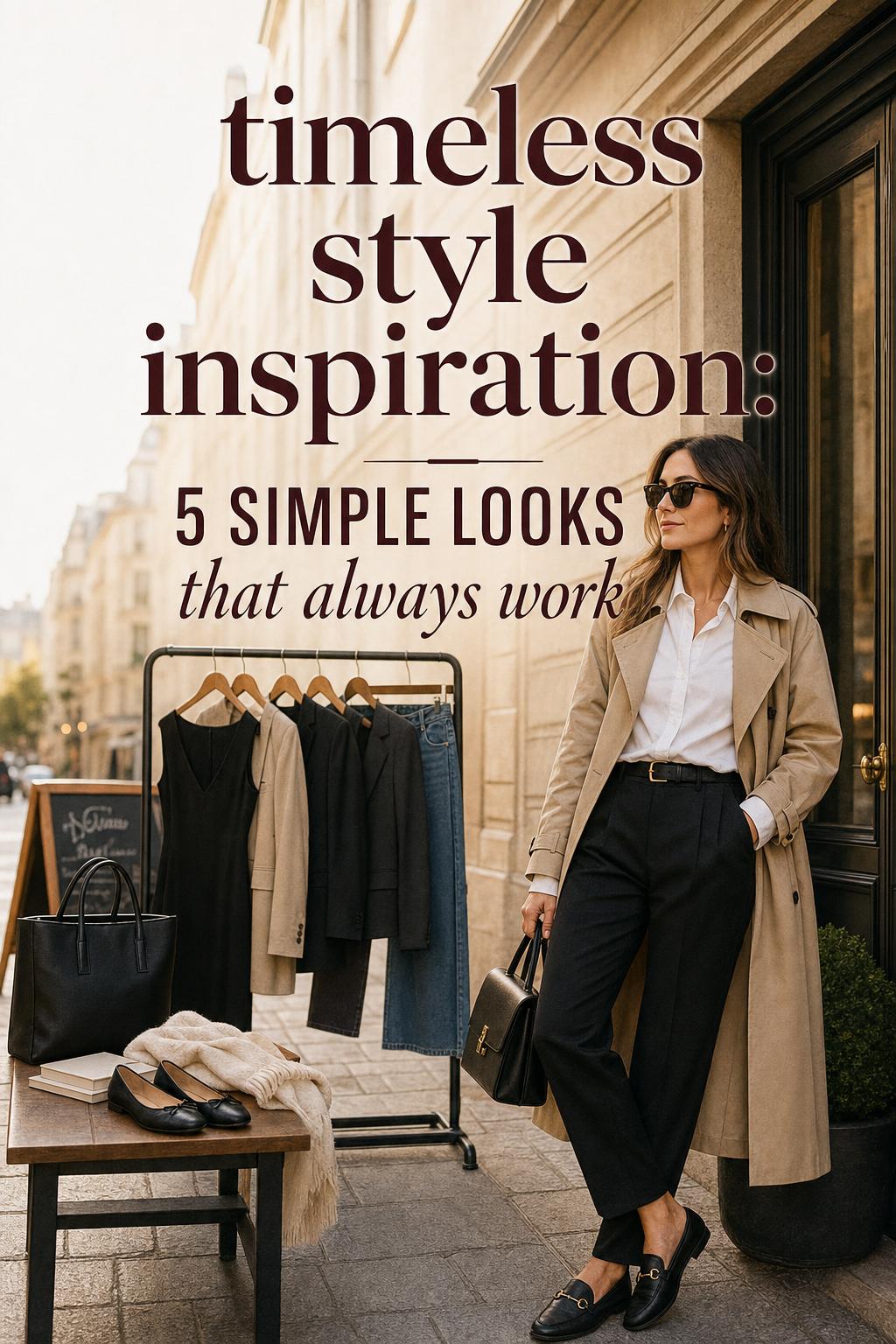
The visual codes that define a timeless wardrobe
Silhouette comes before detail
The strongest timeless outfits start with line. Tailored blazers sharpen the shoulder and define the upper frame. Straight-leg trousers extend the leg line without feeling rigid. A trench coat introduces structure while maintaining movement. Even a simple white tee reads more elevated when the overall silhouette is controlled and intentional.
This is why many enduring wardrobes return to clean cuts rather than heavily embellished pieces. The eye remembers proportion more than decoration. When the shape is correct, the outfit remains relevant longer.
Neutral palettes create continuity
Neutral color stories are central to timeless style inspiration because they make repetition feel sophisticated rather than obvious. Black trousers, a white shirt, a beige trench coat, a navy blazer, and a soft-toned coat can be worn in dozens of combinations without visual conflict. The palette acts as a quiet framework that allows texture contrast and fit to carry the look.
This does not require a colorless wardrobe. It requires discipline. A controlled palette helps every piece relate to the next, which is essential in a capsule wardrobe where versatility matters more than novelty.
Fabric gives classics their authority
A classic shape can lose its impact if the fabric does not support it. Cotton gives a white shirt crispness. Wool and cashmere bring depth and drape to coats and knitwear. Denim adds utility and casual texture. The reason timeless pieces feel elevated is not only that they are familiar, but that the material reinforces the silhouette instead of weakening it.
Fabric also shapes how a piece ages. A tailored coat that holds structure, a blazer that layers cleanly, or trousers that maintain a straight line after repeated wear all contribute to the sense of lasting style rather than one-season appeal.
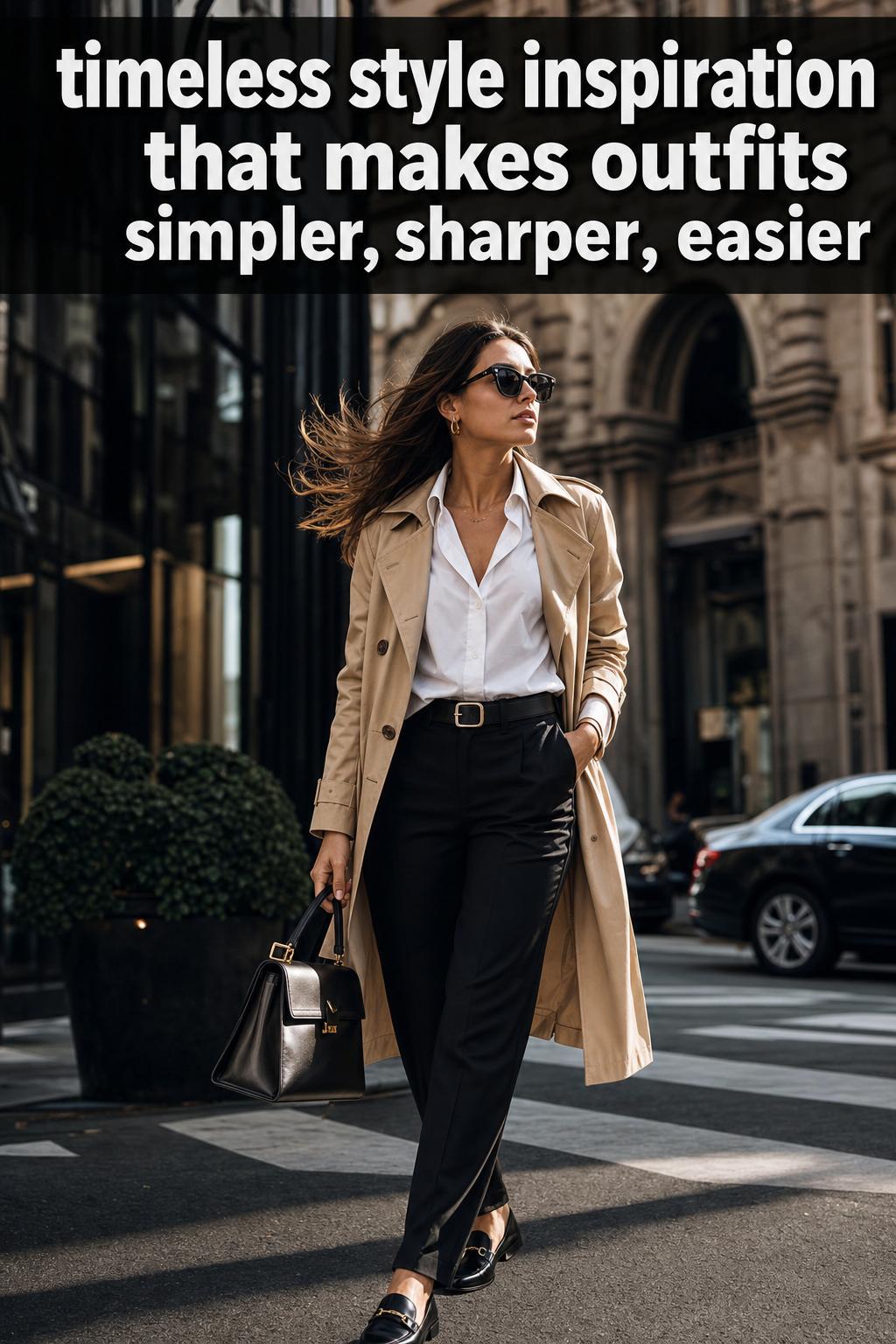
The classic pieces that do the most work
A well-built timeless wardrobe is rarely extensive. It is strategic. The most useful pieces tend to appear repeatedly across editorial guidance because they solve multiple outfit needs at once. They act as foundations, finishers, or balancing elements depending on what the rest of the look requires.
- Trench coat for outerwear structure and transitional layering
- Tailored coat for a polished cold-weather line
- Crisp white shirt as a universal styling base
- Tailored blazer for shape and formality control
- Black trousers for clean, repeatable outfit composition
- Well-cut jeans for casual balance
- Little black dress for evening simplicity
- Midi slip dress for streamlined elegance
- Loafers or ballet flats for understated finish
- Sunglasses and a structured bag as signature accessories
The key is not just ownership but distribution of function. A white shirt may work under a blazer for work, half-tucked into denim on weekends, or layered beneath a tailored coat for city dressing in New York or Paris. Black trousers can carry the same shoes and accessories in multiple settings while changing the overall mood through the top layer.
Outerwear as the first visual anchor
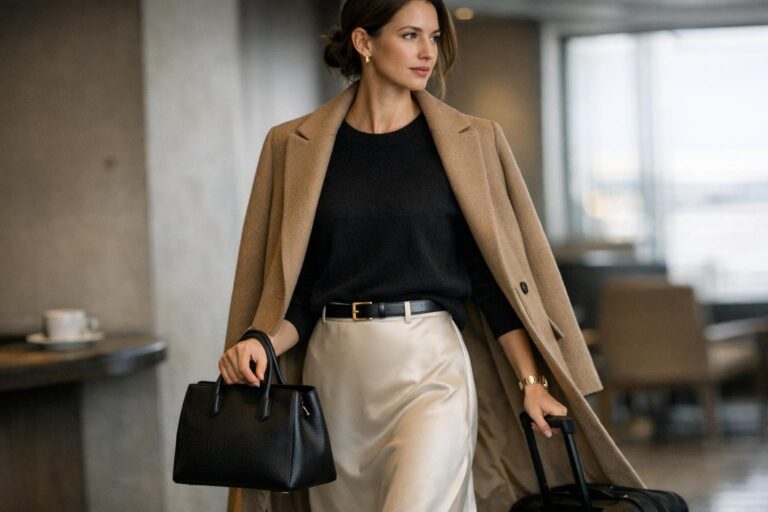
Outerwear often determines whether an outfit reads timeless or temporary. A trench coat offers one of the clearest examples. It has enough structure to sharpen casual layers and enough ease to avoid stiffness. A tailored coat plays a similar role in colder seasons, especially when the rest of the outfit is intentionally simple.
Because coats occupy so much visual space, their line and length matter more than trend-led detailing. Clean lapels, balanced proportions, and a neutral tone increase wearability and make styling more efficient.
Tops that support rather than dominate
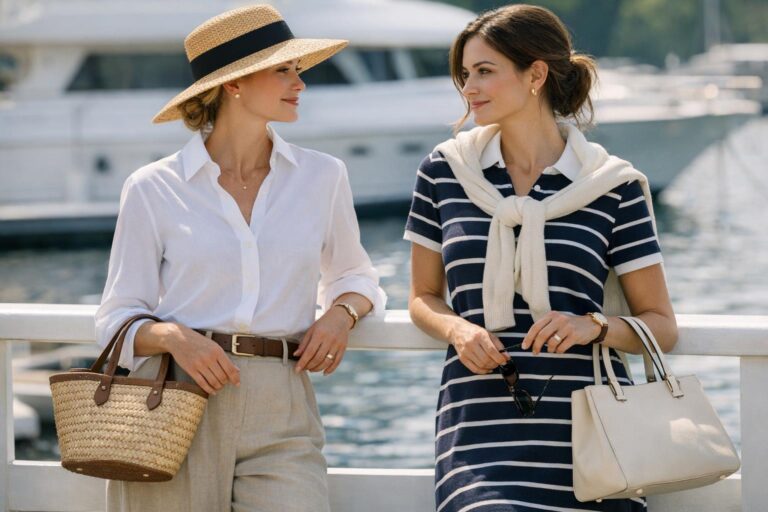
The crisp white shirt remains one of the strongest timeless pieces because it bridges tailoring and ease. It can sharpen denim, soften suiting, and create contrast under darker outerwear. Black turtlenecks serve a similar purpose by providing sleek continuity through the neckline and torso, especially under coats and blazers.
These tops work because they do not fight for attention. They create a clean field around which the rest of the outfit can be built.
Bottoms that stabilize the silhouette
Straight-leg trousers and well-cut jeans are essential because they hold the lower half of an outfit in place. They support tonal layering, adapt well to loafers or ballet flats, and pair easily with both fitted and relaxed tops. In timeless fashion, bottoms should create line and continuity rather than visual interruption.
Black trousers remain especially valuable because they can shift from workwear staple to evening base with minimal change. The styling logic is simple: a controlled lower half gives more freedom to play with outerwear, tailoring, or accessories without losing polish.
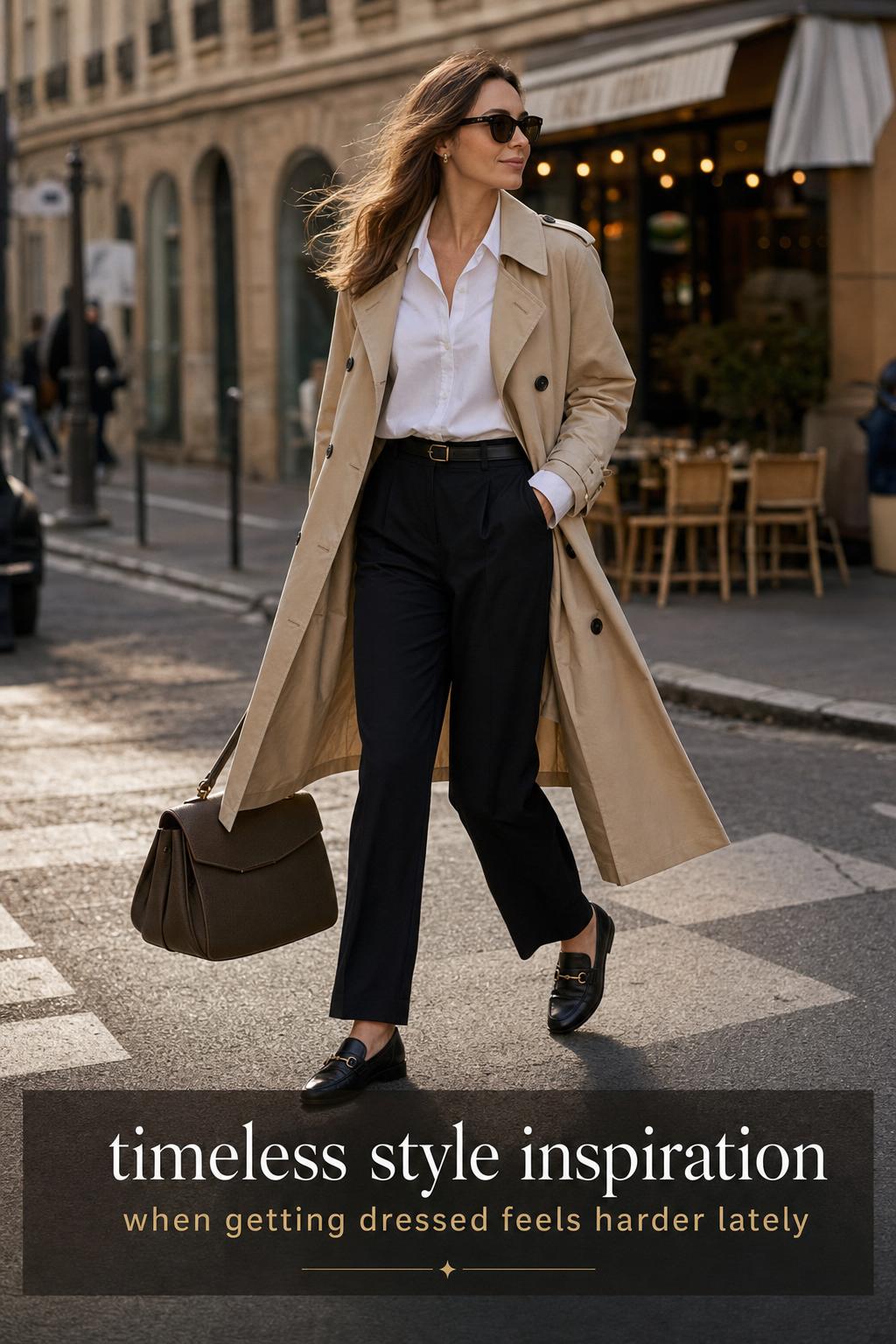
Style icons and archetypes that shape the timeless mood
Timeless style rarely emerges in isolation. It is often clarified through archetypes—recognizable figures whose wardrobes distilled a consistent visual identity. Carolyn Bessette-Kennedy is one of the clearest references for 1990s minimalism: clean tailoring, restrained color, understated accessories, and an almost architectural approach to dressing. Her influence remains strong because the pieces associated with her style still function well in contemporary wardrobes.
Audrey Hepburn represents a different but equally relevant angle on timeless elegance. Her silhouette language emphasized simplicity, poise, and precision. The takeaway from both archetypes is not era-specific imitation. It is understanding how disciplined wardrobe choices create a signature that can survive beyond its original decade.
Steve McQueen introduces another useful reference point, especially when considering the broader archetype of enduring personal style. His presence in the timeless conversation reinforces that classics are not confined to one aesthetic lane. The common thread is coherence: each icon relied on a refined set of pieces that worked repeatedly and convincingly.
What 1990s minimalism still teaches
The 1990s remain influential because they stripped fashion back to line, neutral palettes, and tactile quality. Think blazer, white shirt, trench, denim, and tailored trousers in combinations that felt effortless without being careless. That era’s strongest lesson is that reduction can create impact when the fit is exact and the pieces are edited carefully.
Labels such as Calvin Klein and Ralph Lauren are often tied to this visual language because they helped define the clean American approach to classics. In city settings like NYC, where pace and practicality shape dressing choices, that formula remains especially persuasive.
How to build a capsule wardrobe without making it feel flat
A capsule wardrobe works best when it is treated as a system rather than a shopping list. The goal is to create a small network of pieces that can move across work, weekend, and evening use without forcing constant replacement. Timeless style inspiration is useful here because it provides visual consistency while still leaving room for personal preferences.
Start with a wardrobe audit
The first step is not buying more. It is identifying which pieces already support your daily life. A blazer that fits cleanly, black trousers that hold their line, denim with a dependable cut, and a white shirt that layers well all deserve priority. Pieces that only work in one narrow context usually weaken the capsule unless they serve a specific evening role such as a little black dress.
A practical closet curation question is this: does the item connect to at least three other pieces in a natural way? If not, it may be visually appealing but structurally inefficient.
Plan around color and fabric harmony
A capsule wardrobe becomes stronger when color and fabric choices reinforce one another. Neutral palettes make outfit repetition feel cohesive. Cotton, wool, cashmere, and denim create texture variation without disrupting the overall mood. This matters because a wardrobe built entirely on similar surfaces can look dull, while one built on too many disconnected textures can feel scattered.
Texture contrast is one of the easiest ways to keep timeless fashion visually interesting. A crisp shirt under a wool blazer, denim beneath a tailored coat, or smooth loafers paired with structured trousers all create subtle depth.
Separate investment pieces from affordable staples
Not every classic needs the same budget priority. Outerwear, tailoring, and shoes often justify deeper investment because they shape the silhouette and endure heavier wear. Simpler layering pieces can sit at a more accessible price point if they maintain clean fit and reliable fabric performance. This distinction prevents overspending on items that do not significantly improve outfit composition.
Editorial shopping roundups often highlight this strategy because it reflects how wardrobes function in practice. A strong coat or blazer changes the read of an outfit immediately, while a basic tee or shirt can remain effective without carrying the entire visual load.
Outfit formulas that consistently deliver timeless style inspiration
The most useful timeless outfits are modular. They can be repeated, adjusted, and restyled without losing their clarity. Rather than chasing novelty, they rely on consistent structure with small shifts in mood. That is the real strength of classic style: it allows repetition to look intentional.
The city uniform: trench coat, white shirt, black trousers
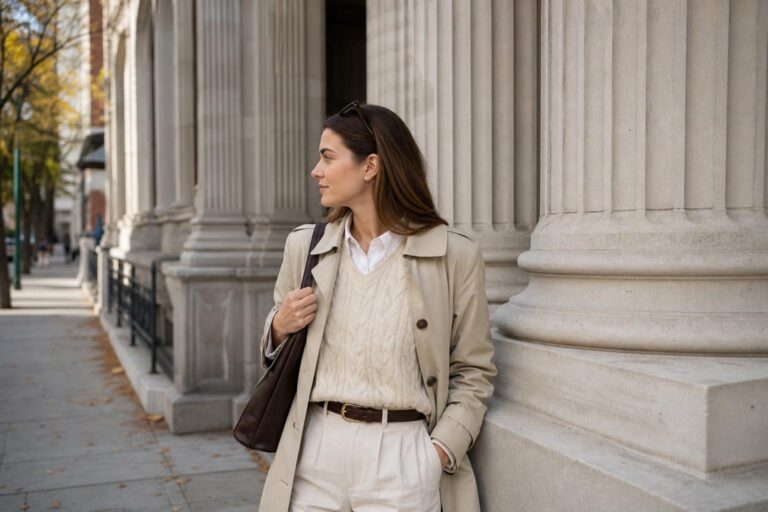
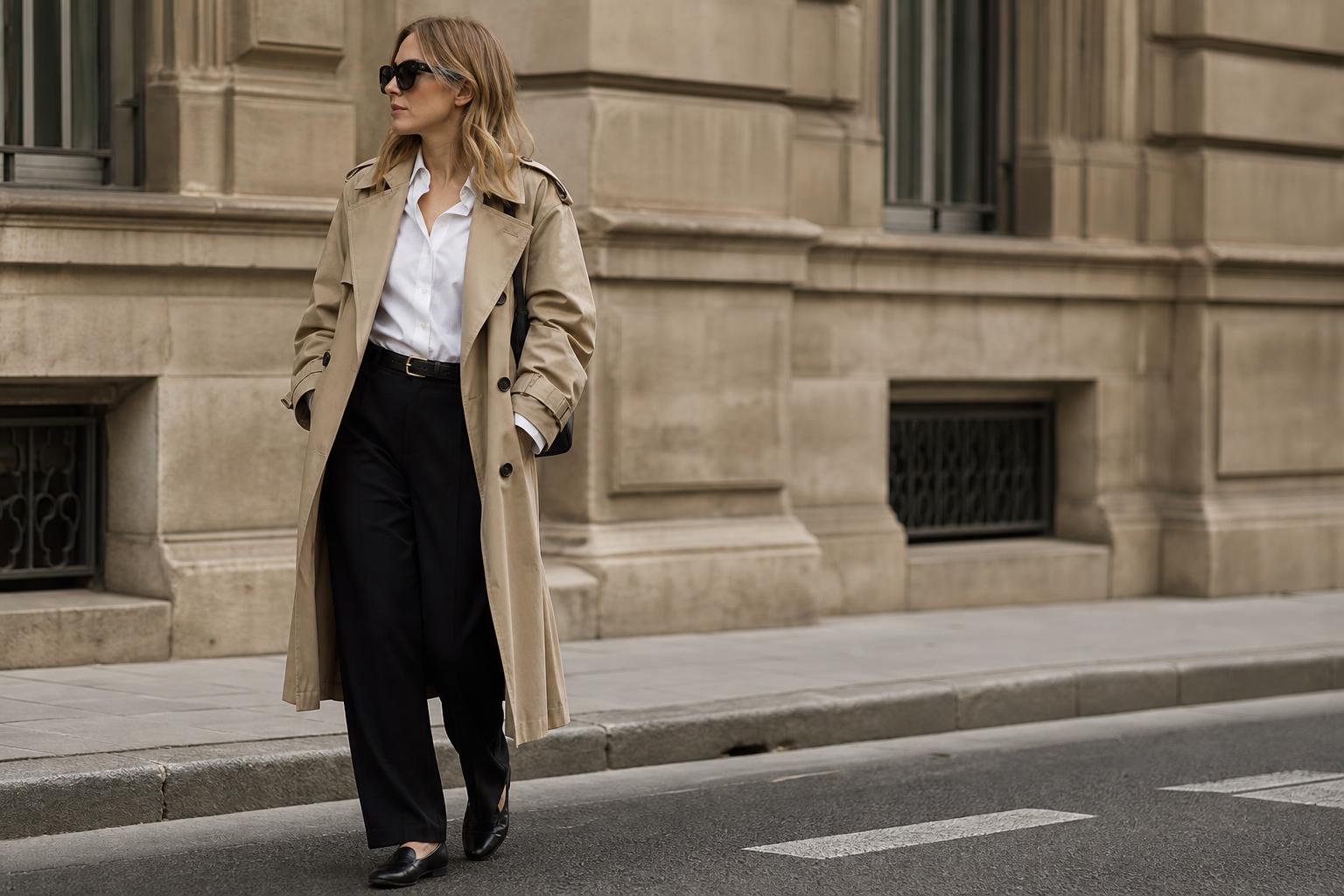
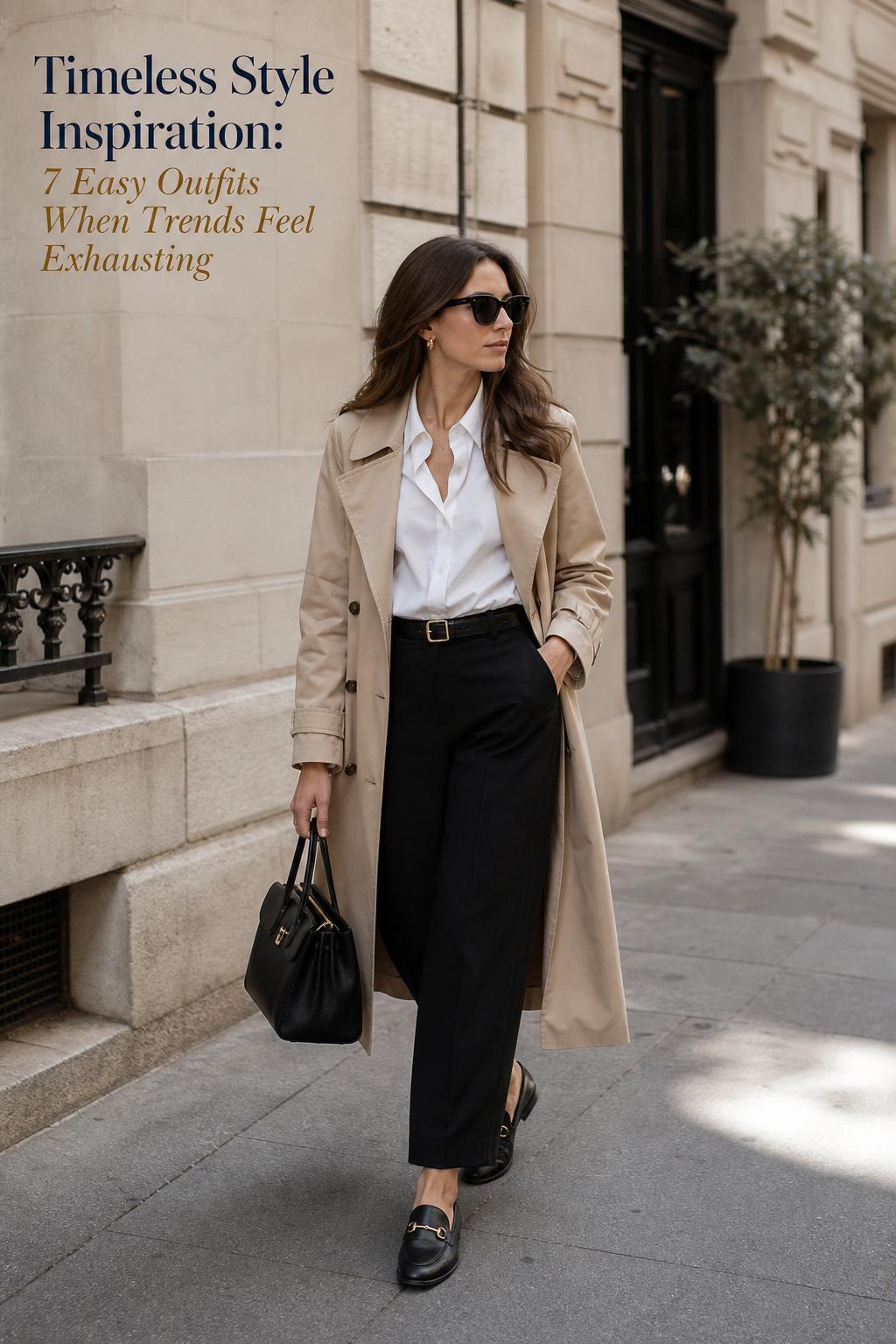
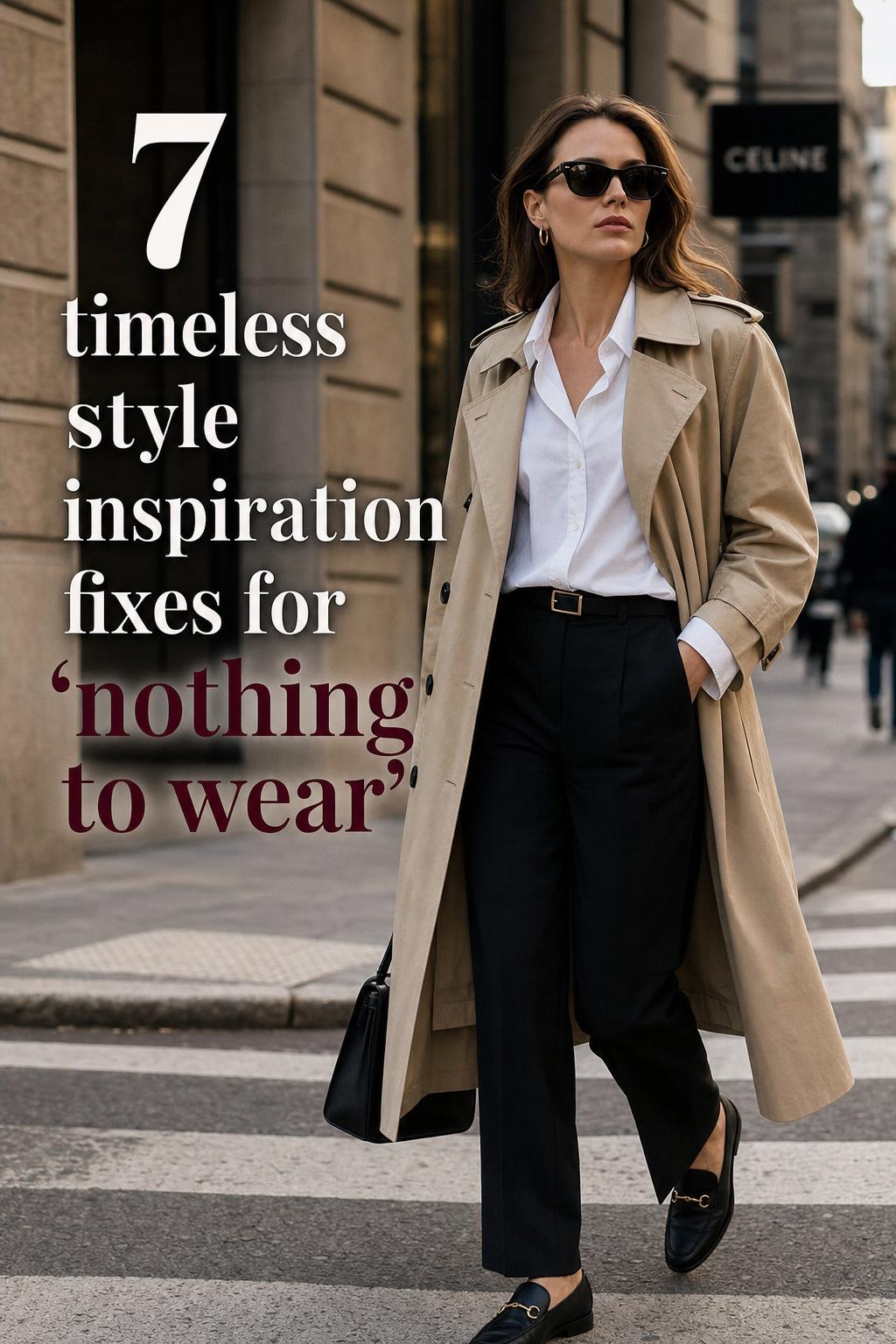
This combination works because each piece performs a distinct role. The trench coat provides movement and outer structure. The white shirt introduces brightness near the face. Black trousers ground the outfit with a sharp, uninterrupted base. Add loafers and minimal sunglasses, and the look feels aligned with the polished urban dress codes often associated with New York and Paris.
For weekday use, keep the shirt crisp and the trousers tailored. For weekend wear, soften the effect by loosening the shirt styling or switching to denim while keeping the trench as the visual anchor.
The 90s-inspired formula: blazer, denim, minimal accessories
This outfit draws from Carolyn Bessette-Kennedy’s enduring influence. The reason it works is proportion balance. A tailored blazer refines the upper half, while denim introduces casual texture and prevents the look from becoming overworked. Accessories should remain disciplined—loafers, a simple bag, sunglasses—so the silhouette remains the focus.
When the denim fit is clean and the blazer is neither too tight nor overly dramatic, the outfit retains the understated authority that defines 1990s minimalism.
The evening shortcut: little black dress with restrained finishing pieces
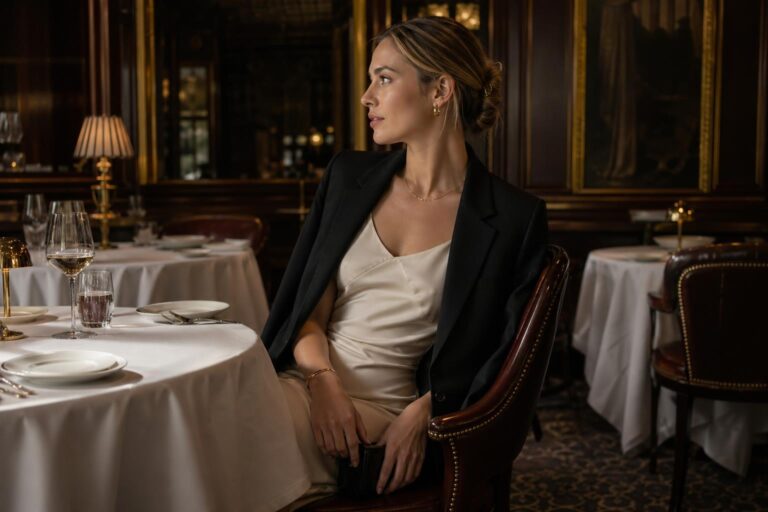
The little black dress remains timeless because it reduces evening dressing to its most efficient form. It creates immediate cohesion, leaves room for accessories to shape the mood, and avoids the visual fatigue caused by overly trend-specific detailing. A structured coat, minimal sunglasses for transitional hours, and a refined bag can carry the look from dinner to a more formal setting without overcomplication.
This formula works best when the dress line is clean. In timeless style, eveningwear is less about excess and more about precision.
The soft tailoring option: midi slip dress and structured blazer
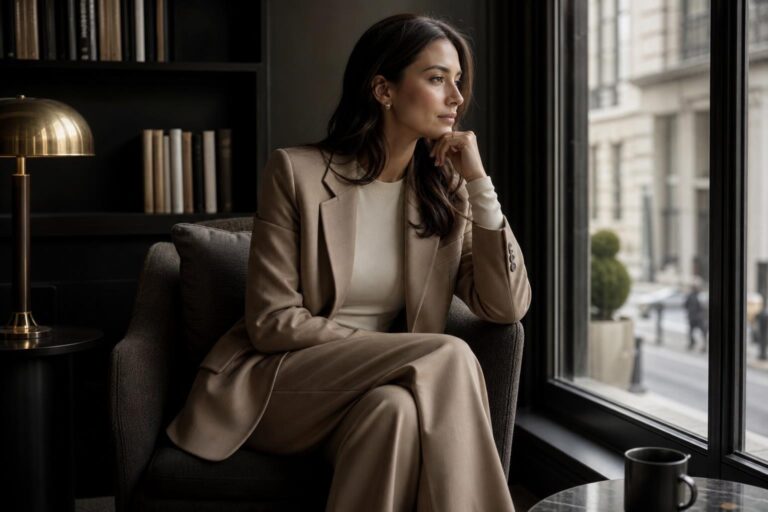
This pairing succeeds through contrast. The fluid line of a midi slip dress gains definition from the blazer’s structure, creating silhouette balance without adding clutter. It is a strong example of how timeless pieces do not need to feel severe. Softness can be part of the formula, as long as there is an anchoring element to hold the outfit together.
For cooler conditions, a tailored coat extends the line cleanly. For transitional weather, ballet flats keep the look light while preserving refinement.
Tips for making timeless fashion feel personal
A common mistake is assuming that timeless dressing requires removing all character. In reality, the most convincing classic wardrobes have a signature. The difference is that the signature usually comes from consistency rather than constant novelty.
- Choose one accessory category to define your wardrobe, such as bags, sunglasses, or shoes.
- Repeat a preferred silhouette, whether that is straight-leg trousers, long coats, or relaxed shirting.
- Keep your palette disciplined so your signature pieces feel intentional rather than random.
- Use tailoring and alterations to refine fit instead of replacing garments too quickly.
- Build around your actual routine rather than an imagined lifestyle.
Signature dressing can be subtle. One person may rely on loafers and tailored outerwear. Another may favor white shirts and minimal dresses. The point is to establish a repeatable visual code. That is what makes a wardrobe recognizable and durable.
Maintenance, repair, and the longevity factor
Timeless style is not only about buying classic pieces. It is also about keeping them wearable. Garment longevity depends on care, repairability, and how well a piece integrates into repeated use. A coat that stays in excellent condition, a blazer adjusted by a tailor, or shoes maintained over time will always contribute more value than a rotating collection of short-lived purchases.
Why care changes the look of a wardrobe
Clothing that is well maintained preserves sharpness. Shirts hold their clean lines, wool keeps its depth, and tailoring continues to read as intentional. In a timeless wardrobe, condition matters because the aesthetic depends on clarity. Even the best silhouette loses impact if the fabric looks neglected.
This is where practical habits become part of style itself. Fabric care, smart storage, and timely repairs support the visual discipline that timeless fashion requires.
Alterations and resale as part of wardrobe logic
Alterations improve proportion far more effectively than replacing a garment with a trend-led substitute. A seamstress can sharpen a blazer’s line, correct trouser length, or improve coat balance. Repairability also matters when deciding what deserves investment. Pieces with strong fabric and straightforward construction are easier to maintain over time.
Resale value enters the conversation because a truly timeless piece tends to hold relevance longer. That does not guarantee return, but it does support smarter buying. When a wardrobe is built around enduring shapes, each purchase can be evaluated not just for immediate appeal, but for long-term usefulness.
Where timeless style differs from quiet luxury and anti-trend dressing
These categories overlap, but they are not identical. Timeless style is fundamentally about endurance of silhouette, versatility, and repeat wear. Quiet luxury emphasizes subtle polish and restraint, often through elevated materials and minimal branding. Anti-trend dressing focuses more directly on resisting rapid fashion cycles. A wardrobe can reflect all three, but timeless style is the broadest and most practical framework.
This distinction matters because readers often confuse visual simplicity with true longevity. A piece can look understated and still be highly specific to a short-lived fashion moment. Timeless dressing asks a more demanding question: will this shape, fabric, and function still work after the mood of the season changes?
Regional cues and global fashion capitals
Timeless fashion often draws atmosphere from place, even when the pieces themselves remain universal. New York suggests utility, sharp tailoring, and a wardrobe that keeps pace with movement. Paris introduces ease, restraint, and confidence in repetition. Milan adds polished structure and a strong relationship with tailoring and accessories. These locations matter not because a wardrobe must imitate them, but because they demonstrate how classics adapt to different rhythms of life.
A trench coat can feel distinctly urban in NYC, refined and effortless in Paris, or more polished in Milan depending on what surrounds it. The same applies to loafers, blazers, and tailored coats. The pieces remain stable; the styling context shifts. That flexibility is a strong sign of timelessness.
An editorial wardrobe matrix for work, weekend, and evening
One of the clearest ways to test whether a wardrobe is truly timeless is to map each piece across different settings. If the same core items can move from professional to casual to evening use with only modest styling adjustments, the wardrobe is functioning efficiently.
- Work: tailored blazer, white shirt, black trousers, loafers, structured bag
- Weekend: trench coat, denim, knit or tee, sunglasses, ballet flats
- Evening: little black dress or midi slip dress, tailored coat, minimal accessories
- Transitional day-to-night: blazer, straight-leg trousers, refined top, bag, polished shoes
This matrix is especially useful when shopping. It clarifies whether a new piece strengthens existing outfit composition or simply adds another isolated option. Timeless dressing becomes easier when every addition has a clear role.
Common mistakes that weaken a timeless look
Classic dressing can still miss the mark when the styling logic is off. The most frequent issue is imbalance. A beautiful coat over poorly cut trousers, a crisp shirt paired with visually heavy accessories, or a minimalist outfit disrupted by one trend-led piece can all break cohesion.
- Buying basics without considering fit and silhouette
- Using neutral colors without adding texture contrast
- Choosing too many statement accessories at once
- Ignoring tailoring, hemming, or small repairs
- Building a capsule wardrobe around aspiration instead of daily wear
The fix is usually straightforward. Refine fit, simplify the accessory story, and return to clear visual anchors. Timeless style does not ask for perfection. It asks for consistency.
How to find ongoing inspiration without chasing every trend
The best sources of timeless style inspiration tend to be editorial and archival rather than purely trend-driven. Outfit boards, fashion editorials, and historical imagery are useful because they reveal recurring formulas: trench over tailoring, blazer with denim, clean dresses with structured outerwear, and accessories used sparingly. These repeated patterns help train the eye to recognize what lasts.
Editor favorites and shopping roundups can also be useful when approached critically. The value is not in copying every featured item, but in observing which categories continue to return—coats, blazers, white shirts, loafers, bags, sunglasses, and dresses with clean lines. Repetition across these categories is meaningful because it signals wardrobe utility, not just novelty.
Archival references add another layer of perspective. They show that what feels modern today often rests on an older logic of proportion and restraint. That is why classic silhouettes continue to resonate long after the original images were produced.
FAQ
What items never go out of style?
The most consistently timeless pieces include a trench coat, tailored coat, crisp white shirt, tailored blazer, black trousers, well-cut jeans, a little black dress, loafers, ballet flats, a structured bag, and minimal sunglasses. These items endure because they work across multiple settings and rely on silhouette rather than trend-specific detail.
How can I tell if a piece is truly timeless?
A timeless piece usually has a clean silhouette, versatile color, dependable fabric, and clear function in your wardrobe. It should pair naturally with several existing items and remain useful across seasons or occasions. If it depends on a very specific styling moment to feel relevant, it is less likely to have lasting value.
Is timeless style the same as a capsule wardrobe?
No, but they are closely connected. Timeless style is an aesthetic and functional approach built around enduring pieces and balanced outfit composition. A capsule wardrobe is a wardrobe system that uses a smaller number of versatile pieces. Many capsule wardrobes use timeless fashion as their foundation because classics make repetition easier and more polished.
How do I make a timeless wardrobe feel modern?
Focus on fit, proportion, and styling precision. A blazer with the right shoulder line, straight-leg trousers with clean length, or a trench styled with minimal accessories will always feel current. Timeless does not mean frozen in one decade; it means the core pieces are adaptable enough to move with changing contexts.
Can timeless fashion include denim?
Yes. Well-cut jeans are one of the most useful timeless staples because they balance tailored pieces and add casual texture. Denim works especially well with blazers, white shirts, trench coats, and loafers, creating outfits that feel grounded and versatile rather than overly formal.
Which style icons are most associated with timeless dressing?
Carolyn Bessette-Kennedy is strongly associated with 1990s minimalism and clean tailoring, while Audrey Hepburn represents refined, enduring elegance. Steve McQueen also appears as a broader archetype of lasting personal style. Each of these references highlights consistency, restraint, and strong wardrobe foundations.
Do accessories matter in timeless style?
They matter a great deal, but usually in a controlled way. Loafers, ballet flats, sunglasses, bags, and other understated accessories help define the finish of an outfit without overwhelming it. In timeless dressing, accessories should support the silhouette and act as visual anchors rather than compete for attention.
Why is maintenance so important for timeless pieces?
Timeless fashion depends on clarity and condition. A well-maintained coat, properly fitted blazer, or crisp shirt keeps its shape and visual impact over time. Care, alterations, and repair extend the life of investment pieces and help preserve the polished look that gives classic dressing its authority.