Jacquemus Moodboard for Chic, Wearable Summer Style
A jacquemus moodboard usually starts as a visual desire: sun-washed color, sculptural simplicity, and the kind of styling that feels effortless in a photograph but harder to translate into real clothes. That is the central challenge. Many readers are drawn to the Jacquemus aesthetic because it looks clean, directional, and light, yet when they try to recreate it, the result can feel either too minimal to be interesting or too exaggerated for daily wear.
The difficulty comes from balance. This style language depends on proportion play, strong visual anchors, and a careful relationship between body, fabric, and setting. A tiny bag, a sharply cut dress, open space around the silhouette, and a Mediterranean mood can look coherent on a runway or in an editorial image, but in real life you still need comfort, practicality, and clothes that move well through a normal day.
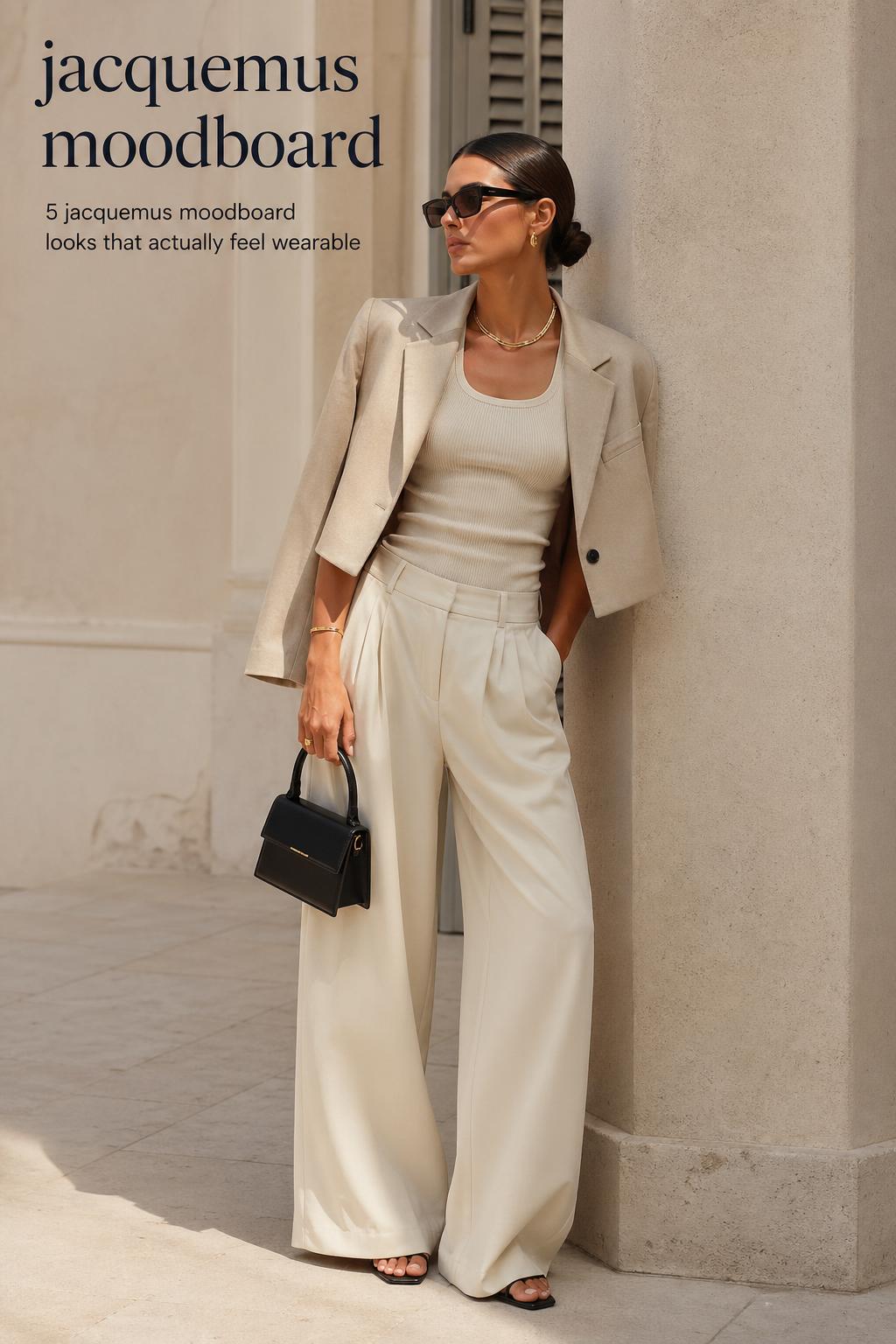
This guide breaks that problem down into wearable solutions. Instead of treating a jacquemus moodboard as a collection of pretty images, it treats it as a styling system. The focus is on how to build outfits that capture the same visual logic through color, shape, accessories, and seasonal dressing, while staying usable for city days, vacations, warm weather, and polished casual settings.
What makes the jacquemus moodboard hard to wear in everyday life
The appeal of Jacquemus is closely tied to clarity. The brand aesthetic often revolves around clean lines, warm light, sensual restraint, and statement proportions. That sounds simple, but simplicity is usually less forgiving than maximal styling. When an outfit has fewer elements, each piece has to work harder. Cut, hem length, fabric weight, and accessory scale all become more visible.
Found the dress? Keep the rest in one place.
Zarellea brings guest details, vendors, timelines, and every next step together — so your wedding plan feels as good as your look.
Weather is another major factor. The visual world associated with Simon Porte Jacquemus is often linked to sunshine, open landscapes, and a relaxed South of France sensibility. In practical terms, that means many people try to recreate the look in climates or schedules that do not support airy fabrics, bare skin, or delicate footwear. The challenge is not just aesthetic imitation. It is adapting the mood so it still functions when you are walking, commuting, sitting for long hours, or layering for changing temperatures.
There is also the question of functionality. A micro bag may complete the visual composition, but it does not carry much. A dramatic cutout dress may look strong in a fashion image, but it may not work for a full day of movement. A low-rise skirt or sharply cropped top may create the right silhouette balance, but only if the proportions suit the wearer and the setting. The goal is not to copy a look exactly. The goal is to identify the styling principles beneath it.
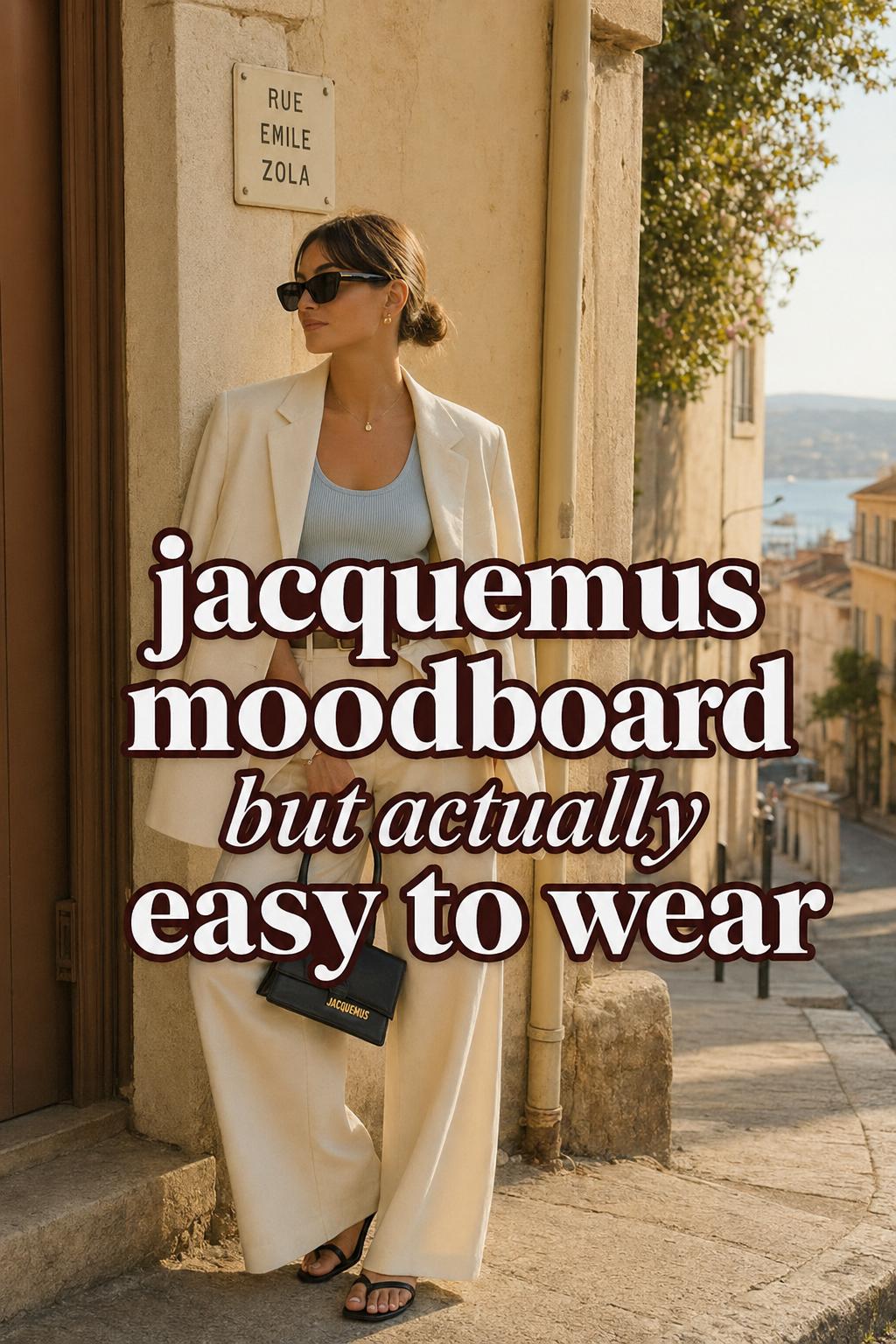
The visual codes behind the aesthetic
A strong jacquemus moodboard usually draws from recurring fashion concepts rather than random inspiration. The first is proportion tension: tiny versus oversized, fitted versus fluid, bare versus covered. This contrast creates visual interest without requiring heavy layering or loud pattern.
The second is a sun-oriented palette. Neutrals, creamy whites, sandy tones, black accents, soft yellow, sky blue, and occasional vivid color can all operate within this framework, but they work best when the palette feels deliberate rather than crowded. Jacquemus styling often relies on the power of one or two key shades supported by natural-looking tones.
The third code is sculptural simplicity. Pieces may appear minimal at first glance, yet the impact comes from shape: a curved neckline, an asymmetrical hem, a cropped jacket, a tailored trouser, or a dress with a precise cutout. The look is not plain. It is edited.
Finally, the setting matters. The relationship between Jacquemus, the South of France, and a broader Mediterranean mood is central to the imagery many people save to Pinterest. Light, air, dryness, texture, and open space influence how the clothing is perceived. In practical styling terms, this means natural fibers, breathable composition, and an outfit that does not feel overloaded usually work better than complicated layering.
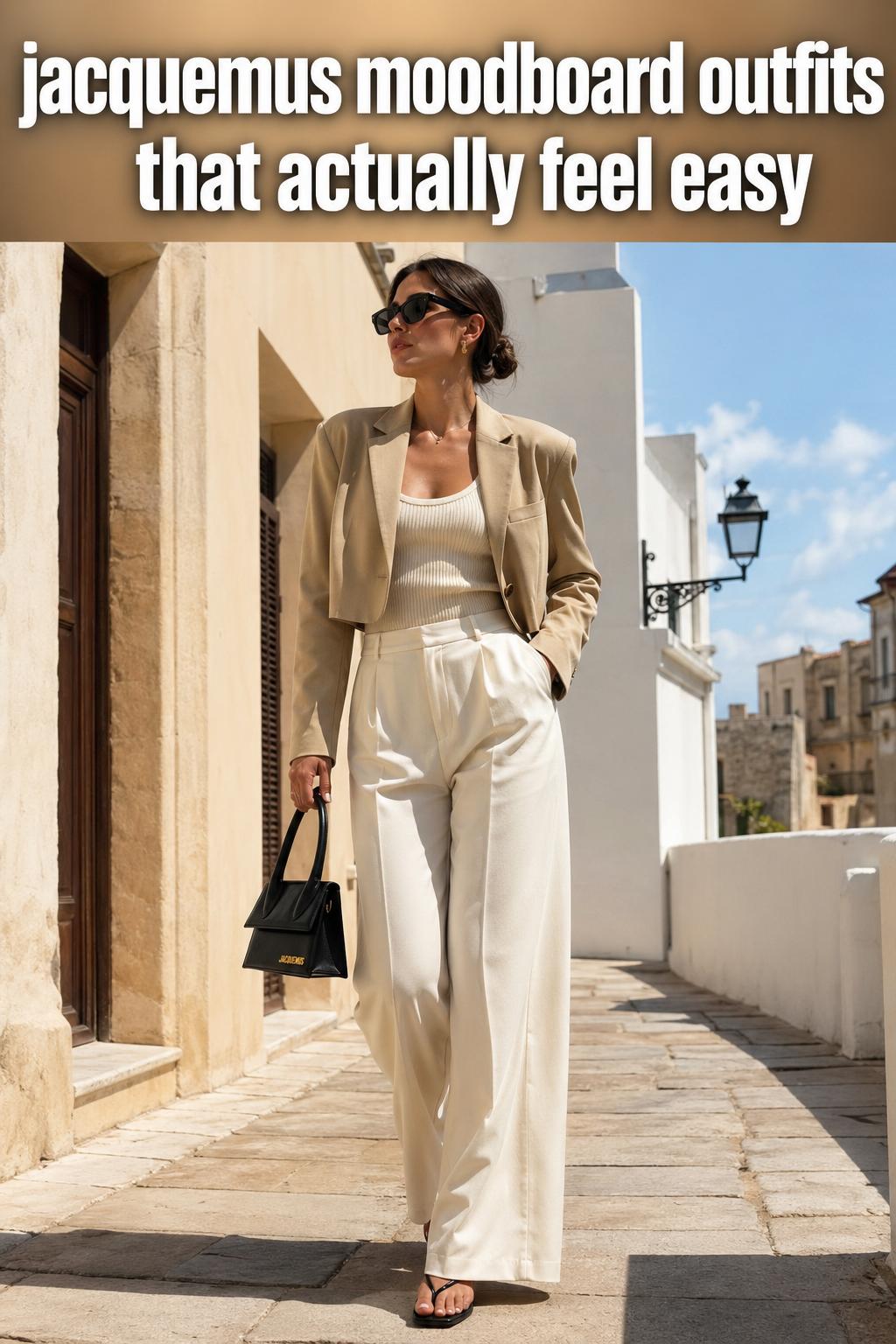
Key dressing principles that make the look wearable
Start with one statement proportion
The easiest way to make this aesthetic work is to choose one proportion shift rather than several. That could mean wide-leg trousers with a compact top, a fitted column dress with oversized sunglasses, or an abbreviated jacket over a longer skirt. This preserves the sharpness associated with the brand while keeping the outfit grounded. Too many competing statements at once tend to make the composition feel forced.
Use texture to replace excess detail
When an outfit is visually minimal, texture becomes essential. Linen, crisp cotton, fine knitwear, smooth leather, and structured poplin all add depth without clutter. This is especially useful if your wardrobe is mostly neutral. Texture contrast lets the outfit feel intentional even when the color story is restrained.
Keep the palette edited
A controlled palette creates the polished clarity people often associate with a jacquemus moodboard. Two to three shades are usually enough. For example, ivory, tan, and black create strong visual discipline. Butter yellow with off-white feels softer. Terracotta with cream introduces warmth without becoming heavy. A tightly edited palette also makes accessories easier to choose.
Let accessories act as visual anchors
Accessories in this style are rarely random additions. They operate as anchors. A Le Chiquito-style micro bag, minimalist sandals, bold jewelry, or angular sunglasses can sharpen even a very simple clothing base. The key is to avoid piling on too many statement elements. One accessory should define the outfit, while the others support it.
Dress for movement, not just the image
This principle is often overlooked. An outfit inspired by runway styling still needs to function in motion. If a top requires constant adjusting, if a skirt limits walking, or if shoes are too delicate for the environment, the look loses its ease. Real style authority comes from outfits that maintain their shape and attitude while being lived in.
How to build a jacquemus-inspired wardrobe without overcomplicating it
The most effective approach is to think in categories rather than isolated purchases. Instead of collecting trend-led pieces with no relationship to one another, build a compact wardrobe around silhouettes and textures that can repeat. This mirrors the strength of fashion moodboards: visual consistency.
- A structured mini or midi dress with a clean neckline
- Wide-leg trousers in linen, cotton, or a fluid suiting fabric
- A fitted knit top or cropped shirt to create contrast with volume
- A crisp white or cream shirt for tonal layering
- Minimal sandals or sleek flats that do not interrupt the line of the leg
- A compact bag that reads sculptural rather than bulky
- One sharply tailored outer layer for cooler evenings or city settings
These pieces create a system. They allow for variation while preserving a recognizable point of view. That is important because the Jacquemus visual language is less about individual garments than about composition. The wardrobe should feel curated, not crowded.
Outfit solution: the warm-weather city look that stays polished
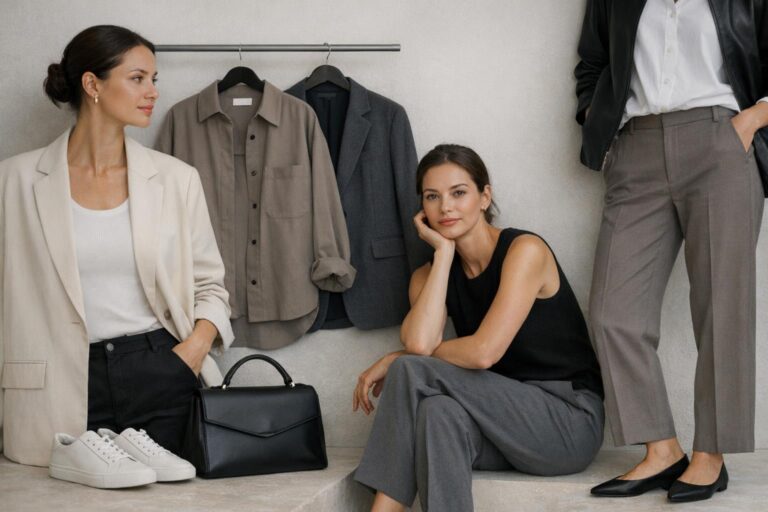
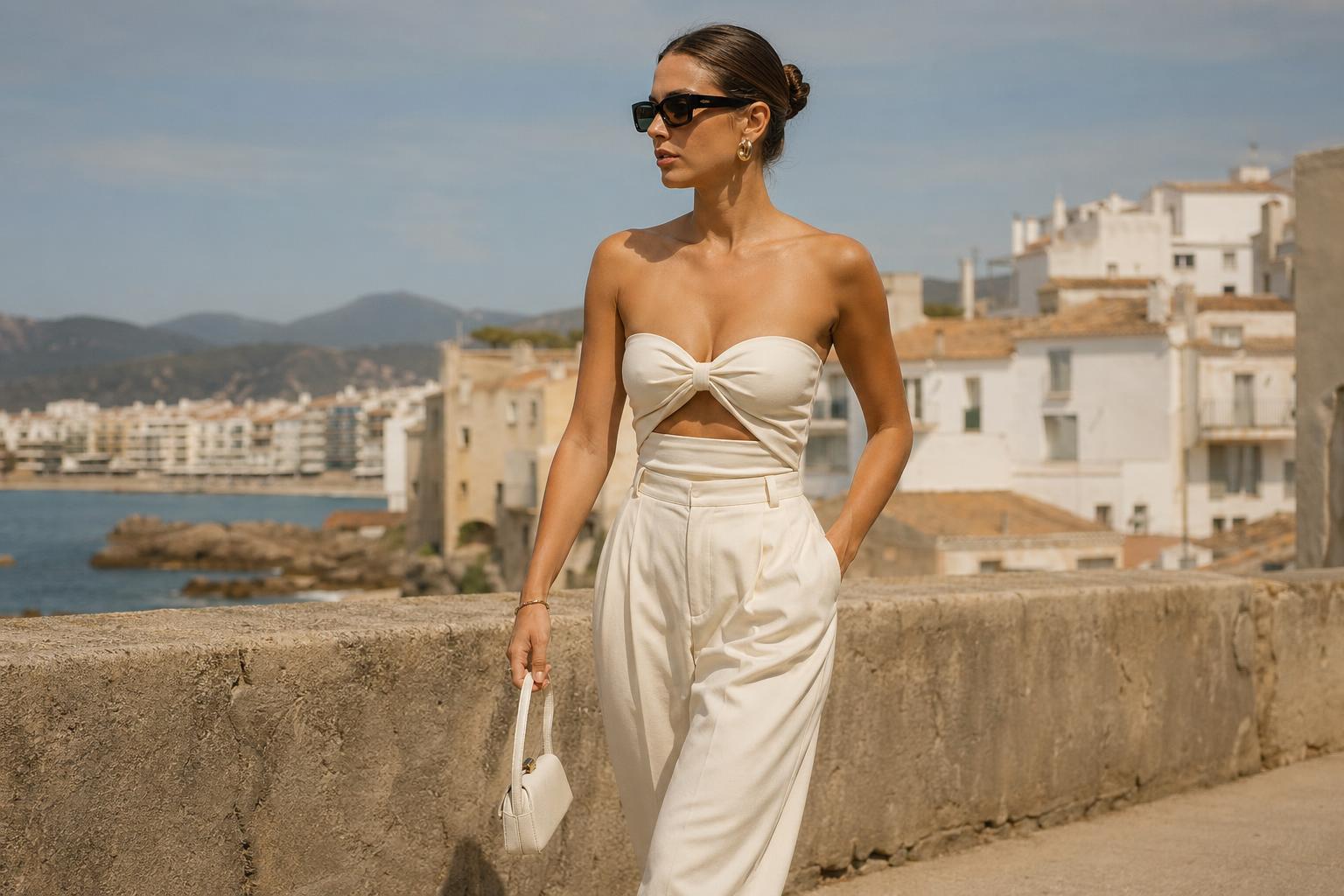
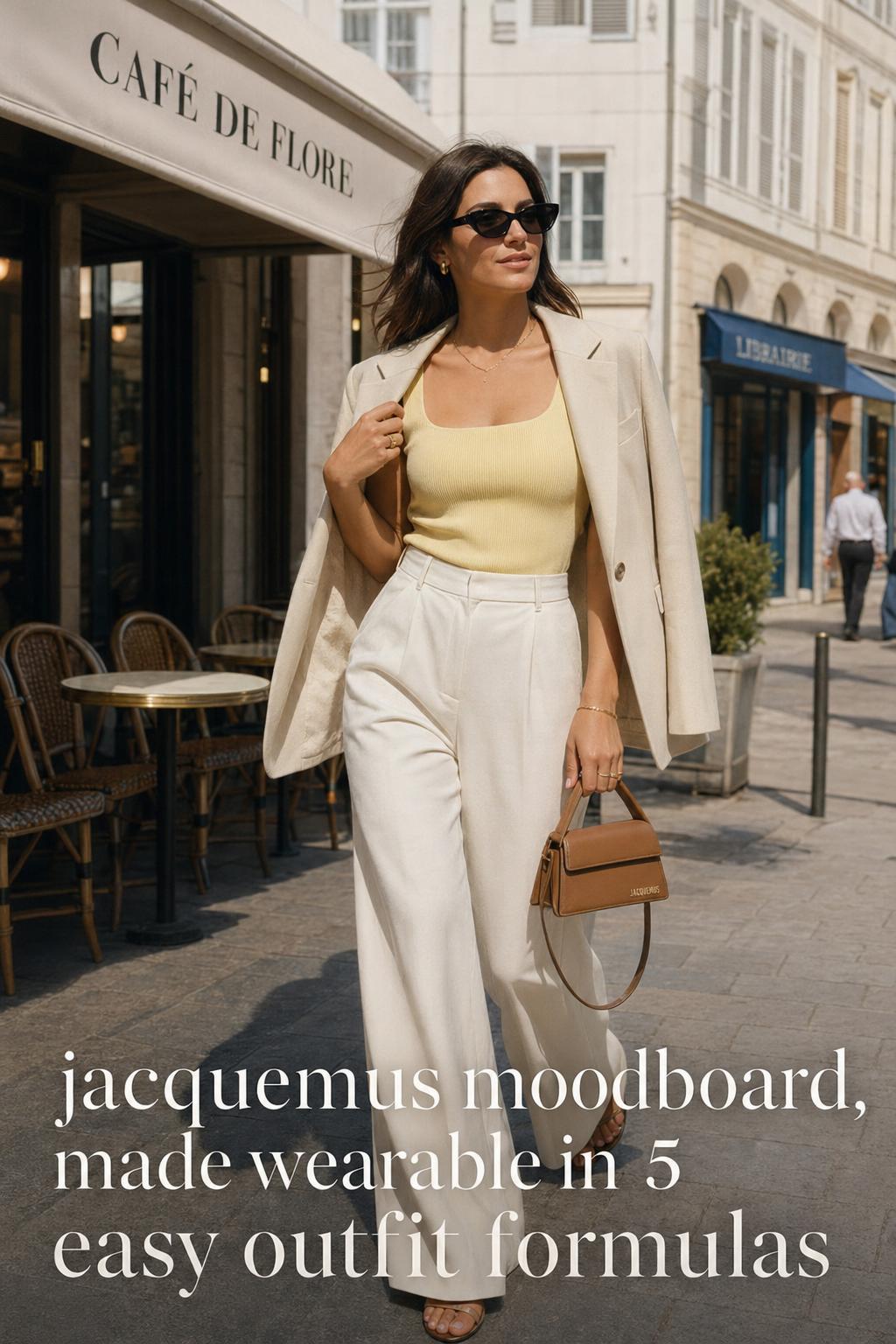
One of the most common styling problems is wanting the lightness of a vacation-inspired jacquemus moodboard while still dressing for an urban day. The answer is a controlled mix of breathable fabric and tailored line. Start with wide-leg cream trousers and pair them with a fitted ribbed top in white, black, or muted color. Add flat leather sandals and a small structured bag.
This combination works because the volume sits low on the body while the top remains concise. That creates silhouette balance without relying on overtly dramatic styling. The trousers provide movement and comfort in heat, while the compact top keeps the look sharp rather than oversized. If needed, a cropped blazer or lightweight shirt can be added without weakening the line.
For readers translating Pinterest inspiration into a weekday outfit, this is one of the most realistic formulas. It captures the clean architectural spirit associated with Simon Porte Jacquemus while staying fully usable for walking, lunch meetings, galleries, or travel days.
Why this outfit works
The visual anchor is the trouser shape. The fitted top prevents the look from becoming too relaxed, while the small bag maintains scale tension. The result is polished but not rigid, which is one of the strongest ways to make this aesthetic practical.
Outfit solution: the sculptural dress approach for minimal effort
When readers want the impact of a jacquemus moodboard without having to style multiple separates, a sculptural dress is the most efficient route. Choose a dress with one defining element: an asymmetric neckline, subtle cutout, draped detail, or strong shoulder line. Keep the color clean and the styling restrained.
This solves a common problem: how to look fashion-aware without appearing overstyled. A single well-cut dress delivers the same editorial precision often seen in Jacquemus imagery, especially when paired with minimalist sandals and understated jewelry. The silhouette becomes the focal point, so everything else can remain light.
For day, select cotton poplin, linen blend, or a matte knit that breathes well. For evening, a denser fabric with more structure can hold a sharper line. The strength of this outfit lies in editing. Avoid ornate bags, overly busy prints, or layered accessories that compete with the dress architecture.
Best setting for this formula
This works especially well for summer dinners, gallery events, destination weekends, or any setting where you want clarity and impact with minimal pieces. It also suits readers who prefer a direct styling process over building highly layered outfits.
Outfit solution: the relaxed vacation composition with Mediterranean energy
The vacation version of a jacquemus moodboard often becomes too literal, with straw accessories, beachwear references, and overly themed styling. A stronger approach is to focus on clean resort dressing with architectural restraint. Try an oversized linen shirt worn partially open over tailored shorts or a fluid midi skirt, finished with leather sandals and dark sunglasses.
The reason this works is that it captures the South of France and Mediterranean atmosphere through fabric and ease rather than costume. The oversized shirt introduces air and nonchalance, but the bottom half remains controlled, which keeps the silhouette from looking shapeless. If the shirt is wide, the shorts or skirt should be neat through the waist or hip to preserve structure.
Color is especially important here. White, ecru, pale yellow, sun-faded blue, and warm beige all support the mood. The palette should suggest light exposure and natural surroundings. This is the styling logic that makes many Jacquemus images feel aspirational without looking excessively decorated.
Practical adaptation
If you need more coverage for travel, swap shorts for wide cropped trousers. If sandals are impractical, choose sleek flats with an open shape. The objective is to keep the outfit breathable and visually clean, even when adjusted for comfort.
Outfit solution: smart casual with a sharper fashion edge
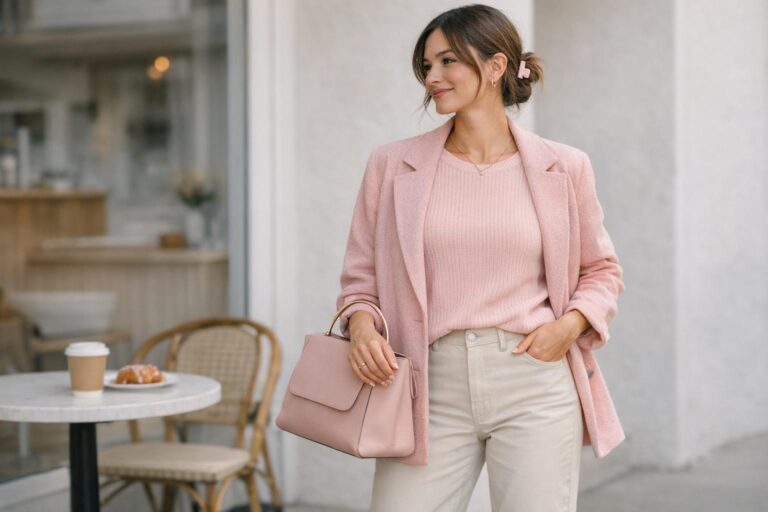
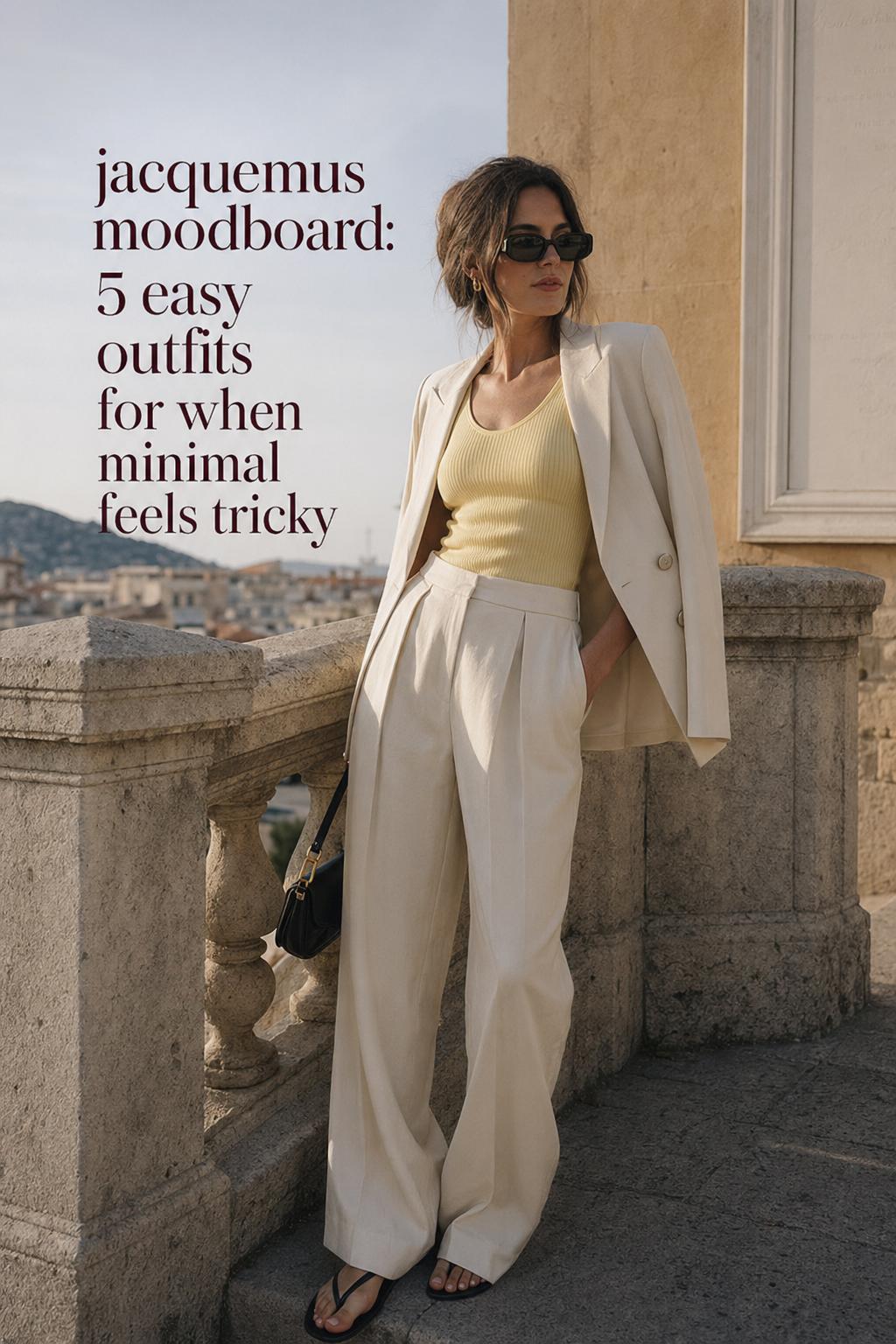
Many readers want Jacquemus-inspired styling for occasions that require more polish than a vacation look but less formality than event dressing. A smart casual solution starts with a structured blazer, preferably slightly cropped or sharply cut, over a fitted tank or fine knit and tailored trousers or a column skirt.
This outfit works because the blazer introduces authority while the base layer keeps the silhouette lean. The overall effect reflects the brand’s balance of sensuality and structure. It also handles transitional weather well, making it one of the most versatile interpretations of the aesthetic.
To keep the composition aligned with a jacquemus moodboard, avoid heavy office styling. The blazer should not feel corporate. Choose one with clean shoulders, a precise waist, or an abbreviated hem. Pair it with sandals, refined mules, or simple flats rather than bulky shoes. A compact bag keeps the proportions modern.
Where this formula is useful
This is ideal for creative work environments, dinner reservations, fashion events, or city weekends where you want a polished appearance that still feels directional. It also helps readers who like the visual codes of Jacquemus but need more coverage and structure than typical warm-weather styling provides.
Outfit solution: tonal dressing for readers who prefer quiet impact
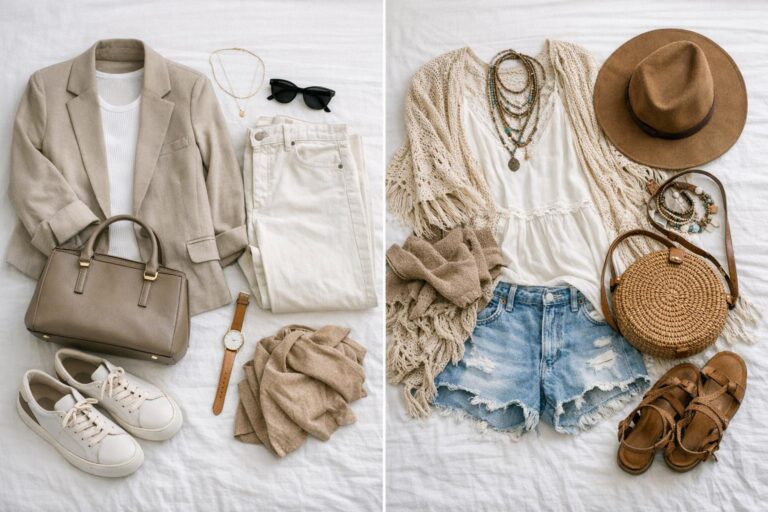
Not everyone wants cutouts, sharp asymmetry, or obvious statement pieces. A quieter version of the jacquemus moodboard relies on tonal layering. Build the look from closely related shades such as cream, oatmeal, sand, and tan, then vary the textures. A knit top, fluid trouser, and smooth leather accessory can feel rich and considered even when the colors remain soft.
This solves the problem of minimal outfits looking unfinished. Tonal dressing creates cohesion, and texture contrast supplies depth. The eye reads the outfit as intentional because the palette is controlled and the materials are distinct. It is one of the easiest ways to channel an editorial fashion mood without stepping too far outside a practical wardrobe.
For warm climates, use breathable natural fibers. For cooler conditions, introduce lightweight knitwear or a compact jacket in a matching tone family. The result remains streamlined, which is essential to preserving the aesthetic discipline associated with the brand.
A location-specific note: why the South of France reference matters
The South of France is not just a backdrop often associated with Jacquemus. It helps explain the styling logic. Light changes how color appears. Dry heat changes how fabric should behave. Open landscapes make strong shapes and uncluttered silhouettes feel more powerful. That is why many jacquemus moodboard images depend on space, simplicity, and sun-reactive tones.
For a U.S. reader, the useful takeaway is not to recreate a destination literally. It is to borrow the environmental principles. In hot, bright settings, choose breathable garments with clear lines. In more urban or temperate settings, preserve the palette and proportion discipline while adding a practical layer. The location reference is valuable because it clarifies why this aesthetic prefers clean composition over busy styling.
Accessories that support the mood instead of disrupting it
Accessories can either sharpen this style or completely derail it. Because the clothing is often edited and spatially clean, every accessory reads loudly. A well-chosen bag, sandal, or pair of sunglasses can reinforce the look; an unrelated shoe or oversized tote can flatten the effect.
- Choose bags with sculptural presence rather than excessive hardware
- Use sunglasses to add line and attitude, especially with simpler outfits
- Keep jewelry selective: one strong piece is often enough
- Favor sandals, slim flats, or refined mules over visually heavy footwear
- Match accessory scale to garment scale so the outfit feels balanced
The broader principle is visual editing. The accessory should reinforce the moodboard logic: clarity, contrast, and controlled emphasis. This is why a small statement bag can work so well. It introduces a deliberate point of focus without crowding the outfit.
Fabric choices that make the difference between aspirational and wearable
Fabric is where many attempts at this aesthetic succeed or fail. The right silhouette in the wrong material loses its precision. Linen, crisp cotton, smooth jersey, lightweight tailoring wool, and fine knit fabrics all support the clean, sun-oriented structure often associated with Jacquemus. They move well, hold shape where needed, and keep the outfit visually breathable.
Very clingy synthetic fabrics can make the look feel less refined, especially in warm weather. On the other hand, fabric that is too stiff can turn a simple outfit into something costume-like. The ideal material has enough integrity to show shape, but enough movement to feel natural on the body.
This is especially important for dresses and trousers. A dress with sculptural intent should not collapse into shapelessness after an hour of wear. Trousers meant to create a long line should glide rather than bunch. The more reduced the outfit, the more noticeable fabric behavior becomes.
Tips for translating Pinterest inspiration into a real closet
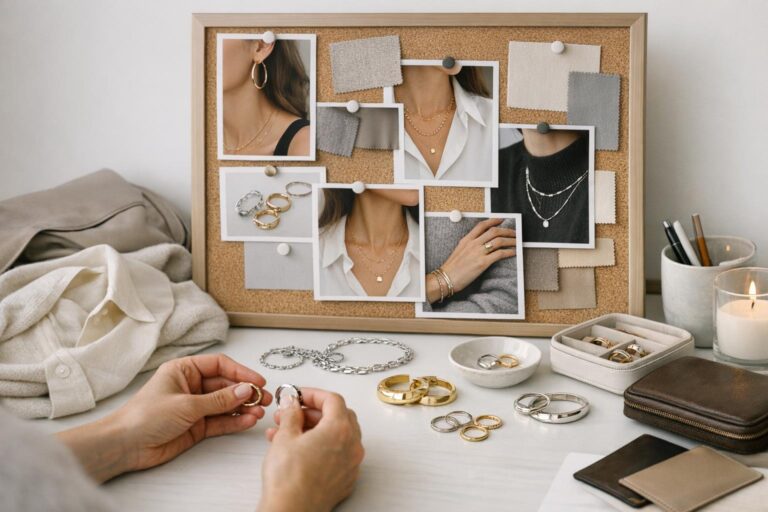
Pinterest often compresses context. A saved image may show the perfect Jacquemus-inspired outfit, but not the weather, undergarment solution, walking distance, or practical compromises behind it. To make a jacquemus moodboard useful rather than frustrating, turn each saved image into styling information.
- Identify the dominant silhouette before focusing on specific items
- Notice whether the look depends more on color, shape, or accessory scale
- Replace impractical pieces with wearable equivalents that preserve the same line
- Build around one hero element instead of copying every detail
- Test the outfit while moving, sitting, and layering before relying on it for an event
This method keeps the moodboard analytical rather than aspirational in a vague way. It also prevents overspending on pieces that look right in isolation but do not function in your wardrobe. Strong style comes from understanding why an image works, not simply collecting images of brands like Jacquemus.
Common mistakes that weaken the look
The first mistake is over-literal styling. Readers sometimes assume that to capture the Jacquemus mood they need every visible signifier at once: micro bag, cutout dress, oversized hat, minimal sandal, gold jewelry, and dramatic sunglasses. In practice, that usually feels heavy-handed. The better route is selective emphasis.
The second mistake is ignoring proportion logic. A tiny top with a tiny skirt and tiny bag can read more trend-driven than refined, because there is no contrast to create visual structure. Likewise, an oversized shirt with oversized trousers and oversized tote can lose all shape. The strongest outfits usually rely on one compact element and one relaxed element.
The third mistake is choosing aesthetics over environment. Sandals that cannot handle walking, a dress that requires constant adjustment, or a bag too small for daily essentials can make an outfit feel less elegant over time. Ease is part of the visual impression. Discomfort shows.
How to adapt the aesthetic across seasons
Although the imagery around Simon Porte Jacquemus often feels deeply tied to summer, the styling principles can translate beyond hot weather. The key is to retain the clean composition and proportion play while modifying fabric weight and coverage.
In spring, a light blazer, fine knit, and fluid trouser maintain the mood well. In summer, dresses, linen separates, and minimal sandals naturally align with the aesthetic. In early fall, tonal dressing becomes especially effective: cream knitwear with tan tailoring, or a structured jacket over a column skirt. Even in cooler conditions, the outfit should remain visually uncluttered. Bulk works against the sharpness this style depends on.
This seasonal adaptability matters because it turns the moodboard from a fantasy into a framework. You are not limited to one climate or one travel moment. You are using a consistent set of fashion decisions: edited palette, clean line, strategic contrast, and sculptural restraint.
A practical styling checklist before you leave the house
Before finalizing any outfit inspired by a jacquemus moodboard, run through a short internal check. This keeps the look aligned with both image and reality.
- Is there one clear focal point in the outfit?
- Do the proportions feel intentional rather than accidental?
- Can you walk, sit, and move easily in the clothing?
- Does the palette feel edited?
- Are the accessories supporting the look instead of competing with it?
- Does the fabric still hold the desired line after wear?
If the answer to most of these is yes, the outfit is likely capturing the essence effectively. If not, the solution is usually subtraction, not addition. Remove one distracting piece, refine one proportion, or simplify the accessory story.
Conclusion
The strength of a jacquemus moodboard lies in its clarity. It is not about copying every runway detail or building an outfit that only works in a photograph. It is about understanding a precise visual language: proportion tension, sculptural simplicity, an edited palette, and accessories used as visual anchors.
Once those principles are clear, the aesthetic becomes much easier to wear. Wide-leg trousers with a compact top, a sharply cut dress, tonal layers, or a structured blazer over a lean base can all deliver the same mood in different contexts. The most successful interpretation is always the one that balances fashion direction with comfort, movement, and real-life practicality.
FAQ
What is a jacquemus moodboard?
A jacquemus moodboard is a collection of visual references built around the style codes often associated with Jacquemus: sculptural minimalism, sun-washed color, strong proportions, clean accessories, and a Mediterranean or South of France atmosphere.
How do I make a jacquemus-inspired outfit look wearable for everyday life?
Focus on one defining proportion, keep the palette controlled, and choose practical versions of statement elements. Wide-leg trousers with a fitted top, or a sculptural dress with simple sandals, usually feel more wearable than trying to combine every recognizable detail at once.
Do I need a micro bag to capture the aesthetic?
No. A compact structured bag can create the same visual effect without sacrificing function. The important point is scale and shape, not strict imitation. The bag should sharpen the outfit rather than overwhelm it.
Which colors work best for a jacquemus moodboard wardrobe?
Cream, white, sand, tan, black, soft yellow, pale blue, and warm earthy tones work especially well because they support the clean, light-sensitive quality often associated with the brand’s visual world.
Can this style work outside of summer?
Yes. The core principles translate well across seasons when you adapt fabric weight and layering. Fine knits, tonal tailoring, compact jackets, and column silhouettes can preserve the same refined clarity in cooler weather.
What fabrics are best for recreating the look?
Linen, crisp cotton, smooth knitwear, fluid suiting fabrics, and leather accessories tend to work best because they support clean lines, visible texture, and breathable structure without adding unnecessary visual weight.
Who is Simon Porte Jacquemus, and why is his name tied so closely to this aesthetic?
Simon Porte Jacquemus is the designer behind Jacquemus, and his work is closely associated with an aesthetic built on strong silhouettes, sensual simplicity, and imagery often linked to the South of France and Mediterranean light.
How can I use Pinterest more effectively for this style?
Use Pinterest to identify recurring silhouette patterns, color combinations, and accessory scale rather than copying full outfits literally. The most useful saved references are the ones that reveal how shape, texture, and proportion create the overall mood.
What is the biggest mistake people make with jacquemus-inspired styling?
The biggest mistake is over-styling. The aesthetic depends on editing and restraint, so adding too many statement elements at once often weakens the effect. A cleaner outfit with one strong focal point usually feels more accurate and more modern.