Old Money Work Outfits for a Polished Office
Old money work outfits and the modern office mood
Some office wardrobes ask to be noticed. Old money work outfits do the opposite. They communicate polish through restraint: a blazer that sits exactly right at the shoulder, a silk blouse that softens a tailored line, a pair of trousers with clean drape and no visual noise. The overall effect is less about trend and more about confidence built on proportion, fabric, and discipline.
This aesthetic lives comfortably in corporate settings, client-facing offices, business casual environments, and even hybrid schedules where refinement still matters. It draws from quiet luxury and understated elegance, favoring navy, cream, camel, black, ivory, and other muted tones that feel composed from morning meetings to late presentations. The appeal is clear: timeless office style looks expensive not because it is loud, but because every detail appears considered.
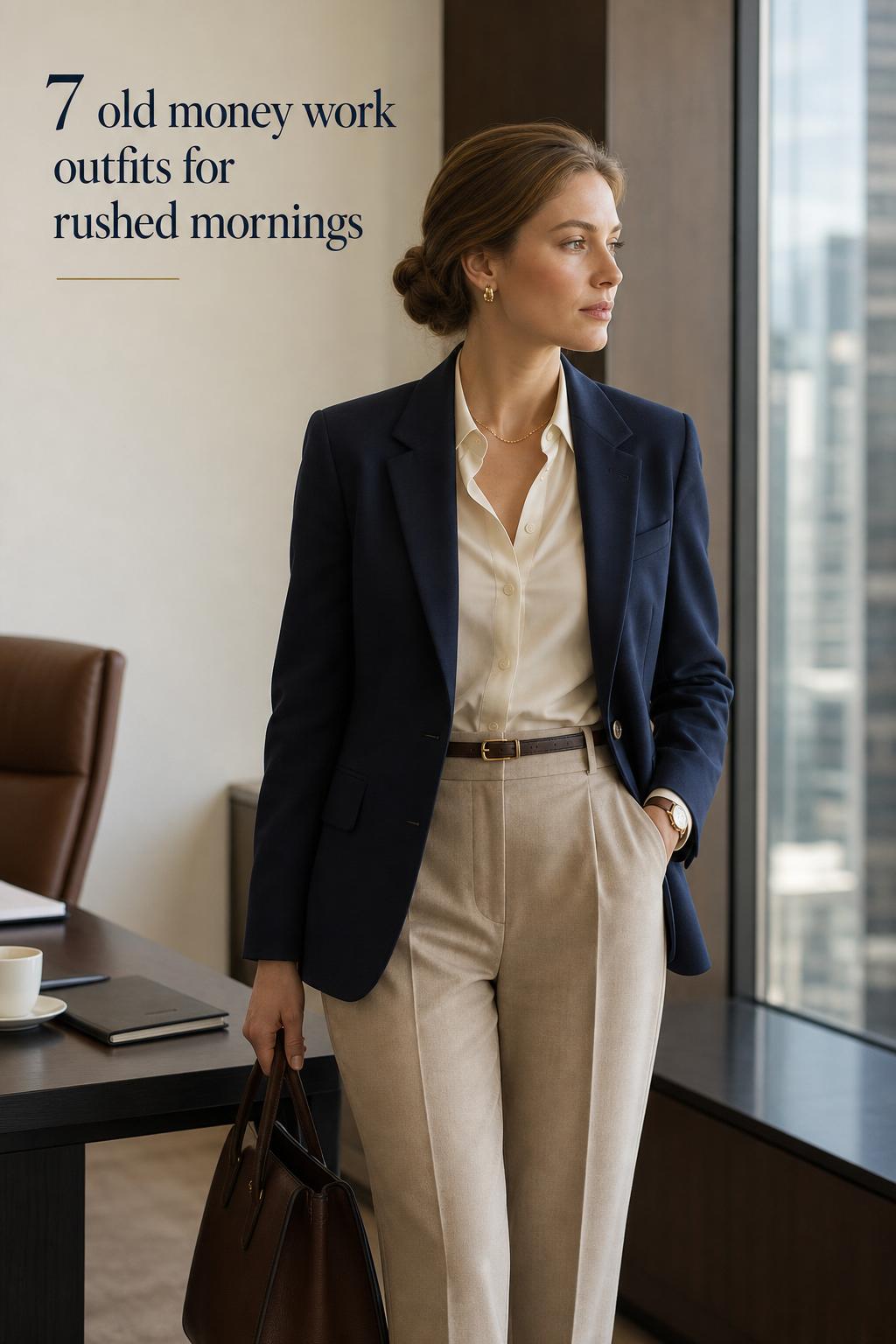
In practice, the old money work aesthetic is built from classic tailoring, quality fabrics, minimal jewelry, and wardrobe staples that repeat well. Think cashmere knitwear, wool trousers, crisp cotton shirts, loafers, low-heeled pumps, pearls, and a structured workbag. The mood is refined but never stiff, making it one of the most adaptable style identities for professional dressing today.
What defines the old money work aesthetic
The visual identity begins with timelessness. Instead of chasing novelty, this style relies on pieces that have long been associated with polished office dressing: tailored blazers, straight or softly tapered trousers, knee-length or pencil skirts, shirt dresses, silk shirts, fine knits, and leather accessories with minimal branding. Quiet luxury is not a separate wardrobe category here; it is the styling principle that ties everything together.
Found the dress? Keep the rest in one place.
Zarellea brings guest details, vendors, timelines, and every next step together — so your wedding plan feels as good as your look.
Color plays an equally important role. The strongest palettes in this aesthetic are muted and stable: navy with cream, camel with ivory, black with white, soft gray with fine gold, and tonal neutrals that create visual coherence. These combinations read professional because they avoid unnecessary contrast while still creating enough structure to define the silhouette.
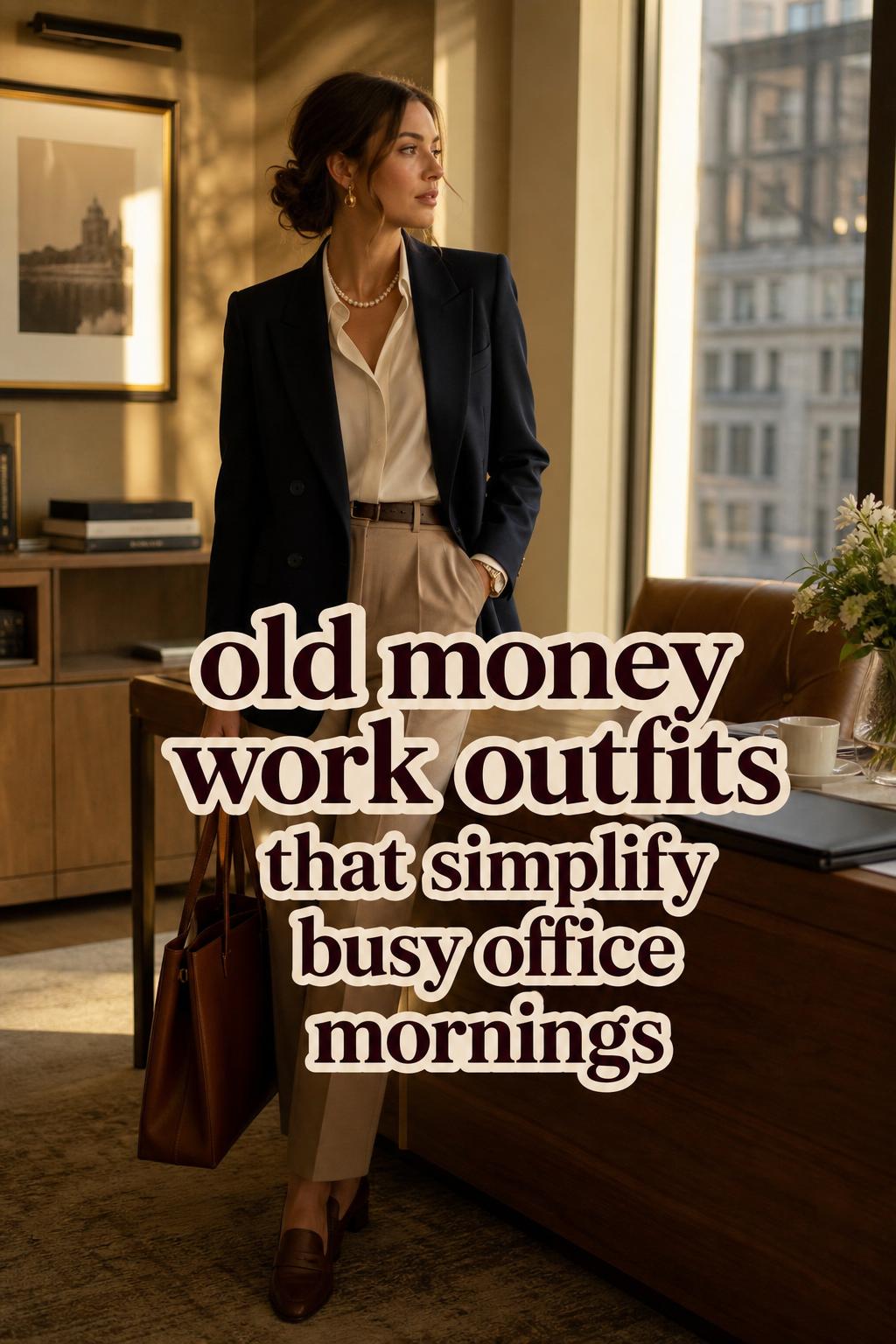
Accessories complete the look through subtle signals. Pearls, slim gold jewelry, signet-style details, a leather belt, and a structured tote or workbag all support the outfit without becoming its focus. This is why the style works across office contexts, from a standard 9-to-5 schedule to board meetings, investor dinners, and presentations where credibility is strengthened by visual control.
Core style principles
- Prioritize tailoring over decoration.
- Choose wool, cashmere, silk, cotton, and other refined fabrics with clean finish.
- Keep logos and obvious branding minimal.
- Use neutral office colors such as navy, camel, cream, ivory, black, and white.
- Let one element anchor the look, usually a blazer, coat, trouser line, or elegant shoe.
The reason these principles matter is practical as well as aesthetic. In real office wear, a neutral palette makes outfits repeat easily, better fabric improves drape through long workdays, and proper tailoring keeps even simple clothing from looking generic. That balance is the core of old money fashion at work.
The wardrobe architecture behind timeless office style
Before looking at specific outfit ideas, it helps to understand the structure underneath them. The most convincing old money office wardrobe is not built from endless variety. It is built from a concise set of staples that can move across business formal, business casual, client meetings, and hybrid schedules without losing cohesion.
Blazers and tailored jackets
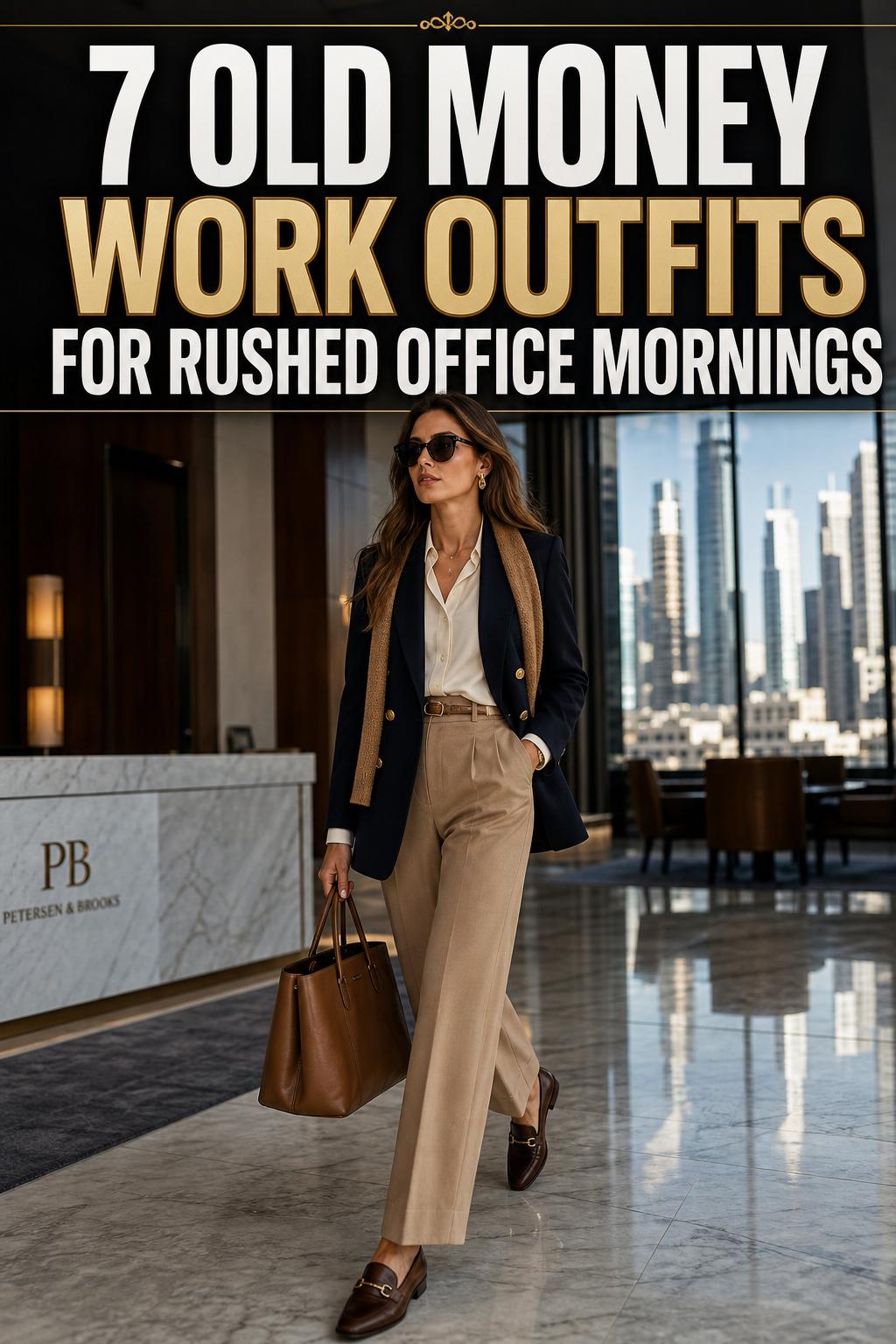
A structured blazer is the visual anchor of the old money office look. It creates authority, sharpens soft fabrics, and brings proportion to skirts, dresses, and trousers. Navy, black, cream, camel, and tweed versions are especially effective because they pair easily with muted palettes and communicate classic tailoring rather than trend-based styling.
Tweed blazers add texture and quiet depth, while smoother wool versions deliver a cleaner corporate finish. In both cases, fit matters more than any other factor. A precise shoulder line and a defined but comfortable shape through the waist instantly elevate the entire outfit composition.
Trousers and skirts
Tailored trousers bring discipline to the silhouette. They work especially well in wool or crease-resistant office fabrics and look strongest in straight, softly wide, or gently tapered cuts that skim rather than cling. Old money styling tends to avoid extremes, so the most useful trouser shape is one that feels composed from desk to dinner.
Skirts serve a similar role. Pencil skirts and other knee-length or midi options create a refined line that suits both formal and everyday business settings. Their success depends on balance: a fitted skirt benefits from a crisp shirt, silk blouse, or fine knit that keeps the upper half clean and controlled rather than overworked.
Knitwear, shirts, and blouses
Cashmere sweaters, fine knits, silk blouses, and crisp cotton shirts are recurring staples because they soften tailoring without weakening it. A cashmere layer under a blazer introduces texture contrast, while a silk blouse adds fluidity and light reflection to a structured office look. Cotton shirts, especially in white or pale neutral tones, offer the sharpest baseline for business formal dressing.
These pieces also determine how relaxed or formal the outfit feels. A silk shirt with tailored trousers and slim gold jewelry reads more presentation-ready. A fine knit with the same trousers and loafers shifts the mood toward business casual while keeping the old money identity intact.
Dresses with a defined waist
Shirt dresses and other dresses with a defined waist simplify the old money formula. They create a complete line quickly, reduce styling clutter, and look especially polished when paired with loafers, pumps, or a tailored jacket. The shape should feel intentional rather than dramatic, with enough structure to hold its own in a professional setting.
This category is particularly useful for busy office mornings because it reduces decision fatigue without sacrificing visual polish. In muted colors, a dress can perform the same role as a blazer-and-skirt combination while feeling slightly softer and more fluid.
Shoes, bags, and restrained finish
Loafers, Oxfords, and low-heeled pumps are the clearest footwear expressions of this aesthetic. They support the idea of tradition, competence, and comfort during long office hours. A shoe that is too trend-led can disrupt the visual logic of the outfit, while a classic leather style reinforces the entire composition.
A structured tote or workbag finishes the look. The quiet luxury approach is especially strong here: clean leather, practical shape, and minimal external branding. The same principle appears in fashion editor coverage of workbags from labels such as Demellier, Coach, and Zara, where material, shape, and professional utility matter more than flashy recognition.
Look: navy authority with cream restraint
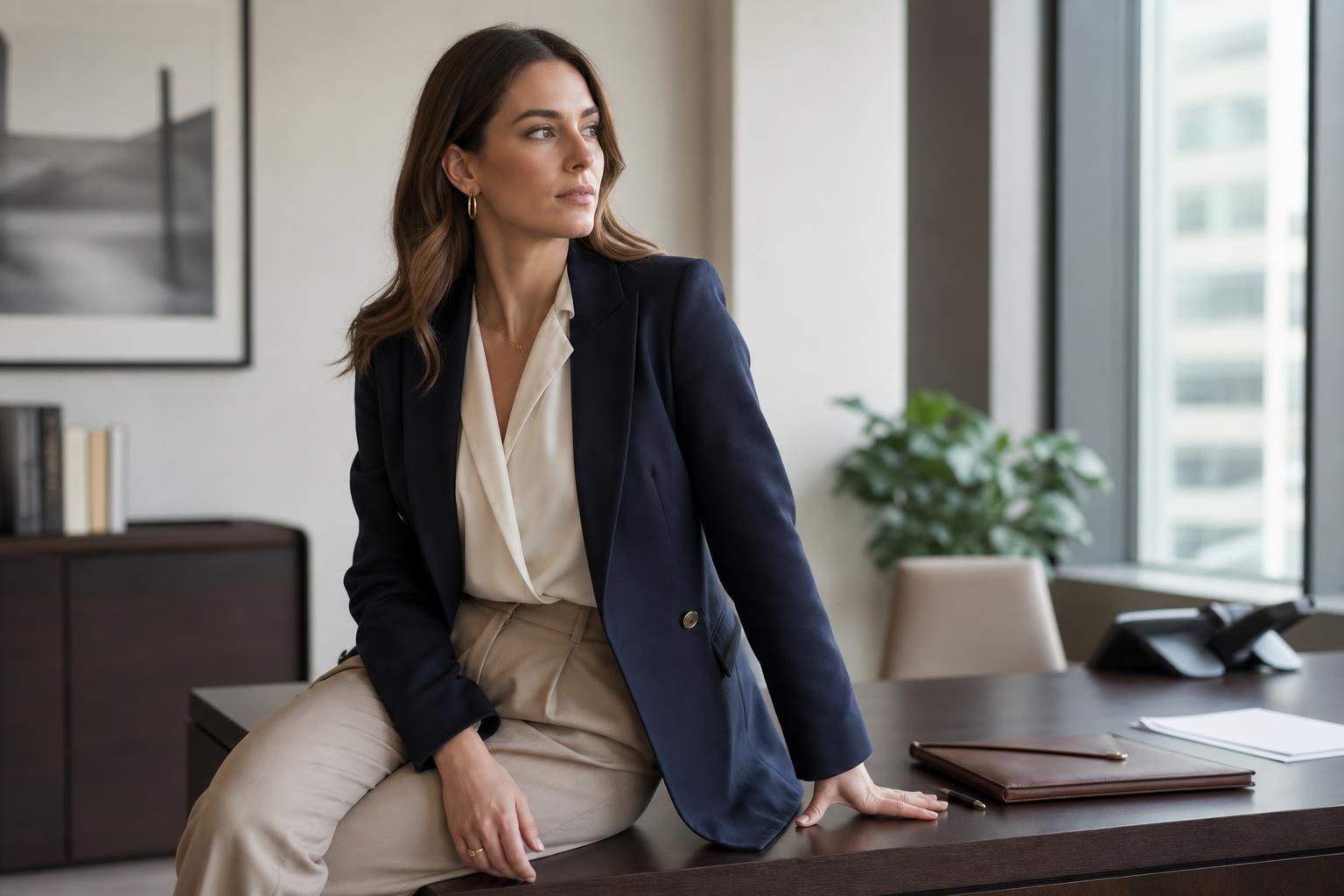
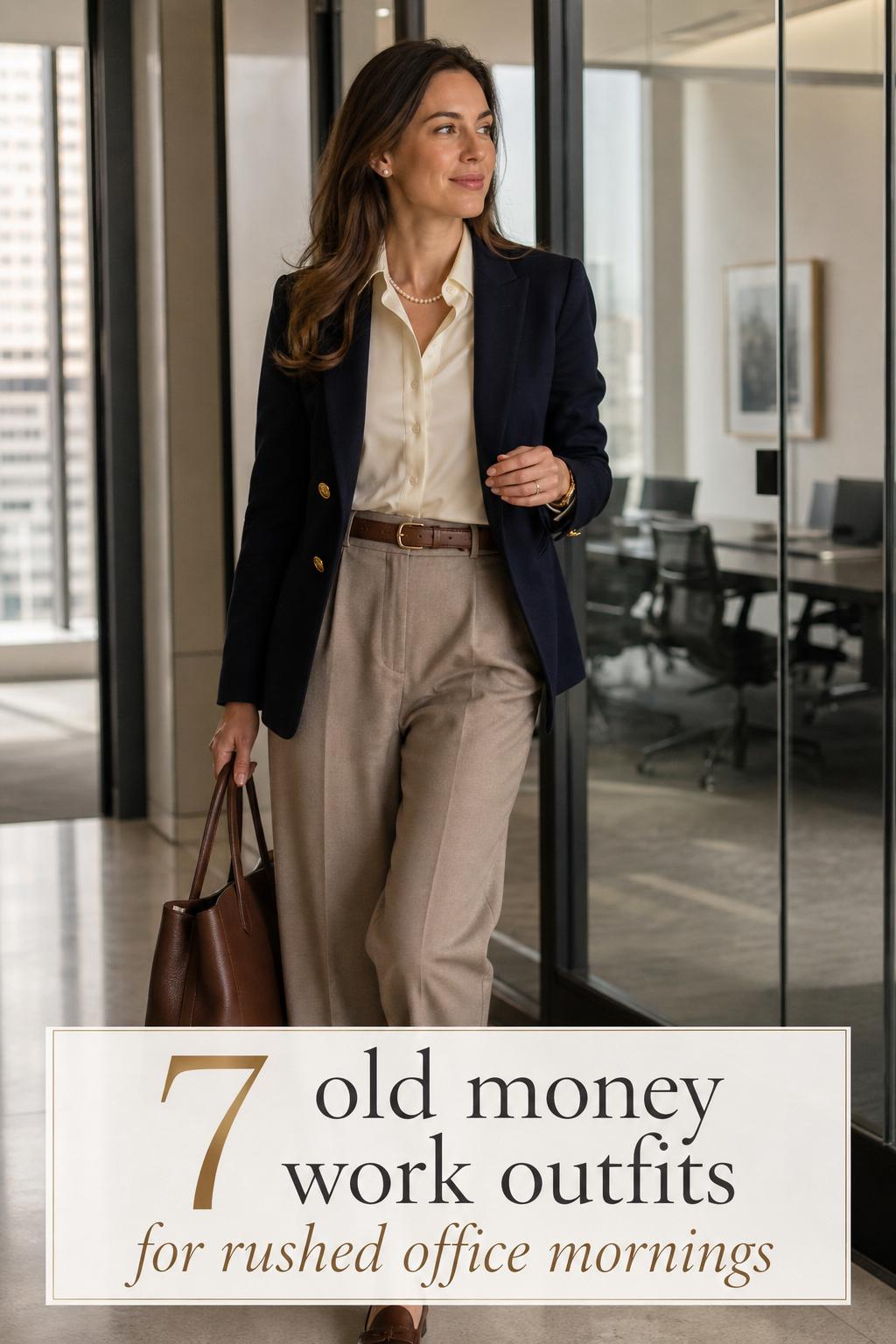
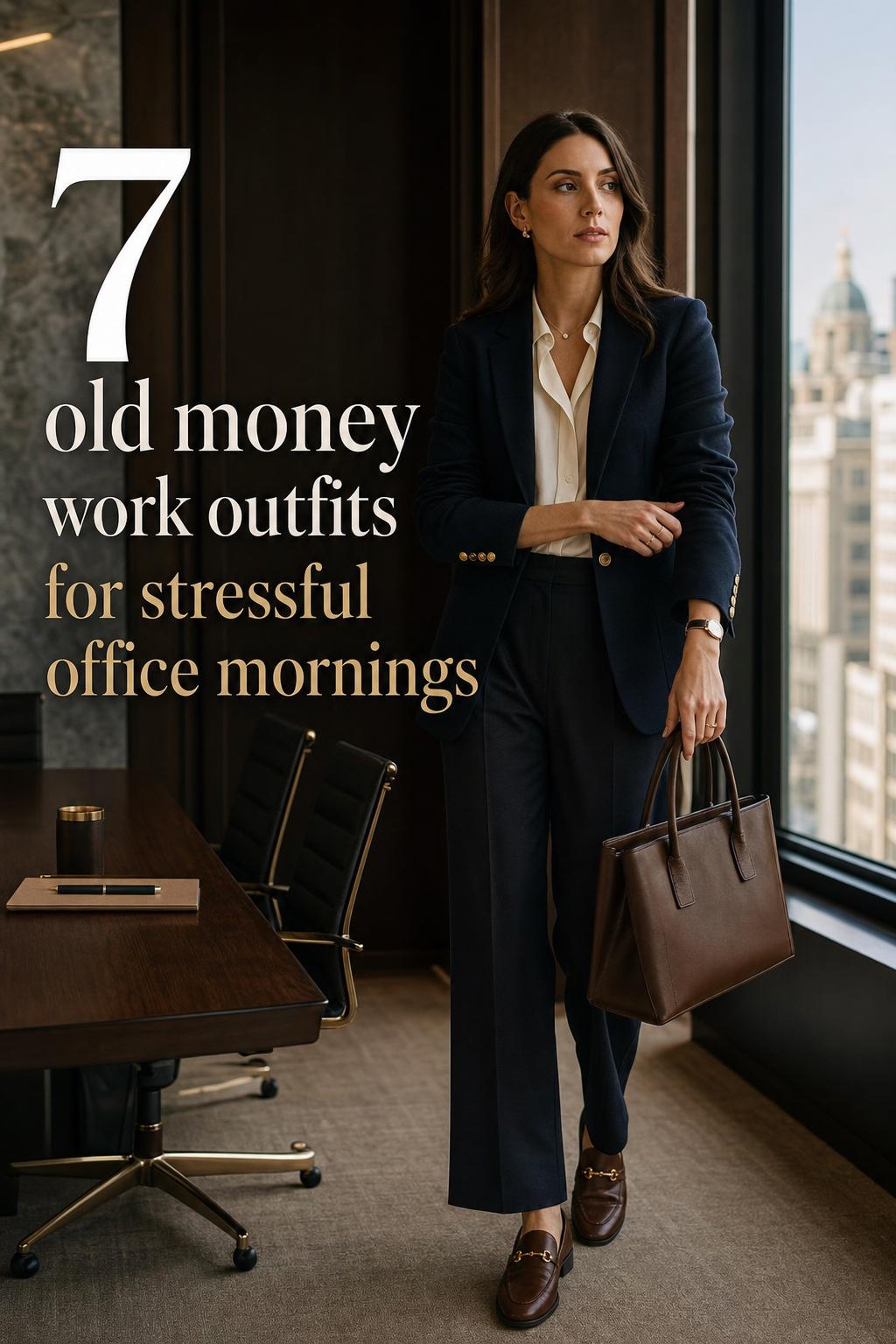
This is the classic old money office uniform translated into a polished daily formula. The silhouette is crisp at the shoulders, fluid through the leg, and softened just enough at the neckline to avoid severity. It feels especially appropriate for formal meetings, finance-adjacent offices, or any workplace where visual authority needs to register immediately.
A navy structured blazer over a cream silk blouse creates elegant contrast without looking loud. Tailored wool trousers keep the line long and controlled, while loafers or low-heeled pumps maintain a grounded finish. Add a slim leather belt, a structured workbag, and minimal gold jewelry or pearls to keep the styling in the quiet luxury lane.
- Key garments: navy blazer, cream silk blouse, tailored wool trousers
- Footwear: loafers or low-heeled pumps
- Accessories: structured tote, slim belt, pearls or fine gold
This combination works because the navy acts as the visual anchor while cream introduces softness and light. It reflects one of the strongest old money color pairings for office wear: controlled contrast with no unnecessary embellishment.
Look: camel and ivory tonal layering for business casual
This version leans softer and more textural, ideal for offices where business casual still benefits from structure. The mood is composed, warm, and intentionally quiet, with tonal layering doing most of the visual work. It reads polished on arrival and remains comfortable across a full day of meetings, laptop work, and quick transitions between settings.
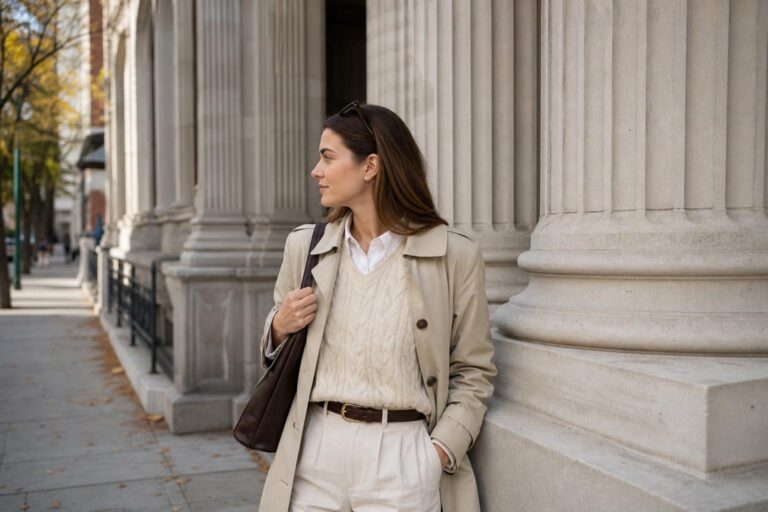
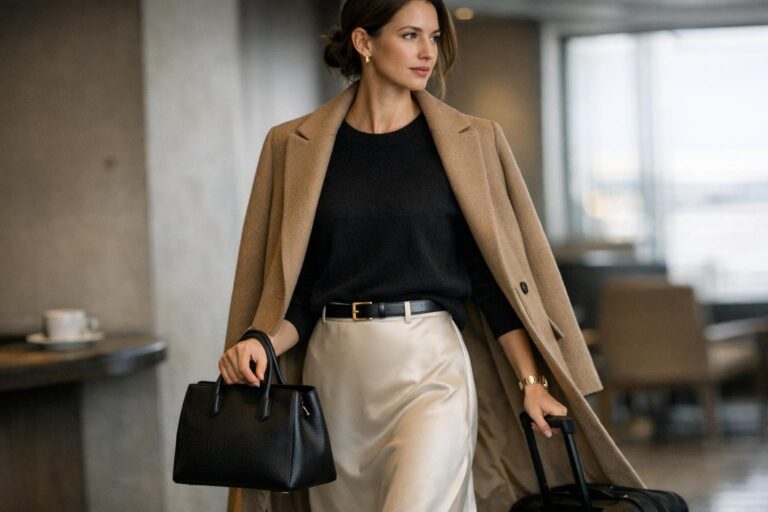
An ivory fine knit or cashmere sweater paired with camel tailored trousers creates a refined base. A matching camel blazer or tailored jacket sharpens the shape without making it feel overly formal. Leather loafers ground the palette, while a discreet workbag and slim gold jewelry keep the outfit clean and office-appropriate.
The strength of this look is proportion play. Tonal dressing can feel flat if the fabrics all behave the same way, but cashmere against wool and smooth leather introduces enough texture contrast to make the outfit feel deliberate. This is a reliable old money work outfit for transitional seasons and hybrid schedules.
Style tip: make tonal dressing look intentional
Use at least two textures when the colors are closely related. A soft knit, tailored trouser, and polished leather shoe prevent camel and ivory from blending into one surface. That shift in fabric behavior is what gives tonal office dressing its depth.
Look: black and white corporate chic with a quiet luxury finish
Black and white can move into severe territory very quickly, which is why old money styling handles this palette with careful restraint. The mood here is not stark power dressing for its own sake, but a cleaner interpretation of corporate chic. It works well for presentations, interviews, and high-visibility office days where clarity matters.
A crisp white cotton shirt under a black tailored blazer creates a strong vertical line. Pair it with a black pencil skirt or tailored trousers depending on the dress code. Add low-heeled pumps, a leather tote, and a single jewelry note such as pearls or a slim gold bracelet. The result is disciplined, elegant, and unmistakably professional.
This look fits the old money aesthetic because it relies on precision rather than drama. The pieces are familiar, but the impact comes from exact fit, clean color boundaries, and polished accessories that never compete for attention.
Look: tweed texture for classic office elegance
Tweed introduces heritage texture into the office wardrobe, making it one of the easiest ways to channel classic old money style without changing the basic formula. The silhouette here feels slightly more traditional and is especially effective in conservative workplaces, cooler weather, or moments when subtle texture communicates more depth than a plain suit.
A tweed blazer over a crisp shirt or silk blouse, paired with tailored trousers or a knee-length skirt, creates a look with built-in structure. Keep the palette muted: navy, cream, camel, black, or soft gray. Finish with loafers or Oxfords and a structured leather bag to maintain continuity.
The reason this look works is that tweed provides interest without requiring additional styling noise. It acts as a statement piece in a quiet register, giving the outfit substance while preserving understated elegance.
Look: silk blouse and pencil skirt for client-facing polish
Some workdays call for a more refined upper-half focus, especially when much of your presence is built across conference tables and presentations. This look delivers that effect through a controlled, feminine silhouette that still feels formal. It suits client meetings, presentations, and polished office environments where detail is noticed.
A silk blouse in cream, ivory, or soft neutral tucked into a pencil skirt creates elegant movement above a clean, narrow line. A structured blazer can be added for authority, while low-heeled pumps keep the composition sharp. Pearls or minimal gold jewelry complete the look without breaking its restraint.
- Best color pairings: ivory and navy, cream and black, soft neutral and camel
- Best accessories: pearl studs, slim bracelet, leather tote
- Best setting: meetings, presentations, formal office days
The styling logic is straightforward: fluid fabric at the blouse softens the fitted skirt, and the contrast creates silhouette balance. That balance is central to old money dressing, which depends on harmony rather than excess.
Look: defined-waist dress for efficient elegance
There is a specific kind of office polish that comes from wearing one uninterrupted line. A dress with a defined waist offers exactly that. The mood is composed, efficient, and slightly more graceful than separates, making it ideal for days with packed schedules or after-work commitments.
Choose a shirt dress or tailored midi dress in navy, cream, black, or camel. Add a structured blazer if the office leans formal, or wear it on its own with low-heeled pumps or loafers in a business casual setting. A slim belt can reinforce the waist, while a structured workbag keeps the look aligned with the quiet luxury approach.
This outfit fits the aesthetic because it reduces visual clutter. The dress creates cohesion immediately, and the accessories only refine it. For professionals who want old money work outfits that are efficient but not repetitive, this is one of the strongest options.
Look: soft tailoring for hybrid and remote-friendly office days
Not every office look needs full formal structure to feel elevated. On hybrid days, the old money aesthetic shifts toward softer tailoring and knit-led layering while keeping the same muted palette and refined finish. The mood is comfortable but never casual in the sloppy sense; every line remains intentional.
A fine knit or cashmere sweater paired with tailored trousers forms the base. Add a knit blazer or soft tailored jacket if you need extra polish for video calls or in-person meetings. Loafers, a leather belt, and a clean workbag maintain continuity with more formal looks, even if the overall composition is more relaxed.
This is where modern comfort and old money styling meet effectively. Soft tailoring prevents stiffness, but the professional message remains intact because the fabrics, colors, and proportions still signal control.
How to recreate the hybrid version without losing polish
- Keep the trousers tailored even if the top layer is soft.
- Choose fine knits rather than bulky casual sweaters.
- Stay within navy, cream, camel, black, or gray palettes.
- Use one structured accessory, usually a bag or shoe, to anchor the look.
Look: men’s old money office tailoring with business formal discipline
For men, the old money office aesthetic is defined most clearly by tailoring, fabric quality, and disciplined color choices. The mood is classic rather than flashy, with business formal and business casual versions built from the same principles. A well-cut suit, crisp dress shirt, and controlled accessories carry more weight here than any overt status marker.
A tailored suit in navy, charcoal, or another muted office tone paired with a dress shirt and tie forms the business formal foundation. Leather Oxfords complete the line. In a business casual setting, a blazer with tailored trousers and a fine knit can replace the full suit while preserving the old money identity. The focus should remain on fit, clean fabrics, and restraint.
This approach works because menswear expresses quiet luxury through cut and finish more directly than through decorative variation. The better the tailoring and fabric, the less the outfit needs anything else.
Look: women’s old money office power dressing without excess
Power dressing often gets misread as aggressive dressing. In the old money framework, it becomes more precise and more restrained. The silhouette is structured, but the mood remains composed rather than hard. This is the version of office style that works for leadership settings, board meetings, and high-stakes presentations where authority must feel effortless.
A tailored suit or blazer-and-trouser set in navy, black, or cream forms the base. Underneath, a silk blouse or crisp shirt adds polish without creating bulk. Low-heeled pumps, pearls, or minimal gold jewelry finish the look with subtle status cues. A structured tote reinforces competence and keeps the styling practical for long office days.
The key to making power dressing look old money is editing. Remove anything that feels too trend-led, too logo-heavy, or too tight. What remains should communicate authority through line, fit, and composure.
Office scenarios that change the outfit formula
Not every professional environment asks for the same expression of old money style. The best wardrobes adapt the same core pieces to different scenarios rather than trying to create completely separate identities for each workday. This is where timeless office style becomes especially practical.
Formal office
Lean into stronger tailoring, crisp shirts, silk blouses, pencil skirts, and structured suits. Navy, black, white, and cream perform especially well here because they project clarity and authority. Footwear should stay classic: loafers, Oxfords, or low-heeled pumps.
Business casual
Introduce softer tailoring and knitwear while keeping the palette muted. A cashmere sweater with tailored trousers and loafers is one of the most reliable business casual old money combinations because it feels refined without becoming rigid.
Client meetings and presentations
Use more polished accessories and slightly sharper structure. A silk blouse, tailored blazer, leather tote, and minimal jewelry signal preparation and control. This is also the moment to make sure fit is exact, since client-facing dressing reveals proportion issues quickly.
Board meetings and investor dinners
These occasions benefit from the most conservative interpretation of the aesthetic. Keep colors stable, avoid obvious branding, and choose pieces with stronger fabric presence such as wool tailoring, tweed blazers, and structured dresses. The goal is credibility first, personality second.
Fabrics, fit, and tailoring: where the aesthetic becomes believable
Old money style can be imitated through color, but it is only convincing through fabric and fit. Wool, cashmere, silk, and fine cotton show up repeatedly because they drape well, age gracefully, and lend a refined finish to even simple designs. In office wear, these qualities matter because they help clothing hold its shape across long workdays.
Fit carries equal weight. An off-the-rack blazer can look far more expensive after small adjustments to sleeve length, waist shape, or trouser hem. This is one of the most practical lessons in building old money work outfits: tailoring often changes the result more than buying another new piece.
Fabric guidance for office dressing
- Wool: ideal for tailored blazers, jackets, and trousers because it holds structure well.
- Cashmere: best for fine knitwear and soft layering that still reads polished.
- Silk: useful for blouses and shirts when a fluid, elevated finish is needed.
- Fine cotton: excellent for crisp shirts that sharpen formal office looks.
The trade-off is that refined fabrics often require more care. That is not a drawback so much as part of the old money logic: fewer pieces, better materials, stronger maintenance, longer wear. This is also why a capsule wardrobe approach fits the aesthetic so naturally.
Tips for tailoring on a budget
Start with the pieces that define the silhouette most: blazer shoulders, trouser hem, sleeve length, and skirt fit at the waist. If those areas are correct, the rest of the outfit looks more intentional. In practical terms, a moderately priced blazer with excellent tailoring will often outperform a more expensive one with poor fit.
Accessories that signal subtle power
Accessories in this aesthetic are not decorative extras. They are proof of editing. Pearls, slim gold jewelry, leather belts, and structured workbags all operate as quiet indicators of polish. They should support the outfit composition, not interrupt it.
Pearls are especially aligned with the old money mood because they bring classic refinement without visual excess. Minimal gold jewelry performs a similar role, particularly when the clothing palette is neutral. Bags should feel practical and elegant at once: enough structure to support office use, enough restraint to preserve understated luxury.
What to keep in rotation
- Pearl studs or a small pearl detail
- Slim gold bracelet or understated ring
- Leather belt in black, tan, or deep brown
- Structured tote or workbag with minimal branding
- Classic loafers, Oxfords, or low-heeled pumps
The main limitation to watch is over-accessorizing. Once jewelry, bag details, and footwear all compete at the same volume, the old money effect weakens. The styling logic depends on one refined finish, not several loud ones.
Brand notes within the old money office mood
Some of the clearest brand references around this aesthetic appear through workbags and fashion editor curation. Demellier, Coach, Zara, and Lovau all enter the conversation from different angles, whether through a quiet luxury bag shape, office-ready wardrobe pieces, or styling examples tied to old money dressing. The common denominator is not the label itself but how the product expresses restraint, shape, and usefulness.
Who What Wear and similar fashion media often frame the aesthetic through staples such as silk blouses, cashmere knits, tailored blazers, and pearls, reinforcing the same visual language seen in office-focused guides. That consistency matters. It shows that old money fashion at work is less about one hero purchase and more about an entire system of clothing choices working together.
For readers building this wardrobe gradually, the most reliable strategy is to evaluate garments through three questions: does the fabric look refined, does the cut support a clean silhouette, and can the piece work across more than one office scenario? If the answer is yes, it belongs in the rotation more than a trend-led substitute.
The 30-piece old money work capsule
A capsule wardrobe is one of the strongest frameworks for this aesthetic because it rewards repetition, consistency, and color discipline. Instead of collecting many unrelated work pieces, build around a controlled set of staples that can generate formal office looks, business casual combinations, and polished meeting outfits.
- 3 blazers or tailored jackets
- 4 pairs of tailored trousers
- 3 skirts
- 3 dresses with office-ready structure
- 5 shirts or blouses in silk or crisp cotton
- 4 fine knits or cashmere sweaters
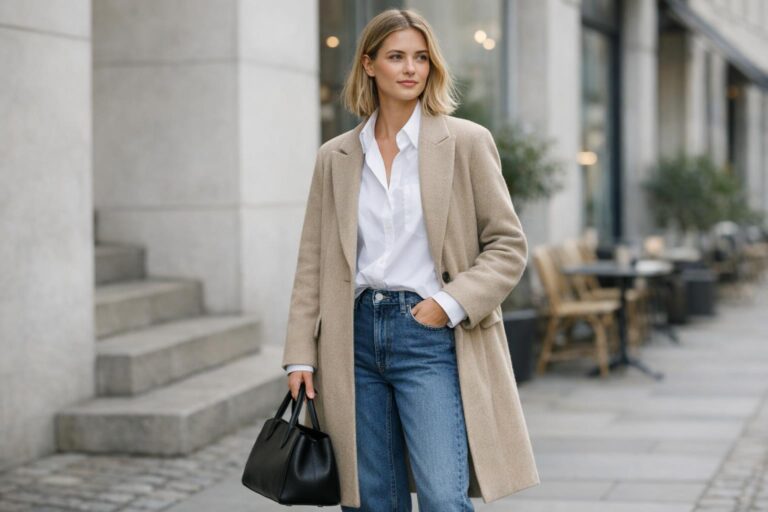
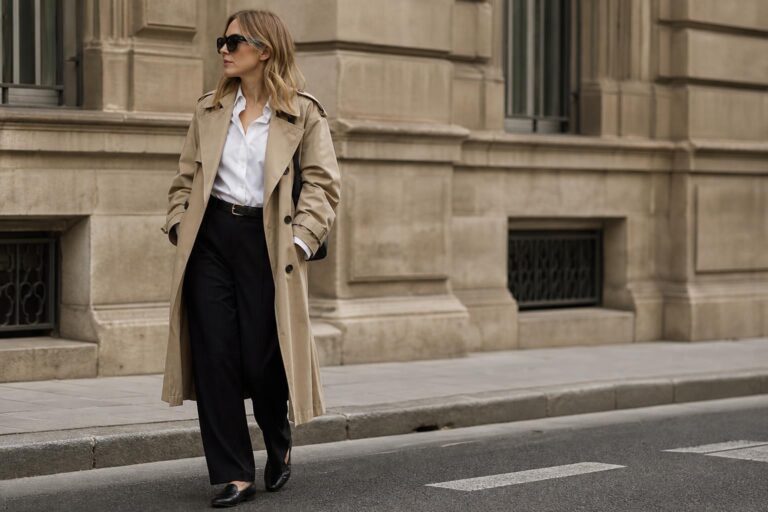
- 2 coats or outerwear pieces such as a camel coat or trench
- 3 pairs of shoes: loafers, Oxfords, low-heeled pumps
- 3 bags and belts combined, focused on practical leather styles
This kind of wardrobe works because the pieces are modular. A navy blazer can move from trousers to dress to skirt. A cream blouse can sit under tweed, wool, or soft tailoring. A good pair of loafers can support both business casual and formal office dressing when the rest of the outfit is sharp.
Seasonal rotation and maintenance
Cold-weather months favor wool, tweed, cashmere, and darker neutrals, while warmer periods can lean more heavily on cotton shirts, silk blouses, and lighter cream or ivory combinations. The palette does not need to change dramatically. Instead, the seasonal shift should come through fabric weight and layering depth.
Maintenance is part of the aesthetic. Refined office clothing only delivers its full effect when it is pressed, brushed, and stored properly. In practical terms, old money style depends as much on garment condition as on the garment itself.
Common mistakes that weaken the old money office effect
Because this aesthetic looks simple on the surface, the easiest mistakes are often subtle. Most of them come from pushing too hard in the wrong direction: too many visible logos, too much jewelry, trend-led silhouettes that interrupt the classic line, or fabrics that do not hold shape through the workday.
- Choosing loud branding over clean design
- Wearing tight or overly exaggerated cuts instead of tailored ones
- Using too many contrasting accessories at once
- Ignoring fabric quality and relying only on color
- Forgetting that office context should guide how polished the look needs to be
The easiest correction is to edit. Remove one visible detail, simplify the color palette, and improve the fit of the most important piece. Old money dressing becomes stronger when the styling becomes quieter.
Regional and professional context
The office expression of this aesthetic can shift slightly depending on professional setting and style references. New York and London are often implied as fashion and tailoring anchors around this mood, with one leaning more corporate American polish and the other suggesting a stronger tailoring tradition. Milan also sits in the background through broader fashion-capital associations, particularly where luxury fabrics and sharp dressing are concerned.
In practical terms, these references do not require dramatic wardrobe changes. They simply explain why some versions feel more severe, more heritage-driven, or more fluid. A New York finance district interpretation might emphasize navy suiting and stronger structure, while a London-leaning version may feel especially at home in tweed, wool, and traditional loafers or Oxfords.
This context matters most when dressing for specific events such as board meetings, investor dinners, and formal presentations. The more conservative the setting, the more the old money formula benefits from tighter editing, stronger tailoring, and less visible personality styling.
Why this aesthetic continues to resonate
The appeal of old money work outfits is not only visual. It is structural. The aesthetic solves a common office problem by offering a wardrobe that looks polished, repeats well, and adapts across formal and business casual settings without losing coherence. It gives professionals a clear style identity built on fit, fabric, and composure rather than constant reinvention.
That is also why it remains relevant. In a workplace environment where people move between in-person meetings, hybrid schedules, presentations, and long office days, timeless office style offers consistency. It is refined enough for high-stakes moments and practical enough for everyday wear. A blazer, a silk blouse, a cashmere knit, a pair of tailored trousers, and polished loafers can still carry a wardrobe remarkably far when each piece is chosen with precision.
FAQ
What are old money work outfits?
Old money work outfits are office looks built around classic tailoring, muted color palettes, quality fabrics, and minimal accessories. They usually include pieces such as structured blazers, tailored trousers, pencil skirts, silk blouses, cashmere knitwear, loafers, and refined leather bags.
Which colors work best for the old money office aesthetic?
The strongest colors are navy, cream, camel, ivory, black, white, and other soft neutrals. These shades create a polished, stable palette that makes outfits look coordinated and professional without relying on trend-driven color statements.
What fabrics signal old-money quality in workwear?
Wool, cashmere, silk, and fine cotton are the most reliable fabrics for this aesthetic. They drape well, hold shape more effectively than cheaper-looking alternatives, and give office staples such as blazers, shirts, knitwear, and trousers a more refined finish.
Can old money style work in a business casual office?
Yes. In business casual settings, the aesthetic simply becomes softer. A fine knit or cashmere sweater with tailored trousers, a knit blazer, loafers, and a structured bag maintains the same quiet luxury mood while feeling less formal than a full suit.
What shoes fit old money work outfits best?
Loafers, Oxfords, and low-heeled pumps are the clearest choices. They support the traditional, polished mood of the aesthetic and work well across formal office days, business casual environments, and client-facing meetings.
How important is tailoring for this style?
Tailoring is essential because the aesthetic depends on clean lines and controlled proportions. Even simple office clothing looks more elevated when blazer sleeves, trouser hems, waist fit, and skirt proportions are adjusted properly.
What accessories should I avoid if I want an authentic old money office look?
Avoid accessories that feel overly flashy, logo-heavy, or trend-dominant. The old money office mood is strongest with restrained details such as pearls, slim gold jewelry, leather belts, and structured workbags that support the outfit instead of dominating it.
Are pearls appropriate for work in this aesthetic?
Yes, pearls are one of the most classic jewelry choices for this style. Small pearl details, such as studs or understated accents, add refinement without distracting from the tailored base of the outfit.
How do I build an old money work wardrobe without buying too much?
Start with a compact capsule: a few blazers, tailored trousers, one or two skirts, a dress, silk or cotton shirts, fine knitwear, classic shoes, and one structured bag. Focus on neutral colors and fabrics that repeat well, then improve fit through tailoring before adding more pieces.
What is the biggest mistake people make with old money work outfits?
The most common mistake is confusing the aesthetic with expensive-looking excess. The style works best when it is edited carefully, with minimal branding, balanced proportions, strong fabric choice, and accessories that stay subtle.