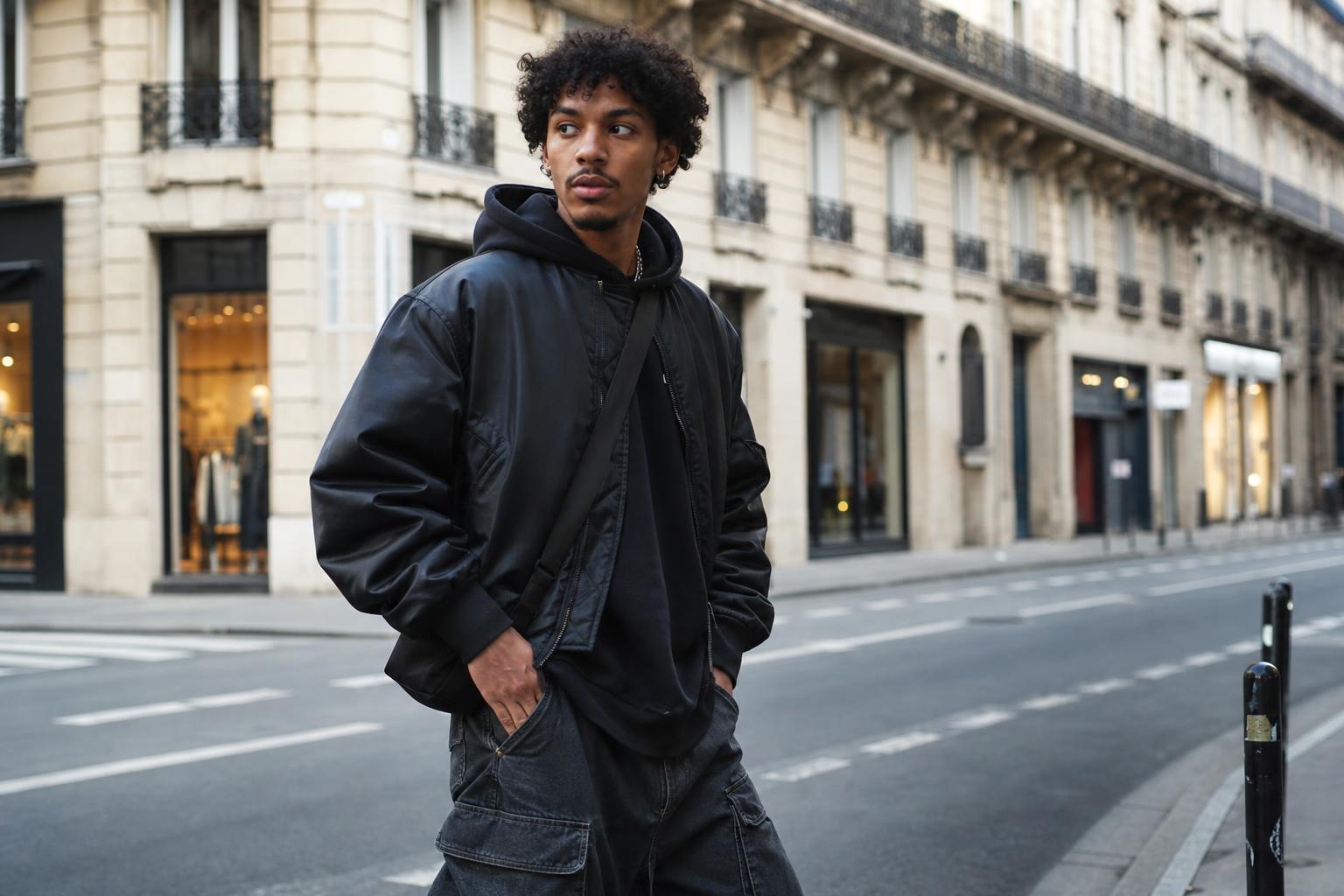
Street Wear Style Through a Modern City Lens
Street wear style sits at an unusual point in modern fashion: it is casual but intentional, expressive but often built from simple pieces, and deeply tied to identity, movement, and everyday function. It is also one of the most frequently misunderstood style categories, partly because people use “streetwear,” “sportswear,” “urban style,” and “casual style” as if they mean the same thing. They do not. The overlap is real, but the styling logic is different.
A useful way to understand street wear style is to compare it directly with the aesthetics most often placed beside it. In practice, the closest confusion usually happens between street wear style and sportswear-inspired casual dressing, because both rely on sneakers, relaxed silhouettes, outerwear, and comfort-first wardrobe pieces. Yet one is driven more by cultural codes, proportion play, and statement balance, while the other is often led by performance references and cleaner utility. This breakdown clarifies where the lines separate, where they blend, and how to recognize each approach in real outfits.
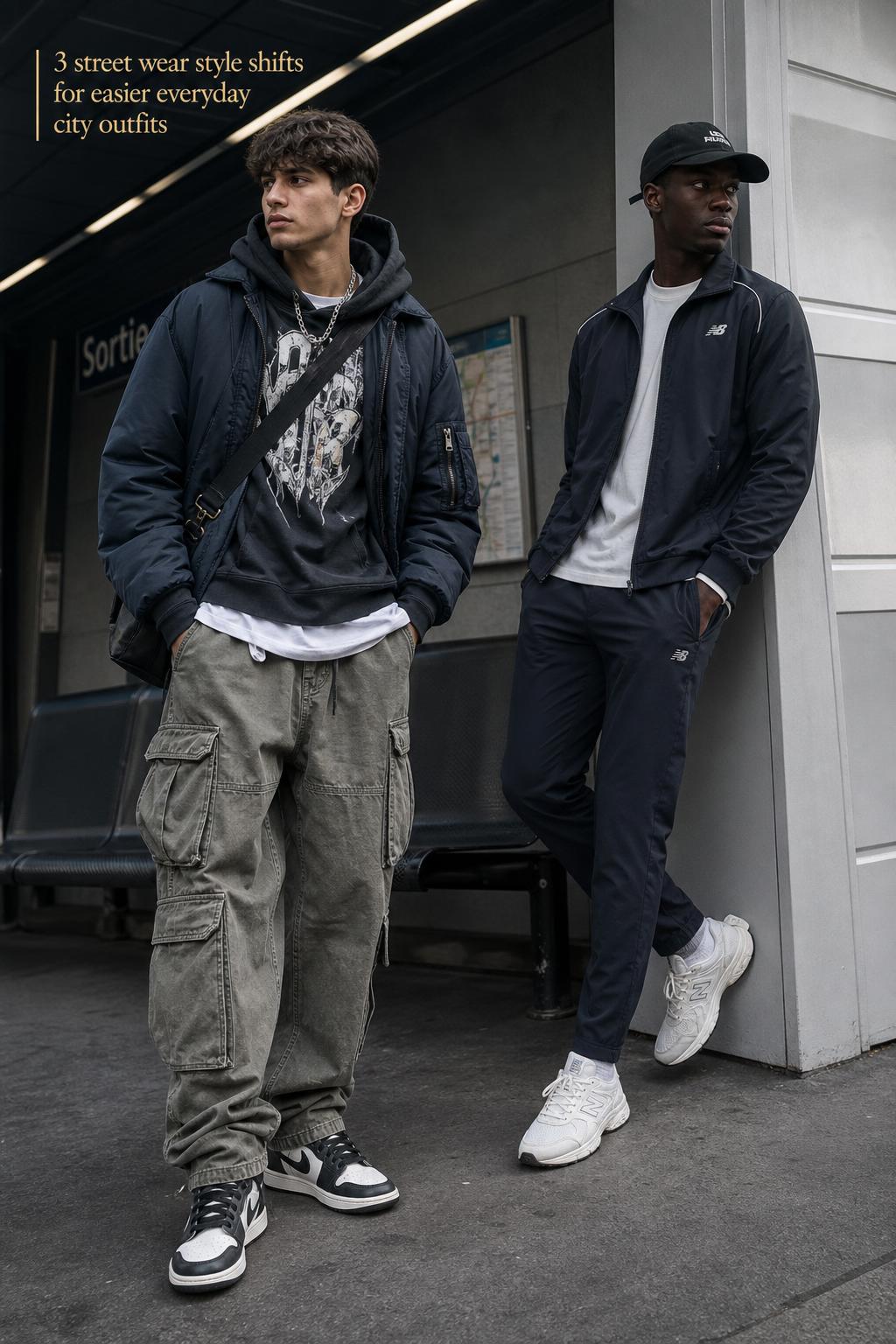
Why street wear style and sportswear-inspired casual style are often grouped together
At first glance, the connection is obvious. Both styles often include hoodies, sneakers, T-shirts, joggers, caps, and practical layers. Both can feel relaxed, youthful, and easy to wear in daily life. In a fast visual environment, especially on social platforms, the distinctions can flatten quickly because similar hero pieces appear in both wardrobes.
The difference shows up when you look beyond the item list and focus on outfit composition. Street wear style usually builds a stronger visual message through shape, graphic emphasis, branded references, and the tension between oversized and fitted elements. Sportswear-inspired casual style tends to stay more streamlined, performance-coded, and activity-adjacent. In other words, the same sneaker can read completely differently depending on what anchors it, how the silhouette is constructed, and whether the outfit is communicating subculture, utility, or athletic ease.

Found the dress? Keep the rest in one place.
Zarellea brings guest details, vendors, timelines, and every next step together — so your wedding plan feels as good as your look.
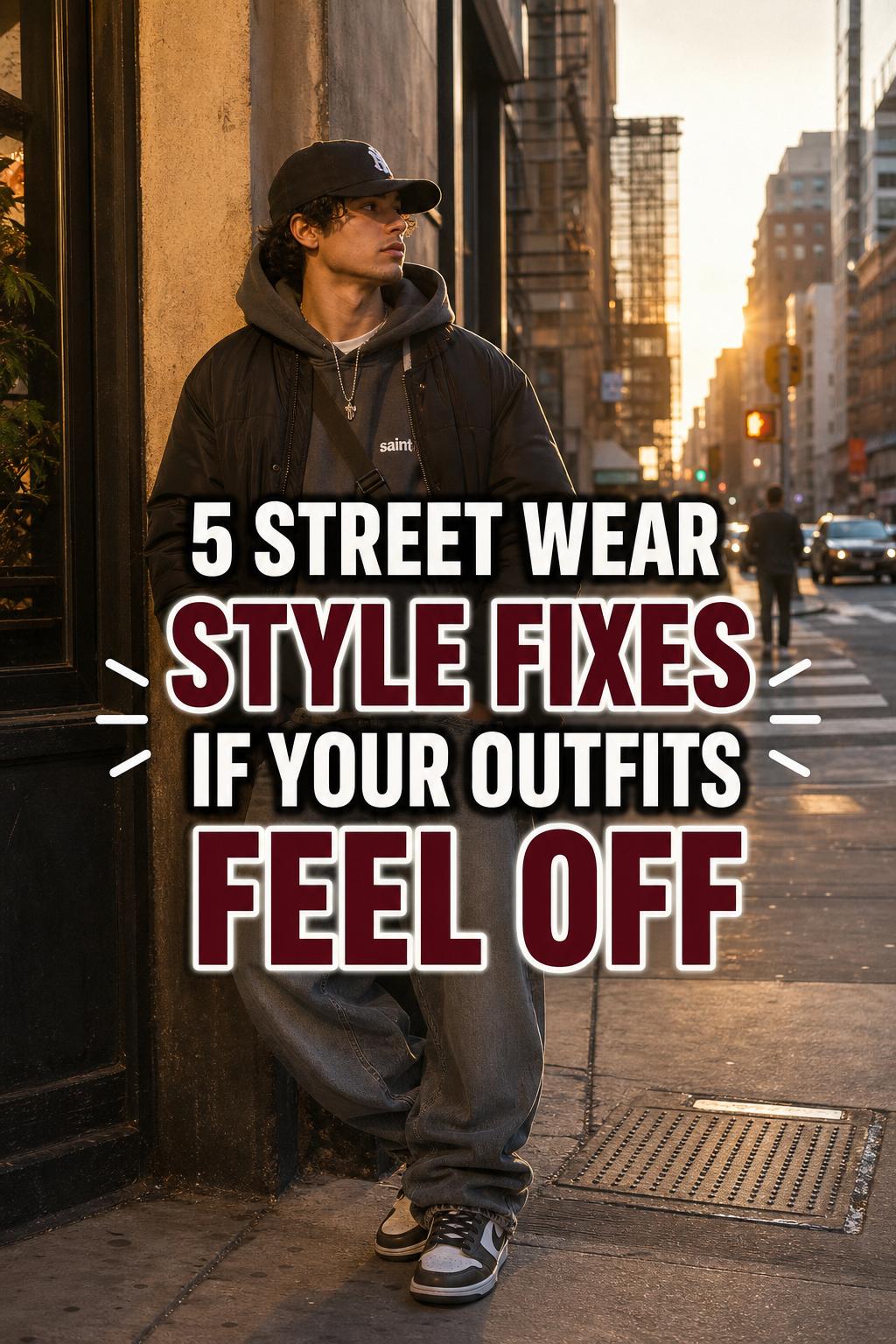
Style overview: street wear style
Street wear style is defined by cultural visibility and outfit architecture as much as by individual garments. The look often centers on relaxed or oversized silhouettes, graphic elements, strong outerwear, denim, cargo shapes, statement sneakers, and layers that feel deliberate rather than accidental. Logos, bold prints, and visual anchors frequently matter, but the most effective versions still maintain balance.
The silhouette language is one of its clearest markers. Street wear style often uses volume strategically: a roomy hoodie under a structured jacket, wide-leg pants with a compact top layer, or a longline outer layer paired with heavier footwear. The goal is not simply comfort. It is proportion play. The outfit should look composed from a distance, with one or two pieces controlling the eye line.
Color palettes vary widely, but the style commonly works through neutrals punctuated by graphic contrast, monochrome combinations, or a single bold accent. Black, white, gray, navy, olive, and washed denim tones create a strong foundation. From there, saturated color or branding can function as the statement element. Texture also matters: fleece, denim, cotton jersey, nylon, leather, and structured twill create the layered depth that gives street wear style visual authority.
The overall mood is confident, urban, and self-aware. Even when the outfit is simple, it tends to signal intention. A plain hoodie and cargo pants can still read strongly as street wear style if the cut, footwear, and finishing details are aligned.
Style overview: sportswear-inspired casual style
Sportswear-inspired casual style borrows from active clothing and athletic references but is worn primarily for everyday life rather than performance. It shares comfort and functionality with street wear style, yet the visual message is typically cleaner and less culturally coded. The emphasis is often on ease, mobility, and a polished version of off-duty dressing.
Silhouettes here are usually relaxed without becoming heavily oversized. Joggers may taper. Sweatshirts may be neat rather than boxy. Windbreakers, track jackets, and sleek trainers often replace the heavier, more statement-driven pieces common in street wear style. The result feels lighter and more performance-informed.
The palette tends to stay disciplined. Neutrals, technical tones, white sneakers, and subtle contrast are common. Fabrics often suggest movement and function: jersey, lightweight fleece, technical nylon, stretch blends, and smooth knits. Texture contrast still matters, but it is usually less dramatic than in a street wear style outfit built around denim, leather, or heavy cotton layers.
The overall mood is active, practical, and understated. While street wear style can feel expressive and referential, sportswear-inspired casual style often reads as efficient and wearable. It fits easily into travel days, errands, casual meetings, and wardrobes that prioritize versatility.
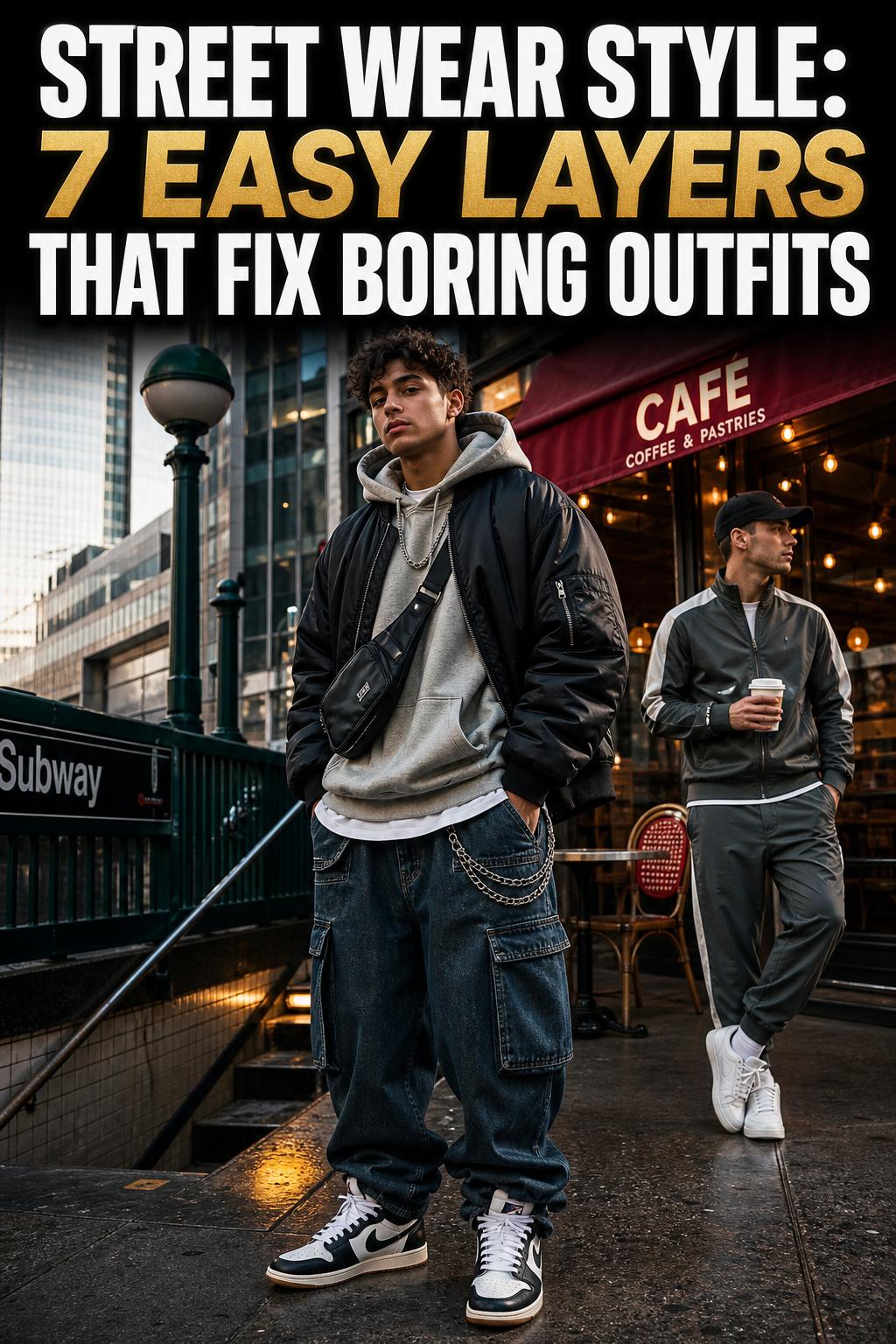
The core distinction: culture-led dressing versus function-led dressing
This is the clearest dividing line. Street wear style is usually culture-led. Even when the outfit is minimal, it tends to carry references through graphics, sneaker choice, silhouette exaggeration, branded pieces, or the way layers are stacked. The look often feels rooted in image-making. It is not costume, but it is highly aware of visual impact.
Sportswear-inspired casual style is more function-led. The outfit may still be fashionable, but its first language is practicality: movement, comfort, easy coordination, weather adaptability, and clean athletic cues. It often asks, “Can I wear this all day?” before it asks, “Does this communicate a specific style code?”
That difference affects every styling decision, from the width of a pant leg to the choice between a retro sneaker and a technical trainer. Both can be stylish. The distinction is about what the outfit is trying to do first.
Where the silhouette changes the message
Street wear style uses volume as a design tool
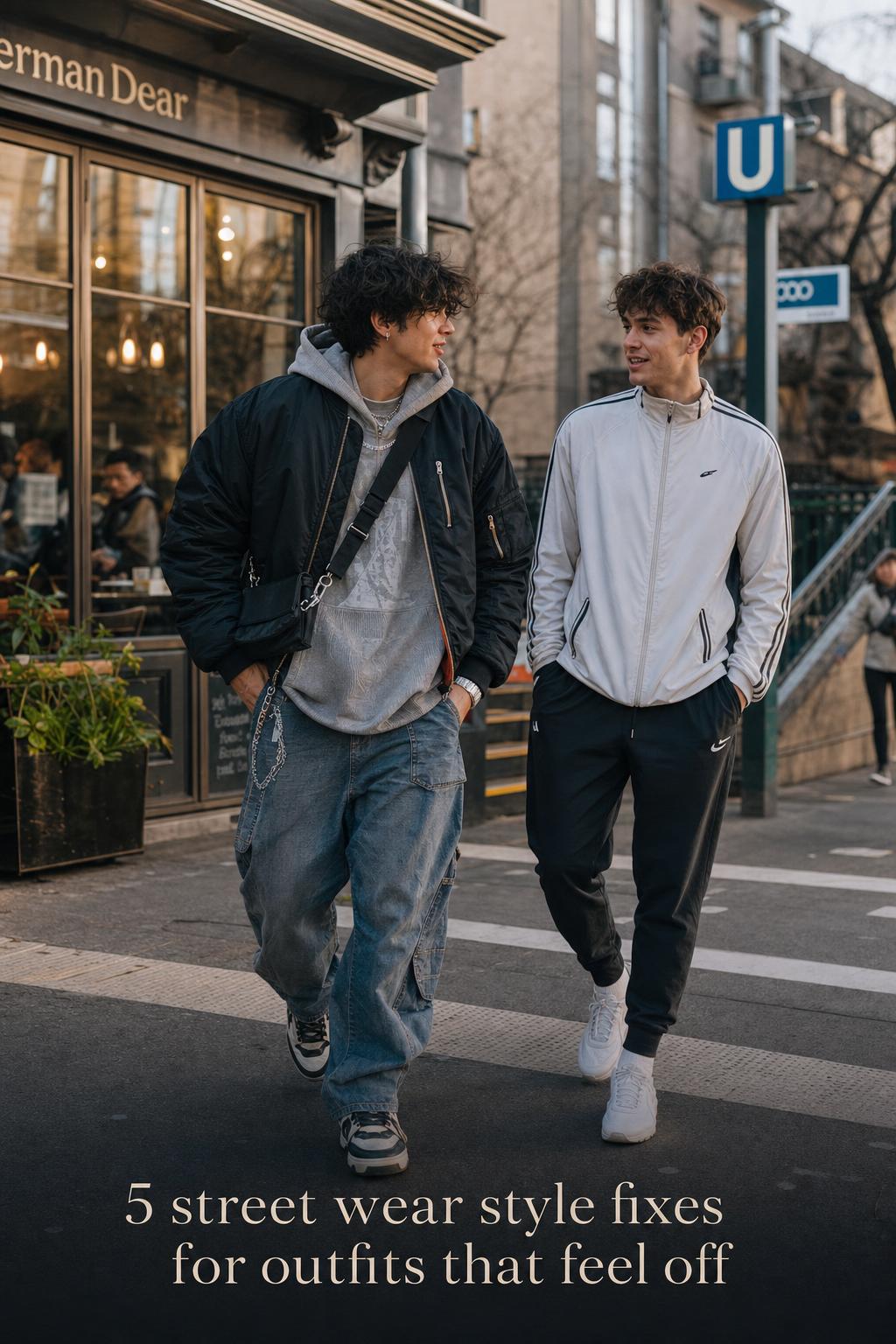
In street wear style, silhouette is rarely neutral. Oversized hoodies, dropped shoulders, roomy bomber jackets, loose denim, cargo pants, and wide-leg trousers create shape with visible intent. The pieces do not just fit comfortably; they establish presence. This is why proportions matter so much. If every element is oversized without control, the outfit can lose structure. If one area carries volume and another provides restraint, the look becomes sharper.
A common formula is to let one garment dominate the silhouette while another stabilizes it. For example, a boxy hoodie paired with straighter trousers keeps the outfit grounded. Likewise, wide cargo pants work better when the upper half has some clarity, even if it remains relaxed. The visual effect is stronger because the eye can identify an anchor.
Sportswear-inspired casual style keeps the line cleaner
Sportswear-inspired casual style tends to favor mobility over exaggeration. The fit can be relaxed, but it usually follows the body more closely than a classic street wear style look. Tapered joggers, zip jackets, performance hoodies, and lighter layers create a silhouette that looks active rather than sculptural. The outfit reads quickly and efficiently.
This is why the same sweatshirt can shift categories based on styling. Put it with track pants and sleek sneakers, and it leans sportswear-inspired casual. Put it under an oversized jacket with looser pants and a heavier sneaker, and it starts to move toward street wear style.
Color, graphics, and visual noise
Street wear style often tolerates more visual noise because it is designed to handle statement energy. Graphics, logos, contrast stitching, bold sneaker colorways, and strong outerwear can all coexist if the outfit still has a hierarchy. The key is that not every element should compete equally. One piece needs to lead, while the rest support it.
Sportswear-inspired casual style usually performs better with tighter visual editing. Even when color is present, it tends to appear in cleaner blocks or technical accents rather than layered graphic messaging. This makes the style easier to wear in broader contexts, but it can also make it feel less distinctive if texture and fit are ignored.
For readers trying to identify the difference in real life, ask whether the outfit is built around visual expression or streamlined utility. Street wear style often says more at first glance. Sportswear-inspired casual style usually says less, but with precision.
Fabric and texture: the overlooked separator
Texture is one of the fastest ways to tell these styles apart. Street wear style often relies on tactile contrast: heavyweight cotton against nylon, washed denim beside fleece, leather paired with jersey, or structured twill mixed with soft knitwear. These combinations create density and visual depth, which is why even neutral outfits can still feel directional.
Sportswear-inspired casual style usually prefers smoother transitions. Technical fabrics, uniform fleece, lightweight jersey, stretch blends, and clean surface finishes reinforce the active reference. The outfit often appears more aerodynamic, less layered in texture, and easier to move through a full day without adjustment.
This matters in practical wear. A heavily layered street wear style look can feel stronger visually in cool weather, city settings, or social situations where style presence matters. A sportswear-inspired casual outfit can be more comfortable in transit, mild climates, or routines that require flexibility and less maintenance.
Visual style breakdown in everyday outfits
Layering approach
Street wear style treats layering as composition. Overshirts, hoodies, bomber jackets, puffers, denim jackets, and longline outerwear are often stacked to create depth. The layers are visible and intentional. You notice hems, sleeve volume, neckline framing, and the way one piece extends under another.
Sportswear-inspired casual style uses layering more for utility and climate management. A base tee, zip hoodie, and light jacket may all appear together, but the finish is generally cleaner and less dramatic. The outfit wants to function without looking heavily constructed.
Garment proportions
Street wear style often plays with contrast in garment length and width. Cropped outerwear can sit over wide pants. An oversized sweatshirt may be balanced by cleaner shorts. Heavier soles and looser hems amplify the silhouette. This style rewards proportion awareness because imbalance can quickly become accidental rather than intentional.
Sportswear-inspired casual style prefers proportion continuity. Jacket length, pant shape, and footwear usually align in a straightforward way. This gives the outfit ease and broad wearability, especially for people who want a cleaner casual look without the commitment of stronger streetwear references.
Accessories
Accessories in street wear style often function as identity markers. Caps, crossbody bags, statement socks, chains, and sunglasses can sharpen the outfit without requiring more garments. They are rarely random additions; they reinforce the tone already established by the clothing.
In sportswear-inspired casual style, accessories are usually more minimal and practical. A clean cap, simple backpack, or streamlined bag fits naturally, but the accessories seldom carry the outfit. They support movement and convenience more than style messaging.
Footwear choices
Footwear is often the deciding factor. Street wear style frequently centers the sneaker as a statement piece, visual anchor, or cultural signal. The shoe can direct the entire outfit, especially when the rest of the palette is restrained. Chunkier shapes, retro references, or more visibly designed pairs tend to feel at home here.
Sportswear-inspired casual style leans toward cleaner, lighter, more performance-adjacent footwear. The shoe usually integrates into the outfit rather than dominating it. Comfort and versatility become more important than visual weight.
Key differences at a glance
- Street wear style emphasizes cultural expression, proportion play, and visual identity.
- Sportswear-inspired casual style emphasizes function, mobility, and a cleaner athletic reference.
- Street wear style often uses oversized or looser silhouettes with stronger layering.
- Sportswear-inspired casual style tends to keep shapes more streamlined and easy to wear.
- Street wear style welcomes graphics, statement footwear, and stronger texture contrast.
- Sportswear-inspired casual style relies on subtle color blocking, technical fabrics, and practical coordination.
- Street wear style usually feels more image-led.
- Sportswear-inspired casual style usually feels more routine-led.
How the same outfit idea changes between the two styles
Casual day outfit
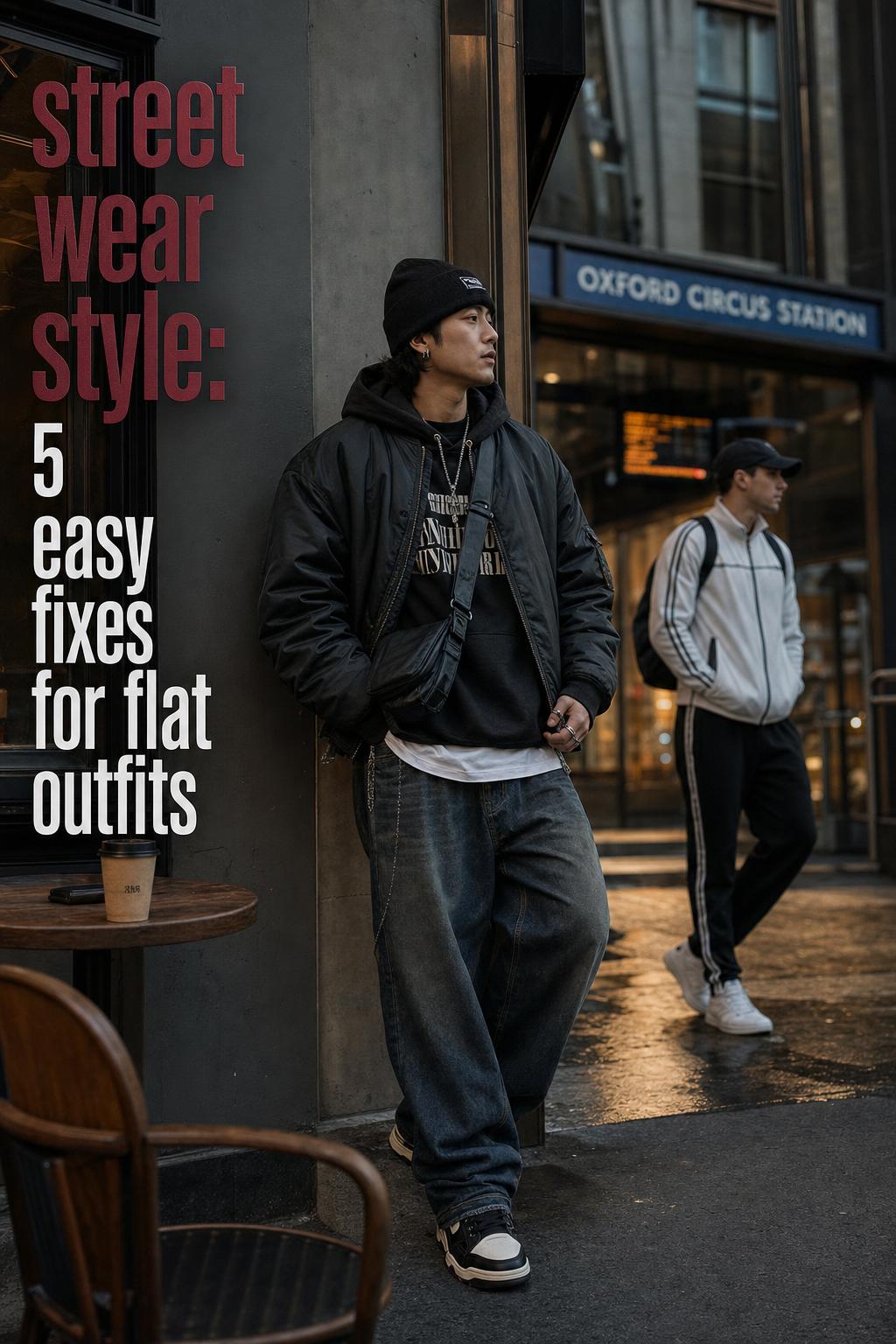
A street wear style version of a casual day outfit would likely build around a graphic hoodie, looser pants, and sneakers that visibly shape the look. The layering might include a bomber, puffer, or overshirt, and the accessories would tighten the message. The point is not only comfort. The point is that the outfit reads as intentional from across the room.
A sportswear-inspired casual version of that same situation would simplify the line. Think of a cleaner sweatshirt or track jacket, more controlled pants, and sneakers chosen for ease. The palette would probably be more edited, with fewer statement moves. The styling logic is efficiency: comfortable, coordinated, and low maintenance.
Travel-day dressing
For travel, street wear style often works best when volume is managed carefully. A roomy hoodie and relaxed trousers can be practical, but the look benefits from one structured or visually grounding piece so it does not feel shapeless after hours of wear. Sneakers matter here because airport and transit walking demands comfort, but the overall look can still retain a strong city-oriented edge.
Sportswear-inspired casual style is naturally effective for travel because it prioritizes movement and temperature control. Lightweight layers, stretch fabrics, and simple footwear combinations make sense in this setting. It may not offer the same level of visual identity as a strong street wear style outfit, but it often wins on versatility and physical ease.
Smart-casual interpretation
When street wear style moves toward smart casual, it usually does so by refining the palette and sharpening the outer layer rather than abandoning its core shapes. A cleaner jacket, darker trousers, and minimal sneakers can preserve the streetwear attitude while reducing graphic intensity. The outfit still depends on proportion and confidence.
Sportswear-inspired casual style translates into smart-casual settings more easily because its lines are already neat. A zip jacket, fine-gauge knit, and streamlined trousers can feel polished without much adjustment. The trade-off is that the look may become generic unless texture, fit, or one subtle statement element is introduced.
Tips for building street wear style without losing balance
The most common mistake is assuming that adding more trend-coded pieces automatically creates a stronger outfit. In reality, street wear style works best when there is a clear visual hierarchy. One strong hoodie, one great pair of pants, or one standout sneaker often does more than layering multiple competing statements.
- Start with one visual anchor, such as outerwear, pants, or footwear.
- Use volume strategically rather than everywhere at once.
- Let neutral pieces frame louder graphics or branding.
- Mix textures to add depth, especially if the palette is restrained.
- Check the hem-to-shoe relationship, because this often determines whether the outfit feels sharp or heavy.
- Choose accessories that reinforce the outfit direction instead of distracting from it.
A practical test is to stand back and identify what your eye lands on first. If there is no focal point, the outfit may need stronger structure. If there are too many focal points, it likely needs editing. Street wear style is expressive, but the best versions are still controlled.
Where sportswear-inspired casual style has the advantage
There are situations where sportswear-inspired casual style is simply the better choice. Long commutes, active days, weather shifts, light travel, and routines that move between errands and informal meetings often favor a cleaner, function-led wardrobe. The lighter visual load can make repeated wear easier, and the pieces usually integrate smoothly across different casual settings.
This does not make it less stylish. It just means the appeal comes from polish, ease, and adaptability rather than subcultural signaling. For many wardrobes, that is a strength. Not every day needs the stronger graphic or proportion-led impact of street wear style.
A city-context perspective on why street wear style feels different
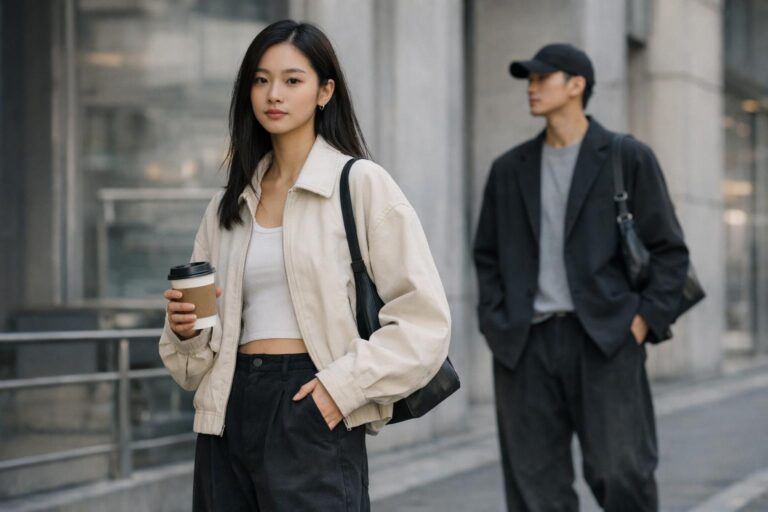
Street wear style tends to make the most visual sense in environments where clothing is read quickly and publicly: walking-heavy neighborhoods, social city settings, creative workplaces, casual events, and spaces where outerwear and footwear are visible for most of the day. In these contexts, proportion, layers, and sneakers are not background choices. They become part of how presence is communicated.
That is one reason the style keeps its relevance. It is built for real-life visibility. A strong jacket, relaxed trousers, and distinct sneakers can carry an outfit through transit, street-level movement, cafés, casual dinners, and informal creative settings without requiring a full change. The practical side of street wear style is often underestimated because the visual side gets more attention.
At the same time, the city advantage can become a limitation in more conservative spaces. Highly graphic pieces, oversized silhouettes, or heavily layered outfits may feel out of place where dress expectations are quieter. Knowing when to reduce the volume or simplify the palette is part of wearing street wear style well.
When to choose each style in a real wardrobe
Everyday wear
Choose street wear style when you want your outfit to carry more identity and visual interest. It works especially well for social plans, casual creative environments, and days when clothing is part of your personal expression. Choose sportswear-inspired casual style when comfort, repetition, and flexibility matter more than statement impact.
Work environments
Street wear style can work in relaxed or creative workplaces if graphics are edited, sneakers are clean, and silhouette remains intentional rather than exaggerated for its own sake. Sportswear-inspired casual style adapts more easily to informal offices because it usually appears cleaner and less disruptive. The safest path in either case is to refine the palette and reduce unnecessary detail.
Travel and transit
Sportswear-inspired casual style generally performs better for travel because mobility and temperature control are built into the look. Street wear style can still work well, but it is best when layers are manageable and footwear is selected for actual walking rather than image alone.
Casual versus polished occasions
For purely casual settings, street wear style offers more room for expressive shape, graphics, and statement sneakers. For occasions that require a cleaner finish, sportswear-inspired casual style usually needs fewer adjustments. Street wear style can still enter polished territory, but it demands more careful editing to prevent the look from appearing too relaxed or visually loud.
Common styling mistakes that blur the outfit in the wrong way
The first mistake is confusing looseness with proportion. In street wear style, oversized pieces need visual structure. If the pants pool too heavily, the hoodie has no shape, and the shoes are too slight to balance the volume, the outfit can feel accidental. Strong streetwear dressing depends on controlled contrast, not random excess.
The second mistake is making sportswear-inspired casual style too plain. Because it relies on clean lines and practical pieces, it can easily become forgettable if the fit is off or the textures are too flat. A sharper sneaker, a better jacket shape, or a stronger tonal palette often solves the problem without sacrificing ease.
The third mistake is borrowing individual pieces from one category while styling them with the logic of the other. A technical running shoe may undermine a heavily volume-led street wear style look if the rest of the outfit needs more visual weight. Likewise, a bold graphic jacket can overwhelm a minimal sportswear-inspired casual outfit if there is nothing else in the composition to support it.
Tips for mixing elements from both styles
The most modern wardrobes do not stay rigidly in one category. Mixing street wear style with sportswear-inspired casual pieces can produce highly wearable outfits, especially for U.S. daily dressing where comfort and individuality often need to coexist. The key is to decide which style leads and which one supports.
- Use street wear style as the base if you want stronger silhouette and identity, then add one technical or sport-led piece for comfort.
- Use sportswear-inspired casual as the base if you want an easy outfit, then introduce one streetwear element such as a bolder jacket or more directional sneaker.
- Keep the palette coherent so the mix looks intentional.
- Limit statement pieces to one or two, especially when combining graphics with technical fabrics.
- Let footwear connect the outfit rather than split it into separate style messages.
A good blended outfit might use relaxed trousers and a clean hoodie from a sportswear-inspired framework, then bring in a more structured jacket and stronger sneaker to add street wear style character. The result feels current because it respects both comfort and composition.
The easiest way to identify street wear style instantly
Look at three things first: the silhouette, the sneaker, and the outer layer. If all three appear intentionally chosen to create a clear visual message, you are likely looking at street wear style. If the outfit feels more streamlined, performance-adjacent, and built around practical ease, it is likely closer to sportswear-inspired casual.
Street wear style is not defined by one hoodie or one pair of sneakers. It is defined by how the outfit is assembled. The styling logic is what gives the category its shape. That is also why the style remains relevant: it can evolve through different pieces without losing its core identity.
Final comparison
The clearest distinction is this: street wear style is about visual language, while sportswear-inspired casual style is about functional language. They overlap in comfort, sneakers, and relaxed staples, but they communicate differently. Street wear style uses proportion, graphics, texture, and statement balance to create presence. Sportswear-inspired casual style uses clean lines, easy layers, and athletic references to create versatility.
Once you know what to look for, the difference becomes easy to read. Street wear style tends to feel more intentional at a glance, often with stronger outerwear, more directional silhouettes, and footwear that carries the outfit. Sportswear-inspired casual style tends to feel smoother and more adaptable. Both belong in a modern wardrobe. The strongest personal style often comes from understanding each one clearly enough to combine them with purpose.
FAQ
What is street wear style in simple terms?
Street wear style is a casual fashion approach built around intentional silhouettes, strong sneakers, layered basics, and pieces that create a clear visual identity rather than simply serving comfort.
Is street wear style the same as sportswear?
No. They overlap in items like hoodies, sneakers, and joggers, but street wear style is more culture-led and image-led, while sportswear-inspired dressing is usually more function-led and athletic in mood.
What pieces define street wear style most clearly?
The clearest pieces are often hoodies, graphic tees, loose denim or cargo pants, statement sneakers, and strong outerwear such as bombers, puffers, or overshirts, but the defining factor is how these pieces are styled together.
Can street wear style look polished?
Yes. A more polished version usually comes from refining the color palette, reducing graphic intensity, keeping sneakers clean, and using outerwear or trousers that add structure without removing the relaxed character of the style.
How do I avoid looking sloppy in street wear style?
Focus on proportion control, keep one clear visual anchor in the outfit, and avoid making every piece oversized at once unless the silhouette has been carefully balanced by footwear, hems, or layering structure.
Are sneakers always necessary for street wear style?
Sneakers are one of the strongest identifiers, but the real requirement is footwear that supports the outfit’s visual weight and relaxed structure, which is why shoes often matter as much as the clothing in this style category.
Which style is better for travel: street wear style or sportswear-inspired casual?
Sportswear-inspired casual is usually easier for travel because it prioritizes movement and layering practicality, though street wear style can work well if the outfit is edited for comfort and built around walkable footwear.
Can I mix street wear style with sportswear-inspired pieces?
Yes. The most successful mix happens when one style leads and the other supports, such as using a clean sportswear base with one stronger streetwear jacket or sneaker to create a balanced, modern outfit.