
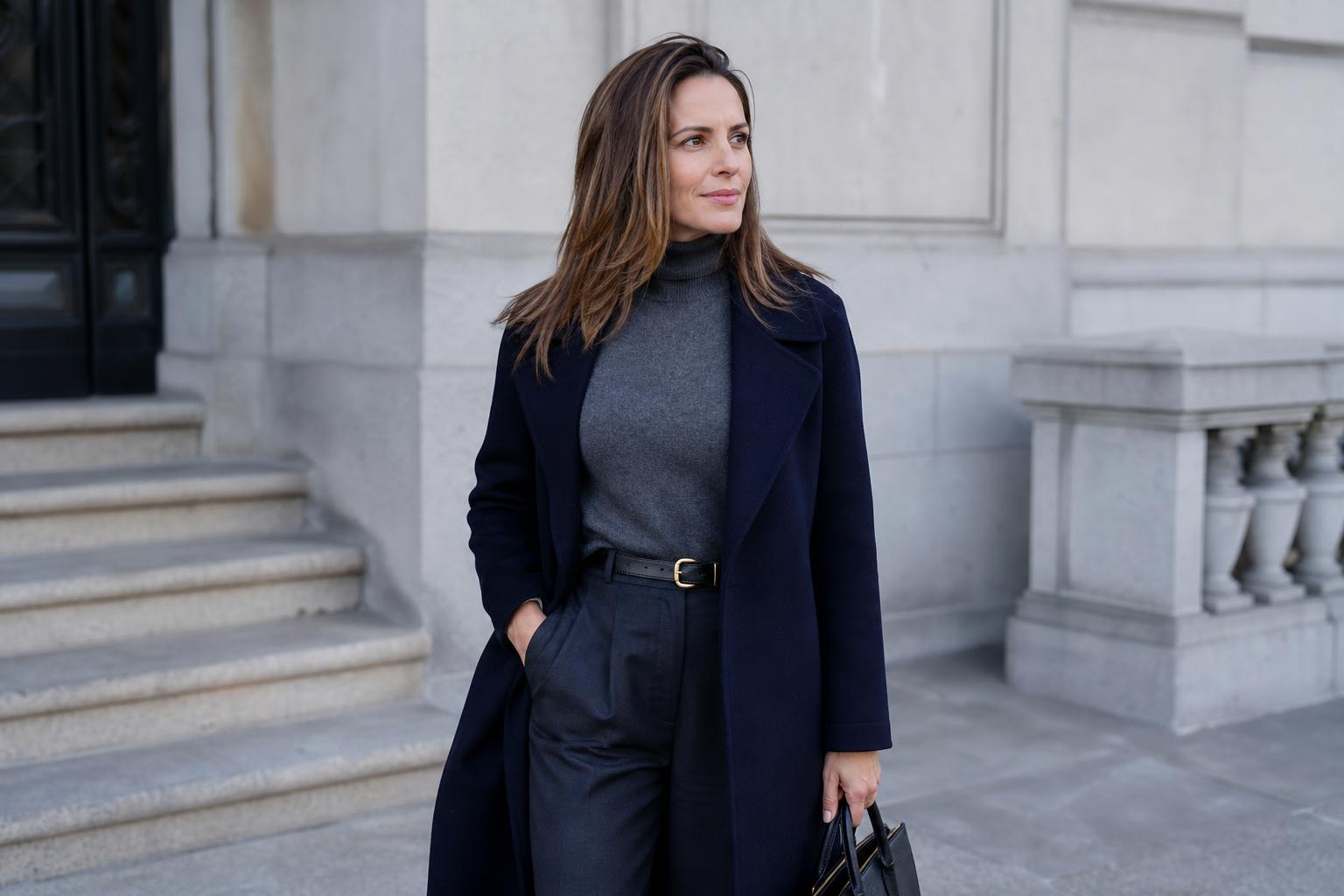
True Winter Capsule Wardrobe for Polished Everyday Style
Building a true winter capsule wardrobe sounds straightforward until the missing information becomes the entire problem. You want a wardrobe that feels cohesive, practical, and visually polished, but without reliable guidance on what actually belongs in that capsule, how it should function, or which pieces matter most, the idea becomes frustrating fast.
The challenge is not simply choosing winter clothes. It is trying to create a system: a wardrobe with enough clarity to simplify dressing, enough flexibility to work in real life, and enough aesthetic consistency to feel intentional rather than repetitive. That kind of wardrobe depends on specifics, and when those specifics are uncertain, even smart shopping and thoughtful styling can turn into guesswork.
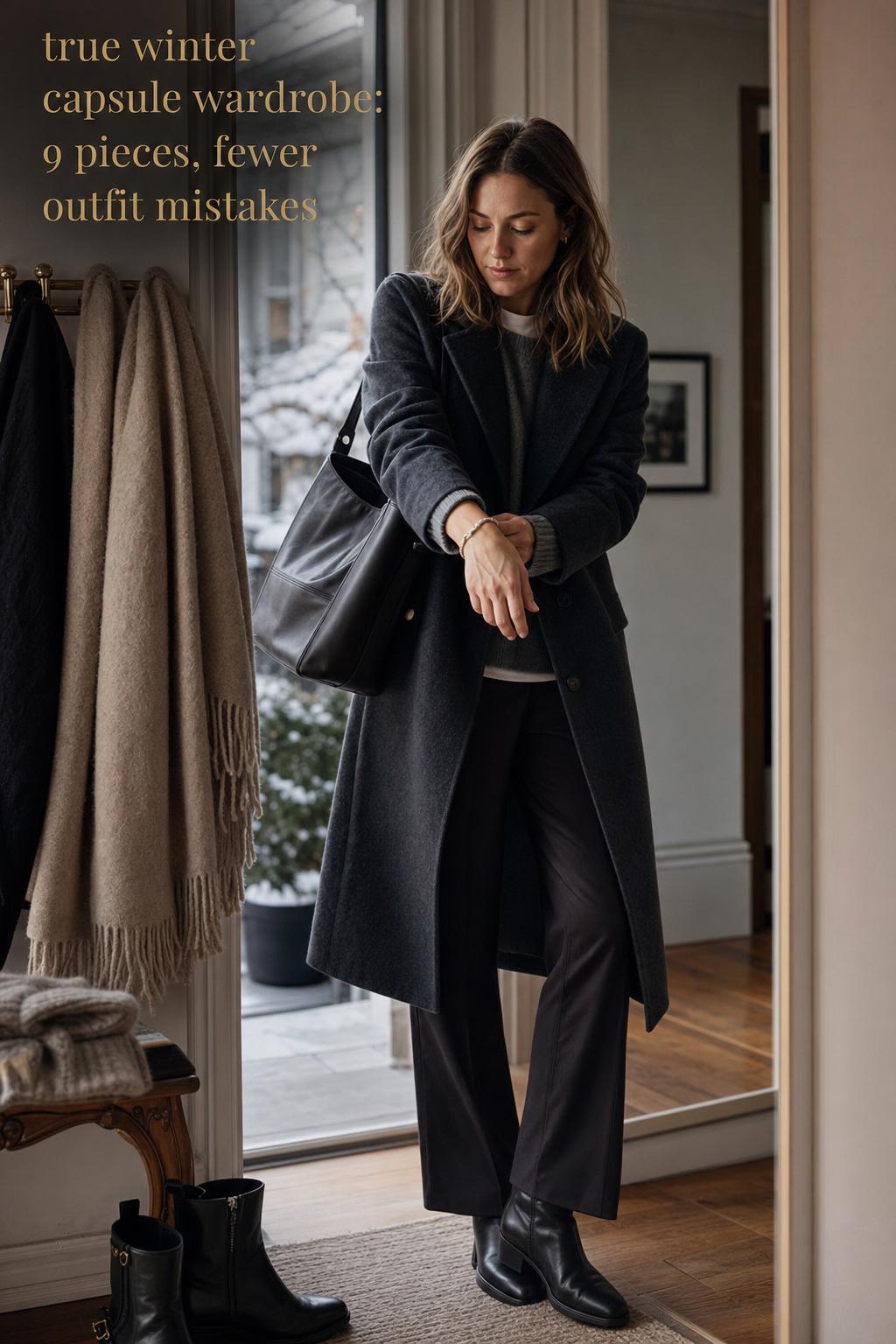
A true winter capsule wardrobe only works when the decisions behind it are grounded, precise, and complete. Without that level of clarity, readers are left with broad ideas instead of wearable solutions. In practice, that means the most helpful approach is not to force a definitive formula where verified details are unavailable, but to understand why the topic demands accuracy and how to approach it with better standards.
Why this wardrobe question is harder than it looks
A capsule wardrobe is not just a shopping list. It is a styling framework. In winter, that framework has to handle low temperatures, indoor heating, layering, movement, comfort, repetition, and visual balance. Every piece has more responsibility because each item must work across multiple outfits without making the overall wardrobe feel flat or overly complicated.
Found the dress? Keep the rest in one place.
Zarellea brings guest details, vendors, timelines, and every next step together — so your wedding plan feels as good as your look.
That is exactly why vague advice tends to fail. A winter wardrobe can become bulky, visually heavy, or impractical very quickly. A coat may work for weather but overwhelm the silhouette. A knit may feel cozy but become difficult to layer under outerwear. Boots may look right in isolation yet limit the proportions of the entire outfit. When people search for guidance on a true winter capsule wardrobe, they are usually trying to solve all of those issues at once.
The deeper frustration is that winter dressing is rarely one-dimensional. You are not dressing only for cold weather. You are dressing for commutes, offices, errands, dinners, indoor-outdoor transitions, and repeated wear. A useful capsule needs to reduce decision fatigue while still making room for variation. That balance is difficult to achieve without clear, trustworthy direction.
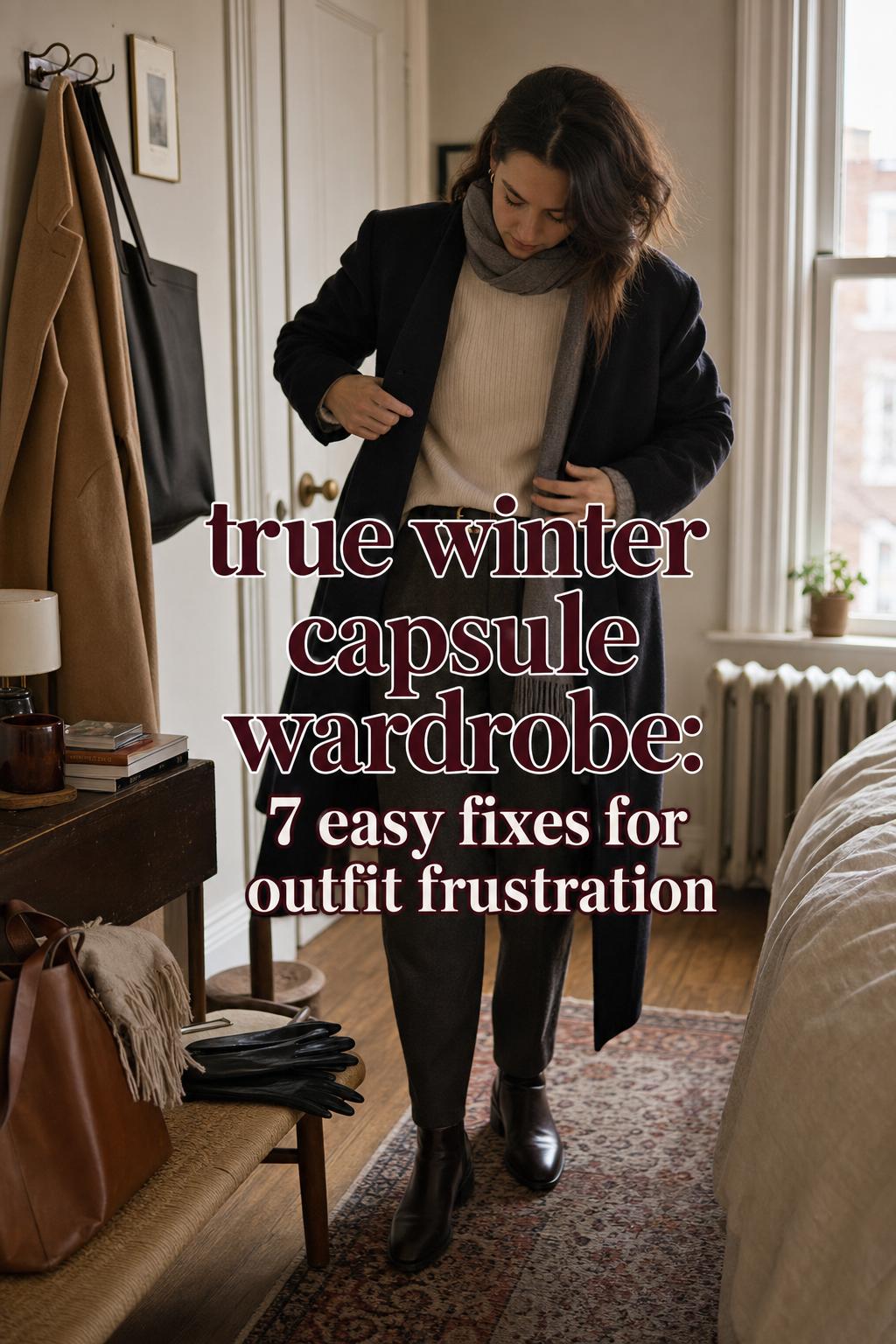
The styling logic a winter capsule has to solve
The core promise of a capsule wardrobe is simplicity, but winter introduces complications that make the styling logic more important than the item count. A successful capsule has to create outfits that feel warm without becoming stiff, polished without becoming formal, and minimal without becoming monotonous. That requires attention to silhouette, layering behavior, and how often pieces can realistically be reworked.
Silhouette balance matters more in winter because layers add visual weight. Once coats, knits, and boots enter the outfit composition, the body line changes. If every piece is oversized or heavy, the result can feel shapeless. If every piece is close-fitting, the outfit can feel restrictive and less adaptable. A strong winter capsule usually depends on proportion play: one element adds structure, another softens it, and another anchors the outfit visually.
Texture also becomes a practical styling tool rather than just an aesthetic detail. In colder months, many wardrobes rely on similar shapes and darker tones. Texture contrast helps preserve depth and interest. Even within a minimal wardrobe, the difference between a smoother base layer and a more substantial outer layer can make an outfit feel considered instead of repetitive.
Then there is temperature adaptability. Winter days often move between very cold outdoor conditions and much warmer indoor environments. A capsule that only focuses on warmth can become uncomfortable the moment you step inside. A more effective wardrobe supports flexible layering, which means each piece needs to work both independently and as part of a larger outfit composition.
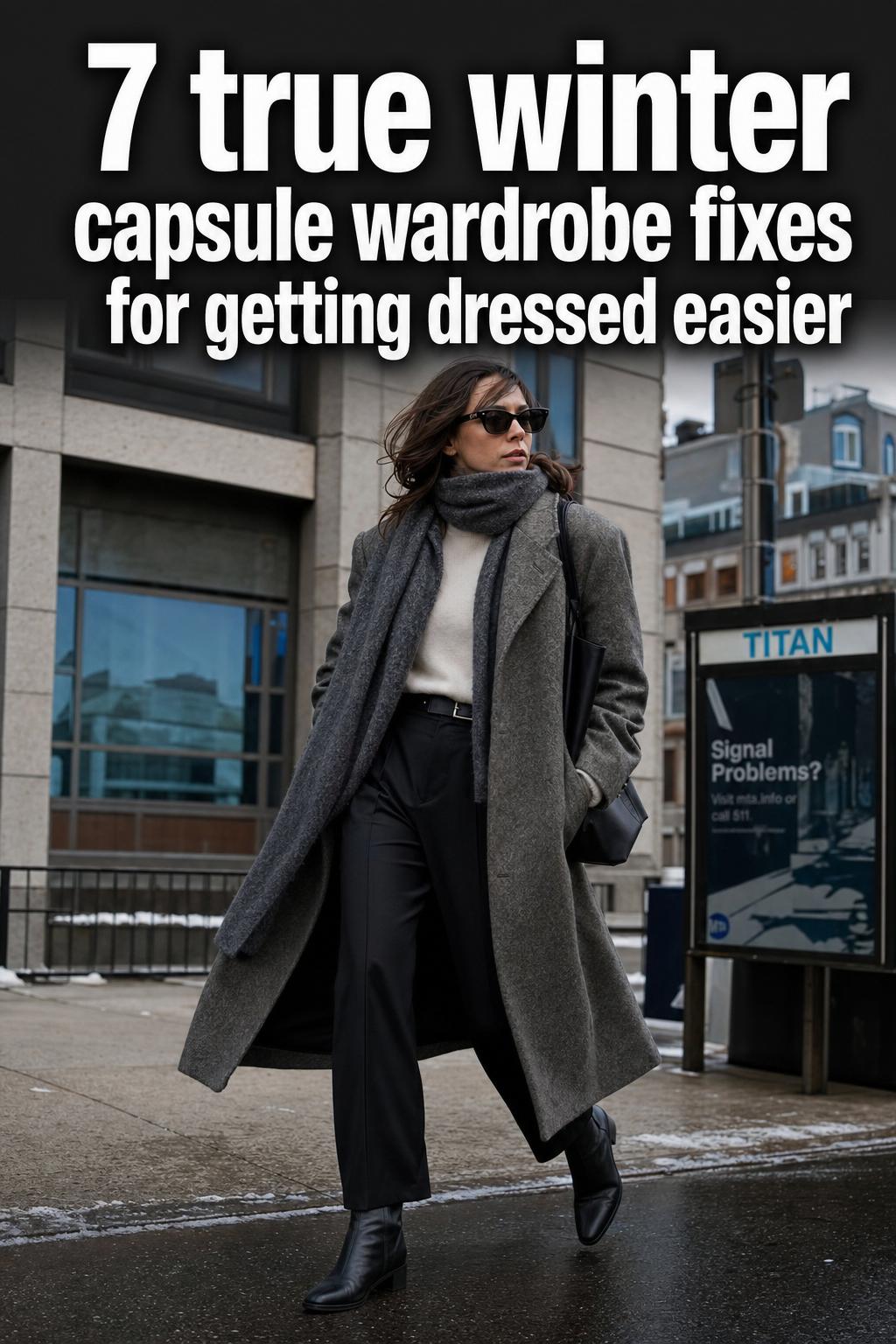
Why precision matters more than volume
The phrase true winter capsule wardrobe suggests something definitive. Readers are not looking for random winter outfit ideas. They are usually looking for a dependable foundation they can rely on repeatedly. That makes precision more useful than abundance. A concise wardrobe with clear logic is far more effective than a long list of loosely related winter pieces.
In editorial terms, this is the difference between inspiration and infrastructure. Inspiration can show a beautiful coat, a knit dress, or a pair of boots. Infrastructure explains how those pieces interact, how often they can be worn, what they solve, and where they may fall short. That is what turns clothing into a working capsule.
Without precise guidance, people often overbuy around the idea of winter style rather than building a wardrobe system. The result is familiar: too many statement knits, not enough practical layering pieces; attractive outerwear with no consistent shoes to support it; versatile basics that do not actually connect into complete outfits. The wardrobe looks full but still feels difficult to wear.
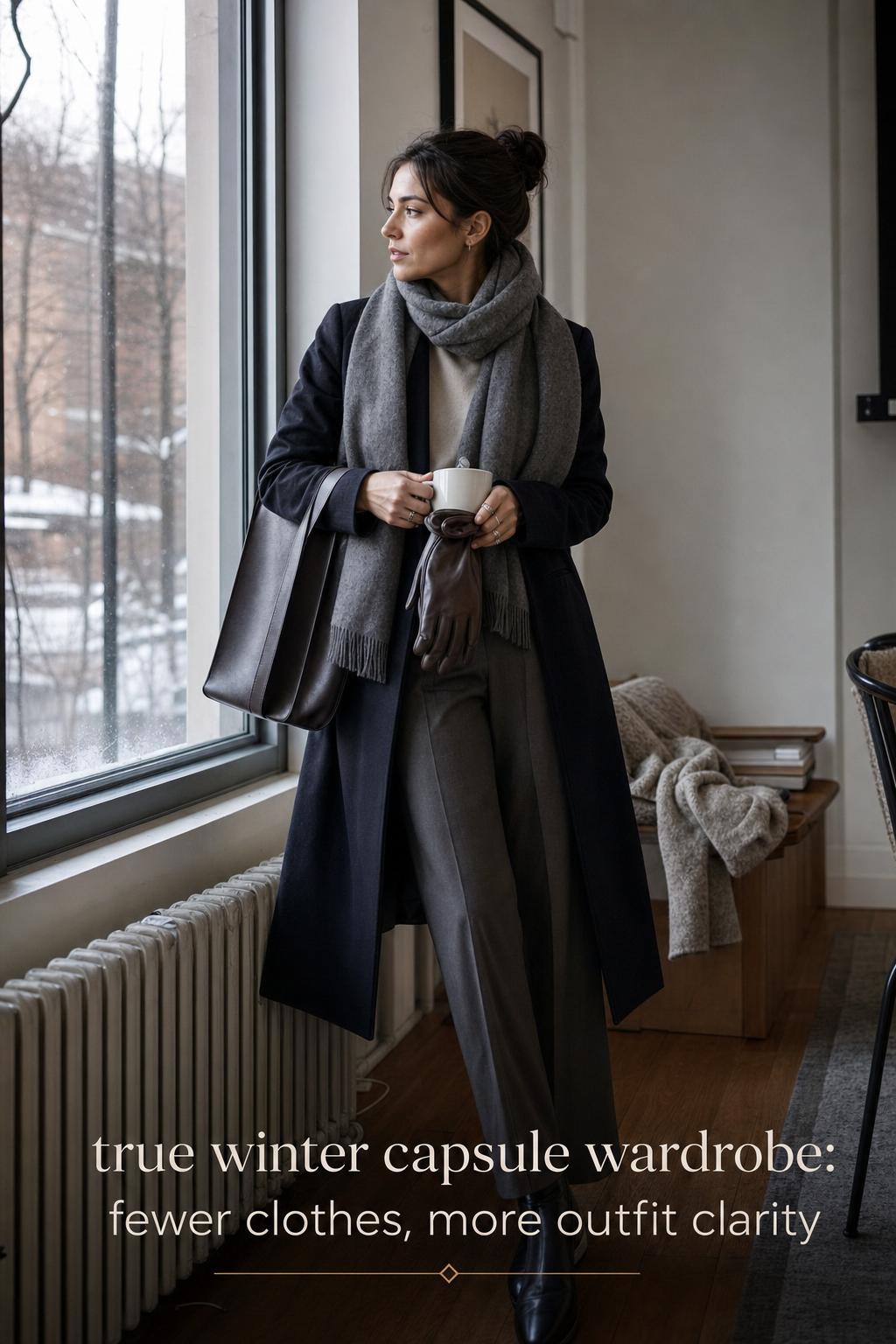
What readers are usually trying to fix
The search for a true winter capsule wardrobe is rarely just about fashion taste. It is often a response to a practical dressing problem. Some readers are tired of overcomplicated mornings. Others are trying to stop impulse shopping. Some want to streamline a closet that feels crowded but unusable. Others want to dress with more consistency while still feeling like themselves.
Winter intensifies those issues because clothing becomes more functional and more expensive. The stakes are higher. Outerwear, knitwear, and weather-appropriate shoes take up more space, require more investment, and affect more of the final look. Mistakes become obvious quickly because one wrong piece can disrupt both comfort and visual cohesion.
There is also a social element. Winter wardrobes often need to transition across contexts with very little time to change. A look may need to move from a cold commute to a workplace to an evening plan, all while staying comfortable and visually appropriate. That is why wearable guidance matters so much here. The wardrobe has to work in motion, not just in theory.
Common styling traps that make winter capsules feel disappointing
Many winter wardrobes fail not because the individual pieces are wrong, but because the styling system is incomplete. The most common trap is building around isolated favorites instead of repeatable outfit combinations. A beautiful coat or knit can feel like a smart purchase until you realize it only works with one pair of trousers or one shoe shape.
- Too much visual heaviness across every layer, which flattens the outfit and reduces versatility.
- Too few transitional pieces, making outfits either too warm indoors or not warm enough outside.
- Footwear that only works with limited hem lengths or silhouettes.
- An inconsistent palette that prevents efficient mixing and repeating.
- Pieces that are individually appealing but do not create a reliable everyday wardrobe.
Another frequent mistake is treating a capsule like a rigid formula. A useful wardrobe is edited, not inflexible. If it cannot adapt to your actual routine, it stops being practical. Winter dressing requires room for weather shifts, comfort needs, and repetition across different settings. A capsule should reduce friction, not create another set of rules to manage.
The missing middle: between minimalist theory and real-life wear
One reason the capsule concept remains appealing is that it promises calm. Fewer choices, more consistency, better outfits. But winter exposes the gap between minimalist theory and daily wear. It is easy to admire a tightly edited wardrobe concept. It is much harder to live in one if the underlying recommendations are not fully reliable or context-aware.
Real-life wearability depends on details that broad summaries often skip: whether layers can move comfortably together, whether proportions stay balanced once outerwear is added, whether repeated combinations still feel distinct enough to keep getting worn. These are not small concerns. They are the difference between a wardrobe that sounds appealing and one that genuinely supports everyday life.
Why this matters in practical styling
A winter capsule is most useful when it behaves like a flexible editing tool. It should help you identify which pieces earn repeat wear, which shapes create the strongest visual anchor, and which combinations hold up under real conditions. Without those practical checks, the capsule becomes a concept board rather than a wardrobe solution.
A better way to think about a true winter capsule wardrobe
Because a true winter capsule wardrobe depends on exact, current, and well-supported information, the smartest approach is to treat the wardrobe as a tested composition rather than a fixed formula pulled from generic assumptions. That means evaluating every recommendation through three filters: repeatability, adaptability, and cohesion.
Repeatability asks whether a piece can be worn often without feeling limiting. Adaptability asks whether it can move across weather conditions, indoor settings, and different outfit moods. Cohesion asks whether it actually integrates with the rest of the wardrobe. These filters are practical because they focus on how clothing performs, not just how it photographs.
This approach also protects against one of the biggest winter style frustrations: buying with good intentions and still feeling like you have nothing to wear. A strong capsule is not defined by scarcity. It is defined by coordination. The point is not to own as little as possible. The point is to own pieces that consistently make dressing easier.
Wearable decision-making, even when definitive lists are unavailable
When exact wardrobe rankings, examples, or item-level references are not fully locked down, the most responsible style guidance focuses on decision-making standards rather than pretending certainty. That may feel less immediately satisfying than a prescriptive checklist, but it is far more useful in the long run. It teaches readers how to evaluate a winter wardrobe with clarity instead of relying on oversimplified formulas.
For example, if a piece only works in one narrow context, it is less likely to deserve space in a capsule. If a layer cannot comfortably fit under outerwear, it may create more friction than value. If a shoe shape limits too many hem lengths or feels impractical for winter routines, it weakens the wardrobe’s overall efficiency. These are the real questions that shape successful outfit systems.
Quick styling adjustment
Instead of asking whether an item looks like a capsule piece, ask whether it improves at least three complete outfits you can realistically wear. That simple shift keeps the wardrobe grounded in function and helps prevent attractive but disconnected purchases.
What a trustworthy winter wardrobe guide should provide
Readers searching for dependable wardrobe guidance do not just need aesthetic direction. They need specificity. A useful guide should clarify what belongs in the wardrobe, why each category matters, how pieces work together, and where common limitations appear. It should also reflect current results and up-to-date examples when making claims about what is leading or most recommended.
That level of clarity matters because winter clothing decisions often involve cost, repetition, and comfort. People are not casually browsing for novelty. They are often making shopping, editing, or planning choices that affect an entire season. In that context, confidence should come from accuracy, not from broad fashion language.
- Clear identification of the most relevant and useful wardrobe guidance available now.
- Specific explanation of how pieces combine into real outfits.
- Practical trade-offs, such as warmth versus bulk or polish versus flexibility.
- Realistic adaptation advice for different routines and comfort needs.
- Enough detail to support purchasing, editing, and daily styling decisions.
How to use capsule thinking without forcing a rigid uniform
There is a difference between consistency and sameness. A strong winter wardrobe creates visual continuity through shape, palette, and function, but it should still leave room for variation. That variation might come from texture contrast, layering combinations, or how polished or relaxed the final composition feels. The key is that the wardrobe remains coherent even as the mood shifts.
This is where capsule thinking becomes genuinely helpful. It encourages stronger editing. It highlights which pieces serve as visual anchors and which ones support the wardrobe more quietly. It also reveals whether your winter closet has enough range to handle daily life without becoming cluttered. The goal is not to create a uniform. It is to create clarity.
Most versatile principle
If you can imagine an item in only one type of outfit, it belongs on the edge of the wardrobe, not at the center of the capsule. Core pieces need enough flexibility to support different layers, proportions, and contexts.
The practical standard for winter style advice
The most useful winter style advice does not just inspire. It reduces friction. It helps people understand why one wardrobe works harder than another, why some combinations feel balanced while others feel cumbersome, and why practical constraints should shape style decisions rather than interrupt them.
That standard is especially important for a topic like a true winter capsule wardrobe. Readers need more than broad fashion encouragement. They need reliable structure, clear reasoning, and enough depth to make confident decisions. Without those elements, the concept stays attractive but underdeveloped.
In other words, the real value of a winter capsule is not minimalism for its own sake. It is the ability to create repeatable, comfortable, visually coherent outfits with less effort and fewer mistakes. Any article on the subject should ultimately help readers move closer to that outcome.
Tips for evaluating any winter capsule advice you read
Even when a wardrobe guide looks polished, it is worth testing whether the advice translates into daily wear. Winter style is too functional to assess only on aesthetics.
- Check whether the guidance explains why pieces work together, not just what to buy.
- Look for real outfit logic, especially around layering, proportion, and repeat wear.
- Notice whether comfort and movement are addressed alongside appearance.
- Pay attention to whether the wardrobe can handle indoor-outdoor transitions.
- Be cautious of advice that sounds definitive without showing practical reasoning.
These filters help separate useful wardrobe systems from decorative suggestions. The more specific the explanation, the easier it is to tell whether the advice will actually support your routine.
Conclusion
A true winter capsule wardrobe is only as helpful as the precision behind it. The appeal of a smaller, smarter wardrobe is real, but winter clothing demands more than broad recommendations. It requires clear structure, practical styling logic, and confidence that the guidance is accurate enough to support real decisions.
The smartest way forward is to value cohesion over clutter, function over guesswork, and repeatable outfit logic over isolated inspiration. When winter style advice meets that standard, a capsule wardrobe becomes what it should be: not restrictive, but relieving.
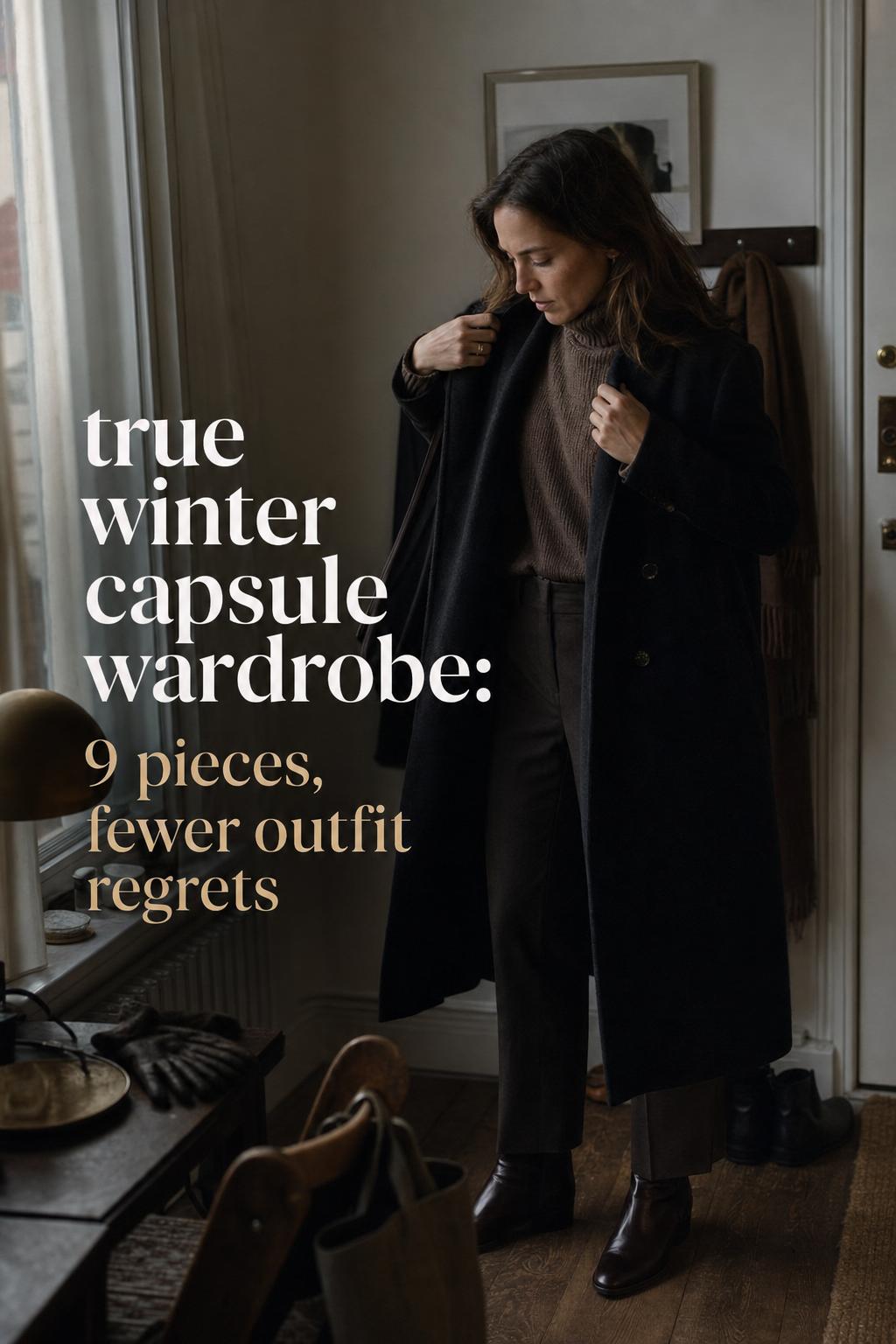
FAQ
What is a true winter capsule wardrobe?
A true winter capsule wardrobe is a tightly edited seasonal wardrobe designed to create multiple cohesive outfits with fewer pieces, while still meeting the practical demands of winter such as layering, warmth, comfort, and repeated wear.
Why is winter harder for a capsule wardrobe than other seasons?
Winter adds more complexity because clothing is bulkier, layering is essential, outerwear and shoes play a larger visual role, and outfits need to adapt between cold outdoor conditions and warmer indoor environments.
What makes a winter capsule wardrobe feel unsuccessful?
A winter capsule usually feels unsuccessful when the pieces do not connect into repeatable outfits, the layers are uncomfortable together, the proportions feel visually heavy, or the wardrobe looks cohesive in theory but does not function smoothly in daily life.
Should a capsule wardrobe be very small to work well?
No. The goal is not extreme limitation but strong coordination. A useful capsule is defined by how well the pieces work together, not by how few items you own.
How can I tell if a piece belongs in my winter capsule?
A piece earns its place when it improves multiple realistic outfits, layers comfortably, suits your routine, and supports the overall cohesion of the wardrobe rather than standing apart as a single-use item.
Why do so many winter wardrobes still feel repetitive even with plenty of clothes?
This usually happens when the wardrobe contains attractive individual items but lacks structure. Without a consistent approach to proportion, layering, and compatibility, more clothing does not automatically create more usable outfits.
Is a capsule wardrobe supposed to feel like a uniform?
No. A strong capsule creates consistency, not sameness. It should make dressing easier while still allowing variation through texture, layering, silhouette shifts, and different levels of polish.
What is the most important quality in winter wardrobe advice?
The most important quality is precision. Winter wardrobes affect comfort, cost, and everyday practicality, so the most helpful guidance explains exactly why recommendations work and how they translate into real wear.