Spring Alt Capsule Wardrobe With an Editorial Edge
Alt capsule wardrobe: the anti-trend uniform with a stronger point of view
The alt capsule wardrobe sits in a sharp, interesting space between restraint and rebellion. It borrows the discipline of a capsule wardrobe, but rejects the idea that versatility has to look neutral, quiet, or anonymous. The visual identity is expressive rather than polished for its own sake: wider silhouettes, graphic surfaces, unusual accessories, strong outerwear, and pieces that feel chosen for personality as much as function.
Its mood is anti-trend without being chaotic. That distinction matters. Instead of chasing every seasonal shift, an alternative capsule wardrobe builds around personal storytelling, which is why it resonates so strongly in a fashion moment often framed as a reaction to quiet luxury. Editorial voices and brands such as Rick Owens, Maison Margiela, Comme des Garçons, JW Anderson, Alaïa, and Iris van Herpen often appear in this conversation because they represent design language rooted in individuality, silhouette experimentation, and a refusal of sameness.
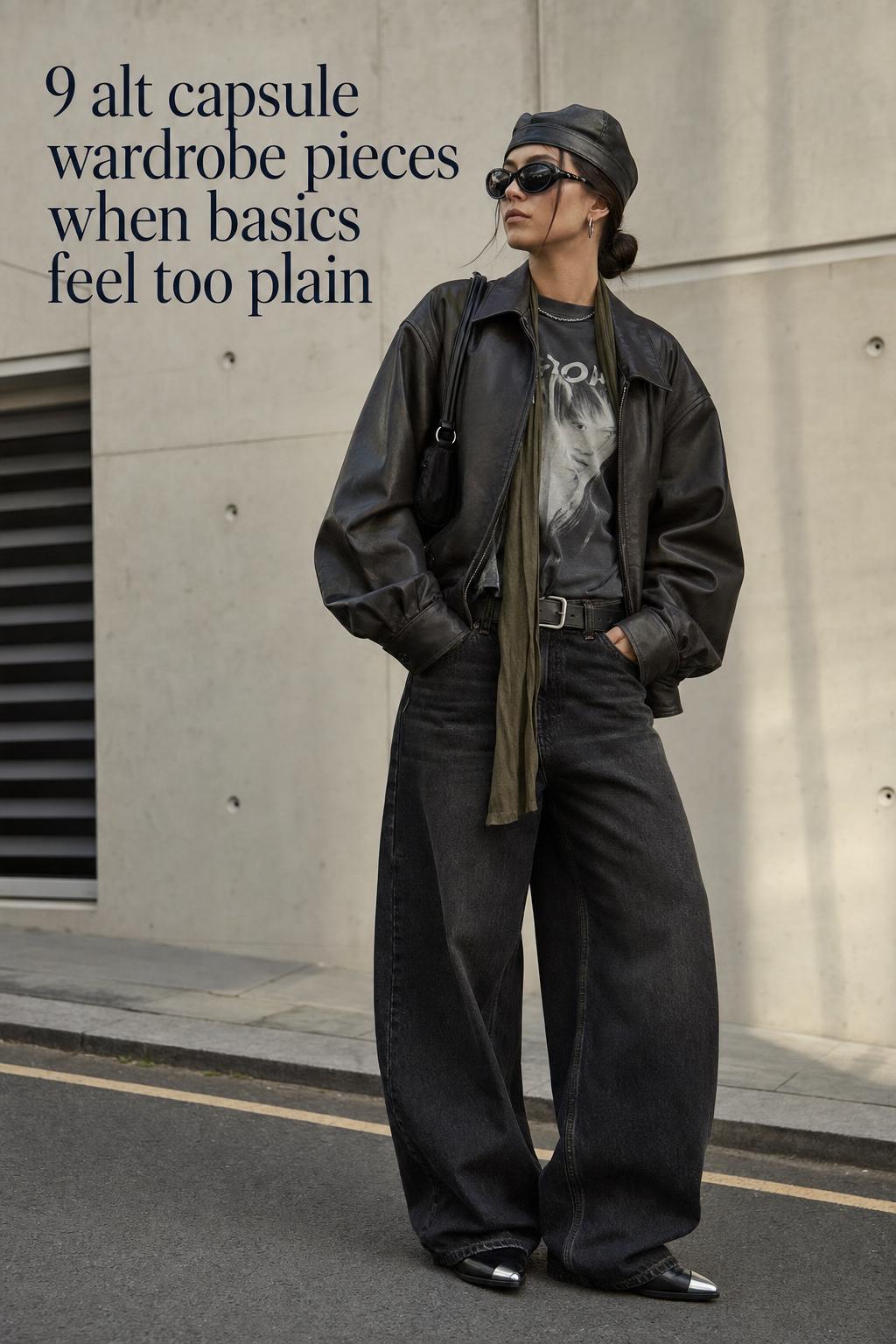
In real life, this aesthetic works anywhere a standard basic wardrobe can work: city days, creative offices, gallery visits, travel, weekend dressing, and everyday errands. The difference is visual intent. An alt capsule wardrobe remains practical, but the practical pieces carry more shape, texture, and attitude. That balance is exactly why the concept has become so appealing: it offers the efficiency of a capsule wardrobe without flattening personal style.
What defines an alt capsule wardrobe
An alt capsule wardrobe is a curated edit of pieces that can mix and repeat easily, while still expressing a distinct style identity. In a standard capsule, the emphasis often falls on timeless essentials, flexible color palettes, and streamlined shopping. In an alternative capsule wardrobe, those principles still matter, but the wardrobe is anchored by stronger visual signals: a leather jacket with unusual proportions, jumbo jeans, graphic tees, statement dresses, bright tights, futuristic flats, bug-eye sunglasses, or a hat that shifts the tone of a simple outfit.
Found the dress? Keep the rest in one place.
Zarellea brings guest details, vendors, timelines, and every next step together — so your wedding plan feels as good as your look.
The key distinction is not quantity alone. It is composition. A conventional wardrobe may prioritize blending in; an alt capsule prioritizes cohesion without conformity. That makes the idea especially relevant to anyone who wants fewer clothes but does not want to lose edge, subcultural references, or a sense of fashion autonomy.
This also explains why the terms alt capsule wardrobe, alternative capsule wardrobe, anti-trend capsule wardrobe, and soft alt capsule often overlap. They point to the same core idea: a smaller wardrobe built around intentional repetition, but filtered through individuality rather than conventional minimalism.
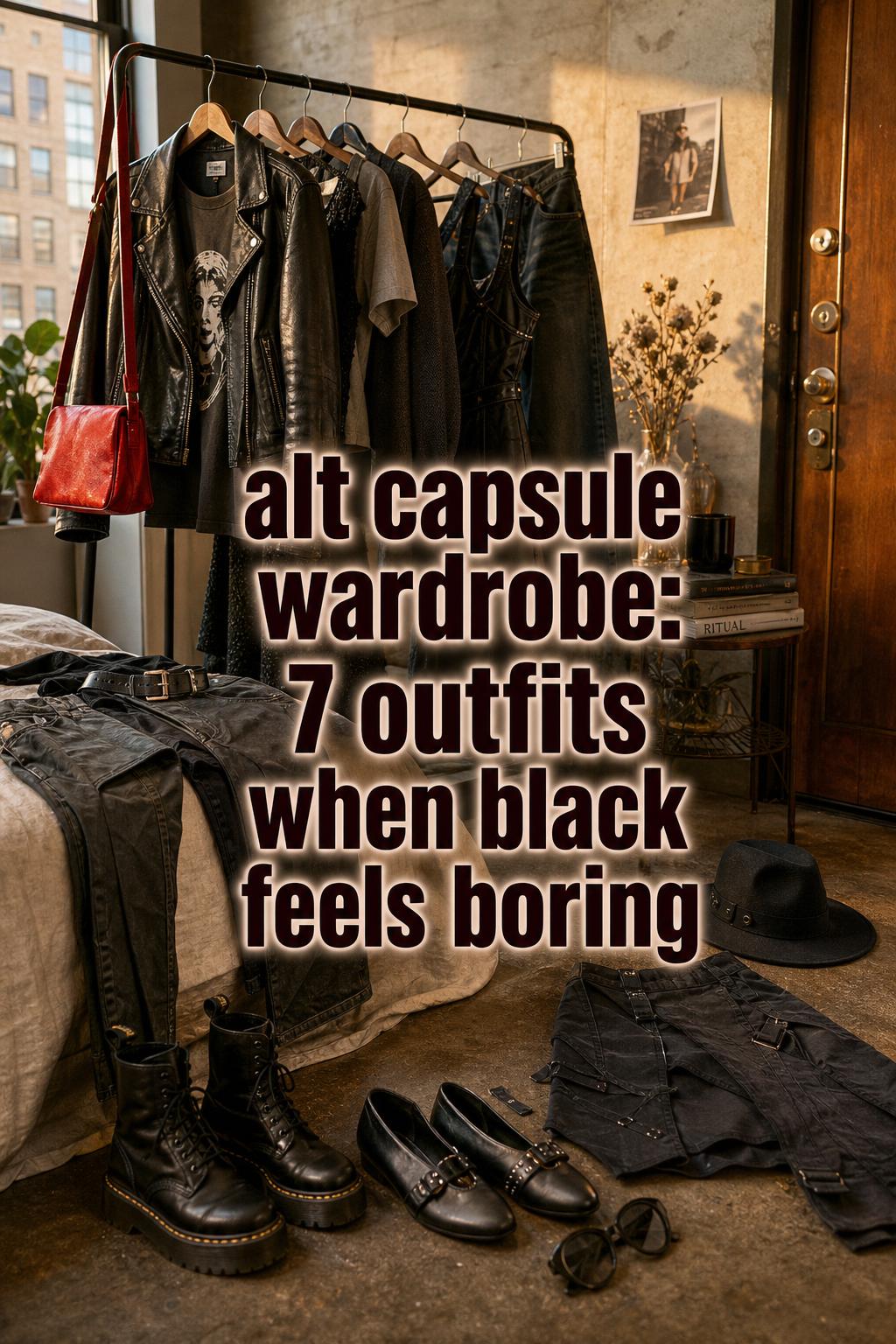
The philosophy behind the silhouette
Fashion psychologist Dr. Carolyn Mair is often cited in discussions about style identity because clothing is not only functional; it is part of how people communicate self-concept. In the context of an alt capsule wardrobe, that insight becomes practical. The goal is not to own fewer pieces for the sake of purity. The goal is to own pieces that consistently express a point of view. The Anti Club framing often attached to this mood captures that resistance to default dressing: anti-formula, anti-blandness, anti-obligation to mirror the mainstream.
How to start without losing your personal style story
The most common mistake in building an alt capsule wardrobe is starting with generic basics and assuming personality can be added later. In practice, that usually creates a wardrobe full of filler. A stronger method is to begin with your visual anchors first, then build the versatile pieces around them. That approach preserves the aesthetic from the beginning.
A useful test is to ask which pieces already make your outfits feel like you. That may be a leather jacket, a strange skirt, a bold dress shape, oversized denim, or statement eyewear. Those are not distractions from a capsule. In this category, they are often the core.
- Identify 3 to 5 pieces you wear when you want your look to feel most authentic.
- Separate true staples from default purchases that only seem practical.
- Build a loose core of 10 to 20 pieces that can repeat across settings.
- Leave room for a few high-impact supporting items that create tonal variation and texture contrast.
This structure aligns with broader capsule wardrobe guidance that ranges anywhere from 10 to 80 items depending on lifestyle, but the alt version works best when it remains selective. A tightly edited base with intentional statement pieces performs better than a large wardrobe of almost-right options.
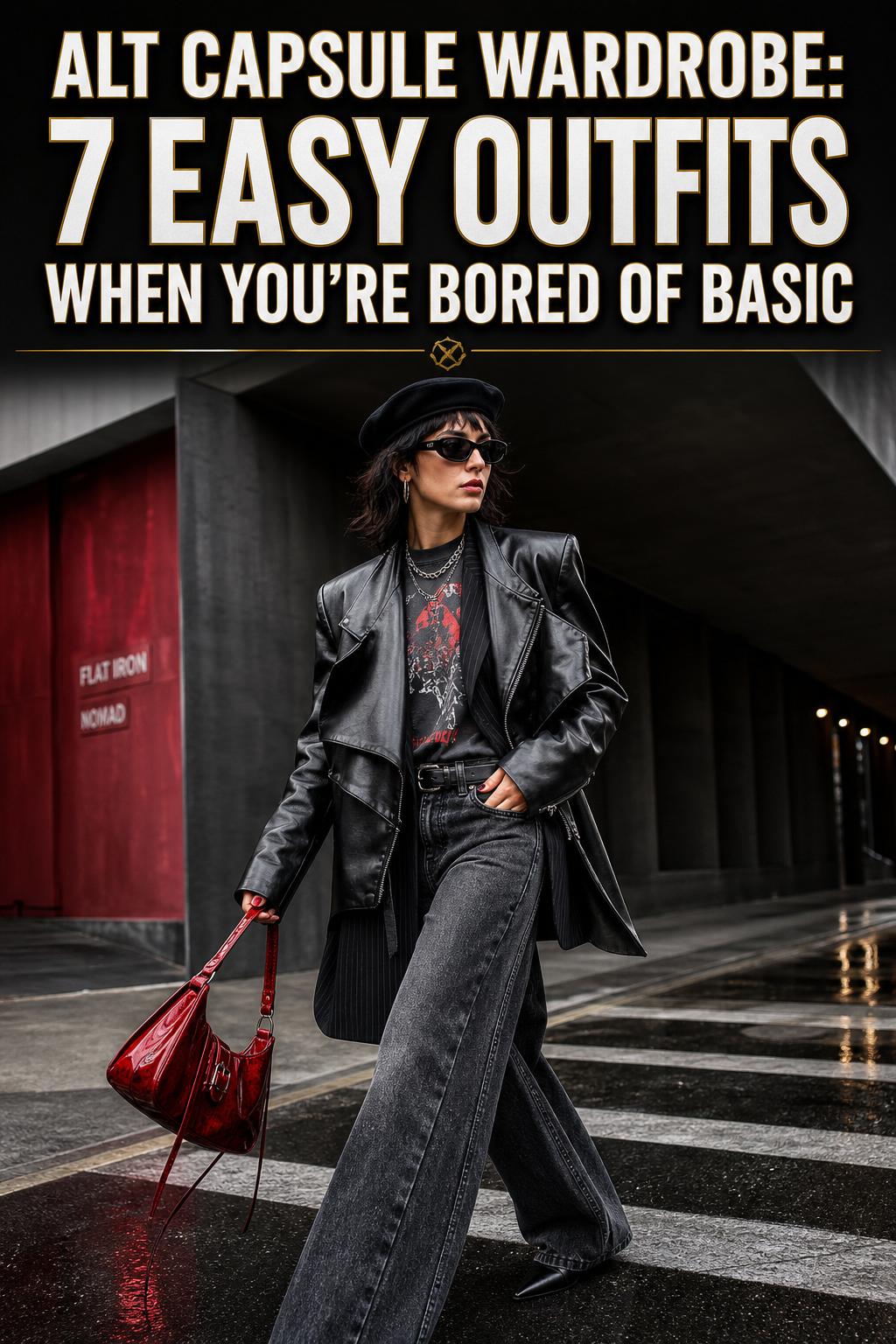
Core pieces versus filler pieces
Core pieces earn repeat wear and shape the wardrobe’s visual identity. Filler pieces are the garments you keep because they are acceptable, not because they add value. In an alternative capsule wardrobe, filler often shows up as plain basics that do not connect to the rest of the aesthetic. If a top only works when hidden under stronger layers, or if a shoe weakens the silhouette every time you wear it, it is not serving the capsule.
The strongest wardrobes balance visual anchor pieces with dependable support. A graphic tee can function as both. So can wide-leg jeans or a textured coat. The piece does not need to be dramatic; it needs to participate in the story.
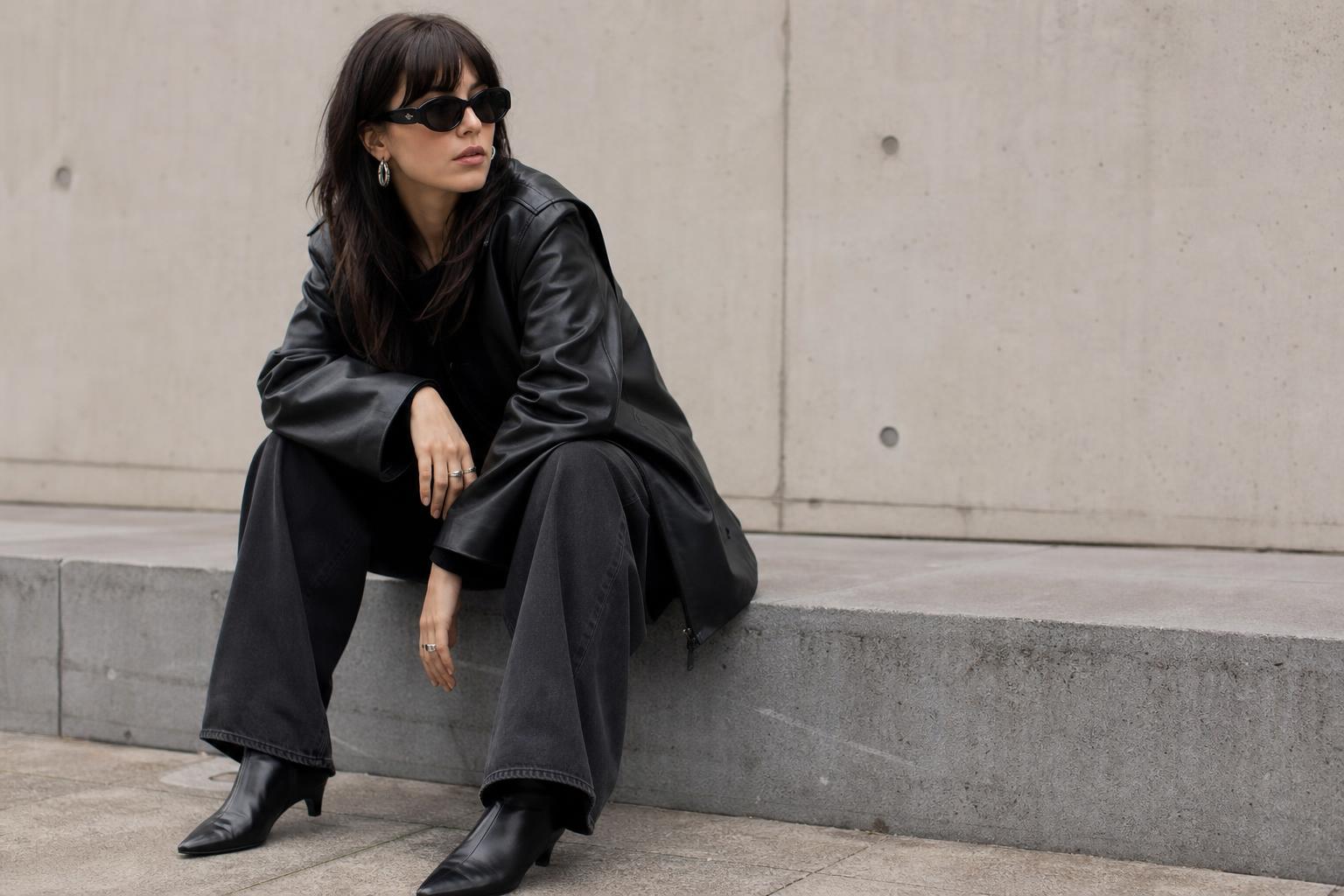
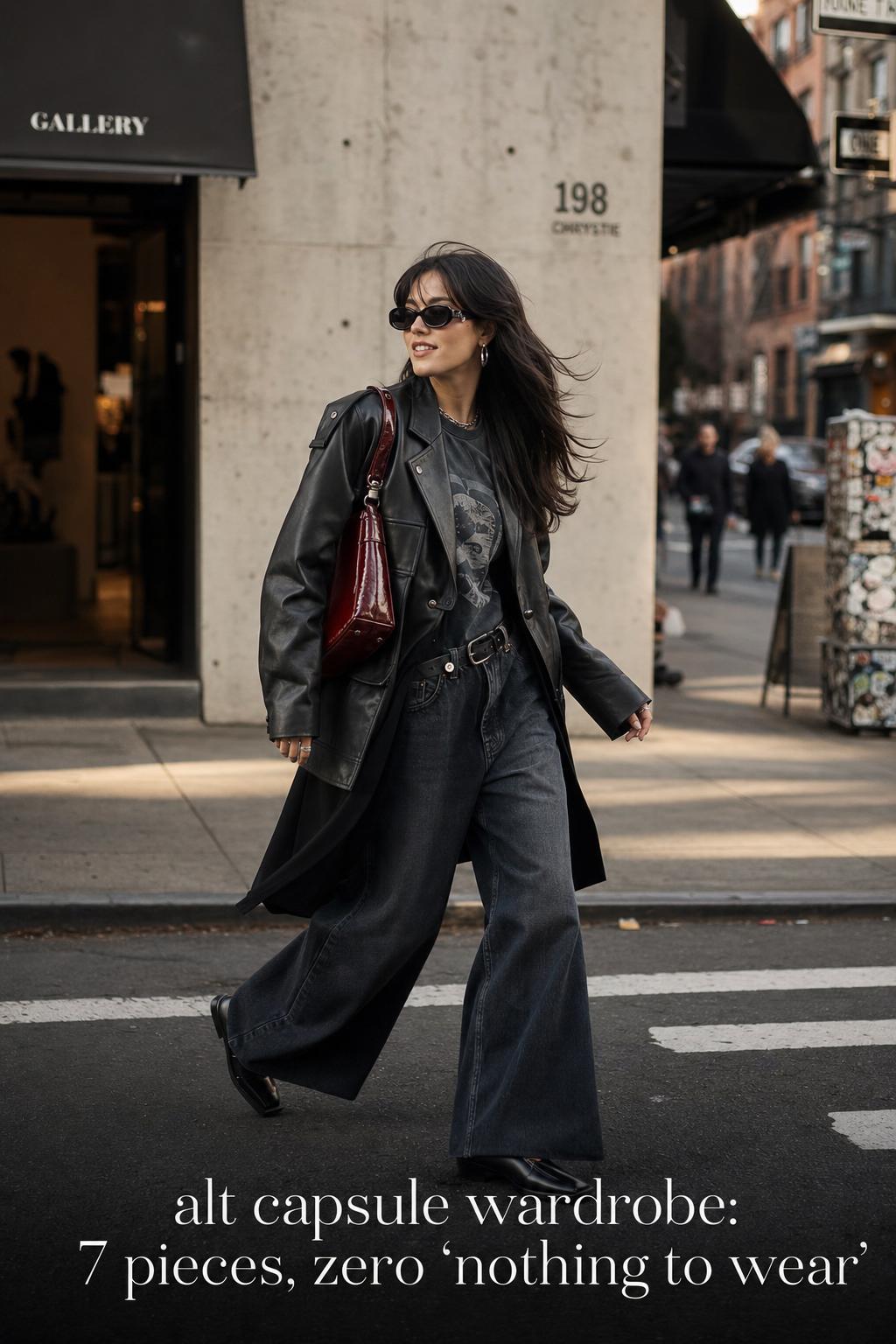
Look: jumbo denim and an offbeat leather layer
This look captures one of the clearest alt capsule formulas: exaggerated proportion balanced by a familiar base. The silhouette starts with jumbo jeans that create volume through the leg line, then sharpens through a fitted or slightly cropped layer above. The effect is grounded but directional, with enough structure to feel deliberate rather than oversized at random.
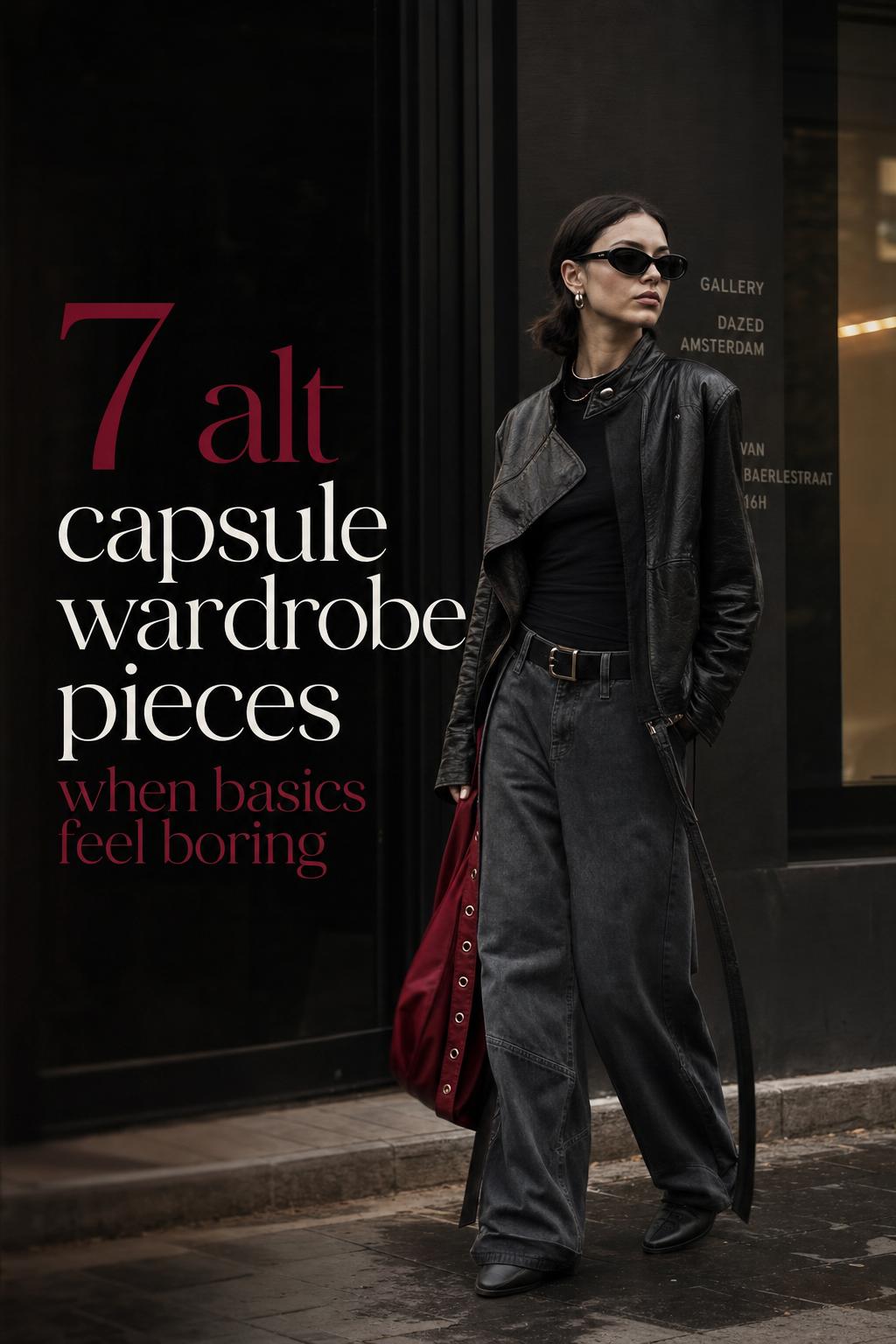
An offbeat leather jacket is the visual anchor here. That could mean unusual hardware, a strong shoulder, an asymmetric line, or simply a shape that feels less conventional than the standard biker. Underneath, a plain or graphic tee keeps the composition clean. The palette works best in dense neutrals with one controlled disruption: faded black denim, oxidized brown leather, washed white jersey, or a muted accent that keeps the outfit from looking flat.
- Key garments: jumbo jeans, leather jacket, fitted tee or graphic tee
- Footwear: boots or futuristic flats depending on the desired finish
- Accessories: bug-eye sunglasses or a compact hat with strong shape
This combination works because the wide denim softens the severity of leather, while the jacket prevents the jeans from drifting into shapelessness. It is one of the easiest ways to start an alt capsule wardrobe because each piece can also separate and pair with other categories later.
Look: graphic tee with a strange skirt and bright tights
Here the mood turns more playful and visibly anti-trend. The silhouette relies on contrast: a casual top against a more unusual lower half. A graphic tee keeps the upper line familiar and wearable, while a strange skirt introduces asymmetry, unexpected volume, or a less predictable hem. The result feels expressive without requiring complicated styling.
Bright tights shift the palette and give the outfit its most direct alt signal. They also create continuity between the skirt and footwear, which is useful when the outfit includes an unconventional shoe. The textures can remain simple elsewhere, because the tights already add enough visual movement. This is one of the clearest examples of personal storytelling through a capsule: each individual garment is functional, but together they read as intentional and specific.
This formula works especially well for city settings, creative workplaces, or social plans where you want polish without looking predictable. It also solves a common capsule problem: dresses and skirts often feel underused unless they can pair with casual tops. In an alt wardrobe, that mix is not a compromise. It is the point.
Style tip: let one color carry the look
If bright tights are doing the visual heavy lifting, keep the rest of the palette controlled. Black, charcoal, washed ivory, or dark denim allow the color accent to read clearly. This preserves silhouette balance and keeps the outfit composition sharp instead of overworked.
Look: anything-but-basic dress with sculptural accessories
A statement dress is one of the fastest ways to make a capsule feel distinct. In a standard wardrobe, dresses are often treated as occasional pieces. In an alt capsule wardrobe, they can act as modular foundations, especially when the shape is strong enough to carry the look on its own. Think silhouette-driven rather than ornate: volume, tension, unusual cut, or architectural line.
This is the category where references to designers such as Alaïa and Iris van Herpen make sense within the broader conversation. The value is not in replicating runway looks literally, but in understanding how shape can become the message. Pairing a bold dress with futuristic flats, bug-eye sunglasses, or a hat with unnecessary drama keeps the styling aligned with the anti-quiet-luxury mood while remaining practical enough for daily wear.
The strength of this look is efficiency. One piece establishes the silhouette, which means accessories can either sharpen or soften it. For someone building an alternative capsule wardrobe with limited space, a dress with a distinct line can generate multiple moods depending on shoes and outerwear. Layer it under leather for edge, or leave it clean with sunglasses for a more editorial finish.
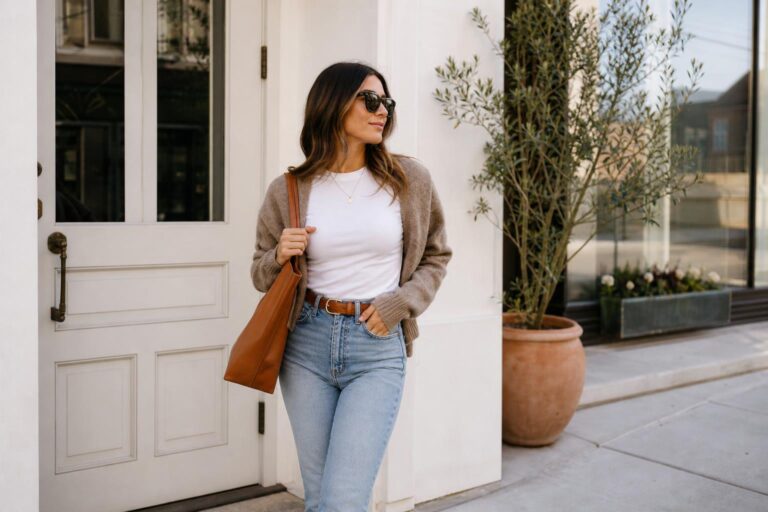
Look: soft alt capsule with tonal layering
Not every alt capsule wardrobe needs to read as severe. The soft alt capsule approach keeps the same commitment to individuality, but interprets it through quieter contrasts, gentler textures, and more fluid proportion play. The mood is less confrontational and more atmospheric, while still resisting standard capsule uniformity.
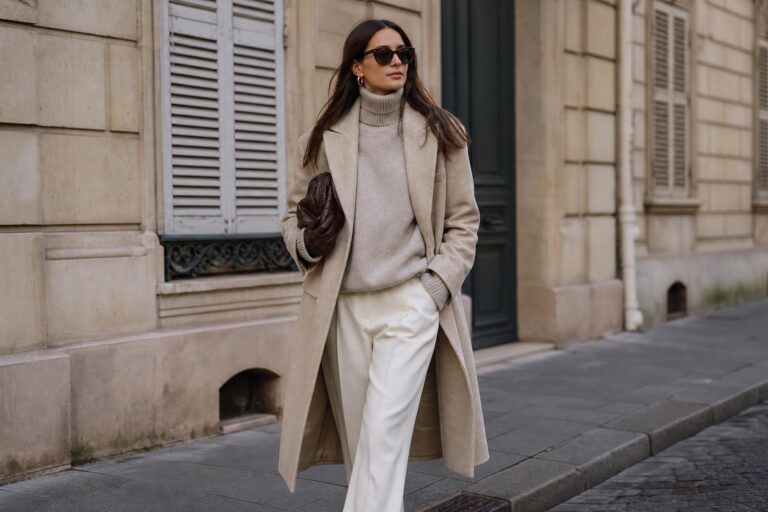
A soft alternative look works through subtle visual tension: a lightweight knit over a dress, wide-leg jeans with a delicate top, or tailored pants under a relaxed outer layer. The color palette can remain muted, but it should not become too corporate. Washed neutrals, faded darks, and one desaturated accent maintain the softer mood without dissolving the identity of the look.
This variation is especially useful for readers who are drawn to the concept of an anti-trend wardrobe but do not want every outfit to center on leather or overtly dramatic styling. It proves that an alt capsule wardrobe can be expressive through texture and mood, not only through visual intensity.
How to recreate the soft version
- Choose one fluid piece, such as a softer dress or draped top.
- Anchor it with a stronger item, like wide denim or structured footwear.
- Keep accessories selective rather than maximal.
- Use tonal layering instead of high-contrast color blocking.
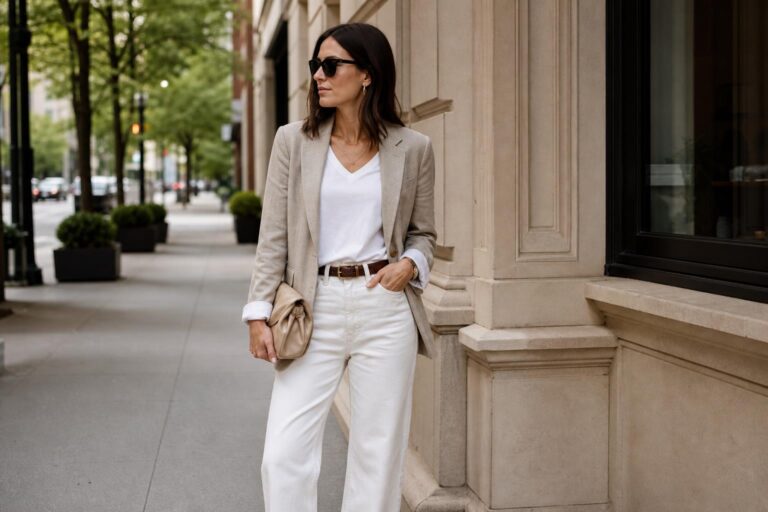
Look: tailored pants, bold knit, and a quieter anti-trend mood
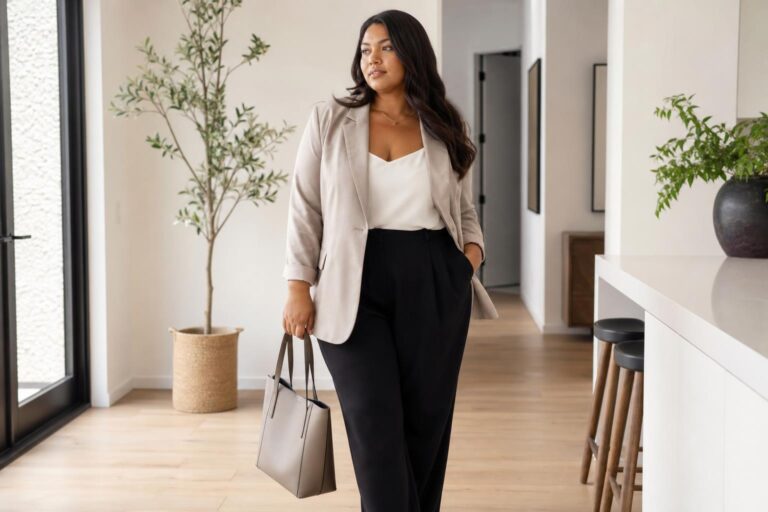
This interpretation moves the alt capsule wardrobe toward refined utility without losing character. Tailored pants create a clean vertical line, which is helpful when the top half includes a bolder knit, unusual texture, or sculptural neckline. The silhouette feels smart, but not conservative. It is one of the best formulas for environments where creative polish matters.
Texture contrast is what makes this look convincing. A smooth tailored pant against a heavier knit gives the outfit depth without relying on prints or loud color. Add a leather jacket over the shoulders or swap in a sharp coat when more structure is needed. Futuristic flats keep the line modern and avoid the predictability of more traditional office footwear.
This outfit composition is valuable because it extends the capsule wardrobe concept into settings where expressive dressing still needs discipline. It also demonstrates that alternative style is not the opposite of refinement. The difference lies in selection and proportion, not in abandoning polish altogether.
The essential categories that build a strong alternative capsule wardrobe
Most strong alt capsule wardrobes can be built from a compact set of categories. The exact number depends on climate, lifestyle, and how often you repeat outfits, but the composition matters more than the total count. A practical range often starts around 12 to 30 pieces, especially if the goal is to create multiple combinations without overbuying.
- Tops: graphic tees, plain tees, bold knits, lightweight shirts
- Bottoms: jumbo jeans, wide-leg jeans, tailored pants
- Outerwear: leather jackets, textured coats, versatile layering pieces
- Dresses: statement dresses with shape or strong line
- Shoes: boots, futuristic flats, clean low-profile options
- Accessories: bug-eye sunglasses, hats, bags that reinforce the mood
The logic is simple. Tops and bottoms create the repeatable base. Outerwear acts as a high-visibility signature. Dresses provide speed and impact. Shoes and accessories shift the tone. Once those categories are covered, outfit variation comes from proportion, layering, and texture rather than endless new purchases.
Why accessories matter more in alt wardrobes
In a standard capsule, accessories often finish the outfit. In an alt capsule wardrobe, they frequently define it. Bug-eye sunglasses, superfluous hats, or a sharply chosen bag can turn a simple tee-and-jeans base into a full aesthetic statement. This is useful for wardrobe efficiency because accessories occupy less space while changing the mood significantly.
Seasonal adaptation without losing the aesthetic
One reason many wardrobes drift away from their original style identity is seasonal pressure. Winter demands warmth, summer demands ease, and transitional weather tends to expose weak planning. A well-built alt capsule wardrobe adapts through layering strategies rather than a total change in visual language.
Winter and fall: texture, layering, and visual density
Colder seasons favor the alt aesthetic because heavy outerwear, dense fabrics, and layered proportion naturally support a stronger silhouette. Leather jackets, textured coats, bold knits, and tailored pants become especially useful here. This is also the easiest season for integrating hats and dramatic accessories without forcing the look.
The practical consideration is mobility. If a coat overwhelms everything underneath, the wardrobe loses flexibility. Strong winter layering works best when the base pieces still function indoors, which is why a graphic tee under a substantial jacket or a statement dress under clean outerwear remains effective.
Spring: the editorial season for shape shifts
Spring is where many alternative capsule wardrobe edits become most visible. Lighter layers allow jumbo jeans, strange skirts, bright tights, and sculptural dresses to stand on their own. This is also the season where editorial references from brands like JW Anderson, Comme des Garçons, and Maison Margiela often feel easiest to interpret into daily dressing, because volume and shape can take center stage without bulky winter layers covering them.
Summer: simplify the composition, not the identity
Warm weather often pushes people toward basics that feel generic. The solution is to reduce layers but keep one strong visual element in each look. That may be a statement dress, a powerful sunglass shape, an unusual skirt, or a wide-leg silhouette. Summer alt dressing works best when the palette stays controlled and the silhouette does the expressive work.
The psychology of dressing with intention
The appeal of an alt capsule wardrobe is not only visual. It also answers a practical identity question: how do you simplify your wardrobe without flattening yourself into a generic version of style? Dr. Carolyn Mair’s connection to the psychology of fashion is useful here because the choices people repeat tend to reflect comfort, self-image, and perceived authenticity. A wardrobe built around those realities is easier to maintain than one built around aspiration alone.
This is where anti-trend dressing becomes less about rebellion for its own sake and more about autonomy. The Anti Club framing captures the mood, but the day-to-day function is simpler: if you know your visual anchors, you make better purchases, repeat outfits with more confidence, and reduce the accumulation of pieces that never integrate.
That also explains why personal style storytelling keeps surfacing in editorial conversations around alternative capsules. A successful wardrobe is not random eclecticism. It is selective consistency. The same few shapes, textures, and accessories reappear often enough to create a recognizable language.
A closet audit for the alt capsule wardrobe
Before buying anything, audit what you already own. This step matters even more in an alternative capsule wardrobe because many people already have suitable statement pieces but lack the supporting structure to wear them consistently. The audit should assess silhouette, repeat value, seasonal flexibility, and how well each piece contributes to the overall mood.
- Pull out the pieces you wear most often when you want to feel the most like yourself.
- Group items by category: tops, bottoms, outerwear, dresses, shoes, accessories.
- Mark which items create strong outfit combinations immediately.
- Remove pieces that require too many corrections to work.
- Note where you are missing support pieces rather than buying more statement pieces first.
A common outcome is realizing that the wardrobe does not need more identity; it needs better linkage. For example, someone may already own strong dresses and graphic tees, but lack the right shoes or outerwear to make them repeatable. In that case, the smartest purchase is often a practical visual anchor such as a leather jacket or a more versatile flat.
What stylists often get right
Editorial styling directors such as Susan Bender Whitfield are useful references in this space because they understand that a wardrobe feels modern when it balances familiarity and surprise. The best alt looks are rarely built from all statement pieces. They rely on one or two dominant elements, then control the rest through proportion and restraint.
Brands, designers, and editorial references that shape the mood
The alt capsule wardrobe is not about copying runway fashion directly, but runway and editorial references help clarify the aesthetic language. Comme des Garçons and Maison Margiela often represent conceptual dressing and altered proportion. Rick Owens signals dark precision and sculptural edge. JW Anderson tends to suggest play, shape shifts, and fashion wit. Alaïa and Iris van Herpen bring a more silhouette-led interpretation, especially for dresses and visually strong form.
These labels function less as shopping instructions and more as style coordinates. They help explain why some garments feel alternative even when the actual wardrobe remains small and practical. A leather jacket with unusual cut, a flat with futuristic line, or a dress with volume in an unexpected place all belong to the same visual ecosystem.
Editorial and guide-based voices shape the practical side of the conversation too. GQ frames capsule dressing through a concise men’s hit list of foolproof pieces, while Woman & Home emphasizes personalization, seasonal adaptation, and flexible item counts. Anna Edit and Franny Collingham of Wild Clouds reinforce the idea that capsules work best when they match real lifestyle conditions rather than abstract rules. Together, these perspectives support a useful conclusion: a successful alt capsule wardrobe needs identity, but it also needs wearability.
Gender-neutral styling and why the formula translates
One of the clearest opportunities within the alt capsule wardrobe is a more gender-neutral approach. The strongest formulas already translate well across wardrobes because they rely on silhouette and styling logic rather than rigid categories. Wide-leg jeans, tailored pants, leather jackets, plain tees, graphic tees, strong outerwear, and clean footwear all move comfortably across women’s, men’s, and non-binary wardrobes.
The practical shift comes down to fit and line. A broader shoulder, longer rise, or different hem length may change the balance, but the outfit logic stays the same. This is where a men’s capsule framework, like the concise approach often presented by GQ, becomes useful inside an alt context. You can take the structure of a 10 to 15 piece essential wardrobe and replace some of the standard choices with more expressive alternatives that still keep the same level of function.
This matters because an alternative capsule wardrobe should not depend on one narrow aesthetic formula. Its strength is adaptability. The same anti-trend principles can support a sharper, darker wardrobe or a softer, more fluid one, as long as the pieces connect through consistent visual anchors.
Shopping strategy: fewer pieces, more intentional impact
Shopping for an alt capsule wardrobe requires more patience than shopping for a neutral capsule. Statement pieces can be highly useful, but only if they integrate with the rest of the wardrobe. The goal is not to acquire the boldest item available. The goal is to find garments with enough personality to lead an outfit and enough flexibility to repeat often.
This is also where sustainability and longevity enter the conversation naturally. A wardrobe based on fewer, stronger pieces encourages longer use, better cost-per-wear logic, and more thoughtful rotation. Fabric durability, repair potential, and the ability to layer across seasons matter because the wardrobe is doing more with less. The anti-trend mindset supports this well: if the wardrobe is not built around short-lived novelty, it becomes easier to keep and maintain.
Practical tips for buying well
- Buy support pieces before duplicates of statement items.
- Test whether a new purchase works with at least three existing outfits.
- Prioritize outerwear and footwear because they shape the strongest first impression.
- Use accessories for variation when clothing storage or budget is limited.
- Shop with climate in mind so the capsule works beyond one season.
Digital planning tools and AI-assisted outfit rendering, as seen in capsule wardrobe platforms such as Closette and Glance AI, can also be useful for testing combinations before buying more. The value is not in replacing judgment, but in seeing whether a wardrobe really supports repeated outfit building across categories.
Context matters: where the alt capsule wardrobe works best
An alt capsule wardrobe succeeds when it is grounded in real routines. For someone moving between a creative office, transit, and evening plans, a leather jacket, wide denim, graphic tops, and sharp flats may cover most needs. For a wardrobe with more formal demands, tailored pants, a statement dress, and sculptural accessories may carry more weight. The point is to map the capsule to actual wear patterns rather than idealized style fantasies.
Location also shapes interpretation. Editorial fashion references often orbit cities like London, Paris, and Milan, where experimental dressing is part of the visual culture around fashion. But the lesson is not to dress for those cities literally. It is to understand why those references work: they rely on confidence, coherent silhouette choices, and a willingness to let clothes communicate identity rather than simply function.
That makes the alt capsule wardrobe particularly strong for travel and daily repetition. With the right base, a small number of pieces can move from daytime errands to evening plans just by changing the outerwear, sunglasses, tights, or shoe line. The wardrobe stays compact, but the styling possibilities remain broad.
Common mistakes that weaken the aesthetic
Alternative dressing loses impact when every element competes equally. The best looks use visual hierarchy. One piece leads, one or two support, and the rest stabilize the outfit. Without that hierarchy, a small wardrobe can feel noisy rather than distinctive.
- Choosing basics that are too generic for the rest of the wardrobe
- Buying dramatic items that only work once
- Ignoring footwear, which often determines whether the outfit reads modern or disconnected
- Building for one season only
- Confusing randomness with individuality
The correction is usually straightforward. Refine the silhouette, reduce unnecessary competition, and return to the strongest visual anchors. A good alt capsule wardrobe should feel easy to reach for, not like a styling puzzle every morning.
Why this aesthetic keeps working
The enduring strength of the alt capsule wardrobe is that it resolves a real tension in modern dressing. People want efficiency, but they also want identity. They want fewer pieces, but not a flatter visual life. By combining capsule wardrobe discipline with anti-trend styling, the concept creates a wardrobe that is practical enough for everyday use and expressive enough to feel personal.
Whether your version leans toward soft alt, sculptural tailoring, graphic layering, or leather-led minimalism, the formula remains consistent: choose repeatable pieces with a point of view, build around silhouette balance, and let accessories sharpen the mood. That is how an alternative capsule wardrobe stays compact without becoming predictable.
FAQ
What is an alt capsule wardrobe?
An alt capsule wardrobe is a smaller, curated wardrobe built around repeatable pieces that still express individuality. It combines the efficiency of a capsule wardrobe with stronger visual elements such as leather jackets, graphic tees, wide-leg jeans, statement dresses, unusual accessories, and silhouette-driven styling.
How many items should an alternative capsule wardrobe have?
A practical starting point is around 12 to 30 pieces, depending on climate, lifestyle, and how often you do laundry or rotate outfits. Some broader capsule wardrobe approaches allow a much wider range, but an alt capsule usually works best when the edit stays tight and each piece has a clear styling role.
Can an alt capsule wardrobe still be versatile?
Yes, but versatility comes from smart composition rather than plainness. A strong outerwear piece, wide denim, tailored pants, a graphic tee, and sculptural accessories can create many combinations if the silhouette and palette connect well. The goal is repeat wear with personality, not repetition without style.
What are the best starter pieces for an alt capsule wardrobe?
A strong starter set often includes wide-leg or jumbo jeans, a leather jacket, one or two graphic tees, tailored pants, a bold knit, a statement dress, versatile boots or futuristic flats, and one or two defining accessories such as bug-eye sunglasses or a structured hat. These pieces create both function and visual identity.
Is a soft alt capsule different from a standard alt capsule?
Yes, the soft alt capsule keeps the same focus on individuality but uses gentler contrasts, more fluid textures, and a quieter palette. It feels less severe than a leather-heavy or highly sculptural wardrobe, but it still avoids generic capsule dressing by relying on tonal layering, shape, and subtle visual tension.
Can an alt capsule wardrobe be gender-neutral?
Absolutely. The strongest alt capsule formulas rely on silhouette, proportion, outerwear, and accessories rather than strict gendered categories. Wide-leg jeans, tailored pants, leather jackets, plain tees, graphic tees, boots, and strong flats can all be adapted through fit and styling across women’s, men’s, and non-binary wardrobes.
How do I keep an anti-trend wardrobe from feeling costume-like?
Use visual hierarchy. Let one piece lead the outfit, then support it with simpler layers and clean styling. A statement dress, unusual skirt, or strong leather jacket has more impact when the rest of the outfit stabilizes the look instead of competing with it.
How do I audit my closet for an alt capsule wardrobe?
Start by pulling the pieces that feel most authentic on your body and in your daily life. Then group them by category, test what combines easily, and identify where you have gaps in support pieces such as footwear, outerwear, or layering tops. Remove filler pieces that do not contribute to the silhouette or mood of the wardrobe.
Does an alt capsule wardrobe work across seasons?
Yes, if the wardrobe is built with layering in mind. Winter and fall often rely on leather, textured coats, and knits, while spring and summer shift the focus to shape, dresses, wide denim, and high-impact accessories. The aesthetic stays consistent when the core visual language remains the same across weather changes.