Grunge Capsule Wardrobe for Everyday Cool Style
A grunge capsule wardrobe works best when it is approached as a controlled system rather than a costume. The goal is not to pile on random dark pieces and hope they read as intentional. The goal is to build a compact wardrobe with enough texture contrast, relaxed structure, and repeatable outfit formulas that the clothes feel wearable in everyday life. That matters because most people drawn to grunge do not need stage outfits or nostalgia-driven replicas. They need practical combinations that work for errands, casual offices, travel days, weekends, and changing weather.
The strength of a grunge capsule wardrobe is versatility through attitude. A single flannel can act as a shirt, an overshirt, or a waist layer. Worn denim can anchor multiple outfit compositions. Boots create a visual anchor and make simple basics feel deliberate. Knitwear, band-style tees, oversized outer layers, and grounded accessories build the texture and proportion play that make grunge recognizable without making it difficult to live in.
The smartest version of this wardrobe is selective. Buy fewer pieces, but choose silhouettes and fabrics that layer well, move comfortably, and work across more than one season. That is what separates a useful capsule from a Pinterest board.
What makes grunge work in a capsule wardrobe
Grunge is often misunderstood as disorder, but in wardrobe terms it is really about controlled imperfection. The visual language relies on relaxed fits, tonal depth, washed textures, and a slight tension between hard and soft elements. In practice, that means pairing distressed denim with a knit, balancing an oversized shirt with a more fitted base layer, or using heavy footwear to ground a loose silhouette.
Found the dress? Keep the rest in one place.
Zarellea brings guest details, vendors, timelines, and every next step together — so your wedding plan feels as good as your look.
A capsule wardrobe depends on repeat wear, and grunge adapts well to that because the core pieces naturally remix. Neutral or muted palettes help. Black, gray, faded charcoal, off-black, washed blue denim, and deep earthy tones make layering easier and reduce the risk of the wardrobe feeling chaotic. Plaid and subtle graphic elements can sit on top of that neutral base without breaking compatibility.
This style also suits real life because the individual garments tend to be comfortable. Overshirts, straight-leg jeans, boots, soft tees, and slouchy knits all support movement and practicality. The challenge is avoiding an outfit that feels flat, sloppy, or overly themed. Capsule planning solves that by forcing each piece to earn its place.
The core visual principles
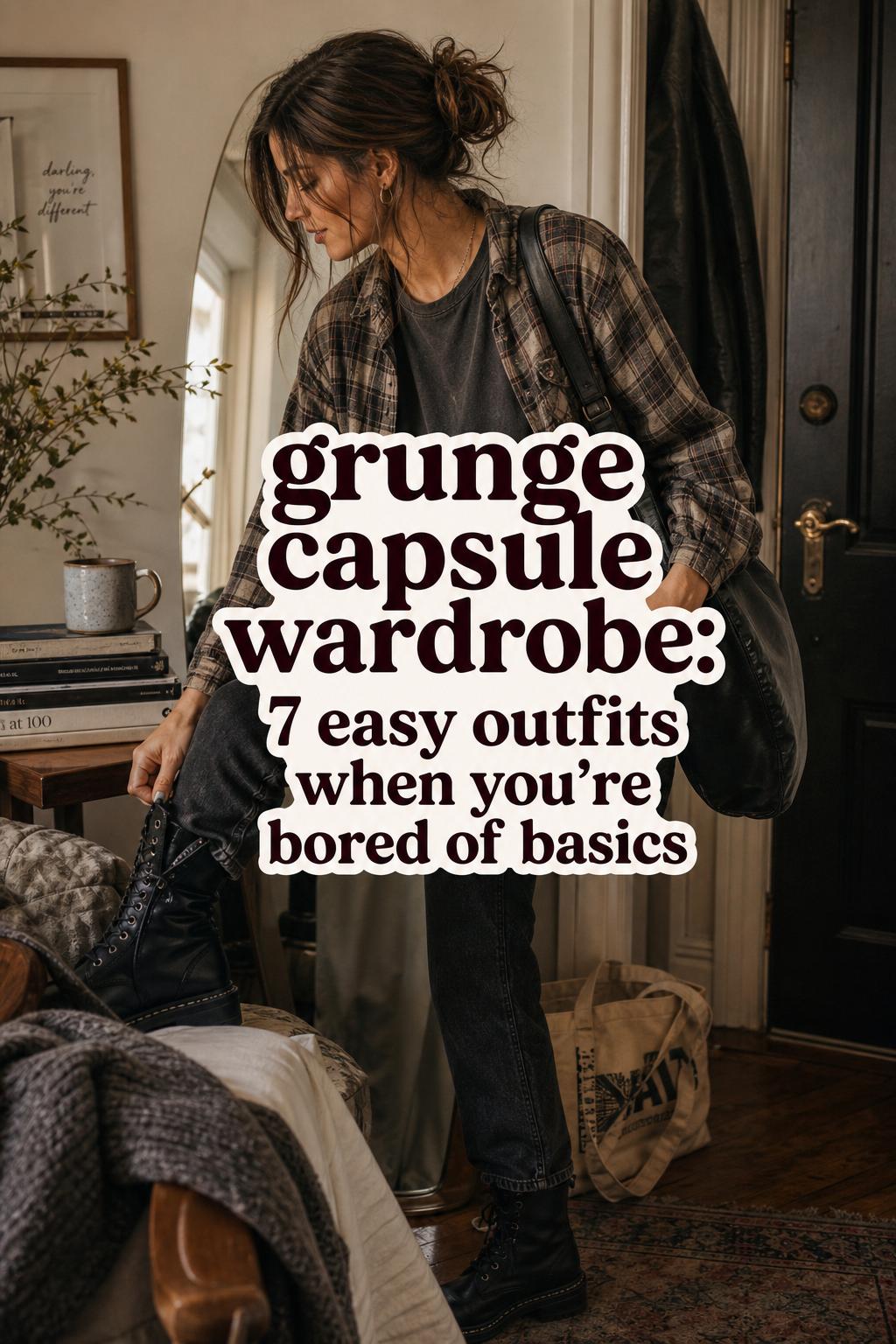
Most successful grunge outfits rely on four principles: texture contrast, silhouette balance, tonal layering, and one clear visual anchor. Texture contrast keeps dark or muted outfits from looking one-note. Silhouette balance prevents oversized pieces from overwhelming the body. Tonal layering makes repeated neutrals look intentional rather than repetitive. The visual anchor, often boots, a flannel, or a strong outer layer, gives the outfit a focal point.
The pieces worth buying first
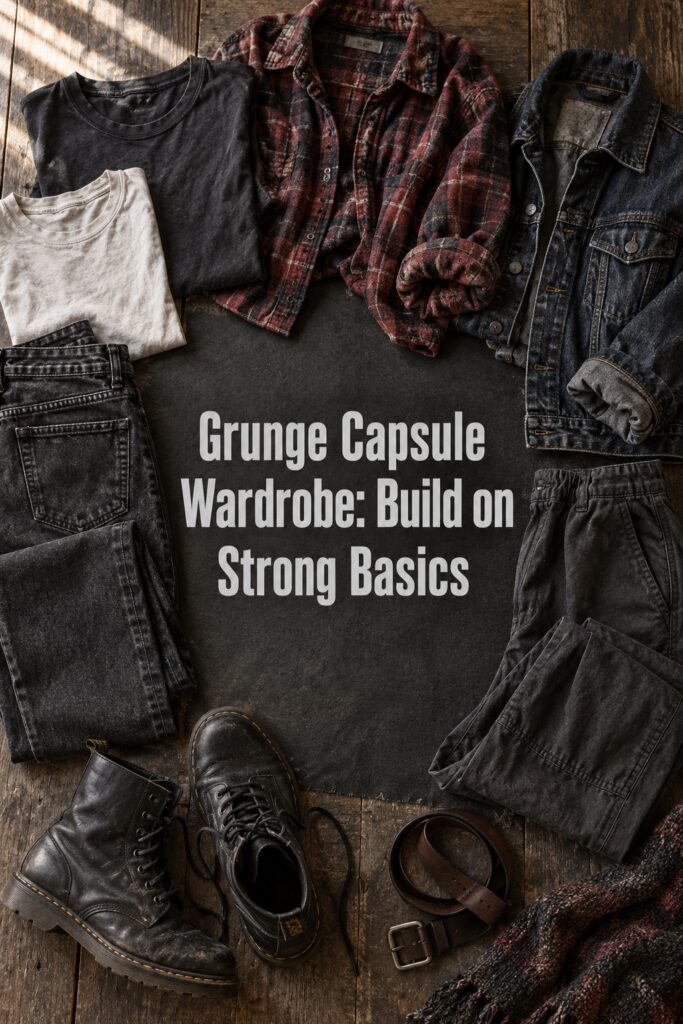
If you are starting from zero, do not build the wardrobe in an overly romantic order. Start with the pieces that create the most outfits immediately. In a grunge capsule wardrobe, those are the items that can repeat without looking repetitive because the styling changes around them.
- A pair of straight or relaxed dark jeans
- A black or faded graphic-style tee
- A plaid flannel or checked overshirt
- A pair of boots with enough weight to ground the silhouette
- A dark knit sweater or cardigan for layering
- A simple jacket with structure, such as denim or a heavier outer layer
These pieces are easiest to recreate and easiest to wear often. They also answer the practical question of what to buy first with the least risk. If you invest in boots and outerwear first, the rest of the wardrobe can be filled in more affordably. If your budget is tight, save money on tees and basic layers, then spend more where construction affects durability and outfit polish.
What is worth investing in
Boots are usually worth the higher spend because they shape the entire outfit composition. A strong boot can make simple denim and a tee look finished, while a flimsy shoe weakens the grunge effect immediately. Outerwear is the second category that justifies investment. Jackets and heavier layers are highly visible, and in a capsule they repeat often, so fabric weight, fit, and structure matter.
Denim sits in the middle. One well-fitting pair is worth prioritizing, but you do not need a large denim rotation to make the wardrobe function. Tees, thermal layers, and secondary knitwear are easier places to choose affordable alternatives.
Building the wardrobe around silhouettes, not just items
The reason some grunge wardrobes look convincing and others feel accidental comes down to proportion play. The clothes need shape logic. A capsule built only from item names will often fail because it ignores how those items sit on the body.
Relaxed top, grounded bottom
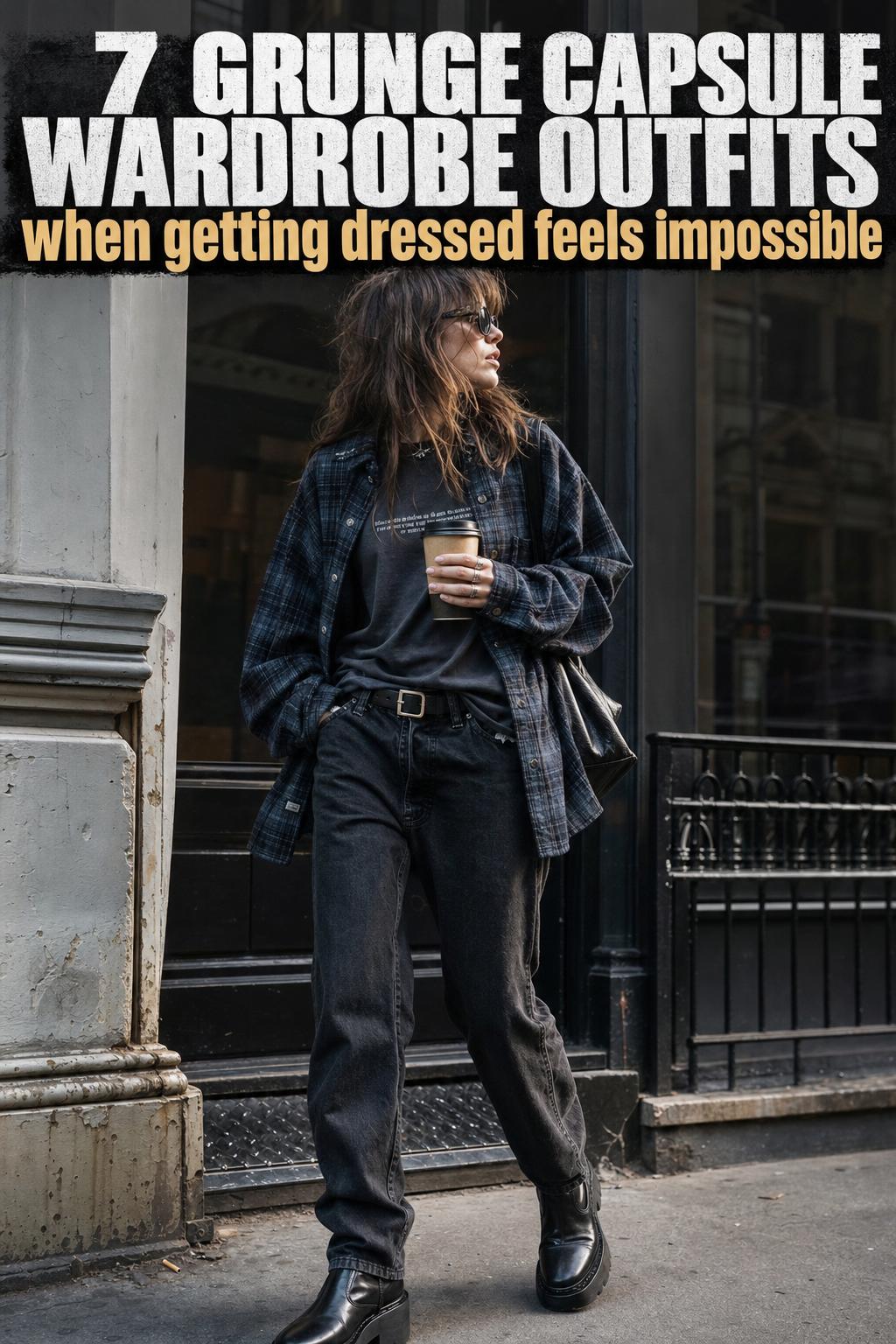
This is one of the easiest formulas for everyday wear. A loose flannel, oversized tee, or heavier cardigan creates the slouch associated with grunge, while straight jeans and boots keep the outfit from collapsing visually. This balance works especially well for travel days and long casual outings because it combines comfort with clear structure.
Fitted base, oversized layer
A closer-fitting tank, tee, or knit under a larger overshirt or jacket gives more definition and often flatters petite and curvy body types better than full-volume layering. The fitted base creates a line through the center of the body, while the oversized outer piece adds grunge texture without swallowing the silhouette.
Heavy shoe, simple clothing
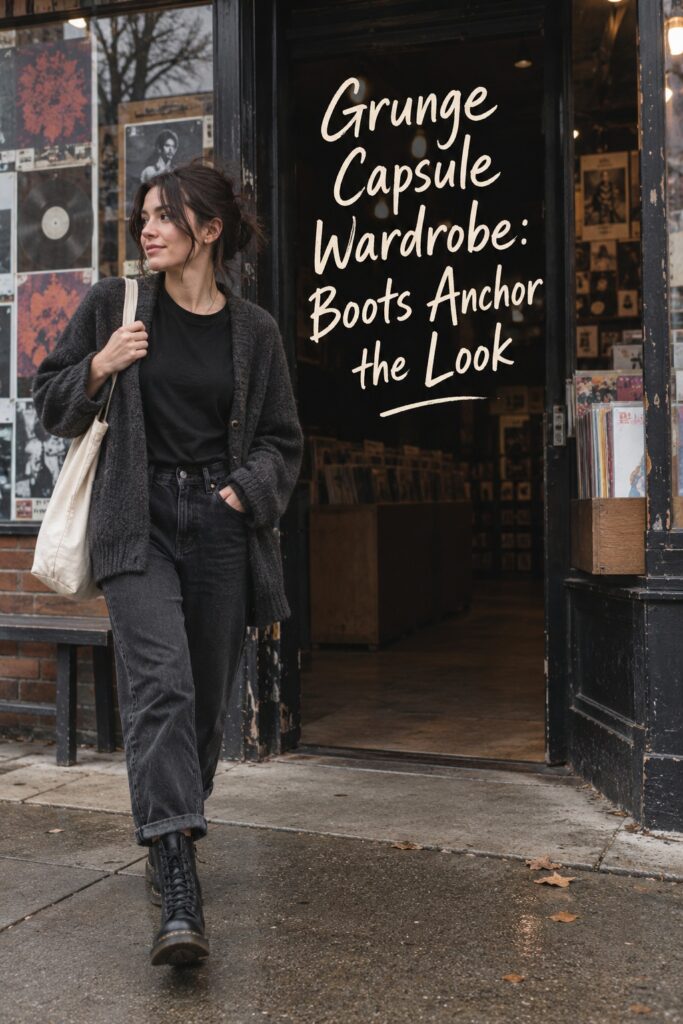
When the wardrobe is minimal, footwear carries more visual responsibility. Chunkier or more substantial boots create the grounded energy associated with grunge and help very simple outfits feel complete. This is useful if you prefer basic tops and jeans but still want the style to read clearly.
Color and fabric choices that keep the wardrobe cohesive
A capsule wardrobe needs palette discipline. In grunge, the most practical approach is a muted base with one or two recurring pattern stories, usually plaid or washed graphic elements. Dark neutrals do most of the work because they create instant compatibility. Faded black, charcoal, washed navy, dull olive, and worn denim tones blend easily and support repeated wear.
Fabric matters just as much as color. Grunge depends on tactile variation. Soft jersey, brushed flannel, worn denim, substantial cotton, ribbed knits, and heavier leather-like finishes create depth. Without those textural shifts, a dark wardrobe can look flat and overly plain. The visual interest should come from how the materials interact, not from constant color changes.
Seasonal fabric decisions
For cooler months, prioritize brushed flannel, medium-weight knits, sturdy denim, and boots with enough substance for layering season. In warmer weather, keep the palette but lighten the fabric story. Use washed cotton tees, lighter overshirts, and more breathable denim weights. The style survives summer better when the visual identity comes from color, fit, and footwear rather than from piling on heavy layers that are not weather-appropriate.
Tip: if you live in a climate with large temperature shifts, choose outer layers that can stay open over a tee. That preserves the layered look without making the outfit too warm indoors.
How to make a grunge capsule wardrobe functional for everyday life
The question that matters most is not whether the wardrobe looks correct in photos. It is whether it works on a normal Tuesday. A strong capsule should support quick dressing, repeat outfits without boredom, and adapt to multiple settings with only minor changes.
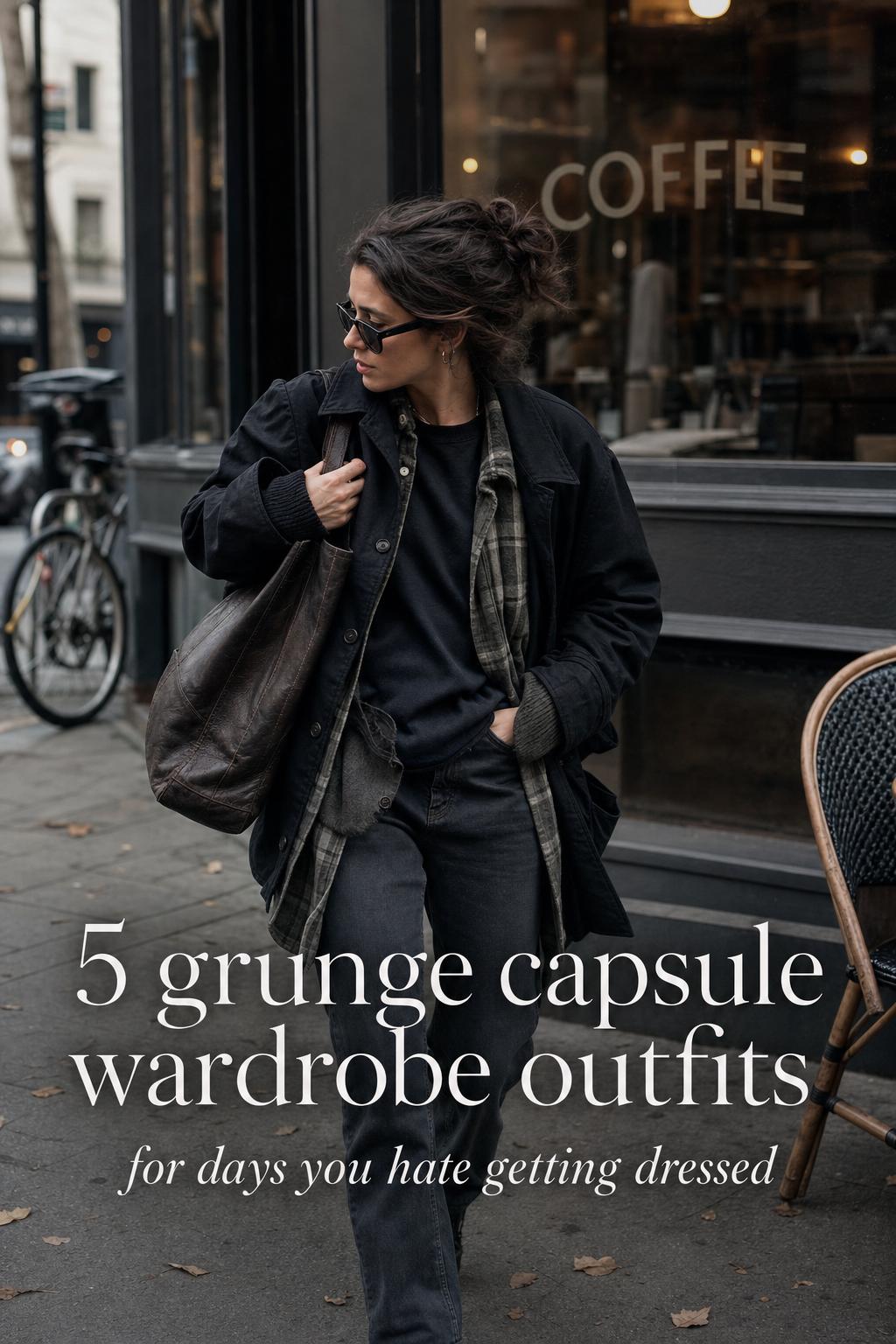
For casual daily wear, the easiest formula is denim, a soft tee, a layer, and boots or grounded shoes. For work environments with some flexibility, reduce distressing, sharpen the fit, and use the grunge mood through palette and layering rather than overtly worn details. For travel, choose stretch-friendly denim or relaxed trousers, one overshirt, one knit, and one dependable pair of boots that can handle walking.
Where this style works best
- Weekends, coffee runs, casual dinners, and concerts
- Creative offices with relaxed dress expectations
- Travel days that require comfortable layering
- Transitional weather when outerwear is part of the outfit
Where it needs adjustment
Highly formal offices, hot humid weather, and occasions requiring crisp tailoring may call for a softened version. In those settings, keep the dark palette, grounded footwear, and minimal layering logic, but choose cleaner finishes and less exaggerated volume. The capsule still works; it simply needs editing.
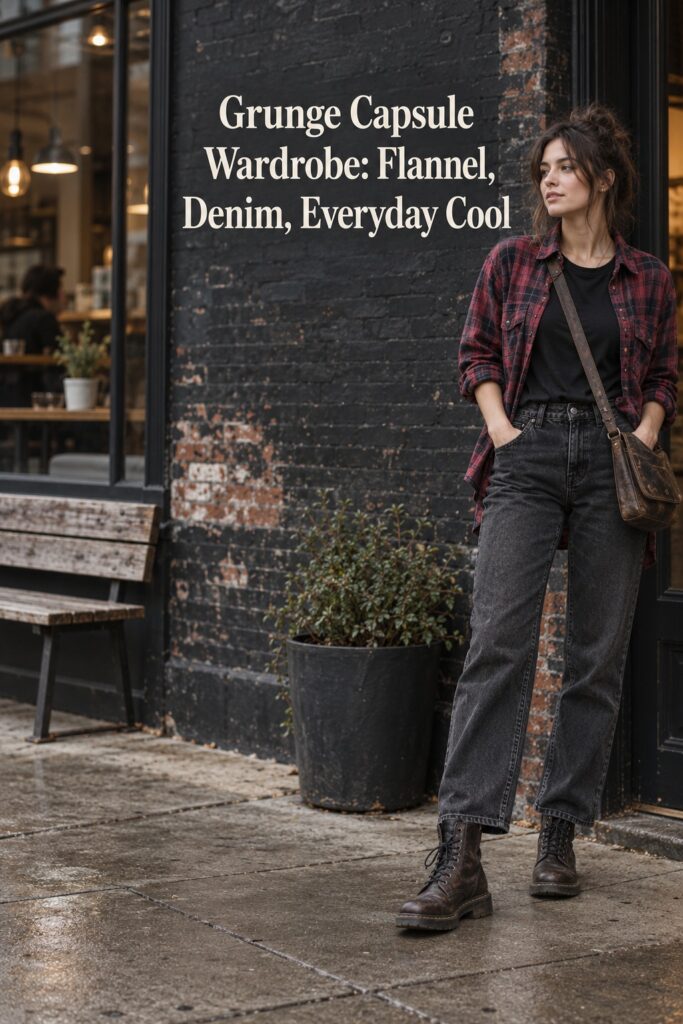
Body type adaptation without losing the grunge mood
One of the most common mistakes in a grunge capsule wardrobe is copying oversized styling without adjusting for individual proportions. The mood can stay the same even when the fit changes. That is the smarter approach because it protects wearability and makes the wardrobe more flattering.
For petite frames
Too much length and width can quickly overwhelm a petite frame. Keep the oversized effect in one area only. A slightly roomy flannel with straighter, closer-fitting jeans is usually more effective than combining extra-long layers with wide pants. Cropped or higher-rise bottoms help keep leg line visible, while boots with a defined shape prevent the outfit from feeling heavy.
For curvy body types
The easiest route is a fitted base layer with relaxed outer pieces. This keeps shape visible while preserving the grunge sensibility. Open flannels and jackets often work better than fully buttoned oversized shirts because they create vertical lines through the center of the body. Straight or slightly relaxed denim is often easier to style than extremely skinny or excessively baggy options.
For tall frames
Tall proportions can carry longer shirts, larger overshirts, and layered outerwear especially well. The key is keeping enough structure at the bottom through denim weight and footwear. If everything is long and soft, the outfit loses definition. Heavier boots and denser fabrics restore balance.
Tip: if you are unsure what flatters you, begin by adjusting only one variable at a time. Keep the palette and core pieces, then test different rises, lengths, and layer volumes. That method reveals what works without disrupting the whole wardrobe.
Budget strategy: how to recreate the look without overspending
A grunge capsule wardrobe is one of the easier aesthetics to build on a budget because the style does not depend on pristine perfection. In fact, slightly lived-in texture often works in its favor. The budget challenge is not authenticity. It is avoiding purchases that look thin, shapeless, or temporary after a few wears.
Allocate money based on visual impact and repeat use. Spend the most on boots, one jacket, and the best-fitting pair of jeans. Spend less on tees, layering tanks, and secondary shirts. This keeps the wardrobe strong where people notice construction most and flexible where replacement is easier.
- Choose one strong pair of boots instead of several average pairs
- Buy fewer printed pieces and more solid layers for easier mixing
- Look for washed finishes and substantial cotton rather than chasing novelty details
- Use one statement overshirt to add personality to otherwise simple basics
Affordable alternatives work best when they mimic silhouette and texture rather than trying to imitate every detail. A simple dark plaid overshirt can do more for the wardrobe than a trend-driven item with excessive distressing that only matches one outfit.
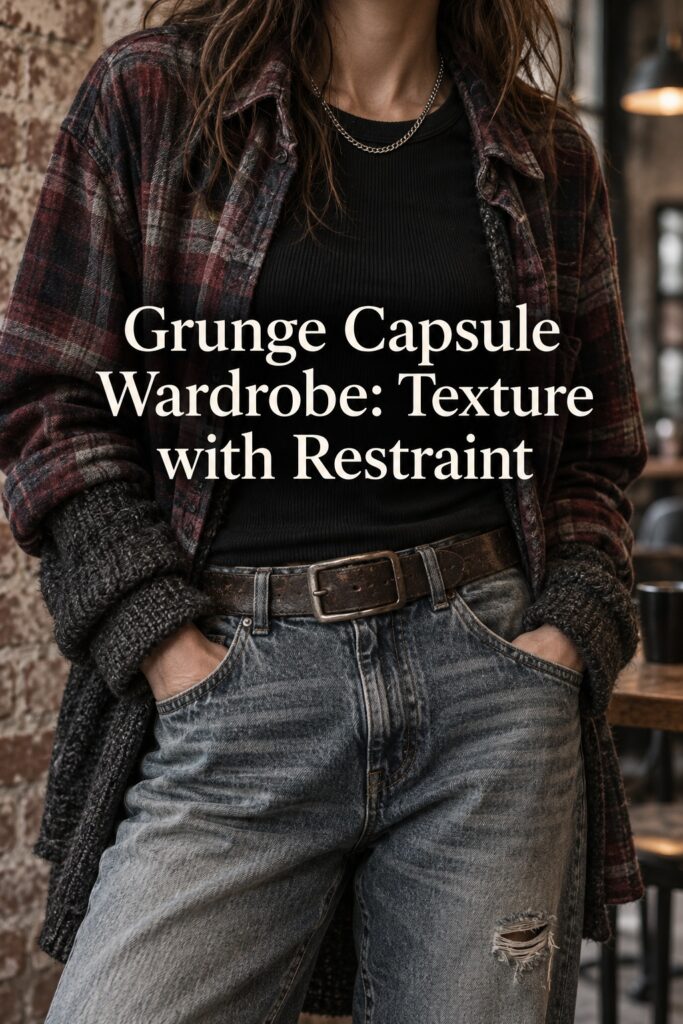
The layering logic that makes grunge look intentional
Layering is central to grunge, but effective layering is less about quantity than sequence. The order of fabrics and lengths creates the look. Start with a base that sits close enough to the body to define the outline. Add a mid-layer with texture, such as a flannel or knit. Then finish with an outer layer only if the weather or occasion justifies it.
Length contrast matters. If every layer ends at the same point, the outfit can feel blocky. Small differences in hem length create more visual rhythm. So does texture contrast. A soft jersey under brushed flannel under structured denim creates more depth than three similarly soft pieces.
Practical layering combinations
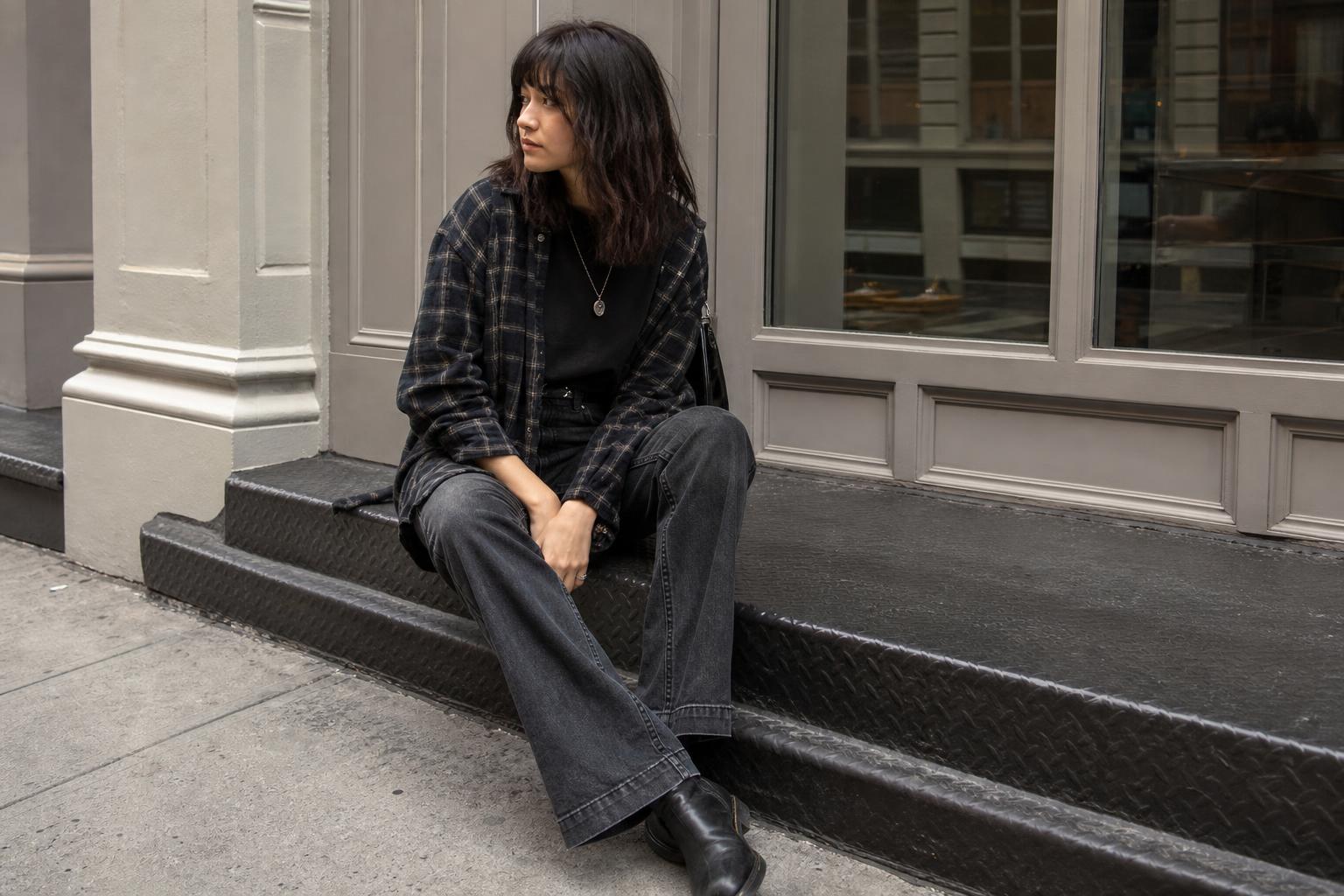
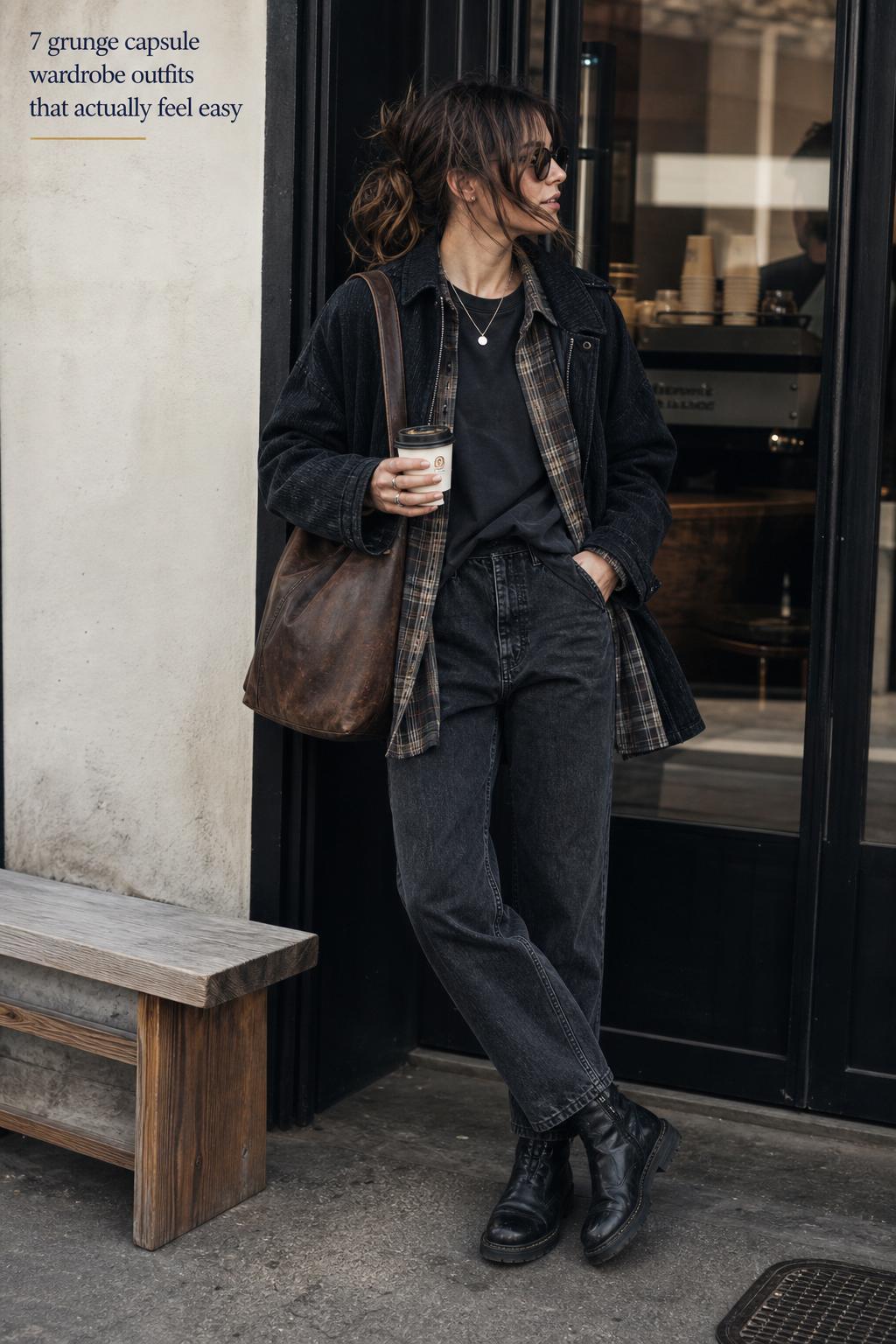
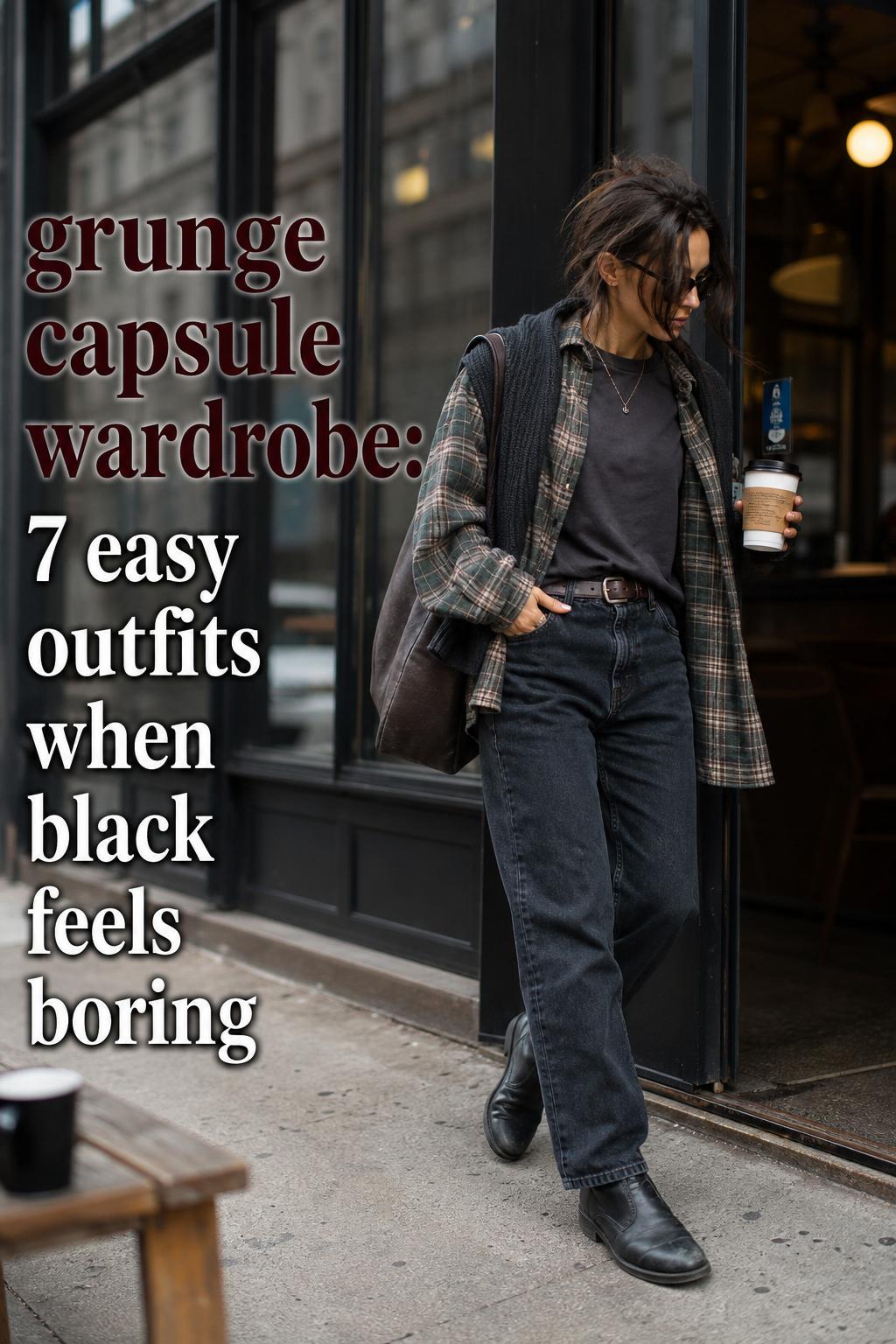
- Tee + open flannel + straight jeans + boots for everyday wear
- Fitted knit + oversized jacket + dark denim for cooler workdays
- Graphic tee + cardigan + heavy footwear for low-effort weekend dressing
- Tank or tee + lightweight overshirt for warmer transitional weather
Tip: if the outfit starts to feel bulky, remove one soft layer rather than the structured one. The structured piece usually does more to maintain the outfit’s shape.
Making the outfit look more expensive without losing its edge
Grunge should not look careless. Even when the effect is relaxed, the best outfits still have editing and intention behind them. The quickest way to elevate the wardrobe is to improve fit consistency and fabric weight. A faded tee can still look refined if it has a strong neckline and a good drape. Boots look more premium when they are maintained. Denim looks better when the wash feels deliberate rather than random.
Another useful shift is reducing visual noise. If the outfit already includes plaid, washed denim, and a strong boot, keep accessories quiet. If the outerwear is oversized, choose a cleaner base layer. This kind of restraint helps the wardrobe feel editorial rather than thrown together.
Details that elevate the capsule
- Consistent dark hardware and simple accessories
- Denim with a clean, intentional wash rather than excessive distressing
- Outerwear with enough structure to hold shape
- Boots kept in good condition so they remain a strong visual anchor
- Neutrals that align tonally instead of clashing
Common mistakes that weaken a grunge capsule wardrobe
The biggest styling mistakes usually come from exaggeration. Too much distressing, too many oversized pieces at once, or too many statement items can make the wardrobe less wearable and less cohesive. A capsule should simplify dressing, not create friction.
Another mistake is ignoring comfort and seasonality. Heavy boots and dense layers may photograph well, but they stop being useful if they are wrong for your climate. The best version of the style respects weather, movement, and daily routine. That is why fabric swaps and lighter layering matter so much.
- Buying pieces that only work in one outfit
- Choosing oversized silhouettes with no proportion balance
- Overloading the wardrobe with novelty graphics instead of strong basics
- Ignoring hem lengths and rise, which can distort the silhouette
- Confusing deliberate texture with poor quality
Tip: before buying any new item, test whether it works with at least three existing pieces in your wardrobe. If it cannot do that, it is probably not capsule-compatible.
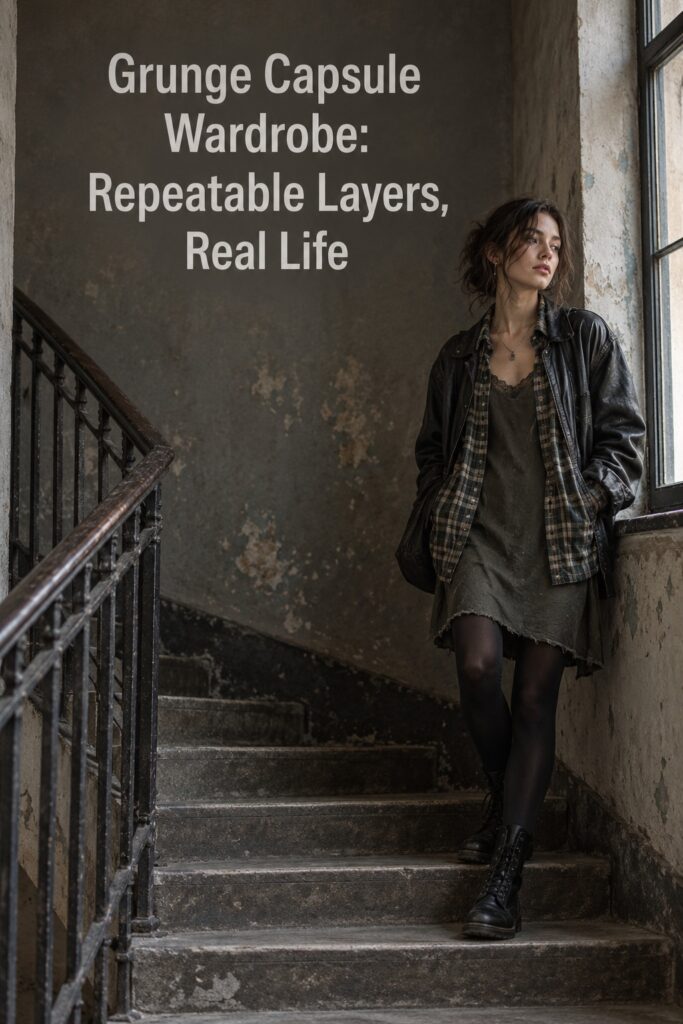
A realistic outfit rotation for work, weekends, and travel
A practical grunge capsule wardrobe should produce multiple outfits from a limited set of pieces. The rotation below is useful because it shows how the same garments can adapt without requiring constant shopping.
For weekends
Use the most relaxed formula here: washed tee, flannel, dark denim, boots. This works because the shirt adds softness and pattern, while the denim and footwear keep the silhouette anchored. It is easy, comfortable, and visually coherent.
For casual work settings
Swap the graphic tee for a cleaner knit or plain dark top, keep the denim dark and minimally distressed, and add a more structured jacket. The outfit still reads as grunge through tonal depth and layering, but it appears more polished and office-aware.
For travel days
Prioritize comfort and repeatability. Choose one base tee, one overshirt, relaxed jeans or soft structured bottoms, and dependable boots. This works because every piece can be reworn with minor adjustments, and the layers handle changing temperatures in airports, cars, or trains.
Seasonal transitions: keeping the capsule relevant all year
A capsule loses value if it only works in one season. The smarter strategy is to keep the style language consistent while adjusting weight and layering density. In colder months, the wardrobe leans on knits, heavier shirts, outerwear, and boots. In milder weather, the same color story can be expressed through tees, lightweight overshirts, and lighter denim.
Transitional dressing is where grunge performs especially well. Layering is already part of the style, so spring and fall usually feel natural. The main decision is how much bulk to retain. Preserve the visual identity through washed textures and a grounded palette, then reduce unnecessary heaviness.
Warm-weather adjustment
When temperatures rise, keep the outfit simpler. A washed tee with straight denim and sturdy shoes can still communicate grunge if the palette and proportions are right. Avoid forcing multiple layers just to maintain the mood. Comfort is part of successful styling, and clothes that feel wrong for the weather usually look wrong too.
The final editing test for every piece
Before adding anything to a grunge capsule wardrobe, evaluate it through function, compatibility, and silhouette. Function asks whether the piece suits your actual life. Compatibility asks whether it works with what you already own. Silhouette asks whether it supports the shape logic of the outfits you want to create.
This three-part test prevents the most common buying mistakes. It also keeps the wardrobe from drifting into costume territory. If an item looks exciting on its own but cannot integrate into real outfit rotation, it does not strengthen the capsule.
A well-built grunge capsule wardrobe is not large. It is edited, practical, and visually consistent. It gives you enough edge to feel intentional, enough comfort to wear often, and enough flexibility to support the realities of everyday dressing.
FAQ
What should I buy first for a grunge capsule wardrobe?
Start with the pieces that create the most outfits immediately: dark or washed denim, a black or faded tee, a plaid flannel or overshirt, a strong pair of boots, and one knit or jacket for layering. These items establish the style quickly and mix well without requiring a large wardrobe.
Would a grunge capsule wardrobe actually work in everyday life?
Yes, as long as it is built around wearable layers, practical footwear, and a controlled palette. The most useful version is not overly distressed or costume-like. It relies on repeatable combinations that work for weekends, casual work settings, and travel.
How can I build this style on a budget?
Spend most of your budget on boots, one jacket, and one well-fitting pair of jeans. Save on tees and basic layers. Choose affordable pieces that match the right silhouette and texture rather than chasing highly specific trend details that are harder to rewear.
What if I am petite and oversized grunge outfits overwhelm me?
Use volume selectively. Keep one piece relaxed, such as a flannel or jacket, and pair it with straighter or more fitted bottoms. Higher rises and visible ankle or boot shape usually help maintain proportion and stop the outfit from feeling too heavy.
Can a grunge capsule wardrobe work for a casual office?
It can, if you refine the styling. Choose darker, cleaner denim, reduce obvious distressing, and use a plain knit or simple top instead of a louder tee. The grunge influence can come through tonal layering, boots, and outerwear rather than through extreme details.
Which pieces are the most versatile?
The most versatile pieces are straight dark jeans, black or faded tees, plaid overshirts, medium-weight knits, and a dependable pair of boots. These items can be repeated across seasons and styled in multiple ways without losing the grunge mood.
How do I keep the wardrobe from looking messy instead of intentional?
Focus on silhouette balance, tonal consistency, and fabric quality. Limit the number of distressed or statement pieces in one outfit, and make sure there is one clear visual anchor such as boots or a strong outer layer. Grunge works best when the imperfection is edited.
What should I avoid when creating a grunge capsule wardrobe?
Avoid buying too many novelty pieces, using oversized silhouettes everywhere at once, and forcing heavy layers in the wrong weather. Also avoid items that only work in one outfit. Capsule success depends on repeat wear and compatibility.
How do I transition a grunge capsule wardrobe between seasons?
Keep the palette and silhouette logic the same, then adjust fabric weight and layering density. Use heavier knits, outerwear, and boots in cooler months, then shift toward lighter tees and overshirts when the weather warms up. The style stays consistent even as the materials change.