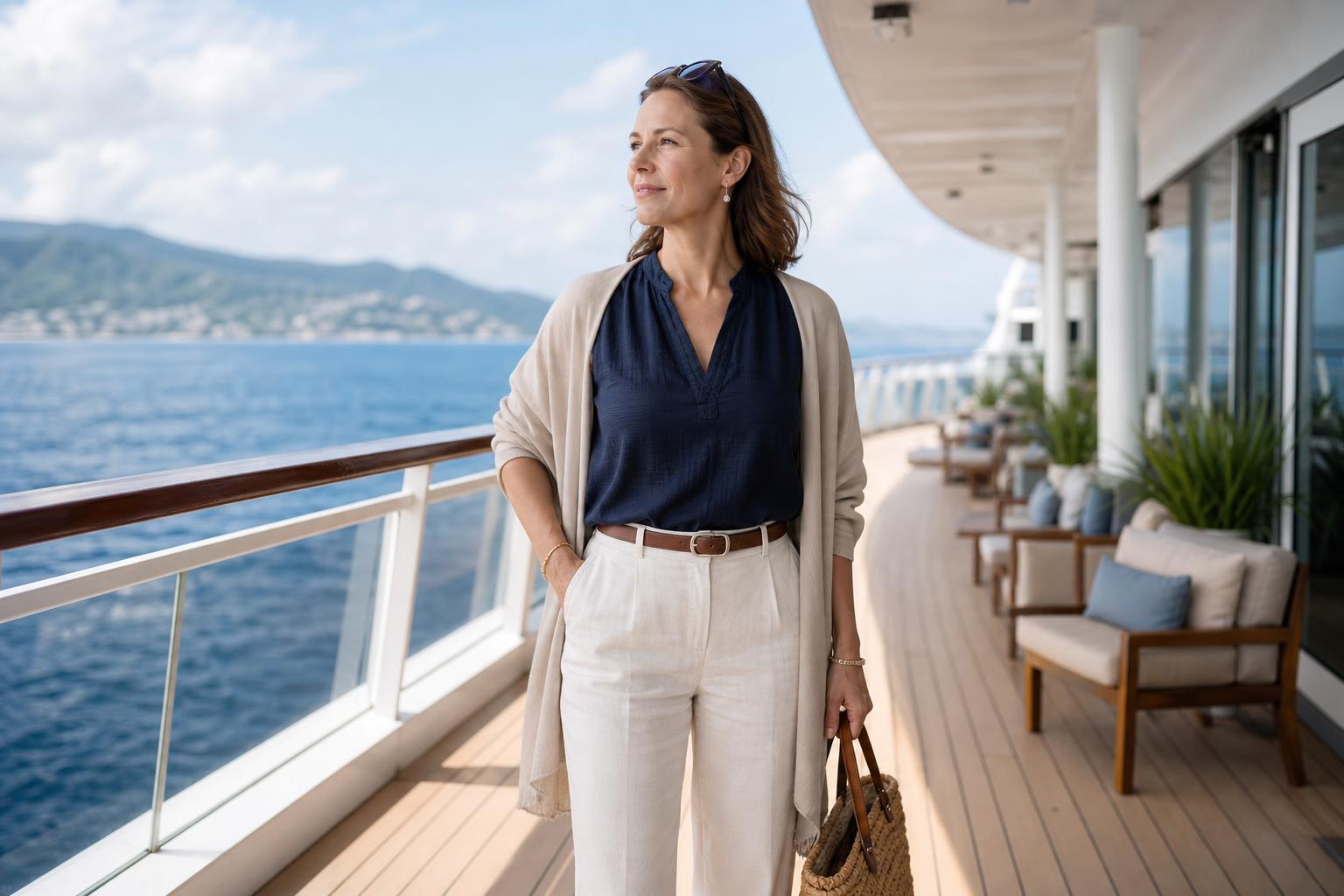
A Refined Cruise Capsule Wardrobe for a Week at Sea
Suitcase space shrinks quickly on a cruise ship. One evening calls for smart casual, another hints at formal night, sea days need relaxed layers, and port excursions add weather, movement, and dress-code variables that do not exist on an ordinary beach trip. A well-built cruise capsule wardrobe solves that tension by turning a limited set of tops, bottoms, dresses, outerwear, swimwear, footwear, and accessories into a system. The goal is not simply to pack less. It is to create outfit composition that works from embarkation day to gala-style dinners, fits the realities of cabin storage and onboard laundry, and still feels polished in photos from Caribbean ports, Western Caribbean winter sailings, or a warm summer boat cruise.
The strongest cruise wardrobes share the same logic: versatile silhouettes, coordinated color relationships, fabrics that tolerate travel, and pieces that shift from daytime to evening with minimal effort. That is why so many cruise packing guides center on mix-and-match structure, 7-night planning, and day-to-night versatility. The most useful version goes a step further by helping you decide what to buy first, which pieces deserve more of your budget, how to adapt the formula for different body proportions, and where travelers most often overpack.
The wardrobe logic that makes cruising easier
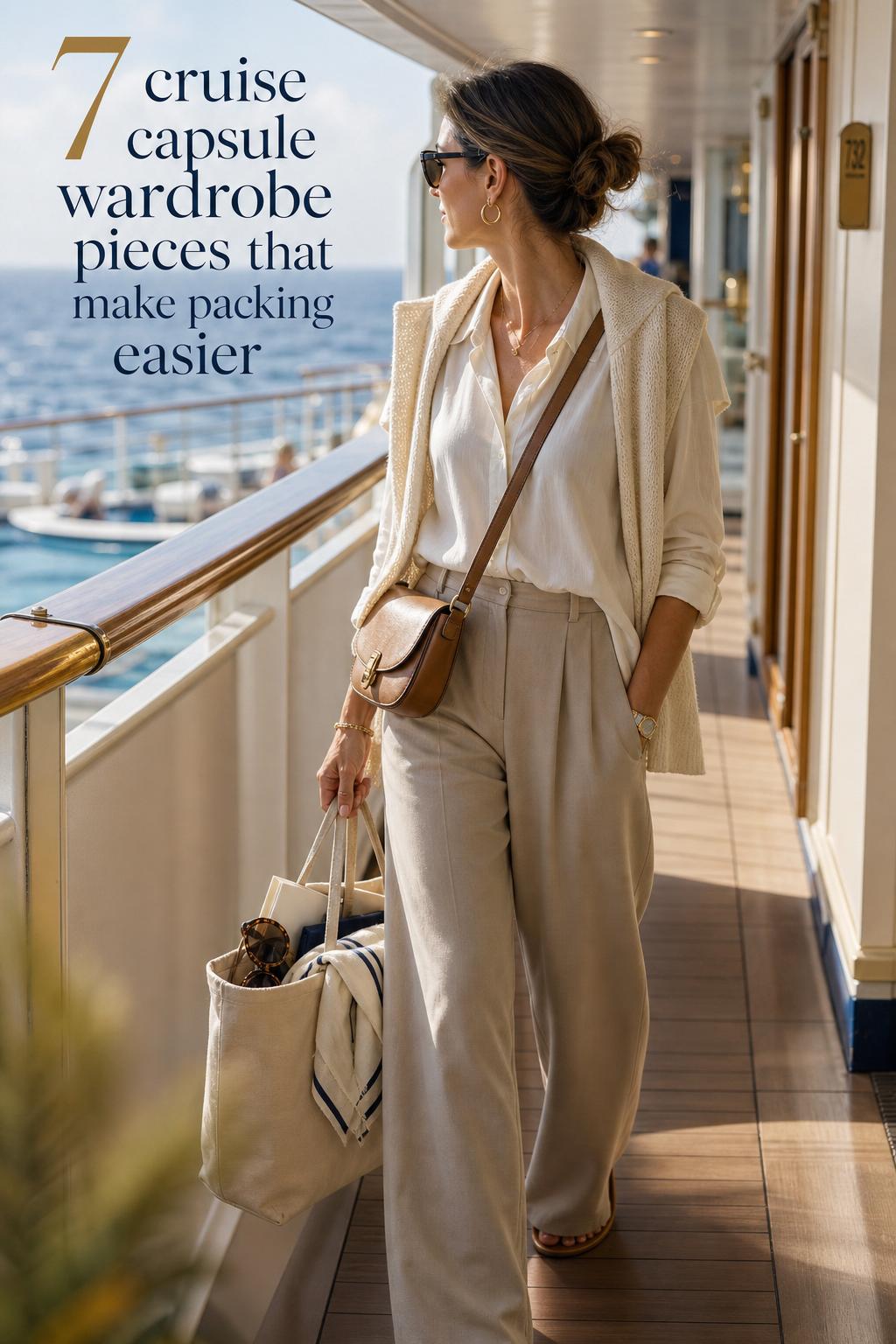
A capsule wardrobe is a curated set of clothing built to produce multiple outfits from fewer items. On a cruise, that idea becomes especially practical because ship life combines contrasting settings in a compact timeframe: pool deck afternoons, excursions, casual lunches, evening dining rooms, themed nights, and occasional gala-style events. You are dressing for several mini-environments without returning home between them.
The advantage is not only luggage reduction. A cruise capsule wardrobe reduces decision fatigue, prevents duplicate purchases, and helps every piece earn its place. A neutral bottom can support several tops. One dress can cover dinner with a simple accessory switch. Footwear can be chosen for overlap rather than novelty. This creates visual consistency without monotony, which is exactly what packing light for a cruise requires.
Found the dress? Keep the rest in one place.
Zarellea brings guest details, vendors, timelines, and every next step together — so your wedding plan feels as good as your look.
Cabin space is another reason the capsule approach works. Closets and drawers on a ship are limited, and bulky items multiply quickly. Onboard laundry also affects strategy. If you expect to refresh a few core pieces, you can reduce total volume. If you prefer not to rely on laundry at all, you need fabrics and outfit planning that stretch wear without looking repetitive.
What a functional capsule does better than a random packing list
- Creates day-to-night versatility instead of single-use looks
- Aligns outfits with cruise events such as formal nights and excursions
- Improves color harmony, so pieces combine easily
- Reduces overpacking by giving each garment a clear purpose
- Supports seasonal tailoring for summer, winter, and shoulder-season sailings
- Makes shopping decisions easier because you know which gaps matter
This is also the reason a defined item count, such as a 21-piece cruise wardrobe capsule, can be so effective. A number gives structure. It forces prioritization. Not everyone needs exactly the same count, but using a count-based method keeps the wardrobe from drifting into “just in case” packing.
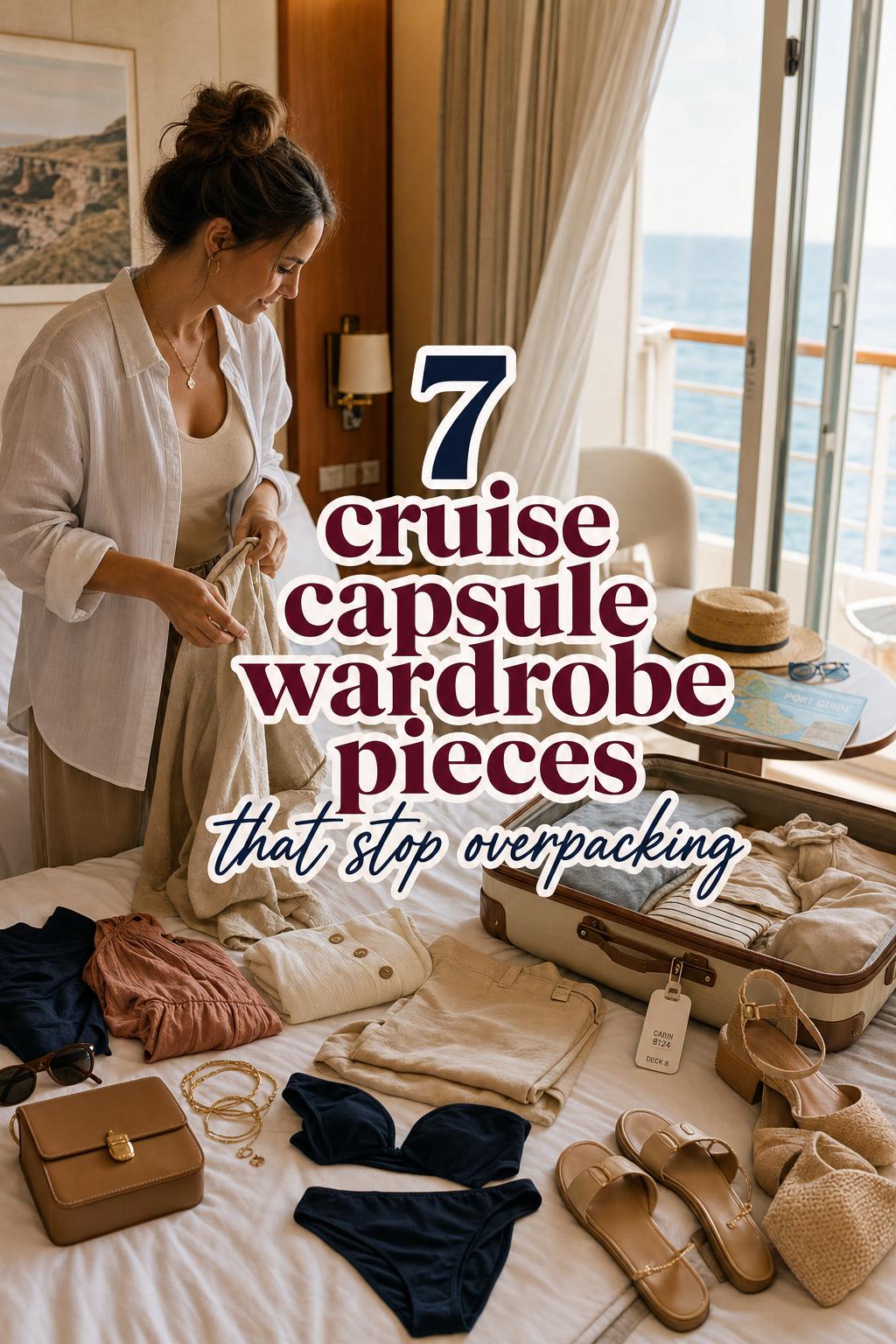
Start with the foundation pieces, not the special-occasion pieces
Most travelers overpack for the exceptional moment and underplan for the repeatable one. In practice, your capsule works best when the foundation does the heavy lifting. That means tops, bottoms, easy dresses, light outerwear, and practical shoes come first. Formal-night clothing is important, but it should sit on top of a stable base rather than define the whole suitcase.
Tops that create maximum rotation
Versatile tops are among the easiest pieces to recreate and one of the smartest areas to save money. Prioritize styles that can move between breakfast, port wandering, and early evening. Solid or softly patterned tops in a coordinated palette work harder than highly memorable statement prints because they pair cleanly with multiple bottoms and accessories.
For body-shape adaptation, focus on visual balance. If you are curvy, a top with gentle structure can keep the outfit from feeling too soft overall. If you are petite, avoid overwhelming volume and choose tops that do not visually shorten the leg line when worn untucked. If you are tall, longer lines and relaxed silhouettes can look especially natural, but proportion still matters; pair looser tops with cleaner bottom shapes to keep the outfit composition intentional.
Bottoms that anchor the entire palette
Bottoms are worth selecting carefully because they function as the visual anchor of the whole cruise wardrobe. Neutral trousers, skirts, or other core bottoms should support repeated wearings without feeling repetitive. This is where investment often pays off: a better-fitting bottom usually improves comfort, mobility, and polish more than an expensive trend piece does.
Choose shapes that let you walk comfortably in ports, sit through meals, and move around the ship without constant adjustment. The most effective cruise bottoms are not necessarily the most dramatic. They are the ones that stabilize several outfits and allow accessories or evening styling to do the transformation work.
Dresses as efficiency pieces
A dress is often the highest-efficiency item in a cruise capsule wardrobe because it forms a complete outfit with minimal packing complexity. For a 7-night cruise, one or two dresses can cover multiple evening scenarios if the silhouettes are adaptable. The best choice is rarely the most embellished one. It is the dress that can shift tone with shoes, jewelry, a wrap, or a different bag.
This is also a strong category for travelers who want to look more elevated with less effort. One clean, well-cut dress often reads more refined than several difficult separates. For budget planning, buy fewer dresses but choose better versatility. A dress that only works for one formal dinner is less valuable than one that can also suit smart casual dining with lighter accessories.
Outerwear, swimwear, footwear, and accessories
Outerwear on a cruise should be light, layerable, and easy to fold. Swimwear earns its place by repeat use, so it should dry efficiently and coordinate with at least one cover-up. Footwear needs ruthless editing. Shoes take space, and most overpacked cruise wardrobes fail here first. Aim for overlap: one pair for walking and excursions, one pair for evening, and one pair for pool or deck settings can often cover the whole trip if chosen well.
Accessories should refine rather than clutter the capsule. A few pieces with strong compatibility do more than a pouch of random options. In editorial terms, accessories should create tonal layering or visual contrast, not compete with the core garments. That approach also helps outfits look more expensive because the styling appears deliberate rather than overloaded.
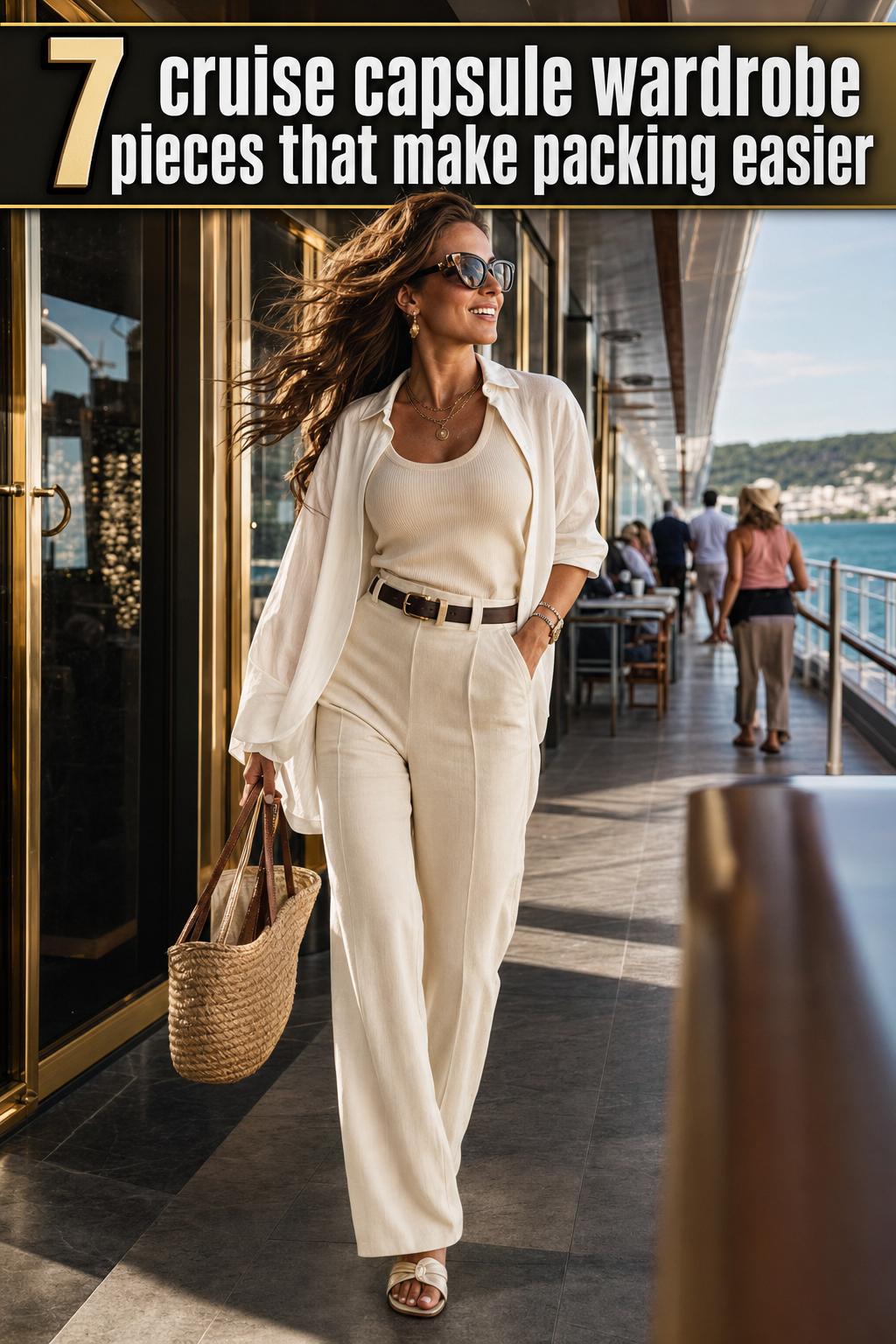
The 21-piece approach and how to adapt it
A 21-piece cruise wardrobe capsule is appealing because it gives enough range for a weeklong sailing without inviting excess. The number is not a rule. It is a planning framework. If your itinerary includes multiple formal nights, themed nights, or significant weather shifts, your count may flex. The principle remains the same: every item should connect to at least two or three wearing scenarios.
A practical version of a 21-piece capsule usually balances daytime ease, evening polish, and excursion realism. That means the count should not be consumed by special-event clothing. Keep the center of gravity in mixable basics, then reserve a smaller portion of the total for formal night or themed-night adaptation.
A smart category split for a 7-night cruise
- Tops: enough to rotate without forcing daily laundry
- Bottoms: fewer than tops, in versatile neutrals
- Dresses: one or two high-efficiency options for dinner and evening use
- Outerwear: a light layer suited to breezy decks and air-conditioned interiors
- Swimwear and cover-up pieces: repeated-use essentials for sea days
- Footwear: limited pairs with clear overlap in function
- Accessories: compact finishing pieces that change the tone of an outfit
If you are building from scratch, buy in this order: one reliable neutral bottom, two versatile tops, one comfortable excursion shoe, one evening-ready dress or dinner outfit, then a lightweight layer. That purchase sequence increases outfit count quickly and prevents waste. It also answers the practical question of what to buy first when your wardrobe feels incomplete.
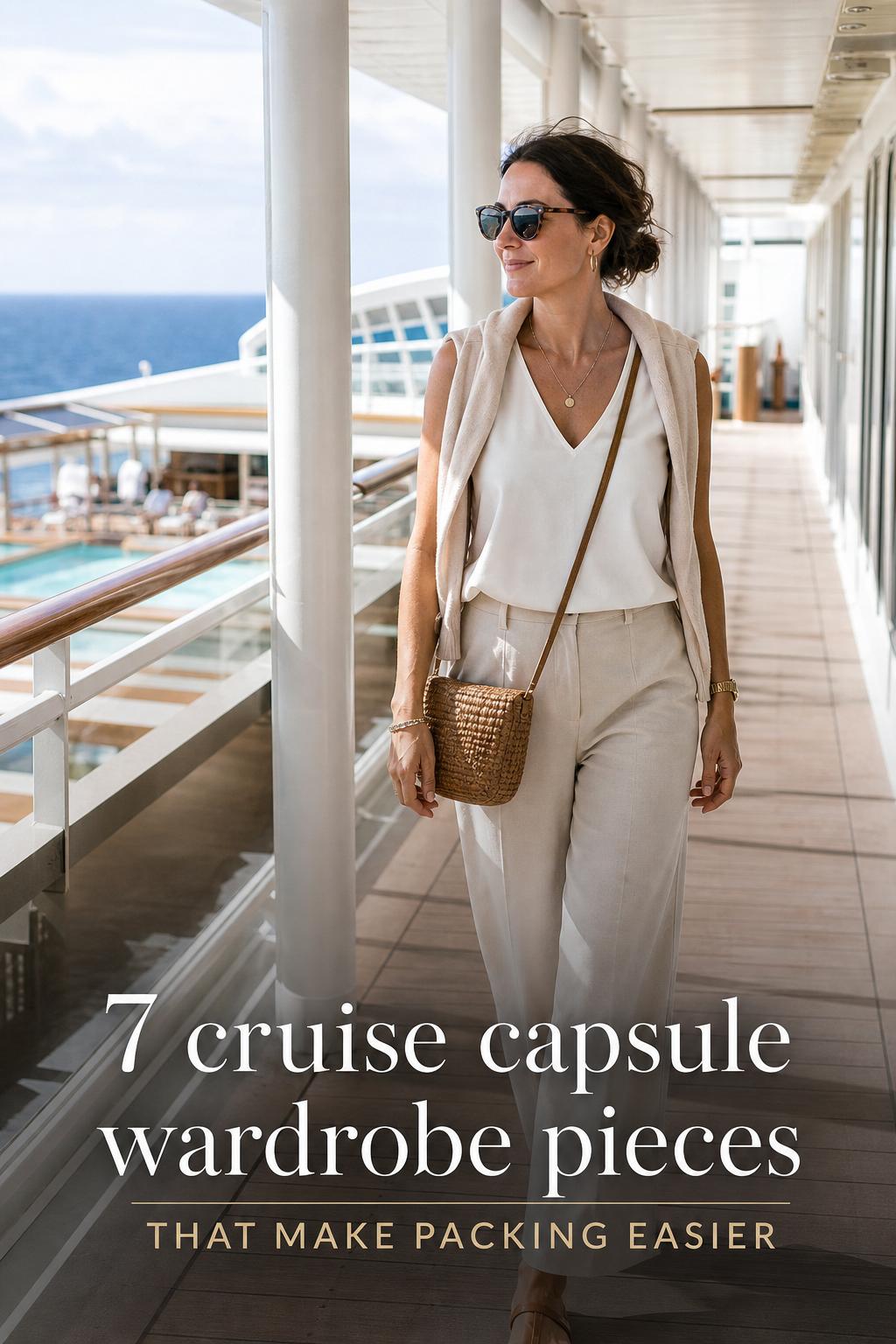
A 7-night cruise case study: how the wardrobe actually functions
The most useful cruise packing advice is itinerary-based. A day-by-day structure reveals whether your capsule truly works or only sounds efficient in theory. On a 7-night cruise, each day places different demands on the same set of pieces. Embarkation day needs comfort and polish. Sea days need easy transitions between sun, shade, and dining. Port days need mobility. Evenings call for a sharper finish, especially if formal nights or themed nights appear on the schedule.
Embarkation and sea-day rhythm
Start with one outfit that travels well and still looks composed when you board. This is not the moment for restrictive fabrics or anything that wrinkles immediately. The strongest embarkation look has movement, layering potential, and one polished element that keeps the outfit from reading purely functional. Later, on sea days, the same foundation can be softened with swimwear, a cover-up, and different footwear.
Why this works: embarkation outfits set the tone for the rest of the capsule. If the first look already shares colors and styling logic with the rest of your pieces, everything else becomes easier. A traveler on Princess Cruises, for example, may move from boarding and lunch to an early dinner without a full wardrobe reset. The outfit needs composure, not novelty.
Port days and excursions
Excursion outfits need practical dominance. Port ensembles should prioritize easy walking, climate awareness, and simple layering. In the Caribbean or Western Caribbean, the visual goal is lightness without flimsiness. For winter itineraries in warm destinations, morning and evening may still invite a light outer layer, even if midday is bright and warm. That is why seasonal context matters more than generic “vacation wear.”
For body comfort, avoid pieces that demand constant tugging, retying, or reshaping during excursions. The best port-day look often includes one stable bottom, one breathable top, walking-friendly shoes, and accessories used for utility rather than decoration. You want proportion play that feels easy, not fragile.
Dinner, formal nights, and gala-style evenings
Eveningwear on a cruise does not require a separate wardrobe universe. It requires strategic contrast. If your daytime capsule leans relaxed, evening styling should introduce cleaner lines, more refined footwear, and accessories that sharpen the silhouette. Formal nights and gala-inspired dinners justify one more elevated look, but the strongest version still relates to the rest of the suitcase.
This is where many travelers overpack. They treat formal night as if it demands a standalone special-event closet. In reality, the most efficient solution is often a single strong dress or polished separates that can be restyled. If themed nights are part of the cruise, adapt with accessories or color accents rather than packing a one-time costume-like outfit that adds bulk and little reuse.
Seasonal tailoring changes everything
A cruise capsule wardrobe should never be copied blindly from a summer packing list if your itinerary is different. Seasonality shapes fabric choice, layering, and footwear in ways that directly affect comfort. The difference between a summer sailing and a winter Caribbean cruise is not just temperature. It is timing, wind exposure on deck, and the balance between sun-driven days and cooler transitions.
Summer sailings
For summer, prioritize breathable pieces, clean lines, and fewer heavy layers. The wardrobe should still have enough structure to look intentional at dinner, but daytime composition can stay lighter. Summer cruise outfits benefit from quick-dry and moisture-friendly fabrics because garments may need to recover quickly between wearings.
Winter Caribbean and shoulder seasons
A Western Caribbean winter capsule needs more nuance than many travelers expect. Warm-weather pieces still dominate, but the wardrobe should include one or two layers that handle breezier mornings, cool interiors, or wind on the upper decks. This is where a lightweight outer layer earns real value. It prevents the common mistake of overcompensating with bulky pieces that spend most of the trip unworn.
Shoulder-season packing works best with tonal layering. Rather than bringing completely separate warm and cool wardrobes, choose pieces that stack visually and functionally. This keeps the suitcase controlled while allowing quick adaptation to changing conditions.
Destination-aware planning
Location matters because ports influence what the capsule needs to do. Caribbean ports often support lighter dressing and swim-to-shore transitions. Mediterranean or Baltic examples introduce broader weather variability and more emphasis on walking. The principle is not to chase destination stereotypes. It is to align your garment choices with climate, mobility, and the day structure of the itinerary.
Fabric, fit, and function on board
Fabric choice is one of the clearest gaps in many cruise packing conversations, yet it shapes nearly every practical outcome. Travel-friendly fabrics help a capsule wardrobe stay crisp, easier to rewear, and simpler to care for in a cabin environment. Wrinkle-resistant, quick-dry, and moisture-wicking qualities are especially useful because they support both limited luggage and limited maintenance time.
Common fabric directions mentioned in cruise wardrobe planning include cotton, modal, ponte, quick-dry materials, nylon blends, moisture-wicking blends, and cooling options such as S.Café. The exact choice matters less than the function. You want fabrics that can be packed tightly, worn comfortably in shifting temperatures, and refreshed without drama.
Why performance fabrics earn space in a cruise wardrobe
Performance fabrics are particularly useful when your cabin has limited room for air-drying or when you expect repeated wearings. They reduce the friction of travel. A top that dries quickly after hand-washing or resists deep creasing is more valuable than one that photographs beautifully but demands full pressing. This is one of the most practical ways to make a capsule feel larger without actually adding more items.
Fit matters just as much. A well-fitting garment travels better in real life because you will actually reach for it. If a piece only works when you stand still in front of a mirror, it is not cruise-functional. Look for comfort through meals, walking, deck breezes, and day-to-night transitions. Mobility is not separate from style; on a cruise, it is part of the style equation.
Dress codes, smart casual, and themed nights without overpacking
Dress codes create anxiety mainly when they are interpreted too literally or too broadly. Most cruises move between casual daytime dressing, smart casual evenings, and one or more formal nights or gala-style events. Some itineraries also include themed nights. The solution is not to pack a separate identity for each category. The solution is to choose pieces that can be upgraded through styling.
Formal night planning should start with one outfit that feels sufficiently elevated on its own. Then ask whether a change of footwear, accessories, or layering can make that same piece work for another evening. Smart casual can usually be achieved with cleaner silhouettes and better finishing rather than brand-new garments. This is why cruise-specific guides repeatedly connect outfits to activities and events rather than presenting isolated fashion ideas.
Practical ways to navigate attire rules
- Use one polished evening look as the base for formal night
- Build smart casual around your best-fitting separates
- Treat themed nights as accessory opportunities, not bulk-packing opportunities
- Keep footwear consistent across multiple evening looks where possible
- Choose accessories that change tone quickly from day to night
Travelers sailing with a line such as Princess Cruises may especially appreciate this approach on a 7-night itinerary, where evenings vary but storage does not. The more your dress-code planning connects to the rest of the capsule, the lighter and more coherent the suitcase becomes.
Where to spend more and where to save
Not every category deserves the same budget. Spend more on the pieces that influence repeat wear, comfort, and silhouette quality. Usually that means bottoms, walking-friendly footwear, and one evening piece with strong versatility. Save on trend accents, duplicate cover-ups, and tops that serve the same function. This spending pattern gives the wardrobe a more premium overall effect because the structural pieces look better, even when the supporting items are affordable.
Affordable alternatives work especially well in categories with low fit complexity. Accessories, simple tops, and certain cover-up styles are easier to source on a budget. The most expensive mistake is buying visually appealing items that do not integrate with the rest of the capsule. Compatibility matters more than price.
How to make the capsule look more elevated
Refinement usually comes from cohesion, not quantity. Keep the palette controlled. Repeat one or two key accessories rather than switching constantly. Favor fabrics that hold shape. Use neutral pieces as anchors and let one detail carry emphasis. This creates a quieter, more editorial finish than packing many unrelated statement items.
If you are recreating the look on a budget, copy the silhouette before the exact product. A similar shape, balanced proportions, and a coordinated palette will often produce the same visual result as a pricier version. That is especially true for cruise dressing, where the success of an outfit comes from how well it functions across settings, not how novel each piece is in isolation.
Styling adjustments for different body proportions and comfort needs
An inclusive cruise capsule wardrobe should not assume one silhouette standard. The same item count can work across different bodies, but the cut and proportion need adjustment. Petite travelers often benefit from cleaner vertical lines and less visual interruption. Curvy figures often benefit from pieces that define shape without clinging excessively. Tall travelers can carry longer proportions well, but still need balance so the outfit does not feel elongated without structure.
Comfort is equally individual. Some travelers need softer waistlines for long dining evenings. Others prioritize arm coverage in air-conditioned interiors or more secure footwear for port days. Adaptive styling decisions belong inside the capsule plan, not as afterthoughts. A wardrobe only counts as efficient if it is wearable for the person using it.
Decision-helping guidance
- If you are petite, buy shorter visual breaks and avoid oversized layers that swallow the frame
- If you are curvy, focus on balanced structure so tops and dresses skim rather than strain
- If you are tall, use layering and proportion play to keep long lines intentional
- If comfort is the priority, choose fabrics with movement and pieces that stay in place throughout the day
- If you need wardrobe versatility, favor separates with at least three pairing options each
This is also where gender-inclusive planning matters. Core garment categories such as tops, bottoms, outerwear, footwear, and accessories still apply, but the exact silhouettes should reflect personal style, comfort, and dress-code needs. The principle is universal even when the wardrobe expression differs.
The packing toolkit that supports the wardrobe
The clothing is only half the system. A cruise capsule performs better when supported by practical accessories that keep garments organized and easier to maintain. Packing cubes help control categories and reduce visual chaos in a small cabin. Compression bags can be useful, but only when they do not encourage overpacking. A laundry bag and travel-size stain remover support outfit repetition, which is one of the capsule’s core strengths.
Garment bags have a clear role if you are bringing one more polished evening piece, especially for formal nights. The toolkit should make your capsule more usable, not more complicated. Every added accessory should remove friction: faster unpacking, cleaner storage, easier laundry handling, or better preservation of key pieces.
Tips for limited cabin space and onboard laundry
- Group outfits by activity so morning decisions stay simple
- Keep eveningwear protected and separate from pool or excursion items
- Use one laundry bag from day one rather than letting worn items spread through the cabin
- Plan rewears intentionally instead of treating them as backup options
- Choose care-friendly fabrics if you expect to wash items on board
One of the most overlooked benefits of a cruise capsule wardrobe is speed. When your items are organized by function, getting ready becomes easier in a compact cabin, especially before dinner or early excursion departures.
Common cruise wardrobe mistakes that reduce versatility
Most packing mistakes are not about having too little. They come from poor category balance. Too many dresses and not enough practical tops. Too many shoes and not enough weather-ready layers. Too many event-specific pieces and not enough everyday anchors. A strong capsule avoids imbalance by treating each garment as part of a system.
Another frequent error is ignoring the transition points of a cruise. Travelers pack for pool time and formal night but forget embarkation, breezy decks, air-conditioned dining rooms, or the walk-heavy reality of port days. These in-between moments are exactly where versatile pieces prove their value.
What to avoid
- Single-use statement pieces that match nothing else
- Bulky outerwear for warm-weather itineraries
- Fragile fabrics that wrinkle instantly or need constant maintenance
- Uncomfortable shoes chosen only for photos
- Too many themed-night items with no second use
- Buying by occasion instead of buying by versatility
A simple test helps: if a piece cannot serve at least two settings on the ship or in port, question whether it belongs in the suitcase. Exceptions exist for a dedicated formal-night look, but even that piece should ideally relate to the rest of the capsule through color, texture, or accessory pairing.
Building a cruise wardrobe that feels polished, not repetitive
Repeating pieces is not the same as repeating outfits. The difference lies in styling logic. Change the visual anchor, swap the accessory emphasis, or shift the silhouette balance from relaxed to defined. A top worn with one bottom for a port day can feel distinctly different when styled with a different layer and evening accessory for dinner. This is the core creative strength of a capsule wardrobe.
Color matching plays a major role here. Neutrals form the framework, while one or two accent tones keep the wardrobe from feeling flat. Too many unrelated colors reduce compatibility. Too few textural differences can make everything blend together. The ideal balance is a controlled palette with enough contrast to signal different moments of the itinerary.
If your goal is a capsule that transitions beyond the cruise itself, choose pieces that also work for regular travel and casual everyday dressing. That makes the wardrobe more economical and lowers the risk of buying cruise-only items that sit untouched later.
Resources, retailer angles, and practical shopping direction
Some cruise capsule articles are magazine-curated, while others are blog-based or retailer-led. That matters because the best shopping guidance is not tied to one source type. A travel publication such as Travel + Leisure may highlight writer picks and a 7-night cruise framework, while brand-adjacent guides like PatPat or Blululi may lean more heavily into direct product inspiration. Lifestyle blogs such as Uniqistic, Fabulous After 40, Stylish Cruising, Life Well Cruised, Wear When What Why, Ford La Femme, or Simple Made Pretty tend to be especially useful for practical outfit planning and seasonal adaptation.
The smart takeaway is to shop by function first. Decide whether you need a better excursion shoe, a more versatile dinner dress, or stronger basics for mix-and-match use. Then choose your budget tier. Product sources vary, but the shopping logic should stay stable. That is what prevents impulse packing purchases that fail once the itinerary becomes real.
FAQ
How many items should be in a cruise capsule wardrobe?
A practical cruise capsule wardrobe often works best with a defined count because it prevents overpacking and forces versatility. A 21-piece approach is a useful framework for a 7-night cruise, but the exact number can shift based on formal nights, themed nights, weather, and whether you plan to use onboard laundry.
What should I buy first if I am building a cruise wardrobe from scratch?
Start with the highest-use pieces: one reliable neutral bottom, two versatile tops, comfortable walking-friendly footwear, one evening-ready outfit, and a lightweight outer layer. These pieces create the most combinations fastest and give you a stable base before you add accessories or occasion-specific items.
Can I repeat outfits on a 7-night cruise without looking repetitive?
Yes. Repeating pieces is the foundation of a capsule wardrobe, and it only feels repetitive when the styling never changes. Use different accessories, switch footwear, add or remove a layer, and shift from relaxed daytime styling to more defined evening styling to make the same garments feel different.
How should I plan for formal nights and themed nights?
Pack one strong elevated outfit that can handle formal night, then use accessories or styling adjustments for any themed nights. The most efficient strategy is to avoid one-time novelty pieces and instead adapt your existing capsule so evening looks still relate to the rest of your wardrobe.
What fabrics work best for a cruise?
Travel-friendly fabrics with wrinkle-resistant, quick-dry, or moisture-wicking qualities are especially practical on a cruise. Cotton, modal, ponte, nylon blends, and other performance-oriented options are useful because they handle packing, rewearing, and limited garment care more easily than high-maintenance fabrics.
How do I adapt a cruise capsule for winter Caribbean sailings?
A winter Caribbean capsule should still center on warm-weather pieces, but it needs one or two light layers for breezier mornings, cool interiors, and windy deck conditions. The goal is not heavy outerwear. It is flexible layering that supports temperature shifts without filling your suitcase with bulky items.
What if I am petite, curvy, or tall?
The same capsule structure can work across body proportions, but silhouette selection matters. Petite travelers usually benefit from cleaner lines and fewer oversized layers, curvy travelers often do well with balanced structure that skims rather than clings, and tall travelers can use longer proportions effectively as long as the outfit still feels visually balanced.
What accessories are actually useful on a cruise?
The most useful accessories are the ones that change an outfit’s tone without taking much space. A few compact finishing pieces, plus practical tools such as packing cubes, a laundry bag, garment care items, and a garment bag for eveningwear, do more for a cruise wardrobe than a large collection of decorative extras.
Would this wardrobe approach still work beyond the cruise?
Yes. The strongest cruise capsule wardrobe uses versatile tops, bottoms, dresses, layers, footwear, and accessories that can also work for other travel, casual outings, and everyday dressing. That makes the wardrobe more cost-effective and reduces the risk of buying cruise-only pieces that have little life afterward.