Spring Neutral Capsule Wardrobe With a Modern City Feel
There is a reason the neutral capsule wardrobe keeps returning to the center of modern style conversations. In a culture crowded with options, a closet built around black, white, beige, gray, navy, and camel feels less like restriction and more like relief. The mood is polished without trying too hard, minimal without feeling cold, and adaptable enough to move from work to brunch to weekend errands with almost no friction.
Its appeal is visual, but also psychological. A cohesive neutral palette reduces decision fatigue, sharpens personal style, and makes even familiar basics feel considered. Instead of chasing novelty, the focus shifts to silhouette, texture, layering, and the quiet confidence of pieces that work hard in real life.
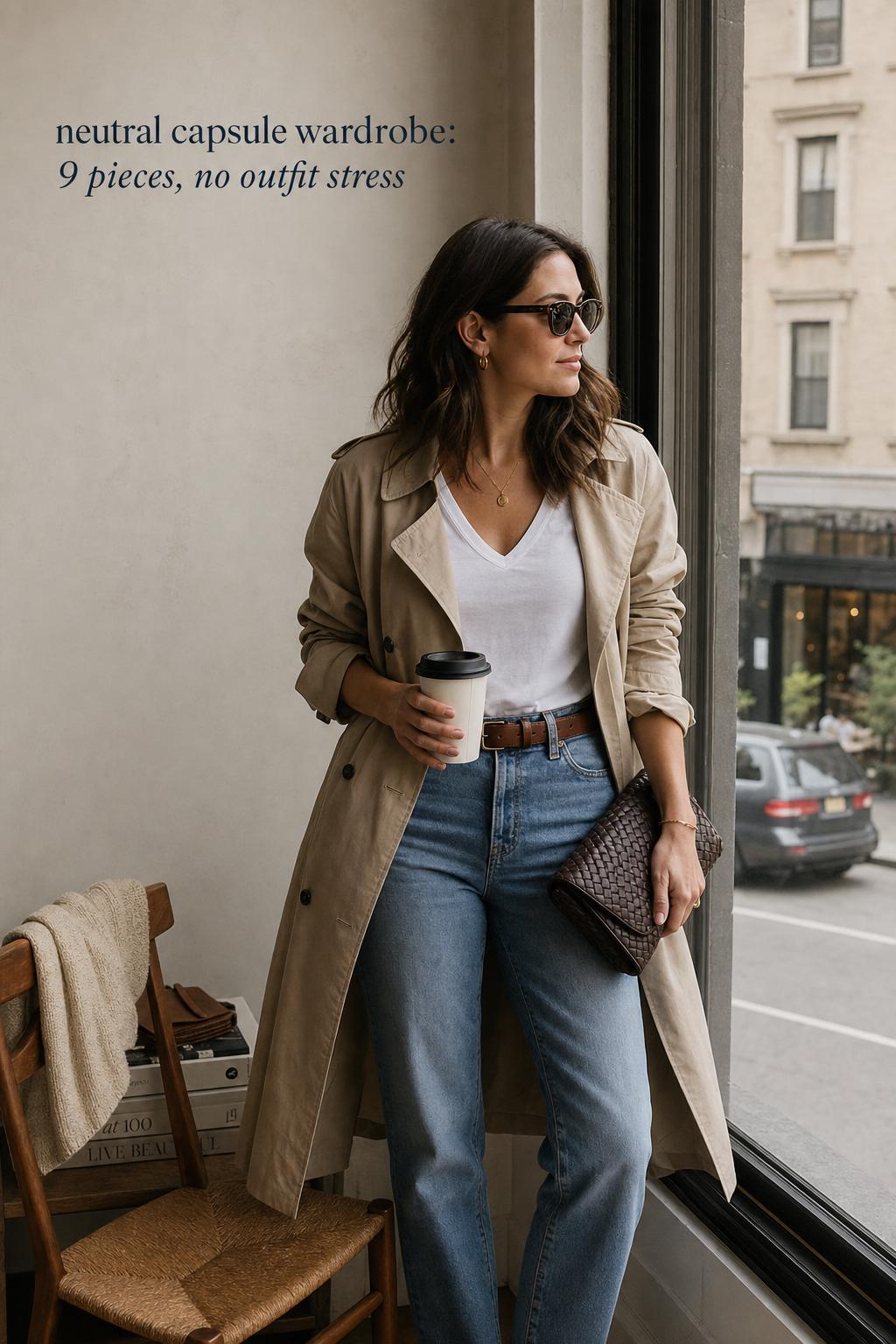
That is why a neutral capsule wardrobe resonates so strongly in the United States right now. It suits full calendars, mixed dress codes, and wardrobes that need to perform across seasons. It is aspirational because it looks refined, but wearable because the foundation is practical: a white V neck tee, tailored trousers, a trench coat, a neutral blazer, straight-leg jeans, loafers, sneakers, and a dress that can move through multiple occasions.
What makes this approach last is not just the color story. It is the relationship between durable basics, versatile silhouettes, thoughtful fabrics like linen and cotton blends, and styling choices that create range without clutter. Done well, the result is a wardrobe that feels both edited and expansive.
Found the dress? Keep the rest in one place.
Zarellea brings guest details, vendors, timelines, and every next step together — so your wedding plan feels as good as your look.
What a neutral capsule wardrobe really means
A capsule wardrobe is a tightly considered group of pieces designed to mix easily across many outfits. A neutral capsule wardrobe takes that structure and anchors it in a restrained color palette. The goal is not to own only beige clothing or strip your closet of personality. The goal is to create a dependable visual system so that most pieces can work together without effort.
Across style guides and fashion media, the strongest definitions share the same principles: quality over quantity, timeless wardrobe basics, and enough variety in texture and silhouette to keep the wardrobe from becoming flat. This is why neutral dressing works best when it includes contrast. A seamless tank feels different beside a linen blend vest. A striped maxi dress changes the rhythm of a closet built from solids. A woven belt or Goldie clutch can sharpen an otherwise quiet outfit.
The neutral foundation also supports long-term wardrobe planning. Instead of building around isolated pieces, you build around compatibility. That shift matters. It makes shopping more intentional, styling faster, and everyday dressing more consistent.
Why neutrals feel timeless instead of boring
The fear with a neutral wardrobe is monotony. In practice, that usually happens only when color restraint is paired with lazy proportion or no texture variation. Neutrals become compelling when the outfit composition has movement: crisp cotton against soft knit, structured outerwear over fluid dresses, relaxed denim with polished loafers, or tonal layering that moves from ivory to camel to deep navy.
Who What Wear’s minimalist capsule framing and similar wardrobe guides tend to emphasize classic items because they carry visual stability. That stability is what allows more nuance elsewhere. A white shirt, tailored trousers, and a blazer may sound simple, but the line of the shoulder, the drape of the trouser, and the finish of the shoe determine whether the result feels generic or elevated.
There is also a cultural reason neutrals stay relevant. They move easily between casual American dressing and polished city style, between workwear codes and off-duty minimalism. They photograph well, layer well, and rarely feel out of place. That flexibility is exactly what gives a neutral capsule wardrobe its staying power.
The core principles that make the system work
A cohesive palette creates instant compatibility
The heart of the wardrobe is a color palette that can repeat without becoming repetitive. The most consistently useful core neutrals are black, white, beige, gray, navy, and camel, with ivory and olive often acting as supporting tones. A capsule does not need every one of these. It needs a consistent mix that feels intentional.
This is where color theory matters. Nancy GLO’s color-focused approach and Palette Hunt’s attention to neutral undertones both point to an important styling truth: warm and cool neutrals change the mood of a wardrobe. Camel, ivory, and beige create softness. Charcoal, bright white, and navy feel sharper. Mixing them can be beautiful, but the mix should feel deliberate rather than accidental.
Versatile silhouettes matter more than trend pieces
A successful capsule is built from shapes that repeat well. Straight-leg jeans, tailored trousers, a midi skirt, a trench coat, a neutral blazer, a white tee, and a slip dress all remain useful because they support multiple styling directions. The more a piece depends on a trend moment, the less likely it is to earn a permanent place.
That does not mean every item must be severe or classic in a rigid way. It means each piece should offer enough styling flexibility to justify its space. A striped maxi dress, for example, can still belong in a neutral capsule because the pattern is restrained and the shape can be dressed up or down.
Fabric and texture keep the palette alive
Several top wardrobe guides point to linen, cotton, and blends for good reason. In a closet where color is intentionally controlled, fabric behavior becomes more visible. Linen adds breathability and natural texture. Cotton offers structure and everyday ease. Wool introduces weight and seasonal depth. Texture is what prevents a neutral wardrobe from reading as one-note.
OGLmove’s emphasis on texture variety is especially practical here. If your entire wardrobe sits in smooth jersey and flat synthetics, even good colors can look static. Add linen trousers, a cotton button-down, a knit tank, or a softly structured blazer, and the same palette immediately gains range.
Seasonality should be built in from the beginning
A neutral capsule wardrobe works best when it accounts for layering. Lightweight summer neutrals such as linen tops, tanks, and dresses should sit comfortably beside outerwear, heavier trousers, and transitional shoes. Seasonal adaptability is not an afterthought. It is one of the reasons the capsule remains functional across a full year rather than only in one weather window.
The starter kit: the pieces that do the most work
The strongest starter kits across fashion guides tend to include a compact range of tops, bottoms, outerwear, dresses, and accessories. The exact number can vary, but a useful neutral capsule wardrobe usually begins with 12 to 20 pieces that can rotate through different settings. The following mix captures the most consistently referenced essentials while leaving room for personal taste.
- White V neck tee
- Seamless tank
- Ivory blouse or linen top
- Classic button-down shirt
- Straight-leg jeans
- Tailored trousers
- Midi skirt
- Neutral blazer
- Trench coat
- Striped maxi dress or simple slip dress
- Neutral sneakers
- Loafers
- Woven belt
- Clutch, including a polished option like a Goldie clutch
These pieces cover the visual anchors of daily dressing without overcomplicating the closet. Tops handle layering. Bottoms establish proportion. Outerwear adds structure. Dresses create one-step outfits. Shoes and accessories shape the final tone, whether that tone is relaxed, tailored, or evening-leaning.
Camille Styles, in a feature by Brittany Chatburn developed with EVEREVE, approaches the capsule through a starter kit logic that is especially useful for readers who want both inspiration and shopping clarity. The underlying idea is simple: identify the pieces already in your closet, then fill the gaps with durable basics that can support multiple outfit directions.
Build it in two steps, not in one giant shopping trip
Step one: shop your closet first
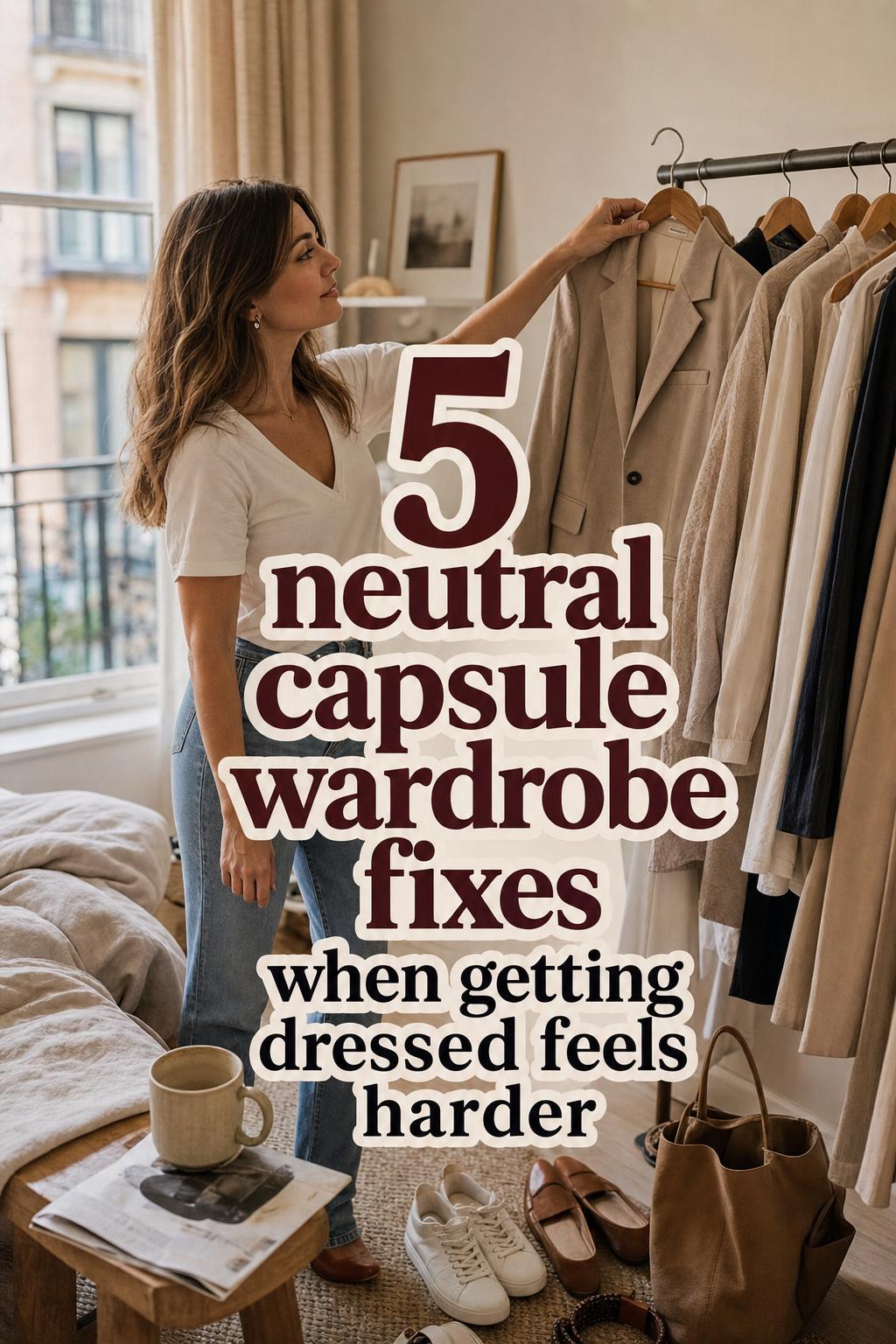
The most effective neutral capsule wardrobe usually starts with a pause, not a purchase. Pull out every wearable neutral item you already own and group them by category: tops, bottoms, outerwear, dresses, shoes, and accessories. This reveals your actual wardrobe logic. You may already have enough jeans and white tees but no polished layer to bridge casual and dressy outfits.
This step also helps reduce duplication. Many closets contain three versions of the same basic but lack the pieces that make basics feel complete. A capsule is not built by owning more neutral items. It is built by owning the right spread of neutral items.
Step two: fill the gaps with quality foundations
Once the inventory is clear, gap-filling becomes more precise. If your closet already holds denim, tees, and sneakers, your first investment may be tailored trousers or a neutral blazer. If you own strong separates but no easy one-piece option, a slip dress or striped maxi dress may create the versatility you are missing. If outfits feel unfinished, the issue may be accessories rather than clothing.
This is where the quality-over-quantity principle matters most. Durable basics often cost more upfront, but they earn their place through repeat wear. Several top guides frame this as a practical answer to overbuying and decision fatigue. The idea is not perfection. It is useful longevity.
Relaxed layers with a soft minimal edge
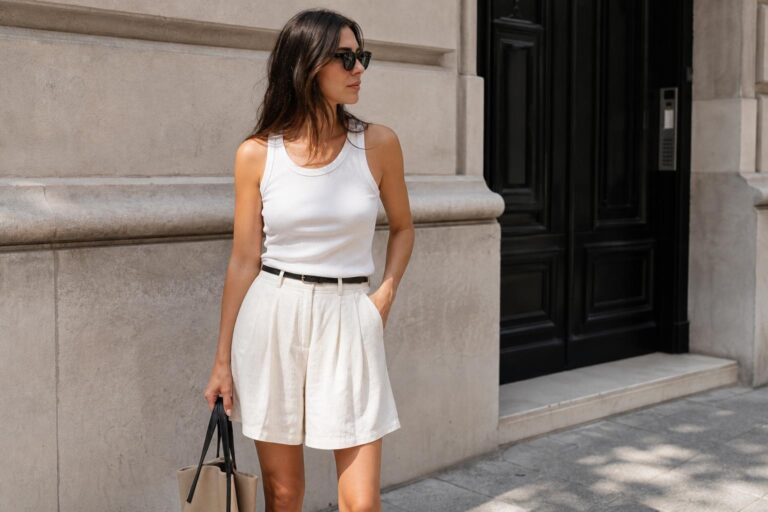
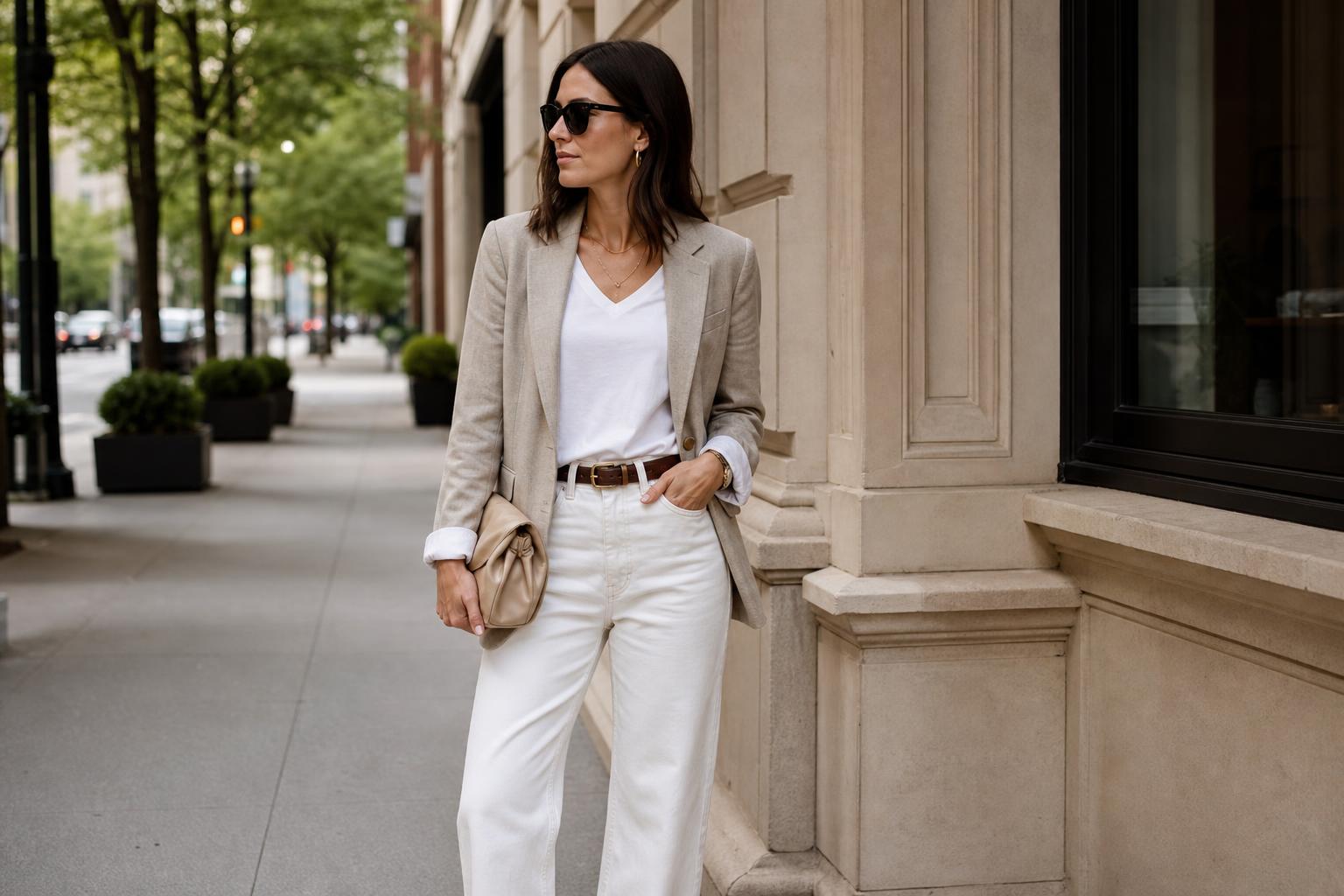
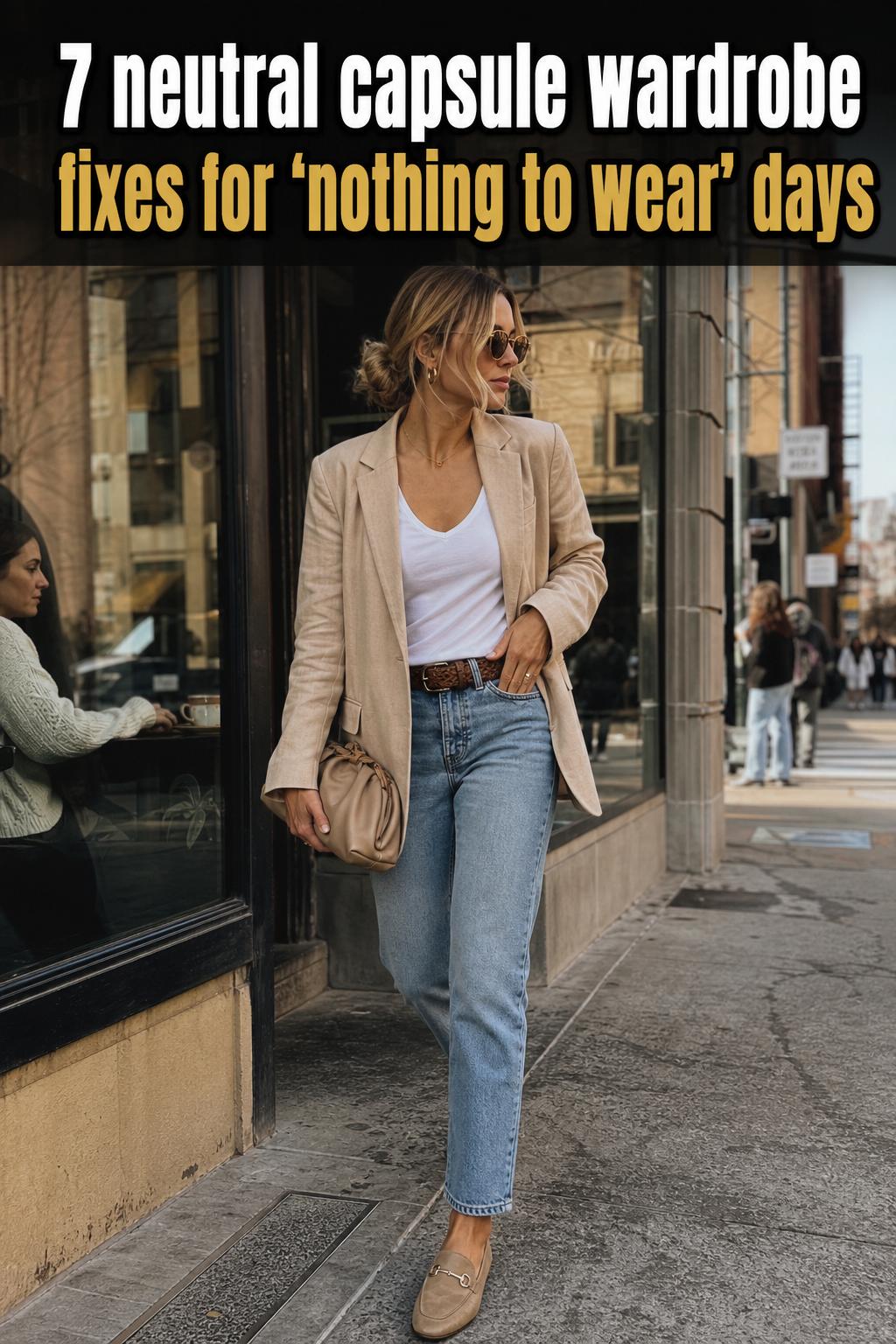
This is the version of the neutral capsule wardrobe that feels closest to everyday life in the United States: a seamless tank or white tee, straight-leg jeans, a linen blend vest or relaxed blazer, and neutral sneakers. The styling energy is easy, but the outfit still looks composed because the proportions are doing the work.
The key is balance. If the denim is straight and slightly relaxed, keep the top close to the body. If the outer layer is oversized, the base layer should add clarity. This avoids the common problem of neutral casual dressing becoming visually shapeless. A woven belt can create a clean waistline break without disrupting the tonal story.
Style insight: soft minimal dressing works when at least one element has structure. Even a very simple blazer changes the outfit composition by introducing a defined shoulder line and making the denim feel intentional rather than incidental.
Tailored neutrals for work, lunch, and city movement
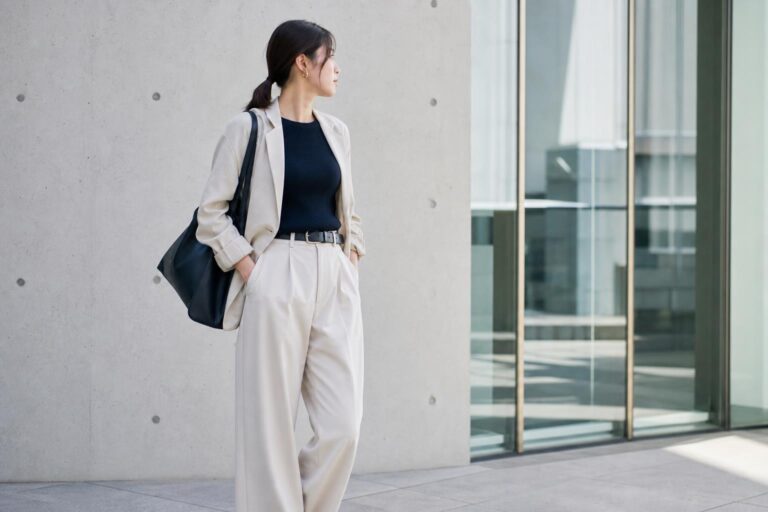
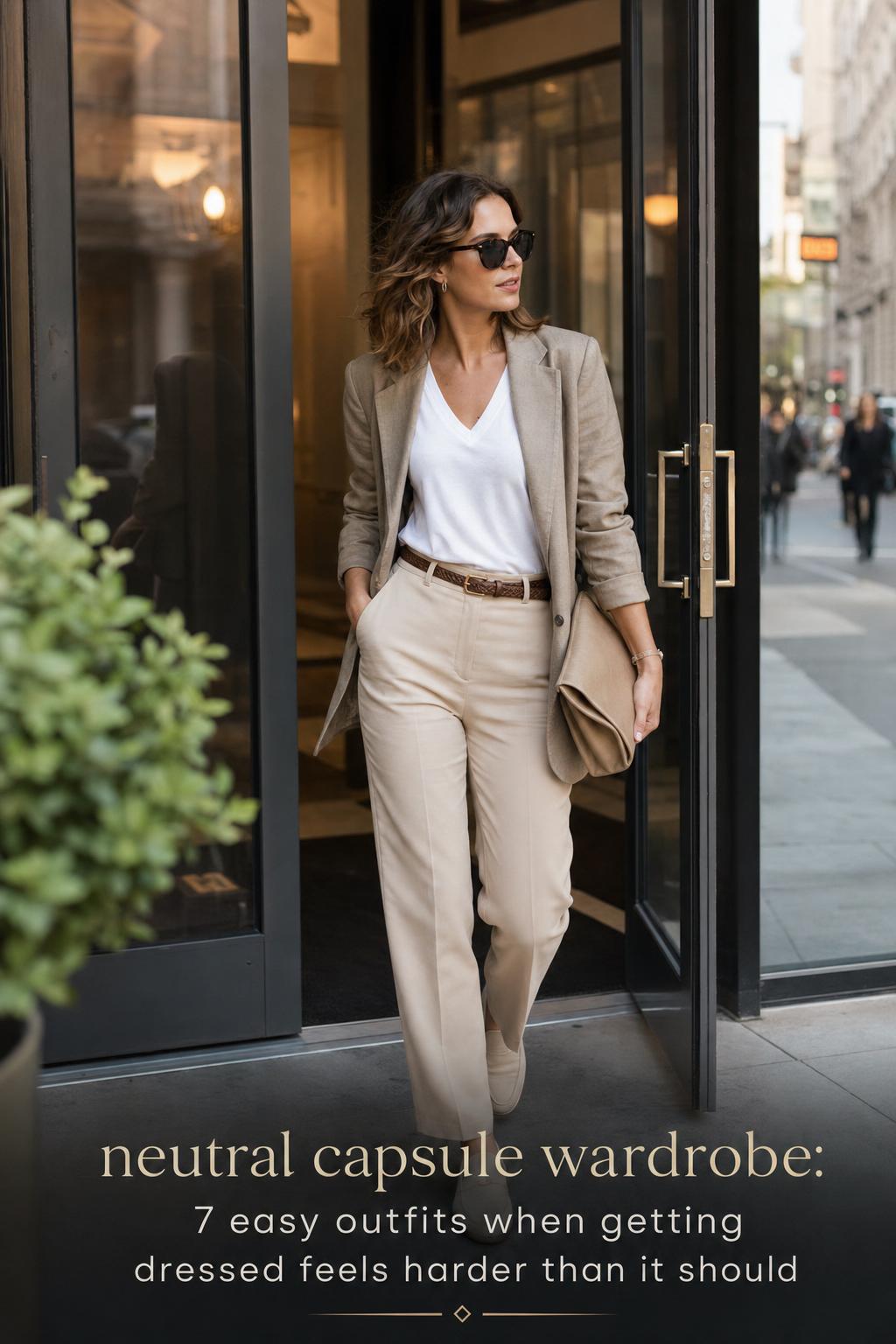
A neutral blazer, tailored trousers, and an ivory blouse form one of the most reliable outfit equations in a capsule wardrobe. It appears repeatedly in minimalist and classic wardrobe formulas because it handles multiple dress codes without looking overworked. Navy, gray, camel, and black all function well here, depending on whether you want the mood to feel softer or sharper.
The visual anchor in this combination is the trouser line. Tailored trousers create polish immediately, but they also temper more fluid fabrics on top. If your blouse is drapey or lightly textured, the trousers keep the silhouette from becoming overly romantic. Loafers support that same logic. They are grounded, clean, and more versatile than many trend-driven shoes.
For readers navigating long days that move from meetings to brunch or casual evening plans, this outfit structure is especially practical. Remove the blazer, roll the sleeve, add a clutch, and the same core pieces shift tone without requiring a full change.
Weekend dressing that still looks intentional
Weekend outfits are often where capsules succeed or fail. If the wardrobe only performs in polished settings, it is not truly versatile. A neutral capsule wardrobe needs relaxed combinations that still look edited enough for errands, coffee runs, casual lunches, or travel days. This is where denim, knit tanks, cotton tops, and practical shoes prove their value.
- Straight-leg jeans with a white V neck tee and neutral sneakers for the cleanest baseline
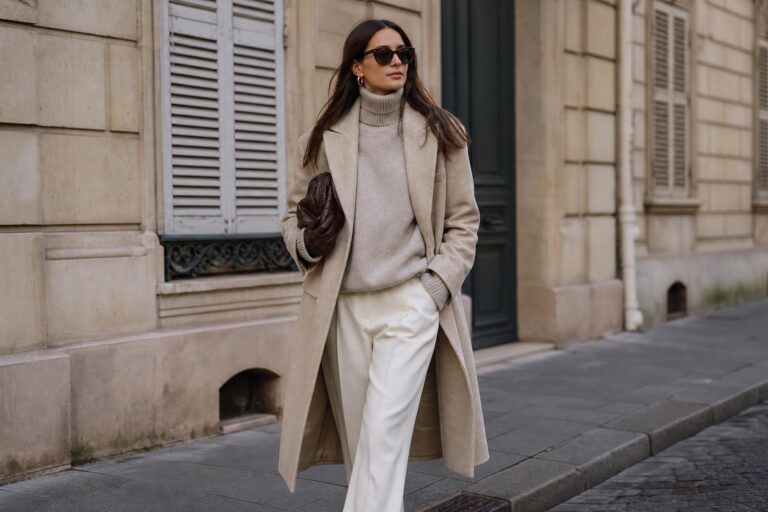
- Tailored trousers with a tank and trench coat when you want more structure without feeling formal
- Midi skirt with a simple knit top and loafers for a softer silhouette that still feels low effort
What keeps these outfits from feeling repetitive is texture contrast and proportion play. A trench coat over casual pieces adds length and refinement. A midi skirt introduces movement. Sneakers shift the tone back toward ease. The outfit reads complete because each element is supporting a clear styling direction.
Quiet evening dressing without leaving the neutral palette
A date night section appears in many capsule guides for a reason: people often assume neutrals are strongest in daytime and weakest after dark. In reality, evening neutrals can feel more refined than obvious occasionwear when the silhouette is precise. A slip dress, a structured blazer, loafers or a cleaner dress shoe, and a clutch create a sharp, low-noise outfit that still has presence.
A striped maxi dress can also work beautifully for evening if the stripe is understated and the accessories stay controlled. The dress brings movement, while the bag and shoe provide polish. If the dress is fluid, choose a more structured outer layer. If the dress is column-like, softer accessories can prevent the look from feeling too severe.
Why this combination works: evening styling in neutrals depends less on color intensity and more on line, finish, and restraint. A clutch, clean neckline, and strong outer layer often create more impact than adding extra decorative elements.
Brunch, travel, and the in-between moments a capsule should handle
The strongest wardrobes are built for the in-between. Brunch, airport dressing, quick appointments, casual dinners, and weeknight lounging all require slightly different energy, but not entirely different clothes. This is where the neutral capsule wardrobe proves its logic.
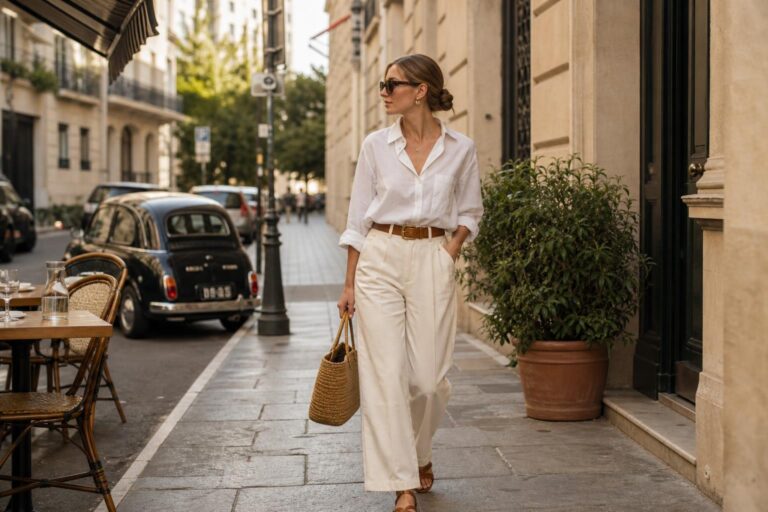
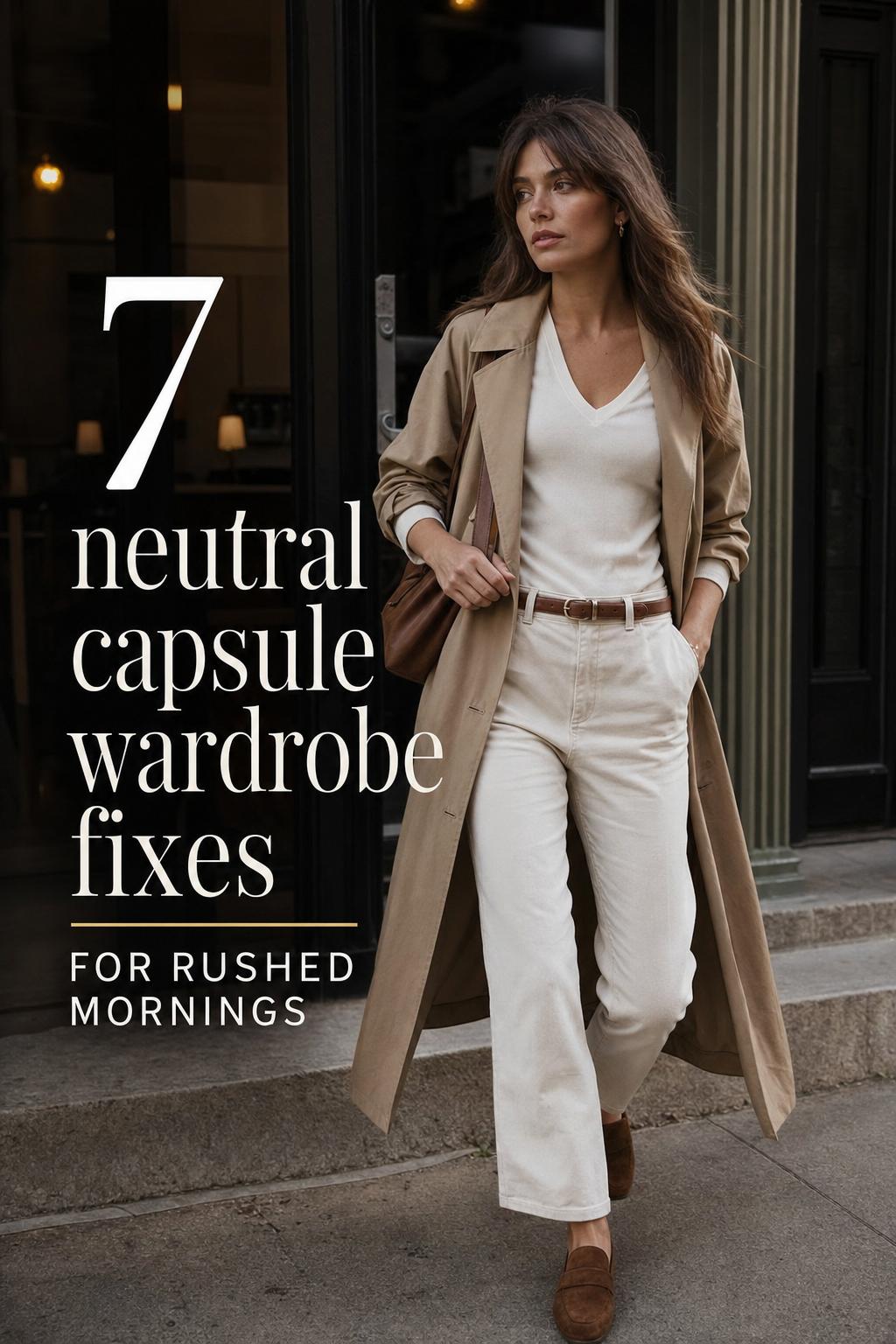
For brunch, a linen top with tailored trousers and loafers feels polished but not rigid. For travel, straight-leg jeans, a tank, a trench coat, and neutral sneakers layer well across changing temperatures. For quieter weeknights, a soft knit top and relaxed bottoms still benefit from the same palette discipline. The visual consistency makes the wardrobe feel coherent even when the formality level changes.
Brittany Chatburn’s occasion-based styling framework is useful here because it mirrors how real people dress. Most wardrobes are not divided into strict categories. They need overlap. The more often one piece can move between errands, brunch, and an informal evening, the more valuable it becomes.
Color palette decisions: warm neutrals, cool neutrals, and undertone balance
One of the most under-discussed reasons some neutral wardrobes feel effortless while others feel mismatched is undertone. Warm neutrals such as camel, beige, and ivory produce a softer, more organic effect. Cool neutrals such as charcoal, crisp white, black, and some navies feel sharper and more urban. Neither is better. The right choice depends on the mood you want and the colors you naturally reach for.
Palette Hunt’s neutral undertones perspective adds an important refinement to capsule planning: you do not need to force every neutral together. If warm camel consistently looks better beside cream than beside optic white in your wardrobe, let that become part of your formula. If navy and gray anchor most of your outfits, allow those cooler neutrals to lead.
This is especially helpful when shopping your closet. You may discover that your wardrobe already leans warm or cool. Respecting that existing direction makes the capsule feel more cohesive and reduces the likelihood of impulse buys that never integrate properly.
Fabric, care, and why longevity changes the value of basics
Neutral basics are only as strong as their performance over time. In a wardrobe that relies on repetition, fabric quality becomes visible quickly. A white tee that loses shape, a trouser fabric that bags out, or a blazer that never sits correctly will interrupt the entire system. This is why durability appears so often in capsule guidance.
Linen and cotton blends are especially useful because they offer wearability and texture. Linen brings breathability and an ease that suits warm-weather styling. Cotton is foundational for tees, shirts, and many daily layers. Wool becomes more relevant in heavier seasonal pieces and structured outerwear. Each fabric has a role, and understanding that role helps prevent disappointing purchases.
Care matters because neutral wardrobes depend on pieces staying clean, crisp, and wearable. If a core item demands too much maintenance for your real schedule, it may not be the right foundation piece. Longevity is not just about quality at purchase. It is also about whether a garment fits your actual life.
Tips for keeping neutral basics in rotation longer
- Prioritize fabrics whose texture improves the outfit rather than merely filling a category.
- Choose garments that can layer across at least two seasons.
- Notice which items keep their shape after repeated wear and build future purchases around that standard.
- Use accessories strategically so the same clothing base can shift occasions without overbuying.
Cost-per-wear thinking and smarter wardrobe investment
Several capsule guides hint at a practical truth that deserves more attention: the real value of a wardrobe item is not only its price, but how often it earns wear. This is why a neutral blazer, trench coat, or pair of tailored trousers often deserves more investment than a one-note trend item. Their usefulness compounds across dozens of outfits.
Cost-per-wear is not about turning style into a spreadsheet. It is a way to evaluate whether a purchase supports your wardrobe structure. A polished loafer that works for work, lunch, and travel may be more valuable than several cheaper shoes that each solve only one narrow scenario. The same logic applies to a white shirt that layers under outerwear, over tanks, and with both denim and trousers.
This framing also supports sustainable fashion thinking, even when the wardrobe remains style-led rather than overtly eco-focused. Buying fewer, more durable basics aligns with the capsule principle because it reduces random accumulation and encourages longer use.
Common styling mistakes that make a capsule feel flat
The most common mistake is confusing neutral with visually empty. A wardrobe built entirely from similar fabrics, identical fits, and no layering range can feel repetitive fast. The fix is not more color. It is stronger outfit architecture.
- Too many duplicates of the same basic without enough category balance
- No distinction between casual and polished shoes
- Ignoring undertones, which can make outfits feel unintentionally off
- Choosing trend-only silhouettes that do not integrate with the rest of the closet
- Overlooking accessories such as a woven belt or clutch that help finish an outfit
Another frequent problem is building a capsule around imagined life instead of actual routines. If your week includes errands, travel, casual office days, and weekend lunches, your wardrobe should reflect that mix. A beautiful capsule that works only on paper will always feel incomplete in practice.
How to make the aesthetic work for real life
The appeal of a neutral capsule wardrobe lies in its adaptability. That adaptability depends on honest customization. Some people need more outerwear because they rely on layering. Others need stronger dress options because they move between day and evening plans. Some wardrobes need the grounding effect of navy and charcoal; others look more cohesive in beige, camel, and ivory.
There is also room for body-type and fit awareness, even though many capsule guides stop short of exploring it fully. The principle is straightforward: choose silhouettes that support your proportions and movement, not just the image of minimal dressing. A blazer should add structure, not stiffness. Trousers should create line, not drag. A slip dress should skim cleanly enough to layer under outerwear without bunching.
Easy way to recreate the look without buying everything new: start with one complete formula you can already build from your closet, such as jeans, a white tee, a blazer, and loafers. Then identify the single missing piece that would unlock two or three more outfits. This keeps the capsule grounded in reality rather than fantasy shopping.
Brands, media, and the modern neutral wardrobe conversation
The neutral capsule wardrobe has been shaped by both personal style voices and established fashion media. Camille Styles presents it through wearable editorial guidance, with Brittany Chatburn connecting the concept to real-life outfit scenarios and a starter kit approach. EVEREVE appears in that framework as a practical retail bridge, linking wardrobe theory to actual shopping decisions.
Who What Wear approaches similar territory through minimalist wardrobe planning and the idea of reducing the closet to a concise selection of definitive pieces. Mirror and Thread reinforces the long-term appeal of essential classics. Nancy GLO and Palette Hunt deepen the conversation by focusing on neutral colors, undertones, and palette logic. OGLmove brings in texture and layering as essential tools. Neutrally Nicole and Eva Cassis emphasize simplicity, feel-good dressing, and neutral basics as the foundation of a more coherent closet.
Taken together, these perspectives clarify something important: a neutral capsule wardrobe is not one rigid formula. It is a framework made stronger by good color decisions, useful garment categories, and styling choices that match everyday life.
The lasting appeal of a cohesive, timeless closet
A neutral capsule wardrobe endures because it solves both aesthetic and practical problems at once. It quiets visual clutter, sharpens outfit composition, and makes daily dressing faster without flattening personal style. The palette is restrained, but the possibilities are not.
The most compelling version is always personal. It might lean soft with camel, linen, and ivory. It might feel sharper in navy, black, and gray. It might revolve around loafers and tailored trousers, or around denim, tanks, and a trench. What matters is the internal logic: pieces that work together, textures that add dimension, and silhouettes that support the way you actually live.
That is the real elegance of this approach. It does not ask for a perfect closet. It asks for a coherent one.
FAQ
What is a neutral capsule wardrobe?
A neutral capsule wardrobe is a curated group of clothing built around versatile neutral colors such as black, white, beige, gray, navy, camel, and often ivory. The goal is to create a closet where most pieces mix easily, reducing decision fatigue while increasing outfit flexibility.
How many pieces should a neutral capsule wardrobe have?
There is no single fixed number, but many practical capsule approaches start with roughly 12 to 20 core pieces, while some broader systems work with around 30 pieces. What matters more than the exact count is having enough variety across tops, bottoms, outerwear, shoes, and accessories to create multiple outfits.
Which colors belong in a neutral capsule wardrobe?
The most common foundation colors are black, white, beige, gray, navy, and camel, with ivory and olive sometimes used as supporting neutrals. The strongest palette is the one that feels internally consistent, whether it leans warmer with camel and cream or cooler with charcoal, navy, and bright white.
How do I start a neutral capsule wardrobe without buying everything new?
Start by shopping your closet. Pull together the neutral pieces you already wear, then identify the missing categories rather than buying duplicates. Many people already own enough basics but need one or two stronger foundation pieces, such as a blazer, tailored trousers, loafers, or a trench coat, to make the wardrobe feel complete.
How do I keep neutrals from feeling boring?
Focus on texture, layering, and silhouette balance. Linen, cotton, wool, and structured blends create contrast even within a quiet palette. A woven belt, a clutch, a striped maxi dress, or the combination of relaxed denim with a tailored blazer can add dimension without disrupting the minimal feel.
What are the best starter pieces for a neutral capsule wardrobe?
Strong starter pieces include a white V neck tee, seamless tank, ivory blouse or linen top, straight-leg jeans, tailored trousers, a midi skirt, neutral blazer, trench coat, a simple dress such as a slip dress or striped maxi dress, neutral sneakers, loafers, and a few finishing accessories like a woven belt or clutch.
Should I choose warm neutrals or cool neutrals?
Choose the direction that already feels most natural in your wardrobe. Warm neutrals like camel, beige, and ivory create softness, while cool neutrals like charcoal, navy, black, and crisp white feel sharper. Both work well, but consistency usually makes the capsule easier to style.
Is a neutral capsule wardrobe good for work and weekends?
Yes, that is one of its main strengths. The same foundation pieces can shift between work, brunch, errands, and evening plans depending on how they are styled. Tailored trousers, denim, a blazer, loafers, sneakers, and a versatile dress create enough range for most everyday scenarios.
Why does quality matter so much in a capsule wardrobe?
Because capsule pieces are worn repeatedly, their fit, fabric, and durability become more important. Basics that hold their shape, layer well, and work across multiple settings deliver better long-term value than items that look good briefly but wear out quickly or never integrate with the rest of the wardrobe.