Neutral Wardrobe Ideas for a Polished Everyday Look
A well-built neutral wardrobe has a particular kind of confidence. It does not rely on novelty, loud color, or constant replacement. Instead, it creates impact through tonal layering, texture contrast, and a clear sense of visual restraint. Camel against cream, charcoal beside ivory, denim under a beige trench coat—these combinations feel polished because the palette is controlled, but never flat.
That control is exactly why neutral dressing continues to resonate. It aligns with the appeal of capsule wardrobe thinking, the calm precision of quiet luxury, and the everyday reality of wanting clothes to work harder. In the U.S., a neutral wardrobe moves easily across office dress codes, weekend errands, travel days, dinner plans, and seasonal layering without demanding a complete reset every few months.
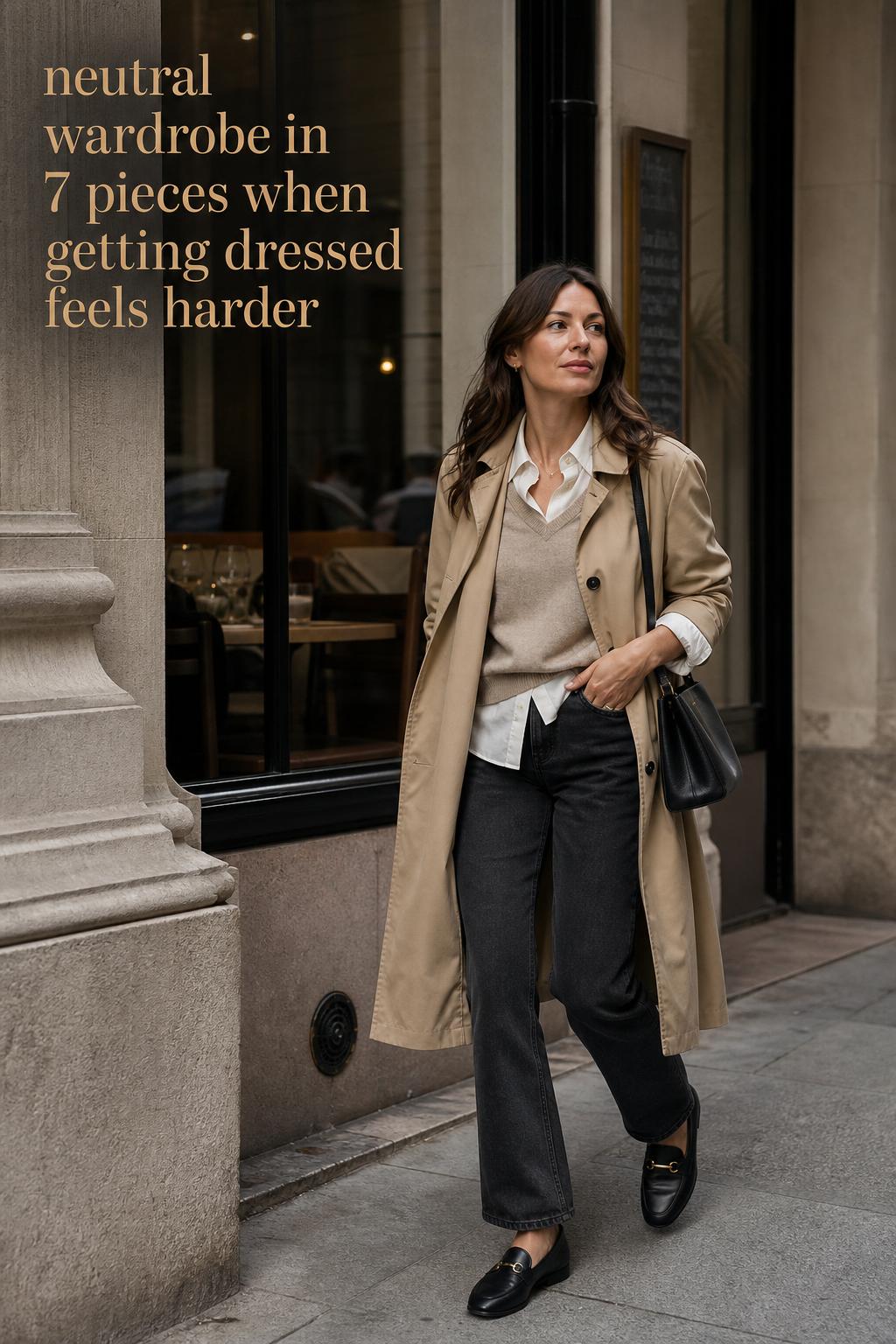
The appeal is also more nuanced than “just wear beige.” The strongest neutral wardrobes are built with intention: undertones that flatter skin, grounding staples that support multiple outfits, fabrics that add dimension, and a practical edit of pieces you can repeat without looking repetitive. That is where neutral style shifts from simple to sophisticated.
This guide breaks down how to build that kind of wardrobe—one that feels timeless, wearable, and specific to real life. From undertone mapping to a 30-piece capsule foundation, from earth tones to sharper black, white, and gray combinations, the goal is not uniformity. It is clarity.
Found the dress? Keep the rest in one place.
Zarellea brings guest details, vendors, timelines, and every next step together — so your wedding plan feels as good as your look.
What a neutral wardrobe really means
A neutral wardrobe is a clothing system built around colors that are easy to coordinate and visually stable across outfits. In practice, that usually includes shades such as beige, camel, cream, ivory, taupe, gray, charcoal, navy, black, white, and denim. Some wardrobes lean warmer and earth-toned, while others are cooler and more graphic, but the principle stays the same: each piece should connect to several others without friction.
This is why neutral wardrobes are so often linked to capsule wardrobe methods. When the color palette is disciplined, outfit composition becomes faster. A white tee works with gray trousers, denim, a camel trench coat, or a black blazer. Loafers, boots, and accessories move between looks with less visual conflict. You are not styling from scratch every morning; you are refining combinations within a coherent framework.
Timelessness is another key reason neutrals endure. Many style guides return to the same core idea: neutral colors ground a look. They do not date as quickly because their strength comes from proportion, fabric, and silhouette rather than trend-dependent color stories. A beige coat, a camel boot, a charcoal knit, or a navy trouser can look current for years if the cut is right.
That said, neutral does not mean limited. A strong neutral wardrobe can feel soft, tailored, relaxed, minimal, or quietly luxurious depending on how you build it. Cream linen reads differently from black wool. Denim shifts the mood toward ease. Silk adds polish. Texture is what stops neutrals from feeling bland.
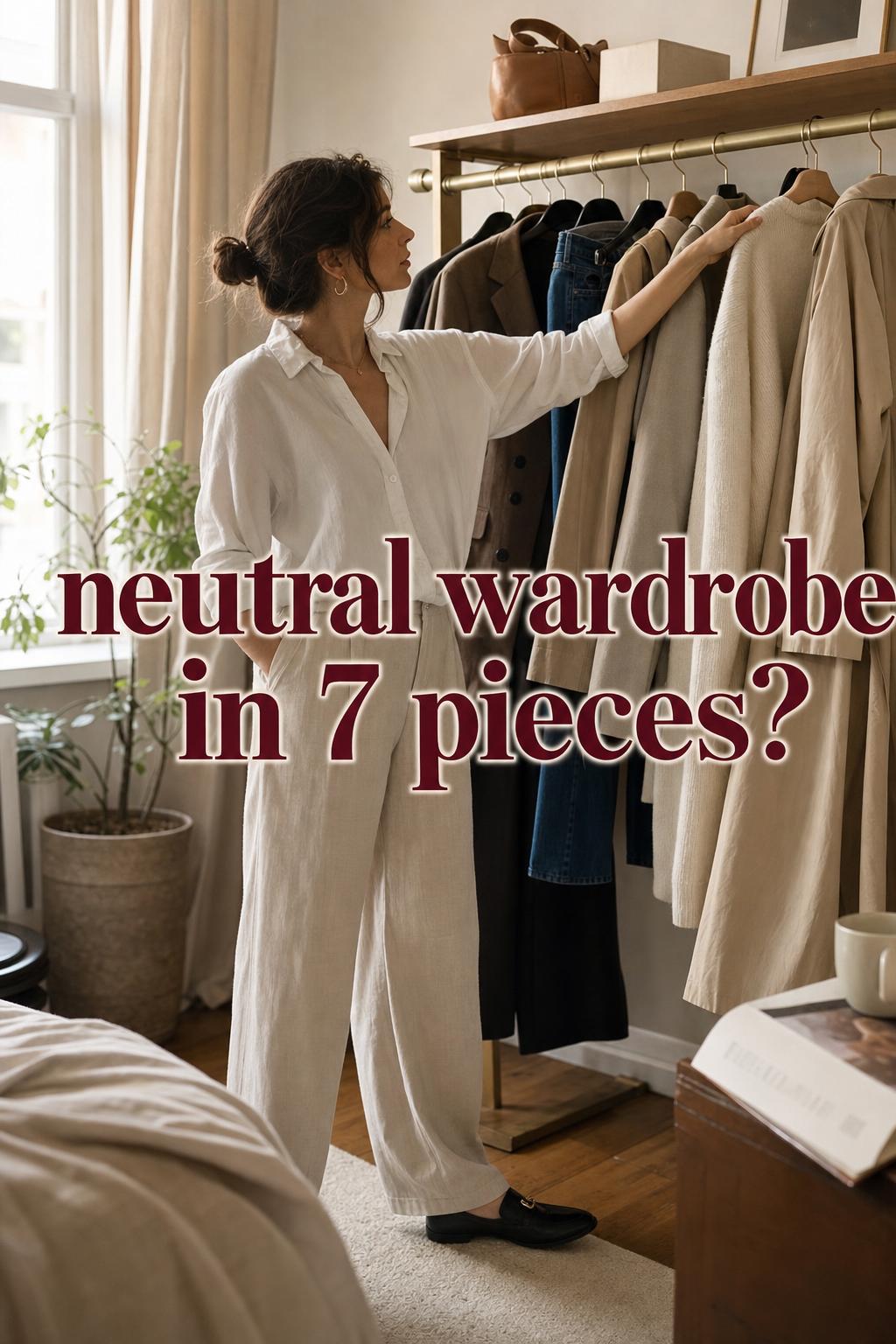
Undertone science: the part most neutral wardrobe guides skip
One of the most useful distinctions in neutral dressing is undertone. Two people can wear “beige” and get completely different results because not all neutrals carry the same temperature. This is where many wardrobes either start working beautifully or start feeling strangely off.
Cool, warm, and neutral undertones
Undertone-based selection appears again and again in thoughtful neutral style guidance for good reason. Warm undertones often harmonize with camel, cream, warmer beige, and softer earth tones. Cool undertones tend to come alive in charcoal, crisp gray, cooler taupe, and cooler beige. Neutral undertones generally have the most flexibility and can move between warm and cool neutrals depending on contrast preferences and fabric finish.
The practical value of this is immediate. If your wardrobe contains “good” pieces that still seem to wash you out, the issue may not be the cut. It may be the undertone. A cream knit can look luminous on one person and heavy on another. A cooler gray coat can sharpen one complexion and drain another. Once you identify the temperature that supports your skin tone, shopping becomes more precise.
The undertone palette map
- Warm-leaning neutrals: camel, cream, warm beige, earth tones
- Cool-leaning neutrals: charcoal, gray, cool beige, cooler taupe
- Flexible neutral base: denim, navy, balanced ivory, selected black and white combinations
This map is not a rigid rulebook. It is a filter. If your wardrobe is not cohesive yet, start by identifying two or three anchors that support your undertone and build around them. A warm-neutral wardrobe might center on camel, cream, and denim. A cooler one might build from charcoal, gray, and white. A mixed neutral wardrobe can use navy as a stabilizer because it often bridges multiple tones well.
Tip: when comparing similar shades, pay attention to whether the color looks better in matte or refined textures. The same neutral can shift dramatically in linen, wool, or silk, which affects how it reflects against the skin.
Why neutrals stay visually strong instead of fading into the background
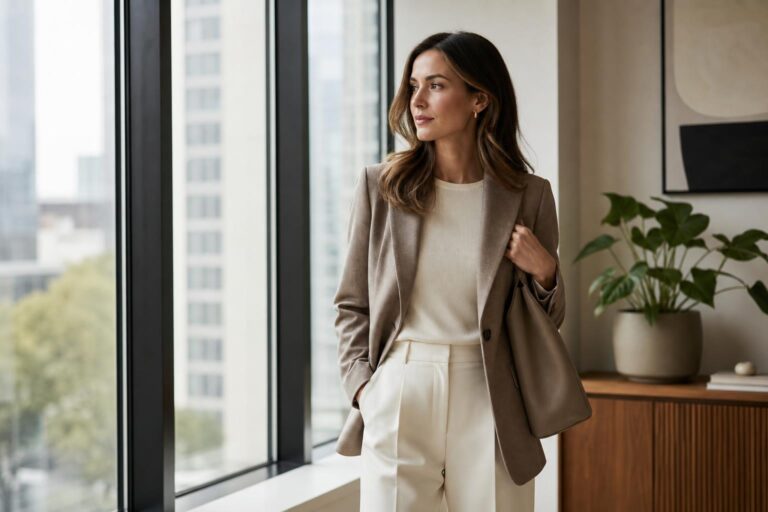
The best neutral wardrobes do not rely on color contrast alone. They create depth through composition. This is why a tonal outfit can look more deliberate than a brighter one. The eye reads structure, texture, and proportion first. A structured blazer over a soft knit, paired with fluid trousers and loafers, creates enough variation to feel intentional even if every piece sits within the same color family.
Quiet luxury often works from this exact principle. The appeal comes from restraint, but the restraint is supported by quality visual decisions: cleaner lines, grounded staples, fewer competing elements, and more attention to fabric behavior. A cream shirt in crisp cotton gives a different impression than a cream top in draped silk. Both belong in a neutral wardrobe, but they communicate different levels of formality and movement.
Texture also solves the most common fear around neutral dressing: looking bland. Personal style guides focused on neutrals repeatedly point to accessories and texture as the difference between flat and elevated. Wool, linen, denim, silk, leather, and brushed knits all create variation inside a controlled palette. When color is quieter, the details become more visible. That is a strength, not a limitation.
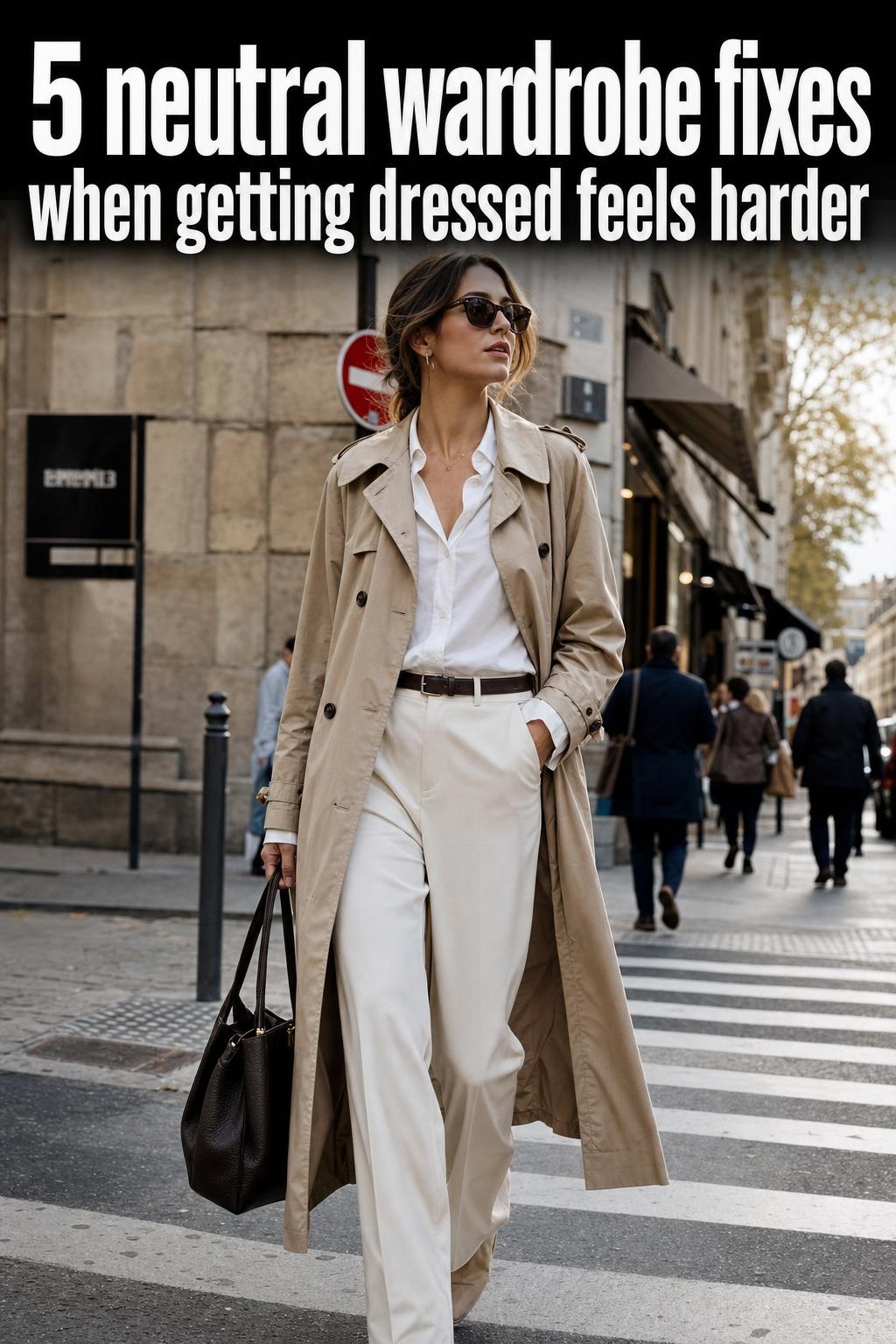
The 30-piece neutral capsule that actually functions in real life
A 30-piece capsule wardrobe is useful because it forces clarity without becoming too narrow. It gives enough room for office dressing, casual combinations, and seasonal layering while still reducing clutter. The key is not choosing 30 random neutral items. It is building around anchor colors, supporting neutrals, and versatile shapes.
Anchor colors first, not impulse buys
Most successful capsules use two or three base colors to hold everything together. These anchors create the foundation for outfit repetition. Common options include navy, camel, and black, with gray, ivory, and taupe acting as support. The exact mix depends on your undertone, climate, and how formal your daily wardrobe needs to be.
For example, someone who works in a more polished environment may lean on black, gray, and ivory for a sharper wardrobe foundation. Someone who prefers a softer, earth-tone direction may build around camel, cream, and denim. Both are neutral wardrobes, but the visual energy is different.
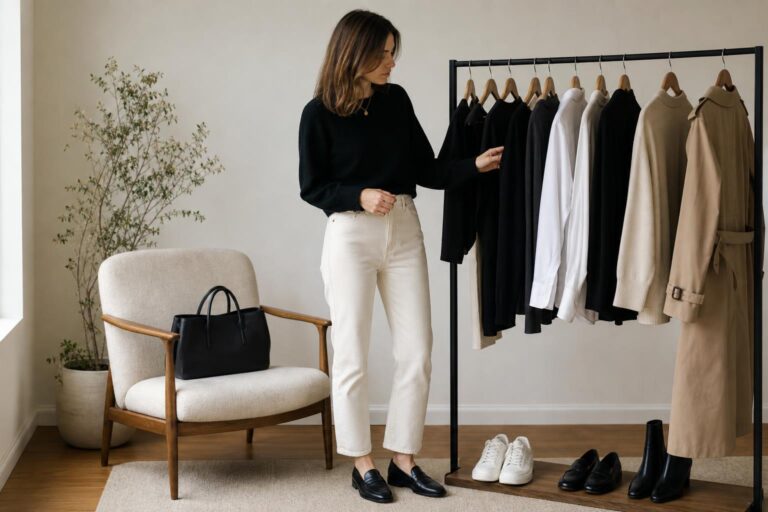
A practical 30-piece framework
- Tops: white tee, ivory tee, neutral button-down shirt, fine knit top, long-sleeve base layer, soft sweater, heavier knit, simple blouse
- Bottoms: straight-leg denim, darker denim, tailored black trousers, gray or taupe trousers, casual neutral pants, streamlined skirt
- Layering pieces: blazer, cardigan, lightweight jacket, trench coat, wool coat
- Dresses or one-piece options: one neutral dress, one easy day-to-evening option
- Shoes: loafers, ankle boots, clean sneakers, refined flat, heel or dress shoe
- Accessories: belt, everyday bag, structured bag, scarf, simple jewelry, cold-weather layer such as a knit accessory
This framework reflects the recurring staples seen across neutral wardrobe advice: trench coats, blazers, shirts, denim, and grounded footwear. The exact count can shift, but the logic should remain balanced. If you add a statement coat, remove a duplicate cardigan. If you wear denim constantly, let it carry more weight than a skirt you rarely reach for.
Core pieces worth prioritizing
If your wardrobe is still in transition, not every category deserves equal urgency. The most useful first investments are the pieces that set the visual tone for everything else: a trench coat, a blazer, a pair of tailored trousers, straight denim, and one knit that layers cleanly. These are the items that repeat hardest and shape the overall aesthetic most clearly.
Who What Wear’s capsule framing is helpful here because it emphasizes reducing the closet to essentials rather than chasing endless variation. In a neutral wardrobe, that principle becomes even more effective. When the item list is disciplined, you can spend more energy refining fit, texture, and proportion.
Relaxed layers with a soft minimal edge
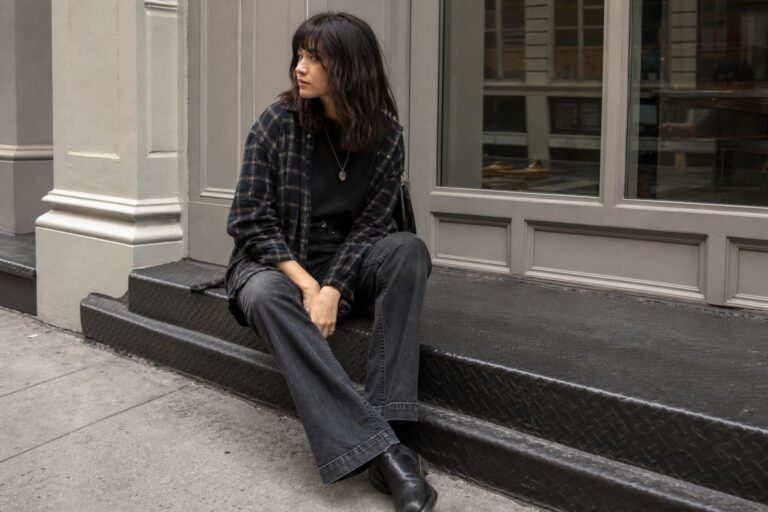
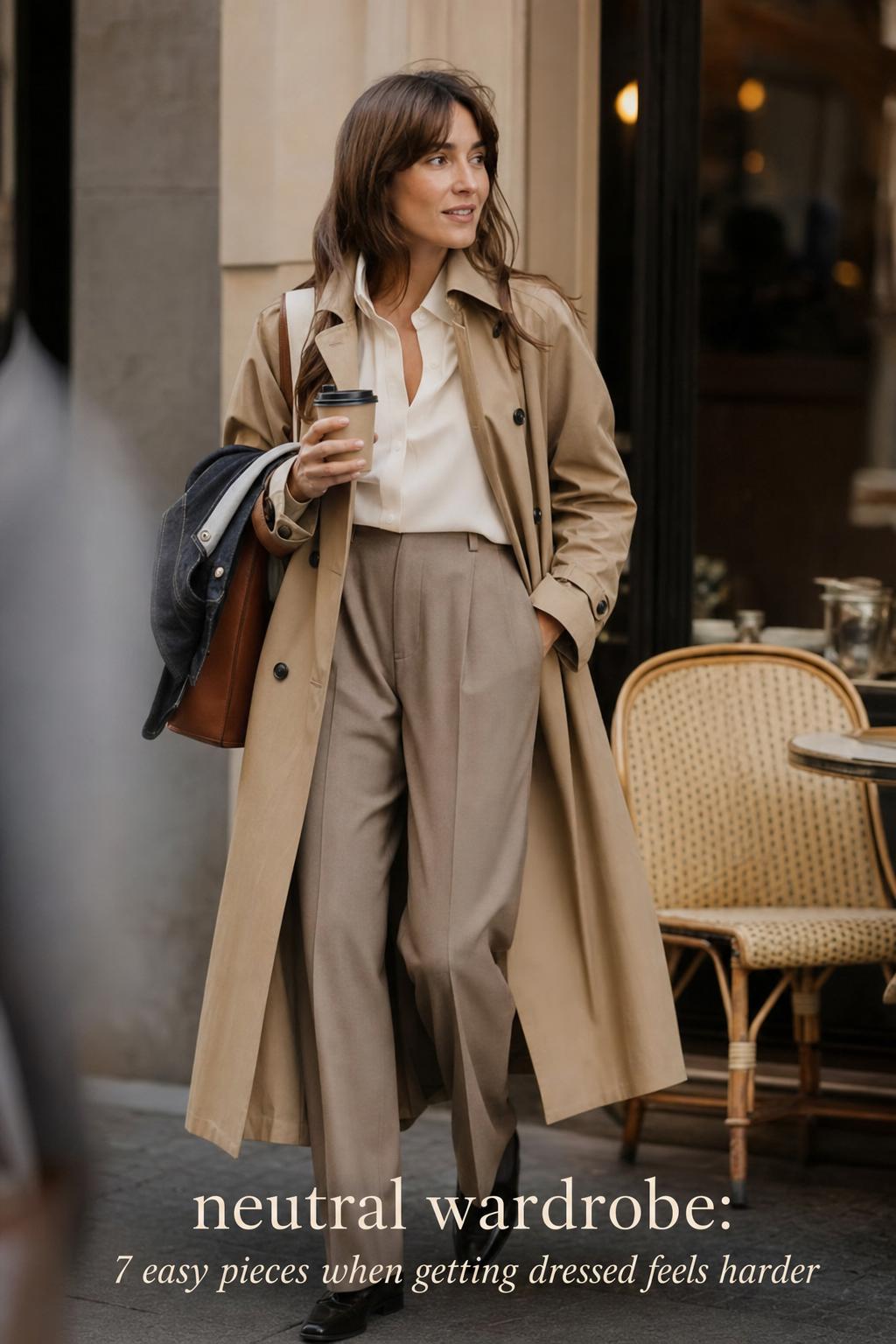
This version of a neutral wardrobe leans into comfort without losing structure. Think an ivory knit, straight denim, a beige trench coat, and understated boots or loafers. The palette feels calm, but the outfit still has shape because the outer layer creates a strong vertical line and the denim introduces casual weight.
Why this combination works: the softness of cream or ivory can sometimes drift into vague territory on its own. Denim corrects that by adding definition and familiarity. The trench coat then acts as a visual anchor, especially in camel or beige. It turns a simple base into an outfit with direction.
For everyday life, this is one of the easiest formulas to repeat. It works for casual office settings, travel, errands, and transitional weather. If you want it to feel more elevated, choose a trench with sharper structure and keep the knit smooth rather than bulky. If you want more ease, switch the boots for clean sneakers and let the coat stay open.
Budget-friendly alternative: if a classic trench coat is not your first purchase, a lightweight neutral jacket can fill the same role temporarily. The key is still the same—maintain tonal consistency and keep at least one piece with tailored lines.
Tailored neutrals that sharpen the wardrobe instantly
Some neutral wardrobes are built around softness. Others are built around precision. A tailored blazer, black or gray trousers, a crisp shirt, and loafers create a more defined composition that reads immediately professional. This is where black, white, gray, and navy become especially useful.
The analytical advantage of tailoring is silhouette balance. A blazer introduces structure at the shoulder, trousers lengthen the line, and a clean shirt keeps the center of the outfit visually quiet. Because the palette is neutral, the outfit communicates polish without looking overworked.
This approach is particularly effective for office wardrobes because it allows multiple combinations with very few items. A single blazer can move across denim, tailored pants, and even a simple dress. A white or ivory shirt can sit under knits, jackets, or coats. The repetition feels intentional rather than obvious because the shapes stay consistent.
Styling mistakes to avoid in sharper neutral dressing
- Too many similar mid-tone neutrals without a clear anchor, which can make the outfit feel visually foggy
- Overly soft fabrics in every piece, which removes the contrast that tailoring needs
- Ignoring footwear, even though loafers, boots, or a clean heel often determine whether the outfit reads casual or refined
A charcoal blazer with ivory trousers, or navy with gray, often creates stronger distinction than head-to-toe beige if your style leans tailored. The goal is not harsh contrast. It is enough separation for each garment to hold its shape.
Earth-tone dressing and the quieter side of statement style
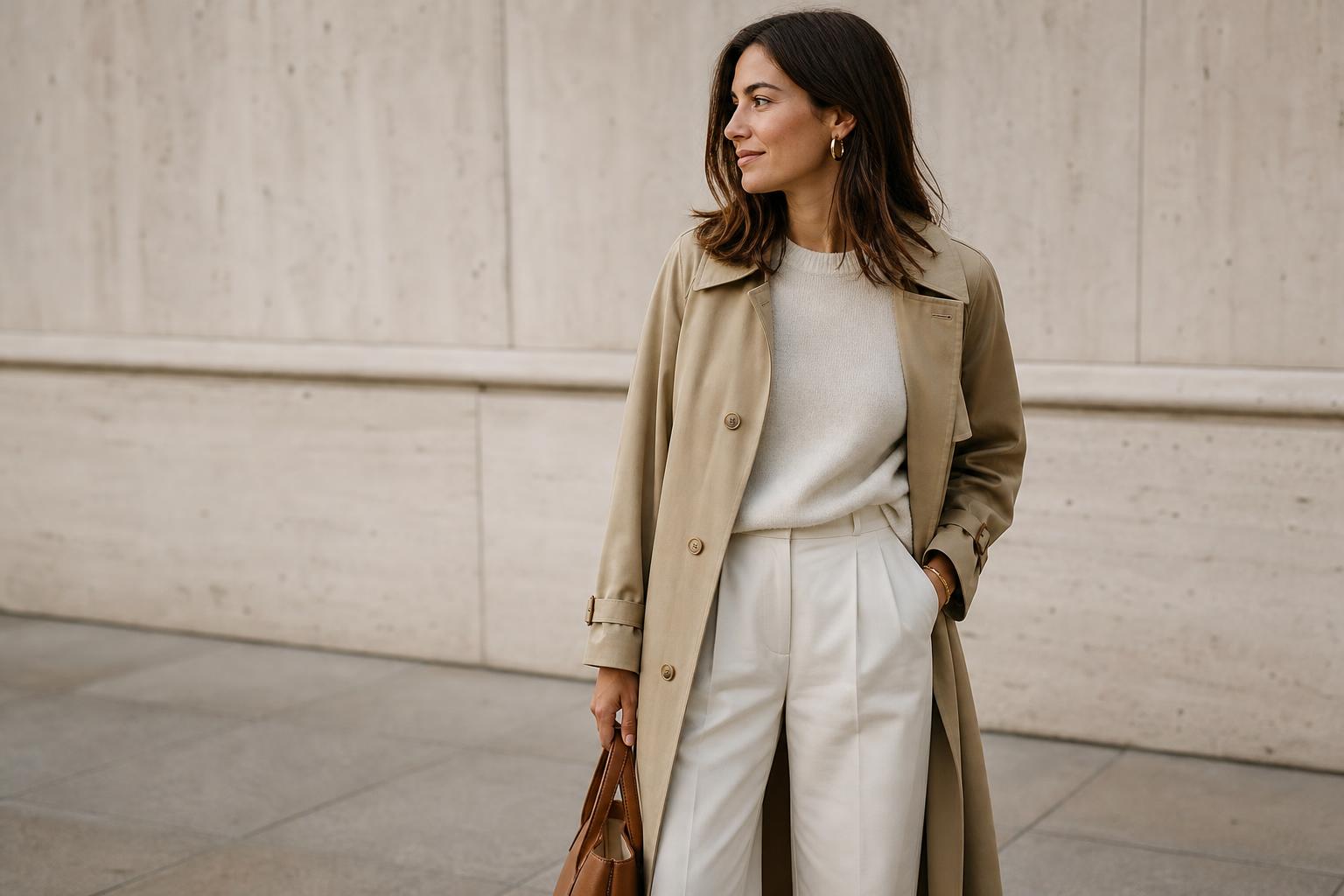
Earth tones bring warmth and softness into a neutral wardrobe without abandoning versatility. Camel, cream, taupe, and selected browns create the kind of palette often associated with timeless neutral outfits and a more relaxed version of quiet luxury. The visual effect is rich, but not loud.
This direction works especially well for readers who find black too severe or stark white too sharp. Earth tones usually create gentler transitions between garments, which can feel more natural for everyday dressing. A camel coat over cream knitwear and taupe trousers has less contrast than black and white, but often more depth than a basic beige-on-beige combination because the temperature shifts are more noticeable.
LooqS.me’s emphasis on camel, cream, and charcoal is useful because it shows how earth tones can still benefit from one grounding darker neutral. That is often the missing ingredient. If every piece is pale and warm, the wardrobe can lose edge. A charcoal knit, darker denim, or a more defined boot adds needed stability.
Style insight: earth-tone wardrobes become strongest when texture is visibly mixed. Linen, wool, and denim each hold warmth differently. Combining them keeps the palette dimensional.
Texture is the difference between bland neutrals and compelling neutrals
When color is restrained, texture takes over part of the styling work. This is why so many discussions of neutrals return to linen, wool, silk, and denim. These fabrics do not simply feel different; they change how the outfit is read. A wool coat gives gravitas. Linen softens the mood. Silk introduces light. Denim keeps the wardrobe grounded.
Staedter Style’s focus on avoiding bland neutrals through texture and accessories is especially practical because it addresses a real issue. Many people build a neutral wardrobe by buying color-coordinated basics, then wonder why the result feels unfinished. The missing factor is often tactile contrast. A cream sweater with tailored trousers looks more complete when paired with leather loafers or a structured bag. A beige outfit becomes more sophisticated when one piece has visible weave, weight, or drape.
How to use fabric strategically
- Linen: ideal for a softer, relaxed neutral palette and warm-weather layering
- Wool: useful for sharper structure and winter depth
- Silk: adds polish and fluid contrast to tailored pieces
- Denim: acts as an accessible grounding neutral in casual and smart-casual outfits
Tip: if an all-neutral outfit feels unfinished, change the texture before changing the color. A structured coat, a heavier knit, or a smoother trouser often solves the issue faster than adding a new shade.
How to build a neutral wardrobe around your actual lifestyle
A neutral wardrobe only performs well if it reflects how you live. The most common mistake is building a beautiful capsule around an imagined life—too many office pieces for a casual routine, too many soft basics for a formal workplace, or too many polished layers for a climate that rarely supports them.
Office, casual, and polished evening settings
For office dressing, start with sharper anchors: blazer, trousers, shirt, refined knit, loafers, and a coat that layers cleanly. Casual wardrobes can place more emphasis on denim, neutral tees, cardigans, and clean sneakers. If your life moves between both, choose hybrid pieces—a blazer that works with denim, trousers that can be worn with a knit, and boots or loafers that hold up in multiple contexts.
For more polished occasions, a neutral wardrobe does not need dramatic reinvention. A silk-like blouse, a tailored black or navy trouser, a coat with cleaner lines, and a more refined shoe usually create enough shift. The benefit of neutrals is that sophistication often comes from edit, not excess.
Seasonal transitions without losing cohesion
Seasonality is one of the biggest opportunities within neutral dressing. Summer neutrals tend to feel lighter through cream, linen, and softer layering. Winter neutrals gain depth through wool, charcoal, darker coats, and heavier knitwear. The palette can stay consistent while the fabric weight changes. That is what keeps the wardrobe coherent across the year.
A practical approach is to keep your anchor colors stable and rotate fabric texture by season. For example, cream and camel can appear in linen and lighter cotton during warmer months, then return in wool, heavier knits, and coats later. This avoids the cost and visual fragmentation of rebuilding the wardrobe every season.
Shopping with intention: affordable and elevated routes
Neutral wardrobes often look expensive because the palette is controlled, but they do not have to be built entirely from premium pieces. In fact, budget-minded capsule advice consistently performs well because practical readers want to know which pieces matter most and where affordability is acceptable.
For U.S. shoppers, accessible brands logically associated with strong neutral assortments include COS, Everlane, and Uniqlo. These names fit naturally into the conversation because they are often linked with capsule-friendly clothing and cleaner palettes. They are useful starting points for foundational pieces such as tees, shirts, knitwear, trousers, and lighter layering items.
On the more elevated side, brands such as Jil Sander and Burberry represent two different ends of premium neutral dressing. Jil Sander suggests cleaner minimalist precision. Burberry is strongly connected to the trench coat, one of the most enduring neutral wardrobe staples. You do not need a fully designer closet to benefit from those references. They help clarify what to invest in: line, fit, and outerwear impact.
Where to save and where to spend
- Save on: basic tees, simple layering tops, selected seasonal knits, casual denim if fit is already reliable
- Spend more carefully on: trench coats, blazers, trousers, boots, and bags that shape the wardrobe’s overall finish
Neutral Nicole’s affordable capsule angle underscores an important truth: restraint helps at every price point. A focused palette prevents waste. Before buying another beige knit, ask whether it adds a new function, a better fit, or a more useful texture than what you already own.
Brand references, designer cues, and why they matter
Many neutral wardrobe articles stay generic, but named brand and designer cues are useful because they sharpen the aesthetic. They show what kind of neutral wardrobe you are actually building. A wardrobe influenced by COS and Everlane may prioritize streamlined basics and practical capsule dressing. A wardrobe inspired by Jil Sander may move toward cleaner lines and stronger minimalism. A Burberry reference immediately points to outerwear structure and the iconic role of the trench coat.
Who What Wear also contributes an important dimension by tying capsule dressing to influencers, designers, and Marie Kondo-style editing logic. That connection matters because a neutral wardrobe is not only about color. It is also about reduction—knowing which pieces create enough outfit variety to justify their place. Named references help translate an abstract aesthetic into recognizable standards.
If you like a softer earth-tone direction, use camel and cream as your visual language. If you prefer a sharper city wardrobe, prioritize charcoal, black, white, and gray. If you want broad versatility, let denim and navy connect the two. The best references do not dictate your wardrobe. They help you see its shape more clearly.
Common neutral wardrobe mistakes that make outfits feel flat
Neutral dressing can look effortless, but the most common mistakes are highly predictable. They usually have less to do with the idea of neutrals and more to do with weak outfit composition.
- Buying every neutral at once. A neutral wardrobe works better when edited around a few anchor colors rather than every possible beige, gray, and cream.
- Ignoring undertones. If the wardrobe feels dull against the skin, the issue may be temperature mismatch rather than lack of style.
- Using only one fabric mood. Too many soft jersey basics can flatten the palette. Mix wool, denim, linen, silk, or leather for depth.
- No grounding piece. A trench coat, blazer, darker knit, or structured shoe often gives the outfit needed definition.
- Over-prioritizing aesthetics over life. A capsule should reflect your routine, not an aspirational wardrobe fantasy.
Destination Iman’s idea of a five-color wardrobe foundation is useful here because it naturally prevents overexpansion. Even if your full closet contains more variation, a core five-color range creates discipline. Once that foundation is reliable, experimentation becomes easier and more coherent.
Easy ways to make a neutral wardrobe feel more personal
One concern with a neutral wardrobe is sameness. The solution is not necessarily adding bright color. Personalization often comes from the way you handle silhouette, layering density, and accessory mood. A relaxed cardigan over denim feels different from a crisp blazer over the same base. Camel boots shift the energy from soft to directional. A scarf can introduce movement without disrupting the palette.
Aure de Corr’s emphasis on effortless neutral outfits and simple foundations points to an important styling principle: the wardrobe should support variation in mood, not just repetition of formula. You can keep the palette nearly identical and still move between minimal, polished, soft, grounded, or quietly luxurious depending on your outerwear, fabric, and shoe choice.
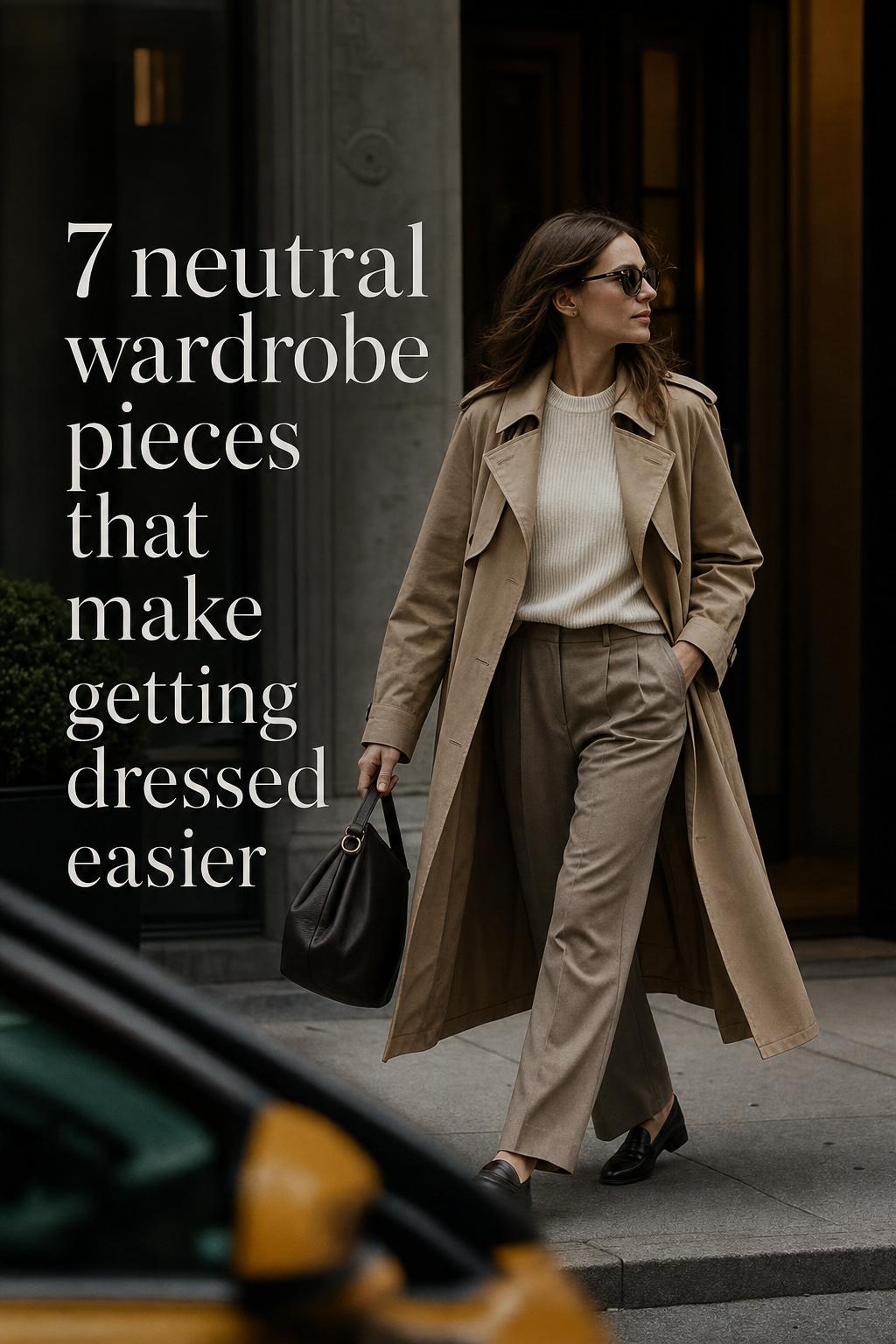
Most versatile item: for many people, it is still the trench coat. It works over denim, tailoring, knits, and dresses. It supports both casual and polished styling. And because it sits in one of the strongest neutral shades—beige or camel—it often links the entire wardrobe visually.
A practical reset if your closet feels disconnected
If your current wardrobe is scattered, the most effective reset is not a full replacement. Start with assessment. Pull out the pieces you wear most, then identify the colors and silhouettes they share. That reveals your natural neutral base more accurately than trend-driven shopping ever will.
- Choose two or three anchor neutrals you already know you wear well
- Add two supporting neutrals that coordinate with those anchors
- Keep only the staples that work across at least three outfit combinations
- Use one outerwear piece and one shoe category as visual constants while rebuilding
This is where capsule wardrobe thinking becomes practical rather than restrictive. You are not limiting style; you are creating a structure strong enough to support repeat wear. A neutral wardrobe built this way usually feels calmer because it removes decision fatigue at the source.
Tip: before buying a new neutral item, test whether it works with your existing coat, trousers or denim, and one pair of everyday shoes. If it only functions in isolation, it is probably not strengthening the wardrobe.
Why the neutral wardrobe keeps returning
Neutral dressing keeps returning because it answers several modern style needs at once. It supports minimalism without requiring severity. It aligns with capsule wardrobe logic without looking repetitive. It can feel relaxed, tailored, affordable, premium, earth-toned, or sharply monochromatic depending on how it is built.
More importantly, it respects real wear. A strong neutral wardrobe understands work, movement, climate, layering, and repetition. It lets a white tee, a blazer, a trench coat, denim, trousers, boots, and loafers keep working season after season because the visual language is stable. The style remains aspirational, but it stays grounded in clothes people actually reach for.
The most compelling neutral wardrobes never look anonymous. They look edited. Once the palette suits your undertone, the textures create contrast, and the staples fit your life, the result is not bland at all. It is precise, adaptable, and quietly strong.
FAQ
What counts as a neutral wardrobe?
A neutral wardrobe is built around easy-to-coordinate colors such as beige, camel, cream, ivory, gray, charcoal, navy, black, white, taupe, and denim. The goal is not owning only one shade family, but creating a palette where most items can be worn together without visual conflict.
How do I build a neutral wardrobe without looking bland?
Use texture, silhouette contrast, and at least one grounding piece in each outfit. Linen, wool, silk, leather, and denim all add dimension, while a blazer, trench coat, darker knit, or structured shoe keeps the outfit from feeling flat. Neutrals look strongest when the fabrics and proportions do some of the visual work.
Do neutrals wash out certain skin tones?
They can, but the issue is usually undertone rather than neutrals themselves. Warm undertones often work better with camel, cream, and warmer beige, while cool undertones tend to suit charcoal, gray, and cooler beige or taupe. Choosing neutrals that align with your undertone usually makes a major difference.
What are the best starter pieces for a neutral capsule wardrobe?
Start with the items that shape the wardrobe most clearly: a trench coat, a blazer, tailored trousers, straight-leg denim, a white or ivory tee, a knit, and one dependable shoe such as loafers or ankle boots. These pieces support the widest range of outfits and create the strongest wardrobe foundation.
How many colors should be in a neutral wardrobe?
A focused core often works best, such as a five-color foundation or two to three anchor neutrals with a few supporting shades. This keeps outfit coordination easy and prevents the wardrobe from becoming cluttered with too many similar tones that do not actually work together.
Can a neutral wardrobe include earth tones?
Yes. Earth tones are one of the most wearable directions within neutral dressing. Camel, cream, taupe, and related warm shades create a softer, richer palette that still functions like a neutral wardrobe, especially when balanced with denim, charcoal, or another grounding darker neutral.
Where can I shop for neutral wardrobe staples in the U.S.?
For accessible capsule-friendly basics, names such as COS, Everlane, and Uniqlo make sense as starting points. For premium references, Jil Sander and Burberry help define what elevated neutral dressing looks like, especially in minimalist pieces and classic outerwear like the trench coat.
Is a 30-piece capsule wardrobe enough?
For many people, yes—if the pieces reflect real lifestyle needs. A 30-piece capsule usually offers enough room for workwear, casual outfits, layering, shoes, and accessories while still creating clarity. The success of the number depends less on strict counting and more on whether each item earns its place through repeat wear.
How do I adapt a neutral wardrobe for different seasons?
Keep your anchor colors consistent and change the fabric weight. Summer neutrals work well in linen, lighter cotton, and softer layers, while winter neutrals gain depth through wool, heavier knits, coats, and darker grounding shades like charcoal or navy. This keeps the wardrobe cohesive year-round.