Deep Autumn Outfits That Feel Modern
Deep autumn outfits that solve the real wardrobe problem
Deep autumn outfits sound simple in theory: rich color, grounded neutrals, a little depth, a little warmth. In real life, this is exactly where many wardrobes become frustrating. The clothes may look beautiful on a hanger, but once you start getting dressed for work, errands, dinner, or a changing day of weather, the palette can suddenly feel heavy, overly serious, or difficult to style without repeating the same formula.
The challenge is rarely the colors alone. It is the combination of depth, texture, silhouette, and practicality. A deep autumn wardrobe often works best when the visual richness is balanced with clean proportions and wearable structure. Without that balance, outfits can feel bulky, flat, or too dense for everyday use.

The good news is that this is a styling problem, not a personal style failure. Once you understand how deep tones interact with shape, fabric, and function, deep autumn outfits become some of the most adaptable and polished combinations you can build. The goal is not to create dramatic looks for their own sake. It is to create outfits that feel grounded, flattering, realistic, and easy to wear repeatedly.
Why deep autumn dressing feels harder than it should
Deep autumn dressing tends to become complicated because the palette naturally carries visual weight. Deeper tones read as more substantial than pale or airy shades, so every styling decision matters more. A dark brown knit with a dark olive trouser and a dark boot can look refined, but it can also feel visually dense if the textures are too similar or the silhouette lacks contrast.
Found the dress? Keep the rest in one place.
Zarellea brings guest details, vendors, timelines, and every next step together — so your wedding plan feels as good as your look.
There is also a practical issue. Many people want these outfits to work across full days rather than single moments. That means the look needs to move well, adapt to indoor and outdoor temperatures, and feel appropriate across different settings. A rich seasonal palette can easily lean too formal for daytime or too casual for a polished environment unless the outfit composition is handled carefully.
Another common difficulty is layering. Deep autumn clothes often show up in textured fabrics and substantial materials, which can be beautiful but also bulky. If every layer is thick, the outfit loses shape. If every piece is soft, the outfit can lose definition. That is why deep autumn styling works best when there is a clear visual anchor, a considered line through the body, and enough tonal variation to keep the look from collapsing into one dark block.

The styling issue is usually proportion, not color
Most deep autumn outfit problems are not caused by wearing the wrong warm, rich shade. They happen because the proportions are unresolved. A long, oversized top with a wide trouser and a heavy shoe creates too much visual volume at once. A fitted top with a structured outer layer and a straighter trouser usually works better because it introduces shape without losing the grounded mood that makes this palette appealing.
The visual logic behind successful deep autumn outfits
The strongest deep autumn outfits rely on a few consistent principles: tonal layering, texture contrast, silhouette balance, and practical functionality. These looks feel polished not because they are complicated, but because each element has a job. One piece provides structure, one introduces softness, one stabilizes the palette, and the accessories prevent the outfit from feeling unfinished.
Tonal layering matters because this palette is naturally rich. Instead of forcing high contrast into every look, deep autumn outfits often feel more elevated when similar tones are layered with slight variation. Think depth rather than sharpness. This creates cohesion while still allowing the eye to register different parts of the outfit.
Texture contrast is what keeps tonal outfits alive. If two pieces are close in color, their surfaces need to behave differently. A matte knit against a smoother trouser, or a more substantial outer layer over a softer base, helps create visual separation. This is especially important in practical daily outfits where the color palette is intentionally restrained.
Silhouette balance is the final factor that makes these outfits wearable. Because deeper shades can make a look feel heavier, the shape should remain readable. That can mean a defined waist, a cleaner shoulder, a straighter pant line, or footwear that visually supports the outfit instead of competing with it.
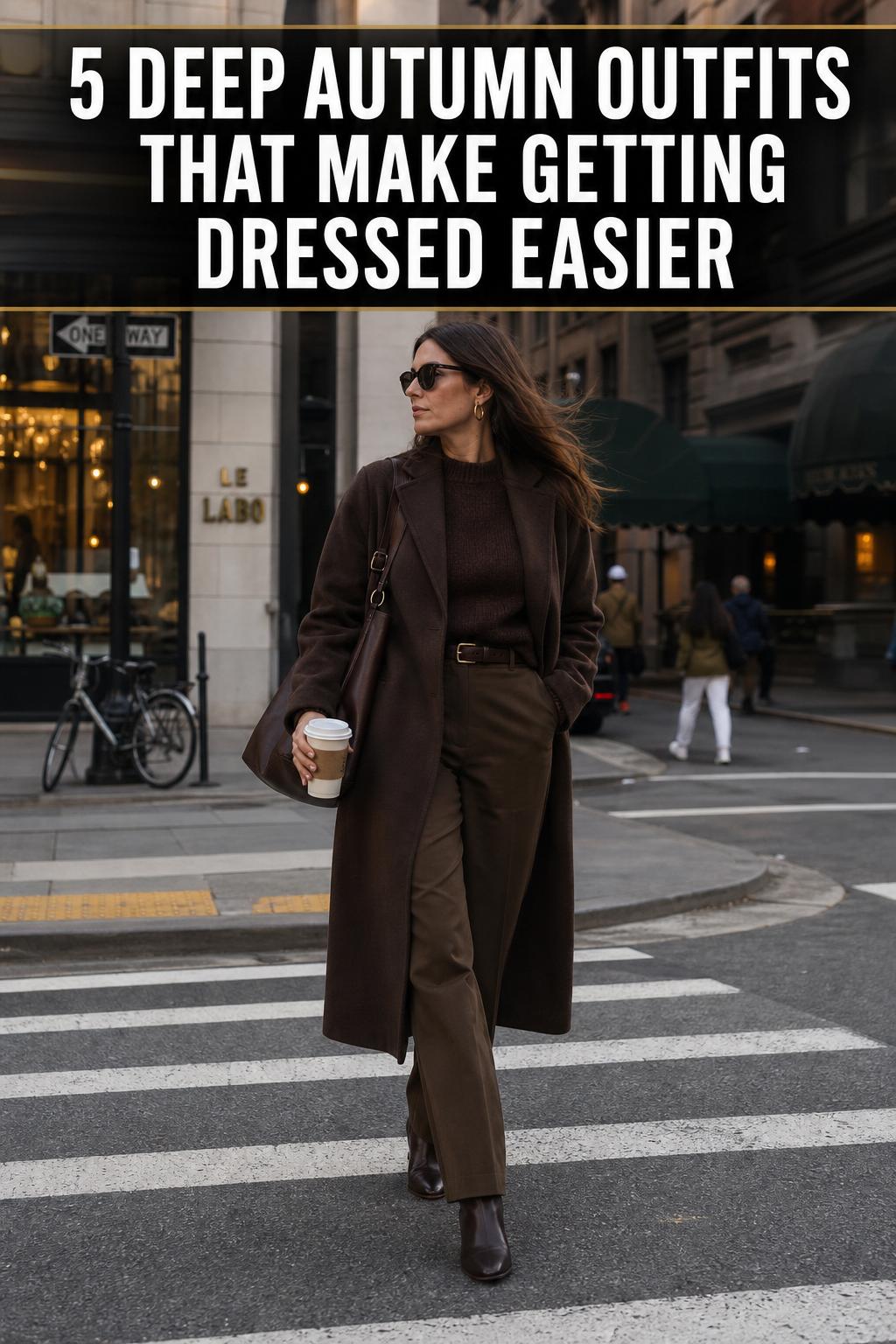
What makes a deep autumn outfit feel polished
- A clear visual anchor, such as a structured jacket, strong trouser line, or substantial shoe
- Enough tonal variation to create depth without fragmenting the palette
- At least one texture shift so the outfit does not appear flat
- Layering that adds function without creating unnecessary bulk
- Accessories that support the color story rather than interrupt it
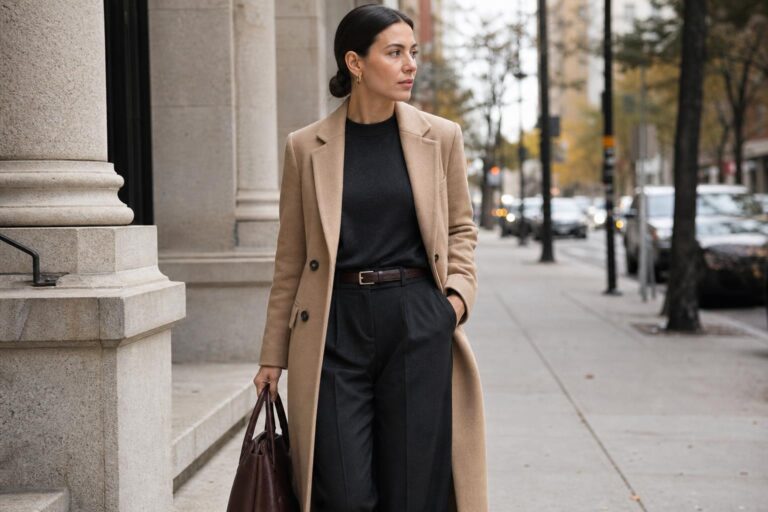
Relaxed layers that still feel polished
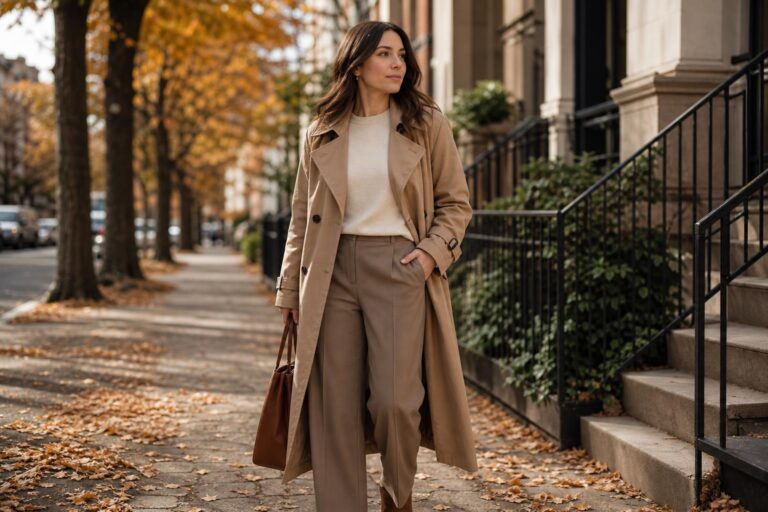
This is one of the most useful deep autumn outfit directions because it solves a common daily problem: wanting to look put together without feeling overdressed. The formula works especially well when your routine includes commuting, sitting for long periods, and moving between indoor and outdoor temperatures.
Start with a soft base layer in a deep, warm tone and build around it with one structured piece. The softness keeps the outfit comfortable and natural, while the structure prevents the palette from becoming too loose or sleepy. A straighter bottom half usually supports this combination best because it gives the layered top section a clean finish.
The visual mood should feel grounded rather than oversized. That distinction matters. Relaxed does not mean shapeless. In deep autumn dressing, some restraint is what makes the rich palette look intentional instead of heavy.
Why this outfit works
The outfit succeeds because it balances softness with line. Deep colors naturally create presence, so the relaxed element needs something sharper to hold it in place. That contrast gives the look enough polish for real life while preserving comfort.
Quick styling adjustment
If the overall look starts to feel too dark, lighten the effect through texture rather than moving away from the seasonal depth. A smoother surface, a slightly more refined finish, or a cleaner neckline can create enough contrast without breaking the palette.
Soft layering without added bulk
One of the most common mistakes in deep autumn dressing is assuming that seasonal richness requires heavy layering. It does not. In fact, many of the most wearable deep autumn outfits use relatively simple layering with thoughtful fabric behavior. The goal is to create warmth and dimension without making the body look overwhelmed.
A strong version of this outfit strategy uses one close-to-the-body foundation layer with a second layer that adds drape rather than stiffness. This creates visual depth while preserving movement. When the outer layer has too much weight and the underlayer is equally thick, the outfit loses flexibility and can feel visually crowded by midday.
The best finishing element here is often a shoe with enough substance to ground the palette but not so much visual heaviness that it drags the silhouette downward. In practical terms, this is the difference between an outfit that feels balanced all day and one that feels tiring after a few hours.

Fabric insight
Soft layering works when the fabrics contribute different roles. One layer should provide definition, while the other adds warmth or movement. If both layers behave the same way, the outfit can blur into a single mass of color and texture.
Common comfort mistake
Adding too many substantial pieces at once often looks appealing in static inspiration imagery but becomes uncomfortable in motion. A more wearable approach is to let one layer do the visual work and keep the rest streamlined.
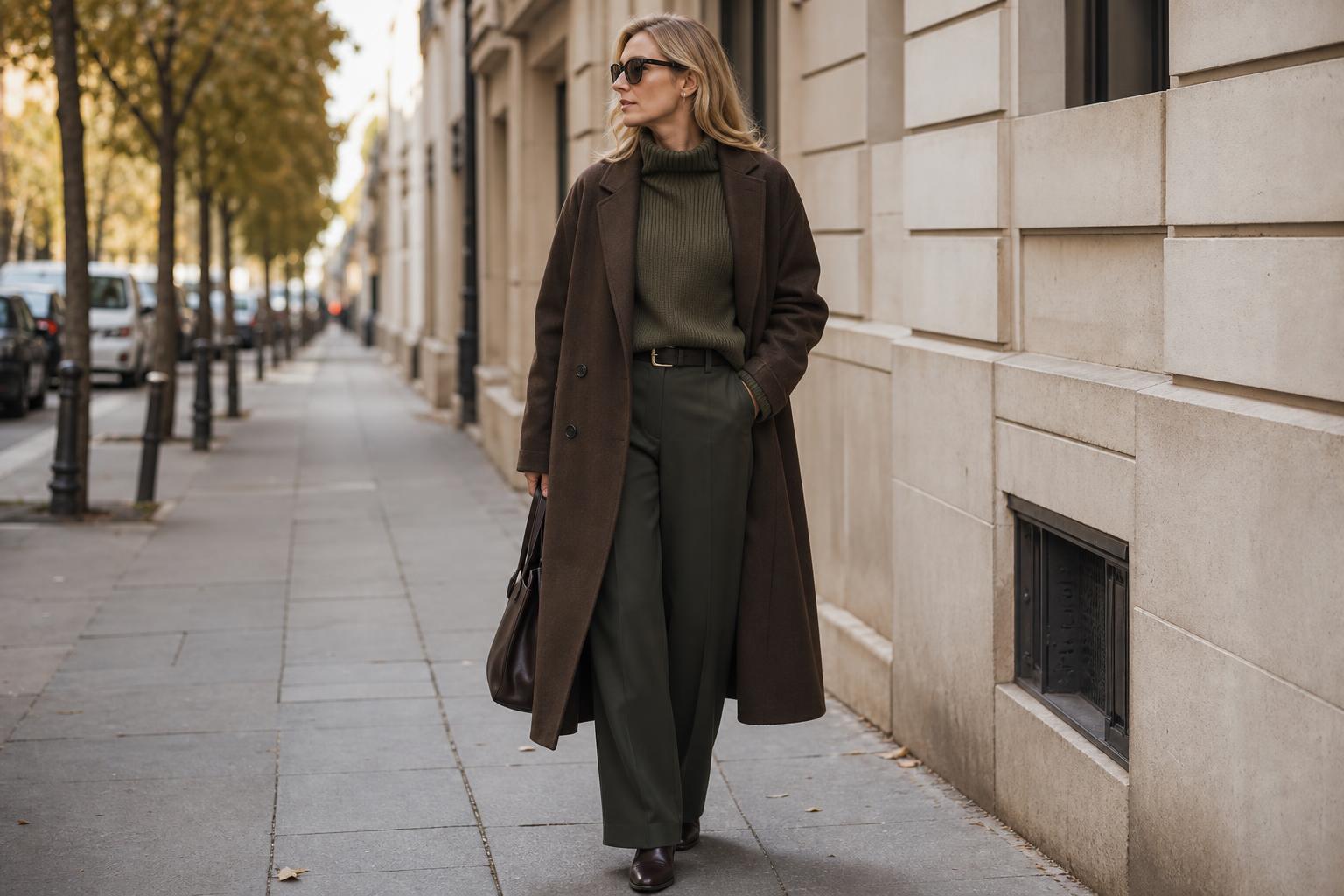
Comfortable city outfits with structure
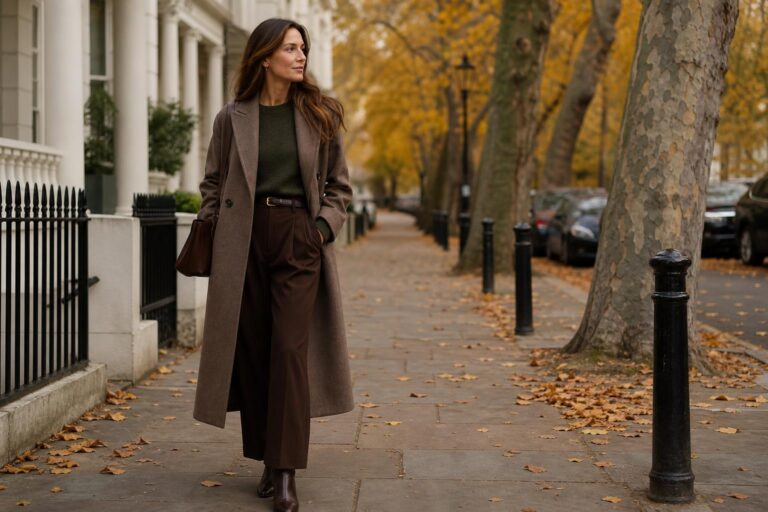
City dressing often exposes the weaknesses in an outfit very quickly. You notice when shoes are impractical, when a layer bunches under outerwear, or when an outfit looked good in the mirror but feels restrictive by the second half of the day. Deep autumn outfits for city life need structure, but they also need ease.
The most effective formula combines a clean vertical line with one grounded statement element. That statement does not need to be loud. In a deep autumn palette, a strong outer layer, a defined trouser shape, or a substantial accessory can serve as the focal point. The rest of the outfit should support it through tonal harmony and clean composition.
This type of look is especially useful for people who want their outfits to appear considered without feeling fragile. Deep autumn dressing can be extremely elegant in urban settings because the palette already has authority. The key is preventing that authority from becoming stiffness. Slight ease in the silhouette keeps the outfit modern and wearable.
Best shoe pairing
The best shoe is one that echoes the grounded quality of the palette while still supporting movement. In structured city outfits, footwear should feel visually integrated rather than decorative. When the shoe is too light in appearance, the outfit can lose cohesion. When it is too heavy, the entire look may feel bottom-weighted.
Most versatile piece
A structured outer layer is often the hardest-working part of this wardrobe category. It sharpens softer pieces, stabilizes deep tones, and makes repeated outfit combinations feel more intentional.
Elevated casual looks that do not rely on contrast
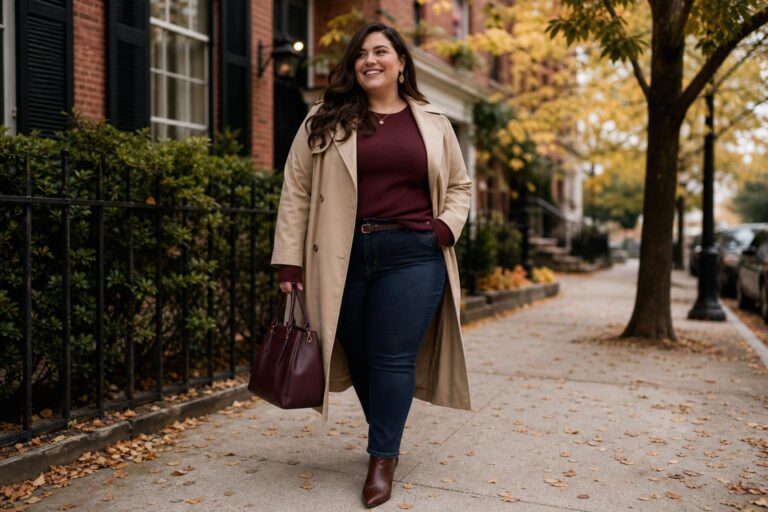
Many people try to brighten deep autumn outfits by adding stark contrast, but that is not always the most flattering or wearable route. Elevated casual dressing often looks stronger when the outfit stays within a related range of depth and warmth, then uses shape and finish to create interest.
This is where tonal dressing becomes especially useful. Instead of asking one item to carry the whole outfit, the entire composition works together. A richer top tone paired with an equally grounded but slightly different lower tone creates depth without visual conflict. The result feels intentional, easy, and polished.
For everyday wear, this approach is practical because it makes repeating pieces simpler. Once your wardrobe works tonally, you can rotate familiar items into different combinations without each outfit feeling identical. Deep autumn dressing becomes less about finding the perfect statement look and more about building reliable visual harmony.
How to make the outfit feel more elevated
Refine the finish rather than overcomplicating the styling. Cleaner lines, a more intentional sleeve shape, and accessories that echo the same depth of tone usually do more for the outfit than adding extra pieces.
When the palette starts to feel too dark
This is one of the most specific issues with deep autumn outfits. The colors are attractive, but the final look can sometimes feel visually closed in. The solution is not to abandon the depth that defines the palette. It is to distribute it more intelligently.
Start by checking where the darkest visual weight sits. If the deepest tone appears on the top, bottom, outer layer, and shoe, the outfit may feel overly concentrated. Shifting one area into a softer but still warm tonal neighbor creates relief. This keeps the outfit within the same family while opening the composition.
Another effective adjustment is changing the role of texture. A look dominated by matte, dense surfaces can feel much darker than an outfit built from the same color family with more variation in finish. The change is subtle, but it has a major effect on wearability.
Tips for keeping depth without heaviness
- Break up large areas of the same deep tone with a clear shift in texture
- Keep at least one part of the silhouette clean and lightly defined
- Use accessories to reinforce cohesion instead of adding unrelated contrast
- Let one piece hold the visual depth while the others support it
- Avoid making every item equally oversized or equally substantial
Deep autumn outfits for changing temperatures
Transitional weather is where a lot of seasonal outfit ideas fall apart. A look can seem balanced in the morning and become uncomfortable by afternoon. Deep autumn outfits need adaptability because the palette often appears in pieces that are more substantial, layered, or textured.
The smartest strategy is modular dressing. Build the outfit so one layer can be removed without leaving the remaining look incomplete. This matters both visually and practically. If the base layer is too thin or too casual compared with the outer layer, removing one piece can make the whole outfit feel unresolved.
A well-composed transitional outfit usually includes a strong center: a top and bottom combination that already looks finished on its own. The outer layer then adds seasonal depth, warmth, and structure rather than serving as a disguise for an underbuilt look.
Transitional weather tip
If you know you will move between cool and warm environments, prioritize breathable layering over dramatic layering. One effective outer layer over a stable base is generally more useful than stacking multiple medium-weight pieces.
Making deep autumn outfits work for different routines
The success of these outfits depends on context. A look that feels ideal for a desk-based day may not work for long walks, travel, or an event with a stricter dress expectation. That is why deep autumn styling should begin with routine, not aesthetics alone.
For work-oriented dressing, cleaner lines and a more defined visual anchor tend to work best. They keep the rich palette from reading overly casual. For weekends, softness and tonal ease can take more of the lead, but the silhouette still needs some control. For evening plans, the same palette often looks stronger when the outfit is simplified rather than embellished. Depth already creates impact.
This flexibility is one of the real strengths of deep autumn outfits. The palette can move across settings effectively, but only if the styling adjusts to the demands of the day. A practical wardrobe does not ask every garment to do every job. It uses the same visual language in smarter combinations.
Easy ways to recreate the look from your closet
- Pair your deepest item with a supporting tone rather than another identical depth
- Add one structured layer to refine softer separates
- Use one substantial shoe to ground the look instead of piling on heavy layers
- Repeat tones across accessories to make the outfit feel intentional
- Remove one extra styling element if the look starts to feel dense
The body-shape factor people often ignore
Deep autumn outfits are often discussed only in terms of color, but silhouette placement matters just as much. Because the palette carries natural depth, garment shape becomes more noticeable. If the proportions are off, rich tones can emphasize imbalance rather than elegance.
For some people, that means keeping volume concentrated in one area rather than spreading it everywhere. For others, it means using a straighter line to offset softness. The practical principle is simple: decide where the outfit should have presence and where it should recede. A successful deep autumn look rarely asks every piece to command attention at the same time.
This is also why outfit repetition should not be dismissed. Once you find a silhouette formula that works with your frame and your routine, deep autumn dressing becomes much easier. Repeating a proven shape in different tonal combinations is often more effective than constantly experimenting with entirely new structures.
Common styling traps that make the palette harder to wear
There are a few recurring mistakes that make deep autumn outfits feel more difficult than they need to be. Most of them come from overcommitting to mood and underthinking wearability.
- Using too many heavy textures at once, which creates bulk and visual fatigue
- Keeping every piece in the exact same depth, which flattens the outfit
- Choosing shoes that fight the silhouette instead of grounding it
- Adding layers without considering movement, warmth, or indoor comfort
- Relying on statement elements when the outfit actually needs cleaner structure
What works better is usually more edited. Deep autumn dressing benefits from intention. Rich color already does part of the styling work, so the rest of the outfit can remain calm, functional, and precise.
Tip
If an outfit feels slightly off, do not automatically add something. First remove one element and see whether the look gains clarity. Deep palettes respond especially well to subtraction.
Building a repeatable deep autumn outfit formula
The most useful way to approach deep autumn outfits is to create a repeatable formula rather than chase endless variety. A reliable outfit formula saves time, reduces decision fatigue, and makes the wardrobe feel more cohesive. It also helps maintain consistency across different routines and weather conditions.
A strong formula usually includes four parts: a base that sits comfortably against the body, a second piece that defines the silhouette, an outer or finishing element that acts as the visual anchor, and footwear that supports the overall depth of the outfit. Once those four roles are clear, the individual items can change without the styling logic collapsing.
This method is especially effective for people who want deep autumn outfits to feel elegant but not costume-like. The palette becomes part of daily life instead of a special styling exercise. That is the point where seasonal dressing becomes genuinely wearable.
A practical formula to use repeatedly
- Begin with a comfortable, deep-toned base layer
- Add a piece that gives the body line and proportion
- Use one structured or visually substantial layer as the anchor
- Finish with shoes and accessories that reinforce the tonal direction
- Edit the outfit until it feels balanced rather than overloaded
The editorial approach that makes deep autumn feel modern
The most modern deep autumn outfits are not the busiest ones. They are the ones that understand restraint. Rich, warm depth already brings visual identity, so the styling does not need to force impact through excess layering, exaggerated contrast, or too many focal points.
What reads current is clarity: intentional proportion play, tonal coherence, and texture contrast that feels considered rather than accidental. These are not abstract styling ideas. They are practical tools that help an outfit survive a full day while still looking composed.
That is ultimately why deep autumn outfits can be so satisfying when they are done well. They do not rely on novelty. They rely on depth, consistency, and a strong understanding of what makes clothes work in motion, in changing temperatures, and in real routines.

FAQ
What are deep autumn outfits supposed to look like?
Deep autumn outfits usually feel rich, warm, grounded, and visually substantial. The strongest versions use depth in a controlled way, balancing tonal layering, texture contrast, and clear silhouette structure so the final look feels polished rather than heavy.
How do I keep deep autumn outfits from looking too dark?
Use variation within the same tonal family instead of dressing in one uninterrupted dark block. A slight shift in depth, a cleaner silhouette line, or a change in texture can keep the outfit visually open while preserving the richness that makes the palette work.
Why do some deep autumn outfits feel bulky?
Bulk usually comes from stacking too many substantial layers or combining pieces with similar weight and shape. Deep tones already add visual density, so the outfit needs at least one area of clean structure and some fabric contrast to stay balanced.
Can deep autumn outfits work for casual everyday wear?
Yes, but they work best when the styling is edited. Instead of relying on dramatic contrast or too many statement pieces, keep the look tonal, use one structured anchor, and let the rest of the outfit stay comfortable and easy to move in.
What is the easiest deep autumn outfit formula to repeat?
A reliable formula is a deep-toned base, a piece that gives shape, one structured layer as the visual anchor, and grounded footwear. This approach creates a consistent framework that can be adapted for work, weekends, or transitional weather.
How should I layer deep autumn outfits for changing temperatures?
Build the outfit so the base already looks complete before the outer layer goes on. That way, removing a layer does not make the outfit feel unfinished. One effective outer piece over a stable foundation is usually more practical than multiple medium-weight layers.
Do deep autumn outfits need a lot of contrast to feel interesting?
No. Many of the most refined deep autumn outfits rely on tonal dressing rather than sharp contrast. Interest comes from proportion, finish, and texture variation more than from introducing unrelated color breaks.
What is the biggest mistake people make with deep autumn outfits?
The biggest mistake is treating richness as a reason to add more of everything. Too many heavy textures, too much visual weight, and too many competing layers can make the outfit feel dense. A more successful approach is to edit carefully and let the palette do some of the work.
How can I make deep autumn outfits feel more flattering on my body type?
Focus on where you want visual emphasis and where you want ease. Because deep tones are naturally noticeable, shape placement matters. Keep volume intentional, use cleaner lines where needed, and repeat silhouette formulas that already work well on your frame.
Are deep autumn outfits practical enough for a full day?
They can be very practical when they are built with movement, temperature changes, and routine in mind. The most wearable versions combine tonal richness with breathable layering, stable proportions, and footwear that supports both the look and the day itself.