Warm Autumn Outfits With Quiet Luxury Appeal
Autumn style becomes most interesting when warmth is not just about temperature, but about visual character. That is why warm autumn outfits hold such specific appeal. They sit at the intersection of earthy color, practical layering, and a kind of polished ease that feels richer than basic fall dressing but more wearable than trend-led styling.
People often group all autumn outfits together, yet the difference between a generic fall look and a true warm autumn wardrobe is easy to see once you know what to look for. The palette leans into camel, rust, olive, chocolate brown, burgundy, terracotta, moss, and cognac rather than stark contrast or icy tones. The fabrics tend to feel grounded too: knitwear, suede, leather, wool, trench fabrics, and soft layers that create depth without visual noise.

What makes this approach especially relevant now is how well it adapts to real life. A warm autumn palette works for capsule dressing, for transitional weather, for city wardrobes, and for those who want outfits that feel intentional from work to weekend. The mood is approachable, but the styling logic is refined.
The visual identity of warm autumn dressing
Warm autumn dressing is not just about wearing seasonal colors. It is a visual system built around harmony. Warm undertones are the foundation, and everything else follows from that: the softness of the palette, the richness of the textures, and the way layers create dimension rather than contrast. A warm autumn outfit usually looks cohesive because the pieces relate to one another tonally.
Found the dress? Keep the rest in one place.
Zarellea brings guest details, vendors, timelines, and every next step together — so your wedding plan feels as good as your look.
This is why earthy tones are so central. Camel, tan, rust, olive, mustard, terracotta, forest green, maroon, burgundy, cream, and chocolate brown do more than signal autumn. They create a grounded mood. Instead of looking sharp or high-contrast, these colors feel blended, warm, and slightly muted. That tonal quality gives the outfit its calm confidence.
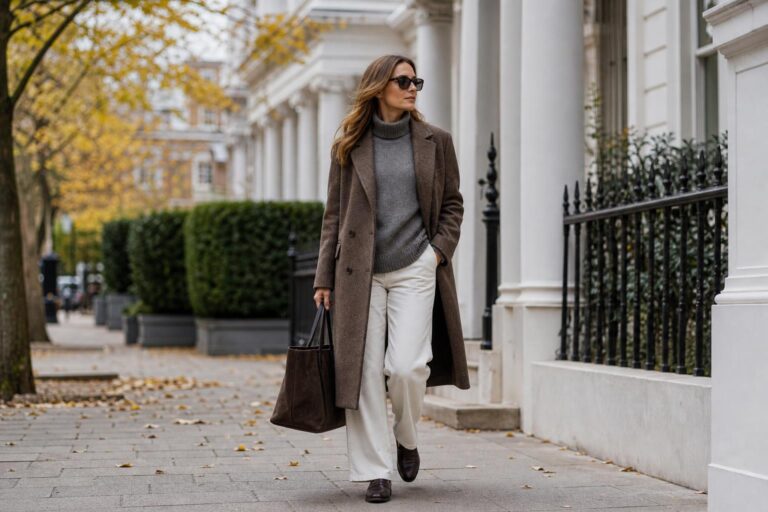
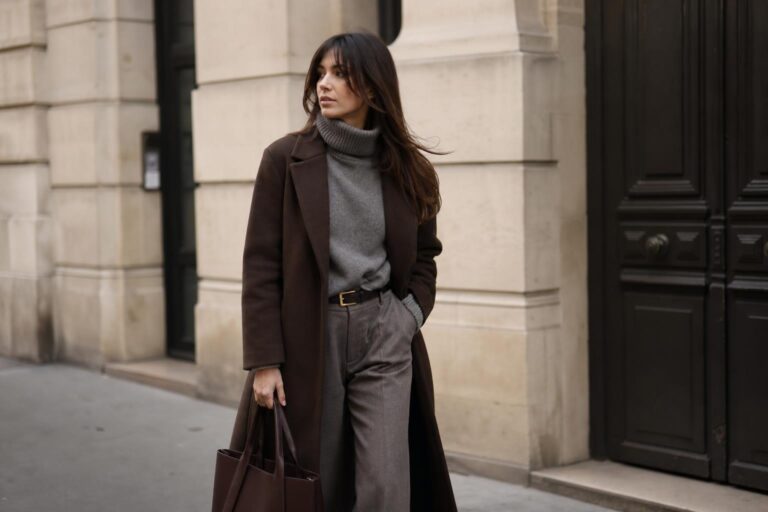
Silhouette also matters. Warm autumn outfits often rely on relaxed structure rather than severe tailoring. A wool coat over a knit dress, a leather jacket with denim, or a cardigan layered over a dress all create shape without rigidity. The result is polished but not stiff, practical but still visually rich.
Why this aesthetic feels different from generic fall style
Many fall outfits are built around weather alone. Warm autumn outfits are built around mood, proportion, and undertone. A black coat and white sneakers may work for autumn in general, but a cognac boot, olive wool layer, or rust knit creates a warmer visual rhythm. That shift changes the entire impression of the outfit. It feels more integrated, more textural, and often more flattering on those drawn to warm undertone fashion.

Understanding the warm autumn palette without making it rigid
The warm autumn palette is often explained through color analysis, but in wearable terms, it simply means choosing shades that echo warmth rather than coolness. Olive instead of icy sage, cognac instead of blue-toned beige, cream instead of crisp optic white, terracotta instead of fuchsia-toned red. These choices soften the outfit and make layering easier because the pieces naturally blend.
Warm undertone styling works best when the wardrobe has a few anchor neutrals. Camel, tan, cream, chocolate brown, and olive are especially effective because they support both casual and workwear combinations. Once those are in place, accent colors such as rust, burgundy, mustard, forest green, emerald, moss, and maroon can bring depth without overwhelming the look.
The key visual difference
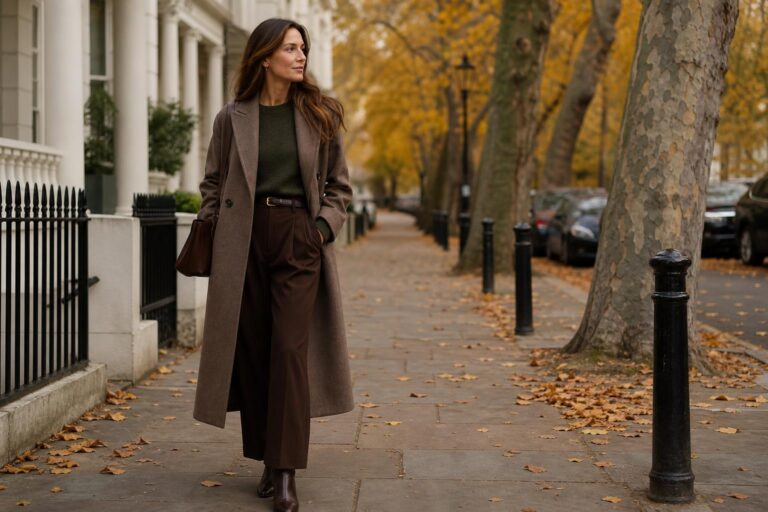
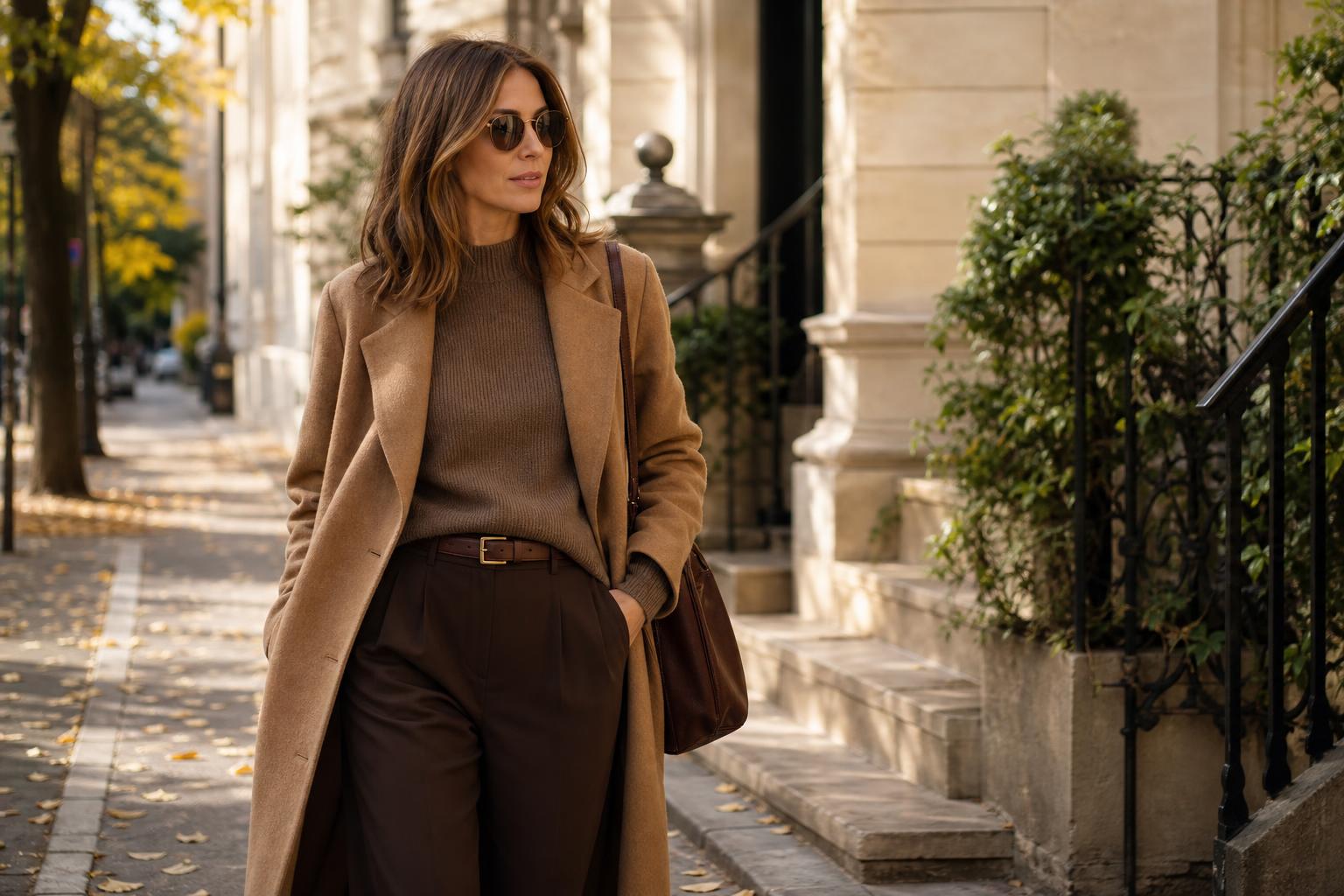
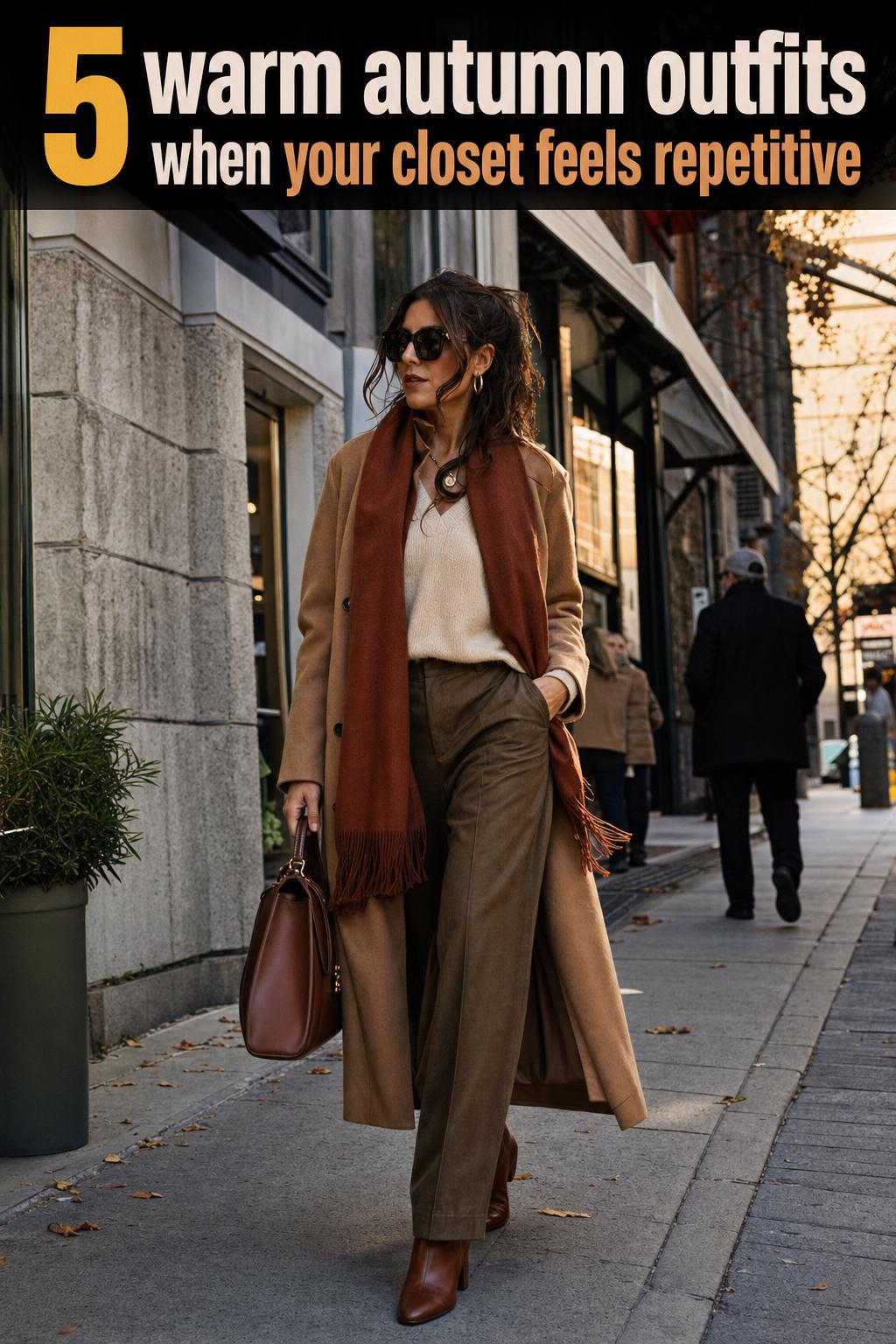
The distinction is not only color choice, but how those colors are distributed. In the strongest warm autumn outfits, one shade usually anchors the look while one or two related tones create movement. For example, olive trousers with a cream knit and cognac boots feel composed because the colors move from soft to rich without clashing. The same principle applies to rust knit dresses with brown outerwear or burgundy trousers with camel layers.
- Camel and cream create a soft, elevated neutral base.
- Olive and brown offer depth without the heaviness of black.
- Rust and terracotta bring warmth forward and work especially well in knitwear.
- Forest green or emerald sharpen the palette while staying grounded.
- Gold jewelry reinforces warmth and finishes the outfit with subtle light.
There is also room for flexibility. Warm autumn does not require every piece to match perfectly. It asks for tonal intelligence. If the outfit feels blended, earthy, and warm rather than cold or highly contrasted, it is moving in the right direction.
The pieces that make warm autumn outfits feel complete
A strong warm autumn wardrobe is less about quantity and more about the right categories. The top-performing outfit guides consistently center knitwear, coats, jackets, boots, dresses, trousers, and practical accessories. These are the pieces that carry both the palette and the season.
Knitwear as the soft structure
Sweaters and cardigans are the core of the look because they bring both warmth and texture. Merino, cashmere, and alpaca blends are especially useful when you want insulation without bulk. In visual terms, knitwear softens the outfit composition. It can make leather feel less hard, balance denim, and create tonal layering under a trench or wool coat.
A rust sweater with olive trousers gives a more expressive version of warm autumn. A cream merino knit with brown pants feels quieter and more capsule-oriented. Both work because the styling principle is the same: rich warmth, gentle contrast, and texture that reads seasonally appropriate.
Outerwear as the visual anchor
Coats and jackets often define the outfit before the knit or trousers do. That is why trench coats, wool coats, leather jackets, wax jackets, and structured outerwear appear so often in autumn styling. A coat is not just practical coverage. It sets the line, weight, and mood of the look.
A trench coat in camel reads polished and urban. A leather bomber or leather jacket gives more edge and works well with denim and boots. A wax jacket, the kind seen in celebrity autumn weather styling around figures like Helen Skelton, shifts the outfit toward country practicality and weekend ease. Each outerwear choice changes the tone even when the color palette stays warm.
Boots, trousers, and dresses that carry the palette
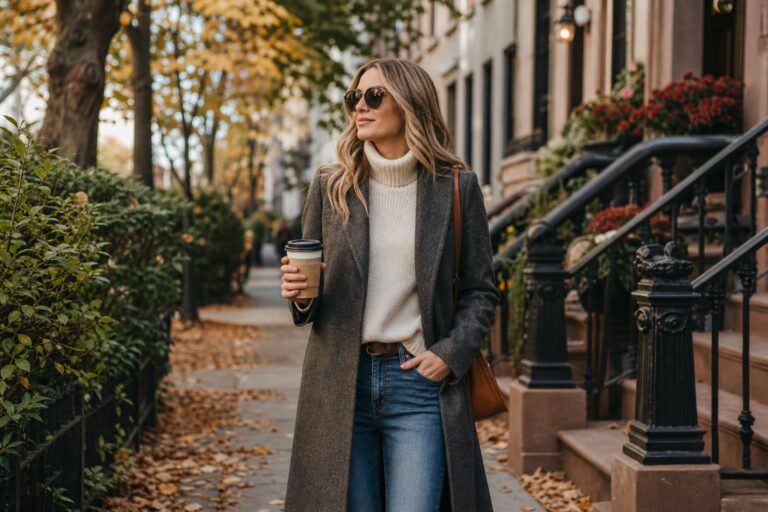
Bottom-half styling is often where warm autumn outfits succeed or fail. Brown, olive, tan, burgundy, and rust trousers make the palette feel complete in a way standard blue denim or stark black often cannot. That does not mean denim is excluded. It means denim usually works best when surrounded by warmer supporting pieces such as a cognac boot, camel cardigan, or olive jacket.
Boots are equally important. Ankle boots create a cleaner, more relaxed line with trousers and midi dresses, while knee-high boots add stronger vertical structure and pair especially well with knit dresses and coats. Footwear in cognac, chocolate brown, or tan keeps the outfit aligned with the overall warmth.
Layering is where the warm autumn aesthetic becomes fully visible
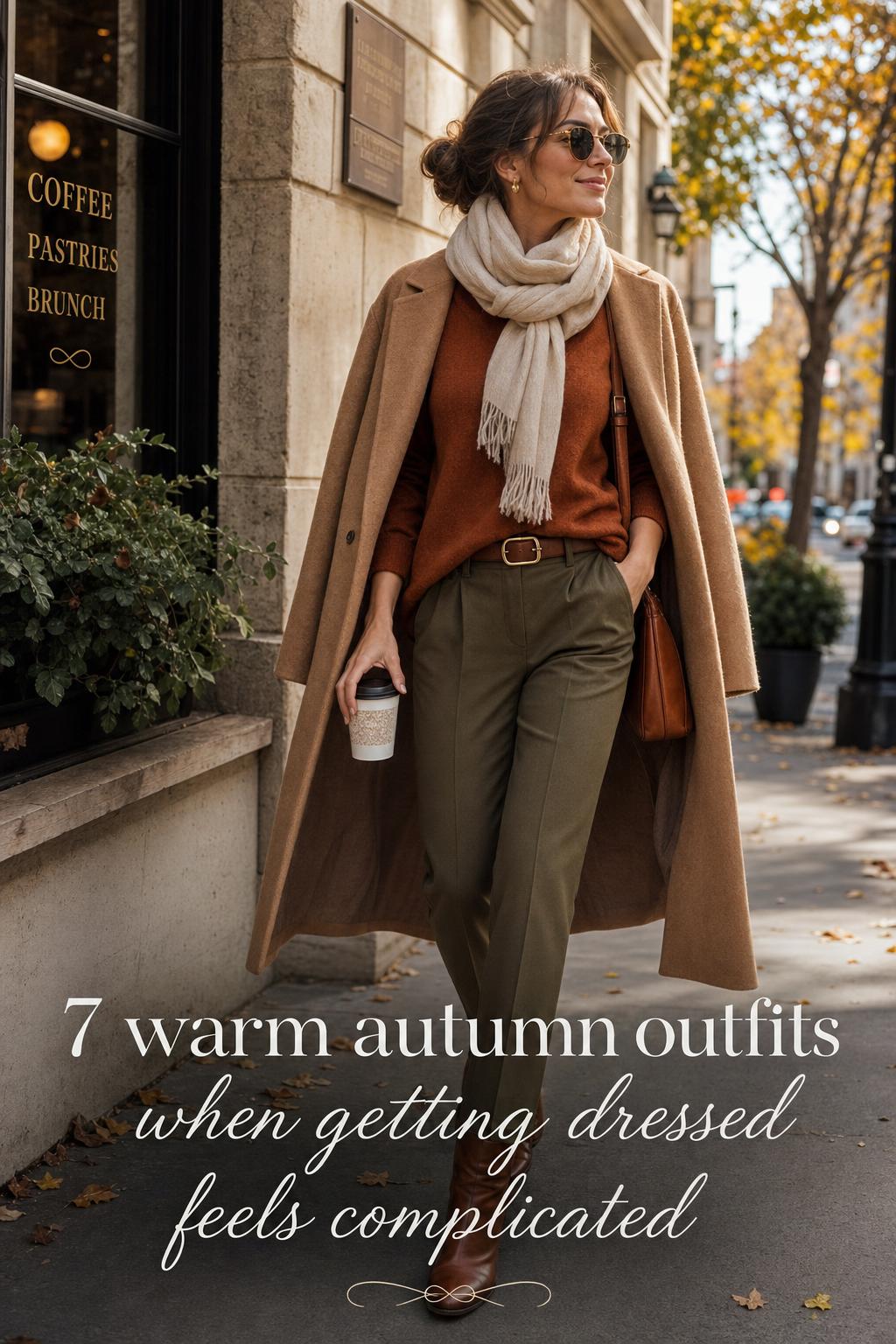
Layering is not only a seasonal necessity. In warm autumn dressing, it is the main styling device. It builds depth through fabric, controls proportion, and allows multiple earthy tones to appear in one outfit without feeling overdone. The best layered outfits look deliberate because each piece plays a distinct role.
The three-part layering logic
A practical way to build these outfits is through a base layer, a mid-layer, and an outer layer. The base can be a long-sleeve top, knit dress, or light sweater. The mid-layer adds softness or structure, often through a cardigan, blazer, or heavier knit. The outer layer then provides shape and weather protection through a trench, wool coat, leather jacket, or wax jacket.
This system works because it prevents bulk from sitting in one place. Instead of one heavy item dominating the look, warmth is distributed across the outfit. Visually, that creates a smoother silhouette. Functionally, it also adapts better to fluctuating temperatures during early and mid autumn.
Texture mixing and why it matters
Warm autumn outfits rarely rely on flat surfaces alone. Texture is part of the identity. Knit with leather, suede with denim, wool with smooth trousers, or a satin-adjacent finish under a matte coat all create interest while staying within the same tonal family. This is one reason these outfits photograph well and feel elevated without needing loud details.
Leather sharpens a soft knit. Suede deepens the earthy mood. Wool adds volume and autumn authority. Cashmere and merino refine the outfit because they drape more smoothly than heavier sweater constructions. The most successful combinations use one textured statement and one quieter supporting texture rather than too many competing finishes.
Tips for layered warmth that still looks polished
- Keep the lightest color near the face if you want the outfit to feel brighter and more open.
- Use one strong warm tone, such as rust or burgundy, and let the rest of the outfit sit in neutrals.
- Choose a coat length that complements the outfit under it, especially with midi dresses and knee-high boots.
- If the knit is bulky, keep the outerwear more streamlined so the silhouette stays balanced.
- Add scarves or gold jewelry as finishing pieces rather than as competing focal points.
How different settings change the mood of warm autumn outfits
One reason this aesthetic remains useful is that it adapts well across occasions. The same palette can read casual, work-ready, or evening appropriate depending on silhouette, finish, and outerwear. The styling shift is less about buying entirely separate wardrobes and more about changing the visual hierarchy of familiar pieces.
Casual looks with ease rather than carelessness
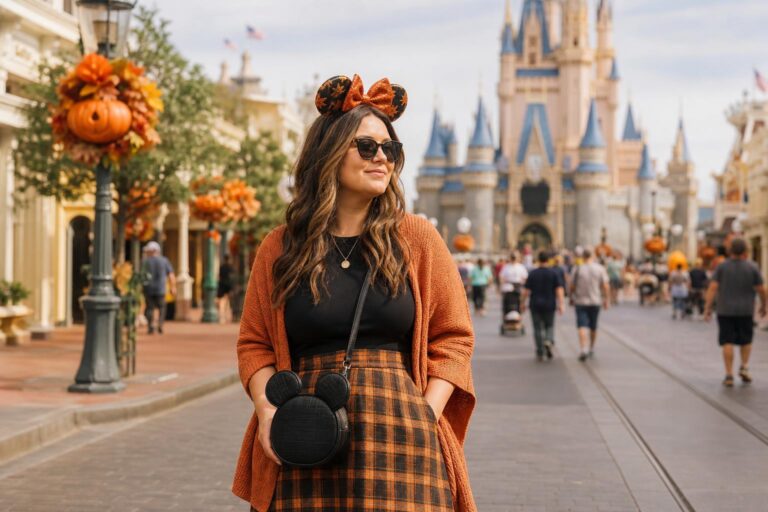
Casual warm autumn outfits usually center on knitwear and denim or simple trousers, but the strongest versions avoid looking random. A sweater with denim becomes more intentional with a leather jacket and cognac boots. A dress with cardigan feels more composed when both pieces stay within the same warm tonal family. Even a basic autumn outfit gains more visual identity when olive, camel, or chocolate brown replaces generic neutrals.
This is also where transitional pieces matter. Early autumn often calls for long sleeves, light jackets, and layer-friendly combinations rather than full heavy outerwear. A denim jacket over a knit dress or a lightweight jacket over a rust top and tan trousers bridges the summer-to-fall shift without losing the autumn mood.
Workwear that feels warm, not dull
Workwear in this palette tends to look especially strong because warm neutrals hold structure well. Cream knitwear under a blazer, olive or brown trousers, and ankle boots create a polished silhouette that still feels seasonal. A camel trench over a sweater and tailored pants offers another version of autumn professionalism that reads softer than stark monochrome dressing.
The key is restraint. For office settings, let the warmth come through fabric and tone rather than too many competing colors. Burgundy trousers with a cream knit and brown outerwear feel intelligent and composed because the shades support each other rather than fight for attention.
Evening styling with richer contrast
Evening warm autumn outfits often lean deeper and glossier. Forest green, emerald, burgundy, and chocolate brown become more prominent, and texture contrast becomes more visible. A knit dress with knee-high boots and a tailored coat has an elegant severity that still fits the warmth of the palette. Leather details and gold jewelry can sharpen the look without making it feel cold.
This is where proportion play becomes important. If the color story is deep, the silhouette should remain clean. Too many heavy layers can make evening dressing feel weighed down. A simple column shape with one statement outer layer usually performs better than multiple bulky pieces.
Color pairings that make warm autumn outfits instantly more refined
Not every warm color combination has the same effect. Some pairings feel soft and understated, while others create more definition. Knowing the difference helps you shape the mood of the outfit rather than simply matching tones.
- Rust with teal creates a richer, more expressive autumn contrast.
- Cognac with cream looks polished and expensive because one tone grounds while the other lifts.
- Maroon with brown deepens the palette and works well in evening or workwear looks.
- Olive with camel feels practical, urban, and highly wearable for daytime.
- Forest green with cognac gives a sharper, slightly more directional finish.
These pairings work because each one balances temperature and visual weight. Cream prevents deep shades from becoming heavy. Cognac adds warmth without flattening the look. Olive acts like a neutral but has more personality than beige alone. Burgundy and maroon add gravity, especially in trousers, boots, or outerwear.
The role of accessories
Accessories often decide whether the outfit reads thoughtfully warm or just generally seasonal. Gold jewelry reinforces undertone. Scarves can either soften a structured coat or introduce another earthy accent. Belts help define shape when layering gets heavier. A handbag in brown, cognac, or tan usually integrates more smoothly than a stark contrast bag in a cool shade.
That said, restraint matters. Accessories should reinforce the palette, not overcrowd it. In a texture-rich autumn outfit, one scarf and one jewelry note often do more than multiple decorative elements competing for attention.
From capsule logic to daily wear: building a wardrobe that repeats well
The strongest warm autumn wardrobes are modular. Pieces repeat across multiple contexts without looking repetitive because the palette offers natural variation. This is why capsule wardrobe thinking works especially well here. When coats, knitwear, trousers, dresses, and boots all speak the same warm language, getting dressed becomes easier and the outfits look more intentional.
A practical capsule does not need to be large. It needs a clear foundation. Start with a small group of neutral anchors, then add a few richer accent tones. This allows casual, work, and evening combinations to emerge from the same wardrobe base.
A wearable capsule framework
- Two to three coats or jackets, such as a trench, wool coat, and leather or wax jacket
- Several knitwear options across cream, camel, rust, or olive
- Trousers in brown, olive, tan, or burgundy
- One or two dresses, especially knit dresses for layering ease
- Boots in ankle and knee-high silhouettes
- A small accessories group including scarves, belts, handbags, and gold jewelry
This structure supports outfit repetition without visual sameness. A camel coat can move from workwear with brown trousers to weekend wear with denim. A rust knit can sit under a trench one day and under a leather jacket the next. The formula changes, but the visual identity stays stable.
Regional and climate-aware styling: where warm autumn outfits need adjustment
Autumn does not feel the same across the United States, and that matters. A layered look that works in New York City may feel too heavy in Los Angeles. A San Francisco outfit may need more wind-conscious outerwear, while a Chicago wardrobe often depends on stronger coat strategy earlier in the season. Climate changes the weight of the outfit, but it does not have to change the aesthetic.
In warmer or mild autumn conditions, lightweight knits, scarves, light jackets, and transitional pieces carry the look. This is where long sleeves, softer cardigans, and thinner layers perform best. In windier or cooler urban settings, outerwear becomes more important and the outfit composition often depends on a coat, trench, or jacket to create both warmth and visual structure.
Tips for practical adaptation
- For mild autumn weather, build around lightweight knits and a removable jacket rather than one heavy coat.
- For windy conditions, a trench or wax jacket creates better function while still fitting the palette.
- For cooler days, use merino or alpaca blends as invisible warmth layers under outerwear.
- In humidity, smoother knits and lighter layering often hold shape better than very bulky sweaters.
- When temperatures fluctuate, keep the strongest color in the inner layers so the outfit still feels complete if the coat comes off.
These details matter because a warm autumn outfit should still feel comfortable in motion. Seasonal style only works when it performs through commuting, office transitions, outdoor dinners, or long weekends on foot.
How inspiration translates from editorials to real wardrobes
Magazine styling and editorial guides often present warm autumn looks through highly polished visuals, but the underlying logic is easy to apply in real life. Who What Wear tends to emphasize layering essentials, outerwear options, knitwear, boots, handbags, and occasion-based formulas. Marie Claire highlights transitional trends like lightweight knits and scarves. Woman and Home uses celebrity references such as Helen Skelton to show how a wax jacket and wide-leg jeans can make warm-but-windy weather dressing feel current and practical.
The most useful takeaway from these kinds of references is not to copy a look exactly. It is to understand the composition. Why does a wide-leg jean work with a jacket? Because the outerwear adds structure to a broader silhouette. Why does a knit dress pair so well with boots and a coat? Because it creates one long line that allows the outer layer to define the shape. Why do scarves and gold jewelry matter? Because they refine tonal layering without disrupting the earthy palette.
Style psychology: why this aesthetic resonates
Warm autumn outfits appeal to people who want clothing to feel composed but approachable. The colors are rich without being loud. The layers suggest preparedness and ease. The textures feel tactile and grounded. Compared with colder, sharper palettes, warm autumn dressing often communicates comfort, maturity, and self-awareness. It looks considered, but rarely overworked.
Common mistakes that make warm autumn outfits lose their impact
The biggest styling issue is usually not a lack of good pieces. It is a mismatch between undertone, fabric, and proportion. Warm autumn outfits rely on cohesion, so one discordant element can interrupt the entire visual balance.
- Using colors that are too cool or too stark, which can flatten the warmth of the palette.
- Adding too many heavy textures at once, making the outfit feel bulky instead of layered.
- Relying on black as the default anchor when brown, olive, camel, or burgundy would integrate better.
- Ignoring outerwear length, especially over midi dresses or wide-leg trousers.
- Choosing accessories that feel disconnected from the warm, earthy direction of the outfit.
Another common issue is overcomplicating the look. Warm autumn style works best when the outfit has one clear visual anchor, whether that is a coat, a rust knit, a pair of cognac boots, or a rich pair of trousers. Once everything tries to be a statement, the tonal elegance disappears.
Easy ways to blend practicality, personality, and polish
The most wearable warm autumn outfits are rarely the most elaborate. They are the ones that balance utility with atmosphere. A basic combination such as trousers, sweater, coat, and boots becomes memorable when the color story is right and the textures are layered with intention. That is the real power of this aesthetic. It makes everyday dressing look more dimensional without requiring constant novelty.
If your lifestyle is office-heavy, let trousers, trench coats, knitwear, and ankle boots lead. If your days are more casual, build around cardigans, denim, suede or leather jackets, and softer accessories. If you move between settings, keep the capsule centered on versatile layers and let accessories shift the mood.
Most versatile pieces
The pieces with the highest return are usually a camel or olive coat, a cream or rust knit, brown or olive trousers, a pair of cognac ankle boots, and one layer-friendly dress. These items can rotate across casual looks, workwear, and evening dressing with only small changes in accessory and outerwear choices.
There is also room for personal interpretation. Some people prefer the softer side of the palette through cream, camel, and tan. Others lean richer through burgundy, forest green, and leather textures. Both are true to the aesthetic, because warm autumn is less about one exact formula and more about a coherent styling language.

FAQ
What colors work best in warm autumn outfits?
The most effective colors are earthy and warm: camel, tan, cream, olive, rust, terracotta, mustard, chocolate brown, burgundy, maroon, cognac, forest green, and moss. These shades create the blended, grounded effect that defines warm autumn dressing.
How do I build warm autumn outfits for work?
Focus on structured but soft combinations such as cream knitwear, brown or olive trousers, ankle boots, and a trench or blazer. Keep the palette controlled and let fabric quality, layering, and tonal harmony create the polished effect rather than using too many statement colors at once.
What are the best fabrics for warm autumn layering?
Knitwear is essential, especially merino, cashmere, and alpaca blends for warmth without excess bulk. Wool, suede, and leather also work well because they add depth and structure. The best warm autumn outfits usually mix at least two textures so the look feels dimensional rather than flat.
Can denim work in a warm autumn wardrobe?
Yes, especially when denim is styled with warmer supporting pieces such as a camel cardigan, cognac boots, olive outerwear, or a rust sweater. Denim works best as part of the outfit rather than as the dominant visual story, since the warm palette still needs to lead.
How can I make casual warm autumn outfits look more intentional?
Use one clear visual anchor, such as a leather jacket, a rust knit, or a pair of brown boots, then build the rest of the outfit around related warm neutrals. Matching undertones and mixing textures thoughtfully will usually make a casual outfit look far more considered than adding extra trend pieces.
What outerwear works best for warm autumn outfits?
Trench coats, wool coats, leather jackets, and wax jackets are the most effective options because they support both the color palette and the layered silhouette. The best choice depends on your setting: trenches for polished city dressing, leather for sharper casual outfits, and wax jackets for practical, windy-day styling.
Are warm autumn outfits good for transitional weather?
Yes, they work particularly well for early and mid autumn because the aesthetic depends on layers rather than one heavy item. Lightweight knits, scarves, long sleeves, and light jackets allow the outfit to adapt from warmer afternoons to cooler evenings without losing visual cohesion.
How do I choose pants colors for warm autumn outfits?
Brown, olive, tan, camel, rust, and burgundy are the most useful trouser shades because they integrate easily with knitwear, coats, and boots in the same palette. These colors also create a stronger autumn identity than cooler neutrals and make outfit repetition easier in a capsule wardrobe.
What accessories suit warm undertone outfits for autumn?
Gold jewelry, scarves, belts, and handbags in cognac, brown, tan, or other earthy shades work especially well. These accessories reinforce warmth and help complete tonal layering without distracting from the overall palette.
Do warm autumn outfits need to follow strict color analysis rules?
No. The most wearable approach is to use color analysis as guidance rather than a limitation. If the outfit feels warm, earthy, and visually harmonious through its mix of tones, textures, and layers, it is aligned with the warm autumn aesthetic even without perfect adherence to a strict formula.