Christmas Couple Outfits: Easy Matching Ideas That Feel Chic
Christmas couple outfits are easiest to style when you stop trying to dress like two copies of the same person. The best coordinated looks share a visual idea, then let each outfit keep its own shape, comfort level, and personality. That approach looks more natural in holiday photos and works better once you are actually moving through dinner, travel, family visits, or a party.
Use this guide as a quick decision system. Choose one shared color story, one connecting texture or pattern, and one similar level of dressiness. Then build each outfit from pieces that the wearer already likes. You will get the festive effect without the stiff, overly matched result that makes both people feel costumed.
The practical rule: coordinate three signals, do not duplicate the whole outfit
Before choosing a sweater, dress, blazer, or pair of boots, agree on three signals. The first is color. The second is texture or pattern. The third is dress level. When those three signals agree, the outfits read as a pair even when the garments are completely different.
Start with one shared color story
Pick two main colors and one quiet neutral. Cream with burgundy feels warm and classic. Forest green with cream feels calm and seasonal. Navy with burgundy has a slightly dressier mood, while black with gold works when the plan calls for evening polish. One person can wear the strongest color while the other keeps it in a scarf, shoe, bag, tie, hair ribbon, or small accessory.
Found the dress? Keep the rest in one place.
Zarellea brings guest details, vendors, timelines, and every next step together — so your wedding plan feels as good as your look.
Add one connecting texture or pattern
Texture is often more flattering than an identical print. Try a chunky knit with a brushed wool coat, velvet with satin, denim with a soft sweater, or plaid with a solid knit in the same color family. If both people wear plaid, keep the scale different. A larger tartan shirt can sit beside a narrow plaid scarf without making the outfits compete.
Match the level of formality
Matching color cannot rescue a major dress-code mismatch. A velvet midi dress and a casual graphic hoodie may both include burgundy, but they will not feel like a deliberate pair unless the setting supports that contrast. If one person wants sparkle, let the other answer with a polished blazer, satin shirt, or metallic shoe. The goal is not equal decoration. The goal is equal intention.
- Choose a shared palette before choosing exact pieces.
- Repeat one texture, finish, or pattern family.
- Keep the overall level of dressiness within the same neighborhood.
- Allow different silhouettes, proportions, and comfort preferences.
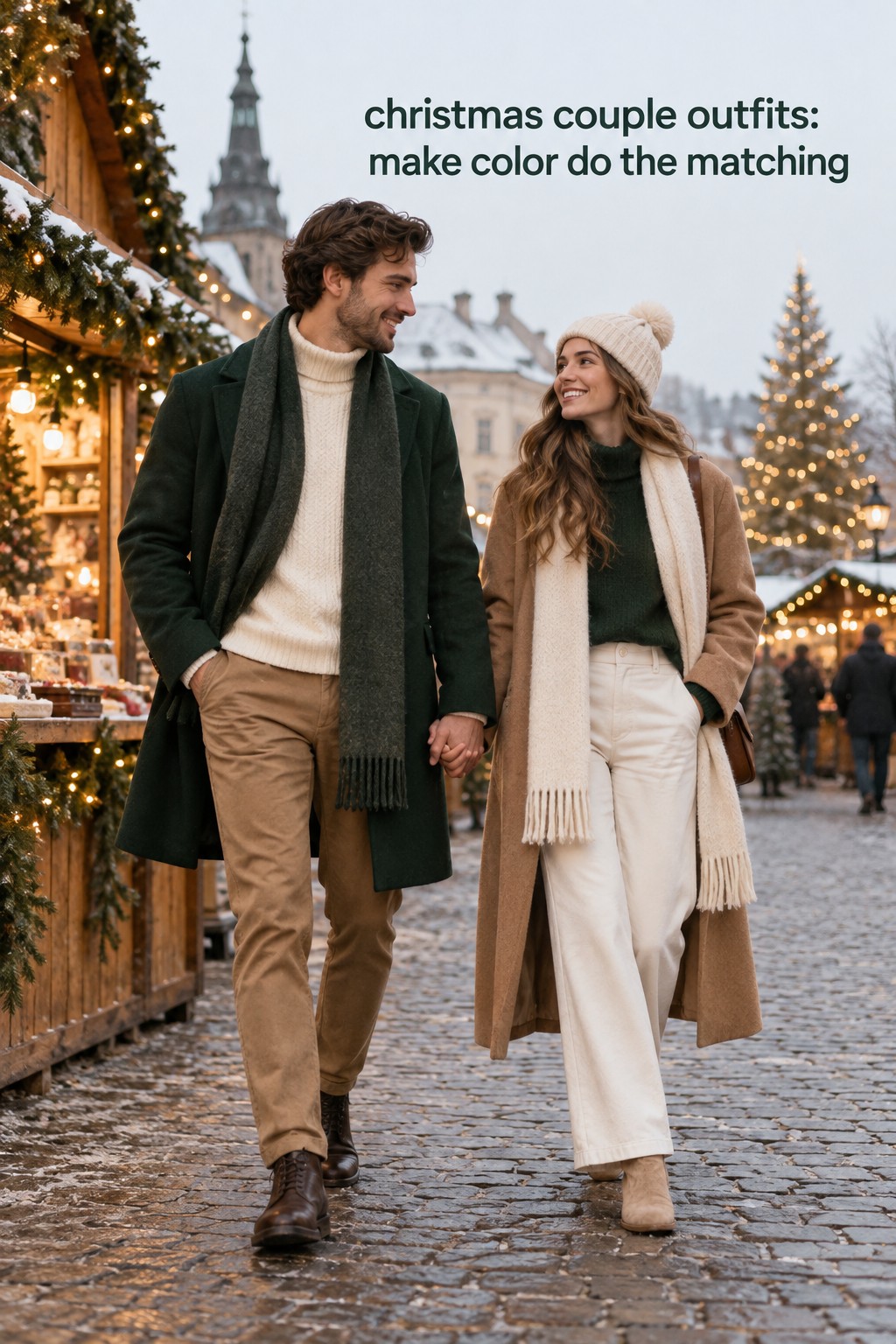
Choose a shared color story and let each person keep a personal silhouette
Couple styling becomes easier when the palette is specific but the clothing remains personal. One person may feel best in a fluid dress, while the other prefers trousers and a sweater. Another couple may want one tailored outfit and one relaxed outfit because that is how they actually dress. Start with the pieces each person would choose alone, then edit the colors and finishing details so they belong together.
Cream and burgundy for a warm classic look
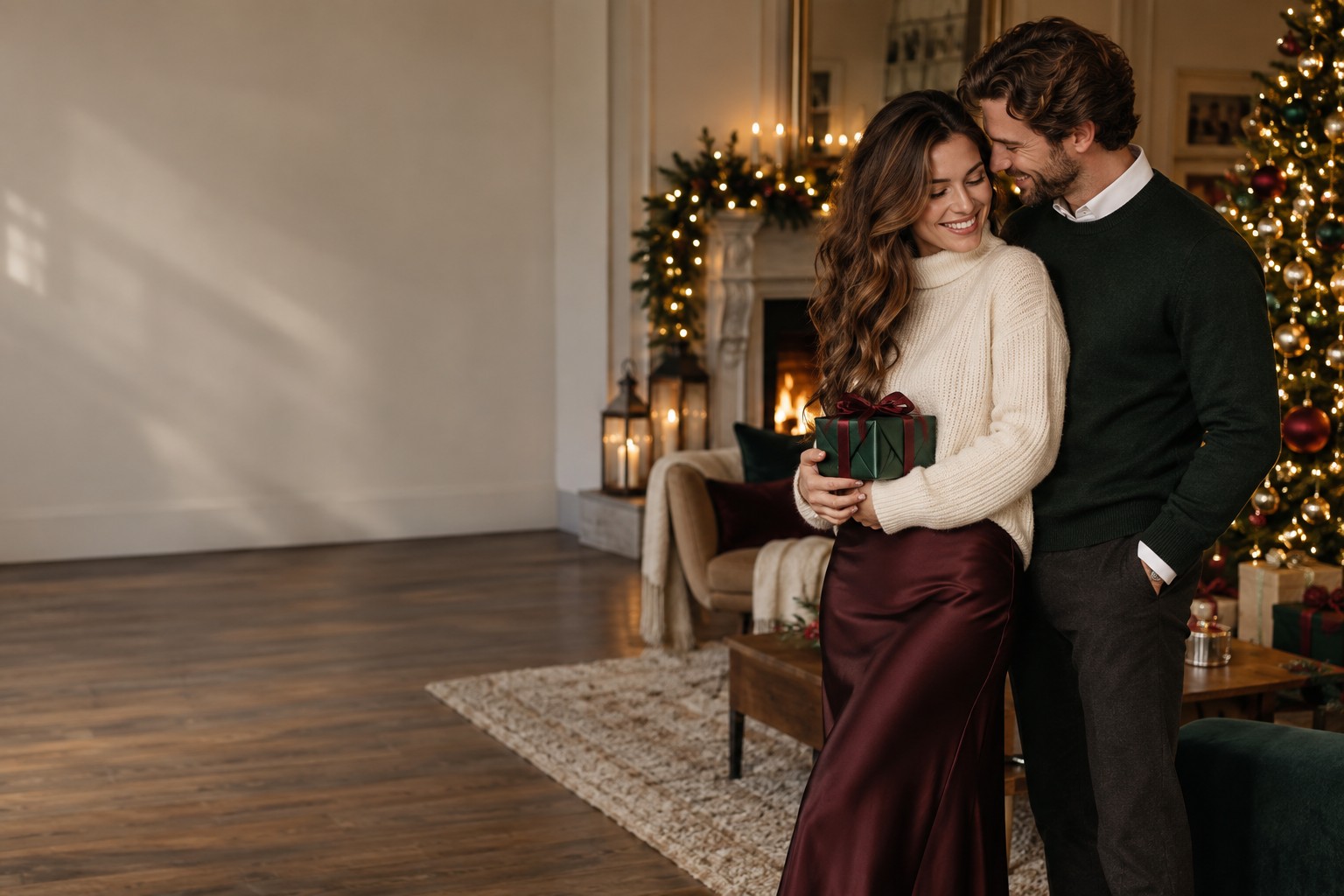
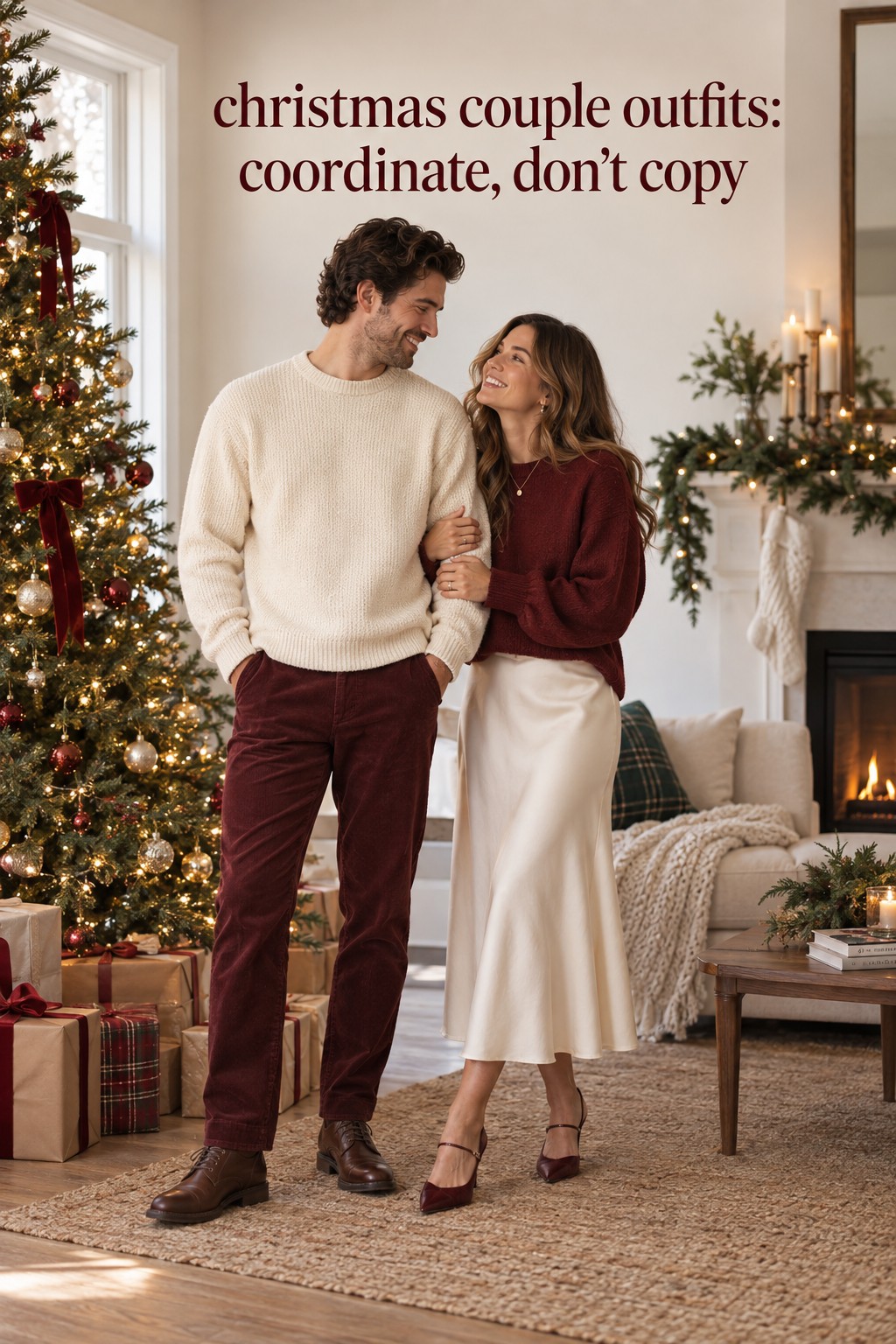
Use cream as the soft base and burgundy as the holiday accent. A cream knit dress can work with burgundy flats or a bag, while the other person wears a burgundy overshirt over a cream tee and dark trousers. Add brown leather or soft gold only if you need a third accent. This palette is especially effective for tree photos because it stays festive without competing with red ornaments.
Forest green and neutral layers for a quieter mood
Forest green looks intentional when it is balanced by cream, camel, charcoal, or denim. One partner might wear a green sweater with straight jeans, while the other wears a cream blouse under a camel coat with a green hair accessory or pocket square. The outfits will feel connected from a distance, but each person still gets a complete look instead of a matching uniform.
Navy, black, and one festive finish for evening plans
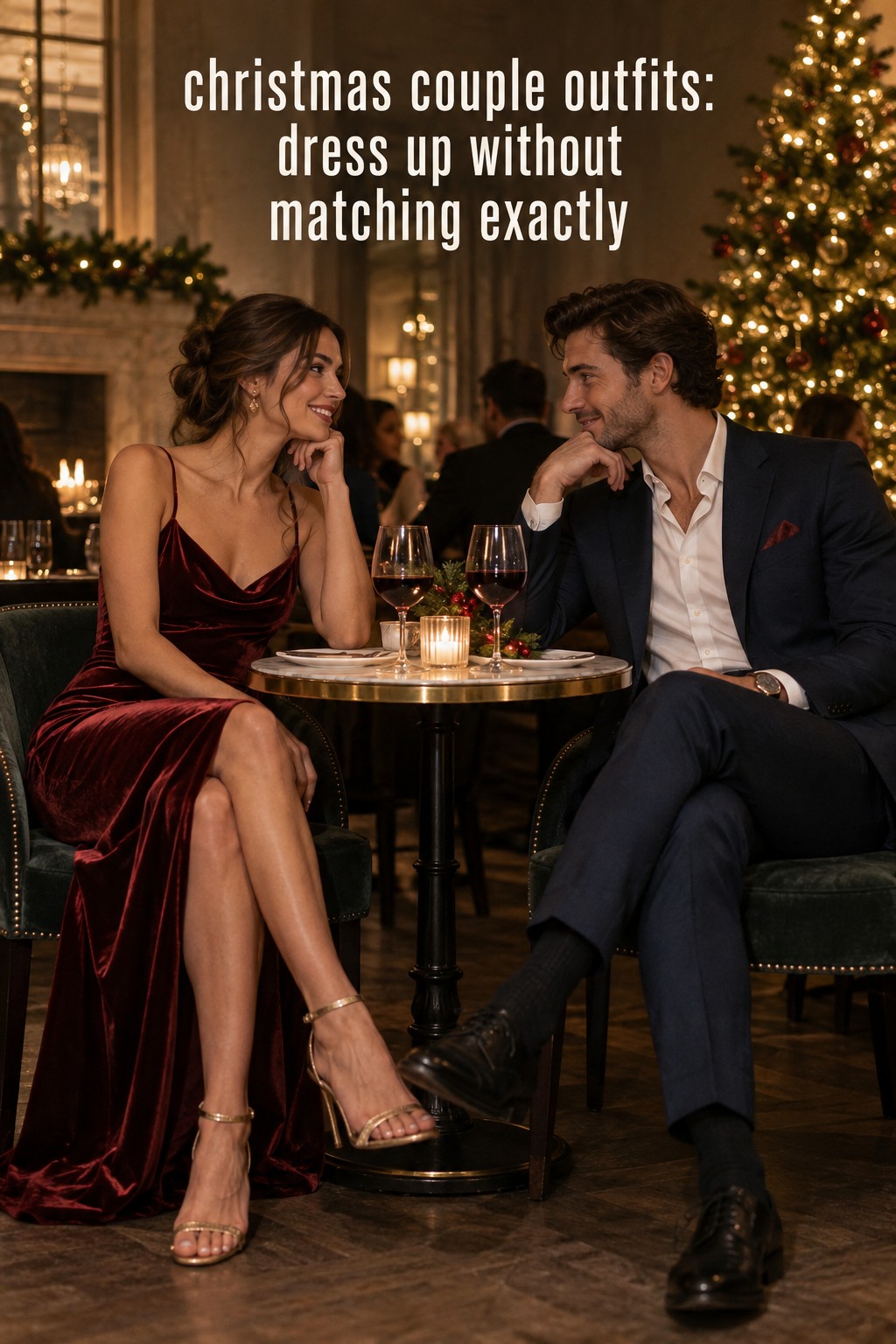
For a restaurant, cocktail gathering, or dressier holiday party, use dark neutrals as the foundation. A navy suit can answer a black satin dress, while both outfits share gold jewelry, a glossy shoe, or a warm metallic detail. Keep the festive finish focused. One strong detail per outfit usually looks more modern than covering every piece in sequins.
If you are unsure whether a palette is working, place both outfits on the bed and take a phone photo in natural light. Look at the image in black and white too. If the clothes still have different levels of visual weight, adjust the lighter outfit with a coat, belt, or structured shoe. The test is useful because couple outfits are often seen together in photos before anyone notices the small details.
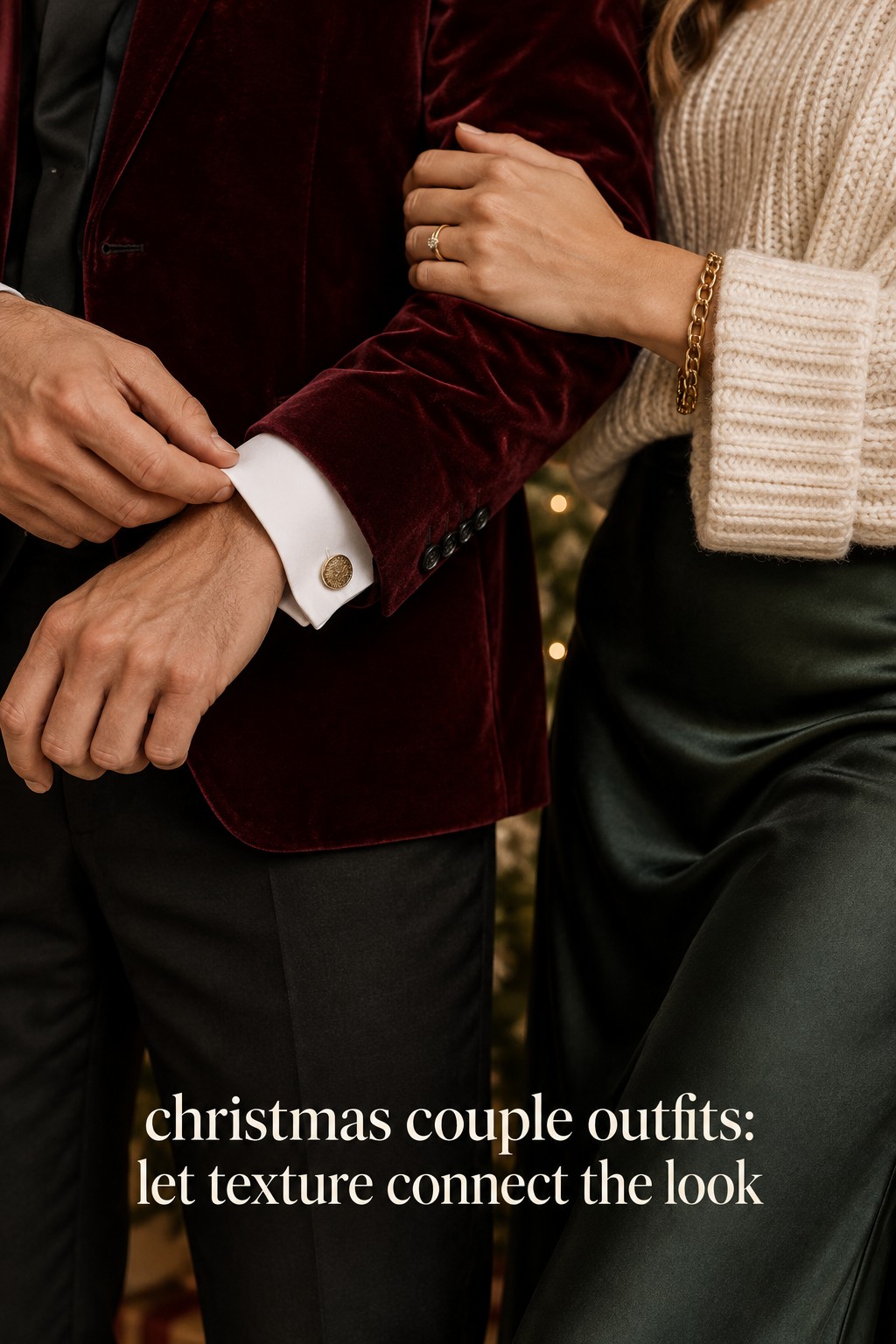
Use texture and pattern as the couple connection
The most convincing Christmas couple outfits usually have one detail that belongs to both people, but not in exactly the same form. Shared texture creates that link while leaving room for contrast. This is also a helpful approach when one partner dislikes obvious holiday colors or novelty prints.
Make knits feel styled instead of accidental
Two sweaters can look thoughtfully coordinated when their shapes are different. Pair a fitted ribbed knit with a relaxed cable knit, or choose one solid sweater and one Fair Isle-inspired pattern with a restrained palette. Balance the volume below. A roomy top works with a clean trouser or narrow skirt, while a fuller bottom can take a shorter or more structured knit.
Let plaid be the accent, not the entire conversation
Plaid is an easy holiday shortcut, but two large high-contrast plaids can dominate a photo. Let one person wear the visible pattern and give the other a solid piece in one of its colors. If both people want plaid, vary the scale and keep the rest quiet. Dark denim, cream, charcoal, and brown are useful buffers when the pattern is already busy.
Pair velvet, satin, denim, and shine with restraint
Dressier textures work best when one is the lead and the other is the answer. Velvet can be the lead in a blazer, skirt, or dress, while the second outfit echoes it through a soft sheen, polished leather, or a dark saturated color. Denim can make velvet feel less formal, and a simple knit can keep satin from looking too precious. Think of texture as a conversation rather than a competition.
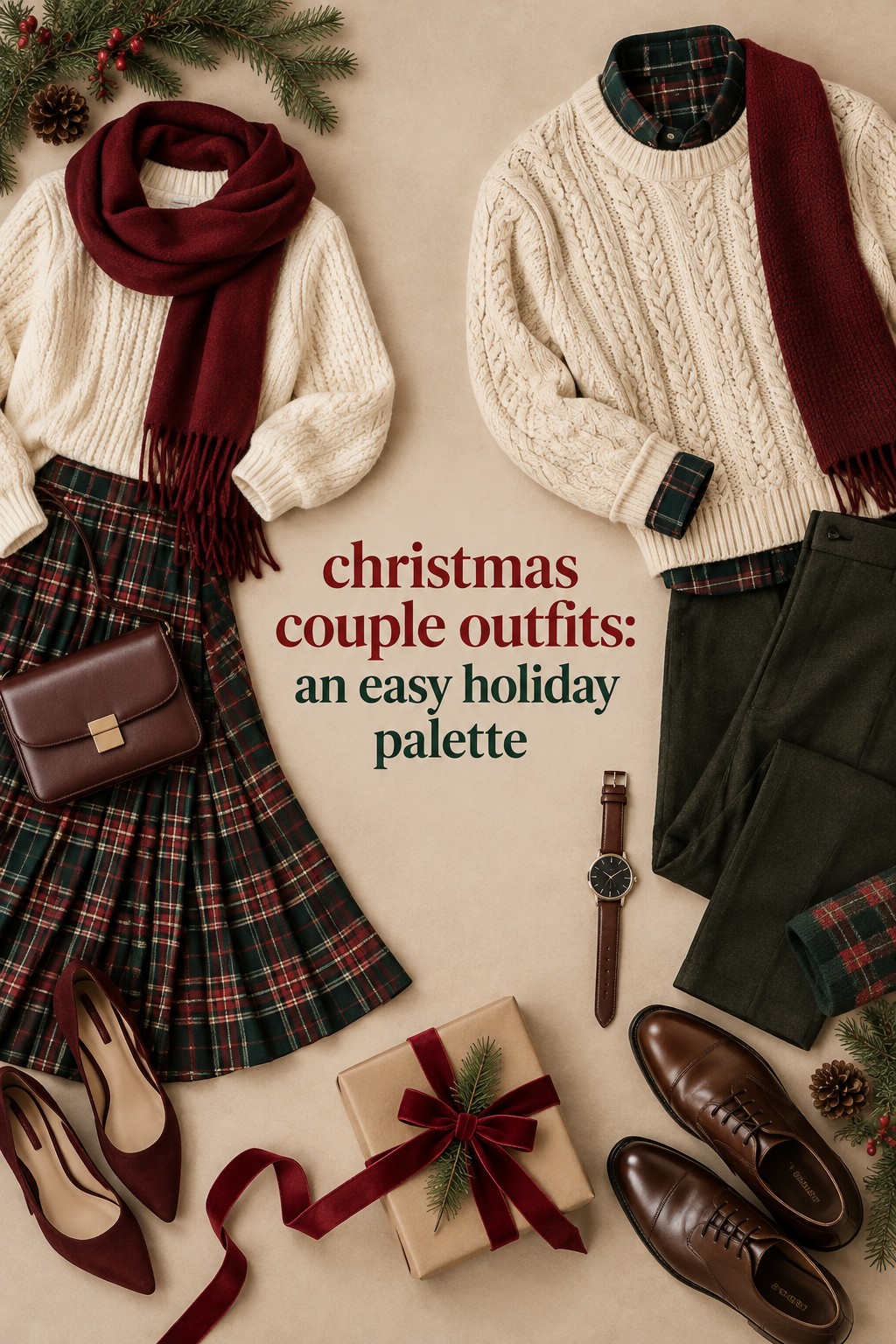
Build Christmas couple outfits for photos, parties, family gatherings, and cozy plans
The right formula depends on what the two of you will actually do. A holiday card, a long family dinner, and an outdoor lights walk all need different levels of movement, warmth, and visual clarity. Choose the plan first, then make the shared signals visible enough to read in the setting.
For holiday photos
Use medium-contrast colors and avoid placing two complicated patterns next to each other. A cream sweater with a burgundy skirt can pair with a burgundy sweater and dark trousers. For indoor photos, pay attention to the backdrop. If the tree is visually busy, simpler outfits will photograph better. Comfortable shoes still matter, even if they are partly hidden, because relaxed posture makes the image look more natural.
For a holiday party or dinner out
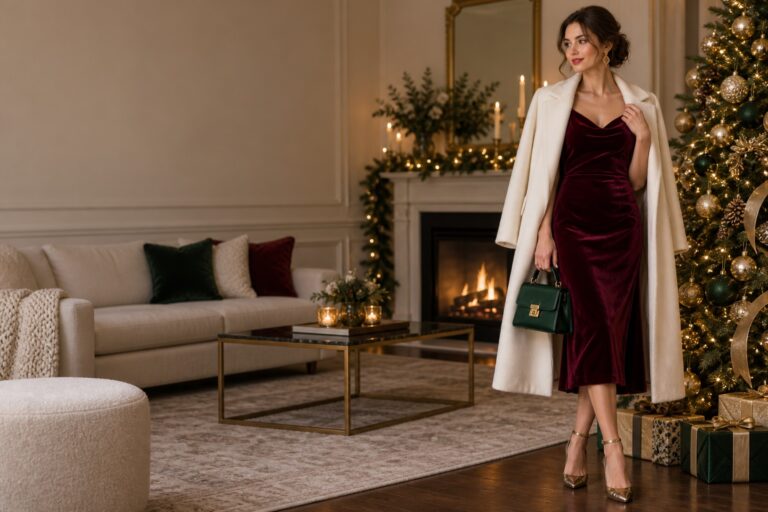
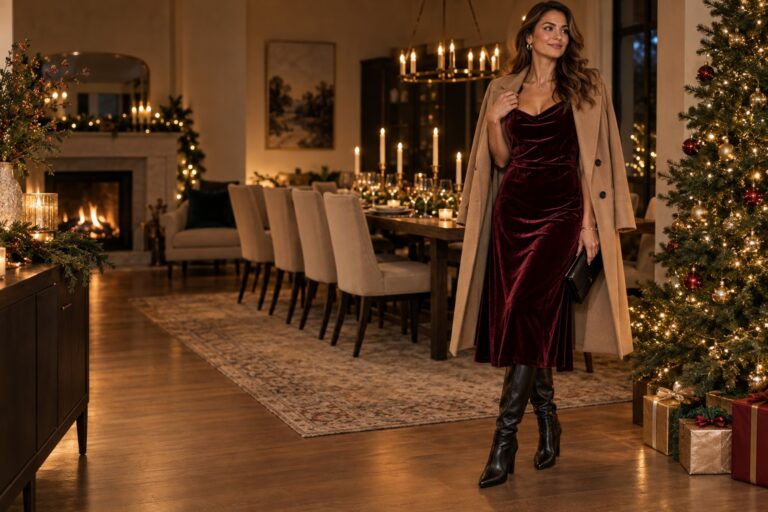
Choose a shared finish such as velvet, satin, patent leather, or warm metallic accessories. One person can wear a velvet blazer with a plain shirt while the other wears a satin skirt with a simple knit. Keep the base colors close, then let one outfit carry the stronger statement. This keeps the couple connection visible without turning the look into a costume.
For family gatherings at home
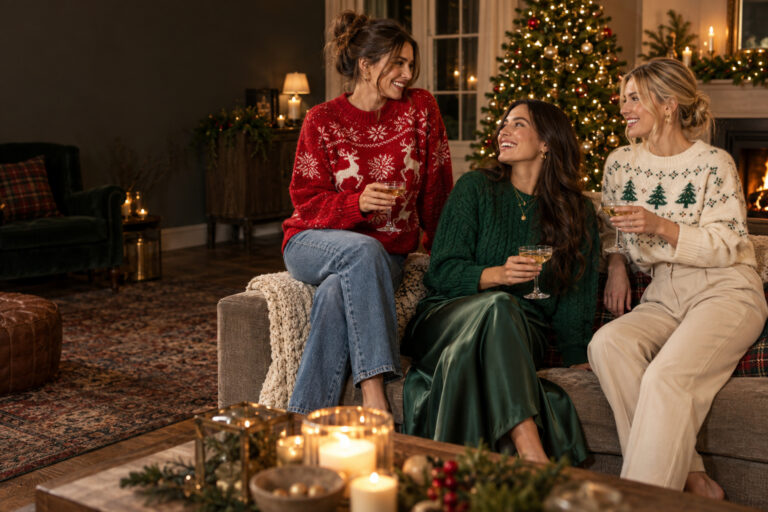
Comfort deserves priority when you will sit, eat, help in the kitchen, and stay for several hours. Try coordinated knits with different bottoms, or pair a festive blouse with relaxed trousers while the other person wears a knit polo and dark jeans. Avoid stiff waistbands and shoes that make one person stand awkwardly. A soft layer in the shared accent color can create the holiday effect with very little effort.
For outdoor lights, markets, or travel days
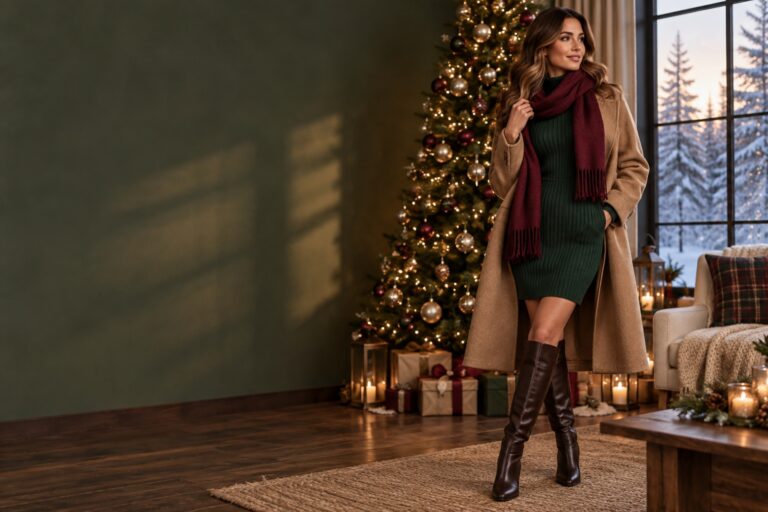
Build from the outer layer inward. A camel coat with a burgundy scarf can connect to a burgundy puffer, cream sweater, or dark green beanie. Make sure the warmest pieces have compatible lengths and weights so one person does not look ready for a snowstorm while the other looks dressed for an indoor party. Practical shoes, gloves, and a bag can repeat the palette while keeping both people comfortable.
Troubleshoot comfort, weather, fit, and awkwardly mismatched formality
A coordinated plan can still fail if the clothes are uncomfortable or if one person feels they were dressed by someone else. Do a short movement test before leaving. Sit down, walk, lift your arms, put on the coat, and check the outfit under the lighting where the event will happen. The best couple look is one that survives the whole plan.
When one person hates matching
Reduce the connection to one small signal. A shared neutral, matching socks, a similar metal finish, or the same color in a scarf and pocket square is enough. Do not force both people into a novelty sweater or identical plaid. The point is to look like you planned together, not to erase personal taste.
When one outfit is much more colorful
Let the quieter outfit borrow one color from the bold look. If one person wears a red dress, the other can use red in a tie, shoe, scarf, or knit detail and keep the rest neutral. Adding another bright color usually makes the pair look busier, so start by repeating the strongest existing color.
When the weather changes the plan
Coordinate the layers rather than pretending the temperature does not matter. A shared scarf color, similar coat finish, or repeated boot tone can keep the outfits connected. If the event moves indoors, choose removable layers so the base outfits still make sense. Warmth is part of styling because discomfort changes posture, expression, and the way the clothes sit.
FAQ
Should Christmas couple outfits match exactly?
No. Coordinated colors, a shared texture, and a similar dress level usually look more natural than identical outfits. Exact matching works best when it is a deliberate playful choice, such as pajamas or a themed party.
What colors look best for Christmas couple outfits?
Cream with burgundy, forest green with cream, navy with burgundy, and black with gold are dependable options. Use one stronger color on one person and repeat it in a smaller detail on the other.
How can couples coordinate outfits for photos without looking cheesy?
Choose one palette and one texture connection, then vary the silhouettes. Keep patterns limited and consider the backdrop. Simpler outfits are often stronger when the tree, lights, or decorations already add visual detail.
Can one person wear a dress while the other wears pants?
Absolutely. A dress and trousers can feel connected through color, fabric finish, or formality. Try a satin dress with a polished shirt, or a knit dress with a textured overshirt and clean shoes.
How many colors should Christmas couple outfits include?
Two main colors plus one neutral is a practical starting point. You can add a metallic accent for a party, but too many strong colors can make the outfits compete rather than connect.
What should couples wear for a casual Christmas at home?
Try coordinated knits, dark jeans, soft trousers, or a festive blouse with a relaxed layer. Prioritize movement and comfort, then repeat one accent color through socks, scarves, hair accessories, or small jewelry.
A useful final edit is to compare the outfits by visual weight. Visual weight comes from color depth, fabric thickness, shine, pattern size, and the amount of skin or space around a garment. If one outfit is dark, layered, and textured while the other is pale and very minimal, repeat one grounding detail on the lighter side. A belt, boot, coat, or bag can be enough. This small adjustment keeps the pair balanced without requiring a full wardrobe change.
Also consider how the outfits will be seen in motion. A couple may look perfectly coordinated while standing, then separate visually when one person removes a coat or rolls up sleeves. Choose a base layer that still carries the color story. For example, a green coat can coordinate with a cream sweater, but the sweater should still connect to the other outfit after the coat comes off. Planning for the whole evening makes the styling more dependable.
Accessories are the easiest place to refine a pair without buying a matching set. Repeat a warm metal, leather tone, or one festive color. A burgundy handbag can answer a burgundy knit, while brown boots can connect to a belt or watch strap. If both outfits already contain strong colors, use neutral accessories instead. The finishing details should make the outfits feel edited, not decorated.
Finally, make a quick closet-first version before shopping. Put one promising outfit on each person, take a photo together, and identify the one missing signal. You may need only a scarf, a different shoe, a lighter layer, or a change of shirt. This keeps the final result personal and prevents buying two new outfits simply because the first combination felt unfinished. A coordinated couple look should support the occasion and the relationship, not become a separate project to manage.