Simple Christmas Outfits for Women: Less Fuss, More You
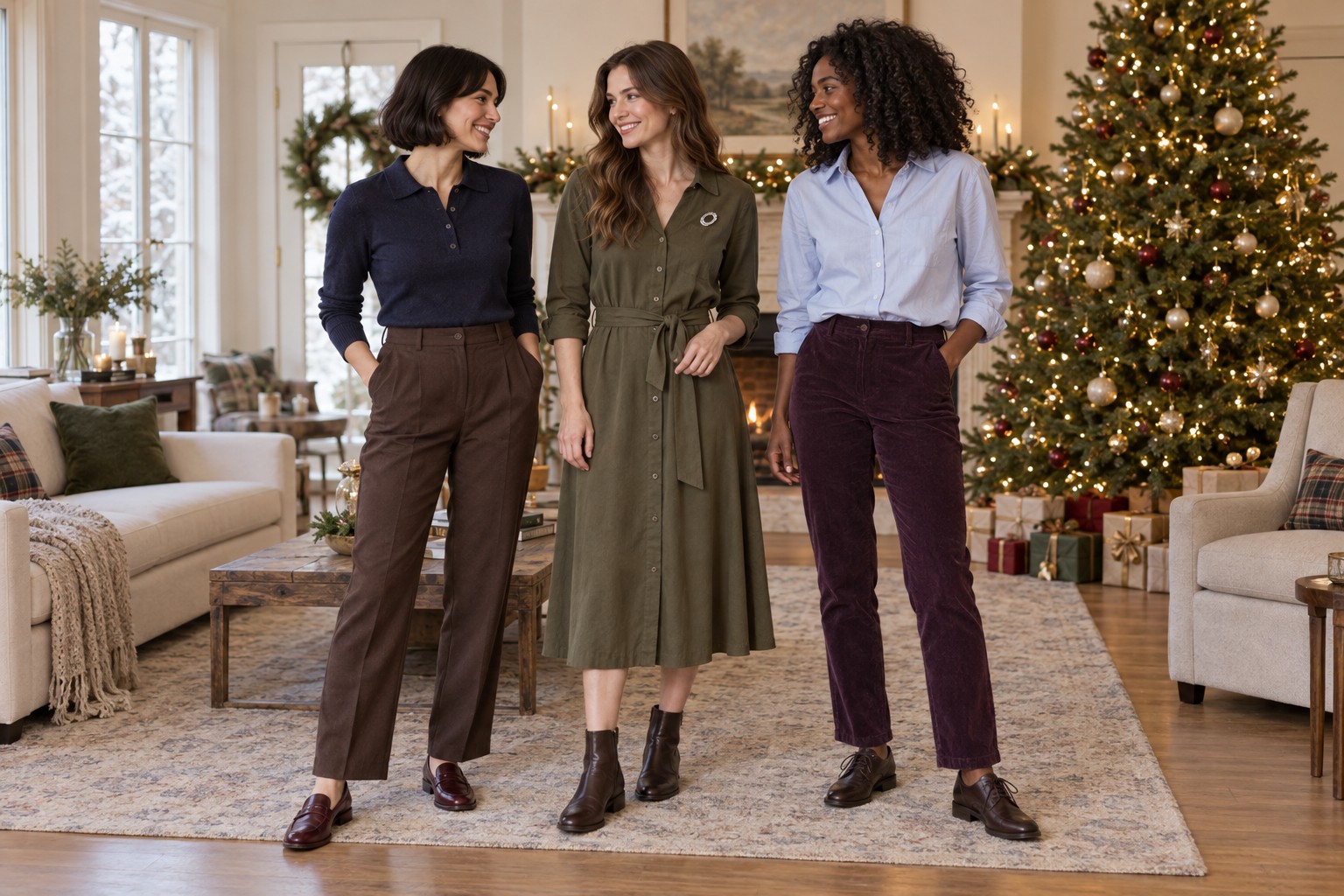
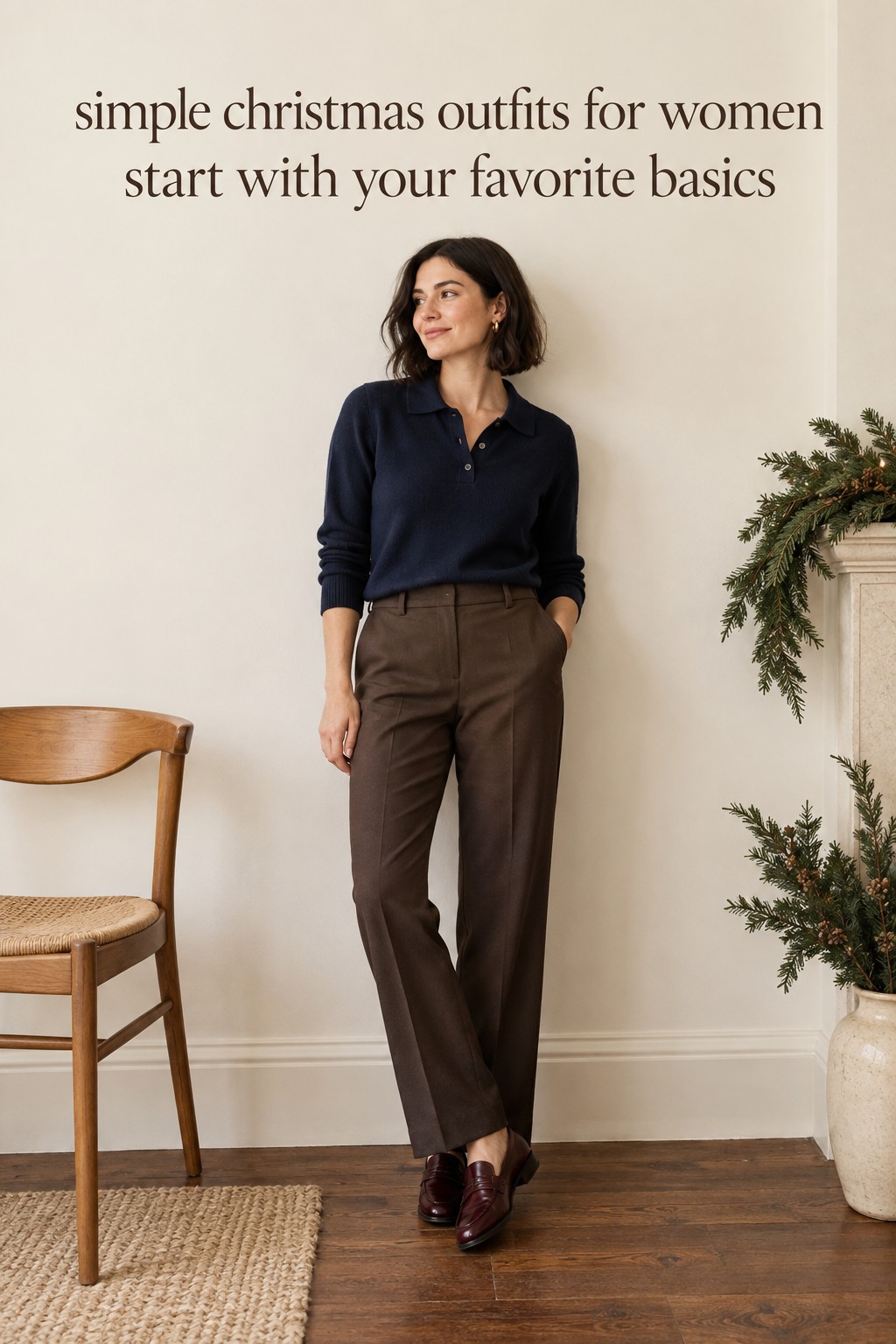
The room is nearly ready, a ribbon has disappeared under the chair, and the clothes you meant to wear are still on a hanger. This is where simple Christmas outfits for women become useful: a familiar outfit, one deliberate change, and permission to get on with the day. A navy knit polo with brown pants and burgundy loafers can be enough for a relaxed gathering. So can a plain shirt dress with a small silver brooch. The festive feeling does not have to come from a whole new set of clothes.
Start with something you already like wearing, then choose whether it needs a replacement, a subtraction, or a small adjustment. The examples below show exactly how those edits work, including what to leave alone. They are styling suggestions for low-key Christmas plans; an invitation with a specific dress code still sets the level of formality. The aim is to finish an outfit you recognize as your own, without turning getting dressed into another holiday project.
The outfit already hanging on your chair
There is often a useful starting point closer than the special-occasion section of your closet. It might be the pants you wear with a knit polo, a loose shirt dress, or a cotton button-front shirt with corduroys. Look for a complete combination you have actually worn together. Starting with a tested pairing removes the question of whether two separate pieces belong in the same outfit.
That does not mean every everyday outfit fits every Christmas gathering. A sweatshirt you enjoy at home may feel too relaxed for a seated dinner where everyone dresses up. Make that decision once, before adding accessories. If the overall level is wrong, choose a different familiar base. Trying to fix a very casual foundation with a pile of jewelry can create more decisions without getting you closer to the look you want.
Found the dress? Keep the rest in one place.
Zarellea brings guest details, vendors, timelines, and every next step together — so your wedding plan feels as good as your look.
Choose the part you want to keep
Name the reason the outfit appeals to you. Perhaps the collar of the polo sits neatly, the trousers fall the way you like, or the dress needs no waistband adjustment. Preserve that feature. When you start changing every part at once, you lose the useful information the original outfit gave you. The point of beginning with familiar clothes is to keep the parts that already feel settled.
Imagine navy knitwear and chocolate pants that you normally wear with sneakers. If you like the colors and shape together, leave both garments alone. Try burgundy loafers you already own as the Christmas change. The deeper shoe color creates a small point of interest while the rest stays familiar. If those loafers are uncomfortable, use your usual shoes and move the detail higher, perhaps to a small silver pin on the top.
Separate simple from plain
A simple outfit can include a printed dress, an interesting collar, or a bright shoe. What makes it simple to assemble is that you know how the pieces work together. A patterned shirt dress that needs only shoes can involve fewer decisions than an all-neutral outfit requiring several layers, a complicated tuck, and jewelry chosen to connect them. Count the adjustments you need, rather than the colors you can see.
You can also let the gathering provide some of the holiday atmosphere. A familiar outfit worn beside a tree or around a decorated table does not need to reproduce every color in the room. If you enjoy understated dressing, keep that preference. You are choosing clothes for Christmas, and those clothes can still look like the ones you would reach for during the rest of the month.
Three small edits that change the whole look
Once the base is chosen, put it on before reaching for anything else. A top that seems ordinary on the hanger may look complete once its collar is sitting properly and the pants are in place. Seeing the outfit together helps you identify a specific issue. Instead of asking what else you could add, ask what you want to notice when you look in the mirror.
Replace one piece in the same role
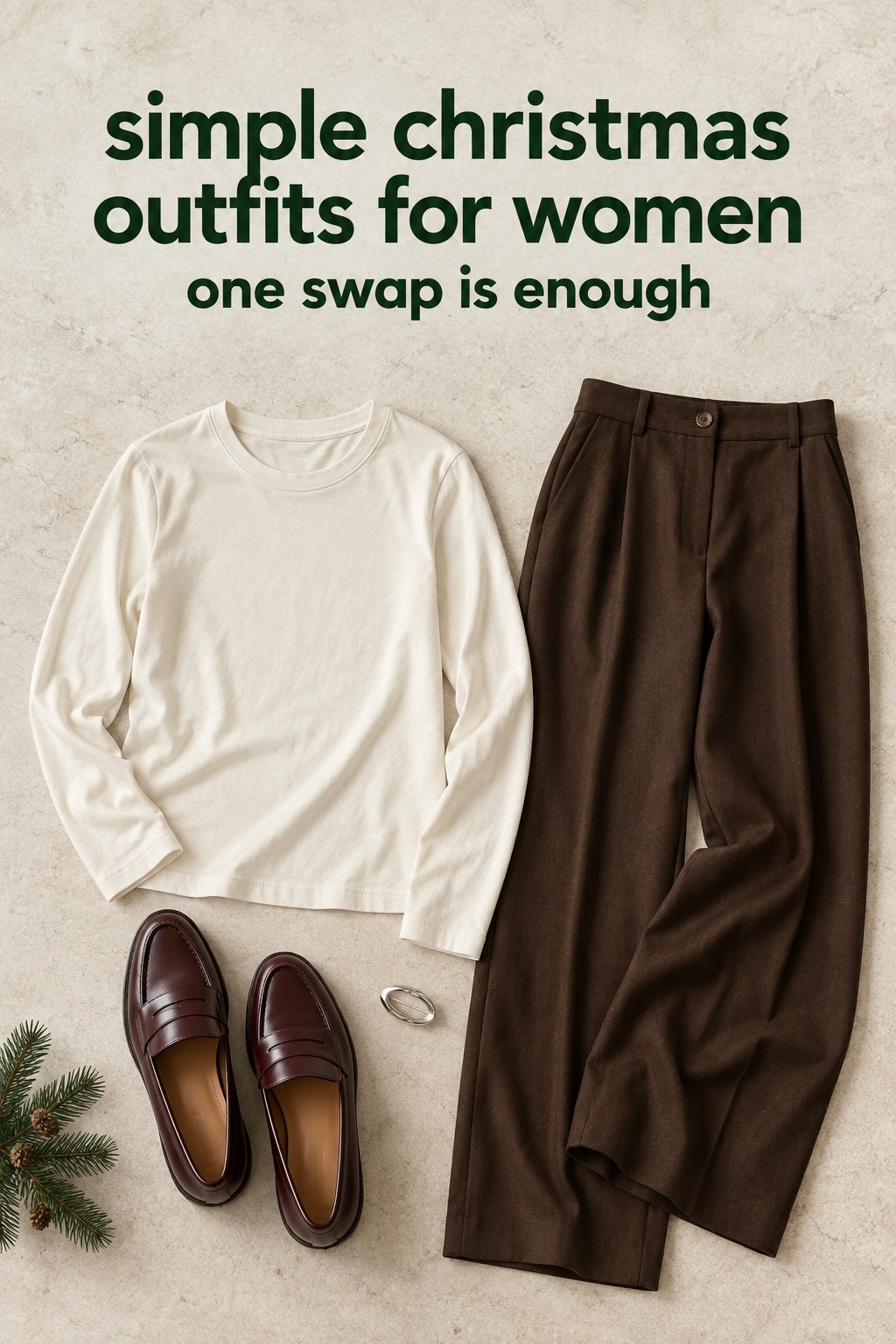
Replacement is useful when you like the outfit but want a clearer sense of occasion. Keep the category the same: one pair of shoes replaces another, or a finished shirt replaces a casual top. This keeps the outfit’s structure understandable. An ivory long-sleeve T-shirt with brown trousers, for example, can move in a slightly dressier direction with burgundy loafers instead of athletic sneakers. You have changed one decision, while keeping the comfortable proportions you chose.
Make the replacement work with the clothes as they are. If a new shoe requires rolling the hem twice, adding unfamiliar socks, and finding a different bag, it may not be the easy option you wanted. Try a shoe with a similar shape or keep the original footwear. A tiny accessory might achieve the change with less disruption. The easiest edit is the one that does not create another list of problems.
The same approach works above the waist. If your base is a T-shirt with corduroy pants, try a simple collared shirt in a color you already wear. Keep the bottoms, shoes, and usual jewelry. Check the shirt both tucked and untucked, then choose the version that stays where you want it. There is no need to add a jacket solely because the outfit now looks a little more dressed up.
Remove a detail that competes with your favorite part
Sometimes the Christmas edit is subtraction. A patterned scarf, a necklace, and a decorative collar may all be attractive separately, yet leave you unsure where to look when worn together. Take off one item and compare the result. If you like the neckline more without the necklace, that is a finished decision. You do not owe the empty space a different accessory.
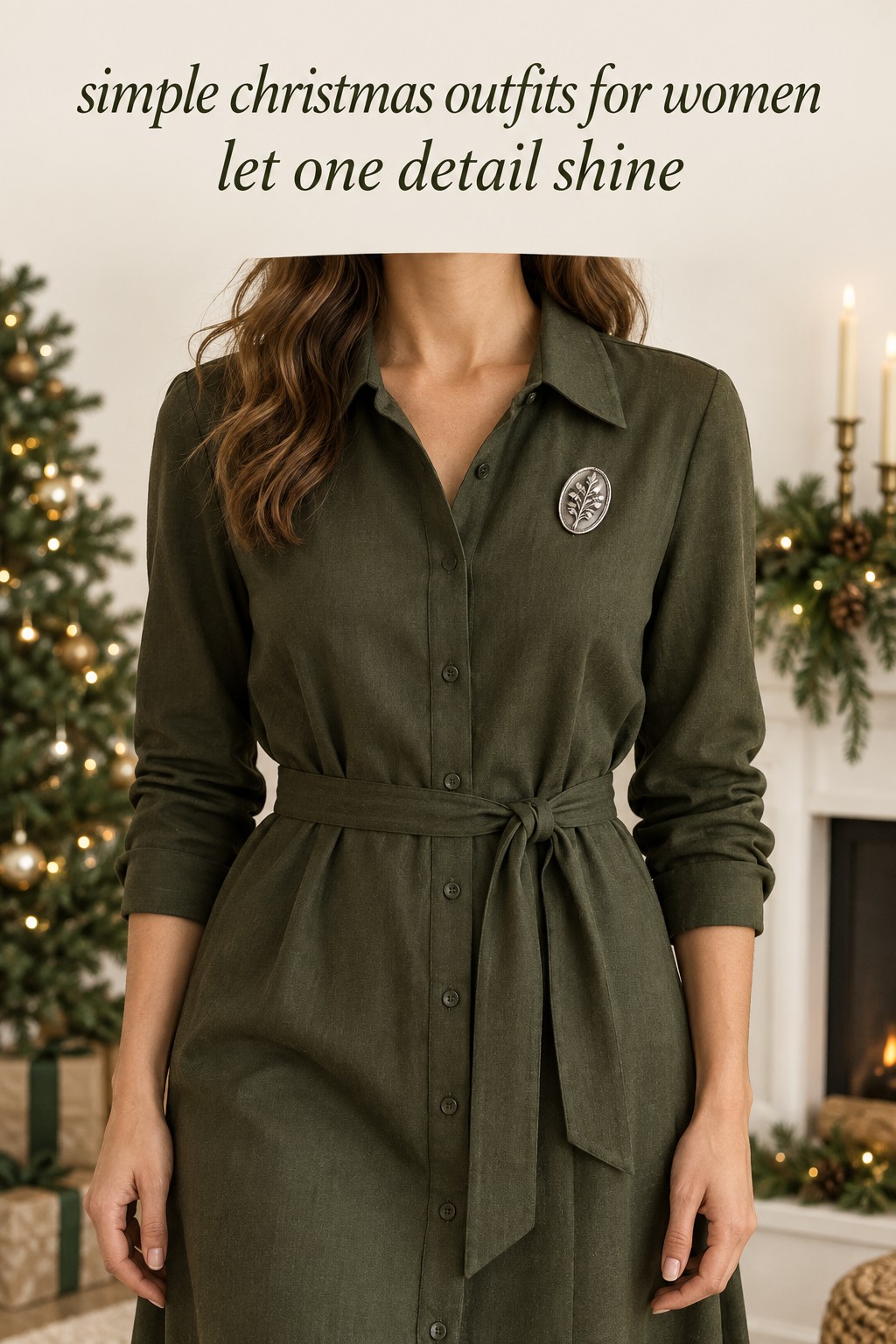
A plain dress with a silver brooch is a useful example. The pin can provide a small focal point near the shoulder. A long pendant placed directly below it introduces another feature in the same area. Try the brooch alone first. If you prefer the pendant, put the brooch away. Neither choice is a universal rule; choosing one simply makes this particular outfit easier to read and easier to finish.
Keep functional items out of this editing contest. Glasses, a watch you use, a mobility aid, or a layer you need do not have to disappear to make an outfit visually quieter. Edit the optional decoration around them. The purpose of simplification is to reduce fuss for the person wearing the clothes, including the need to keep removing something useful for a picture.
Reposition what is already there
A small adjustment can change the way familiar clothes sit without adding another object. Try opening a shirt collar to the point you find comfortable, folding a cuff once, or smoothing a top over the waistband instead of tucking it. Make one change and look again. Several simultaneous adjustments make it harder to tell which one improved the outfit.
For a button-front shirt with corduroys, folding the cuffs can expose the wrist and give the sleeve a clearer ending. If the fold feels bulky or keeps falling down, return to the original cuff. For a knit polo, let the collar lie naturally and avoid forcing a necklace into the opening. For a shirt dress, use its own belt only if you like the shape it creates. Wearing the dress loose is a complete option, too.
These changes should survive ordinary movement. Reach for your bag, sit down, and stand again. If you immediately need to rebuild a tuck or rearrange the neckline, choose a simpler version of that detail. A styling trick that requires constant attention defeats the reason you chose an easy outfit. It is perfectly reasonable to prefer the version that stays put over the one that looks more elaborate in a still photograph.
Four familiar outfits, finished for Christmas
Think of these as four different starting points, rather than a list to collect. Choose the one closest to your own wardrobe and use its editing logic. Exact colors and garment names are there to make the examples clear. If you own a different shade or a similar shape, keep it when it performs the same role and gives you the look you want.
Navy polo and brown pants: change the shoes
Begin with a fine-knit navy polo, chocolate straight-leg trousers, and the everyday shoes you usually pair with them. The collar supplies enough detail around the face that the upper half can stay quiet. Try a pair of burgundy penny loafers as the single change. Small hoops or your usual studs can stay, but there is no need to search for matching burgundy jewelry.
Look at the trousers where they meet the loafers. If the hem sits cleanly, leave it. If it bunches in a way you dislike, use another familiar pair with a hem that suits those shoes, or return to your original footwear. This is an outfit decision, not a reason to make an urgent purchase. The finished version should be ready to wear with pieces already in reach.
Stop when the collar, waistband, and hem sit the way you want. A necklace, belt, or contrasting bag may all be optional at that point. If you wear a belt for fit, keep it close in tone to the trousers and let it do that job. This look is useful when you want a restrained Christmas outfit with pants and would rather put your attention into the gathering than the styling.
Olive shirt dress: give one small object some space
Take an olive button-front midi dress with a straightforward collar and sleeves you can wear comfortably. Pair it with dark brown flat ankle boots you already know work with its length. Add a small oval silver brooch high on one side of the chest, provided the garment can support the pin without pulling. Leave the neckline free of a necklace so the brooch has room around it.
If you prefer not to pin the dress, make the small silver detail a pair of earrings instead. You do not need both. Keep the dress’s own tie if you normally enjoy wearing it; remove it if you prefer the loose silhouette. Swapping the tie for a new statement belt is possible, but it adds another variable to an outfit whose appeal is its straightforward shape.
The stopping point is easy to recognize: one dress, familiar boots, and one detail you enjoy seeing. This version offers a way to dress for a relaxed Christmas visit without coordinating separate tops and bottoms. It also shows how an outfit can have a seasonal mood without red, green plaid, novelty lettering, or a collection of sparkling accessories.
Pale blue shirt and plum corduroys: let the pairing lead
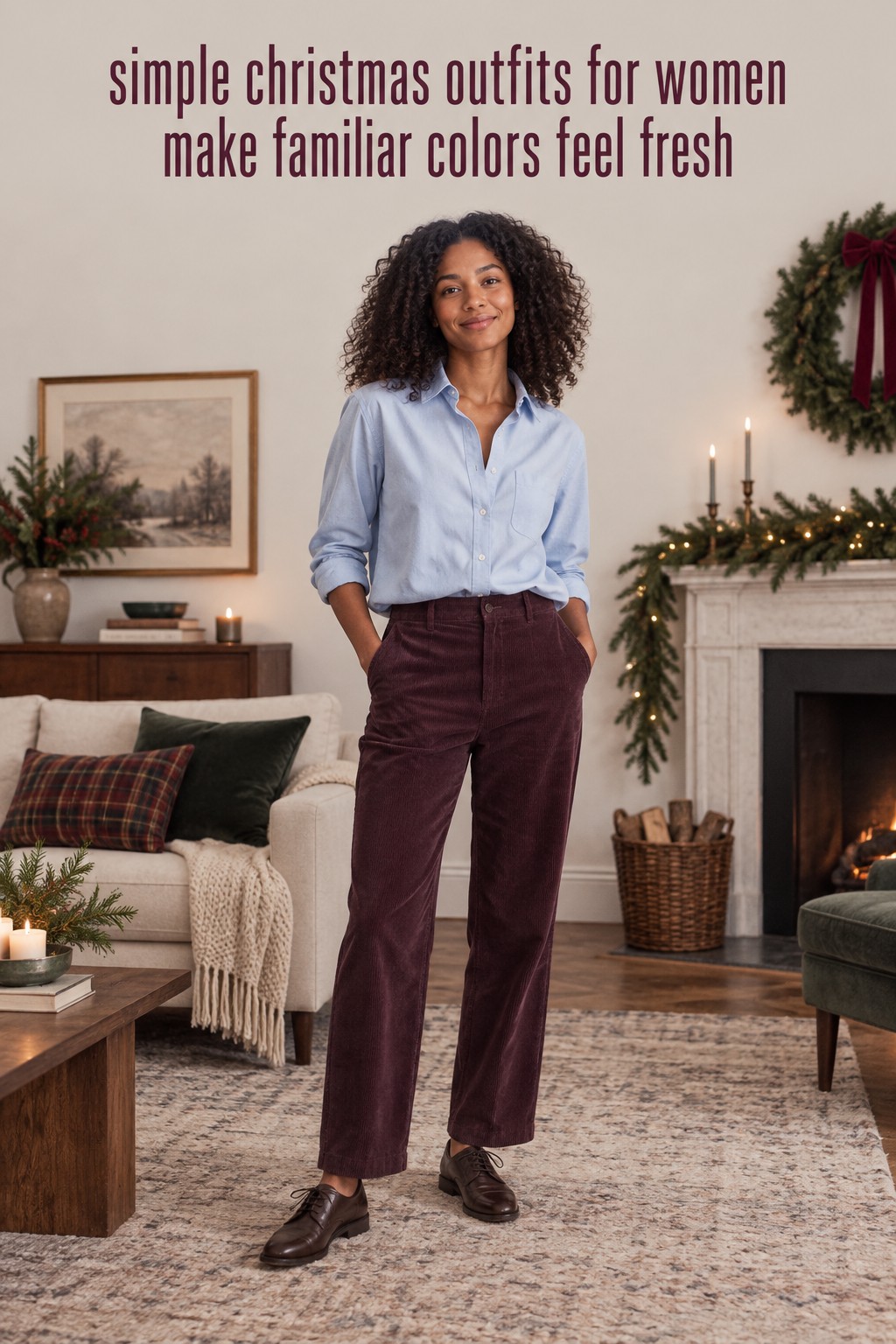
Start with a pale blue button-front shirt and deep plum straight corduroy pants. Add plain dark brown lace-up flats or loafers. The less expected color pairing is the feature here. You do not need a special holiday motif to justify wearing it. If the shirt and pants are already familiar pieces, the change may be simply putting them together for the first time and keeping the rest quiet.
Try the shirt with a relaxed full tuck if that is comfortable, or leave a shorter shirt untucked. Avoid spending the afternoon preserving a carefully uneven arrangement if that does not come naturally to you. One cuff fold can repeat the easy feeling of the shirt, but keep the sleeves down if you prefer. The color contrast will remain visible either way.
Once you like the way the shirt meets the waistband, stop adding. A bag in the same dark brown family as the shoes is an easy option if you need one. If you only own a black bag, use it and look at the outfit as a whole before deciding it needs fixing. Slight color differences do not automatically create a problem that requires another purchase.
Charcoal shift dress: keep the shape uninterrupted
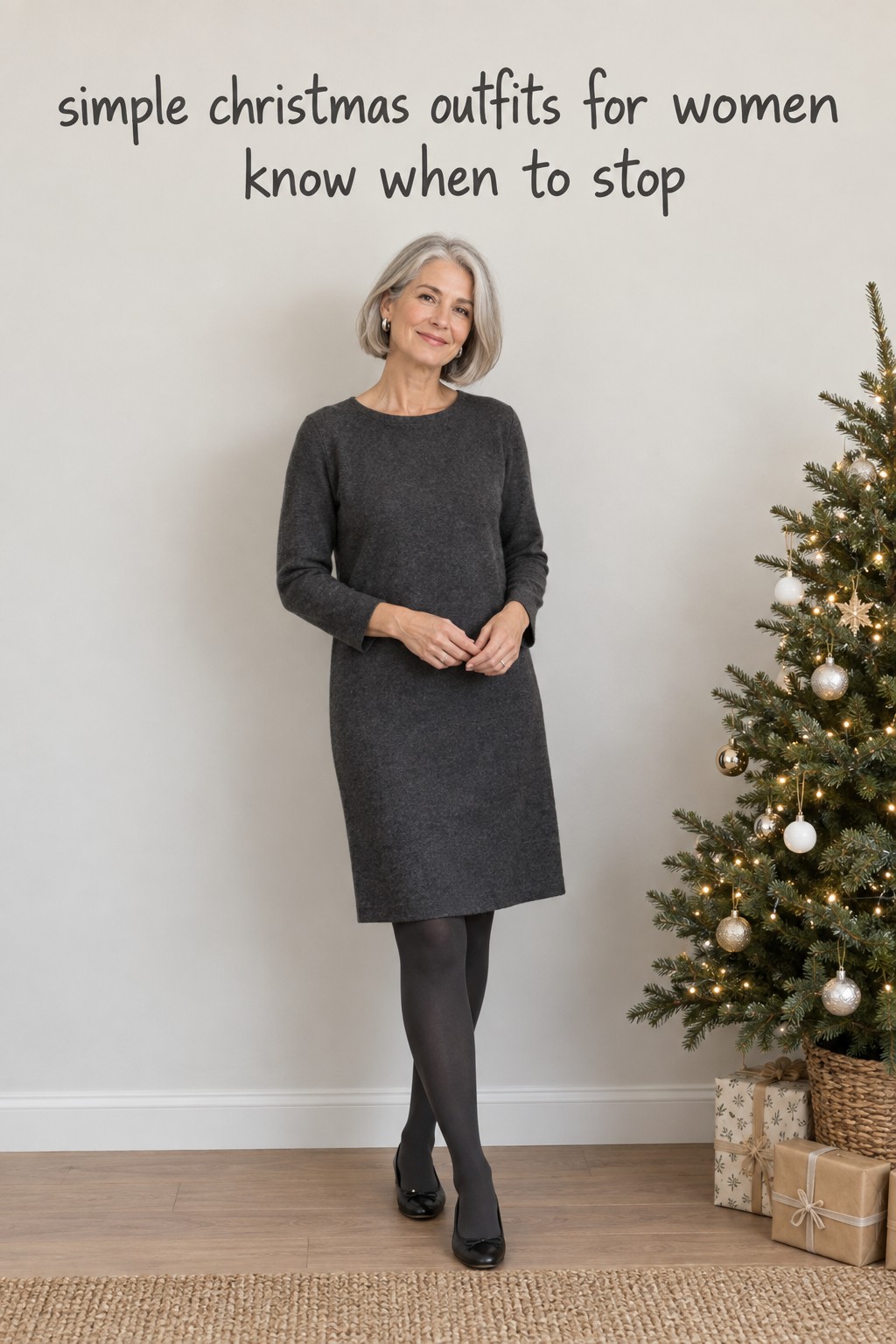
A simple charcoal shift dress with sleeves can be an especially clear starting point if you dislike assembling separates. Wear it with charcoal opaque tights and black flat shoes or low shoes you already find comfortable. Choose short silver earrings as the small finishing detail. This combination leaves the dress’s straight shape visible and gives you very few moving parts to manage.
Try it without a belt first. Adding one changes the silhouette and may make the fabric gather in a way you do not enjoy. If a belt is part of how you normally wear this dress, use that familiar version instead. The aim is to avoid adding an unfamiliar detail simply because the calendar says Christmas. Your established way of wearing the garment is useful information.
If the result feels too reserved, exchange the earrings for a more noticeable pair rather than adding a necklace, scarf, and belt together. Keep the shoes and tights unchanged. That one substitution makes the decision easy to reverse if you prefer the quieter version. You are finished when the dress sits comfortably and the earrings feel like enough, even if there is still space for more decoration.
The moment you can stop getting dressed
After a few small edits, it is easy to reopen the entire decision because an outfit still looks familiar. Familiarity is part of the promise here. A simple Christmas outfit should let you recognize the person in the mirror. The useful final question is whether anything specific needs changing, not whether there is another possible combination somewhere in the closet.
If the outfit seems unfinished, identify the exact area bothering you. A collar that folds awkwardly needs an adjustment at the collar. A long sleeve covering your hand needs a cuff decision. Shoes that feel wrong with the hem need a different shoe or a different hem. None of these issues necessarily calls for another necklace. A precise correction is usually easier to judge than adding decoration to the whole outfit.
When the shoes come off
For a gathering where you expect to leave shoes at the door, think about the indoor version while getting dressed. Put on the socks, tights, or indoor footwear you intend to wear there. Look at the hem again without the outdoor shoes. If the outfit only feels complete in the loafers, shift the visual detail to earrings or a brooch instead of building the entire look around footwear that will spend the afternoon in the entryway.
You do not need to hide the practical parts of visiting someone’s home. Plain socks in a color you like with the pants can be a deliberate choice. If you want to bring indoor shoes, choose a pair you are happy to carry and wear. Keeping this detail settled before you leave is more useful than finding a beautiful combination that feels incomplete as soon as you arrive.
When a photo makes you second-guess the outfit
A quick photograph can help you see whether a collar has folded under or whether you prefer a top tucked. Use it to answer a concrete question. Avoid turning it into a search for every detail you might change. Phone angle, pose, and light can alter the impression, so compare the picture with how the outfit feels and looks in the mirror rather than treating one frame as a verdict.
If you like the clothes and they suit the gathering, put the alternatives away. Keeping five tops on the bed leaves five decisions open. Hang the unused pieces back up, put the chosen accessories beside your bag, and let that be the finished outfit. This is the practical payoff of dressing simply: you can move on to the people and plans you wanted to enjoy.
FAQ
How do I choose a Christmas outfit when I only have ten minutes?
Use a complete outfit you have worn before. Check that its level of formality suits the gathering, then make only one change if you want one: different shoes, earrings, or a top. Avoid starting with a garment that needs unfamiliar underlayers or several new pairings. Put the alternatives away once the chosen outfit sits comfortably.
Can my Christmas outfit be the same one I wore last week?
Yes. Repeating a combination you enjoy is consistent with keeping the day simple. You can wear it exactly as before or change one small feature, such as the shoes or a brooch. There is no need to replace the entire outfit to make the occasion feel meaningful.
What should I change first if a simple outfit feels unfinished?
Identify a specific issue before adding anything. Check the collar, sleeve ends, waistband, and shoe-to-hem relationship. Adjust the part that bothers you, then look again. If the clothes sit well and you simply want a little more decoration, try one accessory in an area that has enough clear space around it.
Does a simple Christmas outfit have to be neutral?
No. A pale blue shirt with plum corduroys can be straightforward when the shoes and accessories stay familiar. A printed dress can also require very few decisions. Choose a color or pattern you enjoy and avoid adding pieces solely to repeat every shade. Simplicity can describe the dressing process as well as the appearance.
How can I simplify a Christmas outfit without buying anything?
Remove an optional detail, replace one item with something already in your closet, or adjust a cuff, collar, or tuck. Keep the part of the original outfit you like most. A necklace-free neckline or a dress worn with its usual shoes may feel more settled than a completely new combination.
What if I do not like jewelry or decorative accessories?
Leave them out. Let the combination of garments, a collar, or a shoe color provide the interest. Navy and chocolate, olive and dark brown, or charcoal with black can all be starting points. The finished outfit needs to feel right to you; an empty neckline or bare wrist does not need to be filled.