Smart Casual Capsule Wardrobe for Modern City Style
The modern dress-code puzzle: building a smart casual capsule wardrobe that actually works
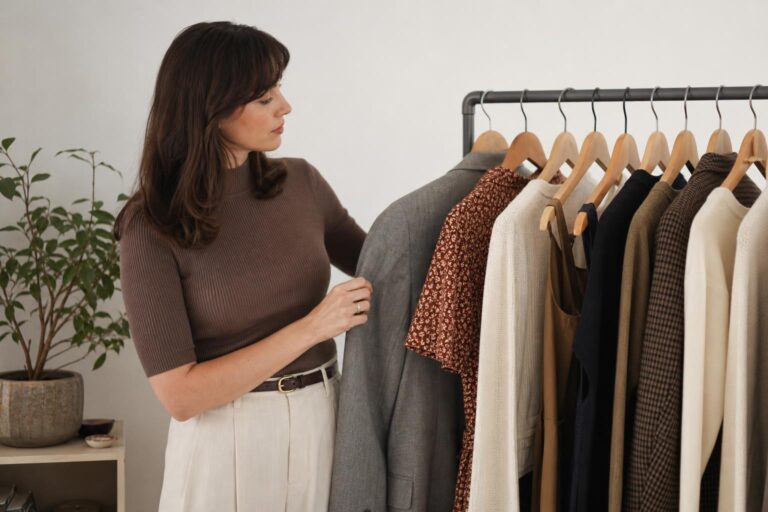
Few wardrobe categories create more hesitation than smart casual. It sounds flexible, but in real life that flexibility is exactly what makes it tricky. One office reads it as blazer-and-loafers polished, another treats it as knitwear and tailored trousers, and after-hours plans can shift the balance again. A smart casual capsule wardrobe solves that tension by narrowing the options to pieces that can move between work, meetings, dinner, and everyday city routines without making you feel overdone or underdressed.
The frustration is rarely about owning nothing. More often, it is about owning pieces that do not cooperate with each other. A shirt that feels too formal, shoes that look right but are uncomfortable by midday, a blazer that sharpens the look but fights with softer layers, or a dress that works once and then stalls. The goal is not a perfect fantasy closet. It is a realistic system of versatile outfit pieces that create consistent, wearable combinations.
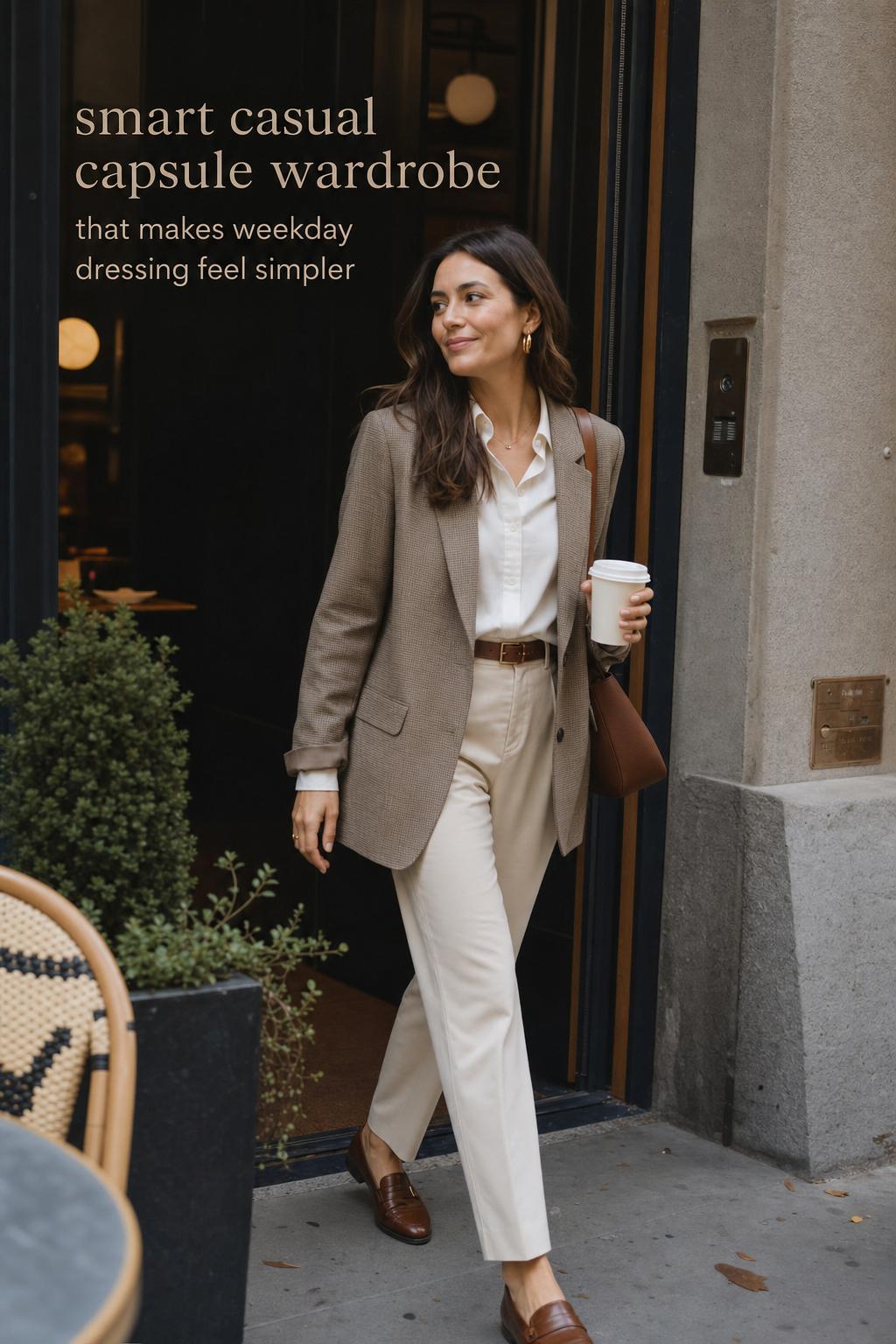
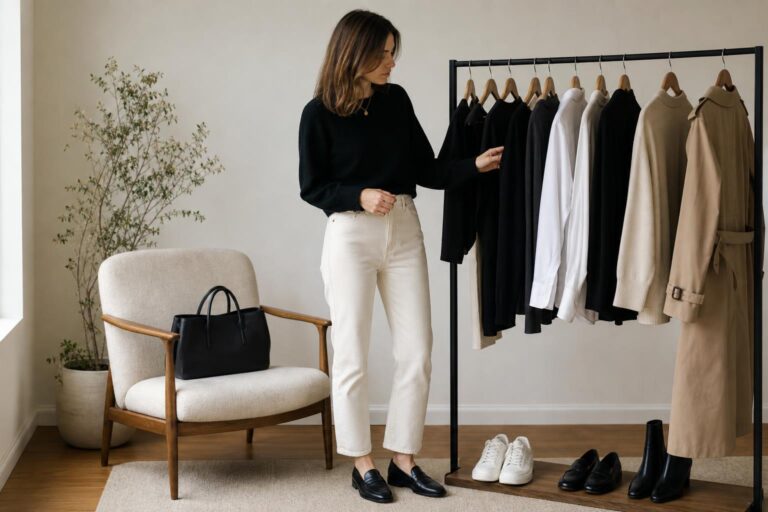
That is where a capsule approach becomes practical. Instead of chasing isolated outfit ideas, you build around core pieces such as a blazer, tailored trousers, a white shirt, knitwear, loafers, smart shoes, and a versatile dress, then use layering, proportion, and color palette decisions to make those items perform across different settings. In the U.S. market, where flexible dress codes are common and daily routines move quickly, this kind of wardrobe planning is less about minimalism for its own sake and more about reliability.
The strongest smart casual wardrobes are not the biggest. They are the most coherent. They account for movement, climate, comfort, and the reality that one outfit often needs to survive more than one occasion. Once that logic is clear, smart casual stops feeling vague and starts feeling highly usable.
Found the dress? Keep the rest in one place.
Zarellea brings guest details, vendors, timelines, and every next step together — so your wedding plan feels as good as your look.
Why smart casual feels harder than it should
Smart casual sits in the middle ground between formalwear and off-duty dressing, which means the margin for visual imbalance is small. Too much structure and the outfit reads formal. Too much softness and it loses the smart element. That tension is why people often feel stuck between pieces that are individually good but collectively unresolved.
Climate adds another layer of difficulty. In unpredictable weather, especially during seasonal transitions, the usual instinct is to pile on layers. But over-layering can distort silhouette balance and make smart casual look heavy rather than intentional. A knit under a blazer may look polished in theory, yet if both pieces are bulky, movement becomes restricted and the outfit stops feeling effortless.
Dress code uncertainty also matters. Smart casual for an office, a client meeting, a dinner, or a day that starts at a desk and ends out in the city are not identical needs. The wardrobe has to cover events with different expectations while still feeling visually cohesive. That is why the most useful pieces are not simply “nice clothes.” They are items that can bridge contexts through small shifts in styling.
Fabric and fit are often the hidden reason an outfit fails. A beautifully cut blazer can elevate almost anything, but if the fabric is too stiff for long wear, it remains a good idea rather than a practical one. Tailored trousers can anchor the entire look, but if the shape clashes with your shoes or top layer, the outfit loses ease. Smart casual succeeds when pieces look composed but still allow the body to move naturally through a real day.
The real styling challenge
- Balancing polish with comfort
- Creating enough structure without drifting into formalwear
- Making layers work across temperature changes
- Choosing shoes that support long wear and still look refined
- Building around a limited color palette so everything mixes easily
- Ensuring each piece can work for more than one event or routine
The foundation pieces that do the heavy lifting
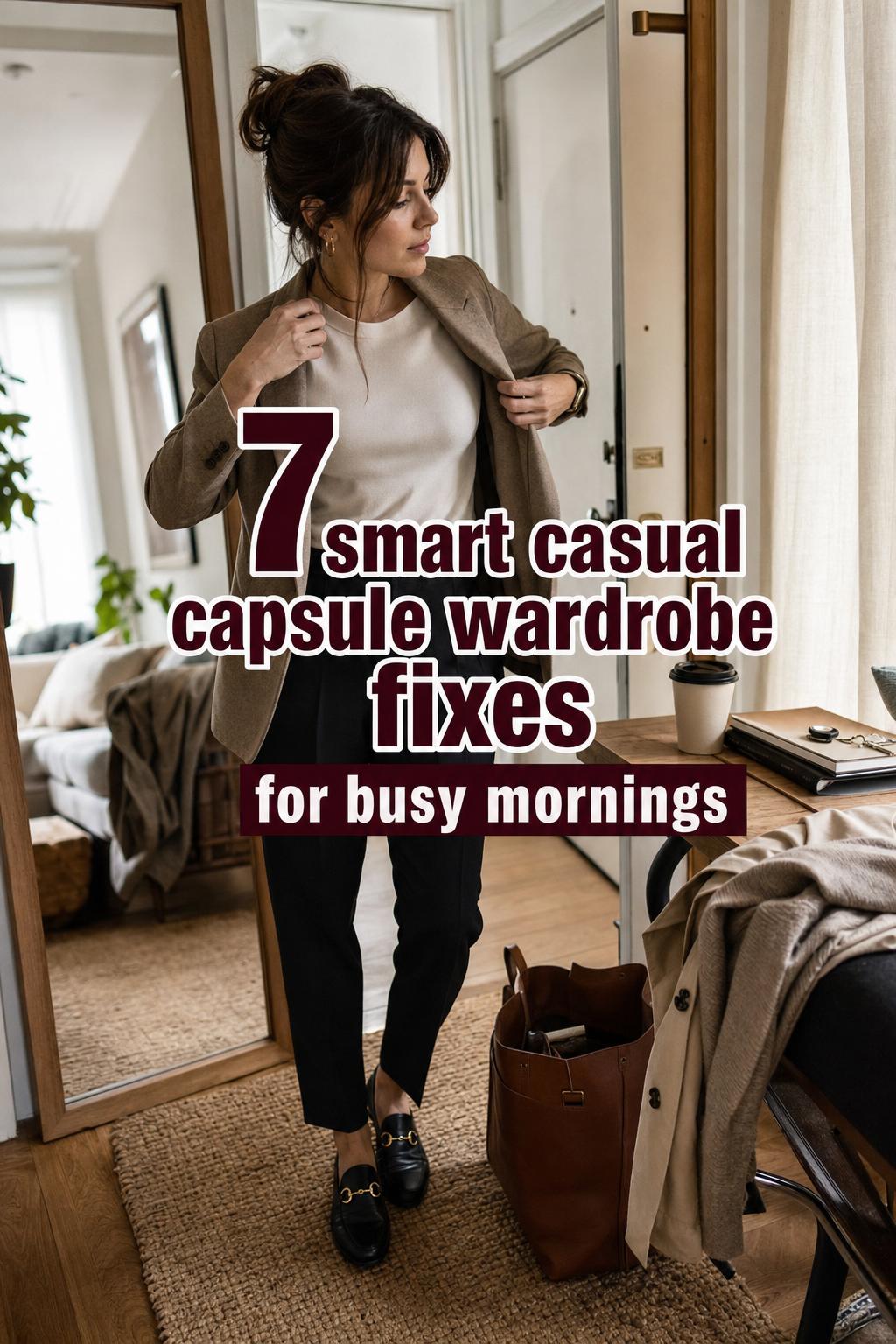
A capsule only works when the building blocks are strong. In a smart casual wardrobe, that means selecting items with enough visual clarity to stand on their own and enough neutrality to combine easily. The purpose of core pieces is not to make every outfit look identical. It is to make outfit composition faster and more reliable.
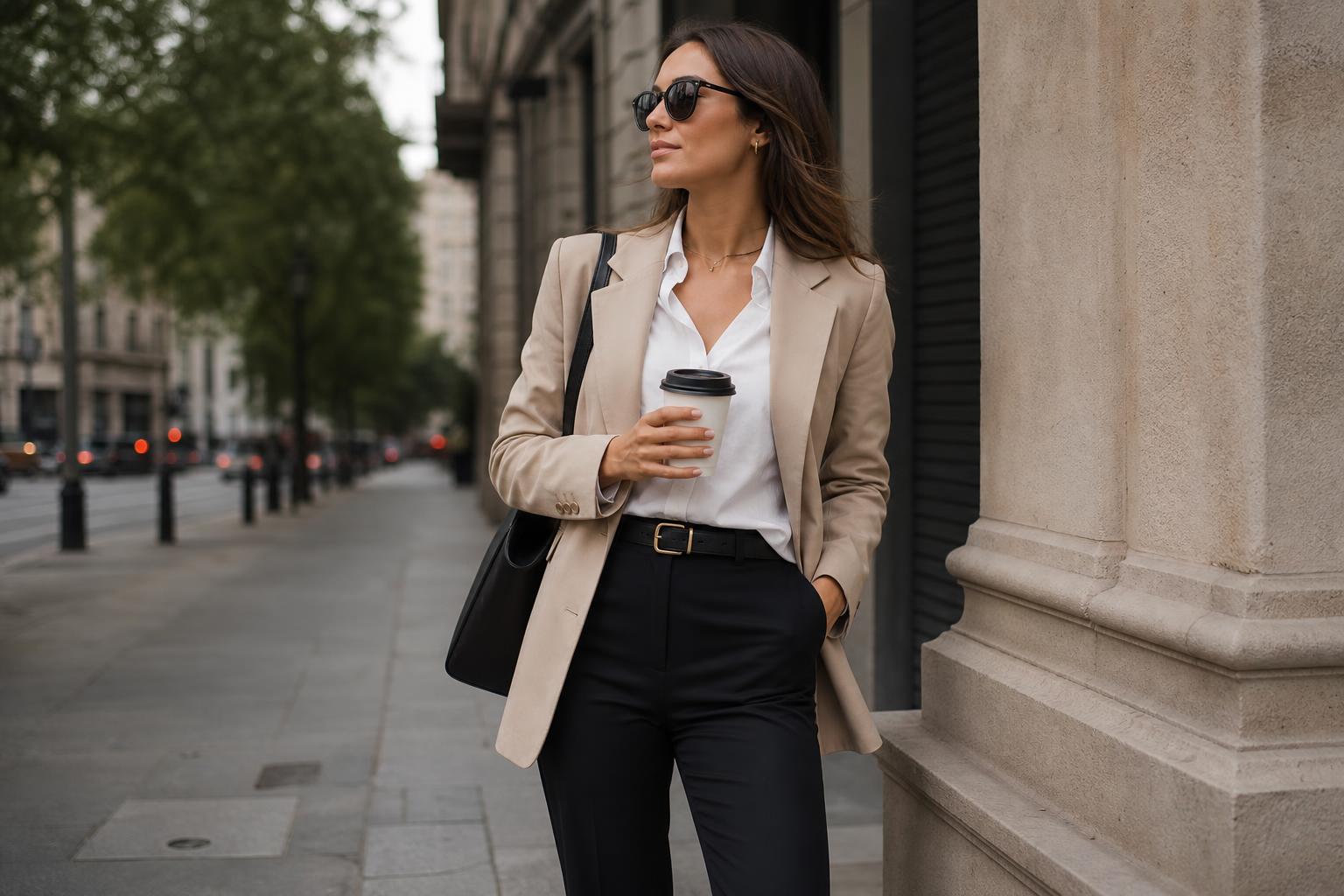
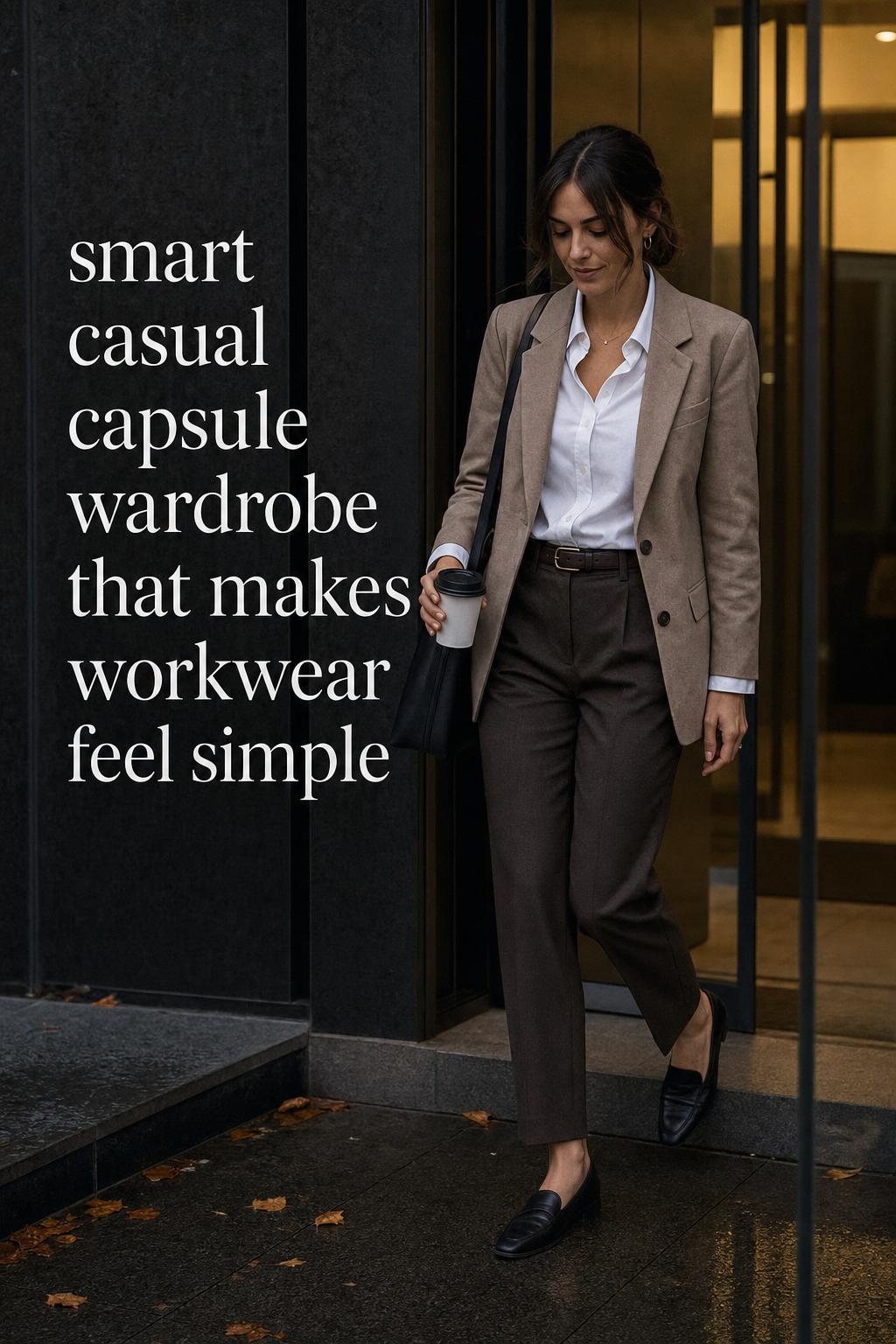
The blazer is usually the clearest visual anchor. It gives immediate shape to softer separates and helps translate casual items into something office-appropriate or dinner-ready. Tailored trousers do similar work on the lower half of the outfit, offering a clean line that supports knitwear, shirts, and smarter footwear. A white shirt remains useful not because it is obligatory, but because it creates brightness and structure when the rest of the outfit is tonal or textural.
Knitwear introduces softness and approachability, which is crucial in smart casual dressing. It prevents the wardrobe from feeling too rigid while adding layering potential. Loafers and other smart shoes provide the finish that keeps the capsule grounded in the “smart” side of the spectrum. A versatile dress extends the wardrobe’s range, especially for days when one-piece dressing is simpler but the result still needs polish.
Core pieces worth prioritizing
- Blazer
- Tailored trousers
- White shirt
- Polo or knit top
- Versatile dress
- Loafers
- Other smart shoes suited to walking and long wear
These pieces work because they create a stable framework. Once that framework exists, variety comes from layering, fabric contrast, and context rather than constant shopping. This is also where brands often enter the conversation in practical wardrobe planning: not as status markers, but as reference points for fit, fabrication, and how different products interpret the smart casual space.
What makes a capsule feel cohesive instead of restrictive
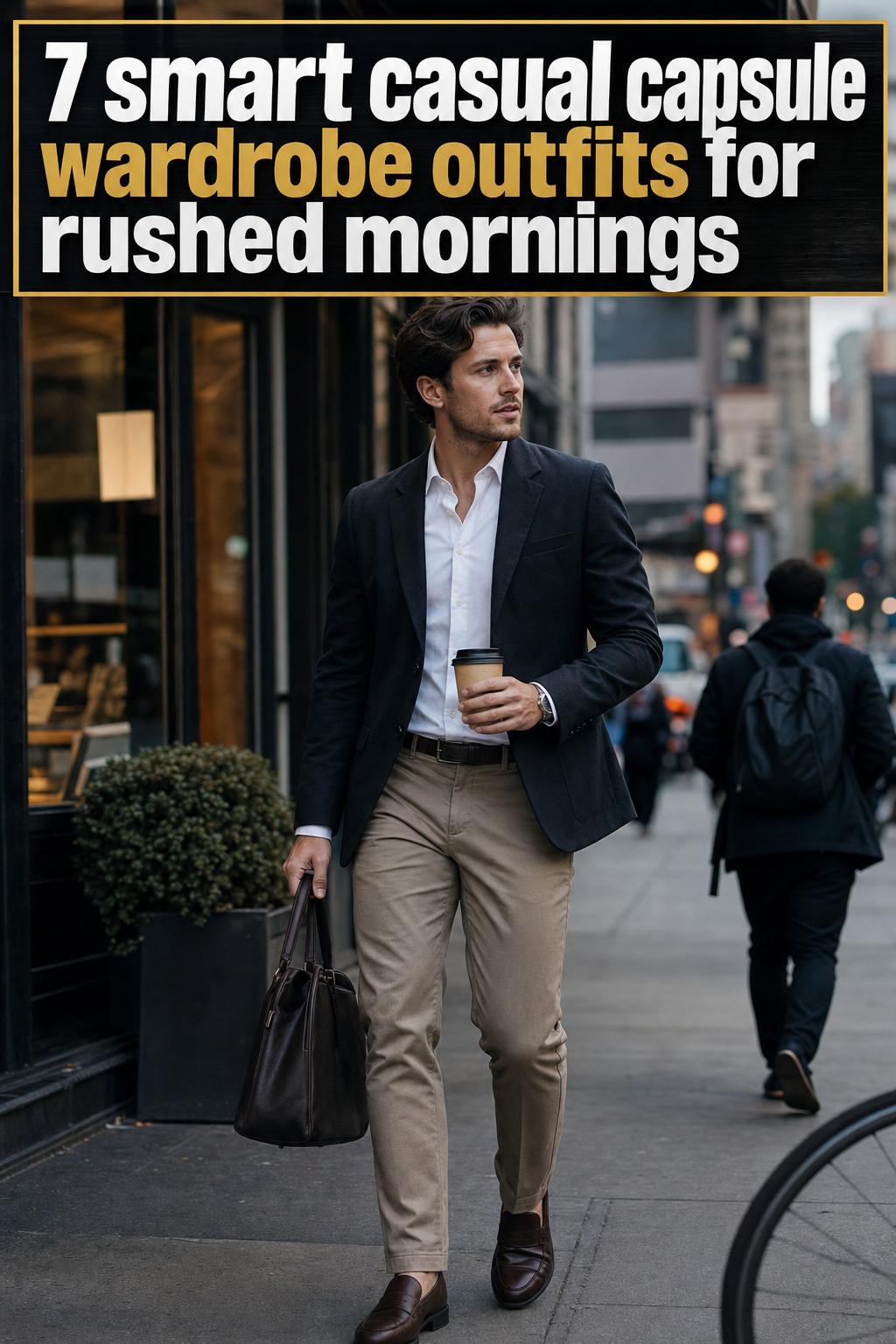
The strongest capsule wardrobes rely on visual compatibility. Color palette is part of that, but silhouette and texture matter just as much. If every item belongs to a different style language, the wardrobe may look varied on hangers but difficult in daily use. A smart casual capsule should allow tonal layering, clear outfit composition, and enough contrast to avoid flatness.
Neutrals are useful because they reduce friction. They help a blazer connect to tailored trousers, a white shirt connect to knitwear, and loafers connect to both dresses and pants. But the purpose of neutrals is not to erase personality. It is to make the wardrobe mixable. Once that base is established, texture contrast becomes the subtle styling tool that keeps outfits interesting. A structured blazer against a softer knit, or smooth tailored trousers against a more tactile top, creates polish without visual noise.
Spacing also matters. A capsule wardrobe count should leave enough room for repetition without creating boredom. If every day feels like the same formula, the issue is usually not too few pieces but too little variation in shape, layering, or context. A practical wardrobe count balances core staples with a few strategic items that change the tone of the outfit without disrupting the system.
Tip: build compatibility before variety
Choose pieces that can each work in at least two settings, such as office and dinner or meeting and weekend city wear. That single decision improves versatility more than buying a larger number of trend-driven pieces that only function once.
Relaxed layers that still feel polished
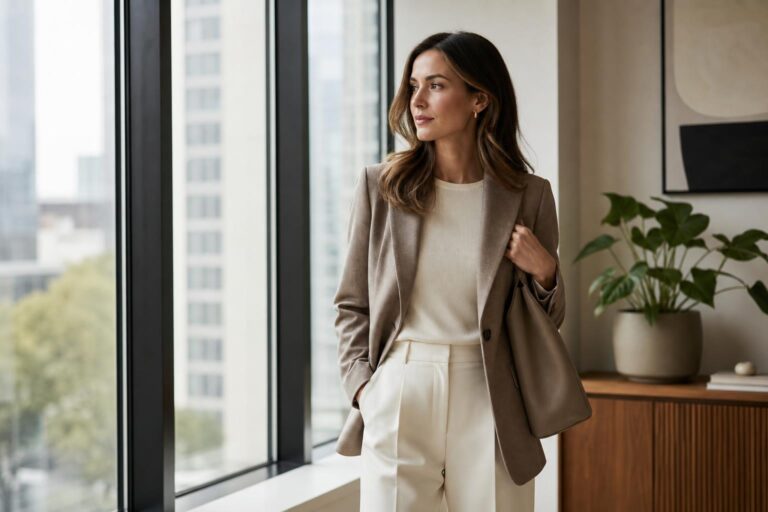
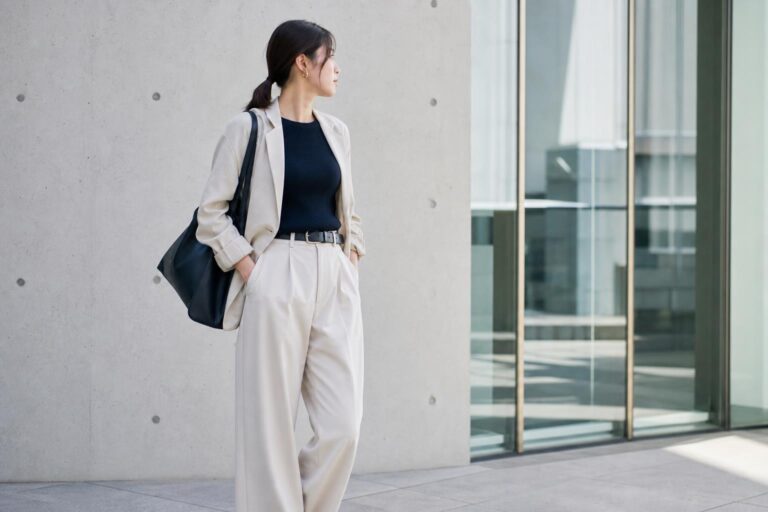
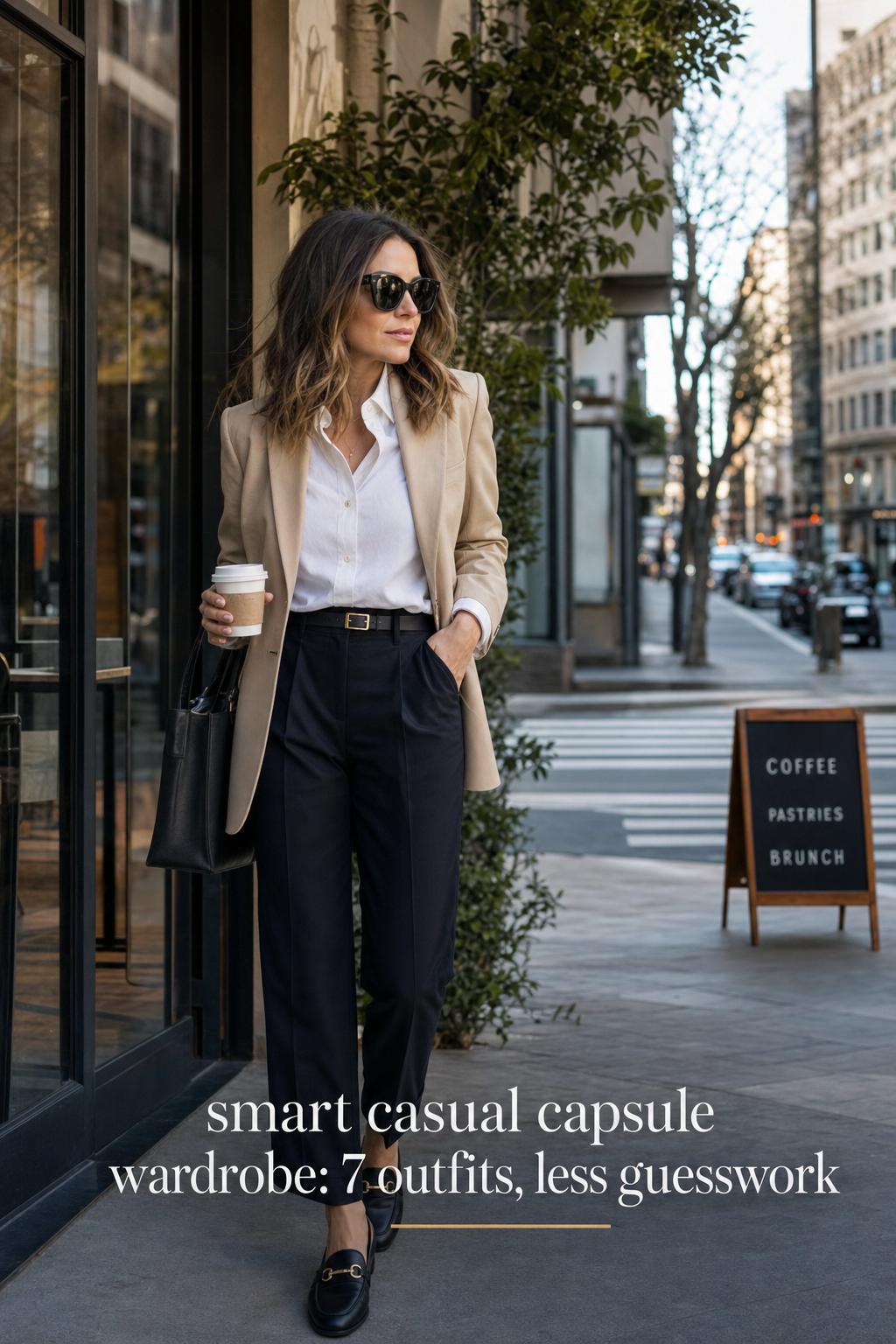
One of the most effective smart casual combinations starts with tailored trousers, a knit top or polo, and a blazer. The reason it works is simple: the trousers and blazer establish structure, while the knit softens the formality and makes the outfit feel more current and wearable. The silhouette is controlled but not rigid, which is exactly where smart casual performs best.
This formula is especially useful for workwear settings with flexible dress codes. It can handle a desk day, a meeting, and an after-hours dinner without requiring a full outfit change. Loafers are the natural shoe pairing because they preserve the polish of the blazer while keeping the look more relaxed than a formal shoe would. If you expect long hours on your feet, this is where practicality matters most. The smartest outfit on paper becomes useless if the shoes compromise comfort by midday.
Why this outfit works
The blazer creates a visual frame through the shoulders, the knit introduces texture and ease, and the tailored trousers provide a clean vertical line. Together, they solve the common smart casual problem of looking either too corporate or too casual. This outfit also adapts well across men’s smart casual, women’s smart casual, and unisex styling because the logic is based on balance rather than a fixed silhouette.
Easy ways to recreate the look
- Use a white shirt instead of a knit when you want a sharper result
- Swap loafers for another smart shoe if your routine requires more support
- Keep the palette tonal so the layering feels intentional rather than busy
- Let one item provide softness, but not all of them at once
A common mistake here is adding too many competing layers. A blazer over a bulky knit with wide trousers can overwhelm the body and flatten the outfit’s proportions. The cleaner solution is to let one layer provide substance and keep the others visually streamlined.
Lightweight styling for unpredictable weather
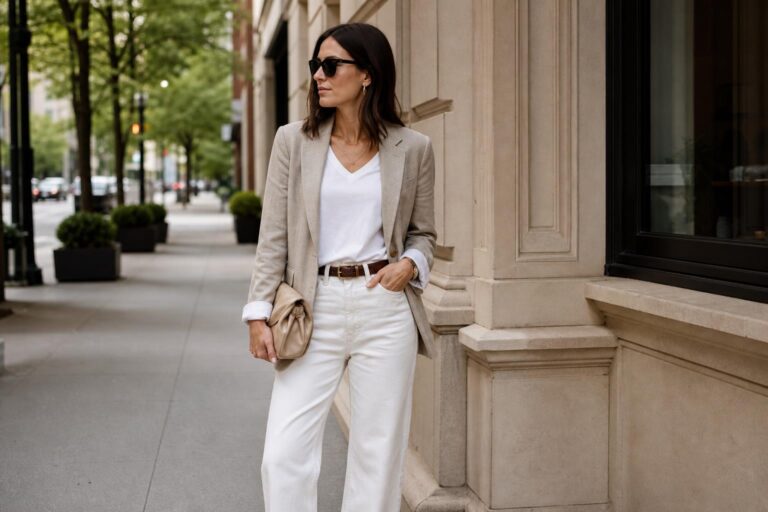
Smart casual gets more difficult when the day begins cool, warms up fast, and then shifts again by evening. In these situations, the most successful outfit is one built around removable structure. Think white shirt or lighter knit, tailored trousers, and a blazer that can come on and off without the outfit collapsing. The key is that the base layer still looks finished on its own.
This is where a capsule wardrobe earns its value. Instead of building a weather-specific look from scratch, you use the same versatile items in slightly different combinations. Tailored trousers continue to anchor the outfit, the shirt or knit controls breathability and polish, and the blazer acts as a mobile top layer rather than a mandatory uniform piece.
Fabric insight
The problem with many transitional outfits is not styling ambition but fabric mismatch. When all pieces hold too much visual weight, the outfit feels seasonally confused. Lighter fabric behavior allows the silhouette to stay crisp while keeping movement easy. That matters during travel, commuting, and full days with temperature swings.
Transitional weather tip
If a blazer is your outer layer, make sure the shirt or knit beneath it can stand alone visually. That way the outfit still looks deliberate when the top layer comes off in the office, on transit, or at dinner.
Comfortable city outfits with structure
Not every smart casual day happens inside one building. Many require commuting, walking, meetings in different locations, and enough adaptability to move through the city without looking either too relaxed or too dressed up. In this context, structure needs to be edited carefully. A full formalwear approach can feel disconnected from the routine, while an overly casual outfit risks missing the brief entirely.
A smart solution is a knit top paired with tailored trousers and smart shoes, with the blazer added only when the setting calls for more authority. This shifts the wardrobe away from performance dressing and toward strategic dressing. The knit keeps comfort high, the trousers preserve the line of the outfit, and the shoes make sure the result still reads polished.
Most versatile piece
Tailored trousers are often the real engine of a smart casual capsule wardrobe. They connect directly to office wear, meetings, and dinners, but they also tone down the seriousness of a blazer and sharpen the ease of a knit. When fit is right, they do more balancing work than almost any other item.
For readers trying to avoid buying everything new, this is also the place to start. Many existing wardrobes already include tops and shoes that can shift into smart casual more easily once the right trouser shape is in place. The capsule becomes functional when the lower half of the outfit reliably supports multiple top-layer options.
Elevated casual looks that handle after-hours plans
One of the most useful tests for a capsule is whether it can move from daytime obligations into dinner or evening plans with only minor adjustments. The pieces most capable of doing that are a versatile dress, loafers or other refined shoes, and a blazer that can sharpen the look on demand. The dress should not depend on heavy styling to feel complete. Its role is to provide simplicity without sacrificing polish.
A versatile dress works in smart casual because it solves multiple wardrobe problems at once. It reduces decision fatigue, creates a full silhouette in one step, and can be shifted stylistically through outerwear and shoes. Add a blazer and the outfit feels meeting-appropriate. Remove the blazer and the same dress can feel softer and more relaxed for dinner.
How to make the outfit feel more elevated
Use the blazer as the visual anchor and keep the rest of the look clean. The more polished the outer line, the less the outfit needs from accessories. This is particularly useful when your day includes several events and you do not want to carry extra styling options.
The trap here is choosing a dress that belongs entirely to one category, either too formal or too relaxed. In a smart casual capsule, the strongest dresses are the ones that can accept structure from a blazer and still make sense with practical footwear.
Gender-specific approaches without losing the capsule logic
Smart casual styling often gets separated into men’s smart casual and women’s smart casual, but the underlying principles remain the same: balanced structure, functional layering, and pieces that move between events with minimal effort. The differences are usually in silhouette emphasis rather than in the core wardrobe strategy.
For men, a blazer, polo or knit, tailored trousers, and loafers create a direct, highly efficient formula. The polo keeps the look grounded in casualwear while the blazer and trousers maintain enough authority for office and meeting settings. For women, the same logic can work through blazers, white shirts, knitwear, tailored trousers, and a versatile dress, depending on whether the day calls for more structure or ease. For unisex styling, the emphasis shifts toward clean lines, neutral colors, and items that can be layered without becoming visually overworked.
What stays consistent across all approaches
- A clear visual anchor, usually a blazer, trousers, or dress
- A restrained palette that supports mix-and-match dressing
- Shoes that align with the formality of the outfit and the reality of the day
- Layering that adds function, not bulk
- Fit that supports movement as much as appearance
This is also where influencer and designer perspectives often matter in the broader style conversation: not because one person defines the dress code, but because brand and editor guidance tends to reinforce the same practical principles. The pieces that endure in this category usually do so because they solve real wardrobe needs repeatedly.
Wardrobe planning that prevents decision fatigue
A smart casual capsule wardrobe becomes far more useful when it is planned as a system rather than assembled as a mood board. That means thinking about capsule counts, color palette, and how often each item can realistically be worn across a week. The right number is not universal, but the method is: prioritize repeatable combinations over isolated statement pieces.
A practical capsule count includes enough tops to alternate silhouettes, enough bottom options to avoid outfit fatigue, one or two layers with authority, and shoes that can support different events. Neutrals simplify this process because they make recombination easy. The more often your blazer, white shirt, knitwear, trousers, and shoes can cross over, the stronger the capsule becomes.
Tips for smarter wardrobe planning
- Start with pieces you already wear often, then identify what is missing between them
- Choose a color palette that allows most tops and bottoms to pair without effort
- Keep at least one layer for authority and one for softness
- Make sure every shoe earns its place through comfort as well as appearance
- Use dresses and blazers as problem-solvers for rushed mornings and mixed dress codes
This planning approach is particularly effective in the U.S., where workwear expectations often vary by workplace, region, and schedule. A wardrobe built only for one highly specific context tends to fail quickly. A wardrobe built around cross-occasional versatility holds up better.
Where smart casual capsules often go wrong
Most smart casual mistakes come from misunderstanding what the outfit needs to communicate. People often add more because they think “smart” requires extra effort. In reality, overcomplication is usually the issue. Too many layers, too many competing textures, or shoes that belong to a completely different dress code can make an outfit feel unresolved.
Another frequent problem is ignoring silhouette balance. A structured blazer with equally rigid trousers and equally stiff shoes can look severe rather than versatile. On the other side, soft knitwear with relaxed pieces from head to toe can lose the clean line that smart casual needs. The middle ground is where the outfit becomes persuasive: one or two structured elements, one or two softer ones, all working toward a coherent shape.
Common comfort mistake
Choosing shoes only for appearance is one of the fastest ways to undermine a capsule. Smart shoes and loafers are useful because they can bridge formality levels, but only if they support walking, commuting, and long wear. Footwear that looks polished but limits movement narrows the wardrobe’s practical value.
What works better instead
- Use one statement of structure rather than several at once
- Let trousers or a blazer carry the polish, then keep the rest simpler
- Prioritize fabric combinations that move well together
- Edit the outfit until it feels clear, not crowded
How to adapt the capsule for different routines and events
The true strength of smart casual dressing is not that it looks appropriate in one setting. It is that the same pieces can be rebalanced for different parts of your life. Office wear might need more structure through a blazer or white shirt. A meeting might call for sharper shoes and cleaner layering. Dinner may work better with the blazer removed and the knit or dress allowed to take the lead.
Travel is another useful lens. A capsule built around versatile items performs especially well when you need to pack lightly and still cover multiple situations. Tailored trousers, knitwear, a blazer, and loafers can rotate through several days with minimal repetition fatigue because the combinations change enough to feel fresh. This is one of the clearest opportunities within the category: the same wardrobe logic that works for home routines also works for compact, practical packing.
Quick styling adjustment
When the outfit needs to read more professional, add the blazer or switch from knit to white shirt. When it needs to relax, keep the tailored base and soften the top half. Small shifts are more effective than full changes because they preserve the overall cohesion of the capsule.
Brand, editor, and style-perspective cues that matter
In smart casual dressing, brand references are most useful as shorthand for construction, fit, and product categories rather than as the main story. Fashion editors, brands, designers, and influencers often shape how people interpret this dress code, but the enduring advice remains practical: rely on neutral brands or familiar labels when they help clarify fit and repeatability, not when they distract from versatility.
The same applies to style guidance in the broader U.S. fashion market. What tends to last is not a highly specific trend formula but a set of recognizable building blocks: blazers tied to office wear and dinner, trousers tied to structure and movement, knitwear tied to softness, loafers tied to practical polish, and dresses tied to ease. Those relationships matter more than any single product drop because they help you make wardrobe decisions with consistency.
If you use brand inspiration at all, use it to answer concrete questions. Does this blazer have enough ease for layering? Do these trousers hold a clean line through a full day? Do these shoes bridge office and after-hours settings? That approach keeps the capsule grounded in function.
A practical capsule mindset for long-term wear
The smartest version of a smart casual capsule wardrobe is not the one with the fewest items. It is the one that keeps earning its place through real use. That requires a balanced perspective. Versatility matters, but so does honest recognition of what you actually wear. A blazer that looks perfect but never leaves the hanger is not a successful staple. A knit that appears casual but keeps rescuing difficult dressing days probably is.
There is also room here for angles that strengthen the wardrobe without changing its core logic, including sustainability-minded shopping, gender-neutral styling, and regional nuance. Those approaches do not require a separate wardrobe. They simply ask the same pieces to perform with more intention. The common thread is thoughtful selection: buy less randomly, style more strategically, and prioritize pieces that can connect to several parts of your life.
When smart casual feels difficult, the answer is usually not more clothes. It is better relationships between the clothes you already own or plan to add. Once the blazer, trousers, shirt, knit, shoes, and dress all support each other, getting dressed becomes faster, more coherent, and far more comfortable.
FAQ
What is a smart casual capsule wardrobe?
A smart casual capsule wardrobe is a small, coordinated group of versatile outfit pieces designed to work across flexible dress-code settings such as office days, meetings, dinner, and everyday city routines. It usually centers on items like a blazer, tailored trousers, a white shirt, knitwear, loafers, smart shoes, and a versatile dress.
What are the essential pieces in a smart casual capsule?
The most reliable foundation includes a blazer, tailored trousers, a white shirt, a polo or knit top, loafers or other smart shoes, and a versatile dress if dresses fit your lifestyle. These pieces matter because they create enough structure for smart dressing while still allowing comfort, layering, and mix-and-match flexibility.
How many items should a smart casual capsule wardrobe have?
There is no single fixed number, but the capsule should include enough pieces to create repeatable combinations without visual fatigue. A useful approach is to build around core staples that can each work in more than one setting, rather than aiming for a specific count that looks minimal but does not support your real routine.
How do I make smart casual outfits work for unpredictable weather?
Use removable structure. Start with a base that still looks complete on its own, such as a white shirt or knit with tailored trousers, then add a blazer that can come off when temperatures shift. This keeps the outfit visually finished throughout the day instead of relying on one fixed layer setup.
Can a smart casual capsule work for both office wear and after-hours plans?
Yes, that is one of its biggest strengths. The same blazer, trousers, knitwear, shoes, or versatile dress can move between office, meeting, and dinner settings with minor changes in layering. A good capsule is built specifically to handle those transitions without requiring a full outfit change.
What colors work best in a smart casual capsule wardrobe?
A neutral color palette is usually the most practical because it reduces friction between pieces and makes tonal layering easier. Neutrals help blazers, trousers, shirts, knitwear, and shoes combine smoothly, which improves versatility without making the wardrobe feel visually chaotic.
How do I keep smart casual from looking too formal?
Balance structured pieces with softer ones. A blazer with a knit top, or tailored trousers with a more relaxed upper layer, keeps the outfit polished without pushing it into formalwear. The goal is controlled ease, not rigid matching.
Are loafers the best shoes for a smart casual capsule?
Loafers are one of the most useful options because they bridge casual and polished dressing well, but the best choice depends on your daily movement and comfort needs. The key is selecting smart shoes that support walking and long wear while still maintaining a refined finish.
Can a smart casual capsule be gender-neutral?
Yes. The capsule logic is naturally adaptable to men’s smart casual, women’s smart casual, and unisex wardrobes because the core principles stay the same: balanced structure, clean lines, practical layering, a restrained palette, and pieces that work across multiple events.
What is the biggest mistake people make with smart casual dressing?
The most common mistake is overcomplicating the outfit. Too many layers, too much structure, or shoes that do not fit the routine can make smart casual feel uncomfortable and visually crowded. The better approach is to keep one clear visual anchor and let the rest of the outfit support it.