Curvy Fashion: 7 Outfit Strategies That Actually Work
Curvy fashion works best when it gives you more choices, not more rules. The goal is not to disguise a body, create the illusion of a different shape, or follow a formula that ignores your taste. It is to understand how proportion, fabric, rise, length, and ease change the way an outfit feels on your body. Once you know those levers, you can choose a sharp blazer, a soft dress, a relaxed pair of jeans, or a statement print because you like it, not because a style guide gave you permission.
The most useful way to approach curvy fashion is to compare three styling strategies: structured dressing, draped dressing, and relaxed dressing. Each can look polished. Each can feel comfortable. The difference is where the outfit creates definition, how much movement the fabric allows, and how much visual information the look carries. Use the guide below to decide which strategy suits the day, then borrow details from the others when you want a different result.
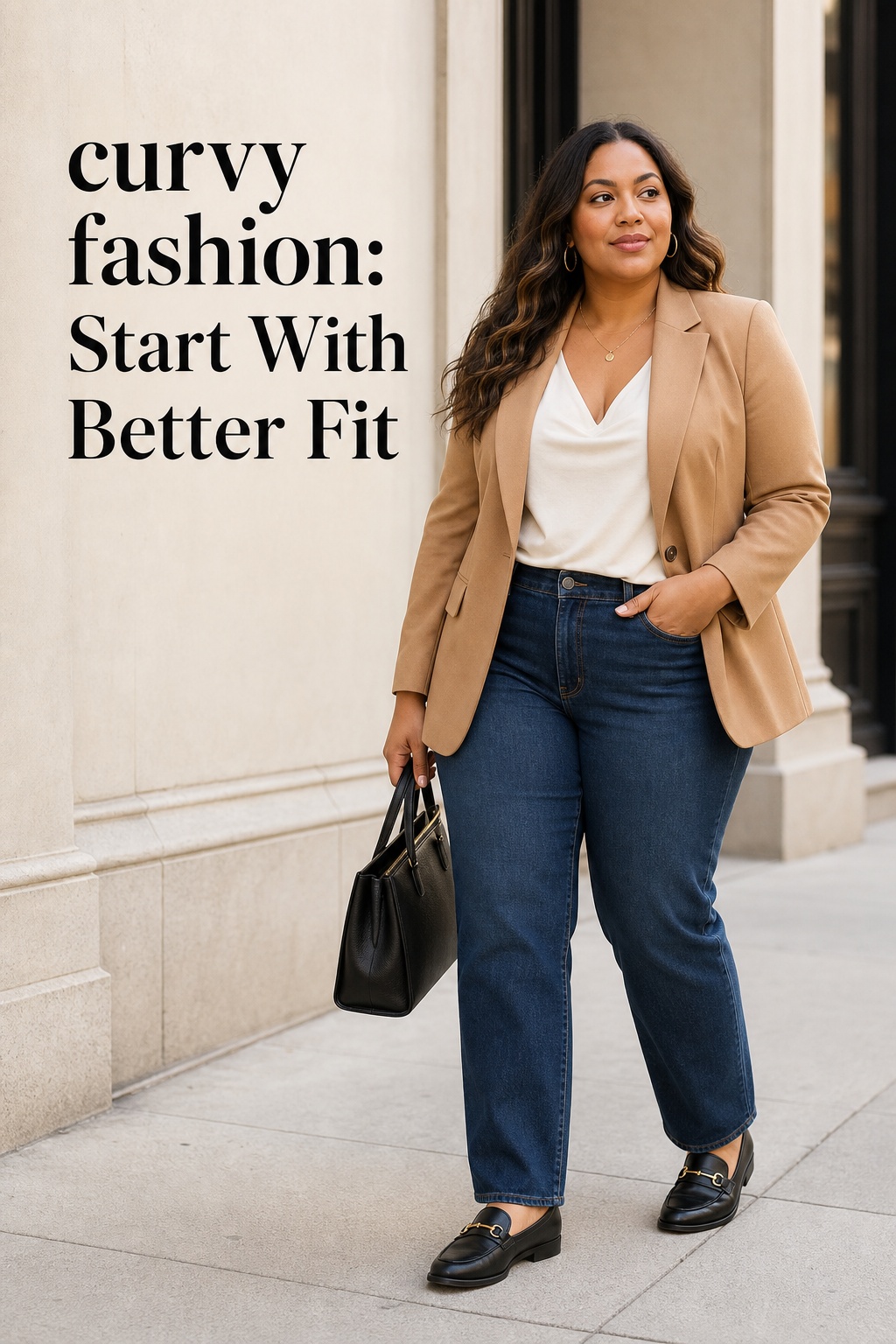
Before buying anything, check the fit at the bust, waist, hips, rise, and hem. A garment can be technically the right size and still be the wrong cut. Look for fabric recovery, a shoulder seam that sits where it should, a waistband that stays level, and enough room to sit, walk, and lift your arms. Those small checks will take you further than a long list of garments that supposedly flatter every curvy figure.
1. Structured, draped, or relaxed: choose the right curvy fashion strategy
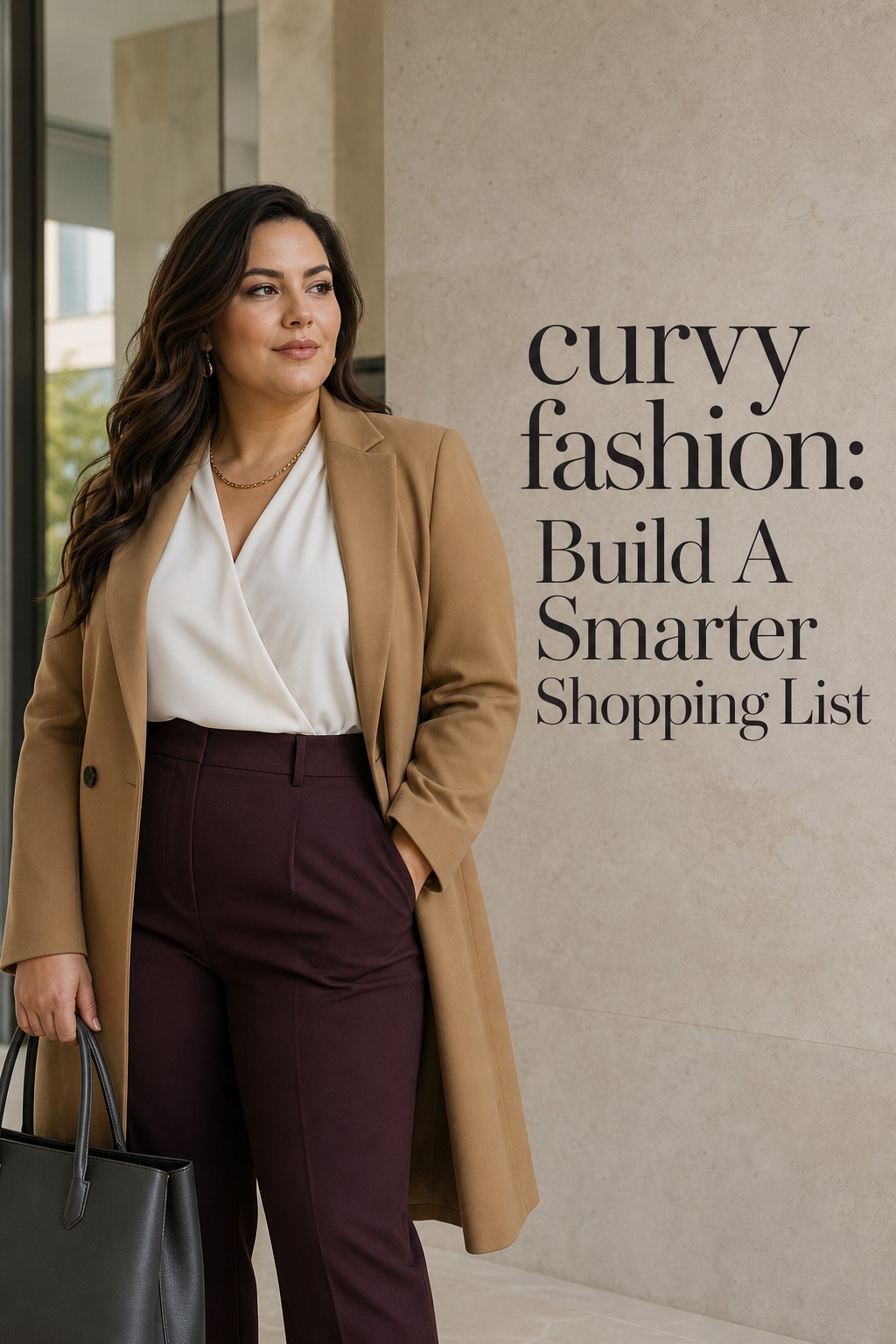
Structured dressing uses clear lines to give an outfit direction. Think of a single-breasted blazer, a crisp button-down, a straight-leg trouser, or a coat with a defined shoulder and a clean front. This strategy is useful when you want a polished result for work, travel, a dinner reservation, or any day when you need clothes to do some organizational work for you. Structure does not have to mean stiffness. A knit blazer or a fluid twill trouser can keep the line while remaining comfortable.
Found the dress? Keep the rest in one place.
Zarellea brings guest details, vendors, timelines, and every next step together — so your wedding plan feels as good as your look.
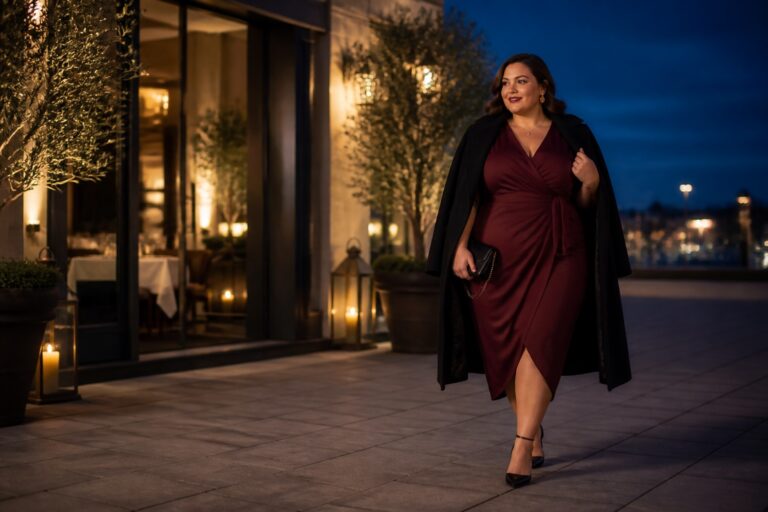
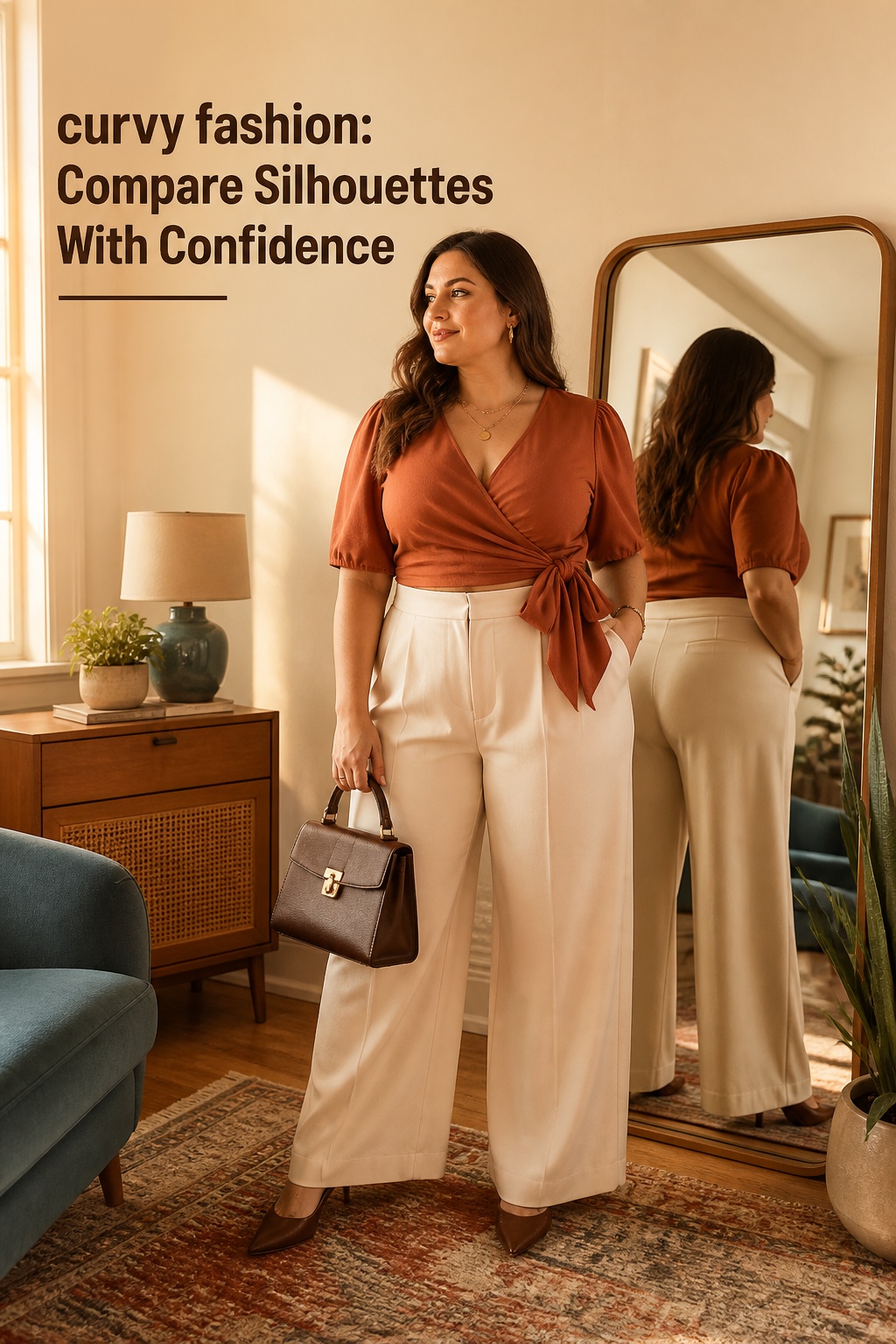
Draped dressing lets fabric create movement. Wrap tops, bias-cut skirts, soft wide-leg pants, fluid jersey dresses, and open cardigans belong here. The outfit feels more forgiving because the fabric follows the body instead of building a rigid frame around it. Draping is especially helpful when your measurements fluctuate or when you want an expressive silhouette. The important checkpoint is that the drape should start from a deliberate point, such as a shoulder, waist tie, or side seam, rather than collapsing everywhere at once.
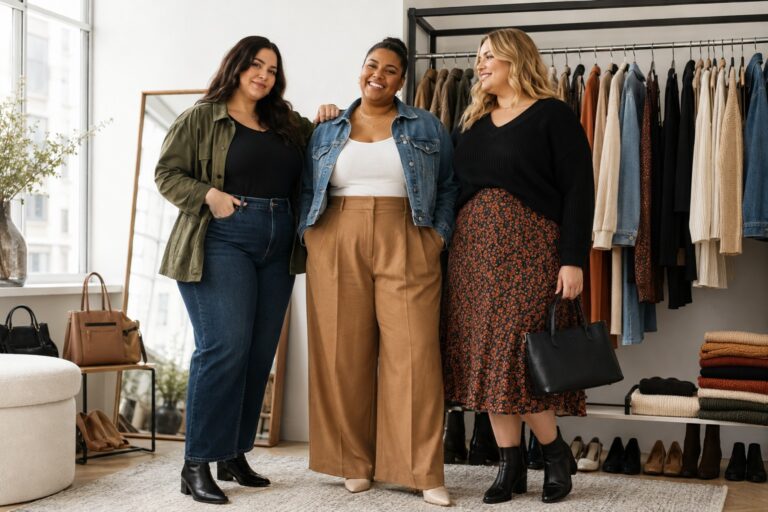
Relaxed dressing prioritizes ease. It may include a boxy tee, a denim jacket, an oversized shirt, pull-on trousers, or sneakers with a simple knit dress. Relaxed does not have to look careless. Repeat one polished element, such as a pointed flat, a leather belt, a neat tote, or a strong color, and the outfit will feel intentional. The best relaxed looks also include contrast. Pair a loose top with a straighter bottom, a soft layer with a structured shoe, or a wide silhouette with a defined neckline.
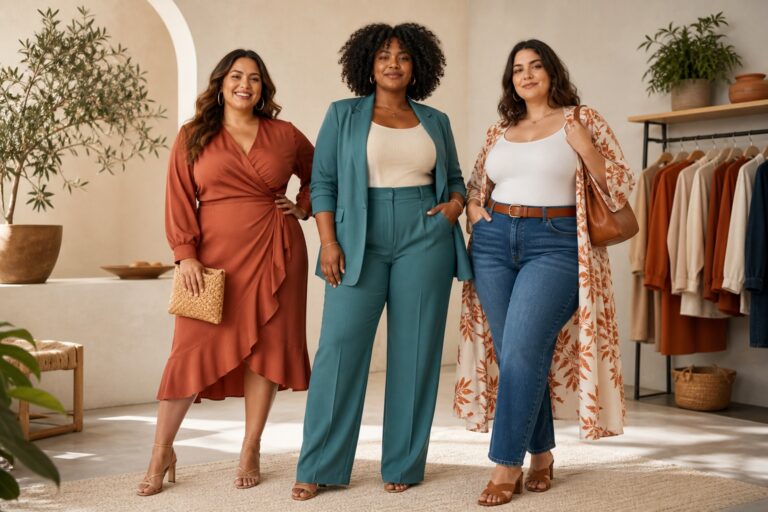
Use the strategies as a menu. A structured blazer over a draped dress creates balance. A wrap top with relaxed jeans looks easy but still has a focal point. A roomy button-down tucked into a high-rise trouser gives you movement without losing the waist entirely. Curvy fashion becomes much more flexible when you stop treating one silhouette as the answer and start asking what the outfit needs for this particular moment.
2. Compare the core building blocks before you shop
Start with tops by deciding where you want the eye to pause. A V-neck, open collar, square neck, or softly scooped neckline can create breathing room around the face and chest. That does not make other necklines wrong. A high neck can look excellent under a jacket, while a boat neck can be beautiful with a narrow trouser. The practical test is whether the neckline lies flat and whether the fabric pulls across the fullest part of the bust. If it does, try a different cut or size before changing your body or your style.
Wrap tops and faux-wrap tops are versatile because they provide an adjustable point of definition. Look for a tie that sits at your natural waist or slightly above it, and check that the inside closure does not gape when you move. A fitted tee can do similar work in a simpler way, especially under an open jacket. If you prefer loose tops, use a partial tuck, a front knot, or a cropped layer to show where the outfit changes direction.
For jeans, compare high-rise, mid-rise, straight, bootcut, and wide-leg cuts rather than assuming one rise or leg shape is universally best. The right rise stays comfortable when you sit and does not roll at the waist. Curvy-cut denim can help when the waist and hip measurements have a larger difference, but always compare the actual garment measurements and the fabric content. A little stretch may improve comfort, while too much stretch without recovery can cause the jeans to lose shape during the day.
Straight-leg jeans are an easy starting point because they work with sneakers, loafers, ankle boots, and heels. Bootcut jeans add a small amount of width at the hem, which can balance a longer jacket or a fitted top. Wide-leg jeans create a modern column when the waistband fits and the hem is intentional. If the volume is new to you, pair wide legs with a closer-fitting top or a tucked knit until you learn how the proportion feels.
Trousers should be judged from the side as well as the front. Look for a waistband that does not tilt, pockets that lie flat, and a rise that does not pull when you sit. Flat-front trousers often create a clean line, while a carefully placed pleat can add useful room. Do not reject every pleat automatically. The better question is whether the pleat opens smoothly and whether the fabric has enough weight to fall back into place.
Dresses offer the quickest full outfit, but the cut still matters. A wrap dress is adjustable and creates a natural focal point. A fit-and-flare dress gives definition through the bodice and movement through the skirt. A column dress can look striking when the fabric skims rather than clings and when you add a jacket, vest, or long necklace for a second line. Shirt dresses benefit from a substantial belt or a hidden snap if the buttons pull across the bust.
Layers should create a frame, not a pile. A single-breasted blazer, open cardigan, cropped jacket, denim overshirt, or long vest can all work. Check where the hem lands. A jacket ending at the widest point may feel visually abrupt, while a slightly shorter or longer hem can create a cleaner transition. Sleeve length matters too. A sleeve that ends near the wrist bone exposes a small amount of skin and makes the layer look finished.
3. Match curvy fashion outfit formulas to the situation
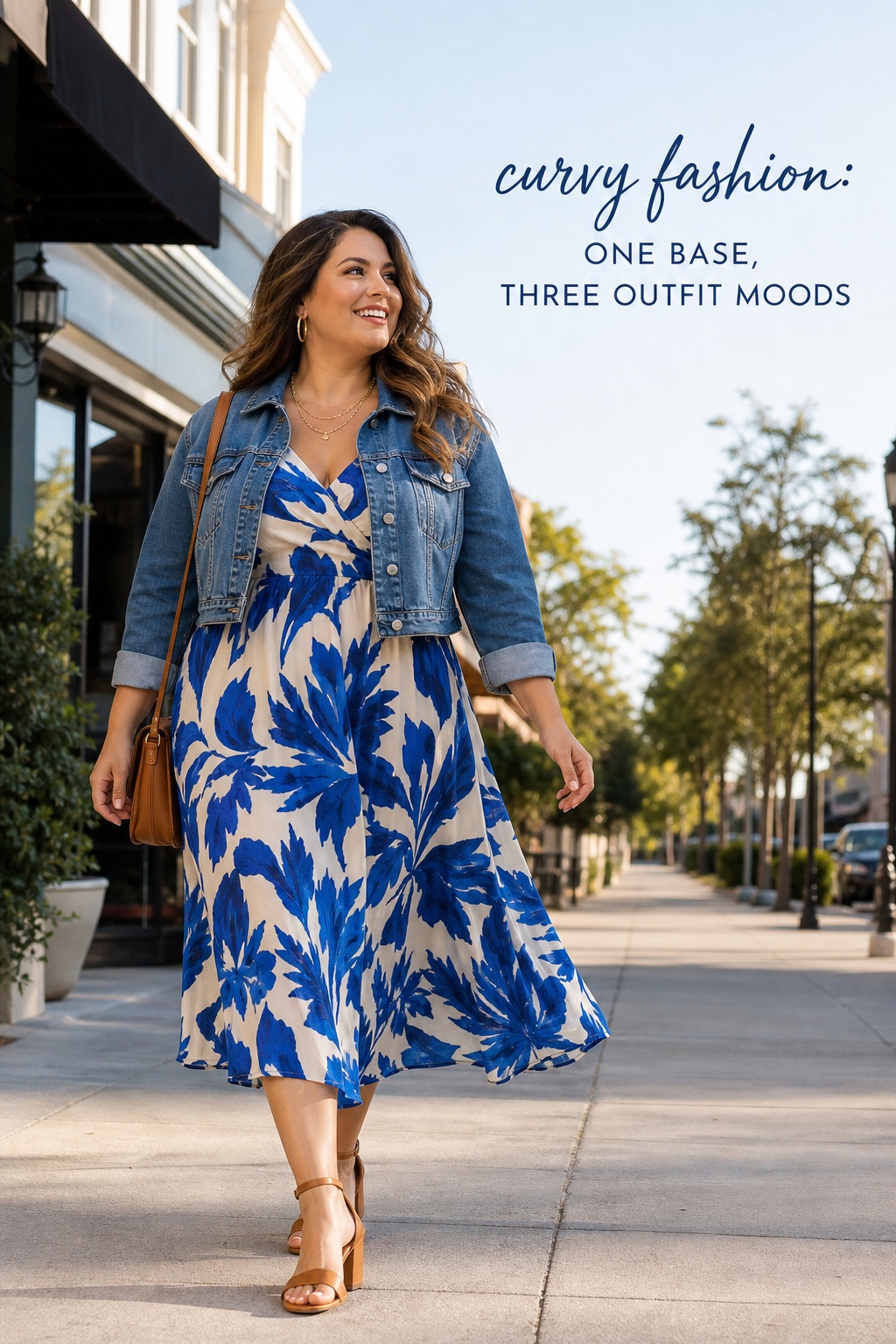
For everyday casual dressing, begin with one reliable base and change the finish. Try a fitted or softly draped tee, straight-leg jeans, a lightweight open shirt, and comfortable sneakers. For a more relaxed version, switch to a boxy tee and add a defined belt or a structured crossbody bag. For a more polished version, keep the jeans and replace the tee with a fine-gauge knit and the sneakers with loafers. This is one outfit idea with three different energy levels.
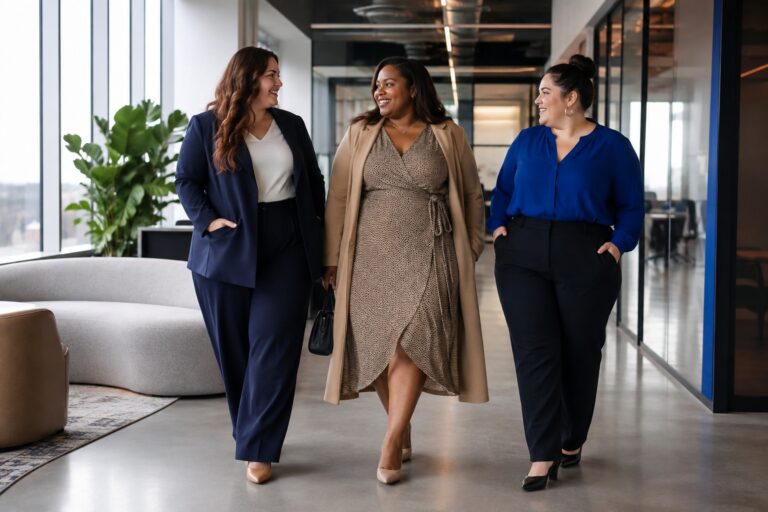
For work, pair a fluid blouse with a straight trouser and a single-breasted blazer. If you prefer less structure, use a knit shell, a draped cardigan, and a column skirt. Keep the color story simple so the fit can be the focus. Tonal dressing is helpful when you want a long, calm line, but contrast works just as well when the transition is purposeful. A dark trouser with a bright blouse, for example, creates a clear vertical split without making the outfit complicated.
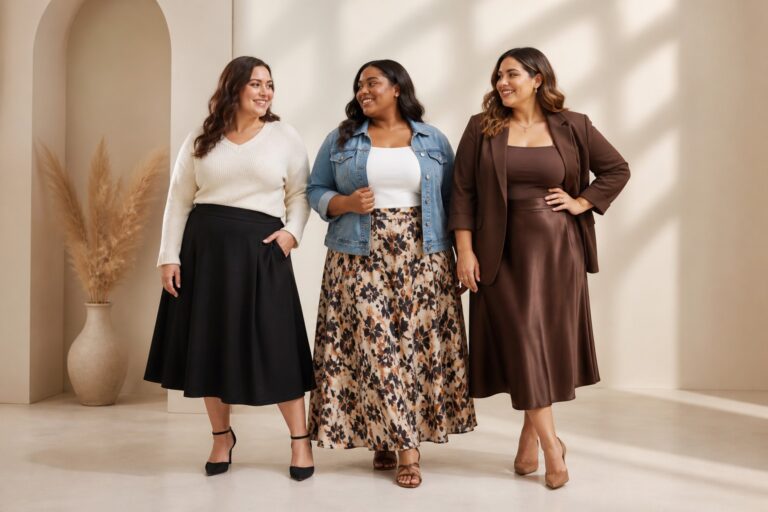
For a date night or dinner, choose one point of interest. That might be a wrap dress, a satin skirt, a square-neck top, a bold earring, or a bright shoe. Do not make every piece compete. A fitted knit with a flowing skirt feels balanced because the textures and volumes disagree in a useful way. A simple dress becomes more personal with a cropped jacket, a metallic flat, or a colorful bag. Comfort is part of the look because clothes that require constant adjusting will change your posture and mood.
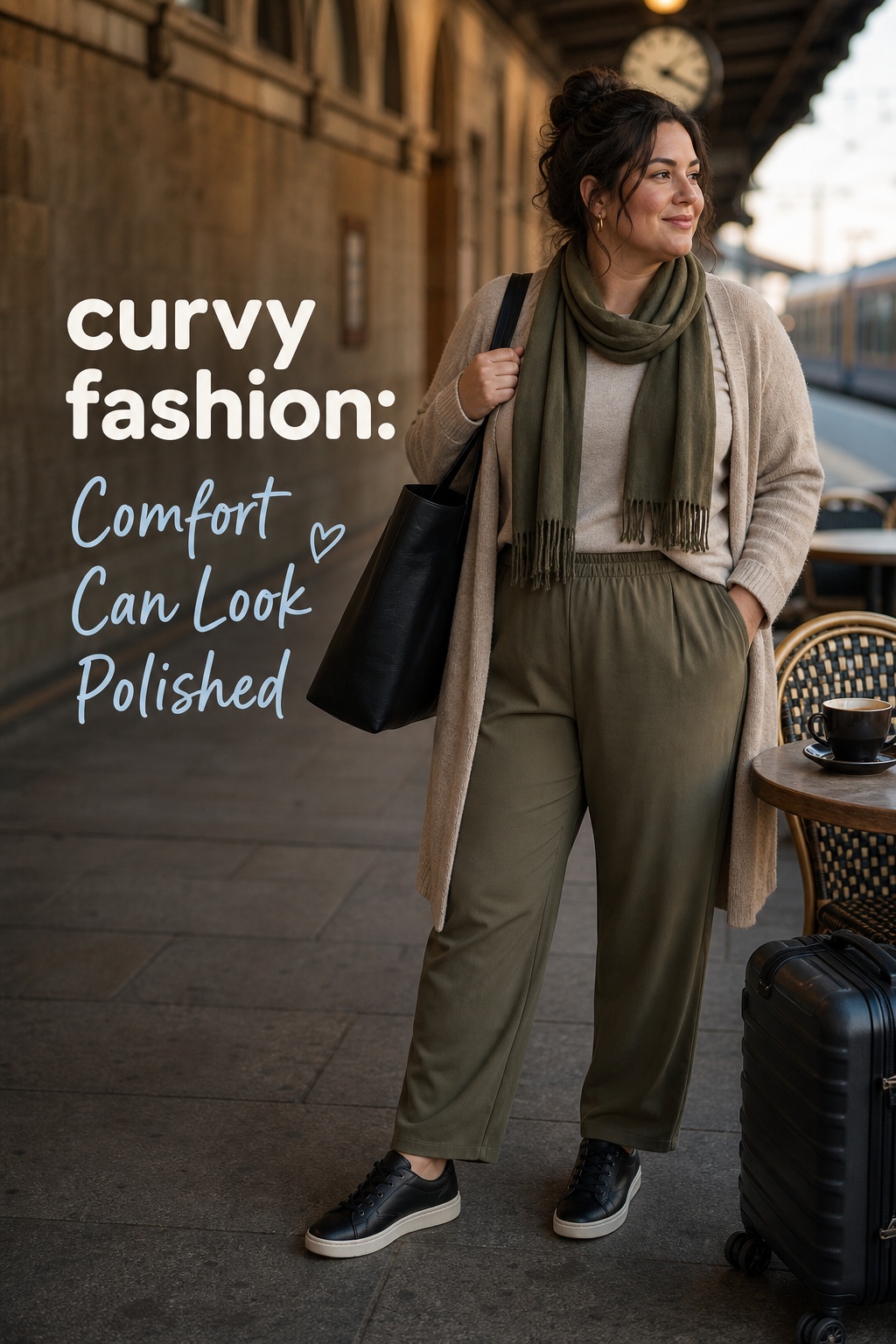
For travel, choose fabrics that recover after sitting and pieces that can layer without bulk. A soft trouser with a stretch waistband, a breathable tee, a long cardigan, and a light jacket can cover a full day of movement. Build around shoes you can walk in and leave enough room for temperature changes. A scarf, small hoops, and a polished tote can make the same base outfit feel ready for a café, meeting, or dinner after arrival.
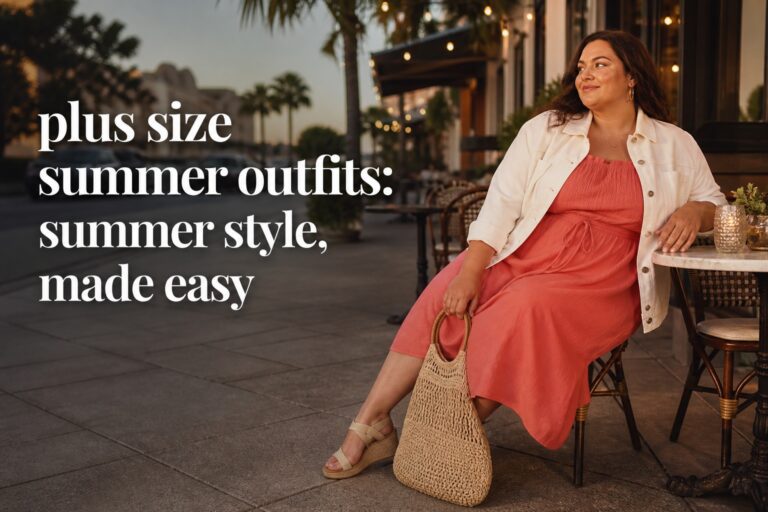
For warm weather, prioritize airflow and test where the garment touches the body. Linen blends, cotton poplin, lightweight denim, and fluid viscose can all work, but the weave and finish matter more than the fiber label alone. A sleeveless midi dress with a shirt worn open is a flexible formula. So is a high-rise wide-leg pant with a tucked tank and a short cardigan. Use color to create interest when you are wearing fewer layers.
For cooler weather, build the outfit from the inside out. Start with a base layer that lies flat, add a sweater with enough room at the upper arm, and finish with a coat that closes without pulling. A wrap coat, single-breasted wool coat, or longline quilted jacket can work depending on the mood. Boots should be chosen for the actual hem and weather, not only the photo. A stable block heel or flat sole often makes a dramatic difference in whether an outfit becomes a favorite.
4. Use a shopping checklist instead of guessing your size
Take measurements when you are ready to shop, but treat them as information rather than a verdict. Record bust, natural waist, full hip, shoulder width if a brand provides it, and inseam. Then read the brand’s size chart and compare it with the garment description. A size number is not standardized across stores, and a curvy cut may be intentionally different from a straight-size cut. If you are between sizes, identify the measurement that needs the most room and decide whether tailoring could solve the rest.
Read reviews for specific evidence. Comments about tight arms, gaping buttons, a waistband that rolls, thin fabric, or poor recovery are more useful than a general statement that an item runs small. Look for reviews from people with a similar height, bust, hip, or preferred amount of ease. Product photos can help you see where seams land, but they cannot replace the size chart because the model’s proportions may be very different from yours.
Check fabric composition and construction. A jacket with lining may glide over a knit more easily. A dress with a bit of elastane may move with you, while a completely rigid fabric may need more ease. Look at the seam finish, button placement, pocket position, and hem allowance if those details matter to you. Quality is not only about price. It is about whether the garment keeps its shape, supports your movement, and earns repeated wear.
Know the return policy before ordering multiple sizes. Note the deadline, return shipping cost, final-sale exclusions, and whether the item must have tags attached. Try clothing on with the undergarments and shoes you expect to wear. Sit down, raise your arms, walk a few steps, and view the garment from the side. If you need to tug, smooth, or readjust it every minute, the fit is giving you useful information.
Alterations can turn a nearly right garment into a favorite. Hemming trousers, adjusting a strap, moving a button, or taking in a waist can be simple changes. Major alterations to shoulders, armholes, or a lined jacket may cost more than the garment is worth. If you are unsure, ask a tailor for an estimate before removing tags. The best wardrobe is not the one with the most pieces. It is the one where the pieces work with your body and your real life.
5. Avoid the advice that makes curvy fashion feel smaller
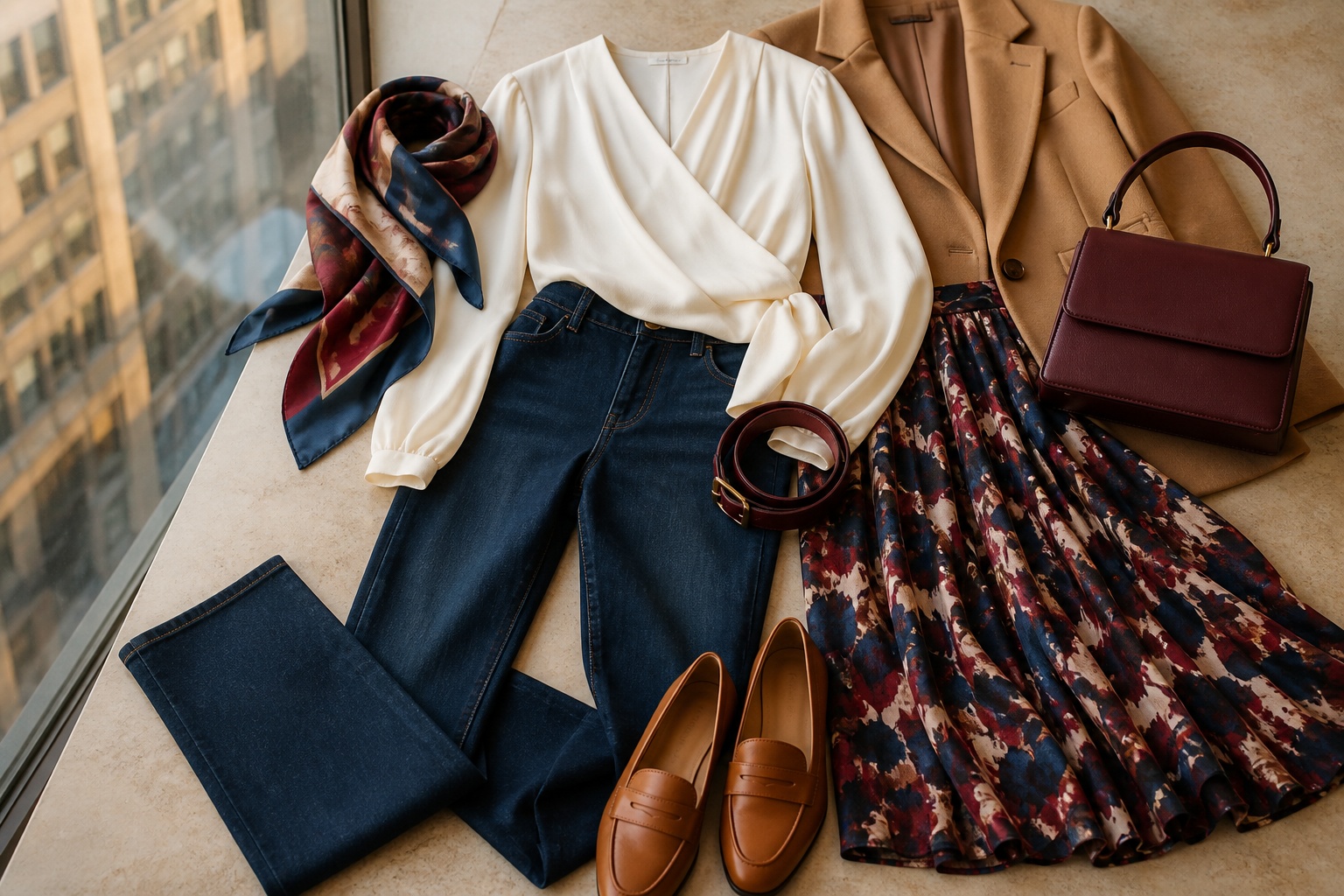
The first unhelpful rule is that curvy people should hide in dark colors or avoid prints. Dark colors can be elegant, but so can bright red, cream, cobalt, green, or a full print. If you are nervous about a bold piece, control the scale and placement instead of removing the idea. A printed skirt with a solid top, a colorful jacket over a quiet base, or a patterned scarf can introduce personality without making you feel overexposed.
The second rule is that oversized clothing is automatically flattering or automatically unflattering. Oversized is a proportion, not a moral category. It works when the garment has enough structure, the fabric falls well, and another part of the outfit gives the eye a point of reference. If a huge sweater and very wide pants make you feel swallowed, keep one of those pieces and change the other. Styling is a process of editing, not a test you pass or fail.
The third rule is that every outfit needs waist definition. Some days you may want it, and some days you may prefer a clean column or a long uninterrupted line. What matters is that the choice feels deliberate. A monochrome tunic over straight pants, a fluid maxi dress, or a long vest over a simple base can look excellent without a belt. Personal style is not required to announce the same focal point every day.
Finally, do not let the word flattering replace comfort, identity, or usefulness. A garment can look beautiful and still be wrong for your commute. Another can be technically relaxed and still make you feel powerful. Curvy fashion should support the life you are dressing for, whether that means a long workday, a celebration, a school run, or an afternoon when you simply want to enjoy getting dressed.
FAQ
What is the most important fit check in curvy fashion?
Check the area that needs the most room first, usually the bust, waist, hips, or upper arm. Then check whether the rest of the garment can be adjusted with a tuck, belt, hem, or simple alteration. A garment that fits the largest measurement without restricting movement is usually a better starting point than one that fits one area perfectly but pulls elsewhere.
Are wrap dresses always a good choice for curvy women?
Wrap dresses can be useful because they adjust at the waist and create a flexible neckline, but they are not automatically right for everyone. Look for secure inside closures, enough coverage at the bust, and fabric with suitable weight. If a true wrap shifts too much, try a faux-wrap dress or a shirt dress with a belt.
How should curvy women choose jeans?
Start with the rise and waistband, then compare the leg shape. The waistband should stay level when you sit, the hips should not pull at the pockets, and the fabric should recover after movement. Curvy-cut jeans may reduce waist gaping, while straight, bootcut, and wide-leg shapes offer different styling proportions.
Can curvy fashion include oversized clothing?
Yes. Balance an oversized piece with a clear neckline, a straighter bottom, a structured accessory, or a defined shoe. You can also use tonal color to make the volume look intentional. The right amount of ease depends on the fabric, the garment length, and how you want to move through the day.
What should I look for in curvy clothing brands?
Look for a transparent size chart, garment measurements when available, fit notes, consistent customer reviews, useful fabric details, and a return policy you can understand. Check whether the brand designs across sizes or simply grades one sample up. No brand fits every body, so track which cuts, rises, and fabrics work for you.
How can I make a simple curvy outfit feel more polished?
Repeat one intentional detail. Add a blazer, tuck the top, define the neckline with jewelry, choose a refined shoe, or carry a structured bag. You do not need several accessories. A clean hem, comfortable fit, and one clear focal point often make a simple outfit look complete.