Plus Size Beach Outfits: A Simple Packing Checklist
Planning plus size beach outfits gets much easier when you stop treating the beach as one single dress code. A morning spent swimming, a windy walk along the boardwalk, a long lunch, and a sunset drink all ask for slightly different clothes. The best suitcase gives you flexible layers for each moment, not a pile of pieces that only work in one photo.
This checklist is built around comfort, movement, and personal style. You can choose more coverage or less, a one-piece or a bikini, fitted pieces or fluid layers, and still use the same outfit system. Start with a supportive swim base, add one breathable layer, then finish with shoes and accessories that match the amount of walking you will do. The result is a small wardrobe of plus size beach outfits that can move from sand to café, pool to boardwalk, and daylight to a casual dinner.
1. Preparation: Set the beach-day constraints first
Before choosing colors or saving outfit photos, define the day you are dressing for. A beach outfit that works for sitting under an umbrella may not work for climbing stairs, chasing children, playing volleyball, or walking several blocks to lunch. This is not about putting limits on your body. It is about giving your clothes a job.
Found the dress? Keep the rest in one place.
Zarellea brings guest details, vendors, timelines, and every next step together — so your wedding plan feels as good as your look.
Start with the activity, not the silhouette
For a swim-heavy day, choose a suit that stays secure when you move and a cover-up that goes on easily over damp fabric. A supportive one-piece, high-waisted two-piece, tankini, or swim dress can all be useful. For sightseeing, look for a suit that can sit comfortably under shorts, a skirt, or wide-leg pants. For a resort lunch, a matching set or a button-front dress can look intentional without requiring a full change.
Decide your coverage and support preferences in advance
Coverage is a styling preference, not a rule about what anyone should hide. If you like more coverage around your arms, try a lightweight linen shirt, a long-sleeved rash guard, or a loose kaftan. If you prefer more coverage through the legs, a maxi dress, wide-leg pants, or a sarong worn as a skirt can feel easy and polished. If you want your stomach supported, look for a suit with a firm lining, adjustable straps, a higher rise, or ruching that feels comfortable rather than restrictive.
Check the fabric before you check the trend
Breathable fabric is often more valuable than a clever detail. Cotton, linen blends, gauze, rayon, and lightweight crinkle textures can work well in warm weather, but the actual feel depends on the weave and the lining. Hold a garment up to the light, sit down in it, and check whether it becomes transparent or clings when humid. A thin cover-up that dries quickly may be more useful than a beautiful heavy crochet piece that stays wet for hours.
Also check how the fabric behaves in wind. A very full skirt can be fun for photos but annoying on an exposed beach. A shirt dress with buttons, a romper with a secure neckline, or wide-leg pants with a comfortable waistband can give you movement without constant adjustments. If you are packing for a trip, choose pieces that do not require delicate steaming or complicated undergarments.
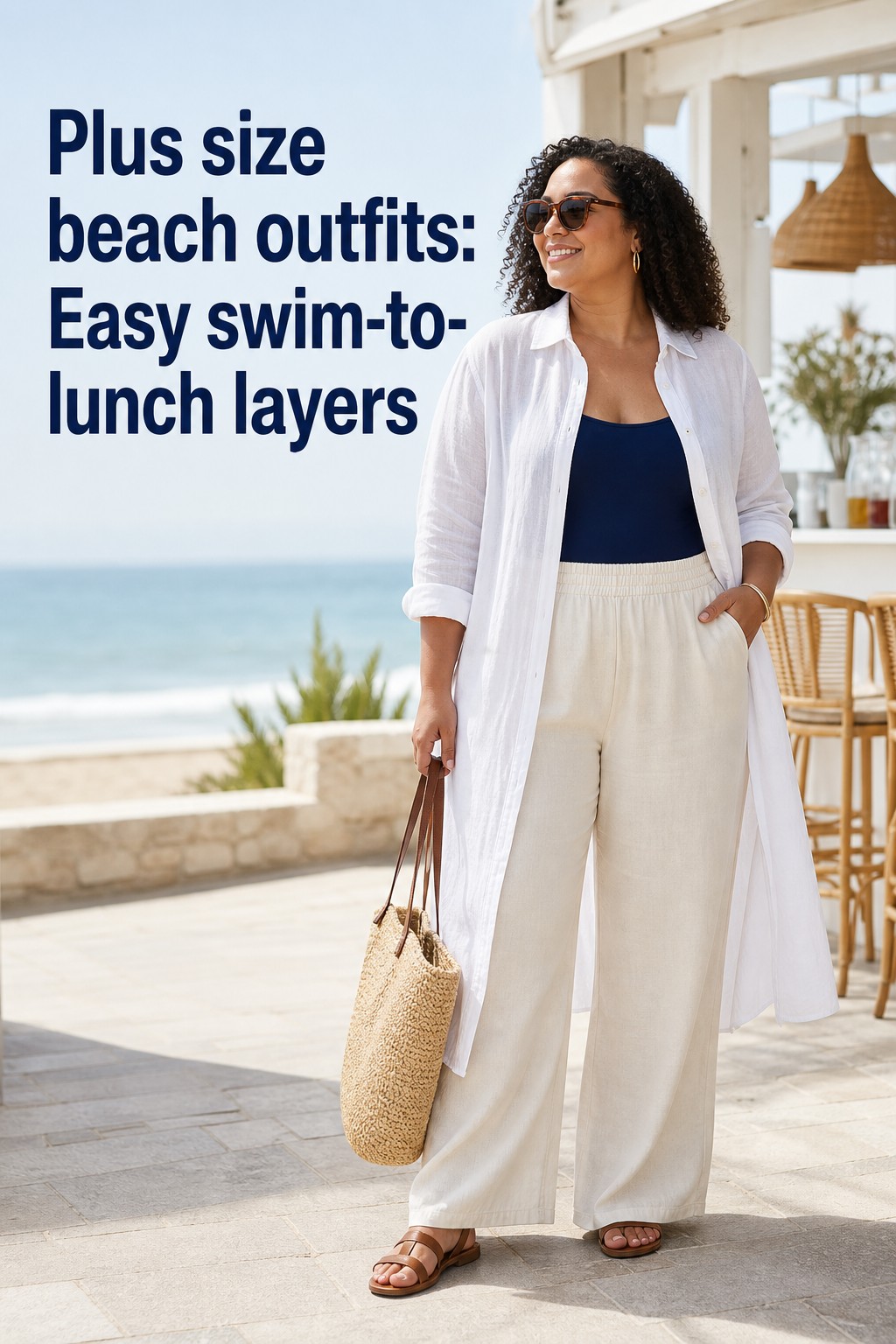
2. Decision checklist: Build the core plus size beach outfits
Use a simple three-part formula for most looks: a swim base, a breathable layer, and practical accessories. The swim base can stay the same while the outer layer changes. This creates variety without filling your bag with complete outfits. A black or navy suit can support a bright sarong, a printed shirt, and a white linen dress. A colorful suit can become the focal point under neutral layers.
Choose one swim base that you will actually wear
Fit matters more than the label on the tag. Walk, sit, raise your arms, and bend forward in the suit. Check whether the straps stay in place, whether the leg openings feel secure, and whether the bust support works without digging into your shoulders. A one-piece with a square neckline can feel modern and supportive. A high-waisted two-piece can make bathroom breaks easier than a one-piece. A tankini can give you the option to adjust how much of your middle is visible throughout the day.
Keep five cover-up families in rotation
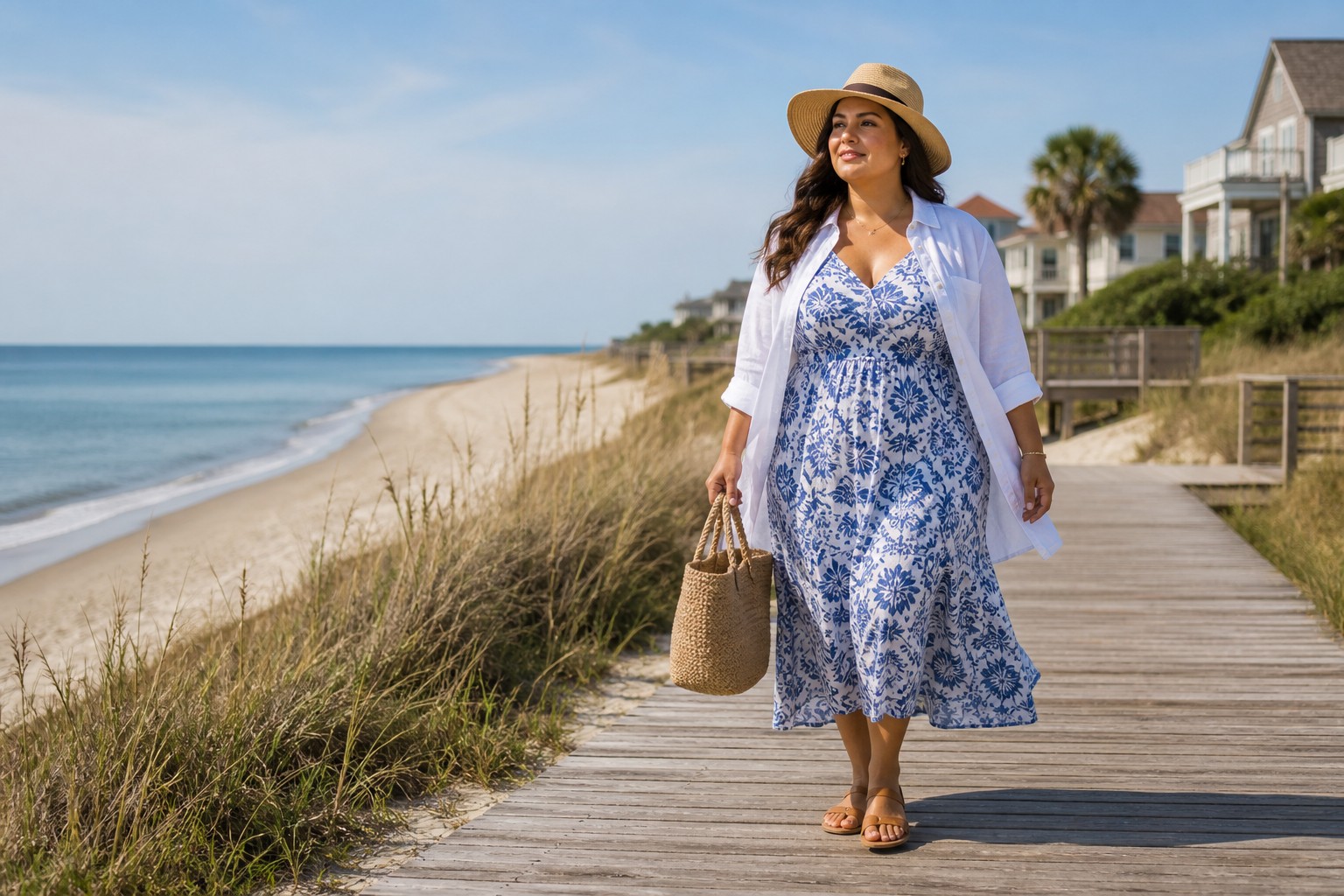
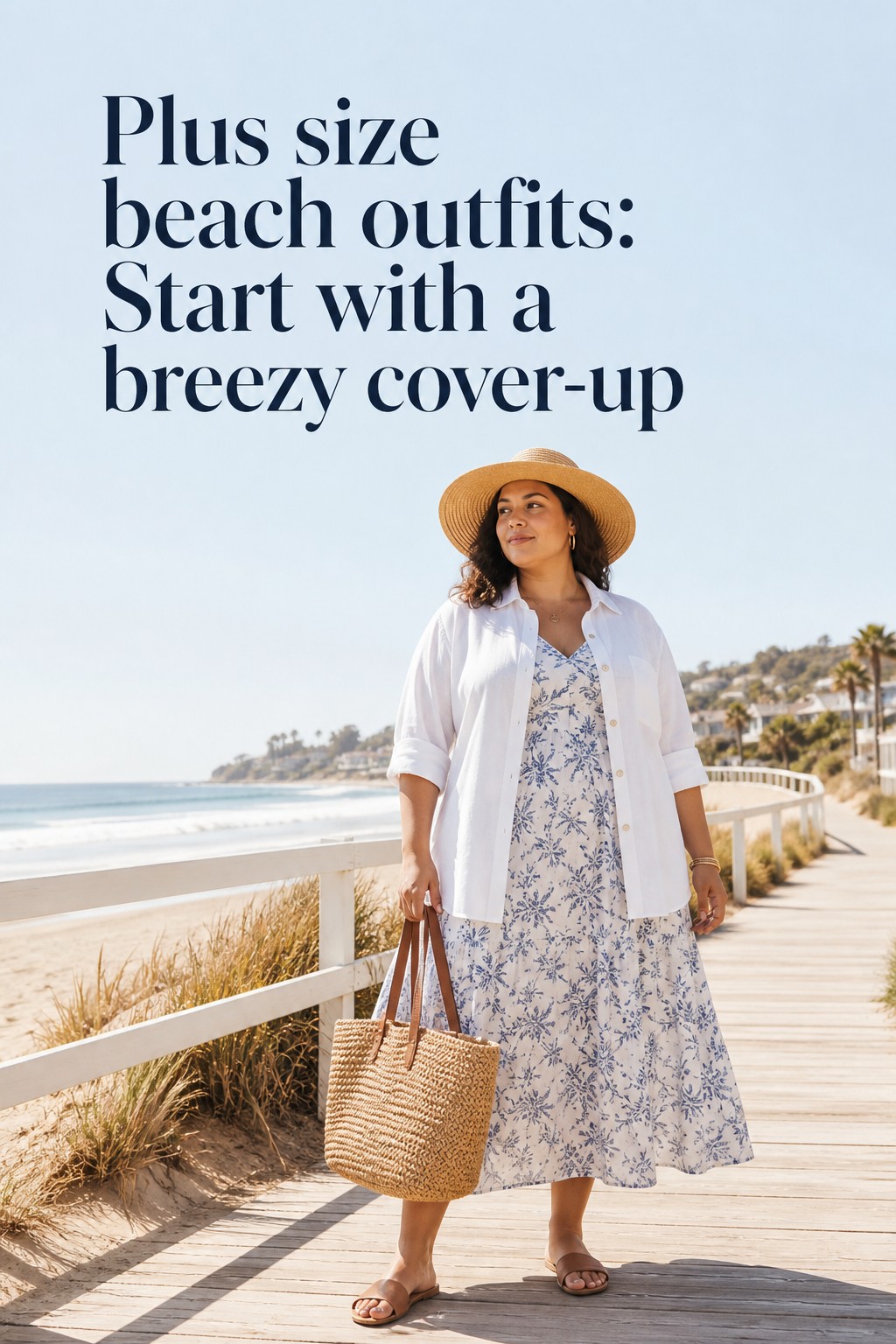
A beach dress is the fastest one-piece option. Choose a relaxed midi, maxi, or shirt dress that can be pulled on over a suit. A white or striped linen shirt is useful because you can wear it open, tied at the waist, or buttoned with shorts later. A matching short set looks complete while giving you two separate pieces to reuse. Wide-leg pants create a long line and can work for lunch when paired with a tank or a simple top. A sarong or wrap skirt takes very little room and can change the mood of a basic suit.
Kaftans and kimonos are helpful when you want movement and adjustable coverage. Look for arm openings that do not pull, a neckline that stays comfortable, and enough length to sit without the hem twisting. If you prefer a more defined shape, add a soft braided belt over the cover-up. If you do not want to define your waist, leave the layer loose and let texture, color, or a bold earring create the interest.
Match the shoes to the ground you will cover
Flat sandals with a secure strap are a better choice for a long walk than delicate slides. Waterproof slides are convenient for the pool, but they can rub if you wear them for hours. Espadrilles or cushioned sandals make a dress feel more polished for lunch. If your trip includes boardwalks, sightseeing, or uneven streets, pack one pair that you can walk in confidently. A beach outfit is only successful if you can move through the day without thinking about your feet.
Use accessories for function first, then personality
A wide-brim hat protects your face and gives a simple outfit a clear finish. Sunglasses, a woven tote, and a water-resistant phone pouch are useful across almost every beach plan. Look for a tote with a firm base, comfortable handles, and enough space for sunscreen, a cover-up, and a dry layer. Jewelry should be easy to remove before swimming. If you love statement accessories, choose one standout piece rather than several items that can snag on a cover-up.
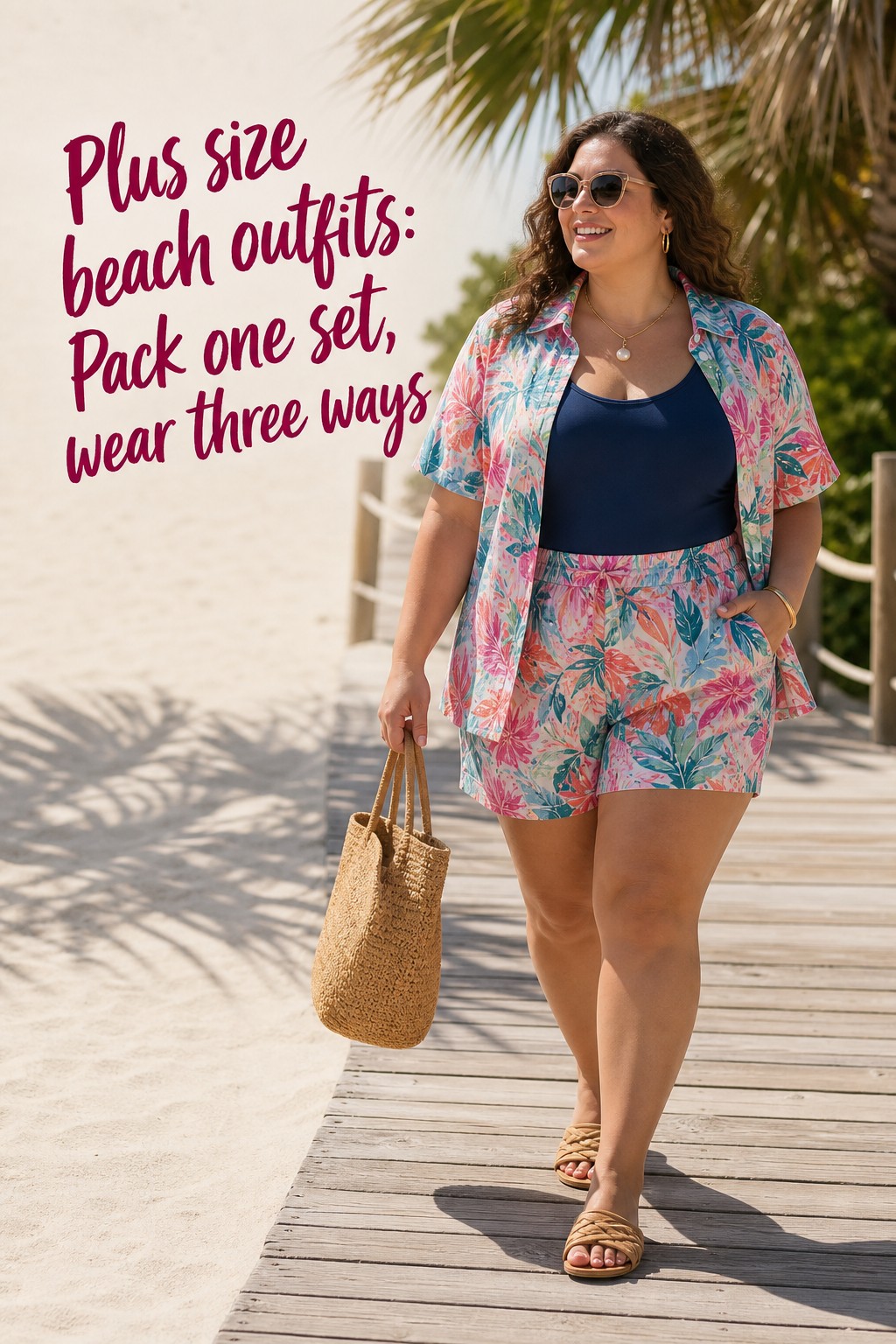
3. Worked examples: Outfit formulas for real beach plans
Once the basics are in place, use complete formulas to make getting dressed faster. Each idea below starts with a clear activity and gives you room to change the color, length, and coverage to suit your preferences.
The low-key beach day
Start with a supportive one-piece or tankini, then add an oversized cotton shirt and pull-on shorts. Leave the shirt open at the beach, button it for the walk to a snack bar, or tie it at the waist when you want more shape. Choose a straw hat, waterproof slides, and a roomy tote. This formula feels casual but finished, and every piece can be worn separately during the rest of your trip.
The active boardwalk and sightseeing look
Wear a secure suit under high-waisted denim or lightweight cargo shorts, depending on your preferred weight and structure. Add a fitted tank, a cropped button-down, and walking sandals or clean sneakers. A baseball cap can replace a wide-brim hat if you want a sporty finish. The important details are a waistband that stays put, a leg opening that allows a full stride, and a top that does not need constant re-tucking.
The pool party or resort lunch outfit
Try a bright one-piece under a matching linen or cotton short set. Wear the shirt open over the suit, then close it with the shorts when you sit down to eat. Metallic flat sandals, a compact shoulder bag, and oversized sunglasses make the outfit feel celebratory without becoming fussy. If you prefer more coverage, swap the shorts for wide-leg pants and keep the same shirt, jewelry, and shoes.
The sunset photo and casual dinner look
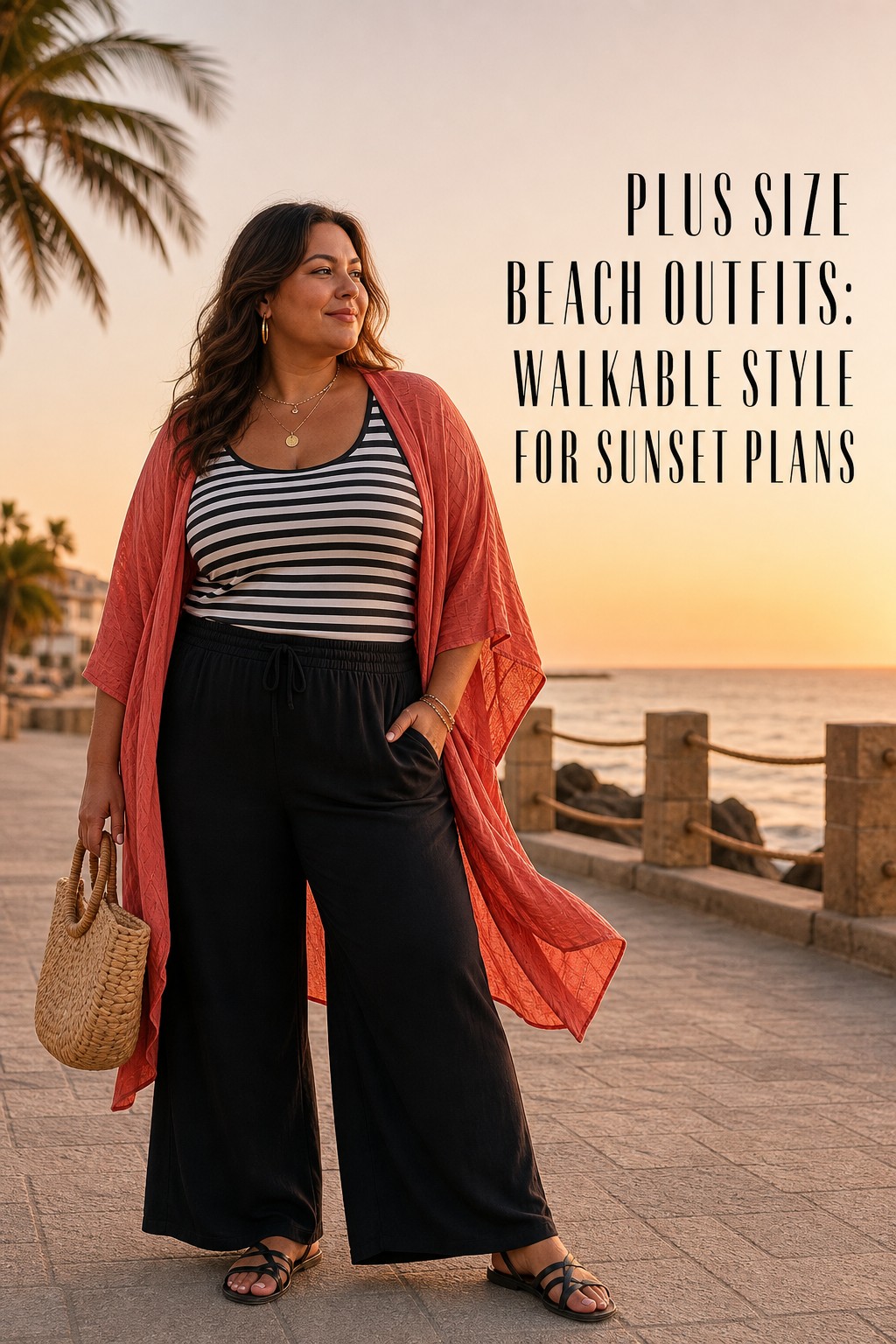
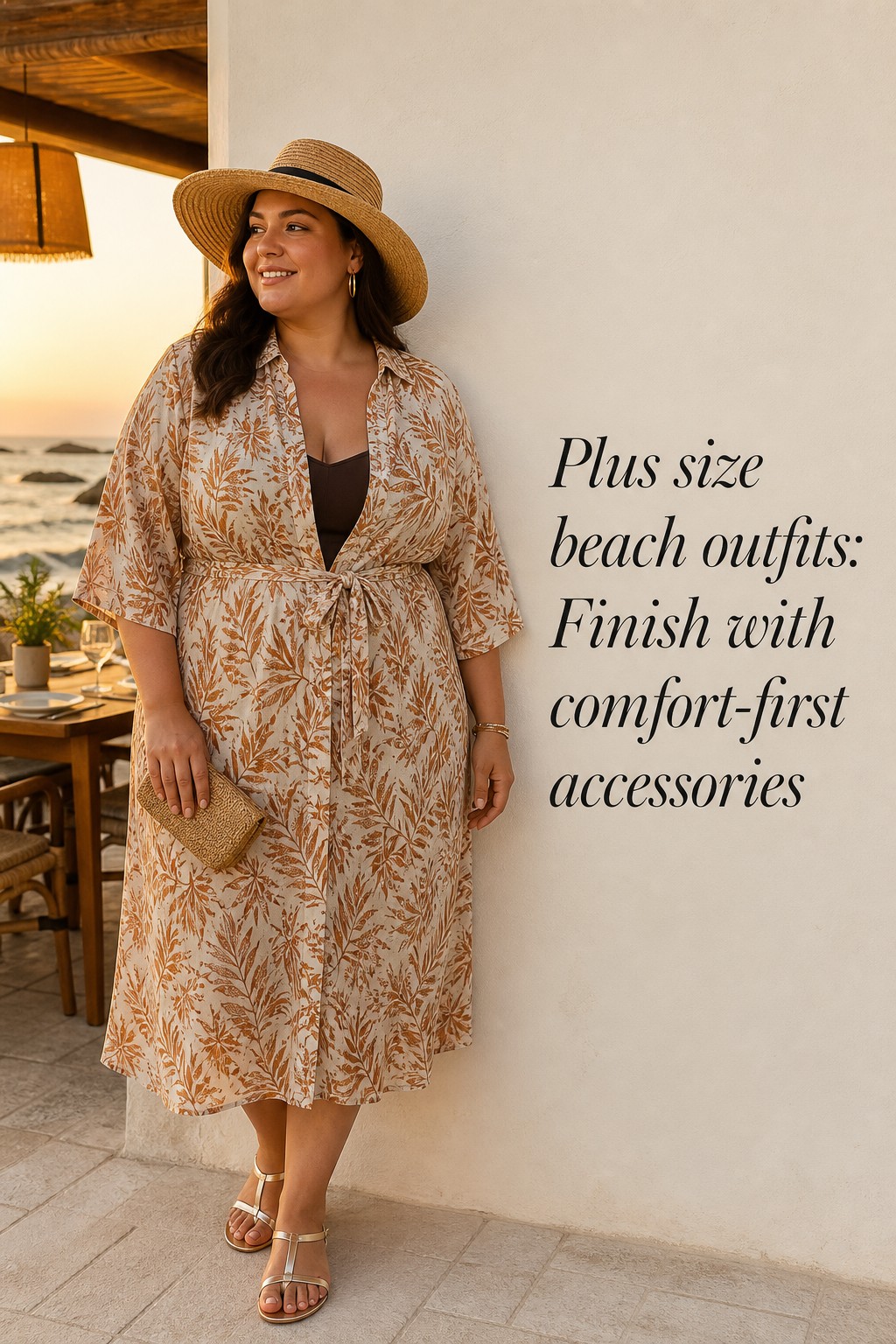
A wrap maxi dress or a belted midi dress can cover a swimsuit while looking like a complete evening outfit. Choose a breathable fabric, a neckline that works with your preferred bra or swim top, and a hem you can walk in. Add flat metallic sandals, a small woven clutch, and one pair of earrings. If the dress is printed, keep the accessories calm. If the dress is solid, use a colorful scarf or bag as the accent.
The carry-on beach capsule
Pack two swim bases, one beach dress, one linen shirt, one pair of wide-leg pants, one pair of shorts, one matching top, and two pairs of shoes. Add a sarong that can become a skirt, scarf, or extra layer. With a neutral base and one accent color, you can make many combinations without packing many individual pieces. For example, a cobalt suit can work under a white dress, a striped shirt, a tan sarong, or the matching top and wide-leg pants.
4. Final review: Fit, comfort, and packing checks
Try on each full look before the trip, including the shoes and the underlayers you plan to wear. Stand, sit, walk up stairs, and reach for a bag. If you are wearing a dress over swimwear, check that the neckline does not shift when you bend. If you are wearing shorts, sit down and make sure the waistband and leg openings still feel comfortable. These small tests prevent the common problem of loving an item on a hanger and avoiding it once you arrive.
Plan for wet fabric and sand
Bring a lightweight dry layer for the trip home from the beach. A damp cover-up can feel heavy, clingy, and cold once the wind changes. A mesh pouch or separate wet bag keeps the rest of your tote clean. Choose sandals that can be rinsed, and avoid delicate shoes that fill with sand. If a fabric takes a long time to dry at home, it will probably be inconvenient on vacation too.
Build in sun and anti-chafe support
Clothing can support your comfort, but it does not replace sunscreen or shade. A long-sleeved UPF layer, a hat, and regular sunscreen application can be useful on long beach days. For thigh chafing, try anti-chafe shorts, a product designed for friction, or a cover-up with enough ease to let your legs move. Test any product before a trip so you know how it behaves in heat and water.
Avoid the one-use outfit trap
The most attractive beach wardrobe is usually the one that works hard. Before buying a statement piece, ask whether it can be worn over both swim bases, with the pants or shorts, and somewhere beyond the beach. Ask the same question of accessories. A hat that works only with one dress is less useful than one that finishes four looks. A cover-up that can become a shirt, tunic, or dress gives you more value and more styling freedom.
Use this final review as a short checklist: the suit stays secure, the layer feels breathable, the footwear supports the day’s walking, the bag holds the essentials, and at least three pieces can be recombined. If those answers are yes, you have a reliable starting point for plus size beach outfits that feel personal, practical, and ready for real weather.
FAQ
What should I wear to the beach if I want more coverage?
Start with the swim base that feels most secure, then add a linen shirt, long kaftan, swim dress, wide-leg pants, or sarong. Choose breathable fabric and openings that allow movement. More coverage does not need to mean more heat, especially when the layer is loose, lightweight, and quick to dry.
What are the most flattering plus size beach outfits?
The most flattering outfit is the one that fits your preferences and lets you move comfortably. Wrap dresses, belted shirt dresses, wide-leg pants with a defined top, and matching sets are popular because they create clear proportions. Use the neckline, rise, length, and amount of ease that make you feel confident instead of following a fixed body-shape rule.
How do I style a swimsuit as an outfit?
Treat the swimsuit as a bodysuit or fitted top. Add wide-leg pants, pull-on shorts, a sarong, or a maxi skirt, then layer an open shirt or cropped jacket. Choose shoes and accessories that make sense away from the water. A solid swimsuit can support a print, while a bold suit works well with neutral layers.
What should I pack for a plus size beach vacation?
Pack two swim bases, two breathable cover-ups, one dress, one versatile shirt, one bottom, two pairs of comfortable shoes, a hat, sunglasses, a tote, and a wet bag. Add anti-chafe support and a dry travel outfit. Choose colors that mix together so each layer can be worn more than once.
What shoes work best with beach outfits?
Waterproof slides work for short pool trips, while secure flat sandals are better for walking. Cushioned sneakers help with boardwalks and sightseeing. Espadrilles or polished flat sandals can take a dress to lunch. Bring only shoes you can walk in comfortably and that suit the surfaces on your itinerary.
How can I prevent thigh chafing at the beach?
Try anti-chafe shorts, a tested friction balm, or a loose bottom layer that allows your legs to move. Apply products before friction starts and reapply as directed, especially after swimming. Choose fabrics that stay comfortable when damp, and test the complete outfit at home before a long beach day.