Plus Size Work Outfits That Feel Polished All Day
Getting dressed for work should not require choosing between comfort and credibility. The best plus size work outfits help you move through a commute, sit through meetings, work at a desk, and still feel like yourself at the end of the day. They use shape, proportion, and texture intentionally, without asking you to hide your body or tolerate clothes that pinch.
This guide is built around repeatable outfit formulas rather than a giant list of pieces. You will find ways to adapt the same blazer, trouser, dress, skirt, and shoe categories to formal offices, business casual teams, creative workplaces, and hybrid schedules. Start with the dress code you actually navigate, then build a small rotation that works in your climate and your daily routine.
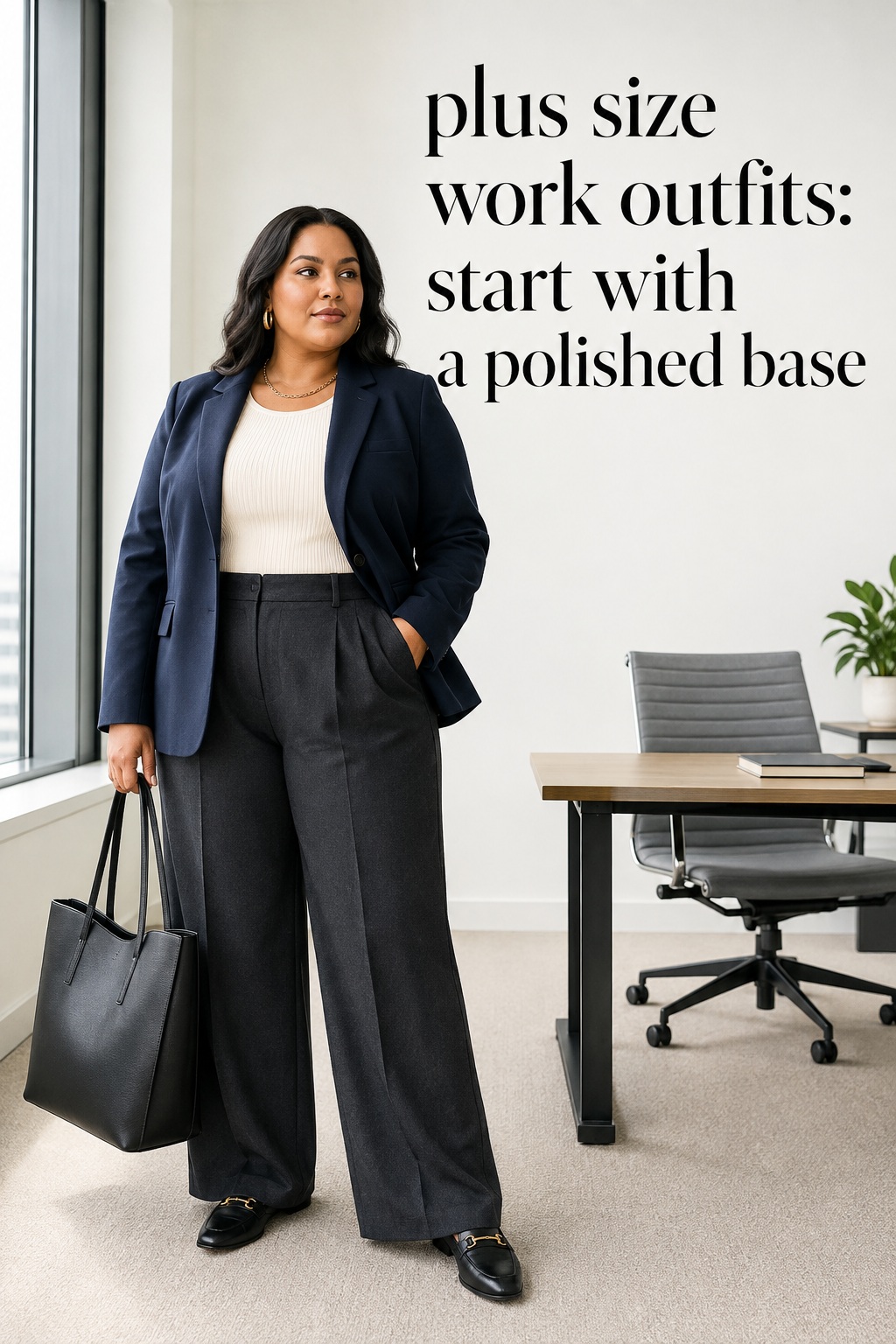
Start with the workwear formula that matches your office
A polished outfit begins with the level of formality around you. Workwear does not have one universal definition. A tailored suit can be perfect in a corporate office and feel too formal in a relaxed studio, while jeans can be entirely appropriate on one team and distracting on another. When in doubt, look at what your manager and colleagues wear on an ordinary day, not only on presentation days.
Corporate and formal offices
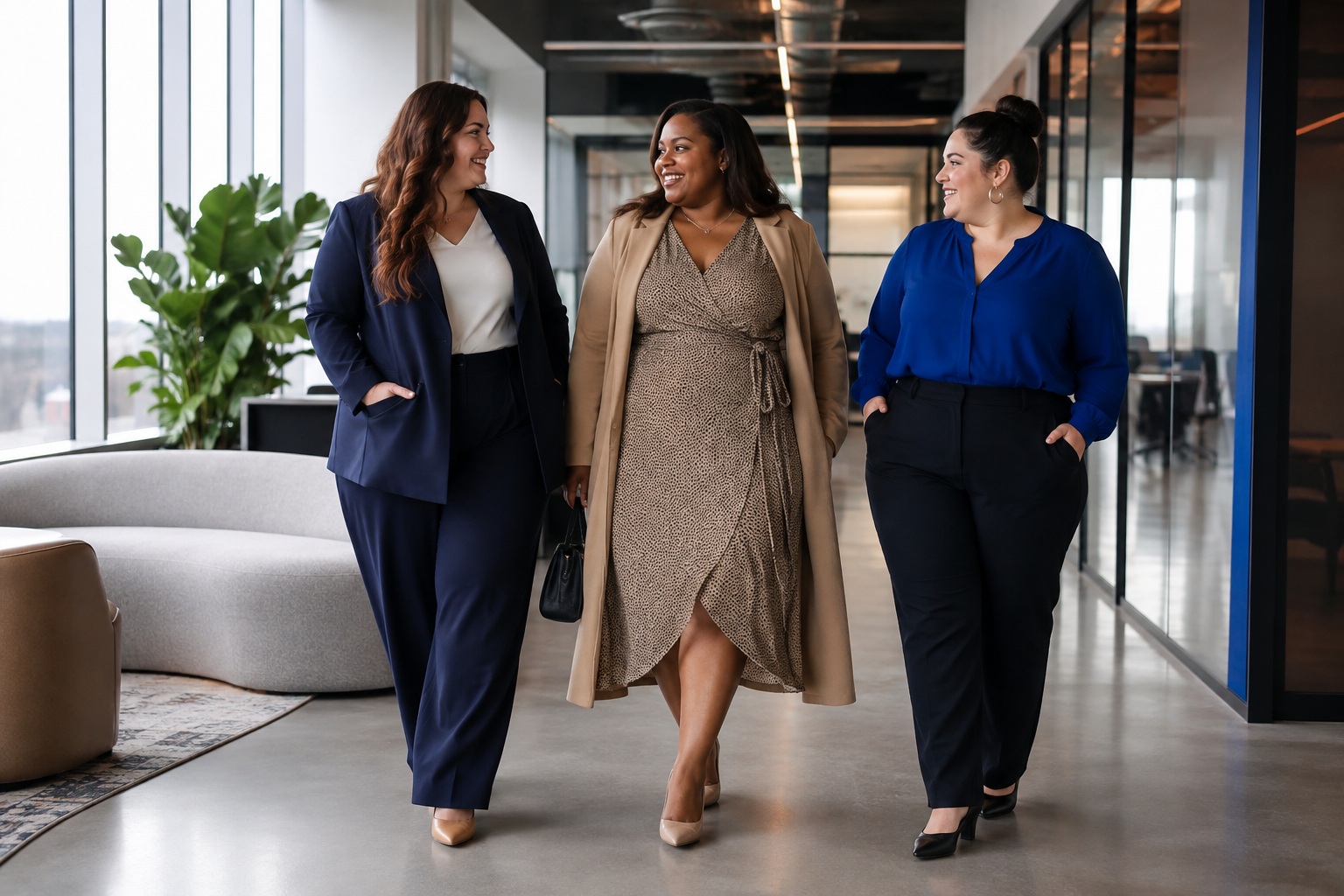
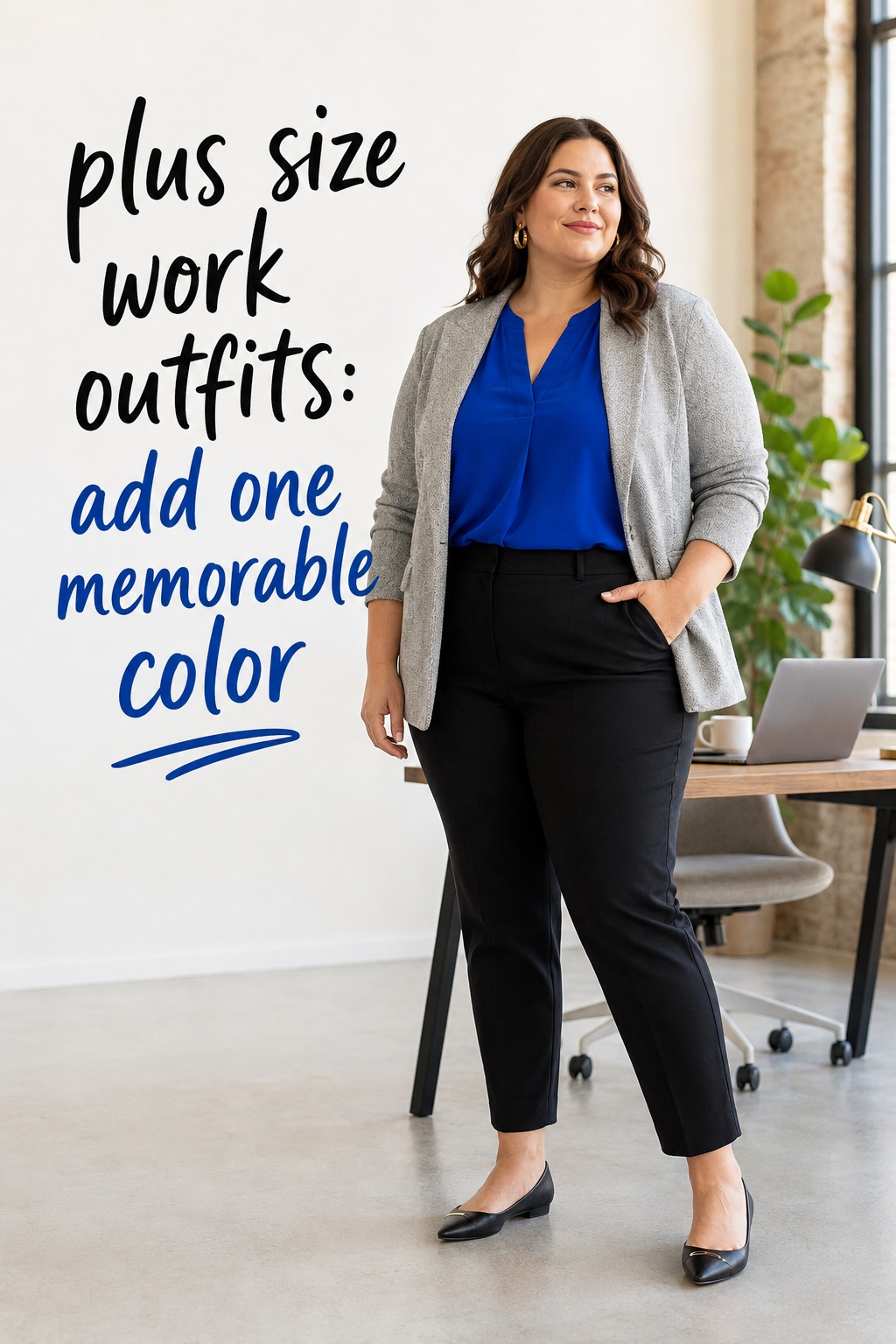
For a formal office, build your outfit around one clear tailored element. That might be a blazer with trousers, a suit-inspired vest with a skirt, or a simple dress under a structured jacket. Navy, charcoal, espresso, black, and deep olive make reliable foundations, but you do not need to stay in a narrow neutral palette. A jewel-toned blouse or burgundy shoe can add personality while the silhouette remains professional.
Found the dress? Keep the rest in one place.
Zarellea brings guest details, vendors, timelines, and every next step together — so your wedding plan feels as good as your look.
Fit matters more than the size printed on the label. A blazer should lie smoothly across the shoulders and upper back, close without pulling, and leave enough room to move your arms. Trousers should sit securely when you are seated, with a waistband that does not dig in. If a jacket is perfect everywhere except the bust or hips, treat tailoring as part of the purchase rather than assuming the garment is wrong for you.
Business casual offices
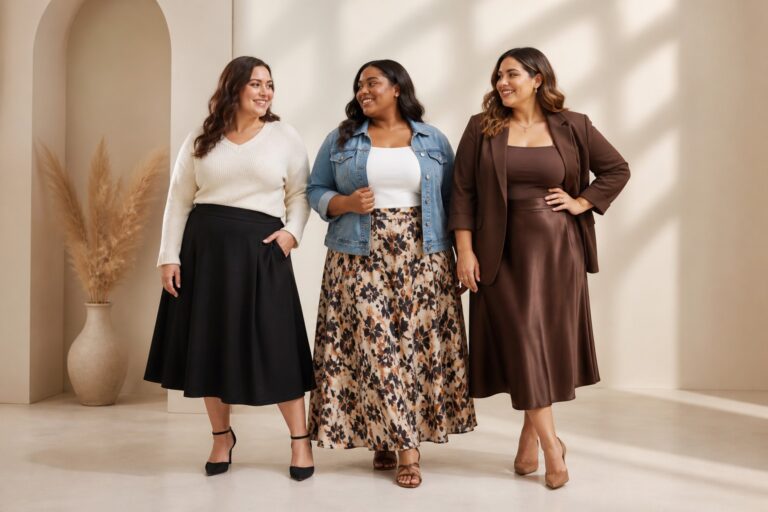
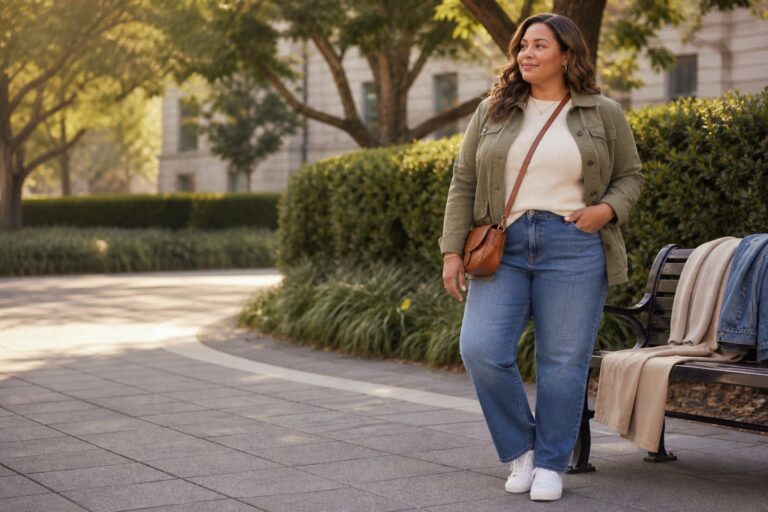
Business casual is easiest when you combine one relaxed piece with one polished piece. Try a soft knit with pressed trousers, a denim shirt with a midi skirt, or dark straight-leg jeans with a refined blazer if denim is allowed. The contrast keeps the outfit from looking either too stiff or too casual. A belt, loafer, watch, or structured bag can make the entire combination feel finished without adding discomfort.
Do not confuse soft with shapeless. A fluid blouse can work beautifully when balanced by a straighter trouser or a defined shoulder. Likewise, relaxed pants look intentional when paired with a closer-fitting knit or a tucked top. The goal is not to make every item fitted. The goal is to give the eye a clear beginning, middle, and end.
Creative and hybrid workplaces
Creative workplaces and hybrid schedules give you more freedom, but they still benefit from a dependable anchor. Start with an outfit that feels comfortable on camera and in person, then add an expressive color, print, sculptural earring, or interesting shoe. A monochrome base makes statement details easier to repeat. For video calls, pay particular attention to the neckline, shoulder line, and contrast near your face.
Hybrid work also rewards pieces that transition. A knit blazer can feel polished at home, while wide-leg trousers remain comfortable during a commute. Keep a blazer, cardigan, or overshirt near your desk for sudden meetings. If your day moves from home to office to dinner, choose one outfit with a stable base and change only the top layer or shoe.
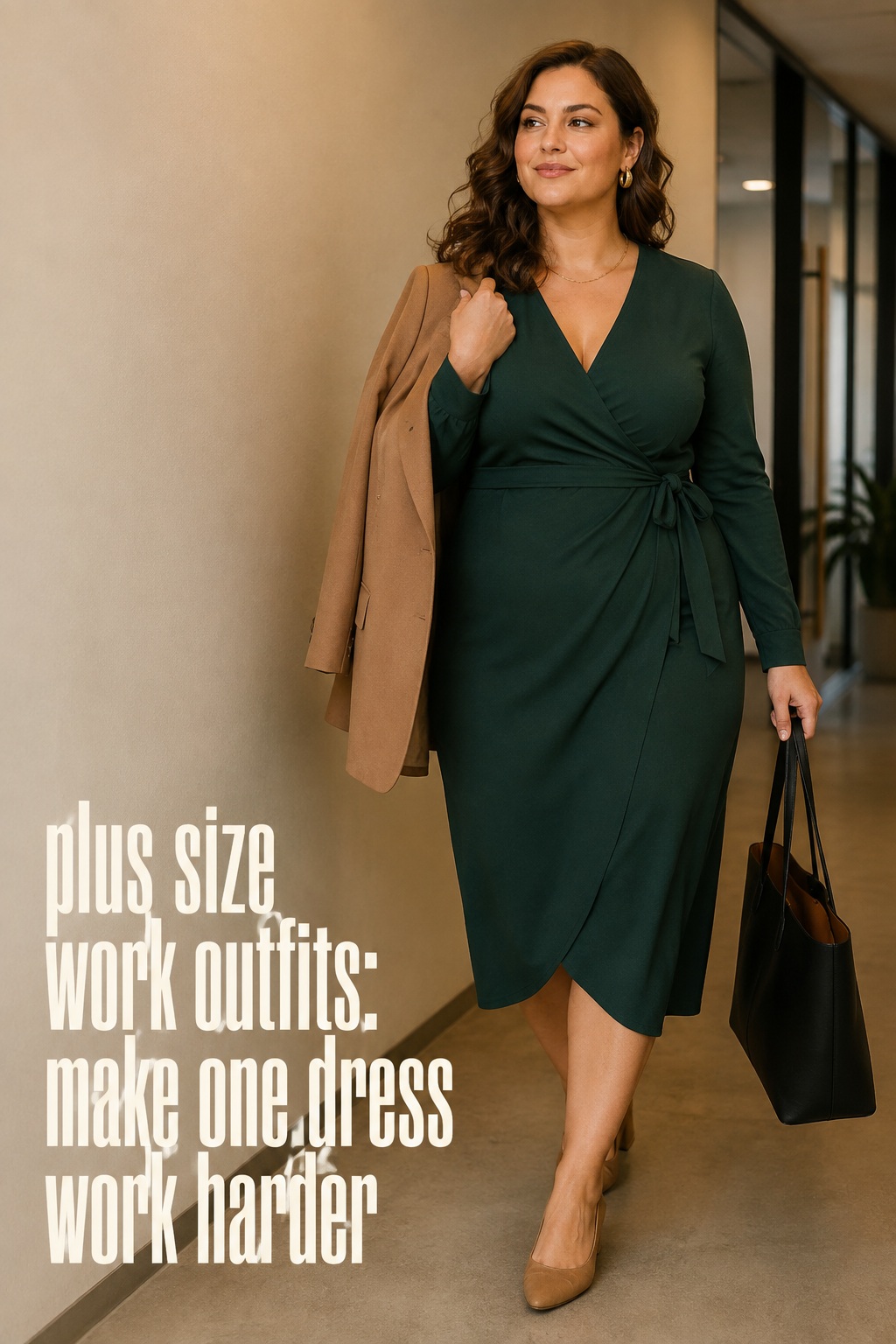
Build the five-piece foundation before shopping for extras
You do not need a huge wardrobe to create many plus size work outfits. A focused foundation makes mornings easier because every new item has a job. Before buying another interesting blouse, check whether you already have the pieces that create structure, comfort, and repeatable combinations. A small wardrobe can feel fresh when color and texture are distributed thoughtfully.
A blazer or soft structured layer
Choose a blazer, knit jacket, chore jacket, or polished cardigan that can sit over at least three tops. A single-button or open style can create a long visual line, while a double-breasted shape can feel powerful when it closes comfortably across the body. Look for sleeves that finish near the wrist and fabric with enough recovery to survive a full day of reaching, driving, and sitting.
A neutral layer is the most versatile starting point, but neutral does not have to mean black. Navy, camel, gray, cream, chocolate, and olive can all function as neutrals. If your closet already contains basics, a colored blazer may be the smarter first purchase because it can make familiar trousers and dresses look new.
Trousers that stay comfortable when seated
The right work trouser should feel secure when you stand and forgiving when you sit. Ponte, stretch twill, washable crepe, and light wool blends can offer structure without stiffness. Test the waistband in a chair before removing tags. Walk, sit, cross your legs, and reach forward. If the fabric pulls across the hips or the pockets gape, try another cut rather than sizing up automatically.
Wide-leg trousers can look especially polished when the rise fits and the hem works with your shoe. Balance their volume with a tucked, semi-tucked, or shorter top layer. Straight-leg trousers are useful when you want a cleaner line under a longer blazer. Ankle-length pants can be practical in warm weather, but make sure the hem is intentional and not simply too short.
A dress or skirt with movement
A dress is a complete outfit in one step, which makes it valuable on busy mornings. Wrap dresses, faux-wrap styles, shirt dresses, and gently shaped knits can all work well when the neckline stays secure and the fabric moves easily. A midi length is often versatile, but choose the hem based on how you walk, climb stairs, and sit at your actual workplace.
If you prefer skirts, start with an A-line, straight, or softly pleated midi that works with at least two tops. A skirt does not need to be tight to look defined. A stable waistband and a clean tuck can create enough shape. Add opaque tights and boots in cooler weather, or loafers and a lightweight blouse when temperatures rise.
Tops that create a clean neckline
Keep three different neckline options in rotation so your outfits do not all feel alike. A soft V-neck can lengthen the upper body, a collared shirt adds classic structure, and a jewel or boat neck creates a simple frame under a jacket. The best neckline is the one that stays in place and makes you feel comfortable during conversation and movement.
Pay attention to fabric behavior. A top that clings to every layer may be frustrating under a blazer, while a very oversized blouse can bunch at the waist. Choose materials that skim, and use a half tuck or a front tuck only when it feels secure. A camisole or smooth base layer can make a sheer or slippery top easier to wear.
Shoes and a hands-free work bag
Comfortable shoes can still look polished. Loafers, low block heels, pointed flats, refined sneakers where permitted, and ankle boots are useful foundations. Match the shoe to the walking you actually do. If you commute on foot, carry a comfortable pair and change at work, or choose a shoe with cushioning and a stable sole from the beginning.
A structured tote or crossbody bag adds visual finish and solves a practical problem. Look for handles that sit comfortably on your shoulder, enough space for the items you carry, and a shape that holds its form. Small details such as a leather belt, simple earrings, or a silk scarf can connect the colors of your outfit without making it feel overstyled.
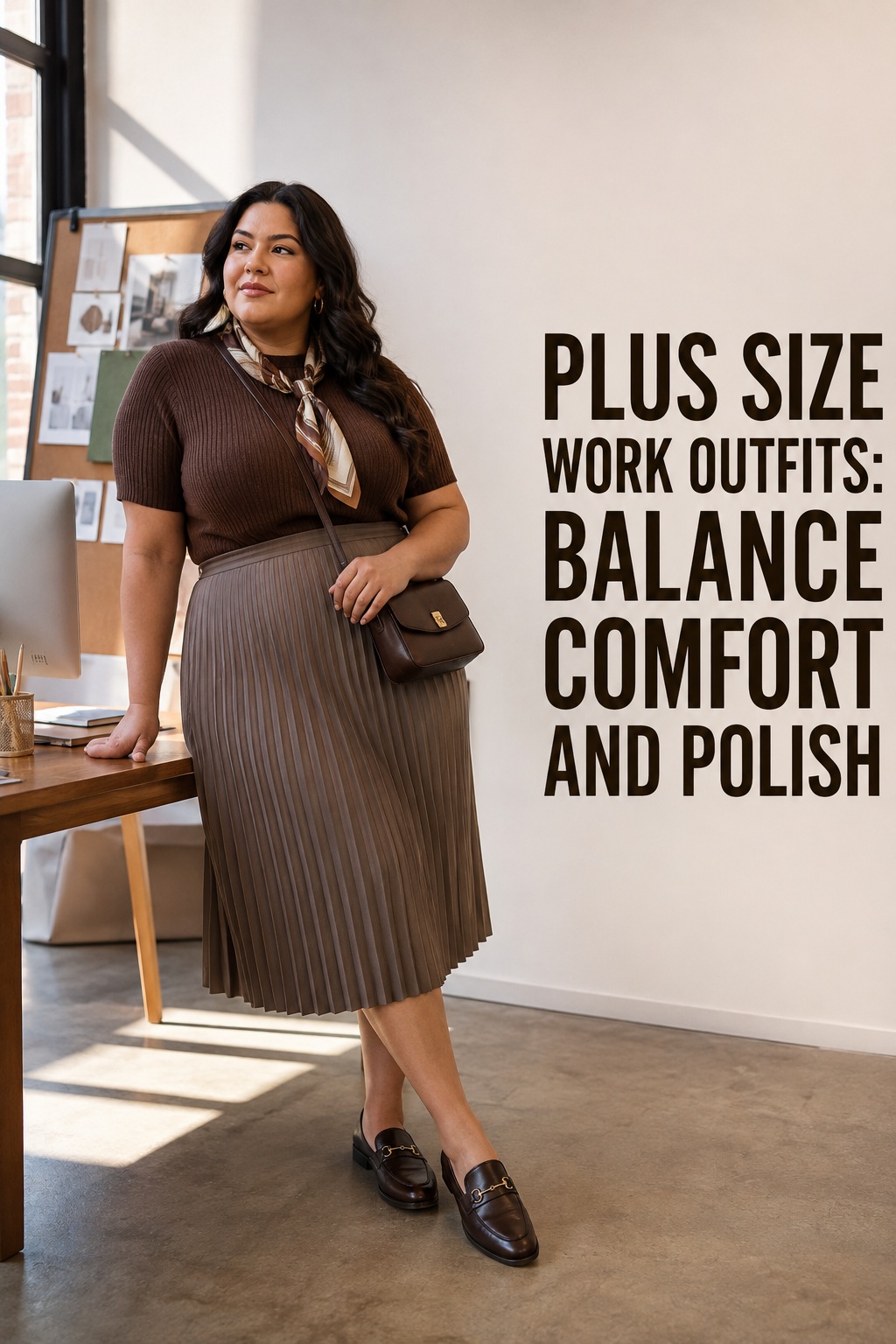
Seven plus size work outfit formulas to repeat all week
Use these formulas as starting points, then adjust them to your office and your personal style. The value is in the structure, not in copying every color. Once you understand the role of each piece, you can swap in what you already own and create a rotation that feels personal.
Blazer, knit top, and wide-leg trousers
Pair a fitted or softly shaped knit with wide-leg trousers and an open blazer. Tuck or semi-tuck the knit so the trouser line remains visible, then finish with loafers or a low heel. This outfit works for meetings because the blazer adds authority, while the knit and fluid trouser keep the day comfortable. Try a tonal combination in espresso and camel, or use a navy blazer over cream and olive.
Wrap midi dress and structured layer
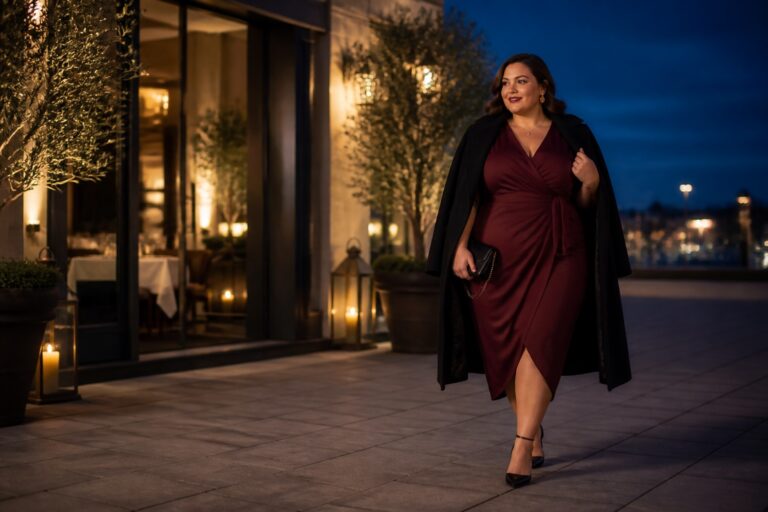
A wrap or faux-wrap midi dress gives you a clear waistline and enough movement for a long day. Add a cropped or waist-length jacket if you want to show the dress shape, or use a longer open blazer for a column effect. Closed-toe flats make it office ready, while ankle boots and a heavier layer help it work in cooler weather.
A-line skirt and tucked button-down
An A-line skirt and button-down shirt are classic for a reason. The skirt gives room through the hips and thighs, while the shirt creates a crisp upper line. If a full tuck feels uncomfortable, try a shorter shirt or a neat front tuck with a smooth camisole underneath. Add a cardigan for a softer look or a blazer for a more formal presentation.
Matching set with a simple tee or shell
A matching trouser and jacket set gives you the effect of tailoring without requiring much coordination. Break it up with a simple tee, shell, or fine knit in a contrasting color. On a casual day, wear the jacket with jeans or the trousers with a denim shirt. A set is especially useful for travel because the pieces can be worn together when you need polish and separately when you want ease.
Tonal column with one polished accessory
Choose a top and bottom in closely related shades, then add one contrasting accessory. A chocolate blouse with dark brown trousers, a charcoal knit with gray pants, or a cream top with taupe trousers creates a long, calm line. Add a colored bag, metallic shoe, or patterned scarf for interest. This is one of the easiest ways to look intentional when you prefer simple clothing.
Dark jeans with office-ready layers where allowed
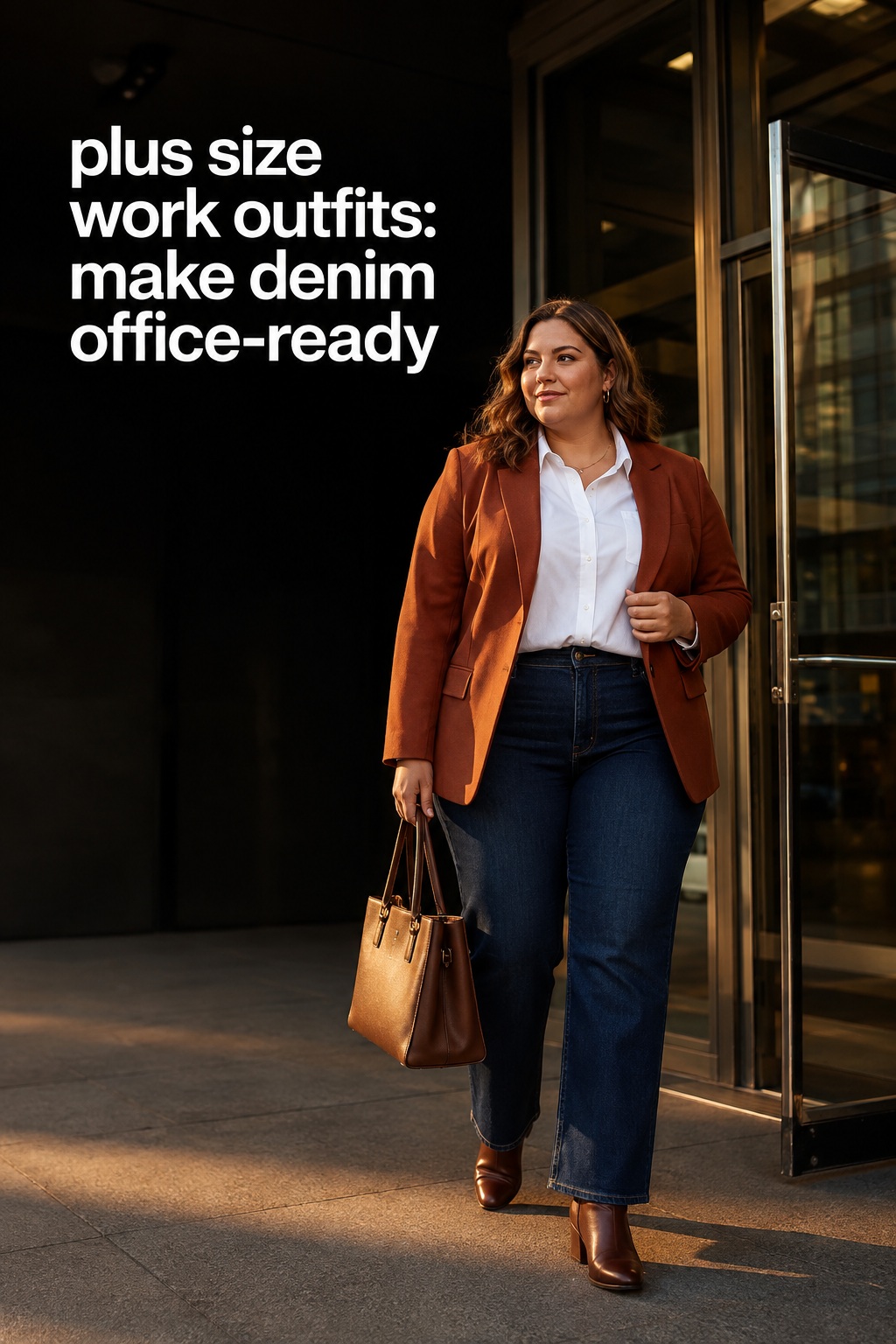
When your dress code allows denim, use a dark, clean pair without heavy distressing as the relaxed base. Add a button-down, blazer, and loafer to keep the outfit professional. A dark straight leg or trouser jean usually reads more polished than a very faded wash. If your office is casual, a refined sneaker can work, but keep the rest of the outfit neat and structured.
Desk-to-dinner dress with practical shoes
For a day that continues after work, start with a dress in a fabric that does not crease easily. Add a cardigan or blazer during office hours, then switch to a bolder earring, lipstick, or shoe for dinner. The smartest choice is not necessarily the most dramatic dress. It is the one that lets you sit comfortably, walk easily, and feel polished in both settings.
Make comfort look intentional
Comfort and polish are not opposites. They become opposites only when a garment is too loose, too tight, too flimsy, or wrong for the weather. Use the following checks to make practical choices that still look considered.
Choose fabric for temperature and movement
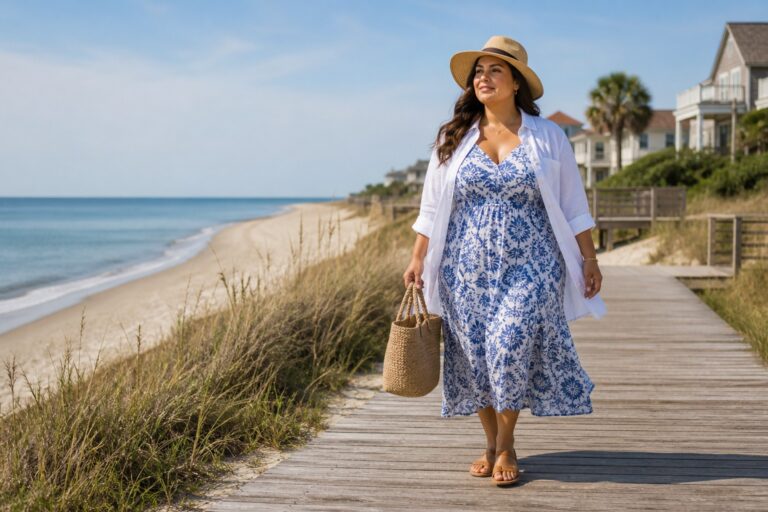
For warm offices and summer commutes, look for cotton blends, linen blends, breathable viscose, and lightweight crepe. If your office is heavily air-conditioned, keep a washable layer nearby and choose trousers that do not become uncomfortable when you add tights. Stretch can help, but too much thin stretch may lose its shape. Aim for fabric with recovery and enough weight to hang smoothly.
Consider the full day rather than the mirror test. A beautiful blouse that wrinkles immediately may not be your best work piece if you travel by train. A soft dress that rides up when you sit may need a slip, shorts, or a different cut. Practical solutions are part of styling, not evidence that you failed to choose the right body.
Balance volume and define the outfit
When one item has generous volume, give the outfit a clear counterpoint. Wide-leg trousers can work with a tucked shirt, a shorter jacket, or a closer-fitting knit. An oversized blazer can work over a straight dress or slim column of color. You can also create definition with a visible cuff, a belt worn comfortably, or a clean shoulder line.
These are options, not rules about which body parts should be emphasized. If you love a loose top and loose trousers, use a strong color story, a crisp shoe, or a structured bag to make the choice look deliberate. Personal style often comes from repeating a proportion that feels like you.
Fix common fit problems before abandoning a piece
If a blouse pulls at the bust, try a larger size and tailor the shoulders or side seams if needed. If trousers gap at the waist, look for curvy cuts, a contoured waistband, or a simple alteration. If a blazer feels boxy, test a shorter length, a shaped seam, or a more fluid fabric. If a dress clings, add a smooth layer underneath or choose a heavier knit.
Also check the basics underneath. The right bra, slip, shorts, or camisole can change how a garment hangs and how confidently you move. Test outfits in natural movement before an important workday. Sit at a table, reach for a shelf, walk quickly, and make sure you can perform ordinary tasks without adjusting your clothes every few minutes.
A practical five-day outfit plan and shopping checklist
A useful work wardrobe should make Monday easier, not create a new project every morning. Plan around two bottoms, two tops, one dress, one structured layer, and two shoe options to begin. Add a second layer or skirt if your schedule includes formal meetings. The exact pieces can change, but every item should connect to at least two others.
What to buy first
Prioritize the garment that solves your biggest daily problem. If you have tops but nothing feels professional, start with a blazer. If your trousers are uncomfortable, invest in one excellent pair before buying more shirts. If mornings are rushed, choose a dress and a shoe that work together immediately. Shop by gaps in your routine, not by the most exciting item on a product page.
Before purchasing, write down the colors you already wear and the places your clothes fail. Do waistbands roll, sleeves pull, fabrics wrinkle, or shoes hurt after an hour? Use those observations as filters. A garment that solves a real problem will earn more wears than a beautiful item that creates another one.
How to repeat pieces without repeating the look
Repeat a foundation and change one visible element. Wear the same navy trousers with a cream knit and then with a striped button-down. Wear the same dress with a blazer one day and a cardigan the next. Change the shoe, bag, or earring when the rest of the outfit stays neutral. Repetition is a sign that your wardrobe works, not a lack of creativity.
Keep a simple record of combinations that feel good. A photo taken in a mirror can save time when you are running late, and a note about weather or comfort can help you refine the outfit. Over time, you will build a personal library of plus size work outfits that are proven in your actual life.
Final mirror and comfort check
Before leaving, check the outfit from the front, side, and back. Make sure the waistband sits comfortably, the hem works with your shoe, and the layer closes or hangs as intended. Then ask a more important question: can you move through the day without thinking about your clothes every few minutes? If the answer is no, make one adjustment before you go.
The strongest plus size work outfits support your work instead of competing with it. They give you enough structure to feel ready, enough ease to stay comfortable, and enough personality to feel like your own. Build slowly, repeat what works, and let your wardrobe become a reliable tool rather than another source of pressure.
FAQ
What are the best plus size work outfits for a business casual office?
Start with combinations such as a soft blazer, knit top, and trousers; a midi dress with a cardigan; or a skirt with a button-down and loafers. One polished layer keeps the outfit professional while softer fabrics and practical shoes make it comfortable.
How can I make plus size work outfits look polished but comfortable?
Choose fabrics with stretch and recovery, check the fit while seated, and balance relaxed pieces with one structured element. A defined shoe, tidy neckline, or structured bag can make an easy outfit look intentional without adding restriction.
Are wide-leg pants good for plus size work outfits?
Yes. Wide-leg pants can be comfortable and polished when the rise fits, the waistband stays secure, and the hem works with your shoes. Pair them with a tucked or semi-tucked top, a shorter jacket, or a clean tonal layer to keep the proportions clear.
What should I wear to work if my office is cold?
Use a lightweight layering system: a breathable base, a fine knit or cardigan, and a blazer or jacket. Keep the layers easy to remove, and choose trousers or skirts that remain comfortable with tights. A polished scarf can add warmth without bulky sleeves.
How many pieces do I need for a plus size work capsule?
You can begin with two bottoms, two or three tops, one dress, one structured layer, and two pairs of shoes. Add pieces based on your dress code, laundry schedule, climate, and meeting calendar. The best capsule is the smallest one that supports your real week.
Can jeans be part of plus size work outfits?
Jeans can work when your office permits denim. Choose a dark, clean wash with a comfortable rise, then add a blazer, collared shirt, refined knit, loafer, or polished sneaker. If the dress code is unclear, observe the norm or ask before making denim your default.