Dark Cottagecore Outfits That Feel Real
Dark cottagecore outfits sit in a useful space between fantasy and real wardrobe function. The appeal is obvious: the softness of cottagecore, but with a shadowed palette, heavier texture, and a stronger visual anchor. In practice, that means moss green instead of pastel sage, velvet instead of airy cotton, a cape or shawl instead of a light cardigan, and accessories that feel antique, botanical, or slightly gothic. For U.S. readers searching for outfit ideas they can actually wear, the real question is not whether the aesthetic is beautiful. It is how to build it in a way that works for weather, budget, comfort, and everyday life.
The most successful dark cottagecore outfits are not random collections of black lace and forest motifs. They rely on proportion, tonal layering, and fabric logic. A long skirt needs structure somewhere else in the outfit. A dramatic cape works better when the base layer stays simple. Velvet brings depth, but too much weight can make the look feel costume-like rather than lived-in. Once those decisions are clear, dark cottagecore becomes surprisingly wearable for casual dressing, autumn layering, travel, thrifting, and even capsule wardrobe planning.
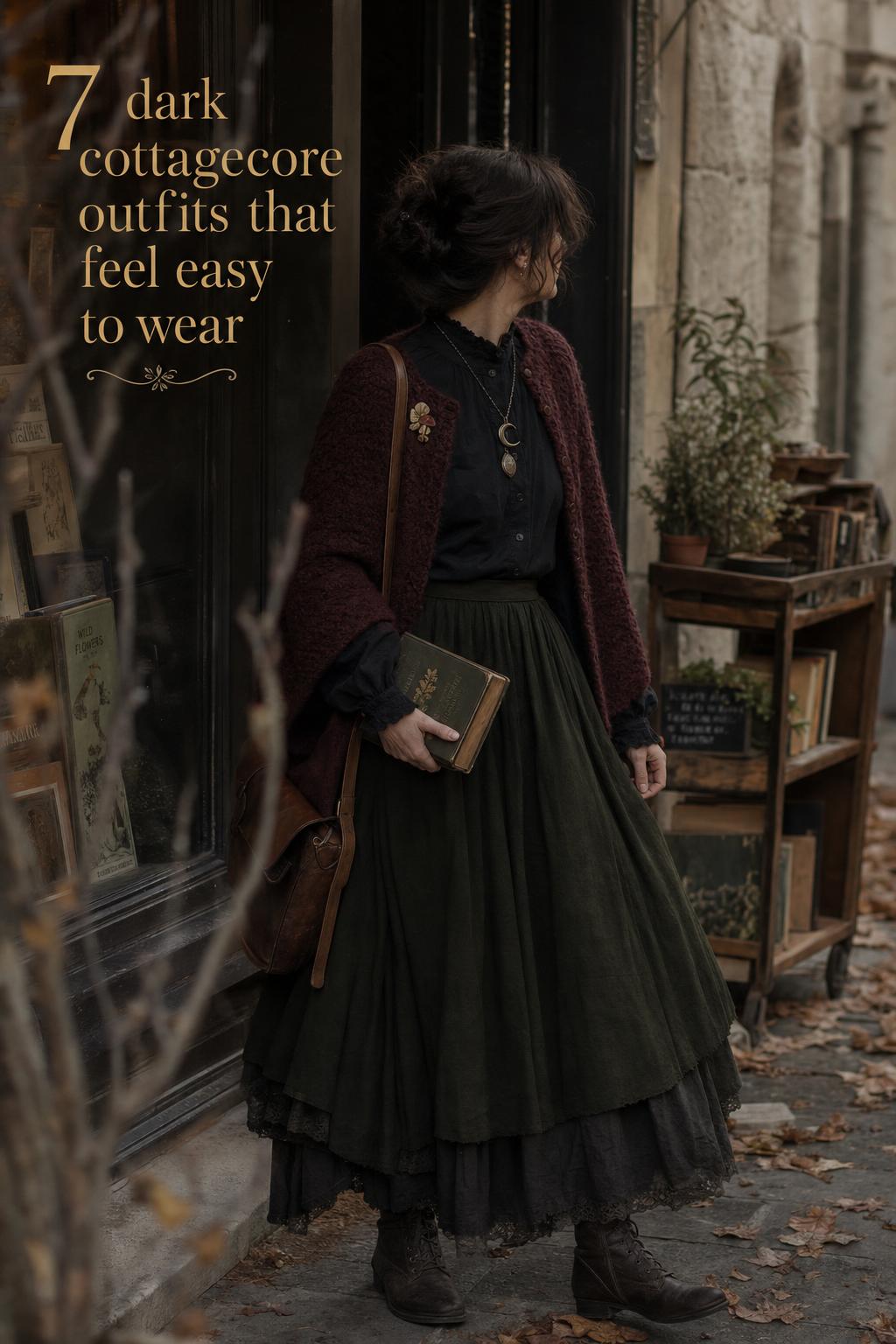
What makes dark cottagecore different from classic cottagecore
Classic cottagecore usually leans romantic, pastoral, and light in mood. Dark cottagecore keeps the rural, vintage-inspired, handmade feeling, but shifts the emotional register through color palette, texture, and silhouette. The result can overlap with goth cottagecore, forest witch dressing, Victorian references, and even touches of dark academia, but the foundation still comes from the cottagecore aesthetic rather than urban gothic fashion.
The distinction matters because it changes what you should buy first. In classic cottagecore, a floral dress may carry the whole look. In dark cottagecore, a single piece rarely does enough on its own. The mood comes from layering: a dark-toned dress, a wool layer, textured lace, a brooch, a moon pendant, or outerwear that gives the outfit depth. That is why many dark cottagecore outfits feel more grounded in autumn and winter wardrobes, where fabric weight and tonal contrast naturally support the aesthetic.
Found the dress? Keep the rest in one place.
Zarellea brings guest details, vendors, timelines, and every next step together — so your wedding plan feels as good as your look.
- Classic cottagecore favors lighter palettes and softer visual contrast.
- Dark cottagecore builds around charcoal, black, deep burgundy, moss green, and forest tones.
- Classic versions often look complete with one hero dress.
- Dark versions usually need texture contrast and accessories to feel intentional.
- Related aesthetics such as goblincore and dark academia can support the mood, but they should not overwhelm the cottagecore base.
A useful test is this: if the outfit could still pass as a simple vintage or academic look after removing the accessories, it may need more cottagecore softness. If it looks overly theatrical and difficult to move in, it likely needs simplification. The best balance sits between woodland romance and practical dressing.
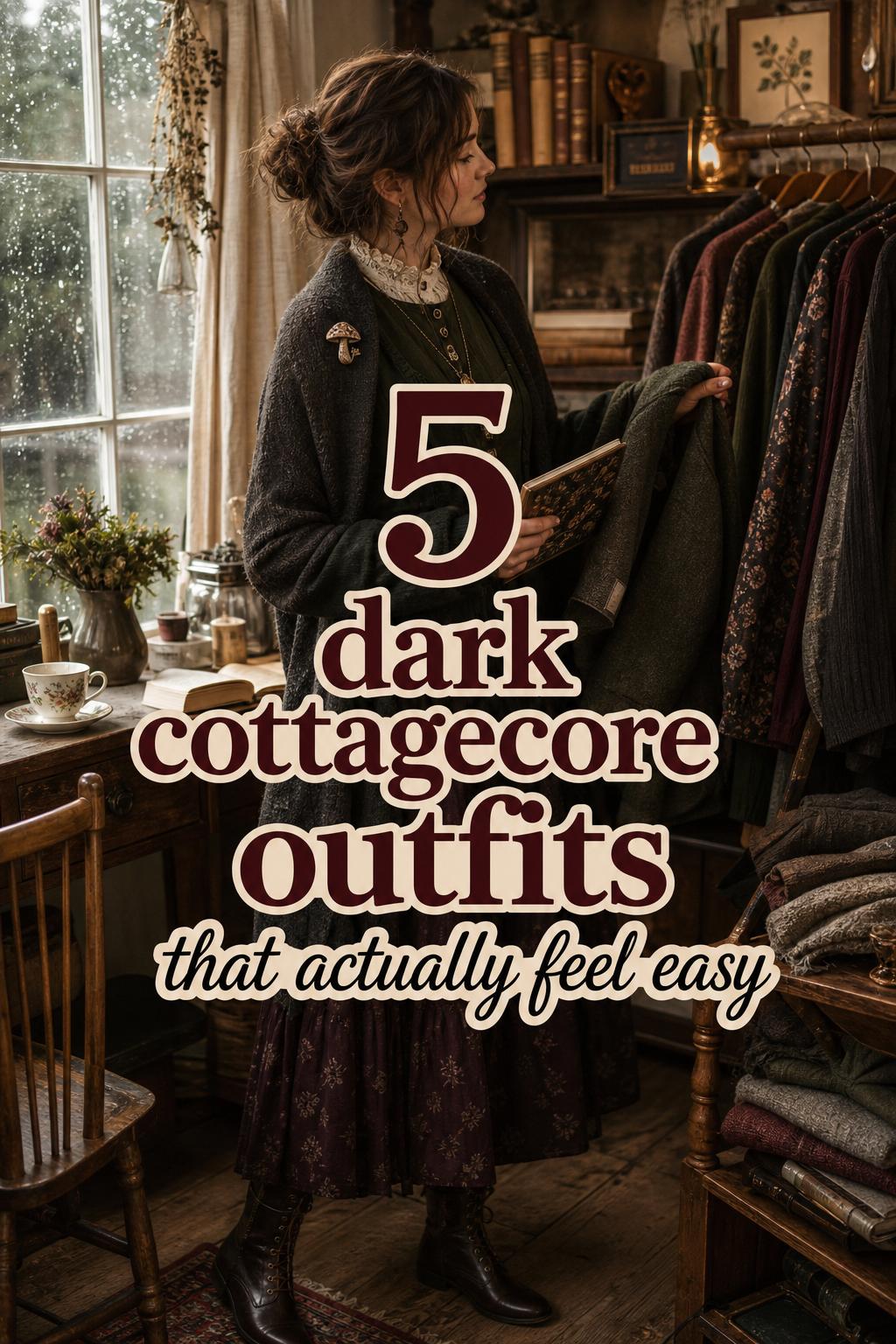
The color palette and materials that actually build the look
Color is the fastest way to make dark cottagecore outfits coherent. The most reliable palette from current style coverage centers on moss green, charcoal, deep burgundy, black, and other twilight or forest tones. These shades work because they create emotional consistency without requiring exact matching. A dress does not need to be the same green as a cardigan. It only needs to live in the same muted, earthy, shadowed family.
Materials matter just as much. Velvet, lace, wool, leather accents, chiffon, and capes appear repeatedly because texture is doing part of the storytelling. Velvet gives depth and light absorption, wool makes layering practical, lace adds historical softness, and chiffon helps an outfit feel ethereal rather than heavy. This is especially important if you are trying to avoid a flat, all-black result.
How to combine fabrics without making the outfit feel bulky
The easiest formula is one plush texture, one soft draping texture, and one stable layer. For example, a velvet dress, a wool cardigan, and a lace-trimmed blouse work because each piece behaves differently. If every item is heavy, the outfit loses movement. If every item is sheer or draped, it loses visual structure. This texture contrast is one of the clearest reasons dark cottagecore outfits succeed on some people and feel unfinished on others.
- Use velvet as the statement texture, not the only texture.
- Choose wool or a structured cape when the dress is fluid.
- Add lace in smaller doses if you are petite, so it does not visually overwhelm the frame.
- Use chiffon or a lighter skirt layer when the outer layer is heavy.
- Let leather stay subtle, such as a belt or shoe detail, so the outfit remains cottagecore rather than shifting fully gothic.
For shopping decisions, fabrics are also where it makes sense to spend selectively. A good wool layer or cape will work across multiple outfits and seasons. Velvet can be worth investing in if it is your main statement dress. Lace trims, brooches, and pendants are easier places to save money through vintage stores, secondhand sources, or Etsy sellers.
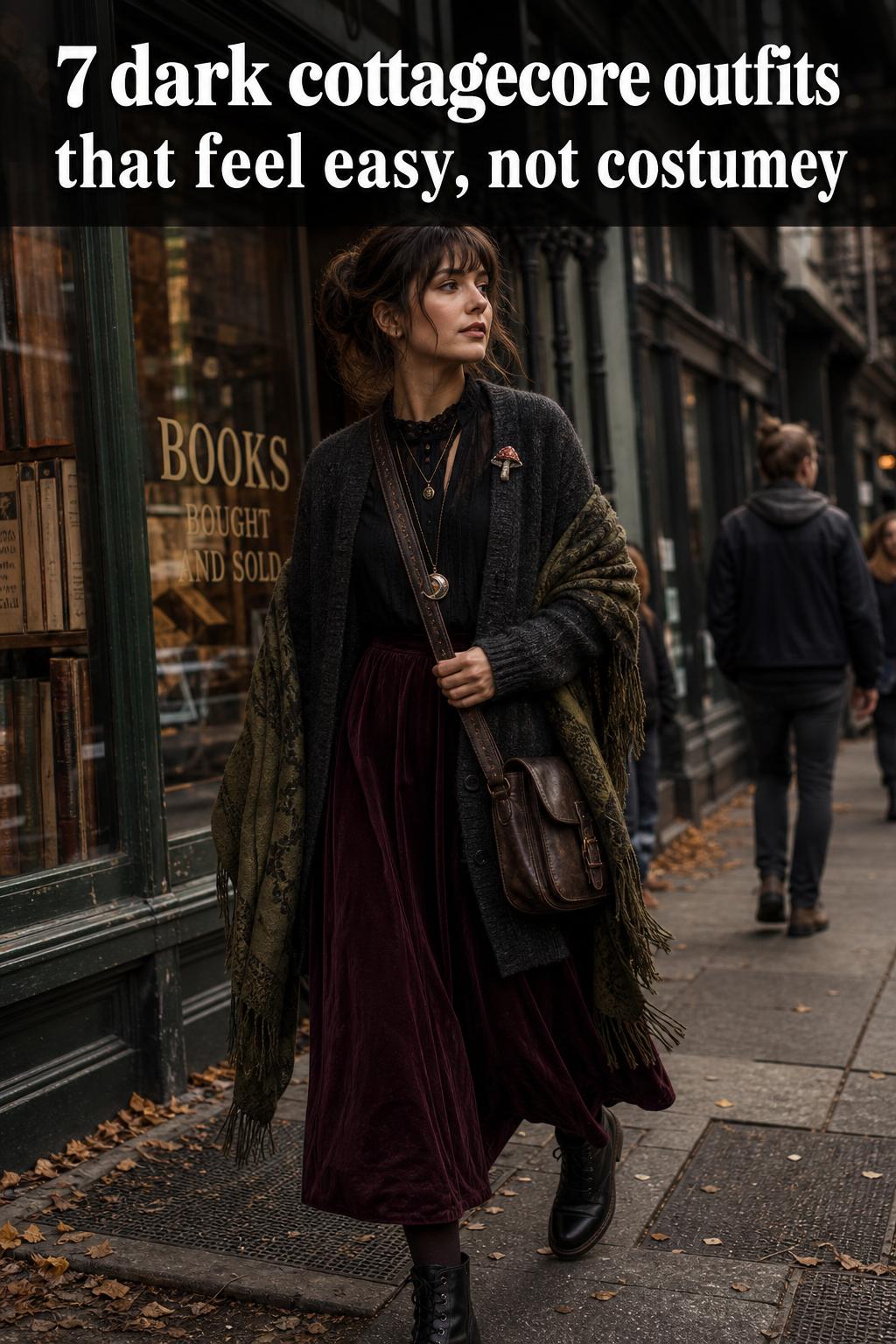
Dark cottagecore archetypes that make outfit planning easier
Many people struggle with dark cottagecore because the term is broad. Archetypes solve that problem. They create a clearer shopping filter, which helps prevent waste. Instead of buying every dark floral piece you see, you can identify the mood you want and build from there. Current style coverage repeatedly points to forest witch, Victorian widow, ghost bride, folk goth, and mossy hermit as useful anchors.
Forest witch: the most wearable everyday version
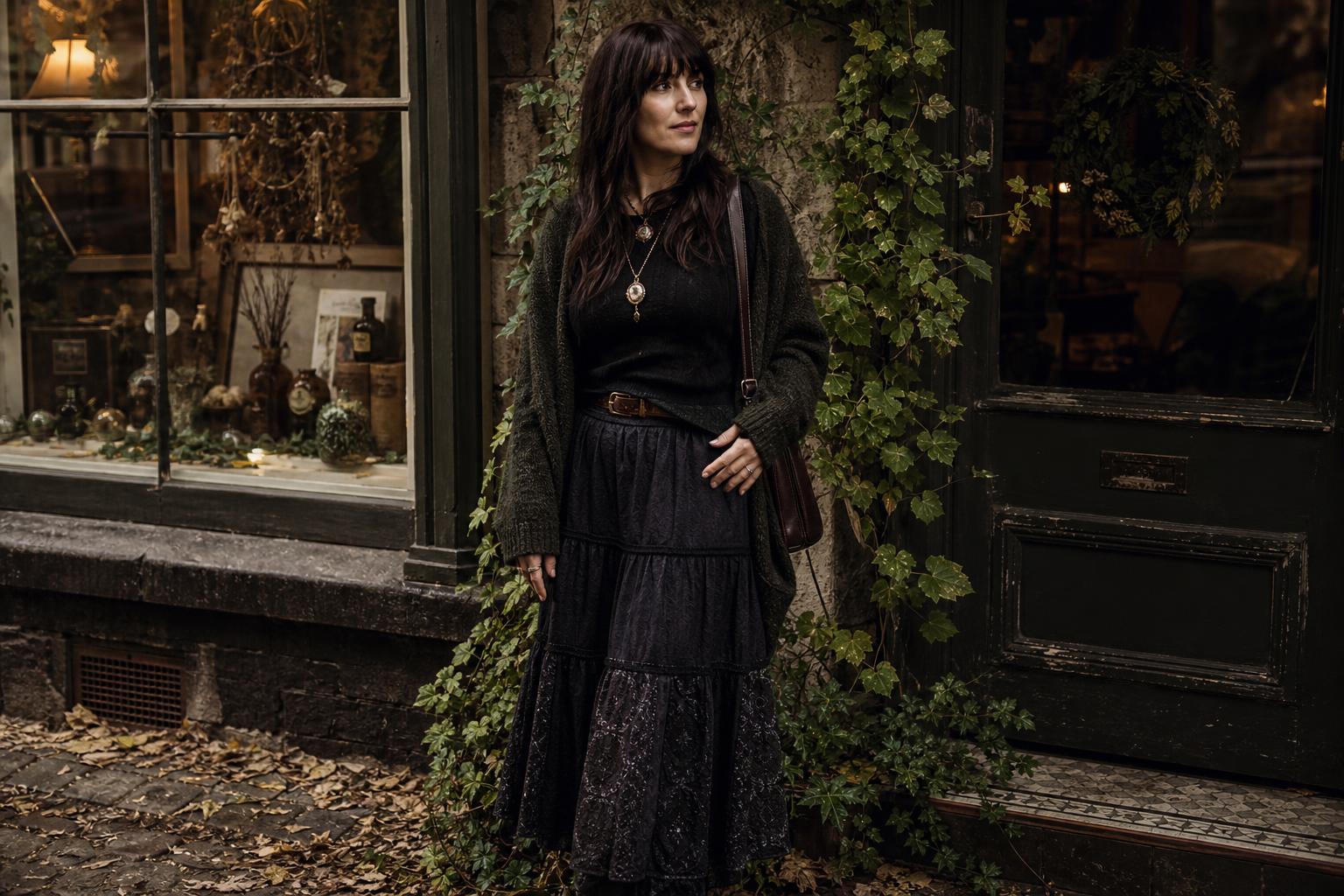
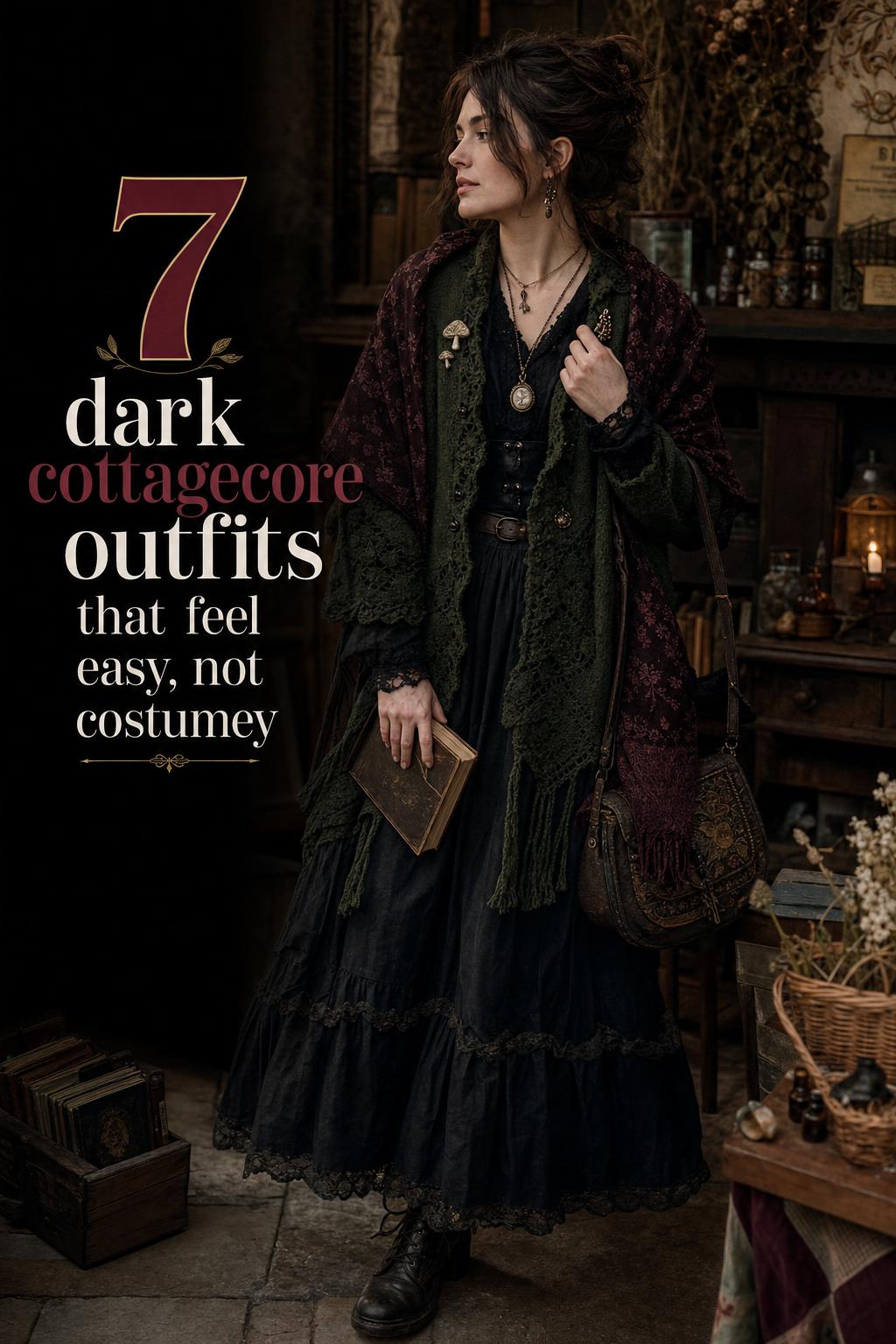
The forest witch archetype is often the easiest entry point because it works with familiar layering pieces. Think a velvet dress, a moss-green cardigan, a shawl or cape, and bronze jewelry such as a pendant. Mushroom motifs, moon details, and botanical references add character without requiring an entirely separate wardrobe. The silhouette usually feels relaxed, slightly elongated, and practical enough for repeated wear.
This composition works well because the green and brown-adjacent undertones soften the darkness. It flatters many body types since the cardigan or shawl can create vertical lines, while the dress keeps movement around the lower body. Petite readers should keep the cardigan cropped or fitted enough to define shape. Curvy readers often benefit from keeping the waist visible under the outer layer so the outfit does not turn into one dense block of fabric. Taller readers can carry longer capes and fuller skirts without losing balance.
Victorian widow: strong structure, high neckline, controlled drama
The Victorian widow version draws on mourning dress influence, black lace, capes, high necklines, and darker tonal layering. This is one of the most striking dark cottagecore outfits, but it also has the highest risk of feeling costume-like. The key is restraint. One black lace dress with a cape and jet-button inspired detailing is enough. Adding too many historical references at once can push the outfit away from practical wear.
This archetype works best when the outfit composition has a clear visual anchor, usually the neckline or the outerwear. High necklines flatter longer necks and create a refined line through the torso. If you are fuller-busted, balance the neckline with softer drape below the waist so the upper half does not feel compressed. For everyday wear, replace a dramatic full cape with a shawl or structured wool layer. That keeps the essence while improving movement for commuting, office settings, or city errands.
Ghost bride: airy fabric with shadowed contrast
The ghost bride interpretation is built on sheer fabrics, chiffon, pale-to-dark tonal contrast, and a more ethereal silhouette. It is visually compelling because it introduces lightness into a dark palette. Instead of relying on heaviness, it uses transparency and layering to create atmosphere. A chiffon layer over a darker base, paired with velvet or a moon pendant, is enough to communicate the idea.
This look is most functional for events, dinner settings, creative work environments, or content shoots rather than rough day-to-day wear. It also packs less easily for travel because sheer fabrics wrinkle and snag more quickly. If you want to adapt it for regular use, switch a full sheer dress to a blouse with a darker skirt. That gives the same visual softness with fewer care issues.
Folk goth: the bridge between rustic and dramatic
Folk goth sits between rural romantic dressing and stronger gothic influence. It often relies on vintage-inspired dark looks, lace, velvet dresses, and more obvious contrast in color and trim. This is a useful route if you already own darker clothing and want to make it feel more cottagecore rather than buying an entirely new wardrobe.
What makes folk goth work is the tension between softness and edge. If your dress is dark and dramatic, keep the accessories earthy or antique rather than severe. A locket, brooch, or textured shawl grounds the outfit in cottagecore language. If the accessories are too sharp or modern, the look drifts away from the intended mood.
Mossy hermit: texture-first dressing for cold weather
The mossy hermit version prioritizes wool, layering, forest tones, and an almost weathered texture story. This is arguably the most practical dark cottagecore archetype for U.S. fall and winter because it aligns with real outdoor dressing. It is less about ornate detail and more about quiet tonal depth: long skirts, wool layers, textured knits, and accessories that hint at mushrooms, botanicals, or antique utility.
This archetype is excellent for capsule wardrobes because the pieces repeat well. A wool coat, a dark skirt, one velvet or textured dress, and two to three layering tops can create multiple outfits without visual repetition. If budget is a concern, start here. It is easier to thrift and easier to wear.
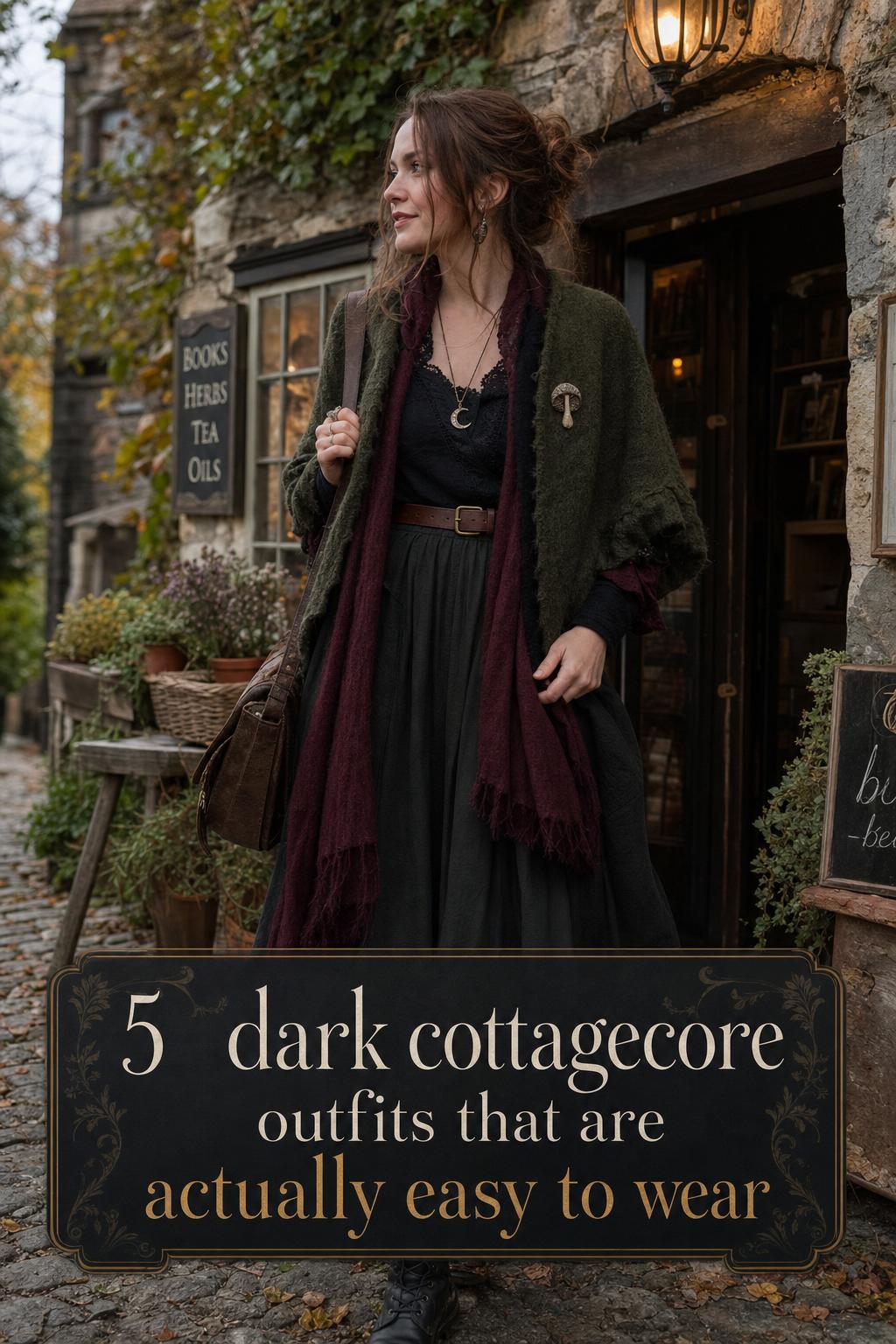
What to buy first if you want dark cottagecore outfits that feel real, not costume-like
The smartest shopping approach is to begin with the pieces that create the most range. Readers often overbuy special dresses and underbuy the supporting layers that make the aesthetic coherent. In reality, the cardigan, cape, shawl, wool outer layer, and jewelry often do more work than a single dramatic garment.
- Start with one dark-toned dress or skirt in a versatile silhouette.
- Add one outer layer with presence, such as a cape, shawl, or wool cardigan.
- Choose one signature accessory category, such as a moon pendant, antique locket, or mushroom brooch.
- Build around two to three core colors, not five or six.
- Only then add a more dramatic piece such as lace-heavy eveningwear or an ethereal chiffon layer.
The reason this order works is simple. Base garments create wear frequency, while statement pieces create identity. If you buy identity first without a stable base, the outfit possibilities stay narrow. For most people, a velvet dress in black, burgundy, or moss-adjacent tones is a stronger investment than multiple niche accessories. But if you already own dark dresses, your next best investment is likely outerwear. In dark cottagecore, outerwear often becomes the visual anchor.
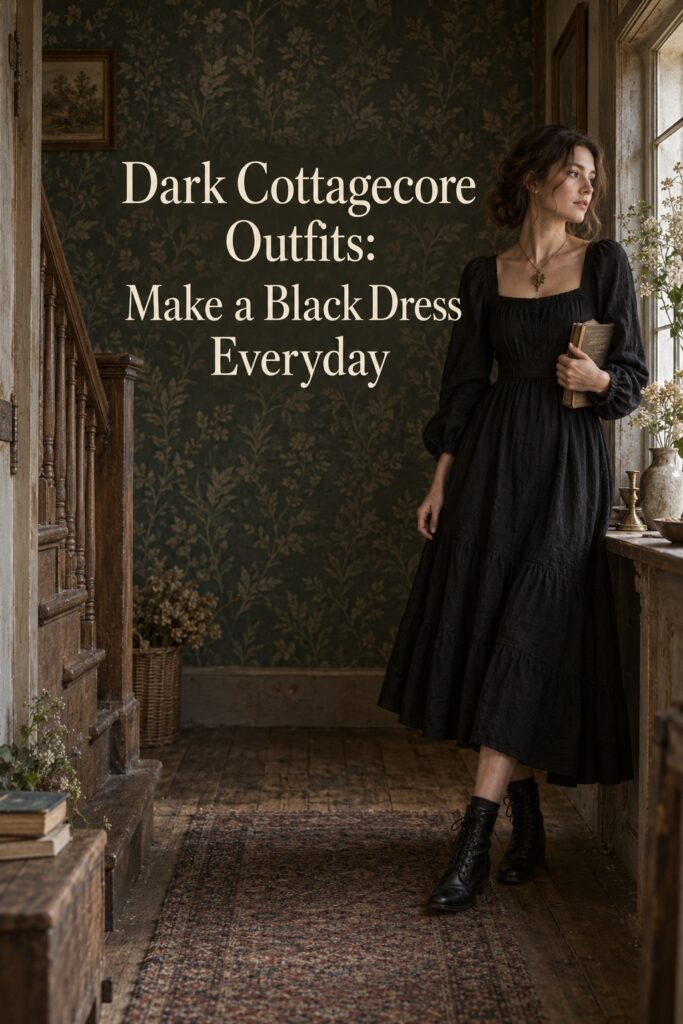
Seasonal logic: how to make the aesthetic function beyond autumn mood boards
Dark cottagecore naturally shines in autumn and winter, but it does not have to disappear the rest of the year. The adjustment is less about changing the entire palette and more about changing fabric weight and layering density. This is where many outfits go wrong. People keep the winter textures into mild weather, and the result feels visually heavy and physically uncomfortable.
Fall and winter
This is the strongest season for velvet, wool, capes, shawls, and deep layering. The palette feels natural against cold-weather environments, and practical needs support the styling. A cape over a dark dress is not just aesthetic here; it is useful. Wool adds insulation, and lace peeking out from under heavier layers creates dimension without bulk.
Spring transitions
Keep the same color story but reduce density. Replace full wool with lighter layers, and let chiffon or lighter skirts handle movement. This is where ghost bride influences can help. The outfit still reads dark cottagecore because of the tonal family and motifs, but the fabric behavior becomes more breathable.
Summer adaptation
Summer is the hardest season for dark cottagecore outfits in the U.S., especially in humid areas. The practical answer is not to force heavy black velvet into hot weather. Instead, keep the silhouette and accessories while relaxing the texture. A darker lightweight dress, simpler jewelry, and one botanical or moon reference can preserve the aesthetic without discomfort. If you insist on full layering in heat, the outfit usually stops being functional.
For travel, pack one repeatable dark skirt or dress, one lightweight shawl, and one jewelry group rather than multiple single-use statement pieces. This keeps the aesthetic cohesive while reducing luggage bulk.
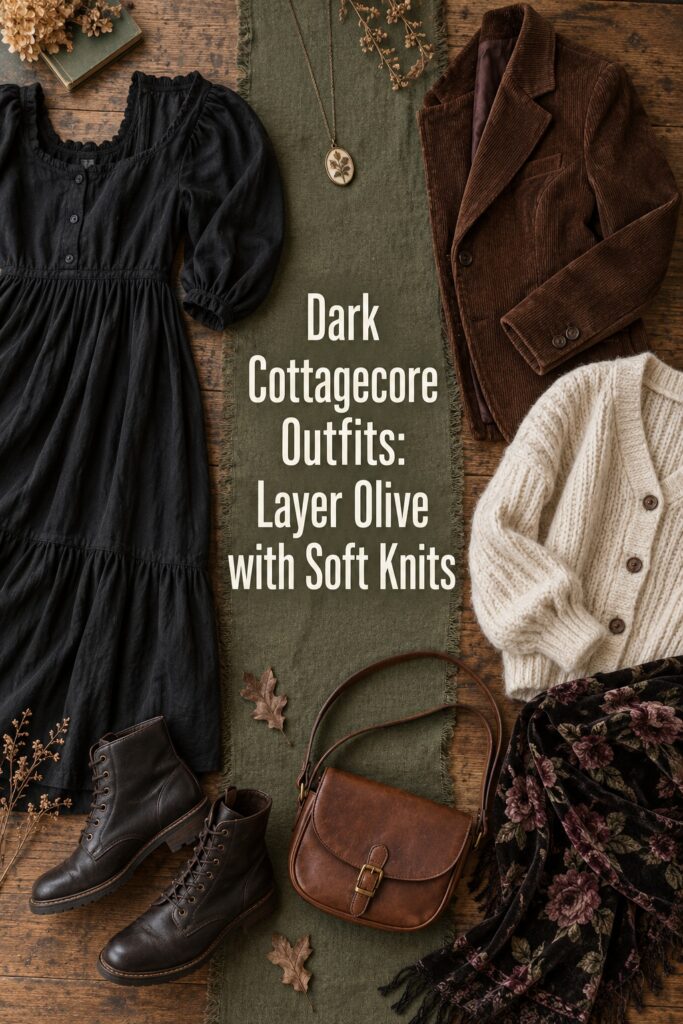
How to source the look in the U.S. without overspending
The current shopping conversation around dark cottagecore points toward Etsy sellers, vintage stores, secondhand sources, and niche or brand-led inspiration from spaces such as Fūga Studios, Deer Doll, Cottagecore Clothes, My Cottagecore, and Dark Cottagecore. The practical takeaway is that the aesthetic is often assembled rather than bought as one complete collection. That is good news for budget-conscious shoppers.
Etsy is especially useful for jewelry, brooches, lockets, and motif-driven accessories because those details define the mood without demanding major spending. Vintage stores are often better for outerwear, lace blouses, long skirts, and wool pieces. Full dresses can come from either route, but fit matters more there, so be cautious with final-sale items unless measurements are very clear.
- Use Etsy for moon pendants, mushroom brooches, antique-style lockets, and small finishing details.
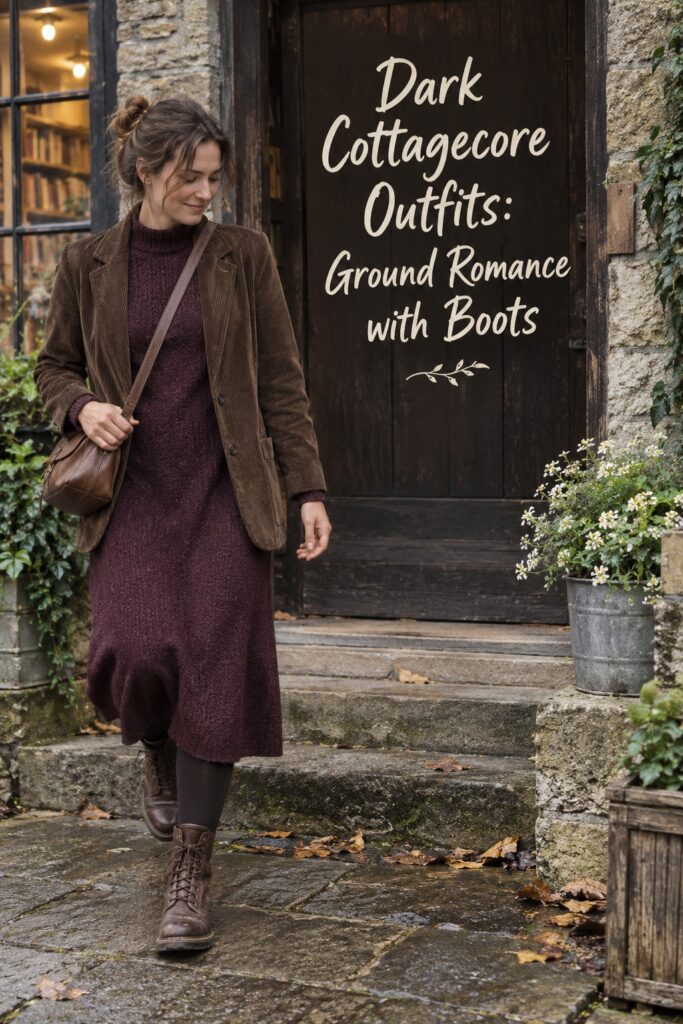
- Use vintage stores for wool layers, capes, skirts, and textured blouses.
- Use secondhand platforms when you want higher-quality fabrics at lower cost.
- Use brand blogs and niche shops for visual direction, then compare against what you already own.
- Prioritize garments that can work outside a single aesthetic, especially if budget is limited.
A common mistake is buying pieces that only make sense in a photo. A velvet cape may look beautiful, but if it does not fit over your real winter layers or work with your daily movement, it becomes dead wardrobe weight. In contrast, a well-cut cardigan or shawl that carries the same mood will likely be worn weekly. Wear frequency should guide your spending more than visual drama.
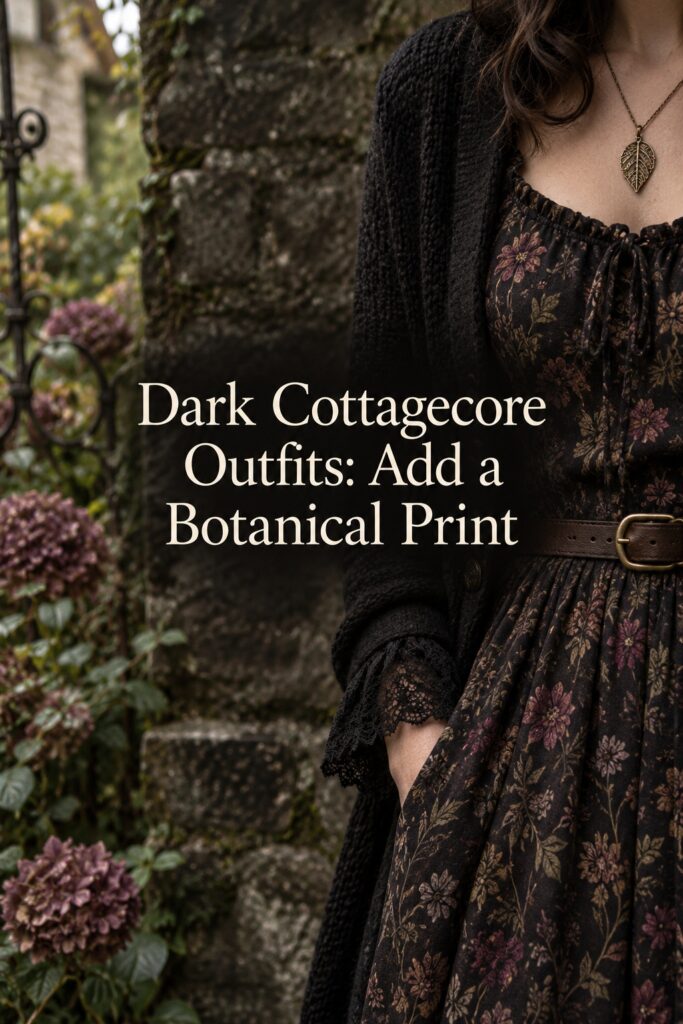
Body proportion, comfort, and silhouette balance
Dark cottagecore outfits often rely on volume, which means proportion needs extra attention. Long skirts, layered tops, capes, and textured fabrics can create beautiful depth, but they can also shorten the frame or hide shape entirely. The goal is not to make every outfit fitted. The goal is to decide where the eye should land.
For petite frames
Choose one long line at a time. If the skirt is full and long, keep the upper half cleaner and avoid an oversized, shapeless outer layer. Cropped cardigans, shorter shawls, and controlled lace placement help maintain scale. A pendant can work better than multiple clustered accessories because it creates one clear vertical focal point.
For curvy shapes
Dark palettes can visually streamline, but heavy layering can also obscure proportion. Keep waist definition in at least some outfits, especially when using wool or capes. A dress with a visible waistline under a soft outer layer usually creates better silhouette balance than stacking multiple boxy garments. Lace at the neckline or sleeve can also direct attention upward without adding bulk.
For taller frames
Taller readers can carry dramatic lengths and larger outerwear more easily, which makes the Victorian widow and mossy hermit archetypes especially effective. The main caution is not to let everything become equally long and dark. Break the column slightly with texture contrast, a brooch, or a belt so the outfit keeps visual movement.
Comfort is equally important. Lace that scratches, wool that overheats indoor spaces, and capes that slide off the shoulder can quickly make an outfit unwearable. Dark cottagecore works best when the tactile experience supports the visual one. If a piece is beautiful but annoying to wear, it will not become part of your real wardrobe.
Accessories that ground the look without overcomplicating it
Accessories are where dark cottagecore outfits gain specificity. Without them, a look can read as generic vintage, generic gothic, or simply dark romantic dressing. With the right finishing details, the mood becomes clearer. The most recurring accessory language includes brooches, moon motifs, mushroom motifs, antique lockets, belts, pendants, shawls, and capes.
The key is to choose a motif family, not all of them at once. A mushroom brooch, moon pendant, locket, and multiple botanical pins can easily compete. The outfit usually looks stronger when one or two accessory ideas repeat quietly. This is especially true if the garment already has texture such as velvet or lace.
- Use a brooch when the outfit needs a focal point near the face or shoulder.
- Use a pendant when the neckline feels empty and you want a vertical line.
- Use a belt when layers need shape definition.
- Use a cape or shawl when outerwear needs to become the statement piece.
- Use motif accessories sparingly if the fabric texture is already visually rich.
An easy way to make outfits look more expensive is to keep the accessories tonally coherent. Bronze, antique-finish metals, and muted decorative details often support the mood better than bright, high-shine pieces. The intention is not luxury for its own sake. It is visual consistency.
DIY, upcycling, and thrifting strategies that make sense
Dark cottagecore has a natural connection to DIY and crafts, which makes upcycling especially relevant. This is one of the most practical ways to build the aesthetic because small changes can shift an ordinary garment into the right mood. A thrifted skirt gains character through texture layering. A simple dress becomes more aligned through brooches, a shawl, or lace additions.
The strongest candidates for upcycling are garments with good structure but plain presentation. A long dark skirt, a simple cardigan, or a neutral dress often offers more value than a cheap, overly literal “costume” piece. Upcycling works because dark cottagecore depends on atmosphere created through layering and detail, not just novelty.
- Thrift outer layers first, because wool and vintage-inspired silhouettes often appear there at better prices.
- Upgrade simple pieces with a pendant, locket, or brooch rather than replacing them entirely.
- Focus on dark-toned basics that can move between casual and more styled outfits.
- Skip low-quality synthetic pieces that imitate velvet poorly, because texture is central to the look.
- Build slowly so each item works with at least two or three outfits.
This approach also reduces mistake buying. Many people discover that their favorite dark cottagecore outfits are not the most ornate ones, but the outfits where a few thoughtful layers create texture contrast, mobility, and repeat wear. Upcycling supports that kind of wardrobe better than trend-chasing.
Where the aesthetic is heading in 2026 and what that means for your wardrobe
The current direction of dark cottagecore in 2026 points toward stronger forest motifs, darker palettes, botanical references, and intersection points with goblincore, industrial folk, and dark academia. For a shopper, the practical lesson is not to chase every adjacent aesthetic. It is to recognize where overlap can increase versatility.
Goblincore overlap can make the wardrobe feel more earthy and textural. Dark academia influence can sharpen the silhouette through structured layers and high-neck details. Industrial folk elements can introduce rougher textures and moodier materials. But dark cottagecore remains strongest when softness is preserved. If the outfit becomes too academic, too urban, or too harsh, the rural romantic core disappears.
This is useful when planning purchases for 2026 and beyond. Choose pieces that can cross between these adjacent moods without losing identity: a wool coat, a dark lace blouse, a velvet dress, a structured cape, or a skirt that works with both botanical styling and darker academic layering. Those garments give your wardrobe longer life than ultra-specific novelty items.
A U.S.-specific reality check: city wear, weather, and local styling context
Dark cottagecore often appears most believable when it responds to place. In U.S. fashion scenes, the styling logic will not look the same everywhere. A wardrobe built for Portland weather can support wool, shawls, and richer layering for longer periods. Brooklyn or New York dressing may demand more movement-friendly versions of the aesthetic, where a dramatic look still needs to function on transit and busy sidewalks. Asheville references a more artisanal, vintage-oriented interpretation where texture and handmade details feel especially natural.
This matters because location changes what is practical. A full cape may be useful in one climate and frustrating in another. A velvet dress may perform beautifully in a cool city fall and feel impossible during a humid summer. Instead of copying every image literally, filter dark cottagecore outfits through your local weather and daily rhythm. That is how the aesthetic becomes personal rather than performative.
Common styling mistakes that weaken dark cottagecore outfits
Most outfit failures happen for predictable reasons. The mood may be right, but the composition is off. Dark cottagecore is especially sensitive to bulk, monotony, and over-accessorizing because so much of the aesthetic relies on layered detail.
- Using too many heavy fabrics at once, which kills movement.
- Relying on all-black with no tonal variation, which flattens the look.
- Adding every possible motif at once, from mushrooms to moons to botanicals.
- Buying theatrical statement pieces with no everyday supporting garments.
- Ignoring comfort and mobility, especially in outerwear-heavy outfits.
- Forgetting silhouette balance when pairing long skirts with oversized top layers.
The correction is usually simple. Add tonal variation through burgundy, charcoal, or moss. Keep one main texture and one supporting texture. Let accessories reinforce the concept instead of explaining it entirely. And always test the outfit in motion. If it looks good standing still but feels awkward once you walk, sit, or layer for weather, it needs editing.
Practical outfit formulas you can repeat
Repeatable formulas are more valuable than one-off inspiration because they help you dress quickly. Dark cottagecore outfits become easier once you know which combinations consistently create the right balance.
The easiest casual formula
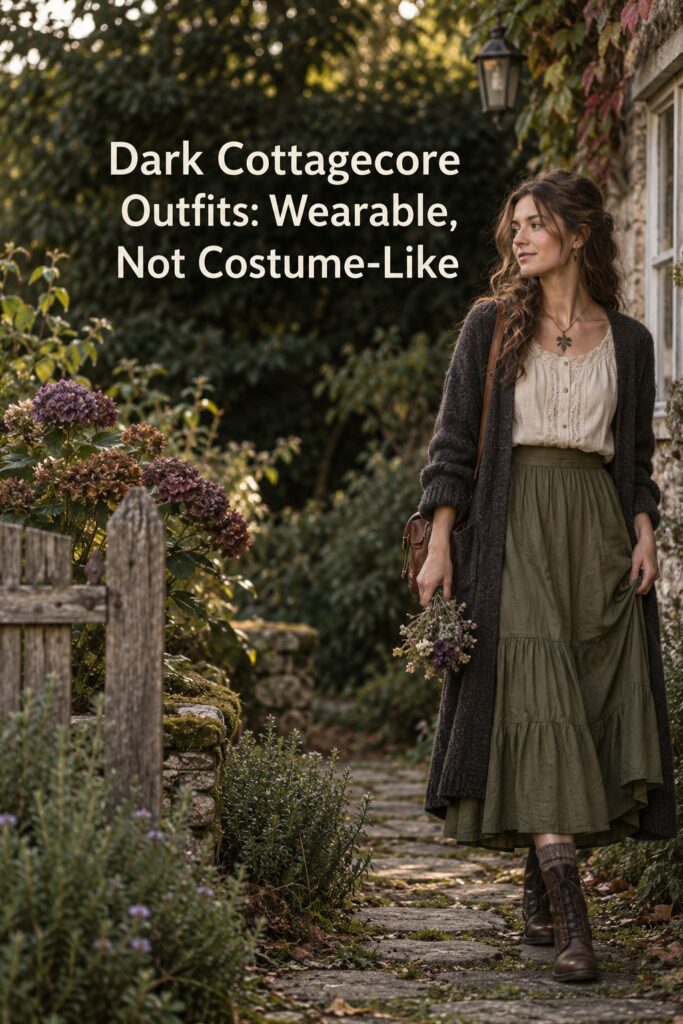
A dark skirt or simple dress, a moss or charcoal cardigan, and one antique-style accessory create an everyday version that still feels deliberate. This works for errands, casual workdays, coffee meetings, or low-key weekends because the outfit is comfortable and not too fragile.
The strongest cold-weather formula
A velvet dress or textured base, a wool outer layer, and a pendant or brooch create visual depth without too many moving parts. This formula works because one plush texture and one practical layer do the heavy lifting. It is ideal for fall and winter, and it transitions well from day to evening.
The event-ready formula
A chiffon or lace-focused top layer over a darker base, finished with a moon pendant or locket, creates a ghost bride or Victorian widow mood without requiring a full costume approach. This is best for dinners, gallery visits, styled gatherings, or occasions where you want more drama but still need movement.
These formulas work because they separate function from fantasy. The base layer keeps the outfit wearable. The texture and accessory choices create the aesthetic. That is the most reliable equation in this category.
Final styling perspective
Dark cottagecore outfits are most successful when they are built like a wardrobe, not like a costume rail. The aesthetic depends on thoughtful layering, forest-toned color harmony, and tactile materials such as velvet, wool, lace, and chiffon. Archetypes such as forest witch, Victorian widow, ghost bride, folk goth, and mossy hermit can help clarify your direction, but the strongest results come from practical editing: buy the layers you will repeat, keep motifs controlled, and let texture contrast do the work.
Whether you shop through vintage stores, Etsy sellers, secondhand finds, or visual inspiration from spaces like Fūga Studios, Deer Doll, Cottagecore Clothes, My Cottagecore, or Dark Cottagecore, the same principle applies. Start with wearability, then add atmosphere. That is how dark cottagecore becomes not just beautiful, but believable in real life.
FAQ
What is dark cottagecore?
Dark cottagecore is a shadowed variation of the cottagecore aesthetic that keeps the vintage, rural, and romantic base but shifts the mood through darker palettes, forest tones, gothic influence, and textured materials such as velvet, wool, lace, and chiffon.
How do I style dark cottagecore outfits for everyday life?
Start with one wearable base such as a dark dress or skirt, add a practical outer layer like a cardigan, shawl, or wool piece, and finish with one focused accessory such as a moon pendant, locket, or brooch. The everyday version works best when the outfit has cottagecore softness but remains easy to move in.
Which colors define dark cottagecore best?
The most reliable palette includes moss green, charcoal, deep burgundy, black, and other twilight or forest tones. These colors create mood without making the outfit feel flat, especially when combined through tonal layering rather than exact matching.
What fabrics work best for dark cottagecore outfits?
Velvet, wool, lace, chiffon, and subtle leather accents are the most useful materials because they create texture contrast and help define the aesthetic. The best outfits usually combine one plush fabric, one soft draped fabric, and one stable layer for balance.
How can I build a dark cottagecore wardrobe on a budget?
Begin with thrifted outerwear, simple dark skirts or dresses, and secondhand layering pieces, then add detail through Etsy accessories such as lockets, pendants, and brooches. This strategy gives you more outfit range than spending everything on one dramatic garment.
What should I buy first for a dark cottagecore capsule wardrobe?
Buy one versatile dark dress or skirt, one strong outer layer such as a cape, shawl, or wool cardigan, and one signature accessory family. Those pieces create the most outfit combinations and help the aesthetic feel intentional without requiring a large wardrobe.
Can dark cottagecore work in warm weather?
Yes, but the outfit needs lighter fabric behavior. Keep the darker palette and motifs, then swap heavy wool and thick velvet for lighter dresses, simpler layers, and fewer accessories so the look stays functional in heat.
What is the difference between dark cottagecore and goblincore?
Dark cottagecore stays rooted in romantic, vintage-inspired, rural dressing with a shadowed palette, while goblincore is more earthy and textural in feeling. They can overlap through forest motifs and layered styling, but dark cottagecore usually remains softer and more refined in silhouette.
How do I avoid making dark cottagecore outfits look like costumes?
Limit the outfit to one main dramatic element, keep the rest of the look wearable, and use accessories to reinforce the mood rather than overexplaining it. Strong texture contrast, practical outerwear, and tonal variation usually look more convincing than excessive lace or too many motifs at once.