Baddie Cowgirl Outfits That Feel Polished
There is a specific reason baddie cowgirl outfits are harder to pull off than they look on Pinterest. The balance is narrow: too classic, and the outfit reads costume or traditional rodeo wear; too trend-heavy, and the Western reference disappears entirely. Most people are not struggling to find boots or denim. They are struggling to make those pieces feel sharp, modern, flattering, and realistic for an actual day out.
The challenge becomes even more obvious once real life enters the picture. A country concert means hours on your feet. A rodeo calls for movement, dust, and changing weather. A festival outfit has to photograph well without becoming uncomfortable after the first hour. Even a casual street-style version needs enough structure to feel intentional rather than random.
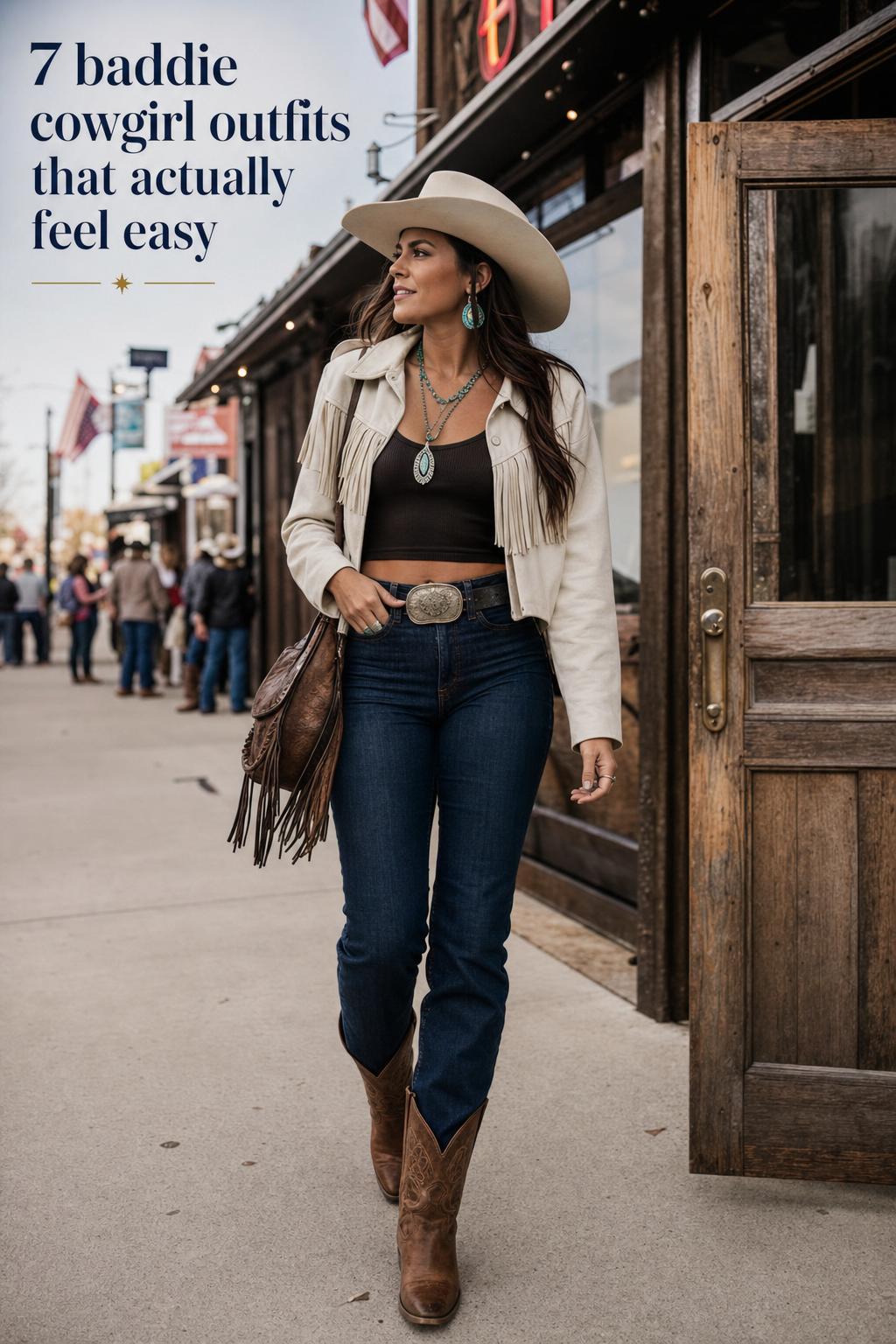
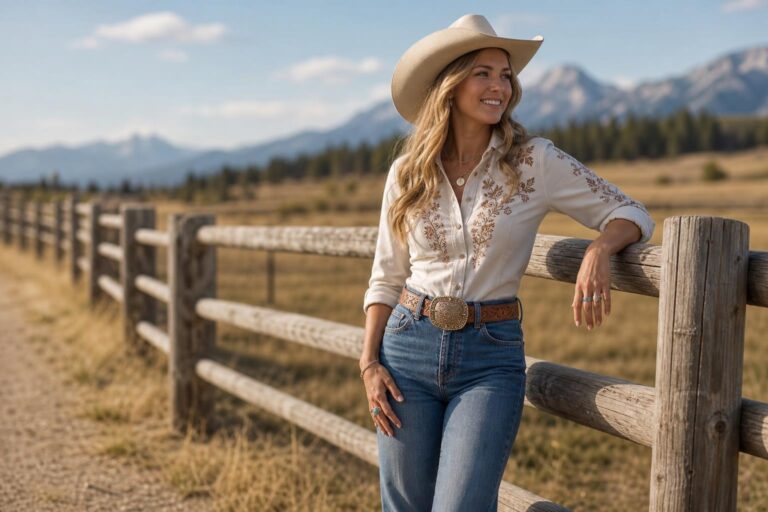
That is where baddie cowgirl outfits work best: not as a pile of Western pieces, but as a controlled outfit composition built around denim, cowboy boots, a strong top, and a few visual anchors like a hat, belt buckle, or turquoise jewelry. The goal is modern Western glam with wearability, not just a themed look.
Why this aesthetic feels tricky in real life
The baddie cowgirl look merges two style languages that do not naturally behave the same way. Western fashion is grounded in utility, heritage references, boots, denim, leather, and hats. Baddie style leans toward body-conscious silhouettes, sharper accessories, bold attitude, and a more polished or camera-ready finish. When these codes are mixed without proportion control, the outfit can feel visually heavy, over-accessorized, or impractical.
Found the dress? Keep the rest in one place.
Zarellea brings guest details, vendors, timelines, and every next step together — so your wedding plan feels as good as your look.
Weather is part of the problem. Rodeos and festivals often happen outdoors, which changes how denim, fringe, leather jackets, and boots actually perform. A fitted denim jacket looks strong in photos, but if it is layered over a bulky top and paired with tall boots in heat, the outfit quickly becomes restrictive. On the other hand, removing too much structure can make the look lose its Western edge.
Dress code pressure also matters. In places with a strong Western vibe, such as Nashville, Austin, Dallas, or Texas-inspired event settings, the look often needs to feel more grounded in authentic Western wear cues like cowboy boots, hats, belts, and denim. In casual streetwear settings, the same outfit needs editing so it does not feel like it belongs only at a rodeo or country concert.
Silhouette is the other major issue. Boots add visual weight to the lower half. Denim can be stiff. Fringe creates motion and volume. A cowboy hat adds horizontal emphasis near the face and shoulders. That means every top, jacket, jean rise, and hemline matters. Good baddie cowgirl styling is less about adding more and more pieces, and more about controlling where the outfit carries attention.
What actually makes a baddie cowgirl look work
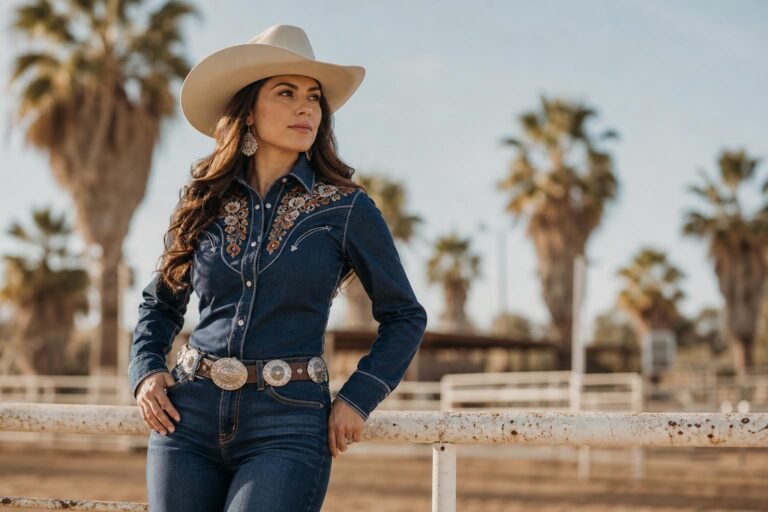
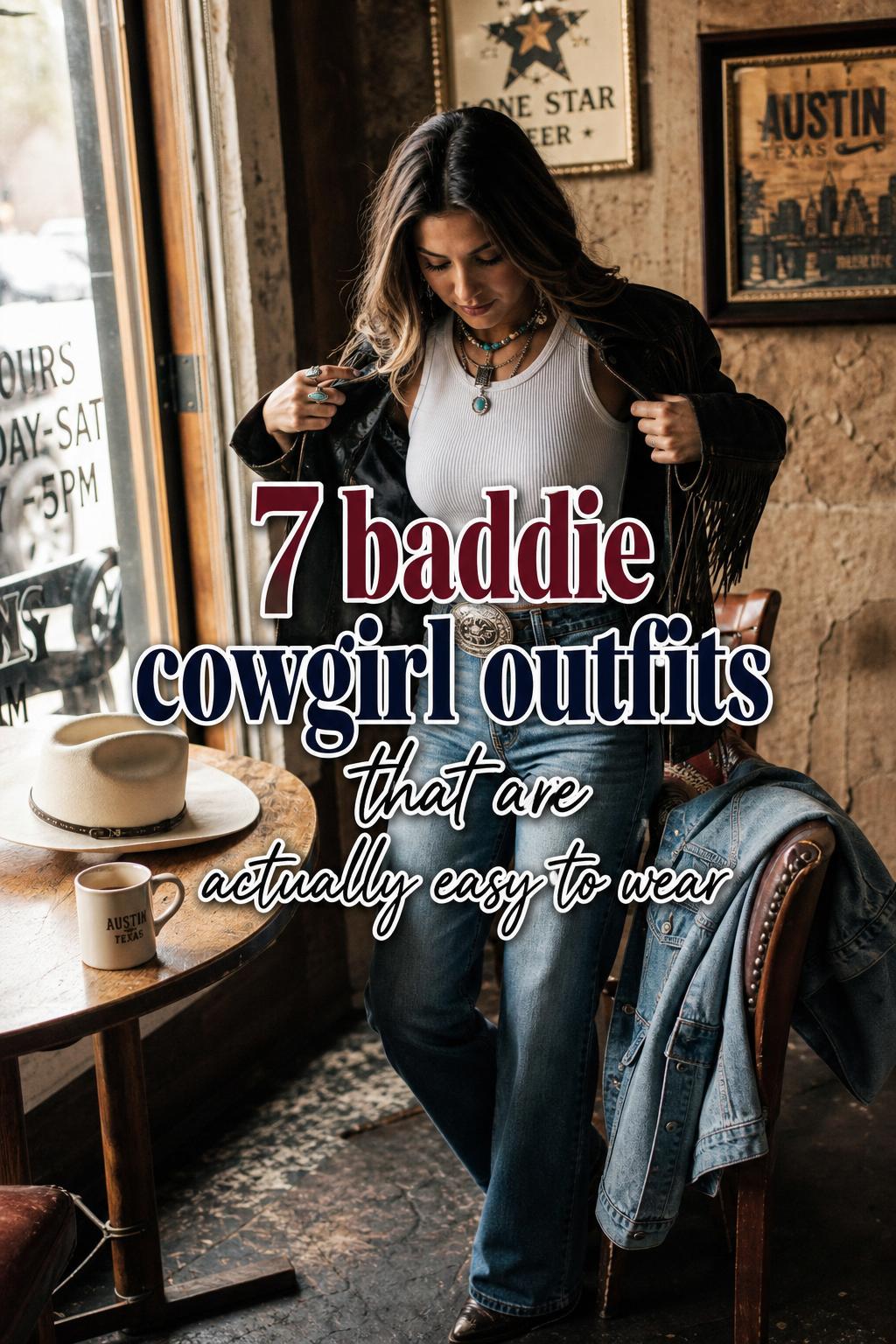
A successful outfit usually includes one grounded Western base, one modern statement, and one clean finishing layer of accessories. The grounded base is often denim and cowboy boots. The modern statement might be a crop top, a fitted statement top, mesh detail, rhinestones, zippers, or a sharper color-blocked palette. The finishing layer comes from hats, belts, chokers, turquoise jewelry, or a strong buckle.
The styling logic is simple: the Western elements create recognizability, while the baddie elements create edge and polish. If every piece is distressed, embellished, fringed, and tight at once, the outfit loses clarity. If the denim is clean and structured, the accessories can carry more attitude. If the top is dramatic, the rest of the look should anchor it.
The visual anchors that matter most
- cowboy boots as the foundation and weight-balancing piece
- denim jeans, shorts, skirt, or jacket to lock in the Western reference
- a fitted or statement top to create the baddie shape
- one or two accessories with purpose, such as a cowboy hat, belt buckle, choker, or turquoise jewelry
- texture contrast through fringe, leather, beading, or embellishment
This combination works because it gives the eye a clear structure. Boots and denim ground the look. The top defines mood. Accessories sharpen the identity. That is the difference between a wearable outfit and a random themed mix.
Core pieces worth building around
Before choosing complete looks, it helps to understand which pieces carry the most styling weight. Many top outfit ideas rely on the same framework: denim, boots, hat, statement top, and selected accessories. Shopping or styling becomes much easier once you know which item should do which job.
Denim as the outfit base
Denim is the most reliable anchor because it immediately signals Western wear while remaining easy to style for festivals, rodeos, and streetwear. High-waisted jeans create a clean line with crop tops and fitted tops. Denim shorts shift the look toward warm-weather festival dressing. A denim skirt can soften the outfit while still keeping the cowgirl aesthetic intact. A denim jacket becomes useful when the top underneath is minimal and the weather shifts late in the day.
Brands like Levi’s and Wrangler fit naturally into this wardrobe logic because they connect directly to denim-focused Western styling. In practice, the choice is less about logo visibility and more about silhouette. Cleaner denim reads sharper and more baddie. Distressed denim reads more festival-ready and casual.
Statement tops that create edge
Most baddie cowgirl outfits become modern through the top half. Crop tops are common because they create contrast against the heavier visual weight of denim and boots. A black crop top with jeans is especially effective because the dark top acts as a visual anchor and keeps the look from becoming too busy. Fringed tops, mesh panels, rhinestones, beaded details, or zipped denim tops shift the outfit toward Western glam without requiring a full costume approach.
A fitted tee can also work if the boots and accessories are strong enough. This matters for everyday wear, where a dramatic top may feel too occasion-specific. The strongest styling move is usually one statement detail, not five competing ones.
Boots, hats, and finishing accessories
Cowboy boots are the non-negotiable piece when the goal is a clear cowgirl look. They add structure, attitude, and practical support for events where you will be standing or walking for hours. Ariat, Tony Lama, and Lucchese are useful reference points because they connect directly to recognized boot silhouettes within Western wear. The outfit decision comes down to visual weight: embellished boots push the look into statement territory, while simpler boots let fringe, leather, or hats do more of the work.
Hats, especially felt cowboy hats, create instant Western identity, but they change the balance of the outfit dramatically. A hat works best when the rest of the outfit is edited and the neckline is clean enough to avoid crowding the face. Stetson belongs naturally in this conversation as a recognizable hatmaker tied to Western style references in the overall aesthetic.
Belts, belt buckles, chokers, bolo tie references, and turquoise jewelry are most effective when used as strategic punctuation rather than decoration overload. If the jeans are plain and the top is clean, a bold buckle or turquoise piece can finish the look beautifully. If the boots already have beading, zippers, or animal pattern accents like snake print or leopard, the jewelry should stay simpler.
Silhouette rules that keep the outfit polished
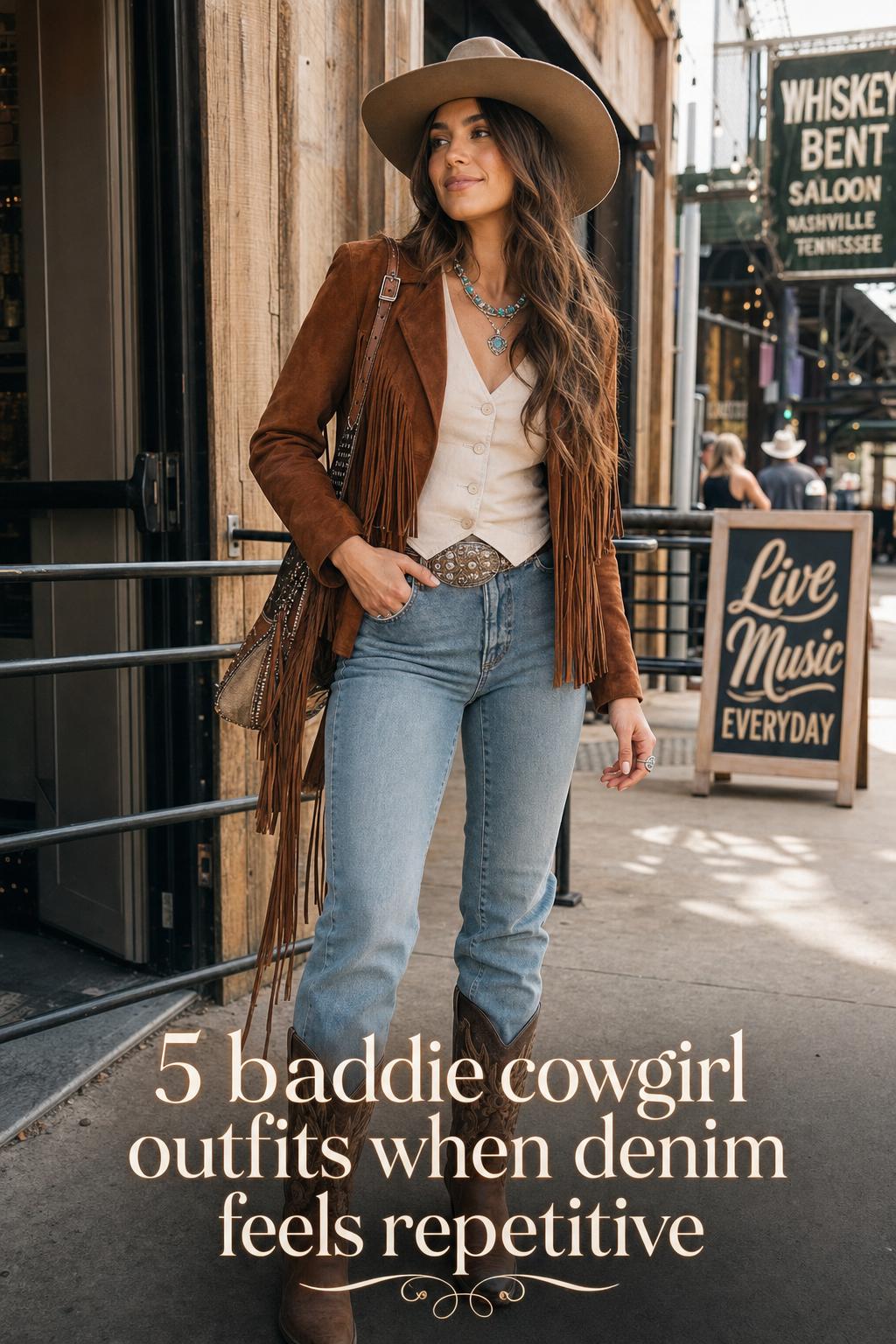
The easiest way to make Western glam look expensive and intentional is to control proportion. Because boots create visual density at the bottom, the top half needs either shape or clean structure. That can mean a cropped top with high-waisted jeans, a fitted top with a fringe jacket worn open, or a body-conscious dress grounded by boots and a belt.
Wide, oversized, or bulky pieces are not automatically wrong, but they require stronger editing. An oversized denim jacket with heavy boots and a wide hat can flatten the body line if there is no fitted area to define shape. By contrast, pairing a fitted crop top with straight or high-waisted denim gives the outfit a clear waistline and stops the boots from overwhelming the silhouette.
Quick proportion principles
- if the boots are bold, keep the hem and leg line clean
- if the top has fringe or embellishment, choose simpler bottoms
- if you add a hat, reduce clutter around the neckline
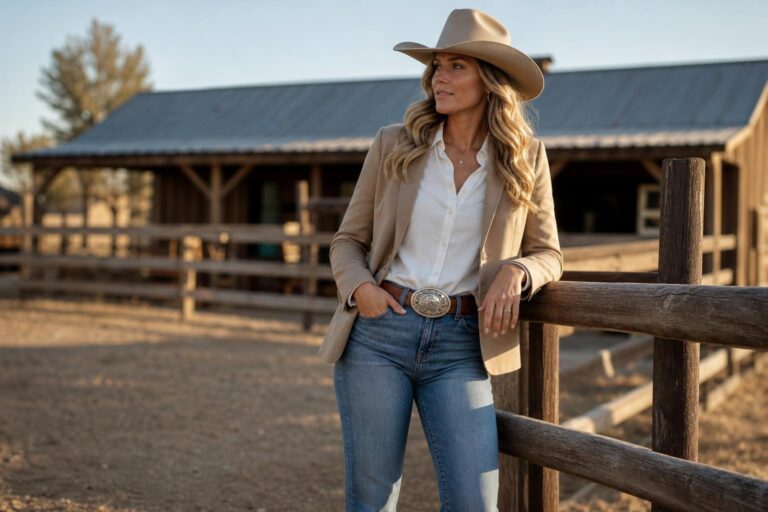
- if you wear a leather jacket, let one fitted piece define shape underneath
- if your look includes multiple textures, keep the color palette controlled
These small decisions are what make the difference between fashionable and overworked. The best baddie cowgirl outfits always look edited.
Denim and crop tops for a clean, high-impact formula
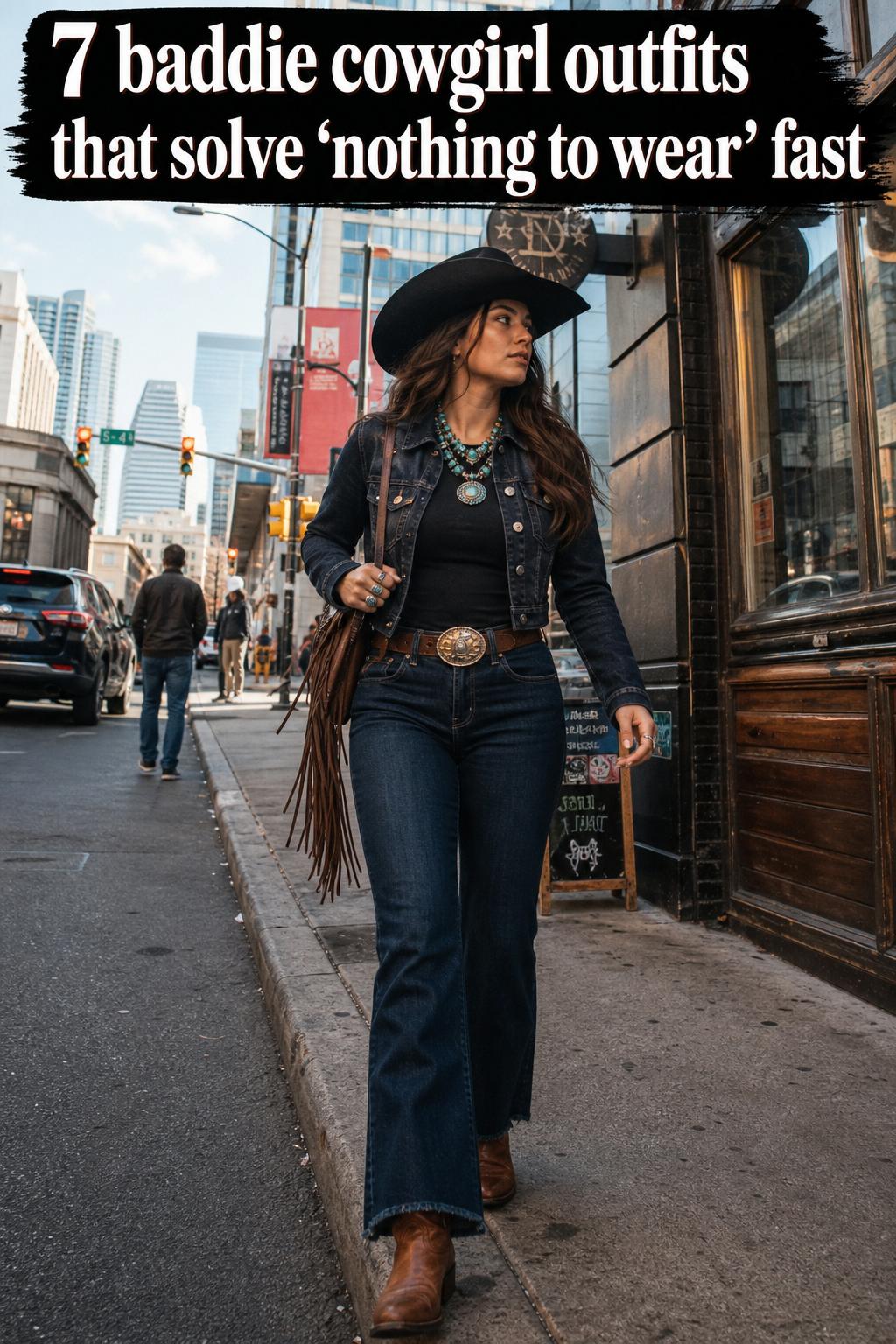
This is the most reliable entry point for readers who want a look that feels modern, flattering, and easy to re-create. A black crop top with high-waisted jeans, cowboy boots, and a belt creates immediate contrast and shape. The denim anchors the outfit in Western wear, while the crop top sharpens the silhouette and introduces the baddie element.
The reason this formula works so well is proportion play. High-waisted denim secures the midsection visually and creates a stable line for boots. The cropped top prevents the outfit from feeling heavy or traditional. A hat can be added if the event leans country concert or rodeo; for street style, the same base can stay hat-free and still read Western-inspired.
Why this outfit works
The shape is controlled, the pieces are familiar, and the styling can shift depending on footwear and accessories. It photographs well because the waistline is defined and the boot line remains visible. It also works across different body types because the rise of the denim can be adjusted to create the level of coverage and structure you want.
Easy ways to recreate it
- swap the black crop top for a fitted tee if you want more coverage
- use a denim jacket in the evening rather than layering all day
- choose a strong belt buckle if your top and jeans are both minimal
- add turquoise jewelry to warm up an all-denim and black palette
Fringe and motion for festivals that still feel wearable
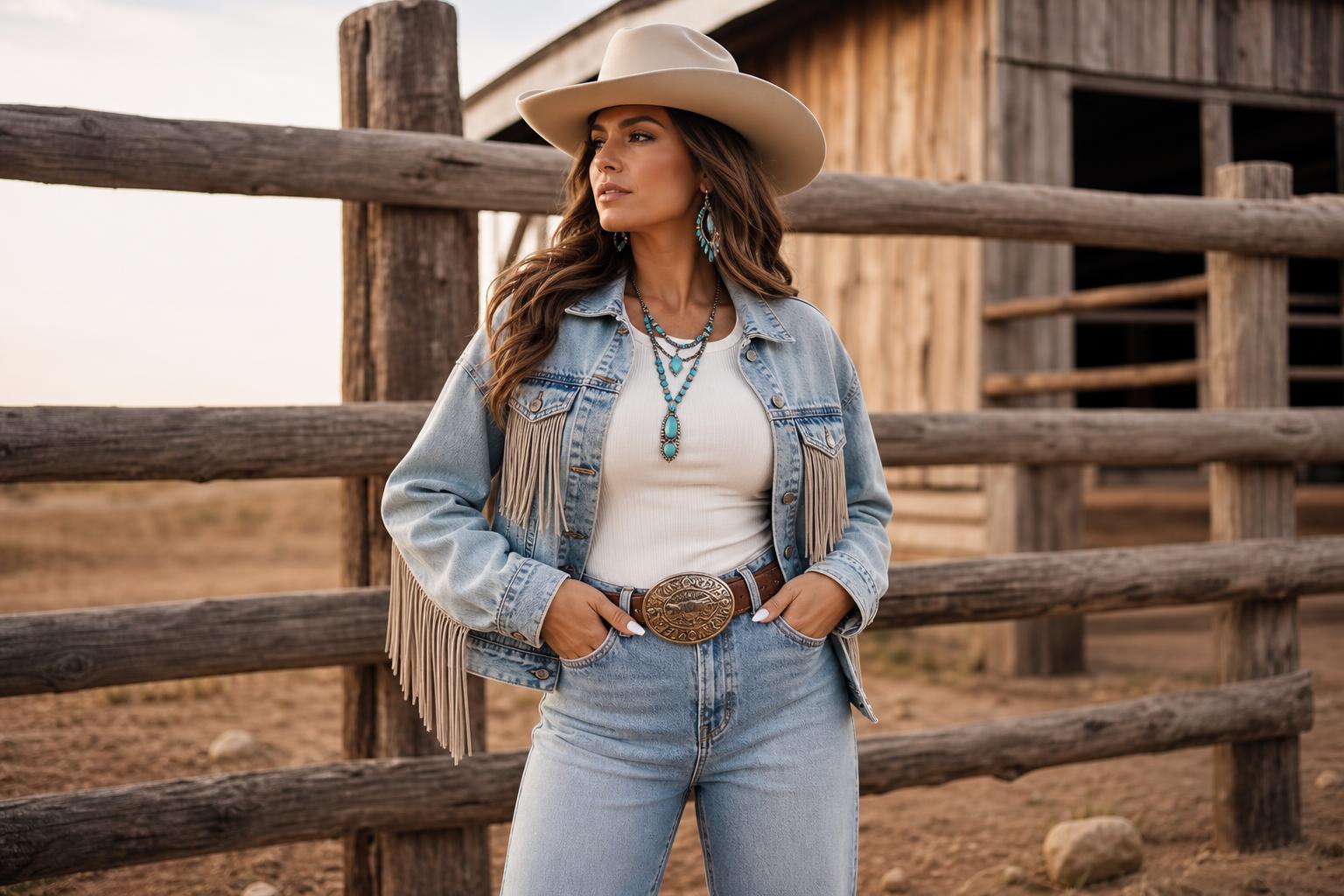
Festival styling often pushes people toward outfits that look exciting in photos but become uncomfortable fast. The smarter route is to let fringe do the visual work while the rest of the outfit stays stable. A fringe top with denim shorts or fitted jeans, cowboy boots, and a cross-body or hands-free approach to accessories creates movement without sacrificing support.
Fringe matters because it adds drama with almost no extra layering bulk. That makes it more practical than piling on jackets, scarves, and too many accessories in outdoor heat. If you want a bolder variation, snake print or leopard accents can appear on boots, a belt, or a small statement piece rather than across the whole outfit.
Fabric insight
When fringe is the hero, cleaner denim works better than heavily distressed denim because it keeps the eye from getting overloaded. If the top includes beading or rhinestones, the boots should usually be simpler. The outfit should move, not compete with itself.
Transitional weather tip
Bring a denim jacket instead of wearing it nonstop. This keeps the base outfit light through the day while still giving you a Western outerwear layer when temperatures drop at night.
Rodeo-ready combinations that balance style and function
A rodeo outfit has to handle more than a photo moment. Movement, uneven ground, dust, sun exposure, and long hours all affect what actually works. This is where baddie cowgirl outfits benefit from a more grounded interpretation. Think durable boots, structured denim, a fitted top, and outerwear that can be added or removed easily.
For a rodeo-ready formula, straight or high-waisted jeans with cowboy boots are often the strongest base. Add a fitted crop top or tee, then finish with a denim jacket or leather jacket depending on weather and mood. A hat is especially useful in this setting because it feels contextually right and provides both style and practical coverage.
This kind of outfit fits naturally into event references like the Houston Livestock Show & Rodeo or broader Western settings connected to Texas. It still delivers baddie energy through shape, sharper accessories, and intentional styling, but it respects the practical demands of the environment.
Best shoe pairing
Choose boots that feel stable enough for standing and walking. This is where classic Western boot brands such as Ariat, Tony Lama, or Lucchese make sense as style references. The smartest rodeo outfit is one you can wear for hours without limping through the last third of the day.
Common comfort mistake
Wearing a highly fitted top, heavy jacket, and stiff denim all at once can make the outfit feel restrictive before the event even starts. Let one piece stay easy. If the jeans are rigid and the boots are substantial, keep the top cleaner and lighter.
Street-style cowgirl outfits that do not feel costume-like
The everyday version of this trend needs restraint. In streetwear, the easiest mistake is wearing every Western cue at once: hat, fringe, giant buckle, embellished boots, distressed denim, and a statement jacket. That reads more themed than styled. A stronger city approach uses only two or three Western anchors and lets the rest of the outfit stay sleek.
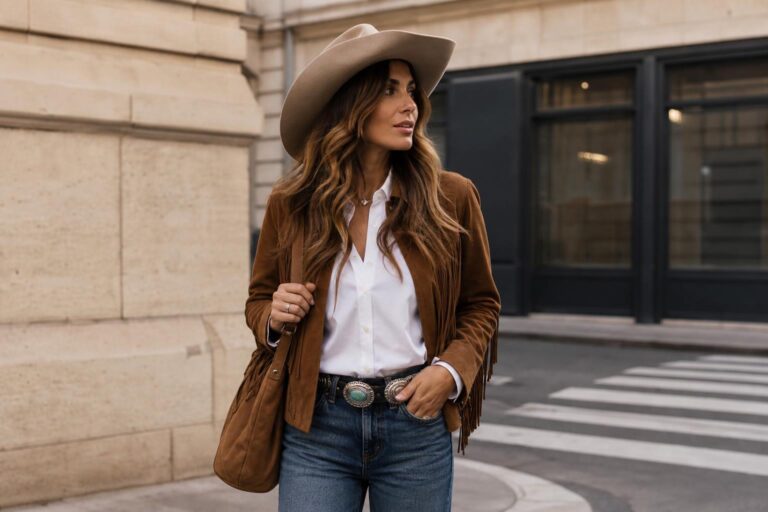
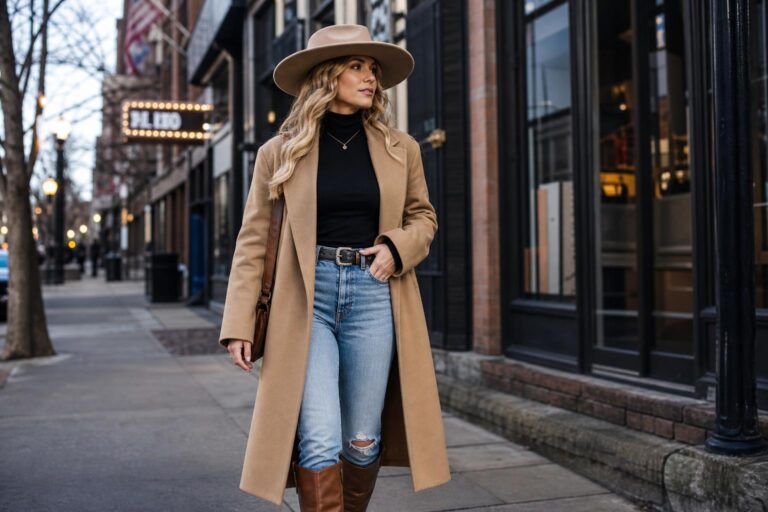
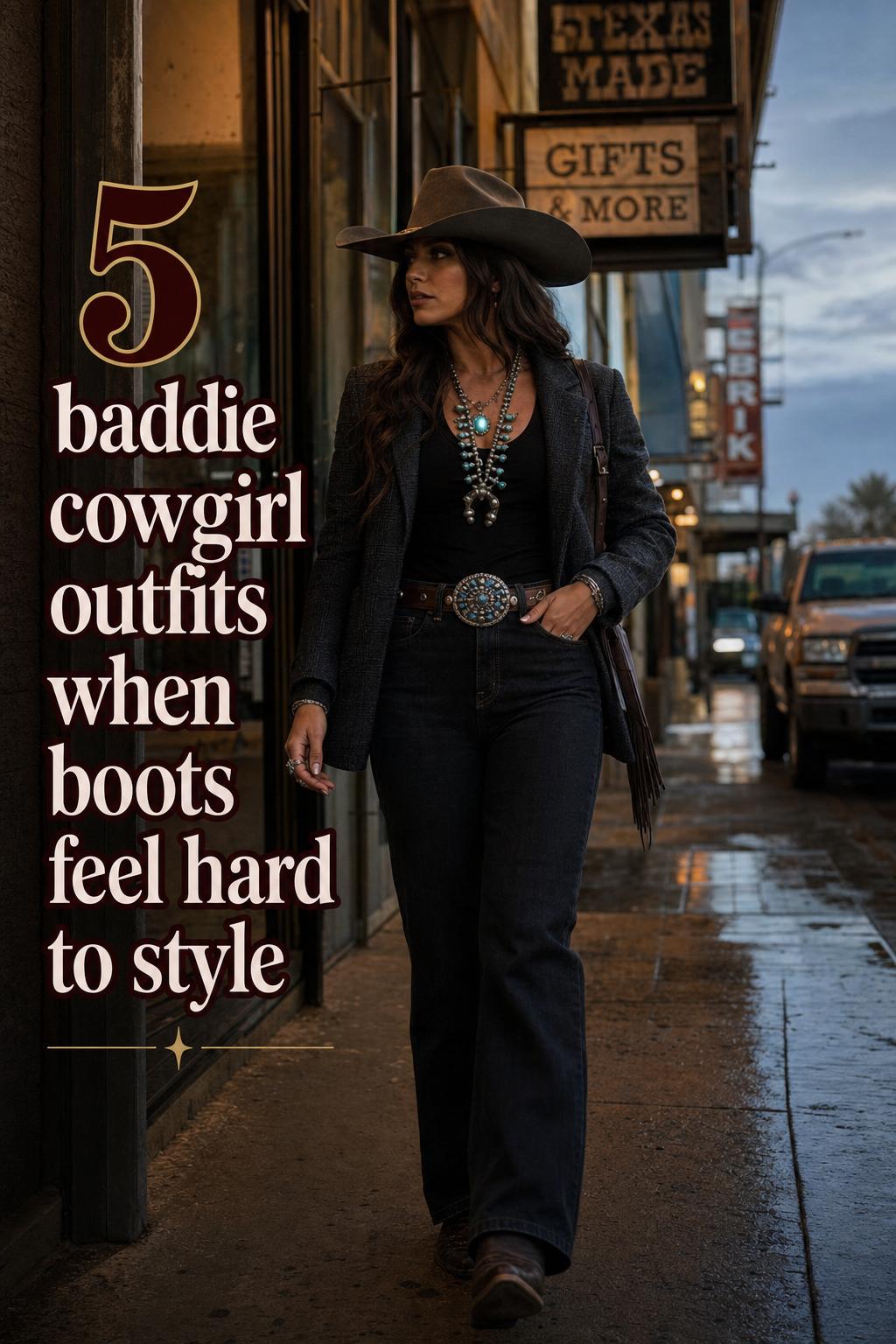
One of the best street-style combinations is fitted denim, a simple top, cowboy boots, and either a leather jacket or denim jacket. The jacket creates enough polish to shift the look from event dressing into everyday styling. This is where the Western glam idea becomes especially wearable, because it is not dependent on a festival or rodeo setting to make sense.
How to make it feel more elevated
Choose a tighter color story. Black with denim and boots is strong. Tonal neutrals with turquoise jewelry also work. If you introduce color blocking, keep the shapes clean so the palette feels intentional rather than chaotic. A single statement accessory, such as a buckle or hat, has more impact when the rest of the outfit is controlled.
Leather, embellishment, and Western glam without overload
Some of the most striking baddie cowgirl outfits use leather elements, rhinestones, beading, or zippers. These details create the edgy Western mood that separates the look from standard rodeo outfits. The challenge is managing texture contrast. Leather already adds shine, weight, and structure. Rhinestones and beading add light-catching detail. Denim adds firmness. Boots add bulk. The outfit has to be built in layers of emphasis, not all at full volume.
A smart formula is leather jacket plus simple denim plus fitted top plus boots. If the jacket is plain, you can bring in embellished boots or jewelry. If the top is zipped denim or rhinestone-heavy, use cleaner accessories. The point is to decide where the eye should land first. Western glam works when there is a clear focal point.
Most versatile piece
A simple leather jacket earns its place because it instantly toughens denim and boots without needing extra styling tricks. It also transitions more easily from concert or rodeo night looks into city wear than a heavily fringed jacket does.
Regional Western cues that change the mood
Not every cowgirl outfit signals the same thing. Regional Western style cues matter because they affect how the look is interpreted. Nashville styling often leans performance-ready and concert-friendly, with boots, denim, hats, and a touch of glam. Austin styling can feel more relaxed and streetwear-adjacent. Dallas and broader Texas references often support sharper, more polished Western dressing. Calgary and Laredo cues suggest stronger event and rodeo associations.
This matters because readers often know the setting they are dressing for even if they do not realize it. A country concert in Nashville-inspired style can handle more fringe, embellishment, or a bolder hat moment. A casual urban setting benefits from a quieter version: clean denim, boots, fitted top, maybe a belt, and one accessory with Western identity.
The practical takeaway is simple: the more authentic the event context, the more Western detail the outfit can carry. The more general the setting, the more the outfit benefits from editing.
How to shop the wardrobe without buying a whole new identity
Most people do not need a full dedicated cowgirl closet to make this aesthetic work. The most efficient approach is to build around a few category pieces and use them in multiple combinations. That keeps the style wearable instead of occasional.
Budget-friendly priorities
- start with denim you already wear confidently
- add one pair of cowboy boots that can work with jeans, shorts, or a skirt
- choose one fitted black or neutral top that pairs easily with denim
- use belts, chokers, or turquoise jewelry to shift the mood without rebuilding the whole outfit
Mid-range investments that change everything
A good denim jacket, a better-quality boot, and one hat with strong shape can make repeated outfits feel far more intentional. Wrangler and Levi’s naturally fit into the denim conversation here, while Ariat can serve as a practical boot direction for readers who want a recognizable Western reference point.
Premium pieces worth considering carefully
Lucchese boots, stronger leather outerwear, or a well-shaped Stetson-style hat make the most sense when you know the look fits your lifestyle. Premium Western pieces are most useful when they solve repeat styling problems, not when they are bought only for one concert or one weekend event.
Inclusive styling logic: adapting the look to your body type and comfort level
The best version of this trend is not tied to one body shape. What changes is the way structure is placed. If you prefer more midsection coverage, high-waisted jeans with a fitted tee create the same baddie cowgirl line as a crop top, just with a different coverage balance. If you want more leg length visually, a shorter top with a high rise and boots in a closer tone to the denim can help create continuity.
If you feel overwhelmed by hats, let the belt and boots do the Western work. If boots feel visually heavy on your frame, use a more streamlined top and avoid overloading the jacket. If you love embellishment but do not want extra bulk, place it on accessories or boots rather than on every garment at once.
Skin-tone styling also matters in a practical sense. Turquoise jewelry, black tops, indigo denim, warm brown leather, and metallic buckles all interact differently against the skin. The most flattering combinations usually come from contrast that feels intentional rather than washed out. This is another reason an edited palette performs better than a random one.
Seasonal adjustments that keep the look realistic
Summer festival dressing needs lighter outfit architecture. That usually means denim shorts or lighter denim, a statement top, boots, and minimal layering. The outfit stays recognizable because the boots and denim carry the Western language even when the rest is stripped back.
For cooler rodeo nights or transitional weather, straight denim, fitted top, and a denim or leather jacket create a more durable formula. The outerwear matters because it adds practicality without forcing you into bulky layers. A jacket worn open also maintains the waist definition that keeps the look polished.
Year-round wear depends on adjusting density, not abandoning the aesthetic. The same core wardrobe can move across seasons if you treat boots and denim as constants and let the top and outerwear shift with the climate.
Common styling traps that weaken the whole outfit
Most unsuccessful baddie cowgirl outfits fail because they try to communicate too much at once. The look is strongest when the message is clear.
- too many statement pieces together, which creates visual competition instead of focus
- heavy layering in hot weather, which makes the outfit impractical and uncomfortable
- boots that look great but cannot handle walking or standing for long periods
- a hat added without considering neckline, hair volume, or shoulder balance
- animal print, rhinestones, fringe, and beading used together without a calmer base
- ignoring event context and dressing more for a photo than for the actual day
The fix is not to simplify the look into something boring. The fix is to decide what the hero element is and let the rest support it.
Tips for making the look feel modern instead of forced
A modern outfit usually feels deliberate because each piece has a job. Denim provides structure. Boots provide identity. The top creates shape. Accessories sharpen the mood. Once you think this way, getting dressed becomes easier and shopping becomes more selective.
Tips
- build around boots and denim first, then decide whether the outfit needs fringe, leather, or embellishment
- use crop tops or fitted tops to offset the visual weight of boots
- pick either a strong hat or a strong neckline accessory if you want the face area to stay balanced
- for festivals, prioritize movement and temperature control over extra layers
- for rodeos, let practicality lead and add baddie polish through shape and accessories
- for everyday wear, reduce the number of Western signifiers so the outfit feels integrated into your wardrobe
Readers who want the easiest route should start with one formula and repeat it: denim, fitted top, boots, belt, optional jacket. Once that feels natural, adding fringe, hats, snake print, or rhinestones becomes much easier to manage.
Brand and style references that help define the look
The aesthetic becomes easier to decode when you connect the wardrobe categories to familiar Western wear names. Levi’s and Wrangler support the denim foundation. Ariat, Tony Lama, and Lucchese represent boot directions from practical to elevated. Stetson gives shape to the hat conversation. SHEIN sits on the more trend-driven, product-discovery side of the market, where shoppers often browse broad categories mixing Western wear, festival, Y2K, baddie, and concert outfit cues.
These references are useful not because every outfit must be brand-led, but because they clarify the clothing language. Denim, boots, hats, and accessories all carry different levels of authenticity, trend emphasis, and daily wearability. Understanding that difference leads to better outfit decisions.
The same applies to creators and stylists, even when the look is absorbed more through social content, galleries, reels, and TikTok-style visual inspiration than through one single person. The style spreads through repeated combinations: boots plus denim, hats plus crop tops, leather plus fringe, and Western accessories layered into bold but edited outfits.
FAQ
What defines a baddie cowgirl outfit?
A baddie cowgirl outfit blends Western wear with a sharper, more fashion-forward silhouette. The core formula usually includes cowboy boots, denim, a fitted or statement top, and selected accessories like a hat, belt buckle, choker, or turquoise jewelry.
Can I wear baddie cowgirl outfits year-round?
Yes, as long as you adjust the density of the outfit. In warm weather, keep the base lighter with denim shorts or lighter denim and a statement top. In cooler seasons, switch to jeans, a denim jacket or leather jacket, and stronger layering built around the same boots-and-denim foundation.
What are the most important pieces to buy first?
Start with one solid pair of cowboy boots, denim that fits well, and a fitted top in a versatile color such as black or a neutral tone. After that, add one accessory category at a time, such as a belt, hat, or turquoise jewelry, so the wardrobe stays flexible instead of overly themed.
Are hats necessary for the look?
No. A cowboy hat strengthens the Western identity, but the outfit can still read clearly as cowgirl-inspired through boots, denim, and accessories. Hats work best when the event context supports them and when the rest of the outfit is edited enough to keep the face and shoulder area balanced.
How do I make the outfit work for a rodeo instead of just photos?
Prioritize stable boots, structured denim, and a top that allows movement. Add outerwear only if it helps with weather, and avoid stacking too many stiff or heavy pieces together. Rodeo styling works best when practicality leads and the baddie element comes through silhouette, polish, and accessories.
What is the easiest everyday version of the trend?
The easiest everyday formula is fitted jeans, a simple top, cowboy boots, and either a denim jacket or leather jacket. This keeps the Western cues visible without turning the outfit into a full concert or festival look.
How do I keep fringe and embellishment from looking overdone?
Use one decorative element as the focal point. If the top has fringe, keep the denim cleaner. If the boots have beading or snake print, simplify the jewelry. The outfit looks more polished when one area carries the drama and the rest supports it.
Which brands fit naturally into a baddie cowgirl wardrobe?
For denim, Levi’s and Wrangler are natural references. For boots, Ariat, Tony Lama, and Lucchese fit the Western foundation. For hats, Stetson is a recognizable reference point. Trend-led shopping platforms like SHEIN can also support the look when you are searching for category-based outfit pieces.
Can I create the look without buying everything new?
Yes. Start with denim you already own, add one pair of cowboy boots, and style them with fitted tops and a belt or simple jewelry. Most people can create a strong version of the aesthetic by changing styling logic rather than replacing their entire wardrobe.
What is the biggest mistake people make with baddie cowgirl outfits?
The biggest mistake is trying to include every Western and trend detail at once. Too much fringe, embellishment, heavy layering, and too many accessories can make the outfit feel costume-like. A clear focal point and controlled proportions always create a stronger result.