
Crush Fabric Dress Styling for City Nights and Weddings
Introduction
A crush fabric dress has a specific kind of visual intelligence: it looks intentionally textured, slightly undone, and still polished. The surface catches light in irregular lines, which means the outfit reads as styled even when the silhouette is simple. That texture becomes the aesthetic—less about perfect smoothness, more about depth, movement, and a lived-in elegance that photographs beautifully.
The mood is effortless but designed. Crushed textures naturally suggest motion, air, and ease—ideal for days when you need clothing to flex with you, not fight you. In the U.S., this aesthetic shows up everywhere from warm-weather city weekends to destination events, dinners, and dressier moments when you want dimension without heavy embellishment. It’s also a smart choice for travel because the texture makes wrinkles feel like part of the plan.

What makes the crushed look so popular is how it solves multiple style problems at once: it adds visual interest without loud prints, it flatters through texture rather than tightness, and it transitions across occasions with small accessory changes. In the same wardrobe conversation, you’ll often see crushed cloth dress designs paired in inspiration boards alongside floral sarees, a gold lehenga, or a sharara set—different garments, same principle: texture, drape, and movement as the main aesthetic language, with indian couture as the high-impact reference point for how fabric can look luxurious without needing a rigid silhouette.
The Crush Fabric Dress Aesthetic: What You’re Actually Styling
This also explains why crushed cloth dress designs sit comfortably in both minimal wardrobes and maximal styling. Minimalists use the texture as the “detail,” while more ornate dressers treat it as a base layer for shine, jewelry, or bold footwear. In indian couture, this logic is familiar: fabric is often the hero, and styling is built to respect that hero piece—whether it’s a fluid drape in a saree, the flare of a sharara set, or the luminous focus of a gold lehenga.
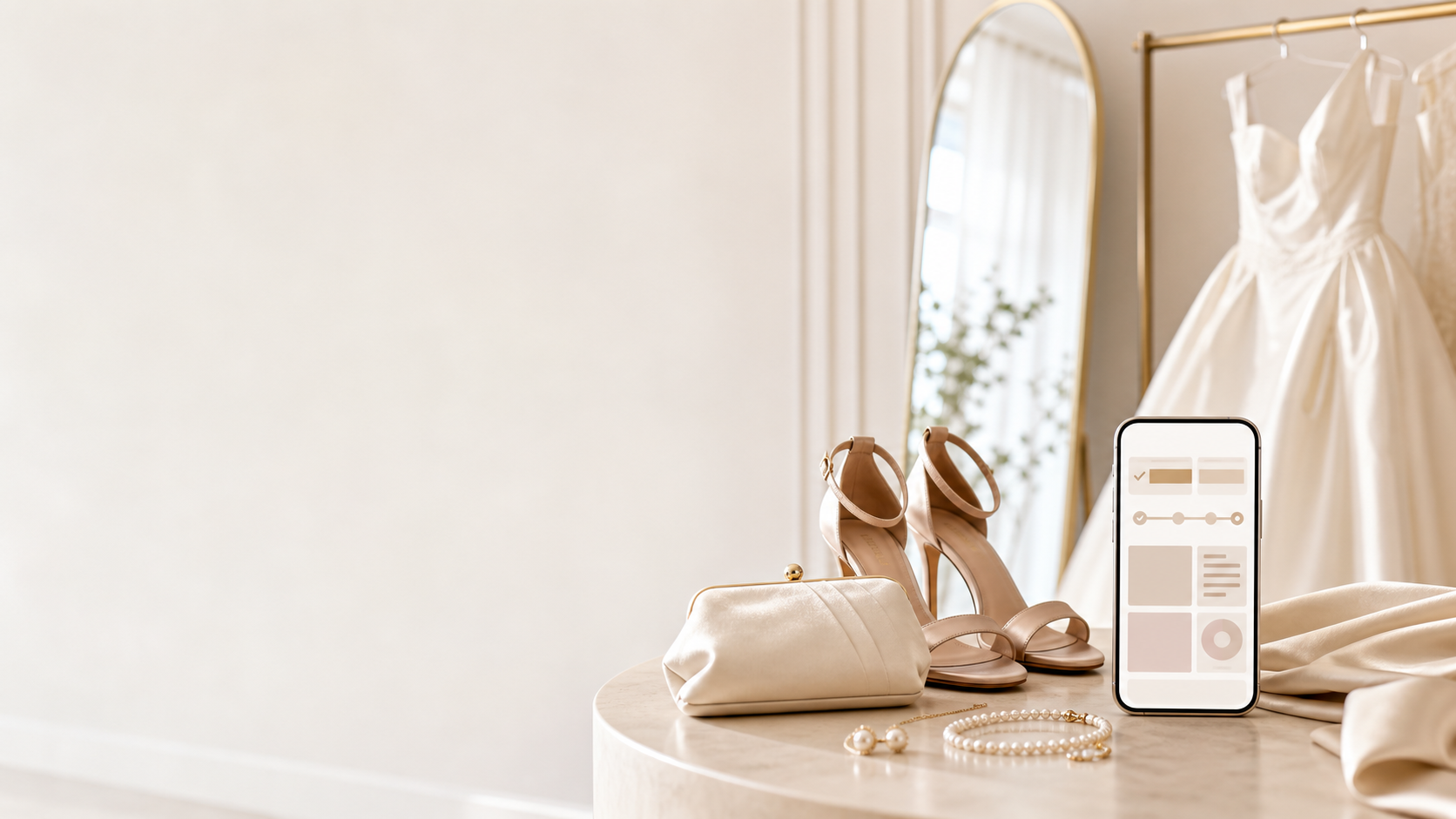
Found the dress? Keep the rest in one place.
Zarellea brings guest details, vendors, timelines, and every next step together — so your wedding plan feels as good as your look.
Style breakdown: texture as the visual anchor
The key decision is proportion. Because crushed texture already adds complexity, the silhouette works best when it’s clean in outline: column shapes, soft A-lines, slip-inspired lines, or gentle tiers. If you add volume, it should be intentional and balanced—think one statement element (a sleeve, a hem, a shawl) rather than multiple competing features.
- Best visual partners: smooth leather, matte knits, crisp cotton, sheer layers, subtle metallic accents
- Color strategy: tonal palettes look sophisticated; high contrast works if accessories are restrained
- Occasion flexibility: the same crush fabric dress can read casual or formal depending on footwear and jewelry

Look: City-Ready Minimal Crush Dress (Clean Lines, Textural Depth)
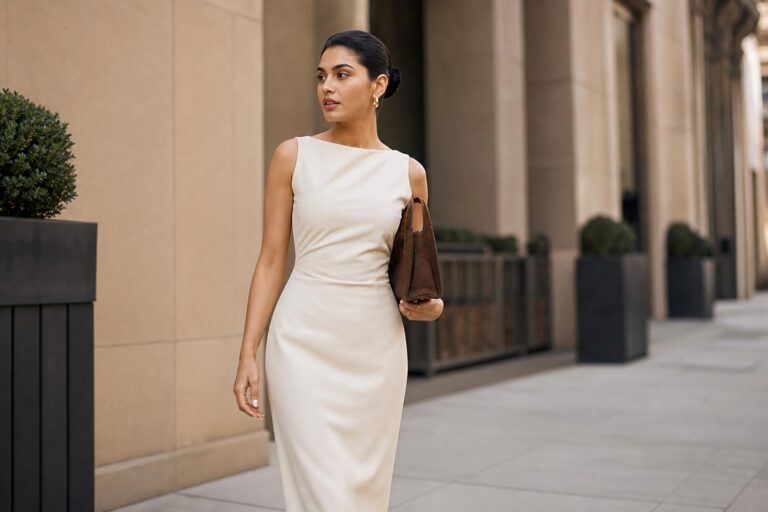
This look is the definition of modern restraint: a streamlined crush fabric dress that skims rather than clings, creating a long, uninterrupted line. The crushed texture functions like built-in styling—your silhouette stays simple, but the surface keeps the outfit visually active, especially in daylight or under warm indoor lighting.
Lean into a neutral or near-neutral palette for a true “editorial minimal” outcome: black, stone, soft taupe, or muted olive. The dress should be the dominant texture; everything else should be quieter—smooth accessories, clean footwear, and minimal hardware. The result is sharp without feeling corporate, relaxed without becoming casual.
Why this outfit works: crushed texture already creates micro-contrast, so a minimal silhouette avoids clutter. It’s the same logic that makes a perfectly draped saree feel powerful even with sparse jewelry—the fabric does the talking, and the styling simply frames it.
- Key garments: crush fabric dress in a column or soft A-line cut
- Footwear: sleek flats or minimal heeled sandals
- Accessories: small structured bag, thin metal hoops, a single cuff
Look: Soft Romantic Crush Texture with Floral Notes (A Modern Nod to Floral Sarees)
Romance in this aesthetic is not ruffles everywhere—it’s softness with control. A crushed dress with a gentle drape, subtle waist definition, or a floaty hem creates a “moving silhouette” that feels light on the body. The texture keeps it grounded, so the look stays refined rather than overly sweet.
This is where floral sarees become an excellent styling reference, even if you’re wearing a Western dress silhouette. Use florals as an accent concept: a floral scarf tied at the neck, a floral-printed wrap, or floral jewelry that echoes the idea of a garden palette. Keep the base dress in a calm color—cream, dusty rose, or soft sage—so the floral element reads intentional and not busy.
Why this outfit works: crushed texture adds complexity, while floral accents add narrative. The two together create an aesthetic that feels curated, like you built the look around a mood board rather than a single trend.
Style tip: control the “print-to-texture” ratio
If the dress is heavily crushed, keep florals smaller or more diffuse. If the dress texture is subtle, you can push the floral moment a bit further. The goal is one dominant visual language at a time, supported by a second, quieter element.

Look: Evening Shine Crush Dress with Gold Energy (Inspired by a Gold Lehenga)
When you want a crush fabric dress to feel event-ready, you don’t need to overload it—add a single luminous cue. This look takes inspiration from a gold lehenga not by copying the garment, but by borrowing its core effect: warmth, glow, and intentional radiance.
Choose a crushed dress in a deeper base color—espresso, midnight, deep plum, or charcoal—and bring in gold through accessories. Gold jewelry, a metallic clutch, or a sandal with a warm sheen creates a high-contrast focal point against the textured dress. Because crushed fabric already reflects light irregularly, gold details look even richer; the shine lands in controlled highlights rather than becoming an all-over glare.
Why this outfit works: a dark base anchors the composition, and gold becomes the statement piece. This is a classic indian couture principle—build a stable foundation, then let one element carry the glamour.
- Key garments: crushed dress in a darker tone with a clean neckline
- Footwear: metallic gold heels or refined sandals
- Accessories: gold bangles or drop earrings, small clutch, optional sheer wrap
Look: Modern Fusion Drapes (Crush Dress Styled Like Indian Couture)
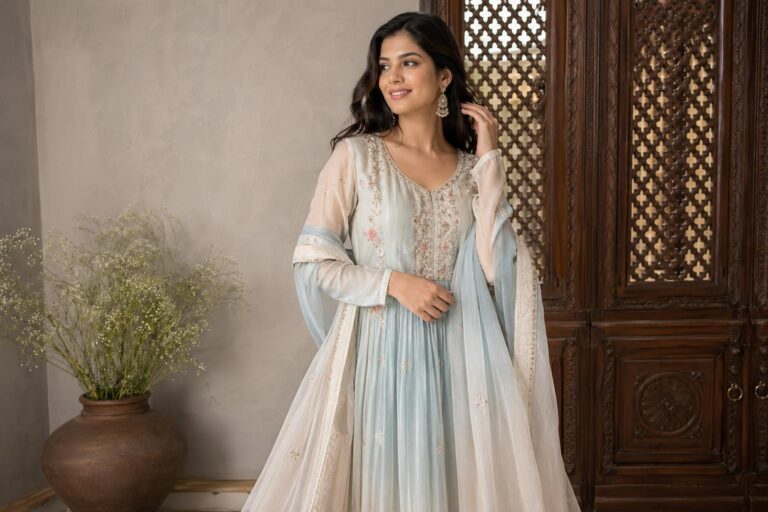
This look is for the dresser who likes cultural cross-references done with precision. The goal is not costume; it’s a modern fusion approach where the crush fabric dress becomes a base for drape styling. Think of how indian couture often prioritizes drape logic: fabric falls, wraps, and frames the body in a way that feels architectural yet fluid.
Use a longline layer that mimics a dupatta-like effect—either a sheer scarf, a lightweight wrap, or a soft shawl. Keep it tonal to the dress so the drape reads as extension, not interruption. This creates vertical movement and a gentle sense of ceremony, making the outfit feel elevated enough for a dinner, gallery event, or a wedding-adjacent function where you want elegance without wearing a full traditional set.
Why this outfit works: the layered drape adds structure to a fluid base. The crushed texture prevents the look from feeling flat, while the wrap adds intentionality—like you styled the dress, not just wore it.
How to recreate the look without overdoing it
Keep one layer sheer and one layer textured. If both are textured, the outfit can look heavy; if both are sheer, the outfit can look unfinished. A crushed base with a lightweight, smoother drape is the most balanced pairing.

Look: The Sharara Set Mood—Translated Into a Crush Fabric Dress
A sharara set is defined by rhythm and flare: volume that moves, with a celebratory swing. You can translate that same energy into a crush fabric dress by choosing silhouettes that create motion at the hem—tiered midis, subtle pleats, or a gently flared maxi. The crushed texture amplifies that motion because it visually “ripples” as you walk.
In color, this look can handle more personality: jewel tones, warm spice shades, or saturated pastels. The key is to keep the styling intentional—one standout accessory or one bold shoe, not everything at once. If you want the sharara set vibe without the full traditional outfit, this is the cleanest bridge: you’re borrowing the movement language, not the exact pieces.
Why this outfit works: the silhouette provides the drama, while the crushed surface keeps it dimensional. It reads festive without requiring heavy embellishment, which makes it more wearable across U.S. occasions where dress codes can be ambiguous.
- Key garments: tiered or flared crush fabric dress
- Footwear: statement flats or a stable block heel for movement-friendly wear
- Accessories: one bold earring or one bright bag, not both
Look: Weekend Ease in Crushed Cloth Dress Designs (Relaxed, Not Sloppy)
The weekend version of this aesthetic is about ease with editorial clarity. A casual crush fabric dress can look intentional even when it’s styled minimally because the texture creates depth. The silhouette should feel breathable—looser through the waist, comfortable through the hip, and ideally in a length that works with flat footwear.
Keep the palette soft and sun-ready: off-white, sand, pale blue, muted terracotta. Accessories should be practical and clean-lined. The crushed texture makes the outfit feel “styled,” so you don’t need much else. This is especially useful for warm days when you want a one-piece solution that still looks elevated in photos.
Why this outfit works: the texture replaces the need for complicated layering. It’s a strong example of outfit composition—one hero dress, supportive basics, and no excess detail fighting for attention.
Tips for comfort in real life
Crushed textures can feel warmer depending on fiber and density, so prioritize airflow in the cut: a slightly open neckline, a sleeveless shape, or a slit for stride comfort. The best casual looks are the ones that move with you for hours, not just for a quick photo.
What Stylists Watch For: Proportion, Texture Contrast, and Visual Noise
The most common styling mistake with a crush fabric dress is treating it like a plain dress. It’s not plain; it’s already a textured statement. When you add too many competing elements—heavy necklaces, busy prints, multiple layers with texture—the outfit loses clarity and starts to feel visually noisy.
A second mistake is ignoring proportion play. Crushed fabric has movement and irregular surface lines, so it benefits from deliberate shape control: a defined neckline, a controlled sleeve, or a waist that’s either clearly emphasized or clearly relaxed. Ambiguous shapes can read bulky because the texture expands the visual footprint of the garment.
- Do: pair crushed texture with smooth or matte finishes for balance
- Do: choose one focal point (neckline, jewelry, shoes, or drape layer)
- Don’t: stack multiple textured layers unless they’re tonal and lightweight
- Don’t: force overly structured outerwear on top of heavy crush texture without checking bulk
Key Pieces That Make the Crush Fabric Dress Aesthetic Work
This aesthetic looks cohesive when your supporting pieces behave like a frame. The dress is the artwork; everything else should either sharpen the outline or support the mood. If you’re building a small wardrobe around this concept, aim for accessories that can shift the same dress from daytime minimal to evening polish.
Capsule-style supporting items
- A refined metallic accent (gold is the most versatile when referencing a gold lehenga mood)
- A tonal wrap or scarf for drape styling (especially for indian couture-inspired looks)
- Clean sandals or flats that don’t compete with texture
- A small structured bag to add shape contrast against the soft dress
- A single statement earring to elevate without clutter
These pieces also help if you’re styling across cultural aesthetics. If your inspiration spans crushed cloth dress designs, floral sarees, and sharara set silhouettes, a tight accessory edit is what makes the look modern rather than costume-coded.
When to Wear It: Occasion Mapping for the U.S. Closet
The crushed dress aesthetic succeeds because it adapts. In the U.S., dress codes often sit in the gray zone—“dressy casual,” “cocktail,” “resort,” “garden formal”—and a crush fabric dress navigates that ambiguity well. The texture communicates effort, while the silhouette can stay comfortable.
Quick occasion logic
For daytime events, keep accessories quiet and silhouettes breezy. For evenings, shift to darker tones or gold accents and add one structured element (a clutch, a refined sandal, or a draped wrap). For wedding-related functions where indian couture references feel appropriate, use drape styling and warm metallics rather than trying to replicate a full gold lehenga or sharara set unless the event explicitly calls for it.
Care, Packing, and Longevity: Practical Notes That Matter
The advantage of crushed texture is also its vulnerability: the look relies on a specific surface effect. If you flatten it aggressively, you can lose the dimensional finish that makes the dress special. That doesn’t mean it’s fragile—it means care should protect the texture instead of fighting it.
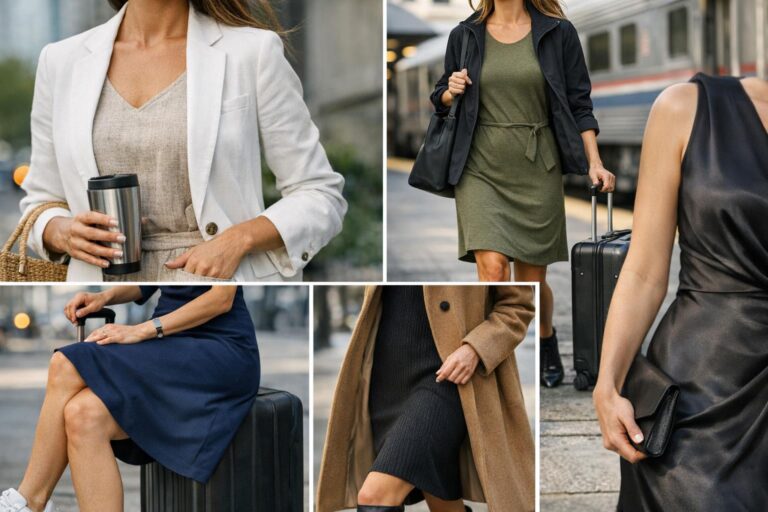
For packing, a crush fabric dress is typically forgiving because minor compression blends into the design. The main goal is avoiding sharp creases from tight folding. Looser rolling and giving the garment a little breathing time after unpacking helps the texture look intentional rather than pressed flat.
Tips for keeping the texture looking intentional
- Store with enough space so the fabric isn’t crushed into unnatural, hard fold lines
- Avoid over-pressing; if you need to refine, prioritize gentle steam-like smoothing rather than flattening
- Check the texture under your event lighting before committing to accessories—crushed surfaces can reflect more than expected
These practical steps are what keep the dress in the “editorial textured” category, not the “accidentally wrinkled” category.

FAQ
What is a crush fabric dress, and how is it different from a regular dress?
A crush fabric dress is defined by an intentionally textured, crinkled surface that adds dimension and movement, while a regular dress typically relies on a smooth finish. The crushed texture becomes part of the design, creating visual interest even with simple silhouettes and minimal accessories.
Do crushed cloth dress designs look formal enough for evening events?
Yes, crushed cloth dress designs can read very formal when the silhouette is clean and the styling adds one polished element, such as gold-toned jewelry or a structured clutch. A darker color palette and controlled shine often create the most elevated effect.
How do I style a crush fabric dress without making the outfit feel too busy?
Use the crushed texture as the main statement and keep supporting items smooth and minimal. The most reliable approach is choosing one focal point—like earrings, shoes, or a draped wrap—so the dress’s texture stays the visual anchor.
Can I incorporate indian couture inspiration with a crush fabric dress?
Yes, indian couture inspiration translates well through drape styling, tonal layering, and warm metallic accents. Instead of copying a full traditional outfit, borrow the principles—fabric-first elegance, intentional movement, and a clear statement element.
How can I get the “gold lehenga” vibe while wearing a crushed dress?
Create the gold lehenga energy through accessories rather than heavy embellishment: gold jewelry, a metallic bag, or warm-toned sandals paired with a crushed dress in a deep or neutral base color. This keeps the look luminous but balanced.
What’s the connection between a sharara set aesthetic and a crush fabric dress?
A sharara set aesthetic is built on movement and flare, and a crushed dress can achieve a similar feel through tiered hems, soft volume, and swishy lengths. The crushed texture amplifies motion, making the silhouette look festive without requiring heavy ornamentation.
Do floral sarees influence how I should style a crushed dress?
They can, especially as a color and mood reference. If you want a romantic direction, use floral elements as accents—like a scarf or jewelry—while keeping the crushed dress in a calm base color so the overall composition stays cohesive.
Is a crush fabric dress good for travel?
It’s often travel-friendly because the textured finish makes minor packing wrinkles feel intentional. The key is avoiding sharp fold creases and giving the dress time to relax after unpacking so the crushed surface reads as designed rather than compressed.
How do I keep a crushed texture looking intentional over time?
Protect the texture by avoiding aggressive pressing that flattens the surface effect, and store the dress with enough space to prevent hard fold lines. When refining the look, aim for gentle smoothing rather than trying to make the fabric perfectly flat.