Modern Japanese Style Outfits Built Around One Standout Layer
Japanese style outfits: the modern wardrobe built on proportion, layering, and cultural craft
A Japanese fashion look tends to read “intentional” before it reads “trendy.” Even in casual Japanese street fashion, the strongest outfits are designed around outfit composition: a clear silhouette, controlled volume, and a few well-chosen visual anchors (often outerwear or a signature garment). That’s why japanese style outfits translate so well from city streets in Tokyo to everyday U.S. life—commutes, weekends, and nights out—when you focus on styling logic rather than copying a single aesthetic.
This guide breaks japanese fashion into practical systems: how to build a capsule wardrobe that supports layering, how to use kimono-inspired pieces (kimono, obi, and haori) without feeling costume-like, and how streetwear and workwear ideas shape “authentic” modern dressing. You’ll also see how regional cues—Tokyo’s Harajuku and Shibuya energy versus Kansai influence like Osaka—change the same outfit formula, and how sustainability enters the conversation through kimono repurposing.
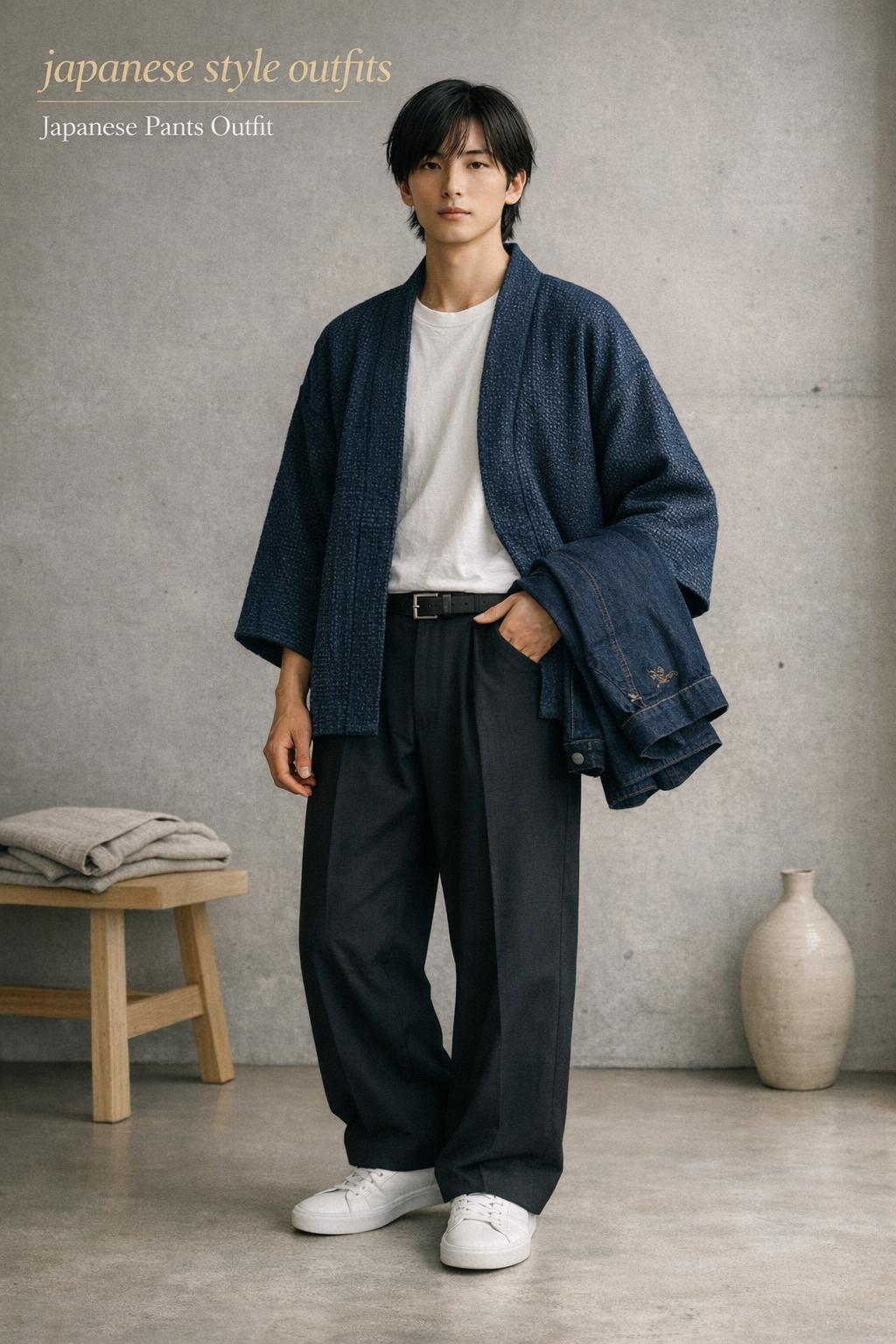
The style logic behind Japanese fashion (and why it photographs so well)
Japanese style outfits often rely on proportion play: a relaxed top balanced by structured pants, or a long outer layer balancing a clean base. This is why wide silhouettes and layering show up repeatedly across Japanese streetwear and Japanese workwear references. When the silhouette is stable, the outfit can support bolder elements—an unusual jacket shape, a statement print, or a strong texture contrast—without becoming visually chaotic.
Another consistent thread is tonal layering. Instead of relying on loud color clashes, many Japanese fashion looks build depth through near-neutrals, deep shades, and controlled contrast—think dark bases with one standout layer. This approach makes an “Asian fashion style” moment feel elevated and wearable, not theme-driven.

Found the dress? Keep the rest in one place.
Zarellea brings guest details, vendors, timelines, and every next step together — so your wedding plan feels as good as your look.
Finally, Japanese street fashion is often anchored by a single identity piece: a kimono-inspired jacket, a haori, a sukajan-style street jacket, or a durable workwear layer. That anchor gives the outfit a clear center of gravity—useful in real life and also why the looks perform well in photos and quick-scroll inspiration formats.
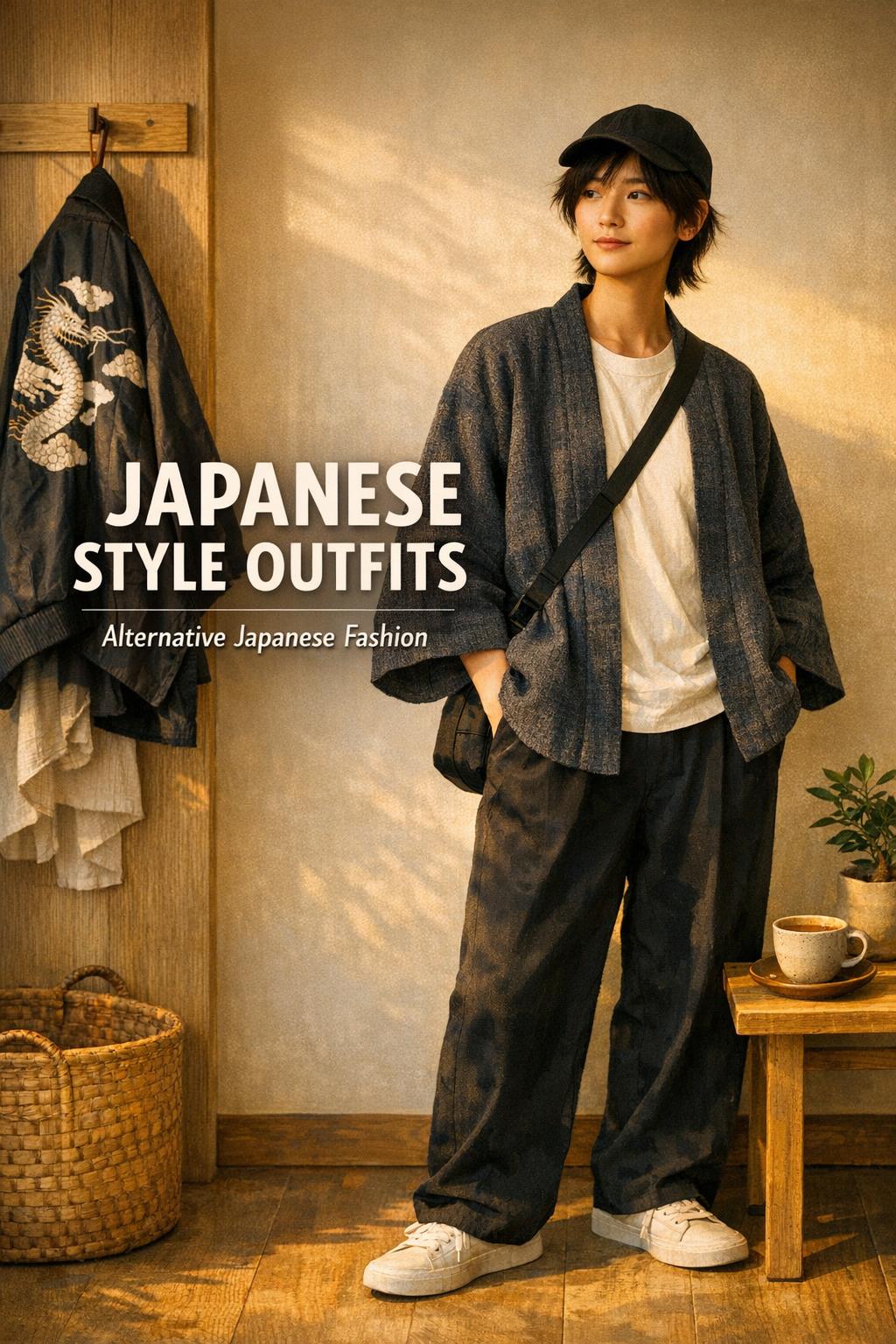
Core concepts and historical context: from kimono to modern streetwear
To understand modern Japanese fashion, start with the traditional garment vocabulary that still shapes silhouettes today. The kimono and obi establish a long, continuous line across the body, while the haori introduces a lightweight outer layer that frames an outfit without heavy tailoring. Contemporary styling frequently borrows these ideas—wrap lines, straight silhouettes, and outer layers that “hang” rather than cling—then blends them into modern streetwear.
That “from kimono to streetwear” bridge becomes especially visible in kimono-inspired pieces and in the growing interest in repurposing traditional garments. Sustainability enters here not as a slogan, but as a practical design pathway: kimonos and obi can be reimagined into jackets, dresses, or other wearable forms while keeping textile history in the garment’s surface and structure.
It’s also useful to recognize that Japanese style isn’t one look. Harajuku aesthetics can lean expressive and subculture-coded, while Japanese workwear prioritizes durability and everyday practicality. Both can be “authentic,” but they aim at different outcomes: one uses styling as a visual statement; the other treats clothing as a tool, refined through proportion rules and repeat wear.
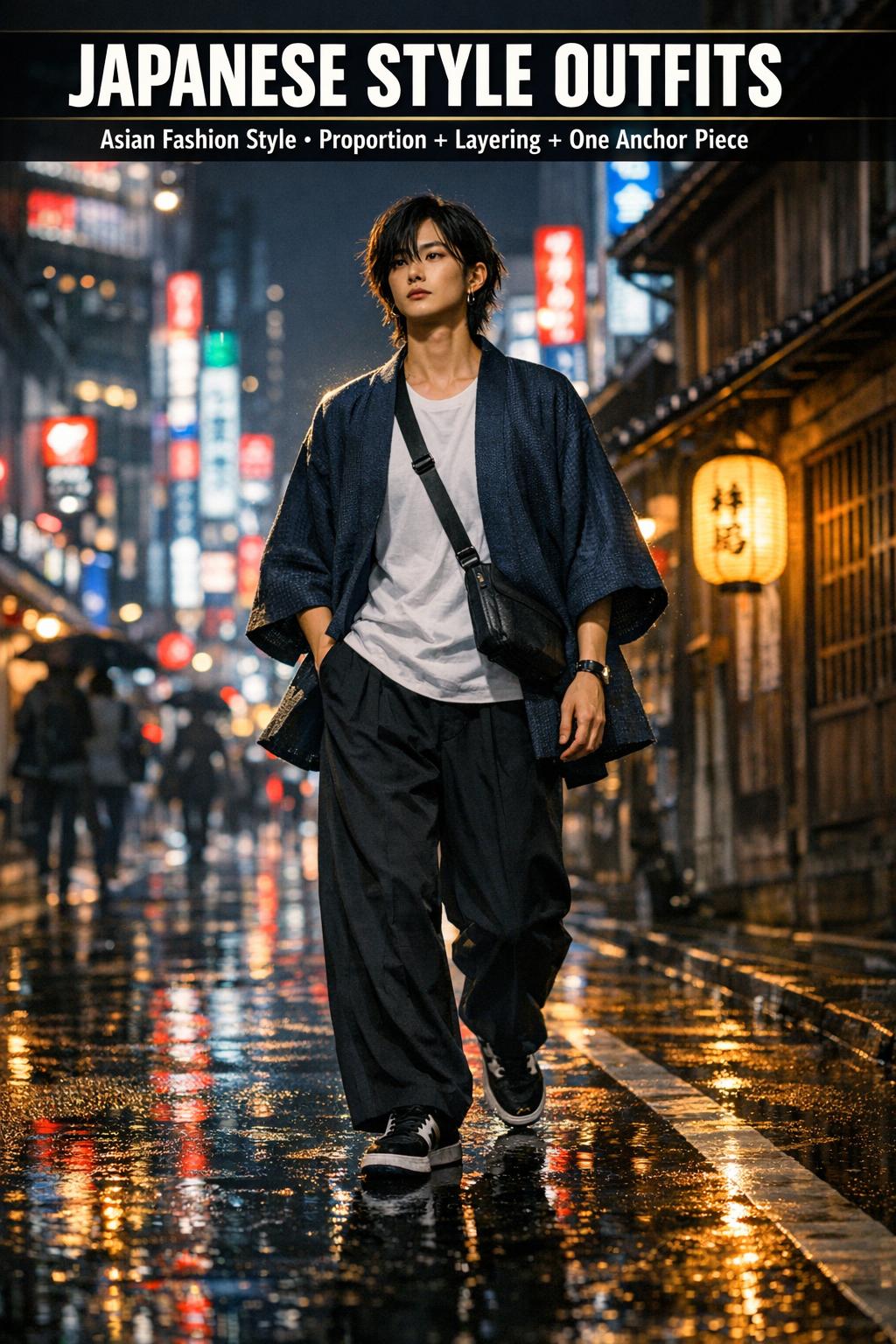
Capsule wardrobe framework: build japanese style outfits without overbuying
A capsule built for Japanese streetwear styling is less about minimal item count and more about modularity. You want pieces that layer easily, hold shape, and can shift between casual and polished with one outer layer swap. Start with a base palette that supports tonal layering—neutrals and deeper shades—then add one or two signature layers that carry the Japanese fashion identity.
Think of the capsule in three levels: base, structure, and statement. The base keeps the outfit grounded; the structure shapes the silhouette; the statement provides the cultural or style reference point (kimono-inspired outerwear, a haori, or a sukajan-type jacket).
The essential base: anchors for daily Japanese street fashion
Your base layer is where “wearability in the U.S.” is won or lost. A stable base makes alternative Japanese fashion easier to wear because your outfit always has a familiar foundation: tees, wide pants, denim, and comfortable shoes. This is also where a japanese pants outfit becomes the most repeatable formula—wide-leg pants or clean, straight silhouettes that can handle volume on top.
- Basic tees that layer cleanly under outerwear
- Black wide pants as a silhouette anchor for proportion balance
- Denim as a casual texture contrast against kimono-inspired layers
- Sneakers for everyday movement and long walking days
Structure pieces: the layers that create the silhouette
Japanese fashion often looks “designed” because structure pieces do the heavy lifting. A jacket, an overshirt, or a kimono-inspired layer provides the frame; everything underneath becomes clean and functional. When shopping, prioritize garments that keep their line—outer layers that hang straight, sleeves with shape, and fabrics that don’t collapse after an hour of wear.
Workwear-inspired structure is especially effective here: durable pieces that can repeat across seasons and still look intentional. This is where Japanese workwear influences shine—practicality, construction, and proportion rules that favor ease without sloppiness.
Statement pieces: kimono-inspired, haori, and sukajan as visual anchors
A statement layer is the fastest way to communicate Japanese street fashion without relying on costume signals. Kimono-inspired jackets, a haori, or a sukajan-style street jacket function like “one-piece styling”—they create identity, color focus, and silhouette in one move. Keep the rest of the outfit quieter to let the outer layer read clearly.
Tip: If you’re building slowly, buy one statement layer first, then fill in the base pieces around it. That sequence prevents a closet full of interesting items with no cohesive outfit plan.
Layering, proportion rules, and texture contrast: the authentic styling toolkit
“How to dress Japanese style authentically” is less about chasing the newest look and more about mastering a few repeatable rules. The top-performing Japanese streetwear aesthetics consistently lean on layering and proportion control: volume placed strategically, a clean base line, and intentional breaks in texture to keep the outfit dimensional.
Proportion play: volume on top, stability on bottom (and the reverse)
If your outer layer is long or wide—like a haori or kimono-inspired jacket—use wide-leg pants thoughtfully. Wide-on-wide works when you create a waist or hem boundary: a tucked tee, a shorter inner layer, or a visible belt/waistline under the open outerwear. If you want an easier formula, keep one half of the outfit cleaner: wide outer layer with straighter pants, or structured jacket with wider pants.
Tip: In real-world movement (walking, commuting, sitting), the outfit should keep its line. Test this by sitting down and standing up—if everything bunches, you lose the clean silhouette that makes Japanese fashion read polished.
Tonal layering: a controlled palette that still feels rich
Tonal layering is a practical solution for day-to-night dressing. A neutral base (black pants, dark denim, or muted separates) allows you to rotate expressive outerwear without changing the entire outfit. This is particularly useful for travelers: one haori can style multiple tees and pants combinations, keeping packing light while maintaining strong outfit variation.
Texture contrast: how to make “simple” outfits look intentional
Japanese streetwear and Japanese workwear both rely on texture to add depth: smooth tees against structured outerwear, denim against kimono-inspired fabrics, or a jacket with visual detail paired with clean pants. The goal is visual hierarchy—one texture should lead, the others should support.
Tip: If your jacket is the statement, keep the pants matte and clean. If your pants carry the look (a strong japanese pants outfit silhouette), keep the top quieter so the outfit stays balanced.
Iconic garments, decoded: what they are and how to style them now
Japanese style outfits become easier when you can name the garment type and assign it a role in the outfit. Traditional and traditional-adjacent pieces aren’t “special occasion only”; in modern Japanese fashion, they often function as everyday layers—especially when they’re adapted into streetwear-friendly shapes.
Kimono and obi-inspired outerwear: heritage lines with modern wearability
Kimono-inspired jackets bring the strongest cultural silhouette cues: wrap lines, straight drape, and a frame that instantly elevates basic layers. Obi influence often appears through belt-like closures or structured waist details. For an everyday approach, treat the piece as outerwear rather than a full traditional outfit: a simple tee and dark pants underneath keeps it modern and avoids over-styling.
Where it shines: evening dinners, gallery-like settings, and any occasion where you want polish without formal tailoring. Limitations: if the fabric is delicate or the cut is restrictive, it may not handle long walking days or humid weather comfortably.
Haori as the ultimate layering tool (casual to refined)
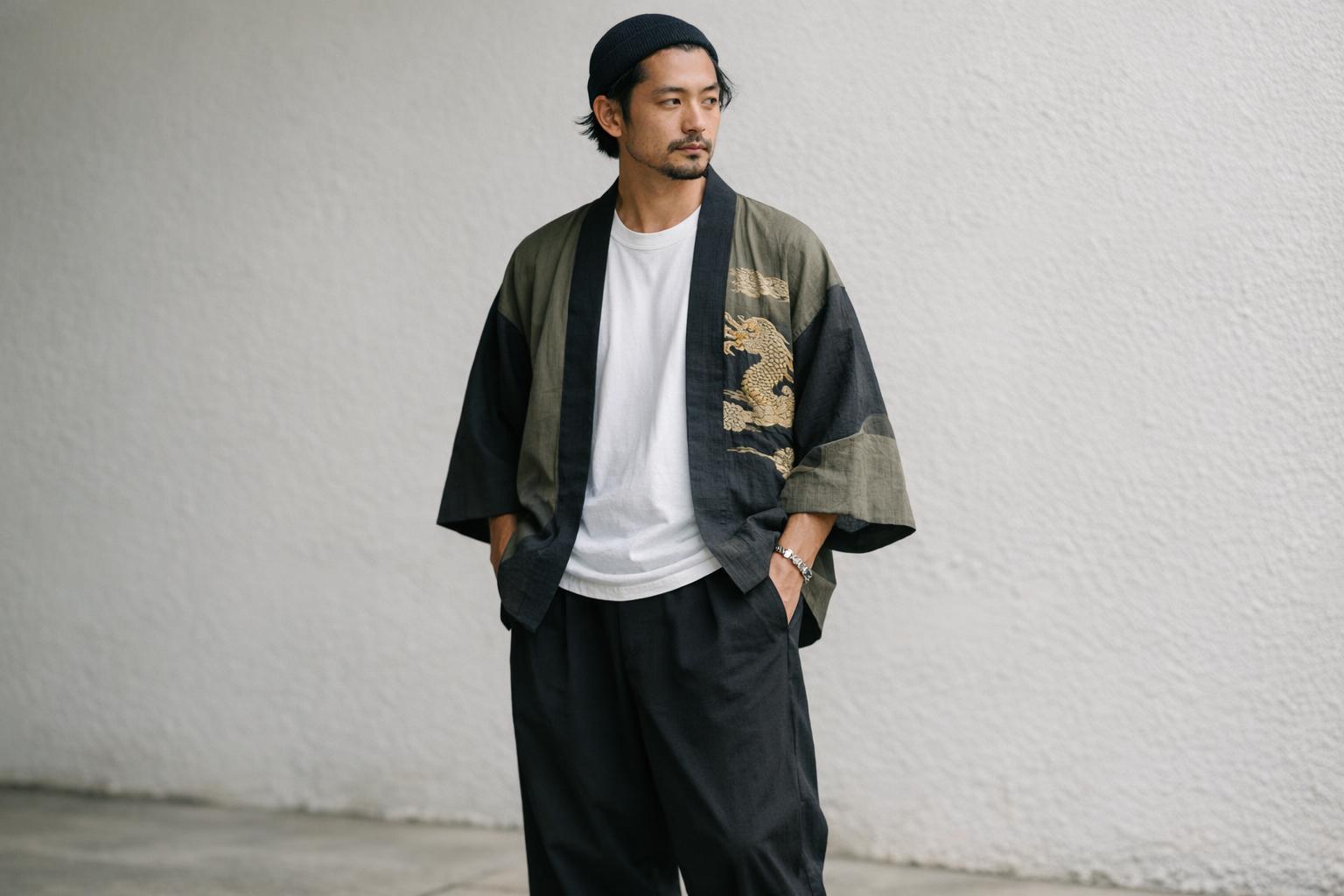
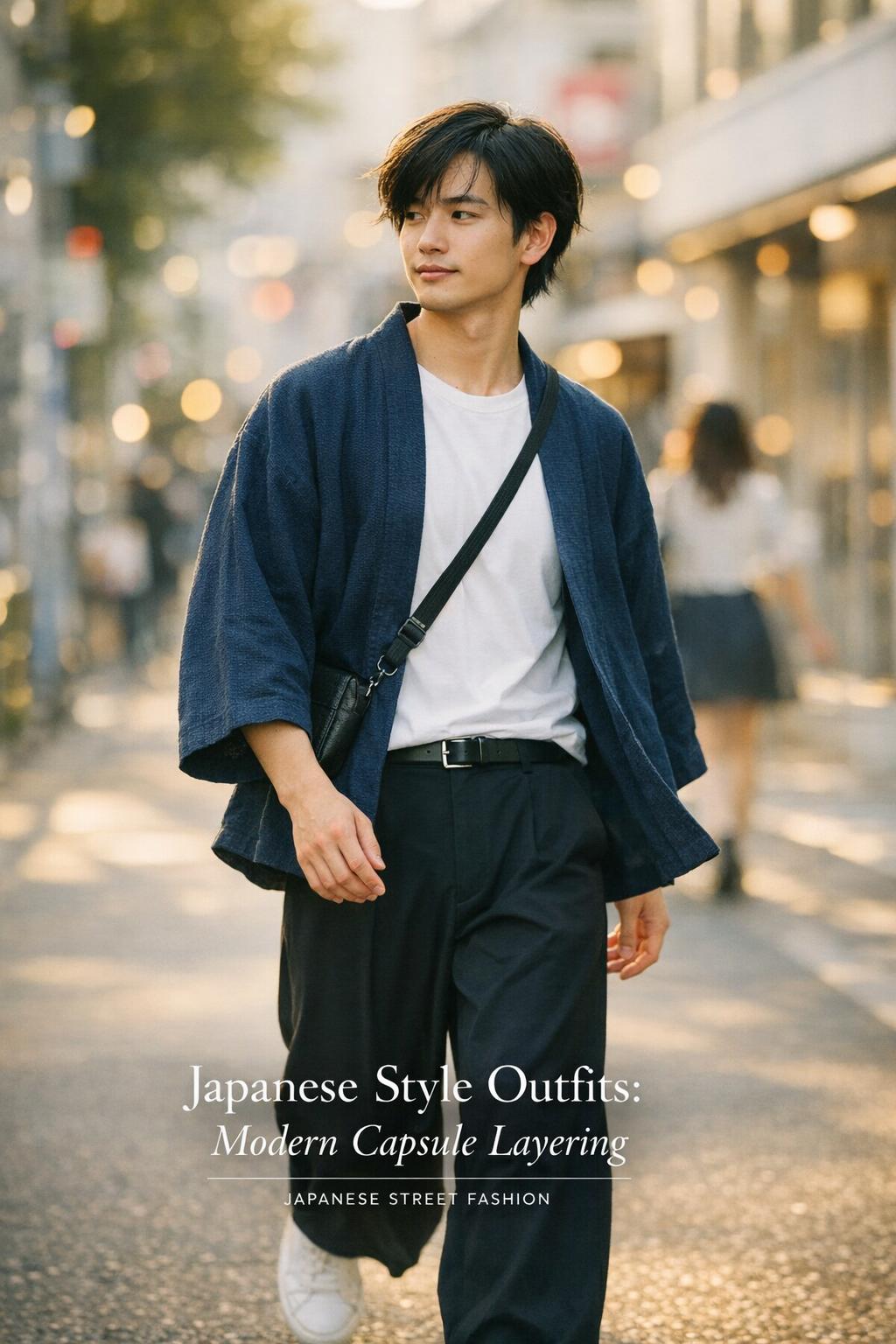
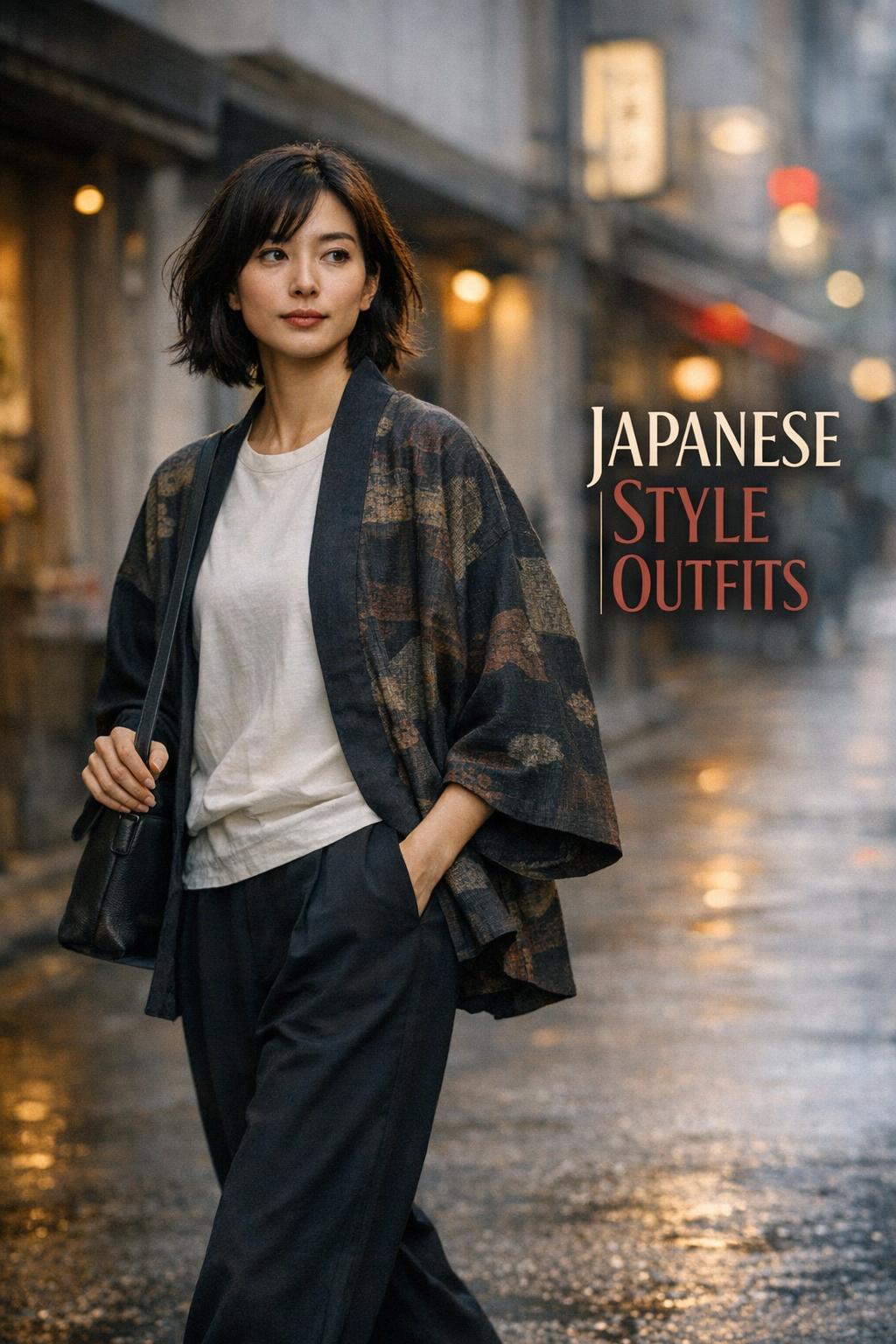
A haori functions like a lightweight coat: it’s meant to sit open and frame the outfit. This makes it one of the most versatile items for Japanese street fashion because it works with both minimal and expressive styling. Pair a haori with a clean base—tee plus wide pants—and you get a modern silhouette with a clear Japanese reference point.
Styling logic: keep the inner layers fitted enough to prevent bulk at the underarm and waist. The haori should be the outer line; the base should be streamlined.
Jinbei crossovers: relaxed structure for warm-weather balance
Jinbei-inspired pieces offer a summer-friendly route into Japanese styling because they read as structured loungewear: breathable, easy, and cleanly shaped. In an Asian fashion style wardrobe, they can serve as a set or as separates. If you wear them as separates, keep the rest of the outfit minimal—let the jinbei shape and texture carry the visual identity.
Practical note: for hot weather, prioritize comfort and airflow. The look works best when it doesn’t cling; the silhouette should float slightly off the body.
Sukajan and modern street jackets: the statement layer in Japanese streetwear
Sukajan-style jackets sit closer to classic streetwear: a recognizable jacket format that can be paired with denim, black wide pants, or simple skirts and dresses. This is a clean entry point into alternative Japanese fashion because it reads street-first, with Japanese styling cues expressed through the jacket’s impact rather than through a fully traditional silhouette.
Sukajan-style jackets sit closer to classic streetwear: a recognizable jacket format that can be paired with denim, black wide pants, or simple skirts and dresses. This is a clean entry point into alternative Japanese fashion because it reads street-first, with Japanese styling cues expressed through the jacket’s impact rather than through a fully traditional silhouette.
Outfit composition tip: if the jacket is bold, control the rest. Solid pants and simple shoes keep the look modern and prevent the outfit from competing with itself.
Regionally influenced Japanese street fashion: Tokyo, Harajuku, Shibuya, and Kansai cues
Japanese fashion is frequently discussed through Tokyo, and for good reason: Tokyo streetwear is a major influence hub, with neighborhoods like Harajuku and Shibuya often referenced as style signals. But a well-rounded approach also acknowledges regional variation—Kansai influence and Osaka fashion scenes are part of the broader Japanese street fashion landscape, shaping silhouettes and attitude even when the core garments overlap.
Tokyo streetwear: clean foundations with directional layers
Tokyo streetwear styling often looks “edited.” The base is controlled—tees, wide pants, denim—while the top layer delivers the message: a kimono-inspired jacket, haori, or modern street jacket. This keeps the outfit wearable and modular, especially for city life where you move between indoor and outdoor temperatures.
Harajuku aesthetics, when referenced, tend to push substyle energy—more playful proportions, bolder combinations, and a stronger statement focus. The key is still structure: even expressive looks hold together when there’s a consistent silhouette line.
Kansai and Osaka cues: comfort-forward silhouettes with personality
Kansai variation is an opportunity to broaden your Japanese fashion vocabulary beyond Tokyo. While the same garment types can appear, the outfit priorities can shift toward comfort, relaxed structure, and a slightly different balance of casual versus polished. In practice, that means leaning into easy layering, breathable sets, and movement-friendly proportions that still look intentional.
Tip: If your daily life includes lots of walking or long transit days, a Kansai-leaning approach—relaxed structure, fewer restrictive layers—can be more sustainable than high-concept styling.
Kyoto as a heritage reference point: craft, tradition, and modern reuse
Kyoto frequently enters the Japanese fashion conversation through traditional garments and education around wearing them. It also connects strongly to sustainability narratives around kimonos: repurposing and upcycling are ways to keep heritage materials in rotation. Even if you’re styling for a modern U.S. closet, thinking “Kyoto” can function as a quality filter—prioritizing construction, fabric story, and thoughtful reuse over fast novelty.
Alternative Japanese fashion vs. Japanese workwear: choose your styling engine
Two engines drive many japanese style outfits: streetwear expressiveness and workwear practicality. Both can incorporate kimono-inspired pieces, but the outfit goals are different. If you clarify which engine you’re using on a given day, your styling decisions become faster and the result looks more coherent.
Japanese workwear: durability, everyday practicality, and proportion rules
Japanese workwear influence prioritizes repeatability. Durable staples, clean shapes, and a focus on construction make outfits look “quietly strong.” The proportion rules matter here: pants that allow movement, layers that don’t restrict, and silhouettes that hold up through a full day. It’s a strong approach for U.S. readers who want Japanese fashion without feeling overly styled.
Alternative Japanese fashion: statement identity with controlled composition
Alternative Japanese fashion leans into stronger identity signals: subculture cues, sharper contrasts, and bolder outerwear statements. The styling discipline is the same—silhouette balance, hierarchy, and a clear anchor piece. If everything is a statement, nothing is. Choose one: the jacket, the pants silhouette, or the print story—then support it with clean basics.
Tip: A reliable formula is “one expressive layer + one directional silhouette + one neutral anchor.” For example, a sukajan-style jacket (expressive layer), wide-leg pants (directional silhouette), and a simple tee (neutral anchor).
Outfit recipes that translate to U.S. life (without losing the Japanese fashion point of view)
These combinations are built for real schedules: commuting, long walking days, indoor/outdoor temperature swings, and settings where you want personality without looking costume-coded. Each recipe uses clear styling logic—visual anchor, proportion control, and a stable base—so you can repeat it with different colors and fabrics.
The city uniform: haori + tee + wide pants
This is the cleanest entry point into Japanese street fashion. The haori acts as the frame, the tee keeps the center simple, and wide pants deliver the Japanese pants outfit silhouette that reads modern and intentional. It works because the outer layer creates vertical lines while the pants provide volume with stability.
When to wear it: travel days, casual work environments, weekend errands, and museums. Styling variation: swap sneakers for a sleeker shoe profile if you want a sharper finish without changing the silhouette logic.
Kimono-inspired jacket over dark denim: heritage meets streetwear
Dark denim provides a familiar American foundation while the kimono-inspired jacket supplies the Japanese fashion signature. This combination works because denim’s texture grounds the look; the jacket’s drape and wrap lines elevate it. Keep the inner top simple to avoid competing lines near the neckline.
Trade-off: a more structured or heavier kimono-inspired jacket can feel warm indoors. Use it as an outer layer you can remove easily, especially if you’re moving through heated spaces.
Sukajan-style jacket + black wide pants: street impact with clean control
The sukajan-style jacket is the statement piece; black wide pants act as the visual anchor that prevents the look from becoming noisy. This is Japanese streetwear in its most practical form: one bold layer, one stable silhouette, and minimal accessories needed. The outfit holds up in photos because the eye knows exactly where to land.
Jinbei-inspired set styling: warm-weather ease with structure
A jinbei crossover look is a summer solution when you want Japanese style outfits without heavy layering. The set creates instant cohesion through matching fabric and shape, which reads intentional even with minimal styling. Keep footwear and any bag understated; let the set deliver the identity.
When to wear it: hot weekends, casual gatherings, and any situation where comfort matters as much as style. The silhouette remains “designed” because the structure is built into the garment.
Seasonal strategy: how Japanese streetwear handles weather shifts
Many Japanese fashion guides emphasize seasonality because climate changes are where layering either shines or collapses. The goal isn’t to own separate wardrobes for summer and winter; it’s to rotate the weight of layers while keeping the same outfit architecture: base + structure + statement.
Summer: keep the silhouette, reduce the weight
For summer Japanese outfit ideas, the most effective move is simplifying the layer stack while preserving proportion. Use a lighter statement piece (like a breathable haori or jinbei-inspired top) over a clean base. Avoid stacking too many mid-layers; heat and humidity quickly turn “layering” into discomfort, and discomfort shows in the way clothes sit on the body.
Winter: layering that stays sharp, not bulky
Winter styling is where Japanese streetwear aesthetics excel: multiple layers create depth, and outerwear becomes the dominant silhouette. The key is controlling bulk at the waist and shoulders. Choose one warm hero layer, then keep inner layers thin enough to maintain line. If you over-layer with thick fabrics everywhere, the outfit loses the clean proportions that define Japanese fashion.
Season transitions: the commuter’s advantage
Spring and fall reward modular outfits. A haori or kimono-inspired jacket can be added or removed without disrupting the base. This is especially practical for U.S. cities where mornings and evenings swing widely in temperature. The outfit remains visually consistent because the base palette stays stable and the outer layer provides the shift.
Brands, designers, and runway signals: how high fashion feeds street-level styling
Japanese fashion moves between street-level utility and runway experimentation, and that exchange shapes what feels current. Designers and brands provide visual language—silhouettes, tailoring ideas, and cross-cultural styling cues—that eventually filter into everyday wardrobes. In the U.S., many readers encounter these signals through fashion-week coverage, designer names, and brand storytelling, then translate them into wearable outfits through simpler pieces.
Junya Watanabe: tailoring, subculture cues, and directional outerwear
Junya Watanabe is a reference point for how Japanese avant-garde ideas can live inside familiar categories like outerwear and tailoring. The useful takeaway for everyday styling isn’t copying runway complexity; it’s adopting the principle: let a sharply considered jacket shape define the outfit, and keep the rest controlled so the silhouette reads intentional rather than overloaded.
Nigo, Kenzo, and the cross-cultural wardrobe at Paris Fashion Week
Names like Nigo and brands like Kenzo show how Japanese design influence travels—Tokyo to Paris—through fashion-week context. The practical translation for Japanese street fashion is the idea of reinvention: taking familiar wardrobe items and reworking proportion, layering, and styling context. If your closet is mostly basics, this is good news; you can shift the read of an outfit through one strategic layer and one proportion change.
Paris Fashion Week references also highlight that Japanese design influence often plays with wardrobe categories—mixing tailoring discipline with streetwear ease—so an outfit can look sharp without becoming rigid.
Sustainability that’s tangible: kimono repurposing and modern wear
In Japanese fashion, sustainability is often most compelling when it’s visible in the garment. The repurposing of traditional kimonos—transforming them into jackets, dresses, and other pieces—connects craft, education, and modern utility. It also changes how you shop: instead of chasing constant newness, you can prioritize garments with material history and strong construction.
Practical wardrobe impact: repurposed kimono pieces often become statement layers. Treat them as your outfit’s focal point and build around them with quiet base items. This keeps the look modern and ensures the garment’s surface details remain readable.
Balanced perspective: repurposed items can be less standardized in sizing and cut. That’s not a flaw—it’s part of what makes the piece unique—but it means you should be ready to style around fit realities (more open-front layering, simpler inner layers, and pants silhouettes that tolerate variation).
Shopping and sourcing guidance for the U.S.: how to buy smart and style better
Shopping for Japanese fashion from the U.S. works best when you buy with outfit architecture in mind. The most common misstep is purchasing a strong statement piece—like a haori or kimono-inspired jacket—without the base wardrobe to support it. Build the foundation first or at least alongside the hero purchase: tees, wide pants, denim, and comfortable shoes that match the aesthetic direction.
Online shopping for Tokyo-inspired streetwear and kimono-inspired pieces is often organized by garment category. Use that structure to your advantage: search for haori, kimono-inspired jackets, and urban outfits, then evaluate whether the piece functions as a frame (easy layering, wearable length, practical sleeve shape) or as a specialty item that requires a very specific context.
Fit and comfort checks that matter in real life
Because Japanese streetwear relies on silhouette, fit is not just a size issue—it’s an outcome issue. Before committing, consider how the garment behaves in movement and layering. A jacket that looks strong in a photo can become restrictive when you’re carrying a bag or walking for hours.
- Check sleeve volume: can you layer a tee comfortably without bunching?
- Check length: does the hem create a clean vertical line with your go-to pants?
- Check closure options: open-front layers are easier to adapt across seasons.
- Check fabric weight: lighter layers improve versatility for U.S. indoor heating and AC.
Tip: buy for combinations, not single items
A useful rule is “three-outfit viability.” Before you buy a statement piece, identify at least three outfits you can build with what you already own. If you can’t, the piece may be visually strong but functionally isolated. Japanese style outfits look effortless when the wardrobe is modular.
Common styling mistakes that weaken Japanese street fashion (and how to correct them)
Japanese street fashion is sensitive to balance. Small miscalculations can push a look from “editorial” into “overdone” quickly, especially when mixing traditional cues with modern streetwear. These are the most frequent breakdown points—and the simplest corrections.
Mistake: stacking multiple statement pieces with no hierarchy
If the jacket is kimono-inspired, the pants are bold, and the accessories are loud, the eye has nowhere to rest. Correct it by choosing one primary statement and making everything else supportive—solid pants, clean tee, minimal additional detail.
Mistake: ignoring proportion rules when layering
Layering only looks intentional when the silhouette remains readable. If your mid-layers add bulk at the waist, the outfit loses line. Correct it by reducing inner layer thickness and letting one outer frame define the shape. This is where Japanese workwear discipline helps: fewer, smarter layers that still deliver warmth and structure.
Mistake: treating traditional garments as costume instead of wardrobe tools
Kimonos, obi references, and haori look modern when they’re integrated into an outfit system. Correct it by using a traditional or kimono-inspired item as outerwear over basic contemporary pieces. The contrast—heritage line over modern base—creates a balanced, wearable result.
Style-focused tips: how to make japanese style outfits feel personal, not copied
The goal isn’t to imitate one image; it’s to build a repeatable styling identity. Use these tips to keep Japanese fashion references clear while aligning the outfits with your daily context.
- Choose a signature silhouette. Either commit to wide-leg pants as your daily anchor or make outerwear the primary structure piece. Consistency is what makes outfits look curated.
- Let one location cue guide your choices. A Tokyo streetwear direction (Harajuku/Shibuya energy) can support more statement layering; a Kansai/Osaka direction leans comfort-forward and relaxed structure.
- Use “quiet bases” to support expressive layers. A plain tee and dark pants can carry multiple Japanese streetwear outfits when the outer layer changes.
- Build season transitions into the plan. Pick layers that can be removed without collapsing the outfit—open-front haori-style pieces excel here.
- Keep sustainability practical. If you invest in a repurposed kimono jacket, treat it as a long-term statement piece and build multiple outfit recipes around it.
FAQ
What defines Japanese street fashion compared to basic streetwear?
Japanese street fashion is typically defined by disciplined silhouette balance, intentional layering, and a clear visual anchor (often outerwear like a haori, kimono-inspired jacket, or a statement street jacket). The outfit reads cohesive because proportion rules and tonal layering keep the composition controlled, even when the statement piece is bold.
How do I wear kimono-inspired pieces without looking like I’m in costume?
Style kimono-inspired items as modern outerwear over contemporary basics: a simple tee and dark pants or denim. Keep accessories minimal and let the kimono-inspired layer provide the identity; the modern base keeps the look grounded and wearable.
What is a haori, and why is it so useful for japanese style outfits?
A haori is a traditional-style outer layer that’s commonly used in modern styling as an open-front frame for the outfit. It’s useful because it creates a strong vertical line, supports layering across seasons, and instantly signals Japanese fashion through silhouette rather than heavy embellishment.
How can I build a japanese pants outfit that looks authentically styled?
Start with wide-leg or clean, straight pants as the silhouette anchor, then add a simple base top and one structure layer (like a haori, workwear-inspired jacket, or kimono-inspired outerwear). The outfit looks authentic when volume is intentional and the layers create a readable line rather than random bulk.
What’s the difference between Japanese workwear style and alternative Japanese fashion?
Japanese workwear focuses on durable staples, everyday practicality, and proportion rules that support movement and repeat wear. Alternative Japanese fashion leans more into statement identity and subculture cues, but it still relies on the same styling discipline—clear hierarchy, controlled palette, and silhouette balance—to stay cohesive.
How do Tokyo, Harajuku, and Shibuya influence Japanese fashion looks?
Tokyo streetwear influence often shows up through modular layering and a clean base with directional outerwear, while Harajuku aesthetics can push more expressive, subculture-coded styling. Shibuya is frequently referenced as part of the Tokyo fashion ecosystem, reinforcing the idea that streetwear and polished wardrobe pieces can coexist through controlled outfit composition.
How does sustainability connect to Japanese fashion beyond general eco messaging?
Sustainability is often discussed through tangible practices like repurposing traditional kimonos and obi into modern garments such as jackets and dresses. This approach keeps heritage materials in use and turns the garment itself into a long-term statement layer that can anchor multiple outfits.
Are Japanese designers like Junya Watanabe and brands like Kenzo relevant to everyday outfits?
Yes, as style references rather than literal templates. Junya Watanabe highlights how tailoring and subculture cues can be expressed through strong outerwear and silhouette, while Kenzo’s cross-cultural fashion-week context (including connections to designers like Nigo) reinforces wardrobe reinvention through proportion, layering, and statement-making structure pieces.
Where should I start if I want Japanese fashion that works for U.S. daily life?
Start with a modular base: tees, dark denim or black wide pants, and comfortable shoes, then add one Japanese-signature layer like a haori or kimono-inspired jacket. This creates an outfit system you can repeat for commuting, weekends, and evenings while keeping the Japanese street fashion identity clear and wearable.