Simple Winter Outfits: 10 Easy Looks That Feel Finished
Simple winter outfits should save time, not leave you wondering why a sweater and jeans still feel unfinished. The fix is usually small. A clear shape, a useful layer, or one deliberate detail can make familiar clothes look like a complete choice. You do not need a special occasion, a strict color palette, or a new set of clothes to get there.
Use this guide when you want an easy outfit for an ordinary day and your first idea feels too plain, bulky, or casual. The ten formulas begin with familiar pieces, then show what gives each one its finish. After that, use the quick fixes to adjust the look you already chose. Think of every suggestion as a starting point: keep the parts that suit your comfort and routine, and change one detail when the outfit needs a little more shape or purpose.
Why a simple winter outfit can feel unfinished
A simple outfit is not the same as an incomplete outfit. A sweater, trousers, and shoes can be all you need, but they still have to relate to one another. When the pieces have no shared line, texture, or useful finishing detail, the combination can look as though you got dressed in separate decisions. That does not mean you need more accessories. It means you can make one clear choice about what the outfit is doing.
Start with the base: the top and bottom that you can wear comfortably for the day. Next, look at shape. If the sweater is loose, perhaps the trouser line can be straighter; if the bottom is wide, a shorter or more defined top can give the outfit a center. This is not a rule about hiding or emphasizing a body part. It is a way to make the pieces sit together in a way that feels intentional to you.
Found the dress? Keep the rest in one place.
Zarellea brings guest details, vendors, timelines, and every next step together — so your wedding plan feels as good as your look.
Then choose a finish. A finish might be a belt, a visible cuff, a textured knit, a structured bag, a neat tuck, or shoes that suit the rest of the look. It can also be the outer layer if you are spending most of the day outside. Pick one feature to notice and let the rest stay quiet. If the outfit already has a strong knit texture, the finish might simply be a clean trouser hem and a practical shoe.
Finally, check what the day requires. A look for sitting at a desk may need a different layer than a long walk or several errands. A simple outfit should be easy to move in, warm enough for the conditions you expect, and comfortable when you take off your coat indoors. Keep these three questions in view: does the base feel good, does the shape make sense, and is there one detail that makes the look feel chosen?
If the answer to the last question is no, try changing only one thing. Roll a cuff, add a belt, swap a slouchy shoe for a cleaner one, or choose a top layer with a clearer line. Small edits keep the outfit simple. The goal is not to make a basic combination look elaborate. It is to make it look complete enough for the way you want to show up.
Ten simple winter outfits built from familiar pieces
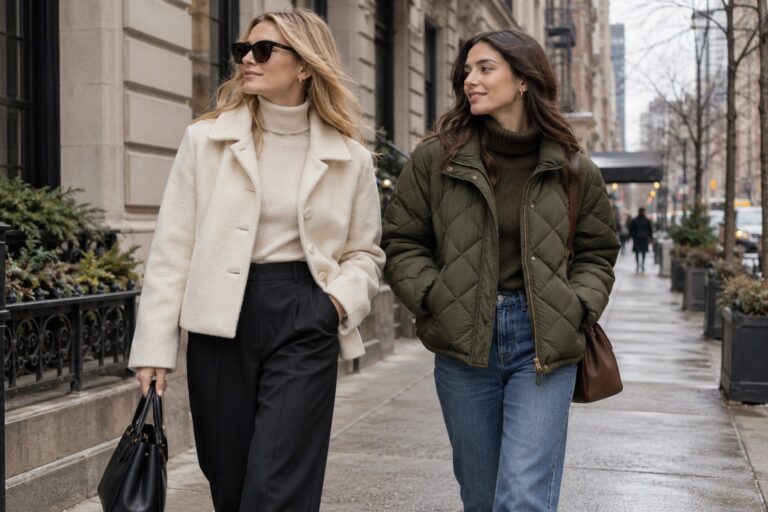
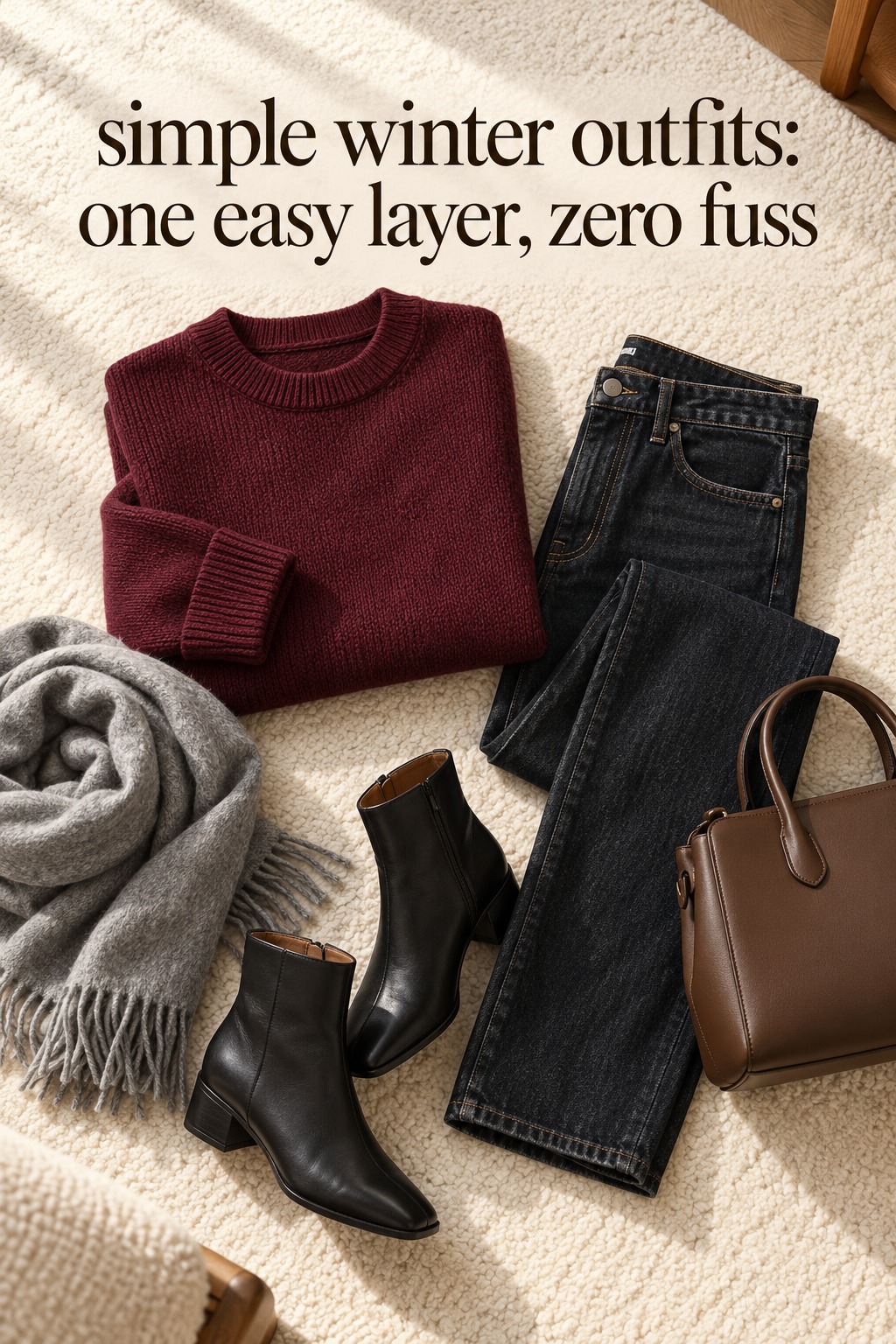
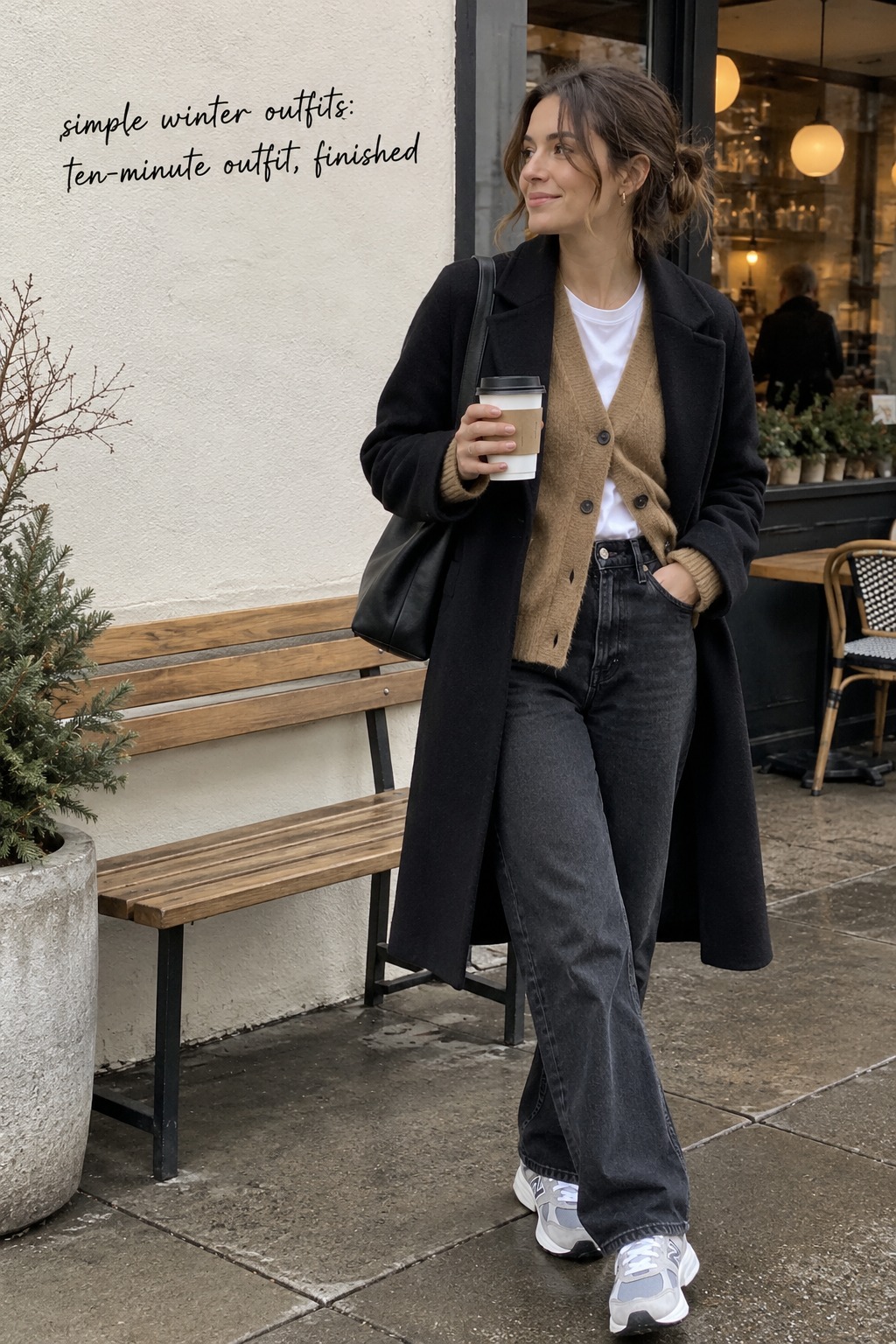
1. Fine knit, straight jeans, and ankle boots. This everyday combination works because the pieces are easy to recognize and the lines are uncomplicated. Choose a sweater that sits smoothly under your coat, then let the jeans meet the boots without a heavy bunch at the ankle. A visible belt or a small front tuck gives the waistline a little definition if you want it. When the sweater has a noticeable pattern or texture, keep the bag and jewelry simple.
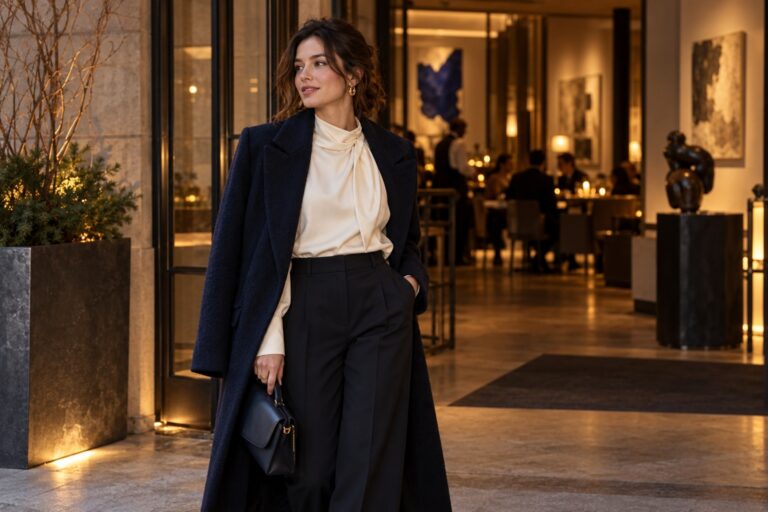
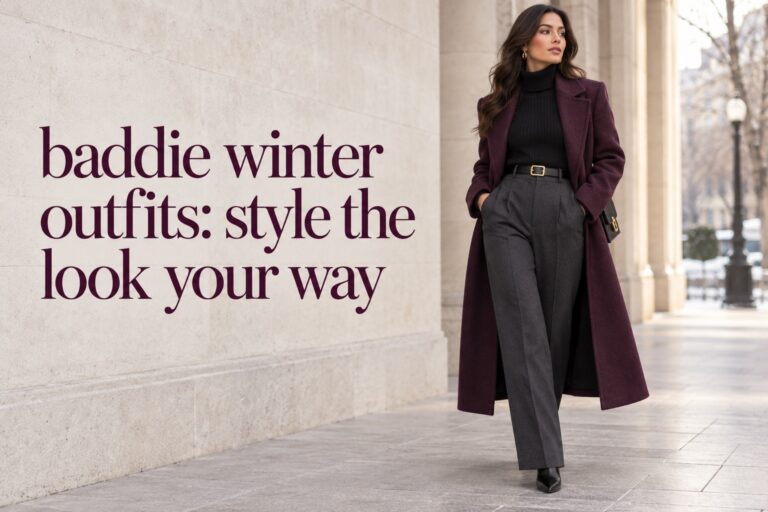
2. Turtleneck, tailored trousers, and loafers or boots. A close-fitting neck balances the clean line of trousers and makes a quiet outfit feel deliberate. Wear a cardigan or jacket over it when the room or commute calls for another layer. The trousers can be relaxed or more structured; choose the shape you can sit and walk in comfortably. A simple watch or belt can finish the look without turning it into formal office wear.
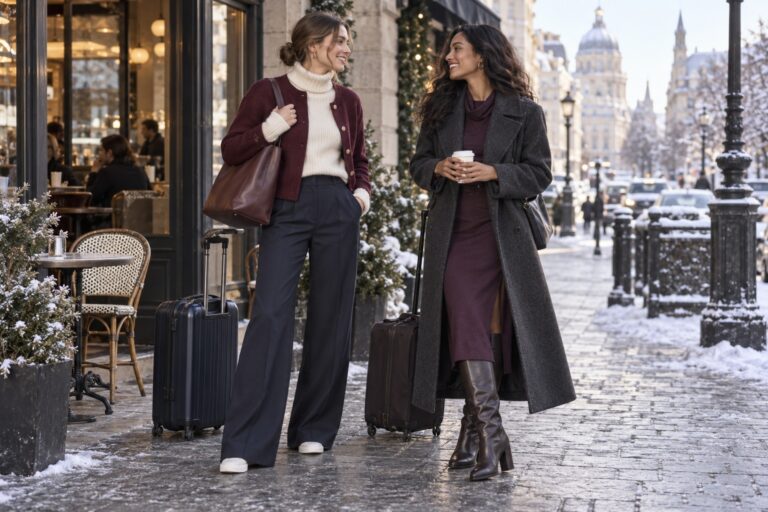
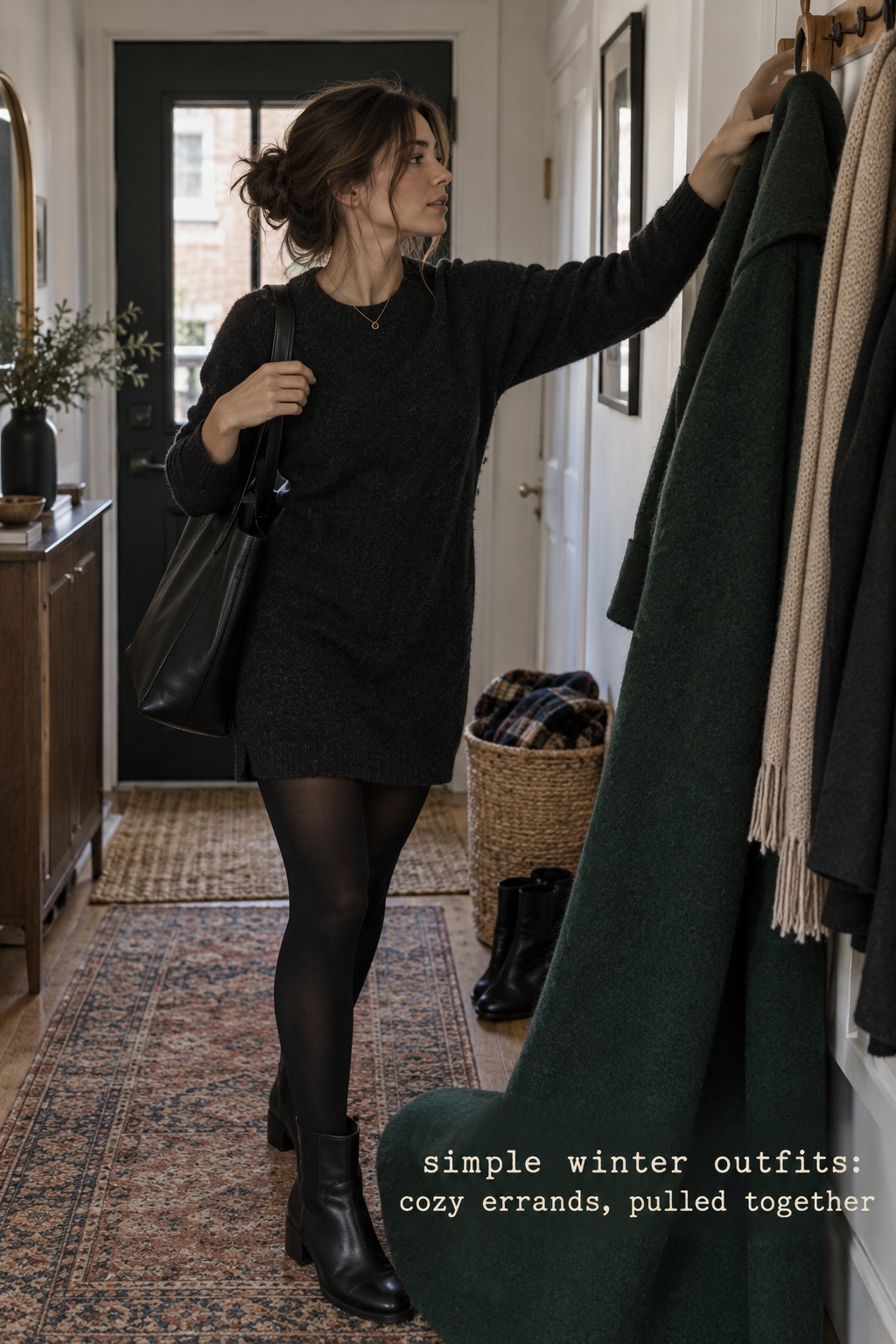
3. Sweater dress, tights, and knee-high boots. One main garment reduces the number of decisions, while tights and boots make the outfit feel suited to winter. Add a belt if the dress is loose and you like a more defined outline, or leave it unbelted for an easy column of knit. A short jacket gives the look a different proportion than a longer coat. Let the hem and boot height work comfortably together when you walk or sit.
4. Button-down shirt, crewneck sweater, and dark denim. A collar peeking above the sweater is a small styling detail that makes this familiar pairing feel finished. Keep the shirt hem tucked or let a narrow, even edge show below the knit. Straight or relaxed jeans both work; the more important check is that the shirt does not bunch under the sweater. Finish with simple boots or sneakers depending on your plans and the conditions outside.
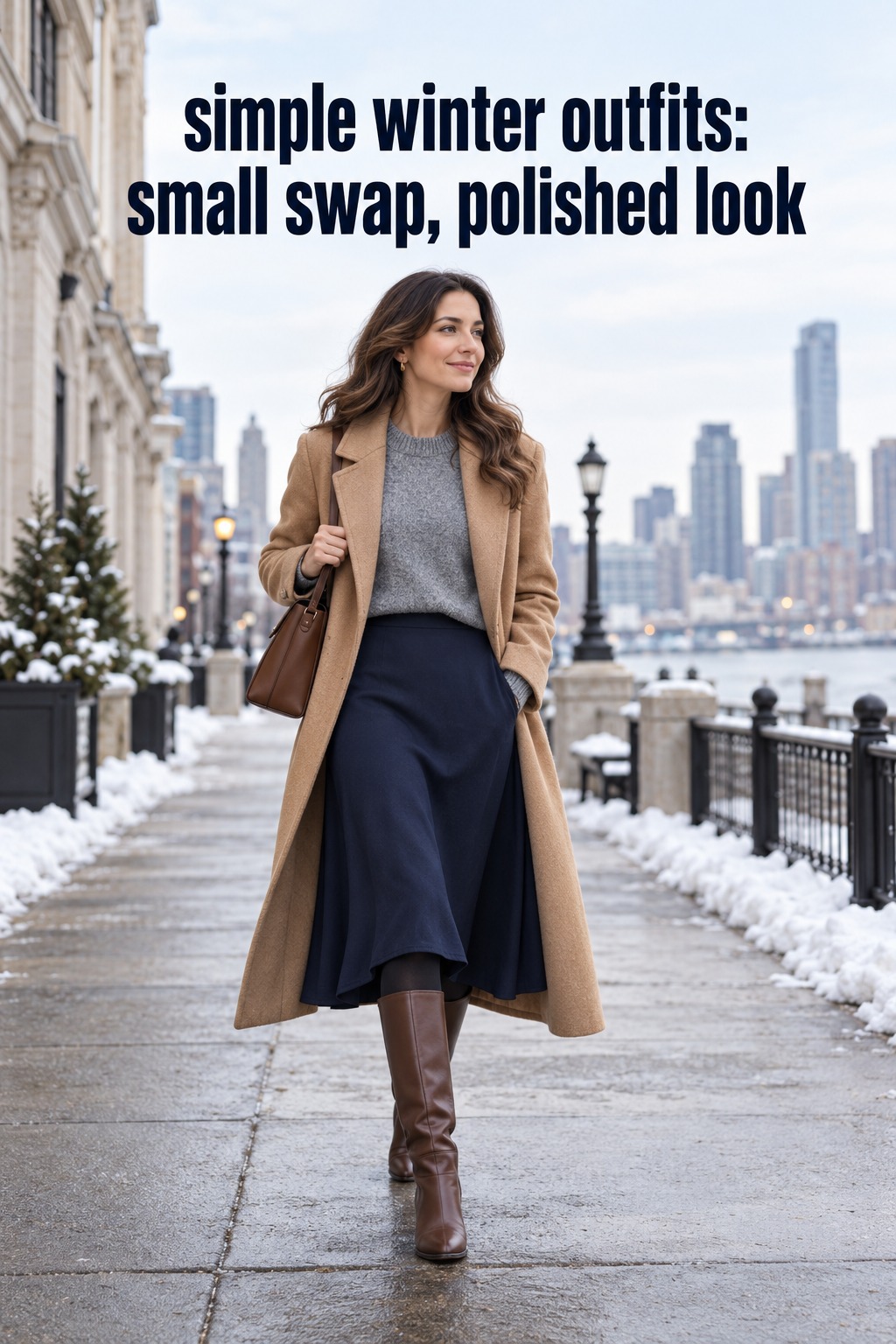
5. Midi skirt, fine sweater, and tall boots. A soft knit gives the skirt a relaxed counterpoint, and boots make the transition from hem to shoe feel considered. If the sweater is long, try a small front tuck or a shorter layer on top. If you prefer everything untucked, choose a knit whose hem sits comfortably over the skirt waistband. Keep the accessories easy so the texture or movement of the skirt can be the interesting part.
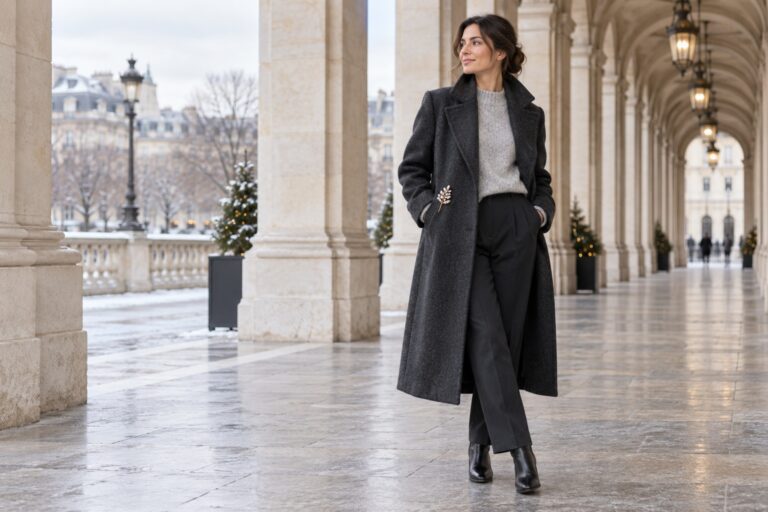
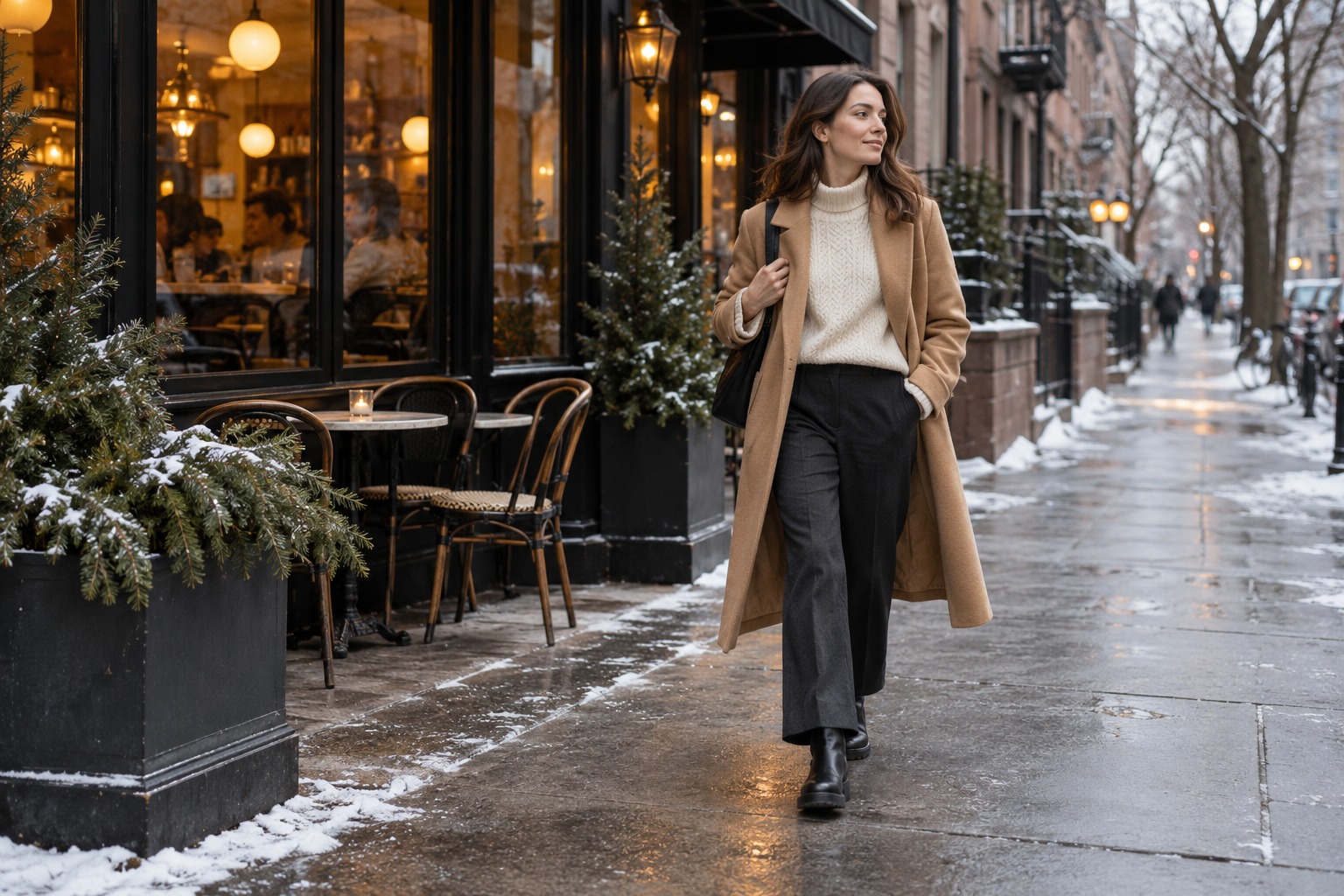
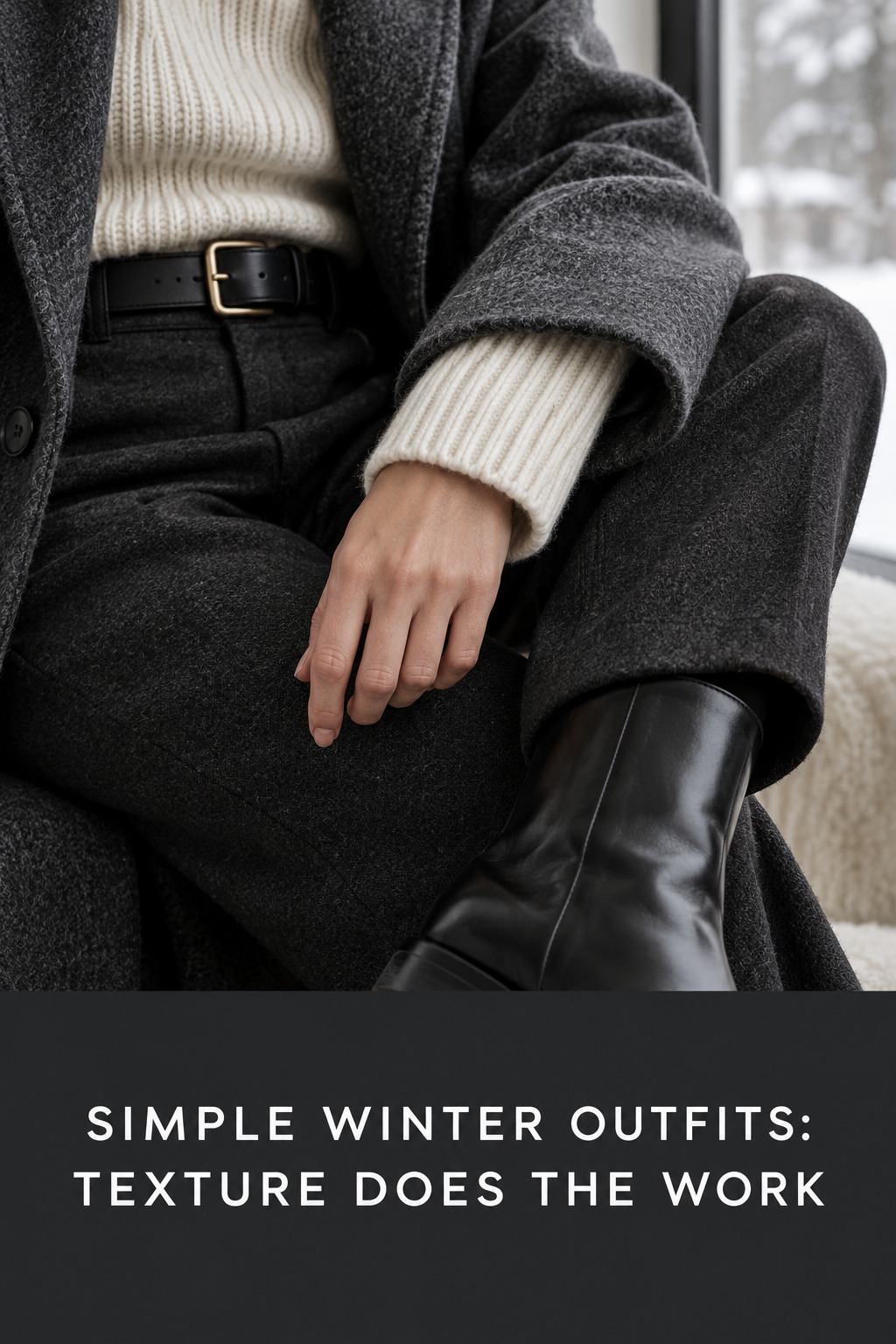
6. Monochrome base with a contrasting coat. Put together a top and bottom in neighboring shades, such as charcoal with black or cream with beige, then add a coat that creates a clear boundary around the outfit. This is a simple way to make separate pieces feel connected without matching every item. A scarf or bag can echo either the coat or the base. If you do not enjoy tonal dressing, use the same idea with a single repeated color in two pieces.
7. Knit set with a structured outer layer. A matching sweater and trouser set gives you an easy starting point for a day when comfort matters. Add a jacket or coat with a cleaner line to make the soft base feel ready for a coffee stop, a casual appointment, or a relaxed office. Shoes set the mood: sneakers keep it informal, while boots or loafers make it look a little more finished. Choose a bag that holds what you need and sits comfortably over the outer layer.
8. Simple jumpsuit, long-sleeve layer, and a belt. A jumpsuit can do the work of a top and bottom in one step. Add a thin shirt underneath if the neckline or sleeves need extra coverage, then use a belt only if it improves the fit and feels comfortable. A long cardigan or coat adds a second line without complicating the base. The easiest shoes are the pair that work with the leg shape and do not catch on the hem.
9. Hoodie, midi skirt, and clean sneakers or boots. This pairing mixes casual and polished pieces without demanding much styling. A plain hoodie makes the skirt feel relaxed, while a skirt with a simple shape keeps the hoodie from reading like loungewear. You can wear the hem out or tuck just the front if it is not too thick. A compact crossbody bag or small shoulder bag keeps the look easy and leaves room for the two different textures to show.
10. Cardigan, simple top, wide trousers, and a neat shoe. A cardigan and trousers are comfortable foundations; the key is to decide how the layers should meet. Button the cardigan as a top, leave it open over a fitted shirt, or tuck a thin front edge into the waistband. A shoe with a clear shape can ground the wider trouser hem. If the cardigan is already oversized, keep the top underneath smooth so the layers do not compete.
Each formula can be changed with pieces you already like. Use denim in place of tailored trousers, swap boots for sneakers on a dry day, or replace the coat with a warmer layer when you will be outside longer. Keep the central relationship of the look intact: one easy base, one shape choice, and one finish. That is enough to make a repeat outfit feel useful rather than automatic.
Fix five common styling snags with one small change
If the outfit feels too plain, add texture before adding more color. Try a ribbed knit, a suede-look bag, a wool scarf, or a belt with a visible buckle. Texture creates a point of interest while keeping the outfit quiet. You only need one noticeable surface. If both the top and bottom already have texture, use a smoother accessory and let the clothes carry the detail.
If everything feels bulky, remove one thick layer or clarify one edge. A thick shirt beneath a chunky sweater beneath a fitted coat can bunch at the shoulders and cuffs. Try a smoother base layer, open the cardigan, or switch to a roomier outer layer. You can also expose a small amount of cuff or show where the top meets the bottom. The point is to reduce friction and help each piece sit as intended, not to force yourself into tight clothing.
If the outfit feels too casual, change one finishing piece. You do not need to replace jeans and a sweater with a formal outfit. Try a cleaner boot, a structured bag, a belt, or a jacket with a defined shoulder. Keep the comfortable base. One item with a little more structure is often enough to make the overall look feel ready for a lunch, informal meeting, or plan after work.
If the top and bottom seem disconnected, repeat a detail. The detail can be a color, a texture, or a level of formality. For example, a dark belt can relate to dark boots, or a soft knit can be echoed in a scarf. Repeating does not mean every item has to match. Use one echo to connect the pieces, then allow the rest of the outfit to breathe.
If the outfit is uncomfortable outside, solve the practical issue first. A cold ankle, a slipping shoe, or a layer that will not close can undermine an otherwise good look. Choose socks, tights, or an outer layer that suit the day, then adjust the silhouette around those necessities. If your route includes wet or icy surfaces, select footwear for stability and conditions. There is no style benefit to keeping a shoe that makes you hesitant to walk.
These fixes are deliberately small because simple winter outfits should remain simple. If a look needs several accessories, a new garment, and a complete change of shoes before it feels right, it may be easier to begin with another formula. Save the combinations that make you feel comfortable and like yourself. Over time you will recognize which small changes solve your most common morning problem.
Choose the easy formula that fits the day
On a day with a lot of walking, begin with the shoes and the layers you can move in. Straight jeans, a soft knit, and boots or sneakers make a flexible base. Add outerwear that closes comfortably and a bag that leaves your hands free if you need it. Check the hems while wearing your actual shoes. This avoids discovering that a trouser leg drags or catches after you leave home.
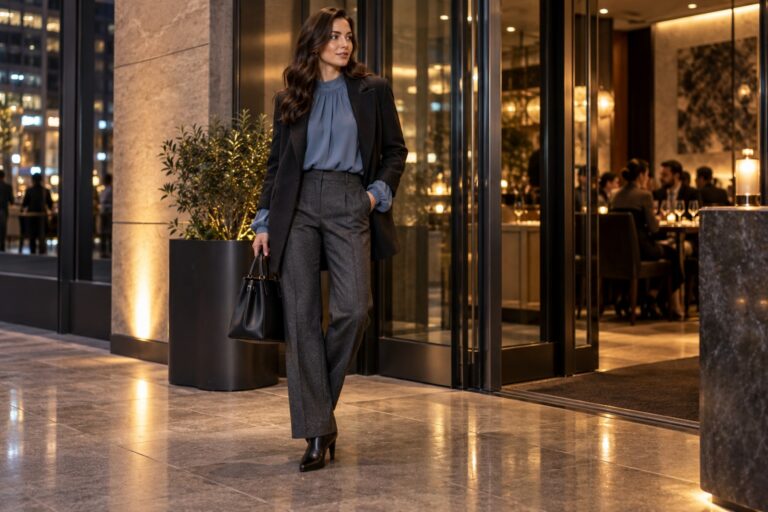
For a workday or appointment, use the same easy base and give one piece more structure. Tailored trousers, a neat cardigan, or a jacket can bring definition without making the outfit stiff. If you will be indoors much of the day, make sure the layer beneath your coat feels complete on its own. A simple knit with trousers can do that job, and the coat can stay a useful layer rather than the only polished part of the look.
For relaxed plans, start with the comfortable piece you are most likely to reach for, then make one choice that lifts it out of pure lounge mode. That might be a skirt with a hoodie, a knit set with a structured coat, or jeans with a sweater and a more deliberate shoe. The outfit still feels easy, but a single contrast gives it direction. Choose the version that matches the pace of the day rather than dressing for a hypothetical photo.
If your plans move between cold outdoors and warm rooms, wear layers you can remove without disrupting the outfit underneath. A shirt under a sweater or a cardigan over a simple top gives you an adjustment that can be undone quickly. Keep bulky accessories easy to carry or take off. The best simple outfit is one you can adapt without spending the rest of the day tugging at it.
Keep the morning decision simple
When you are short on time, choose in three decisions. First, pick the base that feels comfortable: jeans, trousers, a skirt, a dress, or a one-piece. Second, add the layer that suits the room and the route. Third, choose one finish that makes the outfit feel complete. The finish can be a belt, a tuck, a clean shoe, a scarf, or simply a neat sleeve and hem. Once you have those three pieces, stop adding things unless they solve a real need.
If a combination works, remember the reason it worked. Maybe the boot shape matched the trouser hem, the shirt collar lifted the sweater, or the coat gave the soft pieces a clearer line. You do not need to document every garment or plan a seasonal wardrobe. Keep a few reliable combinations in mind and change one element when you want a different mood. A small adjustment is easier than rebuilding the entire outfit.
Before you leave, sit, walk, reach for your bag, and check that the outer layer closes if you need it to. Comfort is part of whether an outfit feels finished. When the pieces move with you and the look has one clear point of intention, simple winter dressing has done its job.
FAQ
How can I make simple winter outfits look more polished?
Keep a comfortable base and add one finishing detail, such as a structured bag, a belt, a neat tuck, or a clean shoe. Check that the top and bottom have a clear relationship in shape or texture.
What are the easiest pieces to style in winter?
A fine knit, straight jeans, tailored trousers, a cardigan, a simple dress, and boots can combine in many easy ways. Start with the pieces that already feel comfortable in your routine.
How do I avoid looking bulky in winter clothes?
Reduce bunching by using a smoother base layer, choosing outerwear with enough room, or removing one thick layer. Keep your usual ease of movement and adjust only the area that feels crowded.
Can I wear the same winter outfit more than once?
Yes. Repeating an outfit is practical. If you want a change, keep the base and switch one detail, such as the shoe, outer layer, belt, or way you wear the sweater.
What can I wear when I do not want to think about an outfit?
Try a fine sweater with straight jeans and boots, or a knit dress with tights and boots. Add the outer layer that suits your day and one small detail if the outfit feels unfinished.
Are simple winter outfits only made from neutral colors?
No. Simple refers to how easy the pieces are to wear together, not to a required color palette. Use colors you enjoy, and let one piece lead if the rest of the outfit is already busy.