What to Wear: Outfit Hacks Tips for Polished Everyday Style
A strong outfit rarely depends on owning more clothes. It depends on sharper decisions: where the waistline sits, how fabrics interact, whether a shoe lightens or grounds the silhouette, and how a single accessory acts as a visual anchor. That is where outfit hacks tips become genuinely useful. The best styling shortcuts do not feel gimmicky. They solve common wardrobe problems with proportion, balance, and practicality, helping everyday pieces read as more polished, intentional, and modern.
Most style frustration comes from repeat issues: tops that bunch, layers that add bulk, basics that feel flat, and outfits that look right on a hanger but not in motion. Small adjustments often change the entire composition. A half-tuck can define shape. A belt can restore structure. Rolling a sleeve can expose the narrowest part of the arm and make tailoring look more considered. These are not trends. They are wearable, repeatable methods that improve how clothes work together in real life.
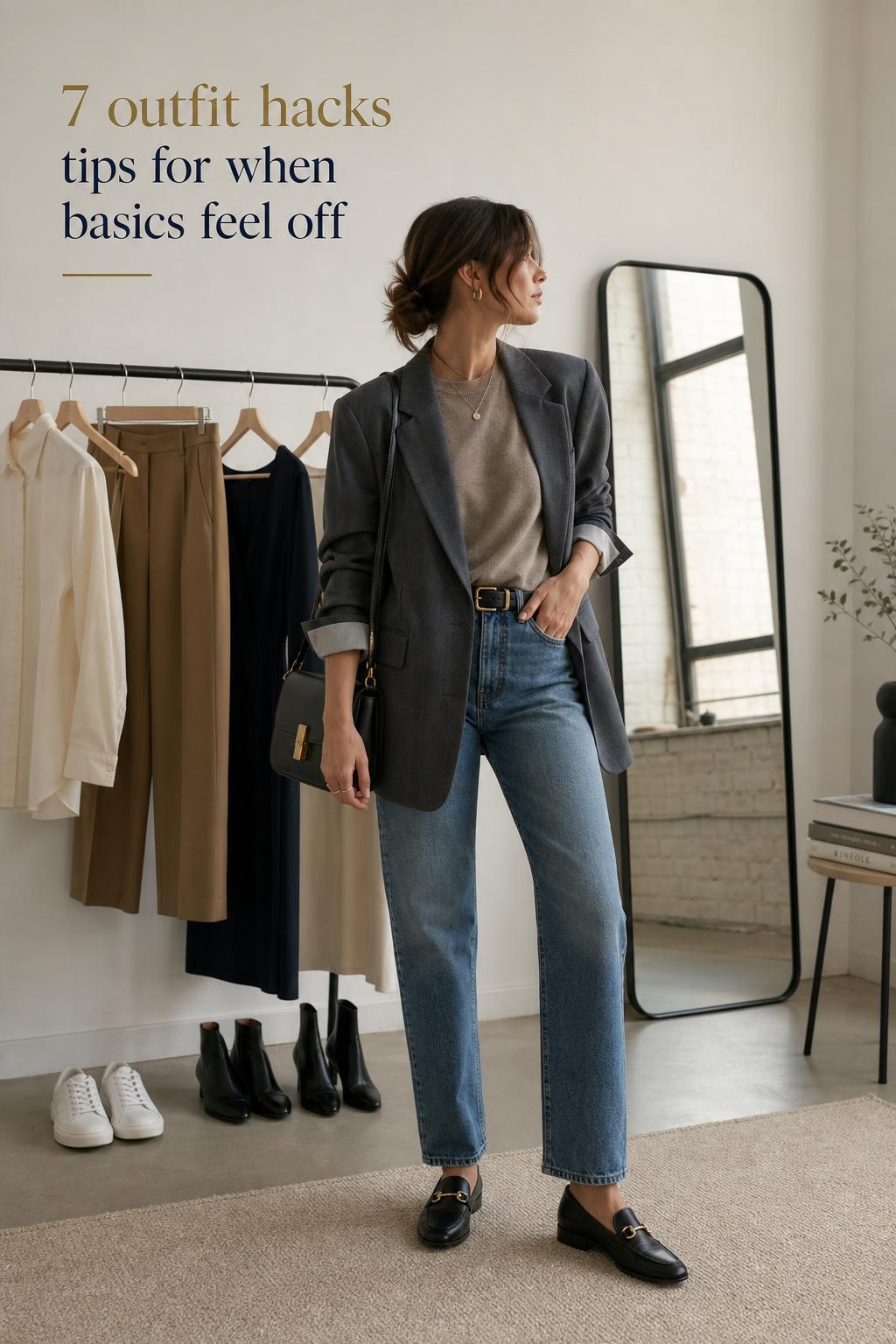
This guide breaks down the styling logic behind the most useful outfit improvements, with attention to silhouette balance, texture contrast, seasonal practicality, and realistic wear. Rather than chasing novelty, the focus stays on smarter combinations, cleaner lines, and flexible wardrobe strategies that make getting dressed easier.
Why outfit hacks matter more than buying new clothes
The appeal of a styling hack is simple: it shifts the performance of what is already in your closet. A shirt can become sharper, a dress can gain shape, and a basic jeans-and-knit combination can look editorial instead of accidental. This works because clothing is visual architecture. The eye responds to line, structure, rhythm, and contrast long before it notices price or trend relevance.
Found the dress? Keep the rest in one place.
Zarellea brings guest details, vendors, timelines, and every next step together — so your wedding plan feels as good as your look.
That is why effective outfit hacks tips focus on adjustment rather than excess. They correct proportion play, improve movement, and clarify the outfit composition. A voluminous pant often needs a closer top line. A boxy jacket benefits from visible wrist or ankle exposure. A monochrome outfit can feel elevated once texture variation is introduced through denim, knitwear, leather, or cotton poplin.
There is also a practical advantage. Real wardrobes have constraints: weather changes, office dress expectations, travel needs, limited closet space, and comfort over long days. Styling hacks bridge those gaps. They make familiar pieces function across more occasions without forcing a complete reset each season.
Start with silhouette before color
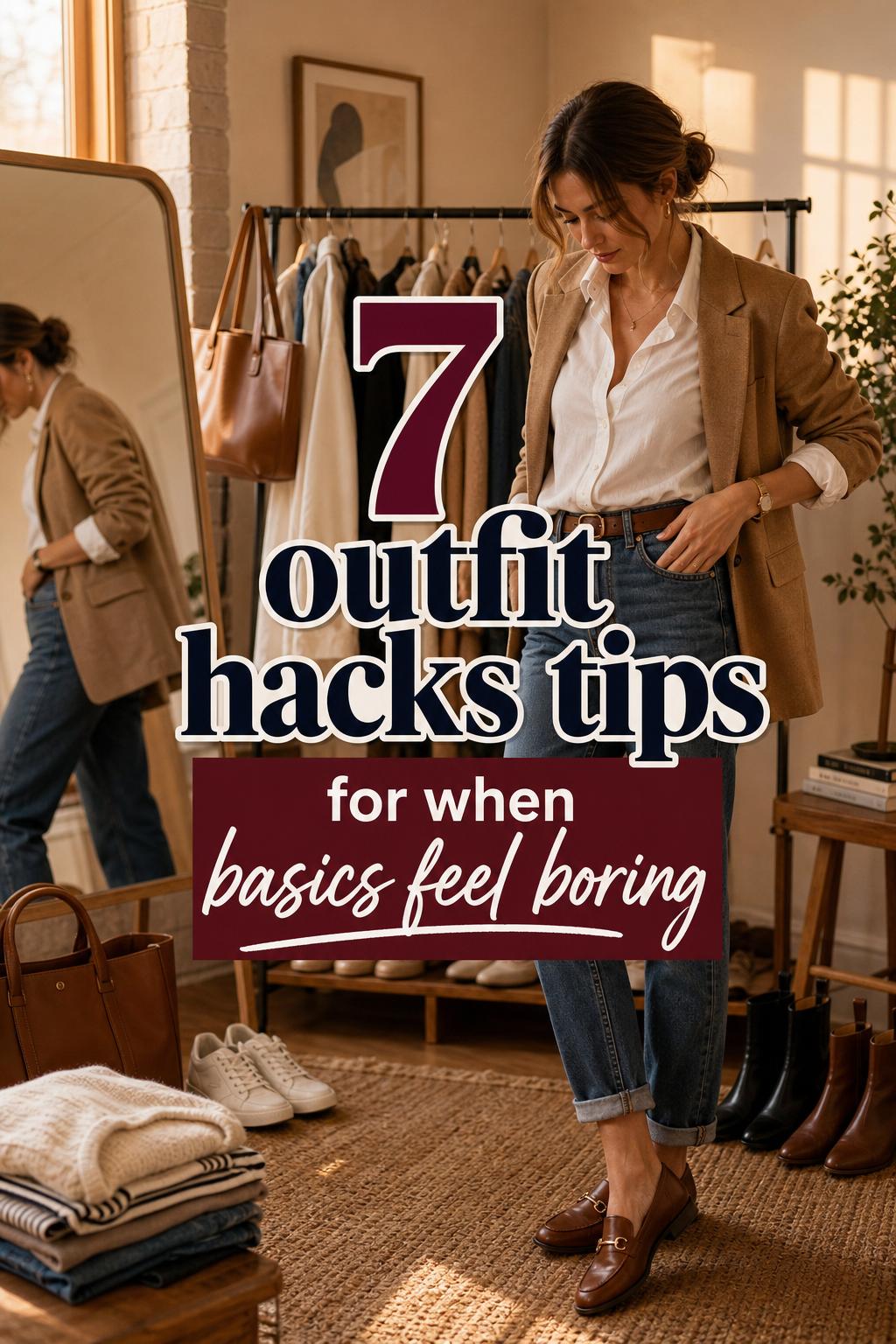
Many outfits fail because of shape, not because of color. Silhouette balance is the first correction point. Before adding jewelry, a bag, or a jacket, assess where volume sits and whether the body line is defined or overwhelmed. If both the top and bottom are oversized, the outfit can lose direction. If both are very fitted, the result can feel visually static. The strongest combinations usually create contrast between relaxed and structured elements.
The tuck as a proportion tool
Tucking is one of the simplest ways to reshape an outfit. A full tuck creates polish and clear waist definition. A front tuck keeps things relaxed while still giving the eye a focal point. A half-tuck can soften a rigid look and work well with denim, tailored trousers, or midi skirts. The reason it works is visual: it interrupts a long, shapeless top line and restores proportion between torso and legs.
This is especially useful with knitwear, button-down shirts, and lightweight tees. If the fabric is thick, a full tuck may bunch. In that case, a partial tuck preserves ease without adding unnecessary bulk.
Waist emphasis without looking overstyled
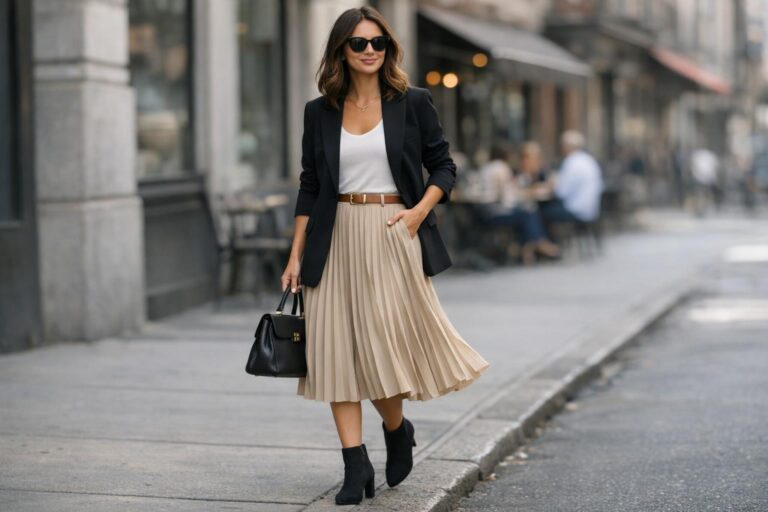
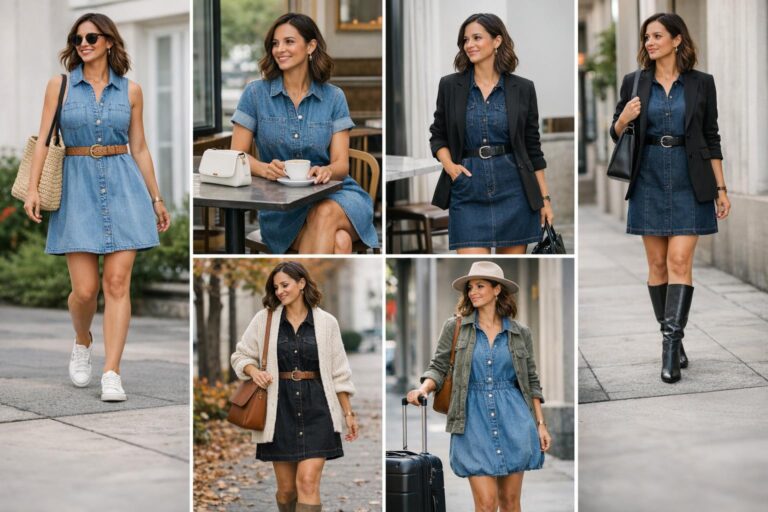
Belting is often treated as an afterthought, but it functions as a structural device. It can transform a loose blazer, define a shirt dress, or sharpen an oversized cardigan. The key is restraint. A belt should support the silhouette, not dominate it. When the outfit already includes strong hardware, statement shoes, or a bold print, a slim belt keeps the look coherent. If the outfit is tonal and minimal, a slightly wider belt can become the visual anchor.
Waist emphasis is not mandatory for every outfit. Straight silhouettes can look elegant and modern when the lengths are clean and the fabric drape is intentional. The point is to decide deliberately whether shape should be defined or left fluid.
The small adjustments that make clothes look tailored
Tailoring is not always about alterations. Often, it is about controlled styling. Shortening a sleeve visually, exposing the ankle, or adjusting the break of a pant changes how refined an outfit appears. These details matter because they reveal the body’s narrower points, reducing visual heaviness and creating movement.
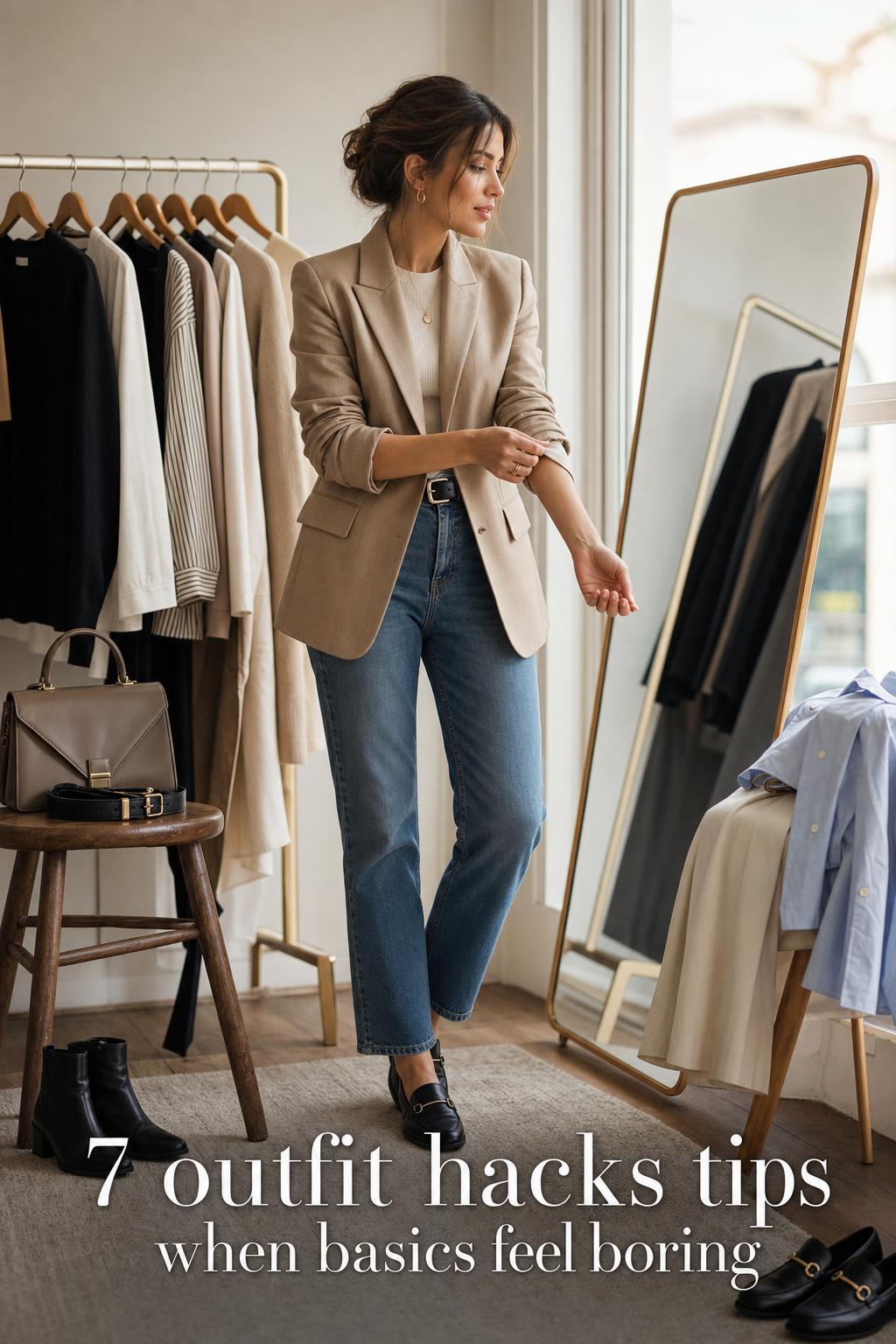
- Roll sleeves to the forearm to break up bulk and add shape to jackets, shirts, and knits.
- Cuff jeans to control length and create cleaner interaction with sneakers, loafers, or ankle boots.
- Push blazer sleeves slightly upward for a more relaxed but intentional finish.
- Choose visible sock or no-show styling based on whether you want the shoe to stand out or blend in.
These adjustments work best when they are consistent with the overall mood of the outfit. A sharply tailored trouser with an imprecise cuff can look unfinished. A casual denim look benefits from a slightly undone roll. The distinction is subtle but important.
Hem awareness changes everything
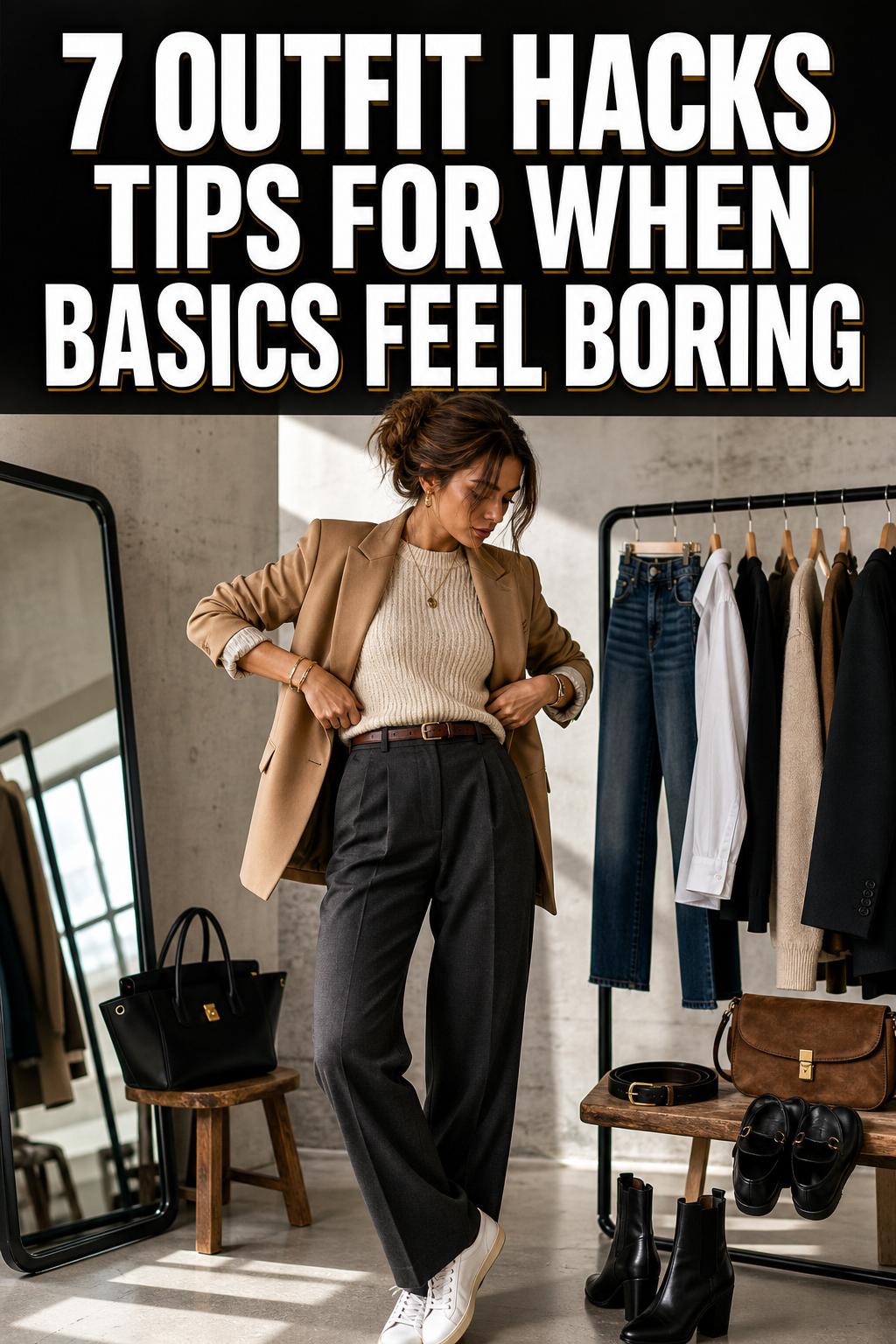
The relationship between hemline and shoe is one of the most overlooked style decisions. Cropped trousers highlight footwear and can make the outfit feel lighter. Full-length trousers create drama and polish but need enough structure to avoid dragging visually. Midi skirts and dresses are especially sensitive to shoe choice; a sleek boot or minimal heel usually extends the line better than a clunky shape unless contrast is the point of the look.
When an outfit feels slightly off, the issue is often not the garment itself but where it ends. Hem control is one of the most practical outfit hacks because it changes proportion without requiring a new purchase.
Layering without adding bulk
Layering is where many outfits become either sophisticated or heavy. The difference comes down to fabric weight, collar management, and line clarity. Good layering uses pieces with enough distinction that each one contributes to the outfit instead of competing with the others.
A thin knit under a blazer works because the base layer stays close to the body while the outer layer adds structure. A crisp shirt under a sweater introduces contrast through collar and cuff detail. A long coat over straight-leg trousers elongates the frame when the underlying layers remain clean and not overly voluminous.
Texture contrast is the shortcut to depth
An outfit in neutral colors can still look visually rich if the textures vary. Denim against fine knitwear, leather against cotton, or wool against satin creates dimension without relying on bold color. This matters most in monochrome or tonal dressing, where texture carries the outfit’s interest.
Texture contrast also helps practical styling. In colder weather, multiple soft layers can collapse into one visual block. Introducing a structured outerwear piece or a smooth boot sharpens the composition and prevents the outfit from feeling too dense.
- Keep the innermost layer lightweight so it sits smoothly under sweaters or jackets.
- Let only one element dominate, such as an oversized coat or a chunky knit, not both.
- Repeat a color at least once to make layered pieces feel connected.
- Use collars, cuffs, or hems intentionally rather than letting them bunch randomly.
Color harmony is often simpler than it looks
Readers often overcomplicate color and underuse neutrals. In practice, many strong outfits are built on a restrained palette with one point of variation. Black, white, navy, beige, gray, and denim already offer enough room for contrast through lightness, depth, and texture. Adding one accent color or one metallic element can complete the look without making it feel busy.
Tonal layering is especially effective because it creates cohesion. Different shades within the same family give the outfit subtle dimension and look polished with minimal effort. Cream with camel, charcoal with black, or pale blue with mid-wash denim all work because the transitions are gradual rather than abrupt.
Use one visual anchor
Every outfit benefits from a focal point. That might be a sharply cut blazer, a pair of boots, a bag, or a strong necklace. Without that anchor, basics can feel scattered. With too many anchors, the outfit becomes noisy. The most reliable formula is to keep most elements quiet and let one piece do the visual heavy lifting.
This is particularly helpful when wearing prints or brighter shades. If the skirt is patterned, keep the top line simple. If the shoe is bold, let the rest of the palette settle around it. Controlled emphasis always looks more modern than trying to make every item stand out.
How to make basics look intentional
Basics are only boring when they are left unresolved. A white tee, jeans, and sneakers can look sharp if the fit is right and the finishing choices are considered. Slightly structured shoulders, a clean neckline, a defined waist, and a trouser length that interacts well with the shoe all make basics feel styled instead of default.
The power of basics lies in clarity. They allow the silhouette to lead. That means details become more visible: whether the denim is too long, whether the knit collapses at the hem, whether the bag scale suits the outfit, and whether the shoe aligns with the mood. Minimal outfits demand more precision, not less.
The jeans equation
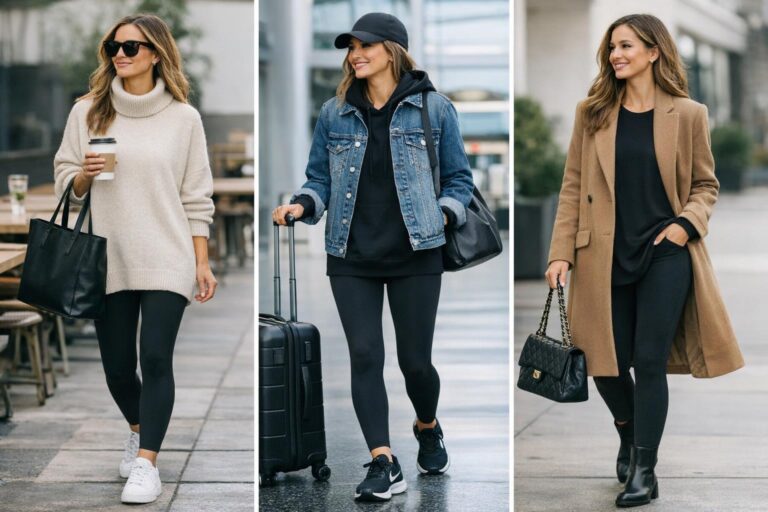
Jeans anchor a large percentage of everyday dressing, so small changes here create outsized impact. Straight-leg denim usually offers the most flexibility because it balances both fitted and relaxed tops. Wide-leg denim needs a clearer top shape, whether through a tuck, cropped knit, or shorter jacket. Skinny cuts often pair best with volume above, such as oversized shirting or longer outerwear, to avoid an overly compressed silhouette.
Shoe choice changes the mood immediately. Sneakers keep it clean and urban. Loafers add polish. Boots add structure and seasonal depth. The key is consistency. When the denim is casual and slouchy, a highly formal shoe can feel disconnected unless the contrast is intentional and repeated elsewhere in the outfit.
Tips for elevating a basic outfit fast
- Add one structured layer, such as a blazer, trench, or crisp shirt.
- Choose a bag with shape rather than a soft, collapsing form.
- Repeat one finish, such as silver hardware or leather texture, across two elements.
- Check proportions in motion, not just in the mirror while standing still.
The accessory hacks that do the most work
Accessories are often discussed as decoration, but their real styling value is compositional. They distribute visual weight, guide the eye, and clarify the outfit’s intention. A belt creates a center. Earrings or sunglasses pull attention upward. A defined handbag introduces structure. Shoes can either ground the outfit or make it feel lighter and more directional.
The mistake is adding accessories without purpose. If an outfit already contains strong texture, visible seams, layered pieces, and a patterned element, more accessories may not improve it. In a cleaner outfit, however, accessories often provide the necessary punctuation.
Bag scale and outfit balance
A large tote with a delicate evening outfit can overwhelm the silhouette. A tiny bag with oversized tailoring can look visually lost. Scale matters. Structured medium-size bags generally offer the widest flexibility because they work with denim, tailoring, knitwear, and dresses without disrupting the outfit line. Oversized bags feel intentional when the clothing also has volume or when practicality is part of the look, such as a travel day or long city schedule.
Shoes as mood-setters
Shoes determine how an outfit reads almost instantly. The same slip dress changes character with a sneaker, a minimal sandal, or a boot. Tailored trousers with sleek flats feel modern and efficient. The same trousers with heavy soles become more directional and grounded. A useful styling shortcut is to decide the mood first—polished, relaxed, sharp, or casual—then choose the shoe that reinforces it.
Context matters: the same outfit hack will not work everywhere
One of the biggest styling mistakes is applying a single trick universally. An office outfit, a weekend coffee run, a humid summer day, and a long travel itinerary all ask for different solutions. Styling logic should respond to movement, temperature, and the amount of structure an occasion requires.
For office dressing
Clean lines matter most. Use tucks, sleeve adjustments, and restrained accessories to sharpen basics. Structured trousers, button-down shirts, knit tops, and blazers benefit from clear waist definition or intentional straight lines. The goal is polish without visual clutter.
For weekends and casual wear
Relaxed outfits need one point of control so they do not slip into looking unconsidered. That might be a cuffed jean, a neat sneaker, a cropped jacket, or a crossbody bag with shape. Casual does not mean careless. It means the outfit is easier in attitude while still balanced in form.
For warm weather
Lightweight fabrics and fewer layers make proportion even more important. In summer, accessories often replace outerwear as the tools that finish a look. Sandals, sunglasses, belts, and bags carry more visual responsibility. Since heavy layering is unavailable, focus on line, hem length, and fabric behavior.
For colder months
Cold-weather dressing benefits from clear hierarchy. If the coat is oversized, keep the underlayers more fitted or at least less bulky. Use boots to ground longer hems. Let texture contrast do more work, since much of the outfit may be covered. Wool, leather, denim, and knitwear create depth that keeps darker seasonal palettes from feeling flat.
Common outfit mistakes these hacks quietly solve
Good styling advice is often invisible because it removes friction rather than adding spectacle. Many wardrobe problems can be traced to a few repeated issues.
- Too much volume from shoulder to hem, which erases shape.
- No focal point, leaving the outfit visually scattered.
- Competing statement pieces that cancel each other out.
- Pant lengths that fight with the shoe rather than complement it.
- Accessories that are either too small to register or too heavy for the look.
- Layering that creates bunching at the waist, arm, or neckline.
What makes these problems frustrating is that they are not solved by shopping more. They are solved by editing. Remove one item, redefine one line, or switch the shoe, and the outfit often resolves immediately.
An editorial rule worth keeping
If something feels off, do not add first. Adjust first. Try changing the tuck, rolling the sleeve, switching the shoe height, or replacing one accessory with a cleaner option. Editing usually creates a better result than piling on more elements.
Building a repeatable styling formula for everyday wear
The most effective outfit hacks become part of a personal formula. This is not about dressing identically every day. It is about understanding what consistently works for your wardrobe pieces, schedule, and comfort needs. A useful formula saves time while still allowing variation in color, fabric, and seasonal palette.
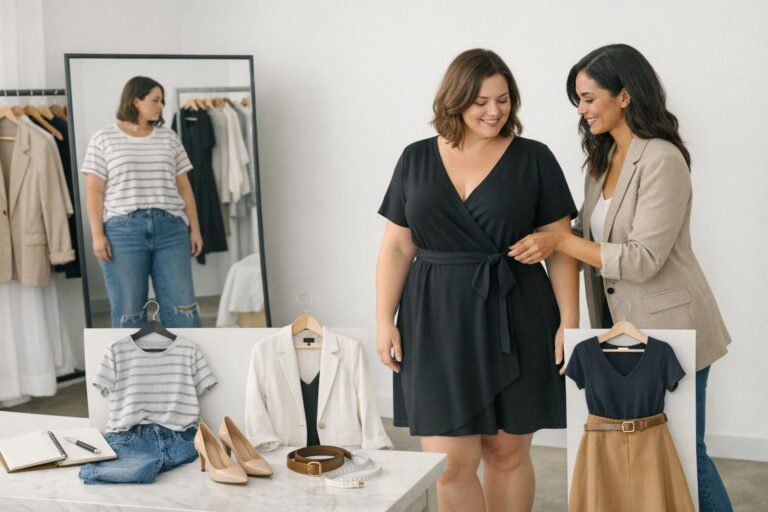
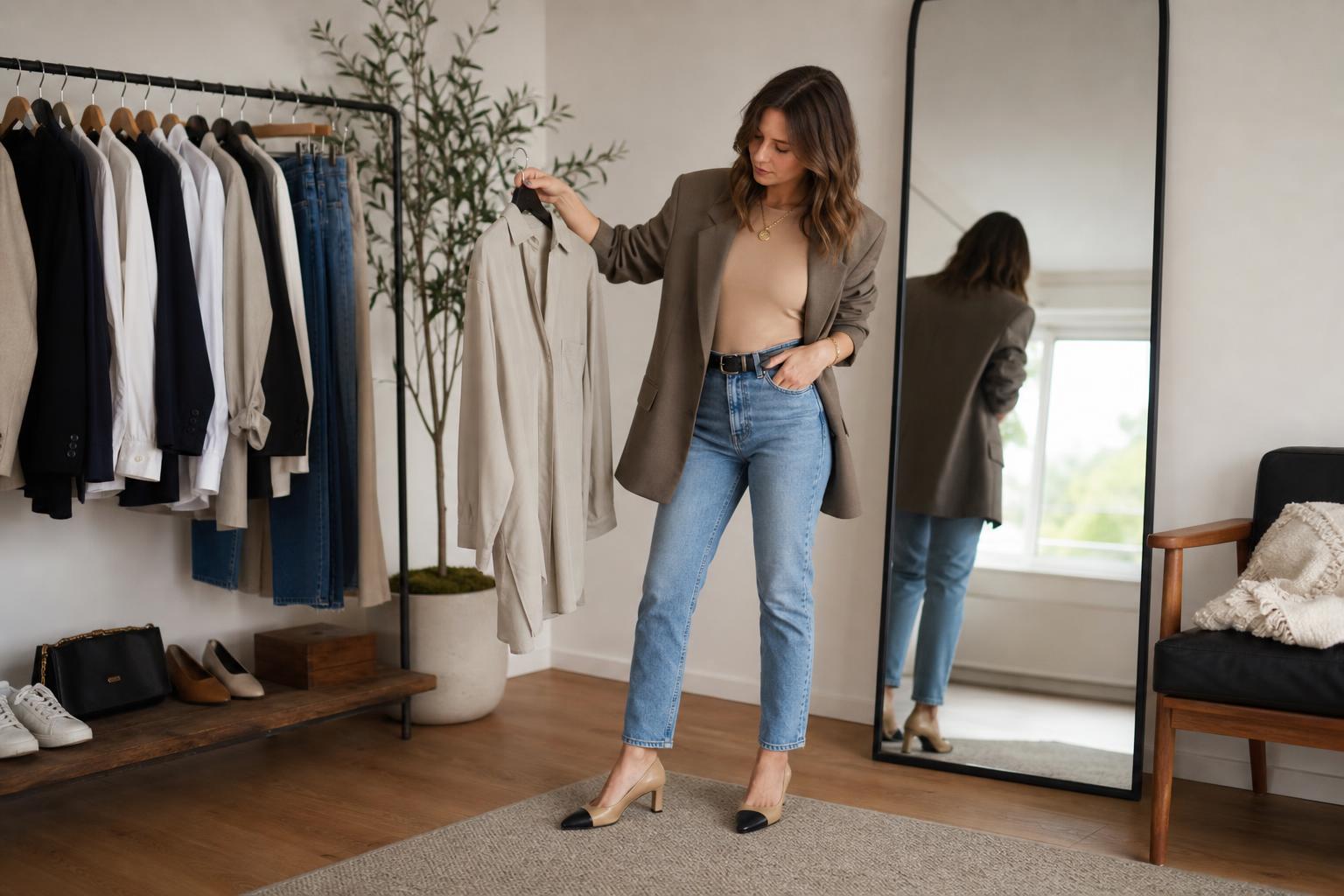
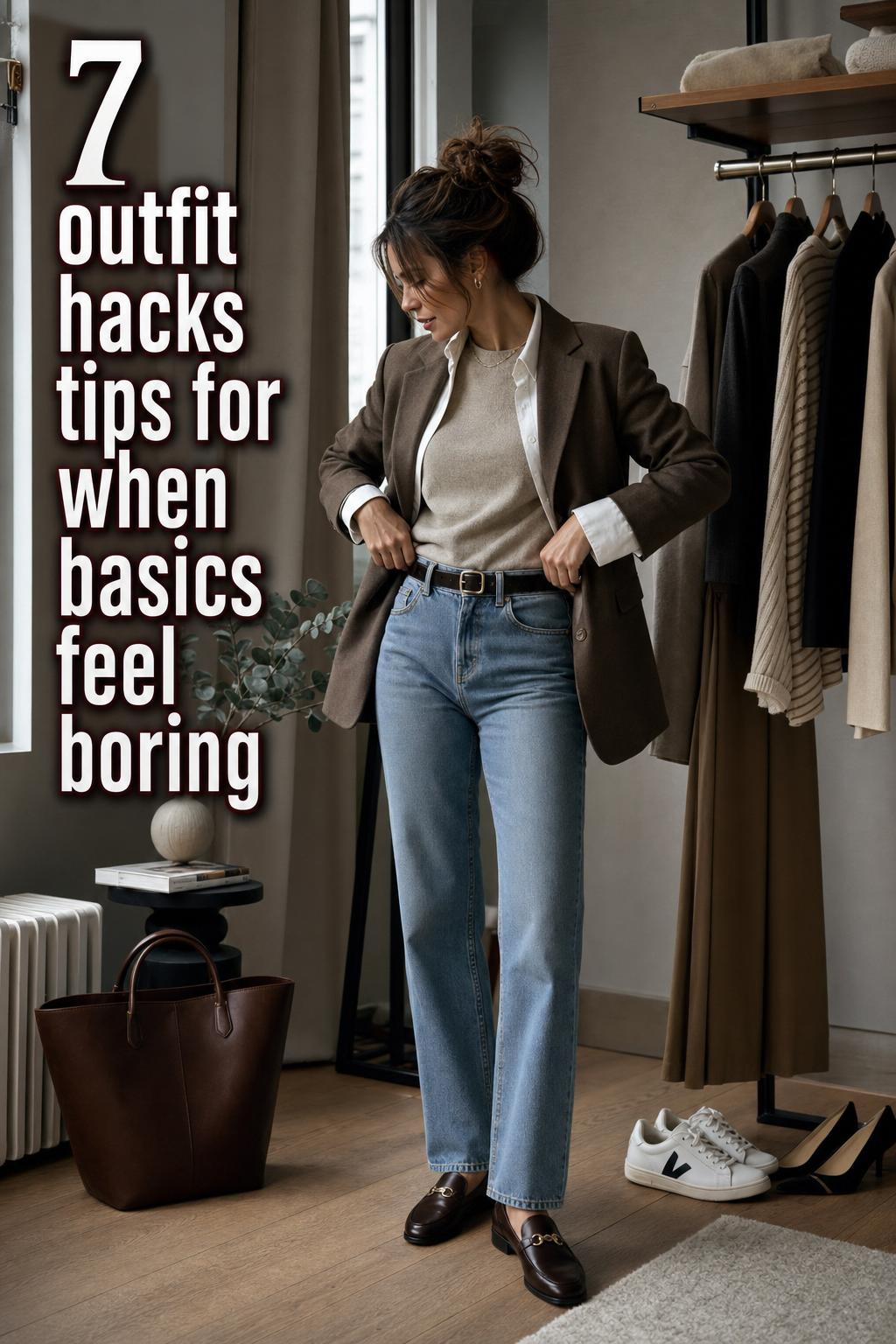
A common successful formula looks like this: one base piece, one balancing piece, one structure element, and one visual anchor. For example, straight-leg denim as the base, a fitted knit as the balancing piece, a blazer as the structure element, and a loafer or bag as the anchor. The categories can change, but the logic remains stable.
How to test your own formula
- Identify three outfits you wear often and note what they share.
- Look at where shape is created: waist, shoulder, ankle, or hemline.
- Notice whether your strongest outfits rely more on color contrast or texture contrast.
- Track which shoes consistently improve your posture and outfit line.
- Keep one backup styling move for rushed mornings, such as a blazer, belt, or tuck.
This kind of pattern recognition is more valuable than chasing isolated tricks. It turns hacks into reliable wardrobe strategy.
Outfit hacks for dresses, skirts, and one-piece dressing
One-piece outfits look easy, but they still need structure. Dresses and jumpsuits can flatten visually if the line is too uninterrupted, especially in soft fabrics. The solution is not always a dramatic accessory. Sometimes it is simply changing where the eye lands.
Give fluid shapes a point of control
A belt, cropped jacket, or even a deliberate shoe choice can add definition to an otherwise loose dress. Midi lengths often benefit from this most. Because the hem sits in a visually active area of the leg, the wrong shoe can shorten the line while the right one can streamline it.
Skirts follow similar logic. Voluminous skirts usually need a cleaner top line. Slim skirts can carry more volume above. Tucking or knotting the top can prevent excess fabric from blurring the waist and making the proportions feel unresolved.
When softness needs contrast
If the fabric is draped, light, or romantic, introducing one structured element can keep the outfit from feeling overly delicate. That contrast may come from a leather belt, a sharper bag shape, or a more defined jacket. The result is balance rather than overcorrection.
Real-life styling scenarios where these tips earn their value
Wardrobe advice becomes more useful when it accounts for the realities of the day. An outfit that photographs well but shifts, wrinkles, pinches, or collapses after an hour is not well styled. Practical styling always includes wearability.
Consider a long workday that moves from desk to dinner. A tucked knit with trousers and loafers may work in the morning, but swapping to a heeled boot or adding a belt and earrings can sharpen it for evening without a full outfit change. On a travel day, a structured coat over soft separates keeps comfort intact while preserving shape. For a warm weekend, a simple dress gains enough polish through a bag with structure and sandals that complement the hemline rather than fighting it.
These scenarios underline the core principle behind the best outfit hacks tips: every adjustment should improve both appearance and function. If a trick looks good but makes movement difficult or constant fixing necessary, it is not an efficient styling solution.
Smart finishing checks before you leave the house
Even a well-planned outfit can miss the mark if the final edit is skipped. A quick visual check prevents common issues that undermine otherwise strong styling choices.
- Check the outfit seated as well as standing, especially with trousers, skirts, and blazers.
- Confirm that layers lie flat at the waist and neckline.
- Look at the hem and shoe relationship from the side, not only the front.
- Remove one accessory if the look feels crowded.
- Make sure the most intentional part of the outfit is still visible under outerwear.
This finishing check is often the difference between a good outfit and a precise one. Styling is not only selection. It is final calibration.
FAQ
What are the most useful outfit hacks for everyday dressing?
The most useful hacks are the ones that improve proportion quickly: tucking a top to define the waist, rolling sleeves to reduce bulk, adjusting pant hems to work better with shoes, and adding one structured piece such as a blazer or belt to anchor the outfit.
How can I make a simple outfit look more stylish?
Focus on fit, silhouette, and one strong finishing element. Basics look more elevated when the proportions are clean, the layers are intentional, and the outfit has a visual anchor such as a sharp shoe, structured bag, or tailored outer layer.
Why does my outfit look off even when the pieces are nice?
The issue is often proportion rather than the individual items. Too much volume, unclear waist definition, the wrong hem length, or accessories that do not match the scale of the outfit can make good pieces feel disconnected when worn together.
How do I layer clothes without looking bulky?
Start with thinner base layers, then add only one heavier or oversized item. Keep the neckline, cuffs, and waist controlled so the layers stay visible but not messy, and use texture contrast to create interest instead of stacking too much fabric.
What is the easiest way to improve outfit proportions?
A tuck is usually the fastest fix. It changes the body line immediately, helps the legs look longer, and gives loose or basic pieces more structure without making the outfit feel overdone.
Do accessories really change an outfit that much?
Yes, because accessories affect balance and focal points. Shoes set the mood, bags add structure, and belts define the center of the look. The key is using them with purpose rather than adding several at once without a clear role.
How do I style oversized pieces without losing shape?
Pair oversized garments with at least one more controlled element, such as a fitted top, visible waistline, cropped jacket, or cleaner shoe. The goal is contrast so the outfit looks intentional rather than uniformly loose.
What outfit hack works best when I am in a rush?
Add one structured layer and make one proportion adjustment. A blazer over a basic outfit, a quick front tuck, or a shoe switch from overly casual to more refined can pull a rushed look together in minutes.