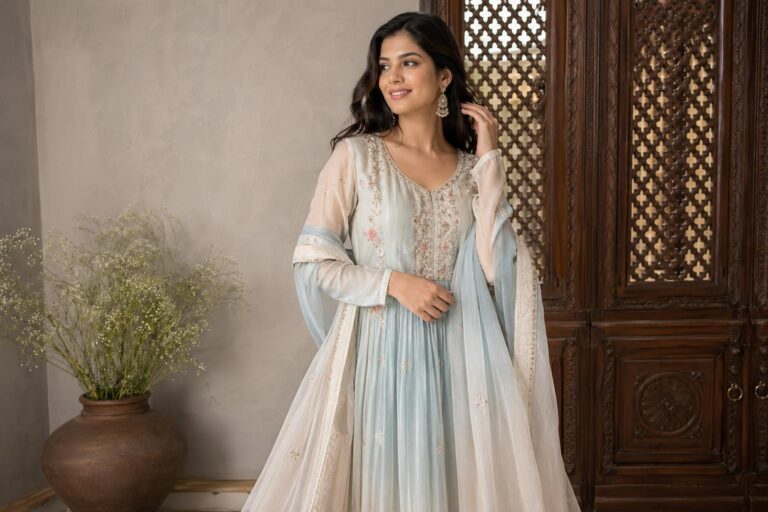
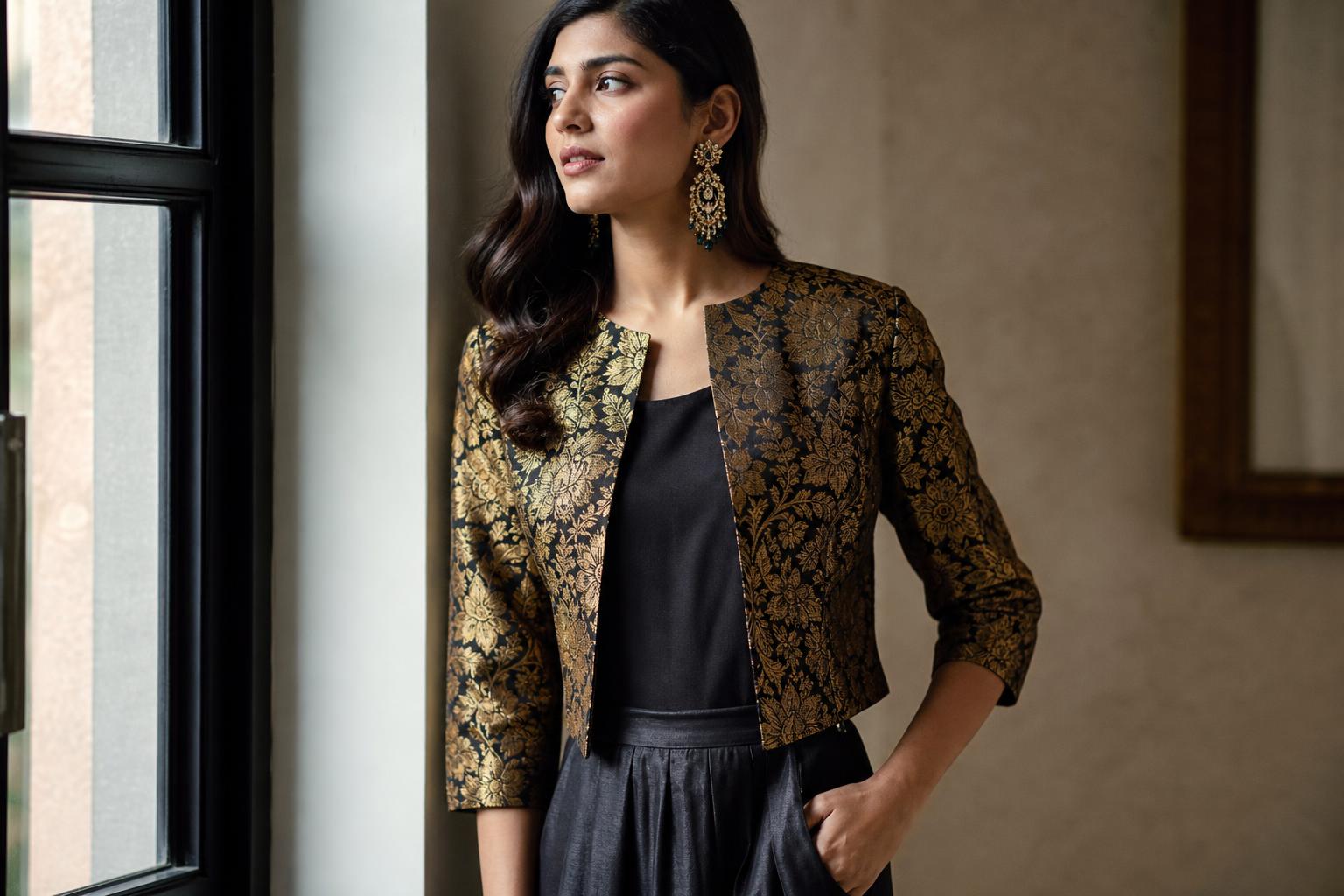
Modern Brocade Styles for Weddings, Evenings, and More
Brocade styles attract attention for all the right reasons, but they also create a real wardrobe problem: the fabric is visually rich, often structured, and easy to over-style. A brocade jacket can feel too formal for daytime, a brocade dress can look costume-like if the proportions are wrong, and pieces with zari or metallic threads can raise practical questions about comfort, care, and where they actually fit into a modern U.S. wardrobe.
The challenge becomes sharper around events. Weddings, nights out, bridal occasions, festive dinners, and gallery-style evening settings all invite statement dressing, yet most people still want clothes that feel balanced, wearable, and intelligent rather than heavy-handed. The strongest brocade outfits solve that tension by treating the fabric as a visual anchor and building the rest of the look around silhouette control, texture contrast, and occasion logic.
This guide breaks down how to wear brocade styles with clarity. It covers what brocade is, the major brocade traditions that shape modern fashion, how to choose between silk, cotton, and synthetic bases, and how to build practical outfits for daytime, evening, bridal, and special-event dressing without losing comfort or proportion.
Why brocade feels difficult to style in real life
Brocade is not a quiet fabric. It is defined by decorative woven patterning, often created through jacquard weaving and sometimes enhanced with zari or other metallic threads. That built-in surface detail means the fabric already carries visual weight before color, cut, or accessories enter the equation. In practical terms, brocade asks more from the wearer than plain silk, cotton, or synthetics because every styling choice around it becomes more visible.
Found the dress? Keep the rest in one place.
Zarellea brings guest details, vendors, timelines, and every next step together — so your wedding plan feels as good as your look.
Weather and comfort also matter. A structured brocade coat, gown, or jacket can feel ideal for cooler evenings or event spaces with formal dress expectations, but less useful in heat or long daytime settings. Pieces with metallic thread can feel stiffer than softer woven fabrics, and heavily patterned garments can reduce outfit flexibility if the supporting pieces compete rather than stabilize. This is why so many brocade looks work beautifully in editorials yet feel harder to translate into everyday or occasion wear.
The solution is not to avoid the fabric. The solution is to understand how brocade behaves. Once you read it as a statement textile rather than just another dress material, styling decisions become easier: simplify the palette, control volume, use clean supporting pieces, and match the richness of the fabric to the social setting.
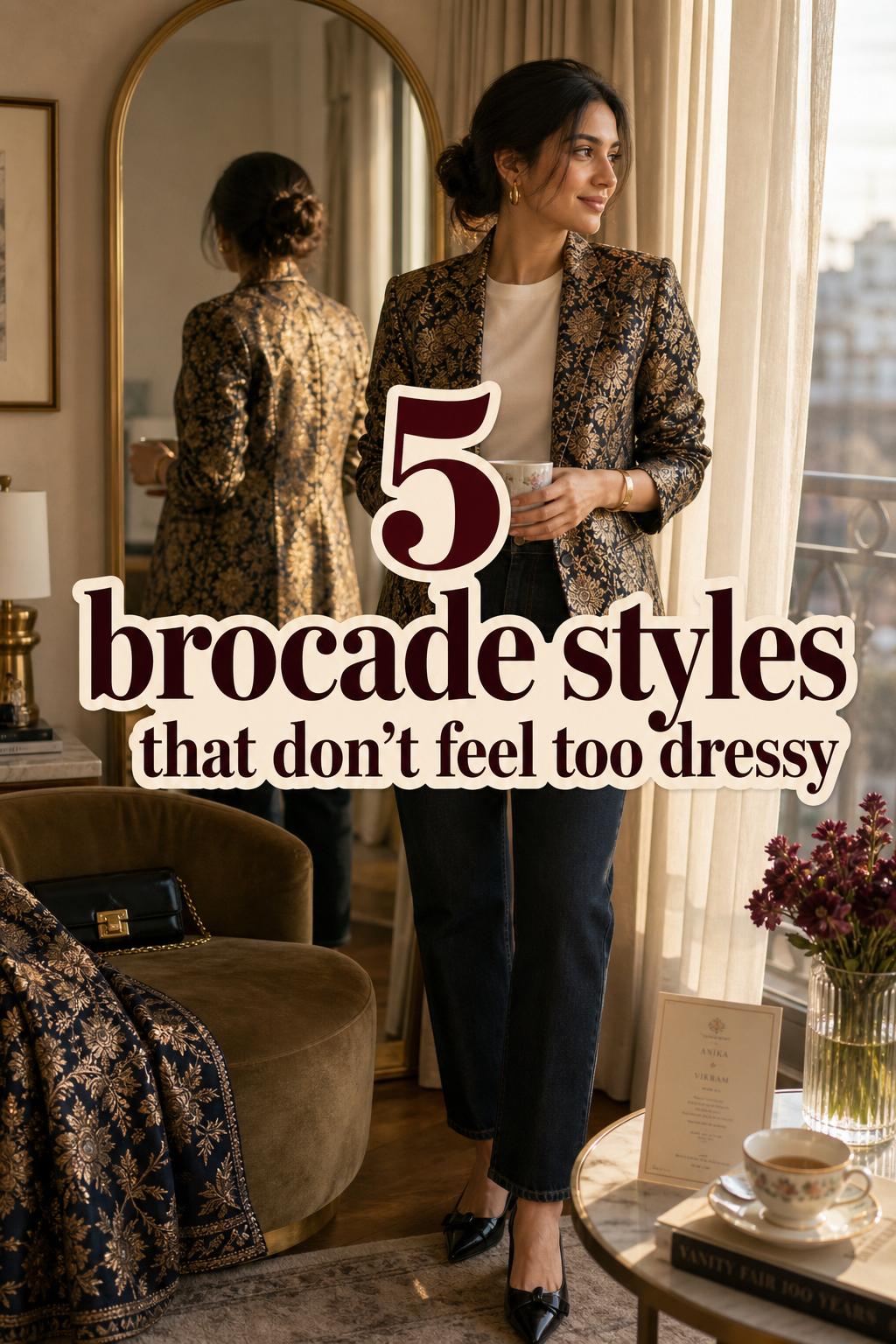
What is brocade, and why does that matter for styling?
Brocade is a luxury woven fabric recognized for raised or richly decorative patterns that appear integral to the cloth rather than printed on top of it. Across fashion and textile guides, brocade is consistently linked to jacquard weaving, extra weft techniques, and in many cases the use of zari or metallic yarns. It is often associated with silk, though brocade can also be made on cotton or synthetic bases.
That technical background matters because it explains the look and the drape. Brocade usually has more body than a plain weave, more surface presence than minimal tailoring fabric, and more ceremonial association than standard daywear cloth. This gives it two major strengths in outfit composition: it creates immediate structure, and it adds texture contrast without requiring many extra elements.
Brocade vs. damask in outfit planning
A useful distinction is that brocade is typically read as more raised, ornate, and statement-making, while damask-like surfaces tend to appear flatter and more tonal. If your goal is a stronger fashion moment for weddings, evening wear, or a standout jacket, brocade usually delivers that effect more clearly. If your goal is subtle pattern with less visual density, a damask-like option may feel easier. For readers specifically searching brocade styles, this difference helps explain why brocade needs more editing around color, accessories, and proportion.
The brocade traditions that shape modern style choices
Many modern brocade fashion references are rooted in regional textile traditions. Understanding them is useful not only for cultural context, but also for style interpretation. Different traditions influence pattern scale, sheen, color direction, and the social meaning attached to the garment.
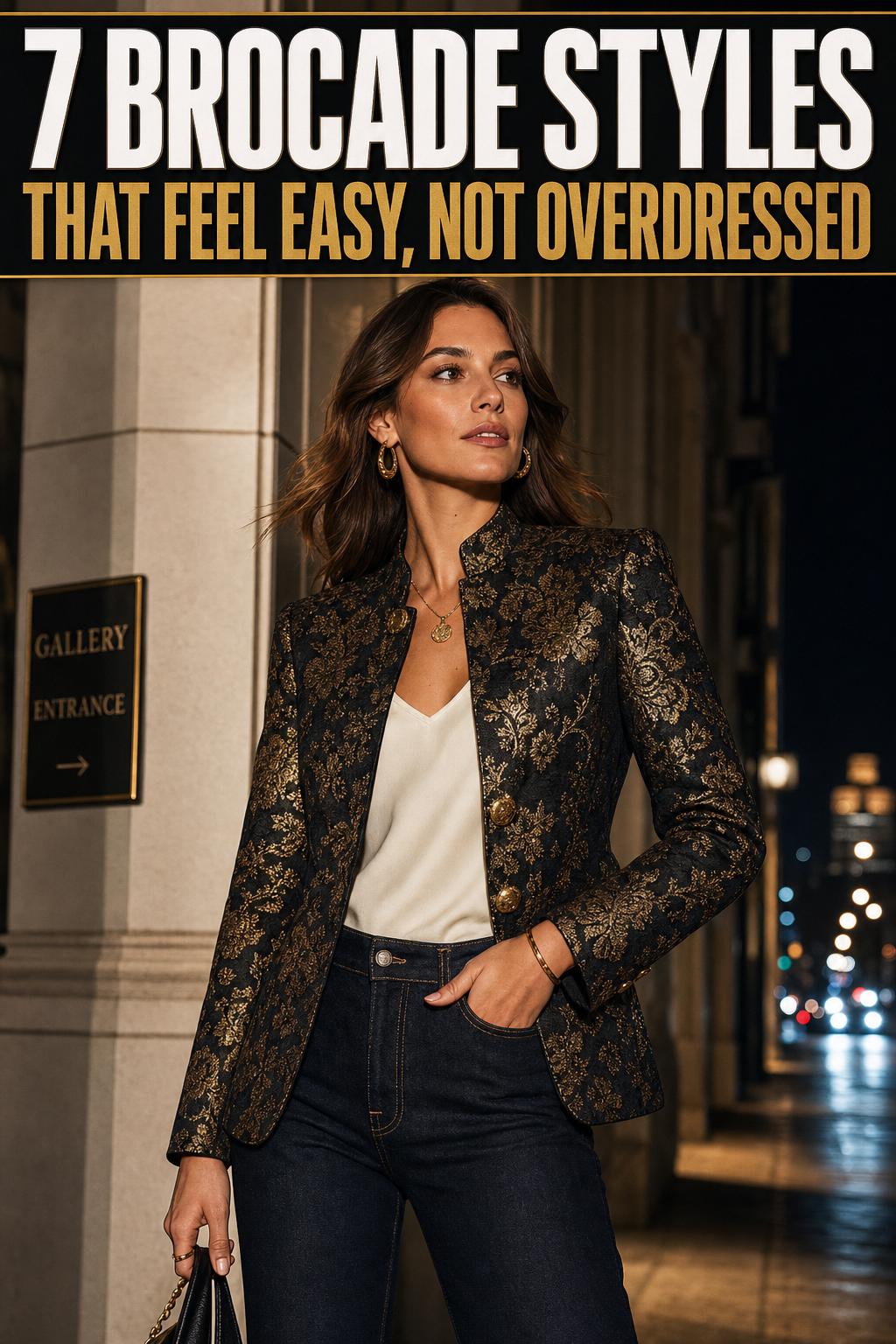
Banarasi brocade and the formalwear instinct
Banarasi brocade, connected to Banaras or Varanasi, is one of the most recognizable references in fashion discussions around brocade. It is often tied to saree contexts, wedding dressing, and zari-rich surfaces. In styling terms, Banarasi-inspired brocade tends to support occasionwear naturally because the fabric already suggests ceremony, polish, and ornament. That is why a Banarasi-influenced jacket, blouse, or gown panel works best when the rest of the look is controlled rather than equally elaborate.
Song brocade, Yunjin, and Shu brocade as visual heritage references
Chinese brocade traditions such as Song brocade, Yunjin, and Shu brocade appear repeatedly in broad educational coverage of brocade. Locations such as Nanjing, Suzhou, and Sichuan help anchor these traditions historically. For modern dressing, these references reinforce the idea that brocade is not simply a trend fabric; it belongs to long textile histories where craftsmanship, weave complexity, and decorative symbolism matter. That heritage explains why brocade often feels elevated even when cut into a contemporary silhouette.
Surat and temple brocade in regional style language
Surat brocade and temple brocade appear in style-oriented discussions that connect fabric to regional identity and ceremonial dressing. These references are especially useful when you are trying to understand why certain brocade pieces feel more festive, more traditional, or more suitable for bridal and family events. The practical takeaway is simple: not all brocade styles communicate the same mood. Some lean heritage-rich and formal; others adapt more easily into jackets, structured separates, or contemporary eveningwear.
The key dressing principles that make brocade wearable
The most successful brocade outfits rely on restraint, not excess. Because the fabric already contributes pattern, shine, and structure, the smartest supporting choices are usually clean and deliberate. This is where fashion logic matters more than trend imitation.
- Use brocade as the statement piece, not one element in an all-over ornate composition.
- Anchor the look with neutrals when the brocade pattern is busy or metallic.
- Balance volume carefully: a structured brocade jacket often works best with leaner trousers or a clean skirt.
- Let texture do the work. Brocade already creates contrast against denim, matte tailoring, plain silk, or simple cotton.
- Match fabric richness to event level. Weddings and evening occasions can support more shine; daytime dressing benefits from simpler cuts and reduced accessories.
- Consider comfort and movement. Stiffer brocade silhouettes look polished, but they should still allow sitting, walking, and long-event wear.
These principles solve the central problem of brocade styling: how to make a visually powerful fabric look modern instead of overloaded. The answer is almost always proportion play and tonal discipline. A rich textile looks more expensive and more current when the surrounding outfit gives it space.
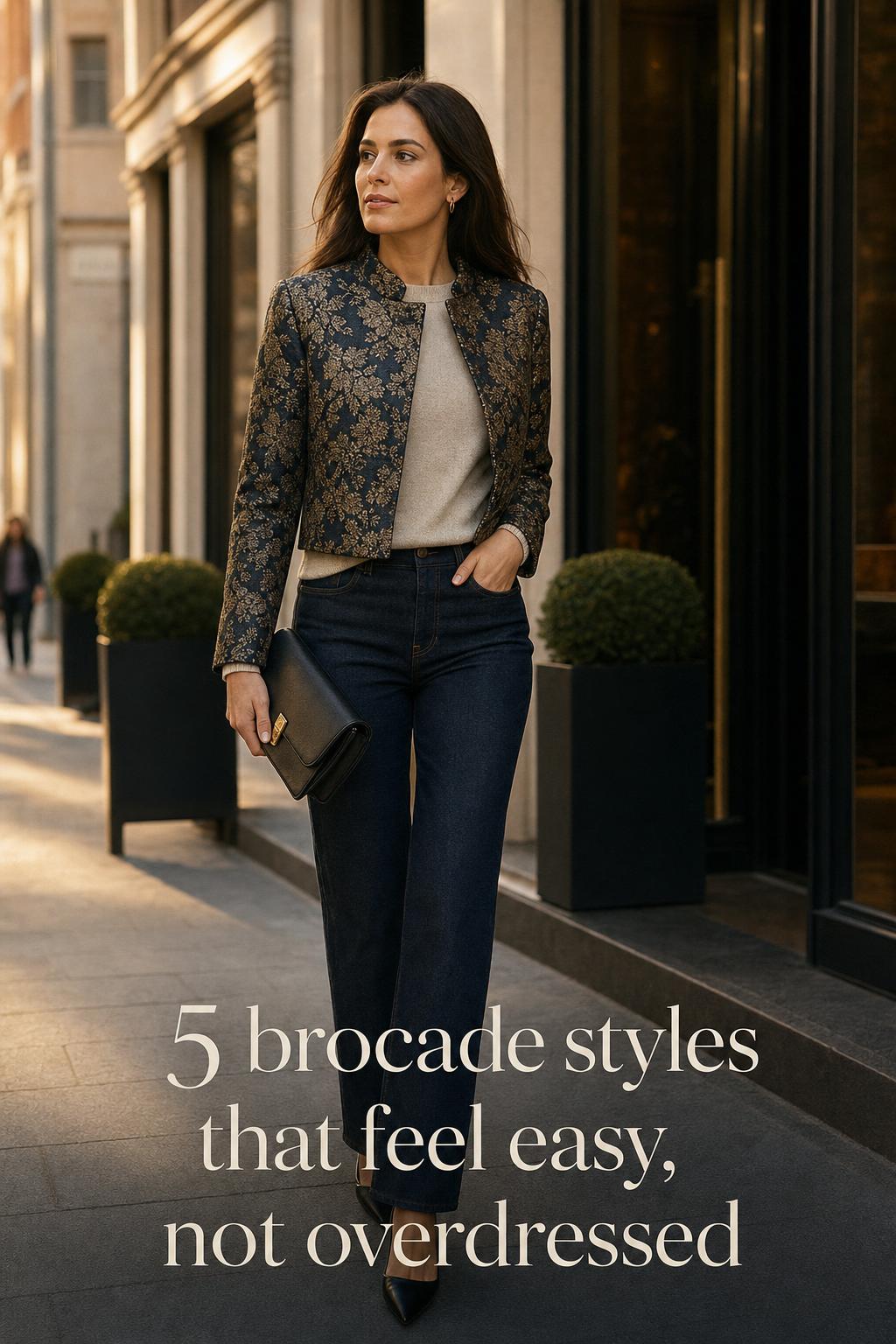
Choosing the right brocade base before you build the outfit
Before selecting silhouettes, it helps to evaluate the fabric base. Across consumer and educational guides, brocade is commonly linked to silk, cotton, and synthetic blends. The base affects comfort, sheen, care, and where the garment belongs in your wardrobe.
Silk brocade for elevated structure
Silk brocade usually reads as the most luxurious option. It suits evening wear, bridal settings, formal jackets, and occasion dresses because the surface depth and drape communicate refinement immediately. The trade-off is that silk-based brocade may feel less casual and may require more careful care planning, especially if zari or metallic thread is involved.
Cotton-based brocade for easier daytime styling
Cotton-based brocade can make the fabric feel less intimidating. It still carries pattern and structure, but often feels more approachable for separates, tops, lighter jackets, or dress styles intended for daytime events. For readers trying to wear brocade beyond weddings and night events, this type of construction can create a more versatile entry point.
Synthetic blends for accessibility and practical wear
Synthetic-based brocade expands availability and often supports a wider range of price points. It can be useful for trend-led pieces and occasion dressing where appearance matters more than heirloom longevity. The styling principle stays the same, though: if the finish is very shiny, simplify the rest of the outfit so the look feels intentional rather than overly theatrical.
Outfit solution: the brocade jacket with denim and neutrals
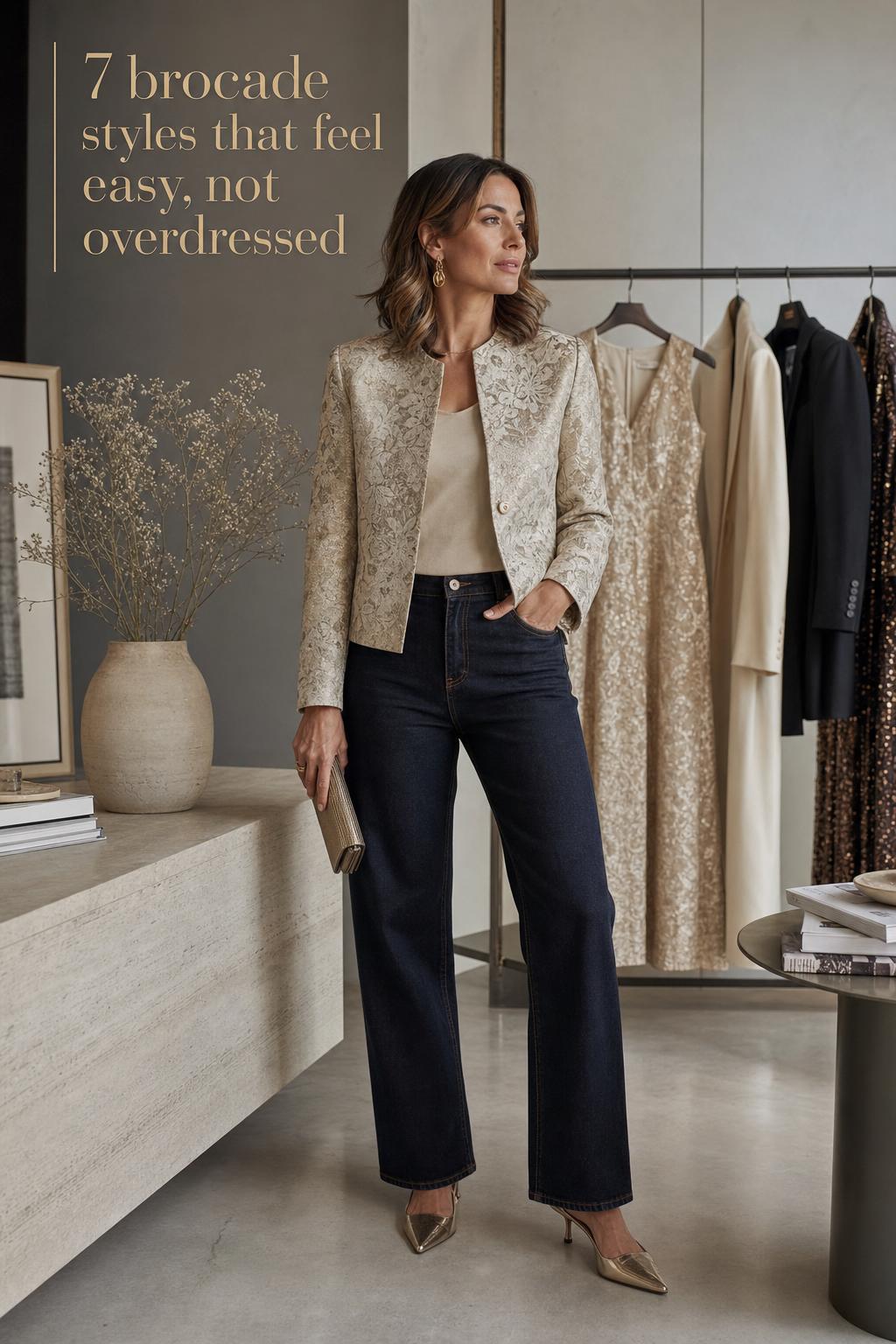
This is one of the most practical ways to wear brocade in the U.S. wardrobe. A brocade jacket over a simple top and denim turns a formal textile into a usable statement layer. The jacket carries the pattern and structure, while the denim reduces ceremony and makes the outfit feel current.
The combination works because of silhouette balance. The jacket provides surface complexity and a tailored visual anchor; the denim contributes familiarity and matte contrast. A clean top underneath prevents interruption, especially if the brocade includes zari or a multicolor motif. This approach is effective for dinners, gallery visits, dressy casual evenings, and occasions where you want visible polish without wearing a full brocade dress.
Style breakdown
- Brocade jacket as the statement piece
- Plain top in a neutral tone
- Denim to soften the formality
- Minimal accessories to keep the fabric in focus
Tip: if the jacket has a strong Banarasi-inspired or metallic pattern, choose darker denim or a cleaner wash. This keeps the outfit composition sharp and avoids competing textures.
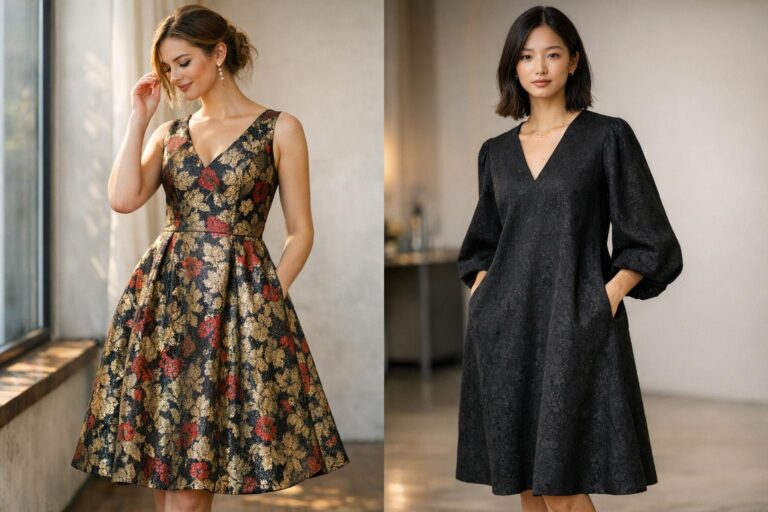
Outfit solution: a controlled evening look with a brocade dress
A brocade dress solves the “what should be the focal point?” question immediately. The mistake people often make is adding equally ornate styling around it. The stronger approach is to let the dress carry the narrative and keep the rest of the look quiet.
This outfit direction works especially well for nights out, formal dinners, wedding-adjacent events, and occasions where luxury fabric is appropriate but head-to-toe embellishment is not required. The structured nature of brocade supports shape on its own, which means you can rely on clean lines rather than extra layering. This is particularly useful if you want a polished silhouette that holds up through a long evening.
Why this outfit works
The visual logic is simple: one strong textile, one clear silhouette, minimal interference. If the brocade includes metallic yarn or zari, the dress already delivers enough shine. If the pattern is tonal, you have more room to introduce a stronger shoe or clutch, but the best result still comes from editing the palette rather than multiplying decorative elements.
Outfit solution: bridal and wedding guest brocade without overstatement
Wedding dressing is where brocade feels most intuitive, especially when readers are drawn to Banarasi, zari-rich, saree-inspired, or gown-based interpretations. But bridal and guest styling have different goals. A bridal look can support more fabric richness and stronger ornament, while a guest look benefits from clearer restraint.
For a wedding guest, a brocade blouse with a simpler skirt, tailored pants, or a controlled gown silhouette often works better than a fully embellished composition. For bridal or heavily ceremonial settings, brocade can take on a larger role through saree-based dressing, structured gowns, or layered separates. The key is to maintain hierarchy. If the fabric is elaborate, the silhouette should stay legible. If the silhouette is dramatic, the color palette should remain disciplined.
Where cultural context improves the styling
Brocade has deep links to regions such as Banaras, Suzhou, Nanjing, and broader traditions associated with India, China, and historic weaving centers including Byzantium. In weddings and ceremonial settings, respecting that context improves the styling outcome. It helps explain why certain motifs, finishes, or cuts read as authentic, formal, or celebratory rather than arbitrary.
Tip: for wedding guest dressing in the U.S., choose one culturally grounded brocade reference and let it lead. A Banarasi-inspired jacket, a brocade gown panel, or a saree-influenced drape can be enough. Mixing too many signals in one outfit weakens the elegance.
Outfit solution: brocade separates for modern event dressing
If a full brocade garment feels too committed, separates are the most versatile option. A brocade top, skirt, or tailored piece can deliver the texture and luxury of the fabric without overwhelming the entire look. This is especially useful for people who attend occasional formal events but still want repeat wear from the item.
Brocade separates work because they create controlled texture contrast. A brocade top against plain trousers, or a brocade skirt against a clean blouse, allows the eye to rest. The fabric remains special, but the outfit has more practical flexibility. This approach is also useful if you are shopping in the U.S. and want a piece that can move between festive events, formal dinners, and select work-adjacent functions where polished statement dressing makes sense.
- Choose one brocade separate with a clean, tailored cut.
- Pair it with plain companion pieces in a stable palette.
- Keep jewelry and additional pattern limited.
- Use the brocade piece as the visual anchor, not one element among many statement items.
Outfit solution: evening outerwear in brocade
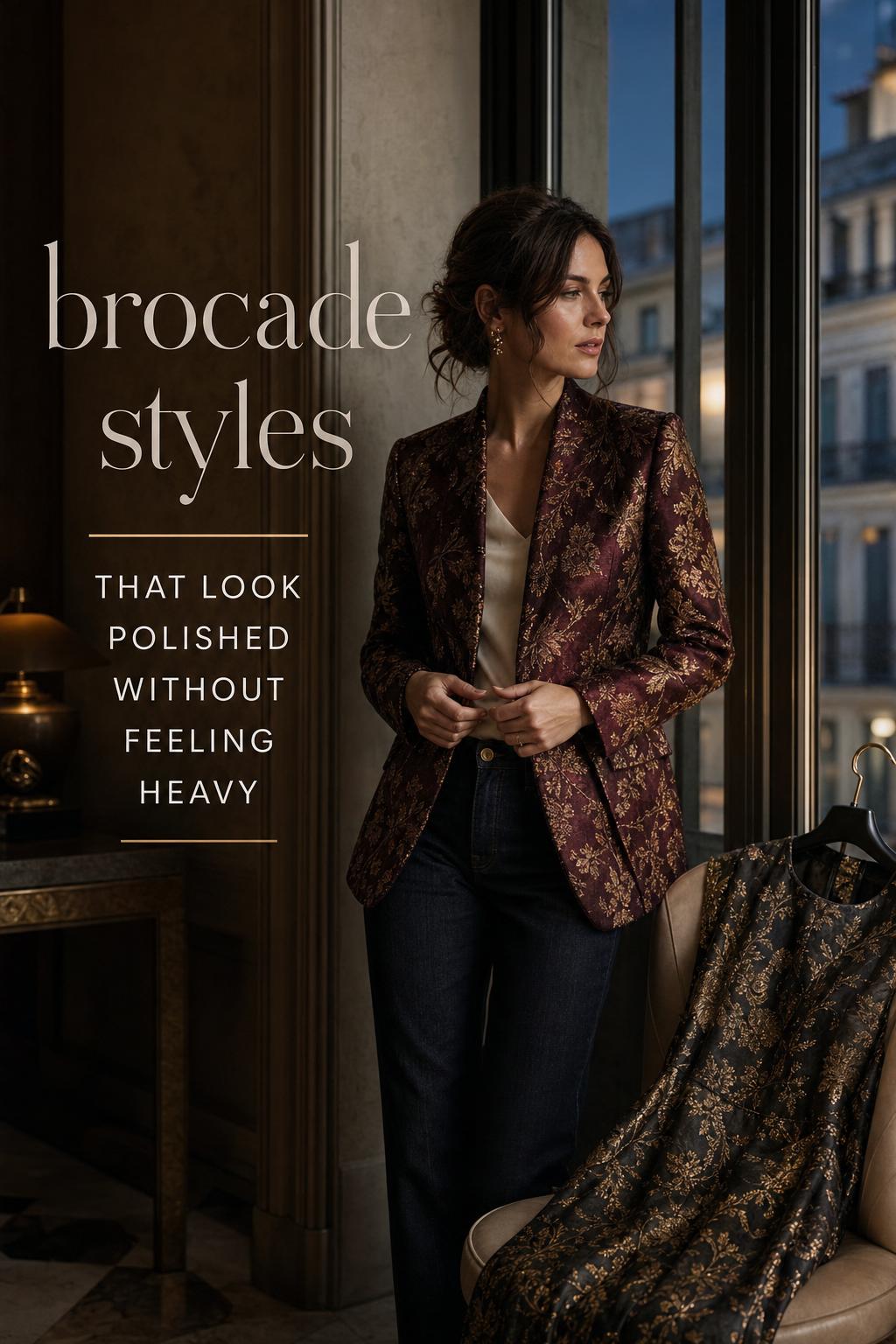
One of the underused ways to wear brocade is through outerwear. A brocade coat or evening jacket can transform simple underpinnings into a complete look. This method is efficient because it keeps comfort and practicality intact while still delivering impact at arrival.
The outerwear route is especially smart for cooler weather, transitional evenings, and formal events where you need a top layer that looks integrated rather than like an afterthought. The brocade surface provides enough richness to elevate otherwise minimal clothes underneath. This follows the same styling principle seen in textile and fashion guides: brocade performs best when one item leads and the rest support.
When to use this formula
Use a brocade outer layer for galas, weddings, evening dinners, and occasions where you expect to be photographed arriving and leaving. It also works for nights out when you want a sharp look without committing to a full brocade dress. In practical terms, it gives you visual payoff and temperature control at the same time.
How to adapt brocade styles for daytime instead of only special events
The main reason brocade feels limited is that many people only encounter it in formal settings. To make it work in daytime, reduce contrast between the garment and the rest of your wardrobe. That usually means choosing brocade in simpler shapes, leaning toward cotton or more matte finishes when possible, and pairing it with everyday anchors such as denim or plain separates.
A brocade top can function in daylight when it is styled with clean trousers and restrained accessories. A brocade jacket can work at lunch or a daytime event when layered over basics. What does not translate as easily is an all-over ornate look with multiple competing textures. Daytime brocade needs editing, not just confidence.
This is also where visual-first dressing becomes useful. If the brocade pattern is intricate, choose a simpler color palette. If the color is bold, keep the shape clean. If the cut is structured, keep the styling relaxed. These adjustments let brocade enter daywear without losing its identity.
Shopping logic for brocade in the U.S.
Many guides explain what brocade is, but fewer address how to shop for it with clarity. In the U.S. market, the practical question is not only where to buy brocade, but what to assess before purchasing. Because brocade ranges from luxury silk-based fabric to synthetic blends and retailer-driven occasionwear, quality cues matter.
Editorial and commerce-focused sources such as Tissura and Pernia’s Pop-Up Shop place emphasis on types, wearability, and product-led styling. That reflects a real shopping need: readers want to know whether a brocade item will actually fit into their wardrobe, not just whether it looks beautiful online. A good buying decision starts with use case. Are you buying for weddings, evening wear, separates, or fabric sourcing for custom clothing? The answer should shape the material, cut, and budget.
What to check before buying
- Fabric base: silk, cotton, or synthetic blend
- Presence of zari or metallic threads, which affects care
- Pattern scale and sheen level
- How structured the garment feels in movement
- Whether the silhouette supports repeat wear
- Return policy and availability of swatches when buying fabric
Tip: if you are new to brocade, start with a jacket or separate rather than a full formal garment. It is easier to style, easier to repeat, and a clearer test of whether you enjoy wearing the fabric.
Care matters more with brocade than with ordinary occasion fabric
Brocade often looks durable because of its structure, but care should never be treated casually. The presence of metallic thread, zari, layered weave effects, and luxury bases such as silk means maintenance affects both appearance and longevity. Readers frequently underestimate this because they focus on the pattern and overlook the fabric engineering.
Storage is part of styling, not just maintenance. A crushed or poorly stored brocade garment loses definition and can look far less refined when worn. Pieces with metallic elements also deserve extra caution, since sheen and thread integrity are central to the garment’s impact. This is especially important for bridalwear, heirloom-inspired pieces, and garments intended for repeated event use.
Practical care priorities
- Check whether metallic threads or zari require extra laundering caution.
- Store brocade carefully so the fabric surface keeps its shape and pattern definition.
- Treat silk-based brocade as a more sensitive category than casual woven fabrics.
- Do not assume every brocade item is suited to simple home washing.
For shoppers, this care reality should influence the purchase itself. A dramatic piece that is difficult to maintain may still be worthwhile for bridal or formal use, but less useful as an impulsive occasion buy.
Where fashion history sharpens modern styling decisions
Brocade carries historical weight because it is tied to long weaving traditions, from China and Byzantium to Indian textile centers and modern luxury fabric houses. Educational references often point to distinctions such as continuous and discontinuous brocade, loom processes, and the role of jacquard technology in shaping decorative woven textiles. That context matters because it explains why brocade still reads as elevated in modern design, interiors, and fashion.
It also clarifies why modern styling benefits from respect for the fabric’s origins. A brocade piece is not just “patterned clothing.” It belongs to a wider visual language of craftsmanship, luxury textiles, and regional identity. That is why sources as varied as Architectural Digest, Wikipedia-style educational entries, SewGuide, Sewport, and brand-led pages converge on similar foundational concepts: brocade is a textile category with technical and cultural depth, not just a passing decorative finish.
For readers, the practical implication is useful. When a fabric already carries history, you do not need to force meaning into the outfit. You need to style it with enough discipline for that richness to remain legible.
Common mistakes that make brocade look heavier than it should
Most brocade styling failures come from misreading the fabric’s intensity. The issue is rarely the textile itself. It is usually the surrounding outfit.
- Adding too many statement accessories, which competes with the woven pattern.
- Choosing a silhouette that is already oversized or overcomplicated, which makes the outfit feel bulky.
- Ignoring the event context and wearing highly ceremonial brocade where simpler dressing would be more appropriate.
- Overlooking care needs, especially with zari or metallic threads.
- Treating all brocade the same, even though Banarasi, Song brocade, Shu brocade, Surat brocade, and temple brocade can communicate very different style cues.
The correction is straightforward: reduce visual competition, choose one primary focal point, and let texture contrast create sophistication instead of relying on excess detail.
A practical wardrobe toolkit for wearing brocade more often
If your goal is to make brocade styles more usable, build a small support system around them. This is how stylists and smart dressers make a high-impact textile feel realistic rather than occasional.
The ideal support pieces are plain, polished, and repeatable: a neutral top, clean denim, simple trousers, a controlled evening shoe, and one structured outer layer. With those in place, a brocade jacket, skirt, top, or dress becomes much easier to rotate. This toolkit logic works because it treats brocade as a statement category within a wardrobe system rather than an isolated event purchase.
It also makes shopping decisions clearer. Instead of asking whether a brocade garment is beautiful, ask whether you already own the plain companion pieces that will stabilize it. If the answer is yes, the garment has a better chance of becoming wearable.
Brand and source references that shape the brocade conversation
Brocade appears across magazines, educational textile content, and commerce-led style platforms, which is part of why the category can feel fragmented. Architectural Digest frames brocade through pattern, design, and historical perspective. Tissura and Pernia’s Pop-Up Shop connect fabric knowledge to fashion ideas and shopping. SewGuide and Sewport clarify properties, weave structure, and identification. Rashika Mittal and Clothing Digest bring together regional context, styling, and care. Lee Jofa appears in a textile design context, reinforcing brocade’s relevance beyond apparel alone.
For a reader, this mix is useful. It confirms that brocade sits at the intersection of fashion, textile craft, interiors, and ceremony. That range explains both its appeal and its styling complexity. You are not dressing with a neutral material; you are dressing with a textile that already has language, geography, and status built into it.
Quick tips for making brocade feel modern
- Pair ornate brocade with matte basics to create texture contrast.
- Use brocade in one key garment rather than multiple statement pieces at once.
- For daytime, choose simpler cuts and lower-accessory styling.
- For evening, let a brocade dress or jacket carry the shine instead of layering on extra embellishment.
- Consider regional references such as Banarasi or Song brocade when you want the outfit to feel grounded rather than generic.
- Check care details before buying if the garment includes zari or metallic thread.
These adjustments are small, but they dramatically improve wearability. Brocade looks best when the outfit acknowledges the fabric’s richness and edits around it.
FAQ
What is brocade fabric in simple terms?
Brocade is a decorative woven fabric known for rich patterns that are built into the cloth rather than printed on it. It is commonly associated with jacquard weaving, extra weft effects, and sometimes metallic yarns such as zari, which give it a luxurious and structured appearance.
Are brocade styles only suitable for weddings and formal events?
No. Brocade is naturally strong for weddings, bridalwear, and evening dressing, but it can also work in modern daywear when used in controlled ways. A brocade jacket with denim or a brocade top with plain trousers is often more wearable for daytime than a full ornate look.
How do I wear a brocade jacket without looking overdressed?
The easiest solution is to pair the jacket with simple pieces that reduce formality, such as a plain neutral top and denim or clean tailored pants. This works because the brocade becomes the visual anchor, while the rest of the outfit provides balance and prevents too much ornament in one composition.
What is the difference between Banarasi brocade and other brocade styles?
Banarasi brocade is strongly associated with Banaras or Varanasi and often carries a formal, ceremonial, and zari-rich identity. Other brocade styles, including Song brocade, Yunjin, Shu brocade, Surat brocade, and temple brocade, may reflect different regional histories, pattern languages, and styling associations, so they do not all create the same fashion effect.
Is brocade comfortable enough for long events?
It can be, but comfort depends on the fabric base, garment cut, and how much structure the weave creates. Silk brocade and zari-heavy pieces may feel more formal and less flexible, while some cotton or synthetic-based brocades can feel easier to wear. Movement, sitting comfort, and event duration should all factor into the purchase.
How can I tell if a brocade piece is good quality?
Look at the fabric base, the clarity of the woven pattern, the balance between sheen and structure, and whether the garment holds shape well without feeling awkward in movement. If the piece includes metallic thread or zari, quality also shows in how integrated and refined those details appear rather than looking loosely decorative.
Can brocade be cleaned at home?
Some brocade garments may allow simpler care, but brocade should never be treated like an ordinary fabric automatically. Silk bases, metallic threads, and zari details require more caution, so it is important to check the garment’s care instructions and avoid assuming that every brocade item is suitable for standard home washing.
What are the best brocade outfit ideas for a night out?
A brocade dress with minimal styling, a brocade jacket over a simple outfit, or brocade separates paired with plain tailored pieces are all strong choices. These combinations work well for nights out because they keep the fabric’s luxury visible while maintaining modern silhouette balance and practical wearability.
Is brocade the same as jacquard?
They are closely related but not identical in styling use. Brocade is commonly explained through jacquard weaving and decorative woven patterning, but in outfit planning brocade usually refers to the more ornate, raised, and statement-making result. That is why brocade often needs more editing around accessories and supporting pieces than simpler patterned fabrics.
How should I start wearing brocade if I have never owned it before?
Start with one piece that is easy to pair, such as a jacket or a separate, rather than a highly formal full look. This gives you a practical way to test how brocade works with your existing wardrobe and lets you learn the fabric’s comfort, structure, and care needs before investing in more dramatic styles.