Intentional Boho Style for Summer Days and City Nights
Boho style, decoded: what reads intentional versus costume
Boho style is one of the most searched fashion aesthetics because it solves a very specific wardrobe problem: how to look relaxed without looking unfinished. The difference is rarely about owning “boho” pieces. It’s about outfit composition—how you balance volume with structure, mix textures without visual noise, and keep a palette grounded so the styling feels lived-in rather than theatrical. Done well, boho style reads like ease with intelligence: natural fabrics, artisanal details, and a silhouette that moves.
This guide breaks down the logic behind boho style in a way you can apply immediately—whether you’re building boho summer outfits for heat and humidity, refining modern boho outfits for a city setting, or leaning into earthy outfits that feel grounded and wearable. You’ll also see how “boho chic outfits bohemian” can be edited so the look stays polished, not overwhelming, and why the “boho queen” effect is more about restraint than excess.
The core framework: silhouette, texture, palette, and one visual anchor
Boho style becomes easy once you treat it like a framework rather than a theme. Most outfits that read “right” follow four principles: silhouette balance (where volume sits), texture contrast (what’s soft versus structured), palette control (earthy, sun-faded, or tonal), and a single visual anchor (the statement piece that defines the look). When one of these is missing, the styling often slips into either “random layers” or “festival costume.”
Silhouette balance: where boho can go wrong fast
Boho silhouettes often involve floaty shapes—maxi skirts, wide legs, billowy sleeves, relaxed dresses. The key is proportion play: if the bottom is wide, the top needs a clearer waist or a shorter length; if the sleeves are dramatic, the rest should be streamlined. This is why a cinched waist, a defined shoulder line, or a more fitted base layer can make the entire outfit look intentional.
Found the dress? Keep the rest in one place.
Zarellea brings guest details, vendors, timelines, and every next step together — so your wedding plan feels as good as your look.
Texture contrast: the fastest way to look “styled”
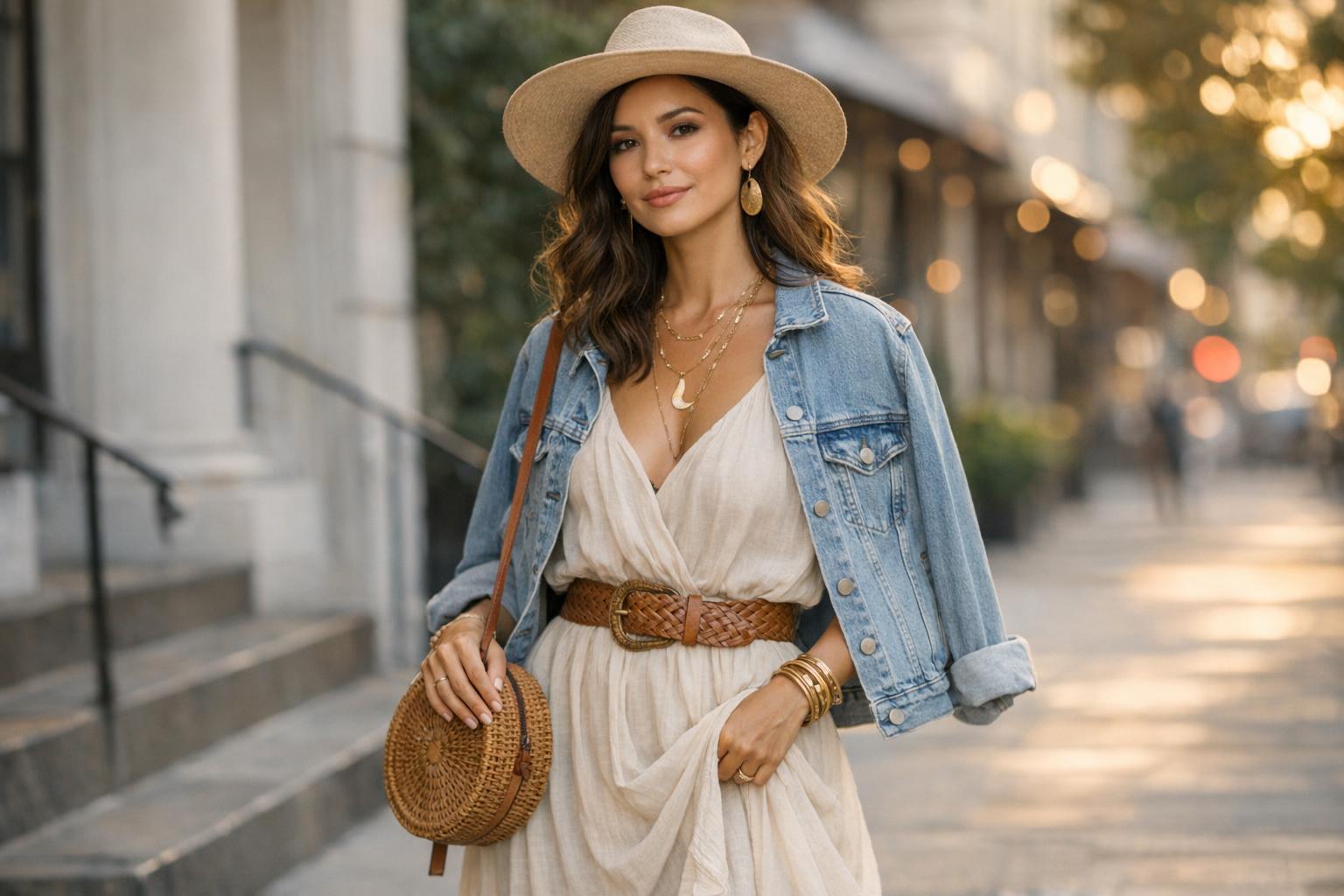
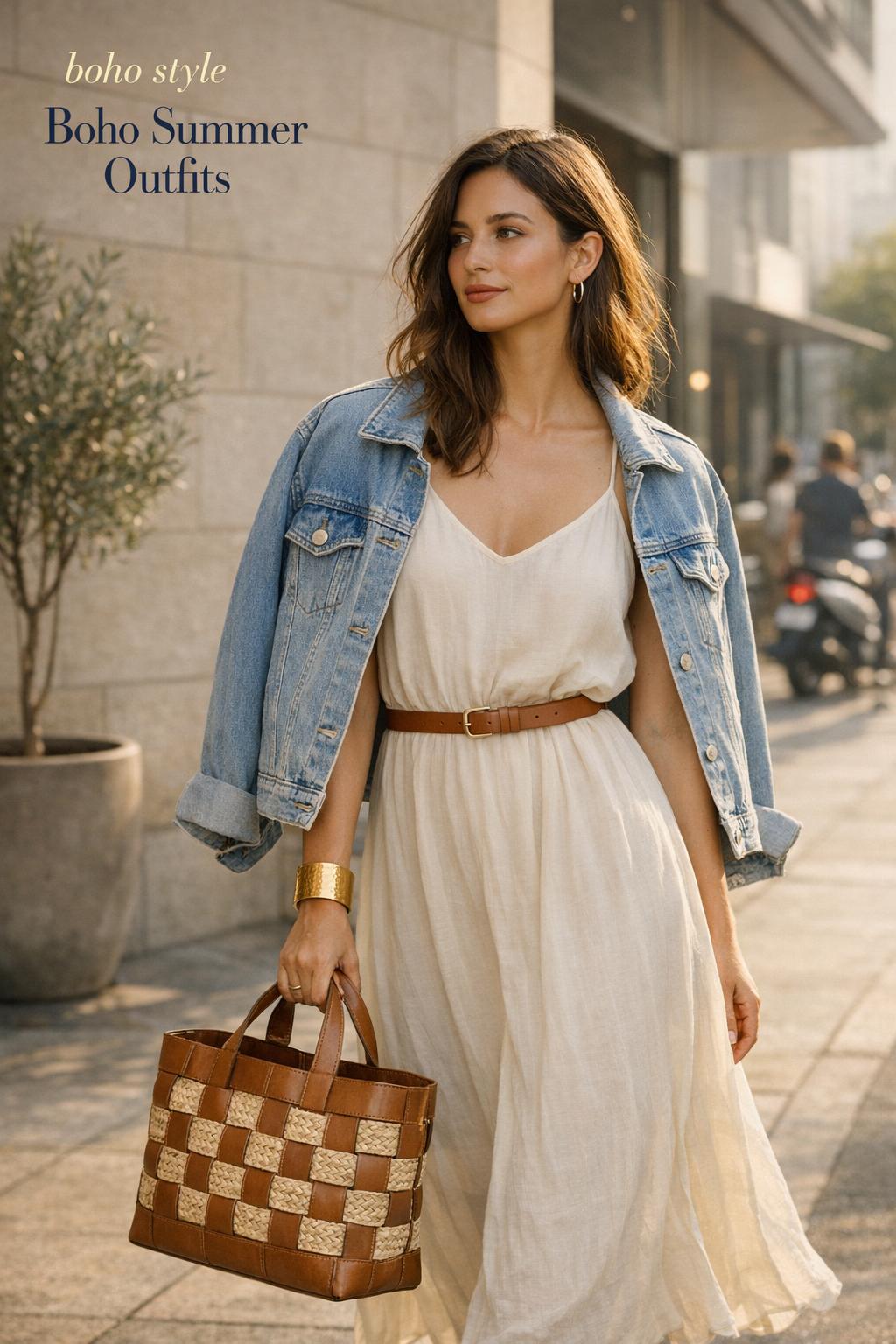
Boho style thrives on texture—crochet, lace, denim, suede-like finishes, woven bags, worn-in leather, and lightweight fabrics that move. But texture needs contrast to read editorial. Pair something airy (like a gauzy dress) with something grounding (a structured belt, a firmer sandal, a crisp denim layer). The outfit feels curated because the textures play different roles: one adds softness, the other adds definition.
Palette control: earthy doesn’t mean dull
Earthy outfits work in boho style because they keep mixed materials from fighting. Think warm neutrals, muted greens, sun-washed blues, and soft off-whites. The goal isn’t to dress head-to-toe beige—it’s tonal layering: multiple shades within the same family so the look feels dimensional. If you want a brighter moment, use one accent color as the visual anchor rather than spreading color everywhere.
The visual anchor: the piece that tells the story
Every strong boho outfit has a focal point. It might be a patterned maxi, a statement hat, a standout bag, or a bold piece of jewelry. Without a visual anchor, boho can read like “just casual.” With too many anchors, it reads chaotic. Treat the anchor like the headline and keep everything else as supporting text.
Boho versus modern boho outfits: the edit that makes it wearable
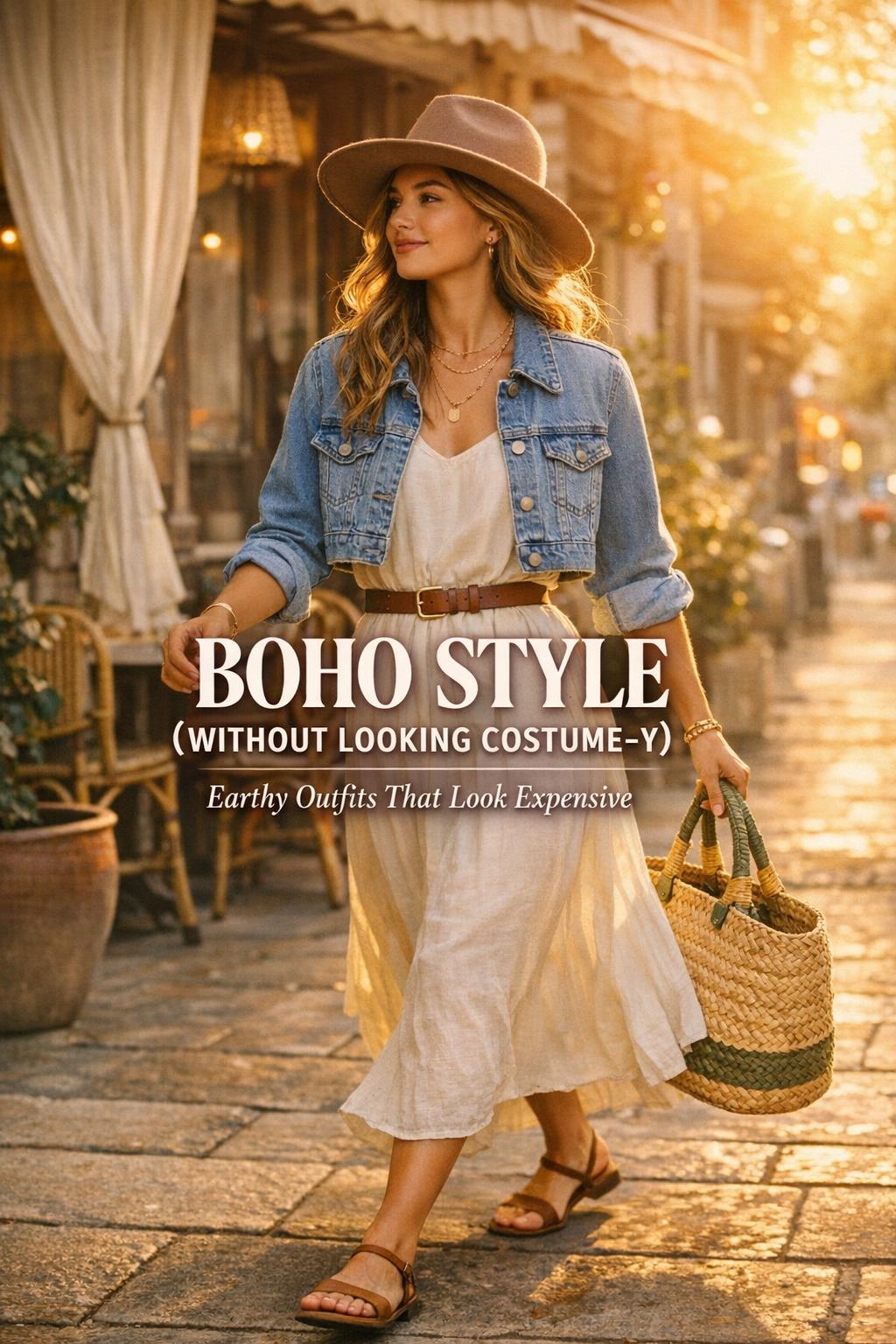
Classic boho style leans romantic and artisanal—more volume, more texture, more detail. Modern boho outfits keep the same spirit but apply a cleaner edit: fewer layers, sharper lines, and simpler color stories. This is especially useful if you want boho chic outfits bohemian for everyday life—workdays, travel days, errands—where you still need practicality and polish.
The most effective “modern” update is replacing one traditionally boho element with a streamlined piece. A floaty skirt gets a simple tank with a cleaner neckline. A ruffled blouse gets paired with straight-leg denim. A dramatic kimono becomes the only patterned item, with the rest in solids. The vibe stays boho; the execution feels current.
- Keep one boho hero: a maxi dress, crochet top, wide-leg pant, or printed skirt.
- Make one piece crisp: a structured belt, cleaner denim, a minimal sandal, or a sharper jacket.
- Limit the palette: two to three main colors reads more modern than five.
- Choose one “craft” detail: fringe, embroidery, crochet, or lace—rarely all at once.
Boho summer outfits: heat-proof styling that still looks elevated
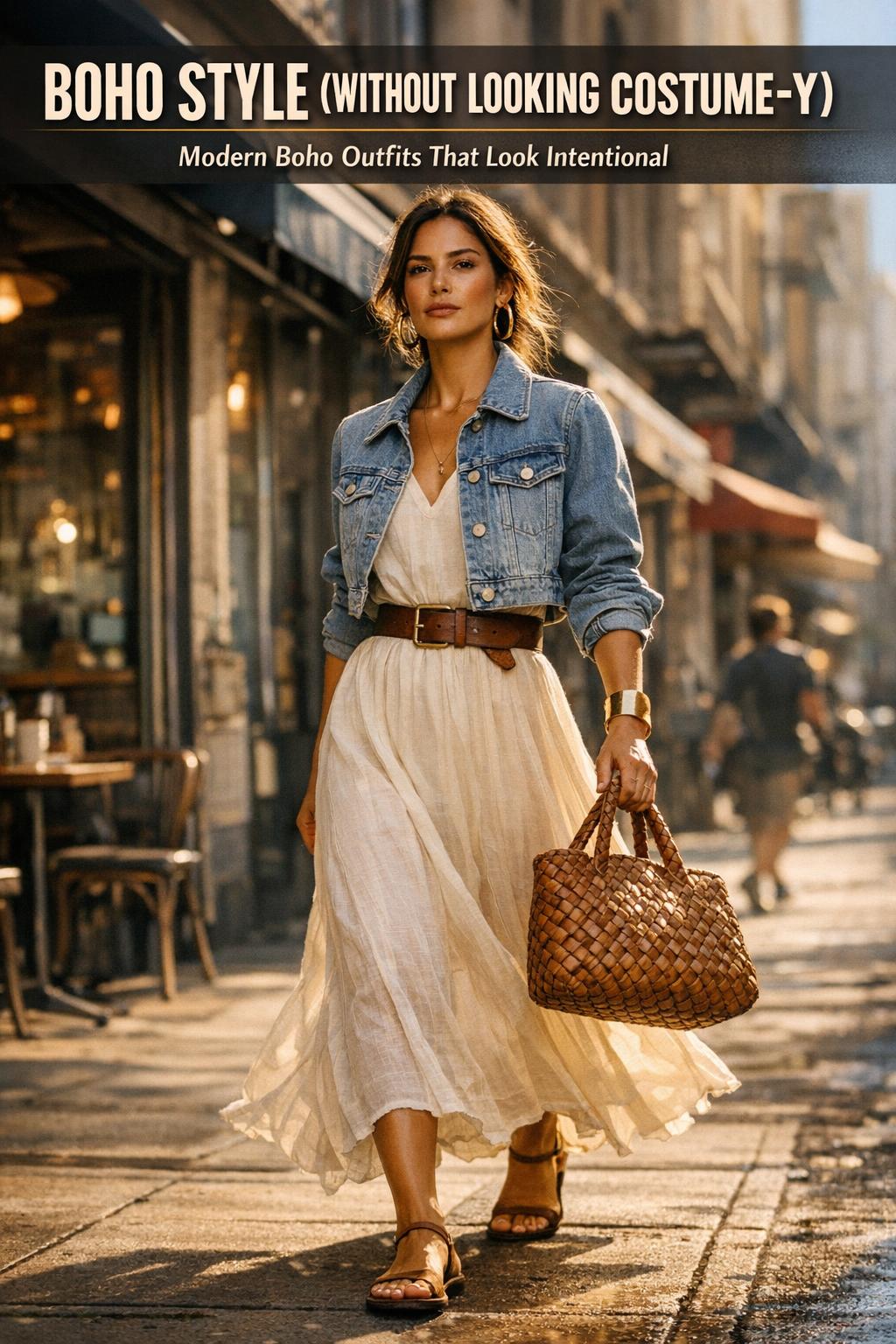
Summer exposes styling shortcuts. Heavy layering is uncomfortable, and synthetic fabrics can make even the best outfit feel unwearable. The smartest boho summer outfits rely on breathable movement: a lighter silhouette with intentional accessories and a controlled palette. The trick is to create the boho mood with fewer pieces, not more.
Outfit composition for hot weather: less fabric, more strategy
In high heat, the silhouette should move away from the body without becoming shapeless. A slip-style maxi or a relaxed midi with a defined neckline keeps airflow while maintaining structure. If you’re wearing a two-piece outfit, prioritize a clean waistline—either a tuck, a tie, or a belt—so the look doesn’t collapse into “beach cover-up” territory.
Accessories do more work in summer. One well-chosen bag or necklace can deliver the boho signal so you don’t need extra layers. This is where the “boho queen” styling approach becomes practical: a confident focal point, everything else simplified.
Texture choices that feel cool instead of heavy
Crochet and lace can look perfectly boho, but the scale matters. Open weaves and lighter patterns feel breezy; dense crochet can trap heat. Keep the texture near the face or arms (a top, a light layer) and keep the bottom half smoother for comfort. When the weather is humid, a simpler base with one textured layer reads more intentional than multiple textured items competing.
Quick tips for summer boho without over-accessorizing
Summer is where boho can slide into “too much.” A clean rule: if your outfit has a bold print, keep jewelry minimal; if the outfit is solid, give yourself one statement accessory. This keeps the overall look refined while still expressive.
- Use a single statement piece as your visual anchor (printed skirt, standout bag, or bold jewelry).
- Choose lighter layers over multiple layers; a single airy overpiece can replace a full stack.
- Keep footwear comfortable; boho looks rely on ease, and discomfort shows in posture.
Earthy outfits in boho style: how to make neutrals look dimensional
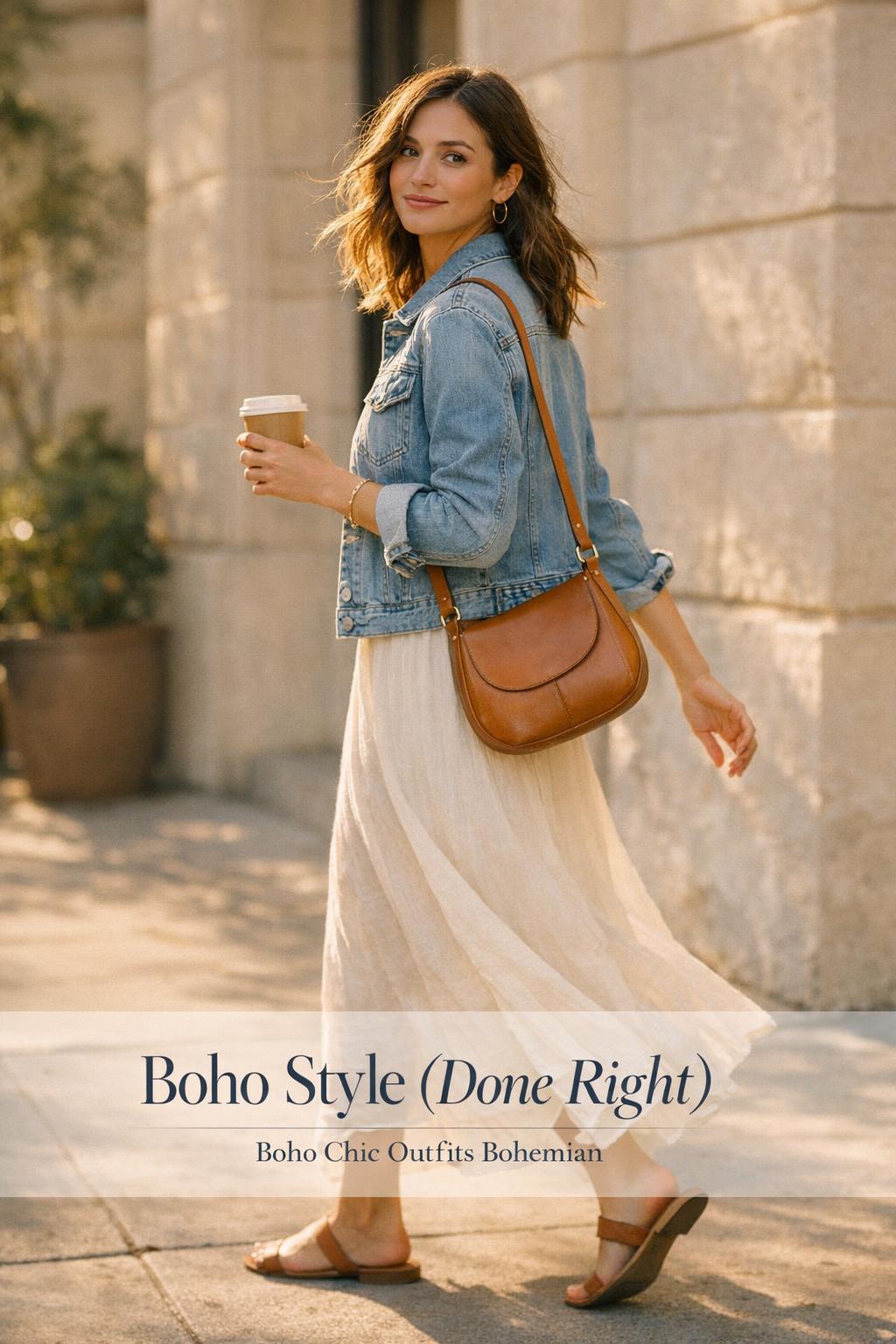
Earthy outfits are a natural match for boho style because they amplify the “natural” story: grounded colors, soft contrast, and tactile fabrics. The risk is looking flat. Dimension comes from mixing tones, finishes, and scale—matte with subtle sheen, smooth fabric with woven texture, small jewelry with one larger accent.
Tonal layering: the editorial way to wear earth tones
Tonal layering means staying within a tight color family while shifting lightness and depth. For example, combining cream, sand, and warm brown creates a gradient that feels intentional. This approach also makes outfit repetition easier: you can remix the same pieces and still look styled because the palette always harmonizes.
Texture mapping: place your “interesting” fabrics strategically
Texture should be mapped like design. Put the most tactile element where you want attention—near the neckline, at the waist, or as the bag. If everything is textured, nothing stands out. If everything is smooth, boho disappears. One textured hero paired with quieter basics is the most reliable formula.
Tips: the three-point check for earthy boho
Before you leave the house, do a quick three-point check: is there a clear waist or intentional proportion, is there one focal point, and does the palette look cohesive under natural light? Earth tones can shift depending on lighting, so checking in daylight prevents mismatched warm and cool neutrals.
Boho chic outfits bohemian: the polish layer that keeps it grown-up
“Boho chic outfits bohemian” often implies a slightly elevated version of boho—still free-spirited, but with more refinement. The quickest path is adding a polish layer: something that tightens the silhouette or clarifies the styling. This can be as simple as a cleaner hairstyle, a defined belt, or a more structured outer layer that acts as a frame.
Think of chic as editing. Instead of stacking multiple necklaces, choose one that sits at the collarbone. Instead of mixing several prints, choose one print and let solids do the support work. Instead of multiple fringed elements, keep fringe to one zone. The goal is to keep boho’s softness while controlling visual noise.
Where chic comes from: structure, repetition, and clean endpoints
Structure can show up in small ways: a sharper shoulder line, a defined waist, or a more tailored pant. Repetition is the underrated styling trick—repeat a material or color twice (for example, a warm brown belt echoed in footwear) so the outfit looks designed. Clean endpoints matter too: cuffs, hems, and necklines that look deliberate prevent the outfit from feeling sloppy, even if the silhouette is relaxed.
Tips: one-minute upgrade that changes the whole look
If your boho outfit feels “almost there,” add one visual anchor and remove one competing detail. For example, keep the statement earrings and skip the layered necklaces. Keep the printed skirt and switch to a solid top. This simple trade-off is the difference between styled and busy.
The boho queen effect: how to go bold without losing balance
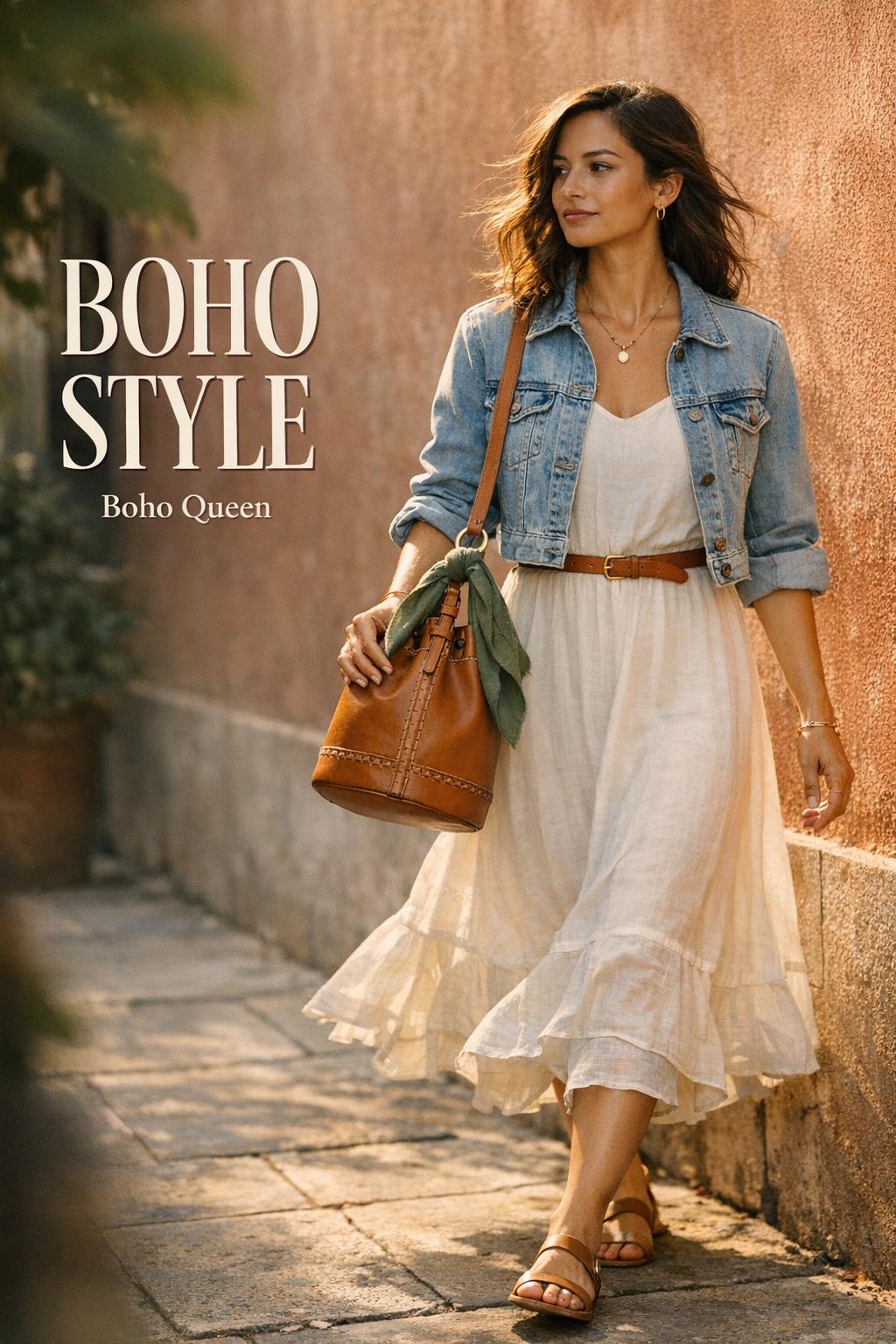
The “boho queen” look is not about wearing everything at once. It’s about confident scale—one dramatic silhouette, one artisanal detail, and accessories that feel intentional rather than piled on. This is where boho style becomes high-impact: a sweeping skirt, a strong sleeve, or a standout accessory that creates movement and presence.
To keep bold boho wearable, anchor it with a stable base: a solid color story, comfortable footwear, and a clear waistline. Movement is part of the aesthetic, but mobility is the real-world test. If the skirt tangles, the sleeves dip into your food, or the jewelry feels heavy by hour two, the look stops feeling powerful and starts feeling impractical.
How to build a “queen” look with a capsule mindset
Start with one hero piece that carries the entire mood, then build a small supporting cast around it. The goal is to look expansive without looking complicated. This is especially useful for travel or event dressing, where you want impact but need reliability.
- Choose one hero: dramatic maxi, wide-leg pant, or a signature top with volume.
- Keep the base clean: solid tank, simple blouse, or streamlined knit.
- Add one craft detail: crochet, lace, embroidery, or fringe.
- Finish with one strong accessory, not five smaller ones.
Location and occasion styling: boho that fits real environments
Boho style shifts depending on where you’re wearing it. The same outfit that feels perfect for a warm coastal weekend can feel excessive at a city brunch, or underdressed at an evening event. The solution is not changing the aesthetic—it’s adjusting the outfit’s formality signals: fabric finish, structure, and accessory intensity.
Travel days and long walks: prioritize comfort that still photographs well
For travel, modern boho outfits win because they’re lighter and less fussy. The most photogenic travel boho has a clean silhouette with one expressive detail. Avoid anything that wrinkles aggressively or drags on the ground. The outfit should hold its shape after hours of sitting, walking, and temperature changes.
Day events: keep the palette calm, let texture do the talking
For daytime, earthy outfits in boho style feel natural and elevated. Choose gentle contrast and breathable fabrics, then add interest through texture. This approach also reads more refined in bright daylight, when heavy makeup and extreme accessories can feel harsh.
Evening: shift to deeper tones and clearer structure
Evening boho works best when the silhouette is still fluid but the finish is more defined—cleaner lines, deeper colors, and accessories that feel intentional. Instead of adding more layers, sharpen the look by simplifying the base and making the focal point more deliberate.
Common boho style mistakes (and the fixes that stylists actually use)
Most boho styling mistakes come from misunderstanding what makes the aesthetic compelling. Boho is not “random vintage.” It’s controlled ease. When the control is missing, the look can skew messy, overly themed, or visually heavy.
Mistake: too many statement pieces competing
Fix it by choosing one visual anchor and turning the rest into support. If you have a printed maxi, keep the top solid. If your top is heavily detailed, keep the bottom clean. This single decision makes boho chic outfits bohemian look styled instead of overloaded.
Mistake: losing the waist completely
Fix it with subtle structure: a tuck, a tie, a belt, or a shorter top layer. Boho doesn’t require a tight silhouette, but it benefits from a clear point of intention. Even a relaxed outfit needs a shape strategy.
Mistake: mixing too many textures at the same visual “volume”
Fix it by pairing one high-texture item with quieter pieces. For example, crochet wants smooth denim or a clean skirt; lace wants a simple base. This keeps the tactile story strong without becoming visually noisy.
Mistake: choosing boho elements that don’t match your day
Fix it with context-based styling. If you’re walking all day, choose stable footwear and a hemline that won’t trip you. If you’re indoors with air conditioning, bring one light layer instead of stacking heavy pieces. Boho style looks best when it functions in real life.
A practical wardrobe blueprint: build boho without buying a new personality
A functional boho wardrobe is modular. You don’t need an entirely separate closet; you need a small set of pieces that combine easily. The goal is outfit repeatability: a few anchors, a few textures, and a palette that makes mixing effortless. This is also how you shift between boho summer outfits, earthy outfits, and modern boho outfits without starting over each season.
- One hero bottom: maxi skirt or wide-leg pant that creates movement.
- Two clean bases: tanks or tops with simple necklines that layer easily.
- One texture piece: crochet, lace, or embroidery used strategically.
- One framing layer: a light overpiece that adds shape without bulk.
- One focal accessory: the item that gives “boho” immediately, even with basics.
Think in outfits, not items. A boho wardrobe works when each piece has a role: base, structure, texture, or anchor. If a piece doesn’t clearly serve one of these roles, it’s harder to style and more likely to sit unused.
Advanced styling: making boho look expensive through restraint
Boho style can look premium when it’s edited. The “expensive” effect doesn’t come from adding more—it comes from consistent palette choices, intentional repetition, and fit that supports the silhouette. This is where modern boho outfits outperform more literal boho because the lines are clearer and the styling reads more deliberate.
Use repetition to create cohesion
Repeat a color or material twice to make the look feel designed. A warm brown accessory echoed in footwear creates a visual loop. A woven texture repeated between bag and belt feels cohesive. This is a subtle technique, but it’s one of the fastest ways to make boho chic outfits bohemian look intentional.
Choose one “soft” and one “sharp” element
Boho relies on softness—movement, drape, relaxed fabrics. Add one sharp element for balance: a cleaner neckline, a structured belt, or a more defined layer. This contrast creates silhouette balance and keeps the look from blending into shapeless casualwear.
Tips: a quick checklist before you commit
Before you head out, check your outfit in motion: walk, sit, and lift your arms. Boho style is meant to move, and the best looks stay composed while moving. If something twists, rides up, or feels restrictive, swap one piece for a simpler alternative and keep the visual anchor.
FAQ
What is boho style, in simple terms?
Boho style is a relaxed, expressive way of dressing that relies on fluid silhouettes, tactile textures, and a grounded palette, usually built around one clear statement piece so the outfit looks intentional rather than messy.
How do I wear boho style without looking like I’m in a costume?
Use one boho focal point and keep everything else clean: limit the palette to two or three colors, balance volume with a defined waist or sharper layer, and avoid stacking multiple statement accessories at the same time.
What’s the difference between boho and modern boho outfits?
Classic boho usually has more layers, more volume, and more craft details, while modern boho outfits keep the same relaxed spirit but use cleaner lines, fewer competing elements, and tighter color stories for a more current finish.
How can I put together boho summer outfits when it’s really hot?
Choose breathable shapes that move away from the body, keep layers minimal, and let one accessory or one textured piece deliver the boho signal so you don’t need heavy styling to make the outfit feel complete.
How do I make earthy outfits look boho instead of plain?
Add dimension through tonal layering and strategic texture placement: mix a few shades within the same warm-neutral family and use one tactile element—like crochet, lace, or a woven accessory—as the visual anchor.
What makes boho chic outfits bohemian look more polished?
Polish comes from editing and structure: keep one craft detail, repeat a color or material for cohesion, and add a clean endpoint like a defined waist, a sharper neckline, or a framing outer layer that clarifies the silhouette.
How do I get the “boho queen” look without over-accessorizing?
Build around one dramatic hero piece, keep the base simple and solid, and finish with a single strong accessory; the impact should come from confident scale and movement, not a pile-up of details.
What are the most common boho styling mistakes?
The most common issues are too many statement pieces competing, a silhouette with no shape strategy, and heavy texture-on-texture layering; each can be fixed by choosing one focal point, defining proportions, and pairing one textured item with quieter basics.
Can boho style work for everyday life, not just vacations or festivals?
Yes—everyday boho is easiest when you lean into modern boho outfits: a simplified palette, fewer layers, comfortable footwear, and one expressive element that keeps the look relaxed but still intentional for real schedules and real movement.