What to Wear: Punk Style Outfits With a Modern Edge
Getting punk style outfits right is harder than it looks. The challenge is not finding black clothing or adding a few studs. The real difficulty is building outfits that feel intentional rather than costume-like, practical rather than uncomfortable, and expressive without losing everyday wearability. That balance matters whether you are dressing for a casual city day, a concert, a festival, or simply trying to bring more attitude into your regular wardrobe.
Punk style sits at the intersection of rebellion, DIY fashion, streetwear, and personal identity. It has roots in the London punk scene and strong links to figures such as Vivienne Westwood and Malcolm McLaren, but the look has also evolved through American hubs like New York, Los Angeles, and Chicago. That history gives punk fashion its edge, yet modern dressing still demands comfort, proportion, and context. A leather jacket may look powerful, but if the layering is wrong or the silhouette is overloaded, the outfit loses clarity.
This guide solves that problem with styling logic, not vague inspiration. You will find a practical breakdown of what defines punk style, how to assemble wearable combinations, what to buy first, and how to adapt punk-inspired outfits for daily life in the U.S. The focus is on outfit composition, texture contrast, movement, and versatility so you can build punk style outfits that feel authentic, functional, and modern.
Why punk styling feels difficult in real life
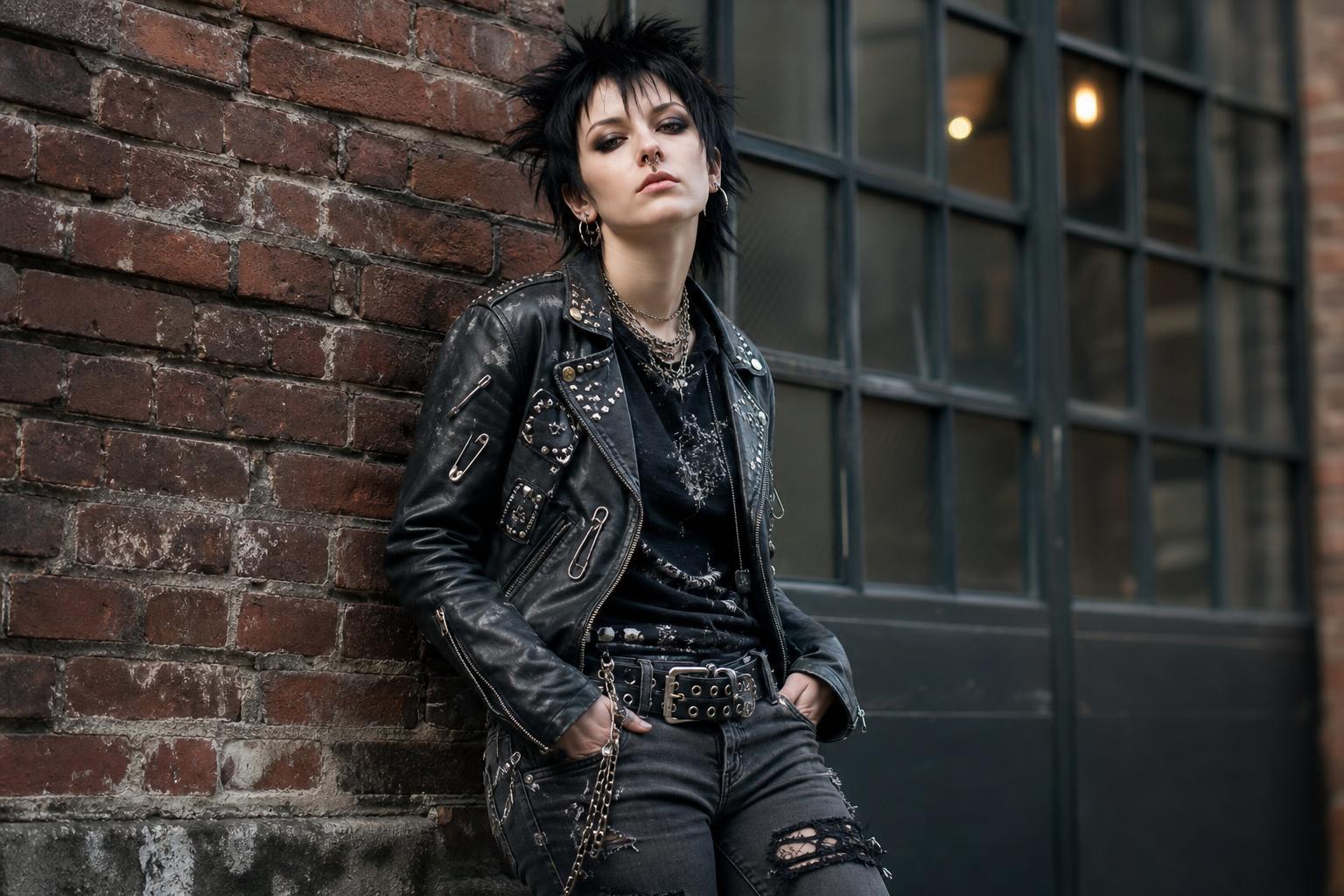
Punk fashion is built on anti-establishment energy, but dressing in that spirit still requires structure. Many people struggle because the visual language of punk is strong: leather, tartan, chains, safety pins, combat boots, band tees, spikes, distressed denim, and hardware all demand attention. When too many of these pieces compete, the outfit can look theatrical. When too few appear, the result reads as generic streetwear rather than punk style.
Found the dress? Keep the rest in one place.
Zarellea brings guest details, vendors, timelines, and every next step together — so your wedding plan feels as good as your look.
Weather also complicates the look. Heavy leather and dense layering work well in cooler conditions, but summer punk outfits need lighter construction and more selective detailing. Comfort matters too. Studded accessories, thick boots, and rigid fabrics create visual impact, yet they can feel impractical for long city walks, commuting, or all-day events. The most successful punk-inspired outfits solve this by treating statement items as visual anchors and balancing them with more wearable supporting pieces.
There is also a cultural factor. Punk is not only an aesthetic. Across many style guides, it is connected to DIY fashion, subculture, and attitude. That means readers often want to dress in a punk way without looking as though they are borrowing the look without understanding it. The solution is not overcompensation. It is clarity: knowing the key elements, choosing the right ratio of texture and hardware, and respecting the difference between inspiration and costume.
What punk style means and why the history still matters
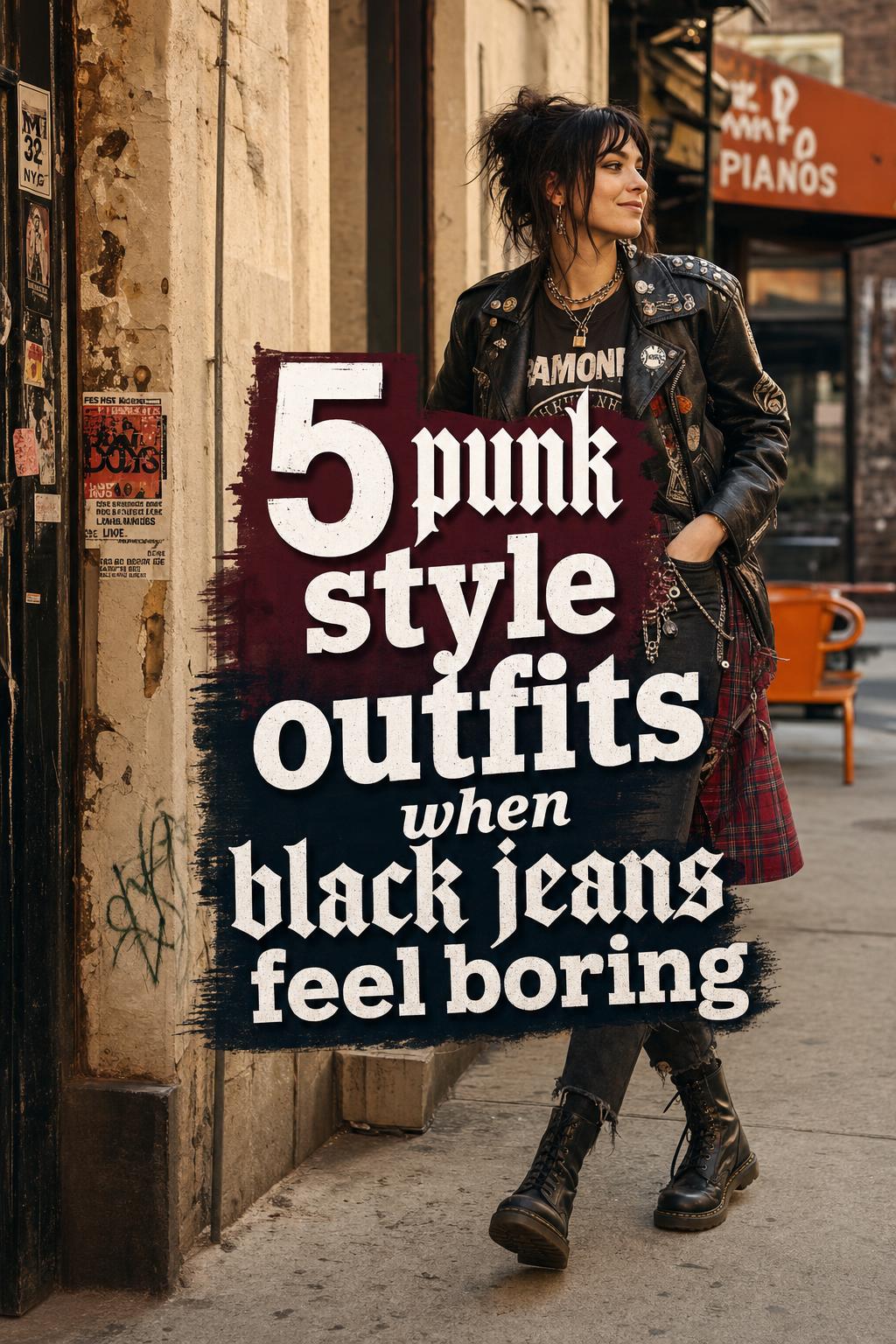
Punk style is a fashion language shaped by rebellion, customization, and visible defiance of polished convention. Historically, the look is tied to the 1970s punk scene, especially the London punk scene, and frequently linked to Vivienne Westwood and Malcolm McLaren. Their influence remains central because they helped define how clothing could express disruption through torn surfaces, provocative details, tartan, leather, and hardware.
The historical references matter because they explain why punk fashion relies so heavily on DIY details. Patches, distressing, safety pins, and reworked garments are not random decorations. They signal customization and resistance to standardized dressing. This is also why band merch, leather jackets, and worn-in boots carry more weight in punk style than trend-driven novelty pieces. They suggest use, identity, and allegiance rather than pure ornament.
That foundation evolved through related scenes and style offshoots. The research around punk style also points toward hardcore punk, street punk, Riot Grrrl, and regional variations in the United States and beyond. Modern punk streetwear often blends those references with contemporary dressing, making space for cleaner silhouettes, gender-inclusive styling, and crossover influences from grunge, dark academia, and even K-pop punk fusion. The result is a broad style field, but the DNA remains consistent: anti-polish energy, sharp contrast, and visible intent.
The dressing principles that make punk outfits work
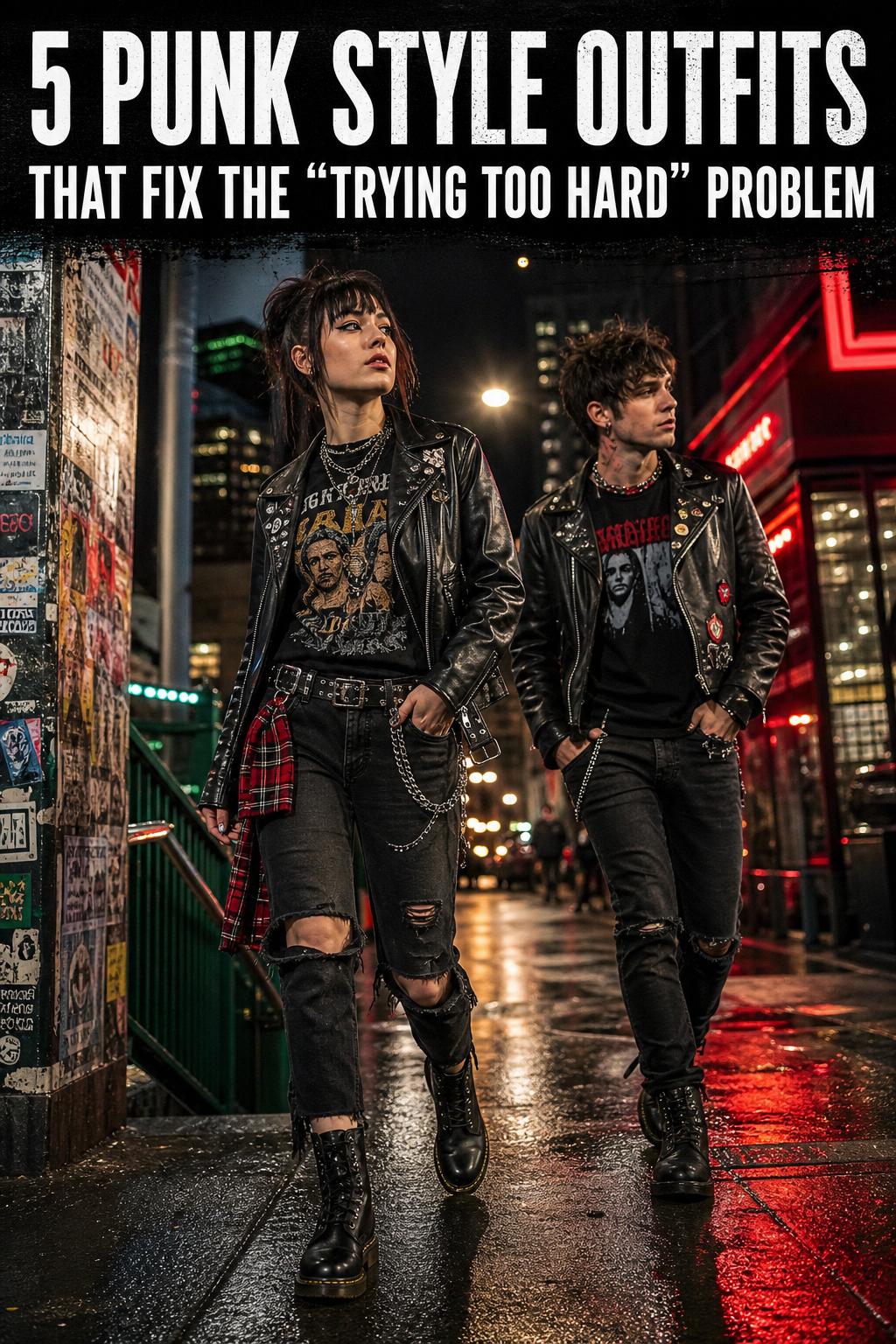
Strong punk style is not about wearing every recognizable symbol at once. It is about composition. Each outfit needs a visual anchor, controlled texture contrast, and enough practical ease to support real movement. These principles are what turn punk fashion from a reference into a usable wardrobe system.
Start with one dominant statement piece
A biker jacket, tartan bottom, heavy combat boots, or a bold band tee should usually lead the outfit. This keeps the styling focused. If everything is equally loud, the eye has nowhere to land. In editorial terms, the statement piece establishes hierarchy and gives the rest of the outfit a structure to follow.
Use texture contrast instead of excess
Punk style depends on material interplay. Leather against denim, tartan against jersey, chains against soft cotton, or polished hardware against distressed fabric creates the tension that defines the look. This is more effective than piling on extra accessories. Texture contrast adds depth without making the outfit visually crowded.
Let DIY details stay visible
DIY fashion is one of the clearest punk signals. Patches, distressing, safety pins, handwritten customization, and reworked garments should not be buried under too many layers. If you are using DIY elements, keep the surrounding pieces cleaner so those details read clearly.
Balance silhouette and mobility
Punk-inspired outfits often look strongest when one part of the silhouette feels structured and another feels relaxed. A fitted leather jacket with looser jeans, or a graphic tee with a sharper boot and belt combination, gives the outfit proportion play. This also helps with comfort. Rigid pieces work better when the rest of the look allows movement.
Match the outfit to season and setting
A cold-weather city outfit can carry more layers, heavier boots, and dense fabrics. A summer punk outfit needs breathable construction, lighter denim, shorter hemlines or rolled sleeves, and more selective hardware. The same principle applies to occasion. Night-out punk glam can support more dramatic makeup and chains, while casual workwear needs restraint and cleaner lines.
The 8 core elements of punk style outfits
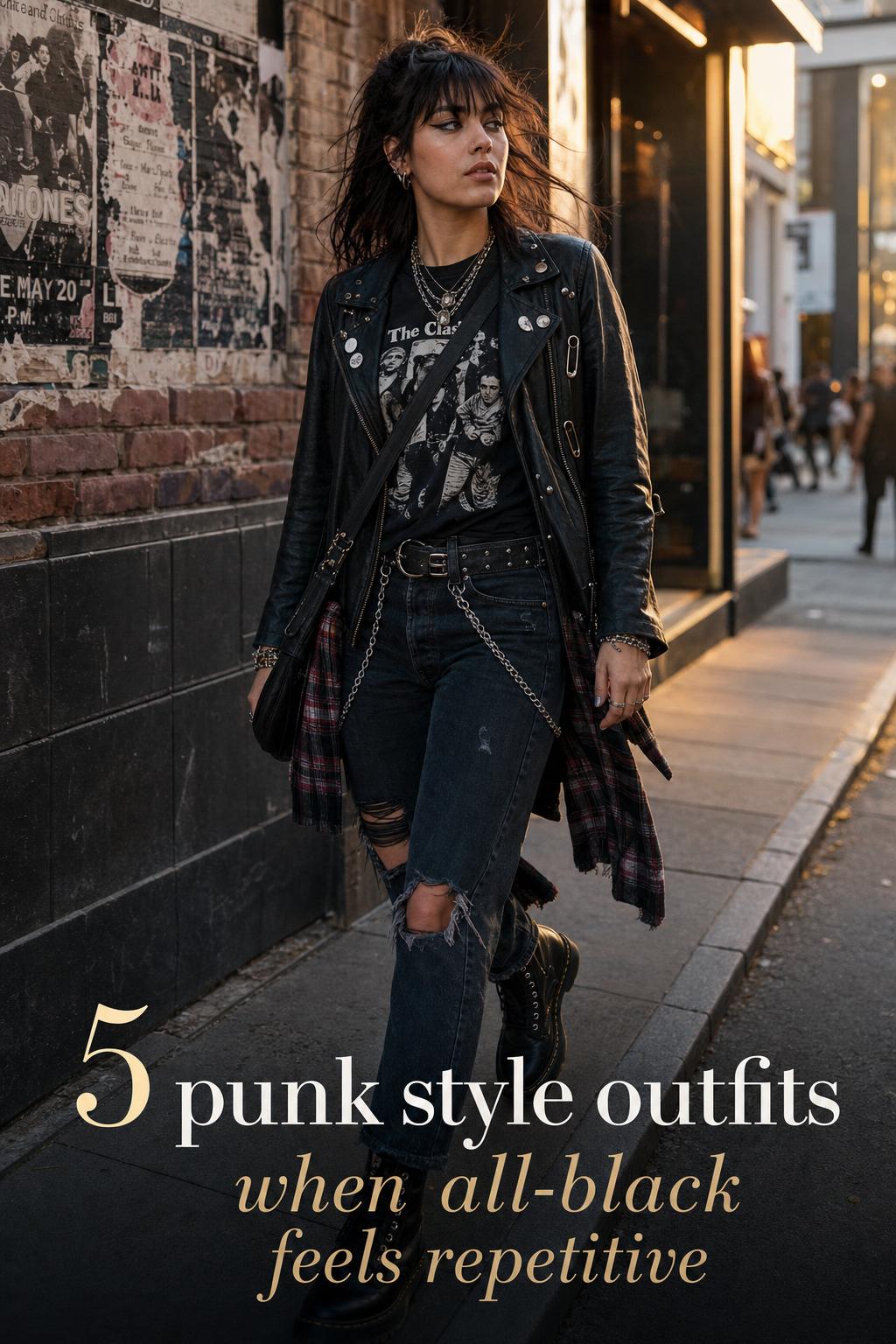
If your wardrobe feels scattered, these eight elements create a reliable foundation. Not every outfit needs all eight, but most successful punk outfits draw from several of them in a deliberate way.
- Leather and denim as the structural base
- Tartan for heritage and visual disruption
- Hardware such as studs, spikes, chains, and metal details
- DIY features including patches, safety pins, and distressing
- Footwear with weight, especially combat boots and Doc Martens
- Graphic tees or band merch as a cultural marker
- Accessories such as belts, chokers, and pins
- Hair and makeup accents that reinforce the overall attitude
These elements are flexible. A modern punk streetwear look may emphasize denim, boots, and a graphic tee, while a more glam or nightlife version may lean into leather, hardware, and sharper makeup. The point is not uniformity. It is recognizing the visual grammar of punk fashion and using it with control.
Leather, denim, tartan, and hardware
Leather jackets and distressed denim are the backbone of many punk style outfits because they create instant edge and hold texture well. Tartan adds pattern intensity and a direct link to classic punk aesthetics. Hardware, whether in studs, spikes, or chain details, should function as punctuation. Small amounts often read stronger than excessive placement because the eye registers them as deliberate rather than decorative clutter.
DIY details, boots, and accessories
DIY details are where personality becomes visible. A patched jacket or pinned shirt communicates more than a standard retail piece. Footwear then grounds the entire look. Doc Martens and combat boots work because they add visual weight at the bottom of the silhouette, keeping the outfit from feeling top-heavy. Accessories such as belts, pins, chokers, and chains should support the line of the outfit rather than distract from it.
Outfit solution: the everyday punk streetwear formula
The most common problem with daily punk dressing is overcommitting too early. An everyday look needs enough attitude to feel distinct, but enough practicality for commuting, errands, coffee meetings, or a long day in the city. This formula is the most wearable entry point.
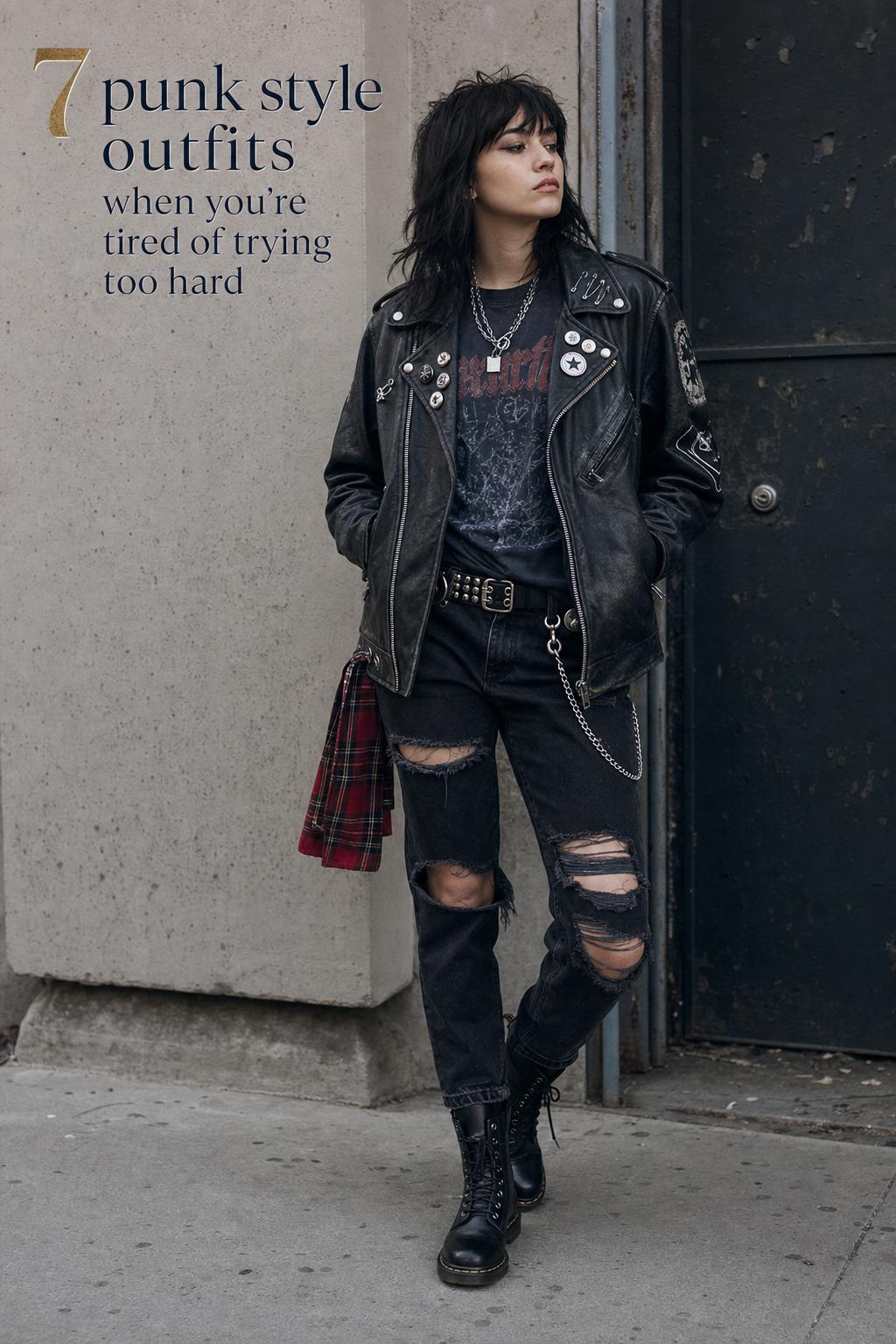
Build the outfit around a graphic tee or band tee, straight or slightly loose jeans, and a leather or denim jacket. Add combat boots or Doc Martens, then finish with one hardware-driven accessory such as a chain belt or a few pins. This combination works because the tee keeps the outfit grounded in casual streetwear while the jacket and boots provide the punk structure. The silhouette is balanced: softer upper layer, sturdier outerwear, solid base at the foot.
For warmer days, replace the leather jacket with lighter denim and keep the hardware minimal. For colder weather, add a layered long-sleeve base under the tee. The formula also translates across genders because the logic is based on proportions and materials rather than fixed categories. If you want a sharper finish, use darker denim. If you want a more relaxed daytime result, let the jacket stay open and keep the accessories concentrated in one area.
Why this formula works
- The tee introduces identity without forcing the whole look into costume territory.
- Denim keeps the outfit practical and easy to repeat.
- Boots add authority and visual weight.
- The jacket creates the clearest punk signal without requiring extreme styling.
Outfit solution: night-out punk glam without losing edge
Night-out dressing often creates a different problem: punk elements can look flat under evening lighting unless the outfit uses stronger texture and sharper contrast. This is where leather, hardware, and makeup accents become more important.
Start with a fitted leather piece or a clean base anchored by black separates, then introduce tartan or metal details through a skirt, trousers, belt, or layered accessories. Studs and chains work better at night because lower light rewards reflective surfaces and defined shapes. Finish with heavy boots or sleek footwear that still holds some visual density. Hair and makeup can carry more intensity here, which helps the outfit feel resolved rather than under-styled.
The reason this composition succeeds is texture hierarchy. Evening punk outfits need a clear conversation between matte and shine, rigid and soft, plain and embellished. Too much tartan, leather, and spikes together can become noisy, so choose one dramatic fabric statement and let the rest of the outfit act as support. This produces punk glam rather than visual overload.
Practical tip for nightlife dressing
If you will be standing or walking for hours, prioritize comfortable boots over delicate footwear. Punk style loses impact when you cannot move well. A solid pair of combat boots keeps the outfit consistent and helps maintain posture, stride, and confidence through the night.
Outfit solution: punk-influenced workwear for casual settings
One of the most useful styling challenges to solve is how to wear punk fashion in professional or semi-professional environments that allow casual dressing. The key is restraint. You want the anti-polish spirit, not visual disruption that feels out of place.
Use one punk reference point and keep the rest of the outfit refined. A dark jacket over a simple top, straight trousers or dark denim, and polished boots can carry punk influence without looking confrontational. A subtle tartan accent, a minimalist chain, or understated hardware on a belt is usually enough. This approach works because it treats punk as a texture and attitude layer rather than a full costume build.
This is also where modern crossover styling becomes useful. Blending punk with streetwear or dark academia can soften the contrast while preserving character. A cleaner silhouette, less distressing, and controlled accessories make the outfit professional enough for casual offices, creative studios, or low-formality meetings.
What to avoid in this setting
Too many spikes, aggressive distressing, or oversized chains can overwhelm a workwear context. The better strategy is to anchor the outfit with one strong but controlled element. That gives the look identity without compromising functionality or appropriateness.
Outfit solution: festival and summer punk without heavy layering
Summer punk styling is a separate technical problem because many signature pieces are heavy. Thick leather, dense denim, and stacked layers create discomfort quickly in heat. The solution is to shift the emphasis from bulk to detail.
Build the outfit with lightweight separates, then use accessories and surface treatment to maintain punk energy. A lighter tee, distressed shorts or a skirt, visible pins, a belt with hardware, and sturdy boots create the right visual vocabulary without relying on insulation. You can also use rolled sleeves, cut-off edges, or lighter-weight denim to preserve the DIY character. The look stays punk because the silhouette still has attitude and the accessories carry enough tension.
This is one of the clearest areas where seasonal practicality improves style. In hot weather, fewer pieces make each item more visible, so every detail matters. Choose one or two strong accents rather than trying to recreate a cold-weather outfit in summer conditions. That is how punk outfit ideas for summer stay convincing instead of forced.
Comfort logic for warm weather
- Reduce fabric weight before reducing attitude.
- Let accessories carry some of the punk identity.
- Use one strong boot or belt choice instead of multiple heavy layers.
- Keep DIY details visible because they replace bulk with character.
Outfit solution: gender-inclusive punk ensembles
Punk style has long worked across gender lines because it is rooted in subculture, silhouette experimentation, and self-definition rather than narrow dress codes. That makes it one of the most adaptable style systems for readers who want flexibility.
A gender-inclusive punk outfit usually succeeds when it prioritizes shape, texture, and balance over category labels. A band tee with a tartan bottom, a leather jacket over straight-cut denim, or combat boots with layered separates all work because the outfit composition is built around contrast and structure. Hardware and accessories then personalize the look without forcing it into a rigid formula.
This approach is especially useful for readers exploring punk streetwear. Streetwear already values proportion, individuality, and layering. Punk adds sharper cultural references through DIY details, band merch, and anti-establishment styling cues. The result is wearable, expressive, and easy to adjust according to comfort and identity.
US-centric punk style: why New York, Los Angeles, and Chicago matter
Although the roots of punk fashion are closely tied to London, U.S. readers often connect more directly with how the style evolved through American cities. New York is especially important because of the influence of venues such as CBGB, which helped anchor punk culture in a local music and fashion ecosystem. That matters in clothing because it pushed punk toward a rawer, street-level practicality.
Los Angeles and Chicago also shape modern interpretation. In broad style terms, these city references support different wardrobe emphases: more streetwear crossover, more climate-based adaptation, and a stronger relationship between local scene dressing and daily wear. This helps explain why U.S. punk style often feels slightly more casual and wearable than highly theatrical versions of the look.
For readers building punk style outfits in an American context, this city-based evolution is useful. It validates pairing punk with denim, workwear influence, and practical layering. It also supports a less rigid, more modular wardrobe where one leather jacket or one pair of Doc Martens can move across multiple outfit formulas without looking repetitive.
Brands and names that often appear in punk style conversations
Vivienne Westwood remains the most prominent design reference, with Malcolm McLaren often connected to the same historical foundation. In modern shopping and style inspiration, names such as DevilFashion, Psylo, VampireFreaks, Unseen Punks, Gothic Attitude, Punk Design, and Lookiero appear in broader punk and alternative fashion contexts. These names matter less as rules and more as examples of how punk aesthetics continue to circulate through brand-led editorial, online retail, and style guides.
There are also culture-facing updates to the look, such as K-pop punk fusion. That version tends to translate punk into a more polished, wearable format for mainstream audiences. It can be a useful reference for readers who want a punk-inspired outfit with cleaner styling and less overt distressing.
How to mix punk with modern trends without diluting it
Modern wardrobes rarely exist inside one category, so the practical question becomes how to mix punk with adjacent aesthetics. The strongest combinations mentioned around this topic are punk with streetwear, grunge, and dark academia. Each pairing works for a different reason.
Punk and streetwear connect through oversized layers, sneakers or boots, graphic language, and individual expression. The difference is that punk needs more visible disruption: hardware, distressing, tartan, or DIY customization. Punk and grunge overlap in worn textures and anti-polish energy, but punk usually carries sharper structure and stronger hardware. Punk and dark academia can work when tartan, black layers, and disciplined silhouettes are used carefully, though the look should retain some edge or it becomes too polished.
The general rule is simple: when blending styles, keep punk visible through at least two recognizable signals. That could mean boots and hardware, tartan and a leather jacket, or a band tee with DIY elements. If those signals disappear, the outfit may still look good, but it will no longer read as punk-inspired.
Sustainable and upcycled punk options
Upcycling makes natural sense in punk fashion because the style already values reworking, distressing, and customization. Sustainable punk does not require a separate aesthetic system. It simply extends the DIY logic by using recycled materials, repairing old denim, adding patches to existing jackets, or reworking garments you already own. This approach strengthens authenticity because the clothes become genuinely personal rather than just purchased references to rebellion.
What to buy first if your punk wardrobe feels incomplete
A common mistake is trying to build a full punk wardrobe in one shopping round. A more effective strategy is to buy foundational pieces first, then add detail. This creates a modular closet where items combine easily and the overall style remains coherent.
- A leather jacket or strong denim jacket
- One pair of combat boots or Doc Martens
- A graphic tee or band tee
- Dark denim or another reliable bottom with edge
- One tartan piece
- A belt, pins, chain, or similar hardware-driven accessory
This buying order works because it reflects how punk outfits are constructed. Outerwear shapes the silhouette, boots ground it, tops communicate identity, bottoms control versatility, tartan adds heritage reference, and accessories deliver finish. Once those categories are covered, you can expand into more expressive pieces without losing cohesion.
Shopping logic by category
If you are choosing between several possible purchases, prioritize the item that can appear in the most outfit formulas. Boots and jackets usually offer the best return because they instantly establish mood. A tartan item is powerful but more directional, so it often works best once your basics are already in place.
Visual glossary: the details that make punk clothing recognizable
Punk clothing often looks simple from a distance, but the details are what communicate the style. Knowing these details helps readers shop more accurately and style with more precision.
Jackets, patterns, and hardware terms
In jackets, punk impact often comes from a biker-inspired cut, visible zippers, metal snaps, or distressed surface texture. Tartan functions as a high-contrast pattern with strong historical association. Hardware refers to studs, spikes, chains, rings, buckles, and metal trims. These details are not interchangeable in effect. Studs and spikes sharpen the look, chains add movement and weight, while belts and buckles create structure at the waist or hip line.
Graphic tees, band merch, and silhouette cues
Graphic tees and band merch often serve as the cultural center of an outfit. They are strongest when worn with intention rather than buried under too many competing features. Silhouette cues matter just as much. A cropped jacket creates a more aggressive line, looser denim relaxes the outfit, and heavy boots act as a visual stop at the bottom. When these parts are in balance, the outfit reads immediately as punk-inspired even before accessories are added.
Styling mistakes that weaken punk outfits
Most punk styling errors happen because the outfit lacks editing. Readers either add too many obvious references or rely on one cliché element and assume that is enough. Both approaches flatten the look.
- Using every punk signal at once, which creates visual noise
- Ignoring comfort, especially with boots and rigid layers
- Choosing costume-level accessories for everyday settings
- Forgetting proportion, so the outfit feels top-heavy or overly bulky
- Relying on black alone without adding texture, pattern, or hardware
The correction is usually straightforward. Reduce the number of focal points, improve the material mix, and let one statement piece guide the rest of the outfit. Punk style is expressive, but the strongest versions still show discipline.
Quick adjustments that instantly improve the look
Small changes often produce the biggest improvement in punk dressing. If an outfit feels flat, add one hardware element rather than a whole new layer. If it feels too heavy, remove a bulky piece and keep the boots. If it looks generic, bring in tartan, DIY detailing, or a stronger tee. These moves work because they sharpen the visual message without forcing a complete rebuild.
Hair and makeup can also complete the outfit more efficiently than more clothing. In many punk style guides, these accents are treated as part of the fashion composition, not separate categories. That logic makes sense. A simple outfit with strong boots, a graphic tee, and a sharper beauty direction can read more convincingly punk than an over-accessorized look with no overall cohesion.
Practical tips for better outfit composition
- Anchor the outfit with boots or outerwear first.
- Add tartan as a focused accent, not random decoration.
- Keep DIY elements visible and intentional.
- Use chains, belts, and pins to direct the eye, not scatter it.
- Adapt fabric weight to the season before styling the details.
Building a punk wardrobe with more confidence
Punk style outfits become easier to build once you stop treating the aesthetic as a single fixed look. It is a system of recognizable elements connected by attitude, subculture, and styling logic. The most reliable results come from understanding that system: leather and denim for structure, tartan for emphasis, hardware for finish, DIY fashion for authenticity, and boots for grounding the silhouette.
Whether your reference point is Vivienne Westwood, the London punk scene, CBGB-era U.S. punk culture, modern punk streetwear, or a cleaner K-pop punk fusion, the goal remains the same. Create outfit composition with tension, clarity, and practicality. Once that approach becomes instinctive, punk stops feeling intimidating and starts functioning as a flexible, expressive wardrobe language.
FAQ
What are the essential pieces for punk style outfits?
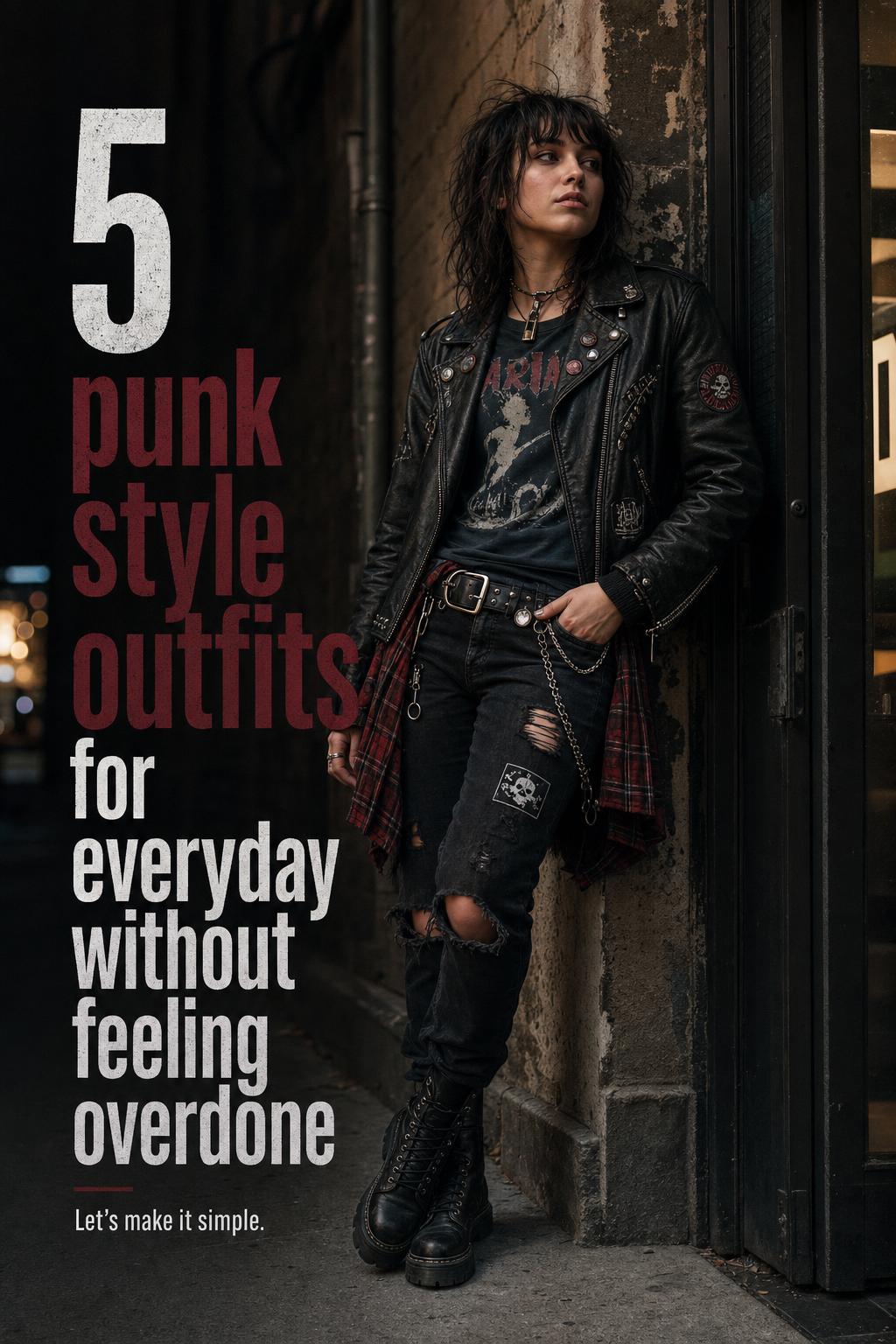
The most useful essentials are a leather or denim jacket, combat boots or Doc Martens, a graphic tee or band tee, dark denim, one tartan piece, and a few hardware-driven accessories such as belts, pins, or chains. These items create the clearest punk foundation while still allowing multiple outfit combinations.
How do you dress punk without looking like a costume?
The key is editing. Choose one or two dominant punk signals, such as a leather jacket and boots or tartan and hardware, then keep the rest of the outfit clean. Texture contrast and proportion are more effective than wearing every recognizable symbol at once.
Is punk just a look or also a mindset?
Punk is widely connected to subculture, DIY fashion, and anti-establishment attitude, so it is more than surface styling. In wardrobe terms, that often shows up through customized pieces, reworked garments, visible wear, and choices that feel personal rather than overly polished or trend dependent.
Can punk style work in professional settings?
Yes, especially in casual or creative environments. The best approach is to use one restrained punk element, such as subtle hardware, dark boots, a clean jacket, or a controlled tartan accent, while keeping the silhouette polished and the rest of the outfit low-drama.
What colors are most common in punk fashion?
Black is the dominant base, but punk style also relies on tartan patterning, distressed denim tones, and the contrast created by metal hardware. The effectiveness comes less from a broad color palette and more from how color interacts with texture, surface wear, and pattern intensity.
How do you wear punk outfits in summer?
Summer punk works best when you reduce fabric weight and let details carry the mood. Use lighter tees, distressed shorts or skirts, visible pins, belts with hardware, and sturdy boots, then keep layering minimal so the outfit remains breathable and practical.
Who are the most important names associated with punk style?
Vivienne Westwood is the most consistently referenced figure in punk fashion, with Malcolm McLaren also closely tied to the historical development of the look. Broader punk style discussions also connect to icons and cultural references such as Sid Vicious, the Sex Pistols era, World’s End, and CBGB.
What makes punk streetwear different from classic punk fashion?
Punk streetwear usually keeps the core punk markers such as graphic language, boots, hardware, and DIY references, but presents them in a more wearable, modern format. Compared with classic punk fashion, it often uses cleaner silhouettes, fewer layers, and stronger compatibility with everyday city dressing.
Can punk style be gender-inclusive?
Yes. Punk styling adapts well across gender expression because it is driven by texture, proportion, layering, and attitude rather than strict clothing categories. Band tees, leather jackets, tartan pieces, boots, and hardware can all be styled in gender-inclusive ways through silhouette and balance.