Cinematic Dark Feminine Style for Day-to-Night Dressing
Dark feminine style, decoded: the mood, the method, the modern references
Dark feminine style shows up most clearly in real life when the calendar fills up: a last-minute mini party invite, a work event that runs into dinner, a cold evening that demands layers, or a packed weekend when you need outfits that photograph well without feeling like costume. The aesthetic reads “moody” at first glance, but the execution is technical: tonal layering, texture contrast, and silhouette balance working together so the look feels intentional, not theatrical. In U.S. fashion conversations, it also sits close to gothic glamour, balletcore with a dark twist, and the darker edges of coquette—while still functioning as a wearable wardrobe system.
What makes the current wave feel immediate is how often it’s validated by public style moments. Celebrity makeup looks and red-carpet sightings (from the VMAs to TIFF to high-profile premieres like Beetlejuice 2) reinforce the same message: a dark feminine look isn’t only about black; it’s about mood control—deep tones, strategic shine, and styling that frames the face and body with precision. Runway language matters too. When New York Fashion Week coverage highlights Rodarte (designed by Kate and Laura Mulleavy) for dark, gothic glamour, it gives the aesthetic a credible fashion anchor that goes beyond Pinterest mood boards.
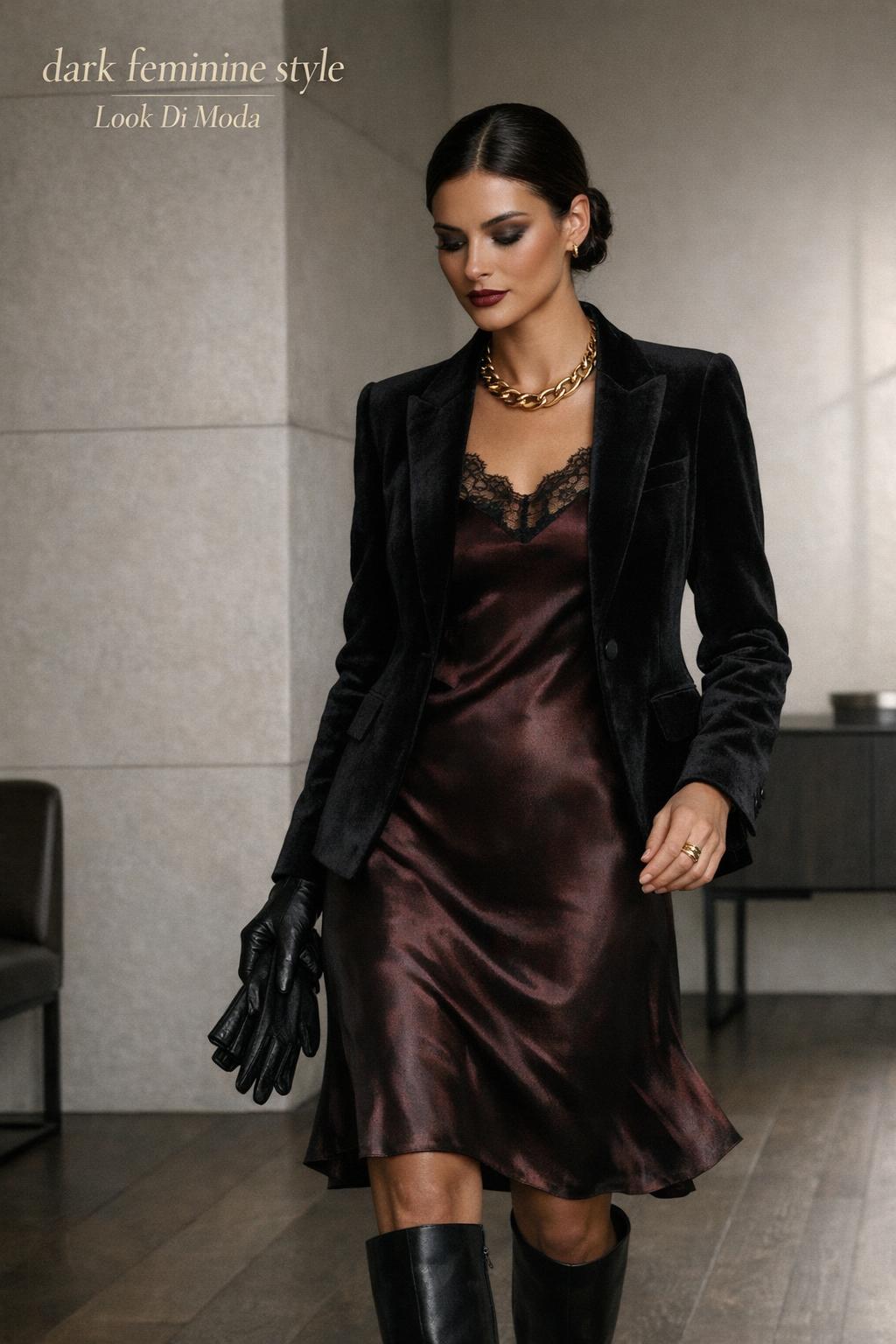
This guide approaches dark feminine style the way a fashion editor would: define the aesthetic boundaries, map the core outfit components, explain why specific combinations work, and translate runway-and-celebrity cues into daily outfits. You’ll also see style logic for fabrics like satin, velvet, lace, and leather; a capsule wardrobe framework; and practical makeup and hair direction that complements moody fashion without overpowering it. Consider it mode inspiration with structure—more Look Di Moda than guesswork, more Looks Chic than chaotic trend-chasing.
Definition first: what “dark feminine” actually means (and what it doesn’t)
Dark feminine style is a fashion-and-beauty aesthetic built around a controlled, shadowed palette and a confident, elegant silhouette. The “dark” comes from a moody color story—black, charcoal, burgundy, midnight blue—and from materials that absorb or reflect light in a deliberate way. The “feminine” comes from shape language: defined waistlines, drape, slip silhouettes, lace detail, or a sleek line that emphasizes proportion play rather than volume for volume’s sake.
Found the dress? Keep the rest in one place.
Zarellea brings guest details, vendors, timelines, and every next step together — so your wedding plan feels as good as your look.
It’s often grouped with gothic fashion or gothic glamour, but it doesn’t require full subcultural styling to read correctly. It also overlaps with balletcore-adjacent styling when the look leans into delicate textures (lace, satin) and refined detailing—just shifted into darker tones. And it can borrow from coquette aesthetic cues (bows, dainty silhouettes) when those cues are translated into a darker register rather than pastel sweetness.
Core visual language: color, texture, and silhouette balance
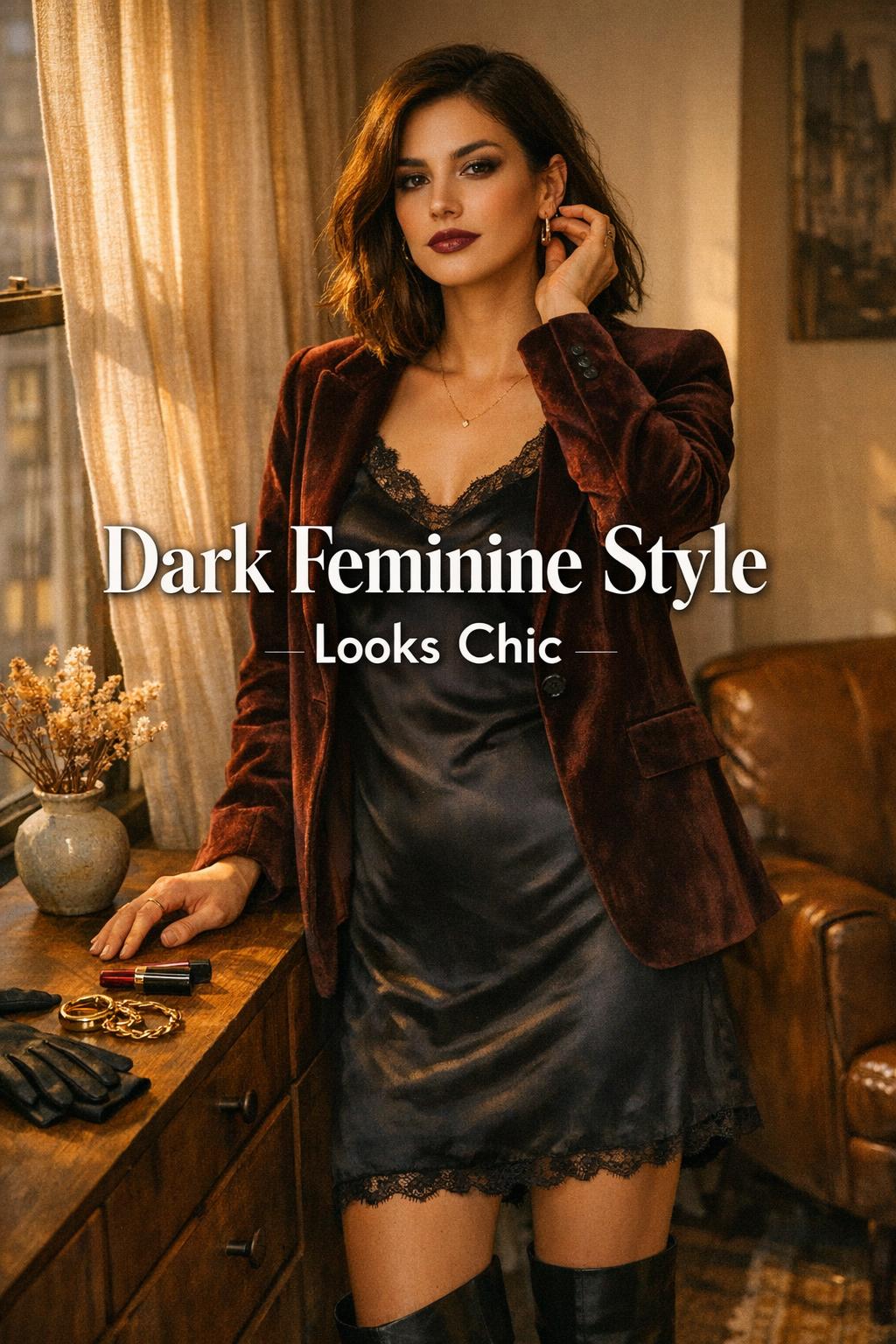
The fastest way to identify dark feminine style is to look for an outfit’s “visual anchors.” Typically, there’s one dominant dark base (a black dress, a charcoal skirt, a midnight top), then a second element that creates contrast through texture: satin against knit, lace against leather, velvet against a matte wool-like surface. The silhouette stays composed—either sleek and elongated (slip dress lines) or structured and sculpted (tailored outer layers that sharpen the shoulders and waist).
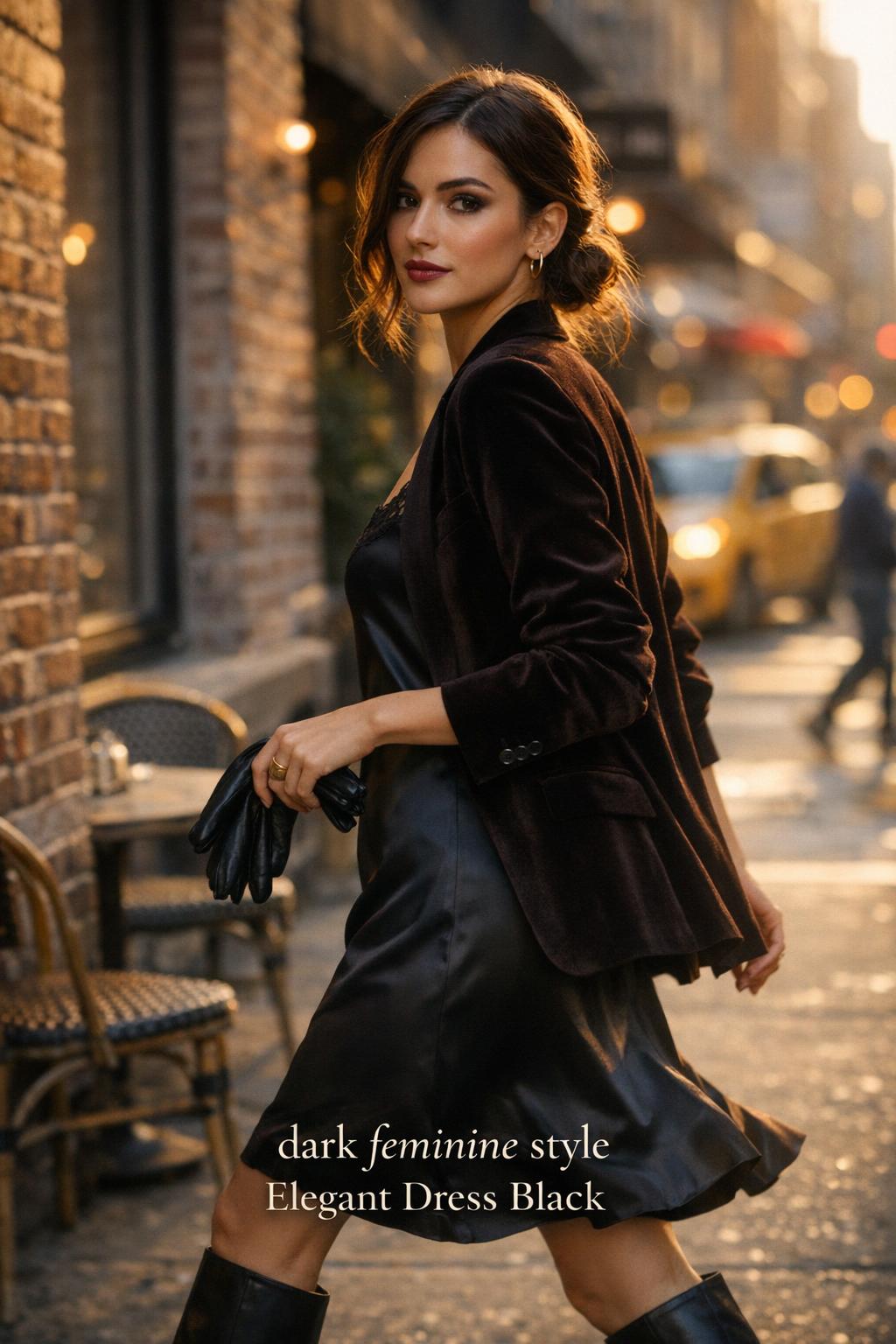
This is why an elegant dress black works so consistently in the aesthetic: it creates a clean, uninterrupted column that can be edited up or down with a single accessory, a blazer, or a makeup shift. The dress isn’t the entire story; it’s the stable foundation that makes the rest of the outfit composition read polished.
Distinctions that matter: dark feminine vs. gothic, dark academia, and coquette
Dark feminine style can look adjacent to several aesthetics, but the intention differs. Gothic fashion often leans harder into overt motifs and drama, while dark feminine tends to prioritize elegance and wearability. Dark academia reads more scholarly and structured; dark feminine reads more sensual and evening-coded, even in daytime outfits. Coquette is typically light, sweet, and delicate; dark feminine can borrow the delicacy, but it replaces innocence with controlled intensity—think moody makeup and shadowed tones rather than pastel softness.
If you’re building a wardrobe, this distinction saves money and closet space. Instead of buying pieces that only work for one hyper-specific theme, you choose adaptable dark-feminine pillars—satin, lace, velvet, and structured layers—that can drift toward gothic glamour, dark academia, or a coquette-with-dark-tint finish depending on styling.
Where the mood is coming from: celebrities, events, and runway validation
In the U.S., dark feminine energy is frequently framed as a beauty trend first—especially in celebrity coverage—because makeup instantly communicates mood. Public moments at the VMAs, TIFF, and major premieres have showcased variations of moody makeup: smoky eyes, deep lips, and a polished finish that reads cinematic rather than messy. Names that repeatedly surface in this context include Taylor Swift, Camila Cabello, Megan Thee Stallion, Blackpink’s Lisa, Selena Gomez, Jenna Ortega, and Chappell Roan, each associated with distinct styling choices that still align with the same “dark feminine” visual language.
Runway context strengthens the fashion side. New York Fashion Week reporting that highlights Rodarte—and designers Kate and Laura Mulleavy—connects the aesthetic to dark, gothic glamour in a way that feels fashion-literate. The takeaway isn’t to copy a runway look exactly; it’s to understand the mechanics: romantic textures, strong mood, and a controlled palette that feels modern instead of vintage-costume.
Location cues matter too. New York fashion coverage emphasizes edge and polish; Milan and Paris are referenced as fashion-week centers where moody elegance reads as intentional rather than “trying too hard.” Even if you’re dressing for everyday life in the United States, these city references help define the finish: clean, edited, and camera-ready.
Materials do the heavy lifting: fabrics, textures, and why they read “dark luxury”
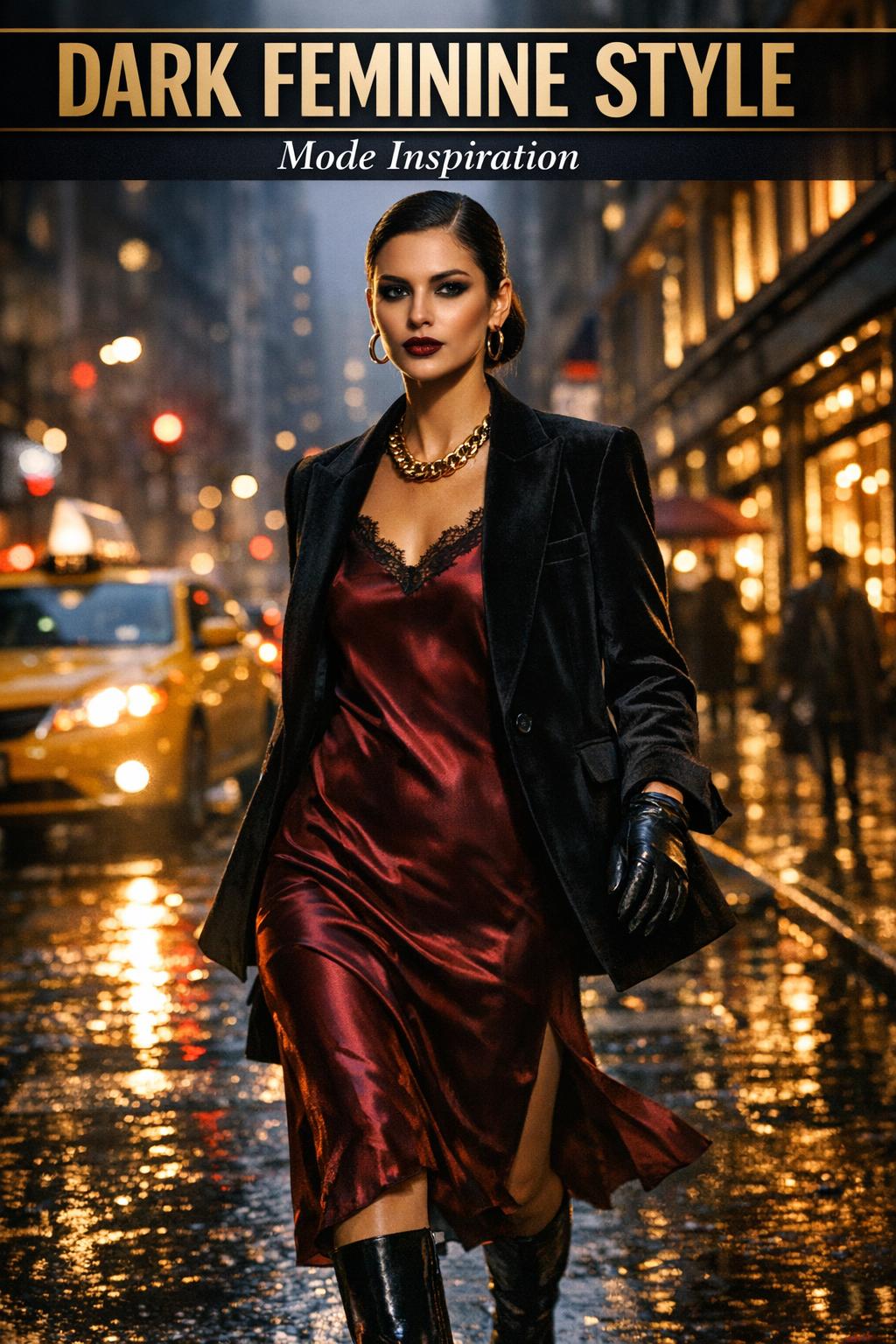
Dark feminine style is a texture-forward aesthetic. The palette may look simple, but the fabrics create depth. The most common high-impact materials are silk satin, velvet, lace, and leather—each contributing a different kind of light behavior. Satin reflects, velvet absorbs, lace reveals, leather sharpens. When these are layered thoughtfully, the outfit gains dimension even in near-monochrome color stories.
Satin slip dress logic: sleek line, high movement, strong contrast potential
The satin slip dress is one of the most efficient dark feminine staples because it creates an elongated silhouette with movement. Satin naturally catches light, which prevents dark colors from feeling flat. It also pairs cleanly with opposing textures—an oversized knit sweater for a casual contrast, or a velvet layer for evening. The slip silhouette is inherently feminine, but the dark palette shifts it from sweet to powerful.
In practice, the slip dress is also a comfort piece for long events. It moves with you, it sits well in photos, and it makes quick changes easy: swap outerwear, adjust makeup intensity, and the outfit’s mood updates immediately.
Lace, velvet, leather: controlled drama without costume energy
Lace reads romantic and slightly gothic, velvet reads plush and nocturnal, and leather reads sharp and structured. The key is proportion play. If you choose lace as the dominant element (like a lace dress), keep other pieces cleaner so the outfit doesn’t become visually noisy. If you introduce leather, balance it with a softer textile so the look remains feminine rather than aggressively tough.
- Lace works best as a focal texture: one lace-heavy piece plus simpler supporting layers.
- Velvet functions as a “depth layer”: it enriches black and burgundy tones and photographs well in low light.
- Leather provides structure: a crisp edge that can modernize romantic silhouettes.
Color palette: black is the base, but charcoal, burgundy, and midnight blue create dimension
A wardrobe that relies only on pure black can start to look one-note, especially in daylight. Charcoal softens contrast, burgundy adds a controlled richness, and midnight blue offers a subtle alternative that still reads dark. These shades create tonal layering options—essential for keeping outfits interesting when the aesthetic avoids bright color.
This is also where “looks chic” becomes a technical result, not a vibe. When your palette stays within black, charcoal, burgundy, and midnight blue, you can mix pieces quickly without clashing—ideal for busy weeks when you need the dark feminine effect with minimal styling time.
A dark feminine capsule wardrobe that actually works in U.S. daily life
Many top-performing dark feminine outfit guides focus on long lists. Lists are useful, but a capsule wardrobe is more realistic: fewer pieces with more combinations. The goal is to create outfit composition options across casual, office-appropriate, and evening scenarios using consistent materials and a stable palette.
The 10-piece core: wardrobe pillars that generate the most outfits
- Satin slip dress (the flexible centerpiece)
- Lace dress or lace-detailed top (romantic texture anchor)
- Velvet layer (a blazer or similar structured top layer)
- Oversized knit sweater (softness for contrast and warmth)
- A structured blazer (sharpens silhouette balance)
- A dark skirt (for proportion play with knits and blazers)
- A dark top designed for tonal layering (clean base)
- Boots (a reliable grounding shoe for moody outfits)
- Statement jewelry (chunky jewelry as a visual anchor)
- Leather gloves (a small accessory that reads intentional and polished)
This capsule supports multiple directions: gothic glamour if you prioritize lace and deep makeup, balletcore with a dark twist if you emphasize delicate lines and refined details, and street-fashion dark feminine if you lean into knit-and-boot combinations with stronger accessories.
Budget-to-premium logic: what to invest in vs. what can be flexible
Dark feminine outfits often look expensive when the fabric behaves well. If you’re choosing where to invest, prioritize the pieces that sit closest to the face or define the silhouette: a structured blazer, a velvet layer, and a well-cut dress. More flexible items—like an oversized knit—can be rotated more often without breaking the aesthetic as long as the texture reads intentional.
Shopping environments also shape decisions. A collection page like Lastyleinspo’s dark feminine energy fashion hub functions differently than editorial guides: it’s product-forward and brand-forward, with examples that can include labels like Club Monaco. Use that kind of page to identify your category gaps (do you need a blazer, a dress, boots?), then return to the capsule logic so your purchases build a coherent system instead of a random haul.
Outfit engineering: combinations that deliver “dark feminine” without overthinking
Dark feminine styling works when the outfit has one clear statement piece and everything else supports it. That statement can be a texture (lace), a silhouette (slip dress), or a controlled dramatic detail (leather gloves). The supporting elements handle balance: they regulate how much skin is shown, how heavy the look feels, and whether the result reads day-appropriate or night-ready.
Street-fashion dark feminine: knit softness with sharp accessories
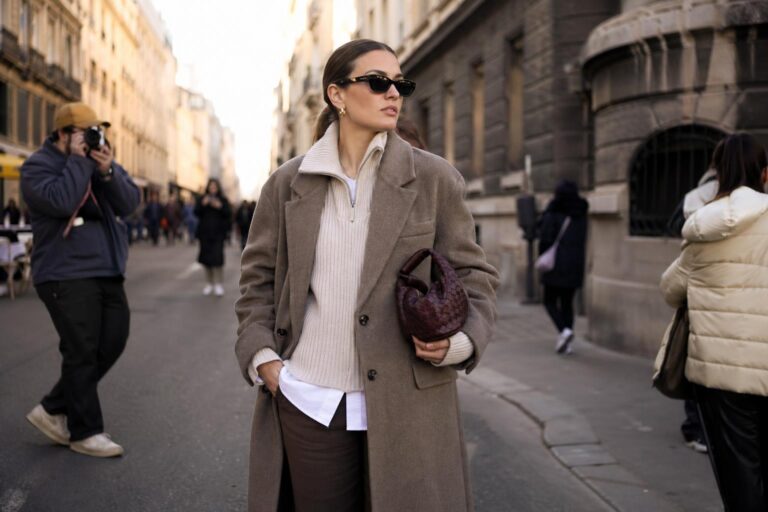
Street-style interpretations often rely on comfort pieces, but the styling cues stay strict. An oversized knit sweater can look casually elegant when paired with a dark skirt or layered over a satin slip dress. The knit’s matte texture acts as a visual reset against satin’s shine, creating a clear texture contrast that reads editorial rather than basic.
To keep the outfit from drifting into “just cozy,” add a sharp finishing cluster: boots for grounding, chunky jewelry for a focal point, and a clean hair and makeup direction. This is the kind of outfit composition that works for a U.S. weekend—coffee runs, gallery time, casual dinners—without losing the moody aesthetic.
Office-appropriate moody looks: structure first, romance second
Office styling succeeds when the silhouette is disciplined. Build your look around a structured blazer and a dark base layer, then introduce “dark feminine” through a single romantic detail—lace trim, a velvet finish, or a deep-toned lip. This keeps the aesthetic readable but professional. The blazer becomes the authority piece; the feminine detail becomes the signature.
In practical terms, this approach also handles temperature swings in U.S. office environments. Structure plus layering gives you control: remove the blazer indoors, keep the look sleek; add it back for meetings, and the outfit returns to polished.
Mini party formulas: “elegant dress black” with one strategic upgrade
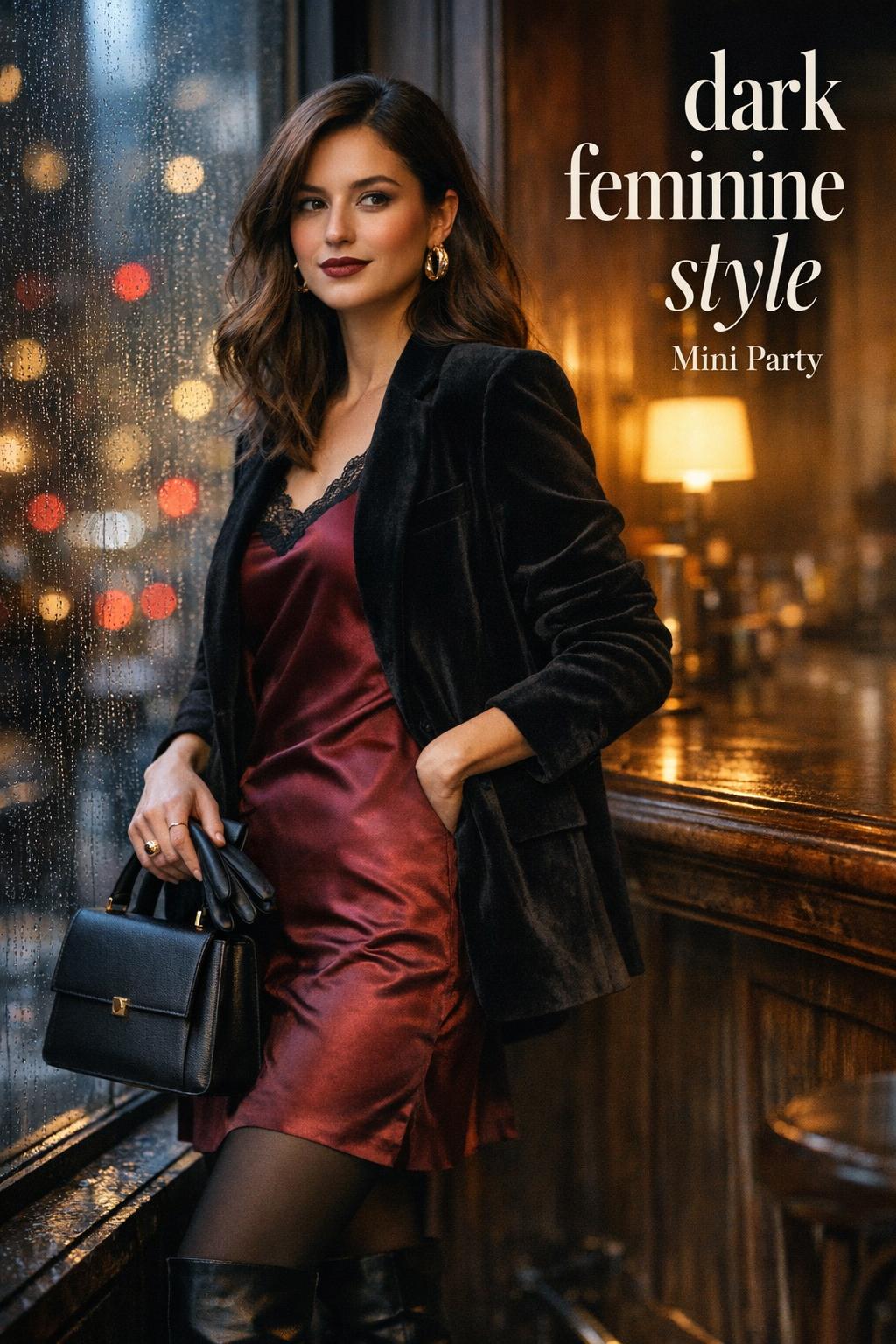
A mini party outfit should look deliberate in low light and in photos. The simplest formula is an elegant dress black as your base, then one upgrade that signals dark feminine energy: velvet texture, lace detail, or a dramatic makeup pivot. The key is restraint. Too many dramatic elements compete; one strong element reads confident.
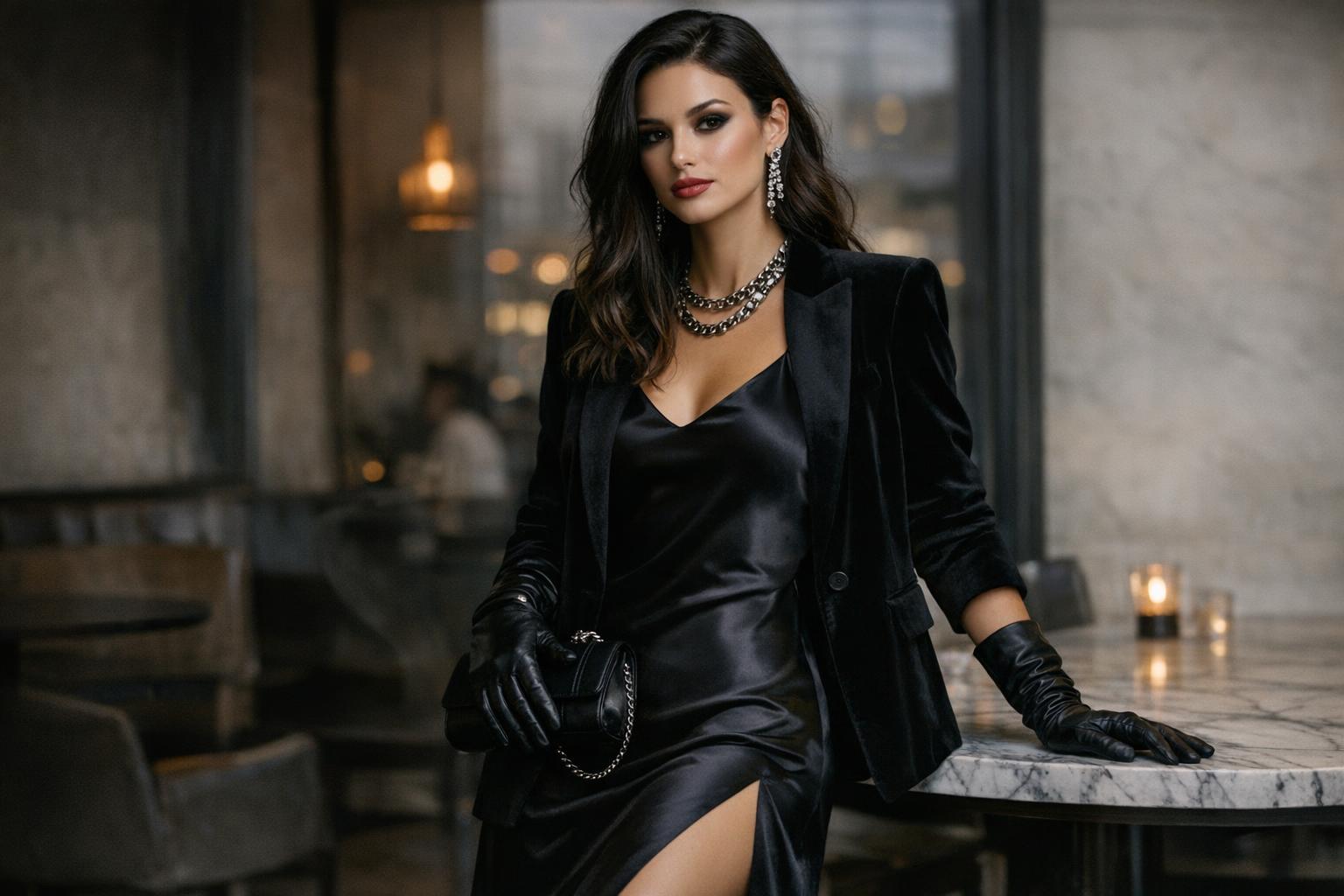
- Option A: black slip dress + velvet layer + smoky eye makeup
- Option B: lace dress + minimal jewelry + deep lip
- Option C: black dress + leather gloves + sleek hair
These formulas stay aligned with the aesthetic while remaining wearable for different venues—small apartments, restaurant lighting, or an event that starts early and ends late.
Beauty and hair as the amplifier: moody makeup that matches the wardrobe
Dark feminine style often becomes “real” when makeup and hair lock the mood in place. That’s why celebrity coverage matters: it provides visible templates for how the beauty side communicates the aesthetic quickly. The essential idea is cohesion. If your outfit relies on tonal layering and texture contrast, your makeup should echo that—depth around the eyes, a defined lip, and an overall finish that looks intentional under event lighting.
Makeup archetypes seen in dark feminine energy moments
Across red carpets and major events like the VMAs and TIFF, recurring motifs appear: smoky eyes, deep lip colors, and a polished base that supports the drama rather than competing with it. The specifics vary—Taylor Swift’s polished take reads different from Jenna Ortega’s more gothic-leaning version—but the structure is consistent: a focal point (eyes or lips) plus a controlled supporting cast.
- Smoky eyes create a shadow effect that pairs naturally with black, charcoal, and midnight blue wardrobes.
- Deep lips reinforce the burgundy side of the palette and signal evening energy even with simple clothing.
- Pale-to-polished base increases contrast, making the dark elements look deliberate rather than heavy.
Hair direction: sleek lines vs. soft waves
Hair functions like framing. Sleek hair emphasizes structure—ideal when your outfit includes a blazer, leather accents, or a sharp silhouette. Soft waves echo romance—ideal when the look leans into lace, velvet, or slip dresses. The decision is about coherence: structured outfit plus sleek hair reads controlled; romantic outfit plus soft waves reads cinematic.
This is also a practicality decision. Sleek styles can hold up through long events and weather shifts, while waves can soften harsh lines and make darker outfits feel more approachable in daylight.
Tips: keeping moody makeup wearable in real schedules
Dark feminine beauty can go wrong when the finish looks unbalanced—too heavy for daytime, too intense without a clear focal point, or too matte/too shiny without intention. Keep the system simple: choose one main focus (eyes or lips), match it to your outfit’s “statement piece,” and maintain clean edges so the look reads refined rather than messy.
For a work-to-evening transition, keep the outfit stable and shift the makeup intensity. A deeper lip or a more defined smoky eye is often enough to move the entire look into night without changing clothes—especially when your base is a black dress or a dark tailored combination.
Runway-to-real-life translation: borrowing the right details from fashion week
Runway references are valuable when you treat them as design principles, not shopping lists. Coverage tied to New York Fashion Week and labels like Rodarte illustrates how dark, gothic glamour can be romantic and modern at the same time. The translation step is choosing one runway principle—romantic texture, controlled palette, balletcore-adjacent delicacy—and fitting it into daily proportions.
Using balletcore with a dark twist without looking costume
Balletcore-adjacent styling tends to rely on refined, delicate signals. In a dark feminine context, the “delicate” part stays, but the palette deepens. Lace details, satin movement, and clean lines work best when grounded by one sturdier element—boots, a structured blazer, or a leather accent. That grounding piece prevents the look from feeling like a themed outfit and pulls it back into wearable fashion.
This approach also handles different U.S. climates. If you’re dealing with cold evenings, the structured layer becomes functional. If you’re in a warmer environment, the refined lines of a slip dress and minimal layering can still communicate the aesthetic—dark color, controlled shine, and precise styling.
Tips: one “editorial” detail is enough
The most consistent styling mistake in moody aesthetics is stacking too many high-drama elements at once: lace, velvet, leather, heavy jewelry, and intense makeup all competing. Dark feminine style reads strongest when it’s edited. Choose one editorial detail (lace texture, velvet depth, leather gloves, or chunky jewelry), keep the rest quiet, and let silhouette balance do the work.
Common mistakes that make dark feminine outfits look flat (and how to fix them)
Dark palettes are unforgiving: when the styling is off, the outfit can read heavy, shapeless, or visually flat. The fix is rarely “add more.” It’s usually about adjusting proportion play, introducing a second texture, or creating a clear waist/shoulder structure so the body line looks intentional.
Mistake: relying on one texture all over
If everything is matte black, the look can lose depth—especially in daylight. Add contrast through fabric behavior: satin against knit, lace against a clean base, velvet against a smoother surface. Even a small switch—like pairing an oversized knit sweater with a satin slip dress—restores dimension immediately.
Mistake: ignoring silhouette structure
Dark feminine style depends on a composed silhouette. If your pieces are all oversized, the mood can collapse into shapelessness. Anchor the look with one structured element (a blazer, a defined waistline, a clean skirt shape) so the outfit reads like design, not like hiding.
Mistake: mismatched mood between outfit and makeup
A romantic lace look paired with overly harsh makeup can feel disconnected; a sharp blazer look paired with overly soft makeup can feel unfinished. Match the intensity. Romantic textures pair well with softer smoky tones and controlled lips; structured tailoring pairs well with cleaner, sharper beauty lines. The goal is a single story from head to toe.
Style maps you can use immediately: three dark feminine directions
Dark feminine style isn’t one uniform look; it’s a family of related expressions. The easiest way to build consistency is to choose a direction as your default, then borrow details from the others when needed. Think of these as styling maps—each one functions as a repeatable system.
Dark feminine street style (cozy-to-cool)
This direction uses comfort pieces as the base—especially knits—then sharpens the outline with accessories and footwear. The oversized knit sweater becomes the softness; boots and chunky jewelry become the edge. It’s ideal for daywear and travel days when you still want mode inspiration without sacrificing comfort.
Gothic glamour (evening-first, but wearable)
Gothic glamour leans into lace, velvet, and higher contrast beauty. It’s the direction most aligned with red-carpet interpretations of dark feminine energy, and it shines for nightlife, dinners, and event settings. Keep it wearable by limiting the drama to one hero texture and one beauty focal point.
Dark ballet-inspired (refined silhouettes, moody palette)
This direction borrows the delicacy and line quality of balletcore-adjacent styling but anchors it in dark tones. Satin, lace details, and clean shapes do most of the work. Add one grounding element—structured blazer, boots, or a leather accessory—to keep the look modern and practical.
Influencers, editors, and shopping ecosystems: how the look spreads
Dark feminine style spreads through a mix of editorial framing, celebrity visibility, and product ecosystems. Editorial voices like a fashion editor credited on street-style coverage (such as Dawn Porter) shape how outfits are described and categorized—turning mood into styling language. Celebrity moments give immediate visual templates. And retail ecosystems—from e-commerce collection hubs like Lastyleinspo’s dark feminine energy fashion page to product-forward inspiration platforms like Pinterest—help translate the concept into purchasable categories.
The practical strategy is to use each ecosystem for what it does best. Use Pinterest for visual references and proportion ideas. Use collection pages to identify product categories and brand examples (including labels like Club Monaco when featured). Use editorial articles to refine the styling logic: why a velvet layer deepens the palette, why lace works as a focal texture, and why a satin slip dress keeps the silhouette elegant.
If you want a Look Di Moda approach—more wardrobe intelligence than impulse—keep a short checklist: one silhouette anchor (dress or tailored base), one texture statement (lace, velvet, leather), and one beauty decision (smoky eye or deep lip). That system produces consistent looks chic results across settings.
Occasion and location cues: New York polish, premiere drama, street-style ease
Dark feminine style is highly context-sensitive. The same palette can read corporate, romantic, or nightlife-ready depending on finish and proportion. Location references help you calibrate. New York style cues favor structure and sharpness; premiere styling (like the Beetlejuice 2 moment referenced in entertainment fashion cycles) supports more drama; street style supports comfort-driven layering. Fashion week centers like New York, Milan, and Paris are useful reference points because they reinforce how to keep dark looks elevated: clean lines, deliberate textures, and controlled accessories.
Tips: the “one-step mood shift” for a full day schedule
For days that start early and end late, build a stable base outfit and plan one mood shift. The easiest shift is beauty: a deeper lip or more defined smoky eye. The second-easiest shift is accessories: add leather gloves or switch to chunkier jewelry. With a black dress or a tailored dark base, one shift is enough to move from daytime to mini party without looking like you changed characters.
Mode inspiration mini playbook: outfit planning rules that keep it elegant
Dark feminine style rewards restraint and planning. The aesthetic is powerful, but it can become visually heavy if you treat “dark” as the only instruction. The better approach is to plan for light behavior, comfort, and movement—especially if you’re dressing for real U.S. life: commuting, temperature changes, and long events.
- Start with one dark base (dress, skirt, or tailored set) as the silhouette anchor.
- Add one contrasting texture (satin, velvet, lace, or leather) to prevent flatness.
- Choose one focal point (statement jewelry or moody makeup) and keep everything else clean.
- Use boots to ground romantic pieces and make the look practical for walking and weather.
- Keep one layer adaptable (a blazer or knit) for temperature control and day-to-night flexibility.
This playbook isn’t about limiting creativity. It’s about making sure every piece has a job—structure, softness, shine, or edge—so the final outfit composition reads intentional and elegant.
FAQ
What is dark feminine style?
Dark feminine style is a moody fashion-and-beauty aesthetic built on a dark palette (often black, charcoal, burgundy, midnight blue), elevated textures (satin, velvet, lace, leather), and a composed silhouette that emphasizes elegant lines and intentional proportion rather than chaotic layering.
How is dark feminine different from gothic fashion?
Gothic fashion often leans into stronger subcultural signals and overt drama, while dark feminine style prioritizes elegance, wearability, and controlled mood; it can borrow gothic glamour elements like lace and deep makeup but typically keeps the overall outfit more streamlined and adaptable.
How do I style dark feminine outfits for everyday wear?
Use one dark base piece (like a satin slip dress or a tailored dark outfit), add a second texture for depth (oversized knit, velvet, lace, or leather), and finish with one focal point such as chunky jewelry or moody makeup; this keeps the look strong while staying practical for daytime schedules.
What are the best fabrics for a dark feminine look?
Satin, velvet, lace, and leather are the core fabrics because they create visible dimension in dark palettes: satin reflects light, velvet adds depth, lace adds romantic detail, and leather sharpens the silhouette for a modern edge.
How can I wear an elegant black dress in a dark feminine way?
Use the elegant black dress as a clean base, then add one strategic upgrade—like a velvet layer, lace detailing, leather gloves, or a deep lip—so the outfit reads intentional and moody without stacking too many dramatic elements at once.
What makeup works best with dark feminine energy?
Moody makeup archetypes—smoky eyes, a deep lip, and a polished base—pair best because they echo the wardrobe’s shadowed palette and controlled intensity; this is the same beauty structure often seen in celebrity interpretations at events like the VMAs, TIFF, and major premieres.
How do I do “balletcore with a dark twist” without looking like a costume?
Keep the ballet-inspired elements refined and minimal—clean lines, satin movement, lace detail—then ground them with one sturdier piece such as a structured blazer or boots, and stay within a dark palette so the result feels modern rather than themed.
Which designers or fashion references connect to dark feminine style?
Runway coverage tied to New York Fashion Week has highlighted Rodarte, designed by Kate and Laura Mulleavy, for dark, gothic glamour; these references help clarify the aesthetic’s design principles—romantic textures, strong mood, and a controlled palette—without requiring literal runway replication.
Where can I find dark feminine outfit inspiration and shopping direction?
Pinterest is useful for visual references and outfit composition ideas, while product-focused collection hubs like Lastyleinspo’s dark feminine energy fashion page can help identify key categories and brand examples (including labels such as Club Monaco when featured); pairing those sources with a capsule wardrobe plan keeps purchases cohesive.