How to Style Retro Style Outfits Without Looking Costume-y
Retro style outfits rarely fail because the pieces are “too vintage.” They fail because the outfit composition is off: the silhouette feels costume-like, the color story is noisy, or the styling logic doesn’t translate to real life. The most wearable retro looks in the U.S. right now borrow recognizable decade cues—shape, print, and texture—then anchor them with modern fit and practical proportions. This is the difference between a look that reads as intentional and a look that reads like a theme party.
Think of retro dressing as a set of design principles: defined waistlines, statement collars, wide-leg volume, clean mini shapes, and texture contrast (suede against denim, rib knits against polished leather-like finishes). Whether your reference point is 70s inspired tailoring, modern 60s style outfits, or 70s street style vintage photos, the goal is consistent: create a clear visual anchor, then keep the rest edited.
This guide breaks down retro dressing with an analytical lens—why certain combinations work, what to prioritize when shopping your closet, and how to look retro without sacrificing comfort, movement, or season-appropriate layering. You’ll also see practical “when to wear it” context, plus a dedicated section for deep autumn outfits aesthetic styling, because retro palettes and fall wardrobes are natural allies.
Retro style, defined: the three elements that make it read as intentional
Retro style is not a single trend; it’s a design language pulled from multiple decades. In practice, the most convincing retro style outfits usually contain three ingredients: a decade-coded silhouette, a period-relevant detail, and a modern finishing choice that keeps it wearable.
Found the dress? Keep the rest in one place.
Zarellea brings guest details, vendors, timelines, and every next step together — so your wedding plan feels as good as your look.
1) Silhouette balance (the decade signal)
Silhouette is the loudest retro cue. A wide-leg trouser instantly reads 70s inspired. A clean A-line mini reads modern 60s style outfits. A fitted rib knit with a flared hemline reads late-60s/early-70s without needing any loud print. If you want to look retro quickly, start with shape before you add accessories.
2) Detail accuracy (the authenticity layer)
Details do the credibility work: a pointed collar, contrast buttons, patch pockets, a scarf tied at the neck, a belt with a structured buckle, or a boot shaft height that matches the era. You don’t need many—one or two deliberate details prevent the outfit from feeling like generic “vintage.”
3) Modern finishing (the not-a-costume safeguard)
Modern finishing is what makes retro wearable for school drop-off, the office, or a weekend in the city. It can be as simple as cleaner lines, better fit through the waist and hip, or pared-back hair and makeup. The outfit still references 70s street style vintage photos, but it functions in a current wardrobe.
Start with one “hero piece,” then build the outfit around it
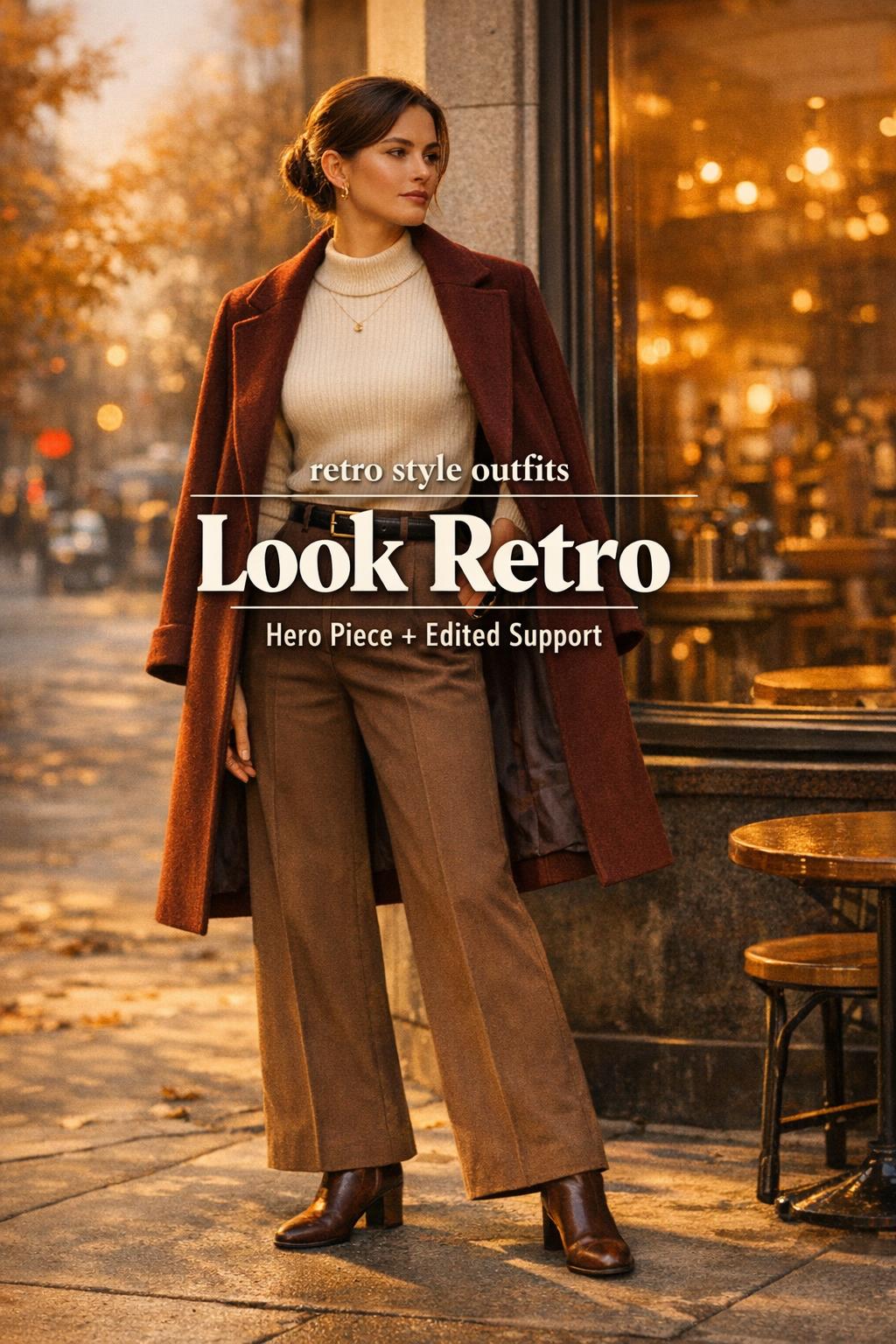
Retro dressing gets easier when you treat the look like a system: one hero piece carries the era, and the rest supports it. This prevents over-styling and keeps your outfit readable at a glance.
- Hero bottoms: high-rise wide-leg trousers, flares, A-line mini, or a denim midi with a front seam
- Hero tops: fitted turtleneck, collared knit, blouse with a pointed collar, or a slim mock-neck
- Hero outerwear: cropped jacket, structured blazer, trench-like layer, or a longline coat with strong shoulders
- Hero shoes: heeled boots, loafers, sleek sneakers (for modern contrast), or a low heel that elongates the leg line
The styling logic: the hero piece establishes the decade; your supporting pieces manage proportion play. If your trousers are wide, your top should add structure (tucked-in knit, fitted tee, or tailored shirt). If your skirt is short, your outer layer can lengthen the vertical line (a longer coat or a blazer). This is how you look retro while still looking polished.
70s inspired outfit formulas that look retro without feeling like a costume
The 70s inspired category is often the easiest to wear because it aligns with modern preferences: higher waists, longer legs, relaxed movement, and strong outerwear. The key is to keep the silhouette intentional—wide where it should be wide, fitted where it needs control.
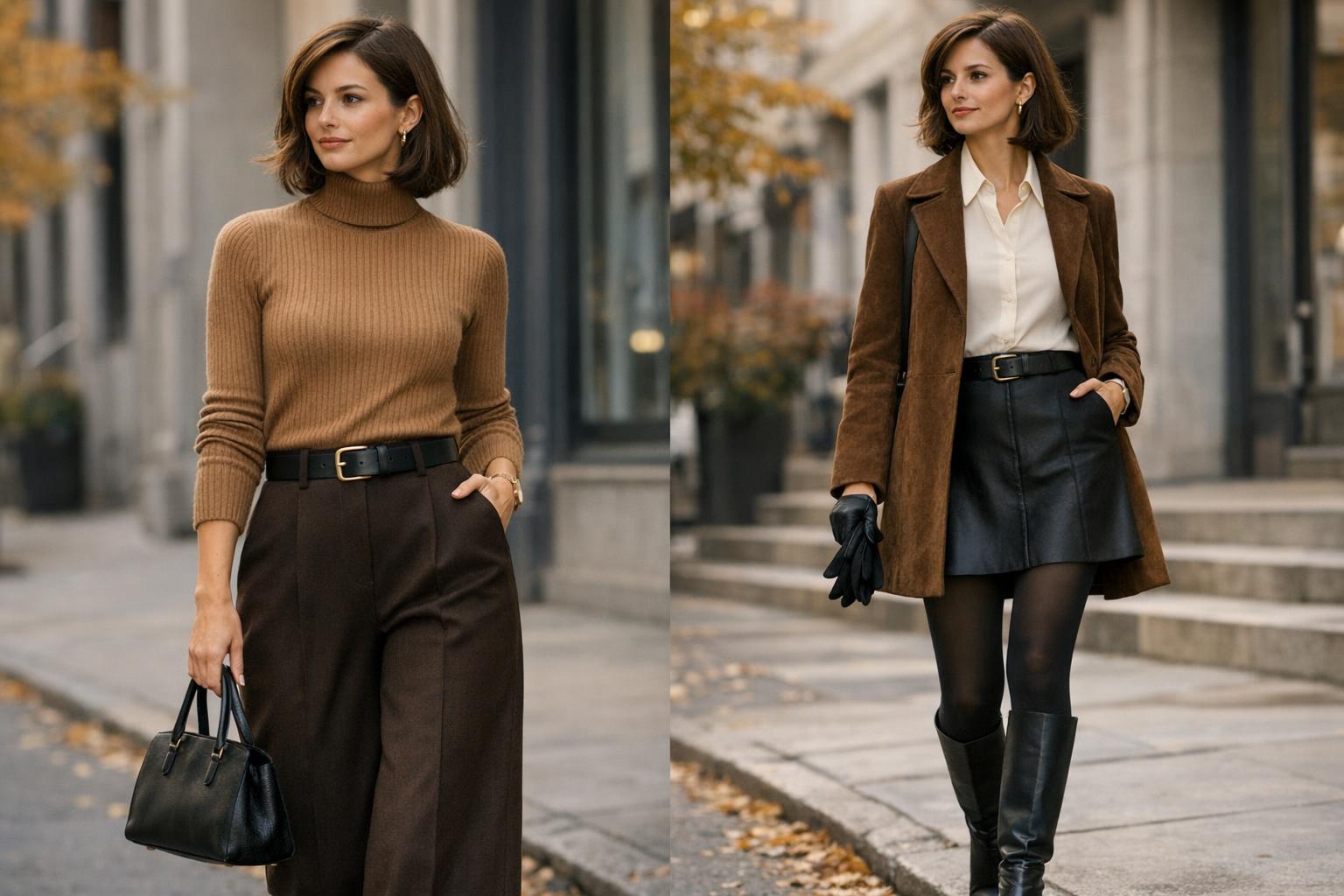
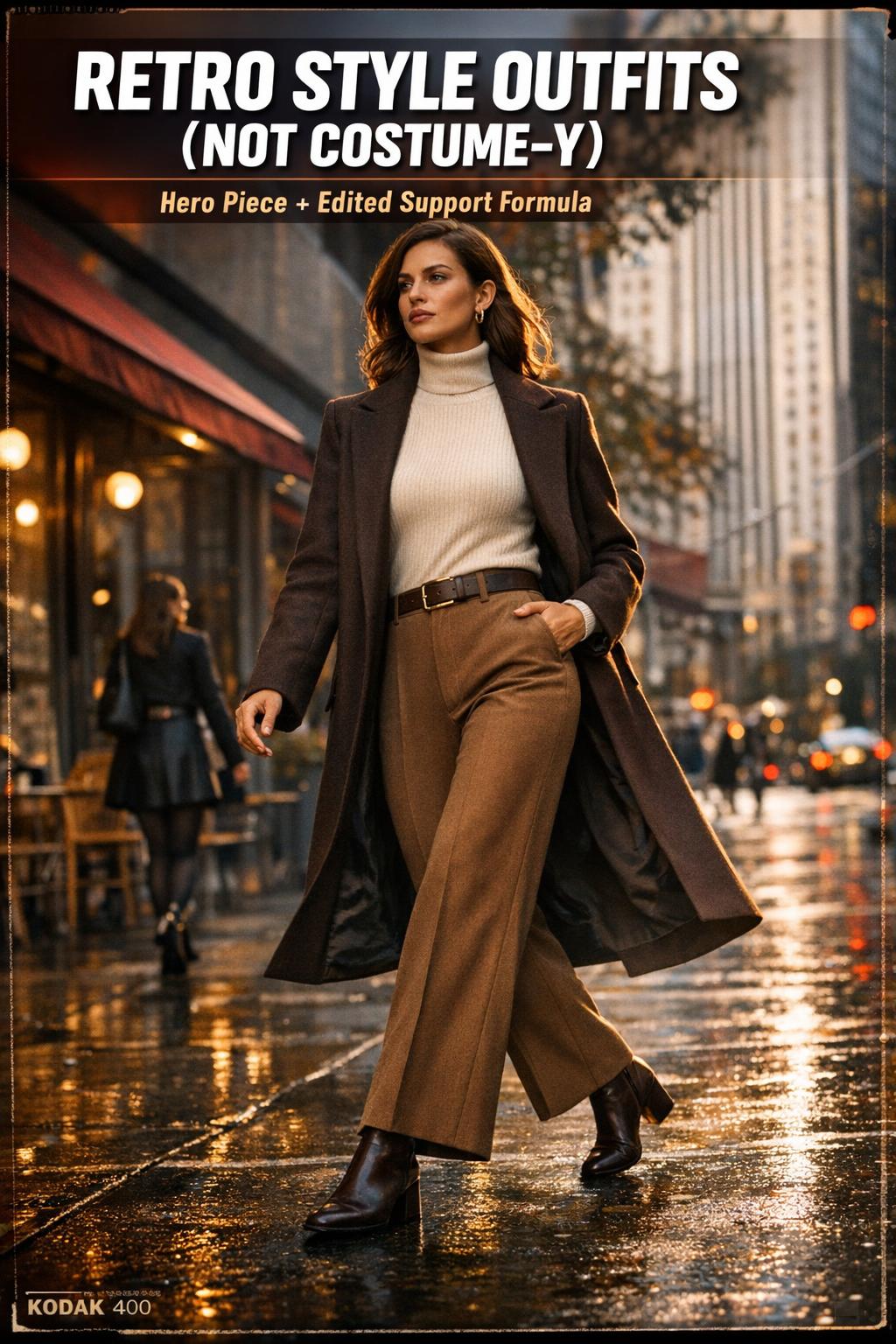
The wide-leg trouser + fitted knit equation
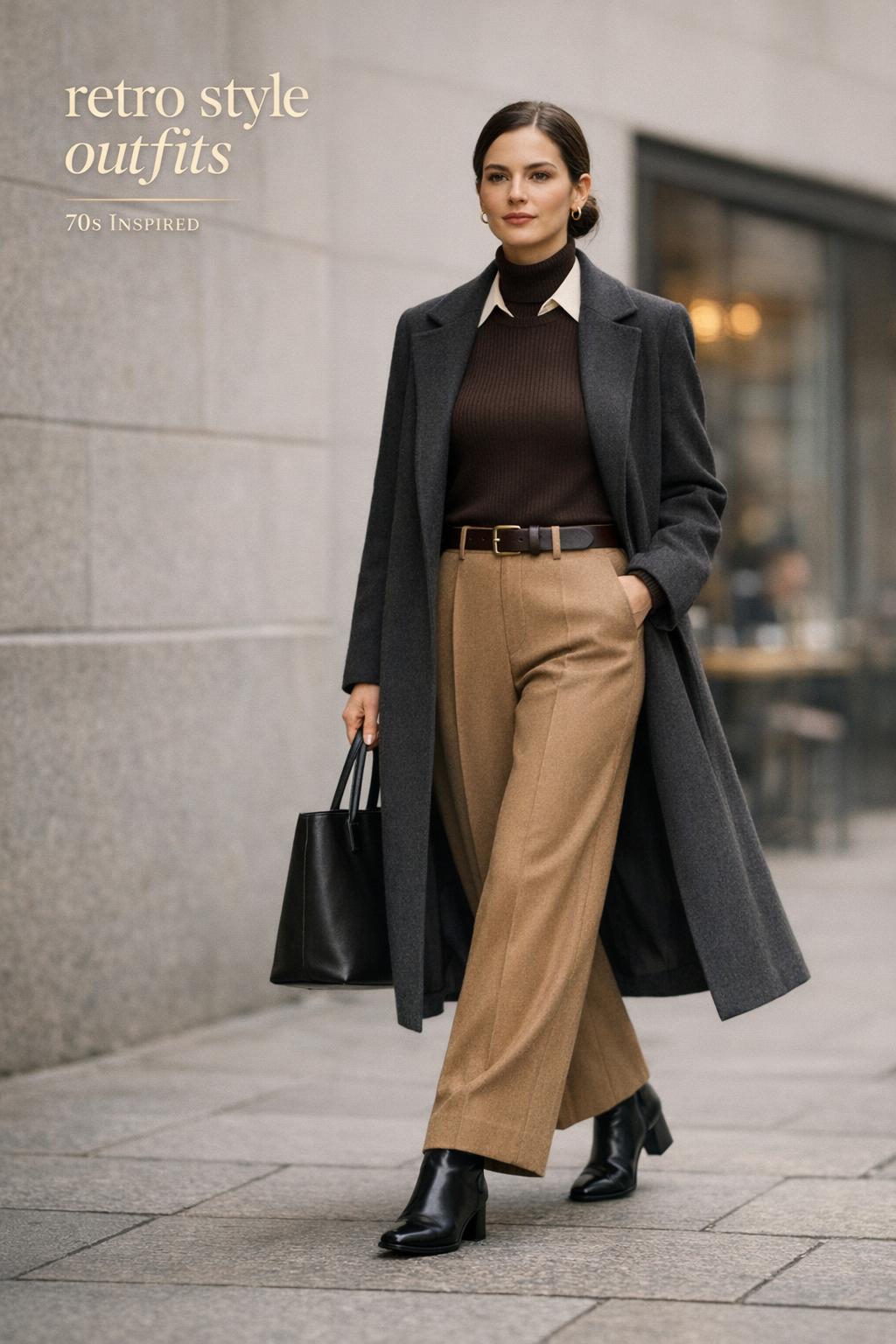
This is a foundational retro style outfit because it’s built on silhouette balance. The wide leg creates drama and movement; the fitted knit controls volume through the torso. Add a belt to define the waist, and the look instantly reads 70s without relying on loud prints.
Why this outfit works: the wide-leg hem becomes the statement, while the knit texture adds tactile depth. The waist definition becomes the visual anchor that prevents the outfit from feeling boxy.
When to wear it: everyday city dressing, casual office environments, museums, dinners where you’ll be sitting and walking—wide-leg trousers are comfortable when the rise fits correctly.
Flare denim + structured jacket for clean retro contrast
Flare denim can lean “throwback” fast, so the finishing choice matters. Pairing flares with a structured jacket creates a crisp frame at the shoulders and keeps the overall look tailored rather than nostalgic-for-nostalgia’s-sake.
Styling variations: keep the jacket cropped to highlight the high rise, or go longline if you want a more elongated, editorial profile. A boot with a stable heel supports the flare and makes the leg line look continuous.
Monochrome 70s street style energy, updated
Many 70s street style vintage photos show strong, coherent color stories—often tonal looks that feel expensive because they’re controlled. A single-color base (top and bottom in close tones) lets you add one retro detail—like a scarf, a statement buckle, or a textured outer layer—without the outfit becoming busy.
Tip: tonal layering is especially forgiving for fit. If you’re mixing silhouettes—wide leg with a slightly relaxed top—staying in one color family makes the outfit feel intentional even when the shapes are looser.
Modern 60s style outfits: clean lines, graphic impact, and controlled volume
Modern 60s style outfits are about precision. The shapes are simple, but the impact comes from proportion play: short hems balanced with long sleeves, A-line volume balanced with clean footwear, or a sharp collar balanced with minimal accessories.
The A-line mini + opaque tights + sleek outer layer
This formula reads 60s because the A-line mini creates a crisp geometric silhouette. The tights keep it practical for cooler weather, and a sleek outer layer gives the look city polish rather than costume energy.
Why this outfit works: the mini creates a strong shape; the tights create a single uninterrupted leg tone; the outer layer keeps the profile elongated. The result is a retro reference that still feels current.
Collared top + straight skirt: the “graphic simplicity” approach
A sharp collar is one of the quickest ways to look retro, especially when paired with a straight skirt that doesn’t fight for attention. Keep accessories minimal and let the collar and clean lines do the work.
Real-world note: for all-day wear, prioritize comfort at the waistband and choose a skirt length that allows easy walking and sitting. Retro silhouettes are only as wearable as their movement.
Shift dress logic: structure without tightness
The appeal of a shift silhouette is that it delivers structure without clinging. For modern wear, focus on shoulder fit and hem length. A shift that fits well at the shoulders reads intentional; one that droops reads like an ill-fitting thrift find even if it’s authentic.
Tip: if you want to look retro but dislike restrictive clothing, this is a strong entry point. You can add definition with a coat or a sharp shoe instead of forcing a tight waist.
Deep autumn outfits aesthetic meets retro: the seasonal palette advantage
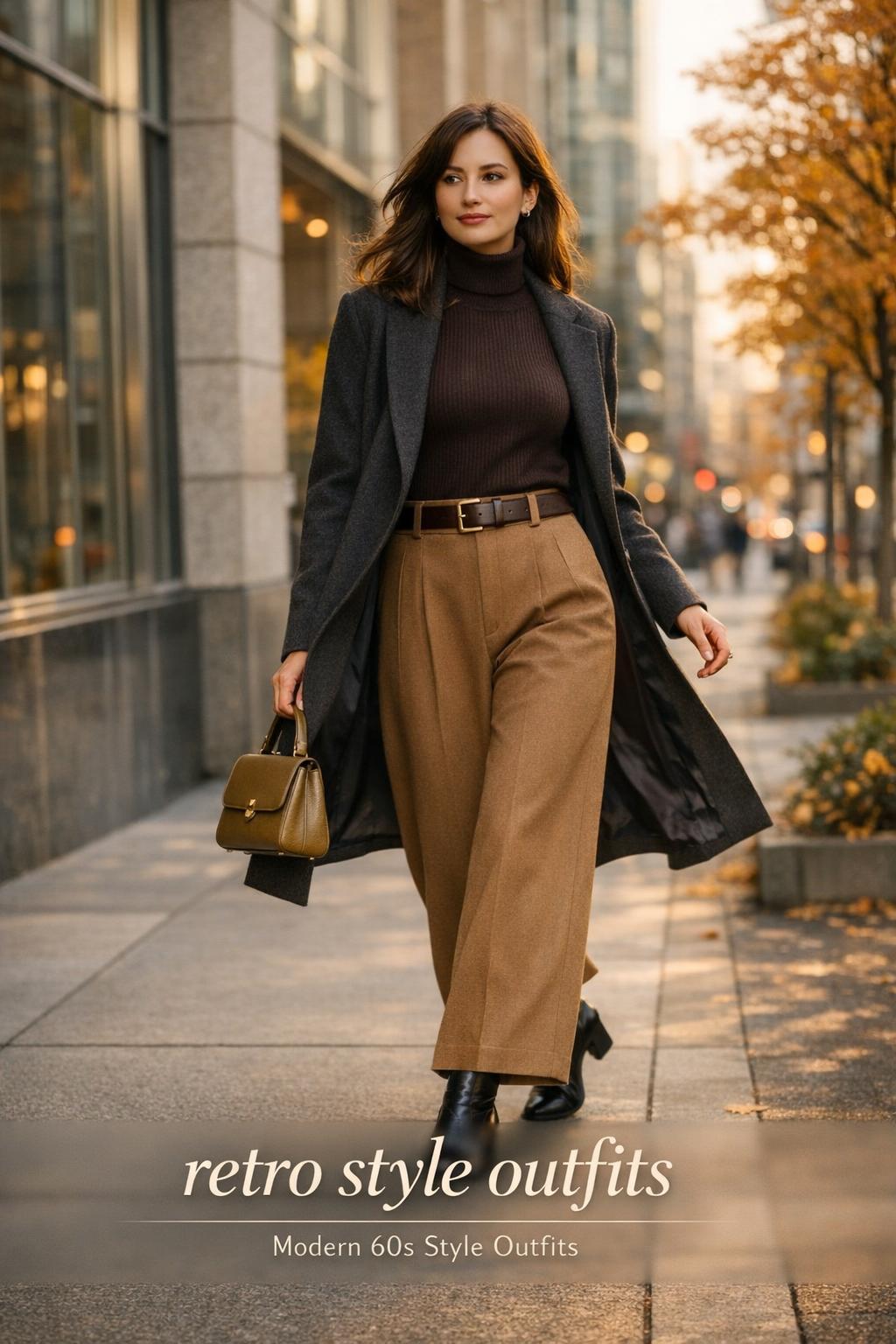
Retro style and a deep autumn outfits aesthetic naturally reinforce each other because both favor richness, depth, and visual warmth. The seasonal context matters: when your palette matches the weather, retro textures (knits, suede-like finishes, heavier denim) feel purposeful rather than theatrical.
Build a deep palette with texture contrast
Retro outfits often rely on texture more than print. A rib knit against a smooth trouser, a brushed outer layer against crisp denim, or a matte top under a slightly glossy shoe creates dimension without adding clutter. This is especially effective in deep autumn styling, where tonal layering can otherwise feel flat if everything is the same fabric.
- Visual anchor: choose one dominant texture (knit, denim, or a structured outer layer)
- Support texture: add one contrasting finish (smooth, brushed, or slightly glossy)
- Edit the rest: keep accessories clean so the textures read clearly
Retro outerwear is your fall shortcut
Outerwear does heavy lifting in retro styling because it frames the silhouette. In cooler months, you can keep the base outfit minimal and let the coat or jacket carry the era through shape—cropped proportions, structured shoulders, or a longer line that creates drama as you move.
When it may not work: if the outerwear is oversized without structure, the look can skew shapeless. Add waist emphasis (belt, high-rise trousers, or a fitted knit) to restore proportion.
Tip: use “one warm, one neutral” to control the palette
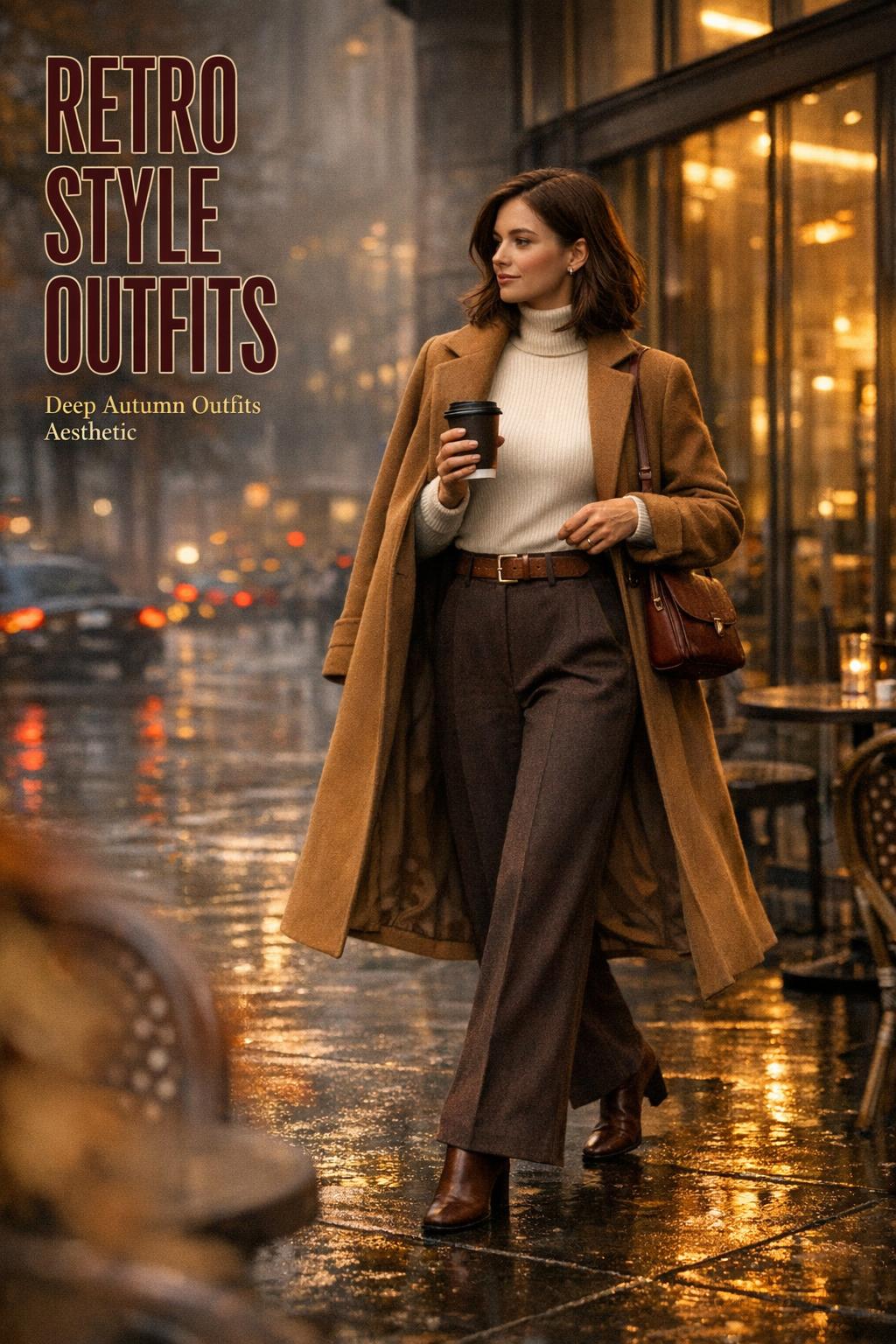
Deep autumn outfits aesthetic styling can go overly saturated if every item competes. A controlled formula is one warm tone paired with one grounding neutral. That balance keeps the look retro and elevated, not busy.
How to look retro with accessories: small signals, high impact
Accessories are the most efficient way to look retro because they add era recognition without changing your comfort level. The key is restraint. One or two accessories should act as the retro signal; stacking too many can shift the look from styled to costume.
Choose one focal accessory
Use a single piece as the focal point—like a scarf, a belt with a strong buckle, or a structured bag shape—then keep the rest minimal. This mirrors the clarity you see in 70s street style vintage photos: an outfit reads at a glance because it has one clear message.
Match footwear to hem and volume
Footwear is not an afterthought in retro styling; it’s the proportion finisher. Wide-leg trousers often need a shoe that provides lift or length. Minis often benefit from a sleek boot or a clean loafer shape to keep the look sharp. The goal is to maintain a continuous line that supports the silhouette rather than chopping it up.
Tip: avoid “era overload”
If your clothing already has a strong decade cue—like flares or a mini—keep accessories modern and clean. If your outfit is simple—like straight trousers and a knit—then your accessories can carry the retro message. This trade-off is the fastest way to look retro without looking like you’re in a costume.
Fit and tailoring: the modern lever that makes vintage references wearable
Fit is where retro style outfits succeed or collapse. A retro silhouette should look deliberate, not accidental. That means the shoulder seam sits correctly, the waistline hits where it’s meant to, and the hem length supports your proportion goals.
Prioritize the “control points”: shoulders, waist, hem
These three areas determine whether your outfit reads styled or sloppy. Shoulders create structure, the waist creates shape, and the hem creates visual pacing. Even relaxed retro looks need at least one control point—usually the waist or shoulder—to keep the silhouette from floating.
Know when vintage proportions need updating
Some retro references are inherently extreme: very wide legs, very short hems, very oversized collars. These can work, but they’re less flexible for everyday wear. Updating one variable—slightly reducing volume, choosing a cleaner fabric, or keeping the palette tonal—lets you keep the retro idea while improving versatility.
Tip: comfort is part of authenticity
A look doesn’t feel retro if you’re constantly adjusting it. If trousers pinch when sitting, if a top rides up under a jacket, or if shoes limit walking, the outfit loses confidence. The most convincing “look retro” styling is built on pieces that support movement, especially for real-life contexts like commuting, travel days, or long dinners.
Occasion mapping: where retro style outfits perform best in real life
Retro dressing becomes easier when you match the decade reference to the setting. A strong 60s mini moment can feel perfect for a creative dinner but less practical for a day filled with walking. A 70s inspired wide-leg look can be ideal for travel because it’s comfortable and visually polished. Use the occasion to decide how bold to go.
Office and workdays: keep the retro cue in the silhouette
For work environments, rely on tailored shapes—structured outerwear, controlled wide-leg trousers, clean knits—and keep the styling minimal. One retro detail is enough, such as a collar shape or a belt. This approach reads professional while still clearly referencing retro design.
Weekend and city plans: let texture and accessories do more
Weekends are where you can push the retro message: stronger texture contrast, bolder shapes, and a more noticeable accessory choice. This is also where a deep autumn outfits aesthetic can shine—tonal layering, richer colors, and more dramatic outerwear.
Travel days: choose retro silhouettes that move well
Retro-inspired wide-leg trousers, soft knits, and structured outerwear are travel-friendly because they handle sitting, walking, and temperature shifts. The outfit looks finished even when your day is functional. Keep shoes stable and opt for layers you can remove without destroying the silhouette.
Common retro styling mistakes (and the fixes that instantly elevate the look)
Most retro outfits don’t fail because the idea is wrong; they fail because too many elements compete. Cleaning up the styling is usually more effective than buying new pieces.
Mistake: mixing multiple decades with no anchor
If your outfit pulls from 60s and 70s simultaneously, you need an anchor: one dominant silhouette. Let the silhouette decide the decade, then allow only small cross-decade accents. Without an anchor, the outfit reads confused rather than curated.
Mistake: loud print plus loud accessories
Print can be a statement piece, but it needs negative space. If the print is bold, make accessories quieter and keep the silhouette clean. If accessories are bold, keep clothing minimal. This editing step is what keeps retro style outfits from drifting into costume territory.
Mistake: ignoring proportion play
Retro looks depend on proportion: short with long, wide with fitted, structured with soft. If everything is oversized, the look loses shape. If everything is tight, the look can feel dated rather than retro. Introduce contrast—usually by controlling the waist or adding structure at the shoulders.
Tip: photograph your outfit to check the silhouette
Retro references are visual, so a quick mirror photo reveals whether the silhouette is clear. If the waist disappears, add a belt or a tuck. If the legs look shortened, adjust the hem or switch shoes. Small proportion fixes make the biggest difference in whether you look retro or just “wearing old clothes.”
How to build a retro capsule from what you already wear
A retro wardrobe doesn’t require a full overhaul. A small capsule of shape-driven basics gives you repeated outfit options across seasons. The goal is versatility: each piece should work in at least three combinations, and at least one piece should provide a clear decade signal on its own.
- A high-rise wide-leg trouser or flare denim (70s inspired silhouette)
- A fitted knit or turtleneck (layering base with clean lines)
- A collared top (instant retro detail)
- An A-line mini or straight skirt (modern 60s style outfits foundation)
- A structured outer layer (silhouette frame, especially for deep autumn outfits aesthetic)
- A stable-heel boot or sleek loafer (proportion finisher)
Once the capsule is set, rotate the “retro signal” across outfits. One day the silhouette does the work (wide-leg trousers). Another day the detail does the work (collar or scarf). This rotation keeps your look intentional and prevents retro dressing from becoming repetitive.
Quick styling tips for a polished “look retro” finish
Retro styling is won in the final 10%: the tuck, the hem, the shoe choice, and the controlled palette. These are small decisions, but they determine whether the outfit reads editorial or accidental.
Tips: the 30-second upgrade checklist
- Define one control point: waist (belt/tuck) or shoulders (structured outerwear).
- Keep the palette coherent: tonal layering or one warm + one neutral for a deep autumn outfits aesthetic.
- Check hem-to-shoe alignment: make sure the shoe supports the silhouette, especially with flares and wide legs.
- Edit accessories: one focal accessory, not three competing statements.
- Confirm comfort: sit, walk, and lift your arms—retro looks should function, not restrict.
If you want a fast reference, pull inspiration from 70s street style vintage photos and focus on the most repeatable elements: clear waist emphasis, strong outerwear framing, and cohesive color stories. These translate into modern closets more reliably than era-specific novelty pieces.
FAQ
How do I wear retro style outfits without looking like I’m in a costume?
Use one strong decade cue (usually silhouette) and keep everything else edited and modern: clean finishing, minimal accessories, and a coherent palette. Costume energy happens when multiple loud elements compete—bold print, big accessories, and extreme shapes all at once—so choose one focal point and let it lead.
What’s the easiest way to look retro if my closet is mostly basics?
Start with silhouette and one detail: pair a fitted knit with wide-leg trousers for a 70s inspired shape, or an A-line mini with a sleek outer layer for modern 60s style outfits. Add a single retro accessory like a scarf or a belt to make the reference clear without changing your entire wardrobe.
How can I use 70s street style vintage photos as inspiration without copying them exactly?
Treat the photos as a blueprint for proportion and color rather than an exact shopping list. Notice the silhouette balance (wide leg with fitted top), tonal layering, and strong visual anchors like a defined waist or structured outerwear, then recreate those principles using modern fits and comfortable fabrics.
What makes modern 60s style outfits feel “60s” even when the pieces are new?
It’s the controlled geometry: A-line minis, shift-like shapes, clean collars, and simple lines with intentional proportion play. Keeping accessories minimal and choosing sleek footwear helps the outfit read sharp and graphic rather than overly nostalgic.
How do I style a deep autumn outfits aesthetic with retro pieces?
Focus on tonal layering and texture contrast to build depth without clutter. Let one texture be dominant (like knit or denim), add one contrasting finish for dimension, and keep accessories edited. Retro outerwear is especially effective in fall because it frames the silhouette and makes the palette feel seasonally intentional.
How many retro elements should I include in one outfit?
A reliable rule is one hero element plus one supporting detail. For example, flares (hero) plus a pointed collar (detail). Beyond that, keep finishing choices clean; too many retro signals at once can make the look feel busy and less wearable.
What’s the most common proportion mistake in retro outfits?
Letting volume stack without a control point. If trousers are wide and the top is also loose, the waist disappears and the silhouette loses intention. Fix it with a tuck, a belt, or structured outerwear that defines the shoulders and restores shape.
How can I make a 70s inspired outfit work for an office setting?
Keep the retro cue in the silhouette—like wide-leg trousers—then make the rest tailored and minimal. A fitted knit or clean collared top, a structured outer layer, and edited accessories create a polished look that references the 70s without leaning into theme styling.