
Modern Business Capsule Wardrobe for Real Workdays
The real challenge behind a business capsule wardrobe
A business capsule wardrobe sounds simple until real life enters the picture. Workdays are rarely one-note. A morning meeting can lead into a long commute, an over-air-conditioned office, an unexpected lunch, and an evening event that still calls for polish. The frustration is not just having “nothing to wear.” It is having clothes, but not enough combinations that feel coherent, professional, comfortable, and repeatable.
That is why the business capsule wardrobe remains such a useful concept. At its core, it is a tightly edited group of pieces that work together consistently, reduce decision fatigue, and create a reliable visual identity. The appeal is practical, but the styling challenge is more nuanced than simply buying neutral basics. The goal is to build a wardrobe that supports routine, movement, and professional expectations without becoming flat or overly rigid.
The most successful version does not feel restrictive. It feels intentional. It gives you enough structure to get dressed quickly, while still allowing for variation in silhouette, texture, and mood. That balance is what turns a collection of workwear into a wardrobe that actually functions.
Why work wardrobes become difficult so quickly
Business dressing often fails at the point where aesthetics and logistics collide. A closet may contain good individual items, yet still produce awkward outfits because the proportions do not align, the fabrics do not layer well, or the shoes that look polished are not practical for a full day. The problem is rarely quantity alone. More often, it is a lack of visual and functional cohesion.
Found the dress? Keep the rest in one place.
Zarellea brings guest details, vendors, timelines, and every next step together — so your wedding plan feels as good as your look.
There is also the issue of dress-code ambiguity. Many workplaces no longer fit neatly into one category. Some expect classic tailoring, others lean business casual, and many operate in a space where polished restraint matters more than strict formality. That middle ground is where people tend to overcomplicate things. They buy statement items that only work once, or they default to safe pieces that flatten the overall wardrobe.
Climate and routine add another layer. A work wardrobe has to survive temperature shifts, long periods of sitting, movement during commuting, and repeated wear across the week. Fabrics that wrinkle too quickly, jackets that feel stiff by midday, and shoes that cannot handle walking all undermine the purpose of a capsule. If a piece looks correct but is hard to live in, it will not be worn often enough to justify its place.
What a business capsule wardrobe is really meant to solve
A useful capsule wardrobe solves four connected problems at once: getting dressed efficiently, maintaining a polished professional image, reducing unnecessary purchases, and making outfit repetition feel deliberate rather than stale. It is not about sameness. It is about compatibility. Every piece should contribute to multiple outfits, support a consistent level of professionalism, and work across more than one context.
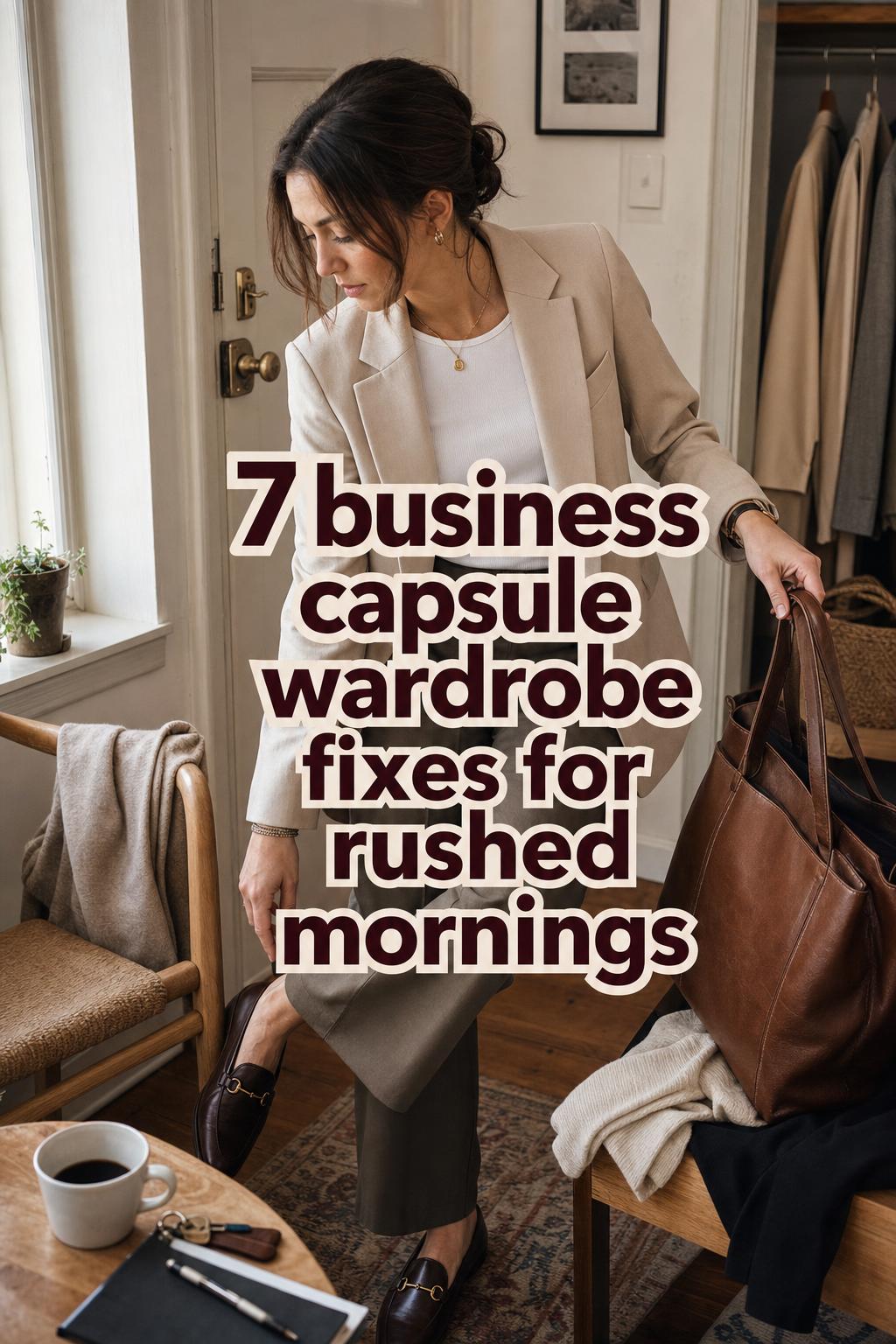
The styling logic that makes a capsule feel polished instead of predictable
The difference between a dull work wardrobe and a strong one usually comes down to outfit composition. A capsule works best when it is built around visual anchors, proportional variety, and a controlled palette. Visual anchors are the pieces that stabilize the outfit immediately, such as a tailored blazer, a clean trouser, or a structured shoe. They create clarity. Once those are in place, softer or more relaxed pieces can enter the outfit without making it feel unfinished.
Proportion matters just as much. If every top is fitted and every bottom is slim, the wardrobe can start to feel severe. If every piece is oversized, the result can lose business structure. A stronger approach uses contrast: a structured jacket with fluid trousers, a clean shirt with a softer knit layer, or a slightly relaxed pant with a refined shoe. That proportion play makes repeated pieces look fresh.
Texture is another overlooked tool. When color is restrained, texture does the work of variation. Smooth suiting fabric, crisp shirting, fine knitwear, and subtle leather accessories can all sit within the same palette while preventing the wardrobe from looking repetitive. This is what keeps a business capsule wardrobe visually intelligent rather than purely minimal.
Color balance without visual boredom
A capsule usually benefits from a concentrated color direction, but tonal layering is often more effective than strict monochrome. A wardrobe built around related neutrals tends to produce easier combinations because the pieces naturally support one another. The important point is contrast control. An outfit generally looks more polished when there is enough distinction between pieces to define the silhouette, but not so much that it feels disconnected.
In practical terms, that means pairing lighter and darker values thoughtfully, letting one piece act as the focal point, and using accessories to reinforce the palette. This keeps outfits calm, edited, and work-appropriate without feeling repetitive by midweek.
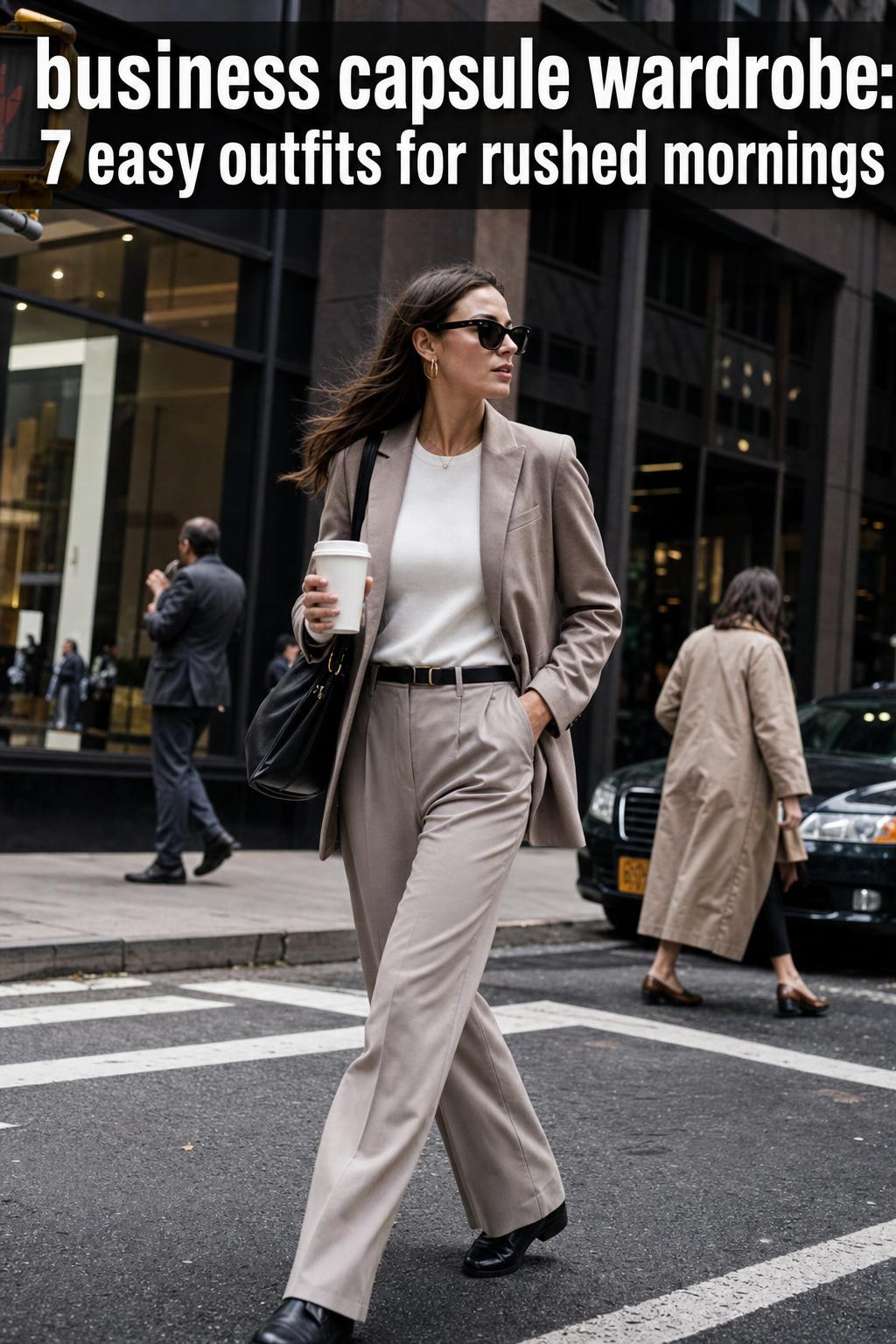
Start with the pieces that do the most work
A business capsule wardrobe should begin with items that repeat easily under different styling conditions. These are not necessarily the most exciting pieces in the closet, but they are the ones that make every other item more useful. The right foundation supports layering, handles repeated wear, and creates enough outfit combinations to keep the wardrobe flexible.
- A tailored blazer that can sharpen softer separates
- Trousers with a clean line and enough comfort for sitting and commuting
- Shirts or tops that layer smoothly under knitwear and jackets
- A refined knit that adds warmth without bulk
- Shoes that can handle movement while maintaining professional structure
- A practical bag that supports the workday without disrupting the outfit composition
The common mistake is starting with novelty. A capsule becomes useful when the most repeated pieces are chosen first, because they determine the range of styling combinations available later. Once those are established, more expressive details can be added carefully.
Most versatile piece
The blazer often earns that position because it changes the reading of almost everything beneath it. It can turn a simple top into a professional look, define the shoulder line, and add structure to softer fabrics. The reason it matters in a capsule is not tradition. It is efficiency.
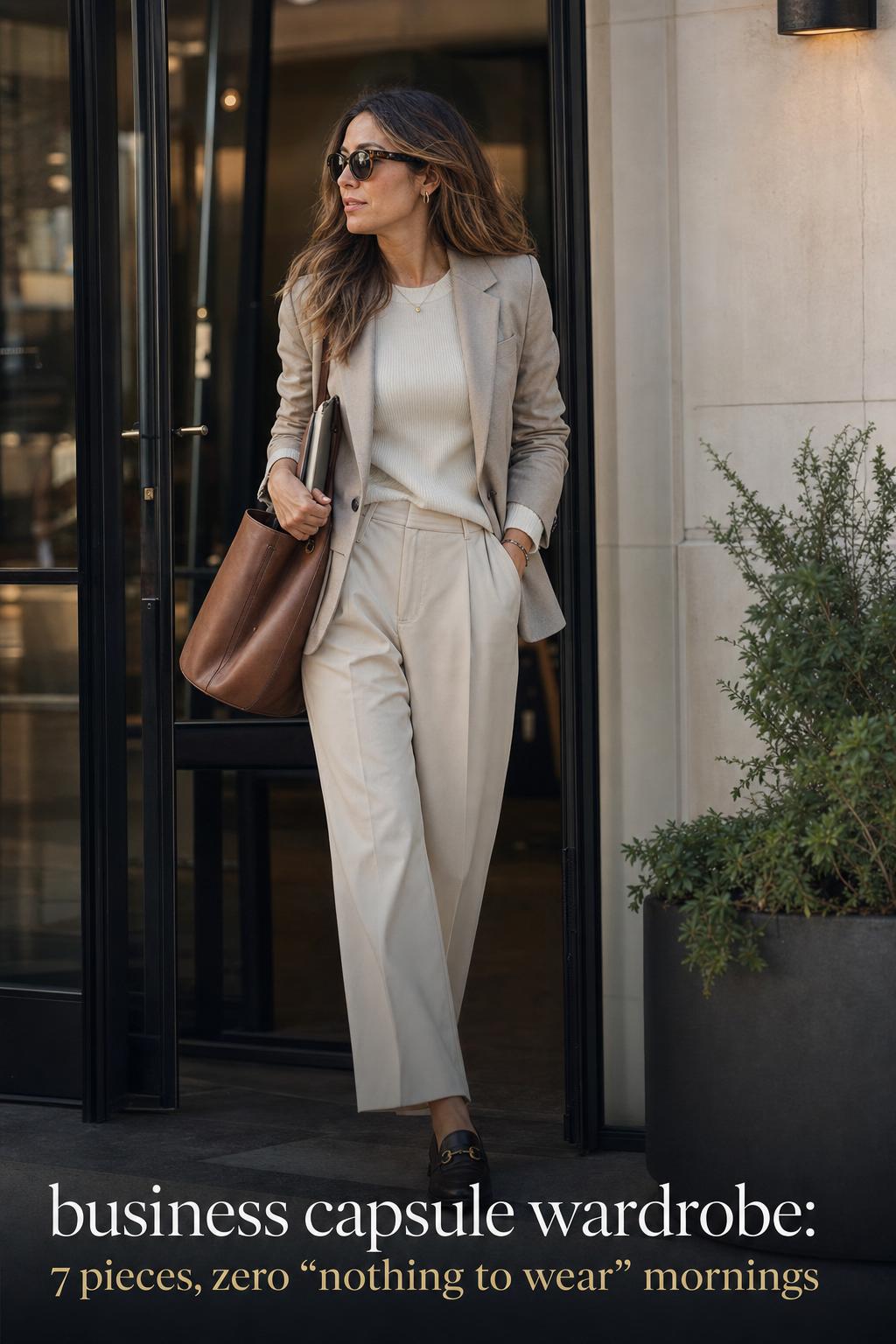
Structured layers for days that need authority
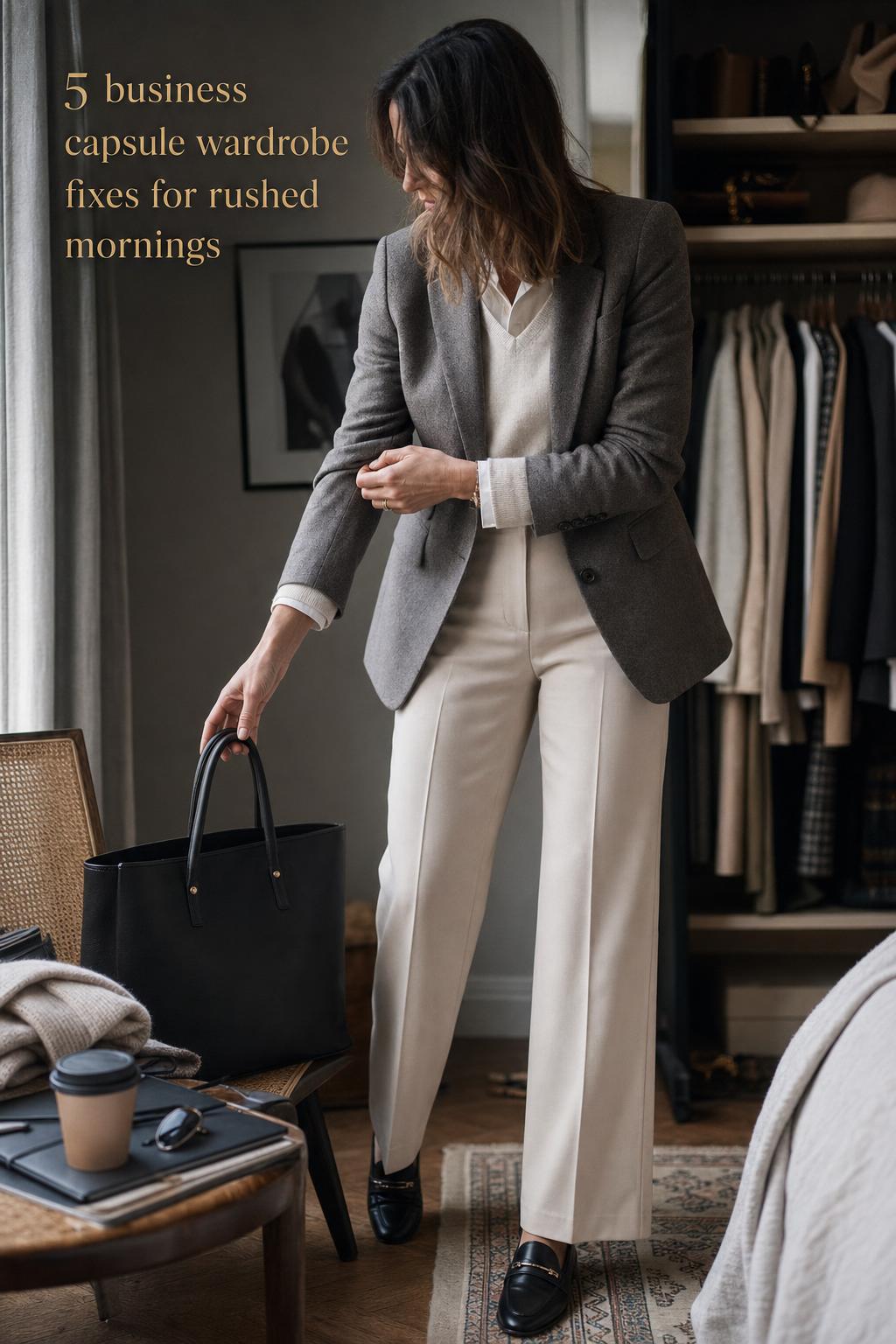
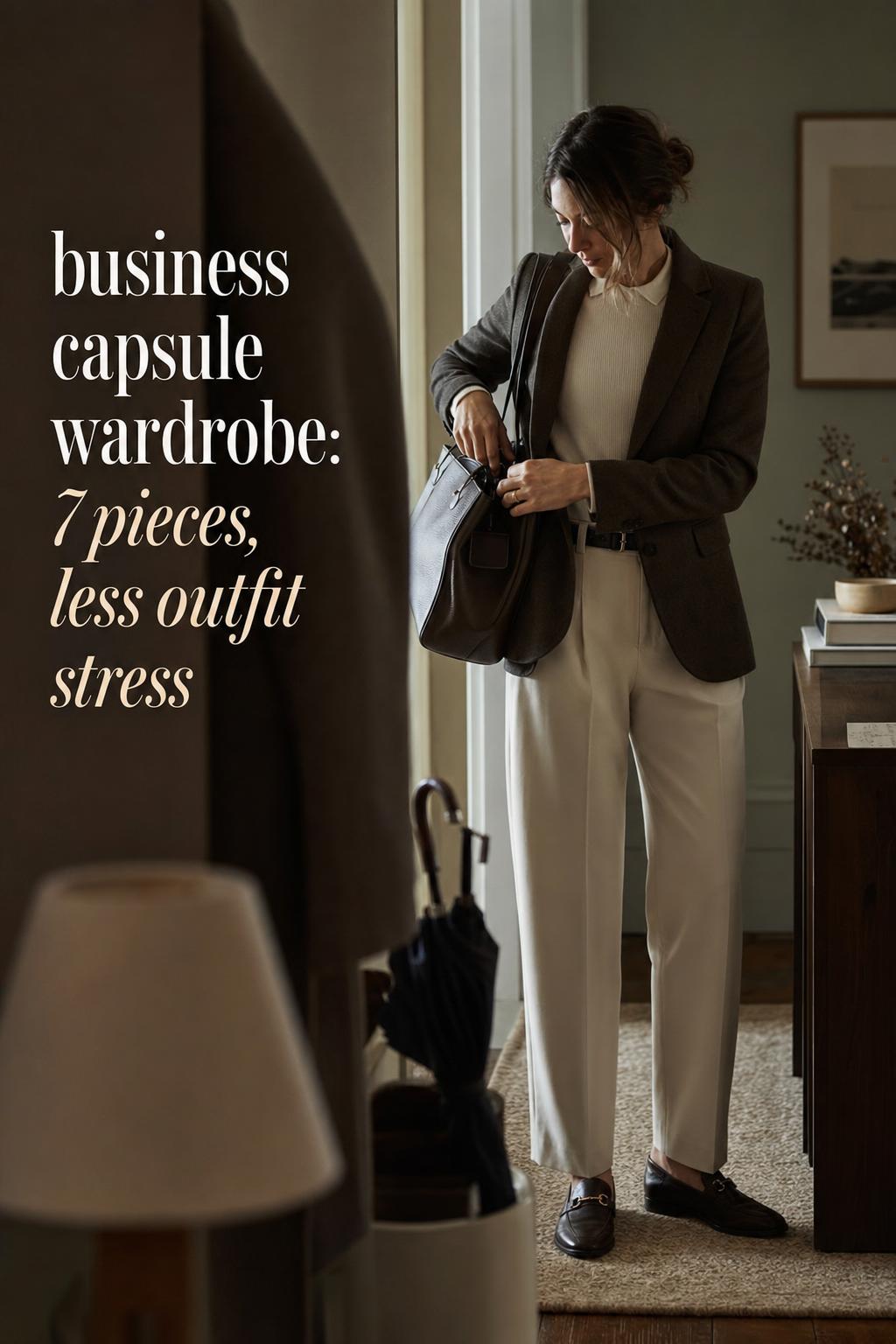
Some workdays call for more presence. This is where a sharper outfit composition becomes useful: a tailored blazer over a clean top, paired with streamlined trousers and a structured shoe. The mood is controlled and capable, but the success of the look depends on how the shapes interact. If everything is too rigid, the outfit can feel formal in a dated way. If everything is soft, the authority disappears.
The strongest version uses one clearly structured layer as the visual anchor and keeps the supporting pieces refined but not severe. A blazer with clear shoulder definition creates instant polish. Underneath, a simpler top keeps bulk low and allows the jacket to sit correctly. Trousers should skim rather than cling, which helps with comfort during long hours and keeps the line of the outfit uninterrupted.
Why this outfit works
This combination solves one of the most common business dressing problems: looking prepared without appearing overdressed. The jacket provides status and structure, while the rest of the outfit keeps the overall effect modern and wearable. It is especially effective for presentations, interviews, or days when the professional expectation is less casual and more precise.
Quick styling adjustment
If the look starts to feel too strict, soften it through texture rather than by removing structure completely. A fine knit or smoother fabric beneath the blazer keeps the silhouette polished while making the outfit easier to wear for a full day.
Soft tailoring that still reads professional
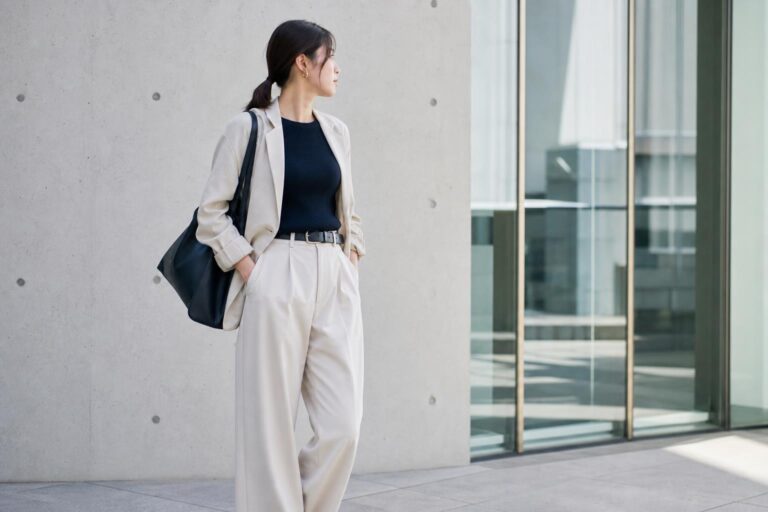
Not every office outfit needs the sharpness of classic suiting. A capsule also needs softer combinations for long desk days, creative workplaces, or schedules with more movement. This is where soft tailoring becomes essential. Think of pieces that maintain line and polish without relying on stiffness: fluid trousers, a neat knit, and a lightweight layer that adds shape without heaviness.
The styling logic here is balance. When the fabrics are more relaxed, the silhouette needs one element of definition to avoid looking casual. That could be a cleaner trouser crease, a refined neckline, or a shoe with enough structure to hold the outfit together. Without that anchor, soft pieces can read too informal for a business setting.
Fabric insight
Soft tailoring works best when the fabric drapes rather than collapses. The goal is movement with control. That distinction matters because workwear has to look composed in motion, while seated, and after hours of wear. Too much limpness can make even expensive pieces look tired by midday.
Easy ways to recreate the look
- Use one tailored piece as the foundation
- Add one soft piece for comfort and ease
- Keep the color palette restrained so the textures become the point of interest
- Choose shoes with a clean profile to maintain the business finish
Lightweight combinations for changing temperatures
Temperature inconsistency is one of the least glamorous but most important reasons business wardrobes fail. A good outfit has to handle outdoor weather, indoor climate control, and transitions between them. Heavy layers can look polished in the morning and become uncomfortable by lunch. On the other hand, under-layering can leave an outfit visually thin and practically unworkable.
A smarter business capsule wardrobe uses controlled layering rather than piling on pieces. The ideal composition includes a breathable base, a second layer that adds professionalism, and the option to remove one piece without the outfit falling apart. This keeps the look intact throughout the day instead of making the entire outfit dependent on a single jacket remaining on at all times.
Transitional weather tip
Make sure the base layer is presentable enough to stand on its own. That one decision changes the entire usefulness of the wardrobe because it allows you to adapt to temperature shifts without compromising professionalism.
Comfortable city dressing with business structure
A work wardrobe that ignores commuting is incomplete. Walking, public transit, stairs, and long blocks between appointments all place demands on clothing that static mirror styling never reveals. This is where many otherwise polished wardrobes become unrealistic. A look may appear ideal at home, then fail as soon as the day requires movement.
The business capsule wardrobe handles this by treating comfort as part of the outfit composition, not as an afterthought. Trousers need enough ease through the seat and leg to stay comfortable while sitting and moving. Layers should allow natural arm movement. Shoes need to support the pace of the day, not just the image of it. None of this reduces polish. In fact, an outfit often looks more refined when the wearer is clearly comfortable and not adjusting it every few minutes.
Best shoe pairing
In a business context, the strongest shoes are usually the ones that create a clean line and disappear into the composition rather than dominating it. They should stabilize the outfit visually and function practically across walking, standing, and desk time. If a shoe only works for seated moments, it is not doing enough work for a capsule.
How to keep repetition intentional
Repetition is not a problem in a capsule. Unvaried styling is. The same core pieces can look different when the silhouette shifts, when the palette is rebalanced, or when layering changes the visual weight of the outfit. This is where wardrobe intelligence becomes more important than wardrobe size.
For example, the same trousers can feel more formal with a structured blazer and more relaxed with a clean knit and refined shoe. A simple top becomes sharper under tailoring and softer under a lighter layer. Accessories also matter here. A bag or shoe can act as a visual anchor that changes the tone of repeated separates without breaking the consistency of the overall wardrobe.
How to make the outfit feel more elevated
Use contrast with precision. If the outfit relies on simple shapes, sharpen the finish through one more structured element. If the palette is tonal, let texture provide the distinction. Elevation usually comes from clarity, not complication.
The quiet power of a controlled palette
A controlled palette is not just a visual preference. It is a decision-making tool. In a business capsule wardrobe, color should reduce friction rather than create it. When most pieces sit within a coordinated range, getting dressed becomes faster and outfit combinations multiply naturally. That is the practical advantage.
The editorial advantage is consistency. A coherent palette creates a signature effect, even when the individual garments are simple. It also allows shape and texture to become more visible. This is important in business dressing, where the strongest outfits often feel composed rather than attention-seeking.
That said, a controlled palette should not erase personality. The better approach is to choose one dominant direction and then allow subtle variation through depth, contrast, and finish. That creates room for expression without disrupting the wardrobe’s compatibility.
Common styling traps that make a capsule less useful
Many work wardrobes become harder than necessary because the pieces are individually appealing but collectively difficult. A business capsule wardrobe needs fewer distractions and more alignment. The following issues are common because they usually happen with good intentions: trying to create variety, trying to dress up basics, or trying to make one dramatic item carry the entire outfit.
- Over-layering, which adds bulk and makes the silhouette feel crowded
- Buying pieces that only work with one specific shoe or top
- Relying on visually heavy fabrics that do not transition well through the day
- Choosing uncomfortable shoes that limit how often an outfit can actually be worn
- Ignoring proportion, especially when pairing multiple oversized or multiple fitted pieces
- Adding statement items before the core wardrobe has enough stability
Common comfort mistake
One of the most frequent errors is assuming polished means restrictive. In practice, the opposite is often true. Clothes that fit the routine properly usually look better because they maintain their line and require less adjustment. Ease is not the enemy of professionalism. Poor styling is.
Building around routine, not fantasy dressing
A business capsule wardrobe should reflect the actual cadence of the week. That means looking honestly at how many formal meetings, commute-heavy days, desk days, and after-work commitments the wardrobe needs to cover. Without that reality check, even a beautiful capsule can become aspirational rather than useful.
If most workdays are spent moving between spaces, the wardrobe should lean toward pieces that travel well and recover visually after sitting. If the environment is more presentation-heavy, the capsule needs more structure at the top half of the outfit because that is what tends to register most in professional settings. If the office sits in a business-casual middle ground, the capsule should prioritize refined separates that can flex up or down without looking confused.
Tips for editing your current wardrobe
- Pull out the pieces you already wear on your most demanding workdays
- Notice which items consistently layer well and which create friction
- Keep pieces that work across at least several combinations
- Set aside items that look good but require too much effort to style
- Identify gaps based on function first, not novelty
This editing process often reveals that the issue is not a total lack of clothing. It is that too many pieces are not participating in enough workable outfits.
Business casual is where capsules prove their value
The business-casual workplace is often the hardest one to dress for because the rules are less explicit. Too much structure can feel out of step. Too much softness can read underdressed. A business capsule wardrobe performs particularly well here because it allows you to repeat a refined formula while adjusting the level of formality through styling rather than through entirely different clothes.
A useful formula is one polished anchor, one relaxed but refined piece, and one practical accessory that keeps the look grounded. This creates a visual hierarchy. The professional element reassures the outfit, the softer element keeps it modern, and the practical finishing piece stops the whole look from feeling decorative.
Why this matters in real life
Business casual is full of subtle social signals. The wrong outfit rarely fails because it is wildly inappropriate. It fails because it feels slightly unresolved. Capsules help reduce that ambiguity by establishing a consistent standard of polish across multiple outfit variations.
Small finishing decisions that change everything
Once the core wardrobe is in place, finishing details determine whether the outfit feels complete. In business dressing, those details are rarely dramatic. They are usually structural: the line of the shoe, the shape of the bag, the neatness of the layering, the way the silhouette ends at the hem, and whether the textures complement one another.
This is why a capsule often benefits more from one strong accessory than from several trend-driven additions. The best finishing pieces support repetition by integrating easily with the rest of the wardrobe. They do not need to attract attention. They need to improve coherence.
Budget-friendly alternative
If replacing the entire wardrobe is not realistic, start with the finishing pieces that correct the most outfit problems. A more structured layer or a more versatile shoe often changes the usefulness of existing clothing faster than buying more tops or novelty items.
A practical way to think about versatility
Versatility is often treated as a vague goal, but in a business capsule wardrobe it has a very specific meaning: a piece should work across different outfits, hold up across multiple hours of wear, and shift across levels of professional formality with only minor adjustments. A garment that is attractive but fragile, uncomfortable, or difficult to pair may still be a good item, but it is not a strong capsule item.
This is where smarter wardrobe decisions start to compound. When each new piece is evaluated by function, proportion, and compatibility, the wardrobe grows more coherent over time. Getting dressed becomes quicker not because there are fewer options in theory, but because there are more options in practice.
Final styling perspective
A strong business capsule wardrobe is less about minimalism for its own sake and more about intelligent repetition. The pieces should support your actual work life, move comfortably through the day, and create enough visual consistency that getting dressed feels easier rather than more restricted. When silhouette, texture, color balance, and practicality are working together, the wardrobe starts doing what it is meant to do: reducing friction while keeping you polished.
The most effective approach is to edit with honesty, build around your routine, and let structure do the heavy lifting. That is what makes a capsule feel modern, capable, and genuinely wearable.
FAQ
What is a business capsule wardrobe?
A business capsule wardrobe is a small, coordinated group of work-appropriate pieces designed to mix easily, reduce daily outfit decisions, and maintain a consistent level of polish across different professional settings.
How many pieces should be in a business capsule wardrobe?
There is no single correct number, because the right size depends on your work routine, climate, and dress code, but the core idea is to keep only enough pieces to create frequent combinations without cluttering the wardrobe with items that rarely get worn.
How do I keep a business capsule wardrobe from feeling boring?
The key is to vary silhouette, texture, and layering rather than relying only on more color or more pieces, because repeated items feel fresher when the outfit proportions shift and the visual weight is balanced differently.
Can a business capsule wardrobe work for business casual offices?
Yes, and it is often especially useful in business-casual environments because it helps create a reliable formula for looking polished without becoming overly formal, which is often the hardest balance to strike in less clearly defined dress codes.
What are the most important pieces to start with?
The strongest starting pieces are usually the ones that repeat most easily, such as a tailored blazer, well-cut trousers, clean tops for layering, a refined knit, practical professional shoes, and a structured bag that supports the workday.
How do I build a capsule wardrobe if I already own a lot of work clothes?
Start by identifying the pieces you reach for on demanding workdays, then keep the items that layer well, feel comfortable, and create multiple combinations, while setting aside pieces that are difficult to style or only work in narrow situations.
What is the biggest mistake people make with a business capsule wardrobe?
The most common mistake is focusing on novelty before foundation, which leads to a wardrobe full of interesting individual pieces that do not actually combine into enough wearable, professional outfits.
How do I make my capsule wardrobe practical for commuting?
Choose pieces that hold their shape through movement, allow comfortable sitting and walking, and include shoes and layers that support a full day rather than just looking polished in a static setting.