What to Wear: Basic Summer Outfits With Quiet Polish
There is a reason basic summer outfits keep returning to the center of fashion conversation. Warm-weather dressing looks simple from a distance, yet the difference between an outfit that feels effortless and one that feels unfinished often comes down to proportion, fabric behavior, and the visual mood created by very ordinary pieces. A tank top, shorts, a white tee, a linen shirt, flat sandals, denim, and a light dress can all read completely differently depending on how they are combined.
That is also why summer basics are so often misunderstood. People tend to treat them as neutral background clothing, when in reality they shape an entire aesthetic identity. The same foundational wardrobe can lean clean and minimal, relaxed and beach-oriented, polished and refined, or casual in a way that feels intentionally off-duty. In the current fashion landscape, where practical dressing and visual clarity matter more than overworked styling, basic summer outfits have become less about having more clothes and more about understanding outfit composition.
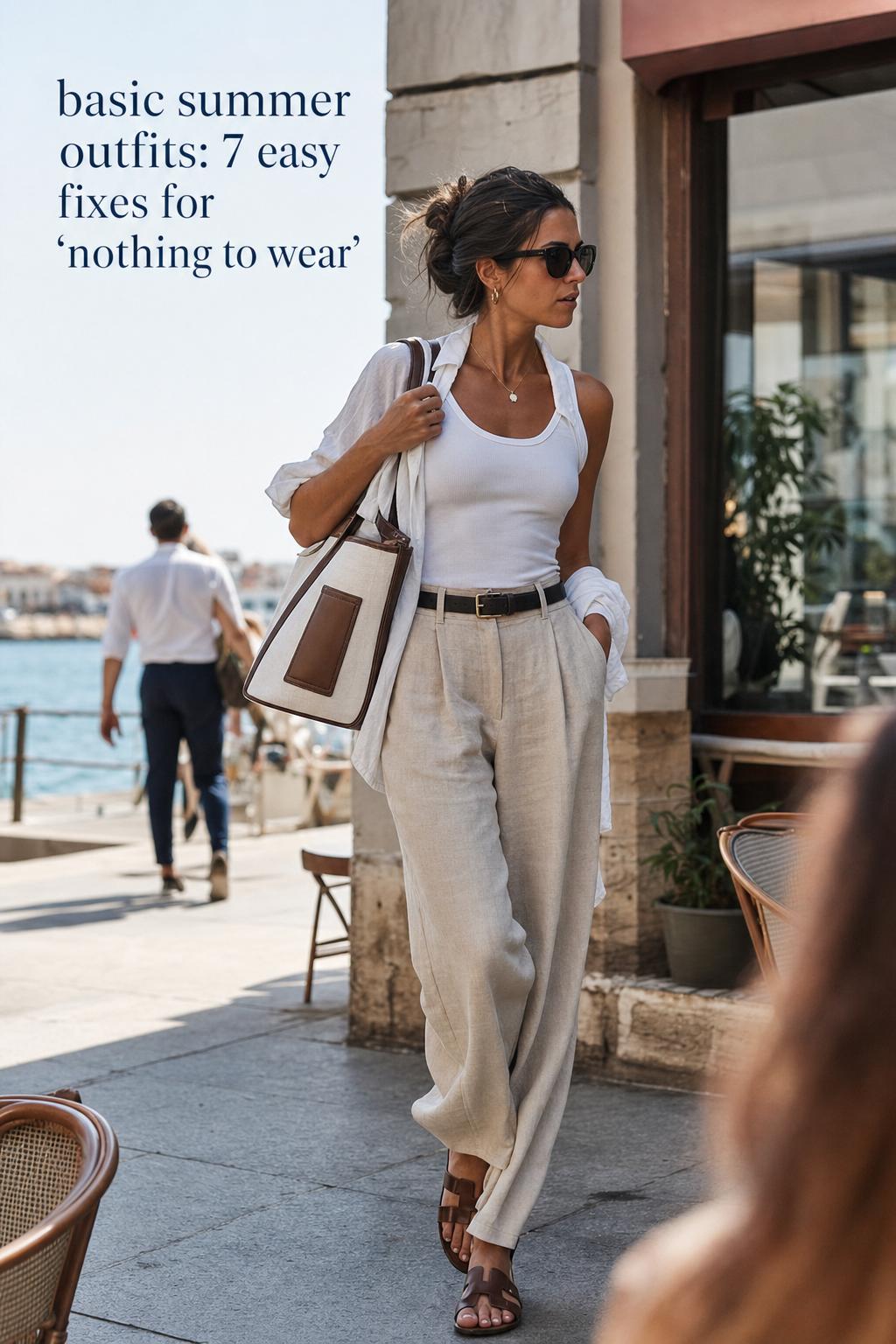
The most wearable summer wardrobes are not built from random staples. They are built from pieces that cooperate with heat, movement, and real life while still creating a recognizable style point of view. That is what makes this category worth a closer look: basic summer outfits are never just basic. They are often the clearest expression of personal style.
What makes a basic summer outfit feel intentional
A summer outfit starts to feel complete when each element has a role. One piece acts as the visual anchor, another softens the silhouette, and a third introduces either texture contrast or a shift in proportion. Without that internal logic, even good wardrobe staples can look disconnected. With it, simple clothing feels composed.
Found the dress? Keep the rest in one place.
Zarellea brings guest details, vendors, timelines, and every next step together — so your wedding plan feels as good as your look.
In practical terms, intention usually comes from a few key decisions: whether the silhouette is fitted or relaxed, whether the palette stays tonal or creates contrast, and whether accessories are being used to elevate or to keep the look understated. A ribbed tank with wide-leg trousers creates a different energy than the same tank with denim cutoffs, not because one piece is more fashionable, but because the proportion play changes the entire message.
Summer also exposes styling flaws more quickly than other seasons. Heavy layering disappears, which means fabric quality, hemlines, fit through the waist and shoulders, and shoe choice become much more visible. That is why strong summer dressing often looks edited rather than elaborate.
The core visual signals
- Clean lines create a polished, low-effort impression.
- Breathable textures such as linen and lightweight cotton add depth without bulk.
- A controlled color story makes basics feel deliberate rather than generic.
- Footwear determines whether an outfit reads casual, refined, or coastal.
- Accessories work best when they reinforce the outfit’s mood instead of competing with it.
The relaxed structure behind modern summer minimalism
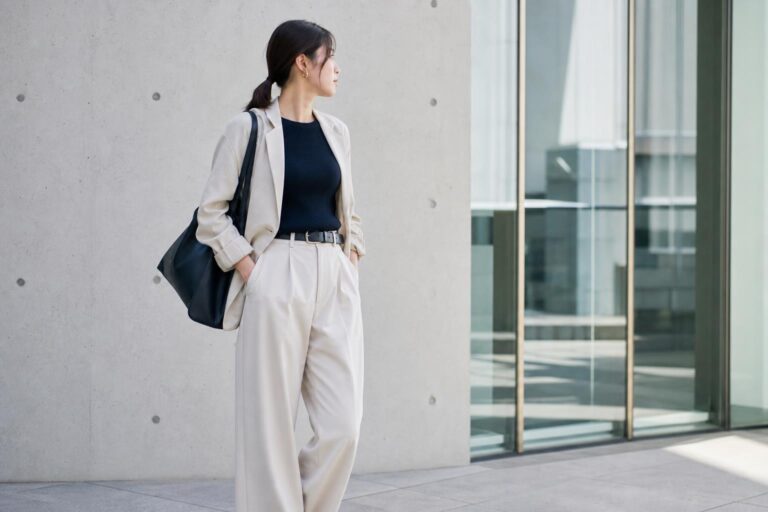
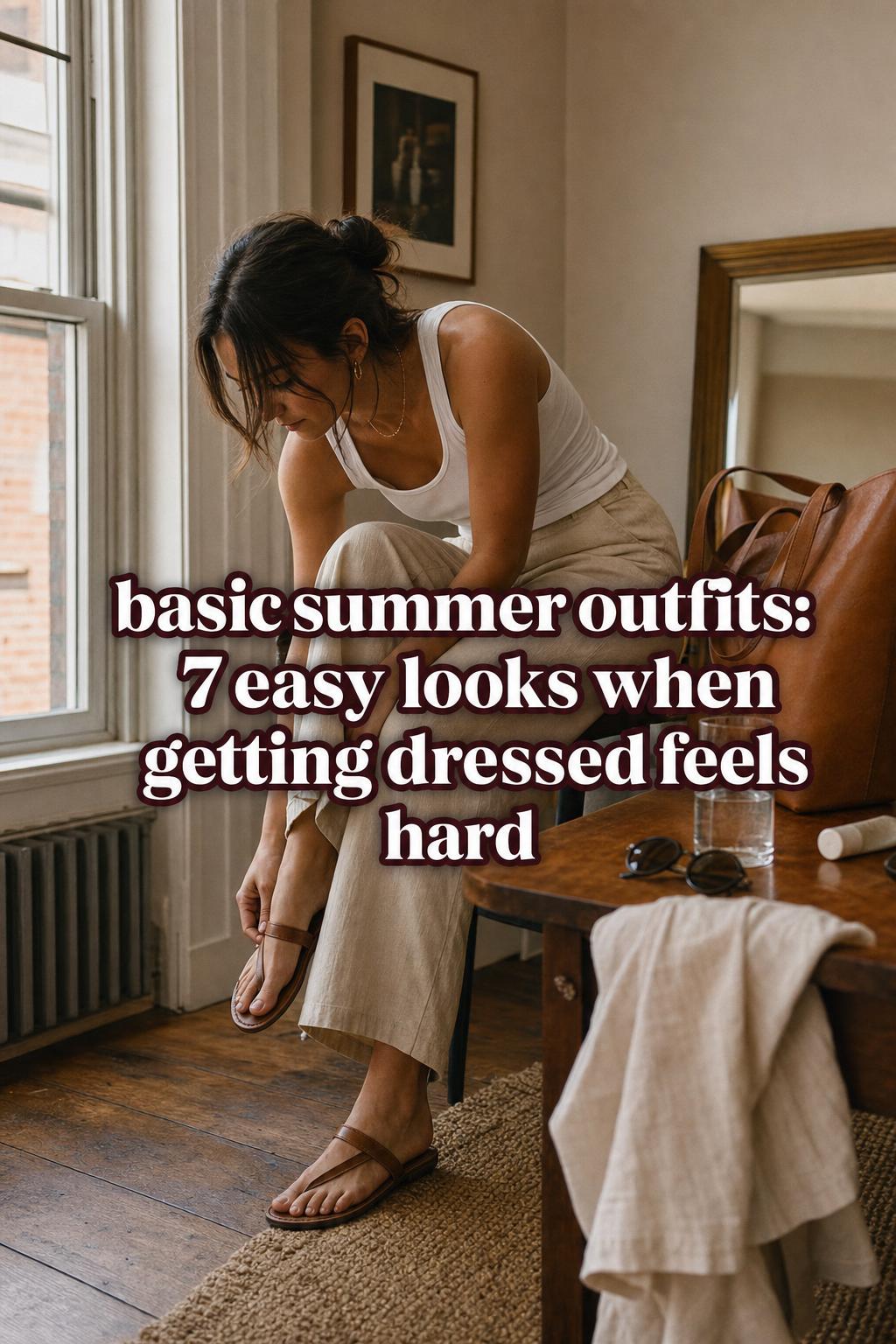
One of the most enduring directions for basic summer outfits is a restrained minimalism built on ease rather than severity. The visual identity here is not stark. It is softened by heat, movement, and light fabric. Think straight silhouettes, soft neutrals, tonal dressing, and pieces that skim the body rather than grip it.
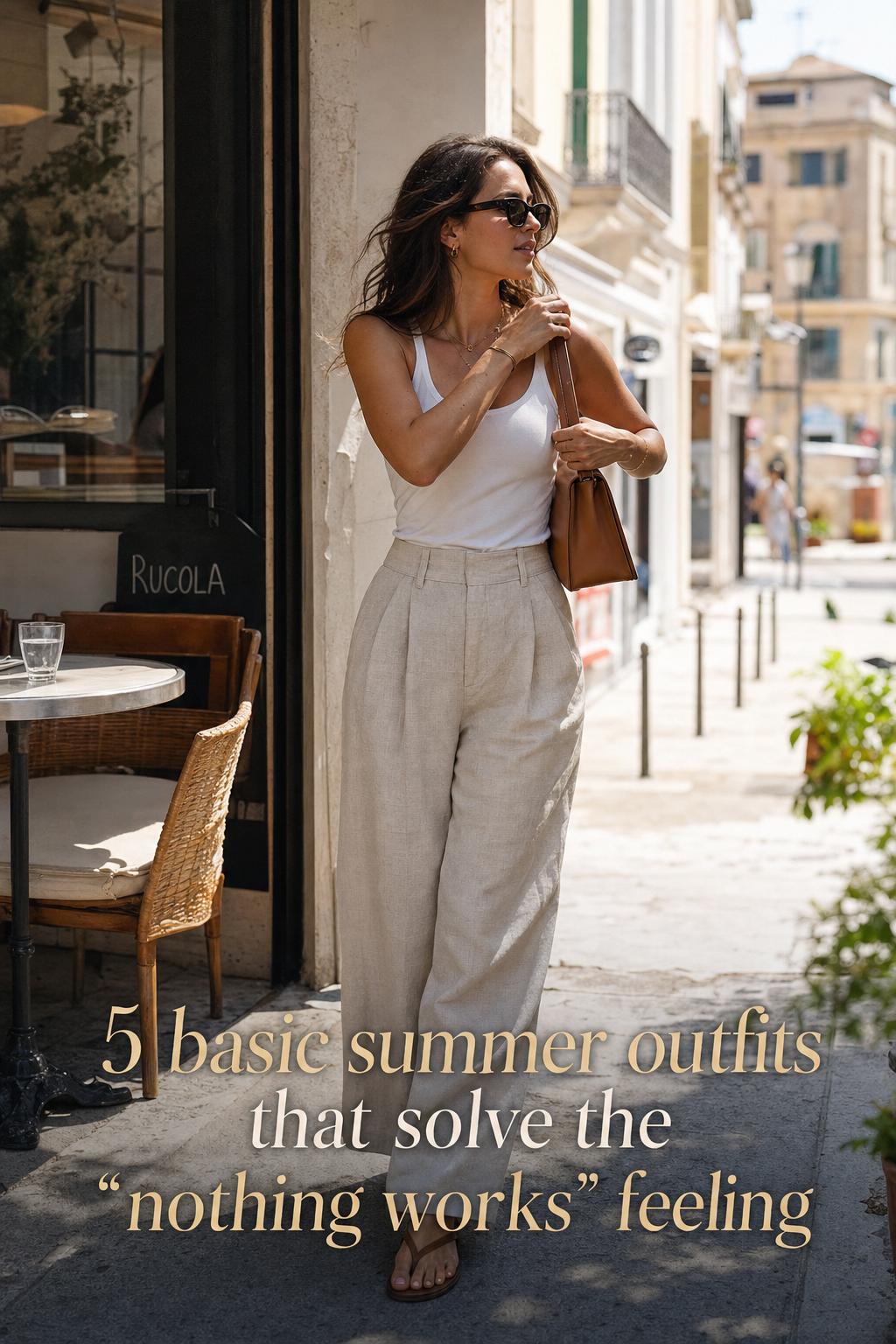
The strength of this approach is its visual calm. A white tank, beige linen trousers, leather sandals, and a loose button-down worn open create enough texture contrast to feel dimensional without becoming busy. The outfit works because the lines are clean and the volume is balanced. The top remains close to the body, while the trousers provide airflow and shape. The shirt acts as a lightweight layer that adds verticality.
This kind of summer minimalism often resonates with people who want versatility from a small wardrobe. It adapts easily from a coffee run to a casual office setting to a weekend lunch, simply by changing footwear or adding one structured accessory. The appeal is not trend dependence. It is the ability to look composed under real conditions: heat, walking, commuting, and long days outside.
Why it feels polished
The polish comes from restraint. Instead of relying on multiple statement pieces, the outfit composition focuses on line, drape, and tonal layering. A monochrome or near-monochrome palette reduces visual noise. Lightweight fabric catches air and light in a way that feels expensive even when the garments themselves are straightforward. This is where summer basics often overlap with a quieter fashion mindset: less decoration, more control.
Why easy casual basics feel different from polished basics
Not all summer basics are trying to communicate refinement. Some are built around ease first, and that changes everything. A loose graphic-free tee, denim shorts, uncomplicated sneakers or flat sandals, and a crossbody bag create a practical, familiar uniform. The pieces are still foundational, but the styling energy is more direct and less composed.
The key difference between easy casual and polished basic dressing is not expense or trend level. It is silhouette discipline. Casual outfits often tolerate more looseness throughout the body: a boxy top with relaxed shorts, for example. Polished basics usually compensate for ease in one area with control in another, such as a fitted knit with an A-line skirt or tailored shorts with a fluid shirt.
This matters because many people say they want simple summer style when what they actually want is one of two distinct feelings: effortless comfort or clean sophistication. Both can be built from nearly the same wardrobe components, but the styling logic changes. One prioritizes low maintenance. The other prioritizes visual clarity.
The key visual difference
Easy casual summer basics often look more spontaneous. Polished basics look more edited. Neither is better in absolute terms. The right choice depends on your daily life, how much heat you are dealing with, and whether your wardrobe needs to move between settings without a full change.
Everyday basics through different summer moods
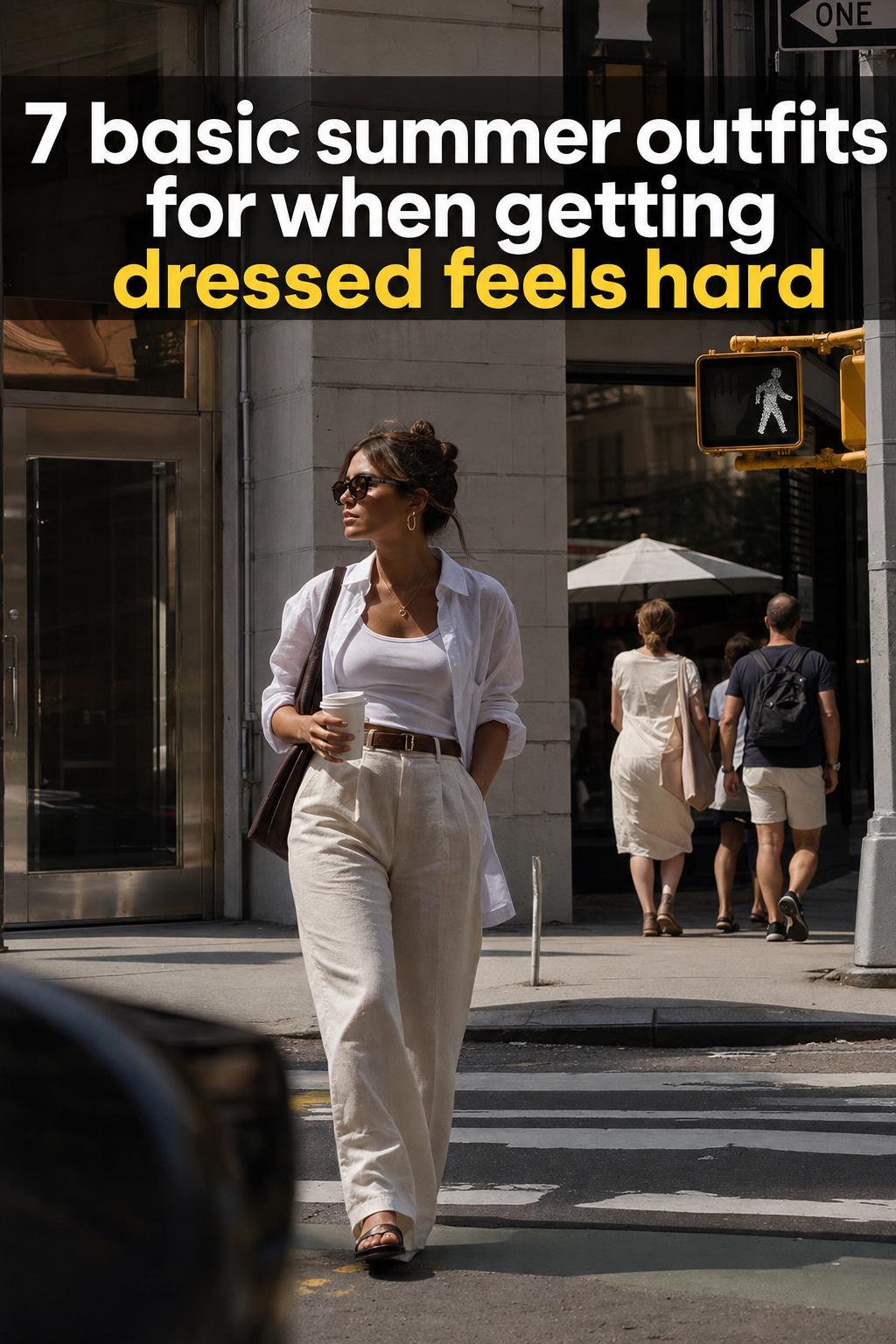
The most useful way to understand summer dressing is not by memorizing isolated outfit formulas but by seeing how the same core items shift across aesthetics. A white tee, for instance, is less a single style item than a styling tool. Its role changes according to proportion, texture, and what surrounds it.
The white tee as a visual anchor
With denim shorts and simple slides, the white tee reads practical and familiar. Tucked into tailored shorts with a leather belt and structured tote, it becomes sharper. Worn with a slip skirt and delicate jewelry, it softens a more feminine silhouette. Layered over a swimsuit with linen pants, it joins a coastal wardrobe language. The garment stays the same, but the surrounding outfit composition changes its cultural signal.
The tank top as a proportion tool
A fitted tank is one of the clearest examples of summer styling logic. It is rarely just a top. It stabilizes volume elsewhere in the outfit. When paired with wide-leg trousers, loose linen shorts, or a flowing midi skirt, it creates silhouette balance. When paired with slim bottoms, the entire look becomes sleeker and more body-conscious. This is why tanks are so central to basic summer outfits: they make layering easier while keeping the upper body visually clean.
The button-down as summer layering
A lightweight button-down, especially in linen or airy cotton, changes the function of a basic outfit. It can operate as sun protection, a texture layer, or a styling frame worn open over a tank or swimsuit. It also introduces movement. In summer, movement matters because it prevents a simple outfit from looking flat. A shirt that shifts with the body gives dimension without adding heat-heavy structure.
The role of silhouette in warm-weather dressing
Silhouette is often what separates a flattering basic outfit from one that feels visually heavy or incomplete. In summer, because there are fewer layers to shape the body, the cut of each piece becomes more influential. Straight-leg trousers, relaxed shorts, cropped tops, midi hemlines, and oversized shirts all create different visual rhythms.
The most successful combinations usually involve one fitted area and one relaxed area. This keeps the outfit breathable while preserving shape. A slim tank with loose trousers works because the body remains visible at the top while the lower half feels cool and fluid. A boxy tee with bike shorts works because the shortened bottom line keeps the volume from becoming overwhelming. A breezy dress with flat sandals works when the dress has enough vertical drape to avoid looking overly sweet or shapeless.
How proportions influence perception
- Longer shorts usually read more refined than very short, distressed cuts.
- Wide-leg pants feel elevated when the waistband and top half stay defined.
- Loose tops are strongest when sleeves, tuck, or hem placement create structure.
- Midi dresses gain polish from clean footwear and controlled accessories.
- Crop lengths work best when balanced by higher rises or fuller shapes below.
This is not about rigid rules. It is about visual balance. Summer outfits feel modern when volume is placed strategically, not randomly.
Fabric behavior matters more than trend labels
In summer, fabric is not a background detail. It determines how an outfit hangs, how it moves, and whether it feels credible in heat. Linen wrinkles, but in a way that often enhances the relaxed intelligence of a warm-weather look. Lightweight cotton keeps outfits clean and familiar. Ribbed knits add subtle structure to tanks and fitted dresses. Soft denim grounds lighter textures and prevents an outfit from drifting into fragility.
Texture contrast is one of the easiest ways to make basics feel richer. A crisp cotton shirt with fluid shorts, a ribbed tank with a washed linen skirt, or sturdy denim with minimal leather sandals gives the eye enough variation to stay interested. Without that variation, monochrome summer dressing can fall flat. With it, even the simplest palette feels dimensional.
Tips for choosing better summer basics
- Prioritize fabrics that hold shape lightly rather than cling in humidity.
- Use ribbed or textured tops to add depth to plain outfits.
- Choose linen blends when you want ease with slightly more structure.
- Keep denim light enough for summer but substantial enough to anchor airy pieces.
- Pay attention to opacity, especially with white and cream basics in bright sunlight.
How accessories change the entire mood
Accessories are often the dividing line between a basic summer outfit that feels anonymous and one that has clear identity. In summer, they do not need to be heavy or dramatic. Their power comes from editing. A leather sandal, minimalist tote, and understated jewelry immediately suggest a more controlled aesthetic. A canvas bag, sporty sandal, and baseball cap shift the same clothing into a more relaxed, functional register.
This is why accessory decisions should be made after the outfit silhouette is established. Once you know whether the look is streamlined, beach-oriented, softly feminine, or city-casual, accessories can reinforce that message. If they contradict it, the outfit loses coherence. For example, very delicate jewelry can disappear against oversized, utility-leaning pieces, while chunky footwear can visually overpower a fluid, minimal dress unless contrast is the point.
The role of footwear
Footwear affects not only comfort but the posture of an outfit. Flat leather sandals lengthen a clean summer line. White sneakers introduce casual familiarity and urban practicality. Espadrille-style options soften denim and dresses with a slightly more vacation-coded energy. The shoe does not merely finish the outfit. It tells the viewer where the outfit belongs: city sidewalk, weekend errand route, coastal setting, or casual dinner.
Real-life outfit interpretation: one wardrobe, multiple identities
A useful way to build basic summer outfits is to start with one small wardrobe and style it across different settings. This reveals how aesthetic identity comes from arrangement, not endless consumption.
For a hot city day
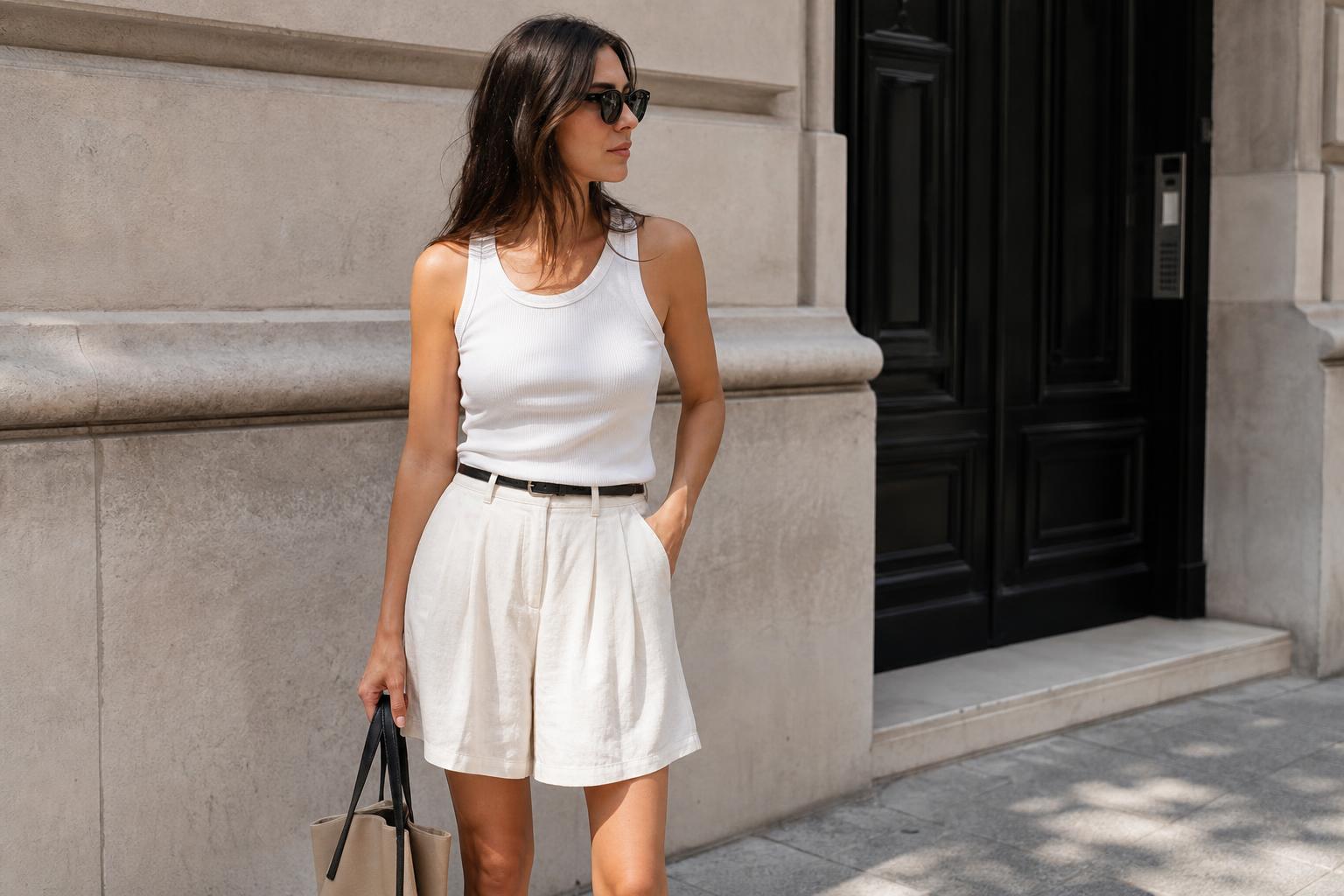
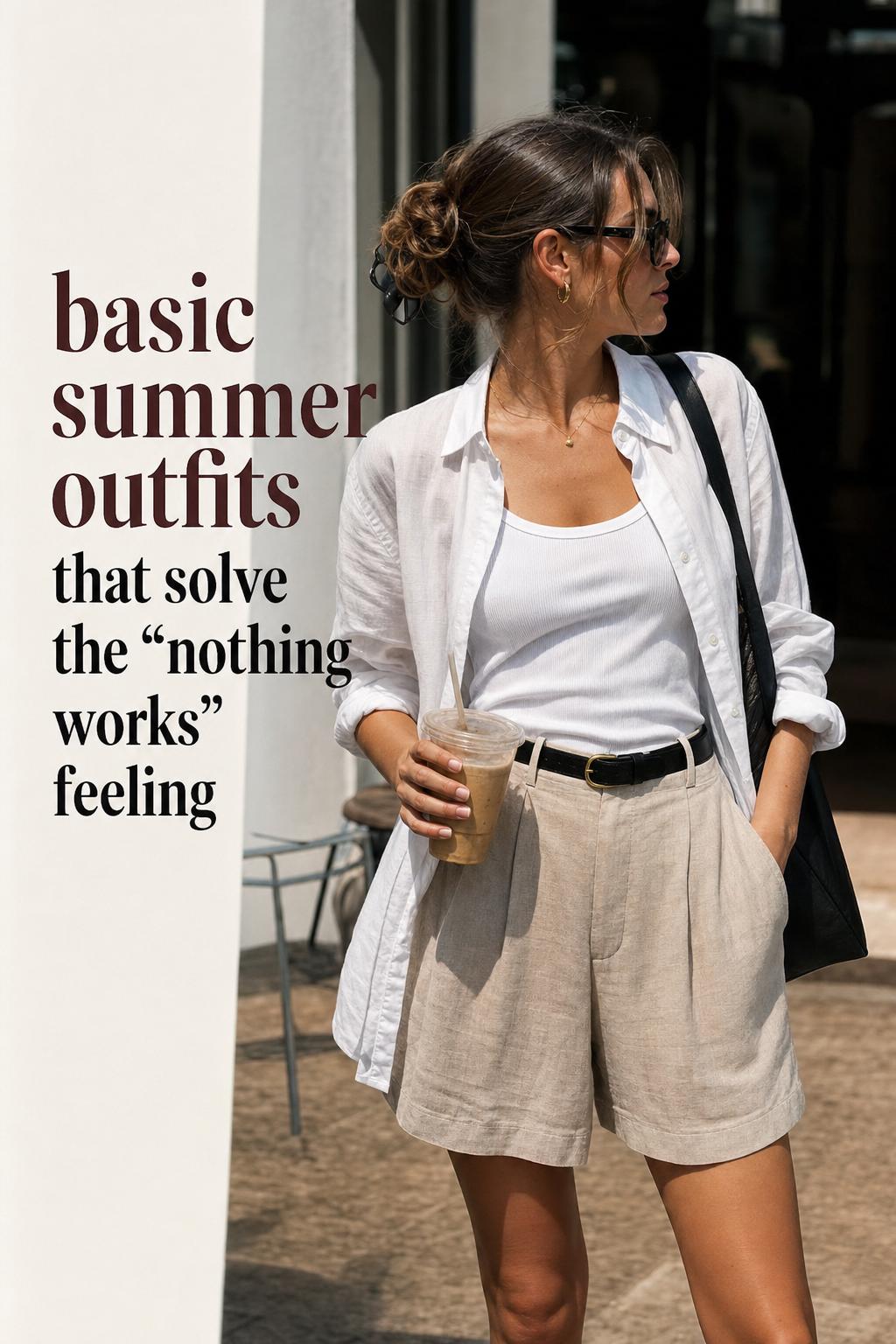
A fitted tank, tailored shorts, flat sandals, and a structured bag create a look that can handle walking, lunch, and indoor-outdoor transitions. The fitted top keeps the silhouette sharp, while the shorts provide movement and ventilation. If needed, a lightweight shirt over the shoulders adds polish without forcing a full layer. This type of outfit works best when the palette remains controlled: white, black, tan, stone, or soft blue.
For a beach-adjacent weekend
Take the same tank and replace tailored shorts with loose linen pants. Add simple sandals and an open button-down. Suddenly the outfit feels softer, slower, and more coastal. The styling philosophy shifts from urban precision to breathable ease. The shirt introduces motion, the pants create airflow, and the entire outfit begins to prioritize comfort over definition while still looking intentional.
For a casual dinner
A basic midi dress with low-profile sandals and restrained accessories often works better than trying to overdress summer basics. The visual impact comes from line and finish, not embellishment. If the dress is too simple on its own, a subtle textural element such as ribbing or a slightly structured bag can provide depth. This is where many strong summer outfits succeed: they stay uncomplicated but not flat.
Why some basic summer outfits look expensive and others do not
The answer is rarely the label. More often, it is about cohesion. An outfit tends to read elevated when the shapes agree with each other, the fabrics make seasonal sense, and the accessories are selective. Clothes that fit the weather and fit the body in a relaxed but controlled way usually appear more refined than trend-heavy combinations that fight against heat or movement.
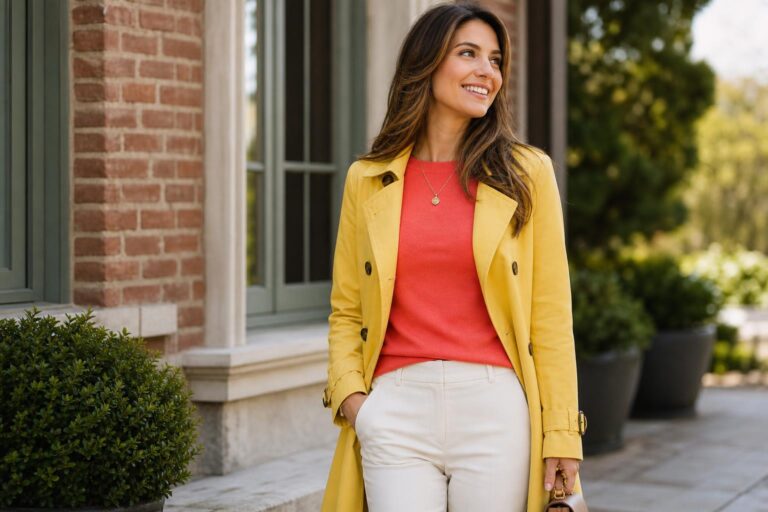
Color harmony also matters. Basic summer outfits often look stronger when they stay within a narrow seasonal palette rather than introducing several unrelated shades. White, cream, tan, blue, black, faded denim, olive, and soft earth tones combine easily because they already belong to a summer visual language rooted in light, utility, and ease. This does not mean bright color has no place. It means color works best when it looks chosen rather than accidental.
Most versatile pieces
- A white or black fitted tank
- A lightweight button-down shirt
- Tailored shorts or relaxed linen shorts
- Straight or wide-leg lightweight pants
- A simple midi dress
- Flat sandals that work with both denim and dresses
- A clean white tee
These pieces are versatile because they can shift direction. They can support a minimalist wardrobe, a coastal mood, or a more casual off-duty look depending on styling.
Style psychology: why certain summer aesthetics resonate
Basic summer outfits are not only practical solutions. They reflect how someone wants to move through the season. A person drawn to clean neutrals, crisp shirts, and refined sandals often values visual calm and low-friction decision-making. Someone who prefers easy tees, denim, and sportier footwear may be prioritizing flexibility and directness. Neither impulse is superficial. Both are forms of identity made visible through clothing.
This is also why people often struggle when copying summer outfits from images. They may replicate the pieces without understanding the underlying fashion mindset. If the original look was built around restraint, adding too many accessories breaks it. If it was built around ease, over-tailoring it removes the charm. Basic summer outfits work best when the styling energy matches the wearer’s lifestyle.
Common mistakes that make summer basics feel flat
The most common problem is treating all basics as interchangeable. They are not. A crisp tee behaves differently from a draped tee. Tailored shorts communicate differently from frayed denim. Leather sandals and athletic sneakers shift the same outfit into entirely different categories. When these distinctions are ignored, outfits often lose shape.
- Wearing pieces that are all equally oversized, which removes definition.
- Using heavy accessories that contradict light summer fabrics.
- Ignoring fabric transparency in bright daylight.
- Choosing shoes based only on comfort without considering silhouette impact.
- Adding trends that disrupt an otherwise clean summer palette.
Another frequent issue is forcing polish where ease would look better. Not every summer outfit needs a structured blazer or dressy finish. Sometimes the more intelligent move is to let the outfit stay simple and improve it through fit, hem placement, and cleaner accessories.
How to blend polished and relaxed summer dressing naturally
The most modern approach to basic summer outfits often sits between two extremes. It is neither overly dressed nor purely casual. This middle space is where real wearability lives. A tank with pleated shorts, a simple dress with a practical flat sandal, or a white shirt with denim and a refined bag all create that hybrid effect.
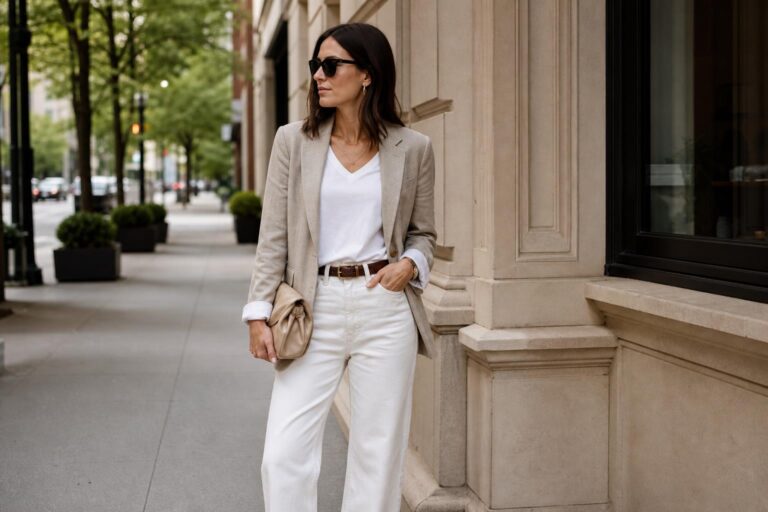
The reason these combinations work is that they pair one easy element with one controlled one. Relaxed trousers become more elevated with a structured top. A crisp shirt becomes more approachable with washed denim. Minimal sandals keep a dress from feeling too precious. This tension between polish and ease is often what gives summer outfits depth.
Easy ways to blend both styles
- Pair tailored shorts with a soft tank instead of a formal blouse.
- Wear loose linen pants with simple leather sandals rather than beach flip-flops.
- Use one structured bag to sharpen a very casual outfit.
- Keep jewelry minimal when the clothing already has strong texture.
- Let one item stay relaxed, but not every item.
Basic summer outfits for different lifestyles
Not every wardrobe needs the same version of summer simplicity. Someone moving through a dense urban schedule needs different basics than someone spending weekends near water or working from home in high heat. The most effective summer wardrobe is the one calibrated to actual movement patterns.
For commuters and city routines
Choose pieces that can handle walking, public transit, temperature changes, and long wear. Tailored shorts, easy trousers, tank tops, light shirts, and supportive flat sandals create a practical foundation. A consistent neutral palette helps these items rotate quickly without styling fatigue.
For vacation or resort-oriented dressing
Lean into fluid silhouettes, linen, lighter tonal dressing, and pieces that can move from swimsuit cover-up to lunch outfit. Here, the wardrobe can be looser and less defined because the setting supports it. The visual language becomes more atmospheric and less structured.
For casual home-to-errand dressing
Comfort can remain central without sacrificing style logic. Soft tees, pull-on shorts, simple dresses, and low-maintenance sandals work well when the shapes are still considered. Even a very easy outfit benefits from one clean line, one intentional color story, or one accessory that prevents the look from feeling accidental.
How to build a summer wardrobe that repeats well
The strongest basic summer outfits come from wardrobes designed for repetition. Repetition is not a limitation. It is often the sign that the wardrobe is functioning correctly. When pieces combine easily and still create slightly different moods, daily dressing becomes faster and more consistent.
A repeating summer wardrobe usually has a small set of tops, a few bottoms with distinct silhouettes, one or two dresses, practical footwear, and a light layer. The goal is not maximum variety. It is strategic compatibility. If each item can be worn at least three different ways and still support your preferred visual identity, the wardrobe is doing its job.
Tips for better repetition
- Stick to a narrow color family so pieces combine without friction.
- Mix fitted, straight, and relaxed shapes to create outfit contrast.
- Use dresses as one-step options for days when styling energy is low.
- Repeat shoes across multiple outfit categories to make the wardrobe feel coherent.
- Choose summer layers that work both open and closed.
The lasting appeal of simple summer dressing
What keeps basic summer outfits relevant is not their simplicity alone. It is their adaptability. They can look urban, coastal, minimal, soft, practical, or quietly refined without requiring a completely different wardrobe each time. That makes them one of the clearest examples of fashion as both identity and utility.
Once you begin to notice the real distinctions, summer style becomes easier to read instinctively. You start to see how a fitted top sharpens volume, how linen changes the mood of an outfit, how sandals define the level of polish, and how accessories either support or dilute the original idea. From there, building a summer wardrobe becomes less about chasing formulas and more about understanding your own visual language. The best basic summer outfits leave room for both clarity and personality, which is exactly why they never stop working.
FAQ
What are the most essential pieces for basic summer outfits?
The most useful essentials are a clean white tee, a fitted tank, tailored or relaxed shorts, lightweight trousers, a simple midi dress, a breathable button-down shirt, and flat sandals. These pieces work because they can be styled across multiple moods, from casual to polished, without losing practicality in heat.
How can I make a basic summer outfit look more polished?
Focus on silhouette balance, fabric quality, and edited accessories. A fitted top with relaxed trousers, a controlled neutral palette, and clean sandals or a structured bag will usually look more polished than adding more items. The goal is visual clarity, not extra complexity.
How do I style basic summer outfits in very hot weather?
Choose breathable fabrics such as linen, lightweight cotton, and soft ribbed knits, then rely on simple combinations that allow movement and airflow. A tank with loose pants, a light shirt worn open, or a simple dress with flat sandals works well because the outfit stays functional without looking unfinished.
Are shorts or dresses better for an easy summer wardrobe?
Both are useful, but they serve different functions. Shorts offer more mixing potential with tops and layers, while dresses provide fast one-step dressing on busy or especially hot days. A balanced summer wardrobe usually benefits from having both because they solve different styling needs.
Why do some simple summer outfits look effortless while others look plain?
The difference usually comes from proportion, texture contrast, and cohesion. Outfits look effortless when one piece anchors the silhouette, fabrics make seasonal sense, and accessories support the mood. They look plain when every element feels random, overly similar in shape, or disconnected from the weather and setting.
Can basic summer outfits still feel fashionable without following trends?
Yes. Summer basics often look strongest when they are built around clean shapes, breathable textures, and a consistent wardrobe point of view rather than short-term trends. Fashion relevance often comes from how an outfit is styled, not from how many trend-driven pieces it includes.
How do I mix relaxed and polished pieces without making the outfit feel confused?
Use one controlled element and one easy element so the contrast feels intentional. A structured bag with denim, tailored shorts with a soft tank, or a simple dress with practical sandals creates balance. The outfit starts to feel confused only when too many pieces communicate different moods at once.
What colors work best for basic summer outfits?
White, cream, tan, black, faded denim blue, olive, and other soft neutrals tend to work well because they combine easily and support a clear summer palette. Strong color can still work, but it usually looks best when it is integrated intentionally rather than added as an unrelated accent.