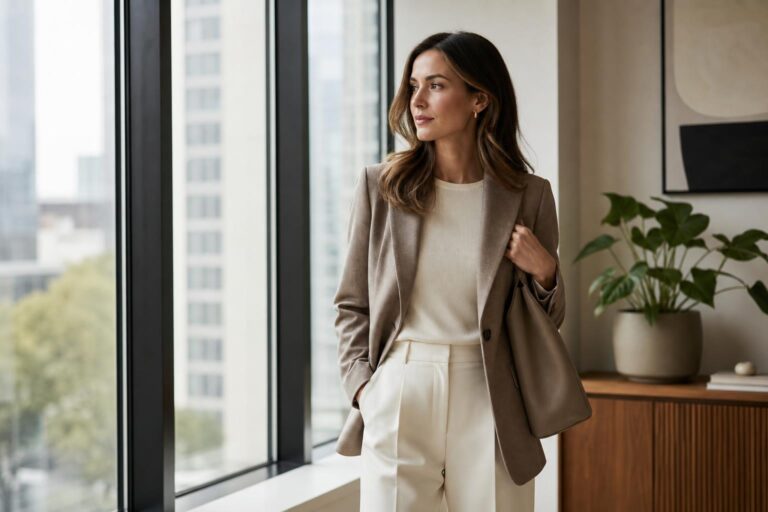
What to Wear: Basic Outfits Minimalist Wardrobe That Work
Some wardrobes look expensive because they are expensive. Others look composed because the logic is strong. That distinction matters when building basic outfits minimalist wardrobe readers can actually wear, repeat, and rely on. Minimalism in fashion is less about owning the fewest things and more about creating visual consistency through silhouette, color balance, and pieces that speak to each other without effort.
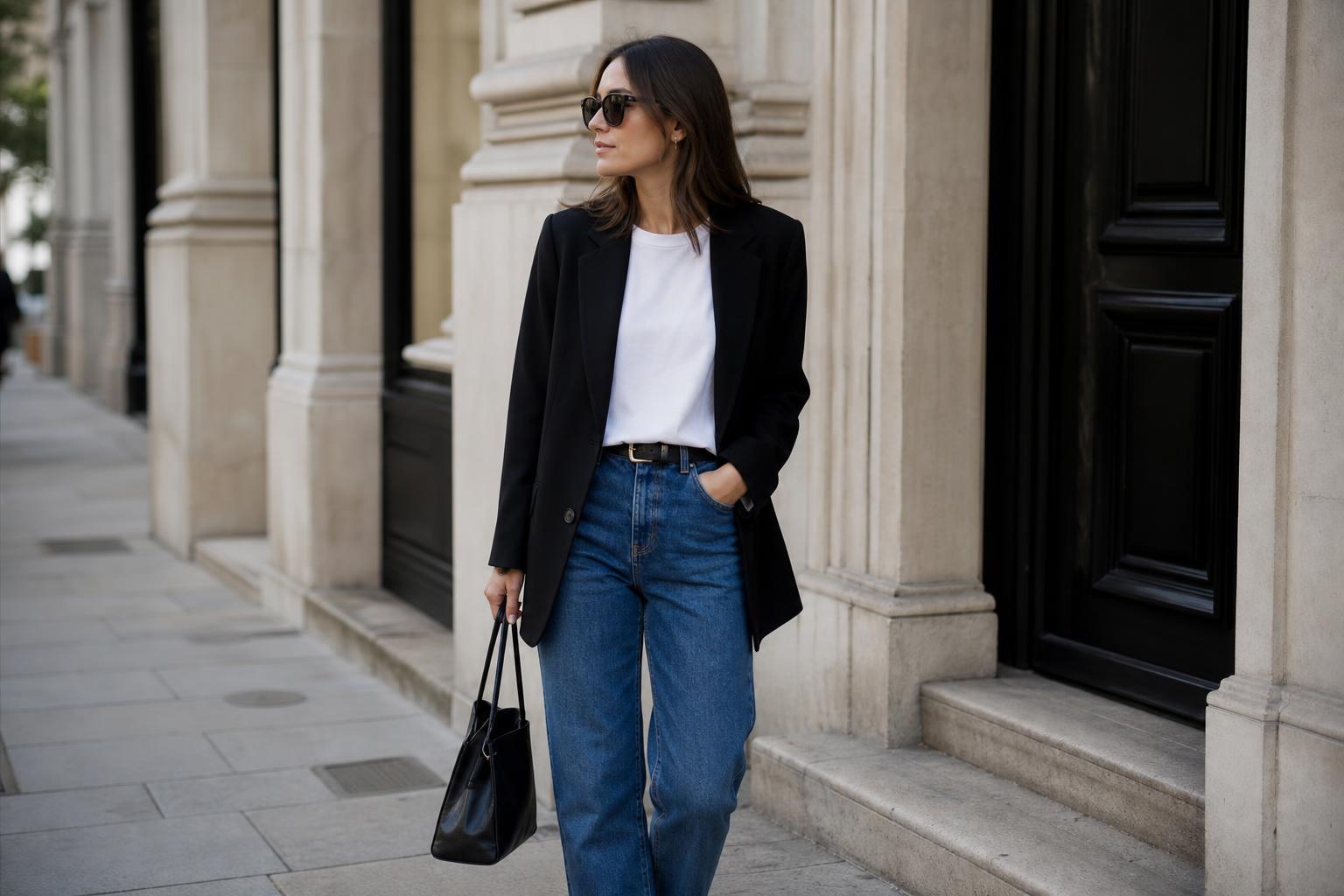
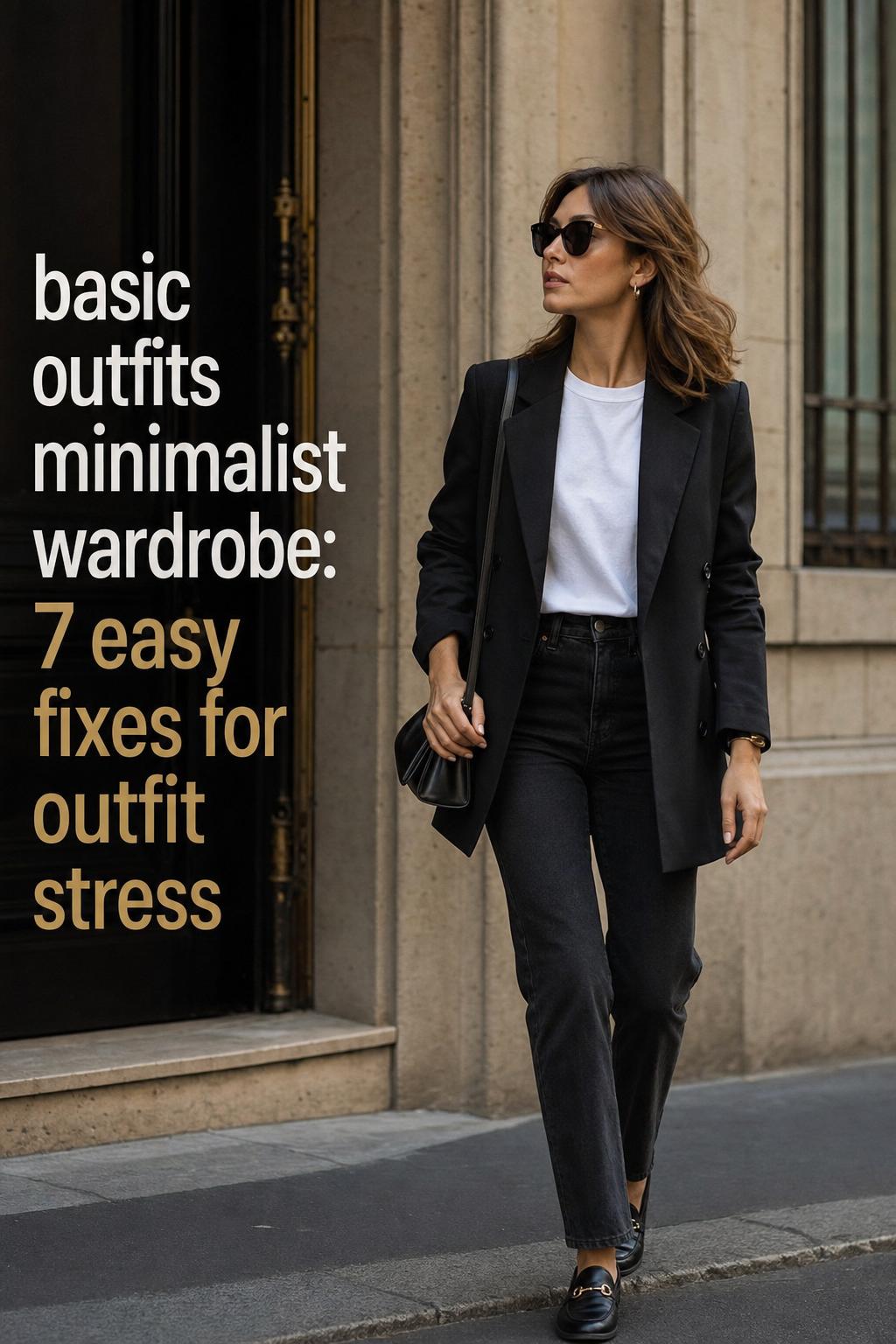
This is why the minimalist wardrobe is so often confused with other polished aesthetics. A black blazer, straight-leg denim, a white tee, and loafers can read New York editorial, Los Angeles ease, Paris restraint, or quiet fashion-week polish depending on fit, proportion, and styling energy. The clothing itself may be simple, but the message is never accidental.
The current appeal is easy to understand. A capsule wardrobe promises clarity in a period when trends move quickly, shopping is constant, and personal style can feel scattered. Timeless basics, neutral colors, and repeatable outfit formulas offer something more durable: a wardrobe that functions in real life, adapts across seasons, and still feels visually sharp.
What makes this approach interesting is not just practicality. It also reveals a fashion mindset. A minimalist wardrobe prioritizes editing over accumulation, fabric quality over novelty, and outfit composition over one-off styling moments. The result is a way of dressing that can feel tailored, calm, expressive, and highly personal even when the palette stays close to black, white, navy, beige, and denim.
Found the dress? Keep the rest in one place.
Zarellea brings guest details, vendors, timelines, and every next step together — so your wedding plan feels as good as your look.
The visual code of a minimalist wardrobe
A minimalist wardrobe works because it reduces visual noise. Instead of asking every item to stand out, it asks each piece to support the whole. That shift changes how clothes are selected. A trench coat is not just outerwear; it becomes a frame for trousers and a knit. A white button-down is not simply a shirt; it acts as a clean visual anchor against denim, black trousers, or a skirt. The outfit feels resolved because the pieces are chosen to be relational, not isolated.
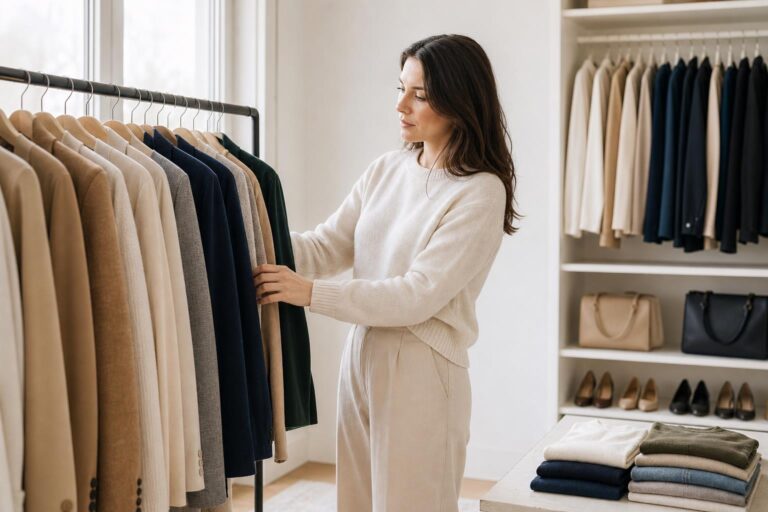
This is also why capsule wardrobes and minimalist wardrobes overlap so often. Both depend on essential pieces, a cohesive color story, and outfit formulas that can be repeated without looking repetitive. The best versions are not rigid. They are edited, but adaptable. They allow a blazer to move from weekday structure to weekend ease, and sneakers to soften a more tailored look without breaking the overall mood.
Fashion media in New York, Paris, and Milan often reinforces this idea by treating simplicity as a styling discipline rather than an absence of style. The influence of fashion weeks appears here not through trend chasing, but through silhouette awareness: the cut of a trouser, the line of a coat, the drape of a knit, the proportion between a slim top and relaxed bottom. Those details create polish even when the outfit is built from basics.
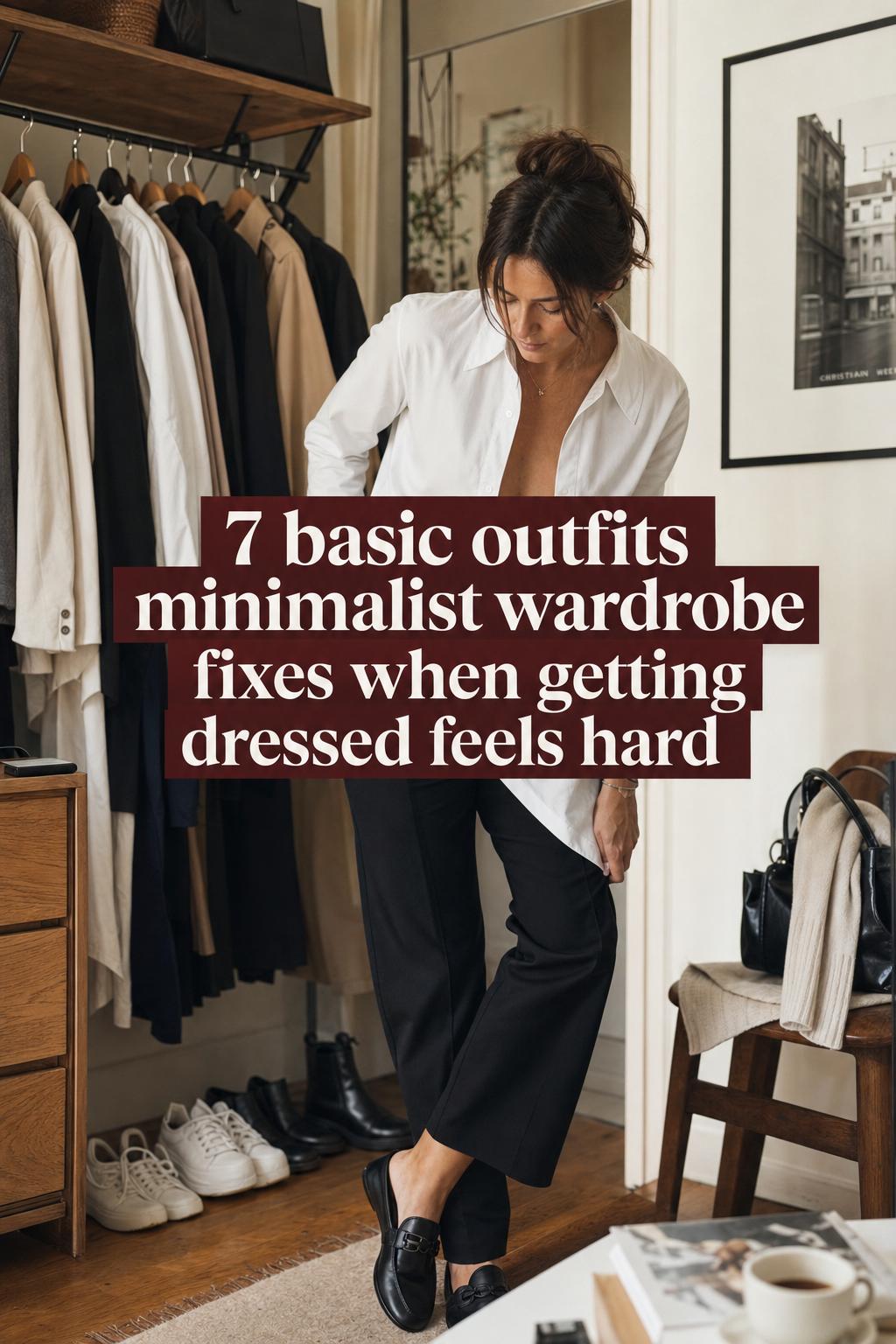
The controlled elegance behind timeless basics
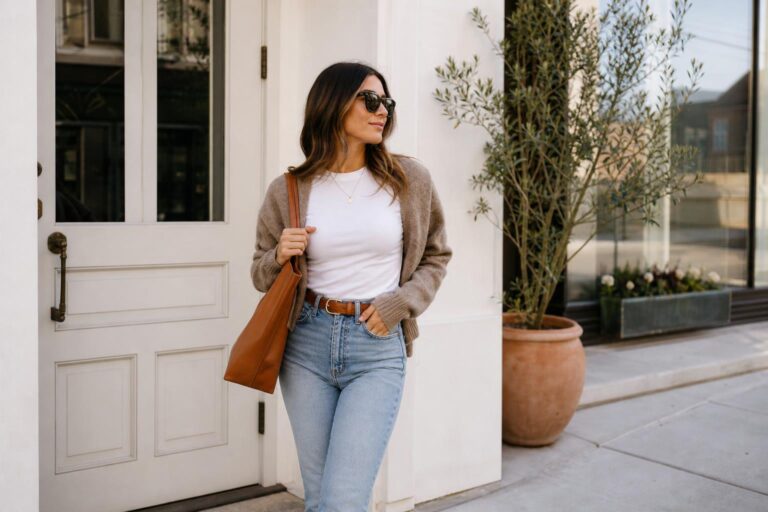
Minimalist dressing communicates restraint, but it does not need to feel severe. The strongest basic outfits use tailored pieces to create structure, then soften them with texture or relaxed proportions. Think of a blazer over a white tee and denim. On paper, it is one of the simplest outfit formulas possible. Visually, it works because the blazer sharpens the frame, the tee keeps the composition clean, and the denim prevents the outfit from becoming too formal.
This is where style icons like Audrey Hepburn still matter as a reference point. Not because minimalist wardrobes should imitate a historical image, but because that visual language of clean lines, intentional simplicity, and carefully edited silhouettes remains deeply relevant. Contemporary brands such as Celine, Totême, COS, Everlane, J.Crew, and Uniqlo appear in this space for the same reason: they offer pieces that function as wardrobe infrastructure rather than isolated statements.
The emotional mood is also distinct. A strong minimalist outfit often reads calm, competent, and self-directed. It does not ask for attention through excess. Instead, it gains authority through proportion play, tonal layering, and clarity of purpose. That is why the same black dress can feel understated for day with loafers and a trench, then refined for evening with a belt and more polished footwear.
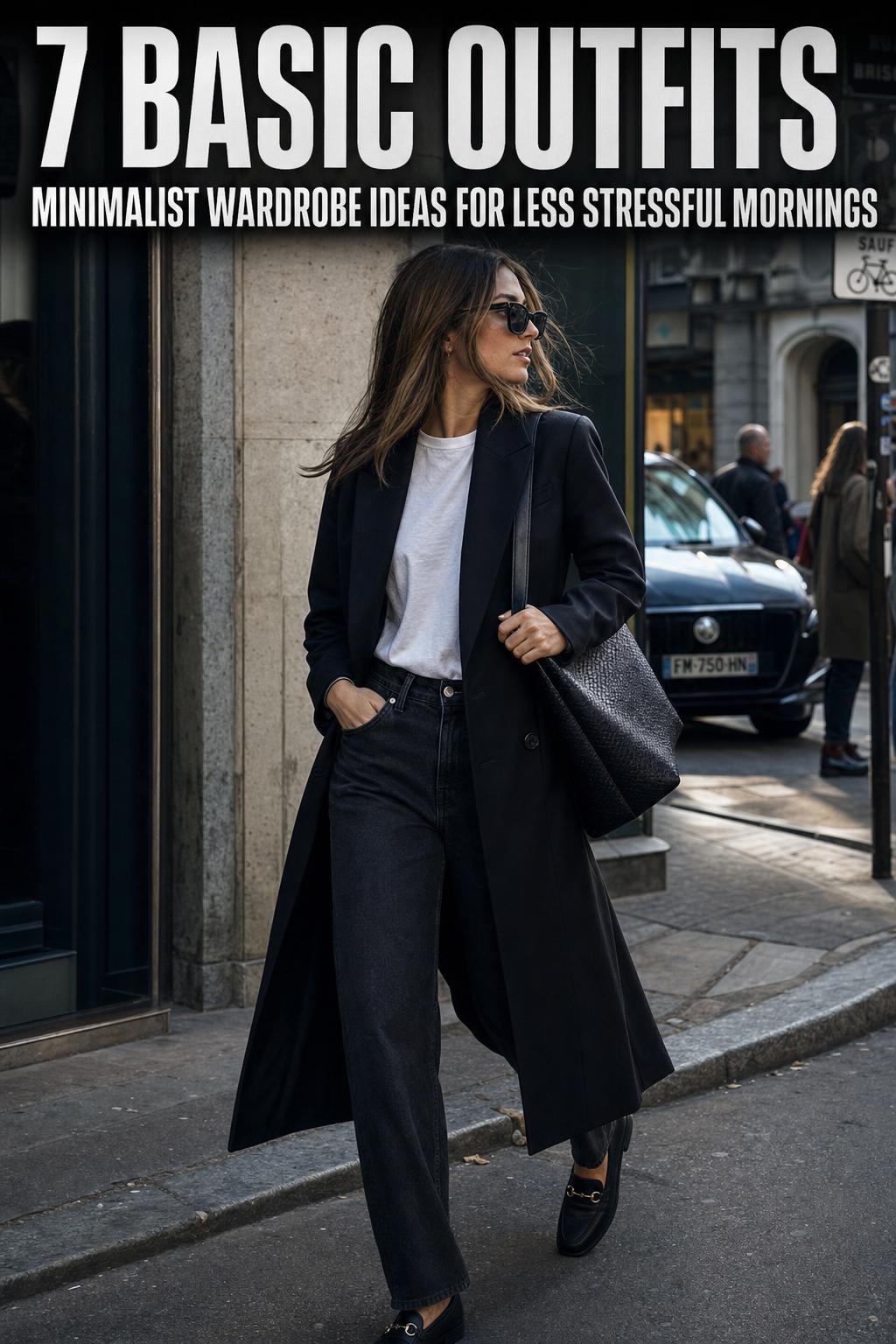
Core pieces that shape the wardrobe, not just the closet
The idea of essentials is often simplified into a generic shopping list. In practice, core pieces matter because they create repeatable structure. They should be versatile enough to connect categories: tops to bottoms, outerwear to dresses, shoes to tailoring. A useful minimalist capsule is usually built from categories that consistently appear across daily life rather than from trend-driven wish lists.
- Tops that act as foundations: white tee, neutral tee, white button-down, knit, turtleneck
- Bottoms that stabilize the silhouette: black trousers, denim, skirt
- Outerwear that adds shape: blazer, trench coat, lightweight jacket
- Dresses with flexible styling value: black dress
- Shoes that shift the mood: sneakers, loafers, ankle boots
- Accessories that refine without clutter: belts, scarves
What matters most is not owning every possible staple. It is understanding role. A blazer is a structure piece. Denim is often the grounding casual piece. A little black dress is a shortcut to coherence. Loafers make basics feel sharper, while sneakers make the same wardrobe feel more relaxed and urban. When each item has a defined visual function, getting dressed becomes far easier.
Tops as the visual starting point
Tops often determine whether a minimalist outfit reads polished, soft, or functional. A white tee is the purest example of low-friction styling. It pairs naturally with denim, black trousers, and skirts, and it works under blazers or trench coats without competing for attention. A white button-down has a different effect. It adds line and crispness, making even casual combinations feel more deliberate.
Knits and turtlenecks introduce texture contrast, which is essential in wardrobes built around neutral palettes. Without texture, minimalist outfits can flatten visually. A knit against denim or wool trousers creates depth without requiring print or strong color contrast. This is one of the quiet styling differences between outfits that look merely simple and outfits that look considered.
Bottoms that carry proportion
Trousers and jeans do more than complete an outfit. They set the proportion logic. Black trousers often create a cleaner, more tailored line and can make a white tee and blazer feel office-ready or evening-appropriate depending on shoes. Denim shifts the same top combinations toward ease and practicality. A skirt can introduce movement and soften an otherwise structured capsule.
In real-world wear, bottoms are also where versatility becomes obvious. If a pair of trousers only works with one shoe type or one top shape, it is not doing enough work in a minimalist wardrobe. The strongest foundations pair with sneakers, loafers, and ankle boots and can move between lighter layers and outerwear with little adjustment.
Outerwear as silhouette architecture
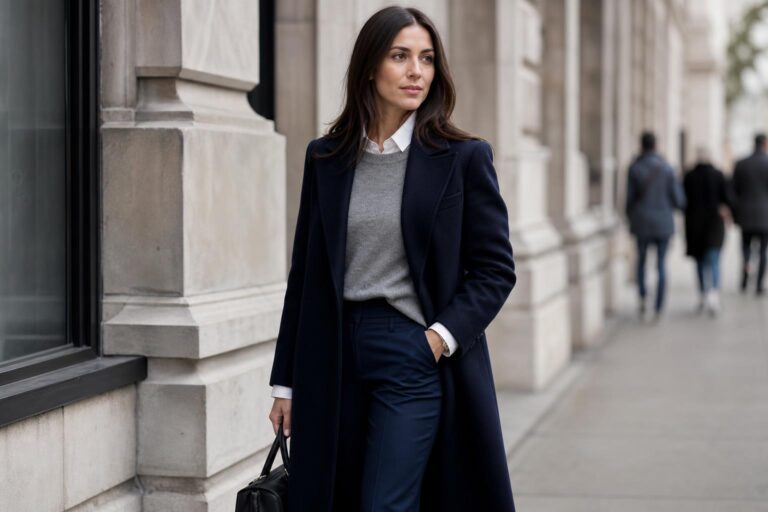
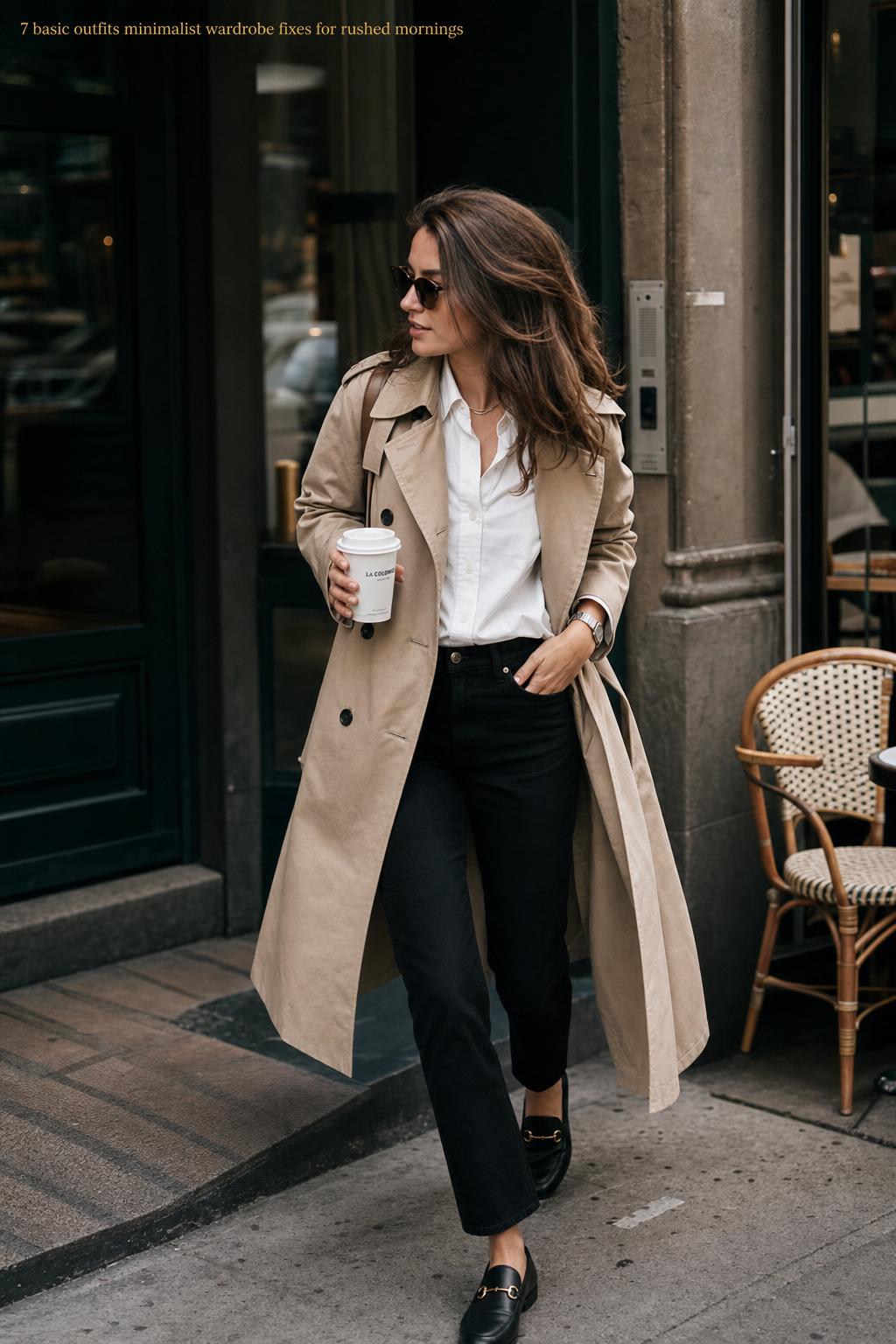
Outerwear changes the entire reading of basic outfits. A trench coat adds movement and a slightly cinematic polish, especially over a white button-down and denim. A blazer brings immediate control to the silhouette. A lightweight jacket offers a more casual bridge for year-round styling. These pieces matter because minimalist wardrobes rely heavily on layering behavior rather than decoration.
This is also where climate and seasonality enter the conversation. Year-round capsules are often discussed in broad terms, but outerwear is what makes them practical. The same core wardrobe can shift for cooler days, transitional weather, or a polished indoor setting simply by changing the layer that sits on top.
Shoes and accessories that redirect the mood
Minimalism does not eliminate personality; it concentrates it. Shoes and accessories are often where that concentration shows. Loafers make a wardrobe feel more classic and composed. Sneakers inject ease and everyday mobility. Ankle boots bring a sharper finish, especially with denim and a trench. Belts can redefine proportion by marking the waist, and scarves add subtle texture and layering interest without disrupting the palette.
The key is restraint with intention. If every accessory tries to speak at once, the logic breaks. In a minimalist wardrobe, one finishing element is often enough to shift the energy of an outfit.
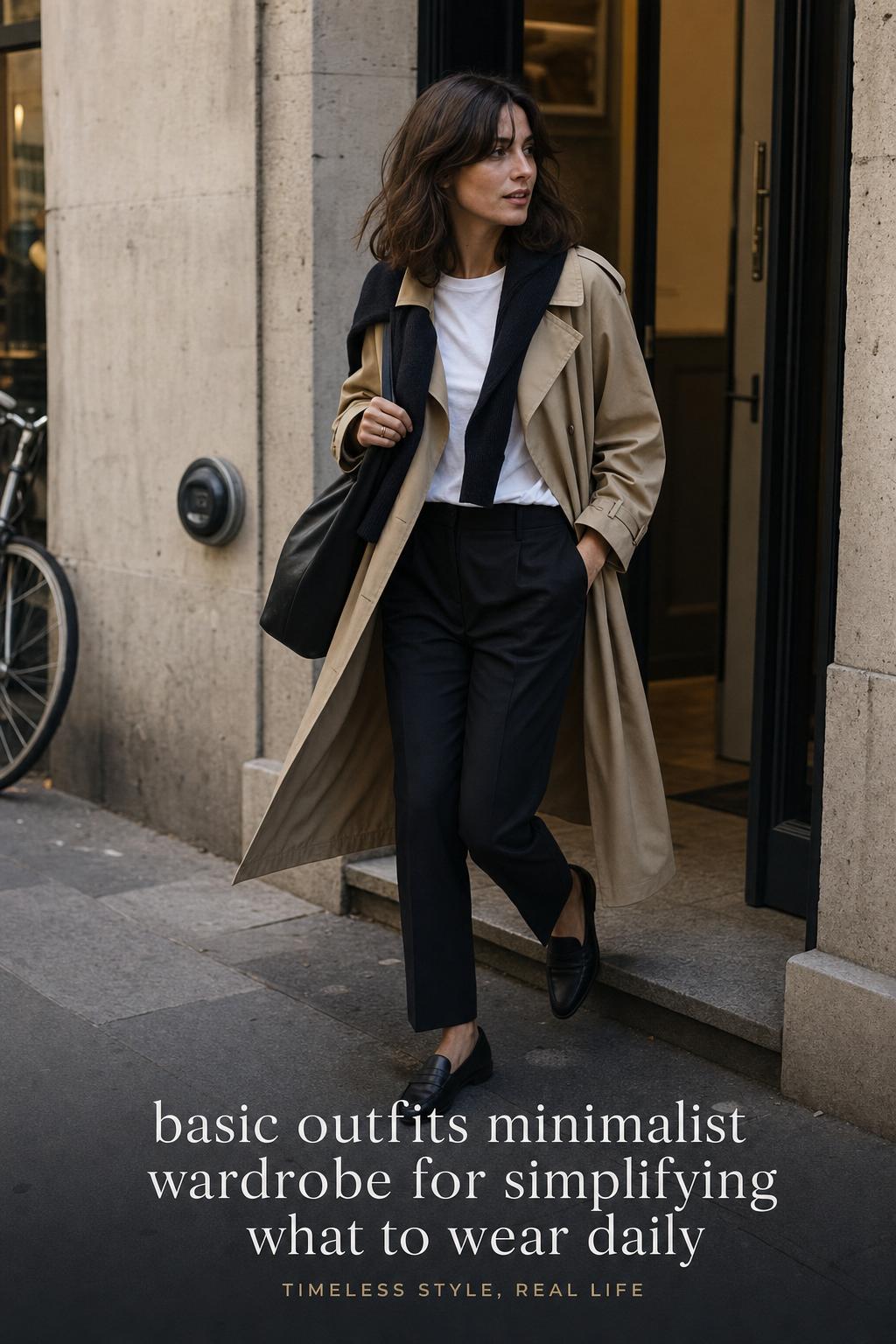
How everyday basics create different fashion moods
One reason minimalist wardrobes remain so relevant is that the same pieces can communicate different identities. A blazer, white tee, jeans, and loafers can feel editorial and city-ready in New York, softer and more relaxed in Los Angeles, or more sharply pared back in a Paris-influenced styling context. The mood changes through proportion, fabric, and finish rather than through completely different garments.
This is where many people misread minimalism as boring. In reality, the aesthetic difference between two simple outfits often comes down to visual precision. Slightly more tailored trousers can make an outfit feel intentional. A trench with fluid movement can create sophistication from pieces that are otherwise very basic. Even the choice between sneakers and loafers changes whether the outfit reads polished, approachable, or fashion-aware.
Why this combination works
A white tee, black trousers, and a blazer work because each piece solves a different problem. The tee keeps the center clean. The trousers anchor the outfit with tonal weight. The blazer adds edge definition and shape. With sneakers, the result feels practical and modern. With loafers, the same formula leans more tailored. This is the logic behind outfit formulas: not uniform dressing, but dependable visual architecture.
Outfit formulas that make a capsule wardrobe feel alive
The phrase outfit formulas can sound overly mechanical, but in a good wardrobe they behave more like design frameworks. They reduce decision fatigue while still allowing variation through texture, layer choice, and accessories. Instead of asking what to wear from scratch every morning, you start from a composition that already works.
- Top + bottom + blazer
- Button-down + denim + trench coat
- Knit + trousers + loafers
- Black dress + trench + ankle boots
- White tee + skirt + lightweight jacket + sneakers
These combinations appear repeatedly across minimalist fashion content because they are adaptable. They support weekday dressing, travel, city movement, casual meetings, and low-effort evening plans. They also allow styling variation without requiring more shopping. Swap denim for trousers, sneakers for loafers, or a tee for a knit, and the wardrobe still feels coherent.
The three-piece formula
The three-piece outfit is often the most effective minimalist structure. It adds enough complexity to look finished without becoming overworked. A top, a bottom, and one structured or softening layer create balance. For example, a white button-down, black trousers, and trench coat feel polished because there is contrast in line and movement. A knit, denim, and blazer work because the knit softens the blazer’s structure while the denim keeps the look grounded.
The four-piece weekly rotation
For real-life dressing, a four-piece weekly rotation often works better than a large closet full of options. A pair of trousers, denim, a blazer, and a trench can support multiple tops and shoe changes across several days. This is where wear-per-piece thinking becomes useful. The most valuable items are not necessarily the most exciting at first glance; they are the ones that repeatedly unlock other pieces.
Tip: if a wardrobe feels repetitive too quickly, the issue is often not a lack of pieces but a lack of category balance. Too many tops and not enough strong bottoms or outerwear usually weakens outfit variety.
The key visual difference between polished minimalism and plain basics
Plain basics become polished minimalism when silhouette and fabrication are considered. A tee that fits poorly or collapses under a blazer will pull the entire outfit down. Trousers that break awkwardly at the shoe can make even expensive pieces feel unresolved. Minimalism depends on fit because there are fewer distractions. Every line is visible.
Fabrics also do quiet work. Cotton offers clean simplicity. Wool adds depth and longevity. Denim introduces casual structure. Silk blends can bring subtle softness and light reflection. These fabric choices help a neutral palette avoid flatness. Black, white, navy, and beige look more refined when the textures within them are varied.
This explains why some wardrobes look elevated even when based on very common pieces from accessible brands. Uniqlo, J.Crew, Everlane, and COS are often useful in this space because they support clean lines and practical repetition. Premium references such as Celine or Totême may shape the aspirational visual language, but the styling logic can be recreated through proportion, color coherence, and deliberate editing.
Neutral palettes are not about playing it safe
A neutral color palette is one of the most consistent pillars of a minimalist wardrobe, yet it is often misunderstood as limitation. In practice, neutrals create continuity. They allow layering, repetition, and outfit switching without friction. Black sharpens. White clarifies. Navy softens black’s intensity while still reading polished. Beige introduces warmth and lightness. Denim acts as a practical bridge between all of them.
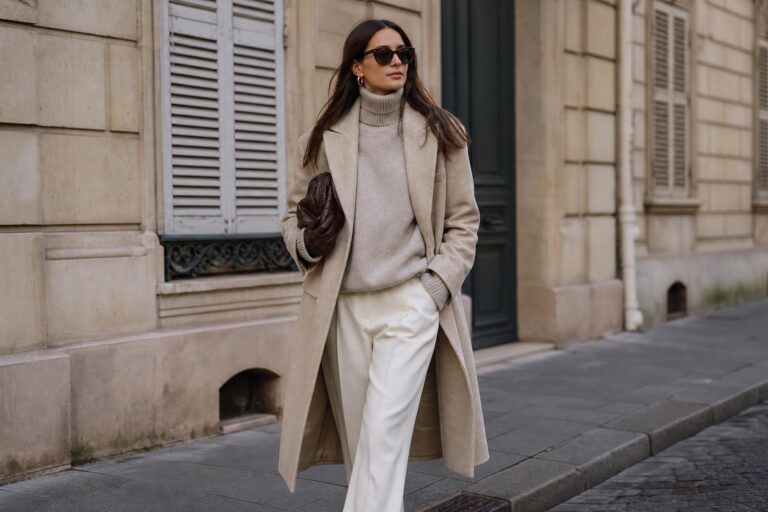
The smartest neutral wardrobes do not rely on a random mix of acceptable basics. They build color relationships intentionally. Black and white create high contrast and immediate definition. Navy and beige feel gentler and often more relaxed. Denim with white reads fresh and direct. A black dress under a trench creates a smoother tonal line than the same dress under a competing color layer.
Tip: choose one dominant base and two supporting neutrals. That small decision improves mixing dramatically and makes shopping more disciplined.
Tonal layering versus sharp contrast
Tonal layering usually creates the quietest kind of sophistication. A beige knit with a trench and a skirt in related depth feels soft and cohesive. Sharp contrast, such as a white tee against black trousers, feels more graphic and direct. Neither is better. The choice depends on mood, occasion, and personal preference. Understanding the difference helps readers identify why some minimalist outfits feel gentle while others feel decisive.
Building the wardrobe step by step without losing style identity
The most successful capsule wardrobes are built through editing, not impulse shopping. Starting with what is already worn regularly provides more insight than beginning with abstract ideals. A realistic wardrobe should match daily life first and aesthetic ambition second. Someone who lives in denim and lightweight layers should not build a capsule around formal dresses and rarely worn tailoring just because the imagery is appealing.
- Identify the pieces already worn weekly
- Group them by category: tops, bottoms, outerwear, shoes
- Notice the dominant colors that naturally repeat
- Find the gaps that prevent outfit rotation
- Add core pieces that connect existing items more efficiently
This process often reveals that the missing link is not another top, but a blazer that elevates basics, a trench coat that improves transitional dressing, or loafers that make casual items feel more intentional. The point is to strengthen relationships inside the wardrobe rather than simply expand volume.
Budgeting with cost-per-wear in mind
Budget-conscious capsule planning is one of the most practical ways to approach minimalist fashion. A wardrobe built from fewer, more useful pieces often performs better than a larger wardrobe full of disconnected purchases. Cost-per-wear matters because the best staples are usually the ones reached for repeatedly: a trench worn across seasons, denim that works with both sneakers and loafers, a blazer that can structure a tee or sharpen a dress.
Accessible brands such as Uniqlo, J.Crew, Everlane, and COS fit naturally into this strategy because they can help build a coherent base without requiring luxury-level spending. The lesson is not that affordability and polish are opposites. It is that value increases when a piece supports many outfits instead of one.
Seasonal planning that still feels consistent
Year-round dressing does not mean wearing the same formula unchanged in every condition. It means preserving the same style identity while adjusting layers, fabrics, and outerwear. A capsule wardrobe should transition across warm days, cooler mornings, and more unpredictable weather without losing coherence.
For example, a white button-down and trousers can carry through multiple seasons. Add a trench in transitional weather, a lightweight jacket when the day is milder, or a knit when more texture and warmth are needed. The visual code stays the same even as the climate changes.
Real-world styling: workwear, weekends, and the in-between
Minimalist wardrobes are most convincing when they function beyond inspiration boards. Workwear, casual plans, travel days, and low-key evening events all place different demands on the same basics. This is where styling psychology becomes useful. What reads polished in a meeting may feel too rigid for a weekend, even if the items are similar. The difference is often in proportion and finish.
How each setting changes the same essentials
For workwear, black trousers, a white button-down, and loafers offer immediate structure. Add a blazer for authority and cleaner line definition. For a weekend version, switch to denim and sneakers while keeping the same button-down or tee. The look relaxes without losing identity. For evening, a black dress with ankle boots and a trench creates a sharper, more contained silhouette that still belongs to the same wardrobe world.
This is the practical strength of timeless basics. They do not require a completely separate wardrobe for every context. They become more useful because their styling can be redirected.
The role of fit, tailoring, and maintenance
In a minimalist wardrobe, fit is not a finishing detail. It is central to the aesthetic. Because the palette is restrained and prints are limited, cut and drape become far more visible. A blazer that sits correctly at the shoulder changes the authority of an outfit. Trousers with the right length make sneakers look intentional rather than incidental. A white tee that holds shape under layering performs better than one that twists or stretches out immediately.
Maintenance matters for the same reason. Timeless basics only stay timeless if they retain structure, color clarity, and fabric integrity. Minimalist wardrobes ask more from each piece because repetition is part of the method. That makes care, repairability, and longevity relevant practical concerns, not secondary ones.
Tip: if an outfit built from good basics still feels off, assess fit before adding more accessories. Minimalist dressing usually improves through refinement, not decoration.
Most versatile pieces in a beginner capsule wardrobe
Beginners often need a clear starting point rather than a fully expanded closet strategy. The most useful early pieces are the ones that create the highest number of coherent combinations while covering multiple settings. These are not always the most dramatic pieces, but they are the most operational.
- A blazer that works over tees, button-downs, and knits
- Black trousers that pair with sneakers, loafers, and ankle boots
- Denim that can lean polished or casual
- A white tee and a white button-down for two different levels of structure
- A trench coat for transitional layering
- Loafers and sneakers for mood variation
- A black dress for simple day-to-evening flexibility
These pieces create immediate outfit formulas while leaving room for personal interpretation. That flexibility matters, especially for readers who are still deciding whether they prefer sharper tailoring, softer layering, or a more relaxed minimalist fashion approach.
How to blend polish and ease without looking undecided
One of the most wearable ways to approach minimalism is to blend structured and relaxed elements. This is often where the wardrobe feels most current. A blazer with sneakers, a white tee with tailored trousers, or a trench over denim and loafers creates a useful tension. The outfit feels finished, but not stiff.
The mistake is mixing signals without hierarchy. If everything is relaxed, the outfit can lose shape. If everything is structured, it may feel overly formal for everyday life. The strongest combinations choose one visual anchor. That could be the blazer, the trouser line, or the trench. Then the remaining pieces soften or support it.
Easy ways to blend both modes
- Pair a structured blazer with denim instead of matching tailoring
- Wear loafers with a white tee and black trousers to sharpen casual basics
- Use sneakers to relax a button-down and trench combination
- Add a belt only when the outfit needs a stronger focal point
- Choose one textured piece, such as a knit, to prevent tonal outfits from feeling flat
Common styling mistakes that make minimal outfits feel generic
The biggest misconception about minimalist fashion is that fewer items automatically create better style. They do not. A small wardrobe without cohesion can feel more frustrating than a larger one. Minimalism works only when the pieces are genuinely versatile and visually aligned.
Another common mistake is relying on neutral colors without thinking about silhouette. Black, white, navy, beige, and denim can look sophisticated, but they can also look unfinished if the proportions fight each other. A boxy top with an awkwardly cut bottom and no strong outer layer rarely delivers the clarity people expect from the aesthetic.
Finally, many wardrobes become cluttered with duplicates that do not solve new styling problems. A fourth similar tee is usually less useful than one great trench coat or one pair of trousers that broadens the entire rotation. Minimalist wardrobes improve through precision.
What makes this aesthetic resonate now
The continued appeal of the capsule wardrobe is not just visual. It reflects a broader preference for longevity, versatility, and clothing that can move across settings. In a style culture shaped by rapid trend cycles, the minimalist wardrobe offers steadiness. It also aligns with growing interest in sustainability, second-hand shopping, rentals, and extending the life of clothing through better planning and care.
That does not mean minimalism rejects fashion excitement. It simply relocates it. The interest moves from constant novelty to sharper observation: a great cut, a better fabric, a smarter layer, a more useful rotation. Even references from fashion capitals like New York, Paris, and Milan support this. The most enduring looks often come from disciplined styling rather than excessive accumulation.
Choosing the version of minimalism that fits your life
Not every minimalist wardrobe should look the same. Some people prefer a more tailored, city-focused direction built around blazers, loafers, and black trousers. Others want a softer capsule with sneakers, denim, knits, and lighter layering. Both are valid if the wardrobe feels coherent and serves actual routines.
The most useful question is not whether an outfit is minimalist enough. It is whether the outfit has visual clarity and practical repeat value. If a piece works across your schedule, integrates into your color story, and improves multiple combinations, it belongs. If it looks good in isolation but complicates the wardrobe, it usually does not.
That is also why a strict style rulebook tends to fail. Good minimalist dressing leaves room for personality, climate, and habit. It can accommodate a black dress and ankle boots, or denim and sneakers, or a white button-down with a trench and loafers. The unifying factor is not one single formula. It is consistency in visual intention.
FAQ
What is the difference between a minimalist wardrobe and a capsule wardrobe?
A minimalist wardrobe focuses on simplicity, timeless basics, and a restrained visual identity, while a capsule wardrobe emphasizes a smaller, curated collection of interchangeable pieces. In practice, the two often overlap because both rely on essential pieces, neutral palettes, and outfit formulas that support repeated wear.
What are the most important pieces for basic outfits in a minimalist wardrobe?
The strongest foundation usually includes a white tee, white button-down, knit or turtleneck, black trousers, denim, a blazer, a trench coat, a black dress, sneakers, loafers, and ankle boots. These pieces work because they can be combined across casual, polished, and year-round outfits without losing cohesion.
How do I start a minimalist wardrobe on a budget?
Start with the pieces you already wear most, then identify the missing items that would connect them more efficiently. Focus on high-use categories such as trousers, denim, a blazer, or a trench before buying duplicates of basics, and prioritize cost-per-wear so each purchase supports multiple outfits.
Which colors work best in a minimalist wardrobe?
Black, white, navy, beige, and denim are the most reliable foundation because they mix easily and create strong outfit continuity. The best approach is to choose one dominant neutral and a couple of supporting tones so the wardrobe feels connected rather than randomly basic.
How can I make minimalist outfits look polished instead of plain?
Focus on fit, silhouette balance, and texture contrast. A blazer that fits well, trousers with a clean line, and fabrics such as cotton, wool, denim, or silk blends will usually elevate an outfit more effectively than adding extra accessories or trend pieces.
Can a minimalist wardrobe work year-round?
Yes, as long as the wardrobe is built around adaptable layers rather than a single seasonal formula. Core items such as button-downs, trousers, denim, knits, blazers, trench coats, and lightweight jackets can shift across changing weather while keeping the same visual identity intact.
Are sneakers appropriate in a minimalist capsule wardrobe?
Sneakers are one of the most useful shoe options in a minimalist capsule because they relax tailored pieces and support everyday mobility. They work especially well with denim, trousers, skirts, and lightweight outerwear when the rest of the outfit maintains clear lines and a controlled palette.
How many pieces should a beginner capsule wardrobe have?
There is no single required number, but a beginner wardrobe is usually most effective when it stays focused on core categories and strong repeat value. A concise set of tops, bottoms, outerwear, shoes, and one versatile dress is often more useful than chasing a specific total without considering lifestyle.
What is the easiest outfit formula to use every week?
The easiest and most reliable formula is a top, a bottom, and one defining layer. A white tee with black trousers and a blazer, or a button-down with denim and a trench, creates immediate structure and can be changed quickly with loafers, sneakers, or ankle boots.
How do I know if a piece belongs in my minimalist wardrobe?
A piece belongs if it supports your regular routine, works with several existing items, and strengthens the overall color and silhouette logic of the wardrobe. If it looks appealing on its own but creates friction with your other basics, it is less useful than it appears.