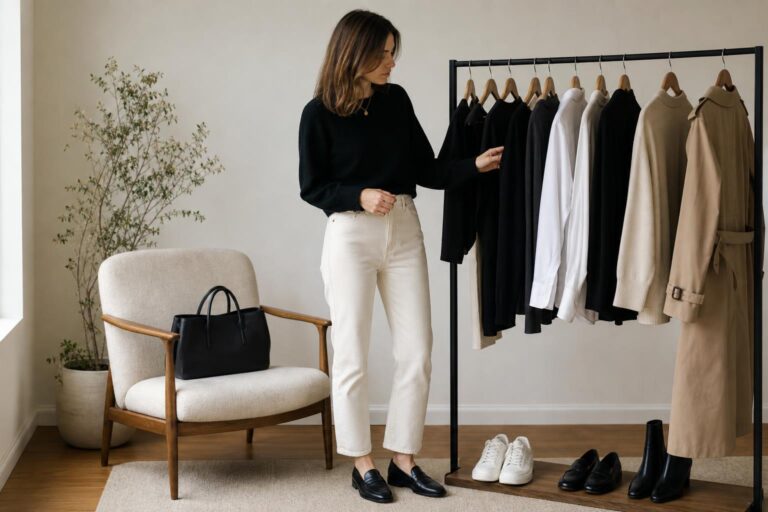
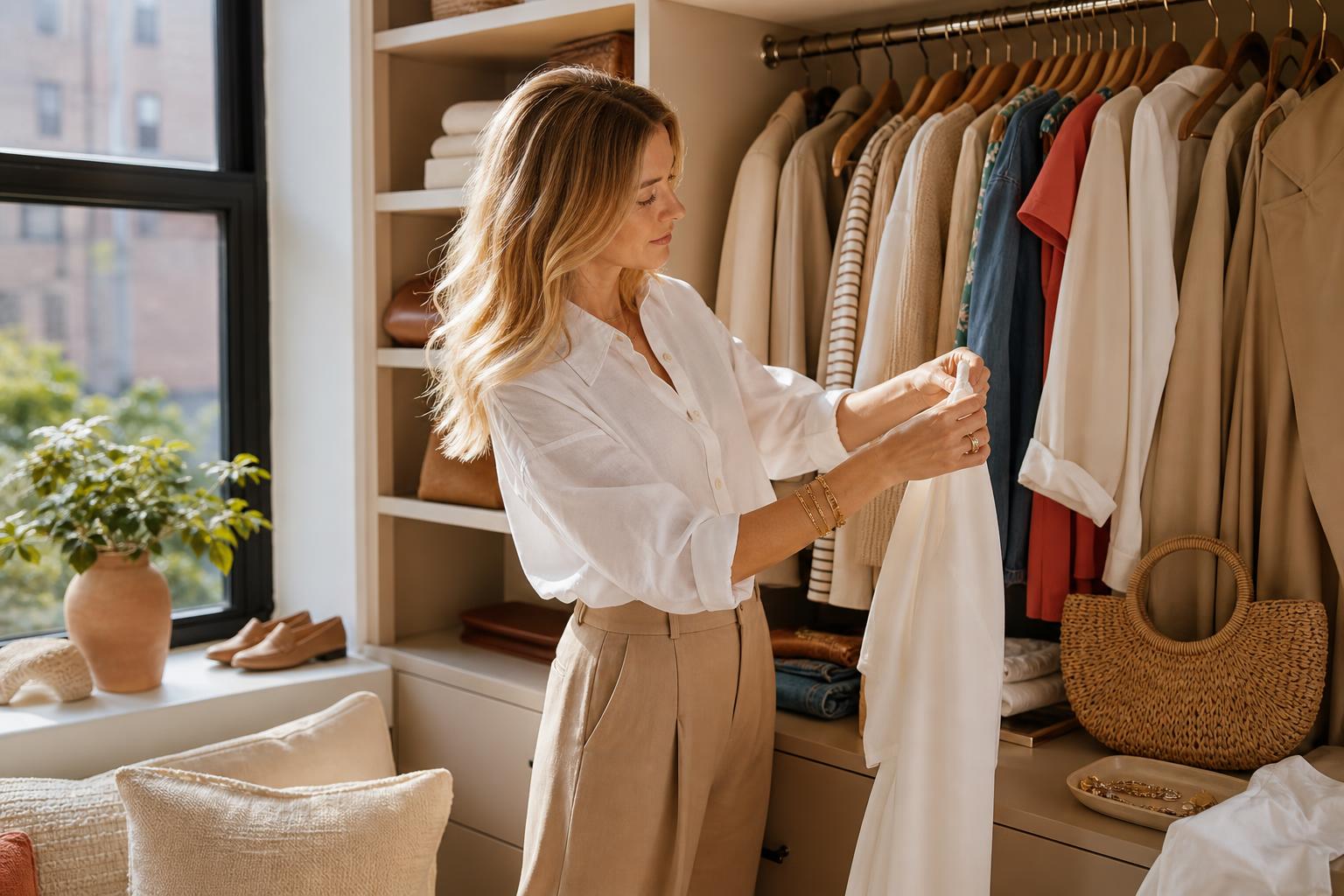
True Spring Capsule Wardrobe for a Fresh, Polished Season
A true spring capsule wardrobe solves a specific style problem: you want the ease of a small, highly functional closet, but standard minimalist formulas can look flat when your coloring suits warmth, clarity, and brightness. The answer is not owning more. It is choosing pieces that work harder through color harmony, smart layering, and a realistic spring wardrobe plan built for U.S. weather, travel, workdays, and everyday dressing.
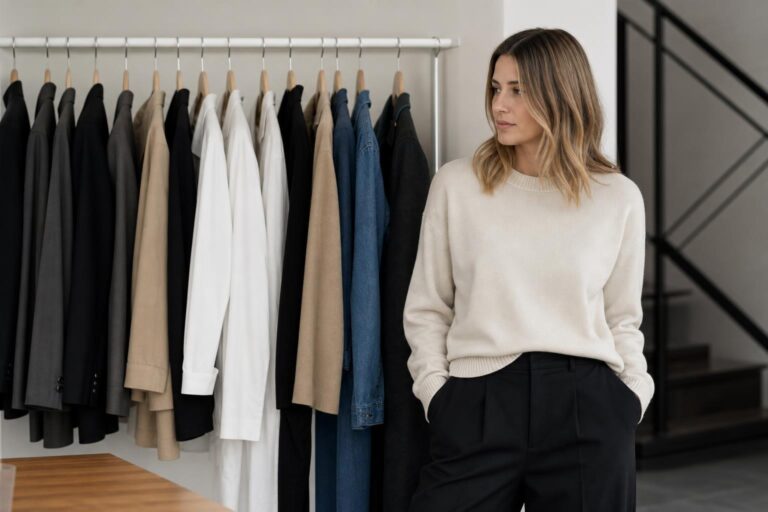
The strongest spring capsules share the same logic. They rely on repeatable silhouettes, a controlled palette, practical layering, and accessories that complete outfits without creating clutter. For true spring, that means warm neutrals such as camel, sand, and milk chocolate, then lifting the wardrobe with yellow, coral, and green accents. Add dependable pieces like tees, jeans, a trench, loafers, sandals, a shirt dress, and a lightweight jacket, and the result is a wardrobe that feels clear, cohesive, and wearable rather than random.
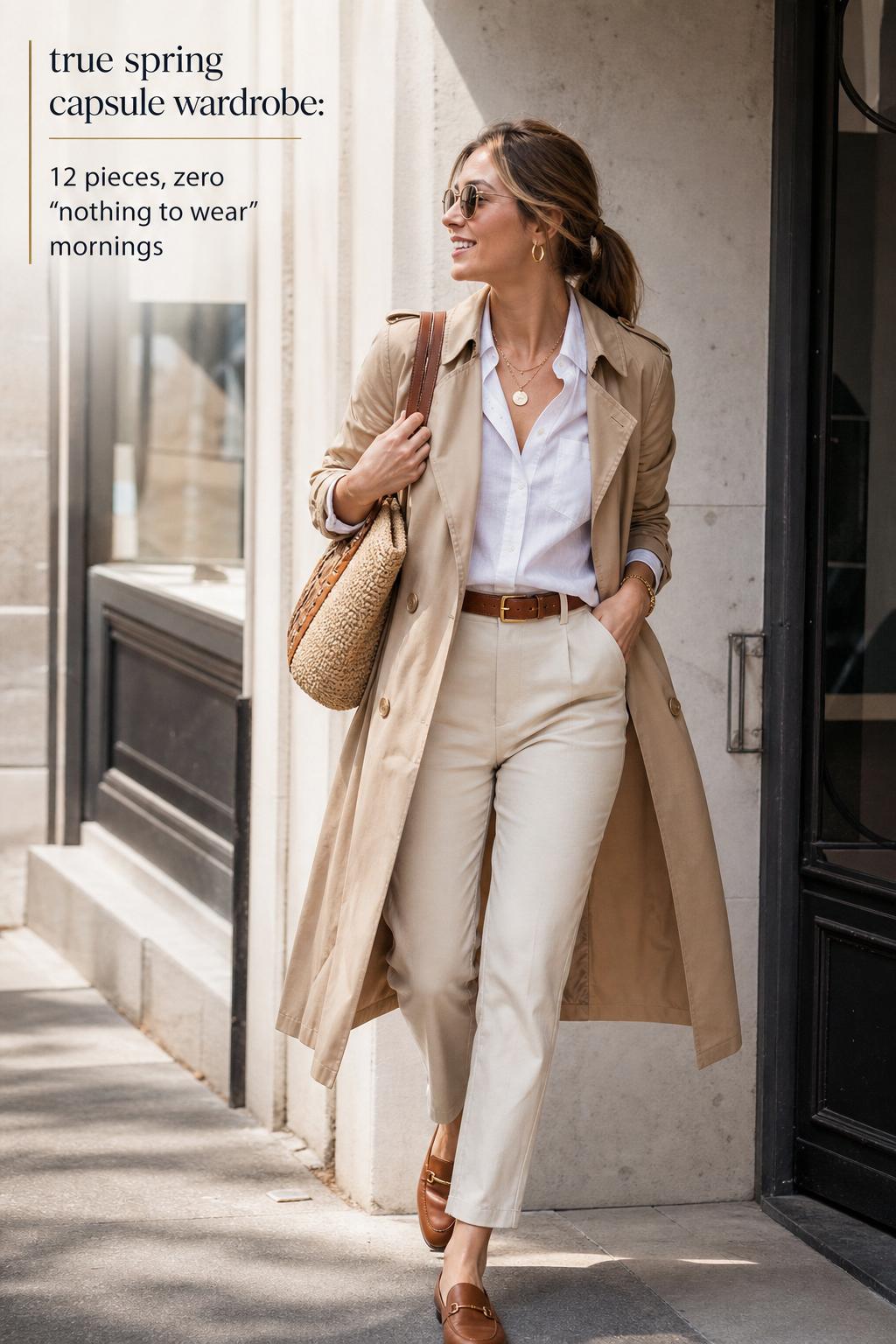
Why true spring changes how a capsule wardrobe should be built
A capsule wardrobe is a deliberately edited group of clothing designed to mix and match across many outfits. A true spring capsule wardrobe follows that same principle, but with one important adjustment: color selection is not secondary. It is structural. The palette determines whether the capsule looks naturally integrated or visually disconnected.
True spring sits in the warm palette family, so the wardrobe benefits from fresh, sunny color relationships rather than cool, muted minimalism. That is why standard black-and-white formulas can feel too stark, while soft camel, sand, coral, warm green, and creamy light tones create a more flattering base. The goal is not to turn every outfit into a color statement. The goal is to make every piece cooperate.
Found the dress? Keep the rest in one place.
Zarellea brings guest details, vendors, timelines, and every next step together — so your wedding plan feels as good as your look.
This is also where practicality matters. A good true spring capsule should handle changing temperatures, indoor air conditioning, a casual weekend, a polished work look, and travel-friendly packing. The capsule only works in everyday life when the color theory supports usability.
The palette first approach: what belongs in a true spring wardrobe
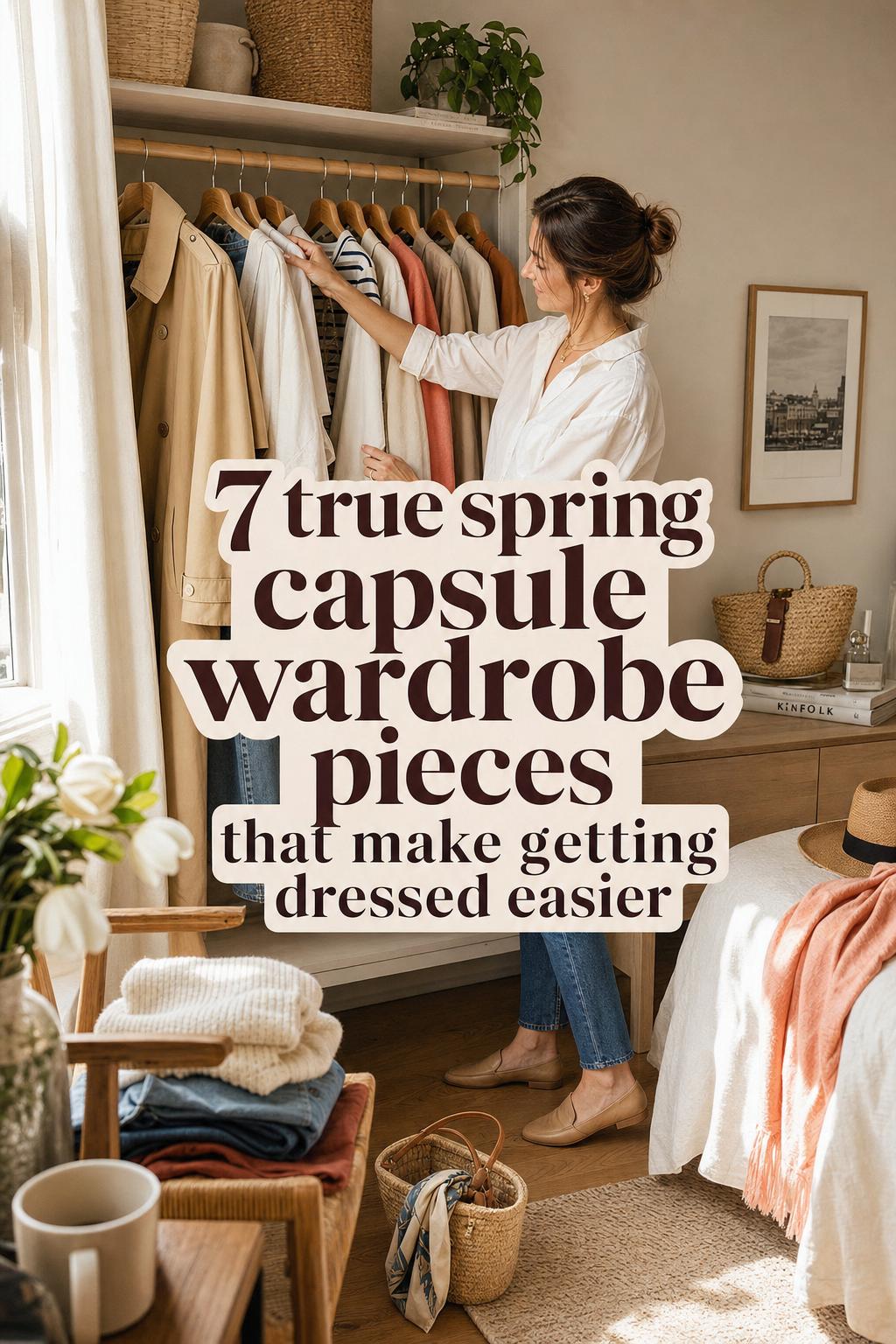
The easiest way to keep a spring capsule cohesive is to separate the palette into neutrals and accents. Neutrals create visual stability. Accent colors create energy. In a true spring wardrobe, the warm neutrals do the anchoring, while the brighter shades keep outfits from feeling heavy or dull.
- Core neutrals: camel, sand, milk chocolate
- Useful light tones: warm white and creamy light shades
- Accent colors: yellow, coral, green
- Best role for accents: tops, scarves, earrings, sandals, bags, or one statement layer
This structure works because it gives each outfit a visual anchor. Camel trousers or sand outerwear calm the brightness of coral or yellow. A green top paired with denim trousers still reads intentional because denim acts as a neutral support. The wardrobe feels alive, but not chaotic.
A common mistake is buying too many accent pieces before establishing the neutral base. That usually creates a closet full of “nice” items with limited compatibility. Buy the anchors first. Then add color where it has the most impact.
A realistic 26-piece true spring capsule wardrobe
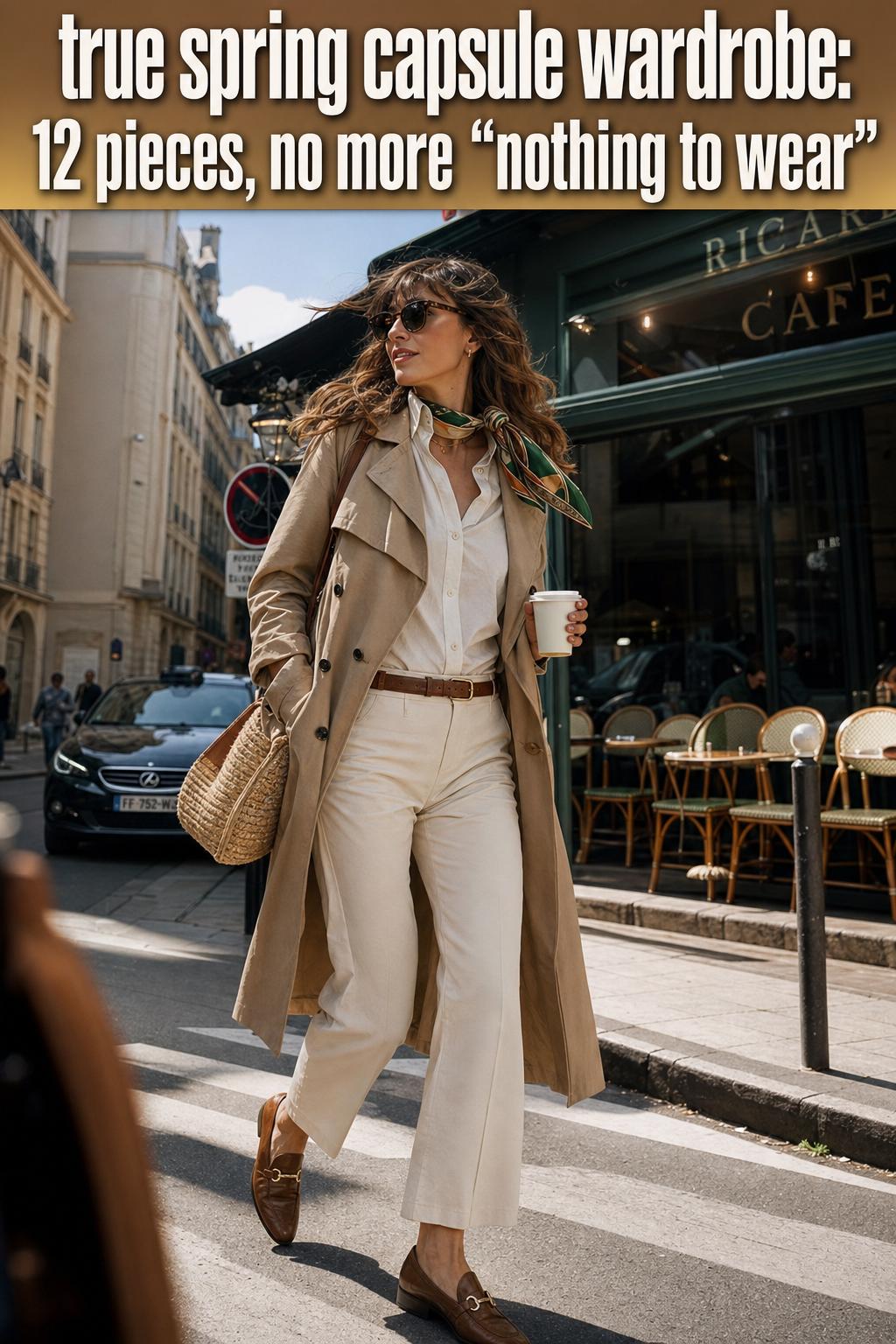
A 26-piece spring capsule is large enough to support outfit repetition without feeling restrictive, yet small enough to stay disciplined. It is also easier to manage than oversized capsules that become regular wardrobes with a new label. The most useful version includes tops, bottoms, layering pieces, dresses, shoes, and accessories.
Tops that create the color story
- 2 lightweight tees in warm light neutrals
- 1 stripe top for pattern and contrast
- 1 coral top or shell
- 1 yellow top
- 1 green top or shell
- 2 crisp blouses for polished outfits
These are the easiest pieces to recreate on any budget, and they do a lot of visual work. A top is where true spring color is most effective because it sits near the face. If you are building slowly, start here. A coral shell, a warm white tee, and a green top will multiply your outfit options faster than an extra pair of shoes.
Bottoms that keep the capsule grounded
- 1 pair of jeans
- 1 pair of denim trousers
- 1 pair of camel or sand trousers
- 1 pair of green pants if you want more color depth
- 1 skirt in a neutral tone
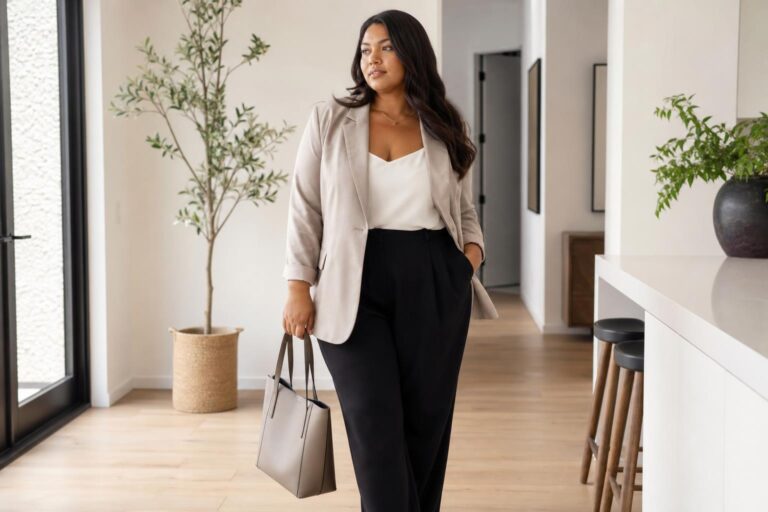
Bottoms should be quieter than tops in most true spring capsules. That balance keeps outfit composition clean. Camel trousers are especially useful because they bridge polished shirts, casual tees, loafers, sandals, and lightweight outerwear. If you are curvy, a cleaner line through the hip and a softer drape in the trouser fabric will improve comfort and proportion. If you are petite, full-length trousers that do not pool are usually more versatile than dramatic wide cuts.
Layering pieces that make the wardrobe functional
- 1 cardigan
- 1 blazer
- 1 trench
- 1 lightweight jacket
This category decides whether the capsule works outside a perfect-weather fantasy. Spring weather shifts quickly, and layering is central to nearly every top-performing capsule approach. A cardigan softens casual looks, a blazer sharpens simple basics, a trench handles transition weather, and a lightweight jacket gives you a practical third piece without bulk.
Dresses that act as one-step outfits
- 1 shirt dress
- 1 midi dress
- 1 white dress or light warm-toned dress
Dresses are efficient because they reduce outfit decisions. The white dress remains a recurring spring anchor for a reason: it offers freshness, flexibility, and easy styling with loafers, sandals, a trench, or a raffia handbag. In a true spring wardrobe, a warm white or creamy version generally integrates better than a stark optic white.
Shoes and accessories that complete the wardrobe
- 1 pair of loafers
- 1 pair of sandals
- 1 versatile tote
- 1 raffia bag or warm-weather bag
- 1 belt
- 1 scarf
- 1 pair of earrings
Accessories should support the palette rather than interrupt it. Scarves and earrings are especially useful in a true spring capsule because they add color without taking up much wardrobe space. Sandals and loafers cover the bulk of daily styling needs, while a tote handles practical use and a raffia bag introduces texture contrast for spring.
The third piece strategy that makes simple outfits look complete
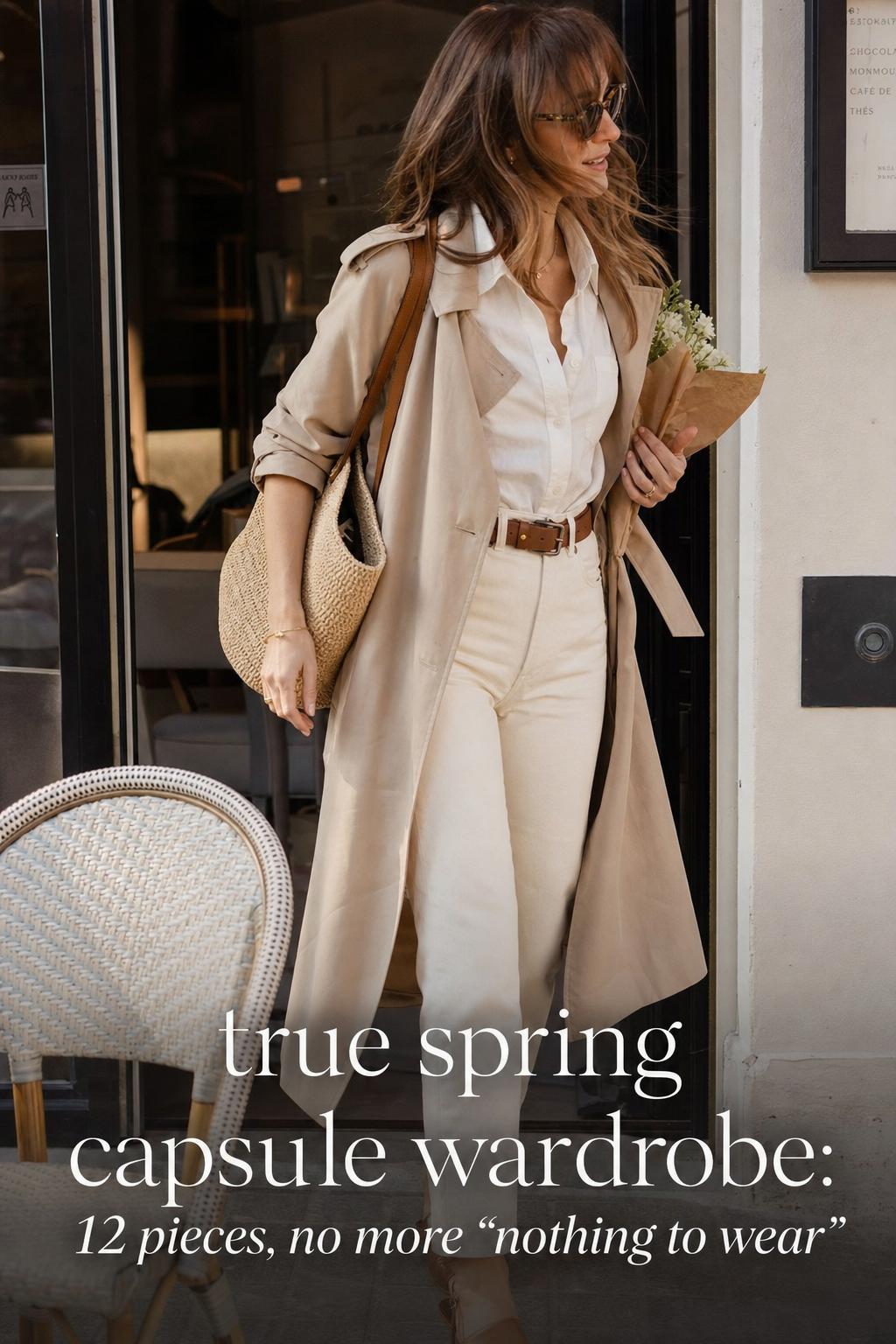
One of the most overlooked ideas in spring dressing is the third piece. The base outfit is usually top plus bottom, or dress plus shoes. The third piece is the layer that makes the outfit feel finished: a blazer, cardigan, trench, or lightweight jacket. This is not just about style. It is about structure, versatility, and weather readiness.
A third piece works because it adds vertical lines, texture variation, and silhouette balance. For example, a coral shell with camel trousers can feel slightly bare on its own. Add a sand blazer and the outfit becomes sharper and more intentional. A shirt dress with loafers may read simple; a trench adds movement and visual depth.
- For work: blouse + camel trousers + blazer
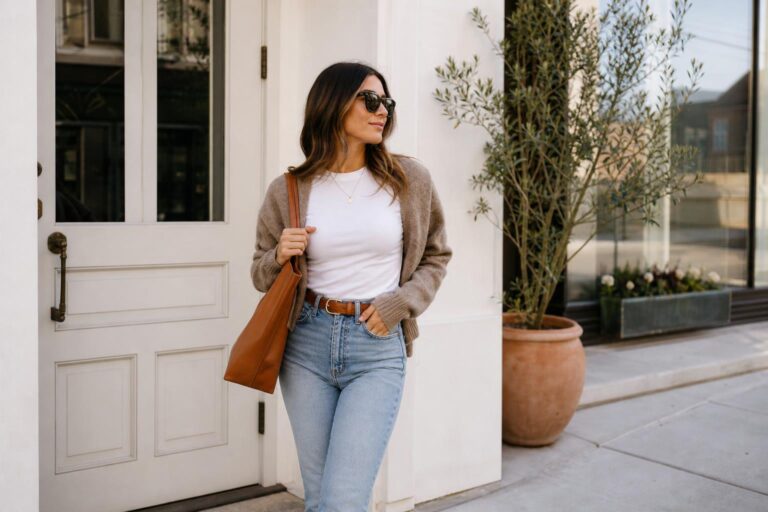
- For weekend: tee + jeans + cardigan
- For travel: shell + denim trousers + trench
- For mild evenings: midi dress + lightweight jacket
If you are tall, longer trenches and relaxed blazers can support your proportions well. If you are petite, choose cleaner cuts that do not visually overwhelm the frame. If you are curvy, look for layers that define the shoulder or create a smooth line through the torso rather than adding stiffness at the widest point.
Outfit formulas that turn 26 pieces into 40+ wearable combinations
The best capsule wardrobes are formula-based, not item-based. That means you repeat successful outfit structures and rotate the colors, fabrics, and accessories. This is what makes a 26-piece wardrobe practical instead of limiting.
For everyday errands and casual plans
Use a simple base and let the palette do the work. A warm white tee with jeans and loafers is an easy core. Switch to a green top and sandals for a more seasonal feel. Add a cardigan when temperatures dip. These combinations work because the shapes are familiar and comfortable, while the warm palette keeps them from looking generic.
For office or polished daytime dressing
A crisp blouse, camel trousers, and loafers create a reliable polished formula. Add a blazer for stronger definition. A shirt dress with a belt and loafers is another efficient option because the belt restores shape and the loafers add grounded structure. This is one of the most versatile categories in the wardrobe because each item can also be styled casually.
For travel-friendly spring outfits
Travel capsules benefit from fewer shoes, repeat outerwear, and tops that pair across all bottoms. Denim trousers, a stripe top, a cardigan, and loafers are especially dependable because they layer easily and resist looking repetitive. A trench becomes the key travel outerwear piece because it handles transitions better than a heavy coat while still making simple basics feel composed.
Wardrobes with color can still travel well. The trick is to keep the bright pieces concentrated in tops and accessories, then repeat neutral bottoms and outerwear. That preserves flexibility and reduces overpacking.
How to make the capsule feel expensive without buying luxury across the board
A true spring capsule does not need a luxury budget to look elevated. What matters more is consistency of palette, clean silhouettes, and thoughtful accessories. If your colors coordinate, your outfits will appear more deliberate even when the pieces are affordable.
Investment pieces are usually best placed in categories that get repeated heavily: a trench, a blazer, loafers, or a quality tote. Budget-friendly alternatives work well for seasonal accent tops, scarves, and trend-forward add-ons. This mirrors the broader capsule advice found across spring wardrobes: buy longevity where wear frequency is highest, and save on pieces that mainly refresh the look.
There is also room for a more fashion-led interpretation. Brands such as Jil Sander, Staud, Bottega Veneta, Proenza Schouler, Matteau, Loewe, Dries Van Noten, and J.Crew appear in spring capsule conversations because they illustrate how clean wardrobe building and strong accessories can coexist. You do not need those exact labels to learn from the formula. Notice the pattern: strong anchor pieces, restrained silhouettes, useful accessories, and color or texture introduced with purpose.
Fabric choices that make spring layering easier
Fabric determines whether the wardrobe performs well in changing spring conditions. Cotton, linen, and lightweight wool blends are especially practical because they support layering without creating too much weight. The point is not to chase a single ideal fabric. It is to choose materials that align with transition dressing.
- Cotton: useful for tees, shirts, and easy daytime layers
- Linen: ideal when temperatures rise and you want a lighter visual texture
- Lightweight wool blends: helpful for blazers or fine layers in cooler conditions
Texture contrast matters here. A crisp blouse with denim trousers feels balanced because one fabric is clean and refined while the other is casual and grounding. A linen layer with loafers and structured trousers creates relaxed polish. These contrasts are part of why capsule outfits avoid looking flat even with a limited item count.
From a longevity perspective, fabric care is part of capsule success. Pieces that wash well, store neatly, and recover after repeat wear are more valuable than items that look good once and become high maintenance. A small wardrobe demands reliability.
U.S. spring reality: adapting the wardrobe by region
A spring capsule that works in one U.S. location may feel impractical in another. This is why the same 26-piece framework should be adjusted through fabrics and layers rather than completely rebuilt. Regional variation matters most in outerwear, footwear timing, and the weight of your layers.
Coastal conditions
Coastal spring often benefits from a trench, cardigan, and loafers staying in rotation longer. A scarf also earns its place because it adds warmth without forcing a winter coat back into the outfit. The wardrobe should lean more heavily on layering than bare-leg dressing early in the season.
Midwest and more variable climates
Variable temperatures call for stronger overlap between late winter and early spring pieces. The lightweight jacket and trench matter more here, and shoes should balance practicality with adaptability. Loafers often outperform sandals until the weather stabilizes. This is also where a blazer becomes useful as both outfit polish and temperature management.
Southwest and warmer spring days
Warmer regions can shift earlier toward dresses, sandals, linen textures, and lighter layers. In this context, a white dress, raffia bag, and bright top rotation feel especially functional. The capsule still needs a third piece, but it may be a lightweight jacket or an easy cardigan rather than a trench worn daily.
Body type and fit adjustments that improve the capsule immediately
A capsule wardrobe should simplify getting dressed, not force everyone into the same shape formulas. The most effective true spring wardrobe keeps the palette consistent while adjusting proportions to the wearer. This is a better strategy than copying a fixed shopping list without considering fit.
For petite frames, visual clutter is usually the main risk. Fewer breaks in the outfit line, cleaner hems, and moderate layers often work better than oversized styling. A shorter blazer or streamlined trench can be easier to repeat than very long outerwear. For tall frames, longer lines can feel naturally balanced, and midi dresses, full-length trousers, and long trenches often read elegant rather than overwhelming.
For curvy body shapes, drape and placement matter more than strict rules. A belt can define shape in a shirt dress, but only if it sits comfortably and does not create pulling. Blouses with movement and trousers with a smoother fit through the hip tend to increase wearability. The right answer is the one that keeps the silhouette clean and the garment comfortable enough to wear often.
One practical principle applies to everyone: the most versatile piece is not the one with the broadest trend appeal. It is the piece you can style at least three ways without adjusting it all day.
What to buy first if your wardrobe is not built yet
Starting from zero can feel overwhelming, especially when capsule articles present a finished wardrobe all at once. In practice, a staged approach is more useful. Build around the highest-frequency items first, then fill in color and occasion gaps.
- Start with one warm neutral bottom such as camel trousers
- Add one pair of jeans or denim trousers
- Buy three tops near the face: warm white, coral, and green
- Add one third piece: blazer, cardigan, or trench depending on climate
- Choose loafers before sandals if your spring runs cooler
- Then add one dress and a few accessories
This buying order works because it maximizes outfit output early. It also reduces waste. Many people overbuy statement pieces before they have enough anchors to support them. The more disciplined approach is less exciting in the fitting room and much better in daily life.
Common mistakes that weaken a true spring capsule wardrobe
Most capsule problems come from mismatch, not lack. A wardrobe may have enough pieces, but if the colors, silhouettes, and weather function do not align, getting dressed still feels difficult.
- Using cool neutrals that fight the warm palette
- Buying too many accent colors before securing neutral anchors
- Ignoring the third piece and ending up with unfinished outfits
- Choosing fabrics that are too heavy or too flimsy for spring transitions
- Overloading the capsule with trend pieces that do not mix well
- Buying beautiful shoes that only work with one outfit formula
Another common issue is misunderstanding versatility. A piece is not versatile just because it is neutral. It needs to work across casual, polished, and layered outfits. For example, a trench, loafers, or a cardigan often outperform a more dramatic item because they solve more real-world dressing problems.
Budget tiers: where to save and where to invest
Capsule dressing often includes budget awareness because the whole point is buying with intention. A balanced approach is usually the smartest one. Save on items that refresh color, invest in items that create structure.
Best categories for budget buys
Tees, shells, scarves, earrings, and some seasonal sandals are often easier to source affordably. These pieces can update the wardrobe without requiring a major commitment, especially when you are still refining your best true spring shades.
Best categories for investment buys
A trench, blazer, loafers, and a dependable tote deserve more consideration because they shape the wardrobe visually and functionally. These are the pieces that repeat across work, travel, and casual settings. If one item should earn more of the budget, make it a layer or shoe you will wear constantly.
This is also why premium references in spring fashion matter as examples. Vogue often frames spring capsules through items such as white dresses, loafers, raffia bags, and transitional outerwear, while labels like J.Crew or Proenza Schouler help illustrate how wardrobe building can move between accessible and elevated styling. The useful takeaway is not price. It is wardrobe architecture.
A 7-day plan to start wearing your capsule now
The fastest way to make a true spring capsule wardrobe feel real is to wear it immediately. Waiting for a perfect final wardrobe often leads to stalled shopping and unused pieces. A short plan creates clarity.
- Day 1: Pull every warm-toned spring item you already own
- Day 2: Separate neutrals from accents
- Day 3: Build five outfits using one bottom repeatedly
- Day 4: Test one third piece with each outfit
- Day 5: Identify missing essentials, not wants
- Day 6: Add one accessory strategy such as scarves or earrings
- Day 7: Wear the strongest outfit formula and note what felt easy
This process reveals what actually works in your life. You may discover that a blazer is more useful than a second dress, or that loafers are carrying the wardrobe more than expected. Those observations are more valuable than trend-driven shopping.
Practical styling tips that improve every true spring outfit
Small adjustments often create the biggest improvement in a capsule wardrobe because the same pieces repeat often. Refining how they are styled increases variety without increasing volume.
Tip: Keep one warm neutral in every outfit. This prevents bright accents like yellow or coral from looking isolated.
Tip: Use accessories to echo the accent color rather than duplicate it exactly. A green top does not need a matching green bag. A neutral tote and earrings often create a cleaner finish.
Tip: If an outfit feels flat, change the layer before changing the entire look. A trench, cardigan, or blazer usually fixes the problem faster than swapping multiple pieces.
Tip: For a more polished result, combine one soft fabric with one structured element. Think cardigan plus tailored trousers, or a breezy dress with loafers and a trench.
Tip: If you are shopping on a budget, recreate the silhouette first and the exact brand second. The visual logic matters more than the label.
FAQ
What is a true spring capsule wardrobe?
A true spring capsule wardrobe is a small, mix-and-match spring wardrobe built around the true spring color palette. It usually combines warm neutrals such as camel, sand, and milk chocolate with brighter accents like yellow, coral, and green, then organizes them into practical staples such as tees, trousers, dresses, layering pieces, shoes, and accessories.
How many pieces should a true spring capsule have?
A 26-piece capsule is a strong baseline because it gives enough variety for casual, polished, and travel-friendly outfits without becoming cluttered. Smaller versions such as 15 pieces can work as a starter set, but 26 pieces generally offers better flexibility for changing spring weather.
Which colors are most useful in a true spring capsule?
The most useful colors are warm neutrals first, then clear accents. Camel, sand, and milk chocolate work well as wardrobe anchors, while yellow, coral, and green are effective in tops, scarves, earrings, and other visible accent areas that bring brightness to the outfit.
What should I buy first for a true spring capsule wardrobe?
Start with one neutral bottom, one pair of jeans or denim trousers, three flattering tops near the face, and one practical third piece such as a blazer, cardigan, or trench. After that, add loafers, a dress, and a small set of accessories that fit the palette.
Would this wardrobe actually work for everyday life?
Yes, if the capsule is built around your real schedule rather than an idealized one. The most functional versions include layering pieces for changing temperatures, shoes that work for walking and daily wear, and a balance of casual and polished items that can move between errands, work, and travel.
How do I make a true spring capsule work on a budget?
Use your budget on high-frequency pieces such as a trench, blazer, loafers, or tote, and save on tees, shells, scarves, and seasonal accent items. Focus on color harmony and silhouette balance first, because a coordinated affordable wardrobe often looks more refined than a mismatched expensive one.
What is the third piece in a spring capsule wardrobe?
The third piece is the layer that finishes the outfit after the basic combination of top and bottom or dress and shoes. In spring, that usually means a blazer, cardigan, trench, or lightweight jacket. It improves weather adaptability and gives the outfit more structure and depth.
Can a true spring capsule wardrobe work for petite, tall, or curvy body types?
Yes, but the palette should stay consistent while the fit and proportion shift to suit the body. Petites often benefit from cleaner lines and less visual bulk, tall frames can carry longer layers well, and curvy figures usually do best with pieces that define or skim the shape comfortably rather than forcing stiff structure.
Which pieces are the most versatile in a spring capsule?
The most versatile pieces are usually camel trousers, jeans or denim trousers, a trench, a cardigan, loafers, and a few tops in warm neutrals and true spring accent colors. These items repeat across casual, office, and travel outfits with minimal effort.
What should I avoid when building a true spring capsule wardrobe?
Avoid relying too heavily on cool-toned neutrals, buying too many bright pieces before you have enough anchors, and choosing trend-led items that only work in one outfit. Also avoid skipping layers, because spring wardrobes depend on a trench, blazer, cardigan, or lightweight jacket to stay practical.