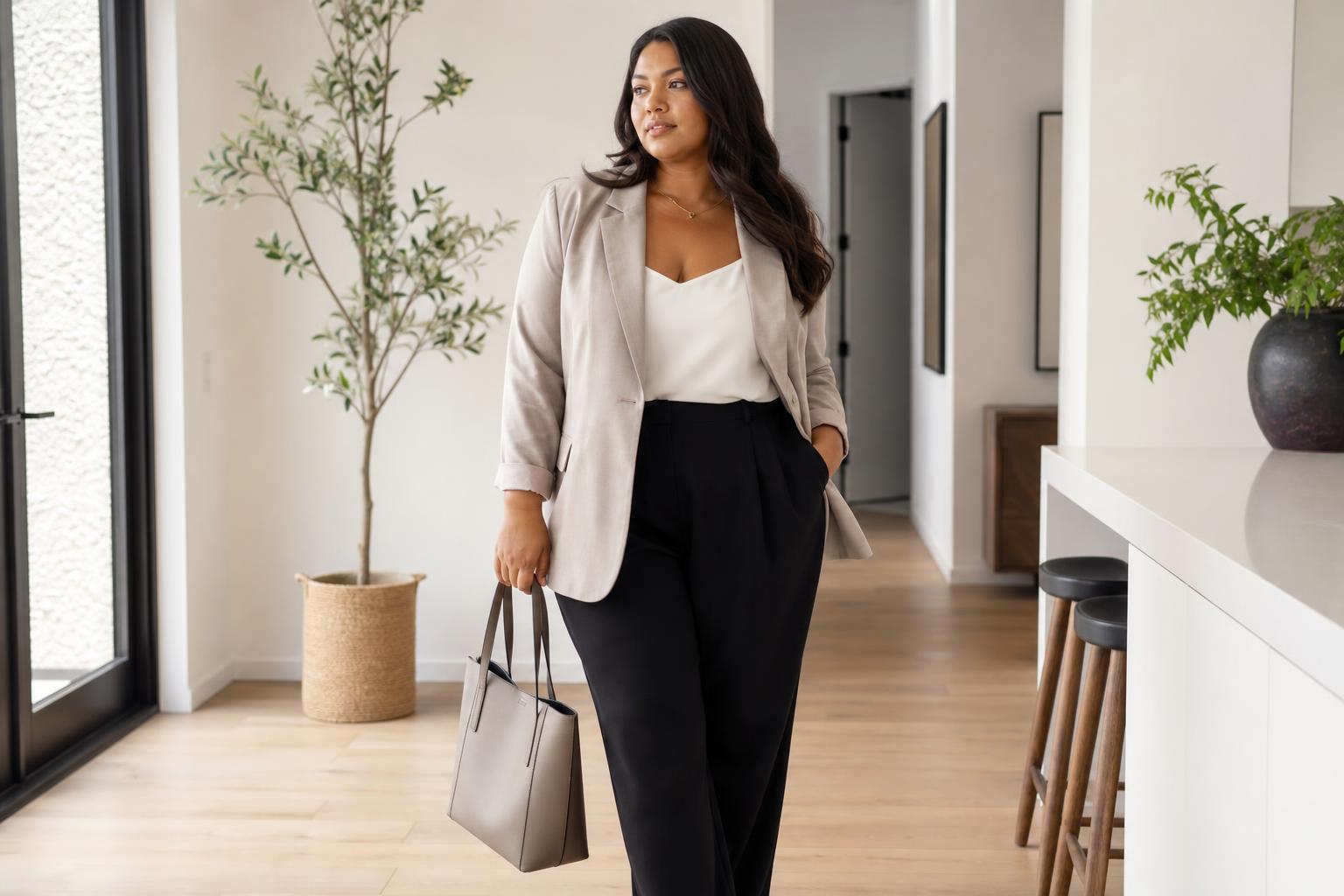
A Curvy Capsule Wardrobe for Polished Everyday Style
A curvy capsule wardrobe is less about owning fewer clothes for the sake of minimalism and more about building a sharper visual system around what actually gets worn. The challenge is rarely a lack of options. It is usually a mismatch between proportion, comfort, and the way garments behave on a fuller silhouette in real life.
That is why this wardrobe category feels so relevant now. People are moving away from random trend accumulation and toward clothes that create consistency: pieces that layer well, hold their shape, and make everyday dressing feel intentional. For curvy dressers especially, the difference between a wardrobe that looks polished and one that feels frustrating often comes down to silhouette balance, not quantity.
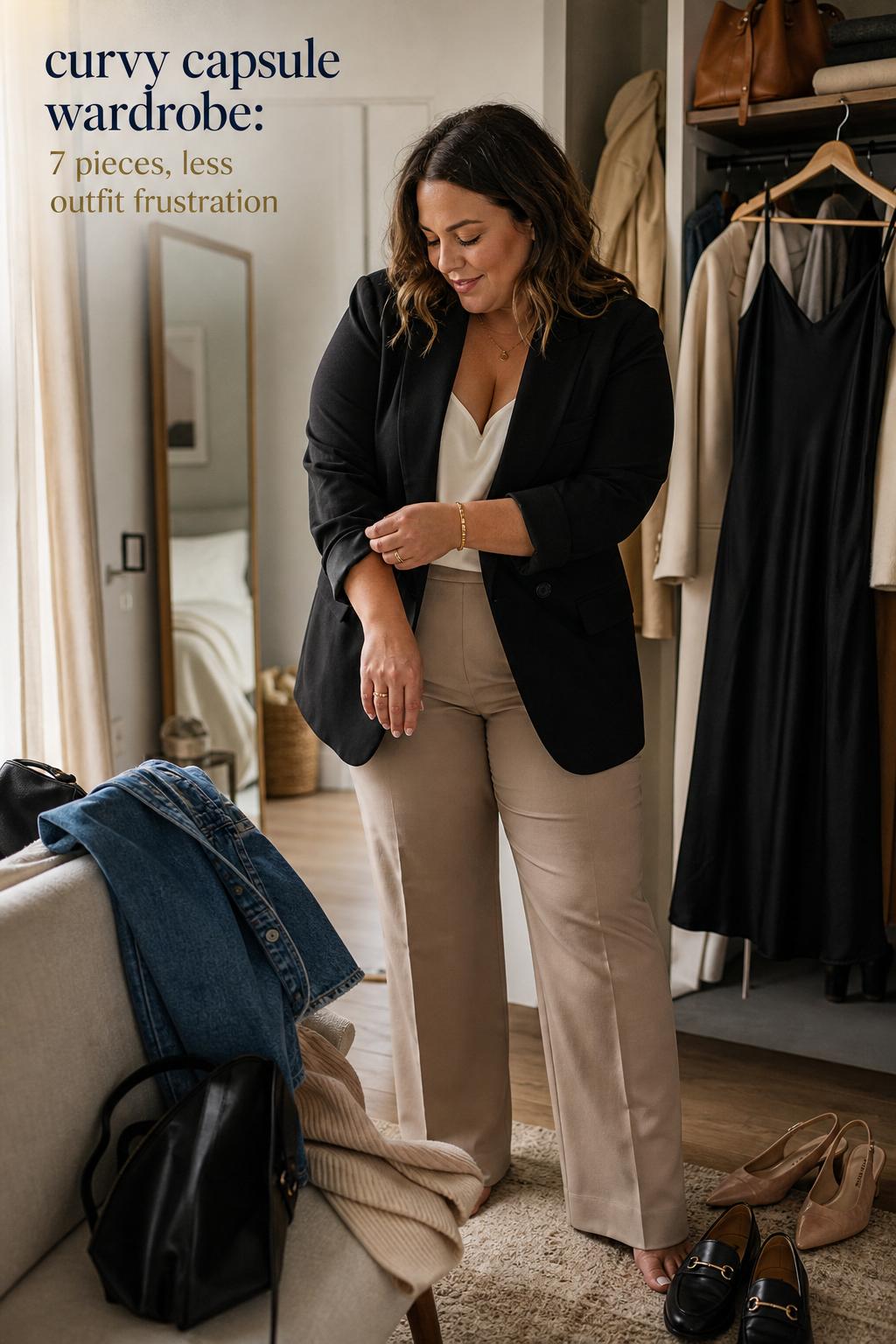
There is also a quiet psychological shift built into the idea. A well-built capsule does not ask you to dress smaller, hide your shape, or follow rigid rules. It asks a better question: which cuts, fabrics, and outfit formulas support your proportions while still reflecting your personality and lifestyle? That is the version worth building.
The visual logic behind a curvy capsule wardrobe
A capsule wardrobe works when the pieces relate to each other through shape, not just color. On a curvy frame, this matters even more because garments interact with the body in a more visible way. A blazer that is slightly too stiff, trousers with the wrong rise, or a knit that clings in the wrong area can interrupt the entire outfit composition, even if each piece looks good on its own.
Found the dress? Keep the rest in one place.
Zarellea brings guest details, vendors, timelines, and every next step together — so your wedding plan feels as good as your look.
The stronger approach is to think in terms of visual anchors. A curvy capsule wardrobe benefits from pieces that define proportion clearly: trousers that sit at a consistent rise, outerwear that either follows the waist or intentionally skims the body, tops that layer cleanly without bulk, and dresses that create shape through cut rather than effortful styling.
This is why the concept often gets misunderstood. It is not simply a smaller wardrobe. It is a coordinated wardrobe where fit behavior, silhouette line, and wearability are doing most of the work.
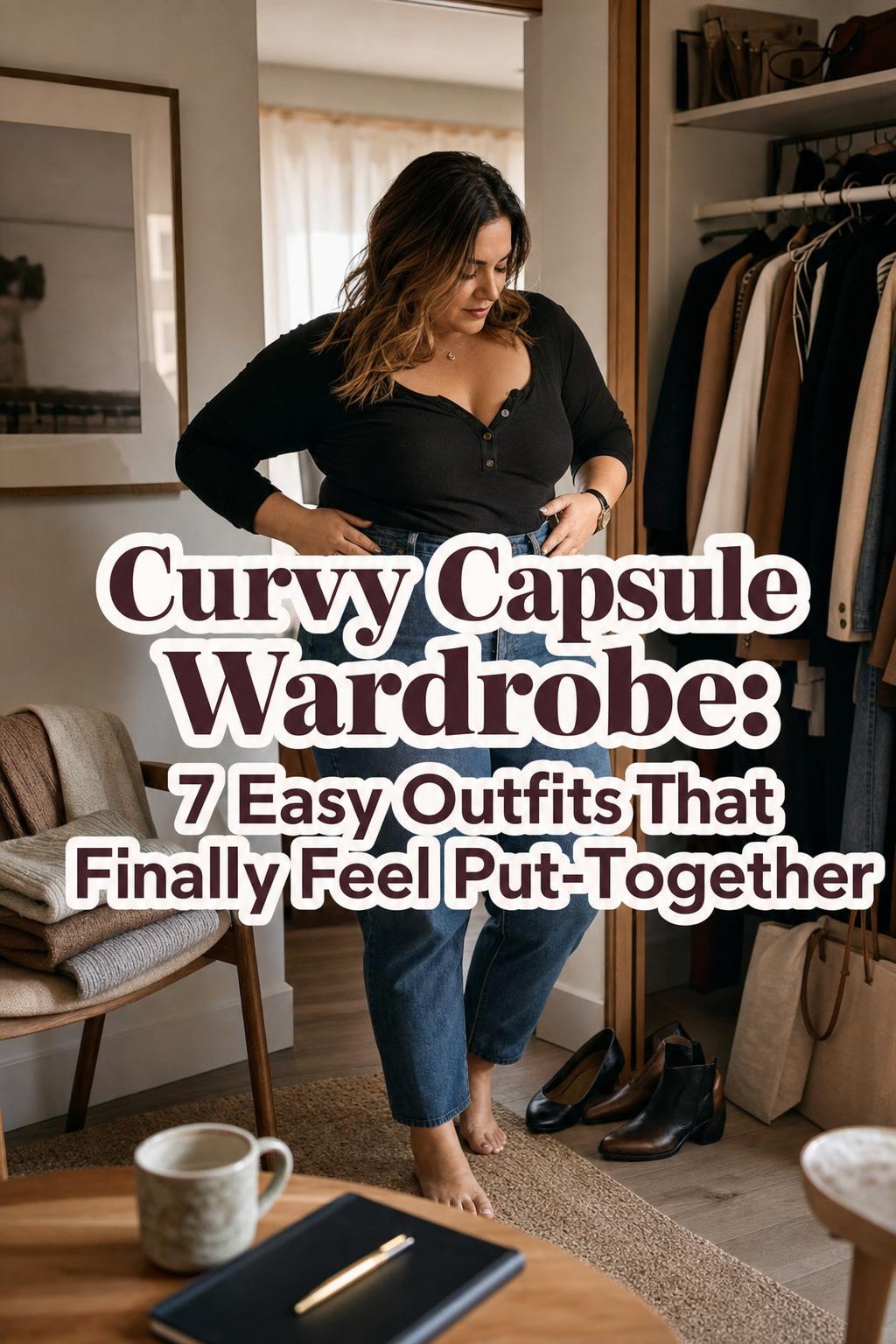
Why proportion matters more than quantity
Too many wardrobes fail because they are built around isolated “good pieces” instead of repeatable combinations. For curvy styling, proportion play is what turns a closet into a system. If a cropped jacket consistently balances high-rise trousers, or a softly draped knit always works under a structured layer, that relationship is more valuable than owning five extra tops that do not style easily.
The goal is visual predictability in the best sense. You want to know how your clothes fall, where they define shape, and how they support movement through a full day.
The controlled ease of a well-built wardrobe
The best capsule wardrobes feel composed, not restrictive. There is usually a tension between structure and softness that keeps outfits from looking flat. On curvier proportions, this balance is especially useful because fully oversized dressing can erase shape in a way that feels heavy, while overly fitted dressing can make every outfit feel formal or overworked.
Controlled ease comes from combining one defining element with one relaxed element. Think of a shaped blazer over a fluid top, straight-leg trousers with a more body-aware knit, or a dress that skims rather than clings. The result is polished without becoming severe.
The emotional mood of this kind of dressing
A strong curvy capsule wardrobe tends to communicate self-knowledge. It reads as calm, intentional, and versatile because the clothing is not fighting the wearer. There is less visual noise, fewer near-misses, and more consistency in how outfits land. That emotional clarity matters. When proportions feel right, style appears more natural.
Core pieces that earn their place
Not every category needs the same number of items, but the pieces in a curvy capsule wardrobe should cover the full rhythm of everyday dressing: base layers, polishing layers, bottoms, dresses, and shoes that support multiple outfit compositions. The emphasis should stay on repetition and adaptability rather than novelty.
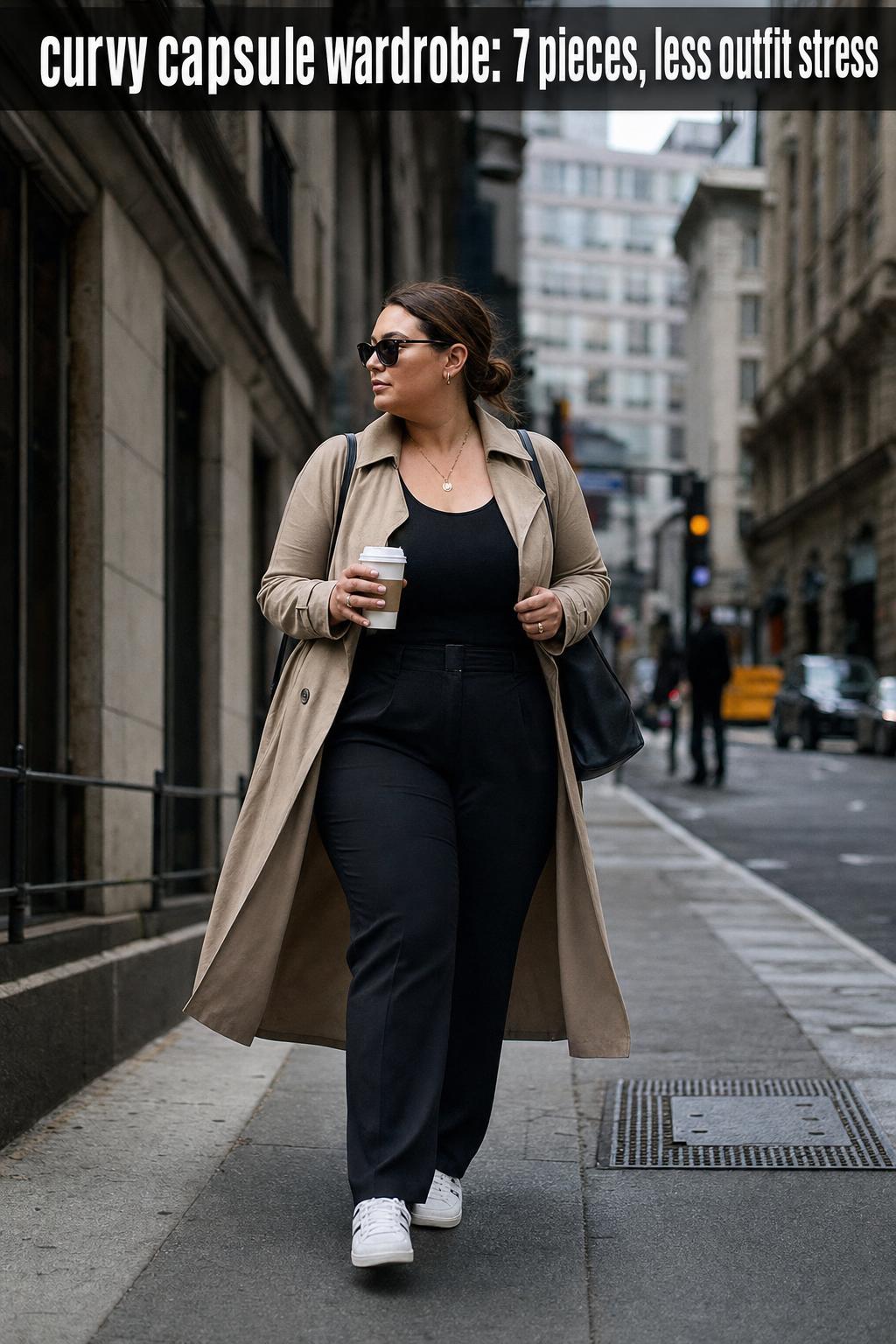
- Well-cut tops that can be worn alone or under layers without twisting, clinging, or adding bulk
- Trousers or jeans with a dependable rise and leg shape that pair easily with different top lengths
- One or two jackets that create structure and sharpen the silhouette
- Dresses that work with minimal styling and still feel complete
- Knitwear with enough drape to move well but enough substance to keep its line
- Shoes that support daily wear and maintain the intended outfit proportion
What earns a place is not trend appeal. It is how often a piece solves a real outfit problem.
Most versatile pieces
The most versatile pieces are usually the ones that stabilize silhouette. A reliable pair of trousers, a jacket that defines the upper body cleanly, and a dress that can shift between casual and polished settings often deliver more value than highly specific statement items. In capsule dressing, versatility is not about being bland. It is about being visually useful.
Everyday basics, seen through a curvy styling lens
Basics are where a capsule either becomes powerful or disappointing. On paper, a T-shirt, jeans, cardigan, and blazer sound straightforward. In practice, each one behaves differently depending on cut, fabric weight, neckline, and where the garment hits the body. This is why generic capsule advice often falls short for curvier shapes.
A basic should not only coordinate with the rest of the wardrobe. It should also hold its own line. A top that collapses under a jacket, denim that pulls at the wrong point, or a cardigan that widens the midsection visually may still be fashionable, but it is not doing capsule work.
Why some basics look polished and others feel unfinished
The difference is usually in construction. Polished basics create a clear outline. The neckline frames the face well, the hem length works with your bottoms, and the fabric neither strains nor disappears. Unfinished basics tend to have no visual anchor. They may be too thin, too short, too long, or too shapeless relative to the rest of the outfit.
This does not mean every basic needs to be tailored. It means each piece needs a reason to exist inside the wardrobe’s proportion system.
Layering without heaviness
Layering is one of the most practical and revealing parts of a curvy capsule wardrobe. It shows whether the wardrobe has real depth or only isolated pieces. The strongest layered outfits use contrast deliberately: smooth under textured, fitted under relaxed, soft under structured. That contrast gives the eye a readable silhouette.
Heavy layering often fails when every piece competes for volume. A thick knit under a stiff jacket over wide trousers can feel substantial in theory but visually overloaded in practice. Better layering uses one stronger shape and lets the remaining pieces support it.
The key visual difference
The key visual difference between flattering layering and bulky layering is whether the waist, vertical line, or shoulder line remains legible. When at least one of those elements stays clear, the outfit reads intentional. When all of them disappear at once, the look can lose structure quickly.
This is especially relevant during seasonal transitions, when many people try to create warmth and polish at the same time. The smartest solution is not always adding more. It is choosing fewer layers with better line.
The role of fabric in a capsule that actually works
Fabric behavior is often the hidden factor in whether a capsule wardrobe feels luxurious, wearable, or endlessly frustrating. On curvy proportions, textiles reveal their strengths and weaknesses quickly. A fabric that wrinkles instantly, clings unpredictably, or collapses under layering may undermine an otherwise good silhouette.
That is why texture contrast matters. A wardrobe becomes more functional when there is interplay between smooth and substantial surfaces, crisp and fluid finishes, and pieces with enough body to create line without stiffness. Fabric should support movement and shape at once.
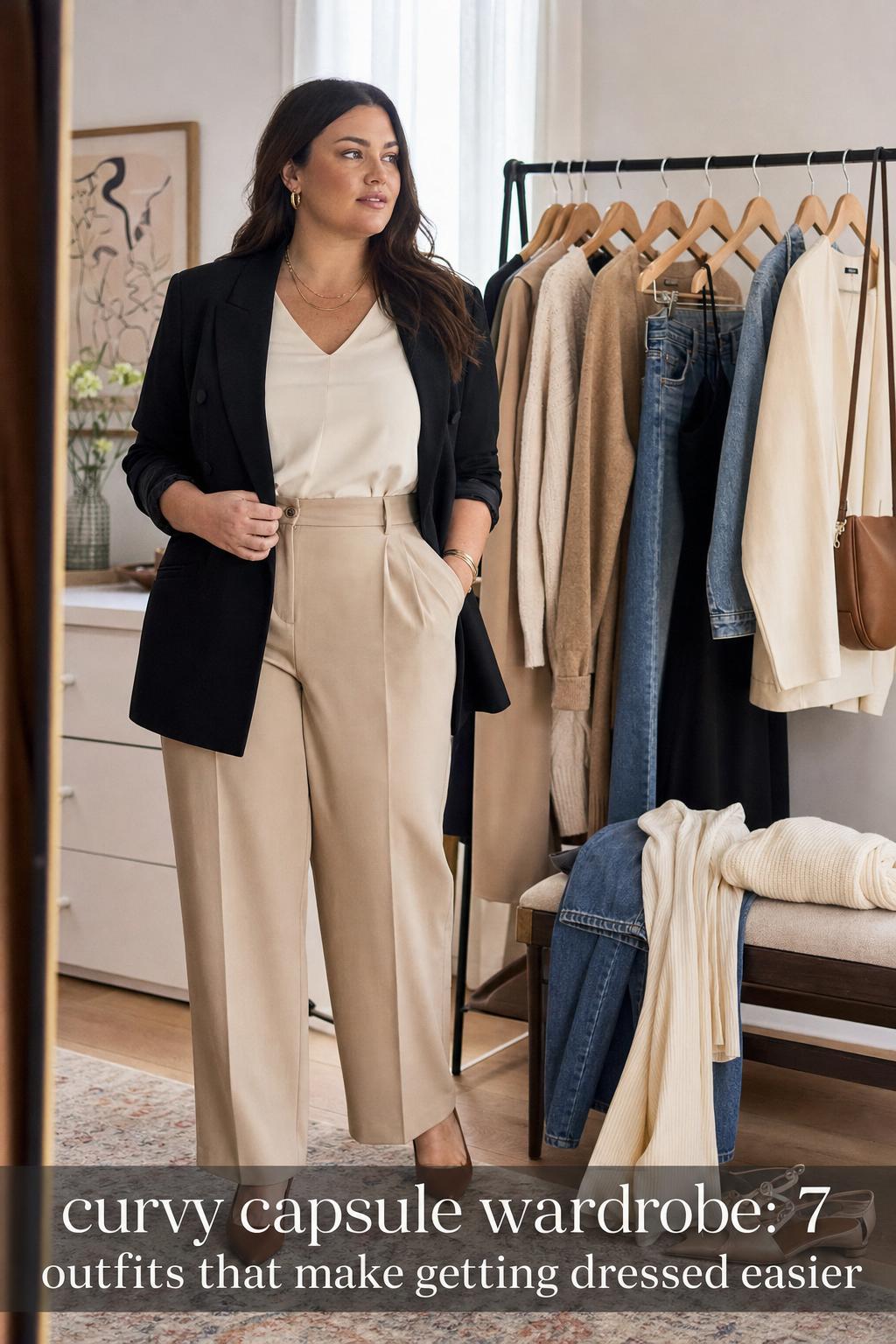
How fabric changes the mood of the same outfit
A simple outfit built from structured fabric reads more controlled and elevated. The same outfit in slinkier or thinner materials can feel softer, more casual, or less resolved. Neither is inherently better, but the distinction matters when building a capsule. Repetition works best when the mood of the clothes matches your daily life.
Color relationships that make repetition look intentional
A capsule wardrobe depends on repeat wear, so color has to do more than flatter. It needs to create flexibility. The easiest way to achieve that is through tonal layering and a coherent seasonal palette. When colors relate softly to one another, outfits look composed even when the silhouettes are simple.
For a curvy capsule wardrobe, color can also influence visual weight. Deeper shades tend to feel grounding, while lighter tones can bring focus to certain areas. The goal is not camouflage. It is directional styling: using color balance to create a clear, intentional outfit composition.
Why tonal dressing often looks more expensive
Tonal dressing reduces visual interruption. When the eye moves smoothly through similar or related shades, the silhouette reads longer and cleaner. This can make everyday dressing feel more refined without adding complexity. It is one of the simplest ways to elevate a capsule wardrobe while keeping it practical.
Real-life outfit logic: how the same staple changes depending on styling
A curvy capsule wardrobe becomes useful when a single staple can move across settings without losing its identity. The styling around that piece is what changes the message. A dress can read work-ready, weekend, or evening-appropriate depending on the outer layer, footwear, and accessory tension. Trousers can feel relaxed or sharp depending on whether the top introduces softness or structure.
This is where many wardrobes start to mature. Instead of buying for isolated occasions, you start recognizing how one visual anchor can support multiple versions of yourself.
A workday interpretation
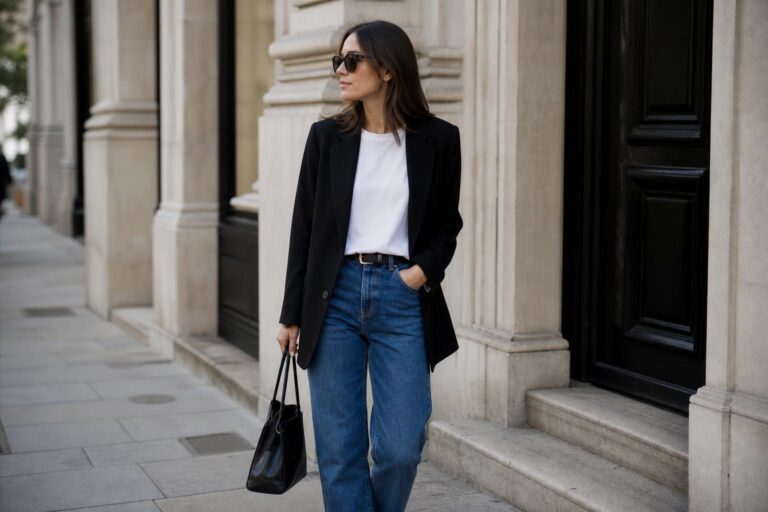
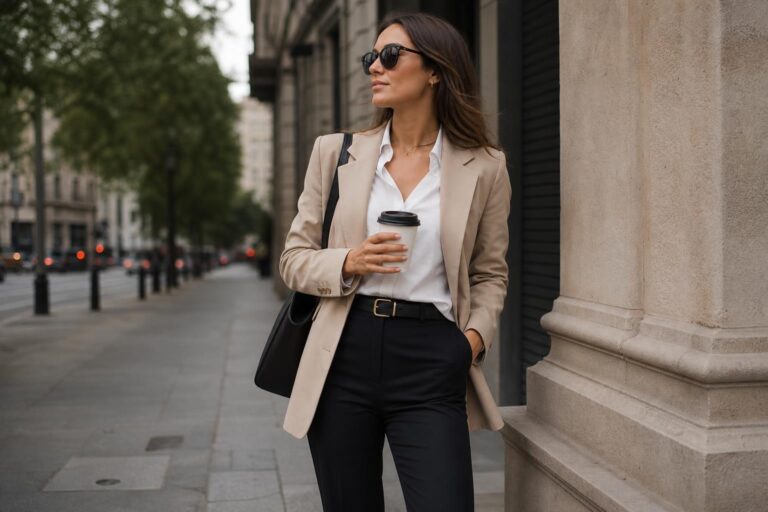
For a work-focused outfit, structure should carry the composition. A defined jacket, stable trouser line, and controlled footwear shape create authority without requiring severe styling. The outfit works because the strongest lines are clean and uninterrupted, while softer elements keep it wearable through a full day.
A casual interpretation
For everyday wear, the same wardrobe benefits from gentler contrast. A relaxed knit, easy dress, or softer layer can lower the formality while preserving shape. The visual success comes from maintaining one point of definition, whether at the waist, shoulder, or hemline. Casual does not have to mean vague.
An elevated interpretation
For evenings or events, elevation usually comes through finish rather than volume. Cleaner textures, stronger accessories, and a more deliberate line create impact faster than adding extra pieces. In a capsule, this matters because event dressing should still feel connected to the rest of the wardrobe, not like a separate costume category.
Accessories as mood-setters, not afterthoughts
Accessories can completely shift how a curvy capsule wardrobe reads. They function as visual punctuation. If the clothing provides the silhouette framework, accessories control the styling energy. The same outfit can feel restrained, expressive, relaxed, or sharply polished depending on the scale and finish of the final details.
What matters most is proportion. Accessories that are too delicate can get visually lost in an otherwise substantial outfit, while overly dominant pieces can disrupt a clean capsule formula. The strongest choices reinforce what the clothing is already trying to say.
The role of accessories
Accessories are especially useful when you want a small wardrobe to feel varied. A belt can define shape more clearly, a bag can sharpen the mood, and shoes can decide whether an outfit reads grounded or light. These shifts are subtle, but they are often what makes repeated pieces feel newly styled rather than repeated out of necessity.
Which pieces are easier to recreate affordably
Not every part of a capsule requires the same investment. In practical terms, some pieces need stronger construction because they do heavy visual work, while others can be simpler. This distinction helps build a curvy capsule wardrobe more strategically.
- Base layers are often easier to source affordably if the fit and fabric recovery are solid
- Soft knitwear can work at different price points when the drape is clean and not overly flimsy
- Jackets and trousers usually benefit most from better cut and construction because they define the silhouette
- Accessories can update the mood of repeat outfits without requiring a major wardrobe overhaul
The useful rule is simple: spend more where structure matters most, and be selective rather than excessive everywhere else.
Style psychology: why certain capsules feel right immediately
People often assume a capsule wardrobe is purely practical, but there is a strong identity component underneath it. The pieces that get worn repeatedly usually reflect more than fit preference. They align with how someone wants to appear in the world: composed, relaxed, authoritative, understated, or expressive within limits.
For curvy dressers, this can be especially important because fashion advice has long leaned on correction rather than expression. A good capsule reverses that mindset. It is not about minimizing presence. It is about choosing silhouettes that make presence feel coherent.
Why this combination works
The strongest wardrobes combine practicality with emotional clarity. If every piece is sensible but none of it feels like you, the capsule will not last. If everything reflects personality but nothing layers or coordinates, it will also fail. The sweet spot is where personal style and outfit functionality support each other.
Common styling mistakes that weaken a curvy capsule wardrobe
Most capsule problems come from inconsistency rather than lack. A wardrobe can contain many attractive individual items and still feel unusable if the cuts, lengths, and styling energy do not connect. On curvier silhouettes, those disconnects tend to show up quickly.
- Buying basics in multiple versions that all fit slightly differently, making outfit formulas unreliable
- Choosing oversized pieces without a balancing element, which can flatten shape instead of creating ease
- Relying on clingy fabrics for versatility, even though they often limit layering and everyday comfort
- Ignoring hem length and rise relationships, which can make tops and bottoms feel visually disconnected
- Building around occasion pieces rather than daily uniform pieces
These mistakes do not mean the wardrobe needs a total reset. They usually indicate that the styling framework needs refinement.
Tips for fixing a wardrobe that feels close but not cohesive
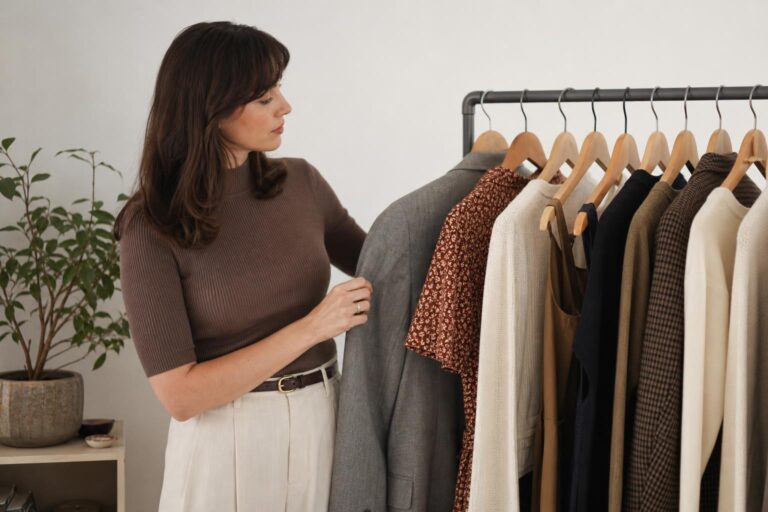
Start by identifying the pieces you reach for repeatedly and study why they work. Look at where they hit on the body, how they layer, and what they need around them. Then compare the less-worn pieces. In many cases, the issue is not that an item is wrong on its own. It simply breaks the wardrobe’s proportion rhythm.
How to blend polish and ease without losing yourself
One of the most modern ways to approach a curvy capsule wardrobe is to resist extremes. The most wearable wardrobes are rarely fully tailored or fully relaxed. They borrow from both. A clean trouser with a softer top, a fluid dress with a sharper shoe, or an easy knit under a defined coat creates dimension and keeps the style from becoming predictable.
This blended approach also makes the capsule more adaptive. It can move through work, errands, social plans, and travel with less friction because the aesthetic is not locked into one narrow mood.
Easy ways to blend both sides
- Pair one structured piece with one softer piece in the same outfit
- Use tonal colors to unify mixed textures and silhouette shapes
- Keep accessories consistent even when the clothing shifts from casual to polished
- Let one element define the body line, then allow the rest of the outfit to feel easier
A capsule for real schedules, not idealized wardrobes
The most useful curvy capsule wardrobe is shaped by actual life. That includes commute realities, indoor-outdoor temperature shifts, long days, and the need to move comfortably without adjusting clothes constantly. A wardrobe can look perfect in theory and still fail if it does not function over time.
Real-world styling means evaluating how pieces behave after hours of wear. Do trousers hold their line? Does a top stay smooth under outerwear? Can a dress move through sitting, walking, and layering without losing shape? These practical questions are what separate a beautiful wardrobe from a reliable one.
Tips for making the wardrobe work harder
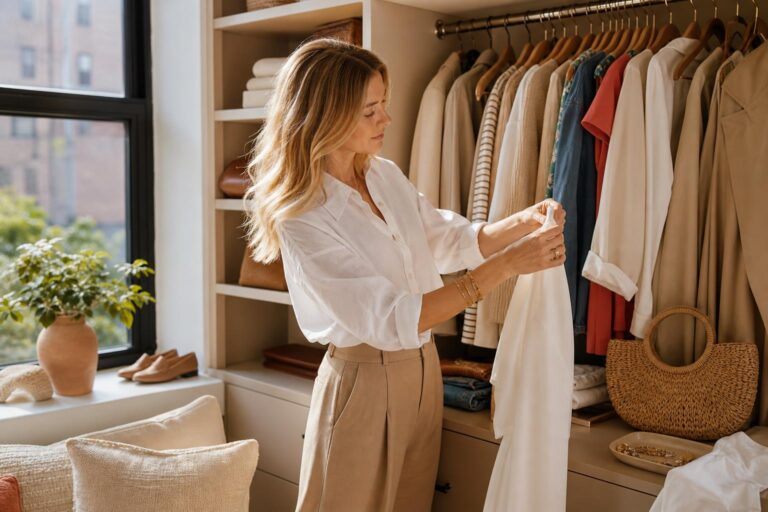
Build around your most repeated environments, not your most aspirational ones. If your life requires versatile daywear, prioritize repeatable combinations that can be adjusted with outerwear and accessories. If your schedule includes more polished settings, let tailoring carry more of the capsule. The right balance is always lifestyle-specific.
What makes a capsule feel timeless rather than trend-led
Timelessness in a curvy capsule wardrobe does not come from avoiding fashion. It comes from choosing shapes with staying power and styling them with clarity. Pieces feel timeless when their proportion logic remains strong even as trends shift around them. That usually means cleaner lines, dependable fits, and enough styling personality to avoid looking anonymous.
Trend-led pieces can still belong in a capsule, but they work best when they orbit around a stable core. The core does the daily work. The trend element adds freshness. When that balance flips, the wardrobe becomes harder to sustain.
Which aesthetic feels more timeless
The more timeless aesthetic is usually the one built on silhouette consistency rather than constant novelty. A wardrobe with clear lines, controlled layering, and intentional color relationships will always read more enduring than one built from disconnected statement moments. Timeless style is less about restraint than about coherence.
Closing perspective
The real distinction of a strong curvy capsule wardrobe is not that it looks minimal. It is that it looks resolved. The proportions make sense, the layers support one another, and the clothes reflect a clear visual identity without feeling rigid.
Once you learn to recognize that difference, dressing becomes less about chasing the next perfect item and more about understanding silhouette, balance, and mood. That is where personal style becomes instinctive. And that is also where the best capsules live: somewhere between polish and ease, edited but never impersonal.
FAQ
What is a curvy capsule wardrobe?
A curvy capsule wardrobe is a coordinated collection of clothing built around repeatable silhouettes, reliable fit, and versatile styling combinations that work well on a fuller figure. Its focus is not just fewer items, but better proportion, easier layering, and more consistent outfit outcomes.
How many pieces should a curvy capsule wardrobe have?
There is no single correct number because the best capsule depends on lifestyle, climate, and dress code needs. What matters more is whether the pieces combine easily, cover daily routines, and create enough outfit variation without relying on constant new purchases.
What are the most important items to include first?
Start with the pieces that define silhouette and get worn most often: dependable bottoms, easy layering tops, one or two structured outer layers, versatile knitwear, and a dress or outfit formula that can shift across different settings. These create the foundation the rest of the wardrobe builds on.
How do I keep a capsule wardrobe from feeling boring?
A capsule feels interesting when it has variation in texture, silhouette tension, and accessory mood. Repetition becomes visually rich when the same core pieces can be styled with different layers, tonal combinations, and finishing details rather than relying only on statement items.
Should everything in a capsule wardrobe be fitted?
No. A successful capsule usually mixes structure and ease. Fully fitted wardrobes can feel restrictive, while fully oversized wardrobes can lose definition. The strongest outfits keep at least one clear line in view, whether that comes from the waist, shoulder, or overall vertical shape.
How do I choose colors for a curvy capsule wardrobe?
Choose colors that work together easily and support repeated wear. Tonal dressing and a coherent seasonal palette help outfits feel intentional with less effort. The best color choices are not just flattering individually; they also make layering and outfit building more consistent.
What is the biggest mistake people make when building one?
The biggest mistake is collecting attractive separate pieces without checking whether they share the same proportion logic. If rises, lengths, fabric weights, and styling energy do not align, the wardrobe will feel fragmented even when each item seems useful on its own.
Can a capsule wardrobe still include trend pieces?
Yes, but trend pieces work best when they sit around a stable core of dependable essentials. When the wardrobe’s main structure is strong, newer or more directional pieces can refresh the overall look without making daily dressing less practical.
How do I know if a piece belongs in my capsule?
A piece belongs if it works with multiple outfits, supports your existing silhouette framework, feels comfortable through real daily wear, and reflects the mood you want your wardrobe to communicate. If it creates friction every time you style it, it is probably not capsule material.